The "Middle East and Terrorism" Blog was created in order to supply information about the implication of Arab countries and Iran in terrorism all over the world. Most of the articles in the blog are the result of objective scientific research or articles written by senior journalists.
From the Ethics of the Fathers: "He [Rabbi Tarfon] used to say, it is not incumbent upon you to complete the task, but you are not exempt from undertaking it."
“We are in the stage of finalizing this memorandum of understanding, focused on ending the war,” the Iranian Foreign Ministry spokesman said.
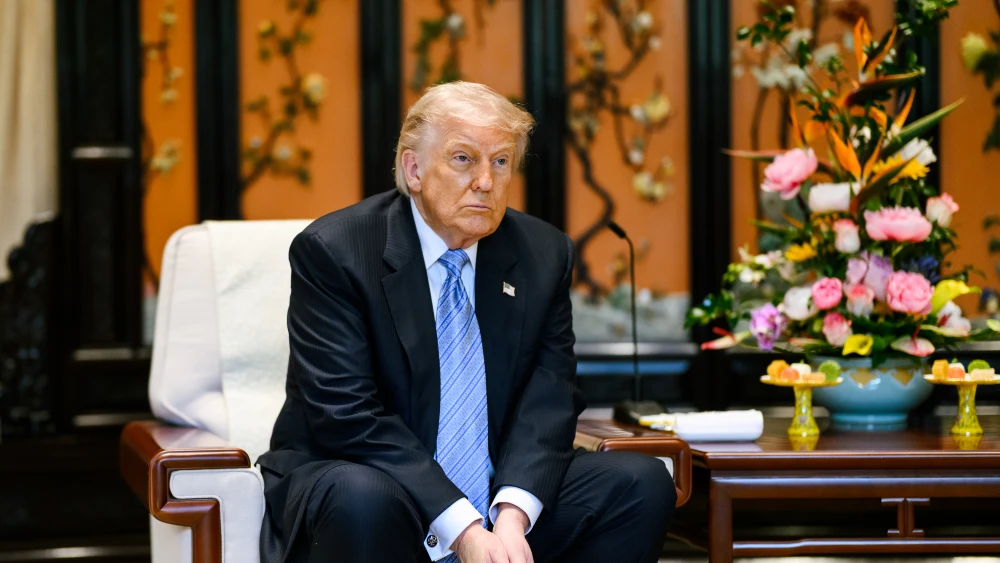
U.S. President Donald Trump
participates in a bilateral meeting and tea with Chinese President Xi
Jinping at Zhongnanhai in Beijing, May 15, 2026. Credit: Daniel
Torok/White House.
It is a “solid 50/50” as to whether an agreeable resolution is
reached with Iran or the U.S. military acts to “blow them to kingdom
come,” President Donald Trump said on Saturday, according to Axios.
“I
think one of two things will happen: either I hit them harder than they
have ever been hit, or we are going to sign a deal that is good,” the
outlet quoted Trump as saying.
“Some people would much rather have
a deal and others would rather resume the war,” the president was
quoted as saying, adding that Israeli Prime Minister Benjamin Netanyahu
is not worried about a bad outcome.
Trump said he would meet with
special envoys Steve Witkoff and Jared Kushner later on Saturday to
discuss Tehran’s latest proposal, with Vice President JD Vance slated to
join them, the report said.
The report added that Trump remains
unwilling to compromise on issues such as Iran’s stockpile of enriched
uranium, but that the current draft proposal to end the war defers the
subject to more in-depth negotiations after a 30-day period.
Earlier on Saturday, U.S. State Secretary Marco Rubio hinted that some resolution with Iran might be announced later in the day.
“There’s
been some progress made [in negotiations], even as I speak to you now,
there’s some work being done. There is a chance that, whether it is
later today, tomorrow, [or] in a couple of days, we may have something
to say. But this issue needs to be solved as the president said one way
or the other,” Rubio told reporters during his visit to New Delhi.
He
reiterated Washington’s stance that Iran must never attain a nuclear
weapon, must reopen the Strait of Hormuz without tolls, and must agree
to hand over its store of highly enriched uranium.
These are Trump’s consistent points, Rubio stressed.
Trump’s preference is to solve the conflict diplomatically, he continued, which is “what we’re working on right now.”
“One way or the other, Iran can never have a nuclear weapon.”
Secretary of State Marco Rubio says negotiations with Iran are moving forward and revealed there could be developments “later today, tomorrow, in a couple of days.”
The Financial Times reported on Saturday that negotiations
include a 60-day extension of the current ceasefire, a gradual reopening
of the Strait of Hormuz, easing restrictions on Iranian ports, and a
phased unfreezing of sanctions on Iran coupled with Iranian financial
assets, with the subject of Tehran’s nuclear project delayed for future
discussions.
Qalibaf: Iran used ceasefire to rebuild military capabilites
Meanwhile,
the Islamic Republic’s top negotiator, Parliament Speaker Mohammad
Baqer Qalibaf, was quoted on Saturday by the country’s state media as
saying that Iran’s armed forces have used the truce to rebuild their
strength, and that if the U.S. “foolishly restarts the war,” the
consequences would be “more forceful and bitter” than at the start of
the conflict on Feb. 28.
Qalibaf had met earlier in the day with
Pakistan’s army chief Field Marshal Asim Munir, a mediator between
Washington and Tehran.
Munir also reportedly met with Iran’s
President Masoud Pezeshkian and Foreign Minister Abbas Araqchi in Tehran
before taking off to return to Pakistan.
The meetings focused on a
14-point document proposed by Iran, in which it stipulates its
“legitimate rights,” Qalibaf was quoted by Reuters as saying.
Draft to end war on all fronts, including Lebanon
Iran’s
Foreign Ministry spokesman Esmail Baqaei reacted to the talks, saying
that “We are in the stage of finalizing this memorandum of
understanding,” according to Iranian news agency Tasnim.
“The
issues that are being discussed at this stage are focused on ending the
war. The issue of ending the U.S. naval aggression and issues related
to the release of blocked Iranian assets will be addressed in this
memorandum of understanding,” he said.
Although he refrained from
clarifying whether an agreement was close, the spokesman said that “the
trend is toward closer views” that would set the tone for later
discussions on other matters.
Baqaei said that the current draft
does not tackle the nuclear issue, which served as a “pretext for two
aggressive wars against the Iranian nation. At the same time, we were
subjected to illegal attacks during the nuclear negotiations. Therefore,
we wisely decided to give priority at this stage to the issue that is
urgent, which is ending the war on all fronts, including Lebanon,” Tasnim reported.
He
was further cited as saying that a solution to the Strait of Hormuz
issue does not involve the United States and “should be defined between
us and Oman as coastal countries. ... We are aware of the importance of
this waterway for the international community. ... [It understands] that
the responsible action of Iran and Oman to create a mechanism for the
safe passage of ships through this waterway is in the interest of the
international community.”
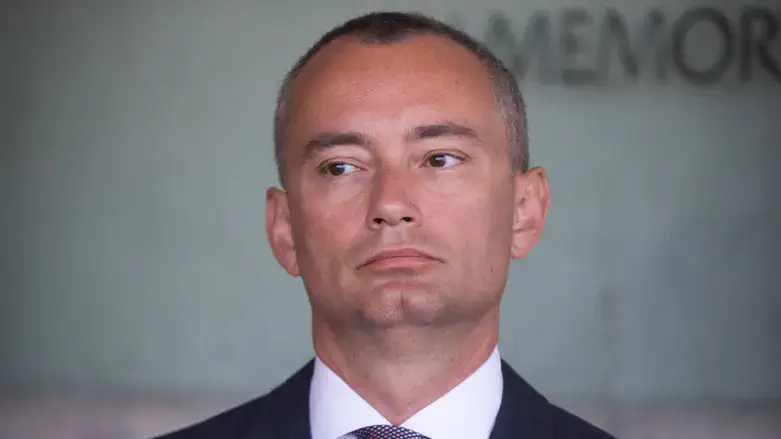
Nickolay Mladenov, Director-General of the Board of Peace, details a 15-point Gaza roadmap enforcing strict disarmament and oversight.
Nickolay Mladenov Flash 90
Board
of Peace Director-General Nickolay Mladenov on Thursday unveiled a
detailed 15-point implementation roadmap aimed at enforcing the
diplomatic blueprint for the Gaza Strip.
The
proposal, posted on social media, designed to fully execute US
President Donald Trump’s Gaza Comprehensive Peace Plan, arrives on the
heels of Mladenov's briefing to the United Nations Security Council
earlier in the day.
Following today’s #UN Security Council briefing, I am publishing the core elements of the proposed 15-point “Roadmap to Complete the Implementation of President Trump’s Gaza Comprehensive Peace Plan” in plain language. • Points 1–5: Principles • Points 6–11: Security • Points…
According
to Mladenov, the 15-point system is broken into distinct phases: points
1 through 5 establish guiding civilian principles, points 6 through 11
focus heavily on a rigorous security transition, points 12 through 14
mandate the deployment of an International Stabilization Force alongside
an IDF withdrawal, and point 15 tethers future reconstruction directly
to verified stability. Mladenov explicitly cautioned that the roadmap is
not intended "simply to preserve a ceasefire," but rather to break Gaza
out of its persistent cycle of military operations.
Acknowledging
that "trust between Israelis and Palestinians is effectively
non-existent," the international envoy emphasized that the entire
roadmap hinges on strict reciprocity, requiring physical verification
from an independent Implementation Verification Committee (IVC) before
any diplomatic or strategic step can be taken.
"The
process therefore does not rely on promises alone," Mladenov wrote on
social media. "Each obligation by one side triggers an obligation by the
other."
The
proposal aims to replace the existing power structures in Gaza with the
transitional framework authorized under UN Security Council Resolution
2803. Under this plan, the newly formed Board of Peace and the Office of
the High Representative would supervise the National Committee for the
Administration of Gaza (NCAG) - a temporary body of Palestinian Arab
technocrats designed to manage civilian governance until a reformed
Palestinian Authority can step in.
Crucially
for Israel’s security establishment, the roadmap demands an absolute
decoupling of armed terrorist factions from the daily administration of
the coastal enclave. Noting that "Gaza cannot recover while armed groups
simultaneously operate as governing authorities," Mladenov's plan seeks
to isolate Hamas's remaining leadership from public institutions while
shielding ordinary, vetted civil servants from collective retribution.
The
security transition is anchored by the ironclad principle of "One
Authority, One Law, One Weapon," which dictates that only authorized,
non-factional security personnel would be permitted to carry arms within
the strip. Under the plan, armed terror groups would be forced to
permanently cease all military operations. Addressing policing
infrastructure, Mladenov called for comprehensive vetting and reform to
integrate trained civilian police into unified local structures, an
approach aimed at ensuring a phased, internationally verified
disarmament process without triggering a domestic security collapse.
U.S. Central Command announced Saturday that 100 commercial vessels
have been redirected since the naval blockage in the Strait of Hormuz
began.
According to CENTCOM, more than 15,000 soldiers, sailors, Marines and
airmen have participated in the mission over the past six weeks,
redirecting 100 vessels, disabling four others, and allowing 26
humanitarian aid ships to pass through.
The blockade was launched on April 13. In a statement, CENTCOM
commander Adm. Brad Cooper praised U.S. forces for carrying out the
mission “with precision and professionalism,” saying the operation has
effectively halted trade in and out of Iranian ports and increased
economic pressure on Iran.
CENTCOM also said the effort is being backed by more than 200
aircraft and warships, including the Abraham Lincoln Carrier Strike
Group, George H.W. Bush Carrier Strike Group, the Tripoli Amphibious
Ready Group/31st Marine Expeditionary Unit, and multiple guided-missile
destroyers.
The Fatah election of Barghouti and Zubeidi sends a dangerous message: that inside Fatah, terrorism and "armed struggle" continue to confer political legitimacy.
As usual... there was no
timetable, no enforcement mechanism, and no concrete political roadmap.
Once again, reform appeared to function more as a slogan aimed at
reassuring Western governments than as a serious political process.
Would elections solve the problem? Many Western officials
continue insisting that elections are the answer to the Palestinian
crisis. Recent Palestinian history, however, suggests otherwise. The
last parliamentary elections, held in 2006, brought Hamas to power. One
year later, Hamas violently seized control of the Gaza Strip after
executing opponents, throwing Fatah rivals off rooftops, and
establishing an Islamist dictatorship that remains in place to this day.
In several polls, Hamas leaders have enjoyed greater popularity than Abbas and Fatah.
[T]he Palestinian national movement historically presented itself
as a collective "liberation struggle" rather than a family-based
political enterprise. The rise of Yasser Abbas, therefore, symbolizes
for many Palestinians not renewal, but the deepening personal
entrenchment of power.
The Palestinian Authority continues every year to pay hundreds of
millions of dollars, now disguised as "social welfare," to Palestinians
and their families involved in terrorist attacks against Israeli
civilians.
The Fatah election of Barghouti and Zubeidi sends a dangerous
message: that inside Fatah, terrorism and "armed struggle" continue to
confer political legitimacy.
The Palestinian movement, rather than distancing itself from
violence, continues to celebrate and glorify individuals associated with
attacks against Israeli civilians. It is a reality that should finally
put a stop to all idiotic Western claims that Fatah represents a
"moderate" alternative to Hamas.
The latest elections inside Fatah, in fact, suggest that the
ideological differences between Hamas and Fatah are largely tactical
rather than fundamental. Hamas openly calls for Israel's destruction
through jihad and terrorism. Fatah, meanwhile, speaks to Western
audiences about diplomacy and peace while internally glorifying
terrorists, honoring "martyrs," rewarding militants, and continuing to
promote the concepts of "resistance" and "armed struggle" as legitimate
tools. The difference between the two movements often concerns strategy
and international presentation, not the ultimate goal.
The resulting structure combines aging political veterans,
security officials, Abbas loyalists, wealthy insiders, and figures
associated with militancy. This is not reform. It is carefully
controlled continuity. Some Palestinians had hoped the conference would
introduce young leaders, new political ideas, and genuine institutional
restructuring. Instead, results reflect the survival goals of a
political system determined to preserve itself.
Regrettably, the latest Fatah conference demonstrated the exact opposite of meaningful reform.
For the US and Europe, which continue to discuss plans to
"revitalize" the Palestinian Authority, the latest developments should
serve as another harsh prod out of a deep sleep – or more likely a
secret long-term wish in much of Europe to have the Arabs "exterminate"
Israel so that they will not have to. Europe would then have Israel out
of the way without getting its own hands dirty.
A leadership that recycles aging elites, promotes family
influence, rewards extremism and corruption, and suppresses democratic
renewal is clearly not preparing its people for reform, accountability,
democracy or peace.
The latest Fatah elections did not mark the beginning of a new
political era. They only exposed the deepening decay at the heart of the
Palestinian leadership and a continuation of the grinding, punishing
life for the Palestinian people held hostage there.
The Palestinian Authority still pays monthly stipends to
Palestinians imprisoned in Israel for their involvement in terror
attacks. Mahmoud Abbas frequently refers to these prisoners as national
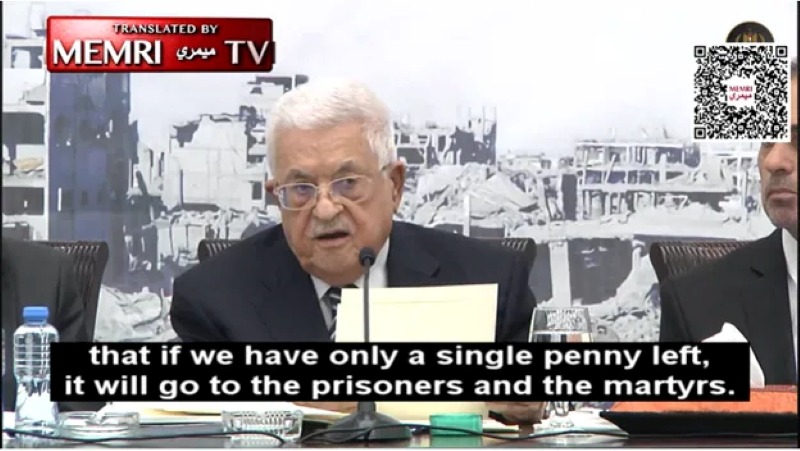
heroes who made significant sacrifices for the Palestinian cause. "[I]f
we have only a single penny left," he said in February 2025, "it will go
to the prisoners and the martyrs. I will not allow a reduction in our
commitments to them." (Image source: MEMRI)
For years, Palestinian Authority President Mahmoud Abbas has promised
the US, Europe, and Arab donors that he is committed to reforming
Palestinian institutions, fighting corruption, introducing transparency,
and preparing the ground for a new generation of Palestinian
leadership. The recent elections for his ruling Fatah faction, however,
prove otherwise.
Instead of meaningful reform, Fatah has once again chosen stagnation,
recycled leadership, security domination, and the glorification of
terrorism. Most troubling of all, the election
of Abbas's son, Yasser Abbas, to Fatah's Central Committee has revived
growing fears that the Palestinian leadership is moving toward a system
of dynastic succession and family rule.
The results
of Fatah's eighth general conference, held in Ramallah in mid-May,
exposed the widening gap between Abbas's reform rhetoric and the
political reality inside the Palestinian political system.
Speaking after casting his vote, Abbas attempted to present
the conference as part of a broader effort to "renew institutions" and
prepare for future parliamentary and presidential elections. He repeated
familiar promises regarding constitutional reform and political
restructuring while portraying the gathering as proof of Fatah's
historical legitimacy during one of the most dangerous periods facing
the Palestinian cause. "This year is the year of democracy," Abbas said.
"Today is the Eighth Conference of Fatah, and we are
preparing for the elections of the general and presidential elections,
staring with the drafting of the constitution, the political parties
law, and the general elections law."
As usual, however, there was no timetable, no enforcement mechanism,
and no concrete political roadmap. Once again, reform appeared to
function more as a slogan aimed at reassuring Western governments than
as a serious political process.
The Fatah conference simply appeared as an early battle over the post-Abbas era.
At the age of 90, Abbas has now led the Palestinian Authority, the
Palestine Liberation Organization (PLO), and Fatah for more than two
decades. His presidential term officially expired in 2009; nonetheless,
in the absence of presidential and parliamentary elections, he continues
ruling by decree.
Against this backdrop, the election
of his son Yasser Abbas to Fatah's highest decision-making body was
seen by many Palestinians as politically significant far beyond a
routine internal reshuffle.
Although Yasser Abbas, 64, has never traditionally been among the
most prominent Fatah figures, in recent years his political profile has
steadily expanded.
Five years ago, his father appointed him as a "special
representative," enabling him to become involved in political,
diplomatic, and economic affairs. At the same time, he has maintained
extensive business interests in telecommunications, energy, and
investment sectors in the West Bank, increasing his influence inside
Palestinian political and economic circles. His rise reinforces growing perceptions that Mahmoud Abbas is attempting to preserve family influence within the Palestinian political system.
These concerns are particularly acute because Palestinians have not
held presidential or parliamentary elections for more than 20 years.
Would elections solve the problem? Many Western officials continue
insisting that elections are the answer to the Palestinian crisis.
Recent Palestinian history, however, suggests otherwise. The last
parliamentary elections, held in 2006, brought Hamas to power. One year
later, Hamas violently seized control of the Gaza Strip after executing
opponents, throwing Fatah rivals off rooftops, and establishing an
Islamist dictatorship that remains in place to this day.
Public opinion polls in recent years have repeatedly shown strong
Palestinian support for Hamas, especially after the October 7, 2023
Hamas-led invasion of Israel. In several polls, Hamas leaders have
enjoyed greater popularity than Abbas and Fatah.
This raises an uncomfortable but necessary question: If elections
were held today, would they produce democratic reform – or another Hamas
victory? The problem facing Palestinians is therefore much deeper than
the absence of elections. It is a crisis of extremism, corruption and
failed leadership.
Meanwhile, the Palestinian Authority continues facing accusations of financial and administrative corruption, concentration of power, and political paralysis. Many Palestinians now openly fear that succession inside Fatah is being managed behind closed doors rather than through democratic competition.
Comparisons with hereditary Arab political systems continue to grow.
Such comparisons carry particular sensitivity in the Palestinian arena
because the Palestinian national movement historically presented itself
as a collective "liberation struggle" rather than a family-based
political enterprise. The rise of Yasser Abbas, therefore, symbolizes
for many Palestinians not renewal, but the deepening personal
entrenchment of power.
Equally troubling is the continued glorification of violence and terrorism inside Fatah.
For years, Fatah officials have repeatedly honored their terrorists as "heroes," "martyrs," and "fighters." The Palestinian Authority continues every year to pay hundreds of millions of dollars, now disguised as "social welfare," to Palestinians and their families involved in terrorist attacks against Israeli civilians.
Among the many terrorists still celebrated,
for instance, is Dalal al-Mughrabi, a Palestinian woman from Lebanon
who led the 1978 Coastal Road Massacre, in which 38 Israelis were
murdered, including 13 children. Fatah and the Palestinian Authority
regularly host memorial ceremonies on the anniversary of her death and
praise her courage and dedication to the Palestinian cause. Public
squares and sports tournaments are named after her, and in schools she
is portrayed to students as a person to be emulated.
The Palestinian Authority, as mentioned, still pays monthly stipends
to Palestinians imprisoned in Israel for their involvement in terror
attacks. Mahmoud Abbas frequently refers
to these prisoners as national heroes who made significant sacrifices
for the Palestinian cause. "[If] we have only a single penny left," he said in February 2025, "it will go to the prisoners and the martyrs. I will not allow a reduction in our commitments to them."
In the recent Fatah elections, another terrorist hero, Marwan Barghouti -- currently serving five life sentences in an Israeli prison for involvement in terror attacks that murdered Israeli civilians -- received the highest number of votes.
Zakaria Zubeidi, the former commander of Fatah's Al-Aqsa Martyrs Brigades in the West Bank city of Jenin – and who organized
numerous terror attacks against Israelis -- also won a seat on the
Central Committee. Zubeidi became internationally known after escaping
from an Israeli prison in 2021 before being recaptured.
The election of Barghouti and Zubeidi to the Fatah Central Committee
sends a dangerous message: that inside Fatah, terrorism and "armed
struggle" continue to confer political legitimacy.
The Palestinian movement, rather than distancing itself from
violence, continues to celebrate and glorify individuals associated with
attacks against Israeli civilians. It is a reality that should finally
put a stop to all idiotic Western claims that Fatah represents a
"moderate" alternative to Hamas.
The latest elections inside Fatah, in fact, suggest that the
ideological differences between Hamas and Fatah are largely tactical
rather than fundamental. Hamas openly calls for Israel's destruction
through jihad and terrorism. Fatah, meanwhile, speaks to Western
audiences about diplomacy and peace while internally glorifying
terrorists, honoring "martyrs," rewarding militants, and continuing to
promote the concepts of "resistance" and "armed struggle" as legitimate
tools. The difference between the two movements often concerns strategy
and international presentation, not the ultimate goal.
The Fatah election results also highlighted the continued dominance of the Palestinian security establishment.
Senior officials including Hussein al-Sheikh, Mahmoud al-Aloul,
Jibril Rajoub, Tawfik Tirawi, and intelligence chief Majed Faraj either
retained or strengthened their positions within the movement's
leadership.
The resulting structure combines aging political veterans, security
officials, Abbas loyalists, wealthy insiders, and figures associated
with militancy. This is not reform. It is carefully controlled
continuity. Some Palestinians had hoped the conference would introduce
young leaders, new political ideas, and genuine institutional
restructuring. Instead, results reflect the survival goals of a
political system determined to preserve itself.
Increasing American, European, and Arab pressure for reform is
closely linked to discussions about the future of the Gaza Strip after
the October 7, 2023 Hamas-led invasion of Israel.
The Trump administration and other international actors view reform
of the Palestinian Authority as a prerequisite for restoring political
legitimacy and enabling it to play any future governing role in the Gaza
Strip. Regrettably, the latest Fatah conference demonstrated the exact
opposite of meaningful reform.
The dominance of longstanding elites, the rise of Mahmoud Abbas's
son, the empowerment of security officials, and the election of
convicted terrorists all reinforce skepticism regarding whether any
genuine political change is even remotely possible within the current
Palestinian system.
For the US and Europe, which continue to discuss plans to
"revitalize" the Palestinian Authority, the latest developments should
serve as another harsh prod out of a deep sleep – or more likely a
secret long-term wish in much of Europe to have the Arabs "exterminate"
Israel so that they will not have to. Europe would then have Israel out
of the way without getting its own hands dirty.
A leadership that recycles aging elites, promotes family influence,
rewards extremism and corruption, and suppresses democratic renewal is
clearly not preparing its people for reform, accountability, democracy
or peace.
The latest Fatah elections did not mark the beginning of a new
political era. They only exposed the deepening decay at the heart of the
Palestinian leadership and a continuation of the grinding, punishing
life for the Palestinian people held hostage there.
"Not selling weapons [to Taiwan] will show Xi Jinping that America can be cowed by threats, and that will in turn help unravel the U.S. alliance structure in Asia." -- Richard Fisher, the International Assessment and Strategy Center, to Gatestone Institute, May 19, 2026
As an initial matter, China's
regime has no red lines and no principles. It moves its "lines" as a
result of changing perceptions of its own bargaining position.
At the moment, Xi's favored form of diplomacy is intimidation, so
he tries to make it appear that he will never change his positions....
[E]verything, including Taiwan, is ultimately negotiable for him.
The inability of the Chinese military gives the U.S. the cost-free opportunity to arm Taiwan.
Taiwan...is not a "bargaining chip." Taiwan to American security.
Taiwan prevents China's navy and air force from surging into the
Pacific and threatening America and our democratic allies, such as
Australia, Japan and the Philippines, close to home.
Taiwan guards the approaches to two American treaty allies, Japan
and the Philippines. After the catastrophic withdrawal from
Afghanistan, Taiwan has become a key test of American credibility and
resolve. Ceding the island would undoubtedly embolden a territorially
hungry Beijing. Finally, the cause of democracy would suffer an enormous
blow if totalitarian China were to take over democratic Taiwan.
"Not selling weapons [to Taiwan] will show Xi Jinping that
America can be cowed by threats, and that will in turn help unravel the
U.S. alliance structure in Asia." -- Richard Fisher, the International
Assessment and Strategy Center, to Gatestone Institute, May 19, 2026
Defending Taiwan, therefore, is defending America.
The decisions on arms packages, most immediately, will show
whether Trump is afraid of Xi Jinping. If the American president cannot
do something in America's direct interest because it would anger China,
Trump will implicitly admit that Beijing owns the White House.
A failure to sell arms would, significantly, look like a
violation of the Taiwan Relations Act of 1979, which requires the United
States to, among other things, "provide Taiwan with arms of a defensive
character."
Taiwan, despite what Trump said after the summit, is not the
party trying to change the status quo. In fact, the People's Republic
has never exercised control over Taiwan, and no Chinese regime has ever
held indisputable sovereignty over the island.
There is, however, one thing we can agree to with Xi: America
needs to handle the Taiwan issue "properly": It is time to tell him --
in public if necessary -- that Taiwan is none of his business.
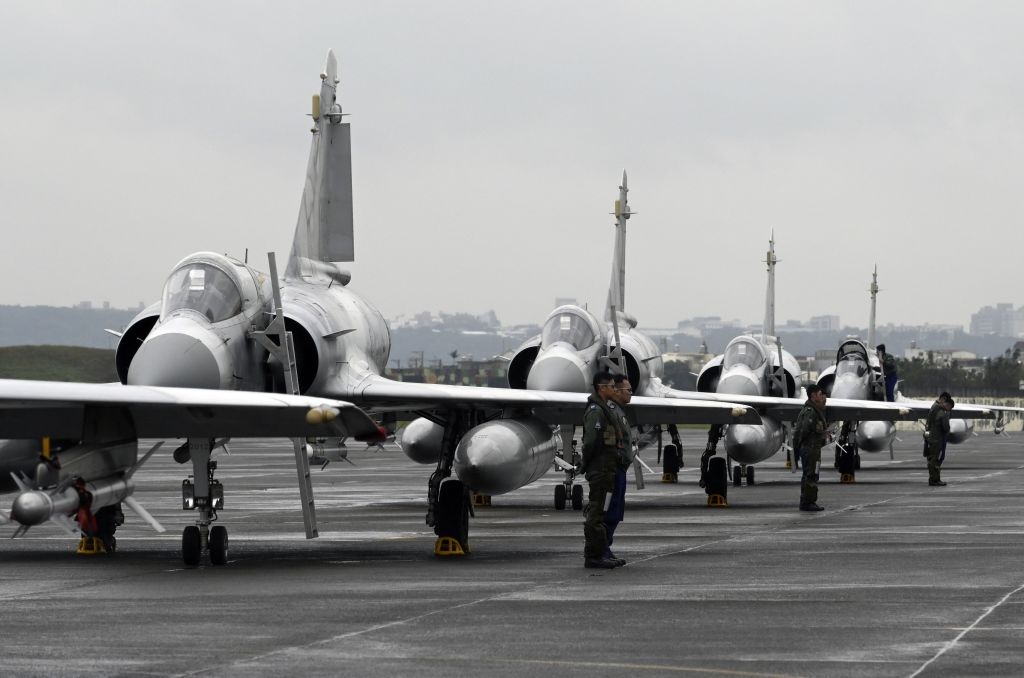
Defending Taiwan is defending America. A failure to sell
arms would, significantly, look like a violation of the Taiwan Relations
Act of 1979, which requires the United States to, among other things,
"provide Taiwan with arms of a defensive character." Pictured: Taiwan
Air Force pilots stand next to Mirage fighter jets at Hsinchu Air Base
on January 16, 2019. (Photo by Sam Yeh/AFP via Getty Images)
"The Taiwan question is the most important issue in China-U.S.
relations," Xi Jinping told President Donald Trump during their summit
this month, according
to Foreign Ministry spokesperson Mao Ning. "If it is handled properly,
the bilateral relationship will enjoy overall stability. Otherwise, the
two countries will have clashes and even conflicts, putting the entire
relationship in great jeopardy."
"The Taiwan Question," according to China's embassy in Washington, is the first of "the four red lines" in China-U.S. relations that "must not be challenged."
The People's Republic of China, however, is bluffing.
As an initial matter, China's regime has no red lines and no
principles. It moves its "lines" as a result of changing perceptions of
its own bargaining position. Furthermore, throughout the history of the
People's Republic the country's external policies have been tightly
bound to internal political intrigue and have changed accordingly. At
the moment, Xi's favored form of diplomacy is intimidation, so he tries
to make it appear that he will never change his positions.
Nonetheless, for Xi, everything is ultimately negotiable -- including Taiwan.
Xi has to negotiate. China's military is not now able to carry
through on his threats to use force to annex Taiwan. His intensifying
purges of generals and admirals have left no operational officers on the
Communist Party's Central Military Commission, the top of the military.
Close coordination is necessary to launch a complex air-land-sea
invasion of the main island of Taiwan.
Moreover, to invade, Xi would have to give some flag officer almost
complete control over the People's Liberation Army, making that figure
the most powerful in China. That is probably not something he is willing
to do at this moment.
Moreover, it is becoming evident that China's senior officers, for
various reasons, do not want to undertake such a risky operation, which
is why Xi often tells them, "Dare to fight."
The inability of the Chinese military gives the U.S. the cost-free opportunity to arm Taiwan.
In December, the Trump administration approved a $11.1 billion package of weapons, the largest American arms package for Taiwan ever.
Yet Trump delivered a big gift to China by saying that a pending $14
billion sale is a "very good negotiating chip" for the U.S., a comment made to Fox anchor Bret Baier in an interview t aired after the summit. "I'm holding that in abeyance, and it depends on China," he said.
Taiwan, however, is not a "bargaining chip." Taiwan is absolutely critical to American security:
The island has a "Silicon Shield": One of its companies, Taiwan
Semiconductor Manufacturing Co., makes about 92% of the world's most
sophisticated microchips.
Taiwan prevents China's navy and air force from surging into the
Pacific and threatening America and its democratic allies, such as
Australia, Japan and the Philippines, close to home.
Since the 1800s, Washington has drawn its western defense perimeter
off the coast of East Asia, and Taiwan sits at the center of that line,
where the South China Sea meets the East China Sea. Taiwan guards the
approaches to two American treaty allies, Japan and the Philippines.
After the catastrophic withdrawal from Afghanistan, Taiwan has
become a key test of American credibility and resolve. Ceding the island
would undoubtedly embolden a territorially hungry Beijing.
Finally, the cause of democracy would suffer an enormous blow if totalitarian China were to take over democratic Taiwan.
"A failure to arm Taiwan will not only increase China's temptation to
attack but also undermine U.S. strategic credibility in Tokyo, Seoul,
and Manila, whose cooperation is essential for America to deter China,"
Richard Fisher of the International Assessment and Strategy Center told
Gatestone. "Through his first term and into his second, Trump has
exceeded the quality and quantity of weapons his predecessors sold to
Taiwan. Not selling weapons will show Xi Jinping that America can be
cowed by threats, and that will in turn help unravel the U.S. alliance
structure in Asia."
In addition, Taiwan is America's best shield in the information war
China is waging against the U.S. "The Communist Party cannot accept the
optics of a thriving, democratic Taiwan on full display for the people
of the mainland, oppressed, organ-harvested, and social credit-scored,"
Blaine Holt, a retired U.S. Air Force general and now China watcher,
told this publication.
Defending Taiwan, therefore, is defending America.
The decisions on arms packages, most immediately, will show whether
Trump is afraid of Xi Jinping. If the American president cannot do
something in America's direct interest because it would anger China,
Trump will implicitly admit that Beijing owns the White House.
A failure to sell arms would, significantly, look like a violation of
the Taiwan Relations Act of 1979, which requires the United States to,
among other things, "provide Taiwan with arms of a defensive character."
Will Trump approve the $14 billion arms sale? After the summit, Trump
adopted China's false framing of the Taiwan issue. "They have somebody
there now that wants to go independent," he said to Baier, referring to
Taiwan President Lai Ching-te.
Taiwan, however, already is independent. It is a state with
all the attributes of sovereignty listed in the Montevideo Convention of
1933. Taiwan, after all, is the Republic of China, totally separate and
apart from the People's Republic of China.
Taiwan, despite what Trump said after the summit, is not the party
trying to change the status quo. In fact, the People's Republic of China
has never exercised any control whatsoever over Taiwan, and no Chinese
regime has ever held indisputable sovereignty over the island.
There is, however, one thing we can agree on with Xi: America needs
to handle the Taiwan issue "properly": It is time to tell him -- in
public if necessary -- that Taiwan is none of his business.
The Iranians are clearly not negotiating in good faith, and they never will.
President Trump this week called Iran's new leaders "lunatics," because they just didn't seem capable of making a deal.
As he told Fortune magazine,
"[T]hey make a deal, and then they send you a paper that has no
relationship to the deal you made. I say, 'Are you people crazy?'"
The latest Iranian response to the U.S. was "leaked" to the Saudi daily al Arabiya
on Thursday, and it's as much a non-starter as every other Iranian
"plan" to end the war. The U.S. makes all the concessions, and Iran gets
all the goodies.
If you read the details, it doesn't even mention Iran's nuclear weapons material, its enrichment capabilities, or its missiles. Talk about arrogant!
At the same time, the Iranians were telling the Saudi media of their
agreement to guarantee freedom of navigation in the Strait of Hormuz they published their own map,
which showed them claiming the entire Strait -- right up to the
shoreline of the United Arab Emirates and Oman -- was in Iran's
territorial waters.
They are behaving like the Barbary Pirates.
Remember them? They were the ones who prompted President Thomas
Jefferson in 1802 to dispatch the U.S. Navy and Marine Corps because
they were raiding U.S. commercial ships plying the Mediterranean and
taking U.S. sailors as slaves. So we landed "on the shores of Tripoli," and the rest is history.
I say it's time to treat the Iranian regime the same way. Let's call it “the shores of Kharg and Lavan Island.”
Leader Mojtaba Khamenei reportedly told his followers that there was no way he would agree to send Iran's stockpile of highly-enriched uranium (HEU) out of the country.
President Trump said that's not what the negotiators told him. But alas, all he knows is what the negotiators tell him.
The Iranians are clearly not negotiating in good faith, and in my
view -- I know my Iranians -- they never will. Why? Because they are
terrorists.
The only good news this week has been reports from inside Iran of growing tensions between the IRGC and the artesh, Iran's conventional army. How credible those reports are, alas, is anyone's guess. But they are persistent.
So is the recent video of Hamid Resai, a cleric and member of
parliament, who questioned the government decision-making process and
even the legitimacy of the new Supreme Leader in a public address.
So what is the plan?
The president seems willing to give the Iranians a bit more time to come to their senses. How much is anyone's guess.
They have already filled the oil storage tanks at Kharg Island and
have been bringing thirty-year old crude carriers out of mothballs to
serve as floating storage so they can keep on pumping oil.
The Saudis called the president this week and asked him to delay any
return to hostilities until the end of the annual hajj (the pilgrimage
to Mecca) which begins on May 25) and extends through Friday, May 29.
The Iranians have said they are preparing to launch a pre-emptive
strike -- presumably against the UAE, Israel, and Saudi Arabia -- if
they sense the U.S. and its allies are preparing to resume hostilities.
Perhaps they don't know what the centuries-old U.S. military term "locked and loaded" means.
The president has indicated that we have been learning a trick or two
from the Ukrainians, and that our forces used the past month's
ceasefire to install Ukrainian (and U.S.) counter-drone technology in
theater to protect the oil fields, refineries, storage tanks, and
pipelines on the Arab side of the Gulf.
Presumably, those protections will extend to the Gulf Arabs' massive desalination plants as well.
Those desalination plants could present an even more tempting target
than the oil fields to an Iranian regime that sees itself going down. If
they were taken out, it would be a catastrophe of Biblical proportions.
Such an attack by Iran would just solidify the impression that they
have become the Barbary Pirates of the 21st century. It would also unify
all the Gulf Arabs with the United States and Israel against them.
Authorities think the alleged plot was tied to retaliation for the 2020 U.S. drone strike in Baghdad that killed Iranian military commander Qasem Soleimani
First Daughter Ivanka Trump was allegedly targeted in an
assassination plot linked to a terrorist who was trained by Iran’s
Islamic Revolutionary Guard Corps (IRGC), according to sources cited in a
new report.
Mohammad Baqer Saad Dawood Al-Saadi, a 32-year-old Iraqi national who
was recently captured, allegedly pledged to kill Ivanka Trump and
possessed a blueprint of her Florida home, sources said in a New York Post report.
Authorities think the alleged plot was tied to retaliation for the
2020 U.S. drone strike in Baghdad that killed Iranian military commander
Qasem Soleimani, a key figure viewed as a mentor by the suspect,
sources claimed.
"Either MAGA extremists are gonna break the country or we are gonna break them,” House Minority Leader Hakeem Jeffries said this month.
In the wake of several close elections and a few Republican
upsets, Democratic Party elites are increasingly embracing rhetoric
that suggests a growing contempt for the will of the voters and an
eagerness to circumvent the democratic process to beat the opposition
party.
The redistricting wars have resulted in Republicans gaining
a modest advantage in the upcoming race for control of the House, and
legal setbacks to Democratic countermeasures have resulted in pivotal
political leaders voicing their frustrations in increasingly provocative
ways.
"Either MAGA extremists are gonna break the country or we are gonna break them,” House Minority Leader Hakeem Jeffries said this month. “We have to beat them electorally and then we have to break their spirit.”
Polling data, moreover, appears to suggest that a conscious
willingness to circumvent the will of voters, even through cheating,
has become a pervasive attitude among a top slice of party elites.
Accusations of cheating and electoral fraud have become
commonplace, especially since President Donald Trump spearheaded a
campaign questioning the veracity of the 2020 election results. Despite
limited evidence to support those specific claims, the idea of cheating
itself is, unsurprisingly, broadly unpopular with the public.
A recent Napolitan Institute/RMG Research survey
found that a mere 7% of voters would actively support their preferred
party cheating to win an election. Despite broad public sentiment
against it, however, support for outright cheating in elections rose
dramatically among a group of voters that Napolitan identified as the “Elite 1%.” Of that group, 73% identified as Democrats, 67% were aged 35-54, 86% were white, and 47% embraced “Sanders-like policies.”
Among that block, 35% expressed support for cheating to win
elections. But the survey broke it down further to address “politically
active elites,” 69% of whom said they would support their side cheating
to win an election.
“These attitudes reveal an elitist revolt against the
nation’s founding principles,” pollster Scott Rasmussen wrote of the
results in a USA Today column.
“A growing faction within America’s leadership class increasingly
believes it is better suited to rule than the public itself.”
Rasmussen’s analysis appears to validate some longstanding
Republican gripes about the “left-wing political elite,” which have
persisted for decades but grew even more prevalent after then-Democratic
presidential candidate Hillary Clinton’s notorious “basket of
deplorables” comment.
Further data suggests an equally significant disconnect
between the average voter and the elite voter on basic ideals like
individual freedom.
Overall, 35% of the elite 1% said the U.S. had “far too
much” individual freedom, compared to 58% of politically active elites
who said the same and a mere 4% of voters overall. A further 19% of the
elite 1% said the U.S. had “somewhat too much” individual freedom, while
another 11% of the politically active elite said the same and just 12%
of voters overall did.
Some such attitudes and comments seemingly dismissing the
intelligence of the average voter have brought trouble for Democratic
candidates this cycle.
State Sen. Mallory McMorrow, D-Mich., for instance, is
seeking the Wolverine State’s open Senate seat and caught flak in April
over a CNN report
documenting her deletion of “thousands of old tweets” in which she
criticized the Midwest, speaking as a Californian, and demonized the
“morons from the other side of the country.” McMorrow defended her past comments as “normal” and suggested that she had not curated her Twitter feed to be a politician.
The recent redistricting effort in Virginia, moreover, drew
widespread accusations of an antidemocratic, pro-elite sentiment among
state Democrats.
To be sure, Republicans have faced similar allegations over
redistricting, but the specific redraw in Virginia notably split the
heavily Democratic-leaning suburbs of Washington, D.C., across several
congressional districts to create a 10-1 Democratic-leaning slate of
maps in a state that broke for that party by mere single digits in the
last presidential election.
The state Supreme Court ultimately invalidated the
referendum in which voters narrowly approved the change, prompting
Democrats to make claims of antidemocratic actions against Republicans.
Ultimately, neither the survey data nor public comments
from political figures have suggested that an open embrace of
undemocratic methods and attitudes would go over terribly well in either
party. Nevertheless, the evidence of such sentiment among the top brass
will potentially undercut any messaging from the party claiming to
represent the downtrodden.
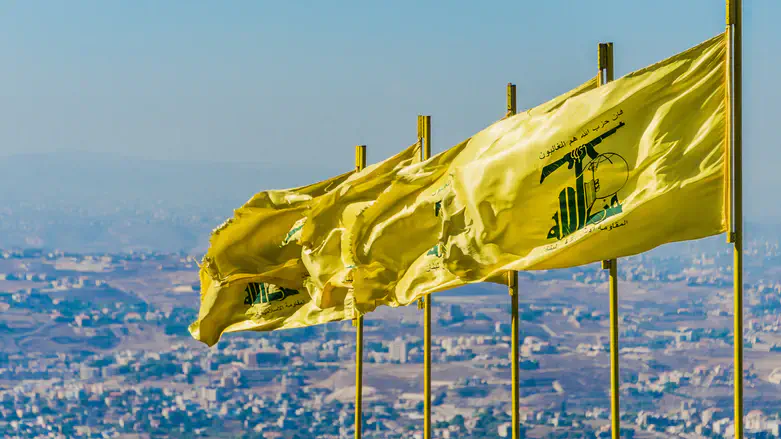
The US Treasury sanctions nine Lebanese and Iranian officials for sabotaging Hezbollah's disarmament.
Hezbollah flags iStock
The
United States Department of the Treasury on Thursday unleashed a
sweeping round of counterterrorism sanctions targeting nine high-ranking
individuals in Lebanon who have actively sabotaged regional peace
initiatives and obstructed the mandatory disarmament of the Hezbollah
terrorist organization.
According
to an official statement from the Treasury’s Office of Foreign Assets
Control (OFAC), the blacklisted individuals comprise a network of
Hezbollah-aligned operatives deeply embedded across Lebanon’s
parliament, conventional military, and national security infrastructure.
Washington
asserts that these figures have systematically abused their positions
within the Lebanese state to insulate and expand the Iranian-backed
terror group’s grip over vital sovereign institutions. The continuous
militant operations and coercive extortion practiced by Hezbollah have
effectively paralyzed the legitimate Lebanese government, rendering it
unable to enforce national sovereignty or strip the terrorist
organization of its illicit arsenals.
“Hezbollah
is a terrorist organization and must be fully disarmed," said Secretary
of the Treasury Scott Bessent. “Treasury will continue to take action
against officials who have infiltrated the Lebanese government and are
enabling Hezbollah to wage its senseless campaign of violence against
the Lebanese people and obstruct lasting peace."
The
targeted sanctions were executed under the authority of Executive Order
13224, a robust American counterterrorism mechanism. The federal action
builds upon decades of US pressure, noting that the State Department
originally designated Hezbollah as a Specially Designated Global
Terrorist under this executive order in October 2001, following its 1997
classification as a Foreign Terrorist Organization under the
Immigration and Nationality Act.
The
Treasury Department exposed how Hezbollah weaponizes its political
faction to defy state authority and block disarmament mandates. Four
prominent members of the Lebanese legislature were explicitly cited for
utilizing their public platforms to spearhead the radical group's agenda
at the expense of the Lebanese populace.
Among
those sanctioned is Mohamed Abdel-Mottaleb Fanich, who commands
Hezbollah’s executive council and oversees the administrative
restructuring required to maintain the group's permanent armed presence.
Fanich, a founding member of the terror organization, previously
secured a seat in parliament under Hezbollah’s Loyalty to the Resistance
Bloc and once served as the nation's Minister of Youth and Sports.
Joining
him on the blacklist is Hassan Nizammeddine Fadlallah, a Hezbollah
member of parliament since 2005 who previously helped establish the
U.S.-designated Al Nour Radio and held a senior directorship at the
notorious Al-Manar TV propaganda
network. Ibrahim al-Moussawi, the current chief of Hezbollah’s Media
Committee and an elected lawmaker, was similarly designated alongside
Hussein Al-Hajj Hassan, a veteran member since 1982 and parliamentarian
since 1996 who has served as a primary legislative bulwark against
disarming the organization. All four politicians face sanctions for
directly acting on behalf of, or being controlled by, Hezbollah.
The
American sanctions also dismantled the treasonous partnerships
shielding the terror group, exposing deep infiltration within Lebanon's
legitimate defense forces and alliances with external actors.
A
primary target of the designation is Mohammad Reza Sheibani, Iran’s
ambassador-designate to Lebanon. Sheibani was recently declared persona
non grata and expelled by Beirut after the Lebanese Foreign Ministry
caught him violating fundamental diplomatic norms to facilitate the
hostile operations of Iran’s Islamic Revolutionary Guard Corps (IRGC).
Furthermore,
the US targeted Ahmad Asaad Baalbaki and Ali Ahmad Safawi, two
prominent security figures within the Amal Movement - Hezbollah's chief
political and military ally. Baalbaki, Amal's Security Director,
allegedly deployed joint forces with Hezbollah to terrorize domestic
political opponents. Safawi, who commands the Amal militia in southern
Lebanon, operated as Baalbaki's direct subordinate, actively taking
operational orders from Hezbollah to execute combined military strikes
against Israel.
The
Treasury Department also uncovered illicit intelligence-sharing
pipelines inside Lebanon’s state-funded security apparatus. Brigadier
General Khattar Nasser Eldin, the National Security Department Chief for
the General Directorate for General Security (DGS), and Colonel Samir
Hamadi, the Lebanese Armed Forces (LAF) Intelligence Directorate Dahiyah
Branch Chief, were both sanctioned for leaking critical intelligence to
Hezbollah during the ongoing military conflict over the past year.
The
logistical implications of the OFAC designations are severe. All
assets, property, and financial interests belonging to the nine
individuals that fall within US jurisdiction or enter the possession of
American citizens are immediately frozen and must be reported to federal
authorities. Any corporate entity owned 50 percent or more by these
blocked individuals faces identical restrictions.
The
Treasury Department warned that foreign financial institutions risking
exposure to these individuals could face devastating secondary
sanctions, including the total termination or strict restriction of
their US correspondent bank accounts. While the agency noted that the
ultimate goal of these measures "is not to punish, but to bring about a
positive change in behavior," Washington made it clear that strict civil
and criminal liabilities will be imposed on any global entities
attempting to evade or violate the blockade.
Reining in psychiatric overprescription won’t come from targeting SSRIs alone, but from fixing insurance incentives that replaced therapy with 15-minute med checks.
It is no secret that RFK Jr., Secretary of Health and Human Services, doesn’t like psychiatrists, and he has had good reason, based upon his personal life experiences. For example, his aunt, Rosemary Kennedy,
was treated with a prefrontal lobotomy at age 23 in 1941, a dark
chapter in the history of psychiatry that left her institutionalized for
life. He credits his own recovery from addiction to abstinence-based
12-step programs, focusing on spiritual principles and peer support,
rather than on psychiatrists or medication.
So, it is no surprise that he is drawn to curtailing psychiatrists’
powers. And he has begun to do so, with the recent MAHA Mental Health
and Overmedicalization Summit. His first target for his “deprescribing”
initiative is SSRI antidepressants. RFK Jr.’s heart is in the right
place, but he has no idea of the hornet’s nest he’s walking into because
he was not on the front lines of psychiatry for decades, as I have
been. The American Psychiatric Association is already fighting back, and a look at the historical context explains why.
To understand this brewing conflict, one has to first look at what
happened to psychiatrists to turn them into over-prescribers in the
first place. As a psychiatrist often featured in the media, I, too, have
taken every opportunity to rail at the current mental health
establishment, and psychiatrists in particular, for overprescribing. So,
I agree with RFK Jr.’s efforts to change the status quo. However, it is
important to first understand the history of how the American mental
health establishment became as dysfunctional as it is today.
RFK Jr. will soon realize that taking prescription pads out of the hands of psychiatrists is a lot tougher than taking COVID-19
vaccines out of the hands of Big Pharma. First of all, Big Pharma still
has many vaccines, pills, and potions to make money off of, whereas
psychiatrists separate themselves from other mental health professionals
by the authority to write prescriptions that their MD license confers.
Once upon a time, I was very active in the American Psychiatric
Association, including serving on the national Public Affairs Committee,
so I remember well how the most urgent concern of the organization was
stopping psychologists from getting the ability to prescribe
medications. This war went on for years. No sooner had psychiatrists
“won” than insurance companies drastically lowered the payments they
made for psychiatrists to do 50-minute sessions of psychotherapy. In
their never-ending quest to cut costs, it dawned on an insurance CEO one
day that they could pay psychologists, social workers, marriage and
family therapists, and counselors less money to do psychotherapy because
they don’t have MD degrees.
This was very short-sighted because the years of medical school and
psychiatry residency that psychiatrists complete give them much more
intensive training and experience to assess and treat patients than
other mental health professionals—not just the ability to prescribe
medications. But this cutback on psychiatrists seeing patients for
psychotherapy sent them into a tailspin. Suddenly, the bread and butter
of their practice, the combination of psychotherapy and medication
management (for those who also needed medication), disappeared.
But, instead of protest marches or any other attempt to fight back,
psychiatrists surrendered to Big Insurance and figured out a
workaround—one that cheated patients just as they, themselves, had been
cheated by Big Insurance. A typical psychiatrist, working 8 hours a day
seeing patients, at the rate of 50-minute therapy hours, can only see 8
patients a day, and at the lower fee schedule they were now being
reimbursed by insurance, they wouldn’t be able to pay their mortgage or
any other financial obligations they had. But if they only saw patients
for 15-minute “med visits,” they could see four times as many patients
and get sufficiently reimbursed by insurance.
However, what I learned as a psychiatric resident and then saw
confirmed time and time again throughout my career is that medication alone
cures no psychiatric disorder. Most of the psychiatrists who do “med
visits” to survive know this as well. Most patients who go to
psychiatrists for help today are met with brief visits where they
discuss their symptoms, are handed a prescription, and told to return in
a month or two or six. They are not given sufficient time to talk about
their problems, and certainly no time to talk about their
childhood—which is the root of whatever problem they currently have.
When the patient returns, with no improvement in their symptoms or
their life, the psychiatrist simply hands them another prescription to
add to the list. This is why people are walking around with
prescriptions for 3-5 medications and feeling worse. Not only is this
because each medication interacts with the others, but also because no
one is really listening to their story and offering insight, compassion,
and direction. Many of these patients suffer in silence until they
either commit a crime or commit suicide. This is the main reason why
mental health in America has deteriorated so badly.
But the answer isn’t simply to stop prescribing SSRIs. The answer
entails changing the payment system that Big Insurance uses in order to
properly subsidize 50-minute sessions of psychotherapy—not just med
visits. It also entails better funding of psychiatry residency programs
so they aren’t dependent upon Big Pharma.
Residencies need to go back to spending more time teaching
psychotherapy and supervising residents treating patients with
psychotherapy, and less time teaching residents to prescribe the latest
drugs that Big Pharma steers them towards.
It will be ever harder to get our head around the challenges of the
future—from AI to aliens—and all the medications in the world won’t be
enough to help us navigate these new frontiers. But a psychiatrist with a
couch and a pad, who cares and knows how to help us put all the pieces
of our life together, is still worth their weight in gold.
* * *
Photo: MINNEAPOLIS, MINNESOTA - MAY 21:
Secretary of Health and Human Services Robert F. Kennedy, Jr. addresses
media to announce actions for combating fraud in Minnesota at the U.S.
Attorney's Office for the District of Minnesota on May 21, 2026 in
Minneapolis, Minnesota. The Department of Justice is bringing charges
against 15 people for fraud that targeted seven Medicaid programs and
over $90 million in taxpayer dollars. (Photo by David Berding/Getty
Images)
Carole Lieberman, MD, MPH is a Board Certified Beverly Hills
psychiatrist, who was Chief Resident at NYU-Bellevue, and also trained
with Anna Freud at her London Clinic. She is a bestselling/award-winning
author, podcast host, and 3x Emmy-honored commentator on Newsmax, FOX
News, and other media outlets.
According to regional analysts, Gulf leaders fear that even a limited American strike on Iranian energy or military infrastructure could provoke retaliatory attacks targeting vital infrastructure.
People walk past a caricature depicting US President Donald Trump, in Tehran, Iran, May 4, 2026. (photo credit: MAJID ASGARIPOUR/REUTERS)
Fears
over a broader regional war and attacks on Gulf infrastructure led the
leaders of Saudi Arabia, the United Arab Emirates, and Qatar to intensify efforts to persuade US President Donald Trump to delay any potential strike on Iran.
“I
have been asked by the Emir of Qatar, Tamim bin Hamad Al Thani, the
Crown Prince of Saudi Arabia, Mohammed bin Salman Al Saud, and the
President of the United Arab Emirates, Mohamed bin Zayed Al Nahyan, to
hold off on our planned Military attack of the Islamic Republic of Iran,
which was scheduled for tomorrow, in that serious negotiations are now
taking place,” the president tweeted.
He
added that “in their opinion, as Great Leaders and Allies, a Deal will
be made, which will be very acceptable to the United States.”
According
to regional analysts, Gulf leaders fear that even a limited American
strike on Iranian energy or military infrastructure could provoke
retaliatory attacks targeting desalination facilities, electrical grids,
oil infrastructure, and shipping lanes throughout the Gulf.
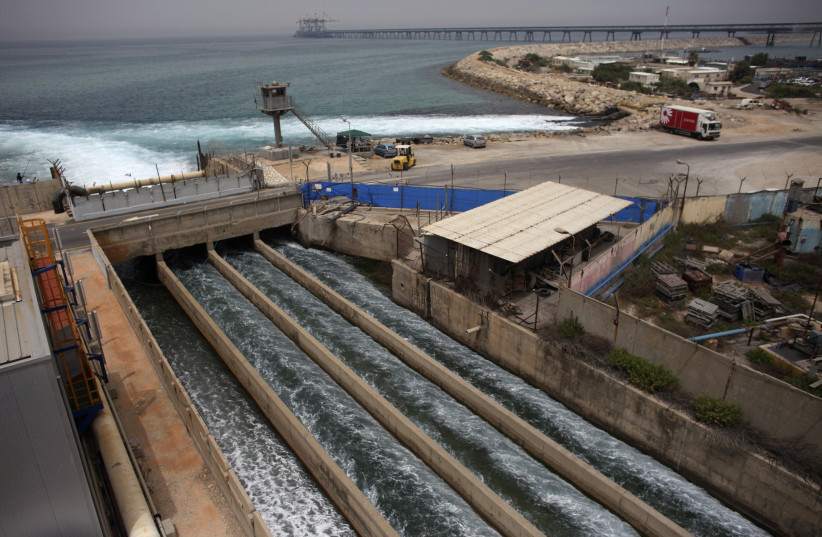
Brine
water flows into the Mediterranean Sea after passing through a
desalination plant in the coastal city of Hadera (credit: NIR ELIAS /
REUTERS)
Saudi Arabia concerned over infrastructure strikes, Iranian civil war
“Saudi Arabia
is worried that if Trump strikes the energy and electricity
infrastructure in Iran, the Iranians still have the capability of
striking back and destroying desalination plants, electricity generation
plants - the infrastructure of Saudi Arabia - which cannot be fully
defended,” Bernard Haykel, professor of Near Eastern Studies, Princeton
University and Senior Fellow at the Foundation for the Defense of
Democracies, told The Jerusalem Post.
“In the summer, if you lose water desalination, you’re in deep trouble. It could cause a humanitarian crisis,” Haykel said.
He
also added that Saudi leaders’ concerns go beyond immediate retaliation
and include fears that military escalation could destabilize Iran
itself.
“They
don’t want a failed state in Iran because a failed state in Iran could
lead to a Libya-like situation with civil war. That’s also something
that could very seriously destabilize the region,” he said.
According to Haykel, Riyadh and other Gulf capitals have consistently favored de-escalation and negotiated arrangements with Tehran over military confrontation.
“They
would like to come to some sort of detente, a de-escalation agreement
with the Iranians,” he said. “This has been their position from the very
beginning. They were against the war to start with, and they’ve been
trying to reach an accommodation with the Iranians and a negotiated
settlement.”
Haykel
argued that Gulf governments believe Iran’s regime faces greater
long-term danger from internal pressures than from external military
action.
“The
Saudis believe, like I do, that the real threat to the regime is
domestic, not external,” he said. “If you leave the regime in place, the
people in Iran will eventually take care of it.”
At
the same time, Haykel said Gulf states remain deeply skeptical that
Washington would sustain a prolonged campaign against Iran if
retaliation intensified.
“I
don’t think they really think that Trump cares about them,” he said.
“They are worried that he would just leave, declare victory, and leave,
and then they’re stuck with Iran and control of Hormuz and extorting
them.”
The
Strait of Hormuz remains one of the Gulf states’ central concerns.
Roughly a fifth of the world’s oil passes through the strategic
waterway, and Gulf officials fear that any Iranian effort to disrupt
shipping there could have catastrophic global economic consequences.
“There
are different priorities for each actor,” said William F. Wechsler,
senior director of Middle East Programs at the Atlantic Council and
senior director of the N7 initiative. “For Trump, it is the nuclear
file; for Israel, it is proxies and rockets; for the Gulf, it is Hormuz
and shorter-range weapons like drones.”
Gulf governments united over opposition to escalation
Wechsler
said Gulf governments remain united in opposing any “great escalation”
of the conflict despite divisions on other regional issues.
“The
governments of the Gulf are divided on many issues but united in their
opposition to a great escalation in the war,” he said. “They are
understandably concerned about the potential for Iranian strikes on
their energy production facilities, electrical grids, and water systems
being successful.”
Such
attacks, he warned, “would bring great immediate hardship and raise
unwelcome questions about the long-term sustainability of their national
economic models.”
While
many Gulf leaders privately favor weakening or even replacing the
Iranian regime, Wechsler said they doubt Washington has either the
strategy or the willingness to achieve that outcome militarily.
“Most
Gulf governments would prefer an outcome that removes the Iranian
regime,” he said, “but are skeptical that the US has a plan, much less
the capacity, to achieve that objective in the near term.”
Fred Fleitz's 'North Korea, Nuclear Brinkmanship, and the Oval Office' shows how decades of diplomatic weakness turned North Korea nuclear—and warns that Iran is following the same path.
Did Iran pose an imminent threat to America?
Was the Islamic Republic on the cusp of nuclear breakout? Anyone asking
those questions would do well to read the new book by Fred Fleitz, North Korea, Nuclear Brinkmanship, and the Oval Office, a study of another outlaw state that recently achieved nuclear status.
National security expert Fred Fleitz shows how North Korea exploited
the globalist approach to nuclear nonproliferation. A thoughtful reader
will explore the history for comparisons and contrasts with Iranian
tactics. Every reader will come away with a clear understanding of how
diplomacy works, and especially how easily American policymakers
miscalculate.
Fleitz is well-positioned to research and write this history because
he lived much of it and created some of it. He was the chief of staff
and executive secretary of the National Security Council (NSC) and spent
over 25 years in national security positions with the DIA, CIA, State
Department, and as congressional staff. He is currently vice chairman of
the American Security Initiative of the America First Policy Institute
(AFPI).
Fleitz grabs the reader by the throat: North Korea has nearly 50
nuclear weapons and thousands of missiles capable of hitting the United
States because of bungling by presidential administrations of both
parties. His timeline shows countless examples of missed opportunities
to stop their nuclear development and of transparent North Korean
gambits to blackmail the world into accepting yet another step toward
nuclearization. If this sounds familiar to Iran watchers, that’s because
Iran pursued the same strategy.
There has been a steady pattern. Periods of accommodation and
conciliation allowed rapid, irreversible progress toward nuclearization
and missile development. Administrations taking hardline positions would
slow the progress but never reverse it, and they were roundly
criticized by globalists and domestic political opponents. The parallels
with Iran are stark: we would not be forced into kinetic action to stop
Iranian nuclearization if we collectively had learned the lessons of
North Korea.
The story of North Korea’s march to nuclear weapons is a depressing
exposé of the Deep State, with the machinations and hubris so common in
the foreign affairs establishment. Foreign Service officers are famously
resistant to policy direction from elected or appointed officials
because they think they’re smarter than anyone else in the room. Fleitz
details the efforts of careerists to downplay the threat of North Korean
nuclear weapons and defy successive administrations’ containment
policies. Unfortunately, the careerists triumphed, and Pyongyang
succeeded in its nuclear march.
The hubris of the career service, however, pales next to that of
former President Jimmy Carter. Carter’s efforts advanced North Korea’s
nuclear program farther in one weekend than in any five-year period
selected at random, and it was President Clinton who let it happen.
The Clinton administration had a habit of using private, “Track II”
diplomatic efforts that sidestepped the foreign policy apparatus. North
Korea had invited Carter several times to mediate. The State Department
rejected the idea, fearing that Carter would freelance.
President Clinton eventually overrode the objections of his advisors
and agreed to send Carter. He announced that Carter was going as a
private citizen, with no authority to represent the US government or to
negotiate any deal. But two days into his visit, Carter did exactly
that. He agreed to a framework that included concessions the US had
never seriously considered.
To make matters worse, Carter didn’t even brief the administration.
He went on CNN, announced to the world that he had averted a war, and
warned the administration not to interfere! Carter’s arrogant gesture
“cut the legs out from under the Clinton administration’s efforts” (p.
35) and resulted in one of the most destructive arms control agreements
in history, the Agreed Framework.
The Agreed Framework bought North Korea several years of nuclear
development with only token international oversight. James Schlesinger,
who had served as CIA director, Energy Secretary and Defense Secretary,
called the Agreed Framework “a negotiated surrender” by the US to North
Korean nuclear ambitions.
As a result of the Agreed Framework, America and the allies gave
North Korea two light water reactors and billions of dollars’ worth of
fuel oil over the next several years in exchange for Pyongyang’s
agreement not to build two nuclear reactors and to surrender spent fuel
rods. The fuel rods were never surrendered. This was much like the deals
negotiated with Iran over the years: empty promises with no real
oversight or enforcement mechanism.
The agreement was presented as an executive agreement rather than a
treaty because the administration knew it would never be ratified by the
Senate. Even the name of the agreement was deceptive. In a linguistic
sleight of hand that would later become famous as a Clintonian
trademark, it was called the Agreed Framework rather than a Framework
Agreement. Calling it an “Agreement” would have marked it clearly as a
treaty and triggered treaty ratification requirements.
Twenty years later, the Obama administration did something similar
with the JCPOA, the Joint Comprehensive Plan of Action, which gave
similar (unratifiable) concessions to Iran. In an unprecedented
legislative maneuver, the Senate never ratified it. Again, it was not
called a treaty or an agreement, but just a “Plan of Action.” Obama
followed the same pattern with Iran that Clinton had with North Korea.
North Korea, Nuclear Brinkmanship, and the Oval Office is quite
readable. Fleitz pulls no punches in telling the story, but he does not
try to bias the reader against any American political faction. He simply
tells the truth. He was there, and he gives the reader a clear view of
how bureaucratic battles are fought, won, and lost. He covers both the
internal Washington bureaucratic battles and the diplomatic struggles.
This book should be required reading for every policymaker and
analyst in Washington. It offers a rare opportunity to see the entire
foreign policy apparatus at work. The lessons could be applied to every
policy discussion. It is especially relevant to this moment because we
are seeing a very similar story unfold in Iran, and we know how the
North Korea story ends.
It is a sober warning; I hope our nation heeds it.
Bart Marcols was the principal deputy assistant secretary of energy for
international affairs during the George W. Bush administration. Marcois
also served as a career foreign service officer with the State
Department.