Sunday, February 8, 2026

West Virginia worked with ICE — 650 arrests later, officials say Minnesota-style 'chaos' is a choice - Charles Creitz


by Charles Creitz

West Virginia AG JB McCuskey contrasts his state's cooperation with Minnesota's 'riots and violence' during federal immigration enforcement


A relatively brief, but lucrative ICE surge into West Virginia netted roughly 650 illegal immigrant arrests earlier this month — a two-week, statewide operation officials say unfolded with little disruption and now stands as a counterpoint to the turmoil surrounding similar enforcement efforts in Minnesota.

From Jan. 5 through Jan. 19, federal agents fanned out across the Mountain State — at times working with local law enforcement — targeting illegal immigrants with criminal histories or prior deportation orders, DHS officials told Fox News Digital.

Officials involved contrast the West Virginia operation with recent tensions in Minnesota, where ICE-related enforcement actions have sparked sustained protests, surveillance of federal agents and confrontations with law enforcement.

"I think the most important thing to notice here is that West Virginia and similarly situated states… have made it very, very easy for criminal illegal aliens to be picked up and processed by ICE," West Virginia Attorney General JB McCuskey told Fox News Digital in an exclusive interview.

MANY OF AMERICA’S SAFEST CITIES ARE IN JURISDICTIONS THAT COOPERATE WITH ICE
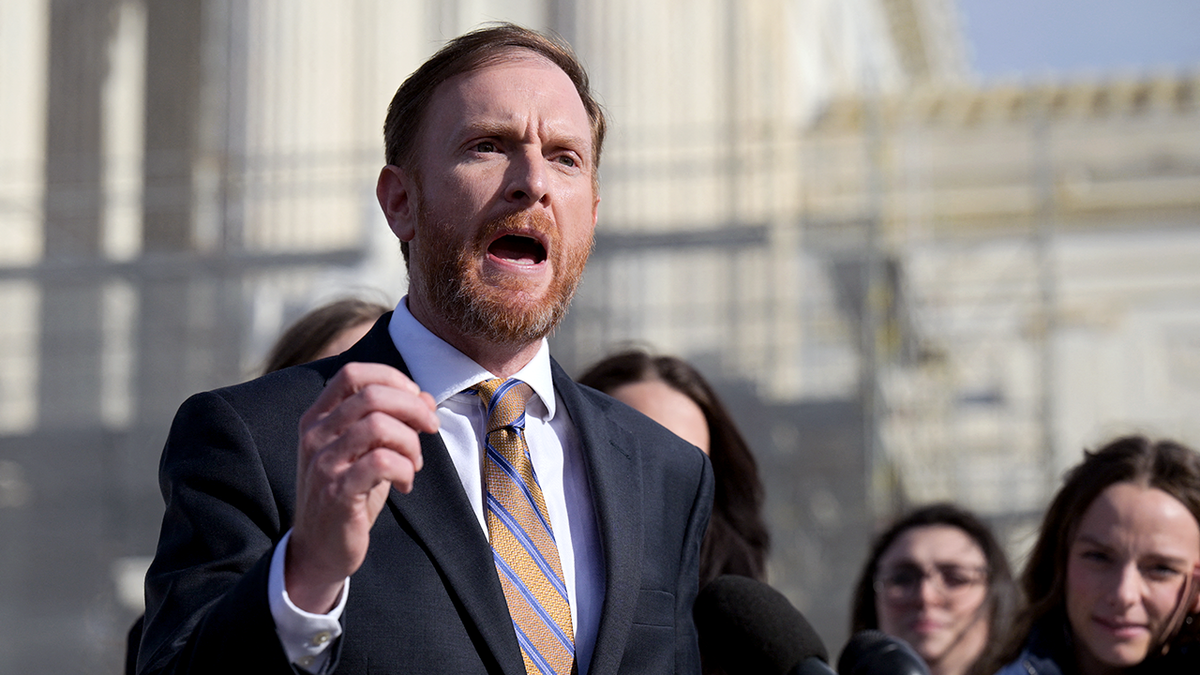
WV AG JB McCuskey in Washington

West Virginia Attorney General JB McCuskey speaks outside the Supreme Court. (Oliver Contreras/Getty Images)

Some of the operations even reached the state’s bluer-tinged Eastern Panhandle, the fast-growing exurb of Washington, D.C., where officials say cooperation, not confrontation, defined the response.

There, Jefferson County Sheriff Thomas Hansen confirmed a two-week operation with ICE in his jurisdiction, which includes Charles Town, Harpers Ferry and Summit Point.

"The (JCSO) was impressed with the professionalism and work ethic of the agents and how well they interacted with the citizens and local law enforcement officers," Hansen said in a statement obtained by Fox News Digital.

McCuskey said the lack of disruption in West Virginia reflected a cooperative approach that he argued prevented the kind of disorder seen elsewhere.

"When you contrast that with places like Minnesota, where you have Keith Ellison — who's obviously embroiled in a massive fraud scandal involving Somali immigrants, et cetera, what you see is riots and violence," he said.

McCuskey suggested the West Virginia mission shows Minnesota’s leadership can no longer blame federal law for its approach, noting that all states still operate under the same immigration statutes that have remained intact since the Obama administration.

TRUMP’S IMMIGRATION VICTORY IN A MINNESOTA COURT IS A WIN FOR ALL LAW-ABIDING CITIZENS

Ice agent

An ICE agent standing in front of a house in a residential area. (Victor J. Blue/Bloomberg via Getty Images)

"All God-fearing Americans believe in immigration. We believe that the promise of this country should be available to those who want to come to America the right way, follow our laws, and become great parts of this incredible quilt that is the American experience," McCuskey said.

"And if your first act as a hopeful new American is to break our laws, that trust has been broken."

McCuskey also accused Minnesota’s leadership of failing on parallel issues, calling Ellison "dalliant" in confronting social services fraud.

"My office [oversees] the same things," he said, noting West Virginia also has a high proportion of residents on entitlements but lacks the level of fraud he says plagues Minnesota.

Just across the Potomac River from ICE’s Martinsburg sting, Maryland Democrats lambasted ICE’s presence in Washington County.
ICE REVEALS 'WORST OF THE WORST' ARRESTS IN JUST ONE DAY AFTER ROUNDING UP 'THUGS' CONVICTED OF VILE CRIMES

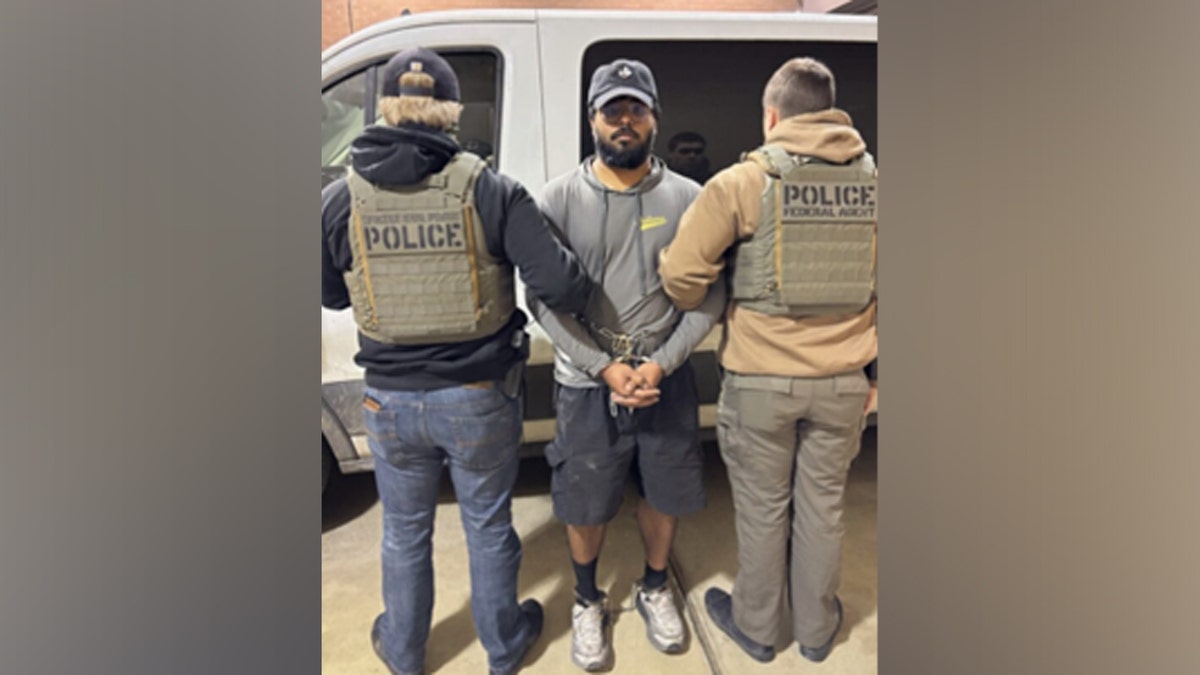
Sagar Singh Arrested

ICE officers arrested Sagar Singh, an Indian national previously ordered removed, during Operation ICE Wall after he was stopped for failing to clear a mandatory commercial vehicle brake check. (ICE)

McCuskey called that a "representation of the generalized idiocy of most of the Democrats in Congress, who have sat on their hands for the last 25 years and done nothing about the very immigration laws that they're very angry about being enforced."

Ellison, by contrast, showered protesters with praise at a recent public appearance, calling ICE's operations a "federal invasion" and telling those assembled in the Twin Cities that he "wanted you to know that I was here with you, fighting with you, standing with you. Keep fighting, stand up strong, don’t back down."

Fox News Digital reached out to Ellison and Gov. Tim Walz for comment, but neither office responded. DHS officials, however, said they expect states that cooperate with ICE to see similar success to West Virginia.

Assistant Secretary Tricia McLaughlin said "work[ing] together can make America safe again."

DHS told Fox News Digital of similarly low-profile ICE operations in Alabama, including activity near Birmingham that netted a violent illegal immigrant accused of stabbing a federal agent, along with enforcement actions in other cities reported by local media.

Alabama Gov. Kay Ivey and Sen. Tommy Tuberville told Fox News Digital they will continue to welcome federal agents in the Yellowhammer State, with Tuberville, a candidate for governor, quipping that one mayor who has pledged to protect illegal immigrants "won’t like me very much" if he succeeds Ivey.

Those arrested in the West Virginia sweep included Mexican national Enrique Vergara, convicted of assault with a weapon; Guatemalan national Isaias Santos, convicted of several violent charges; Julian Garza, charged with auto theft; Brayan Canelis-Giron, charged with domestic violence and gun offenses; and Dennis Paz-Vallecillo, convicted of child neglect.

Not every Mountaineer leader was on board, however, as West Virginia Democratic Party Chair Mike Pushkin — a state delegate from Kanawha County — told Fox News Digital people "have to be honest about what’s really going on here."

FROM PROTEST TO FELONY: THE LINES MINNESOTA ANTI-ICE AGITATORS MAY BE CROSSING
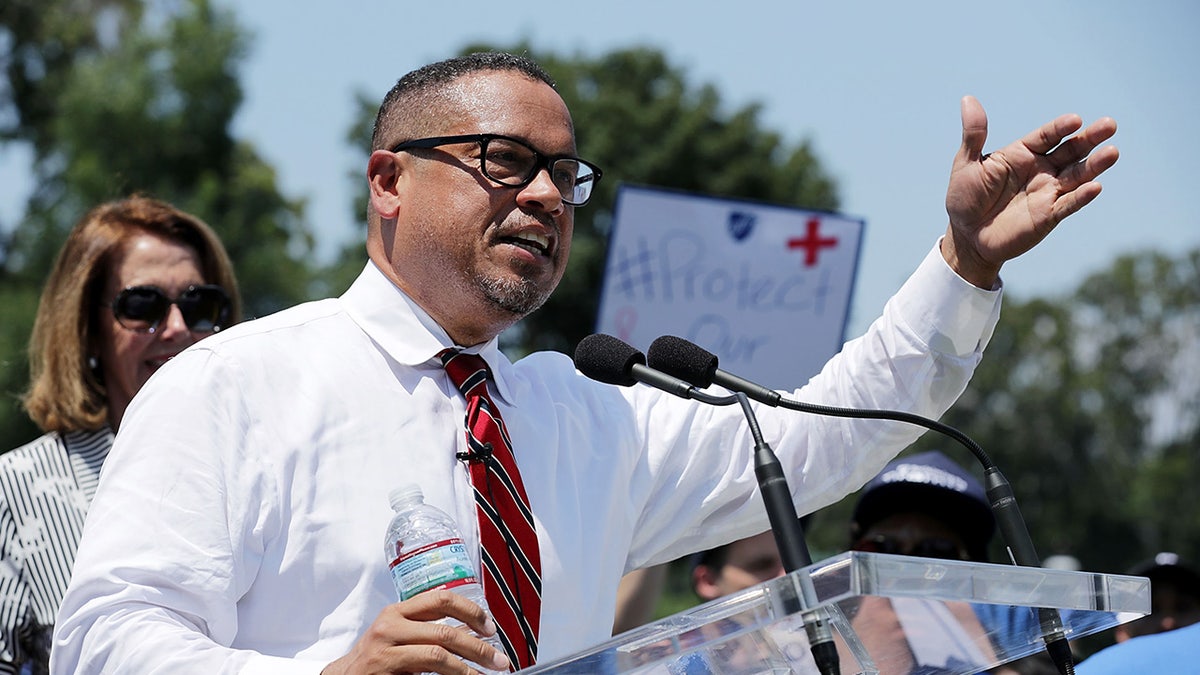
Keith Ellison speaking

Minnesota Attorney General Keith Ellison showered protesters with praise at a recent public appearance, calling ICE's operations a "federal invasion."  (Chip Somodevilla/Getty Images)

"The difference between what you’re seeing in Minnesota and what’s happening in West Virginia isn’t complicated — it’s courage," Pushkin said, crediting Minnesota leaders with standing up to President Donald Trump "trampl[ing] due process and ignor[ing] the Constitution."

"Republican leaders here won’t even clear their throats — and trying to compare the size and scope of the Minnesota operation to what happened here is just silly. That’s like comparing a house fire to a burnt piece of toast and pretending they’re the same emergency," he said.

Pushkin cited a Clinton-appointed judge’s order that some of the detainees be released, including two men picked up on the West Virginia Turnpike.

"In the court’s words, there wasn’t ‘a shred of evidence to justify the government’s position’ — that should be the headline. That should alarm anyone who cares about freedom or the rule of law," Pushkin said.

"Minnesota leaders pushed back. West Virginia’s Republican leadership just clicked their heels, saluted, and fell in line."

HOMAN ANNOUNCES DRAWDOWN OF FEDERAL PRESENCE IN MINNESOTA, HAILS 'UNPRECEDENTED COOPERATION' FROM LOCAL POLICE

Fox News Digital also asked several blue-state leaders about the cooperation contrast but heard back from only one.

A spokeswoman for California Gov. Gavin Newsom said that if the feds truly cared about getting "hardened criminals off our streets, they would pick up every person released from our state prisons that have immigration detainers placed on them."

Diana Crofts-Pelayo said there’s only a one-in-eight rate in that regard, which she said shows the Trump administration just wants to "cause panic and fear to ultimately ensure compliance to a dangerous immigration agenda that threatens Americans’ safety, affordability and freedom."

A California source familiar with the immigration enforcement dynamic there said that immigrants who commit crimes are subject to certain exceptions that do allow local law enforcement cooperation with ICE, particularly those charged with a violent felony.

DHS said cooperation with federal law enforcement is the safest and most effective option for state officials.

"Sanctuary politicians who refuse to cooperate with DHS law enforcement are wasting law enforcement time, energy, and resources, while putting their own constituents in danger," McLaughlin told Fox News Digital, crediting West Virginia officials with allowing such a quick and effective operation and expressing hope that other states would follow suit.


Charles Creitz is a reporter for Fox News Digital. He joined Fox News in 2013 as a writer and production assistant. Charles covers media, politics and culture for Fox News Digital.Charles is a Pennsylvania native and graduated from Temple University with a B.A. in Broadcast Journalism. Story tips can be sent to charles.creitz@fox.com.

Source: https://www.foxnews.com/politics/west-virginia-worked-ice-650-arrests-later-officials-say-minnesota-style-chaos-choice

Follow Middle East and Terrorism on Twitter

US-Iran negotiations could leave Israel vulnerable to attack, experts say - analysis - Amir Bohbot


by Amir Bohbot

Israeli defense officials estimate that the entire US-Iran negotiation process is bad for Israel, as it will likely not take Israel's security concerns into account.


Senior defense officials are expressing concern about the ongoing talks between Iran and the United States, amid assessments by Iranian experts that Iran's Supreme Leader Ali Khamenei does not intend to abandon the nation's nuclear project. 

According to experts, Khamenei views nuclear developments as critical to the regime's survival and will, at most, agree to temporarily pause the development process. What is more, it is not known where Iran's 60% enriched uranium is stored.

Additionally, Iran does not intend to give up its arsenal of ballistic missiles, some of which are aimed at Israel. 

Thus, defense officials estimate that the entire US-Iran negotiation process is bad for Israel, as it will likely not take Israel's security concerns into account.

Currently, there are two options. The first, a "safe haven" agreement, would prevent Israel from attacking Iran.

The second, an "open" agreement, would allow Israel to attack Iran in order to remove threats and maintain security interests. This is reminiscent of the agreement between the Houthis and the US - it left the threat open-ended but gave the IDF freedom to act.

Iran's Foreign Minister Abbas Araqchi is welcomed by an Omani official upon his arrival in Muscat, Oman, in this handout image obtained on February 6, 2026. (credit: IRANIAN FOREIGN MINISTRY/WANA
Iran's Foreign Minister Abbas Araqchi is welcomed by an Omani official upon his arrival in Muscat, Oman, in this handout image obtained on February 6, 2026. (credit: IRANIAN FOREIGN MINISTRY/WANA (WEST ASIA NEWS AGENCY)/HANDOUT VIA REUTERS)

The latter option appears to be more advantageous for Israel, accounting for the possibility of a breakdown in US-Iran negotiations leading to US military action in Iran. The IDF is prepared for this possibility, among others. 

The IDF is also preparing for a variety of scenarios in which talks break down and Iran uses proxies to harm Israel in a way that would require a military response.

The framework of the negotiations will be revealed in the coming days, at which point it will be possible to understand the extent to which the US military presence in the Middle East realistically deters the Iranian regime.

Netanyahu to meet Trump in Washington to discuss US-Iran talks

Prime Minister Benjamin Netanyahu and US President Donald Trump are expected to meet in Washington on Wednesday to discuss the US-Iran nuclear negotiations, the Prime Minister’s Office announced on Saturday evening.

“The prime minister believes that any negotiations must include limiting ballistic missiles and ending support for the Iranian axis,” the PMO stated.

Previously, Trump stated that the nuclear talks, which took place on Friday in Muscat, Oman, were “very good” and that US and Iranian officials are “going to meet again early next week,” while speaking with reporters on Air Force One.
 
“They want to make a deal,” Trump said of Iran, adding that, regardless of other terms that may be included in a potential future deal, Iran will be allowed “no nuclear weapons.”

Goldie Katz contributed to this report. 


Amir Bohbot

Source: https://www.jpost.com/middle-east/iran-news/article-885903

Follow Middle East and Terrorism on Twitter

Israel warns Trump: We may act alone if Iran crosses ballistic missile red line - Avi Ashkenazi


by Avi Ashkenazi

“We told the Americans we will strike alone if Iran crosses the red line we set on ballistic missiles,” the source said, adding that Israel is not yet at that threshold.


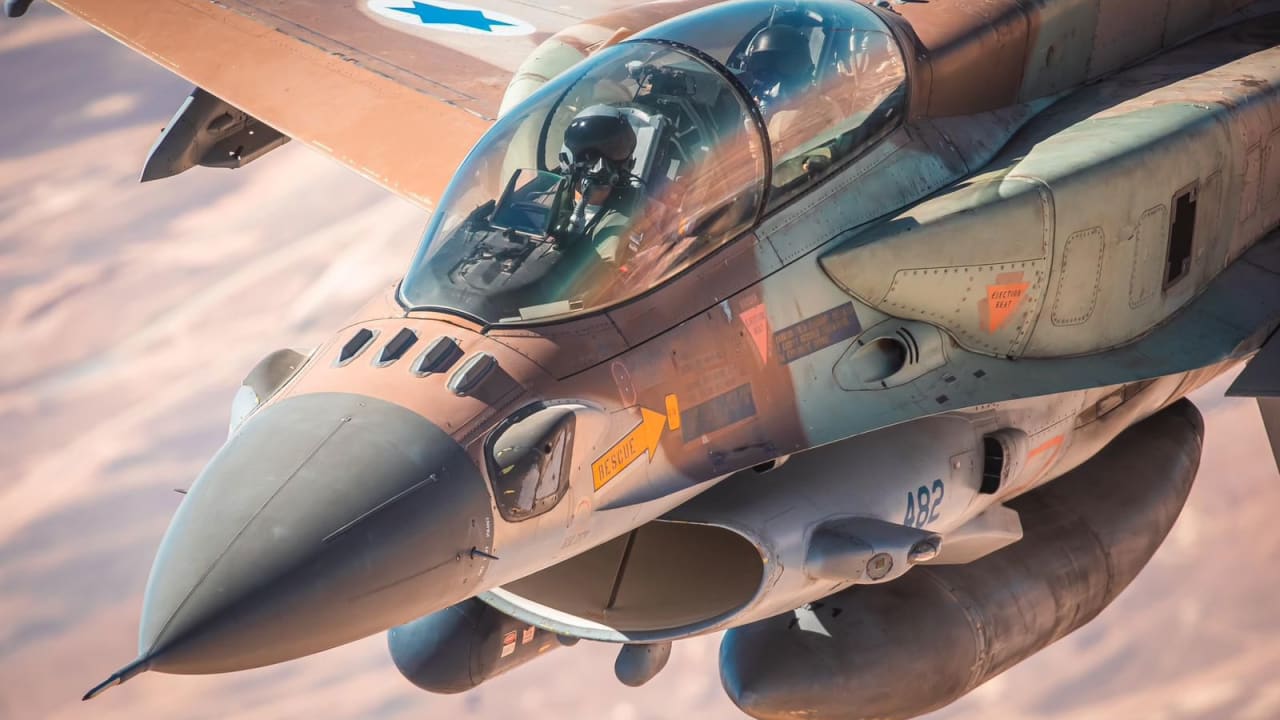
An Israeli Air Force plane utilized in the October 2024 strike against Iranian military infrastructure.
(photo credit: IDF SPOKESPERSON UNIT)

Israeli defense officials recently told their US counterparts that Iran’s ballistic missile program represents an existential threat, and that Jerusalem is prepared to act unilaterally if necessary.

According to security sources, Israeli intentions to dismantle Iran’s missile capabilities and production infrastructure were conveyed in recent weeks through a series of high-level exchanges. Military officials outlined operational concepts to degrade the program, including strikes on key manufacturing sites.

“We told the Americans we will strike alone if Iran crosses the red line we set on ballistic missiles,” the source said, adding that Israel is not yet at that threshold but is continuously tracking developments inside Iran.

The officials stressed that Israel reserves freedom of action and emphasized that it will not allow Iran to restore strategic weapon systems on a scale that threatens Israel’s existence.

One defense official described the current moment as a “historic opportunity” to deliver a significant blow to Iran’s missile infrastructure and neutralize active threats to Israel and neighboring states.

Fire of Israeli attack on Shahran Oil depot is seen following the Israeli strikes on Iran, in Tehran, Iran, June 15, 2025. (credit: MAJID ASGARIPOUR/WANA
Fire of Israeli attack on Shahran Oil depot is seen following the Israeli strikes on Iran, in Tehran, Iran, June 15, 2025. (credit: MAJID ASGARIPOUR/WANA (WEST ASIA NEWS AGENCY) VIA REUTERS)

During recent talks, Israel also presented plans to target additional facilities connected to the missile program, according to the official.

Israeli officials concerned that Trump will adopt limited strike model 

Concerns were raised by several officials that US President Donald Trump may adopt a limited strike model - similar to recent US operations against the Houthis in Yemen - which, they fear, could leave Iran’s critical capabilities intact.

“The worry is he might choose a few targets, declare success, and leave Israel to deal with the fallout, just like with the Houthis,” another military official said, adding that partial measures won’t eliminate the core threat.

Within the IDF, Brig.-Gen. Omer Tishler, the incoming air force commander, is expected to accompany Prime Minister Benjamin Netanyahu on his upcoming trip to the United States.

Tishler will represent IDF Chief of Staff Lt.-Gen. Eyal Zamir, as there is currently no defense attaché in Washington following Defense Minister Israel Katz's decision not to approve the military’s nominee for the post. 


Avi Ashkenazi

Source: https://www.jpost.com/israel-news/defense-news/article-885948

Follow Middle East and Terrorism on Twitter

Why Hezbollah’s internal changes may signal deeper trouble - analysis - Seth J. Frantzman


by Seth J. Frantzman

A report over the weekend indicated that Hezbollah may have accepted the “resignation” of one of its officials named Wafiq Safa.


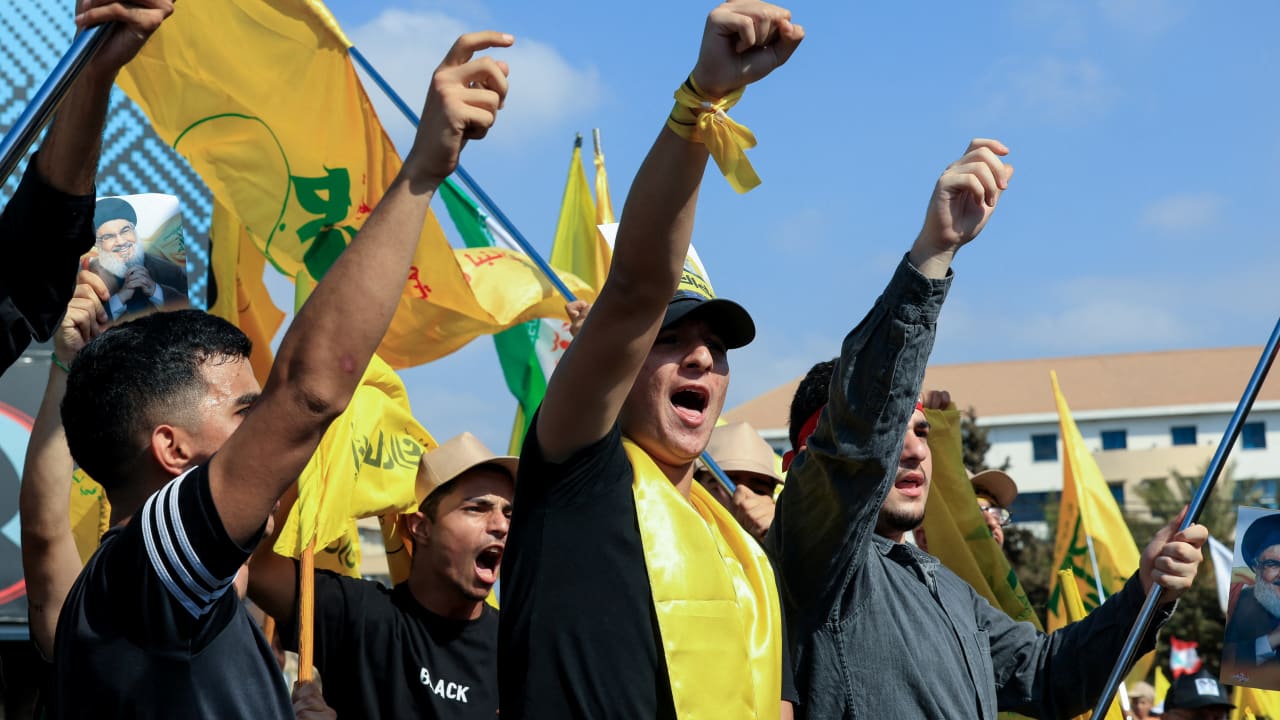
Hezbollah supporters attend a ceremony held by Hezbollah to commemorate the first anniversary of their late leader Hassan Nasrallah's killing by Israel, on the outskirts of Beirut, Lebanon, September 27, 2025
(photo credit: REUTERS/MOHAMED AZAKIR)

Hezbollah is facing increasing airstrikes as Israel continues to target its operatives in Lebanon. The group is also cut off from easy rearmament due to the fact that Syria is now controlled by a government that opposes Hezbollah.

As such, Hezbollah may face a rocky road ahead. However, in its favor is the fact that the Lebanese government still refuses to confront Hezbollah or disarm the group.

A report over the weekend indicated that Hezbollah may have accepted the “resignation” of one of its officials named Wafiq Safa. Reuters noted “Lebanon's Hezbollah accepted the resignation of senior security official Wafiq Safa on Friday, the first time an official of his rank has stepped down.”

It claimed that “Safa, who heads Hezbollah's liaison and coordination unit responsible for working with Lebanese security agencies, survived an Israeli assassination attempt in October 2024.” Hezbollah portrays this as “internal restructuring.” Hezbollah’s “southern commander, Hussein Abdullah, was appointed to replace Safa.”

The Associated Press reported similar details, noting that the group “replaced a top security official who was in charge of coordination with Lebanon’s security agencies after he told the group’s leadership that he wants to step down, two officials with the group who were not authorized to speak publicly on the matter said Friday.” It said.

Hezbollah supporters hold images of late Hezbollah leader Hassan Nasrallah, and Palestinian and other flags at a ceremony held by Hezbollah to commemorate the first anniversary of Nasrallah's killing by Israel, on the outskirts of Beirut, Lebanon
Hezbollah supporters hold images of late Hezbollah leader Hassan Nasrallah, and Palestinian and other flags at a ceremony held by Hezbollah to commemorate the first anniversary of Nasrallah's killing by Israel, on the outskirts of Beirut, Lebanon (credit: REUTERS/MOHAMED AZAKIR)

“Wafiq Safa had headed Hezbollah’s Liaison and Coordination Unit for decades, and it was not immediately clear what his new job within the Iran-backed group is going to be.” It also said he was replaced by “Hussein Abdullah, who is not publicly known.

Overall, the reports portray Hezbollah as having undergone some internal changes. Some of these affect the liaison and coordination unit. Whether this matters is unclear. It is also unclear what ramifications it may have. Is Hezbollah concerned that its liaison with the government is not going as planned? Hezbollah has not been disarmed, which appears to be its main priority at the moment.

Reconstruction in two southern Lebanese villages

The news from Hezbollah was released as Lebanese Prime Minister Nawaf Salam traveled to southern Lebanon to discuss reconstruction projects in two southern villages, Yarine and Tayr Harfa. The goal is to repair the destruction from the war.

The government is now moving forward with these efforts. Salam sees this as a “national cause.” Xinhua media in China noted that “he outlined a recovery framework that includes cash assistance, free healthcare services, and guarantees for continued education for displaced students. The government will also focus on rebuilding public infrastructure and state-owned property for better conditions in the villages.”

Salam’s visit continued for two days. He began his trip in Tyre. He then went up to villages near the border, including Yarine. This village is across from the Israeli village of Arab al-Aramshe. “Salam received a warm welcome in Yarin. Locals dressed him in an abaya, symbolising high respect for a guest,” The New Arab noted.  "I know the pain of Yarin as I know the pain of Zallutiyeh, Al-Bustan, Marwahin, and Al-Dhaira, and as I have seen the pain of your neighbour Tayr Harfa," the Lebanese leader said. "These towns have suffered a real catastrophe, and some have endured years of neglect and marginalization.” He added that "I also know that the attacks are ongoing and that many people live with daily worry, but I know something greater: I know the southerners, in all their diversity, and their attachment to their land. Your resilience is the priority, and the state will stand by you so you can remain and continue [to stay] on your land."

Salam says that Lebanon still intends to continue with disarmament. However, like most officials, he will not call out Hezbollah. This has been a challenge with many Lebanese officials who are willing to talk in general terms about “armed groups” but won’t actually disarm Hezbollah. Lebanon’s army chief, for instance, was in Washington and Florida last week for key meetings with US Central Command and others. However, he also appears to refuse to confront Hezbollah.

Meanwhile, the Norwegian Refugee Council (NRC) says that Israel has increased attacks in Lebanon. A recent report notes that “Israel has carried out at least 50 airstrikes in Lebanon in January 2026 alone, double the number recorded in December, and the highest monthly figure since the ceasefire.” The report added that “the strikes not only create an atmosphere of fear and uncertainty for civilians but also represent a frequent violation of the ceasefire agreed between Israel and Lebanon in November 2024.” Maureen Philippon, NRC’s country director in Lebanon, said “we have seen a clear and dangerous surge in the sheer number of Israeli attacks on Lebanon in the first month of the year.” 


Seth J. Frantzman

Source: https://www.jpost.com/middle-east/article-885959

Follow Middle East and Terrorism on Twitter

US and Iran: Back from the Brink - Amir Taheri


by Amir Taheri

"Give me what I want, and I won't send the boys with baseball bats to break your bones," is the message.


  • Trump has always been keen on securing at least part of what he wants in exchange for not doing what might hurt an adversary.

  • "Give me what I want, and I won't send the boys with baseball bats to break your bones," is the message.

  • The Muscat talks may end up as one of the dozen or so building sites started by Trump from Gaza to Greenland, with the final shape still uncertain. We shall have to wait and see.

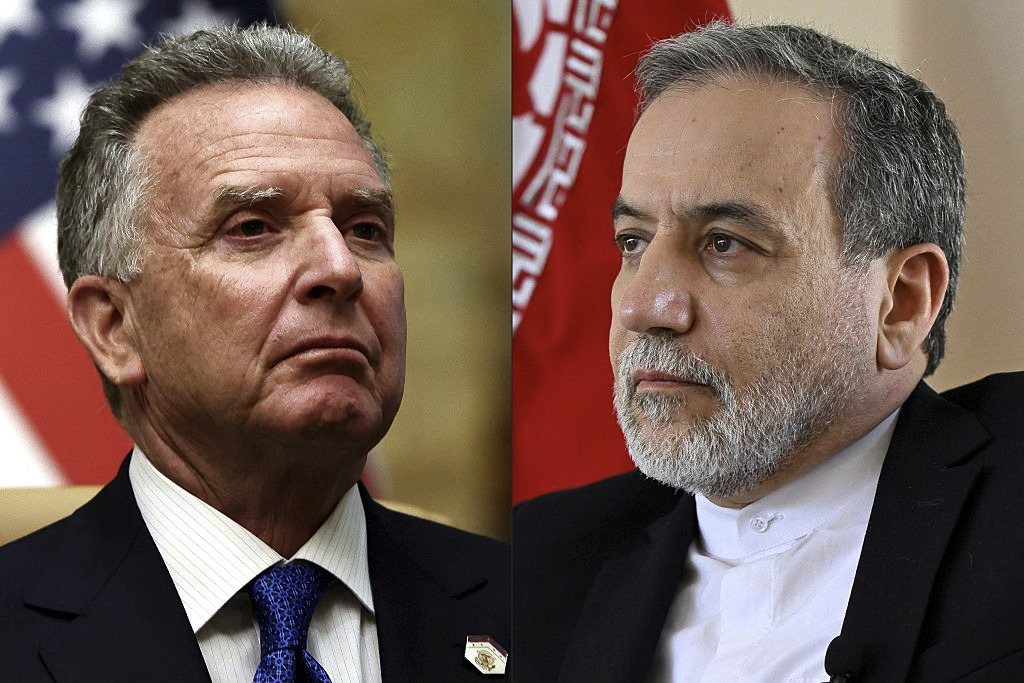
Iran and the United States resumed their interrupted talks in Muscat on Friday, amid contradicting speculations about a possible outcome. Pictured: A combination of photos showing US special envoy Steve Witkoff (L) and Iranian Foreign Minister Abbas Araqchi. (Photos by Evelyn Hockstein and Amer Hilabi/AFP via Getty Images)

Iran and the United States resumed their interrupted talks in Muscat on Friday, amid contradicting speculations about a possible outcome.

Both Tehran and Washington pretend that the long weeks during which the talks between Iranian Foreign Minister Abbas Araqchi and US special envoy Steve Witkoff in Muscat and Rome were interrupted amounted to nothing more than an intermission.

US President Donald Trump talks of an "excellent outcome," while Iranian media express unprecedented optimism about the outcome of the talks.

However, the intermission of which both sides mention witnessed quite a few events that could put the talks on a different trajectory.

During that intermission, Iran witnessed unprecedented internal turmoil with nationwide protests provoking equally unprecedented repression. At one point, it seemed as if Trump might order a military intervention to tip the balance in favor of protesters by ordering the assembly of a huge armada in waters close to Iran.

Two facts seem to have changed Trump's mind about getting the US directly involved in the Iranian imbroglio. The first was remembering a notice seen in china shops: "If you break it, you own it!"

And that is precisely what the so-called Trump method has always tried to avoid.

In his first term, Trump negotiated the end of US involvement in Afghanistan after decades of costly but ultimately futile nation-building efforts.

In his current term, he has also launched a process of military disengagement from Iraq and Syria while settling for a supporting political role.

Trump has always been keen on securing at least part of what he wants in exchange for not doing what might hurt an adversary.

"Give me what I want, and I won't send the boys with baseball bats to break your bones," is the message.

The second fact that may make the new round of talks different is the belated realization by the leadership in Tehran, or at least a part of it, that the Islamic Republic of Iran cannot fight on two fronts, inside and outside.

It is significant that the initiative for resuming the talks came from Tehran, albeit after a series of "consultations" with Russia and half a dozen regional nations, notably Turkey.

The US responded by demanding an enlargement of the topics to include Iran's continued, albeit much reduced, support for its proxies, a curtailing of the range of its missiles and "other regional issues," a code for eventual normalization with Israel.

As might have been expected, that demand was rejected by Supreme Guide Ayatollah Ali Khamenei, who, in a speech, threatened to provoke a regional war.

According to our sources, he agreed to a resumption of talks on three conditions: that the initiative should come from President Masoud Pezeshkian, thus casting him as a scapegoat in case of failure; that the talks retain the indirect format, at least in the beginning; and that the nuclear project remain the sole issue on the agenda.

Much to the surprise of some commentators, Washington agreed, a sure sign that Trump still hopes to achieve what seven US presidents failed to do, by persuading Iran to transform itself from a vehicle for exporting revolution into a normal nation-state.

The new round of talks takes place in a new context marked by the exclusion of the European Union from a process that started almost 20 years ago with Britain, Germany and France getting top billing. Their exclusion pleases Russia, which might play a more active role in persuading Iran to be more accommodating.

Moscow may also help with solving the thorny problem of Iran's huge stockpile of enriched uranium by agreeing to their transfer to Russia.

At this stage, Tehran seems determined to offer minimum concessions, including the ratification of the additional protocols of the Nuclear Non-proliferation Treaty (NPT) and a softening of the modalities of implementation of any accord reached.

Well, you might think that we are back in Groundhog Day, having been there, seen all that, and bought the T-shirt.

No one could exclude the possibility that once again Tehran may be playing for time in the hope that midterm elections in the US could take the wind out of Trump's sails.

On the other side of the table, the Americans may also be playing for time for the multiple crises, including the ayatollah's succession, the trajectory of the internal tensions and the dire economic situation that Iran faces, to shape a credible outcome.

Even if a nuclear accord is somehow conjured, the so-called "Iran problem" would not disappear.

I have always maintained that the nuclear issue is a diversion from the core of the problem, which is the need for Iran to re-become a normal member of the regional and international community pursuing the objectives of normal nation-states.

Trump seems to be betting on the possibility of using the talks as a means of keeping the Islamic Republic on track away from adventurism, pending the emergence of forces that could shape a different trajectory for Iran.

The fact that almost all regional powers plus Russia and, to some extent, even China are now involved in goading Tehran away from adventurism may contribute to neutralizing factions within the regime that even now publicly denounce the talks and call for "staying the course set by slain General Qassem Soleimani."

Those factions denounce what they claim is a new version of the 19th-century gunboat diplomacy, coming as aircraft-carrier diplomacy practiced by Trump.

The difference is that Trump isn't interested in empire-building, if only because, despite decades of leftist propaganda, the United States was never shaped as an imperialist power.

For the past eight decades, that is to say since the end of World War II, it has on occasion acted as guardian of the world order or even hegemon, but never as a builder of empire.

The Muscat talks may end up as one of the dozen or so building sites started by Trump from Gaza to Greenland, with the final shape still uncertain. We shall have to wait and see.

Gatestone Institute would like to thank the author for his kind permission to reprint this article in slightly different form from Asharq Al-Awsat. He graciously serves as Chairman of Gatestone Europe. 


Amir Taheri was the executive editor-in-chief of the daily Kayhan in Iran from 1972 to 1979. He has worked at or written for innumerable publications, published eleven books, and has been a columnist for Asharq Al-Awsat since 1987.

Source: https://www.gatestoneinstitute.org/22260/us-iran-back-from-brink

Follow Middle East and Terrorism on Twitter

Why Some of Trump's Muslim 'Allies' Fear a Loss of Iran More Than They Fear Iran - Pierre Rehov


by Pierre Rehov

Hezbollah in Lebanon; Hamas and Palestinian Islamic Jihad in Gaza; Shiite militias in Iraq and Syria, and the Houthis in Yemen are not independent actors pursuing local grievances. They are integral components of a coherent Iranian strategy, backed by Russia and China, aimed at expanding Islamist Iran's influence in the region by force.


  • [F]or several of these regimes, the real danger is not Iran's collapse, but an ideological exposure that could follow decisive American action, as well as concern about Israel becoming more prominent in the region.

  • "Death to America," Ayatollah Ali Khamenei announced in 2023, "is not just a slogan, it is a policy." For decades, Iran has also been encircling Israel in a "ring of fire" the better to destroy it.

  • Hezbollah in Lebanon; Hamas and Palestinian Islamic Jihad in Gaza; Shiite militias in Iraq and Syria, and the Houthis in Yemen are not independent actors pursuing local grievances. They are integral components of a coherent Iranian strategy, backed by Russia and China, aimed at expanding Islamist Iran's influence in the region by force; destabilizing sovereign states, and eroding the regional order from within. This strategy is not reactive; it is doctrinal.

  • What many have largely avoided addressing is the extent to which some governments, such as Qatar's and Turkey's -- which host American military bases -- benefit from U.S. security guarantees.

  • While publicly Qatar and Turkey affirm their commitment to "stability", at the same time they zealously set about destabilizing half the planet by funding, promoting, and even training Islamist terror networks that presumably serve their own strategic interests. To Western audiences, they speak the language of moderation, while churning up grievance narratives and ideological victimhood at home.

  • Qatar, for instance, presents itself as a neutral mediator, a champion of dialogue, and a facilitator of regional diplomacy, while in practice, for years, Qatar has provided safe haven, financial channels, and political legitimacy to just about every Islamic terrorist group.

  • "Qatar is at the top of funding terrorism worldwide, even more than Iran... Qatar transferred funds through various channels, primarily via their largest foundation, Charai, which is one of the largest funding sources for terrorist organizations in the world." — Udi Levy, a former senior official of Israel's Mossad spy agency who dealt with economic warfare against terrorist organizations, YNet, April 18, 2024.

  • Saudi Crown Prince Mohammed bin Salman once prioritized domestic reform, economic diversification, and social transformation – while, in recent weeks, viciously turning against Israel "even more than al-Jazeera."

  • The United Arab Emirates, under the exceptional, trailblazing leadership of its president, Sheikh Mohamed bin Zayed Al Nahyan, has offered a striking example of unwavering loyalty to the West, to the Abraham Accords, and he demonstrates leadership in showing that extremist Islam need not be a requirement. For the UAE, opposing Iran does not demand embracing Islamism, anti-Western rhetoric, or hostility toward Israel. Through normalization with Israel, economic openness, technological cooperation, and a degree of religious tolerance rare in the region, the UAE has presented an awe-inspiring example of stability rooted in cooperation rather than ideological warfare.

  • Bin Zayed's strategic clarity stands in perfect contrast to the duplicity other Gulf states and illustrates that alignment with Israel and the United States need not come at the expense of any legitimacy.

  • Israel has no imperial ambitions, no desire to dominate Arab capitals, and no ideology of regional subversion. Its military actions are defensive responses to existential threats posed by Iran, Qatar, Turkey, Saudi Arabia, their proxies, propaganda, and terrorist organizations.

  • Israel does not fight Islamic terrorism because it wants to. It fights Islamic terrorism because it has to.... To portray Israel as the destabilizing force while downplaying the role of the countries subscribing to extremist versions of Islam is not analysis; it is narrative distortion and journalistic malpractice.

  • Trump's Middle East policy threatens not only Iran's nuclear ambitions; it threatens an entire system built on moral relativism, selective outrage, and strategic double-talk.

  • Exposure, not war, is what these countries fear – and what they should get.

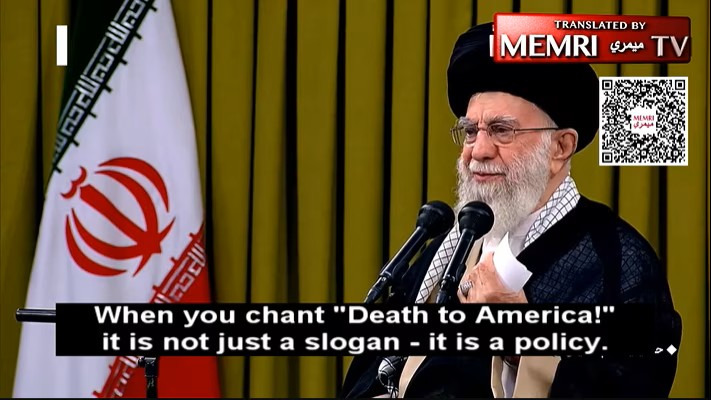
Iran, since its 1979 Islamic Revolution, is not merely a rival or destabilizing neighbor. It is the ideological and operational core of modern Islamist warfare in the Middle East. Since 1979, Tehran has armed, funded, trained, and coordinated proxy organizations with the explicit aim of undermining Western influence. Pictured: Khamenei gives a speech on November 1, 2023, televised on Iran's Channel 1. (Image source: MEMRI)

US President Donald J. Trump's Gulf Arab allies, according to the New York Times, oppose an American strike on Iran primarily out of fear of regional instability and the possible damage to economies, tourism, and domestic security.

While this explanation may sound credible on the surface, a deeper and far more uncomfortable reality is that for several of these regimes, the real danger is not Iran's collapse, but an ideological exposure that could follow decisive American action, as well as concern about Israel becoming more prominent in the region.

A serious confrontation with Iran would not only reshape the regional balance of power; it would also force a number of Arab states to clarify positions that for decades they have fought to keep ambiguous.

Iran, since its 1979 Islamic Revolution, is not merely a rival or destabilizing neighbor. It is the ideological and operational core of modern Islamist warfare in the Middle East. Since 1979, Tehran has armed, funded, trained, and coordinated proxy organizations with the explicit aim of undermining Western influence. "Death to America," Ayatollah Ali Khamenei announced in 2023, "is not just a slogan, it is a policy." For decades, Iran has also been encircling Israel in a "ring of fire" the better to destroy it.

Hezbollah in Lebanon; Hamas and Palestinian Islamic Jihad in Gaza; Shiite militias in Iraq and Syria, and the Houthis in Yemen are not independent actors pursuing local grievances. They are integral components of a coherent Iranian strategy, backed by Russia and China, aimed at expanding Islamist Iran's influence in the region by force; destabilizing sovereign states, and eroding the regional order from within. This strategy is not reactive; it is doctrinal.

Trump's Iran policy, after years of hesitant US engagement at best, has consistently combined economic pressure and military deterrence, with limited diplomatic patience, to restore America's international credibility.

Trump's restoration of credibility has apparently unsettled not only Iran's regime, but also some of Washington's supposed regional allies, who have grown accustomed to maneuvering Washington when desirable. Some, such as Qatar, have built fancied empires by never committing to any side and instead playing every side. Just as much blame, however, must go to those leaders in the Middle East and Europe who agreed to be played.

What many have largely avoided addressing is the extent to which some governments, such as Qatar's and Turkey's -- which host American military bases -- benefit from U.S. security guarantees.

While publicly Qatar and Turkey affirm their commitment to "stability", at the same time they zealously set about destabilizing half the planet by funding, promoting, and even training Islamist terror networks (such as here, here, here, here and here) that presumably serve their own strategic interests. To Western audiences, they speak the language of moderation, while churning up grievance narratives and ideological victimhood at home.

A decisive confrontation with Iran might shatter the carefully maintained duplicity that these countries have so tenderly nurtured for decades.

Qatar, for instance, presents itself as a neutral mediator, a champion of dialogue, and a facilitator of regional diplomacy, while in practice, for years, Qatar has provided safe haven, financial channels, and political legitimacy to just about every Islamic terrorist group. Hamas's senior leaders have been welcome to live in Qatar as safe and comfortable billionaires ​​​​​​while directing their terrorist operations elsewhere.

According to Udi Levy, a former senior official of Israel's Mossad spy agency who dealt with economic warfare against terrorist organizations:

"Qatar is at the top of funding terrorism worldwide, even more than Iran... Qatar transferred funds through various channels, primarily via their largest foundation, Charai, which is one of the largest funding sources for terrorist organizations in the world."

Qatar's state-owned media empire, Al -Jazeera, consistently amplifies Islamist narratives, demonizes Israel, and undermines moderate Arab governments, all while projecting an image of supposed neutrality. In fact, by its own admission, it was Qatar that whipped up and catalyzed the entire disruptive "Arab Spring" that begin in 2010.

When Qatar is not acting out its central role in sustaining this Islamist terrorist ecosystem, an absent decoy to deflect attention, such as the Iranian regime, could redirect scrutiny toward Qatar even further.

Turkey, looking forward rather than backward, appears to agree with that assessment. Turkey, doubtless, shares the same point of view. It appears to be using its proxy, Syria -- under the interim presidency of former al-Qaeda leader Ahmed al-Sharaa -- and a place on Trump's alleged "Board of Peace " in Gaza, eventually to pincer Israel in the middle.

Under President Recep Tayyip ErdoÄŸan, who regularly uses jihadist and anti-Israel rhetoric, Turkey abandoned what was left of Mustafa Kemal Ataturk's secular legacy in favor of overtly Islamist, neo-Ottoman goals. "The mosques are our barracks, the domes our helmets, the minarets our bayonets and the faithful our soldiers," Erdogan once recited.

Under Erdogan's rule, Turkey also hosts Hamas operatives, offers political cover to Islamist causes, and has dispatched armed flotillas, built 31 new warships, threatened Greece, and has been doing his utmost to acquire American F-35 stealth fighter jets.

While Turkey competes with Iran in certain arenas, it also benefits from Iran's role as a regional spoiler that distracts attention from Erdogan's own neo-Ottoman ambitions. A serious weakening of Iran would, by removing this diversionary decoy, expose Turkey's broader regional agenda in Syria and Gaza with greater visibility.

Saudi Arabia, by contrast, has suffered direct attacks from Iranian-backed forces and has legitimate reasons to fear aggression from Iran, which for decades appears to have had its acquisitive eyes on the kingdom's oil fields as well as its guardianship of Islam's two holiest sites: the pilgrimage Kaaba stone and its surrounding mosque in Mecca, and the Prophet's Mosque in Medina.

Saudi Arabia and Iran are not partners; they are fierce rivals and competitors. Saudi Crown Prince Mohammed bin Salman once prioritized domestic reform, economic diversification, and social transformation – while, in recent weeks, viciously turning against Israel "even more than al-Jazeera."

The United Arab Emirates, under the exceptional, trailblazing leadership of its president, Sheikh Mohamed bin Zayed Al Nahyan, has offered a striking example of unwavering loyalty to the West, to the Abraham Accords, and he demonstrates leadership in showing that extremist Islam need not be a requirement. For the UAE, opposing Iran does not demand embracing Islamism, anti-Western rhetoric, or hostility toward Israel. Through normalization with Israel, economic openness, technological cooperation, and a degree of religious tolerance rare in the region, the UAE has presented an awe-inspiring example of stability rooted in cooperation rather than ideological warfare.

Bin Zayed's strategic clarity stands in perfect contrast to the duplicity other Gulf states and illustrates that alignment with Israel and the United States need not come at the expense of any legitimacy.

The suggestion advanced by the New York Times and other media that Israel represents a greater threat to regional stability than a weakened Iran is not merely inaccurate — it inverts reality. Israel has no imperial ambitions, no desire to dominate Arab capitals, and no ideology of regional subversion. Its military actions are defensive responses to existential threats posed by Iran, Qatar, Turkey, Saudi Arabia, their proxies, propaganda, and terrorist organizations.

Unlike Iran, Qatar, Turkey, Saudi Arabia and their proxies, Israel operates within legal and moral constraints that are routinely ignored or openly rejected by its adversaries. To portray Israel as the destabilizing force while downplaying the role of the countries subscribing to extremist versions of Islam is not analysis; it is narrative distortion and journalistic malpractice.

Israel does not fight Islamic terrorism because it wants to. It fights Islamic terrorism because it has to. It has shown time and again that it would clearly prefer to be left in peace under its fig tree. Israel fights because, to survive against such overwhelming belligerence, it must — usually alone, often condemned, and often while its supposed "allies" hedge their bets.

Many regional actors benefit indirectly from Israel doing the difficult and dangerous work of confronting Iran's proxies, among other adversaries, even as they publicly distance themselves from Israel's actions to placate domestic opinion or ideological associates. This hypocrisy is rarely acknowledged in Western mainstream media coverage, yet it remains a defining feature of the region's geopolitics.

Trump's Middle East policy threatens not only Iran's nuclear ambitions; it threatens an entire system built on moral relativism, selective outrage, and strategic double-talk. By demanding accountability, enforcing sanctions, and refusing to indulge diplomatic illusions, Trump exposed the fragility of regimes accustomed to managing perceptions rather than confronting realities. His approach has disrupted comfortable arrangements that allowed Iran's regime to expand while claiming plausible deniability.

The resistance to Trump's Iran strategy, therefore, is rooted in a fear of transparency and a lurking competition for supremacy. A Middle East no longer dominated by Iranian subversion and chaos would force too many actors to answer uncomfortable questions about their own financing networks, ideological alignments, and long-standing contradictions. For regimes built on doubletalk, truth is far more dangerous than missiles.

The region does not suffer from a lack of diplomacy. It suffers from an excess of illusion. Iran's regime is not some misunderstood actor seeking stability; it is a theocratic dictatorship that oppresses women, murders innocents – estimated at this point to be more than 90,000 -- and exports violence, in Khamenei's own words, as state policy.

Trump's refusal to indulge this illusion marked a historic breakthrough — a rare moment of strategic honesty in Middle Eastern affairs — one that clarifies who genuinely seeks stability and those who benefit from engineering perpetual instability.

Such honesty may well have unsettled not only Iran's leaders but also those who quietly rely on chaos to obscure their own failures and unrelenting bellicosity.

Exposure, not war, is what these countries fear – and what they should get.


Pierre Rehov, who holds a law degree from Paris-Assas, is a French reporter, novelist and documentary filmmaker. He is the author of six novels, including "Beyond Red Lines", "The Third Testament" and "Red Eden", translated from French. His latest essay on the aftermath of the October 7 massacre " 7 octobre - La riposte " became a bestseller in France. As a filmmaker, he has produced and directed 17 documentaries, many photographed at high risk in Middle Eastern war zones, and focusing on terrorism, media bias, and the persecution of Christians. His latest documentary, "Pogrom(s)" highlights the context of ancient Jew hatred within Muslim civilization as the main force behind the October 7 massacre.

Source: https://www.gatestoneinstitute.org/22262/trumps-muslim-allies-iran

Follow Middle East and Terrorism on Twitter

A Complicated Week - Clarice Feldman


by Clarice Feldman

Another sterling week for the Trump administration, another interval of agony for his opponents.


The attention of those less politically minded is focused on the disappearance of Savannah Guthrie’s mother, Nancy -- always fodder for the would-be Colombos and Miss Marples -- and the Olympics. Yet this week saw some victories for the administration along with some serious unfinished business.

The ousted dictator Nicolás Maduro seems isolated, depressed, and devoid of funds sufficient to hire teams of lawyers to defend him. Any claims he might have for immunity seem destined to fail. The evidence establishes he was born in Colombia; his claim falls because only a native Venezuelan is entitled to hold the office of president. Without his presence and with the active engagement of the U.S., the Venezuelan economy appears to be rapidly coming back to life. Without the assets looted from there and used to sustain the neighboring tyrants of Cuba, that country is teetering rapidly to an end. It is out of fuel, electricity, medicine, and food. American flags have been seen flying over some of the dilapidated buildings which remain after decades of misrule. I can’t imagine it will last much longer, and I expect there will be many exiles from there, willing to return and rebuild the island once the thieves are out of office. 

The fall of Maduro has implications outside of this hemisphere. There is evidence that Spanish prime minister Pedro Sanchez, whose family and administration are demonstrably corrupt, and his predecessor Jose Zapatero have been linked to Venezuelan corruption. Faced with increased unpopularity among Spaniards, Sanchez plans to regularize 500,000 invaders and give them residence rights for one year. European leaders, already faced with the impossible burden of vast numbers of Third-World immigrants, correctly fear the impact on the Schengen agreement, which allows people in 29 countries (the EU and four others) to travel and move freely from one country to another. 

Sanchez is not the only European leader on shaky ground. The UK’s Starmer, France’s Macron, and Germany’s Merz all are polling badly. Keir Starmer is in the worst shape and may be forced to resign within days. The loony Chagos deal he promoted and his connection to Peter Mandelson seem the tipping point. Mandelson’s close connection to Jeffrey Epstein is revealed in the documents just released by the Department of Justice, and Starmer has admitted in Parliament that he knew of Mandelson’s ties to Epstein when he named him ambassador to the U.S. (The appointment seemed designed to allow Mandelson to lobby in Washington for the Chagos deal, a deal so bad only China would benefit from it.) Other European political personages, Norway’s Mora Juul and Slovakia’s Miroslav Lajcak, have careers negatively impacted by the connections revealed in the Epstein files. Norway’s Princess Mett-Marit is in hot water as her extensive relationship with Epstein was unveiled.

The European Union has not abandoned its efforts to shut down Twitter and expand its undemocratic censorship of speech from inside Europe to us. (French officers invaded X’s Paris office this week.) It can hardly be a shock to learn that Hillary Clinton, who with her husband seems to be still trying to evade congressional oversight into their knowledge of Epstein’s crimes, played a significant role in this overreach:

Heritage Foundation exposes Hillary Clinton was directly behind getting the European Union to use their Digital Services Act to pressure Elon Musk and America back into censorship

Hillary Clinton flew overseas for a meeting to facilitate this against America

"Free speech is in a free fall in Europe -- They (The European Union) gathered in Berlin, and it was the most anti-free speech gathering I've ever been part of -- Hillary Clinton was there, and she really fueled the anger.

When Twitter was purchased by Elon Musk, she called on the EU to use the infamous Digital Services Act, which is one of the most anti-free speech pieces of legislation in decades. And she called upon the EU to use the DSA (Digital Services Act) to force the censorship of American citizens, force people like Musk to censor.

Advertisement

It's an extraordinary act by someone who was once a presidential candidate” -- Law professor Jonathan Turley

The subpoenas were issued with the concurrence of some Democrat members of the relevant House subcommittee, a shocking development and a sign that not all party members are willing to cover for these two any longer. 

As successful as the administration has been in this hemisphere and in exposing corruption in Europe, the lag time between the redline the President set for Iran grows. Inside the country -- despite the slaughter of tens of thousands of civilians and the ongoing revolution, including the destruction of significant regime assets -- the need for U.S. and Israel assistance remains unanswered. I keep seeing evidence of substantial U.S. assets being moved into the area, and I understand that we need to protect 19 of our bases in close proximity and coordinate with Israel and other surrounding countries. Still, it seems time to act.

Domestically, the economy is doing very well. Contrary to “expert” opinion of economists, this week the Dow soared to new heights

In what the confounded experts are calling “statistically impossible” and “clearly some kind of data error,” the Dow Jones Industrial Average sailed past 50,000 points Friday, a milestone that sixteen Nobel Prize-winning economists had confidently predicted would never happen because President Trump’s policies would first reduce the American economy to a smoking crater populated only by unemployed factory workers trading bitcoin for canned goods. CNBC, June 2024 (even before the election):

Sixteen! Sixteen Nobel laureates took breaks from polishing their prizes (which are apparently handed out like candy by Scandinavian Epstein fanboys) to warn us Trump would “reignite inflation.” And… the Dow just hit 50,000, with eggs and gas cheaper than ever. Too bad the Nobel Institute doesn’t have a return policy. Maybe the Committee should create a new category for people who excel at failing upward.

From a consumer’s point of view, gas prices are at their lowest in five years, inflation is under 3% and the gross domestic product at 4.2% is soaring. Trillions of pledged foreign investments are on the horizon.

The legacy media is not doing as well. This week the Washington Post terminated another 300 employees, and who knows how long the ever-thinner Democrat broadsheet will continue operations. 

In a very significant development concerning illegal immigrants, the Fifth Circuit Court of Appeals ruled that DHS was correct: Illegal aliens can be detained without bail, pending their removal proceedings. This should make removals faster and easier.

Now -- if you crossed illegally and ICE finds you, you’re done. You’re not walking American streets freely again unless you prevail in your removal proceeding (which is supremely unlikely). You won’t be able to go to your apartment and grab your things. You are simply done. You can either accept deportation or sit in immigration detention while your lawyer wastes their time on futile filings, and then get deported when you lose. 

This will lead to a lot more illegal aliens simply giving up on their frivolous court fights and accepting deportation, which will help relieve the court backlogs. This will also lead to many more illegal aliens self-deporting. Would you rather pack up your things, settle your affairs, and get a free flight and $2500? Or would you rather try and hide from ICE, knowing that the moment they find you, you will never breathe free air in America again?

It’s a much easier choice.

In sum, I think the EU plan to muzzle free speech will fail in the face of strong U.S. opposition, that Starmer will resign; that Sanchez will also or be forced from office, though perhaps that will take longer; that the mullahcracy is about to end in ways we cannot yet entirely foresee; that the removal of millions of illegal aliens will take place faster and in greater numbers than we might have anticipated. The SAVE Act is due to come up this coming week. If what we find in the seized Georgia election records and/or what we gleaned in Venezuela reveal what I think they will, it would be political suicide to vote against it. 


Clarice Feldman

Source: https://www.americanthinker.com/articles/2026/02/a_complicated_week.html

Follow Middle East and Terrorism on Twitter

House Intel chairman warns China may be setting up illicit biolabs in U.S. to seed next pandemic - Nicholas Ballasy


by Nicholas Ballasy

“Why would you have some illicit labs set up in an Airbnb, except for, maybe, you’re trying to create some sort of, you know, patient zero scenario, that you might infect someone, that you might create another COVID-like scenario," Crawford says


House Intelligence Committee Chairman Rep. Rick Crawford, R-Ark., is warning that illicit biolabs on U.S. soil that the FBI says are linked to Chinese nationals could represent a serious national security threat, and may be an effort by Beijing to infect a "patient zero" for the next pandemic.

Speaking during an interview Friday on the Just the News Not Noise television program, Crawford pointed to labs raided by authorities in California in 2023 and Nevada a week ago, raising questions about the intent, oversight failures, and the potential risks posed by foreign actors.

One of the labs was located in a vacation rental home near Las Vegas, a major metropolitan center frequented by vacationers.

“You know, it’s a really hard problem to assess,” Crawford said. “Why would you have some illicit labs set up in an Airbnb, except for, maybe, you’re trying to create some sort of, you know, patient zero scenario, that you might infect someone, that you might create another COVID-like scenario.”

Crawford said the alleged handling of dangerous pathogens appeared careless at best, and possibly deliberate. “Why would you do it in such a slipshod way, if it wasn’t almost deliberately to try to maybe attract attention?” he asked. “Are they trying to send a message to us?”

The makeshift Biolab near Las Vegas was close to what Crawford described as a “high-value” military installation. He said the proximity to both civilians and defense assets heightens his concerns.

“I have no idea what the operational use for this illicit lab was, except that it’s in close proximity to a population center,” Crawford said. “It’s also in close proximity to a military installation of high value.”

Crawford argued that the Las Vegas situation shows the broader vulnerabilities in the U.S. counterintelligence and immigration systems, warning that foreign actors, particularly from China, have taken advantage of the free and open society in the U.S.

“This requires us to double down on our CI (counterintelligence) posture, which has not evolved and kept pace with these threats that continue to evolve,” he said, adding that he is “not sure we’re fully prepared for” the challenges ahead.

The Arkansas Republican rejected the notion that the issue stems solely from border security failures under the Biden administration.

“The Chinese have been exploiting our immigration system for decades,” Crawford said. “Those family members are not severing ties with their CCP relatives.”

According to Crawford, that access has enabled land purchases and other activities that may place Chinese nationals close to sensitive U.S. assets without raising immediate red flags.

“Now as a U.S. citizen, I can go and buy property, and nobody really looks any sideways about it,” he said. “But what they’re doing is buying that land so that they can gain access to some sort of strategic asset.”

Crawford also criticized American universities for what he described as prioritizing revenue over security by admitting large numbers of Chinese students into advanced science and technology programs.

“They’re not here to study the arts or literature,” he said. “They’re here to gain hard-tech degrees: engineering, physics, biochemistry. And it’s been to our detriment.”

Crawford said university leaders have acknowledged the concern but often resist action without congressional mandates. 

“What does that tell you about how powerful money is, that institutions are more consumed with their bottom line than they are with the security of this nation?” he said.

Crawford said China’s long-term objective is clear. 

“Their stated goal is to displace the United States as the preeminent economy, the preeminent military, the preeminent political leader globally,” he said.

While acknowledging that the full intent behind the alleged biolabs such as the Las Vegas case remains unknown, Crawford said the status quo is unacceptable.

"I don't know if they were trying to create, as I suggested before, possibly a patient zero scenario where they can get out and create, potentially, an epidemic, or, you know, heaven forbid, a pandemic that makes it difficult for us to function. I don't know what her motives were, but I know that we can't continue to operate like this," he said. 


Nicholas Ballasy

Source: https://justthenews.com/government/congress/house-intelligence-committee-chairman-warns-biolabs-us-might-lead-next-pandemic

Follow Middle East and Terrorism on Twitter

House Oversight probes Rep. Ilhan Omar's husband's businesses - Brett Rowland


by Brett Rowland

"Given that these companies do not publicly list their investors or where their money comes from, this sudden jump in value raises concerns that unknown individuals may be investing to gain influence with your wife," Comer wrote in a letter to Mynett.


(The Center Square) -

The House Oversight Committee is investigating the rapid rise in value of two companies owned by Rep. Ilhan Omar's husband, amid concerns over financial transparency and potential influence.

House Committee on Oversight and Government Reform Chairman James Comer, R-Ky., said Omar's husband, Timothy Mynett, has ownership stakes in two companies, eStCru LLC and Rose Lake Capital LLC. The reported value of those positions surged from $51,000 in 2023 to as much as $30 million in 2024.

"Given that these companies do not publicly list their investors or where their money comes from, this sudden jump in value raises concerns that unknown individuals may be investing to gain influence with your wife," Comer wrote in a letter to Mynett. "Media reports further suggest that you may have raised money from investors using misleading information, meaning some of those funds may have been obtained improperly."

Omar, a 43-year-old Minnesota Democrat, is a Somalia-born Muslim. She is the first Somali American elected to Congress. She fled Somalia with her family when she was 8 years old. She became a U.S. citizen in 2000.

The Squad member has worked to thwart President Donald Trump's agenda, and the two have been sparring for years. Trump recently said both Congress and the U.S. Department of Justice are investigating Omar over the mushrooming value of the companies.

Typically, the House Ethics Committee handles allegations involving lawmakers and their family members.

Comer said that Mynett, in 2021, allegedly promised an investor a 200% return on a $300,000 investment in eStCru, plus interest, but did not repay the funds until sued for fraud in 2023. Comer also said that eStCru faced financial trouble in 2023. Rose Lake Capital, identified as a venture capital firm in Omar's 2024 financial disclosure, has also increased in value.

Omar previously said her husband's reported income from eStCru was between $5,000 and $15,000. She said he had no income from Rose Lake Capital.

In the letter, Comer demanded that Mynett turn over documents related to both companies, including financial statements and travel records.

Omar's office didn't immediately respond to late afternoon requests for comment from The Center Square on Friday. 


Brett Rowland

Source: https://justthenews.com/nation/states/center-square/house-oversight-probes-rep-ilhan-omars-husbands-businesses

Follow Middle East and Terrorism on Twitter