by Stu Cvrk
The most consequential presidency in generations.
President Trump remains focused on delivering his 2024 campaign promises with lightning speed. This is Part II of a two-part series that summarizes Trump administration accomplishments since October 2025. An article last November covered the accomplishments during the first nine months here.
Part I of this series summarizes domestic policy accomplishments; Part II’s focus is foreign and national security policy achievements.
AMERICA FIRST FOREIGN AND NATIONAL SECURITY POLICY ACCOMPLISHMENTS
Across both of his presidential terms, President Trump has been tackling heretofore seemingly intransigent problems that have existed across multiple presidencies. Several of those are discussed here.
VENEZUELA: OPERATION ABSOLUTE RESOLVE AND THE CAPTURE OF MADURO
The single most dramatic national security event of this period was the January 3, 2026 U.S. military operation—codenamed Operation Absolute Resolve—that captured Venezuelan dictator Nicolás Maduro and his wife, Cilia Flores, at a fortified compound in Caracas. Per the Congressional Research Service, the operation followed months of lethal U.S. strikes on vessels the administration linked to designated foreign terrorist organizations trafficking narcotics for Maduro’s regime, seizures of sanctioned Venezuelan oil shipments, and a drone strike on a port facility.
According to Joint Chiefs Chairman Gen. Dan Caine, the operation combined a CIA-cultivated intelligence and cooperation network inside the Venezuelan security services with a Delta Force helicopter assault, launched the moment weather cleared over Caracas. U.S. aircraft suppressed Venezuela’s air defenses; special operations forces and FBI personnel breached Maduro’s residence and took him and his wife into custody before they could reach a fortified safe room. There were no reported U.S. casualties or equipment losses. Maduro and Flores were flown to the USS Iwo Jima and then to New York, where both face charges in the Southern District of New York for narco-terrorism, cocaine trafficking, and weapons offenses.
Cuba’s government confirmed 32 Cuban personnel embedded with Venezuelan forces were killed in the operation, underscoring the direct Cuba–Venezuela security relationship that has existed since 2008. President Trump announced the U.S. would administer Venezuela through a transition period.
The strategic logic tracks the IRGC-China-Cuba-narcoterrorist nexus of Maduro’s regime combined with Cuban intelligence support, Chinese economic and surveillance backing, cartel-linked narcotics trafficking (including alleged Tren de Aragua and Cartel de los Soles connections), and—per longstanding U.S. intelligence assessments—clandestine cooperation with Iranian and Hezbollah-linked networks operating in the Western Hemisphere.
Removing Maduro simultaneously disrupts a drug-trafficking node, a Cuban forward base, a Chinese hemispheric foothold, and an Iranian proxy access point—a genuine case of killing four birds with one stone, whatever one’s view of the operation’s legality or of what “safe, proper and judicious transition” ultimately means for Venezuelan sovereignty.
IRAN: MOU, THEN RENEWED WAR OVER THE STRAIT OF HORMUZ
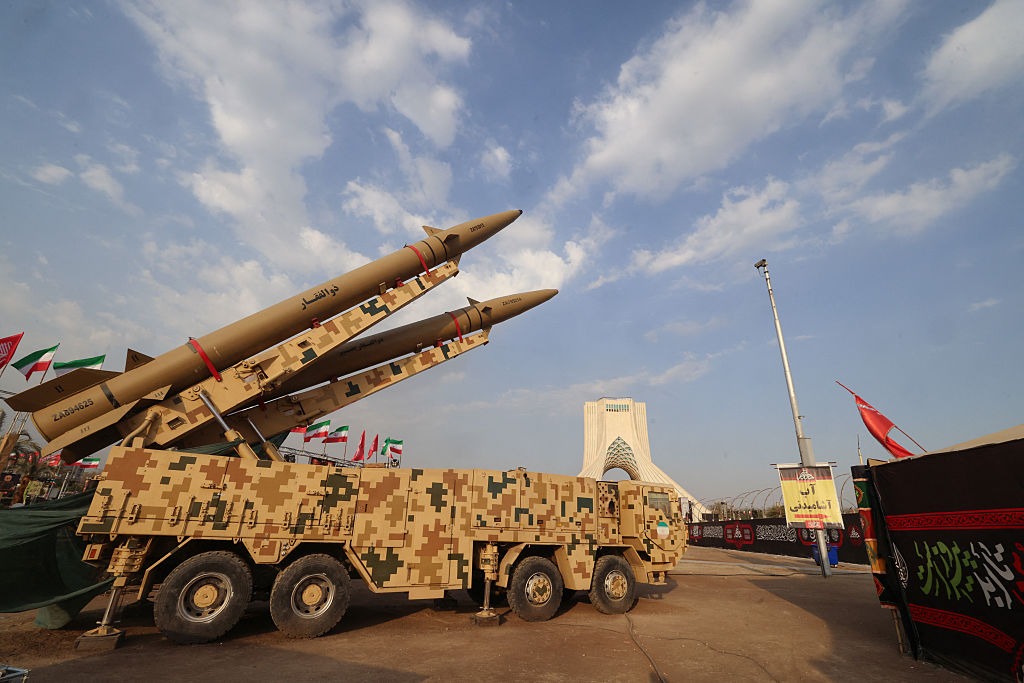
Following the June 2025 Israeli-Iranian ceasefire and B-2 strikes on Iranian nuclear sites, documented in the November 2025 article, tensions reignited. On February 28, 2026, U.S. and Israeli forces launched a coordinated strike campaign against Iran, killing Supreme Leader Ali Khamenei and targeting nuclear and military infrastructure—precipitating the broader conflict now commonly referred to as the 2026 Iran war. Iran responded by closing the Strait of Hormuz to foreign shipping and mining and seizing commercial vessels; the U.S. followed with a formal naval blockade of Iranian ports (reinstated in April) and a sustained aerial campaign against Iranian targets along the strait.
On June 17, President Trump and Iranian President Masoud Pezeshkian signed a 14-point memorandum of understanding—titled the Islamabad MOU—at the Palace of Versailles in Paris. Under its terms, Iran reaffirmed in writing (paragraph 8) that it would not procure or develop nuclear weapons; the two sides agreed to a 60-day window of toll-free commercial passage through Hormuz; and both paused the blockade pending a 60-day nuclear negotiation period.
The MOU did not hold cleanly. Iran read the safe-passage language as a license to continue asserting control over the strait; attacks on shipping resumed in early July, prompting President Trump to declare the truce “over,” reinstate the naval blockade, and briefly float—before walking back in favor of Gulf-state investment commitments—a proposed 20 percent U.S. toll on shipping through the strait.
The breaking point came on July 17 when an Iranian strike on U.S. forces at Jordan’s Muwaffaq Salti Air Base killed two American service members and wounded four more, prompting a multi-day U.S. retaliatory campaign against Iranian military, missile, and drone infrastructure.
Running in parallel to the military track has been an escalating financial pressure campaign led by Treasury Secretary Scott Bessent, publicly rebranded as “Operation Economic Fury.” Concrete documented actions include sanctions on dozens of shadow-fleet vessels and shadow-banking entities based in Hong Kong, the UAE, and Turkey; the April 2026 sanctioning of a major Chinese “teapot” refinery for buying Iranian crude; and a direct Treasury warning to Chinese banks that Iranian money flowing through their accounts would trigger secondary sanctions. On August 13, Bessent told reporters the administration would unveil a further round of measures “next week,” describing the combination of financial pressure and continued blockade as a “one-two punch” and promising “economic isolation like the world has never seen before.”
As a result of the sanctions, Iran’s currency collapsed sharply in late 2025—a development Bessent called the “grand culmination” of the pressure campaign—and inflation reached roughly 48.6 percent in October 2025, driving genuine social and economic strain and placing pressure on the Iranian regime to make a deal. Iranian inflation has increased to 87.9 percent as of July.
As of this writing, the situation remains fragile and unresolved. The blockade—reimposed July 14—is still in force. Iran and Oman are reportedly nearing an interim arrangement on shipping routes, but Tehran continues to insist that any full reopening of Hormuz is contingent on a U.S. withdrawal and financial concessions Washington has not granted. Skirmishing continues—a U.S. strike on a block-running vessel and Iranian attacks on UAE-linked tankers were both reported this week—and President Trump has both threatened further strikes (then canceled them) and floated, rhetorically, “declaring the Hormuz Strait a territory of the United States.”
At this juncture, the Trump administration has extracted a written Iranian reaffirmation against nuclear weapons development, memorialized in the June MOU, and has shown a sustained willingness—across repeated cycles of threatened, executed, and rescinded strikes—to use force to keep a critical energy chokepoint from falling under unilateral Iranian control. Paired with that is the most extensive sanctions architecture ever built against Tehran. President Trump’s apparent goal is capitulation by the Iranian regime; U.S. pressure shows no sign of being relaxed until that end is achieved.
GAZA: PHASE TWO, STALLED BUT NOT COLLAPSED
The 20-point Gaza peace plan President Trump unveiled on September 29, 2025 moved from Phase One (ceasefire, hostage return, humanitarian surge) into Phase Two (demilitarization, technocratic governance, reconstruction) around mid-January 2026, after Hamas returned the remains of the final deceased hostage.
UN Security Council Resolution 2803 (November 17, 2025) endorsed the Comprehensive Plan and established the Board of Peace, chaired by President Trump, with Bulgarian diplomat Nikolay Mladenov serving as Director-General overseeing the Palestinian technocratic committee (the National Committee for the Administration of Gaza—NCAG). The U.S. committed $10 billion in funding to the Board’s reconstruction mission.
Independent trackers, including a J Street analysis published in April 2026, found the plan’s headline achievements real (ceasefire holding in broad strokes, all living hostages and remains returned, a major humanitarian aid surge) but Phase Two implementation stalled on the harder points. Hamas has refused disarmament, citing continued Israeli strikes and aid restrictions as breaches of Israel’s own obligations; the Board of Peace and NCAG remain established on paper but not fully operational on the ground; and sporadic violations have continued on both sides.
This is a genuine, if partial, diplomatic accomplishment—ending the active war and returning every hostage is not nothing; however, final resolution of the Gaza issue remains a work in progress.
Note: The Israel-Lebanon front saw its own framework agreement signed at the State Department on June 26, 2026, addressing the Hezbollah conflict.
NATO AND BURDEN-SHARING: THE 5 PERCENT COMMITMENT MATURES
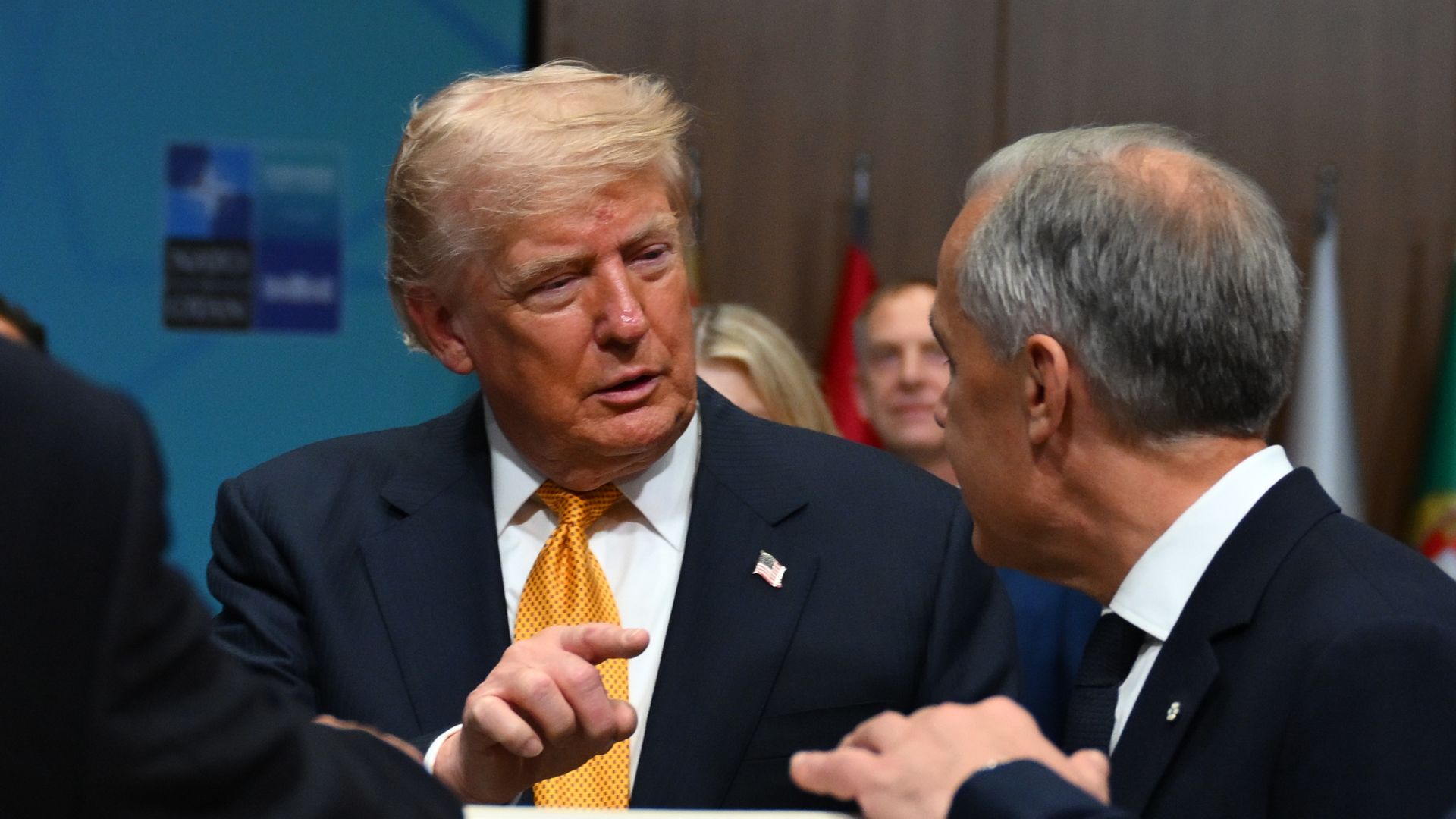
At the June 2025 Hague Summit, NATO allies committed to raising defense-related spending to 5 percent of GDP by 2035 (3.5 percent for core defense, 1.5 percent for broader security/infrastructure spending)—a doubling of the 2014 Wales 2 percent pledge and the single biggest structural shift in alliance burden-sharing in a generation, driven substantially by sustained U.S. pressure under President Trump’s leadership.
By NATO’s own March 2026 accounting, every member now exceeds the old 2 percent benchmark, with European allies and Canada increasing defense spending 20 percent year-over-year in 2025 alone (roughly $90–139 billion in additional spending).
The July 2026 Ankara Summit wrestled with implementation questions—a fivefold increase in air-defense capability targets, a 24-month compressed procurement cycle, and lingering gaps in Spain, Italy, the UK, and several Eastern European members who lack credible paths to the new target. But the trajectory—after years of European free-riding that has been documented extensively—is now locked in through 2035, reviewable in 2029.
INDO-PACIFIC: BUILDING THE FIRST ISLAND CHAIN
The most significant unsung national security story of this period is the quiet build-out of a layered missile and basing network across Japan, the Philippines, and Taiwan aimed squarely at deterring Chinese aggression.
The Typhon Mid-Range Capability system—capable of firing Tomahawk cruise missiles with a reach exceeding 1,600 kilometers, putting China’s Guangdong and Fujian coastal provinces and potentially Beijing itself within range from Luzon—conducted its first live-fire test in the Philippines on May 5, 2026, as part of Balikatan 2026, the largest U.S.-Philippine exercise in history: roughly 17,000 troops from seven countries, including the first Japanese combat firing of anti-ship missiles on foreign soil since World War II.
The February 2026 Philippines-U.S. Bilateral Strategic Dialogue secured an additional $144 million for Enhanced Defense Cooperation Agreement basing sites and a critical-minerals supply-chain MOU, while both governments jointly condemned Chinese “illegal, coercive, aggressive, and deceptive activities” in the South China Sea. More than 500 joint U.S.-Philippine military activities are scheduled for 2026—more than one a day.
COUNTERING CHINA: THE RARE-EARTH ROLLER COASTER
U.S.-China economic relations have swung sharply since last October. China’s October 2025 expansion of rare-earth export controls (covering the minerals essential to defense electronics, EV motors, and semiconductors) prompted President Trump to threaten a 100 percent additional tariff, pushing the effective China tariff rate toward 130 percent.
The two sides reached a one-year truce at the Trump-Xi Busan meeting in late October/early November 2025. China suspended the new rare-earth, lithium-battery-material, and superhard-material export controls and committed to large-scale soybean purchases (12 million metric tons in November–December 2025, 25 MMT annually 2026–2028); the U.S. suspended its heightened reciprocal tariffs and cut the fentanyl-related tariff from 20 percent to 10 percent, bringing the effective China tariff rate down to roughly 47 percent.
That truce proved fragile—China imposed fresh rare-earth restrictions on U.S. defense contractors in June 2026, again threatening the détente—illustrating that this remains a live, unresolved point of leverage, which reinforces the broader argument that Beijing treats critical-mineral dependency as a strategic weapon to be reapplied whenever convenient. President Trump has been the only U.S. president to address this issue head-on.
CONCLUDING THOUGHTS
Read together, last November’s article and this two-part series cover roughly eighteen months: the demolition of the Biden-era regulatory and DEI architecture, the largest tax-cut implementation in a generation with a genuinely novel ownership-society instrument in Trump Accounts, a border that by any honest measure is more secure than it has been in decades, a federal judiciary being reshaped at a pace not seen since Reagan with effects that will outlast this presidency by decades, a nation’s capital where the crime numbers are simply better than they were two years ago, a health bureaucracy being forced to litigate its own scientific assumptions in public for the first time in memory, a hemispheric narco-state decapitated by direct military action, and an allied burden-sharing framework that finally puts real numbers behind decades of American complaints.
It is also a record with important works in progress: the Strait of Hormuz remains a live shooting situation as of this writing, Gaza’s second phase is stalled on the hardest question (Hamas’s disarmament), and the MAHA vaccine schedule changes remain genuinely contested rather than settled science on either side.
The next 30 months promise more of the same intensity from a U.S. president who seemingly never sleeps. Whether the Democrats’ resistance and associated judicial and congressional lawfare apparatus can slow any of it down remains, as always, the open question. Americans should ask them which of the accomplishments documented in this two-part series should be reversed and why.
Stu CvrkStu Cvrk retired as a captain after serving 30 years in the U.S. Navy in
a variety of active and reserve capacities, with considerable
operational experience in the Middle East and the Western Pacific. He is
a graduate of the U.S. Naval Academy, where he received a classical
liberal education that serves as the key foundation for his geopolitical
commentary.
Source: https://amgreatness.com/2026/08/21/trump-administration-accomplishments-october-2025-present-part-two/