by Hilla Haddad Chmelnik
The future of Israeli diplomacy will be shaped not only by alliances or declarations, but by technologies so essential that they bind nations together in ways traditional diplomacy cannot.
 |
Israel is navigating one of the most challenging international periods in recent memory. These circumstances underscore a central truth: National power is multidimensional. Security, diplomacy, technological capability, economic strength, and internal cohesion together shape how nations withstand global pressure.
For decades, Israeli agricultural innovation served as a foundation for partnerships across developing regions, illustrating how technology can anchor durable international relationships. Today, a new set of advanced technologies is extending that logic into core arenas of global strategy and national security.
Over the past two years, Israeli innovation has evolved from a competitive advantage into a form of diplomatic gravity. Nowhere is this shift clearer than in the domain of air defense.
What began as battlefield innovation has become a strategic asset influencing policy decisions in Europe, the Gulf, and Asia. Israel’s air-defense systems have demonstrated effectiveness under real threat, encouraging governments to preserve stable channels with Jerusalem, even during moments of political friction. Air defense is not the entire story, but it is the clearest demonstration of how technological leadership can shape international behavior.
Air defense as Israel’s proof of strategic assetization
The near-total interception of Iran’s large-scale drone and missile attack in April 2024 served as a decisive moment. Israel’s multilayered defensive architecture proved capable of protecting its population under the most demanding operational conditions.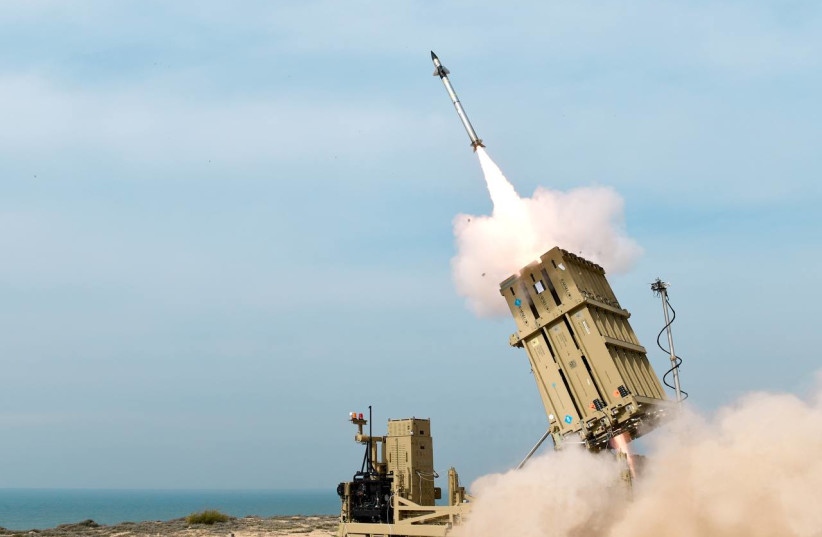
possesses critical technological capabilities that cannot easily be replicated.
Germany’s adoption of the Arrow 3 system, Finland’s integration of David’s Sling into its defense doctrine, and Romania’s pursuit of Israeli defensive solutions all reflect this recognition. Even in the Gulf, where political sensitivities often shape public discourse, cooperation on air defense and counter-UAV systems has expanded quietly and consistently.
Air-defense ecosystems depend on continuous upgrades, real-time data integration, shared operational doctrine, and long-term engineering collaboration. Once a country adopts such a system, it enters a strategic partnership characterized by interdependency rather than unilateral reliance.
This form of collaboration is durable, mutually reinforcing, and grounded in shared needs and shared interests. It captures the essence of assetization: the added value embedded in ties with Israel, reflected in tangible deliverables that enhance national resilience.
Beyond air defense: Building the next generation of strategic assets
To secure its global position in a volatile environment, Israel must extend the successful air-defense model to emerging technological domains. These fields are not yet fully matured as strategic assets, but they hold significant potential if advanced intentionally and in coordinated fashion.Artificial intelligence as a foundation of national interdependence
Artificial intelligence is rapidly becoming the operational core of national infrastructure. Energy networks, hospitals, transportation systems, financial regulation, crisis management, and urban logistics increasingly rely on AI-driven platforms. The countries that adopt such systems also adopt the assumptions, safeguards, and the expertise of the nations that develop them.If Israel builds sovereign, national-scale AI models and secure data architectures, it can offer a trusted framework for countries seeking stability in an era when digital threats are constant and infrastructure is deeply interconnected. Such partnerships create long-term interdependency anchored in the continuous exchange of expertise and improvements.
Cybersecurity as Israel’s strategic trust domain
Cybersecurity remains one of Israel’s most recognized global strengths. Nations rely on Israeli technologies to protect their financial systems, aviation networks, hospitals, energy grids, and governmental platforms. Because cyber threats are borderless and increasingly sophisticated, the demand for trusted partners is growing.Cyber partnerships require continuous information sharing, technological evolution, and deep mutual confidence. This makes cybersecurity one of the strongest foundations for strategic interdependency, often exceeding traditional defense relationships in sensitivity and scope.
Low-altitude defense and the future of national security
Recent conflicts have shown that some of the most disruptive threats originate not from ballistic missiles but from inexpensive drones and unmanned aerial systems. These tools challenge conventional defenses and proliferate at a rapid pace.Israel’s leadership in radar, laser interception, electronic warfare, and AI-enabled command-and-control provides a natural platform for a next-generation low-altitude defense network. Countries integrating such capabilities form long-term partnerships that mirror the air-defense model: enduring, evolving, and rooted in shared security interests.
Water and climate technologies as soft-strategic assets
Climate change is reshaping the geopolitical landscape. Water scarcity, agricultural instability, and extreme weather increasingly influence national priorities and regional dynamics. Israel’s global leadership in desalination, water management, water recycling, atmospheric water generation, and climate-resilient agriculture has already shaped decades of cooperation worldwide.When a nation’s water strategy incorporates Israeli technology, it establishes a partnership grounded in shared human needs and long-term development. This form of assetization is less visible than defense cooperation, yet equally impactful in building trust and stability.
Quantum technology as a future anchor of global interdependency
Quantum communication, sensing, and simulation are still in early development, yet they may ultimately generate the deepest forms of technological interdependency. Quantum-secure communication could become the backbone of national cybersecurity; quantum sensors may detect anomalies beyond the reach of classical tools; quantum simulators could reshape how nations manage energy grids and supply chains.States that collaborate with Israel in these domains will engage in long-term scientific and engineering partnerships, requiring continuous refinement and shared innovation. The diplomatic potential of quantum technology is significant, even at this early stage.
Space technology and the next frontier of strategic influence
Space-based intelligence, communication, and monitoring are transforming the way nations understand and secure their environments. Israel’s expertise in compact satellites, advanced imaging systems, and secure communication technologies gives it a meaningful role in this rapidly growing field.Countries that rely on Israeli space-based services enter strategic partnerships extending far beyond traditional diplomatic frameworks; united by common interests in security, resilience, and technological advancement.
Toward a doctrine of technological statecraft
While strategic technological assetization will not serve as a silver bullet for all the complex challenges of Israel’s foreign policy, it has already become a critical pillar of contemporary Israeli diplomacy. As such, our efforts to navigate an increasingly turbulent international environment will fall short if we do not commit to cultivating and expanding it.Many of the technological domains highlighted in this article, from AI and cybersecurity to water management, quantum research, and space, require robust national investment in infrastructure. This is a core responsibility of government, and the benefits extend far beyond diplomacy: They strengthen the economy, reinforce national power, and secure Israel’s place in the emerging global technological landscape.
The future of Israeli diplomacy will be shaped not only by alliances or declarations, but by technologies so essential that they bind nations together in ways traditional diplomacy cannot.
Hilla Haddad Chmelnik
Source: https://www.jpost.com/defense-and-tech/article-881069

No comments:
Post a Comment