by Giora Eiland
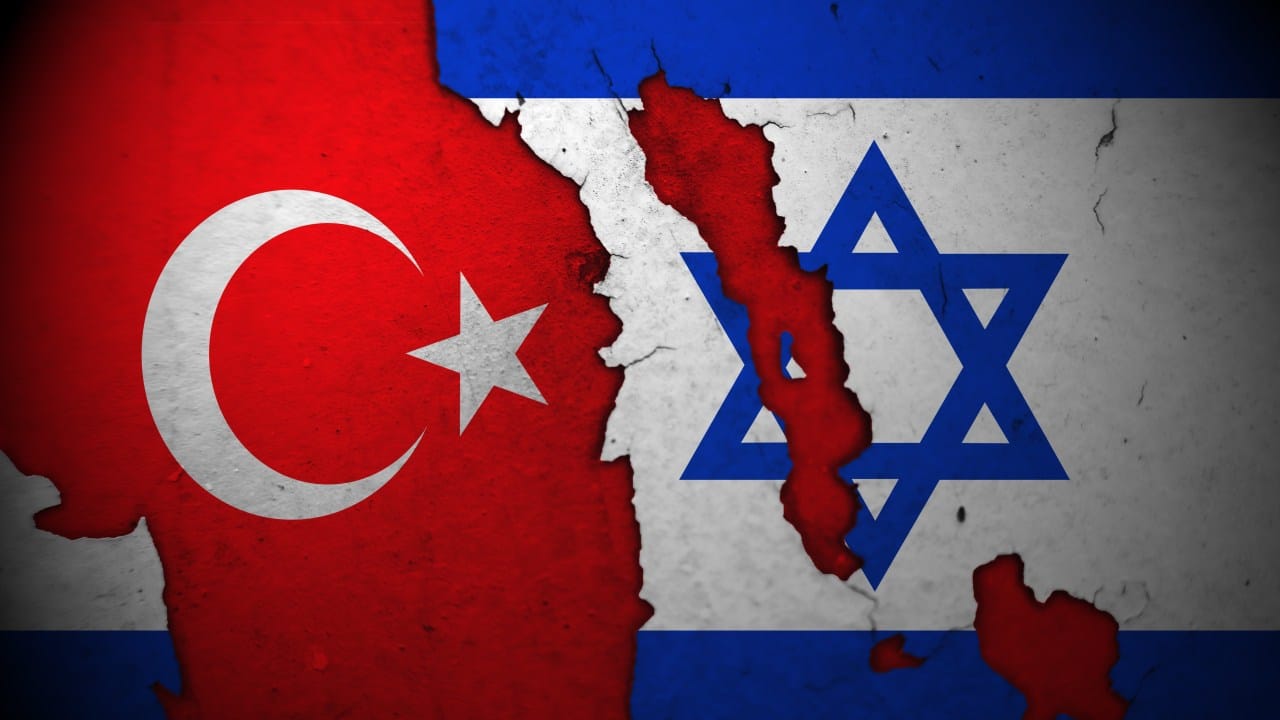
Bit by bit, a Turkish front is forming, more dangerous than Israel’s seven arenas since Oct. 7. Erdogan’s ideology and ambition require Israel to refocus on a higher strategic risk.
 |
Since October 7, 2023, Israel’s political and military leadership has claimed that seven different arenas threaten it. It seems that, bit by bit but consistently, an eighth menacing front is forming, one that in many ways is more dangerous than the others.
This is the Turkish front. Turkey, which until about 23 years ago was one of Israel’s greatest friends, has become a real enemy since Erdogan rose to power.
The main factors that explain Turkey’s defiant and threatening approach toward Israel, Cyprus, and Greece are its religious outlook, its national outlook, and its megalomania. However, Erdogan’s influence on Turkey is not the only factor that defines the Turkish ethos.
To understand the full context, one must examine the reality that has taken shape for more than a hundred years. During the First World War, the Ottoman Empire, which had ruled for centuries both in the Middle East and in the Balkans, collapsed.
Turkey, which had been allied with Germany and Austria, was defeated. At the conference convened in Lausanne in July 1923, Turkey was forced to accept the position of the victorious countries, Britain, France, Italy, and Greece. The main Turkish concession was in the territorial sphere. Turkey was forced to retreat to the borders recognized to this day.

“We understand that the days of the great Ottoman Empire have passed, and we do not expect them to return. However, we do not accept the borders that were imposed on us in 1923. Turkey’s natural borders must expand in at least three places: the southern border, the Aegean Sea, and Cyprus. Regarding the southern border, the just and correct border is the one that runs along the line between the city of Aleppo in Syria and the city of Mosul in Iraq. Regarding the Aegean Sea, the sea that separates Turkey from Greece, we believe it is not right that dozens of islands that exist in this sea, some only a few kilometers from the Turkish coast, have belonged to Greece since 1923. The correct border between Turkey and Greece should pass in the Aegean Sea midway between the mainland of Turkey and the mainland of Greece, and thus many islands would have to pass to Turkish sovereignty. Regarding Cyprus, its entire northern part is supposed to belong to Turkey.”
Since Erdogan came to power, Turkish national pride has not only grown, but two additional dimensions have been added to it: the megalomaniac personality of the Turkish president and his strict Islamist approach.
Until a few years ago, Israel could live with Turkey’s hostile approach toward it, since this approach was characterized mainly by words, by venomous statements, by attempts to jab at it through the flotilla to Gaza in 2010, and by funding provocations in Jerusalem.
Turkey's radicalization reflects willingness to act against Israel
In the past two years, it is evident that there has been a radicalization in Turkey’s hostile position toward Israel, a radicalization that also reflects a willingness to move toward a military confrontation with it.Three developments encourage Erdogan: First, Israel’s international isolation following the war in Gaza. Second, Turkish success in bringing about a coup in Syria, which ensured loyalty to the Turks from Syria’s leader, Ahmad al-Sharaa. Moreover, he depends on Turkish military assistance in order to strengthen his rule. Third, the personal connection and good relations between Erdogan and the president of the United States, Trump, who declared publicly that he loves him.
Israel apparently understands the magnitude of the Turkish threat. The likelihood that it will materialize into a direct military confrontation still seems distant, mainly because the United States will do everything it can to prevent it.
However, the severity of this threat, if it does occur, is more than troubling. Turkey has a huge and high-quality navy, and if it decides to attack Israel, it is certainly capable of creating a maritime blockade of Israel. In other words, Israel could find itself in a limited military confrontation with Turkey in the skies of Syria, since it cannot forgo its air control over all of southern Syria. This control is a necessary condition for the Israeli Air Force’s freedom of action against Iran.
It would be better for Israel to cooperate with Cyprus and Greece, since these two countries also identify the potential of Turkish aggression toward them.
The Iranian threat, on the one hand, and the potential Turkish threat, on the other, are considered the most significant dangers at the strategic level. These threats, and the need to prepare for them, explain why Israel must avoid renewing the war in Gaza and in Lebanon. In these arenas, Israel has the upper hand, and therefore it is right to direct its resources toward much greater risks.
Giora Eiland
Source: https://www.jpost.com/opinion/article-880969

No comments:
Post a Comment