by Tobias Holcman, Goldie Katz
"The missile issue is purely defensive” for the Iranian regime and “cannot be negotiated, neither now nor in the future,” Araghchi asserted.
 |
Iranian Foreign Minister Abbas Araghchi said that Iran’s ballistic missile programs are permanently non-negotiable because the weapons are strictly "defensive," in a Saturday interview with Qatari state-run news agency Al-Jazeera.
The interview followed the United States-Iran nuclear discussions held in Muscat, Oman, on Friday.
"The missile issue is purely defensive” for the Iranian regime and “cannot be negotiated, neither now nor in the future,” Araghchi asserted.
Prior to the talks, Iran was resistant to the possibility of discussing ballistic missiles, urging that the talks focus on Iran’s nuclear program, an issue Araghchi clarified “will only be resolved through negotiations.”
The process of enriching uranium for nuclear use is “an undeniable right” for the regime, Araghchi claimed, adding that they will not allow for enriched material to be removed from Iran.

While Araghchi asserted that a permanent halt to uranium enrichment “is outside the scope of the negotiations,” he told Al-Jazeera that “the level of enrichment depends on [Iran’s] needs” and that the Islamic Republic was ready to reach a "reassuring agreement."
He emphasized that "the course of negotiations must be free from any threats or pressure,” adding that he hopes to find the sentiment reflected in the US approach to negotiations.
"There is still a long way to go to build trust," Araghchi said, and added, "We are ready to reach an agreement on the issue of enrichment."
Araghchi slams Israel
Separately, in a speech at the Al Jazeera Forum in Doha, Araghchi criticized Israel, calling it an "expansionist project that requires that neighboring countries be weakened militarily, technologically, economically, and socially."
Araghchi said that this means that "the Israeli regime permanently enjoys the upper hand."
"Under this project, Israel is free to expand its military arsenal without limits, including weapons of mass destruction that remain outside any inspection regime. Yet, other countries are demanded to disarm," Araghchi told the Forum.
Iran’s FM Abbas Araghchi slammed the double standard allowing Israel to expand its military while others in the region are asked to reduce their defensive capabilities.
— Al Jazeera English (@AJEnglish) February 7, 2026
Araghchi spoke at the Al Jazeera Forum in Doha, an event focusing on geopolitical shifts in the Middle East. pic.twitter.com/sRQ8khI5D4
He cited the sanctions and punishments against Iran for its missile and nuclear projects as proof that Israel is being treated differently, saying that these were not policies based on security and non-proliferation, but on the objective of maintaining Israel's military superiority.
"It is the enforcement of permanent inequality. Israel must have military intelligence and a strategic edge. And others must remain vulnerable," he concluded.
Iran, US hold nuclear talks
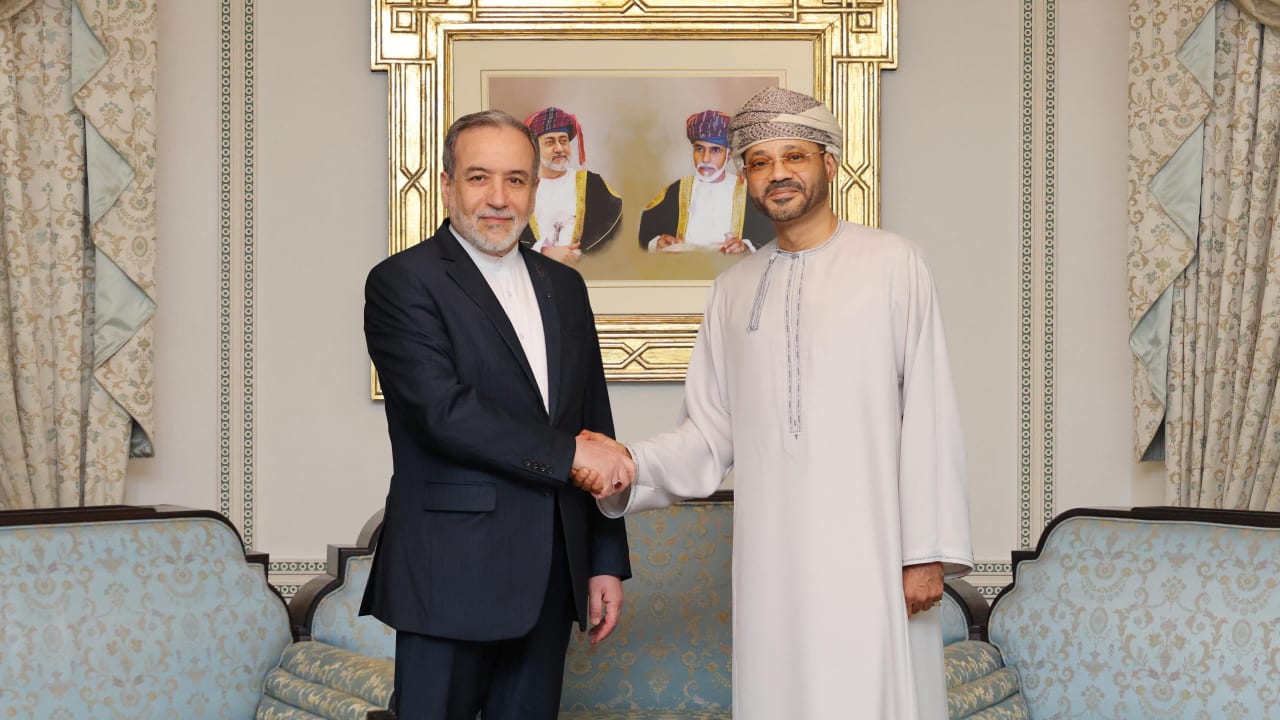
Araghchi was present in Muscat, Oman, in the early hours of Friday morning for the US-Iran talks, according to the Islamic Republic News Agency.
United States Special Envoy Steve Witkoff arrived in Muscat on Thursday evening, according to Israeli state broadcaster KAN News.
Oman's Foreign Minister Badr bin Hamad al-Busaidi held separate meetings with officials from the US and Iran, marking a departure from previous Iran‑US talks, which have used a shuttle-diplomacy approach.
"Very serious talks mediating between Iran and the US in Muscat today," said Busaidi after confirming the ending of the talks, and added, "It was useful to clarify both Iranian and American thinking and identify areas for possible progress. We aim to reconvene in due course, with the results to be considered carefully in Tehran and Washington."
Very serious talks mediating between Iran and the US in Muscat today.
— Badr Albusaidi - بدر البوسعيدي (@badralbusaidi) February 6, 2026
It was useful to clarify both Iranian and American thinking and identify areas for possible progress. We aim to reconvene in due course, with the results to be considered carefully in Tehran and Washington. pic.twitter.com/OWctzf2CXA
"The consultations focused on preparing the appropriate conditions for resuming diplomatic and technical negotiations, while emphasising their importance, in light of the parties’ determination to ensure their success in achieving sustainable security and stability," Oman's Foreign Ministry stated.
James Genn contributed to this report.
Tobias Holcman, Goldie Katz
Source: https://www.jpost.com/middle-east/iran-news/article-885862

No comments:
Post a Comment