by Anna Mahjar-Barducci
Inaction will allow the Muslim Brotherhood to consolidate its influence across Northeast Africa and the Red Sea corridor, threatening vital global trade routes, fueling transnational jihadism, and emboldening militant actors throughout the Middle East and North Africa region, from Yemen to Libya and beyond.
Having already designated Muslim Brotherhood branches elsewhere in the region, Washington should now extend that policy to Sudan's Islamic Movement — the local iteration of the Muslim Brotherhood — to counter its massively destabilizing influence and prevent Sudan from becoming a hub for transnational jihadism.
In September 2025, the U.S. Treasury sanctioned the Al-Baraa bin Malik Brigade for destabilizing activities and its reported ties to Iran. The designation underscored concerns that the battalion functions as part of a broader Islamist armed structure embedded within Sudan's military campaign and linked to external actors.
In addition, human rights organizations and church groups have accused SAF-aligned forces of targeting Christian communities and church properties in conflict zones.
Failure to address these dynamics risks ceding strategic control of Northeast Africa and the Red Sea corridor to the Muslim Brotherhood — endangering global trade routes and emboldening jihadist organizations across the region.
The United States should designate Sudan's chapter of the Muslim Brotherhood as a terrorist organization — a step that is not only strategically sound but essential to safeguarding regional stability and U.S. as well as global security. Failure to do so will most likely have serious long-term consequences for the United States. Inaction will allow the Muslim Brotherhood to consolidate its influence across Northeast Africa and the Red Sea corridor, threatening vital global trade routes, fueling transnational jihadism, and emboldening militant actors throughout the Middle East and North Africa region, from Yemen to Libya and beyond.
The United States has taken important steps by designating key Muslim Brotherhood branches in Egypt, Jordan, and Lebanon as Foreign Terrorist Organizations (FTOs) and Specially Designated Global Terrorists (SDGTs). These actions acknowledge the Muslim Brotherhood's support for terrorism. Unfortunately, this transnational jihadist network poses serious threats far beyond those countries.
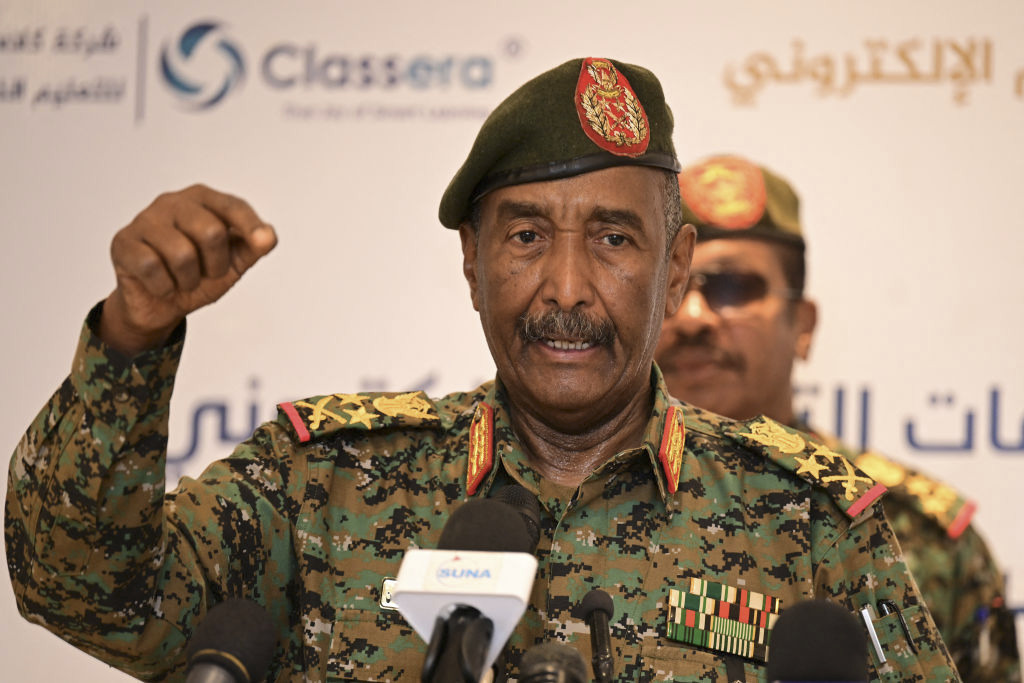
Sudan's long struggle for a stable and democratic future, for instance, has been repeatedly undermined by the Muslim Brotherhood. After decades under Islamist rule and amid the current civil war, the Muslim Brotherhood remains a powerful political and military presence. The movement has embedded itself within the Saudi-backed Sudanese Armed Forces (SAF), using the military as a vehicle to reassert influence over Sudan's governance, strategic geography, and access to the Red Sea — a critical artery for global commerce.
Having already designated Muslim Brotherhood branches elsewhere in the region, Washington should now extend that policy to Sudan's Islamic Movement — the local iteration of the Muslim Brotherhood — to counter its massively destabilizing influence and prevent Sudan from becoming a hub for transnational jihadism.
Sudan was ruled for nearly 30 years by an Islamist-aligned regime under Omar al-Bashir. During this period, Islamist ideology shaped the state, security institutions, judiciary, and political system. The National Congress Party, rooted in Muslim Brotherhood doctrine and linked to its broader international network, dominated Sudanese politics until the organization was dissolved after the 2019 coup. Although Bashir was removed from office, the infrastructure of Islamist influence did not disappear. Sudan's fragile transitional period collapsed in the 2021 military takeover, which re-empowered military actors and facilitated the reintegration of former regime elements. Since then, the Muslim Brotherhood regained influence within the SAF and state institutions.
An important component of this resurgence is the Al-Baraa bin Malik Brigade, an armed formation aligned with Sudan's Muslim Brotherhood networks. The group has operated alongside SAF units and has been characterized as providing manpower, ideological mobilization, and battlefield support. In September 2025, the U.S. Treasury sanctioned the Al-Baraa bin Malik Brigade for destabilizing activities and its reported ties to Iran. The designation underscored concerns that the battalion functions as part of a broader Islamist armed structure embedded within Sudan's military campaign and linked to external actors.
Compounding these concerns are serious accusations that the Sudanese Armed Forces have used chemical weapons during the ongoing conflict. On May 22, 2025, the U.S. State Department formally announced that it had determined that the Government of Sudan, led by the SAF, used chemical weapons in 2024. Although specific details were not initially disclosed, subsequent investigations corroborated evidence of chlorine gas attacks by Sudanese forces near Khartoum in September 2024.
In addition, human rights organizations and church groups have accused SAF-aligned forces of targeting Christian communities and church properties in conflict zones. Reports describe incidents in which churches were damaged, clergy were harassed or detained, and Christian civilians were killed in drone attacks. Although the SAF has denied deliberately targeting religious minorities, such allegations reinforce fears that Muslim Brotherhood-aligned elements within the military may be contributing to sectarian abuses.
The Muslim Brotherhood's entrenched influence within the SAF illustrates the risks posed by Islamist domination of Sudan's governance, military institutions, and strategic resources. Failure to address these dynamics risks ceding strategic control of Northeast Africa and the Red Sea corridor to the Muslim Brotherhood — endangering global trade routes and emboldening jihadist organizations across the region.
The ongoing war in Sudan has displaced millions and triggered one of the world's most severe humanitarian crises. Without confronting the entrenched power of the Muslim Brotherhood networks that exploit institutional weakness and armed conflict, the cycle of instability will continue, if not escalate.
The United States should designate Sudan's chapter of the Muslim Brotherhood as a terrorist organization — a step that is not only strategically sound but essential to safeguarding regional stability and U.S. as well as global security. Failure to do so will most likely have serious long-term consequences for the United States. Inaction will allow the Muslim Brotherhood to consolidate its influence across Northeast Africa and the Red Sea corridor, threatening vital global trade routes, fueling transnational jihadism, and emboldening militant actors throughout the Middle East and North Africa region, from Yemen to Libya and beyond.
Anna Mahjar-Barducci
Source: https://www.gatestoneinstitute.org/22285/sudan-muslim-brotherhood-terrorists

No comments:
Post a Comment