by Khaled Abu Toameh
The Muslim Brotherhood has long mastered the art of dual messaging. To the West, it presents itself as a network of charities, activists, community leaders and political organizers. Yet the same organization is, in Egypt and elsewhere, linked to terror cells, assassins, and attempts to carry out mass-casualty attacks.
Details emerging from recent investigations are chilling.
These men are not "political activists." They are terrorists embedded in an organized network.
The Muslim Brotherhood has long mastered the art of dual messaging. To the West, it presents itself as a network of charities, activists, community leaders and political organizers. Yet the same organization is, in Egypt and elsewhere, linked to terror cells, assassins, and attempts to carry out mass-casualty attacks.
By failing to designate the Muslim Brotherhood as a terrorist organization in its entirety, Western governments are allowing it to entrench itself politically, financially, and socially within Western societies.
If the US and its allies are truly committed to confronting extremism, they seriously need to confront the Muslim Brotherhood in all its forms, not just when it explodes into violence.
A full designation of the Muslim Brotherhood as a terrorist organization would disrupt its funding networks, restrict its operations and send a clear message that extremism, whether disguised as political activism or expressed through terrorism, will not be tolerated.
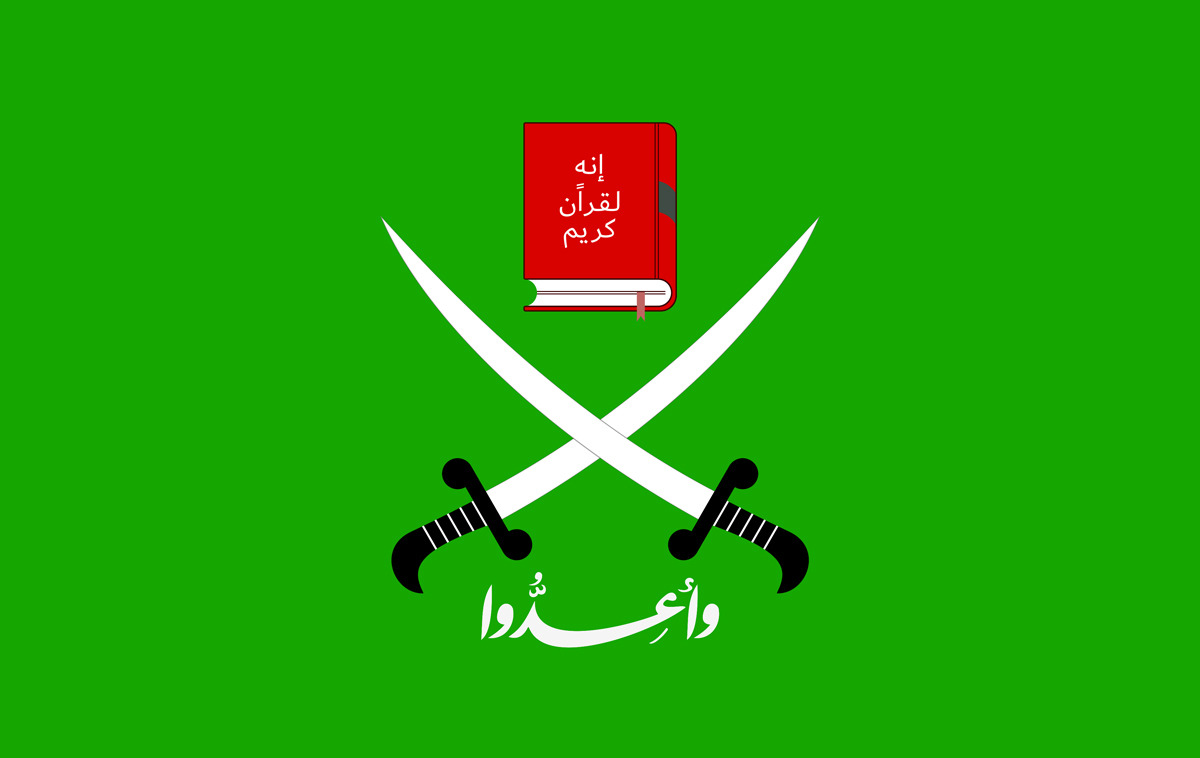
Many Westerners, it seems, still choose to believe a lie: that the Muslim Brotherhood organization is a political and social movement that can be engaged, moderated, and safely accommodated within democratic systems.
This belief is both mistaken and dangerous.
Recent developments in Egypt expose an alarming reality that should shake not only the Egyptians, but also the US and other Western countries.
In late March, the Egyptian Ministry of Interior announced that security forces successfully dismantled a major terrorist infrastructure linked to the Muslim Brotherhood's armed wing, HASM (Harakat Sawaid Misr, "Arms of Egypt Movement"). Details emerging from recent investigations are chilling.
At the center of the plot was Mahmoud Mohamed Abdel Wanis, a prominent member of HASM who confessed to receiving advanced military training, including in sniper tactics, explosives, and anti-aircraft weaponry.
The plot included directing terrorists Ahmed Mohamed Abdel Razek, Ahmed Ghoneim and Ihab Abdel Latif Mohamed Abdel Qader to carry out a series of attacks against security facilities across Egypt.
According to the Egyptian authorities, Abdel Wanis received multiple sentences in terrorism-related cases, including life imprisonment for attempting to target the presidential aircraft in 2022.
Abdel Wanis targeted several prominent figures, including the attempted assassination of the late Judge Nagy Shehata in 2015. He was further involved in the assassinations of army Major General Adel Ragaey in October 2016 and police Lieutenant Colonel Maged Abdel Razek in April 2019.
Abdel Wanis also murdered three people and wounded four others in an attack on the Agizi checkpoint in Monufia in August 2016. Nearly a year later, he murdered two police personnel and wounded 17 others in a bomb attack on a police training center in Tanta, Gharbia in April 2017.
The Ministry of Interior stated that Abdel Wanis was also involved in a car bombing attack, in which 20 people were murdered and another 47 wounded, outside the National Cancer Institute in Cairo in August 2019.
HASM founder Hossam Menoufi was arrested by Egyptian authorities after his flight from Sudan to Turkey made an emergency landing in Luxor in 2022.
These men are not "political activists." They are terrorists embedded in an organized network.
The Muslim Brotherhood's strategy goes far beyond bombs and bullets. It also relies on propaganda, deception and long-term infiltration.
Egyptian authorities have documented the movement's extensive efforts to weaponize online news outlets and social media platforms to incite unrest, spread disinformation, and destabilize the state from within.
According to official findings, Muslim Brotherhood terrorists have established media platforms designed to inflame public anger, recruit followers, and prepare the ground for violence. The Midan Foundation, described by authorities as HASM's "political and media arm," was found to have spread fake news, false and misleading information, and rumors about Egypt's domestic affairs to incite Egyptians to resort to violence against the state.
The combination of terrorism and recent torrents of information warfare is precisely what makes the Muslim Brotherhood so dangerous. Since its founding in 1928, the organization has pursued a consistent objective: to reshape society according to its ideological vision of conquering the world for Islam and establishing a Caliphate. Through a mix of religious outreach, social services, media influence, and political activism -- as well as terrorism -- it seeks to establish Islamist rule based on Sharia law. The Muslim Brotherhood slogan, "Islam is the solution," is not merely rhetoric. It is a strategy for gaining power, pursued step by step.
Egypt designated the Muslim Brotherhood as a terrorist organization in 2013. Since then, the state's security services have repeatedly exposed networks involved in financing, planning, and executing terror attacks.
In 2019, Egyptian authorities targeted "19 economic entities which are secretly run by the [Muslim Brotherhood] leaders," estimated to be worth 250 million Egyptian pounds (about $15 million at that time), that were allegedly being used to fund activities to destabilize the state. Egyptian authorities also thwarted a plot orchestrated by leaders of the Muslim Brotherhood in Turkey, with the aid of accomplices in Egypt, designed to undermine security and stability in the latter country.
What the Muslim Brotherhood does in Egypt, however, quickly spreads.
Muslim Brotherhood-linked networks have long been operating across Europe and the US, often under the banner of advocacy groups, and civil society and community organizations.
The Muslim Brotherhood and its followers promote a worldview that rejects core Western principles such as secular governance, individual liberties, and the separation of religion and state.
The organization, in addition, has a long history of embedding itself within educational institutions, charities, and political advocacy networks to influence public discourse and policymaking and gradually normalize its ideology, based on the notion that Islam is a comprehensive worldwide system governing all aspects of life.
All this is not accidental. It is how the organization operates.
The latest revelations from Egypt should serve as a wake-up call. The Muslim Brotherhood is not merely a political movement. It is a disciplined ideological organization that combines political activism, propaganda and violence to achieve its goals.
The Muslim Brotherhood has long mastered the art of dual messaging. To the West, it presents itself as a network of charities, activists, community leaders and political organizers. Yet the same organization is, in Egypt and elsewhere, linked to terror cells, assassins, and attempts to carry out mass-casualty attacks.
This is not a contradiction. It is a strategy.
By failing to designate the Muslim Brotherhood as a terrorist organization in its entirety, Western governments are allowing it to entrench itself politically, financially, and socially within Western societies.
If the US and its allies are truly committed to confronting extremism, they seriously need to confront the Muslim Brotherhood in all its forms, not just when it explodes into violence.
A full designation of the Muslim Brotherhood as a terrorist organization would disrupt its funding networks, restrict its operations and send a clear message that extremism, whether disguised as political activism or expressed through terrorism, will not be tolerated.
- Follow Khaled Abu Toameh on X (formerly Twitter)
Khaled Abu Toameh is an award-winning journalist based in Jerusalem.
Source: https://www.gatestoneinstitute.org/22399/egypt-dangerous-muslim-brotherhood

No comments:
Post a Comment