Thursday, January 16, 2025

Behind the scenes: Mossad's role in nailing down the Hamas ceasefire - Yonah Jeremy Bob


​ by Yonah Jeremy Bob

Barnea has made no fully public comments and endeavored to stay in the shadows.
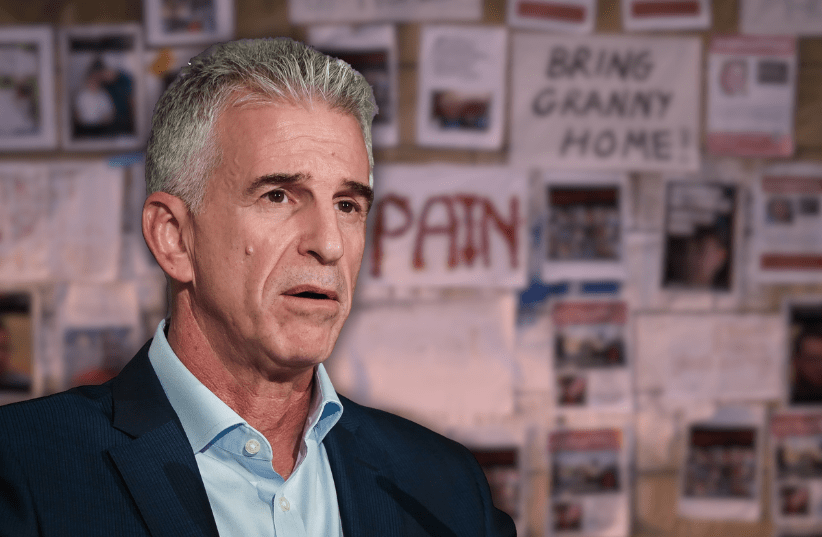
 

Mossad director David Barnea seen over a wall of hostage posters in Tel Aviv (illustrative) (photo credit: FLASH90)
Mossad director David Barnea seen over a wall of hostage posters in Tel Aviv (illustrative)
(photo credit: FLASH90)

At the start of hostage negotiations in October 2023 there were a dizzying series of reports and rumors about who was responsible for the fate of hostages fate on behalf of the State of Israel’s behalf.

Names such as Gal Hirsch – Prime Minister Benjamin Netanyahu’s appointee as Coordinator for the Captives and the Missing; Shin Bet Director Ronen Bar; IDF Commander of the Intelligence Array for Locating the Abducted and Missing Persons Maj. Gen. (res.) Nitzan Alon; and even former Mossad chief Yossi Cohen were all given potential credit for managing the issue.

As we reached the last stretch of the Israel-Hamas hostage deal on Wednesday, there was no doubt that despite each of these figures making various contributions, the most critical figure was current Mossad Director David Barnea.

Even as incoming US president Donald Trump has tried to take the lion’s share of the credit for the final deal being sealed – and there is no question that he helped pressure both Israel and Hamas to take the final decision to cross the Rubicon – the Arabic version of the deal which was widely published on Wednesday made it plain that Barnea had sewed together a vast majority of the deal, dating back to May 27 and August 16.

 PRIME MINISTER Benjamin Netanyahu shows a map of the Gaza Strip and the nearby Israeli localities, with the arrows pointing to the Philadelphi Corridor (top) and the Rafah crossing, at a news conference in Jerusalem on Monday. (credit: CHAIM GOLDBEG/FLASH90)
PRIME MINISTER Benjamin Netanyahu shows a map of the Gaza Strip and the nearby Israeli localities, with the arrows pointing to the Philadelphi Corridor (top) and the Rafah crossing, at a news conference in Jerusalem on Monday. (credit: CHAIM GOLDBEG/FLASH90)

Three examples from the deal include provisions for the following:

1) that the Rafah Crossing will be opened for transferring aid and other items “based on the agreements reached in August with Egypt”;  2) that wounded Palestinians can exit Gaza to receive medical care via the Rafah Crossing “according to section 12 of the May 27 agreement”; and 3) that the return of northern Gaza Palestinians via the central Gaza Netzarim Corridor will happen “according to Section 3 or 3b of the May 27 agreement.”

The Jerusalem Post has reported in the past that negotiations in the May-August time period managed to get the most significant concession from Hamas: that it would re-enter negotiations for returning all hostages and begin returning hostages in Phase 1 without requiring an end to the war as a prerequisite to renewing the talks. This achievement requires that some real credit be given to Barnea for his role as the negotiations chief – long before Trump entered the picture.

In terms of the ongoing negotiations since Tuesday: It has been widely reported that Hamas attempted to alter the terms and names of certain Palestinian prisoners due to be exchanged as part of the hostage release.

What is Barnea doing?

As head negotiator, it would fall to Barnea to maneuver between holding Israel’s ground on certain issues, such as when certain Israeli officials leaked that they had refused to return Yahya Sinwar’s body, and when to show tactical flexibility in order to seal the deal on potentially more minor changes.

In general, however, no one has any idea what Barnea is doing.

While a number of Israeli political and defense officials have gone public with their views about the hostage negotiations and how they have personally impacted the negotiations, Barnea has made no fully public comments and has endeavored to stay in the shadows.

From time to time, it has been apparent that he would have preferred it had the government not publicized every time he was sent to Paris, Cairo, Qatar, or elsewhere to conduct talks.

Barnea’s first success was with the incredibly difficult tightrope walk to seal the November 2023 agreement with Hamas, which returned 84 Israeli hostages and 24 foreign hostages.

From a variety of sources and foreign reports, the Post has learned that Barnea is no mere messenger but a true operator in his own right who has maintained discretion on a variety of issues in dispute – and who often has made critical recommendations or taken positions that have decisively influenced the eventual course of the hostage negotiations.

One aspect of what has made Barnea vital is the high esteem in which he is held by the primary players, from Qatar’s leaders and intelligence officials to Egypt’s leaders to CIA Chief William Burns and of course, to Prime Minister Benjamin Netanyahu.

The Post understands that Qatar’s leverage over Hamas is three-pronged: It hosts some of Hamas’s top “diaspora” leadership; hosts some of Hamas’s leaders’ families; and its banks, at points in time, have held up to 80% of the terror group’s funds.

This has meant that Barnea has invested more energy into Qatari relationships than any other.

Paradoxically, the Post understands that some of Barnea’s strong credibility stems from his reputation for assassination operations and his loud criticism of allowing Qatar to send Hamas funds – whether as Mossad chief or previously as deputy chief.

Those qualities in Barnea mean that Qatari leaders know that when he makes them an offer it is real and concrete, and he is not just a friendly diplomat trying to be smooth.

This has enabled Barnea to be in touch with a variety of key Qatar officials relatively instantaneously at any given time.Also, when many officials put out false leads, saying that Qatar was going to be excluded or that all Hamas officials had been expelled from Qatar, Barnea never encouraged these exaggerations – which have clearly been disproven by the negotiations this week.

One critical point when Barnea had a major role was when he proposed the November 2023 initial exchange for 50 hostages.

Then-defense minister Yoav Gallant, as well as IDF Chief of Staff Lt. Gen. Herzi Halevi and Shin Bet Director Ronen Bar were all against such an offer early on (later they supported it), but crucially, Netanyahu’s close ally Ron Dermer was in favor; as were Shas party leader Aryeh Deri, MK Benny Gantz, and fellow war cabinet member MK Gadi Eisenkot were in favor.

Twice during the week when that initial hostage deal was playing out and Hamas began to try to play games, Barnea shot down the terror group’s attempts to alter what they were “giving” to Israel, wishing to hand over male hostages and dead bodies instead of the agreed-upon female hostages.

It was Barnea’s no-nonsense approach that got that deal back on track. He has been one of the few officials who has never given up on the hostage negotiations, even after they came so close to falling apart in May and August, and it is likely those same skills that are being martialed now to get the current deal over the finish line.

 
Yonah Jeremy Bob

Source: https://www.jpost.com/israel-news/article-837895

Follow Middle East and Terrorism on Twitter

Trump Factor Strikes Again: President-elect and his envoy impact Mideast before inauguration - John Solomon


​ by John Solomon

Multiple officials tell Just the News that Trump pressure helped Qataris to quickly close Hamas-Israel ceasefire that Biden had negotiated months earlier.


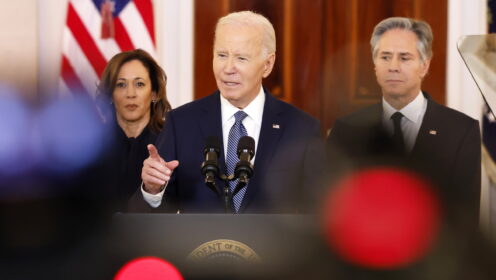
Days before departing his last political job, a beleaguered Joe Biden went to the podium to announce a long-awaited ceasefire between Hamas and Israel. But when pressed by the news media over who should get credit for the deal, the 46th American president demurred.

"Is that a joke?" Biden retorted Wednesday afternoon. And moments later he walked away without providing an answer.

Half away across the globe, another world figure whose country was lead negotiator in the deal offered a clear answer: The man succeeding Biden as U.S. president had changed the dynamic and enabled a deal that had been stalled for months.

Qatar’s Minister of State told Just the News that the deal unveiled Wednesday was made possible because President-elect Donald Trump coordinated with Biden’s outgoing team, made a powerful warning to both sides to reach a deal before he was inaugurated and then dispatched his own envoy to the region, Steve Witkoff, to help seal the deal, especially with a wary Israel.

"President-elect Trump has been clear in his public statements that he wants to see an end to the war as soon as possible. These messages supported our efforts as we continued mediating between the parties to try to finalize an agreement,” Mohammed Al-Khulaifi said Wednesday night.

“Steve Witkoff in particular has been actively engaged in the discussions to get a deal over the line," the minister added. "He has been in Doha, working closely with our team to close the gaps between the two sides in the final few days.”

The deal still faces much uncertainty, and could even fall apart at some point over Israeli distrust of Hamas in the aftermath of the Oct. 7 atrocities. But its initial approval once again affirmed a Trump factor that has begun reshaping the world even before Monday’s inauguration.  

Al-Khulaifi acknowledged the rarity of having a deal first negotiated by incumbent Biden pushed to fruition by his successor even before Trump took office.

Trump: "Hamas might face hell"

“There truly is no better way for an incoming administration to handle this situation,” he declared.

The deal includes a ceasefire, a pullback of Israeli troops from Gaza and the release of Hamas-held hostages, which include eight Americans, officials said. It is not known how many of the hostages will be alive or dead in the exchange, and Israel is being forced to reciprocate by releasing Hamas terrorist prisoners in an exchange.

The Qataris’ account of how the deal unfolded was confirmed by U.S. and Israeli officials, as well as Arab diplomats.

“The deal really is essentially the same as Biden struck in May. The only thing that changed was Trump entering the picture with Witkoff,” one diplomatic source directly familiar with the negotiations told Just the News. “The Biden team didn’t offer anything to change the dynamic, but Trump’s team did after the election.”

Added another diplomatic source: “Biden gets credit for conceiving the deal but his team couldn’t get the sides to agree. Trump’s clarity after the election and his envoy’s ability to deal with Israel is what changed the game.”

Newspapers across the Middle East affirmed the dynamic as details of the deal – still fragile and capable of changing – began spilling out.

“Trump envoy swayed Netanyahu more in one meeting than Biden did all year,” The Times of Israel blared in a headline.

Rep. Tom Tiffany, R-Wis., told the "Just the News, No Noise" television show Wednesday’s events affirmed once again the Trump effect globally since Election Day, especially the change in diplomatic stances from Biden’s peace through appeasement approach to Trump’s peace through strength.

“We've seen in the last four years, weakness leads to war. And now we're seeing strength leads to peace,” Tiffany said. The Wisconsin congressman specifically credited a social media post Trump made a few weeks warning that Hamas might face hell if it didn’t capitulate to a hostage release.

"Even the bad guys understand what this what it means to have President Trump come back into office.”

“I mean, the Biden administration and Tony Blinken, who has been really the person setting foreign policy for the Biden administration, could you ever imagine them speaking in such definitive tones that all hell's going to rain down on you. Hamas, if you don't figure this out. Well, guess what? They figured it out. What about four or five days before inauguration? Because they know that is exactly what's going to happen.”

Trump’s performance during the transition – from securing multibillion dollar foreign investments in the United States to pushing the Hamas-Israel deal – reminds some of Ronald Reagan’s transition from Jimmy Carter in 1981, which led to the immediate release of hundreds of American hostages from Iran.

“It's not a totally equivalent situation, because these aren't all Americans the way they were in 1981 coming out of Tehran,” former Deputy National Security Adviser Victoria Coates told the "Just the News, No Noise" television show. “But the response to a very strong American leader is the same: even the bad guys understand what this what it means to have President Trump come back into office.”

Officials said that Witkoff and Biden administration officials met in Doha with Sheikh Mohammed bin Abdulrahman Al Thani, Qatar's prime minister and foreign minister, before Witkoff dispatched separately to Jerusalem to negotiate outstanding issues with Israeli Prime Minister Benjamin Netanyahu. 

The deal picked up momentum in the last few days. Biden told reporters that the deal would roll out in two steps. The first phase will span about six weeks and include “a full and complete cease-fire, withdrawal of Israeli forces from all the populated areas of Gaza, and the release of a number of hostages held by Hamas, including women and elderly and the wounded,” the president said.

"I'm proud to say Americans will be part of that hostage release in phase one as well," Biden said. "And the vice president and I cannot wait to welcome them home." Biden cautioned the situation remains delicate and fluid. "There are a number of details to negotiate the move from phase one to phase two," he said. "But the plan says if negotiations take longer than six weeks, the cease-fire will continue as long as the negotiations continue."

For all the vitriol of the last five years between Trump and Biden, the final days of the Biden presidency have seen the two men and their staffs work closely on hot spots like Gaza, Lebanon, Syria and Ukraine.

CIA cites cooperation despite policy differences that defined the presidential campaign.

Within weeks of the election, Biden’s National Security Advisor Jake Sullivan held an unannounced meeting with Trump’s choice for the post, Florida Congressman Mike Waltz. Both stressed the importance of a smooth transition as several global crises rage around the globe. 

“Jake Sullivan and I have had discussions. We’ve met,” Waltz told Fox News Sunday anchor Gillian Turner

Other Biden administration officials, like CIA Director Bill Burns, have praised the cooperation despite policy differences that defined the presidential campaign. In an appearance on NPR’s " All Things Considered" podcast, Burns said his agency has been collaborating with incoming Trump nominees, especially on ceasefire negotiations between Israel and Hamas fighters in Gaza. 

“For our adversaries out there that think this is a time of opportunity that they can play one administration off the other, they’re wrong, and we are — we are hand in glove. We are — we are one team with the United States in this transition,” he continued. 

Sullivan later echoed Waltz’s sentiments, nearly verbatim. 

“Other actors, particularly our enemies, look at transitions as moments of opportunity… the imperative on us is to lash up more tightly than is typical and send a common, clear message to both friends and adversaries,” Sullivan told GZERO World’s Ian Bremmer in an interview. 

“You know, at this point, I still think there's a chance [for a ceasefire]. I mean, I've learned the hard way not to get my hopes up. I do think there remains a chance to get a deal. And we'll certainly — in this administration — work very hard at that right up until January 20,” Burns told host Mary Louise Kelly. “And I think the coordination with the new administration on this issue has been good. So, I think there's a chance.” 

 
John Solomon

Source: https://justthenews.com/politics-policy/all-things-trump/trump-factor-strikes-again-president-elect-and-his-envoy-impact

Follow Middle East and Terrorism on Twitter

Joe Biden’s Bizarro World of Foreign Policy “Achievements” - Victor Davis Hanson


​ by Victor Davis Hanson

Biden’s farewell boasts ring hollow as his foreign policy missteps—from emboldening Iran and Hamas to the chaotic Afghanistan withdrawal—undermine his claims of global achievement.


Departing President Joe Biden offered a farewell brag this week to his State Department about how his tenure had improved America’s stature abroad. In his now accustomed weird mix of whispering and fiery shouting, Biden apparently felt he had to lie or mislead about almost every one of his “achievements.”

Yet to the extent that anything improved abroad on his watch—the weakening of Iran or the near destruction of Hamas and Hezbollah—it was due despite, not because of, Biden.

Biden, bowing to election year political pressure, did all he could to restrain and block Israeli retaliations to the October 7 massacres. Only after he was repeatedly proven wrong does he now shamelessly take credit for what Israel ironically achieved by ignoring his own threats directed at Israel.

Biden is correct only that Iran is “weaker than it’s been in decades.” But Tehran was aided, not hurt, by Biden’s nonstop efforts to lift sanctions, to allow Iran to make billions in oil revenues, to pay the theocracy billions of dollars in hostage ransom, and to beg the mullahs to reenter the ill-starred Iran deal. Everything Biden did makes it much harder for Israel to survive.

So, Iran is now weakened only because Israel ignored Biden’s nonstop ankle-biting and finger-shaking not to retaliate to Iranian aggression. Instead, the Netanyahu government systematically destroyed Iranian air defenses after killing most of Iran’s foreign terrorist operatives.

Biden referenced the end of the Assad regime in Syria, but it imploded not due to any effort by Biden. It was overwhelmed instead only after the Israeli decimation of Hezbollah and humiliation of Iran—coupled with the election victory of Donald Trump—that encouraged Assad’s enemies to attack a now isolated and weakened regime.

Biden is also taking credit for rumors that Hamas might release its hostages, who have been held in a subterranean labyrinth since October 7.

But why, with less than a week left in his tenure, did Biden believe Hamas might begin releasing the hostages when even his own Secretary of State, Antony Blinken, has criticized the administration for spending 16 months pressuring Israel, which only emboldened Hamas’s stonewalling?

Much more likely, the election of Donald Trump and his threat to unleash terrible retribution on Hamas (and implicitly on Iran) had prompted the terrorists’ tardy willingness to negotiate a release.

Of the horrific scramble from Afghanistan—the greatest humiliation of the US military in a half-century that cost the lives of 13 Marines—Biden boasted: “[I am] the first president in decades who’s not leaving a war in Afghanistan to his successor.”

Think of his warped logic: Biden does not leave a war to his successor only because he fled in humiliation and lost it.

Biden also took credit for saving Ukraine from Russia. But he conveniently omitted why Russia invaded in the first place.

Had Biden not destroyed American deterrence by fleeing Kabul and leaving behind billions of dollars in abandoned U.S. military equipment, had he not claimed, prior to the Russian invasion, that his reaction to Putin’s likely aggression would hinge on whether it was “a minor incursion,” then the Russians might never have invaded at all.

Vladimir Putin grabbed Crimea and the Donbass in 2014 during the Obama-Biden administration. He later sought to swallow the entire country with an attack on Kyiv in 2022 on Biden’s watch.

However, Putin stayed within his borders only during one of the last four administrations—Donald Trump’s.

Biden crowed that he accomplished all these misadventures without the use of force—“We have not gone to war to make these things happen.”

But Biden did more than any other recent president to weaken the U.S. military. Under his tenure, the Pentagon suffered a real reduction in its budget. And it never quite recovered from the Afghanistan debacle.

Annually, the military now comes up 40,000 recruits short due to Biden’s draconian vaccination requirements, its new woke mandates, and its constant false accusations of “white rage” and “white privilege” in the ranks—libels that prompted a Pentagon internal investigation that found no such racism.

China was never more bellicose than during Biden’s presidency. It serially threatened Taiwan, used cyber warfare to bully the U.S., brazenly expropriated U.S. military technology, and without worry sent a spy balloon to traverse the U.S. with impunity.

Biden’s open border saw more than 10 million illegal entries, among them thousands of Chinese nationals. Meanwhile, Chinese investors were freed to systematically buy up thousands of acres of America’s farmland adjacent to sensitive US military bases and installations.

Add it all up, and Biden would have done better to have just kept quiet and departed his failed presidency in shame.


Victor Davis Hanson

Source: https://amgreatness.com/2025/01/16/joe-bidens-bizarro-world-of-foreign-policy-achievements/

Follow Middle East and Terrorism on Twitter

Netanyahu faces political crisis as Smotrich weighs coalition exit - Joshua Marks


​ by Joshua Marks

The Religious Zionism Party convened to discuss its role in the government.


Israeli Prime Minister Benjamin Netanyahu and Finance Minister Bezalel Smotrich (second from right) arrive for a Cabinet meeting at the Bible Lands Museum in Jerusalem on June 5, 2024. Photo by Gil Cohen-Magen/POOL/AFP via Getty Images.

Israeli Finance Minister Bezalel Smotrich’s Religious Zionism Party signaled on Thursday it would consider exiting Prime Minister Benjamin Netanyahu’s coalition over the ceasefire agreement with Hamas.

The party convened Thursday morning to deliberate on its role in the governing coalition ahead of a scheduled Cabinet vote on the agreement, although the Prime Minister’s Office announced in the morning that the vote had been postponed due to Hamas reneging on parts of the deal.

“The Israeli Cabinet will not convene until the mediators notify Israel that Hamas has accepted all elements of the agreement,” according to the PMO.

After the faction meeting, the party reaffirmed its strong opposition to the deal, despite expressing hope for the hostages’ return. The party stated its support for Smotrich’s demands that Netanyahu commit to resuming the war to dismantle Hamas and secure the release of all hostages following the deal’s first phase. This commitment is a condition for the party’s continued presence in the government and coalition.

A party official called the crisis “serious and real,” according to Channel 12 News.

Knesset member Zvi Sukkot earlier told Israel’s Reshet Bet radio that Religious Zionism was likely to leave the government. He emphasized that the party aims to “transform the DNA of the State of Israel” rather than simply hold positions in the coalition.

On Thursday afternoon, activists linked to the “The Israeli Reservists—Generation of Victory” NGO protested outside Smotrich’s home in the Samaria community of Kedumim.

As part of the rally, the protesters brought body bags and fake blood, which they said depicted the “predetermined ending” of the deal.

Smotrich has publicly opposed the agreement, which was announced on Wednesday, as a “surrender deal” and a “catastrophe” for the Jewish state.

He participated in closed-door meetings with Netanyahu on Tuesday and Wednesday.

National Security Minister Itamar Ben-Gvir is also threatening to pull his Otzma Yehudit Party from Netanyahu’s coalition over the deal and has called for Smotrich to join him.

Meanwhile, Israeli leaders from both sides of the political aisle came out in favor of the hostage deal.

Yair Lapid, leader of the opposition and chairman of the Yesh Atid Party, said: “An entire country is holding it breath tonight. We are all waiting, and we are all praying. But we cannot stop now, and the deal cannot end in its first part. I promise as I promised in the past a [political] safety net [for Netanyahu] until the last moment, until the last hostage. Everyone must return home.”

Benny Gantz, chairman of the National Unity Party, stated that “securing the release of the hostages from the arms of the murderous terror organization Hamas is a top moral and strategic imperative. It is simply the only way forward.”

He extended thanks to the negotiators in Israel, Egypt and Qatar; to outgoing U.S. President Joe Biden; and to U.S. President-elect Donald Trump.

“As President Trump said, we must now ensure Gaza never again rebuilds as a terrorist haven and continues to threaten the State of Israel,” said Gantz.

 
Joshua Marks

Source: https://www.jns.org/netanyahu-faces-crisis-as-smotrich-weighs-coalition-exit/

Follow Middle East and Terrorism on Twitter

Trump nominees move forward, but most contentious picks still face tough fights - Ben Whedon


​ by Ben Whedon

Among the candidates most likely to face tough opposition now are Director of National Intelligence-designate Tulsi Gabbard and Health and Human Services Secretary-designate Robert F. Kennedy Jr.


Many of President-elect Donald Trump’s top-level nominees earned high marks this week following their hearings on Capitol Hill and appear poised for confirmation, but some of his less conventional picks have yet to have their hearings even scheduled and remain the subject of vocal opposition in the upper chamber.

Among the candidates who have not appeared yet and are most likely to struggle are Director of National Intelligence-designate Tulsi Gabbard and Health and Human Services Secretary-designate Robert F. Kennedy Jr. The pair sought the Democratic presidential nomination in 2020 and 2024, respectively, but ultimately joined Trump’s camp in the 2024 election.

Gabbard has attracted scrutiny as a critic of the intelligence community’s surveillance activities and her past comments about now-ousted Syrian President Bashar al-Assad. Kennedy, meanwhile, has attracted concerns over his views on vaccines.

Gabbard

A former Hawaii Democratic member of Congress and war-zone veteran in the Middle-East, Gabbard rose to national prominence during her 2020 presidential campaign when she famously sparred with now-Vice President Kamala Harris over her record as a prosecutor.

She ultimately withdrew from the primary, left the party, and emerged as a favorite of the MAGA movement due in part to her views on rolling back American intervention in foreign conflicts. Gabbard joined the Republican Party during the 2024 campaign and helped Trump prepare for his debate with Harris.

After Trump tapped Gabbard to serve as DNI, Republicans expressed skepticism, including Sen. James Lankford, R-Okla., who noted “[s]he met with Bashar Assad. We’ll want to know what the purpose was.”

Gabbard visited Syria in 2017, where she met with Assad and later challenged categorizations of him as an enemy of the United States. Assad fled Syria in December amid a sudden assault from Islamist rebel groups based in the country’s northwest.

Another concern for lawmakers was her past opposition to Section 702 of the Foreign Intelligence Surveillance Act (FISA) that permits the warrantless surveillance of foreigners abroad. The provision has attracted scrutiny from privacy advocates over the potential to gather American information in the process.

Gabbard reversed course on Section 702 last week, saying it “is crucial for gathering foreign intelligence on non-U.S. persons abroad. This unique capability cannot be replicated and must be safeguarded to protect our nation while ensuring the civil liberties of Americans.” She did, however, observe that she would protect Americans’ Fourth Amendment rights if confirmed.

Robert F. Kennedy Jr.

Kennedy initially sought to wrest the Democratic presidential nomination from President Joe Biden, but later mounted an independent campaign citing frustrations with the Democratic National Committee.

Near the end of the election cycle, he dropped out of the contest and endorsed Trump, which led to the debut of “Make America Healthy Again” as a key campaign point. Kennedy has long advocated for removing harmful chemicals from American foods and working to improve the overall health of Americans.

Kennedy’s confirmation appears to be the most contentious of all Trump’s picks. Democrats have labeled him a "conspiracy theorist" or "Anti-Vaxxer" over his past writings critical of specific vaccines and the approval process. Some Republicans, meanwhile, have expressed reservations about appointing a pro-choice figure to a post with some regulatory authority over the practice.

This week, the would-be HHS secretary is meeting with key Democratic lawmakers on relevant health-related committees. He will likely have to account for intense opposition from American physicians, 15,000 of whom wrote an open letter against him last week.

“RFK Jr. Has a well-documented history of spreading dangerous disinformation on vaccines and public health interventions, leaving vulnerable communities unprotected and placing millions of lives at risk,” they wrote. “His appointment is a direct threat to the safety of our patients and the public at large.” 

Lower chamber Democrats, moreover, are preparing for his confirmation by forming a caucus of former medical professionals to contest his efforts. Rep. Kim Schrier, D., Wis., took the lead in forming the bloc, saying “[w]e’re going to need a lot of unity” to deal with him.

Republican doctors, however, have largely lined up behind him, including three in the Senate: GOP Sens. Bill Cassidy, La., a gastroenterologist; Rand Paul, Ky., an ophthalmologist; and Roger Marshall, Kansas, an obstetrician.

Paths to confirmation

Neither nominee has their post in the bag, but with their hearings unscheduled, they still have time to work behind the scenes to assuage Republican doubts. It is somewhat unclear how many votes they will need at a minimum, given the departure of Vice President-elect JD Vance from the Senate and expected confirmation of Sen. Marco Rubio, R-Fla., as secretary of state.

Republicans will nonetheless have a majority, however, as two vacancies would still leave them with 51 Republicans and 47 Democrats/independents. The timeline for Vance and Rubio’s replacement remains unclear. In any circumstance, Republican unity would be enough to push both over the majority threshold.

Kennedy's popularity

So far, no Republicans have committed to opposing Gabbard, though several have not expressed support either. The same is true of Kennedy. No Republicans have confirmed their opposition, but many have not endorsed him.

Some polling has suggested that Kennedy ranks among the most popular of Trump’s high-profile nominees. A recent PBS News survey, conducted Jan. 7-9, found that 40% of the public had a favorable opinion of him, compared to 37% who viewed him unfavorably and 23% who were unsure. Those figures gave him higher ratings than Rubio, Elon Musk, and Defense Secretary-designate Pete Hegseth. But he also had relatively high negative ratings, with only Musk beating him at 46% unfavorable.

 
Ben Whedon

Source: https://justthenews.com/politics-policy/thutrump-nominees-move-forwards-most-contentious-picks-remain-shaky-ground

Follow Middle East and Terrorism on Twitter

In vote of 243-140, ICC sanctions bill passes House, heads to Senate - Hannah Sarisohn


​ by Hannah Sarisohn

The “Illegitimate Court Counteraction Act,” reintroduced this week by House Foreign Affairs Committee Chairman Brian Mast and Rep. Chip Roy (R-TX), received overwhelming Republican support.


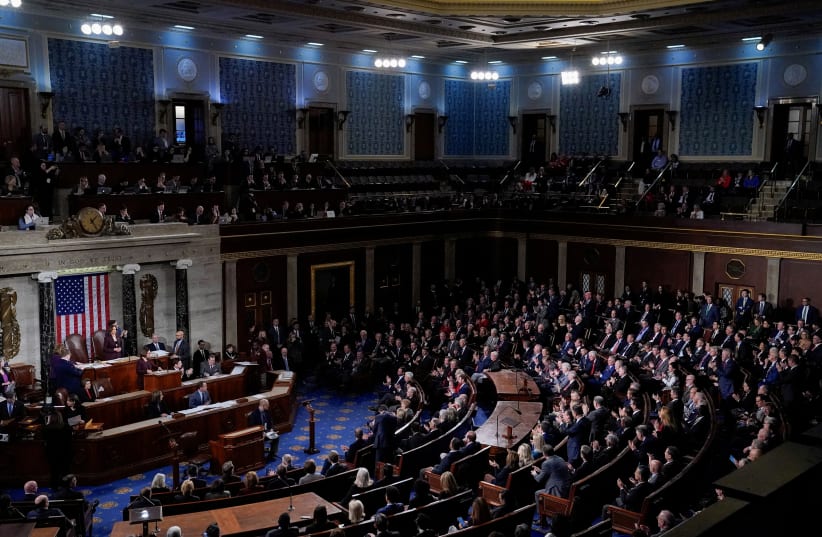
U.S. Senate and the House of Representatives members attend a joint session of Congress to certify Donald Trump's election, at the U.S. Capitol in Washington, U.S. January 6, 2025. (photo credit: REUTERS/ELIZABETH FRANTZ)
U.S. Senate and the House of Representatives members attend a joint session of Congress to certify Donald Trump's election, at the U.S. Capitol in Washington, U.S. January 6, 2025.
(photo credit: REUTERS/ELIZABETH FRANTZ)

The bill seeking sanctions against members of the International Criminal Court over its issuing of arrest warrants against Prime Minister Benjamin Netanyahu and former defense minister Yoav Gallant passed 243-140 in the Republican-led House of Representatives on Thursday, marking the body’s second vote in favor of the legislation.

The “Illegitimate Court Counteraction Act,” reintroduced this week by House Foreign Affairs Committee Chairman Brian Mast and Rep. Chip Roy (R-Texas), received overwhelming Republican support.

Roy attacked the International Criminal Court’s “unprecedented action of issuing arrest warrants” for the sitting prime minister and former defense minister of Israel.

“Let that sit in,” he said. “This is an entity, the International Criminal Court, that has no jurisdiction over the people of the United States. [The ICC] should have no authority over our people, no authority over the prime minister of Israel.”

Mast invokes 'America first'

Mast invoked the “America first” agenda and continually offered his tagline about the legislation, saying the US needs to “get in the way of those that are getting in our way.”

 U.S. Senate and the House of Representatives members attend a joint session of Congress to certify Donald Trump's election, at the U.S. Capitol in Washington, U.S. January 6, 2025. (credit: REUTERS/Annabelle Gordon)
U.S. Senate and the House of Representatives members attend a joint session of Congress to certify Donald Trump's election, at the U.S. Capitol in Washington, U.S. January 6, 2025. (credit: REUTERS/Annabelle Gordon)

He said the bill sends an incredibly important message across the globe, that “when we make this law, do not get in the way of America or our allies trying to bring our people home. Don’t get in our way.

“You will be given no quarter, and again, you will certainly not be welcomed to American soil,” Mast said.

According to Mast, the ICC had time to “abandon the shameful effort” of issuing Netanyahu and Gallant’s arrest warrants, but instead, the court attempted to obstruct Israel’s right to defend itself, prolonging the war and preventing the release of American hostages.

“If you’re boosting the morale of Hamas, you are on the other team. And in November, the ICC’s Trial Chamber approved the arrest warrants,” Mast added. “We have to pass this bill today to prevent this travesty from moving any further and to deter any more illegitimate actions by this kangaroo court to halt or stall the military success of our allies trying to bring hostages home, both American and Israeli and others.”

Rep. jim McGovern (D-MA), ranking member of the House Committee on Rules, was the only Democrat who spoke during the vote, criticizing the Republican leadership for scheduling the vote during former president Jimmy Carter’s state funeral, saying it was incredibly disappointing given Carter’s stature in the US and his commitment to human rights.

In his opening statement, McGovern said calling a vote on this legislation “takes the cake” in showing the country how backward Republicans’ priorities are.

“We have a natural disaster unfolding in California right this second as 100,000 people are fleeing a climate change-driven fire that’s burning up entire neighborhoods. We have a gun violence epidemic, as we see massacres in our school nearly every single day, and families are unable to make ends meet because they’re being ripped off by billionaire corporations who don’t care about anything,” McGovern said. “All those challenges, and this is what the out-of-touch, elitist, billionaire Republican Party wants to waste time on, sanctioning the ICC.”

McGovern continued, saying the attacks of October 7 were unconscionable and that Netanyahu has an “absolute right” to defend his people but that there’s “no international right to vengeance.”

“And what we are seeing in Gaza is vengeance,” he said. “I mean, where is our humanity? Have we just given up on the idea of human rights? At least 45,000 people have been killed in the war in Gaza, and I fear that number is much higher.”

McGovern slammed the closed process in which Republicans wrote the bill and brought it to the floor, as the bill never went before the Rules Committee or received any amendments.

McGovern then directly criticized Mast for implying that his opposition to the legislation was anti-American.

“If I thought for one second that this bill that we’re debating today would help get the release of the hostages and the American hostages, I’d be with you, but it won’t,” McGovern said. “It complicates things even further, and it isolates us to the world community at a time, quite frankly, when we need allies and we need everybody working to try to resolve the conflict in the Middle East and to get all the hostages released, and to ensure that Israel has its security and to ensure that the Palestinians have a future as well.”

Rep. Mike Lawler (R-NY) used his time on the floor to criticize President Joe Biden in addition to voicing his support for sanctions against the ICC, saying it’s shameful the way Biden’s administration has “allowed these hostages to languish.”

He said the ICC has continually abused its authority and demonstrated blatant hostility toward US allies and American values as Israel has “continued to defend itself against terrorists in the Middle East over the interjections of this administration.”

Rep. Randy Weber (R-Texas) took the floor wearing an Israeli flag tie and called the ICC a disgrace.

“It’s a sham, and its officials need to find real jobs. They have no authority to target Americans or our allies, especially Israel, and we won’t stand for it, Mr. Speaker,” he said. “I look forward to passing this bill, and encouraging the Senate to pass it in time for President[-elect Donald] Trump to sign it on day one.”

The Jewish Federations of North America applauded the US House on Thursday for passing the act – also known as the International Criminal Court sanction bill – to push back against the ICC’s historically unjust and misguided persecution of Israel as it seeks to defend itself against a genocidal terrorist organization.

“The ICC emboldened terrorists around the world when they sanctioned Israel’s leaders – now it’s time for them to be held accountable for their outrageous and irresponsible decisions,” said Jewish Federations Vice President of Government Relations Karen Paikin Barall. “We urge members of the Senate to show solidarity with our brothers and sisters in Israel and act swiftly in passing this bill,” the federation said.

 
Hannah Sarisohn

Source: https://www.jpost.com/american-politics/article-836908

Follow Middle East and Terrorism on Twitter

Is Trump Caving to China on TikTok? - Gordon G. Chang


​ by Gordon G. Chang

Articles 7 and 14 of China's 2017 National Intelligence Law require an entity such as ByteDance to commit acts of espionage if so directed by authorities in China. Moreover, the statement ignores the Communist Party's demand that any entity in China, regardless of ownership, obey its dictates.


  • The law is clear: No third-party service provider, such as Google or Apple, may "distribute, maintain, or update" a "foreign adversary controlled application." The measure designates any app owned by ByteDance, such as TikTok, as such an app.

  • Radio Free Asia reported in August 2020 that a Chinese People's Liberation Army intelligence unit, working out of China's Houston consulate, used big data to identify Americans likely to participate in Black Lives Matter and Antifa protests, and then created and sent them "tailor-made" videos on how to organize riots. Related reporting reveals the videos were TikToks. Fomenting violence in another country is considered an act of war.

  • Moreover, in their Supreme Court brief, TikTok and ByteDance argue this: "No arm of the Chinese government has an ownership stake—directly or indirectly—in TikTok Inc. or ByteDance Ltd." .... the statement does not cover ownership by the Communist Party of China, which is separate from the Chinese government.

  • Articles 7 and 14 of China's 2017 National Intelligence Law require an entity such as ByteDance to commit acts of espionage if so directed by authorities in China. Moreover, the statement ignores the Communist Party's demand that any entity in China, regardless of ownership, obey its dictates.

  • Now, "TikTok refugees" are flocking to another Chinese app, "RedNote," known in China by the characters for "Little Red Book." RedNote, the most downloaded app in Apple's U.S. store, should be treated the same as TikTok.

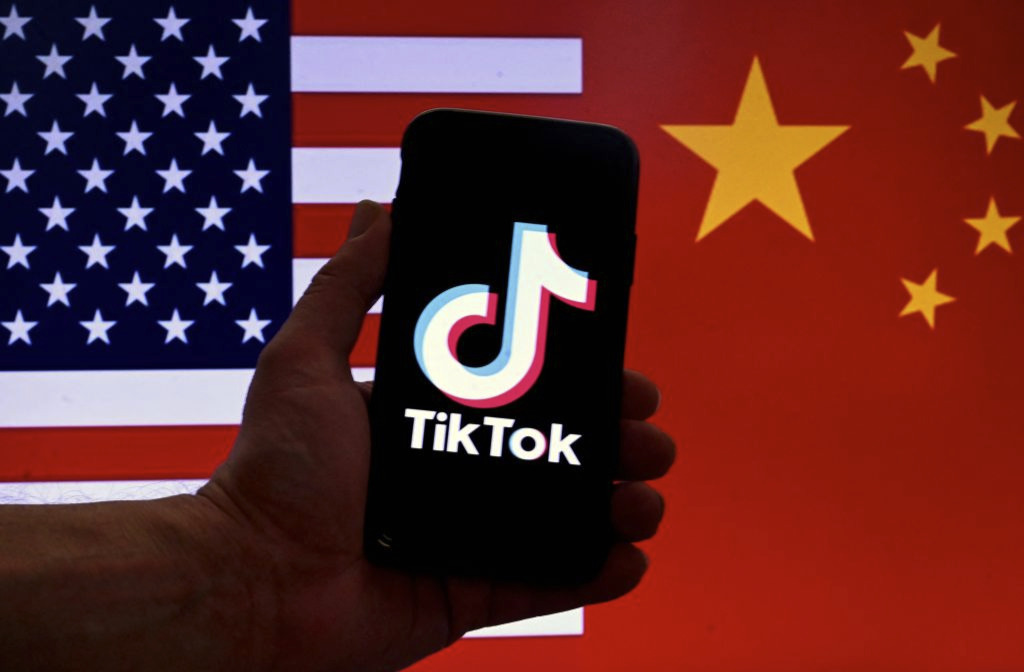
The law is clear: No third-party service provider, such as Google or Apple, may "distribute, maintain, or update" a "foreign adversary controlled application." The measure designates any app owned by ByteDance, such as TikTok, as such an app. (Photo by Olivier Douliery/AFP via Getty Images)

The Washington Post on January 15 reported that President-elect Donald Trump is thinking of issuing an executive order suspending the Protecting Americans from Foreign Adversary Controlled Applications Act. The law is often and incorrectly referred to as the "TikTok ban."

Trump has no power to suspend the law by executive order. In any event, a delay in enforcement, even in accordance with the law's provisions, would be a grave mistake.

TikTok, China's ByteDance Ltd. (TikTok's owner), and TikTok creators sought Supreme Court review of the decision in TikTok Inc. v. Garland, issued last month by the U.S. Court of Appeals for the District of Columbia Circuit, upholding the constitutionality of the measure.

The law is clear: No third-party service provider, such as Google or Apple, may "distribute, maintain, or update" a "foreign adversary controlled application." The measure designates any app owned by ByteDance, such as TikTok, as such an app.

The prohibition is set to take effect January 19. Unless ByteDance sells TikTok to a non-designated party by that date, American app stores cannot distribute that app and no American business may offer web-hosting services to it. The wildly popular Chinese video-sharing app is currently on an estimated 170 million phones in the U.S.

On January 10, the U.S. Supreme Court heard oral arguments in the case. The Court, however, did not issue an opinion on January 15, when it handed down a batch of decisions. Observers had expected the TikTok ruling then.

TikTok users, in their challenge, argued that the law deprives them of a "vital communications forum." They have a point, but there are overriding national-security issues.

As an initial matter, the Chinese regime has used TikTok to steal information from American users. "TikTok collects massive amounts of data on Americans at the direction of a genocidal totalitarian regime run by the Chinese Communist Party," Kerry Gershaneck, author of Political Warfare: Strategies for Combating China's Plan to 'Win Without Fighting,' told Gatestone. "TikTok's invasive data collection includes usernames, age, biometric identifiers like facial recognition, location, browsing behavior, and contact lists. It even tracks keystrokes."

Moreover, Beijing has sent the app off to battle. Beijing uses TikTok's curation algorithm, which determines the distribution of videos, to propagate its narratives. For instance, Radio Free Asia reported in August 2020 that a Chinese People's Liberation Army intelligence unit, working out of China's Houston consulate, used big data to identify Americans likely to participate in Black Lives Matter and Antifa protests, and then created and sent them "tailor-made" videos on how to organize riots. Related reporting reveals the videos were TikToks. Fomenting violence in another country is considered an act of war.

"Exposure to such relentless flows of propaganda, disinformation, and psychological and emotional manipulation," says Gershaneck, "is a proven means to subvert, divide, and demoralize any nation."

Brandon Weichert, senior fellow of the Center for the National Interest, in comments to this site, reminds everyone that TikTok is "digital fentanyl" and a "weapon of mass distraction." The American people, he points out, now have "a once-in-a-lifetime opportunity to save a generation of American children from the horrors of this Chinese psychological warfare app."

TikTok creators also argued that the law, enacted in April, "violates the First Amendment because it suppresses the speech of American creators based primarily on an asserted government interest—policing the ideas Americans hear—that is anathema to our nation's history and tradition and irreconcilable with this court's precedents."

That assertion is absolutely not true. There is nothing in the law policing content. The law merely seeks to prevent conduct injurious to the United States.

Moreover, in their Supreme Court brief, TikTok and ByteDance argue this: "No arm of the Chinese government has an ownership stake—directly or indirectly—in TikTok Inc. or ByteDance Ltd."

For one thing, the statement does not cover ownership by the Communist Party of China, which is separate from the Chinese government.

Yet the issue is more about control than ownership. The Chinese regime—the central government and the Party—controls the app.

For instance, Articles 7 and 14 of China's 2017 National Intelligence Law require an entity such as ByteDance to commit acts of espionage if so directed by authorities in China. Moreover, the statement ignores the Communist Party's demand that any entity in China, regardless of ownership, obey its dictates.

Trump, who in 2020 used his emergency powers to ban TikTok, on December 27 filed a brief with the Supreme Court seeking an indefinite stay of the law.

Trump, in his brief, stated that he wanted time to pursue a "negotiated resolution." There is talk of a sale of TikTok to Kevin O'Leary, "Mr. Wonderful," or Elon Musk.

The Protecting Americans from Foreign Adversary Controlled Applications Act gives the president the right to grant a one-time extension of not more than 90 days if there is "significant progress" toward a sale. It is unlikely, however, that Trump could in good faith make the required factual certifications to permit an extension.

In any event, the exercise of the 90-day provision would be a preemptive concession. Why should the U.S. take the pressure off China to sell the app? A reprieve, in effect, allows ByteDance to hold out for a higher price.

More important, any delay, whether by executive order or in accordance with the law itself, would not be in America's interest. Trump going to bat for TikTok proves to Xi Jinping that the United States has no will to defend itself from an app that poisons minds and steals data from more than half the American population.

There is now talk of ByteDance selling the app but keeping control of the curation algorithm. That should be unacceptable to Trump because China's manipulation of curation is one of the reasons that makes TikTok so injurious to America.

Now, "TikTok refugees" are flocking to another Chinese app, "RedNote," known in China by the characters for "Little Red Book." RedNote, the most downloaded app in Apple's U.S. store, should be treated the same as TikTok.

Both apps are daggers pointed at the heart of America.


Gordon G. Chang is the author of Plan Red: China's Project to Destroy America and The Coming Collapse of China, a Gatestone Institute distinguished senior fellow, and a member of its Advisory Board.

Source: https://www.gatestoneinstitute.org/21314/tiktok-trump-china

Follow Middle East and Terrorism on Twitter

Student Loan Bailouts and the 119th Congress: Time to Ask Tough Questions - Teresa R. Manning


​ by Teresa R. Manning

Biden's Education Department expands student loan forgiveness to over 5 million borrowers, sparking GOP backlash and calls for reform of higher education financing.


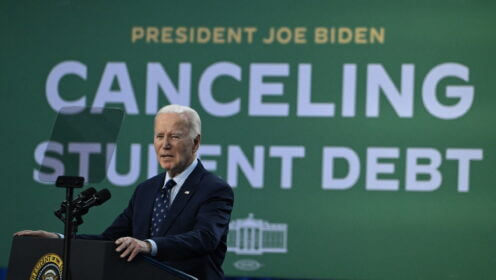
Even as the Trump inauguration nears, Biden continues to cause controversy, including with student loan cancellations.

On January 13,  his Education Department announced yet another round of student loan forgiveness—this time, for more than 150,000 borrowers—bringing the Administration’s total number of individuals with student debt canceled to over 5 million.

The Department described these most recent beneficiaries as borrowers with disabilities, as well as those who are public service workers and also those “misled and cheated” by their institutions.

All three categories had already been cleared for what the administration has previously called “targeted relief efforts.“ So Monday’s actions just expanded the rolls, so to speak.

Last October, for example, the administration announced 60,000 cancellations for borrowers in the Public Service Loan Forgiveness (PSLF) Program, while in 2021, it had announced relief also for borrowers with disabilities as well as for graduates of bad actor for-profit schools such as Corinthian Colleges, then  Ashford University and now “any school owned by the Center for Excellence in Education” because of findings that the Center misled students about salaries, employment prospects, and its private loan products. (Interestingly, the same has been said of many mainstream universities as well as law and medical schools.)

Republicans have been quick to denounce the expanded rolls, with Tim Walberg (R-MI), the new chair of the House Education and Workforce Committee, slamming the Department’s “Student Loan Swan Song”:

“The Biden Harris Administration is at it again… working on handouts, with zero accountability … [expecting] taxpayers—even if they never went to college—to pick up the tab.”

This sets the stage for the recently re-noticed bill by Glenn Grothman (R-WI), aka the “Protecting Taxpayers from Student Loan Bailouts Act.” Formally introduced as House Resolution 4771 in June of 2023, Grothman’s bill was integrated into the larger House legislation called the College Cost Reduction Act or H.R. 6951, introduced in January 2024 by Virginia Foxx, former House Education Committee Chair. But it never reached the House floor for a vote. So Grothman plans to reintroduce his bill this session.

The bill warrants attention principally because it aims to forbid future administrations from these kinds of student loan bailouts. Specifically, it prohibits the education secretary from taking actions that are “economically significant” and “would result in an increase in a subsidy cost.” It goes on to define “economically significant” as any executive action that is likely “to have an annual effect on the economy of $100 million or more” or would adversely “affect in a material way the economy, a sector of the economy, productivity, competition, jobs, the environment, public health or safety, or state, local, or tribal governments or communities.”

Obviously, the definition is broad, meaning the bill intends to prevent the Education Department from saddling taxpayers with these relief efforts, which amount to wealth transfers from regular Americans to imprudent borrowers.

While Grothman’s bill is fine as far as stopgap measures go and would commendably halt overreach by future Education Departments, it does nothing to address the root causes of the mess that is higher education finance.

It also fails to mention much more sizeable and therefore objectionable bailouts—for banks and corporations, for example—arguably singling out young Americans for hardship while more powerful entities get rescued. Such asymmetry seems wrong and contributes to a cynicism that America does not need.

As the National Association of Scholars (NAS) has previously stated, the higher education system, including its finances, needs much more far-reaching and serious reform, if not a complete house cleaning:

To be fair, higher ed’s problems are so numerous and longstanding, including not just out-of-control costs but staggering conformity and pathetic, politicized content. Those responsible are so entrenched that no single measure by Congress would suffice to cure it, except, perhaps, a moratorium on federal funding—maybe also a moratorium on operations—while authorities conduct a financial and legal audit to clean house. That audit would need to ask: Why are graduates so ignorant and unprepared for employment? Why is their debt so high while median salaries remain so low? Could industries simply recruit from high schools and bypass the post-secondary education altogether? Why are universities run by Democrats when their tax status presumes they are for the public interest not to benefit the political left?

On the topic of loan forgiveness, Congressman Grothman might also ask: Why has the rate of increase for college tuition been so high that it causes students to borrow so massively in the first place?

What explains this state of affairs where tuition gets more expensive than even medical care, while salaries, even for supposedly high-paying professions, stagnate?

The ancients would ask, Cui bono? Or: Who benefits?

NAS looks forward to hearing these questions and more like them, not just from Glenn Grothman but from the entire 119th Congress.

***


Teresa R. Manning is Policy Director at the National Association of Scholars, President of the Virginia Association of Scholars, and a former law professor at Virginia’s Scalia Law School, George Mason University. She authored the 2020 Report, Dear Colleague: The Weaponization of Title IX.

Source: https://amgreatness.com/2025/01/16/student-loan-bailouts-and-the-119th-congress-time-to-ask-tough-questions/

Follow Middle East and Terrorism on Twitter

Ben Shapiro to Arutz Sheva: Hostage deal is painful, but is not a full-scale surrender - Yoni Kempinski


​ by Yoni Kempinski

Daily Wire co-founder tells Arutz Sheva he does not believe Trump would pressure Israel into allowing Hamas to remain in power and speaks about the special musical he created with his father, 'We Will Rise.'


Daily Wire co-founder Ben Shapiro spoke to Arutz Sheva - Israel National News today (Wednesday) about the hostage and ceasefire deal reached between Israel and the Hamas terrorist organization, the role of President-elect Donald Trump in securing the deal, and 'We Will Rise' - the new musical he created together with his father.

"I think the fact is that the Trump Administration wants the hostages out, and I also think that they want a headline that is connected to the hostages being released," Shapiro said. "I think whether the deal ends up being a net benefit for Israel and for the United States or whether it ends up being a net detriment is going to be largely determined by whether it's seen as a ceasefire/end of war deal or whether it's seen as a hostage release deal. And it seems to me far-fetched to believe that the Trump Administration would cram down a full-scale ceasefire deal that allowed Hamas to remain in place given the fact that literally every Cabinet nominee who's spoken on this has said precisely the reverse."

He noted that yesterday, Pete Hegseth, Trump's nominee for Defense Secretary, said that he supports Israel "in killing literally every member of Hamas." Likewise, Trump's pick for National Security Adviser, Mike Waltz, has said that Hamas will not remain in power in Gaza.

"So any sort of deal that ends with Hamas in control, either titular or effectual, of the Gaza Strip, seems to be a non-starter. So what that actually means is that is probably best to be seen, if you going to try and game it out, as a way of guaranteeing that many of the hostages get out - hopefully as many as possible - and then a recognition that Israel is going to have to go back in and mop up the job," he said.

"I think the sort of take that this is an end-of-war deal as opposed to a 'free the hostages and then see where you are deal, I think that's probably mistaken," Shapiro said.

When asked if Trump's warnings to Hamas that there will be "hell to pay" if the hostages are not freed by his inauguration next Monday are still relevant after the announcement of the deal, Shapiro responded that he takes Trump "at his word on that. I think that the notion that Hamas is a trustworthy negotiating partner because they decide that they're going to release babies in exchange for murderous terrorists: I don't think President Trump believes that, I don't think anyone in his national security team believes that, and so I think that probably, what this is from the Trump team - as probably well as the Biden team - is to get as many hostages out as you can get out with the minimum possible immediate withdrawals."

"It's a painful deal," he acknowledged. "The question is how much pain, and I think that's yet to be seen."

Shapiro said that he "understands many of the concerns" of Trump supporters in Israel who feel that Israel has been pressured into a catastrophic deal. "It's only going to be determined how bad or good the deal is as it's implemented. I have enough trust in both the Netanyahu administration and the Trump administration to believe that it isn't a full-scale surrender as it's been portrayed by some."

He said that the "meaning for Israel" of Trump's inauguration on January 20 "is that the boot is going to be off the neck of the IDF and of Israel in general with regard to fighting terrorism and taking measures necessary to secure itself. That obviously wasn't the case with the Biden Administration that was slow-walking aid, that was preventing Israel from getting weaponry that it required."

"It's hard to tell at this point exactly what this looks like in terms of Iran policy," he noted. "If I had to ball-park it, my suggestion would be that the Americans are going to be quite friendly towards Israel protecting itself. You're not gonna have as much yelling and screaming about Israel doing the things that are necessary in order to protect itself. But, as I;ve been saying for a very long time, American interests and Israeli interests are not identical, nor should they be. They're separate countries with separate interests. The Israelis should use this as an opportunity to make themselves more independent of the entire world, including the United States, with regard to, for example, arms supply and foreign policy."

He criticized the view that Israeli policy should mirror the policy of whatever administration is in the White House. "That seems to me bad policy by any state, including Israel. I think that if Israel is hoping that President Trump is going to do the work for Israel, I don't think that's what he was elected to do. Nor do I think that's what anyone should expect President Trump to do."

"What they're going to get is an administration that is very friendly towards Israel, that wants to see Israel protect itself, that recognizes that Israel's enemies are indeed evil and seek its destruction, and is going to act that way," he said. "But again, no one can predict the future and no one even knows who's going to be president five years from now. I would always urge Israel and the United States to act as independent states in their own interests."

Shapiro also discussed the musical he and his father David Shapiro created together, "We Will Rise," which tells the story of the Warsaw Ghetto Uprising and connects that event to the post-October 7 reality.

"It really is via my father," he said. "I was a musician growing up. I started playing violin at the age of five. I was at one point a fairly world-class violinist when I was in my teenage years."

His father wrote music for film and television "and had always wanted to write for musical theater," Shapiro recounted. "He and I combined on this project. He wrote the music and the lyrics. I wrote the libretto, which is to say the plot and the dialogue."

"When we put it together originally ... it was a musical about the Warsaw Ghetto Uprising, which is what 'We Will Rise' is about. We basically completed what we thought was a good round of that going into 2023, and then October 7th happened. And we really wanted to tie the messages that were very relevant from the Warsaw Ghetto Uprising to October 7th, to the modern-day State of Israel. And so the musical now opens with two soldiers from the IDF going into Kfar Aza and finding it burned out and realizing that one of the soldiers' grandmothers has been kidnapped into Gaza. And they find on the floor of her home a picture of a baby and her parents from the Warsaw Ghetto. We flash into the picture, and now we tell the story of the Warsaw Ghetto Uprising," he explained.

Shapiro called the work "a musical about Jewish unity in the face of annihilationist enemies. It's a musical about the fact that no matter how much Jews may try to escape antisemitism, antisemitism will always come for them. And it's a musical about why the State of Israel is necessary to collective self-defense. The answer to 'Never Again' for the Jews was not just relying on the kindness of other nations, which, of course, Jews all over the world are still reliant on that. But also the establishment of the State of Israel as a homeland and protector for Jews everywhere. That's what the musical is really about in essence. I think that message was relevant before October 7th. I think it's even more relevant after October 7th."

In conclusion, Shapiro said that while Jews will not be able to change antisemites into people who love or are even indifferent to the Jewish people, antisemitism must still be fought. He also said that he found his recent visit to Israel inspiring because "the Israelis are an astonishing people."

"I'm very optimistic, a lot more optimistic than I was one year ago" because of the Cabinet Trump has chosen and because of Israel's strengthened security position in the region.


Yoni Kempinski

Source: https://www.israelnationalnews.com/news/402357

Follow Middle East and Terrorism on Twitter