by Amir Taheri
[T]he current wave of attacks on the clergy could come from the "deep state" including the Islamic Revolutionary Guard Corps that may be thinking of a post-Khamenei arrangement in which the turbans move stage left to exit.
"Look at our times a handful of imposter clerics
Having no notion of reason and science
Having no notion of what man is about
Desperate like donkeys in search of fodder
All they care about is eating and fornicating
Have cast aside notions of shame and honor
They seek nothing but loot and plunder
Alien they are to rules of faith."
— Sanai, 11th century Persian poet, from a samizdat distributed in the "holy" city of Qom, the bastion of Iranian clergy, February 20, 2026, the 40th day of the deaths of thousands of protesters across Iran.Surprisingly, despite unprecedented security deployment, no attempt was made to stop the tract.
It quotes an unnamed cleric addressing fellow clerics: "They gave you money to build a school but you built a palace for yourself!" — Editorial in daily Jumhuri Islami, founded in 1979 and owned by "Supreme Guide" Ayatollah Ali Khamenei.
Today, however, every village mullah insists on having a luxury tomb, if not a full-blown shrine with ceramic tiles and mirror work.
Before the 1979 revolution, the clergy was largely independent of state funds. In 1977, total government "gifts" to a dozen grand ayatollahs in Qom, Tehran and Mashhad were estimated at $3 million.
Today, voluntary donations have evaporated, leaving the clergy dependent on a secular authority that uses a clerical vocabulary.
Thus the current wave of attacks on the clergy could come from the "deep state" including the Islamic Revolutionary Guard Corps that may be thinking of a post-Khamenei arrangement in which the turbans move stage left to exit.
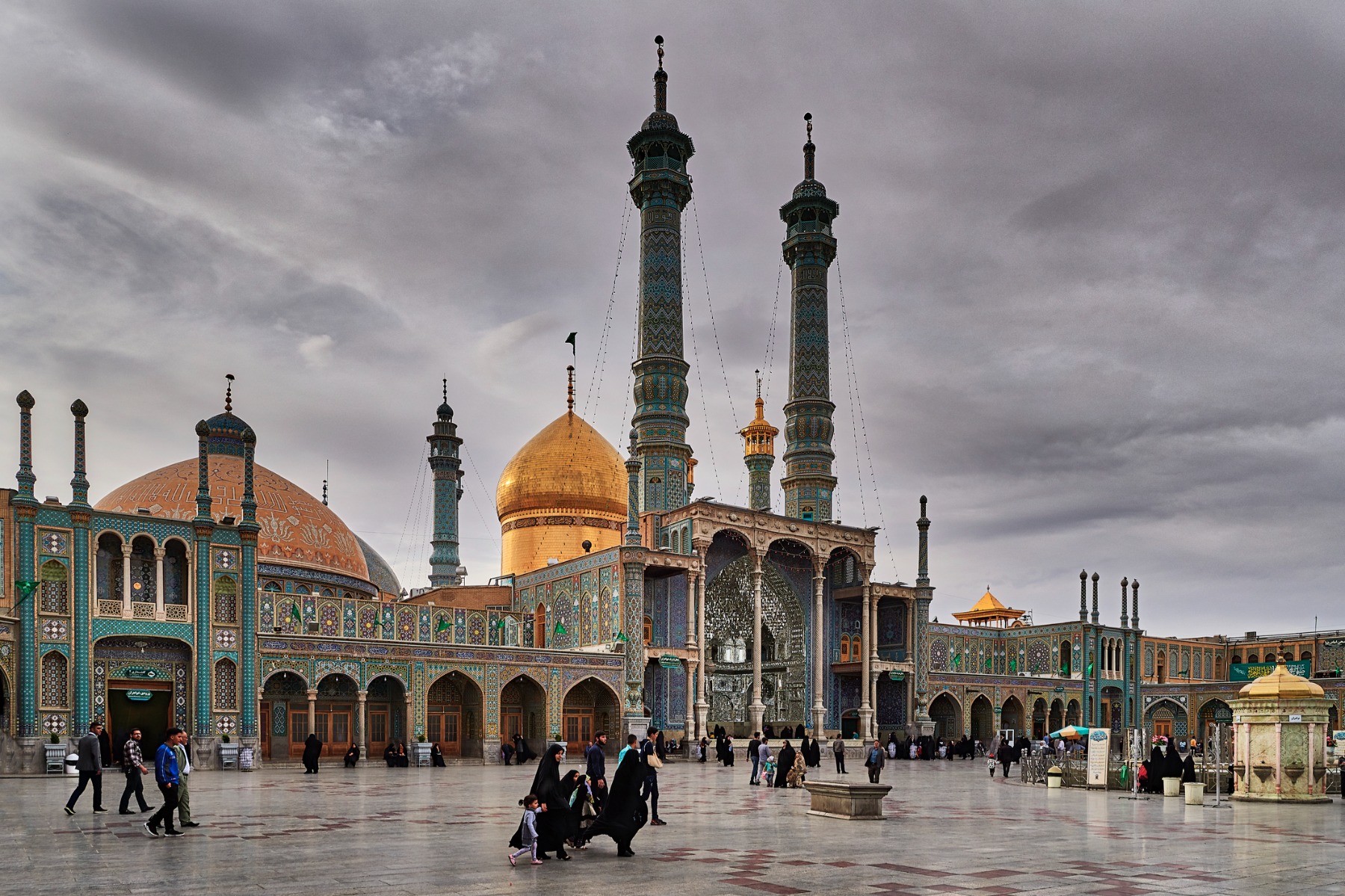
Last Tuesday, as Iranians organized mourning ceremonies on the 40th day of the deaths of thousands of protesters across the nation, a samizdat was distributed in the "holy" city of Qom, the bastion of Iranian clergy.
The single-page tract included parts of a poem by Sanai, an 11th century Persian poet lampooning the clergy.
Part of it read:
Look at our times a handful of imposter clerics
Having no notion of reason and science
Having no notion of what man is about
Desperate like donkeys in search of fodder
All they care about is eating and fornicating
Have cast aside notions of shame and honor
They seek nothing but loot and plunder
Alien they are to rules of faith.
Surprisingly, despite unprecedented security deployment, no attempt was made to stop the tract.
Did the authorities want to pass a message to the clergy who have remained silent throughout the most turbulent weeks of the beleaguered republic?
The expectation was that the clergy would do what they have done for half a century: acting as echo chamber for the official narrative of the tragic events.
A sign that the attack on clergy may have had a nod and a wink from "the authorities" came the same day in the official daily Jumhuri Islami ("Islamic Republic") founded in 1979 and owned by "Supreme Guide" Ayatollah Ali Khamenei.
In an editorial, the paper accused the clergy of having lost contact with "real community" and being addicted to mammon's offers.
"Instead of living in small cells of the howzah (theological school) they live in luxurious abodes and enjoy the best possibilities that worldly life can offer," the editorial claimed.
The editorial revealed that the luxury villas and penthouses where some clergy live are theoretically owned by "foundations", "charities" and "research centers" they head, funded by the state.
It quotes an unnamed cleric addressing fellow clerics: "They gave you money to build a school but you built a palace for yourself!"
The editorial laments "the time when clerical life was based on piety, self-abnegation, frugality and modesty." "In those days," it asserts, "the highest-ranking clerics shunned titles such as ayatollahs and signed themselves as al-ahqar [an Arabic term that means the humblest]."
Such grand clerics as Abdul-Karim Haeri of Maybod arguably the highest "maraja al taqlid" (source of imitation) in his time, even insisted that their modest tombstone bear no honorific title.
Today, however, every village mullah insists on having a luxury tomb, if not a full-blown shrine with ceramic tiles and mirror work.
The editorial claims that the clergy have lost the contact they had with the mass of believers because they now depend on government funding, gifts and positions with salaries and perks.
Thus, instead of taking an interest in matters that touch the foundations of society, they focus on "appearances" such as why the government allows some women to play fast and loose with "hijab" or why banks play tricks to circumvent the ban on charging interest.
The article in Ayatollah Khamenei's newspaper concludes by quoting Imam Muhammad Ghazzali the great 12th-century Persian theologian who also lampooned the clergy of his time for deviating from the True Path.
A day after the surprise editorial, it was the turn of IRNA the official news agency, to publish a lengthy interview with Ayatollah Majid Ansari an IRGC senior cleric acting as presidential advisor.
In it he accuses the clergy of having "replaced religion with personal opinions" thus alienating public opinion. "We need to cease imposing our tastes on society, especially on younger people," he says. "People, especially the youth, want to live a normal life and will resist against any barrier we may erect."
Hassan Khalkhali a noted expert on "seminary affairs" claims that "there has emerged in Iran a kind of disaffection between the clergy and the mass of the people for the first time in five centuries, that is to say, since Iran adopted Shiism." He reports that some clerics now feel "unsafe appearing in traditional cloth and turban" and wear jeans and baseball caps in public.
Son of Grand Ayatollah Khalkhali also claims that some clerics are leaving the country mostly to start a new life in Iraq. Last year alone, over 3,000 relocated to Najaf and Karbala.
What is one to make of what looks like an officially sanctioned, if not actually organized, criticism of the clergy? Why would a system built around the clergy sanction such ardent criticism of its core?
No straight answer is possible because Iran today has several layers of clergy.
The most reliable figures put the number of clergy at around 300,000, including some 70,000 students of theology, of whom a third come from 30 foreign countries. Clerics in governmental or semi-official positions number around 50,000.
A further 20,000 clerics are on state payroll through "foundations" "charities" and "research centers" they head. Some 100,000 receive state donations through the National Association of Mosques that administers the estimated 80,000 mosques and 7,000 mausoleums of "holy" men and women.
That leaves around 50,000 to 60,000 clerics who are theoretically self-financing. But even then Khalkhali reports that many of them own businesses managed by their sons or sons-in-law, often benefiting from juicy government contract and "heavy envelope" gifts on feast days. One grand ayatollah owns no fewer than 157 companies engaged in import-export, hospitality, mining and foreign travel services.
Before the 1979 revolution, the clergy was largely independent of state funds. In 1977, total government "gifts" to a dozen grand ayatollahs in Qom, Tehran and Mashhad were estimated at $3 million. The clergy depended on voluntary donations by hundreds of thousands of believers in Iran and abroad who regarded it as an interface if not a counterweight to profane authorities. That created a balance in which the clergy and the government cooperated within limits but remained aware of potential zones of discord.
Ayatollah Khomeini sought a Goldilocks solution by trying to unite the turban and the military cap.
Today, voluntary donations have evaporated, leaving the clergy dependent on a secular authority that uses a clerical vocabulary.
Last month's tragic events provided an occasion for the clergy to reassert its alterity by remaining silent, neither endorsing the protests nor condemning them as the powers-that-be wished.
Thus the current wave of attacks on the clergy could come from the "deep state" including the Islamic Revolutionary Guard Corps that may be thinking of a post-Khamenei arrangement in which the turbans move stage left to exit.
Gatestone Institute would like to thank the author for his kind permission to reprint this article in slightly different form from Asharq Al-Awsat.
Amir Taheri was the executive editor-in-chief of the daily Kayhan in Iran from 1972 to 1979. He has worked at or written for innumerable publications, published eleven books, and has been a columnist for Asharq Al-Awsat since 1987. He graciously serves as Chairman of Gatestone Europe.
Source: https://www.gatestoneinstitute.org/22294/ayatollahs-lampoon-the-clergy

No comments:
Post a Comment