Saturday, November 15, 2025

'Whole world is against Israel': Northern Irish MP Sammy Wilson bears witness to the Jewish state - Mathilda Heller


by Mathilda Heller

DIPLOMATIC AFFAIRS: Wilson, of the Democratic Unionist Party, has been an outspoken supporter of Israel for a long time, and said that the Jewish State's democratic strength impressed him.


Northern Irish MP Sammy Wilson [left] stands at mountain outpost.
(photo credit: COURTESY) 

"I wanted to say with some authority, I’ve been there, I’ve spoken to people, I’ve seen on the ground what people have suffered,” Northern Irish MP Sammy Wilson told The Jerusalem Post on Tuesday, following his return from Israel.

Wilson – of the Democratic Unionist Party – has been an outspoken supporter of Israel for a long time, so his visit did not come as a surprise to people back home. He expected that his visit would attract criticism, because, in his words “nobody on the other side wants the truth to be shown.”

“I have heard it time and time again in the House of Commons when I stood up to defend Israel in debates in the House of Commons. I’ve a number of pro-Gaza MPs sit behind me, they usually hiss and shout and try and shout me down. And, of course, the Labour Party, on the other side now, is so dependent in maybe 200 or 300 of their constituencies on the Muslim vote that they seem to have closed their eyes to any kind of objectivity when it comes to Israel.”

Northern Irish lawmaker carries out fact-finding mission in Israel

Wilson wanted to see Israel for himself, so his main intention was to carry out a firsthand fact-finding mission of sorts so he could return home and relay what he witnessed with his own eyes.

He also told the Post that he strongly identifies with Israel as someone from Northern Ireland (he was born in the capital, Belfast).

Northern Irish MP Sammy Wilson stands in Majdal Shams.  (credit: Courtesy)
Northern Irish MP Sammy Wilson stands in Majdal Shams. (credit: Courtesy)
“For 30 years we had terrorist organizations trying to destroy us, take us out of the United Kingdom, commit acts of genocide along the border, driving the Protestant population out. And there was also a hostile country, which was our neighbor [the Republic of Ireland], that actually made a claim to our territory until the year 1998, and also harbored terrorists.

“So I think there was an identification in Northern Ireland with the kind of issues which you face and the problems which you face, and I was interested in going along to talk to people on the ground, to talk to politicians, to talk to people who were involved in the army, and others, and just to hear from some of the victims of terrorism as well.”Multiple things surprised Wilson during his visit. Firstly, the existence of a “normality” in Israel that he didn’t expect during a war.

“I suppose I shouldn’t have been surprised by this, because for many years, when we had the troubles in Northern Ireland, people had the impression that you could hardly go out of the door of your home in Northern Ireland, for fear of being killed. And yet, despite the fact that there were car bombs going off, there were shootings, there were terrorist activities, people tried to live, lead a normal life. But I’ve got to say that’s one of the things that struck me, the normality.”

Another thing that he found striking was the strength of democracy in Israel.

“There’s this image of Israel being an autocratic state which seeks to stamp down on anybody who is not a Jew, but there is a 3.25% electoral threshold which enables an individual to form a party – we don’t have that kind of openness.”

“I mean, you’ve probably got a more open democracy than we have here in Northern Ireland,” he remarked. Unlike in Israel, in the UK, big parties dominate politics, and smaller groups find it challenging to acquire a political platform.

He also noted that it was easy for him to speak to politicians from different parties, and there was no attempt to stop him from speaking to opposition MKs.

The other thing that he found surprising was the degree of integration. He spoke to the Post of seeing Israeli Jewish soldiers next to Orthodox Jews, next to Muslim Arabs, next to Christians, in the streets of Jerusalem.

“There are places in Northern Ireland where I could not walk about or sit and have a cup of coffee in a café, if I was wearing the kind of identification that we saw as we walked around Jerusalem, Tel Aviv, and other places.

“There were people coming off duty, etc., sitting beside people who were clearly Muslim in cafés, walking through, buying from each other, having businesses beside each other, etc. I went to schools and the teachers were mixed, the pupils were mixed.”

One particularly memorable experience was a visit to a further education college in Tel Aviv, where Arab Israeli students study alongside Jewish Israeli students. The principal pointed out that some of the Arab students have families in Gaza, and some of the Jewish students have fought in Gaza, and yet “there wasn’t the tension that one would have expected.”

“I mean, if I were to wear a distinctive, say, Union Jack around me or wear a certain football shirt and go to parts of Belfast, I wouldn’t be able to walk without being molested. And yet people were clearly identified as being from one community or the other, and it was actually mixed there.”

Pro-Hamas protesters in UK 'blinded by either antisemitism or left-wing ideology'

During his visit, Wilson toured the kibbutzim in southern Israel where many of the massacres occurred on October 7, 2023, and also watched some of the footage. Having borne witness to such things, Wilson told the Post of the disgust he feels toward those who support Hamas back in the UK.

“That’s the kind of cruelty that your enemies are prepared to engage in, and yet we have people in the streets of London, people in the House of Commons, who support it. I have constituents who write me letters praising Hamas, defending their cause, wanting me to highlight the need to give them more support. And I just think to myself, you know, do these people even realize what they’re asking, what they’re supporting? Are they so blinded by either antisemitism or their left-wing ideology to close their eyes to all of this stuff?

“With those who can tolerate atrocities, then no argument, political argument, military argument, moral argument, is ever going to impact on them,” he added.

“I find the Left is especially defensive, and quite rightly so, of when women are violated, whether it’s domestic violence, sexual violence or rape. And yet people who support Hamas turn a blind eye to those kinds of atrocities [against Israelis].

“I’ve answered lots of letters since I came back. I’ve spoken to people who have come into my advice center to talk to me about it, and all I can do is challenge them. ‘If this happened in Northern Ireland, what would you expect our government to do? If this had happened to members of your family, what would you have expected your government to do?’ In most cases, they’ll say: ‘But one side’s as bad as the other.’ it’s hard to get through to people like that.”However, Wilson believes that there is still a whole group of people who “are now up for grabs.”

“The battle now is, you see those people at the margins who are beginning now to have doubts because of the endless propaganda, because of the drip-feed poison which comes from the likes of the BBC.”

Since his return, lots of people have asked Wilson to go to speak at churches, “where there’s a long, strong support for Israel,” and recount his experiences.

“I can actually say with some authority, I’ve been there, I’ve spoken to people, I’ve got the explanations, I’ve seen on the ground what people have suffered.”

'The whole world is against Israel'

Wilson also spoke to the Post of the reactions from Israelis when he said he was from Northern Ireland.

“I think, given the looks that we were given, the word ‘Ireland’ just seemed to trigger a hostile response. And quite rightly, when you think of the attitude Ireland has adopted, and the fact that Israel has even had to withdraw its embassy from Ireland.”

Nevertheless, the Israelis Wilson met were pleased someone from outside the country was prepared to hear their story. He said he thinks this reflects the “isolationist” attitude there is in Israel, where they feel “the whole world is against them.” 

The Irish government has been known to have an extreme and uncompromising anti-Israel rhetoric and policy, and over the years pushed for sanctions against Israel and various forms of boycott. Sinn Féin, a major republican party, has openly embraced the Palestinian cause.

Additionally, antisemitism is prevalent. A study earlier in 2025 by professors Motti Inbari of the University of North Carolina at Pembroke and Kirill Bumin of Boston University and Metropolitan College found antisemitic attitudes among Christians in Ireland are at “medieval” levels, in large part due to entrenched religious beliefs held by the Catholic community.

Wilson concurred that the Catholic Church has a large part to play in attitudes toward Jews, something which also can be seen in Spain.

While Wilson explained that Ireland today is a “very secular, left-wing country” and no longer “deeply religious and conservative Christian” like it was 15 years ago, 20 years ago, he argued that the antisemitism still stems from the influence of the Roman Catholic Church.

“The Roman Catholic Church blames Jews for crucifying Jesus. That was deeply embedded in the psyche of Irish Catholics. And I think that that has driven a lot of the antisemitism that there is in Ireland. Today it’s pro-Palestinian in its manifestation, but I think that it’s antisemitic in its origin.”


Mathilda Heller

Source: https://www.jpost.com/international/article-873823

Follow Middle East and Terrorism on Twitter

Thursday, November 13, 2025

US-Arab weapon deals won't harm Israel's military edge, but Turkey shouldn't get F-35s, Leiter says - Amichai Stein


by Amichai Stein

A candid interview with Yechiel Leiter, Israel's ambassador to the US, on Donald Trump's Gaza peace plan and Washington's relations with Turkey and Arab nations.


YECHIEL LEITER, Israel’s ambassador to the US: Candid, calm.
(photo credit: MARC ISRAEL SELLEM)

Israel’s ambassador to the United States, Yechiel Leiter, has largely kept out of the spotlight since President Donald Trump unveiled his 20-point plan to end the war in Gaza and secure the release of all remaining hostages.

In a rare, wide-ranging interview conducted via Zoom, Leiter speaks with unusual candor about the plan’s strategic logic, Israel’s red lines, and the region’s uncertain “day after.”

He also addresses a changing diplomatic map in Jerusalem and Washington as Strategic Affairs Minister Ron Dermer steps down and Leiter becomes Prime Minister Benjamin Netanyahu’s principal conduit to the White House.

Calm, exacting, and unsentimental, Leiter returns again and again to one theme: strategic patience.

“We have a habit, a national pastime, of getting hysterical and seeking immediate solutions,” he says. “Patience, stick to the course. This approach, if we keep our eye on the ball, promises to be much more successful than what we had until now.”

WAITING WITH Strategic Affairs Minister Ron Dermer before a joint Trump-Netanyahu press conference, in the White House’s State Dining Room, Sept. 29. (credit: JONATHAN ERNST/REUTERS)
Leiter’s insistence on sobriety is not a rhetorical flourish. It is the spine of Israel’s diplomatic posture in a moment that could reset the trajectory of the Israel-Hamas War.

“Look at the big picture,” he says. “The United States incorporated our basic demands into the 20-point plan. Ask where we will be in six months, where we will be in a year. Have we advanced to the complete disarming of Hamas?”

If the answer is yes, he contends, “that is a diplomatic success” and the measure by which Israelis should judge the coming months.

‘Our basic demands are in the plan’

Asked whether Israel’s strategic goals match Washington’s, Leiter says “Yes. The Trump administration incorporated our basic demands into the 20-point plan. And that’s what’s key.” Those demands, as he outlines them, are unambiguous: “to decommission Hamas and to demilitarize and de-radicalize Gaza.”

The contours of Trump’s initiative, announced in late September, place disarmament and the full return of living and deceased hostages at the center, coupled with a staged Israeli withdrawal and a transitional technocratic administration in Gaza under robust international oversight.

Israel publicly backed the plan, while Hamas wavered over core requirements on disarmament and governance, leaving implementation fragile and dependent on strict sequencing and enforcement.

Leiter’s focus is on the end state. “At some point you look up and ask, ‘Are they disarmed?’” he says. “That is the point.”

Leiter hears the public anxiety about timelines, about enforcement, about what Hamas will look like if not fully dismantled. He counsels Israelis to resist panic.

“A little less hysteria and a little bit more sobriety,” he says, repeating the mantra. “We swerve this way, we swerve that way. Patience. Stick to the course.”

This insistence is rooted in an Israeli strategic memory, he says, not wishful thinking. Israel took “full responsibility for Gaza” for decades, then withdrew. The question now is whether Israel and its allies “will finally see the disarming of Hamas and the end of its capacity to regenerate.”

A regional frame: Reform, normalization, and the ‘soul of Islam’

Leiter widens the aperture to the region. The ambassador rejects the notion that normalization is intended as a symbolic “poke in the eye” to extremists.

“It’s not about provocation,” he says. “It’s about transformation. It’s a theological change, the willingness to live side by side.”

He mentions Saudi Arabia, the United Arab Emirates, and Bahrain as states whose choices can anchor a broader realignment.

Then he says something that reveals the intellectual formation behind the diplomat. Citing Princeton historian Bernard Lewis, Leiter frames a civilizational struggle inside Islam itself.

“Accommodation with Israel means accommodation with the West,” he says. “The big question is, who will win the battle for the soul of Islam?” Reform, he notes, means “the function of living side by side with Judeo-Christian civilization.”

It is an old scholarly argument, expressed here with the practicality of a policy hand who still reads.

On Iran and its network of proxies, Leiter signals confidence in the alignment between Jerusalem and Washington. Without divulging operational details, he says, “We are on the same track, absolutely.”

He adds, in a pointed aside, that if certain terrorist groups “start rebuilding,” the president “is going to act militarily again.” It is a matter-of-fact line that underscores the message he conveys throughout the interview: Deterrence is real, it is being felt, and it will be enforced.

Turkish President Tayyip Erdogan attends a press conference with German Chancellor Friedrich Merz at the Presidential Palace in Ankara, Turkey, October 30, 2025. (credit: REUTERS/UMIT BEKTAS)
Pressed about the widening gap between Washington’s desire to keep Turkey close and Israel’s frustration with President Recep Tayyip Erdogan, Leiter does not dodge. “Erdogan has become hostile and bellicose,” he says, “but Turkey is strategically located geographically.” The task, he argues, is to “mete out a working, practical relationship over that issue,” reconciling Israel’s security imperatives with the reality that Ankara remains embedded in Western strategy.

“We understand the strategic importance of Turkey to the United States,” he says. “It’s a NATO member, a large army, a key geography. And we don’t challenge that.”

But, he adds, “We can’t have Turkish troops in Gaza or Syria. And those practical demands haven’t been challenged by the United States; they’ve been accepted.

“We would prefer that Turkey not receive F-35s from the US.” Leiter stresses that Israel made its position clear: “We don’t think it’s constructive at this time. The United States will make its decision accordingly.”

Despite these gaps, Leiter emphasizes that the differences have not led to a crisis between the two allies. “We don’t have a point of contention right now. That’s what diplomacy is for. We explain our position, we appreciate our ally’s position, and we work out a practical relationship.”

He also dismisses concerns about a possible US-Saudi F-35 deal and other weapons deals between Washington and Arab countries. “There’s no indication that Israel’s qualitative edge will be compromised,” he says.

Leiter rejects the idea that Israel should be haunted by every new arms package in the region.

“We don’t live in fear,” he says. “Why would I live in fear that our qualitative edge is going to be compromised? There’s no reason to assume it will be.”

The “primary bond” between Israel and the United States, he continues, “is a bond of interest, as deep and as wide, as sincere and as permanent as Israel.”

The phrasing is emphatic. The message is that Israel’s qualitative military edge is safeguarded not only by statutes and policy but also by a shared strategic worldview.

Republican crosscurrents and Israel’s lane

What about the isolationist voices on the American Right, including a handful who have argued that the United States has “no interest” in the Middle East?

Leiter refuses to personalize the debate. “I do not want to deal with people,” he says. “I just deal with policy.”

Then he offers a statement he repeats in diplomatic meetings in Washington: “The United States has interests in the Middle East, and there are few allies as important as Israel.”

“We’ve never asked for American boots on the ground,” he says, adding that “we do it ourselves. And that serves American interests.”

He cites former US Air Force Gen. George Keegan’s line that without Israel, America would need “five CIAs.” “That’s tens of billions of dollars,” Leiter says. “Our collaboration, from the Iron Dome to F-35 combat data, is unparalleled.”

“This is not about the Jewish lobby,” he adds pointedly. “The primary bond between our two countries is a bond of interests.”

One of the most moving remarks in the conversation comes when Leiter speaks about the importance of returning the bodies of the dead, alongside the living hostages.

“I explain in every meeting the importance of our dead hostages,” he says. “Jews are significant in life and in death.” He describes the Jewish imperative to mark graves, to count the lost by name, and to refuse anonymity. “There is no Auschwitz anymore,” he says quietly. “We do not allow for Auschwitz. There is value to be recognized, and the Jewish lives matter.”

It is a statement that fuses theology, history, and diplomacy, and it helps explain why the return of the fallen is written into the American plan.

Leiter is equally candid about Egypt, saying it is “high time” for direct trilateral talks between Cairo, Jerusalem, and Washington. “We need to get into the same room,” he says. “There are unresolved issues regarding Sinai, Gaza, and our bilateral relations. It’s been too long since President [Abdel Fattah] al-Sisi and Prime Minister Netanyahu have met. Egypt has to agree; it can’t be postponed any longer.”

Leiter, careful not to reveal classified details, says only this about the Gaza-Egypt frontier: “Egypt has got to agree to do it; it cannot be pushed off any longer.”

The context is the Rafah crossing and the Philadelphi Corridor, which the Israel Defense Forces secured during this war to cut smuggling routes. Any sustainable ceasefire requires Egyptian cooperation, new inspection regimes, and a border architecture that denies Hamas rearmament. That reality is acknowledged across Washington policy circles and in the regional debate.

The ambassador does not elaborate on Egypt’s alleged violations of the 1979 peace treaty, but in a public speech in February 2025 Leiter declared that “Egypt is building bases in Sinai for offensive operations, thereby violating the peace accords.”

“We’ve had peace with Egypt for half a century,” he notes in this interview. “Yet no Jew feels safe walking the streets of Cairo, while a Jew can walk through Abu Dhabi and feel secure. That needs to change.”

Jerusalem’s diplomatic machinery is also shifting. Dermer, Netanyahu’s most trusted strategist and architect of many of Israel’s high-stakes negotiations with Washington, is stepping down. Cabinet responsibilities that touch the US file will, according to Israeli officials, move in part to Leiter, who already sits at the nexus between the Prime Minister’s Office and the White House. That makes him, in effect, the primary broker of the US-Israel channel at a delicate hour.

“Strength and assertiveness,” he says of Dermer, “even while he is weaving the art of diplomacy.” Then he moves on, eager to talk substance.

Hamas terrorists escorting Red Cross during a search for the remains of deceased hostages in Gaza City, November 12, 2025. (credit: REUTERS/DAWOUD ABU ALKAS)

Disarming of Hamas

Leiter’s American cadence is not accidental. Born and raised in the United States, he speaks fluent, idiomatic English and understands Washington’s rhythms from the inside. Before arriving in Washington as ambassador in January, he spent decades in Israel’s public policy ecosystem, advising leaders and helping shape domestic and foreign policy. Colleagues describe a tireless work ethic and a refusal to let small provocations distract from large goals.

Leiter’s yardstick is simple: disarmament first, then stabilization and reconstruction under a technocratic umbrella that keeps terrorists out of power and keeps weapons out of Gaza.

The plan’s sequencing demands discipline. The enforcement demands coordination. The politics demands patience.

“Ask where we will be in six months,” he repeats. “Have we advanced to the complete disarming of Hamas?”

He rejects the false binary between military victory and diplomatic progress. The 20-point plan, as he sees it, is a platform to finish the war’s core task – destroying Hamas’s military capacity, without squandering the gains through a chaotic, premature exit. It is also a framework to reknit US-Israel trust around concrete, verifiable benchmarks rather than rhetorical maximalism. That is why the return of hostages, living and dead, sits alongside demilitarization and why the border with Egypt is not an afterthought.

Leiter is aware of how Israelis read moments like this, how every rumor and every leak ricochets through a country with a 24-hour news metabolism and a hair-trigger panic reflex. “We swerve this way, we swerve that way,” he says again, almost with affection. “Patience.”

He is not asking Israelis to hide their own criticism. He is asking them to hold the map in their hands and track the journey step by step as weapons are collected, as tunnels are destroyed, as border controls harden, as hostages come home, as schools reopen, as a different Gaza, with a different political grammar, emerges. That’s his strategy.

In Washington, Leiter’s calendar is already crowded. The next phase will require relentless shuttle diplomacy with the administration, Congress, and think tanks, as well as with Arab embassies that will be central to postwar stabilization. It will also require a conversation with American Jewish leaders who have been pulled, sometimes painfully, into campus and community battles that mirror the war’s narratives. Leiter’s American upbringing enables him to cross these worlds with ease.

As Dermer transitions out, the ambassador will absorb more of the most sensitive, high-stakes conversations between Netanyahu and Trump.

The timing could hardly be more consequential. With implementation steps progressing in fits and starts, the real test is whether the plan will transition from paper to practice.

Israel, Leiter says, is prepared to do its part. The message to Hamas is unequivocal: Disarm, release the hostages, accept a different future for Gaza, or face a renewed military campaign with even fewer options.

Leiter, whose son Maj. Moshe Yedidia Leiter, 39, was killed in battle in the northern Gaza Strip, says that much of his very presence in Washington stems from his son’s courage.

“He accompanies me on this journey, in his own way,” says the ambassador. “I see myself as a messenger not only for him but for all the soldiers: those who gave their lives, and those who have been fighting over the past two years. Although a military ceasefire may be in place, there is no ceasefire on the diplomatic front. I must keep fighting to ensure that their sacrifice is honored, and that the goals for which they gave their lives are fulfilled.”

In the final minutes of the interview, Leiter apologizes, smiles, and returns to his theme. “A little less hysteria,” he says, “and a little more sobriety.” It is not a plea. It is a policy. 


Amichai Stein

Source: https://www.jpost.com/israel-news/article-873730

Follow Middle East and Terrorism on Twitter

Can the IDF avert an explosion of terror in the West Bank? - analysis - Seth J. Frantzman


by Seth J. Frantzman

The West Bank has been largely ignored by the media due to Israel's other fronts - but that does not mean it was ignored by the IDF and Jerusalem's security apparatus.


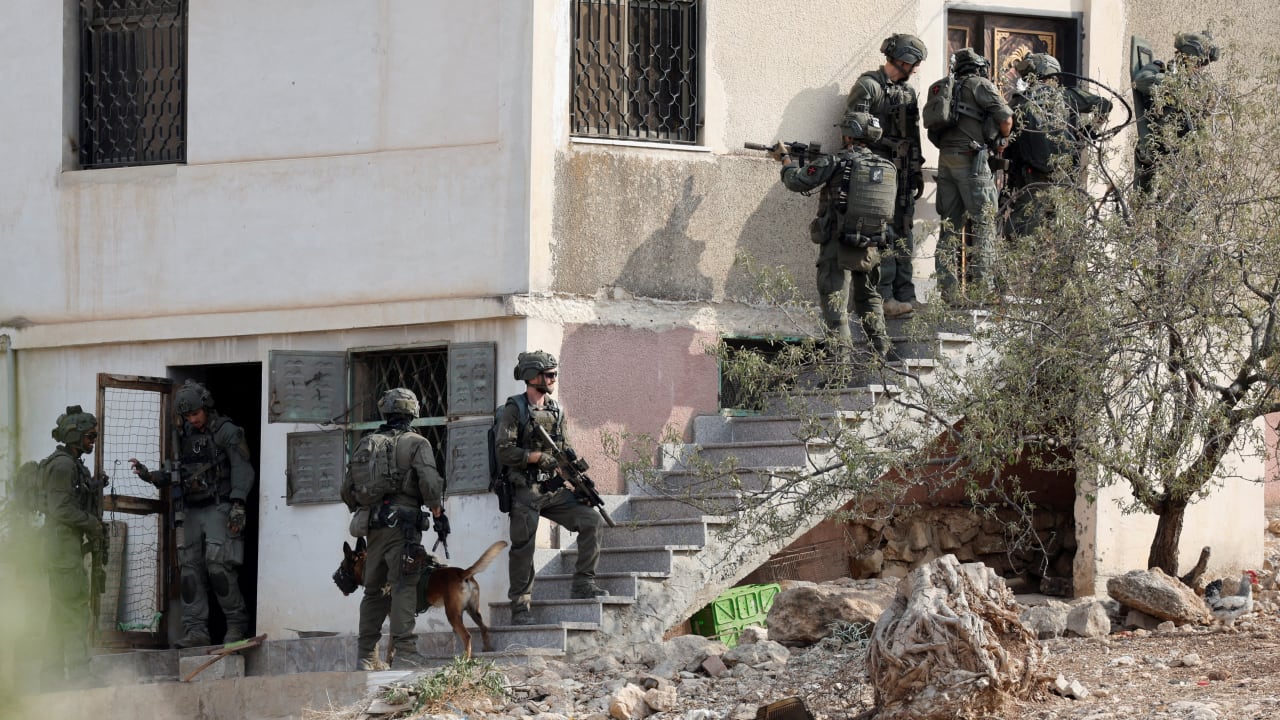
IDF soldiers operate during an Israeli raid in Tammun near Tubas in the West Bank, November 4, 2025
(photo credit: REUTERS/RANEEN SAWAFTA)


Terror threats in the West Bank appear to be growing. Over the last year, the IDF has been able to keep most of these threats in check. However, with a ceasefire in Gaza and Israel relaxing its guard slightly, it’s possible that enemies may try to take advantage of the situation.

On Thursday, reports said that the IDF, police and security services were able to thwart a major terror cell in Bethlehem. Reports noted that “the months-long investigation led to the arrest of approximately 40 Hamas operatives during more than 15 operations, carried out by IDF reservists from the Etzion Brigade, the elite Duvdevan unit and counterterror forces. During the raids, weapons including M16 rifles were seized.”

The reports indicate that terrorist infrastructure was found in this operation. The terrorists in Bethlehem planned shooting attacks and were apparently ready to carry out the attacks soon.

The success against the terrorists in and around Bethlehem is important. Israel’s Chief of Staff Lt. Gen. Eyal Zamir praised the head of the IDF’s Central Command Maj.-Gen. Avi Bluth this week after a major drill was concluded in the West Bank. “This is an unprecedented exercise, the first of its kind in the IDF. As part of it, the new Eastern Division, established as one of the lessons learned from the war, is being evaluated in full divisional format. One of our lessons from October 7 is the responsibility for defense in the area and the change in our conception of security , we neutralize threats as they emerge. We are doing that here as well,” Zamir said.

The new Eastern Division, the 96th, is also known as Gilad. It is one of several regional divisions that protect Israel’s border. It was established over the last year because of the growing concerns about the Jordan Valley and the desire to beef up the military presence there.

An Israeli soldier looks out from a mosque near Salfit in the West Bank, November 13, 2025 (credit: REUTERS/ALI SAWAFTA)
Zamir said this week that “the scenarios we have been practicing in recent days are situations we must never reach. We must act and neutralize threats before they reach our doorstep, that is our duty. We will reinforce our troops wherever necessary in order to continue countering terrorism and prevent the next threat from arising.”

The drill and the bust of the terror cell in Bethlehem show that the IDF and Israel’s various security services take the threats seriously. This follows a trend that began around four years ago in the northern West Bank in which terror cells in Jenin and Nablus began to acquire more weapons.

IDF's latest attempts to 'break wave' of illegal firearms

A flow of illegal firearms, primarily M-4/M-16 type rifles, began to make their way to the northern West Bank. This fueled a wave of attacks and an IDF response which called Operation Break the Wave. Palestinian Islamic Jihad and other groups were weakened during years of operations. However, the flow in rifles appears to be growing. Daily drone interceptions along the Egyptian border reveal M-16 type rifles being smuggled by large quadcopter type drones.

There are also the threats from Jordan. Reports have indicated that Iran would like to try to stir up trouble in Jordan and the West Bank. There have been several deadly attacks at the border crossing near Jericho. In addition there is weapons smuggling.

However, the bust of the terror cell in Bethlehem points to another problem. It is possible that the center of gravity of the threat is moving from the northern West Bank to the southern West Bank. For years the area around Bethlehem was quiet. It was quiet because the IDF conducted night raids frequently to keep things in check. This involved detaining suspects and making sure that terror infrastructure did not grow.

After October 7, the raids and activity in the West Bank increased. Bethlehem has often been a source of problems because of the refugee camps in and around the city. There are terrorists who have operated from Dheisheh camp and Aida camp. Hamas has had its tentacles in these areas along with other groups such as PFLP. It should be recalled that during the Second Intifada terrorists from Bethlehem went to the Christian town of Beit Jala, a suburb, and fired on Gilo in Jerusalem. Bethlehem has grown so much, and so have Jerusalem, that these cities are basically one large urban area now.

Israeli extremism grows across West Bank

Another challenge in the West Bank is the growing incidents of Israeli extremists attacking Palestinian Arabs. A number of incidents have occurred recently and there appears to be an increase in these clashes.

Zamir, in his statement this week, condemned these attacks. “We are aware of the recent violent incidents in which Israeli civilians attacked Palestinians and Israelis. I strongly condemn them. The IDF will not tolerate criminal behavior by a small minority that tarnishes the law-abiding public. These acts contradict our values, cross a red line, and divert the attention of our troops from their mission, defending the communities and carrying out operations. We are determined to stop this phenomenon and will act decisively until justice is served.”

However, his condemnation doesn’t necessarily mean the trend will stop. The trend appears to mostly affect the Northern West Bank and areas near Tulkarm or Taybeh or other Arab towns and villages. However, it’s plausible the trend will grow. The trend is currently downplayed on the political level.

A Palestinian man inspects burned property in a mosque near Salfit in the West Bank, November 13, 2025 (credit: REUTERS/ALI SAWAFTA)
However, the IDF statement and videos posted online, along with reports, suggest a growing challenge. It’s not clear if these clashes, between Israelis and Palestinian civilians, will lead to some kind of crisis or cycle of violence; or whether other Hamas-backed terrorist cells in the West Bank may be activated.

What is clear is that with the ceasefire in Gaza going into its second month, there are many challenges for Israel. The West Bank has been largely ignored by the media spotlight because of the other fronts. This doesn’t mean it was ignored by the security forces.

In fact, the new Jordan Valley division, the training and the raid in Bethlehem, show that the IDF and Shin Bet and others take very seriously what is happening. The question is whether Israel’s enemies are also laser focused on trying to create a new front. 


Seth J. Frantzman

Source: https://www.jpost.com/israel-news/defense-news/article-873766

Follow Middle East and Terrorism on Twitter

It’s over! Trump signs resolution ending record 43-day government shutdown - Misty Severi


by Misty Severi

The resolution will keep the entire government funded through Jan. 30.


President Donald Trump on Wednesday night signed a continuing resolution at the White House that ends the record-breaking 42-day federal government shutdown. 

The Senate passed the resolution on Monday and the House passed it earlier Wednesday evening. The resolution will keep the entire government funded through Jan. 30, and extends funding for military construction, Veterans Affairs, the Department of Agriculture, and Congress beyond that, through Sept. 30.

Trump slammed Democrats for causing the shutdown by refusing to go along with a clean continuing resolution for over a month, and urged voters to remember the party responsible for causing the six-week-long chaos during next year's midterms.

"Republicans never wanted a shutdown and voted 15 times for a clean continuation of funding," Trump said. "The Democrats shutdown has inflicted massive harm ... So I just want to tell the American people, you should not forget this when we come up to midterms and other things. Don't forget what they've done to our country."

The resolution gives backpay to many federal workers and reinstates employees who were fired during the shutdown, but does not include an extension of Affordable Care Act subsidies despite it having been a key Democratic demand in the shutdown. The subsidies are set to expire at the end of the year.

Trump said that the government should never be shut down again and urged Congress to eliminate the filibuster.

"So with my signature, the federal government will now resume normal operations, and my administration and our partners in Congress will continue our work to lower the cost of living, restore public safety, grow our economy and make America affordable again, for all Americans again," the president declared. 


Misty Severi is a news reporter for Just The News. You can follow her on X for more coverage. 

Source: https://justthenews.com/government/white-house/trump-signs-resolution-ends-record-42-day-government-shutdown

Follow Middle East and Terrorism on Twitter

Israel's Shin Bet thwarts imminent attacks from West Bank, 40 Bethlehem terrorists arrested - Yonah Jeremy Bob


by Yonah Jeremy Bob

The Shin Bet said it arrested around 40 Palestinian terrorists from Bethlehem in a major bust that thwarted imminent attacks, marking the first large-scale operation under new chief David Zini.


Israeli security forces operate in Bethlehem, in the West Bank, against Palestinian terror threats on November 13, 2025 (IDF SPOKESPERSON'S UNIT)


The Shin Bet (Israel Security Agency) on Thursday announced an unusually large bust of around 40 Palestinian terrorists from Bethlehem, thwarting a series of imminent major terror attacks.

Given the size of the multiple cells, the bust may be a strategic setback to Hamas and other terror groups, who may have been looking to significantly increase the wave of terror from the West Bank, at a time when they are weaker in Gaza.

The announcement also marked the first time such an operation was publicly announced since David Zini took over running the agency on October 5.

There have been two other operations publicized by the Shin Bet, one involving the arrest of an Israeli from Tiberias for spying for Iran and one seizing weapons that Iran was trying to smuggle from Jordan into the West Bank. None, however, involved imminent terror operations of this scale.

Zini is looking to make his mark as head of the agency rapidly, after months of limbo caused by political and legal battles among Prime Minister Benjamin Netanyahu, the legal establishment, and the opposition over his appointment.

 IDF operates in the West Bank, February 23, 2025. (credit: IDF SPOKESPERSON'S UNIT)
IDF operates in the West Bank, February 23, 2025. (credit: IDF SPOKESPERSON'S UNIT)
Thwarting the terror plots was a joint operation by the Shin Bet, the IDF, and the police, with a variety of counterterror actions taken in recent weeks.

In particular, the IDF’s reservist Etzion Brigade, along with the special forces Duvdevan and Lotar units, undertook 15 operations, with direction from the Shin Bet, to arrest the approximately 40 terrorists.

Part of the bust included seizing the terrorists’ weapons, such as M-16s.

According to the Shin Bet interrogations and probe into the plot, there were masterminds who systematically recruited and built multiple terror cells in order to carry out a series of shooting attacks against Israeli civilians and the IDF.

One of these terror cells was ready to carry out an attack imminently when the agency arrested its members, said the Shin Bet’s statement.

Had the Shin Bet not intervened, the shooting attack could have carried a heavy cost in Israeli lives.

The Shin Bet said it would continue to act with other security bodies to prevent terrorists from harming the country.

Further, the agency said that it had transferred its evidence over to the IDF West Bank Prosecution to move forward with indictments against those involved in the various terror cells.


Yonah Jeremy Bob

Source: https://www.jpost.com/israel-news/defense-news/article-873750

Follow Middle East and Terrorism on Twitter

Int’l Gaza force won’t raid houses for terrorists, Rubio says - JNS Staff


by JNS Staff

The reconstruction of those parts of Gaza that Hamas currently controls is contingent on its disarming, said the U.S. secretary of state.


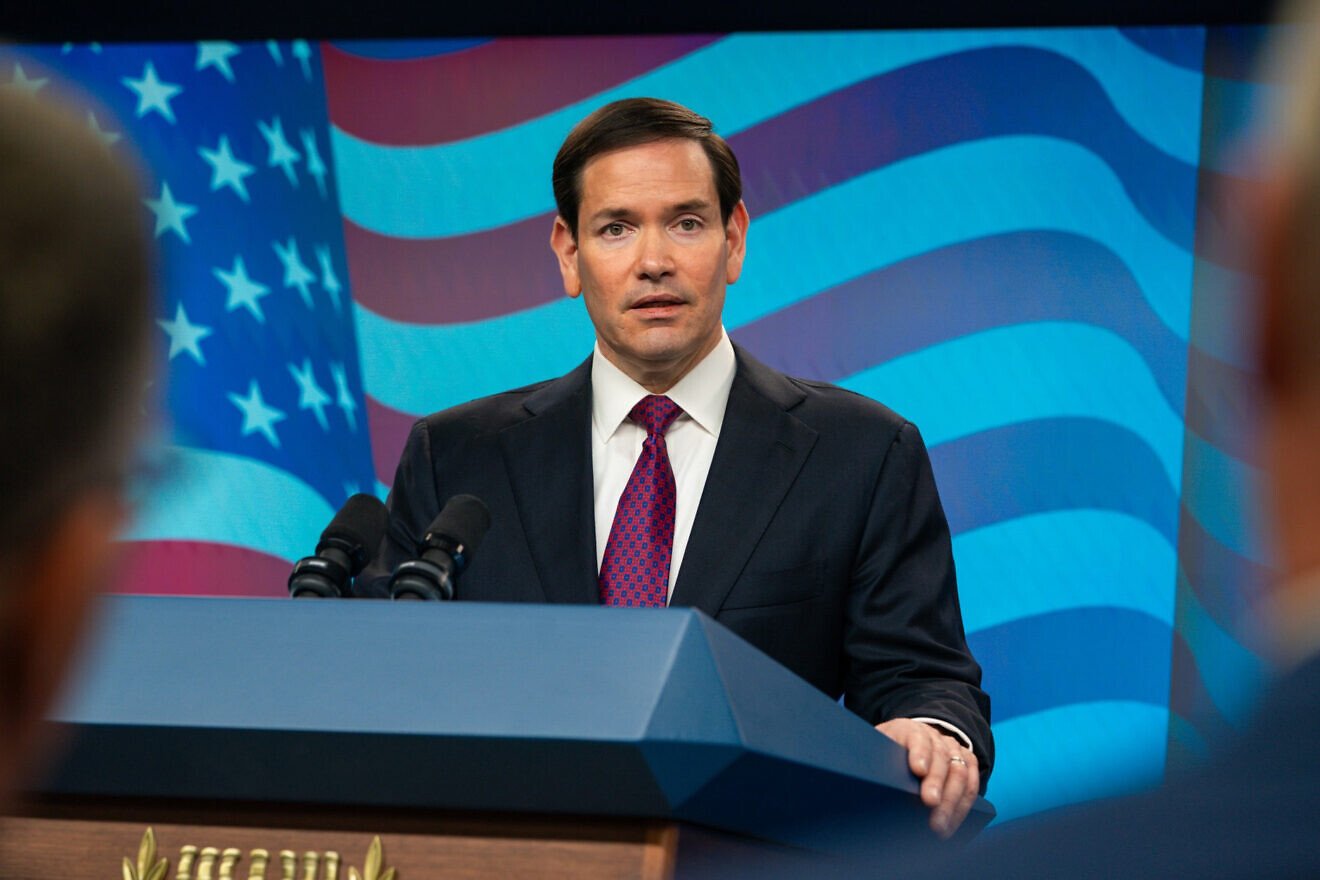
Marco Rubio, the U.S. secretary of state, and Israeli Prime Minister Benjamin Netanyahu deliver joint statements to the press in Jerusalem, Sept. 15, 2025. Photo by Freddie Everett/U.S. State Department.

The International Stabilization Force slated to provide security in Gaza until a Palestinian organization can step up to govern the Strip would not have to initiate operations against Hamas terrorists because Hamas has agreed to disarm, U.S. State Secretary Marco Rubio told reporters on Wednesday night.

The ISF “shouldn’t be a fighting force, because the agreement that was signed and … all parties agreed to calls for the demilitarization of Hamas,” said Rubio, who took questions from reporters after the G7 meeting in Canada’s Niagara region.

The role of the interim force is to provide “just basic everyday security,” he continued.

“If you want to really flood Gaza, particularly in that red area that’s not in Israeli control, if you really want to see a huge uptick, not just in humanitarian assistance, but redevelopment, you’re going to need to have security. And that can’t be Hamas,” he stressed.

“We have a new draft that’s being worked on now. We feel optimistic that it’s going to happen. It needs to be done the right way and obviously there [are] a lot of different countries, you have to balance their interests here and how that’s structured, beyond just the security force. So I think we’re making good progress on the language of the resolution, and hopefully we’ll have action on it very soon. We don’t want to lose momentum on this,” he added.

When asked if the ISF will start operating only after the Israel Defense Forces fully withdraws from the Gaza Strip, Rubio said, “That’s what’s being worked on in the resolution and those are the questions that key partner countries are asking before they participate … Clearly there’ll have to be some delineation of all of that before countries sign in.”

Israel’s ceasefire with Hamas came into effect on Oct. 10, with the terrorist group agreeing to release all remaining hostages, alive and dead, in the first phase, before moving on to the second stage, which requires its disarmament. The truce was mediated by the United States, Qatar, Egypt and Turkey, although other countries have since joined the post-ceasefire deliberations in the effort to uphold the agreement.

“As far as demilitarization is concerned, that’s a commitment Hamas made, that’s a commitment all our partners on this deal made, and we expect those countries, and they are, will, at the appropriate time, including now, bring about pressure on Hamas to live up to that commitment,” said Rubio.

The IDF currently holds about half of Gaza. It is deployed to the east and along a so-called Yellow Line that runs through the north, center and south of the Strip, with Hamas controlling the Strip’s western areas.

“Eventually there won’t be a Yellow Line,” Rubio went on to say.

“Eventually there’ll be Gaza and none of it will be controlled by Hamas. Right now, that Yellow Line is what differentiates between the parts of Gaza under Hamas control and the ones that are not in Hamas control. Eventually, none of it should be under Hamas control. There should be a civilian Palestinian organization that runs Gaza. And that’s the goal, to stand that organization up, give it capacity, allow it to grow in both capability and credibility, and ultimately it will govern Gaza,” he said.

“The Israelis don’t want to govern Gaza, we don’t want to govern Gaza, no country in the Middle East wants to govern Gaza. But it’ll take some time to build up that [Palestinian] capability [to govern Gaza], and in the interim someone has to provide security,” the secretary added. 


JNS Staff

Source: https://www.jns.org/intl-gaza-force-wont-raid-houses-for-terrorists-rubio-says/

Follow Middle East and Terrorism on Twitter

Israel's Important New Allies, and an Old Enemy, Turkey - Lawrence A. Franklin


by Lawrence A. Franklin

Although Azerbaijan has enjoyed close relations with Turkey, relations between Turkey and Israel have now reached an all-time low.


  • US President Donald J. Trump announced the latest addition to his remarkable Abraham Accords last week: China's and Russia's neighbor, Kazakhstan.

  • One hopes that at some point, Azerbaijan, too, might join the Abraham Accords.

  • Although Azerbaijan has enjoyed close relations with Turkey, relations between Turkey and Israel have now reached an all-time low. Turkish President Recep Tayyip Erdogan – after accusing Israel of genocide and crimes against humanity, and issuing arrest warrants for 37 Israeli officials, including Prime Minister Benjamin Netanyahu -- reportedly took Trump's assurance of a Turkish role in the future of Gaza, without consulting Israel, as a green light to assemble 2,000 special forces troops to occupy Gaza. What could possibly go wrong?

  • Erdogan is also trying to buy F-35 jets – to use for what? -- from the US, which always appears delighted to make a sale. If Trump has any interest in peace in the Middle East, this is one sale he must unquestionably turn down.

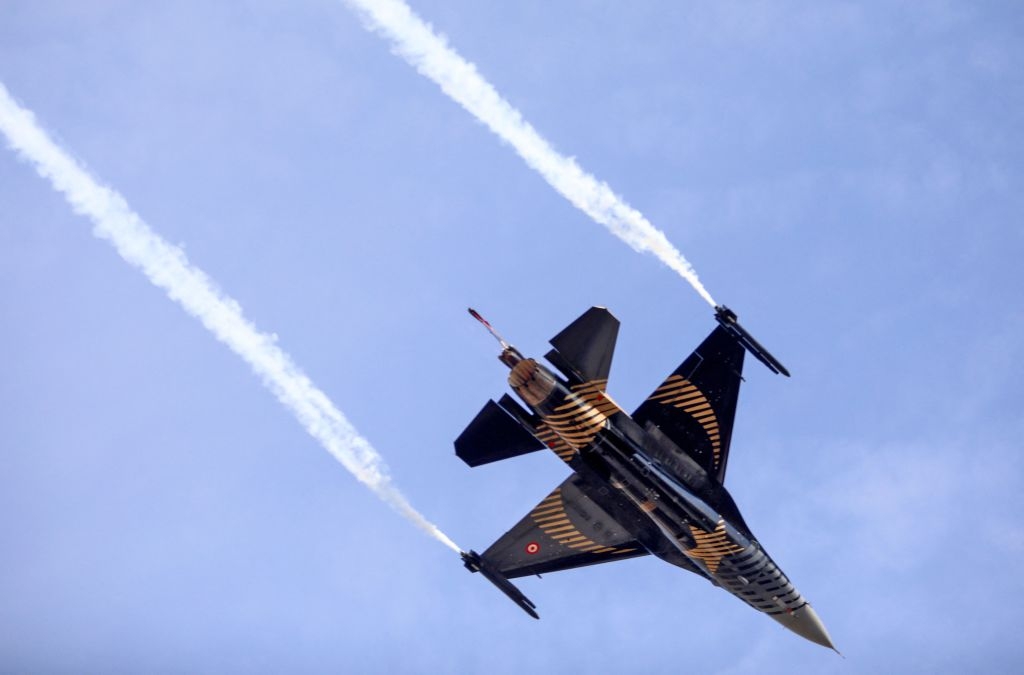
Turkish President Recep Tayyip Erdogan is trying to buy F-35 jets – to use for what? -- from the US, which always appears delighted to make a sale. If Trump has any interest in peace in the Middle East, this is one sale he must unquestionably turn down. Pictured: A Turkish Air Force F-16 fighter jet performs aerial maneuvers during an airshow over the Turkish-occupied northern part of Cyprus' capital Nicosia, on November 15, 2021. (Photo by Birol Bebek/AFP via Getty Images)

US President Donald J. Trump announced the latest addition to his remarkable Abraham Accords last week: China's and Russia's neighbor, Kazakhstan. Not only thanks to its oil and mineral deposits is it the largest and wealthiest country in Central Asia; its leadership is eager for closer ties with the US. Europe and the West, and the widening opportunities for growth that spring from them.

Israel's friendly ties with Azerbaijan are also perhaps one of the Jewish state's most potentially advantageous bilateral relationships. Israel and Azerbaijan, which have had diplomatic relations since 1992, have thriving military and economic linkages. Israel, incongruously, is now the leading importer of Azerbaijani oil. Azerbaijan, a Muslim-majority state, celebrates Israel's existence. Azerbaijan has, moreover, refrained from condemning Israel during the war in Gaza. One hopes that at some point, Azerbaijan, too, might join the Abraham Accords.

There is an enduring respect between Israel and Azerbaijan: Azeri Jews, a.k.a. "Mountain Jews," have always been treated well by Azeri Muslims. About 30,000 Jews still live in the country, practicing their faith without state or societal prejudice. Strategically, for Israel, it may be additionally significant that Azerbaijan has a 268-mile border and miserable relations with the Islamic Republic of Iran.

Israeli arms exports account for about two-thirds of Azerbaijan's weapons requirements, including anti-tank guided missiles, drones, and surface-to-surface guided missiles. The two countries cooperate on intelligence matters as well. Azerbaijan has allowed the Mossad, Israel's foreign intelligence agency, a branch office in the country. No doubt Mossad's intelligence-gathering mission in Azerbaijan proved to be advantageous before and during Israel's recent "12 Day War" with Iran.

There is, additionally, the sale of satellites and the sharing of satellite technology. This imagery of the disputed province of Nagorno-Karabakh, along with advanced Israeli weaponry, helped secure Azerbaijan's victory over Armenia in its "One Day War" on September 19, 2023.

The mutually advantageous links between Jerusalem and Baku may well have facilitated the Trump administration's intercession in helping to transform deep-rooted hostile relations between Azerbaijan and Armenia. The White House hosted an August meeting between Armenian Prime Minister Nikol Pashinyan and Azerbaijani President Ilham Aliyev, which resulted in a bilaterally signed "Treaty of Peace and Prosperity" between the historical enemies.

The US, as well, benefits from the reconciliation between Azerbaijan and Armenia. In addition to America signing economic agreements with both south Caucasus countries, the US was granted exclusive rights to develop an approximately 40-kilometer corridor bordering Iran. This commercial gateway, called the Zenga Uren Corridor, now, thanks to the treaty, links Azerbaijan with its formerly disconnected exclave territory, Nakhichevan. Leaders of both nations are grateful for the new corridor, which is being called the "Trump Route for International Peace and Prosperity" (TRIPP).

The increasingly pro-Western orientation of Azerbaijan and Armenia and the exclusive grant to the US for TRIPP could effectively shut out both Iranian and Russian access to commercial and investment activity in the region -- a US diplomatic and economic triumph that is likely cause for concern in Moscow and Tehran.

The Iranian regime would be vexed about the prospects of US and Israeli security cooperation directly on its border. Iranian relations with Azerbaijan have not exactly flourished since the latter became independent of the Soviet Union in 1991. For centuries, Iran has assumed an attitude of superiority in relations with Azerbaijan, which was a satrapy of several Persian imperial dynasties. Azeris constitute, by far, "the largest and best-integrated ethnic minority in Iran, making up 16% of its population," concentrated in Iran's northwestern provinces along its border with Turkey, Azerbaijan and Armenia. The Iranian regime might view Azerbaijan's new alliances as complicating its plans to destroy Israel, as it has been vowing -- and attempting -- to do since Iran's 1979 Islamic Revolution.

Although Azerbaijan has enjoyed close relations with Turkey, relations between Turkey and Israel have now reached an all-time low. Turkish President Recep Tayyip Erdogan – after accusing Israel of genocide and crimes against humanity, and issuing arrest warrants for 37 Israeli officials, including Prime Minister Benjamin Netanyahu -- reportedly took Trump's assurance of a Turkish role in the future of Gaza, without consulting Israel, as a green light to assemble 2,000 special forces troops to occupy Gaza. What could possibly go wrong?

Erdogan is also trying to buy F-35 jets – to use for what? -- from the US, which always appears delighted to make a sale. If Trump has any interest in peace in the Middle East, this is one sale he must unquestionably turn down.


Dr. Lawrence A. Franklin was the Iran Desk Officer for Secretary of Defense Rumsfeld. He also served on active duty with the U.S. Army and as a Colonel in the Air Force Reserve.

Source: https://www.gatestoneinstitute.org/22044/israel-new-allies

Follow Middle East and Terrorism on Twitter

Strengthening families: Trump to sign executive order improving foster care system in America - Amanda Head


by Amanda Head

Building on actions from his first term, Trump aims at putting American families first by bolstering a system rife with problems and negative outcomes.


President Donald Trump's upcoming "Fostering the Future" executive order advances his mission to bolster and safeguard American families by overhauling a failing foster care system to ensure stable homes, expand educational and career pathways, and empower at-risk youth to break free from hardship and build thriving futures.

"Fostering the Future" is a new program under first lady Melania Trump's "Be Best" initiative, designed to provide targeted resources for foster children. It highlights the need to provide emotional, educational and vocational support to help young people transition successfully into adulthood, amid myriad challenges, borne out through statistics of abuse and low success rates. 

"This initiative was inspired by compassion, strength and kindness," the first lady has said. "These qualities are the fabric of our nation and allow for a place of freedom and opportunity for all from coast to coast. Americans have an unwavering resolve to help one another and share a common bond in wanting to create a better future for our next generation."

Studies show just 50% of foster children graduate from high school and just 3% go on to earn a college degree, according to the National Foster Youth Institute. In an effort to improve those numbers, the White House order directs federal agencies to develop scholarships and training programs in high-growth sectors like technology education, particularly in computer science and AI-related fields, to promote financial independence and job security for those in foster care.

This follows a trend by the 45th and 47th president that embodies his America First agenda by putting families first. During Trump's first term, the Tax Cuts and Jobs Act doubled the Child Tax Credit to $2,000 per child to ease financial burdens on families. 

In 2018, Trump enacted the Family First Prevention Services Act to fund preventive services that prioritize keeping children with their families to avoid foster care entry. In 2020, Trump issued an Executive Order strengthening the child welfare system to promote permanency, reduce abuse, and support foster and adoptive families. Also toward the end of his first term, Trump signed legislation providing 12 weeks of paid parental leave for federal employees.

Carrying on the same efforts in his second term, Trump in January signed an Executive Order expanding school choice and educational freedom, allowing families to use federal funds for private, faith-based, and alternative schooling options. 

Then in April, he announced plans to boost the U.S. birthrate through family incentives like baby bonuses and fertility support programs, aiming to promote larger, stable American families and address demographic challenges. In May, Trump designated the month National Foster Care Month to bring awareness to the challenges within the system. 

There are over 520,000 children in foster care and according to the U.S. Administration for Children and Families' annual report on adoption and foster care statistics, in 2023, only 50,193 children were adopted from foster care – a decrease of over 5% from the previous year, and more than a 24% decrease since 2019.

Problems in the foster care system go beyond deficiencies and malfunction. Up to 40% of those in foster care face some form of mouth treatment, with neglect being the most prevalent at 53%, followed by physical abuse at 16% and sexual abuse at 4.4%. Over half of foster children will have an encounter with the juvenile legal system by age 17, and studies indicate that around 70% of former foster care youth are arrested at least once by age 26. 


Amanda Head

Source: https://justthenews.com/government/white-house/strengthening-families-trump-sign-executive-order-improving-foster-care

Follow Middle East and Terrorism on Twitter

Colombia, Brazil unite against Trump’s pressure on Venezuela, drug boat strikes - Steven Richards


by Steven Richards

The Trump administration’s military buildup in the Caribbean aimed at pressuring Venezuelan dictator Nicolas Maduro reached a new stage on Tuesday when the USS Gerald R Ford, the world’s largest aircraft carrier, arrived in the region.


The U.S. military’s ramped-up efforts to interdict suspected drug-running operations and pressure Venezuela are now increasingly being met with strong opposition from South America’s leftist governments. 

The Trump administration’s military buildup in the Caribbean aimed at pressuring Venezuelan dictator Nicolás Maduro reached a new stage on Tuesday when the USS Gerald R Ford, the world’s largest aircraft carrier, arrived in the region

The buildup, President Donald Trump says, is to combat the illicit drug trade and combat what the administration has labeled “narco-terrorism.” To carry out the president’s new take on the historic Monroe Doctrine, the U.S. military has conducted several strikes on suspected drug boats heading for the United States. 

The increasing strikes and military buildup just miles from the Venezuelan coast have prompted the Maduro regime to launch a “massive mobilization” of its armed forces in response. Venezuelan Defense Minister Vladimir Padrino López said the U.S. “imperialist threat” would be met with exercises by his country’s forces until Wednesday. 

But, the buildup and strikes have also put South America’s leftist governments on edge, even longtime U.S. allies in the fight against drug trafficking. This is a marked departure from President Trump’s first term when many of the countries surrounding Venezuela were headed by friendly leaders. 

For example, Colombian President Gustavo Petro, a leftist and former member of an armed insurgent group in his country, has ramped up his rhetoric and action against the Trump administration as tensions between Venezuela and the U.S. mount.

The Colombian president has argued that Trump’s strikes against the drug trafficking boats are a violation of international law and violate the human rights of Latin Americans. At the United Nations General Assembly meeting in New York last month, Petro shockingly called for criminal proceedings against the U.S. president. 

“Criminal proceedings must be opened against those officials, who are from the U.S., even if it includes the highest-ranking official who gave the order: President Trump,” Petro said

The passengers of the drug boats “were not drug traffickers; they were simply poor young people from Latin America who had no other option,” he asserted.

After the Trump administration announced it would deploy even more firepower to the Caribbean—namely the Ford carrier and its strike group—Petro suggested that Colombia could team up with Maduro’s Venezuela to resist the United States’ encroachment. 

“America is not a continent of kings or princesses, princes or despots. Every dictator who has appeared here has faced rebellion...isn’t it time, then, to talk about Gran Colombia again?” Petro said this week. Gran Colombia was a short-lived South American republic founded by revolutionary leader Simon Bolivar, which encompassed modern-day Colombia, Venezuela, Ecuador and Panama, after winning independence from Spain. 

“I propose to the peoples inhabiting this territory… [that] they rebuild this idea… of a Gran Colombia, with a common parliament and collegiate presidency, as in the European Union,” the Colombian leader later elaborated on X

The same day, Petro also cut intelligence sharing with the United States over the drug boat strikes. This decision by the leftist government in Bogota threatens the longstanding U.S.-Colombia alliance that has for decades been vital to the United States’ counter-narcotics and counterterrorism operations in the region. The U.S. also helped stabilize the country from its civil war with an insurgent Marxist group called the Revolutionary Armed Forces of Colombia (FARC), which lasted from 1964 to 2016. 

Petro’s stance is a marked shift from the Colombian government during Trump’s first term. At that time, Colombia’s conservative President Iván Duque Marquez collaborated with Trump on drug trafficking issues and even recognized a Venezuelan opposition government in a bid to force Maduro to step down. 

President Trump is also facing pushback from the leftist President of Brazil, Luiz Inácio Lula da Silva, who has urged the president to reduce his pressure campaign on Venezuela and stop the boat strikes. 

"I told President Trump, and I tell you, that political problems are not solved with weapons. They are solved with dialogue," Lula told the press earlier this month. "It's not necessary, not necessary. Police has all the right to fight against drug-trafficking. All the right and responsibility to do it, and the U.S. could be trying to help the countries.” 

Since the beginning of Donald Trump’s second term in office, relations between the United States and Brazil have deteriorated markedly. Washington has imposed sweeping tariffs—at one point threatening a 50% levy on Brazilian exports—and taken targeted sanctions against Brazilian officials, heightening tensions. Brazil, under Lula, has pushed for greater autonomy in foreign policy, deepened ties with trade blocs that include China and Russia, and expressed strong opposition to perceived U.S. interference in its judicial and political affairs. 

During Trump’s first term, Brazilian politicians of all political stripes cooperated with the United States. Brazil’s center-left president, who left office in Jan. 2019, supported the American effort to isolate Maduro’s regime. Then, the country elected conservative leader Jair Bolsonaro, who was a close ideological ally of the American president. Like Duque’s Colombia, his government also recognized a Venezuelan opposition government against Maduro. 

Tensions with Brazil are largely focused on the Trump administration’s opposition to the prosecution of Bolsonaro by the country’s Supreme Court over his efforts to contest the results of the 2022 presidential election in his country. He was charged by that court with attempting a coup. 

The tensions with two formerly close partners come as President Trump and his administration have placed a renewed focus on the Western Hemisphere as a region of vital national security importance for the United States—what has been described as a revival of the Monroe Doctrine

The "Monroe Doctrine" is "the best known U.S. policy toward the Western Hemisphere," according to the National Archives. The doctrine established the notions of "spheres of influence" and "the doctrine warned European nations that the United States would not tolerate further colonization or puppet monarchs."

Since taking office, the president has pressured Panama to push Chinese companies—and, by extension, Chinese Communist Party influence—out of strategic locations along the vital Panama Canal. The president also floated acquiring Greenland, warning that the island could be a landing pad for Chinese influence. 

The administration is also making use of America’s vast military resources to back its diplomacy, even in seemingly unconventional ways. It has deployed troops to police the southern border, naval vessels to interdict drug smugglers, and aircraft to deter local adversaries—like Venezuela—who clandestinely contribute to the drug trade. The escalating strikes on suspected drug trafficking boats have been a central component of this strategy. 

However, the new role for the U.S. military is not without its critics. Some have raised concerns about whether the president has the legal authority to take military action against cartel interests or drug traffickers without prior congressional authorization.  


Steven Richards

Source: https://justthenews.com/government/diplomacy/leftist-south-american-government-unite-opposition-trumps-pressure-venezuela

Follow Middle East and Terrorism on Twitter