by Seth J. Frantzman
Assad is said to be living a life of reclusion in Moscow, but rumors say he is also doing business, while his brother plots a return.
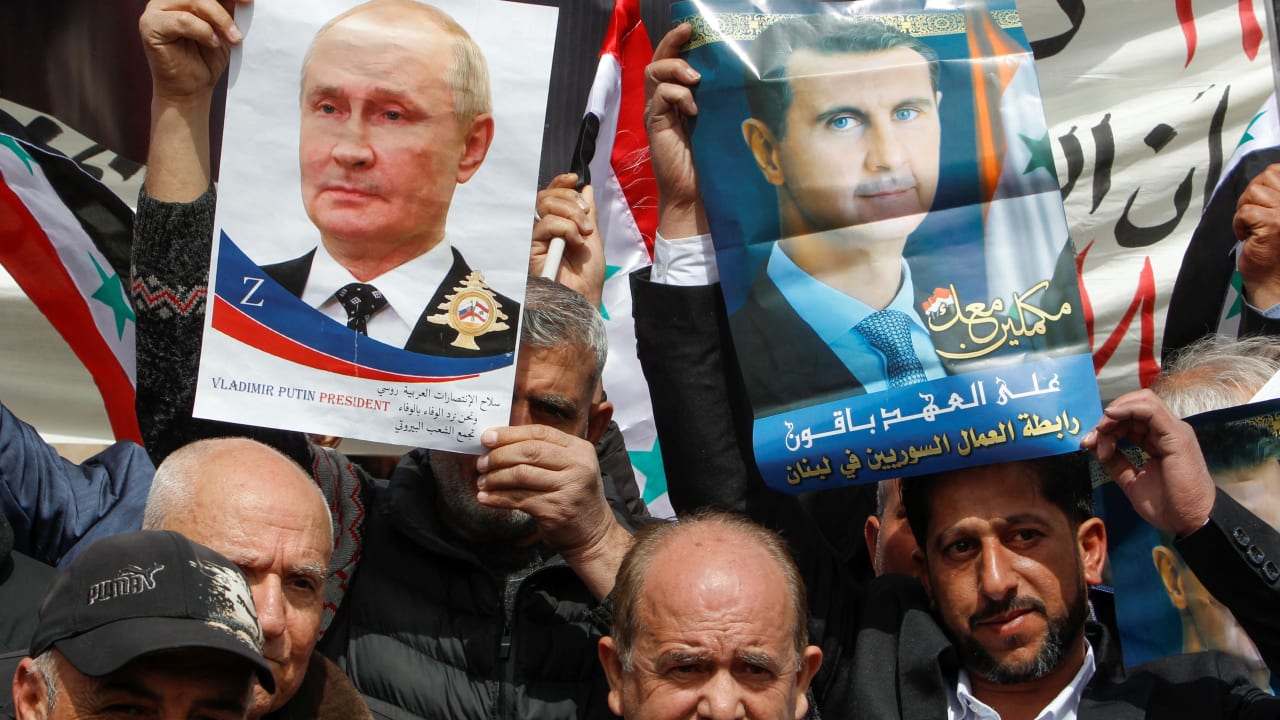 |
As Syria celebrates one year since the fall of the Assad regime, reports continue to provide details about the lives of the Assads. A new report at Al-Arabiya notes, “The ousted Syrian president, Bashar al-Assad, who was famous for his long speeches and controversial television appearances, lives in complete seclusion in an undisclosed location in Moscow, and is prohibited from appearing or speaking to the media, or even going for a walk in public.”
To understand the dictator’s long journey from Syria to Moscow, it’s worth knowing a little bit about him. Assad was born in 1965. His father, Hafez, became president of Syria in 1971 and was the leader of the Ba’athist regime that would control the country for 50 years.
The family had come to power via a coup of Ba’athist officers. Hafez Assad had been the commander of the Syrian Air Force. The Assads were members of the Alawite minority in Syria. Ostensibly secular, the regime channeled Arab nationalism and tapped into an era when countries were transitioning from the colonial era to a new era of liberation movements. They also had to choose sides in the Cold War.
Assad, a past legend
Hafez Assad navigated this with care. He crushed an uprising by the Muslim Brotherhood in 1982 and sent troops into Syria in 1976. He was openly confrontational with Israel at times, but hinted to Washington that a deal could be done between Syria and Israel. Nothing came of that over the years, despite intense talks in the 1990s. Hafez and his wife had three sons: Bassel (born 1962), Maher (1967), and Bashar. AS women, their daughters Bushra (1960) and Majd (1966) were not expected to take over their father’s rule, but Bassel, who was, until he died in a car crash in 1994, thrusting Maher and Bashar into the limelight.Bashar was trained as a doctor and studied in London in the 1990s. He went back to Syria when his brother died, and he was involved in Syria’s operations in Lebanon.

Upon Hafez Assad’s death, there was a belief that Bashar might liberalize the country. Instead, he proved to be just as authoritarian.
In 2005, after former Lebanese prime minister Rafic Hariri was assassinated by Hezbollah, an ally of Damascus, the Syrians withdrew from Lebanon. In 2011, Syrians joined the Arab Spring protests, but the regime refused to yield. Instead, Maher Assad was sent to crush uprisings in Dara’a and other areas. From that point, the regime knew it had to fight to the death.
It called in Hezbollah support in 2012, and then Iranian backing, and eventually enlisted the Russians as well, in 2015. Russia had backed the Assads for decades and had a military base in Syria. It had to preserve their Syrian satrapy.
Bashar Assad’s regime had weathered years of civil war, and the country was hollowed out by war. It all came to an end on December 8, 2024. The US-backed Syrian Democratic Forces, a mostly Kurdish group, ran eastern Syria. Turkey had taken over parts of eastern Syria. The Iranians essentially ran the Syrian countryside with militias. The Assads’ power was much reduced. When Syrian rebels in Idlib launched an offensive in November 2024, the regime found that it had no forces. Hezbollah, which had helped in the past, was weakened by Israel and couldn’t assist. The Syrian regime collapsed in a week. Assad fled to Moscow and essentially abandoned his family and country.
The question that some are asking in the region is: What does he do in Moscow?
The Al-Arabiya expose claims to have information. “In Moscow, Assad lives a life unlike the luxury he enjoyed on the throne of Qasioun [Damascus].” Here in Moscow, there are no processions for Assad, no statues, the report says. “No chants glorifying the leader, but rather enforced isolation under a glass roof and strict control over his movements and stillness, with his mouth gagged from the media. There are many accounts regarding where the ‘lion’ [‘assad’ means ‘lion’] lives.”
The report says that “all eyes are on the Moscow City complex, the city’s heart, a hub of wealth and influence. Some reports suggest a luxurious enclave just outside the city walls. Despite the different versions, the result is the same: Assad lives behind walls, and his life has been turned upside down. As Dostoevsky said, ‘One deserves what happens to one, so that one may wake up a little from one’s mistakes.’”
Al-Arabiya also cites rumors that Assad opened a shop to make money and that he may own several apartment buildings. “Interestingly, some residents’ accounts indicate that the phone number of the real estate rental company is registered – with many customers – under the name ‘Bashar City Rentals.’”
The report goes on to say that “the possibility of Assad’s involvement in real estate dealings is not entirely implausible, especially given that the fugitive president chose to transport his money in suitcases rather than the personal belongings found in his Damascus home.”
A newly leaked video of Assad before the fall of the regime is also making the rounds after it was published by Al-Arabiya. It was recorded in a car, which Assad is seen driving. He speaks with his former advisor, Luna al-Shibl. He mocks Ghouta, a suburb of Damascus, saying the area deserved to be destroyed in the war. Some have suggested that Assad was even having an affair with his advisor.
While Bashar Assad is seen as living a secluded life, not every member of the Assad regime has gone quietly. A recent report from Reuters indicated that former regime figures Rami Makhlouf and Kamal Hassan are plotting against the government in Damascus.
The report claims that they rely on “thousands of Alawite fighters” who remain in Syria. “Maher al-Assad, also in Moscow and still in contact with thousands of former soldiers, has yet to offer money or orders, according to the four people close to the family.”
Seth J. Frantzman
Source: https://www.jpost.com/middle-east/article-879611

No comments:
Post a Comment