by Andrew Bernard
The 2026 National Defense Authorization Act keeps overall U.S.-Israel missile defense cooperation spending at $200 million, consistent with 2025 expenditures.
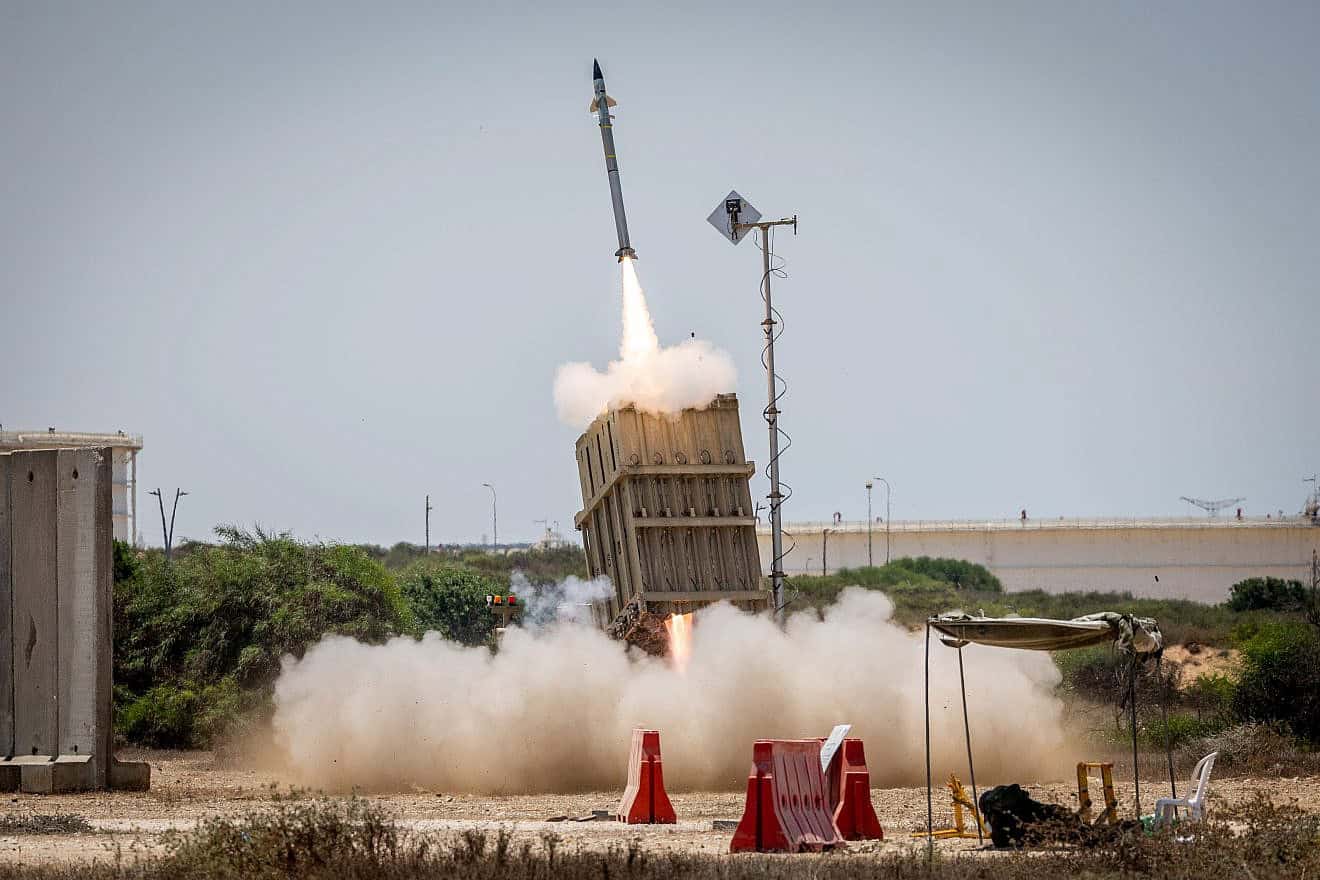
The House of Representatives released its proposal for 2026 defense spending that would see a $50 million shift in funds for Israel from countering short-range rockets and mortars to systems that intercept ballistic missiles.
The 2026 National Defense Authorization Act, released on Sunday, would spend $60 million on the U.S.-Israeli co-development and production program for Iron Dome, down from $110 million in 2025.
That money is instead put towards $100
million in spending for 2026 on the Arrow 3 upper-tier interceptor
program, which is designed to destroy incoming ballistic missiles
outside the Earth’s atmosphere.
Funding for David’s Sling, an intermediate system intended to counter shorter-range missiles and rockets, remained consistent from 2025 to 2026 at $40 million.
The shift may reflect the perceived relative threat posed by short-range rockets and mortars fired by Hamas and Hezbollah compared to that from Iranian and Houthi ballistic missiles.
The annual funding for these programs in the NDAA is substantially smaller than that provided in the annual U.S. foreign aid bill, in which Israel typically receives at least $500 million under the terms of the 2016 10-year memorandum of understanding between the two allies.
Other Israel-related provisions in the 3,086-page defense bill include $80 million in spending on anti-tunneling cooperation—up from $30 million last year—and $70 million for a U.S.-Israel program to counter unmanned systems that was previously limited to combating aerial vehicles and did not receive a line item in 2025.
The overall defense package calls for about $901 billion in defense spending, $8 billion more than the Trump administration requested.
The compromise bill also repeals the 2002 and 1991 authorizations for the use of military force in Iraq and sets a floor of 76,000 U.S. troops deployed in Europe unless the U.S. secretary of defense and the head of U.S. European Command certify to Congress that it is in the U.S. interest to further reduce the American military presence on the continent and that they have consulted with NATO allies.
In the wider Middle East, the defense act includes provisions for the Pentagon to monitor and report on threats like the Iranian nuclear program and various regional terrorist groups, as well as funding to train and equip counter-ISIS forces in Iraq, Syria and Lebanon.
The House is expected to vote on the
2026 NDAA as early as this week. Defense spending bills typically
receive wide bipartisan support.
Andrew Bernard
Source: https://www.jns.org/us-defense-spending-bill-shifts-israel-funds-from-iron-dome-to-countering-ballistic-missiles/

No comments:
Post a Comment