by Uzay Bulut
Shia Muslims in southern Lebanon have been moving to Christian areas, increasingly displacing the Christians there. Increasingly, Shia Hezbollah families, with financial backing from Iran, have been purchasing properties in Christian areas, threatening Christians with weapons, and gaining wider control while many Christians flee the country.
Christianity -- Maronite, Orthodox, Catholic, as well as other denominations -- was the dominant religion in the entire Levant before the Islamic military invasions and conquests in the seventh century. Constantinople (renamed Istanbul in 1930) was the capital of the great Christian Byzantine Empire.
After defeating the Byzantine Empire in 636... the Islamic Arab Caliphate conquered Lebanon.... Today, Lebanon, like formerly Christian Turkey and Egypt, is majority-Muslim.
Shia Muslims in southern Lebanon have been moving to Christian areas, increasingly displacing the Christians there. Increasingly, Shia Hezbollah families, with financial backing from Iran, have been purchasing properties in Christian areas, threatening Christians with weapons, and gaining wider control while many Christians flee the country.
"Christians also have lower birth rates than Muslims. Muslims can marry more than one wife and create many more children than in monogamous marriages." — Habib C. Malik, Lebanese retired associate professor of history and cultural studies at the Lebanese American University, to Gatestone, November 2025.
"The new Lebanese government and President have pledged to 'disarm' Hezbollah and concentrate all weapons in the hands of the state-run Lebanese armed forces, but so far very little of this has actually happened; the pro-Iran group has been openly defiant in handing over its arms." — Habib C. Malik, to Gatestone, November 2025.
"Hezbollah remains an armed force capable of paralyzing the Lebanese state and defying its policy of concentrating all weapons in the hands of the Lebanese authorities. Hezbollah, which still has several MPs in the Lebanese parliament and at least two ministers in the Lebanese cabinet, act as a state-within-a-state inside Lebanon and are the main obstacle thus far preventing a Lebanese-Israeli peace treaty from materializing." — Habib C. Malik, to Gatestone, November 2025.
"Whatever the preferred political outcome, it would help if the West could shepherd any such process to protect the Christians and their freedom." — Habib C. Malik, to Gatestone, November 2025.
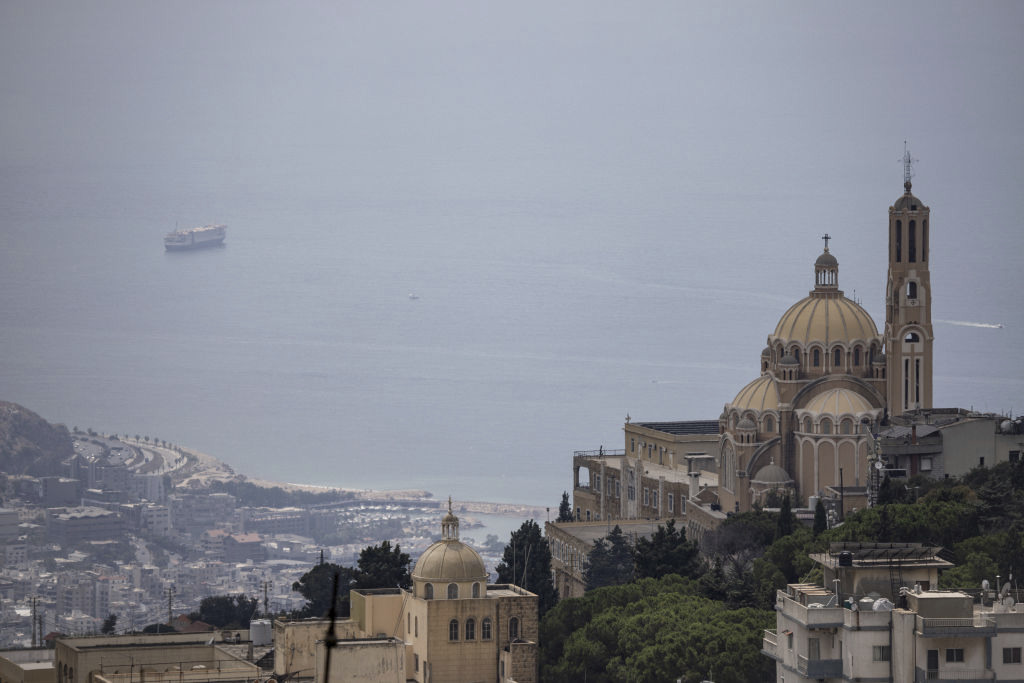
Although Lebanon is in the news today largely due to the actions of the terror group Hezbollah and the economic hardships in the country, Lebanon in the mid-20th century was one of the wealthiest, most prosperous and stable countries in the Middle East. It was also, until a few decades ago, the only majority-Christian country in the Middle East. Thanks to its being a center of commerce and a thriving mixture of Muslims, Christians and Jews, Lebanon was known as the "Switzerland of the Middle East" and its capital, Beirut, as the "Paris of the Middle East."
Lebanon, historically, was a Christian-majority land. The religion was introduced to the area in the first century by St. Peter and St. Paul, and the faith spread early throughout the region.
Lebanon ceased to be majority-Christian during the years of Lebanon's 1975-1990 civil war. Since then, the Christian share of the population has steadily declined to a rough third of the population for each of the three largest religious groupings -- Sunni Muslim, Shia Muslim, and Christian.
Christianity -- Maronite, Orthodox, Catholic, as well as other denominations -- was the dominant religion in the entire Levant before the Islamic military invasions and conquests in the seventh century. Constantinople (renamed Istanbul in 1930) was the capital of the great Christian Byzantine Empire.
After defeating the Byzantine Empire in 636 in the six-day Battle of Yarmouk, the Islamic Arab Caliphate conquered Lebanon. Later, as part of the vast Islamic Ottoman Empire, Lebanon was occupied by the Ottoman Turks from 1516 to 1918.
The League of Nations granted France a mandate to govern Lebanon from 1920 to 1943, and the country officially gained independence on November 22, 1943, during World War II.
Today, Lebanon, like formerly Christian Turkey and Egypt, is majority-Muslim. The once-thriving Christian community has plummeted to roughly one-third of the population. The largest Christian community in the country, the Maronites, while maintaining affiliation with the Roman Catholic Church for centuries, has its own patriarch, liturgy and ecclesiastical traditions. Originally Aramaic/Syriac-speakers, today Maronites speak Arabic, and use Syriac as their liturgical language.
The 15-year civil war, the crushing influence of the Iranian-backed terrorist group Hezbollah, an influx of Palestinian and Syrian refugees, large-scale emigration, and massive corruption, among other causes, has turned Lebanon into one of the poorest and least stable countries in the Middle East.
In September 2024, Israel's offensive weakened Hezbollah, causing it heavy losses and forcing its retreat from key areas, thereby significantly diminishing the terrorist group's military and political power.
Hezbollah, however, is currently rearming and rebuilding its battered ranks, defying the terms of the ceasefire agreement and raising the prospect of renewed conflict with Israel.
Due to the political and economic crises in the country, Christians continue leaving Lebanon, reducing their population and influence. According to the human rights organization Open Doors, pressures on Christians have been growing. Increasingly, Shia Hezbollah families, with financial backing from Iran, have been purchasing properties in Christian areas, threatening Christians with weapons, and gaining wider control while many Christians flee the country.
Habib C. Malik, a Lebanese retired associate professor of history and cultural studies at the Lebanese American University, told Gatestone:
"Lebanon's Christians were a majority demographically for most of the 20th century until the 1975 war. The 1975-1990 war in Lebanon took a toll on Christian numbers both physically. Thousands died and thousands more emigrated out of the war-shattered country. Many never returned.
"Christians also have lower birth rates than Muslims. Muslims can marry more than one wife and create many more children than in monogamous marriages. Christians generally have valued education for their children, but as the costs of education began to rise steeply, large families became a thing of the past, particularly in the urban areas of the country.
"In 1948, hundreds of thousands of Palestinian refugees, who were mostly Muslims, added to Muslim numbers, although it is important to keep in mind that these refugees are not Lebanese citizens and don't have the right to vote
.Lebanon's Shiites have been an integral community in Lebanon for centuries; the increase in their numbers has mostly been due to polygamy and higher birth rates and not to Shiite immigration from elsewhere."Once there is some degree of peace and stability in and around Lebanon, many Christians will return with their families from abroad and Christian numbers will pick up."
Malik, author of the policy paper "Between Damascus and Jerusalem: Lebanon and Middle East Peace," also noted how mass immigration of Syrians and Palestinians to Lebanon has affected the country:
"Both these populations have remained for the most part unnaturalized as Lebanese citizens. In the case of the Palestinians, they caused instability from the armed PLO when they relocated from Jordan to Lebanon in 1970. Their entry was a direct cause of the outbreak of the 1975-1990 war in Lebanon. Syrian refugees have augmented, indeed doubled, the million or so Syrian migrant workers already in Lebanon. Despite international relief efforts to both these refugee populations, the Palestinians and the Syrians, they have strained to the limit the meager resources of Lebanon and caused prices of basic goods and services for ordinary Lebanese to rise. Being mainly Sunni Muslims, and despite not being naturalized as Lebanese citizens, they have also introduced an element of sectarian imbalance into the already precariously calibrated demographics among the various Lebanese sects. This is regarded as ominous by the other sects such as the Christians, the Druze, and the Shiites. Lebanon's authorities on several occasions have appealed to the United Nations and other international humanitarian agencies to help in repatriating the Syrian refugees to Syria where the civil war has all but ended since the collapse of the Assad regime. However, there has been little real response by the UN and these relief agencies."
Malik spoke of the relationship between the Islamic Republic of Iran and Hezbollah:
"Since its founding, Hezbollah has always been a military arm of Iran's IRGC (Iranian Revolutionary Guard Core), and it sees itself as an integral part of the ideology of the Iranian regime's Wilayat al-Faqih -- "guardianship of the Islamic jurist, meaning that an Islamic jurist should lead the community in the absence of the infallible Imam -- first under Khomeini and now under Khamenei. From day one they began to acquire weapons and to train under the self-proclaimed heading of "Resistance to the Zionist Enemy". With time they emerged as the strongest force on the ground inside Lebanon rivaling, and indeed in many areas exceeding, the power of the official Lebanese armed forces. Hezbollah along with the Amal movement of Shiites under the leadership of aging Speaker of the House Nabih Berri formed a Shiite duo that became the main political and paramilitary face of the Shiite community in Lebanon. After the July 2006 War between Hezbollah and Israel, the Lebanese Iranian proxy, which received a major battering at the time, declared "victory" and proceeded to rearm, retrain, and rebuild its paramilitary infrastructure across Lebanon with direct input from Iran's IRGC—a move that has included acquiring long-range precision-guided missiles and drones, anti-tank munitions, and other weapons.
"On October 8, 2023, Hezbollah single-handedly dragged Lebanon into the bloody war between Hamas and Israel without consulting anyone inside Lebanon and against the wishes of the majority of Lebanese from all sects. The result has been a renewed battering of Hezbollah, with widespread decimation of its military assets plus the wholesale destruction of Shiite villages along the border with Israel in the south. Hezbollah's biggest loss came with the "Pager Operation" on September17, 2024 engineered by Israel's Mossad. Ten days later, top Hezbollah leaders including Hassan Nasrallah and his designated successor were taken out by the IDF along with much of the group's elite fighting force, the "Radwan" brigade. Since the "end" of that round of fighting on November 27, 2024, Hezbollah has been attempting to rebuild itself militarily and financially while Israel has been going after it with targeted assassinations and airstrikes. The new Lebanese government and President have pledged to "disarm" Hezbollah and concentrate all weapons in the hands of the state-run Lebanese armed forces, but so far very little of this has actually happened; the pro-Iran group has been openly defiant in handing over its arms. Despite the military setbacks Hezbollah has endured since October 8. 2023, Hezbollah remains an armed force capable of paralyzing the Lebanese state and defying its policy of concentrating all weapons in the hands of the Lebanese authorities. Hezbollah, which still has several MPs in the Lebanese parliament and at least two ministers in the Lebanese cabinet, act as a state-within-a-state inside Lebanon and are the main obstacle thus far preventing a Lebanese-Israeli peace treaty from materializing."
Malik noted that Christians in Lebanon are against Hezbollah and Iran controlling their country:
"Except for the remnants of former Lebanese President Michel Aoun's Free Patriotic Movement, a receding political grouping in the Christian community with dwindling popular support, virtually all other Christians in Lebanon are vehemently opposed to Hezbollah and to Iran's influence in their country. This opposition is spearheaded by the largest and strongest Christian political party in the country, the Lebanese Forces (LF) led by Samir Geagea. The vast majority of Christians support the government's policy of confiscating Hezbollah's weapons and monopolizing all arms in the hands of the Lebanese state. This same majority wishes to see Lebanon move towards specific long-term security arrangements with Israel paving the way towards an official and historic peace treaty between the two states. In addition to the Christians, this is supported by huge swaths of Sunnis and Druze and even some intrepid and independent-minded Shiites, and it is in direct and open opposition to Iran's regional stance and the wishes of its main proxy, Hezbollah. The continued impotence of the Lebanese government in acting upon its pledge to confiscate Hezbollah's weapons has hampered any tangible moves towards the rehabilitation of Lebanon as an independent and once-again prosperous state. We hope that Isreal, the United States, and the international community are losing patience with this endemic condition of official Lebanese paralysis."
Malik also pointed to the need for establishing a federal political system in Lebanon:
"The opportunity for creating a Maronite state in mount Lebanon came and was missed back in 1920 when Greater Lebanon was fashioned. Since then, the uneasy and precarious coexistence of disparate communities within a sectarian pluralist Lebanon has been exposed to repeated external interventions on behalf of this or that sect or religious community at the expense of all the others. There have been repeated calls, including among Christians, for applying a federal formula to Lebanon to accommodate its religious and sectarian diversity. The federalism of heterogeneous religious communities could be a workable solution for a divided and composite society like that of Lebanon. Such a federal configuration need not involve any population transfers or geographic tampering—it would be constitutional federalism whereby each community would have proportional representation within one legislative chamber made up of two tiers as well as layers of local and regional protections for each community and its citizens (something along the lines of an Ombudsman or Oblast). Such a system would liberate the respective communities from the vicissitudes of demographic fluctuations, namely from the tyranny of sheer numbers, and would provide, in addition to the existing laws of the land applied to all, specific local protections to members of minority communities embedded within larger minority communities. The details of a constitutional federal arrangement for Lebanon have been worked out by legal and other experts; they only require a national decision to move them to actual implementation.
"Given the tensions that have emerged recently among Lebanese communities after Hezbollah's October 8, 2023 unilaterally launched war against Israel, many within the Christian as well as Sunni and Druze communities have become more vocal in their calls for a federal solution for Lebanon. Some have even surpassed federalism and desire open secession from a unitary state in favor of autonomous and homogeneous sectarian enclaves—recall that it was Hezbollah's creation of their own statelet and army ideologically beholden to an alien foreign power, Iran, that provoked the others to embrace the alternative of splitting apart completely. Increasing numbers of Christians and their political parties are entertaining both the federal option and this idea of separation leading to a recognized Christian/Maronite entity. Even Sunnis in Lebanon have had enough of feeling constantly threatened by Hezbollah and its Shiite community; these Sunnis for the first time have been seriously contemplating a divorce from coexistence with the Shiites and are even considering the federal alternative or outright secession. The West can surely be more mindful of the plight of beleaguered native Christians in Lebanon, given that Lebanon's Christians are the only remaining free and indigenous Christian community in the entire Near and Middle East. They did not succumb to dhimmitude, or second-class dehumanization and servitude under Islamic rule. Mount Lebanon, particularly the region from East Beirut northwards to encompass the Koura plain, and eastwards to include the Bekaa city of Zahle, continues to exhibit a pretty solid Christian demography. Whether it will achieve a degree of autonomy through a federal formula applied to all of Lebanon, or split from the rest of the unified state to form its own recognized entity, remains to be seen. Whatever the preferred political outcome, it would help if the West could shepherd any such process to protect the Christians and their freedom."
Uzay Bulut, a Turkish journalist, is a Distinguished Senior Fellow at Gatestone Institute.
Source: https://www.gatestoneinstitute.org/22094/lebanon-hostage-to-hezbollah

No comments:
Post a Comment