by Alex Traiman
The relationship between Trump and Netanyahu is very strong. There is complete alignment on Hamas, Hezbollah, Syria and Iran. And Trump’s fondness toward Israel remains unshakable.
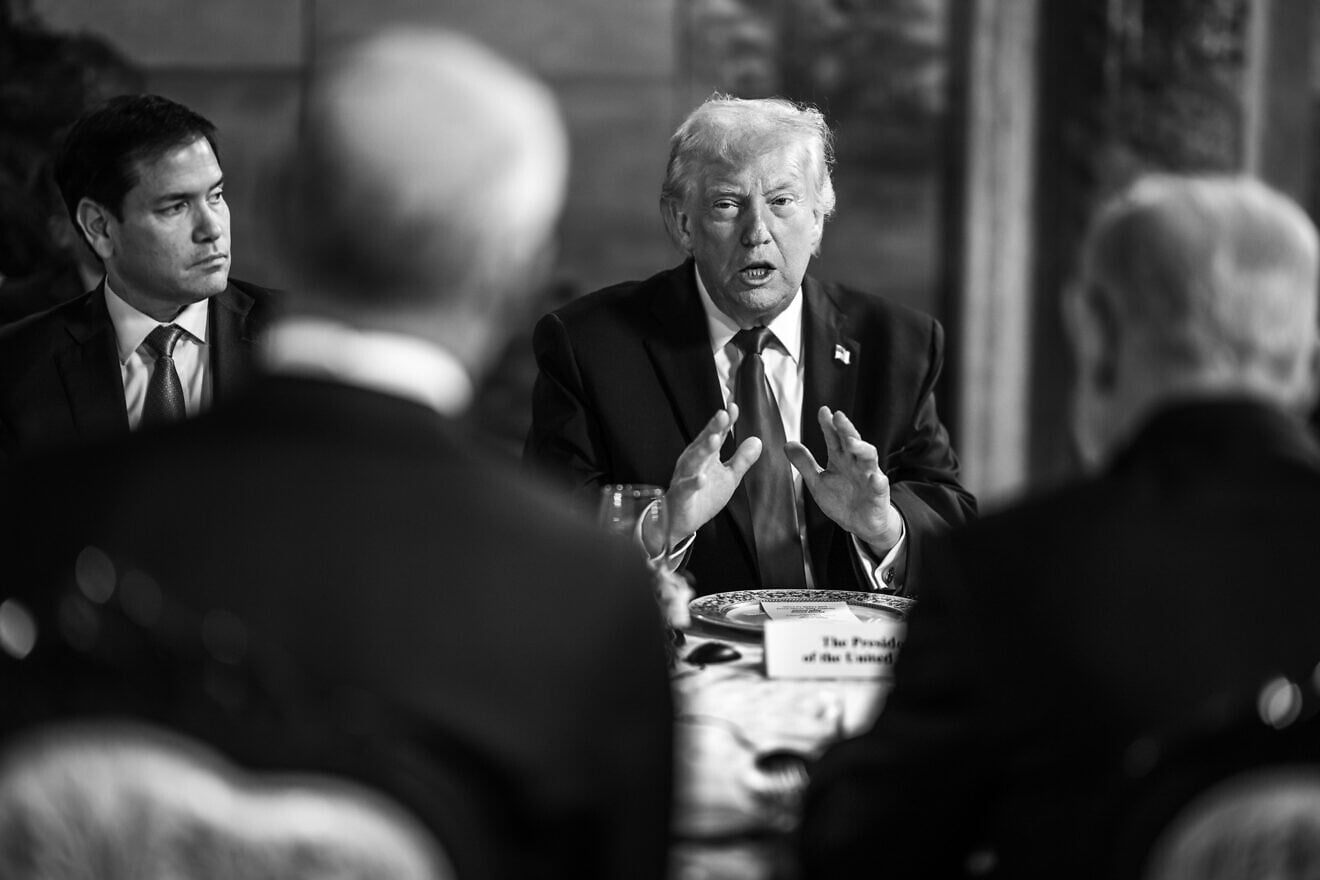
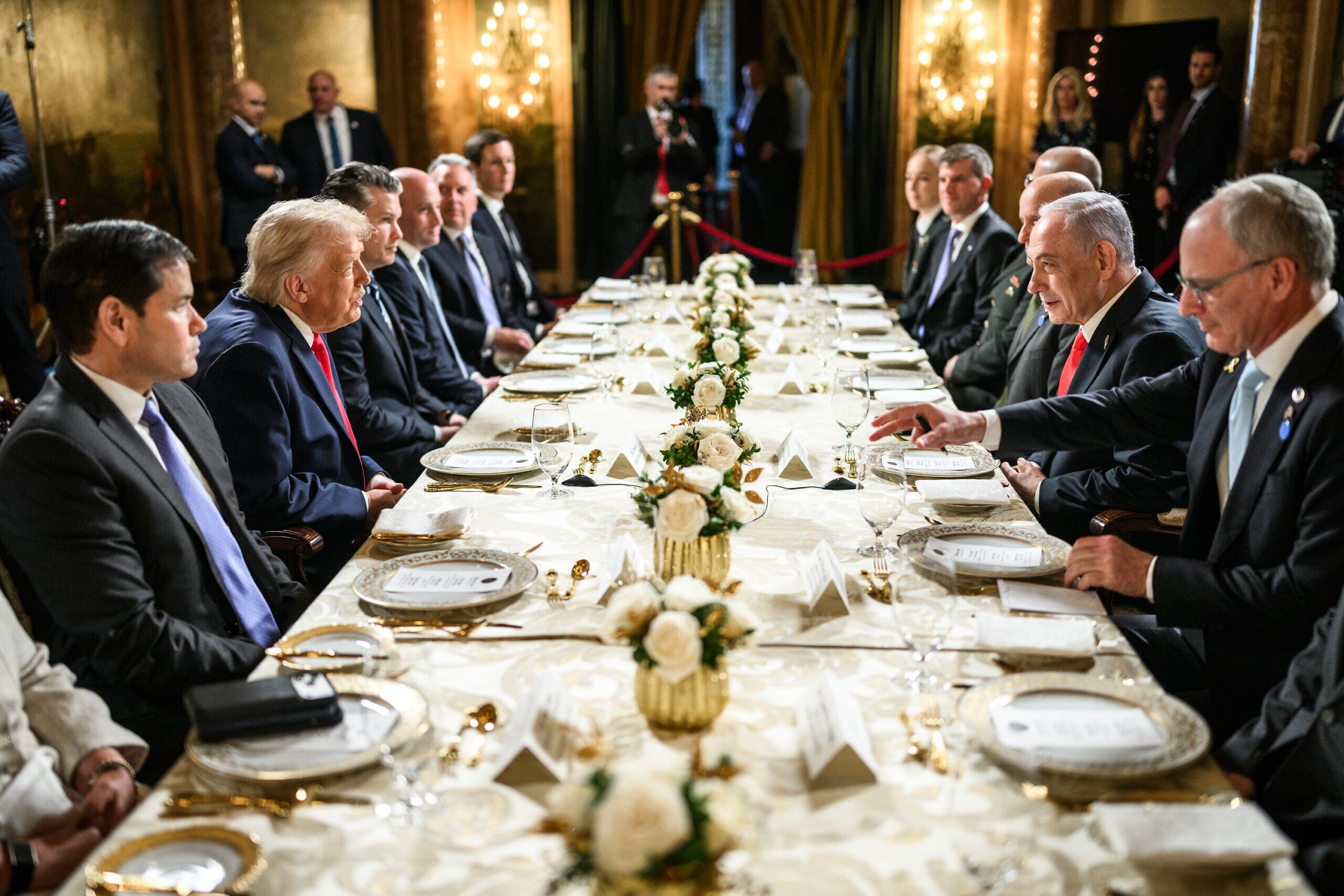
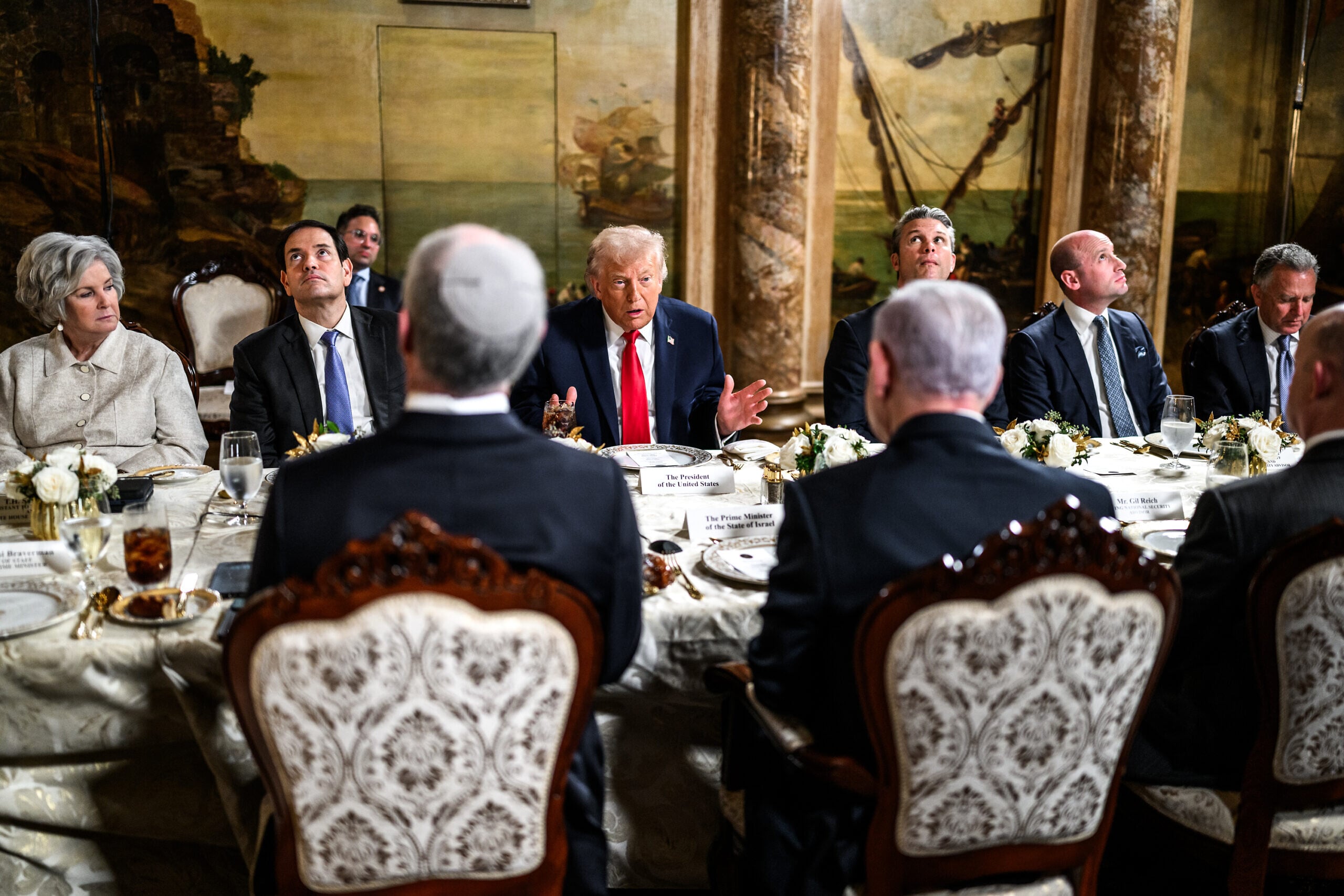
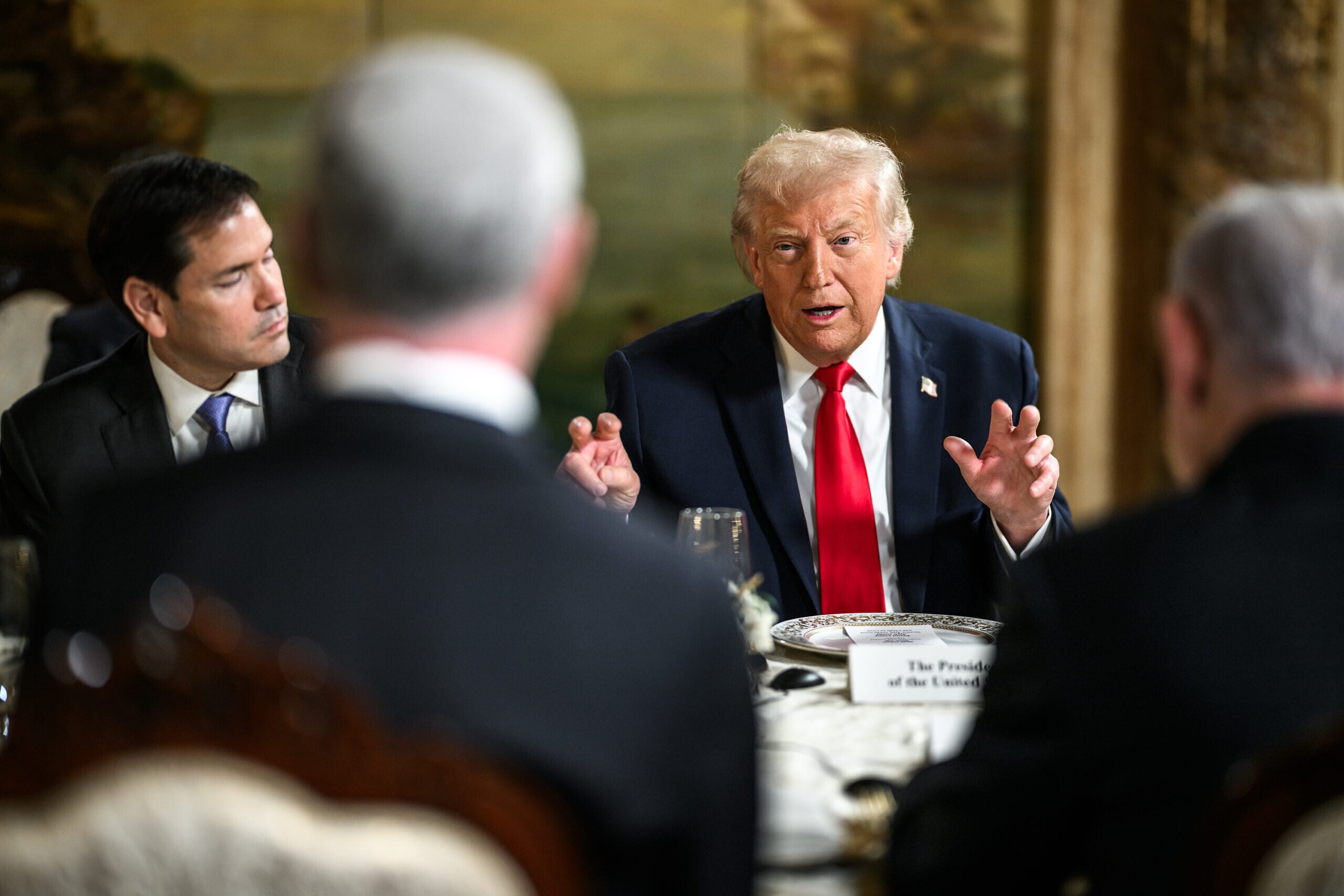
In a pre-New Year’s meeting at Mar-a-Lago, Israeli Prime Minister Benjamin Netanyahu and U.S. President Donald Trump demonstrated that when it comes to U.S.-Israel relations, there is little daylight and total admiration between the two allies. This factor holds particularly true regarding the nations’ policies toward Iran, Hezbollah and Hamas, in particular.
Key differences remain. And that is not only normal but obvious, due to the extremely divergent strategic positions of the world’s strongest superpower situated between two oceans, and a Jewish state roughly the size of New Jersey in a neighborhood surrounded by Islamic radicals.
The meeting could not have come at a more important juncture for Israel. Phase 1 of a three-month-old ceasefire brokered by Washington—and based on key provisions proffered by Jerusalem—has proven itself to be a stunning initial success. That Phase 2 will prove to be as successful is less likely.
At the start of the ceasefire in October, all 20 remaining living Israeli hostages returned to Israel, one of its top war priorities. Nearly every dead body killed and taken by Hamas has been returned as well.
This removed the most valuable asset Hamas had as leverage. The hostages served as the ultimate human shields for the leaders of the terrorist organization and were the basis of psychological warfare against the Israeli population. Repatriating the hostages similarly removed the central pillar of the Israeli opposition’s political campaign against the prime minister, and their own hedge that Netanyahu would fail to “bring them home.”
Only the body of Israel Border Police Master Sgt. Ran Gvili, 24, remains in captivity. His family was on hand at Mar-a-Lago, demonstrating how important it is to both the president and the prime minister to recover the remains of the last of the 255 captives.
Hamas disarmament
After a partial IDF withdrawal with the signing of the ceasefire agreement, Israel remains in control of 53% of Gaza. Israel Defense Forces remain positioned in the entire eastern half of the Strip, plus large buffer zones along Gaza’s entire northern and southern borders.
Most importantly, Hamas committed to fully disarm as part of the ceasefire, and the Palestinian enclave is to be demilitarized.
Before arriving in Florida, reports circulated with claims that Trump would push Israel to further withdraw from the half of Gaza it currently controls, even while Hamas clings to its weapons and remains in power over the residents. A withdrawal, the reports claimed, would facilitate the vision of Trump’s son-in-law and former adviser Jared Kushner to rebuild Gaza as a modern, technologically advanced, terror-free, free-trade enclave.
Yet, Trump made clear in his remarks to the press following the meeting that, as part of the ceasefire agreement, Hamas had committed to disarming. And he insisted that they must disarm before any talk of further Israeli withdrawals.
As to the connection between Hamas disarmament and Israeli withdrawals, Trump stated: “Israel withdrawing its forces? Well, that’s a separate subject we’ll talk about.”
Further, the president insisted that Israel has met all of its obligations as part of the ceasefire, negating claims by its detractors that it was violating the terms of the deal by striking at terrorists who attacked at IDF positions along a newly created Yellow (Israeli deployment) Line.
“I’m not concerned about anything that Israel’s doing. I’m concerned about what other people are doing or maybe aren’t doing, but I’m not concerned. They’ve lived up to the plan,” Trump said, further emphasizing, “I know Israel’s lived up to the plan 100 percent.”

Timeline to renewed Gaza hostilities
It is likely there will be an agreed-upon timeline between Netanyahu and Trump for Hamas to comply with its obligations. After the end of that period, Israel will likely be given a greenlight to finish the job—this time without the threat that Hamas would kill hostages.
Recall that Trump gave Iran a timeline to negotiate a deal to resolve the looming nuclear enrichment crisis. Toward the end of the negotiation period, Trump intimated that Iran would have 60 days to reach an agreement. On day 61, Israel initiated “Operation Rising Lion, the opening salvo of what Trump later termed the 12-day war in mid-June.
And while Israel stands ready to finish the job and tackle Hamas, Trump remains hopeful that the IDF won’t have to do more of the dirty work.
“We have 59 countries that signed on—big countries, countries that are outside of the Middle East,” the president said. “They want to go in and wipe out Hamas. They don’t need Israel; they want to do it because it’s the right thing to do. Because they were for the deal, based on the fact that Hamas pledged, they swore that they were going to disarm. Now, if they’re not going to disarm, those same countries will wipe out Hamas.”
What countries will be involved remains to be seen. Israel has doubts as to whether nations like Qatar, Turkey, Egypt and Jordan want to see Hamas disarm.
It is believed that these countries supported Phase 1 of the ceasefire, particularly because it protected Hamas from imminent destruction by Israel. Phase 2, on the other hand, calls for Hamas’s disarmament, which would eliminate their chances for survival.
Contrary to some media predictions, the Netanyahu-Trump meeting did not carry with it any announcements relating to the highly touted “Board of Peace” or the deployment of an “International Stability Force,” as called for in the Trump 20-point ceasefire outline.
Gazan refugees
Since the beginning of the war, Gazans have been trapped inside the beleaguered Strip. Unlike any other war zone in the world, Gazans have not been afforded the basic humanitarian right of fleeing.
Meanwhile, a recent Palestinian Center for Policy and Survey Research poll showed that as many as half of Gazans would be willing to leave if allowed to do so. Back in February, Trump said following a meeting with Netanyahu that all Gazans should be resettled.
Asked by JNS why Gazans have not been afforded a right to leave, Trump replied, “I think the number today, half of Gaza would leave. I’ve always said it. I said, if you were given the opportunity to live in a better climate, they would move. They’re there because they sort of have to be. I think it would be a great opportunity, but let’s see if that opportunity presents itself.”
Asked again by JNS why countries refuse to accept Gazans, Trump was hesitant about answering the question, letting the obvious reasons go unstated.
“Look, let’s not talk about it because we don’t want the controversy. Right now, we’re helping Gaza,” Trump said. “This poll was, I think, very accurate, other than it would be more than half the people if given the opportunity. But they haven’t been given that opportunity. So we’ll see what happens.”
At present, no countries in the world are willing to absorb Gazan residents for two reasons: The international community wants the Palestinians to be Israel’s problem indefinitely, and countries across the globe fear that Gazan refugees—many affiliated with Hamas—will destabilize their societies. That speaks volumes about the oft-repeated mantras of “innocent Palestinians.”
Will the Hezbollah ceasefire hold?
Hezbollah received less airtime in the president’s remarks, but was certainly one of the key issues discussed in the meeting. Asked whether Hezbollah was failing to meet the terms of a ceasefire agreement Israel signed with Lebanon, and in particular, on whether Hezbollah has failed to disarm, Trump responded that “Hezbollah has been behaving badly.”
The president acknowledged that the Lebanese government would inherently have a difficult time forcefully disarming the terror organization that has wrecked their country.
“The Lebanese government is a little bit of a disadvantage, if you think of it with Hezbollah,” Trump said. “So we’ll see what happens.”
What happens may likely be renewed large-scale military operations. Meanwhile, Israel continues a campaign of targeted strikes when it identifies terrorist and weapons movements, particularly in Southern Lebanon, as well as targeted assassinations against Hezbollah leadership.
A new frenemy in Syria?
Meanwhile, Trump has been actively trying to broker a formal defense agreement between Israel and Syria. Syria today poses a greatly reduced threat to Israel since the fall of its despotic president, Bashar Assad. With Assad’s fall, Netanyahu struck quickly, ordering the IDF to take out the majority of Syria’s military buildup in a period of days.
Since then, Trump has tried to stabilize Syria and bring it out of the orbits of Russia and Iran—and into the orbit of Saudi Arabia, and more importantly, the United States.
“We do have an understanding regarding Syria,” Trump said, expressing his hope that Netanyahu will figure out the formula for working with the self-proclaimed new president of Syria, Ahmed al-Sharaa, also known as Abu Muhammed al-Jolani.
“I hope he’s going to get along with Syria because the new president of Syria is working very hard to do a good job. He really is. I know he’s a tough cookie, and you’re not going to get a choir boy to lead Syria. So, I hope they’re going to get along because I dropped the sanctions on Syria, because otherwise, they wouldn’t have had a chance. We want to see Syria survive.”
Netanyahu cautiously agreed. “Well, our interest is to have a peaceful border with Syria,” he said. “We want to make sure that the border area right next to our border is safe.”
The prime minister also emphasized protecting religious minorities in Syria and throughout the region. “We also want to secure our Druze friends,” Netanyahu stated. “And by the way, I think not only the Druze, but other minorities, especially the Christians, should be protected as well in Syria and throughout the Middle East.”
Round two with Iran?
Perhaps the most urgent security issue the two leaders discussed was Iran. Recent reports have indicated that Iran is in a race to rebuild its arsenal of ballistic missiles, as well as the launchers required to launch those missiles. The launchers are more complicated to build and create a bottleneck for the Islamic Republic. There are also reports that Iran is trying to reorganize its nearly obliterated nuclear program.
To counter the Iranian threat, Israel is feverishly working to replenish its significantly depleted arsenal of Arrow ballistic-missile interceptors, as well as American-produced THAAD missile interceptors.
This week, Israel also announced that its technologically advanced Iron Beam laser missile interceptor is now online and operational. It is far more cost-effective to operate and never runs out—meaning, it never needs to be replenished.
That said, Israel would rather not test the efficiency of the Iron Beam system, preferring that Iran not rebuild the capacity to attack the Jewish state. It is clear that Trump similarly doesn’t want to see Iran rearm.
Replying to a question from JNS, Trump said, “Now I hear that Iran is trying to build up again. Then we are going to have to knock them down. We’ll knock the hell out of them. But hopefully, that’s not happening.”
He later added that if Iran is “trying to build up again,” America is “going to have no choice but very quickly to eradicate that buildup.”
Yet there was something new about these comments worth noting. Trump is no longer referring only to the buildup of nuclear capacity. Asked whether he would support an Israeli attack on Iran if the Islamic Republic restarts production of ballistic missiles and nuclear enrichment, the answer was definitive.
“If they will continue with the missiles, yes. The nuclear, fast. OK. One will be yes, absolutely. The other one, we’ll do it immediately.”
Trump said if Iran is trying to restart its nuclear program, “they’re making a big mistake.” He added that if and when the reports are confirmed, “the consequences will be very powerful—maybe more powerful than the last time.”
Another round of military engagement may be on the horizon.
“We know exactly where they’re going, what they’re doing. And I hope they’re not doing it because we don’t want to waste the fuel on a B-2,” Trump said. “It’s a 37-hour trip both ways. I don’t want to waste a lot of fuel. OK?”
Trump prefers, as he did before the 12-day war, that Iran’s leaders come to their senses and strike a verifiable deal to disarm. “I heard Iran wants to make a deal. If they want to make a deal, that’s much smarter,” he stated. “They could have made a deal the last time before we went through a big attack on them, and they decided not to make the deal. They wish they made that deal.”
Back in July, there was a sense that had the 12-day war continued for even another week, the regime would have absorbed significant blows. But Trump’s patience appeared to be running thin, especially after taking credit for ending the recent military conflict without toppling the regime.
Possible regime change?
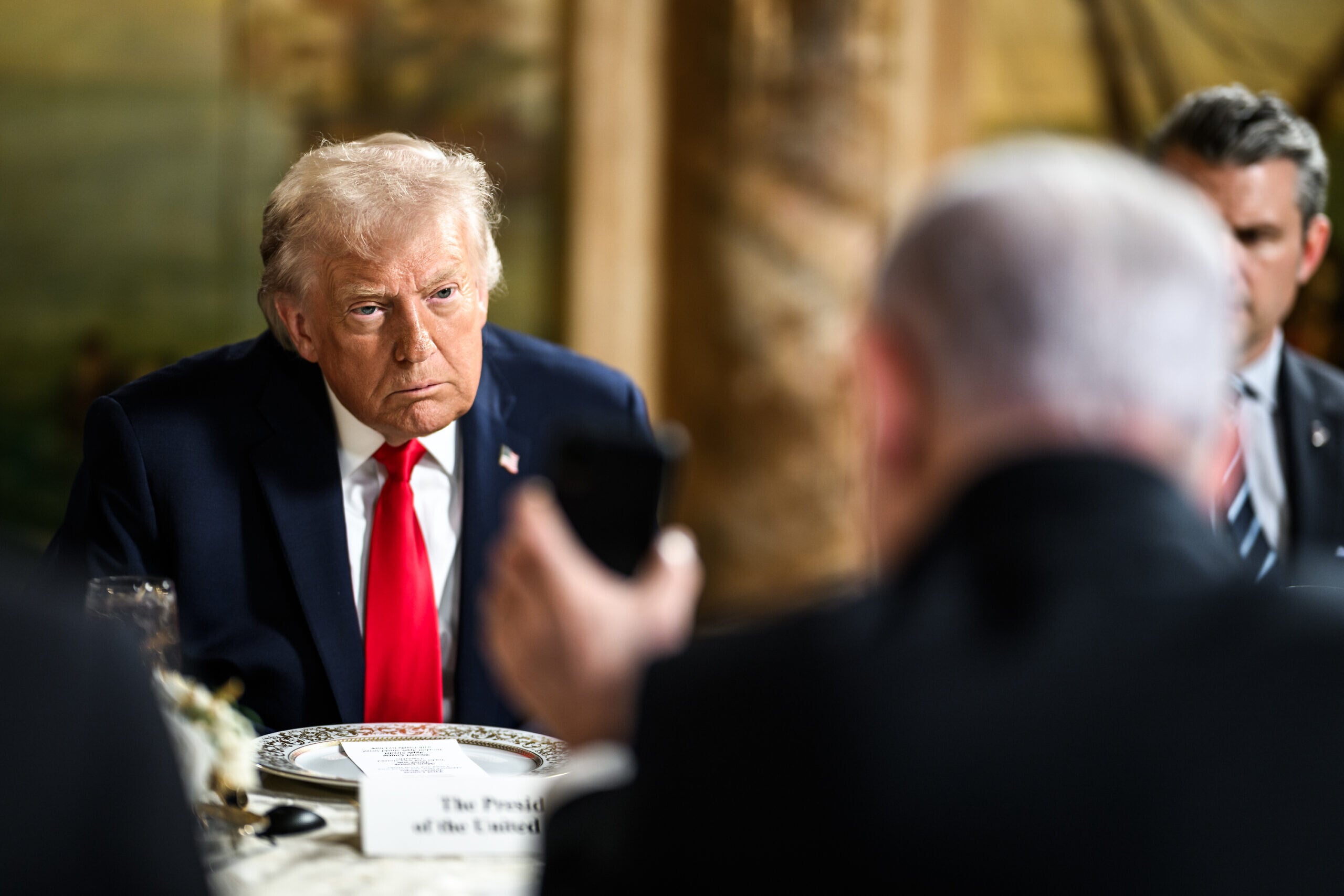
The meeting this week between Netanyahu and Trump takes place as there are growing domestic protests against the Iranian regime.
There is also a possibility that Israel’s Mossad may be involved in subversive efforts to bolster the opposition and convince Iran’s public to rise up against the fanatical clerics that have steered the country from a path of moderation, into a pariah state ever since the Iranian Revolution of 1978-79.
Trump acknowledged the protests but didn’t want to get into specifics of whether the regime should finally be toppled.
“I’m not going to talk about the overthrow of a regime. They’ve got a lot of problems that are in there, tremendous inflation. Their economy is bust. The economy is no good. And I know that people aren’t so happy,” Trump said. “But don’t forget, every time they have a riot or somebody forms a group, little or big, they start shooting people. They kill people. I’ve watched this for years. There’s tremendous discontent. They form 100,000, 200,000 people. All of a sudden, people start getting shot. And that group disbands pretty quickly.”
For Iranians to stand tall against the regime, they will need to have international backing, particularly from the United States.
The Iranian people certainly have Israel’s backing. Netanyahu has stated over and over again that the Jewish state does not consider the Iranian people to be its enemies, only the clerics running the country.
It will be interesting to watch if Trump changes his tune and decides to support Iranian protestors in the weeks and months ahead.
The folly of attacking Iraq
Previously, war critics have blamed former President George W. Bush for launching the Second Iraq War for the economic damage it did to America, as well as sending troops to attack a country that did not necessarily pose a direct threat to the United States.
Perhaps for the first time, Trump explained why America’s war in Iraq shattered the delicate balance of power in the Middle East.
“It was a mistake,” Trump said of the Second Iraq War. “You know, when they wiped out Iraq, Iraq and Iran were about the same power, and they fought each other with different names for a thousand years. And then our country came out and blew up one of those two countries—namely, Iraq. And all of a sudden, Iran had the whole Middle East all to itself. But that’s not true anymore.”
Accordingly, Trump, Israel and America’s combined operations against Iran and its network of terror proxies have removed Iran’s dominance and restored the balance. Acknowledging the mistake is important for many reasons.
Despite the charges of antisemites that claim that Israel pulled the United States into the Second Iraq War, Netanyahu was desperately opposed to America’s invasion of Iraq.
The war completely destabilized the Middle East, leading to the Arab Spring and the fall of stable dictator Hosni Mubarak in Egypt. More importantly, the downfall of Saddam Hussein allowed Iran to establish its Shia Crescent—a land bridge via Iraq into Syria, and all the way into Lebanon—placing Iranian terror proxies along Israel’s northern border.
Not only is Trump acknowledging the mistake, but he is working together with Israel to correct it in an attempt to bring stability back to the Middle East.
Turkey and Qatar
For all the alignment on the key issues relating to Iran and its ring of terror proxies, there are certainly differences in policy toward other regional actors.
The United States considers Qatar and Turkey allies, while Israel considers them enemies. Just as it would be foolish for Israel to trust the two Muslim Brotherhood-supporting nations, it may be just as unwise for America to cast them away as allies.
For Trump, the main American adversary is China. The president seeks to create an alternative trade route to China’s Belt and Road Initiative, known as the India-Middle East-Europe Economic Corridor (IMEC). For the corridor to succeed, Trump needs to rid the Middle East of Iranian terror proxies and establish extended quiet across the region; push out Chinese influence; and broker normalization between Israel and Saudi Arabia.
If Trump casts away Qatar and Turkey, they shift directly into China’s orbit. Keeping them close to America increases the likelihood of the IMEC Corridor succeeding.
Netanyahu understands this and also understands the economic value to Israel of becoming the central hub of the corridor for goods to flow to Europe. As such, he is willing to defer to Trump on this, provided Israel receives American support to counter Iran’s network of terror proxies.
Bromance with Erdoğan
Trump speaks glowingly about Turkish President Recep Tayyip Erdoğan. U.S. Ambassador to Turkey Tom Barrack recently referred to the relationship as a “bromance.”
“I know President Erdoğan very well. And as you all know, he’s a very good friend of mine, and I believe that—and I do respect him, and Bibi respects him—they’re not going to have a problem,” Trump said. “And you’ve seen me do things with President Erdoğan and Turkey nobody else could have done. We’re not going to have a problem. He’s done a fantastic job. I’m with him all the way. I’m with Bibi all the way. Nothing’s going to happen.”
Trump even credited Erdoğan with pushing out Assad from Syria.
Previously, Trump has said he would mediate directly between Erdoğan and Netanyahu. And while Trump suggested this week that America would consider selling F-35 fighter jets to Turkey, the president stated, “I think it’s going to work out well between Syria and Israel.”
For Israel, the situation is more complex. Turkey wants a foothold in Gaza as part of Trump’s International Stabilization Force. This is a red line for Netanyahu. And while Israel and Netanyahu may trust that Trump can hold back any anti-Israel belligerency from Erdoğan for the time being, they are concerned about what might happen long term, once Trump is no longer in office.
Saudi normalization
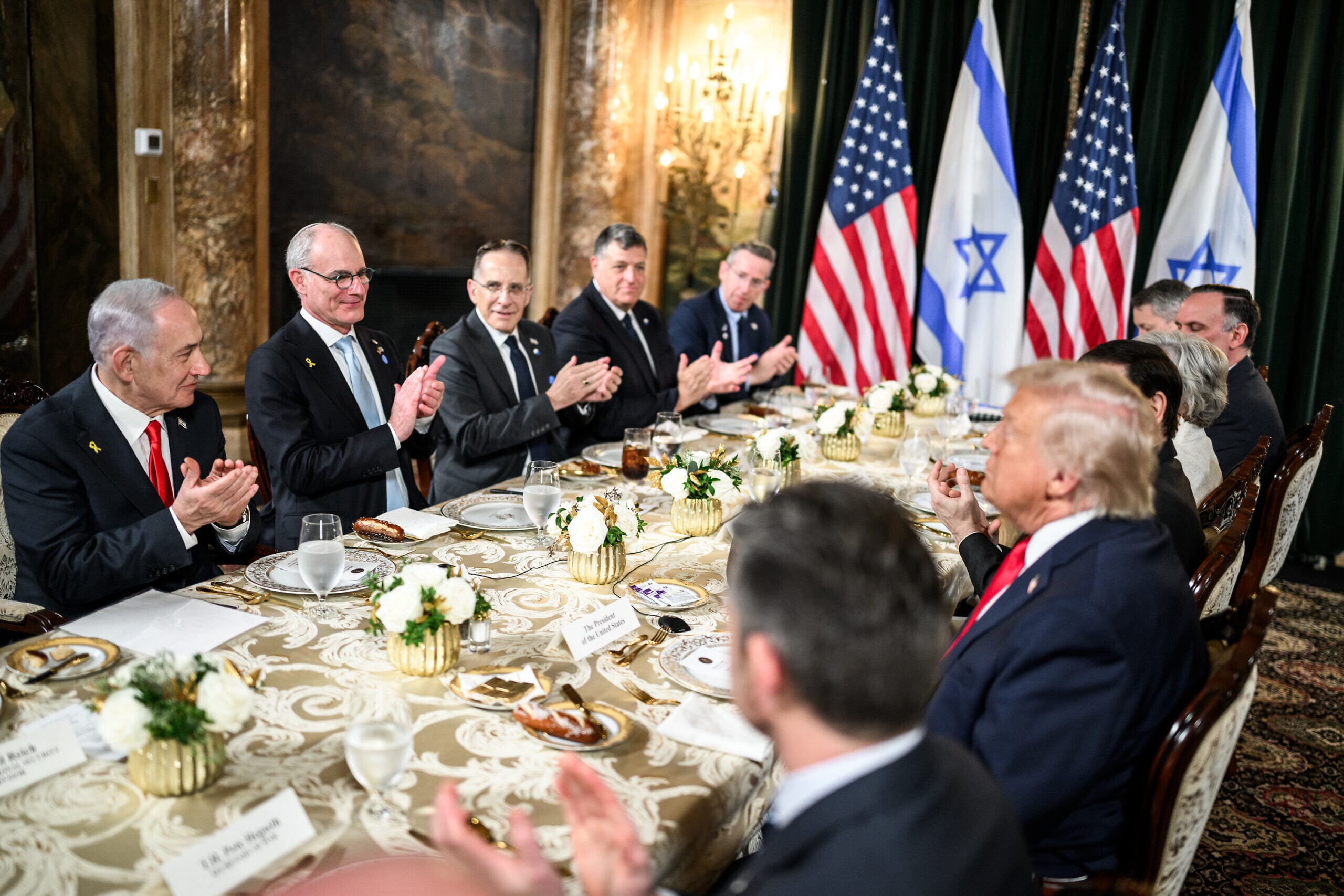
It is a major foreign-policy priority for both Trump and Netanyahu to forge a normalization agreement with Saudi Arabia. The two countries have been advancing ties under the surface for years.
Riyadh was hoping for the complete Israeli annihilation of Hamas. That may happen, though a weakened Hamas remains entrenched in Gaza. Furthermore, the Saudis have repeatedly stated in public that any normalization must be linked to a pathway toward Palestinian statehood. Israeli officials counter that behind closed doors, the Saudi leadership expresses its significant distaste for the Palestinians, along with its disinterest in statehood.
Yet Saudi Crown Prince Mohammed Bin Salman (MBS) doesn’t want to find himself in the same fate as former Egyptian President Anwar Sadat, who was assassinated two years after signing a peace treaty with Israel in 1979. Egypt, Jordan and Saudi Arabia have done little to turn around their populations’ strong anti-Israel sentiments.
Netanyahu sees possible normalization with Saudi Arabia as a crowning political achievement and the essential end of the greater Arab-Israeli conflict. Still, he has stated that no Palestinian state will be established anywhere between the Jordan River and the Mediterranean Sea.
Trump considers the Saudis to be a strong ally.
“Saudi Arabia is great. We have a great leader and a friend of mine, and a friend of a lot of people. Also, an enemy of some people, but those people aren’t doing so well. No, Saudi Arabia has been very good as far as I’m concerned. They’ve done everything that we can ask for,” he said. “They’re getting along great with Israel. They will. And at some point, they’ll sign the Abraham Accords.”
Right now, normalization appears like sticking a square peg in a round hole, as long as it is based on the false premise of Palestinian statehood.
Palestinian Authority
Asked whether the Palestinian Authority should have a role in post-war Gaza, Trump kicked the question over to Netanyahu.
The prime minister has been adamant that the P.A. should not have any role in governing the Gaza Strip. It was handed control of Gaza in 2005 with Israel’s disastrous withdrawal from the Strip. Less than two years later, Hamas took over, leading to continuous conflicts, and ultimately, the massacre in southern Israel on Oct. 7, 2023.
“I think President Trump clearly outlined the conditions that reform that he wants to see in the P.A. for them to be involved,” Netanyahu stated. “And I think he put it very clearly what he wants to see, the kind of real reforms, not just perfunctory reforms, but real reforms. Stop pay to slay, change the curriculum in your textbooks, open up a different society and a different future.”
Netanyahu is hedging that the Palestinian Authority, like Hamas, will remain true to its colors and never undergo meaningful reforms.
Meanwhile, the P.A. remains in control of Palestinian-majority cities in Judea and Samaria, known commonly in the international community as the West Bank.
“We had a discussion, a big discussion for a long time, on the West Bank. And I wouldn’t say we agree on the West Bank 100%,” Trump said. “But we will come to a conclusion on the West Bank.”
Asked what the disagreement was, the president responded: “Well, I don’t want to do that. It’ll be announced at an appropriate time, but he will do the right thing. I know that. I know him very well. He will do the right thing.”
What “the right thing” is remains to be seen. In 2020, Trump proposed canonizing Palestinian rule into a truncated portion of Judea and Samaria, and giving Israel a pathway toward full sovereignty over all the areas where Jewish suburban communities—often referred to as settlements—are present.
At this point, after seeing the massacre of Oct. 7 unfold, Israelis would not be on board with the creation of a Palestinian state. Growing numbers of Israelis support the application of full sovereignty in Judea and Samaria.
In the past, Trump has suggested that he would even consider a one-state solution. Considering all of Israel, including Palestinian-controlled territory, is only approximately the size of New Jersey, the “two states for two peoples” mantra is likely to continue to prove itself unrealistic.
The Trump-Netanyahu relationship
For decades, particularly since the war began on Oct. 7, political campaigns have organized in the United States to delegitimize the rule of Netanyahu and try to push him out of office. They came consistently from presidents Clinton, Obama and Biden. More recently, efforts have been rumbling from the MAGA camp of the Republican Party.
Much of the campaign centers around anonymously sourced reports from so-called senior officials who claim that America’s president is getting fed up with Netanyahu. These reports are continuously proven wrong; yet so many, including Israel supporters, fall for the lies time and time again.
Once again, Trump put to bed any thoughts that the relationship between the two leaders is souring.
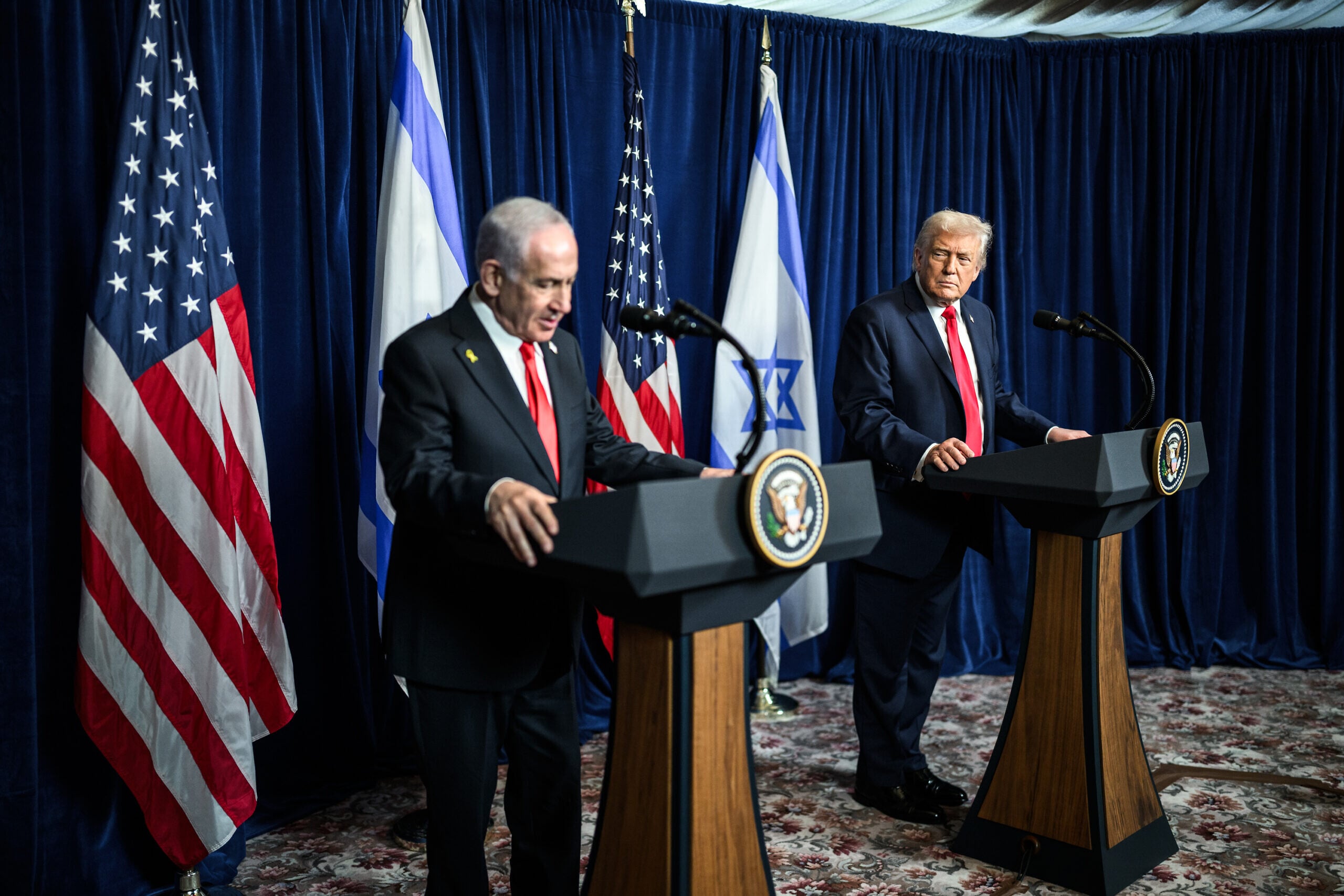
Regarding his relationship with Netanyahu, he stated emphatically, “I don’t think it can be better. We just won a big war together.”
Asked by JNS to describe the relationship, Trump said, “Look, he’s a wartime prime minister. He’s done a phenomenal job. He’s taken Israel through a very dangerous period of trauma.”
The president continued, saying that “Israel, with other people, might not exist right now. If you want to know the truth, that’s a pretty big statement. But it’s true. I feel that if you had the wrong prime minister, Israel right now would not exist because they were met with a force the likes of which very few countries could have handled. And we worked together, and we were extremely victorious, to put it mildly.”
Pressed further by other journalists, Trump stated, “I just want to say that it’s very important who the prime minister and president of Israel is,” adding, “the relationship’s been extraordinary. Bibi’s a strong man. He can be very difficult on occasion, but you need a strong man. If you had a weak man, you wouldn’t have Israel right now. Israel would have been … Israel with most other leaders would not exist today. They would not exist, and now they’re stronger than ever.”
Trump recently sent a letter to Israeli President Isaac Herzog, imploring him to pardon Netanyahu and put the unraveling corruption cases that have spanned more than five years to bed once and for all.
Asked whether he believes that Herzog will do so, Trump replied: “A pardon? I think he will. How do you not? He’s a wartime prime minister who’s a hero. How do you not give a pardon? I think it’s a very hard thing not to do it. I spoke to the president, and he tells me it’s on its way.”
From his public statements and his pardon request, it is clear that not only does Trump want to make up for the unfriendly behavior of his predecessors, but that he hopes Netanyahu will win in the upcoming 2026 elections.
For Netanyahu, he and Israel have never had a friend as close as Trump. And for all that the president has done to strengthen the Jewish state, Netanyahu announced that Israel will confer upon him the exalted Israel Prize. It will be the first time in the award’s history that it goes to someone who is not an Israeli.
In speaking of their relationship, Netanyahu stated, “I’ll say it again and again and again. We’ve never had a friend by President Trump in the White House. It’s not even close. And I think you can judge that not really by the frequency of our meetings, but by the content and the intensity. I think Israel is very blessed to have President Trump leading the United States, and I’ll say leading the free world at this time.”
With all of the competing interests at play, it is impressive how Netanyahu has remained so close to Trump, and how strong an ally Trump has been to the Jewish state.
For Israel, the stakes couldn’t be any higher. And it is remarkable how Netanyahu continues to align forces with the president and his administration—not only to aid Israel’s interests but to consistently prove to Trump that it is in America’s interest as well.
And for Israel to project its strength in a dangerous region, it is critical that on the key security issues, it appears that there is no daylight between the Jewish state and the United States of America.
Alex Traiman is the CEO and Jerusalem bureau chief of the Jewish News Syndicate (JNS)
and host of “Jerusalem Minute.” A seasoned Israeli journalist,
documentary filmmaker and startup consultant, he is an expert on Israeli
politics and U.S.-Israel relations. He has interviewed top political
figures, including Israeli leaders, U.S. senators and national security
officials with insights featured on major networks like BBC, Bloomberg, CBS, NBC, Fox and Newsmax. A former NCAA champion fencer and Yeshiva University Sports Hall of Fame member, he made aliyah in 2004, and lives in Jerusalem with his wife and five children.
Source: https://www.jns.org/deciphering-the-multi-layered-trump-and-netanyahu-meeting-at-mar-a-lago/

No comments:
Post a Comment