Saturday, May 30, 2026

After two hours of talks: Trump exits Situation Room with no decision on Iran deal - Elad Benari


by Elad Benari

Trump holds a two-hour Situation Room meeting on an Iran deal, but has yet to reach a decision, according to The New York Times.


Donald Trump
Donald Trump                                                              White House Photo by Daniel Torok


US President Donald Trump’s meeting in the Situation Room to discuss a potential deal with Iran lasted about two hours, but the president did not reach a decision on any new deal, The New York Times reported Friday, citing a senior administration official who spoke on condition of anonymity.

The official stressed that the Trump administration believes it is close to an agreement but there are still certain matters being debated including the unfreezing of funds for the Iranians.

Trump announced earlier, in a post on Truth Social, that he was entering the Situation Room for a final determination on whether to strike a deal with Iran.

Trump also outlined what a deal must look like, writing, “Iran must agree that they will never have a Nuclear Weapon or Bomb. The Hormuz Strait must be immediately open, no tolls, for unrestricted shipping traffic, in both directions. All water mines (bombs), if any, will be terminated (we have removed, through detonation, numerous such mines with our great underwater mine sweepers."

He added, “Iran will complete the immediate removal and/or detonation of any mines that are left, which will not be many!). Ships caught in the Strait due to our amazing and unprecedented Naval Blockade, which will now be lifted, may start the process of ‘heading home!’"

Trump continued, “The enriched material, sometimes referred to as ‘Nuclear Dust,’ which is buried deep underground with virtually collapsed mountains, caused by our powerful B2 Bomber attack 11 months ago, sitting on top of it, will be unearthed by the United States (which, it is agreed, is the only Country, along with China, with the mechanical capability of doing so!), in close coordination and conjunction with the Islamic Republic of Iran, plus the International Atomic Energy Agency, and DESTROYED. No money will be exchanged, until further notice. Other items, of far less importance, have been agreed to."

Iran’s Fars news agency, citing informed sources, subsequently reported that the latest comments by Trump about a potential deal were a “mixture of truth and lies."

“Trump claimed that Iran was obligated to open the Strait of Hormuz without tolls, even though no such clause appears in the text of the agreement," the sources told Fars.

Responding to Trump’s assertion that the US and Iran would coordinate on destroying Iran’s enriched uranium, the agency said, “Well-informed sources emphasized that not only does this not appear in the memorandum of understanding, but this claim is fundamentally baseless."


Elad Benari

Source: https://www.israelnationalnews.com/news/427827

Follow Middle East and Terrorism on Twitter

Hegseth: Trump will conclude a ‘great deal’ with Iran, or it will face the War Department - JNS


by JNS

“Only one president was willing to lay it out on the line and ensure after 47 years that Iran is not capable of having a nuclear weapon,” said the U.S. secretary of defense.


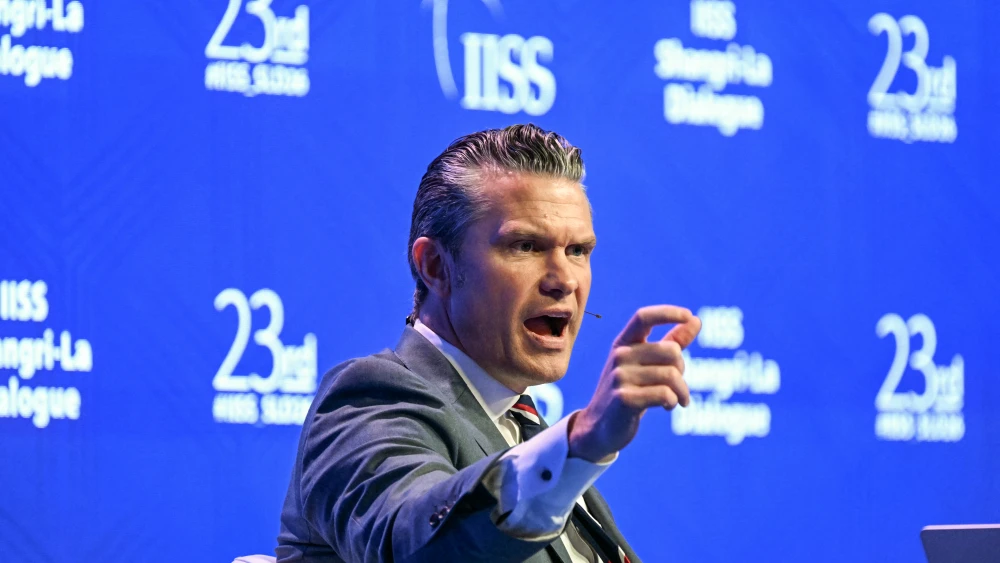
U.S. Secretary of Defense Pete Hegseth speaks during a plenary session of the 23rd Shangri-La Dialogue summit in Singapore on May 30, 2026. Photo by Jam Sta Rosa/AFP via Getty Images.


U.S. Secretary of Defense Pete Hegseth reiterated on Saturday that the Trump administration will only conclude a “great deal” with Iran and warned that failure to reach such an agreement could lead to renewed military action.

“Any deal that the president is willing to make, he’s only going to make it if he believes it’s a great deal for our country and the security of the world,” Hegseth said.

“Only one president was willing to lay it out on the line and ensure after 47 years that Iran is not capable of having a nuclear weapon,” he continued. “Those goalposts haven’t shifted at all, which is the expectation of the American people and what we’ve stated to Iran.

“So, in the middle of negotiations, the closer they come to that reality—both now and into the future—the closer we’re going to get to that kind of a deal,” added Hegseth.

“They can either do this now through a deal, and we think we’re in a good place to make that deal, or they can deal with the War Department. And we are prepared—we’re postured even stronger today than we were on day one—to address it that way if we have to. But he [President Trump] would prefer not to.

“Iran knows very, very clearly what our expectations are, and that’s on the negotiating team to deliver. They’re coming in our direction; the talks have been productive. I think they know where it needs to go, and I’m quite confident with our president,” he said.

President Donald Trump stated on Friday that he was lifting the U.S. naval blockade on Iran and that he was meeting in the White House Situation Room to “make a final determination” on an agreement with the Islamic Republic.

“Iran must agree that they will never have a nuclear weapon or Bomb,” the president stated on Friday. “The Hormuz Strait must be immediately open, no tolls, for unrestricted shipping traffic, in both directions.”

The Islamic Republic must remove all of the mines in the strait beyond the “numerous” ones that the United States hasn’t already removed “with our great underwater mine sweepers,” Trump said.

He added that the “enriched material, sometimes referred to as ‘nuclear dust,’ which is buried deep underground with virtually collapsed mountains, caused by our powerful B2 bomber attack 11 months ago, sitting on top of it, will be unearthed by the United States,” which, he said, “it is agreed, is the only country, along with China, with the mechanical capability of doing so, in close coordination and conjunction with the Islamic Republic of Iran, plus the International Atomic Energy Agency, and destroyed.”


JNS

Source: https://www.jns.org/news/u-s-news/hegseth-trump-will-conclude-a-great-deal-with-iran-or-it-will-face-the-war-department

Follow Middle East and Terrorism on Twitter

JNS EXCLUSIVE: House panel says it uncovered new funding links between Biden admin and anti-Netanyahu, left-wing groups - Andrew Bernard


by Andrew Bernard

“Our government is sending American tax dollars to NGOs that are undermining our ally—our best ally—the State of Israel,” Jim Jordan, chair of the House Judiciary Committee, told JNS.


Jim Jordan
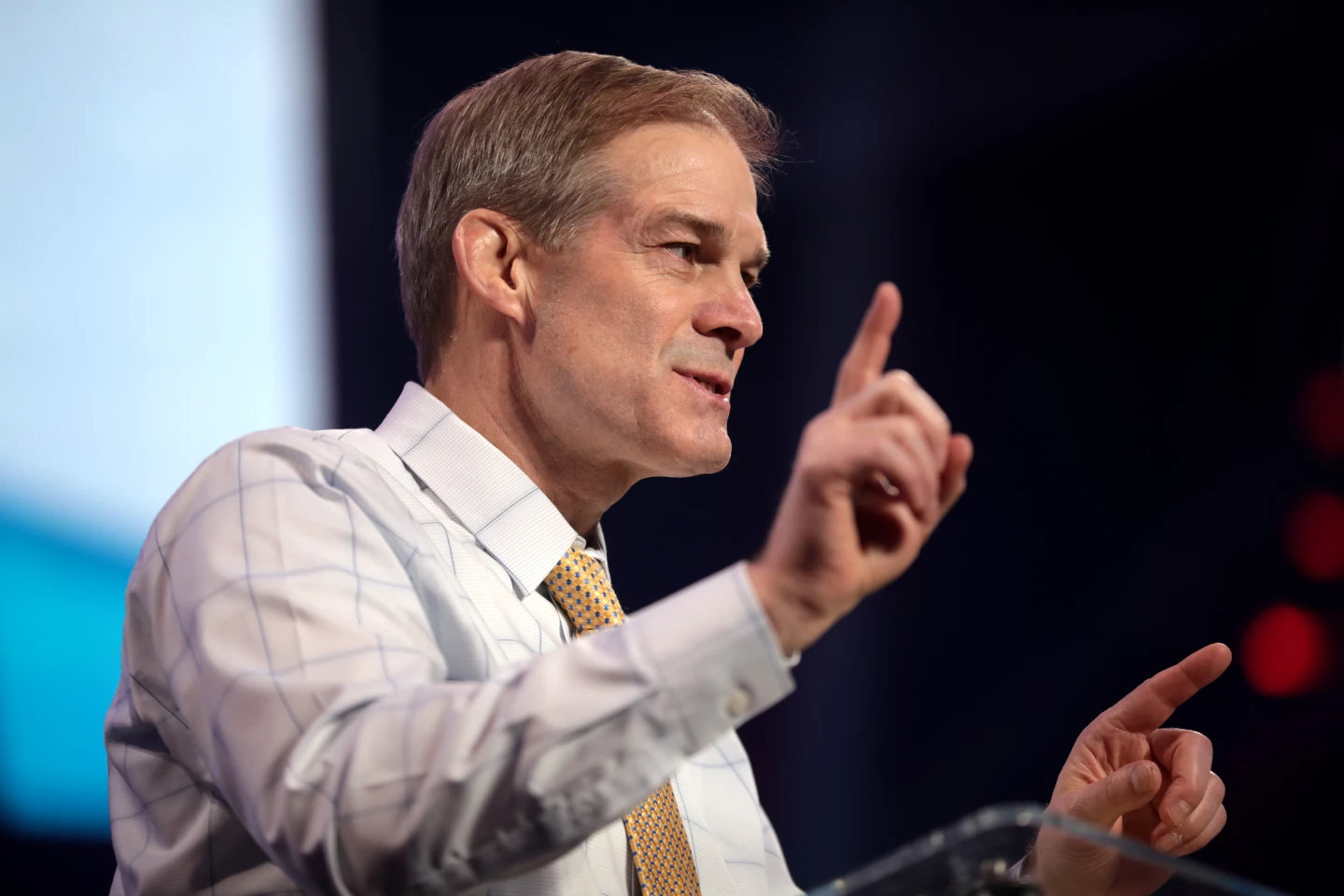
Rep. Jim Jordan (R-Ohio), chairman of the House Judiciary Committee, speaks during the second part of the House Oversight Committee hearing “Oversight of Fraud and Misuse of Federal Funds in Minnesota,” on Capitol Hill in Washington, D.C., on March 4, 2026. Credit: Jim Watson/AFP via Getty Images.

The House Judiciary Committee said that it has uncovered new funding links between the Biden administration and left-wing groups that oppose the Israeli government, as well as groups with ties to terrorist organizations

A May 29 committee memorandum, which JNS obtained exclusively and which was addressed to committee members from the Republican-led committee staff, addresses “new information about the Biden-Harris administration helping to fund protests against the Netanyahu government.”

It alleges that U.S.-based organizations, including the Rockefeller Brothers Fund and the Tides Network, “provided over $5 million to groups that funded radical anti-Israel protests in the U.S. and Israel, and supported multiple terrorist-linked NGOs.”

Rep. Jim Jordan (R-Ohio), chairman of the committee, told JNS that the funding from the U.S. Agency for International Development, the State Department and other federal agencies raised questions about the misuse of federal dollars.

“You’re taking taxpayer money, you’re supposed to be doing good work,” the congressman said. “Why in the heck is it going to groups that are pro-Hamas?”

“Our government is sending American tax dollars to NGOs that are undermining our ally—our best ally—the State of Israel,” he told JNS. “That’s not how it’s supposed to work.”

Jim Jordan
Rep. Jim Jordan (R-Ohio), chairman of the House Judiciary Committee, speaks at AmericaFest at the Phoenix Convention Center in Phoenix, Ariz., Dec. 19, 2021. Credit: Gage Skidmore via Creative Commons.

The memo provides new details, after the committee released the initial findings of its investigation in 2025.

It describes a web of financial connections, in which the Biden administration “provided grant funds to groups that contributed directly and indirectly to the judicial reform protests that sought to undermine the Israeli government.”

“Documents suggest that the Jewish Communal Fund, and its grantees, Rockefeller Philanthropy Advisors and PEF Israel Endowment Funds, may have violated their tax-exempt status by funding groups engaged in radical anti-government campaigns in Israel,” the memo says.

“Another U.S. government grantee, Abraham Initiatives, similarly led anti-government protests in Israel and, according to a 2023 audit, the organization failed to comply with anti-terrorism procedures in a USAID-funded program,” per the memo.

Between 2016 and 2022, the Tides Network received $30 million from USAID, while Abraham Initiatives received about $2.05 million in government funds between 2018 and 2021.

Some of the money that the Biden administration provided to these groups was intended for projects unrelated to Israel.

In the case of Tides, the $30 million went to “a civil development program in regions of Africa, Asia, Latin America and the Pacific.”

Ben-Gvir Jim Jordan
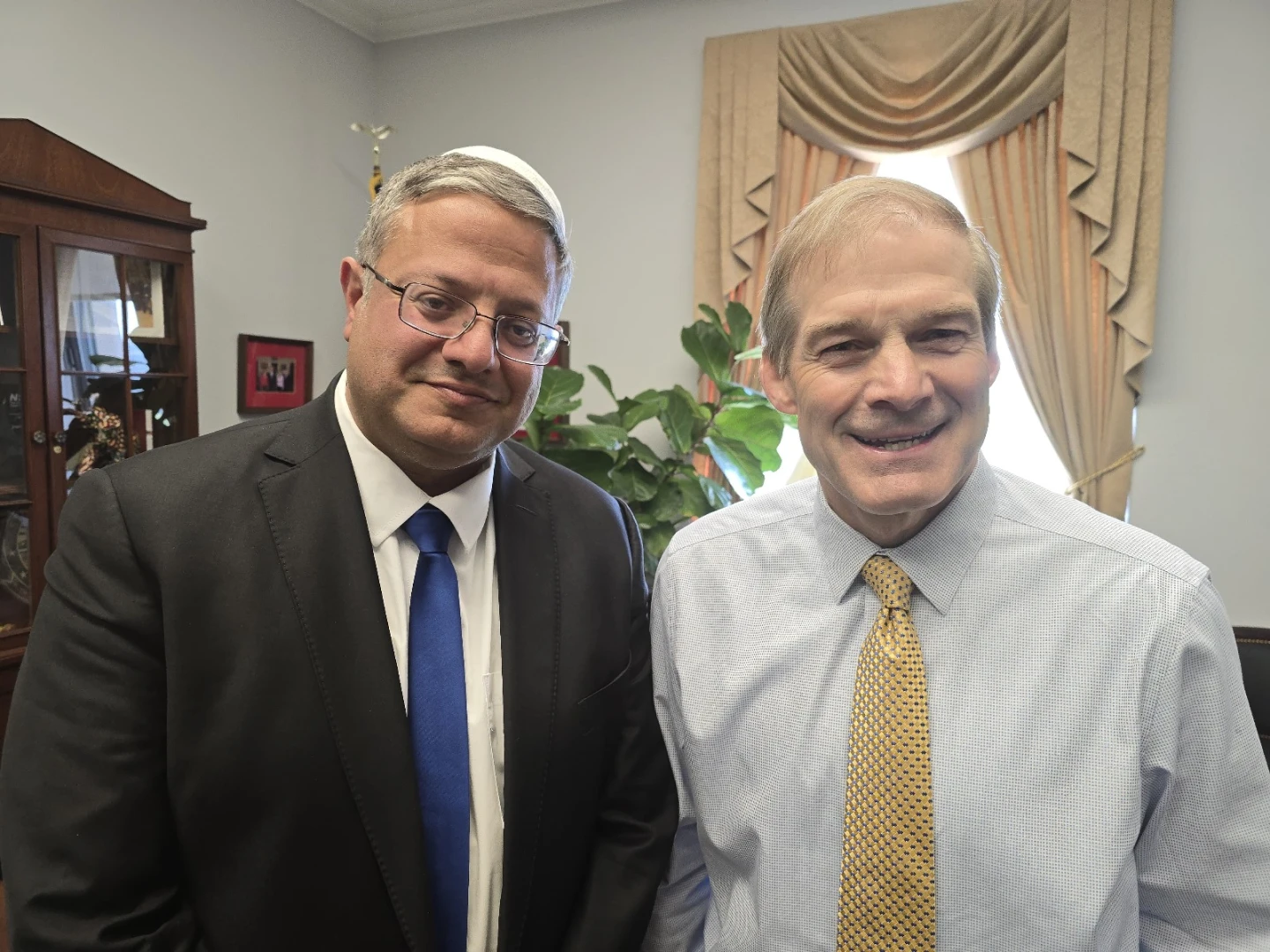
Israeli National Security Minister Itamar Ben-Gvir meets with Rep. Jim Jordan (R-Ohio), chairman of the House Judiciary Committee, in April 2025. Credit: Office of the Israeli national security minister.

The report argues that money intended for one project freed these organizations to fund activism in Israel to oppose the judicial reform efforts of the Netanyahu government.

“Money is fungible,” Jordan told JNS. “It’s tough to track exactly, but it looks like some of this money was also then being run through one or two NGOs, winding up on college campuses to promote all the crazy antisemitic, anti-Israel stuff on campuses.”

“Even worse yet, it looks like some of it maybe even funded organizations that had links to terrorism,” he said.

In one example, Rockefeller Philanthropy Advisors (RPA) “received millions of dollars in grants from the Biden-Harris Administration’s USAID, State Department and Department of Defense,” the committee memo says.

RPA then donated $557,000 to its “affiliate and partner,” the Rockefeller Brothers Fund (RBF), per the memo.

RBF, in turn, has “donated $190,000 to Defense for Children International Palestine, an Israel-designated terrorist organization with ties to the U.S.-designated terrorist organization, the Popular Front for the Liberation of Palestine,” according to the memo.

RBF has also made donations to Jewish Voice for Peace, one of the main organizers of anti-Israel demonstrations in the United States, and to Alliance for Global Justice, a U.S.-based non-profit that the committee alleges has provided funding to the Samidoun Palestinian Prisoner Solidarity Network.

The Biden administration designated Samidoun as a front for the PFLP in 2024.

JNS sought comment from all nine of the organizations that the committee Republicans describe in their report.

Jordan told JNS that the layers of funding increased the complexity of the investigation and made it difficult to ascribe conclusive intent to the Biden administration for letting money go to groups linked to terrorists.

“I don’t know that we have any evidence that suggests that they knew they were funding some organization that was actively giving dollars to groups associated with terrorism,” Jordan said.

“It’s just today’s left, you see this all the time,” he told JNS. “It’s always against Israel, and always this pro-Hamas, pro-Gaza approach to things. I think it was probably that.”

Through defunding USAID and conducting oversight investigations, the Trump administration and Republicans intend to prevent federal money from being used to undermine Israel, Jordan told JNS.

“It’s important that this kind of stuff is not going on any longer,” the congressman said. “That we make sure it’s not going to happen in the future.” 


Andrew Bernard

Source:https://www.jns.org/news/u-s-news/exclusive-house-panel-says-it-uncovered-new-funding-links-between-biden-admin-and-anti-netanyahu-left-wing-groups

Follow Middle East and Terrorism on Twitter

IDF expanding operations in southern Lebanon - Israel National News


by Israel National News

Special operation north of the Litani River, planned for over a year, aims to secure Metula and other Galilee Panhandle communities.


IDF forces in Lebanon
IDF forces in Lebanon                                                                        IDF spokesperson


The IDF’s ground maneuver in southern Lebanon is undergoing a dramatic expansion.

Kan News reported that the special operation, whose planning began more than a year ago, includes activity north of the Litani River.

As part of the operation, the IDF is capturing areas, has built at least five bridges over the Litani, and has opened routes using engineering forces through the Lebanese thicket and among boulders, allowing many forces to cross to the other side of the river.

The goal of the operation is to remove the direct anti-tank missile threat to communities in the Galilee Panhandle, especially Metula, since the area toward which IDF forces are advancing dominates the town, allowing both observation and fire.

The report also stated that the IDF tried to carry out this operation two months ago with the 98th Division, but the soldiers encountered Hezbollah ambushes, the plans were not sufficiently developed, and Northern Command chief Maj. Gen. Rafi Milo ordered the operation canceled and transferred to the 36th Division, which planned it anew.


Israel National News

Source: https://www.israelnationalnews.com/news/427834

Follow Middle East and Terrorism on Twitter

Hezbollah launches around 30 rockets towards northern Israel - Israel National News


by Israel National News

Rocket hits commercial center in Kiryat Shmona, beach near Nahariya, after Hezbollah terror group launches multiple barrages towards northern Israel.


Interception in northern Israel (illustrative)
Interception in northern Israel (illustrative)                                                 Dov Ber Hechtman


Dozens of rockets were fired from Lebanon towards northern Israel on Saturday, including one that was launched toward the Meron area for the first time, and another that hit a commercial center in Kiryat Shmona.

Sirens warning of rocket fire were also activated in Nahariya for the first time in three weeks - and later sounded again in Kiryat Shmona and, for the first time in more than a month, in Karmiel as well.

Earlier, the IDF stated: "The IDF is preparing for the possibility of fire from Lebanon, specifically toward northern Israel, following the advancement of IDF operations in southern Lebanon, and in accordance with the situational assessment."

"The IDF emphasizes that, at this stage, the public should remain vigilant, act responsibly while continuing to adhere to the Home Front Command’s protective guidelines. As of now, there is no change in Home Front Command guidelines. Should there be any change, the IDF will update the public in an orderly manner."

The IDF Spokesperson stated shortly after the sirens that a rocket launched from Lebanon had been intercepted, while another exploded in an open area. Following the sirens in Nahariya and the surrounding area, several additional rockets were intercepted, while others exploded in open areas.

The rockets launched on Saturday evening toward Kiryat Shmona and Karmiel were intercepted. Earlier, at around 3:30 p.m., continuous sirens sounded in the Western Galilee for ten straight minutes due to concern of a UAV infiltration.

In total, since midnight Saturday, there have been more than 25 launches from Lebanon toward Israeli territory. All were intercepted or exploded in open areas, except for the rocket impact overnight in Kiryat Shmona and the UAV impact in a military area in Shomera, with no injuries reported.


Israel National News

Source: https://www.israelnationalnews.com/news/427835

Follow Middle East and Terrorism on Twitter

Trump scores 30 out of 30 on cognitive assessment, looks 14 years younger than he is: physical - Greg Piper


by Greg Piper

"AI-enhanced" electrocardiogram shows Trump far younger than his "chronological" age, White House physician says. But he's put on 14 pounds in a year and needs to keep losing weight.


President Trump received a largely clean bill of health at his annual physical at Walter Reed National Military Medical Center, including a "normal" score of 30 out of 30 on his cognitive assessment, according to a White House memo attributed to his physician, undermining liberal speculation of a President Biden-like mental decline.

Physician to the President Sean Barbabella's May 29 memo, which unlike his memo for Trump's annual physical in April 2025 does not appear to have been posted on the White House website, only noted two deficiencies.

The president has "slight lower leg swelling," which has "improved" from last year when he was diagnosed with chronic venous insufficiency, and he shows "bruising" on his hands, which is consistent with "frequent handshaking in the setting of aspirin use for cardiovascular prevention," Barbabella wrote.

The physician also noted "scarring of the right ear consistent with prior gunshot injury," the near-assassination of then-candidate Donald Trump in 2024.

Trump was also estimated to be "approximately 14 years younger than his chronological age" as determined by an "AI-enhanced" electrocardiogram analysis. Most other findings were labeled "normal."

Barbabella summarized that Trump "remains in excellent health," with his "demanding daily schedule" supporting his "overall well-being" and "excellent" cognitive and physical performance.

"Preventive counseling was provided, including guidance on diet, recommendation to take a low-dose aspirin, increased physical activity, and continued weight loss," the preventive care summary says. Trump has gained 14 pounds since his April 2025 physical, from the memo posted on the White House website.

"Everything checked out PERFECTLY," Trump wrote on Truth Social after the visit.

Some users on X trashed Barbabella for allegedly lying about Trump's condition, hoping for or predicting his imprisonment. 


Greg Piper

Source: https://justthenews.com/government/white-house/trump-scores-30-out-30-cognitive-assessment-looks-14-years-younger-he

Follow Middle East and Terrorism on Twitter

The Muslim Brotherhood's War to Destroy the United States from Within: Part I - Robert Williams


by Robert Williams

"What the Islamic movement is doing... is they are waging war, total war. Again, not primarily violent, but total war: Counter-intelligence, espionage, subversion, economic warfare... in order to overthrow the government and replace it with an Islamic state under Sharia. Not only is that what they teach their children. It's what Islamic law requires." — John Guandolo, National Security Consultant, former FBI agent, April 2026.


  • "The Ikhwan [Muslim Brothers] must understand that their work in America is a kind of grand Jihad in eliminating and destroying the Western civilization from within and 'sabotaging' its miserable house by their hands and the hands of the believers so that it is eliminated and God's religion is made victorious over all other religions." — From the Muslim Brotherhood's 1991 "Explanatory Memorandum on the General Strategic Goal for the Group in North America."

  • "What the Islamic movement is doing... is they are waging war, total war. Again, not primarily violent, but total war: Counter-intelligence, espionage, subversion, economic warfare... in order to overthrow the government and replace it with an Islamic state under Sharia. Not only is that what they teach their children. It's what Islamic law requires." — John Guandolo, National Security Consultant, former FBI agent, April 2026.

  • In Texas, the jihad to transform the US and Western civilization prompted the state's Governor Greg Abbott, last November, to designate the Muslim Brotherhood and the Council on American-Islamic Relations (CAIR) as foreign terrorist organizations and transnational criminal organizations.

  • "The Muslim Brotherhood and CAIR have long made their goals clear: to forcibly impose Sharia law and establish Islam's 'mastership of the world.' The actions taken by the Muslim Brotherhood and CAIR to support terrorism across the globe and subvert our laws through violence, intimidation, and harassment are unacceptable... These radical extremists are not welcome in our state and are now prohibited from acquiring any real property interest in Texas." — Texas Governor Greg Abbott, November 18, 2025.

  • The man behind the EPIC/Meadow project in Texas is Islamic scholar Yasir Qadhi, who is Chairman of the Fiqh Council of North America, which is named in the Brotherhood's "Explanatory Memorandum" as one of the organizations involved in the "civilizational jihad"/grand jihad strategy in North America.

  • "[O]n every major college campus in Texas, you've got the Muslim Brotherhood's Muslim Student Association.... You have Hamas doing business as Students for Justice in Palestine on college campuses... kind of under the umbrella of American Muslims for Palestine...You have... dozens of properties in Texas owned by the North American Islamic Trust [NAIT], which is not only a Muslim Brotherhood organization, but in the largest terrorism financing trial in American history, US vs Holyland Foundation trial, which was adjudicated in Dallas, Texas in 2008. NAIT was not only identified as a Muslim Brotherhood organization, but an organization that directly funds Hamas organizations and leaders. And it's operating all over Texas. You have the Islamic Society of North America, also identified in that trial as a Muslim Brotherhood organization directly funding Hamas, operating in Texas with subsidiaries... and the list goes on... numerous Islamic schools... and now you've got right here in Garland a massive Quranic academy... So it's just... everywhere. And Yaser Qhadi, who's running the Plano Islamic Center, is not only a senior Muslim Brotherhood jurist. He is the senior Muslim Brotherhood jurist. He's the chairman of the Fiqh Council of North America, which is the Muslim Brotherhood's legal entity that oversees the entire Islamic movement in North America...." — John Guandolo, April 2026.

  • Qadhi, of course, is not the only Brotherhood operative in Texas creating parallel Islamic societies. According to RAIR Foundation: "Longtime Muslim Brotherhood operative Main Al Qudah is building a $70–80 million, 30-acre fully autonomous Sharia-adherent Islamic enclave in rural Katy, Texas — a self-sustaining parallel society featuring a grand mosque, K-12 school, Islamic university, apartments, health clinic, sports fields, and its own strip mall, while openly using Texas taxpayer school voucher funds to raise the next generation of Muslims from cradle to grave with almost no contact with the non-Muslim world outside."

The Muslim Brotherhood is actually hard at work establishing an Islamic state based on sharia law in the United States. They have, in fact, been at it for decades. Pictured: The logo of the Muslim Brotherhood.

In March, US Director of National Intelligence Tulsi Gabbard warned that "the spread of Islamist ideology, in some cases led by individuals and organizations associated with the Muslim Brotherhood" poses a threat as it seeks to establish "an Islamist caliphate which governs based on Sharia." Gabbard went on to say that "there are increasing examples of this in various European countries."

Not quite. The Muslim Brotherhood is actually hard at work establishing an Islamic state based on sharia law in the United States. They have, in fact, been at it for decades. The 1991 Muslim Brotherhood "Explanatory Memorandum on the General Strategic Goal for the Group in North America," provides a detailed blueprint of how to destroy the US and Canada. According to the memorandum:

"The Ikhwan [Muslim Brothers] must understand that their work in America is a kind of grand Jihad in eliminating and destroying the Western civilization from within and 'sabotaging' its miserable house by their hands and the hands of the believers so that it is eliminated and God's religion is made victorious over all other religions... It is a Muslim's destiny to perform Jihad and work wherever he is and wherever he lands until the final hour comes."

Even more forthrightly, the Muslim Brotherhood blueprint is part of a 100-year plan to take over the world as a whole. A document titled "The Muslim Brotherhood Project: Towards A Worldwide Strategy for Islamic Policy" (known as "The Project") was discovered during a 2001 police raid by Swiss authorities on the home of the late Youssef Nada, who was a prominent Brotherhood operative in Switzerland.

The Institute for the Study of Global Antisemitism and Policy (ISGAP) wrote in its recent report, "The Muslim Brotherhood's Strategic Entryism into the United States: A Systemic Analysis":

"Rather than relying on rapid mobilization or revolutionary confrontation, the Brotherhood envisions societal transformation as the cumulative result of incremental influence across education, media, law, civil society, and political structures.... The 100-year horizon embedded in 'The Project' underscores the Brotherhood's belief that durable transformation occurs not through disruption but through the patient, deliberate reconfiguration of society from within."

John Guandolo, a former FBI agent who educates lawmakers and the public about the Brotherhood's operations in the US, put it even more bluntly in a recent interview:

"What the Islamic movement is doing... is they are waging war, total war. Again, not primarily violent, but total war: Counter-intelligence, espionage, subversion, economic warfare... in order to overthrow the government and replace it with an Islamic state under Sharia. Not only is that what they teach their children. It's what Islamic law requires."

Texas is a particularly blistering example of the extent to which the Muslim Brotherhood has been successful in pushing civilizational jihad, according to John Guandolo.

"Texas is already in a 'pre‑kinetic' phase of jihad, with an expanding network of mosques, Islamic schools, and Muslim Brotherhood‑linked organizations... working to subvert American law and replace it with Sharia."

The founder of the Muslim Brotherhood, Hassan al-Banna, stipulated:

"Make every effort for the establishment of educational, social, economic and scientific institutions and the establishment of mosques, schools, clinics, shelters, clubs..."

In Texas, the jihad to transform the US and Western civilization prompted the state's Governor Greg Abbott, last November, to designate the Muslim Brotherhood and the Council on American-Islamic Relations (CAIR) as foreign terrorist organizations and transnational criminal organizations.

"The Muslim Brotherhood and CAIR have long made their goals clear: to forcibly impose Sharia law and establish Islam's 'mastership of the world,'" Abbott said.

"The actions taken by the Muslim Brotherhood and CAIR to support terrorism across the globe and subvert our laws through violence, intimidation, and harassment are unacceptable... These radical extremists are not welcome in our state and are now prohibited from acquiring any real property interest in Texas."

Proponents of the Muslim Brotherhood in Texas are aggressively trying to acquire real estate to establish Islamic enclaves such as EPIC city, recently rebranded as "The Meadow". The Meadow is to be an exclusively Muslim residential enclave, encompassing more than 1,000 homes, a new mosque, Muslim schools, sports facilities and Muslim communal institutions. So far, Texas has been successful in putting a halt to the project, however numerous lawsuits are forging ahead to push the project through.

The Texas branch of CAIR follows the Brotherhood playbook of deflecting scrutiny by claiming opposition to the project constitutes an "Islamophobic witch hunt."

The man behind the EPIC/Meadow project in Texas is Islamic scholar Yasir Qadhi, who is Chairman of the Fiqh Council of North America, which is named in the Brotherhood's "Explanatory Memorandum" as one of the organizations involved in the "civilizational jihad"/grand jihad strategy in North America. In short, Qadhi is about as Muslim Brotherhood as it gets.

Qadhi, according to John Guandolo, prior to targeting Texas, was a Muslim Brotherhood operative in Tennessee:

"I knew him from being in the FBI because he's a senior Muslim Brotherhood leader, now one of the most prominent in North America, but was clearly an up and comer... back in 2004 or 2005.... Then he became the scholar, Islamic scholar at the Memphis Islamic Center in Tennessee. And... the Muslim Brotherhood made Tennessee their primary target because from their perspective they viewed Tennessee as the buckle of the Bible belt."

When Qadhi moved in 2019 to Texas, Guandolo noted,

"They started ramping up their activities here... you have just in Dallas alone over 350 halal restaurants. We have now as of last week 314 mosques across Texas... on every major college campus in Texas, you've got the Muslim Brotherhood's Muslim Student Association.... You've got Hamas doing business as CAIR in Texas... You have Hamas doing business as EMgage operating in Texas. You have Hamas doing business as Students for Justice in Palestine on college campuses... kind of under the umbrella of American Muslims for Palestine...You have... dozens of properties in Texas owned by the North American Islamic Trust [NAIT], which is not only a Muslim Brotherhood organization, but in the largest terrorism financing trial in American history, US vs Holyland Foundation trial, which was adjudicated in Dallas, Texas in 2008. NAIT was not only identified as a Muslim Brotherhood organization, but an organization that directly funds Hamas organizations and leaders. And it's operating all over Texas. You have the Islamic Society of North America, also identified in that trial as a Muslim Brotherhood organization directly funding Hamas, operating in Texas with subsidiaries...and the list goes on... numerous Islamic schools... and now you've got right here in Garland a massive Quranic academy... So it's just... everywhere. And Yaser Qhadi, who's running the Plano Islamic Center, is not only a senior Muslim Brotherhood jurist. He is the senior Muslim Brotherhood jurist. He's the chairman of the Fiqh Council of North America, which is the Muslim Brotherhood's legal entity that oversees the entire Islamic movement in North America to ensure that everything they're doing is compliant with Sharia."

Qadhi, of course, is not the only Brotherhood operative in Texas creating parallel Islamic societies. According to RAIR Foundation:

"Longtime Muslim Brotherhood operative Main Al Qudah is building a $70–80 million, 30-acre fully autonomous Sharia-adherent Islamic enclave in rural Katy, Texas — a self-sustaining parallel society featuring a grand mosque, K-12 school, Islamic university, apartments, health clinic, sports fields, and its own strip mall, while openly using Texas taxpayer school voucher funds to raise the next generation of Muslims from cradle to grave with almost no contact with the non-Muslim world outside."

Meanwhile, Islamic associations are now visiting American schools, seeking to indoctrinate American kids with sharia law – an effort at proselytizing known as dawa. At Wylie East High School in Texas, an Islamic group called "Why Islam, " without approval, set up a booth at the front of the school during school hours and began courting students. The "Why Islam" group is an official outreach project run by the Islamic Circle of North America (ICNA), widely regarded as a Muslim Brotherhood group.

"They were giving out hijabs to girls throughout the high school, and they were giving out Qurans, and they also had pamphlets about Sharia law," Marco Hunter-Lopez, president of the High School Republicans at Wylie East High School said in videos that raised the issue of the Muslim Brotherhood outreach at his school.

In February 2025, Wylie East Principal Tiffany Doolan reportedly posted an image on Instagram of herself wearing a hijab on campus as part of last year's World Hijab Day celebration organized by MSA students. "I LOVED this experience!" she wrote.


Robert Williams is based in the United States.

Source: https://www.gatestoneinstitute.org/22542/muslim-brotherhood-texas

Follow Middle East and Terrorism on Twitter

The Myth of Slavery as an Engine of Growth - Lipton Matthews


by Lipton Matthews

Slavery enriched slaveholders but not societies, which is why slave economies consistently lagged in growth, innovation, and industrial development across history.


Over the past two decades, the New History of Capitalism has transformed debates about Western development by restoring slavery to the center of the story of modern economic growth. A burgeoning literature now contends that slavery was not simply a moral atrocity intertwined with capitalism but the essential engine that powered the rise of the Atlantic economy itself. According to this interpretation, slave labor generated the capital accumulation, commodity production, and financial sophistication that made the modern West rich. When British politician Kemi Badenoch publicly opposed this argument, critics accused her of minimizing slavery’s economic significance. Yet the central empirical difficulty with the enrichment thesis remains unresolved: if slavery is such a powerful generator of prosperity, why did societies organized around slavery remain poor for most of human history, despite slavery existing across nearly every major civilization?

At the heart of the argument lies a subtle but consequential confusion between entanglement and causation. Western economies undeniably became deeply entangled with slavery, but this does not establish that slavery created Western prosperity. Long before the Atlantic slave trade reached its height, countries such as England and the Netherlands had already developed sophisticated commercial institutions, secure property rights, advanced legal systems, and increasingly complex financial markets. These institutional advantages enabled slavery to become integrated into Atlantic commerce on an unprecedented scale. Slave traders could insure voyages, mortgage slaves, mobilize international credit networks, and circulate slave-produced commodities through organized exchanges not because slavery created these institutions, but because those institutions already existed and were sufficiently advanced to absorb slavery into their operations.

Comparison with other slave societies makes this point even clearer. Slavery existed throughout the Arabic world, sub-Saharan Africa, and numerous Asian empires, often for longer periods than in the Atlantic world. Yet historians do not argue that those regions generated modern capitalism through slavery. Therefore, what distinguished the Atlantic economies was not slavery but the institutional environment where slavery was embedded. The Atlantic world possessed the accounting systems, insurance markets, corporate forms, and financial instruments capable of incorporating slavery into an expanding capitalist order. As one study notes, management technologies such as accounting books “were adopted by the largest slave plantations.” The significance of this observation is frequently misunderstood. It reveals the sophistication of Atlantic capitalism before slavery’s expansion rather than demonstrating that slavery spawned capitalism.

Once the debate moves away from moral narrative and toward empirical analysis, the evidence begins pointing consistently in the opposite direction from the enrichment thesis. Research examining the long-run economic consequences of slavery in the American South shows that slavery generated institutional structures that suppressed development rather than accelerated it. Counties with larger slave populations before the Civil War developed post-Emancipation systems that artificially depressed black wages, restricted labor mobility, and weakened incentives for mechanization over generations. Through Black Codes, vagrancy laws, anti-enticement provisions, and convict leasing arrangements, Southern elites preserved a pool of cheap labor whose bargaining power was systematically constrained by law and violence. Instead of fostering dynamic economic transformation, slavery locked large sections of the South into labor-intensive production patterns that delayed industrialization.

The consequences of this institutional environment were visible across agricultural development. Counties with higher historical slave ratios shifted toward crops less exposed to labor-saving technological change and away from crops where mechanization promised the greatest productivity gains. These same counties lagged substantially in tractor adoption during the mid-twentieth century, precisely when improvements in tractor design made mechanization especially productive for Southern farming. Cheap labor fundamentally altered the economic incentives facing landowners. Where labor could be artificially suppressed, investment in labor-saving machinery became less economically rational. Slavery therefore weakened one of the central drivers of modern growth: the pressure to innovate in response to labor scarcity.

Labor market evidence complements this conclusion with striking force. Counties with larger slave populations continued paying significantly lower wages to black agricultural workers well into the twentieth century, and those depressed wages were closely associated with lower rates of tractor adoption. Crucially, these disparities cannot simply be attributed to differences in skill or education. Black workers with educational backgrounds comparable to white workers still received lower wages and lower returns to additional schooling in counties with higher slave ratios. Mediation analysis further demonstrates that the effect of slavery on delayed mechanization operated overwhelmingly through this wage suppression channel. The deeper economic consequences extended far beyond agriculture itself: counties that mechanized more slowly also experienced weaker manufacturing growth and delayed structural transformation into industrial economies. Rather than serving as a foundation for development, slavery entrenched conditions that prolonged stagnation.

Approaching slavery through the lens of labor economics produces a remarkably similar conclusion. Slavery created an unusually elastic labor supply because slaves lacked the ability to leave employers, bargain over wages, or relocate in search of better opportunities. Free labor markets are constrained by labor scarcity, worker mobility, and bargaining frictions. Plantation owners faced far fewer of these limitations, allowing large-scale enterprises to expand more easily than farms dependent on free labor.

Yet the apparent efficiency of this system concealed deep developmental distortions. Because plantation agriculture did not face intense labor scarcity, entrepreneurial talent and capital flowed disproportionately into plantation management rather than manufacturing or industrial innovation. This shaped the direction of technological change. In the North, labor scarcity encouraged labor-saving inventions such as mechanical reapers and industrial machinery. In the South, innovation largely focused on increasing the productivity of coerced labor within the plantation system. As such, Southern innovations included reinforced “planters hoes” and agricultural improvements designed to maximize the output of slaves rather than reduce dependence on labor altogether. Innovation existed within the slave economy, but it evolved in ways that strengthened coercive labor systems instead of transcending them.

Similarly, the example of Brazil presents a cogent test of these claims, and one the New History of Capitalism has conspicuously failed to engage. Brazil imported more African slaves than any other country in the world, 4.9 million captives between the sixteenth and nineteenth centuries, representing 46 percent of all arrivals in the New World. Slavery in Brazil was not a peripheral or sectoral phenomenon: it pervaded every region and almost every economic activity. Slavery in nineteenth-century Brazil was so ubiquitous that between 20 and 30 percent of all households owned at least one slave, and slaves composed roughly one-third of the total population at independence in 1822. If slavery were truly the engine of modern economic growth, generating the capital, institutions, and industrial momentum the New History of Capitalism claims, Brazil should have industrialized faster and more thoroughly than almost anywhere on earth. It did not. Between 1820 and 1900, the ratio of United States to Brazilian per capita GDP widened from two to seven. Persistent economic growth only commenced in the years following emancipation in 1888.

The quantitative evidence from within Brazil supports this finding with precision. Examining the two neighboring southeastern states of Rio de Janeiro and São Paulo, Brazil’s industrial heartland, across the censuses of 1872 and 1920 reveals a consistent negative association between the share of slaves in a municipality’s population and its level of manufacturing employment. Before abolition, the slave share of the population was statistically significantly and negatively correlated with manufacturing employment, a relationship that became stronger once other factors such as geography, agricultural orientation, and access to ports were controlled for.

In 1872, Rio de Janeiro state held almost 300,000 slaves, over 37 percent of its population, while São Paulo, with half the slave population and around 19 percent of its total population enslaved, already had twice as many factory workers per capita. Following emancipation, the picture changed rapidly: municipalities that had been well-positioned for industrial development but suppressed by slavery were able to leverage immigrant labor, higher literacy rates, and coffee export revenues to industrialize quickly. The contribution of immigration to manufacturing, known from other historiography to be large, only became statistically visible after abolition, precisely because slavery had been crowding out free labor and deterring European workers who refused to compete with coerced labor.

The Brazilian cotton industry also directly undermines the claim, advanced most forcefully by Edward Baptist, that coercive violence was the primary driver of productivity gains on slave plantations. During the American Civil War, global cotton prices spiked, and Brazilian exports more than tripled almost overnight. This cotton boom took place simultaneously across provinces with very different labor regimes: in Maranhão, where slaves composed over 21 percent of the population, and in Ceará, where the slave share was below 5 percent, and agriculture was conducted “almost exclusively by free arms.” Crucially, the increase in production across these provinces was statistically indistinguishable; provinces relying on free labor performed no worse than those relying on coerced labor.

Historical records show that productivity improvements during this period were driven primarily by new seed varieties and improved ginning machinery, not by any intensification of violence or supervision. Even in the country with the world’s largest recorded slave trade, the “pushing system” that Baptist identifies as the engine of American cotton productivity has no explanatory power.

The institutional legacy in Brazil mirrors what the American South experienced. As in the post-bellum United States, Brazilian landowners deployed vagrancy laws, debt bondage arrangements, and racial prejudice against manual labor to keep former slaves in conditions of constrained employment after emancipation. The regions most dependent on slave labor, such as the Paraíba Valley in Rio de Janeiro state, where slaves had represented nearly half of plantation owners’ capital, entered prolonged stagnation after 1888, while São Paulo, which had anticipated emancipation and replaced slaves with European migrants, became the country’s industrial center and, by 1920, was responsible for over one-third of all Brazilian industrial output. The Brazilian evidence therefore does not merely corroborate the findings from the American South; it extends and strengthens them. It demonstrates that slavery’s retarding effects on industrialization were not an American peculiarity but a systematic feature of slave-based economies wherever they existed and were most severe precisely where slavery was most entrenched.

However, perhaps the clearest rebuttal against slavery as a source of national prosperity comes from examples of contemporary slavery. If slavery genuinely promoted economic development, countries with higher levels of modern slavery should display stronger economic performance. The evidence instead shows the reverse. Cross-national analysis covering 162 countries demonstrates that higher slavery prevalence is consistently associated with lower Human Development Index scores, lower GDP per capita, reduced access to financial services, and greater economic inequality. The relationship remains statistically significant even after controlling for geography, literacy, and political institutions. The study estimates that a one percentage point increase in slavery prevalence is associated with an average decline of roughly $52.6 in GDP per capita; this translates into a $526 decrease in GDP per capita, thereby indicating how even relatively small increases in coercive labor correspond with measurable reductions in national economic output. Rather than functioning as a motor of development, slavery appears closely associated with economic stagnation and social underdevelopment.

Part of the explanation lies in the fundamentally exclusionary character of slavery itself. Slaves cannot freely accumulate assets, invest in education, access financial institutions, or participate meaningfully in labor markets. Coercion suppresses human capital formation while concentrating economic gains within a narrow elite. The study describes slave populations as “an untapped economic resource” because slavery systematically denies individuals access to education, political participation, and economic self-direction. Instead of broadening economic participation, slavery narrows it, weakening the foundations upon which long-run development depends.

Contemporary slavery also exposes a critical distinction between private profitability and national prosperity. Slavery can certainly generate large profits for slaveholders themselves. The International Labour Organization estimates that slavery-derived profits amount to roughly $44 billion annually worldwide. Yet these profits do not diffuse throughout the wider economy in the way proponents of the enrichment thesis often imply. In industries such as cocoa production, farmers using slave labor receive the same global market price as farmers employing free labor; the difference is simply that the slaveholder retains a larger profit margin because labor costs are lower. The gains remain concentrated within coercive networks rather than producing broad social prosperity.

Examples from contemporary slavery describe how extreme these private gains can become while simultaneously generating little wider economic benefit. Forced prostitution enterprises in Thailand were found to generate profit margins approaching 850 percent. Brick kilns in Pakistan using slave labor earned substantially higher profits than kilns employing paid workers. In northern India, hereditary debt bondage persists because entire families can be trapped into labor over debts amounting to only a few dollars. Yet despite these extraordinary profits for individual exploiters, the broader economies in which slavery flourishes remain characterized by inequality, underdevelopment, and weak institutional capacity.

Another revealing feature of contemporary slavery is the dramatic collapse in the cost of acquiring slaves. In the nineteenth-century American South, slaves represented expensive capital assets worth the equivalent of tens of thousands of modern dollars. Contemporary slavery operates differently. Workers can often be acquired for sums ranging from $10 to $100. Because acquisition costs are so low, slaves are increasingly treated as disposable inputs rather than valuable long-term investments. Hence, modern slaves are often regarded as “disposable inputs into criminal enterprises rather than capital investments.” This transformation intensifies both the brutality and the economic irrationality of slavery, since owners have little incentive to preserve the welfare or long-term productivity of workers who can easily be replaced.

Global supply chains provide further evidence that slavery enriches narrow coercive elites without generating meaningful national development. Slave labor has been documented in the production of coffee, sugar, textiles, gemstones, agricultural goods, and minerals essential for electronic devices. Armed groups in the Congo force slaves to mine minerals used in mobile phones and computers. Slavery has even entered financial markets indirectly through subcontracting arrangements and investment portfolios linked to firms using forced labor. Yet none of these activities has produced broad prosperity for the societies in which they occur. Instead, coercion enriches small networks of exploiters while surrounding populations remain economically impoverished and politically unstable.

Taken together, the historical and contemporary evidence points in a remarkably consistent direction. Slavery may enrich slaveholders, just as organized crime may enrich criminals, but this is fundamentally different from generating broad economic development. Across different methodologies and historical contexts, slavery repeatedly appears as a system that suppresses wages, delays technological adoption, weakens human capital formation, discourages industrialization, and concentrates wealth within coercive elites. Western Europe and North America became wealthy because of institutional strengths such as secure property rights, financial sophistication, technological innovation, and legal stability. Those same institutions allowed slavery to become deeply embedded within Atlantic commerce, but they were not created by slavery itself. The West was undoubtedly entangled with slavery. What the empirical evidence does not support is the claim that slavery was the source of Western prosperity.

Photo: Title: Southern U.S. cotton picking Abstract/medium: 1 photographic print. Source: Library of Congress (Wikipedia Commons) 


Lipton Matthews

Source: https://amgreatness.com/2026/05/30/the-myth-of-slavery-as-an-engine-of-growth/

Follow Middle East and Terrorism on Twitter

Cuban-American congresswoman calls for Democrats aiding Cuba to be investigated for treason - John Solomon


by John Solomon

Rep. Nicole Malliotakis also said she believes it was possible the U.S. military would conduct an operation to capture Raul Castro and extradite him into the United States


 Rep. Nicole Malliotakis, R-N.Y., is seen outside the U.S. Capitol as the House voted to pass the The Freedom to Vote: John R. Lewis Act

Rep. Nicole Malliotakis, a prominent Cuban-American who represents New York in the U.S. House, tells Just the News she wants the FBI to investigate Democrats and liberal groups helping Cuba evade U.S. sanctions for the lone crime America’s founding fathers explicitly identified in the Constitution.

“Look, I personally, think they need to be investigated for treason,” Malliotakis said during a wide-ranging interview with the John Solomon Reports podcast. “I think that they really need to be investigated by Treasury, also by Justice.”

The New York Republican was reacting to an admission by Rep. Pramila Jayapal, D-Wash., that she recently took an official government trip to Havana and also talked to foreign countries about finding a way to get oil to Cuba around US sanctions and a naval blockade.

Malliotakis said she wants to see the House ban the use of tax dollars to make such trips to foreign enemies' soil.

“What we need to do is ensure that none of these congressional delegation trips that are funded by the taxpayers go to actually visit our adversaries and undermine our government,” she said.

 “They go and actually meet with the communist regime at your expense as taxpayers to try to undercut what the president is trying to do,” she added. “And by the way, it's not just hurting, you know, our government. You're actually hurting the Cuban people. You're actually supporting a regime that starves its people to death, that has made their lives miserable for 67 years, and has killed their family members and have split up their family members.”

Malliotakis, whose mother fled from Cuba during the Castro regime, has long been a fierce critic of the Communist-run government on the island.

She applauded the Trump Justice Department’s decision last week to indict 94-year-old Raul Castro, the former Cuban president, in connection with the fatal shooting down of two American planes in 1996.

Malliotakis said she believed it was possible that the U.S. military would eventually conduct an operation to capture Castro and extradite him into the United States to face prosecution like it did with Venezuelan strongarm man Nicolas Maduro in January.

“I think a lot of people looking at the situation are thinking that the U.S. armed forces will go in and get Raul Castro, just like they did Nicolas Maduro,” she said. “You do see ships building up not too far from Cuba's shores, and you know it is number one a national security issue.

"It is time, No. 1, to push for regime change, and I think that this indictment of Raul Castro gives the Cuban government two options: you either leave the island and allow the people to form political parties, to have free and fair elections to allow them to express themselves without fear of going to jail or being beaten or even killed by their government, and or you will see something like what took place in Venezuela for Nicolas Maduro,” she added. 


John Solomon

Source: https://justthenews.com/government/security/cuban-american-congresswoman-calls-democrats-aiding-cuba-be-investigated

Follow Middle East and Terrorism on Twitter

Cotton over chemicals: How Trump’s USDA is Making America’s Fabric Great Again - Amanda Head


by Amanda Head

In years past, the U.S. was referred to as "King Cotton" for its prodigious output of the fiber wanted by the rest of the world. The "Plant Not Plastic" initiative may see a rebirth of that sentiment.


On Thursday, USDA Secretary Brooke Rollins announced The Great American Cotton Plan, an effort to help revitalize the nation's cotton-producing industry to move Americans back toward wearing natural fibers as opposed to plastic materials and other pontially toxic fibers.

Launched as a cornerstone of the plan to restore domestic textile manufacturing, the “Plant Not Plastic” initiative urges American consumers to choose products made with natural, U.S.-grown cotton over petroleum-based synthetics like polyester.

Working in partnership with the Department of Health and Human Services (HHS), the campaign highlights cotton’s superior breathability, biodegradability, and reduced microplastic shedding—addressing growing concerns about synthetic fibers releasing thousands of plastic particles annually into the environment and potentially into our bodies. 

By elevating demand for American cotton through education, procurement incentives, and alignment with the bipartisan Buying American Cotton Act, the initiative simultaneously boosts rural economies, restores domestic textile manufacturing, and advances the Trump administration’s MAHA goals of practical, preventive wellness through everyday choices.

American cotton is key to avoiding human rights abuses 

Cotton from many foreign countries, particularly in the global supply chain, has been linked to significant human rights abuses. Concerns include widespread child labor, such as children aged 6–14 working long hours in India’s cottonseed farms.

The underage workers often face pesticide exposure, as well as forced labor involving Uyghurs in China’s Xinjiang region and past cases in Uzbekistan and Turkmenistan. In 2011 Bloomberg News sent investigative reporters out to the fields in the west African country to see for themselves how the daily abuse of children results in the "fair trade" fabric used for Americans' favorite panties and bras.

Workers frequently endure debt bondage, minimal or no pay, hazardous conditions, and government or employer coercion. The U.S. Department of Labor flags cotton from several nations for these risks. Ethical sourcing and better traceability are essential to reduce such exploitation.

Natural fibers used to be the norm

Today, approximately 70% of materials are derived from synthetic fibers, with polyester being the most prevalent. But that hasn't always been the case. 

For millennia, humans relied exclusively on natural fibers—cotton, wool, silk, linen, and hemp—for clothing and textiles. These materials dominated until the early 20th century.

The shift began with rayon (viscose), the first semisynthetic fiber, commercialized around 1905–1910. True synthetics arrived with nylon, introduced by DuPont in 1939, revolutionizing stockings and apparel during WWII. Polyester followed in the 1940s–50s, prized for durability and low cost. Acrylic and spandex soon expanded the range.

By the late 20th century, synthetic blends dominated global production due to affordability, performance, and scalability. Today, a mix of natural and synthetic fibers prevails, balancing tradition with modern demands for stretch, wrinkle resistance, and sustainability. 

In 1989, trade association Cotton Incorporated launched its iconic “The Fabric of Our Lives” advertising campaign on Thanksgiving Day. The memorable jingle—“The touch, the feel of cotton, the fabric of our lives”—was first performed by Richie Havens.

Aimed at countering synthetic fibers, the campaign celebrated cotton’s natural comfort, softness, and place in everyday American life. It became one of the most successful and long-running textile ads, boosting cotton’s market share and cultural resonance for decades.

The risks of synthetics

Natural fibers like cotton, wool, linen, and silk are said to offer superior benefits for human health and comfort. They are highly breathable, allowing air circulation and moisture wicking, which regulates body temperature and reduces skin irritation. Biodegradable and hypoallergenic, they also minimize allergic reactions and feel softer against the skin.

In contrast, synthetic fabrics such as polyester and nylon, derived from petroleum, often contain harmful chemicals like formaldehyde, azo dyes, and PFAS. These can cause skin rashes, hormonal disruptions, and respiratory issues through prolonged contact or off-gassing. 

Synthetics also shed microplastics during washing, polluting waterways and entering our bodies via the food chain. Choosing natural fibers promotes healthier living and a lighter environmental footprint.

Cotton is a cultural icon, built into American DNA

In the classic Seinfeld episode “The Chaperone,” fictional New York Yankees employee George Costanza convinces the franchise to switch to breathable cotton uniforms for a competitive edge. Players love them at first, but after washing, the cotton shrinks dramatically. The team waddles like penguins, Don Mattingly splits his pants, and George’s “brilliant” idea becomes another cringing failure.

In a style that is innately American, Levi Strauss popularized sturdy cotton denim jeans in the 1850s for Gold Rush miners, adding rivets for durability. They evolved from rugged workwear for cowboys and laborers into an iconic symbol of American individualism and casual fashion worldwide.  


Amanda Head

Source: https://justthenews.com/government/white-house/cotton-over-chemicals-how-trumps-usda-making-americas-fabric-great-again

Follow Middle East and Terrorism on Twitter
Thursday, May 28, 2026

UN adds Israeli entities to blacklist of countries that commit sexual violence - JPost exclusive - Mathilda Heller


by Mathilda Heller

"Anyone who is able to include Israel on the same list as Hamas terrorists and rapists has no sense of morality," said Israeli Ambassador to the UN, Danny Danon.


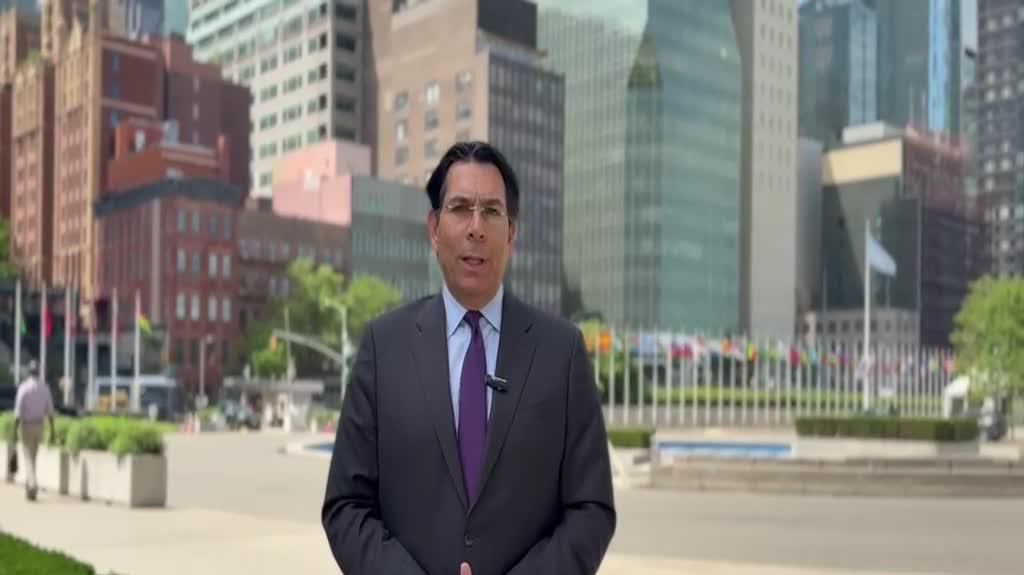
Israeli Ambassador to the UN Danny Danon speaks about a United Nations decision to add Israeli entities to a blacklist of countries that commit sexual violence in conflict zones. (Credit: Courtesy)

The United Nations has added Israeli entities to a blacklist of countries that commit sexual violence in conflict zones, The Jerusalem Post has learned. The list includes Hamas and other terrorist organizations,

The Israel Prison Service (IPS) will be included on the 2026 list, and other Israeli authorities have entered a monitoring framework for the possibility of future inclusion.

A country or armed group remains on the UN secretary-general’s list for a minimum of one year. Hamas was added last August.

This development follows reports by Pramila Patten, the UN special representative on sexual violence in conflict, which determined that there were reasonable grounds for Hamas to have committed acts of rape and sexual violence during the October 7 massacre and the hostages’ captivity in Gaza.

According to Israel, heavy pressure was exerted on UN Secretary-General Antonio Guterres to include Israel on the list following Hamas’s inclusion.

U.N. Secretary General Antonio Guterres speaks during a High-level International Conference for the Peaceful Settlement of the Question of Palestine and the Implementation of the Two-State Solution at U.N. headquarters in New York City, U.S., July 28, 2025.
U.N. Secretary General Antonio Guterres speaks during a High-level International Conference for the Peaceful Settlement of the Question of Palestine and the Implementation of the Two-State Solution at U.N. headquarters in New York City, U.S., July 28, 2025. (credit: REUTERS/JEENAH MOON)

Last August, Guterres placed Israel on notice for potential inclusion in the UN’s formal blacklist of parties credibly suspected of committing patterns of sexual violence in armed conflict, citing significant concerns regarding alleged patterns of abuse. Israel has denied the charges.

Over the past year, several meetings have taken place between Ambassador to the UN Danny Danon, his delegation, and representatives of Guterres.

Israel provided documents, data, and a detailed response to all the claims raised in the reports and drafts that it received. In addition, Israel invited UN personnel to visit the sites of alleged atrocities and to closely examine the false claims.

Nevertheless, despite the information provided, Guterres has chosen to include Israel on the list.

Israel freezes relations with UN Secretary-General's Office

In response, Israel has announced the freezing of relations with the UN Secretary-General’s Office and the cancellation of Patten’s planned visit to Israel.

Israel said it would not maintain contact with the UN Secretary-General’s Office as long as Guterres heads the organization.

“The UN secretary-general has put Israel on the same blacklist as Hamas, ISIS, and the most depraved terrorist organizations in the world,” Danon said. “This is a moral disgrace and a complete collapse of any credibility left to the UN.”

Israel has cooperated with the UN, provided information, and acted with full transparency, he said.

Guterres chose to ignore the facts and “continue the campaign of incitement and lies against Israel,” Danon said.

“Anyone who is able to include Israel on the same list as Hamas terrorists and rapists has no sense of morality,” he said. “Antonio Guterres, who justified the October 7 massacre, whitewashed the involvement of UNRWA employees in the massacre, and led the organization to an unprecedented low, is using the last months of his term to advance political and false accusations against Israel.”

Guterres’s term ends on December 31, meaning that the inclusion of Israel on the list comes amid a leadership contest.

Israel considers the decision to be Guterres’s attempt at a “last hurrah,” a person familiar with the matter told the Post.

The UN is facing the most severe liquidity crisis in its 80-year history, including $1.56 billion in unpaid dues by member states.

New York Times op-ed perpetuates accusations of sexual violence 

Furthermore, more than two weeks ago, The New York Times published a highly controversial op-ed by journalist Nicholas Kristof about the alleged “pattern of widespread sexual violence against [Palestinian] men, women, and even children – by [Israeli] soldiers, settlers, interrogators in the Shin Bet internal security agency, and, above all, prison guards.”

Kristof admitted that “there is no evidence that Israeli leaders order rapes,” but he said the security apparatus has created a culture in which “sexual violence has become one of Israel’s ‘standard operating procedures.’”

Kristof wrote his op-ed based on “conversations with 14 men and women who said they had been sexually assaulted by Israeli settlers or members of the security forces.”

He cited one alleged prisoner, who said IPS officers forced items up his rectum.

Another Gazan prisoner said he had been “held down, stripped naked, and as he was blindfolded and handcuffed, a dog was summoned,” before the dog attempted to “mount him.”

Kristof also accused the US of being “complicit” in the alleged sexual violence, as “American tax dollars subsidize the Israeli security establishment.”

The Foreign Ministry said the NYT article was “one of the worst blood libels ever to appear in the modern press.”

“In an unfathomable inversion of reality, and through an endless stream of baseless lies, propagandist Nicholas Kristof turns the victim into the accused,” it said. “Israel – whose citizens were the victims of the most horrific sexual crimes committed by Hamas on October 7, and whose hostages were later subjected to further sexual abuse – is portrayed as the guilty party.”

The article’s publication was “no coincidence” and forms part of a “false and well-orchestrated anti-Israel campaign aimed at placing Israel on the UN secretary-general’s blacklist,” the Foreign Ministry said.

It denounced the NYT for publishing the op-ed and not the findings of Israel’s Civil Commission into Hamas’s systemic violence during and since the October 7 massacre.

This two-year independent investigation into the sexual and gender-based crimes committed during the October 7 massacre and against hostages in Hamas captivity found that sexual and gender-based violence was systematic, widespread, and integral to the attack.

While it is not clear, the source told the Post that the NYT article might have given the UN additional power to make the move to blacklist Israel.

'A major blight on the UN'

US-based human-rights advocate, attorney, and policy expert Elliot Malin told the Post the decision was a “major blight on the UN, the entire professional apparatus, and an indictment on its ability to objectively weigh in on conflict.”

“It’s directly contrary to the purpose of the UN and its establishment,” he said. “In an institution where they commonly single out and demean a democracy while ignoring the atrocities of totalitarian states, even elevating them to prominent roles in UN appendant bodies – this is just another demonstration of the inability of the UN to act in a fair and balanced manner.”

Malin condemned the way in which international institutions are being “weaponized for lawfare.”

“If democracies want the UN to survive, they must act to clean house,” he said. “Antonio Guterres must be forced to retract this reprehensible action, and the UN must be completely audited for systemic bias.”

“Every democratic state should withhold its citizens’ tax dollars from going to the UN until this is retracted and the house has been cleaned,” Malin said. 


Mathilda Heller

Source: https://www.jpost.com/israel-news/article-897572

Follow Middle East and Terrorism on Twitter