Sunday, May 31, 2026

We Are Only in Act III of the Iran War - Ken Timmerman


by Ken Timmerman

To deal or not to deal. That is the question the Iranians are asking themselves today.


There are days they wake up in a state close to wonderment. Friday was one of those days.

There was Steve Witkoff, President Trump’s real estate buddy and negotiator in chief, offering them a $300 billion international investment fund. The Ayatollah must have been rubbing his eyebrows or what’s left of them, wondering if he was dreaming. The Iranians had been demanding war reparations but never thought they would get them, and certainly not on this scale.

Will somebody please give Witkoff the cane? You have to wonder sometimes what he’s thinking.

And then you have the president, one day reassuring Americans that he won’t make a “crummy” deal, won’t make a bad deal, will only make a “great deal,” and if the Iranians don’t like it, he’ll turn it back over to Pistol Pete.

That was Thursday, at the Cabinet meeting in the White House. And then on Friday, the president says on Truth Social that the U.S. and Iran are close to a deal.

Iran must agree that they will never have a Nuclear Weapon or Bomb. The Hormuz Strait must be immediately open, no tolls, for unrestricted shipping traffic, in both directions. . . . The enriched material, sometimes referred to as “Nuclear Dust,”. . . will be unearthed by the United States in close coordination and conjunction with the Islamic Republic of Iran and the IAEA.

No mention of that $300 billion “sweetener,” as Witkoff reportedly called it.

But if you examine what the president said, it’s pretty clear he has not changed his negotiating demands.

What about the Iranians? Are they coming any closer to the deal President Trump wants to make?

Earlier this week, Ayatollah Mojtaba—or what’s left of him—tweeted that “Death to America” and “Death to Israel” remain the regime’s rallying cries and would become “common slogans” for Muslim youth across the world. “The region will not return to past conditions, and Washington will no longer have a safe place to station military bases in the region,” he added.

Does that sound like a mullah who has changed his spots?

How about the “moderate” Parliament speaker, Qalibaf, the former commander of the IRGC Air Force? “We get concessions not through talks but through missiles,” he tweeted on Friday. “In negotiations we only clarify them.”

That doesn’t sound terribly conciliatory either, if you ask me.

Now about that “nuclear dust.” Iran has 450 kilograms of 60 percent enriched uranium, which is enough for at least 11 bombs with just a few more spins of the centrifuge. Trump says that the deal must include the turnover of that material, which the Iranians have never agreed to, at least not in public.

Trump has also said they cannot have a nuclear weapon in the future. What does that mean? It means they must also give up the 9,000 kilograms of low-enriched uranium in their stockpile and destroy their enrichment centrifuges.

I think Trump is deliberately blowing hot and cold on the negotiations and not just because he wants to drop the price of oil and bump up the stock market.

I think he is playing mind games with the Iranians. He is in no hurry to close a deal, and this has caught the Iranians off guard. They think the midterms will force Trump’s hand, but so far they haven’t.

Instead, oil field geology has trapped the Iranians, and they have begun dumping oil into the Persian Gulf to put off the day they must shutter their oil fields, doing long-term damage to fields and to their economy.

In other words, Trump is beating them at their own negotiating game, and it’s making their heads explode.

Remember, best beloved, that the annual five-day Hajj, or pilgrimage to Mecca, ends on Friday night. The Saudis reportedly asked last week that the United States abstain from combat operations against Iran during the hajj.

I call these negotiations Act III of the Iran War. Even if President Trump says that the U.S. and Iran have agreed to the outlines of a deal, I am willing to bet the Iranians will say no. They can’t help themselves. It’s how they’re wired.

And if their negotiators say yes, but . . . ? I’m willing to bet the IRGC will launch more drones against ships in the Strait of Hormuz, or against Israel or the UAE. It’s just their nature.

Those provocations, which violate the ceasefire, will lead directly to Act IV.

Act IV is the resumption of kinetic operations. This round of the war will be tremendously violent, if brief, and will shut down the entire country. The goal will be to convince the Iranian people that the regime cannot possibly survive.

And that will lead directly to Act V.

This is where the genius of Trump’s long-term strategy will become apparent. Act V is where the Iranian people finally rise up and, with US and Israeli help, seize control of the vast armories of weapons stockpiled by the IRGC and the Basij in every part of the country.

The violence will unfold under US and Israeli overwatch, which means that whenever we see an IRGC or Basij mobilization that threatens the uprising, we take them out. I would imagine we would also take down the Iranian regime broadcasting networks or hack them and turn them over to the insurgents.

The president said on Thursday he wanted the Saudis, the Omanis, the Kuwaitis, and the Qataris to join the Abraham Accords. Almost jokingly, he added, “I think they owe it to us . . . In fact, maybe I won’t do the deal if they don’t.”

If Act V is as successful as I believe it will be and the Iranian regime falls to a popular uprising, there will be no more roadblock to expanding the Abraham Accords.

The Islamic regime in Iran has been the source of violence and terror for 47 years, not just in the Middle East but around the world. Interior Secretary Doug Burgum called them “terrorists with an oil field.”

We humans are troublemakers by nature. Just read the Old Testament.

But a world without the Islamic Republic of Iran could become one of those periods you read about in a single sentence in the Bible. “And for forty years, Israel knew peace.”

There is a goal—a generational goal, as the president likes to say—that is worth the effort.

Photo: WASHINGTON DC, USA - MARCH 02: (----EDITORIAL USE ONLY â" MANDATORY CREDIT - 'THE WHITE HOUSE'S X ACCOUNT / HANDOUT' - NO MARKETING NO ADVERTISING CAMPAIGNS - DISTRIBUTED AS A SERVICE TO CLIENTS----) U.S. President Donald J. Trump sits at a table monitoring military operations during Operation Epic Fury against Iran, with U.S. flags visible behind him, in Washington, United States, on March 02, 2026. (Photo by The White House via X Account/Anadolu via Getty Images) 


Ken Timmerman

Source: https://amgreatness.com/2026/05/30/we-are-only-in-act-iii-of-the-iran-war/

Follow Middle East and Terrorism on Twitter

Iran: Truce Doesn't End Wars - Amir Taheri


by Amir Taheri

Iran, as it is already threatening, intends to continue its war against Israel through the Lebanese Hezbollah. Last Tuesday, Tehran said $5 billion of any Iranian frozen assets that will be released under the truce will go to Hezbollah in Lebanon to "continue the resistance."


  • Though Israel was included in the various ceasefires that President Donald Trump has declared, almost always without securing Israel's consent, it is clear that Israel will not be a party to the truce mediated by half a dozen countries, notably Pakistan.

  • Iran, as it is already threatening, intends to continue its war against Israel through the Lebanese Hezbollah. Last Tuesday, Tehran said $5 billion of any Iranian frozen assets that will be released under the truce will go to Hezbollah in Lebanon to "continue the resistance."

  • [M]ost of the targets hit by Tehran were civilian structures that had nothing to do with US or Israeli forces. After the first phase of the war, almost all US bases in the region were evacuated and temporarily decommissioned.

  • The closure of the Strait of Hormuz was also an act of war, this time not against the US and Israel, neither of which depends on oil from the region, but against the entire international community that has paid a heavy economic price.

  • Under international law, Iran has the right to deny innocent passage to belligerent powers, that is to say, the US and Israel in this case. But it has no right to deny passage to ships flying the flags of the other 190 members of the United Nations.

  • Since the Khomeinists seized power, Iran has moved from one war to another.

  • The truce touted by Trump will not end any of those wars, none of which is likely to end unless Iran breaks with Khomeinism and chooses another trajectory.

The closure of the Strait of Hormuz was also an act of war, this time not against the US and Israel, neither of which depends on oil from the region, but against the entire international community that has paid a heavy economic price. Pictured: The Strait of Hormuz as seen from NASA's Terra satellite (Image source: MODIS Land Rapid Response Team, NASA GSFC)

With Iran and the US still moving towards some form of truce, it may be too early to provide a final assessment of the conflict.

A truce, or armistice in military terms, is something more than a ceasefire but something less than a peace accord. It doesn't end a war; it only mothballs it sine die.

The USSR and Japan signed an armistice in 1956, more than a decade after Russians attacked and annexed the Kuril Islands. Technically, therefore, the two nations are still in a state of war. There are numerous other cases of truce accords that halt a war without ending it in Latin America, Africa, the Middle East, and Asia.

Back to the case that interests us today: a truce will not end a war that Iran launched against the US in November 1979 when pro-Khomeini militants attacked and occupied the American Embassy in Tehran, which, under international law, was regarded as sovereign US territory.

Iran started its war against Israel in 1982 through proxies, at first with help from Syrian intelligence based in Lebanon.

For years Israel practiced restraint in the hope that Iran, because of real or imagined anti-Arab and anti-Sunni sentiments, might emerge as an ally of the Jewish state. During the Iran-Iraq War, Israel helped smuggle arms to Iran, provided intelligence material, and used its international influence to portray Iraq as the aggressor.

Gradually, however, especially with Hezbollah emerging as a nuisance, not to say a threat, Israeli leaders began to question their illusions about our "Persian ally".

But even as late as the 1990s, many Israeli leaders were opposed to adopting an openly hostile posture towards Iran.

It was only under Prime Minister Benjamin Netanyahu that Israel decided to go on the offensive against the Khomeinist rulers of Tehran.

What started as a cold war rose a few degrees in temperature when Israelis started their assassination spree against Iranian nuclear scientists while helping arm secessionist mercenaries based in Iraqi Kurdistan.

Last June's 12-day war solidified the state of war between the two nations, a position confirmed by the latest phase of the conflict that began almost 100 days ago.

Though Israel was included in the various ceasefires that President Donald Trump has declared, almost always without securing Israel's consent, it is clear that Israel will not be a party to the truce mediated by half a dozen countries, notably Pakistan.

This means that even if a truce is concluded between Tehran and Washington, it won't necessarily commit Israel to observing it. At the same time, Iran, as it is already threatening, intends to continue its war against Israel through the Lebanese Hezbollah. Last Tuesday, Tehran said $5 billion of any Iranian frozen assets that will be released under the truce will go to Hezbollah in Lebanon to "continue the resistance."

To make matters more complicated, Iran is technically at war against several regional countries, from Oman to Jordan and passing by the GCC members that it has attacked with the flimsy excuse that they shelter American military assets.

In reality, however, most of the targets hit by Tehran were civilian structures that had nothing to do with US or Israeli forces. After the first phase of the war, almost all US bases in the region were evacuated and temporarily decommissioned.

The bulk of US attacks came either from Diego Garcia or from mainland US with stopovers in Britain and Germany. The aircraft carriers that Trump had assembled 1,000 kilometers from Iranian shores were mostly used as stage props, with the Ben Gurion Airport in Tel Aviv serving as the key aircraft carrier.

The closure of the Strait of Hormuz was also an act of war, this time not against the US and Israel, neither of which depends on oil from the region, but against the entire international community that has paid a heavy economic price.

Under international law, Iran has the right to deny innocent passage to belligerent powers, that is to say, the US and Israel in this case. But it has no right to deny passage to ships flying the flags of the other 190 members of the United Nations.

At the same time, since the southern coast of the Hormuz Strait is sovereign territory of Oman, its unilateral blocking is a direct act of war against the sultanate.

Since the Khomeinists seized power, Iran has moved from one war to another.

The first war was between the new regime and the personnel of the fallen one. More than 25,000 military, diplomatic, political, bureaucratic, academic, scientific, art and culture, media, business and social personalities were executed, and over 50,000, including 6,000 university professors and teachers, were purged. Over a million others fled into exile; their number grew to almost nine million by 2026.

The new regime's next war was launched against so-called "minorities" with massacres of Kurdish dissidents in Naqadeh and Turkoman tribesmen in Gonbad Kavous.

The next war was launched against Khomeini's initial allies in the 1979 revolution and led to the execution of thousands of Communists, People's Mujahedin, pro-Mossadeq and "liberal" Islamic figures.

Then there was the 8-year war against Iraq which, technically, has not ended because there has been no peace treaty. Tehran has violated Iraqi sovereignty by setting up bases there and raising paramilitary forces led by Iranian commanders.

The truce touted by Trump will not end any of those wars, none of which is likely to end unless Iran breaks with Khomeinism and chooses another trajectory.

Prospects for such a momentous event seemed promising at the end of 2025 when a combination of factors had pushed the regime onto the defensive. The war came to the rescue at a time that a wave of nationwide protests was gaining momentum, with part of the regime's base pondering the possibility of switching sides.

Changing Iran by war was always the big enchilada that successive US presidents avoided. Trump half-heartedly decided to try it, and the result, at least in the short term, is the slowing of the process of change. The final word must come from the people of Iran.

Without a regime that is at peace with its people, Iran is unlikely to reach peace with anyone else.

Gatestone Institute would like to thank the author for his kind permission to reprint this article in slightly different form from Asharq Al-Awsat.


Amir Taheri
was the executive editor-in-chief of the daily Kayhan in Iran from 1972 to 1979. He has worked at or written for innumerable publications, published eleven books, and has been a columnist for Asharq Al-Awsat since 1987. He graciously serves as Chairman of Gatestone Europe.

Source: https://www.gatestoneinstitute.org/22572/iran-truce

Follow Middle East and Terrorism on Twitter
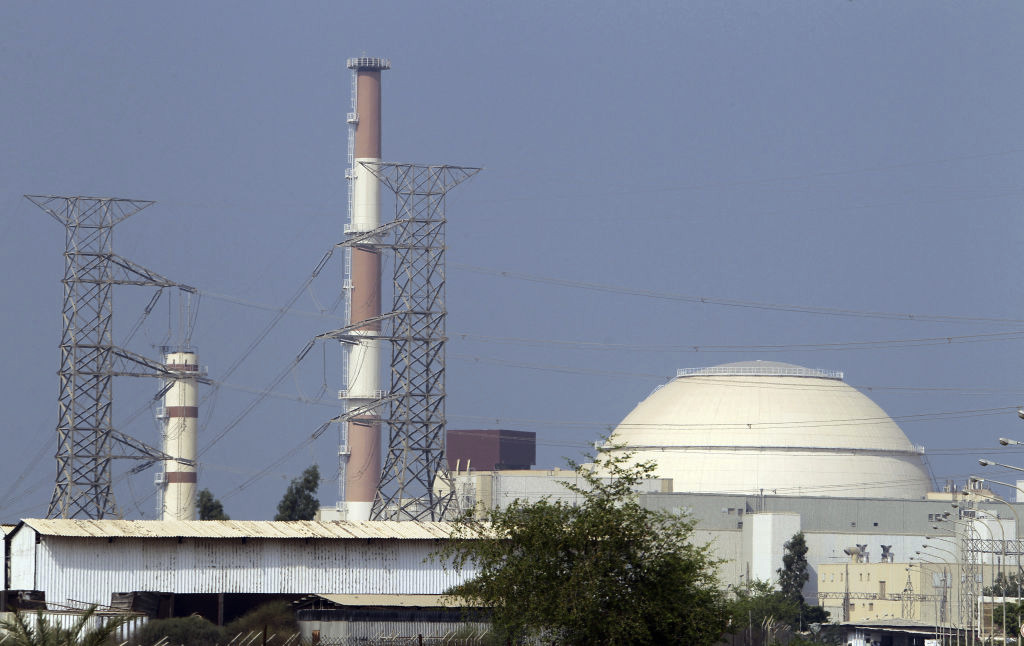
What Do the Gulf States Really Want? - Ahmed Charai


by Ahmed Charai

The UAE has also shown that realism does not mean weakness. It has stood firmly against the Iranian regime's destabilizing project and understood the necessity of deterrence when that regime threatens sovereignty. This is the sophistication of the Emirati approach: strength without illusion, openness without naivety, and strategic patience without surrender.


  • The confrontation is not with the Iranian people, heirs to a great civilization and among the first victims of the regime that rules over them. The confrontation is with the Iranian regime: the Revolutionary Guards, the militias, hostage diplomacy, ballistic missiles, nuclear ambitions, and the systematic destabilization of Arab states in the name of resistance.

  • [S]everal Gulf states continue to preserve relationships with the same Iranian regime that threatens their sovereignty. Some out of prudence. Some out of economic necessity. Some because ambiguity gives them room to maneuver.

  • The United Arab Emirates... made a strategic choice. It normalized relations with Israel not as symbolism, but as policy: technology, artificial intelligence, investment, defense modernization, logistics, and global relevance. Abu Dhabi understood that Israel was not merely a security actor, but also a partner in innovation, science, agriculture, medicine, entrepreneurship, and the modernization of regional economies.

  • The UAE has also shown that realism does not mean weakness. It has stood firmly against the Iranian regime's destabilizing project and understood the necessity of deterrence when that regime threatens sovereignty. This is the sophistication of the Emirati approach: strength without illusion, openness without naivety, and strategic patience without surrender.

  • The [Abraham] Accords were not only diplomatic agreements. They introduced a new political language for the Middle East: development over ideology, trade over hatred, technology over militias, and opportunity over permanent grievance.

  • For too long, dignity has been used as a slogan by regimes, militias, ideologues, and movements that offered young people anger instead of opportunity.

  • But young Arabs and young Persians do not need dignity as a word. They need it as a reality: education, jobs, capital, technology, training, business opportunities, and access to the modern economy.

  • This is the practical promise of the Abraham Accords. Israel brings technology, science, agriculture, medicine, defense, and entrepreneurship. The Gulf brings capital, ambition, infrastructure, logistics, and a young generation ready for transformation. Together, they can offer the region an alternative model.

  • That is what the Iranian regime fears most. It does not fear another speech. It fears a successful alternative.

  • Jared Kushner's role should also be recognized. Kushner understood that the Middle East could not be approached only through old formulas and inherited excuses. He listened widely. He connected security, economics, technology, legitimacy, and the aspirations of a younger generation. Then he helped translate that understanding into action.

  • The Iranian regime offers militias, fear, isolation, and endless confrontation. The Abraham Accords offer education, opportunity, investment, technology, business, security, and access to modernity.

  • That is the choice before the region. Every Gulf capital should decide where it stands.

The United Arab Emirates made a strategic choice. It joined the Abraham Accords and normalized relations with Israel not as symbolism, but as policy: technology, artificial intelligence, investment, defense modernization, logistics, and global relevance. Abu Dhabi understood that Israel was not merely a security actor, but also a partner in innovation, science, agriculture, medicine, entrepreneurship, and the modernization of regional economies. Pictured: U.S. President Donald J. Trump meets with UAE President Sheikh Mohamed bin Zayed on May 15, 2025, in Abu Dhabi. (Photo by Win McNamee/Getty Images)

There is a question Washington should ask more directly: what do the Gulf states really want?

The official language is familiar: de-escalation, sovereignty, dialogue, Palestinian rights, regional stability, and balanced relations. These are legitimate concerns. But behind the communiqués lies a harder reality. Gulf capitals know that Israel is no longer isolated. They know that Iran is not merely a difficult neighbor. They also know that saying one thing in Washington, another in Tehran, another in Jerusalem, and another to Arab public opinion has become increasingly difficult to sustain.

Let us be precise. The confrontation is not with the Iranian people, heirs to a great civilization and among the first victims of the regime that rules over them. The confrontation is with the Iranian regime: the Revolutionary Guards, the militias, hostage diplomacy, ballistic missiles, nuclear ambitions, and the systematic destabilization of Arab states in the name of resistance.

For decades, Gulf states have tried to manage Iran, traded with Iran, mediated with Iran, denounced Iran, accommodated Iran, and then asked Washington — and sometimes Israel — to contain Iran. This contradiction can no longer be avoided.

Across the Gulf, Israel is no longer treated as a distant or isolated actor. Some relationships are formal. Others remain informal, indirect, or discreet. But the old taboo has been broken. Israel is now understood across the region as a military, technological, intelligence, economic, and strategic reality.

Yet several Gulf states continue to preserve relationships with the same Iranian regime that threatens their sovereignty. Some out of prudence. Some out of economic necessity. Some because ambiguity gives them room to maneuver. But ambiguity has a cost. In a dangerous region, permanent strategic ambiguity is not wisdom. It is exposure.

Oman is a useful example. When Prime Minister Benjamin Netanyahu visited Muscat, Oman showed that even without formal relations, it understood Israel's regional weight. At the same time, Oman has maintained relations with Iran and has often presented itself as a mediator between Tehran and the West. This is consistent with Oman's traditional diplomatic culture: cautious, discreet, and focused on keeping channels open.

But diplomacy must also have direction. Mediation should not become a permanent substitute for strategic judgment. Oman's challenge is to preserve its reputation as a serious diplomatic actor while recognizing that the Iranian regime is not simply one party among others. It is a hostile revolutionary power that has repeatedly used militias, coercion, and instability as instruments of regional destabilization.

Qatar presents another complicated case. No serious observer can deny its achievements: wealth, infrastructure, media influence, and a global profile far beyond its size. It hosts Al Udeid, the largest U.S. Air Force installation outside the United States and a central pillar of America's regional posture. It also shares with Iran the North Field/South Pars gas structure, one of the most important energy assets in the world, giving Doha a structural reason to avoid direct confrontation with Tehran.

Qatar has made itself useful by speaking to actors others refuse to meet. At times, this role has mattered. But usefulness is not the same as strategic responsibility. Mediation should reduce conflict, not make the mediator indispensable to conflict. The question is whether Doha is prepared to move from tactical usefulness to a more responsible regional role.

Saudi Arabia is the most consequential case. Crown Prince Mohammed bin Salman has set an ambitious course to launch the Kingdom into a new era and, before the Gaza war reshaped the diplomatic landscape, made clear that normalization with Israel was no longer fantasy.

Saudi Arabia has also learned directly what the Iranian threat means. Its territory has been attacked. Its sovereignty has been tested. Its energy infrastructure has been targeted. Its leadership understands better than anyone the danger posed by Tehran's regional project. Yet Riyadh restored relations with Iran while still relying on the United States to contain that same threat.

This is not a simple contradiction. It reflects the caution of a state managing religion, public opinion, regional influence, energy markets, and security at the same time. But the essential question remains: can Saudi Arabia's public diplomacy remain behind its private strategic assessment? The answer to that question will shape the future of the region.

Bahrain chose differently. It joined the Abraham Accords and normalized relations with Israel despite its vulnerability to Iranian pressure. That decision should not be underestimated. Bahrain does not have the strategic depth or wealth of Saudi Arabia or the UAE. Its exposure is real. Its decision therefore carried a particular meaning.

Bahrain understood that sovereignty sometimes requires a public decision. It recognized that normalization with Israel was not only a diplomatic gesture, but a statement of strategic orientation. It also showed that smaller states can exercise leadership when they are prepared to define their interests clearly and act on them.

The importance of Bahrain is not size. It is precedent. By joining the Abraham Accords, Bahrain demonstrated that vulnerability does not always produce hesitation. Sometimes it produces resolve. In a region where many states privately acknowledge the same realities, Bahrain chose to act publicly.

The United Arab Emirates also made a strategic choice. It normalized relations with Israel not as symbolism, but as policy: technology, artificial intelligence, investment, defense modernization, logistics, and global relevance. Abu Dhabi understood that Israel was not merely a security actor, but also a partner in innovation, science, agriculture, medicine, entrepreneurship, and the modernization of regional economies.

The UAE has also shown that realism does not mean weakness. It has stood firmly against the Iranian regime's destabilizing project and understood the necessity of deterrence when that regime threatens sovereignty. This is the sophistication of the Emirati approach: strength without illusion, openness without naivety, and strategic patience without surrender.

The UAE's importance lies in this combination. It did not choose normalization as a temporary gesture or public relations exercise. It placed it inside a larger national strategy: diversification, technology, global connectivity, and regional stability. That is why the Emirati model matters. It shows that a Gulf state can confront danger while still building for the future.

This is why the Abraham Accords matter more today than ever.

The Accords were not only diplomatic agreements. They introduced a new political language for the Middle East: development over ideology, trade over hatred, technology over militias, and opportunity over permanent grievance.

For too long, dignity has been used as a slogan by regimes, militias, ideologues, and movements that offered young people anger instead of opportunity.

But young Arabs and young Persians do not need dignity as a word. They need it as a reality: education, jobs, capital, technology, training, business opportunities, and access to the modern economy.

This is the practical promise of the Abraham Accords. Israel brings technology, science, agriculture, medicine, defense, and entrepreneurship. The Gulf brings capital, ambition, infrastructure, logistics, and a young generation ready for transformation. Together, they can offer the region an alternative model.

That is what the Iranian regime fears most. It does not fear another speech. It fears a successful alternative.

Jared Kushner's role should also be recognized. Kushner understood that the Middle East could not be approached only through old formulas and inherited excuses. He listened widely. He connected security, economics, technology, legitimacy, and the aspirations of a younger generation. Then he helped translate that understanding into action.

Today, the Gulf states cannot continue to seek American protection, Israeli technology, Western legitimacy, Chinese markets, and Iranian restraint while avoiding the burden of public strategic choice. That is not diplomacy. It is evasion.

The issue is not knowledge. Gulf leaders understand the danger. They understand Israel's value. They understand America's role. They understand what their young people want. The problem is not analysis. The problem is political courage.

The Gulf states must now decide what they want the Abraham Accords to become: a diplomatic trophy, or the foundation of a new regional order.

The Iranian regime offers militias, fear, isolation, and endless confrontation. The Abraham Accords offer education, opportunity, investment, technology, business, security, and access to modernity.

That is the choice before the region. Every Gulf capital should decide where it stands.

This article was originally published in the Jerusalem Strategic Tribune.  


Ahmed Charai
is the Chairman and CEO of World Herald Tribune, Inc., and the publisher of the Jerusalem Strategic Tribune, TV Abraham, and Radio Abraham. He serves on the boards of several prominent institutions, including the Atlantic Council, the Center for the National Interest, the Foreign Policy Research Institute, and the International Crisis Group. He is also an International Councilor and a member of the Advisory Board at the Center for Strategic and International Studies.

Source: https://www.gatestoneinstitute.org/22573/what-do-gulf-states-want

Follow Middle East and Terrorism on Twitter
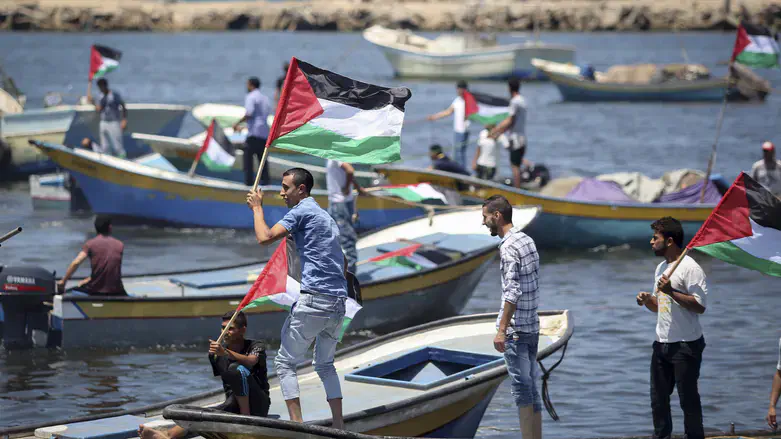
Europe no longer convinced Russia's war will stop at Ukraine - Eric J. Lyman


by Eric J. Lyman

Europe believes that Russia's goal may now be a long-term standoff with the West


Europe’s original assumption about the war in Ukraine was clear – help arm it Eastern European neighbor, weaken Russia and ensure the conflict did not spread beyond Ukraine’s borders. 

But European leaders are increasingly worried that may no longer be possible. 

With heightened NATO activity in the Baltic states, European Union leaders condemning Russian threats against Latvia and Estonia, and an emergency UN Security Council meeting over the latest Russian actions in Ukraine, a growing number of officials now appear to believe the Kremlin’s ambitions could extend beyond Ukraine

Even discussions once considered premature – involving European military readiness and a permanent NATO deterrent in member states that border Russia – have moved into the political mainstream. 

The result: a deep psychological shift across Europe and a war that began on the EU’s periphery is being seen as a direct challenge to the continent’s future security order. 

“A threat against one member state is a threat against our entire Union,” European Commission President Ursula von der Leyen said this week. 

A new poll in Ukraine finds that more than a third of the country’s residents – the highest figure on record – believe Russian President Vladimir Putin intends to expand the war to the European Union itself. 

A fear in Europe is not necessarily that Russia is preparing an imminent attack outside Ukraine, but that a standoff with the West, not just Ukraine, could be an emerging objective for Putin.

Earlier in May, Putin said that his country’s war with Ukraine could be nearing its end. But since then, few of Russia’s moves have matched those remarks. Russia's war with Ukraine began in 2014 when Russian forces, under Putin, invaded and annexed Ukraine's Crimean Peninsula. The conflict escalated – or resumed – when Russia invaded Ukraine in February 2022.

In Putin's latest move, just several days ago, he urged foreign residents and diplomats in the Ukrainian capital of Kyiv to flee the city ahead of what he promised would be new rounds of “intense attacks” on the capital’s “decision-making centers.” 

Ukrainian leader Volodymyr Zelensky wrote a rare personal plea to President Donald Trump asking for U.S. air defenses – in increasingly short supply since the start of the Israel- and U.S.-led war against that started Feb. 28. 

Last week, the Kremlin said Putin was open to “preliminary negotiations” with Europe over the future of the conflict. But few European officials appeared to take the overtures seriously. And Kaja Kallas, the European Union’s top diplomat, warned the remarks were a ploy. 

“It’s a trap that Russia wants us to walk into, that we discuss who talks to them, and they are already picking who is suitable, who is not,” Kallas said. “Let’s not walk into that trap.”

Ministers in several European Union states have summoned Russia’s ambassadors to express anger over the newest round of attacks on Kyiv, which reports say are aimed at civilian infrastructure.  


Eric J. Lyman

Source: https://justthenews.com/world/europe/europe-no-longer-convinced-war-will-stop-ukraine

Follow Middle East and Terrorism on Twitter
Netanyahu: Conquest of Beaufort is a dramatic step - Hezki Baruch


by Hezki Baruch

Prime Minister Benjamin Netanyahu declares Israel 'returned to Beaufort Castle, we are stronger than ever.'


PM Netanyahu speaking
PM Netanyahu speaking                                                 צילום: SHALEV SHALOM/POOL

Israeli Prime Minister Benjamin Netanyahu on Sunday praised the IDF's capture of the Beaufort Ridge in southern Lebanon, emphasizing the importance of the site in securing northern Israeli towns.

"Last night, our heroic fighters captured the Beaufort castle," Netanyahu said. "They proudly raised the flag of the State of Israel and the flag of the Golani Brigade there."

"I remind you that 44 years ago, this place was a symbol of a heroic battle by our fighters, but it was also a symbol of deep division among us.

"Today, we returned to Beaufort differently. We returned united, determined, and stronger than ever. I spoke with the fighters on the northern border on Friday. They told me: 'Tell the people of Israel what we are doing here. Prime Minister, the public doesn't know what achievements we have made.'"

Netanyahu recounted, "Since the beginning of the War of Redemption we have eliminated 8,000 Hezbollah terrorists. Since Operation Roaring Lion - 3,000. In the past month alone - 700. This is more than all those we eliminated during the Second Lebanon War."

"I have instructed the IDF to expand the incursion in Lebanon. Our forces have crossed the Litani River. They took dominant terrain. They captured the Beaufort ridge. And now my instruction is to deepen and expand our hold on places that were under Hezbollah's control.

"The capture of Beaufort is a dramatic stage and a dramatic change in the policy we are leading. We have broken the barrier of fear. We are taking the initiative, we are operating on all fronts - in Syria, in Gaza, in Lebanon; we have established security zones beyond our borders to protect our communities."

He added, "On Friday, I spoke with the brigade commanders. They are daring brigade commanders, inside the territory, leading the heroic soldiers. And they told me: 'Prime Minister, we are carrying out the mission. We are charging forward - and Hezbollah is fleeing for its life.' And I told them: 'I am with you. The entire nation of Israel is with you. It will take more time, but we will restore security to the residents of the North, just as we did for the residents of the South.'"

"It will take time, but we will complete the mission." 


Hezki Baruch

Source: https://www.israelnationalnews.com/news/427877

Follow Middle East and Terrorism on Twitter
Border Police foil mass infiltration attempt in southern Israel, 42 arrested - Israel National News


by Israel National News

Border Police forces stopped a large-scale attempt to infiltrate Israeli territory from Judea into southern Israel. 42 illegal entrants were arrested.


Watch the video 

Border Police officers foiled a massive infiltration attempt by illegal entrants into Israeli territory.

The operational activity was conducted in the area of the Lachish Regional Council, as part of the security forces' ongoing battle against infiltrations at the seamline area.

During the operation, the forces managed to arrest dozens of suspects who attempted to enter Israeli territory illegally.

The operation was launched after a report regarding a large-scale infiltration attempt near one of the communities located on the eastern side of the Lachish Region, near the seam line.

Following the information, a large force of Border Police officers was dispatched to block the infiltration route. The officers acted quickly on the ground, using advanced operational and technological means, which allowed them to apprehend the suspects and foil their attempt.

During the operation, the Border Police officers arrested 42 illegal entrants, residents of Judea and Samaria, who entered Israeli territory without authorization.

All detained suspects were jailed and immediately taken for further processing and interrogation by the security forces.


Israel National News

Source: https://www.israelnationalnews.com/news/427884

Follow Middle East and Terrorism on Twitter
College faculty study shows campaign donations skew far to the left - Joseph Weber


by Joseph Weber

Study attempts to more accurately assess a faculty member’s political ideology through culling campaign contributions, instead of merely finding a member’s political affiliation.


A new study finds that donations from faculty at U.S. top universities have become increasingly one-sided – suggesting that politically active faculty are clustered within a “narrow” and “ideological” far-left band. 

To be sure, similar studies have long concluded that U.S. universities have more liberal-leaning than conservative-leaning faculty.  

However, the new study, released Thursday and commissioned by the nonprofit civil liberties group the Foundation for Individual Rights and Expression, attempts to more accurately assess a faculty member’s political ideology through culling campaign contributions, instead of merely finding a member’s political affiliation. 

The study consisted of cross-referencing the names of 100,000 faculty members at 55 universities to state and federal campaign contributions. 

FIRE Vice President of Research Angela Erickson said the results also suggest politically active faculty are clustered within a “narrow ideological band, which raises serious concerns about whether students and scholars are getting the full benefit of the open inquiry universities promise.”

The study also gives faculty members a political ideology “score” based upon their donations. 

University of Rochester professor David Primo culled the list of faculty members, then cross referenced the names with a database of over 850 million state and federal campaign contributions.

The members who could be matched with donations were assigned a score.

“Studying faculty campaign contributors provides a unique window into the views of politically active professors,” Primo said. “These data allow us to systematically measure viewpoint diversity at top universities and lay a foundation for strengthening discourse, teaching, and research on college campuses.”

The average ideology score of faculty donors in the 55-school sample was only slightly less left-leaning than some of the most left-wing members of the U.S. Senate, such as Vermont Independent Sen. Bernie Sanders and Massachusetts Democratic Sen. Elizabeth Warren, according to FIRE, which also says there was no equivalent critical mass of donations on the Republican side.

By analyzing the donations and scores, it was also possible to approximate which schools “might have greater intellectual diversity than others,” FIRE also said. 

Other findings include:

  • The humanities and fine arts show the least political diversity, while business and agriculture show the highest
  • Eight of the 10 most politically diverse faculty bodies were at universities in the South. The two others were Kansas State University and Brigham Young University). 
  • Four of the 10 least intellectually diverse campuses were on the West Coast, and four were Ivy League schools in the Northeast.

FIRE Campus Advocacy Chief of Staff Connor Murnane says, “The lack of viewpoint diversity in academia is a crisis.” However, he argues that existing methods to diversify academic viewpoint among faculty like ideological testing or hiring quotas won’t work.

He instead suggests universities “recommit to creating a culture that makes room for students and faculty to challenge ideas from the left, right and center.” 


Joseph Weber

Source: https://justthenews.com/politics-policy/education/college-faculty-study-based-campaign-donation-finds-members-clustered

Follow Middle East and Terrorism on Twitter
Michigan Democrat Senate hopeful Abdul El-Sayed a protégé of firebrand Muslim activist Linda Sarsour - Jerry Dunleavy


by Jerry Dunleavy

Abdul El-Sayed, who is currently front-running the Democratic Party primaries has been backed up by Bernie Sanders surrogate and controversial Muslim activist Linda Sarsour for nearly a decade.


The frontrunner for the Democratic nomination to be U.S. senator from Michigan is a years-long protégé of controversial Muslim activist Linda Sarsour, whose endorsement of Abdul El-Sayed during his previous failed bid to be Michigan governor helped elevate him from relative obscurity nearly a decade ago.

El-Sayed, who lost the Democratic gubernatorial nomination to now-Gov. Gretchen Whitmer in 2018, received Sarsour’s backing during that race and in this current one for Michigan’s soon-to-be open Senate seat, with Sarsour’s support in 2018 also seeming to subsequently bring the Michigan-born Egyptian-American key support from socialist Sen. Bernie Sanders, I-Vt., who has also endorsed him again in this Senate race. Sarsour was a vocal Sanders campaign surrogate in 2016, and Sanders won Michigan over Hillary Clinton that year.

Sarsour, a Palestinian-American activist and vocal anti-Israel critic, stepped down from leading the Women’s March in 2019 over allegations of antisemitism and her connections to Nation of Islam leader Louis Farrakhan. She describes herself as "an author, award-winning racial justice and civil rights activist, seasoned community organizer, and mother of three" on her webpage.

Neither Sarsour nor El-Sayed’s campaign responded to a request for comment.

Muslim networks' favorite son

The polling average by Real Clear Polling suggests that El-Sayed is the slight frontrunner in the Democratic primary, where his opponents are Rep. Haley Stevens, D-Mich., and Michigan State Sen. Mallory McMorrow.

This investigation by Just the News — which included reviewing thousands of social media posts, looking at little-noticed public interviews, watching numerous speeches, reviewing endorsements and rallies, and unearthing statements which have often gained next to no attention — shows the history of El-Sayed rising with the help of Sarsour and her activist network which, although unsuccessful in putting him in the Michigan governor’s mansion in 2018, may help send him to the U.S. Senate in 2026.

The investigation showed Sarsour quickly celebrating and endorsing El-Sayed in 2017, promoting him to Islamic crowds (while she praised extremist Imam Siraj Wahhaj and called for a "jihad" against Donald Trump), apparently bringing on Sanders campaign veterans to assist El-Sayed, using her Muslim activist network to back his candidacy, self-admittedly moving to Michigan to campaign for him, and continuing to promote him for years after his 2018 loss.

Sarsour has interacted with El-Sayed numerous times in tweets that El-Sayed has since deleted. Many of El-Sayed’s posts from the 2017 and 2018 timeframe have been scrubbed, with only some of them having been archived. El-Sayed also deleted all but just a few of his photo posts from Facebook from his campaign in 2017 and 2018.

It is unclear when Sarsour and El-Sayed first met, but El-Sayed has been involved in Muslim advocacy for years, and he lived in New York City (where Sarsour is based) from 2011 into 2015. Sarsour immediately supported his candidacy for Michigan governor when he announced it in early 2017.

Just the News previously reported on how Zohran Mamdani’s years-long rise to prominence was also assisted by Sarsour as he rose from an activist to New York State assemblyman and now the mayor of America’s largest city.

“It’s very CLEAR to me and has been. @AbdulElSayed is THE CHOICE for U.S. Senate race in Michigan!” Sarsour declared on Instagram in May. “So proud of Dr. Abdul and his incredible movement. Let’s make history TOGETHER. Support the campaign. Donate. Phone bank. Knock doors.”

El-Sayed teams up with Hasan Piker

El-Sayed does not seem shy about affiliating with controversial activists in the mold of Sarsour. El-Sayed campaigned with Marxist online influencer Hasan Piker at college campuses in Michigan in April. El-Sayed posted photos of Piker campaigning with him at the University of Michigan and at Michigan State University.

Piker has a long history of pro-jihadist and pro-Communist commentary, including saying in 2019 that "America deserved 9/11.” Piker has also repeatedly praised the terrorist group Hamas as he has attacked Israel, claiming in an X post in January that “as a lesser evil voter i will once against repeat my harm reductionist credo! hamas is a thousand times better than the fascist settler colonial apartheid state” of Israel. Piker said he stood by his comments in April.

At a victory party for Mamdani in November 2025, Piker also lamented the fact that America defeated the Soviet Union during the Cold War, saying, “We are in the heart of the imperial core. This is the country that defeated the USSR, unfortunately.” Piker has also praised Communist China. El-Sayed has refused to disavow any of Piker’s past comments, although his history of deleting past social media posts is troubling.

The Free Beacon reported in March that El-Sayed had told his campaign staff that he did not want to publicly comment on the U.S. killing of Iranian Ayatollah Ali Khamenei because "there are a lot of people in Dearborn” — a heavily Muslim city in Michigan — “who are sad" about his death.

El-Sayed also said earlier in May that he struggles with the question of whether Israel has the right to exist as a Jewish state.

“I often struggle with the question that people ask in this particular scenario, because what they now ask is, ‘Do you believe in the right of Israel to exist as a Jewish state,’ which, to me, forces the question of a definition of what a Jewish state means,” he said in a recording obtained by Jewish Insider. “I need folks who want to ask me that question, what it is that they mean by that, and how that is consistent with any form of liberal values that we say we believe in here in the United States.”

Sarsour rallied Muslims to support El-Sayed, suggesting that Muslims were the real victims of 9/11

The right-leaning Front Page Magazine in 2018 stated that “Sarsour was known as the de facto campaign manager for Dr. Abdul El-Sayed.” Sarsour sent a March 2017 celebratory emoji tweet in response to an article just days after El-Sayed’s campaign announcement in February 2017. An article by Mic was titled, “Abdul El-Sayed, a doctor from Detroit, could be America's first Muslim governor.”

Sarsour gave a keynote speech at the Islamic Society of North America’s annual conference in July 2017, where she implored the crowd to support El-Sayed’s candidacy, praised controversial Imam Siraj Wahhaj, and argued that a jihad should be waged against the Trump Administration. She framed supporting El-Sayed as a key part of building Muslim power and opposing Trump.

“Sisters and brothers, it has been 16 almost 17 years since the horrific attacks of 9/11, and we still, as a community, find ourselves unprepared in so many moments, why sisters and brothers? Why are we so unprepared — why are we so afraid of this administration and the potential chaos that they will ensue in our community?” Sarsour said. “We already saw their potential when they come out every few weeks, Muslim ban one, Muslim ban two, Muslim ban three. They are relentless, they are persistent and consistent and want to see how much we as a community can endure. I want to see who our friends are and how hard we're going to fight back against this administration.”

She then launched into an endorsement of El-Sayed, encouraging the crowd to support him and donate to him.

“So, I ask of you my dear sisters and brothers to support a whole range of organizations and services within the Muslim community. When I think about building power I think about brothers like Abdul El-Sayed, who is in this room today, who is running to be the first Muslim governor of the state of Michigan. Sisters and brothers, he is a wonderful brother. He is an inspiring brother, he is well qualified to be the next governor, but he can't do that without you,” Sarsour said. “You can't just sit on the sidelines and say, ‘Masha’Allah [Allah has willed it], look at that brother, why are you doing that brother?’ Not only does he need help from us, Masha’Allah and Bismillah [In the name of Allah], he needs your money, he needs your support, and indeed your action.”

Sarsour continued: “I hope that you have the tangible opportunity here at ISNA to join him this evening at 6:30PM at Embassy Suites where he's actually holding a fundraiser. We have to put our money where our mouths are. He's taking a risk for our committee and putting himself in public where he is going to be prone to attacks, and he is going to be prone to the opposition… and also not just by the opposition by establishment, Democrats who have never really opened their doors for people like us to succeed within the Democratic Party and now we have potential hope in a young brother like Abdul El-Sayed, I hope that you provide that support to him sisters and brothers.”

The Muslim activist went on to describe Imam Sirjaj Wahhaj as her “favorite person in this room” and said the feeling was “mutual.”

"We are on this earth to please Allah and only Allah": Sarsour

Sarsour called Wahhaj someone “who has been a mentor, motivator, and encourager of mine. Someone who has taught me to speak truth to power, and not worry about the consequences. Someone who has taught me that we are on this earth to please Allah and only Allah, and that we are not here to please any man or woman on this earth. So I am grateful to you Imam Siraj, and you might think this is weird, but every once in a while, when I get into that deep dark place, Imam Siraj comes and talks to me. And he helps me to emerge out of those places, so I’m grateful to you Imam Siraj, and may Allah bless you and protect you for a long time for our community, because we need you now more than ever.”

Just the News previously reported that Wahhaj has a long history of incendiary commentary and appeared as a character witness on behalf of Egyptian Sheikh Omar Abdel-Rahman – commonly known as the “Blind Sheikh” – who was convicted of seditious conspiracy in 1995 for his involvement in the 1993 World Trade Center bombing and other plots to bomb major NYC landmarks. Wahhaj has also spoken favorably of jihad.

Then-U.S. Attorney Mary Jo White and then-Assistant U.S. Attorney Andrew McCarthy had sent a February 1995 letter to the defense team providing a list of “unindicted persons who may be alleged as co-conspirators” in the case against the Blind Sheikh. Wahhaj was on the potential list.

Wahhaj was a character witness for the Blind Sheikh in July 1995, according to court transcripts. Wahhaj said of the Blind Sheikh that “I respect him” and admitted that Rahman had spoken at Wahhaj’s mosque. Wahhaj added: “He is a well known scholar, he is a respected scholar.[...] “He memorized the entire Koran, 114 chapters. That is why I respect him. He has memorized the many statements of Prophet Mohammed, peace and blessings be upon him. And he is bold, as a strong preacher of Islam. So he is respected that way.”

Wahhaj also baselessly suggested in 1993 that the World Trade Center bombing may have been carried out by Israel’s Mossad rather than Islamic terrorists.

McCarthy later noted that “Rahman and 11 others were ultimately convicted of seditious conspiracy and other charges after a nine-month trial that ended in October 1995.”

The 9/11 Commission report said that the Blind Sheikh’s preaching had inspired the assassination of Egyptian President Anwar al-Sadat, and that the Blind Sheikh was a spiritual guide for the Islamic Group and Egyptian Islamic Jihad, the latter of which was an Egyptian jihadist group led by Ayman al-Zawahiri, who would later merge his group with al-Qaeda and would serve as Osama bin Laden’s longtime deputy.

The report said Rahman “found refuge” in the U.S., and “from his headquarters in Jersey City, he distributed messages calling for the murder of unbelievers.”

Wahhaj also has a long and well-known history of anti-American sentiments and Islamic supremacist statements.

Wahhaj also reportedly gave a sermon in the early 2000s where he called for jihad, according to the Middle East Forum’s Islamist Watch.

During the same July 2017 speech where she endorsed El-Sayed and praised Wahhaj, Sarsour also seemed to call for a jihad against the Trump White House.

“There is a man who once asked our beloved Prophet Mohammed Sallallahu, Alayhi Wa Sallam [May Allah honor him and grant him peace], he said to him, ‘What is the best form of jihad or struggle?’ and our beloved Prophet Muhammad, Sallallahu Alayhi Wa Sallam, said to him a word of truth, ‘In front of a tyrant ruler or leader.’ That is the best form of jihad,” Sarsour said. 

No shame in demanding jihad

“And I hope that when we stand up to those who oppress our communities that Allah accepts from us that as a form of jihad, that we are struggling against tyrants and rulers — not only abroad in the Middle East or the other side of the world, but here in these United States of America where you have fascists and white supremacists and Islamophobes reigning in the White House.”

Religion News Service reported in July 2017 that both Sarsour and El-Sayed were speakers at the convention, although a copy of El-Sayed’s purported remarks is not publicly available.

The Muslim Democratic Club of New York, which had been led for two back-to-back terms by its co-founder, Sarsour, invited El-Sayed to NYC in August 2017.

“NYC came out strong tonight at our reception for Dr. Abdul El-Sayed. Special s/o to our host committee for making this event a huge success!” the group said on Facebook. “Together, we raised nearly $25K!! Abdul is a candidate we can believe in. Please consider donating here if you haven't already.” The Muslim group provided a link to an ActBlue donation page for El-Sayed, included a “#ForOurFuture” hashtag, and tagged the post as “with Linda Sarsour” and ten others.

Sarsour moved to Michigan to support El-Sayed

Sarsour also pushed a Muslim crowd to support El-Sayed as a keynote speaker when the Muslim American Society and Islamic Circle of North America held their annual convention in Chicago in December 2017.

In her speech — apparently titled “The Next POTUS is Among Us” — Sarsour prodded the assembled Muslim crowd at length to vote for El-Sayed and even declared she would be temporarily moving to Michigan in the upcoming year to help him win.

“I don't know why we don't have more elected officials who are not [sic] Muslim. Why is that? I think for example about a state like Michigan — who's from Michigan here?” Sarsour said. “There's a lot of people from Michigan. I love Michigan. Michigan is my second favorite state, and I'm actually moving there temporarily in 2018, so you'll see a lot more from me Michigan. Michigan people you tell me if I'm crazy — why does it Michigan still — Michigan still doesn't have a Muslim mayor? Try to figure that out.”

Sarsour continued: “And the reason why I'm moving to Michigan in 2018 is because I'm about to make history because we're gonna have the first Muslim governor in America, and he's gonna be from the state of Michigan.”

She told the Muslim crowd that “we have a disease in our community” and said the disease was Muslim skepticism about or opposition to electing Muslim candidates.

She framed supporting El-Sayed as supporting future generations of Muslims in America.

“But you know what he did, sisters and brothers — stayed focused, kept his eyes straight, trusted in Allah, and now he has an actual shot at making history for all of us,” Sarsour said. “So all of you got to start thinking about what is it that you want to do, what door are you opening for somebody else, and what path are you creating for somebody before you. Because I already told you that somebody somebody sacrificed for you to sit in this room today, the question is what are we as Muslims in 2017 and 2018, what are you willing to sacrifice for Muslims who are going to come 100 years from now? And we all got to start thinking about that.”

Sarsour brings Team Bernie into El-Sayed’s camp

Sarsour helped organize a town hall event for El-Sayed in December 2017. Other speakers and organizers at the rally included Sarsour’s fellow Sanders 2016 campaign veterans, such as Claire Sandberg, a top organizer for Bernie’s 2016 primary campaign who would go on to be the national organizer for his 2020 bid, and Winnie Wong, the founder of People for Bernie in 2016.

“Michigan is gonna make us proud and make history in 2018 — the beautiful people of this great state are gonna help us elect a progressive, public health advocate, scientist, Rhodes Scholar, child of Egyptian immigrants and yes, a Muslim as Governor,” Sarsour wrote on Facebook of the rally. “Abdul-El Sayed is everything we need in a leader - understands the issues and has clear solutions. #AbdulForMichigan.”

Sarsour linked to El-Sayed’s campaign website and shared a photo of a smiling El-Sayed with Sarsour, Sandberg, and Wong.

The Arab American glowingly wrote about the December 2017 rally, highlighting the momentum created for El-Sayed by Sarsour and the Sanders campaign veterans.

“Optimism echoed through the University of Michigan’s Union Rogel Ballroom on December 16, as speeches from Abdul El-Sayed, Linda Sarsour, and Winnie Wong inspired attendees at a town hall event,” the outlet said. “More than 100 students and citizens filled the second floor ballroom during finals week to hear the speeches from El-Sayed, a Democratic candidate for governor who hosted the event, and activists Sarsour and Wong.”

The outlet said that Wong spoke for a short time before introducing Sarsour.

“If we can win in Alabama, I know, for sure, we can win in Michigan,” Sarsour reportedly said.

The outlet wrote that “Sarsour said that the first person to whom she attached her name was Sanders. She drew parallels between the Sanders campaign and El-Sayed’s.” The outlet added that she “she spoke about how people constantly ask her how she helped raise $27 million in about one month for Sanders’ campaign.”

“It was every single person, 1+1+1+1, equals mass mobilization,” Sarsour reportedly said. “Abdul El-Sayed can’t do this alone. He needs you, every single one of you. Every one of us has something to give, whether we can donate or make five calls when you leave here.”

The outlet reported that “El-Sayed’s campaign raised about $1,200 at the event. Due to a campaign finance rule, the funds generated were tripled to about $3,600.”

“After the event ended, El-Sayed, Sarsour, and Wong stuck around for about 30 minutes, shaking hands, taking pictures and listening to voters’ concerns,” the outlet concluded. “After the ballroom closed to set up for the next function, El-Sayed continued to speak to voters in the hallway for another 20 minutes.”

The Michigan Daily also wrote about the town hall featuring El-Sayed, Sarsour, and other Sanders campaign vets.

The outlet reported that “Sarsour spoke in support of El-Sayed, saying she was grateful to see someone from the Muslim-American community running for office. Sarsour compared El-Sayed with Senator Bernie Sanders, who she noted was another inspiration of hers.”

“I never intended to run for office, I’ll be honest with you, I hate politics,” El-Sayed reportedly said in his own speech. “But sometimes there is a project that you want to complete and that you see needs completion and you have don’t exact tools, so you deal with the tools that you are given, politics is the tool that we have right now.”

The outlet reported that “while attending this event independently of Women’s March, Sarsour discussed how the future of Women’s March can affect El-Sayed and his campaign” and that “El-Sayed is in the running for an endorsement” from the Women’s March.

“I am looking forward to our network learning more about Abdul and being inspired by the message that he brings that aligns with us as the Women’s March,” Sarsour reportedly said. 

Sarsour spent 2018 trying to put El-Sayed in the Michigan governor’s mansion

El-Sayed retweeted an anti-Trump post from the Women’s March in January 2018. “Can't wait to join my sisters tomorrow marching for a world where women lead. #PowerToThePolls #WomensMarch2018,” El-Sayed said on Twitter.

MPower Change says it “was co-founded by Linda Sarsour” in 2016. The Council on American-Islamic Relations (CAIR) has also worked closely with Sarsour’s MPower group over the years. MPower Change tweeted in January 2018 about El-Sayed joining the Women’s March in the nation’s capital, writing, “#MuslimWomenMarch with @AbdulElSayed at #WomensMarch2018! Believe us, we’re taking this people #PowerToThePolls. #womensmarch.”

“Inspiring to see how the pursuit of justice transcends time and place. #MLKDay,” El-Sayed said in a since-deleted tweet in January 2018, sharing MLK’s quote that “injustice anywhere is a threat to justice everywhere.”

El-Sayed was sharing a tweet from Sarsour, who had tweeted that “New York showed up for our Haitian, African, and El Salvadoran people. #DumpTrumpsRacism #MLKDay.”

The Huffington Post also wrote a supportive story about El-Sayed that month, titled “Smear Campaign Against Michigan Candidate Shows How Hard It Is For Muslims To Run For Office.”

“It should not be this hard to run for office in the land of democracy, but it is for Muslims,” Sarsour said on Twitter in response. “This is so unacceptable. #AbdulForMichigan.”

Sarsour also shared an El-Sayed campaign ad in July 2018 which featured the candidate’s grandparents, tweeting, “Grandparents are everything. Can't wait to make Abdul the next governor of the Great State of Michigan and bring joy to Jan & Judy. #AbdulForMichigan #ForOurFuture.”

She said that month that she was overseas but that she “can't wait to come back to the U.S. and go STRAIGHT —> to Michigan. Muslims of Dearborn, expect my knock at your door. #AbdulForMichigan #IBelieve.” Her Facebook post tagged her as being “with El-Sayed.”

Sarsour’s network hosts “My Muslim Vote” rallies in Michigan for El-Sayed

The “My Muslim Vote” movement — which calls itself a “non-partisan voter education and civic engagement led by MPower Change with a coalition of Muslim organizations to register, motivate, and mobilize tens of thousands of U.S. Muslim voters in the general elections and beyond” — jumped into the fray in July 2018 to assist El-Sayed.

Sarsour’s MPower Change announced a rally in Dearborn, telling its followers that “you don’t want to miss this event featuring” Sarsour, El-Sayed, and “Squad” members Alexandria Ocasio Cortez and Rashida Tlaib, who were running for Congress for the first time.

“Food, fun, and INSPIRATION. #PowerToThePolls #MyMuslimVote #Dearborn,” Sarsour’s group tweeted.

“Michigan’s @AbdulElSayed is running for governor and this #Dearborn crowd, like many others, has been captivated. This man could be the country’s first Muslim governor. Join the movement,” Sarsour’s group also tweeted, directing its followers to their website and using the hashtags “#MyMuslimVote #GOTV.”

Sarsour herself promoted the upcoming “My Muslim Vote Rally” on Facebook, saying, “This is gonna be AMAZING. Michigan is FIRED UP. Dearborn - hope you are ready!”

She said speakers would include herself, El-Sayed, and Ocasio-Cortez, as well as current controversial Dearborn Mayor Abdullah Hammoud, African Bureau of Immigration and Social Affairs founder Seydi Sarr, Dream Defenders co-founder Ahmad Abuznaid, CAIR-Michigan’s executive director Dawud Walid, “and so many more!”

El-Sayed sent a since-deleted photo of the rally featuring himself, Sarsour, and other supporters, with the caption saying, “What. A. Crowd.”

WXYZ Detroit wrote about the July 2018 rally, claiming the event “sought to educate Muslims on voting issues, register them to vote, and give them a chance to meet candidates.”

"This is a movement," the outlet quoted Ocasio-Cortez as saying. "This is a progressive movement. I see his success as my success and vise versa. That's what we're here to show people. That politics isn't a zero-sum game, that we can all win together."

"We've always known if you have the courage, the conviction, in what you have to say and stand up to the corporations that dominate our politics and engage the people that everyone else doesn't pay attention to, people, people of color, progressives, that you can win elections," El-Sayed also said.

The Arab American News also reported on the rally, saying the event “encouraged the Muslim community to participate in local and state elections.”

CAIR’s Walid was quoted as saying, “The status of civil rights in America in general, especially for Muslims, is in peril under this current [Trump] administration and the environment it’s in. This community needs to come out in large numbers to vote according to our values for justice and equity in this country.” He also specifically criticized the GOP.

“The future needs you and they need us to express ourselves and own ourselves, fully completely, presently as we are,”  AOC was quoted as saying. “The only way that we can make change for us is to expand the electorate.”

The outlet also quoted from El-Sayed’s speech. “The Muslim vote should be important to everybody,” El-Sayed said. “And everyone should be working for it. I hope that I can earn it because my policies are what is best for all people and because I come, I show up and I listen.”  

The outlet added that “El-Sayed said that Muslim community members have to make their voices heard and that his critics in the community should pay attention to his policies.”

"Calling all Muslims": Sarsour continued promoting El-Sayed for years after his 2018 loss

Sarsour and her network continued promoting El-Sayed in the months and years after his defeat in the August 2018 primary.

“#CallingAllMuslims! TOMORROW, we’re hosting a #Twitter Town Hall about the upcoming elections and why #MyMuslimVote is critical! Join us tomorrow at 3PM ET with … @AbdulElSayed … and @LSarsour,” Sarsour’s MPower Change tweeted in October 2018, shortly before the general election that year.

MPower Change tweeted again soon after, “Catch our #CallingAllMuslims #Twitter Town Hall in minutes with … @LSarsour … and @AbdulElSayed! A critical conversation about how important #MyMuslimVote is for this election!”

“Welcome to today’s #MyMuslimVote #CallingAllMuslims Twitter Townhall. We’re exciting [sic] to be with … @AbdulElSayed … @LSarsour to talk about the importance of voting and our power in the upcoming November elections,” the group tweeted yet again.

Sarsour’s group then repeatedly replied to a since-deleted tweet by El-Sayed after the MPower Change townhall, saying, “YES! We can’t wait for the next time. #CallingAllMuslims … Thank you for sharing @AbdulElSayed. We saw firsthand, on the ground, across the country how your race inspired so many young Muslims to lead.”

MPower and CAIR soon put out a post-election November 2018 report on “The Rise of American Muslim Changemakers” which starred El-Sayed.

CAIR’s post on Facebook said the report was on “Muslim Political Mobilization in the Trump Era” and stated that “the report profiles successful American Muslim electoral campaign winners Michigan Congresswoman-elect Rashida Tlaib; Minnesota Congresswoman-elect Ilhan Omar; Cleveland City Council Member Basheer Jones; and other Muslim resonating candidates like Michigan candidate for governor Abdul El-Sayed.”

The report also included an interview with El-Sayed, where he made it clear that he would run for office once more in the future.

“For me, the work hasn’t changed. I didn’t go away because I lost my primary. It’s about the work, not the election. It’s not about the position,” El-Sayed said. “I intend to be fighting for my values and leading for a more just, more equitable, more sustainable America, inshaAllah, for the rest of my career. Hopefully for the rest of my life. I do intend to run again. I don’t know for what office or when, but I’ll keep leading in that direction.”

Sarsour and MPower Change continued to work with El-Sayed in 2020, with the group posting on Twitter that February, “Think Iowa caucuses were a mess? Muslims don’t have to be! Tune in for a chat with @AbdulElSayed & @LSarsour.”

“CallingAllMuslims: A conversation with Linda and Abdul,” MPower Change wrote on Facebook in February 2020. “Join us for an online conversation with Dr. Abdul El-Sayed and Linda Sarsour on why our communities need to be organized and mobilized to vote this year.”

The related MPower Action tweeted the same month, “Join us for a webinar w/ @Lsarsour & @AbdulElSayed @ 6PM ET to learn about our #CallingAllMuslims efforts! We’re building grassroots power by contacting as many Muslims as possible around Super Tuesday & more!”

MPower Change tweeted in March 2020 to promote El-Sayed’s podcastAmerica Dissected.

“#MedicareForAll champion @AbdulElSayed is hosting a free podcast on the current moment, full of regular updates on what you need to know, and how we can get through this together. Give it a listen!” the Sarsour group said.

Sarsour started to launch a book promotion for her autobiography, We Are Not Here to Be Bystanders, with The Detroit News reporting in March 2020 that “she was supposed to do an event next week with Dr. Abdul El-Sayed as part of a book tour but it was canceled amid the growing pandemic.”

MPower Change included El-Sayed in its “My Muslim Vote” efforts in 2020 yet again.

The MPower Change email continued: “Our anti-racist progressive movement isn’t the only force mobilizing voters ahead of this 2020 general election — and that should really really scare you. The far-right. Foreign governments. Die-hard supporters of an anti-everyone (except white wealthy people) politics. They all want a piece of this election — we can’t let them have it.”

“But here’s whose [sic] on your team: Linda Sarsour, Tamika Mallory, Dr. Abdul El-Sayed, and Democratic Nominee for NY’s 36th District Zohram Mamdani. When our communities rise up, we win,” the email added.

The graphic used by MPower Change also featured Sarsour, El-Sayed, and Mamdani.

The Sarsour-led group would go on to repeatedly promote appearances by Sarsour, El-Sayed, and Mamdani.

The American-Arab Anti-Discrimination Committee also held its ArabCon in September 2025 in Dearborn, billing itself as “the nation’s largest gathering of Arab Americans and allies.” The “headliners” included Sarsour and El-Sayed, with the convention’s “one clear message” including “asserting U.S. independence from foreign influence.”

Sarsour posted about her support for El-Sayed once more on Thursday.

“@AbdulElSayed gave me full 2026 New York Knicks Eastern Conference Finals vibes at the debate today! It was a sweep!” the activist said on Instagram. “Dr. Abdul El Sayed AND yes - it’s DOCTOR is the kind of leader we need in the United States Senate. He will fight for all of us in the way we all deserve! He’s statistically tied in most polls and the momentum is only growing! Support Abdul and let’s help over the finish line!”

Sarsour’s post contained a pro-El-Sayed graphic from a group called Track AIPAC, which has been criticized over the way it presents its claims and for some of its extremist endorsements.

Sarsour’s long history of anti-Israel activism and inflammatory commentary

Sarsour infamously posted a tweet in 2011 which downplayed the concerns about the radical Muslim Brotherhood taking over Egypt, saying, “Yo, the Muslim Brotherhood knows how to parrrttaaay! So much for radical islamists taking over!” She tweeted in 2012 that "nothing is creepier than Zionism.” 

Zionism is generally defined as the belief that the Jewish people should be allowed to have a national home in the biblical land of Israel. Sarsour tweeted in 2015 that a photograph of a child apparently preparing to throw rocks at Israeli police was “the definition of courage.” She also said in 2017 that it was important to wage “jihad” against the Trump White House.

Sarsour also said in a 2018 speech that “I am an unapologetic pro-BDS, one-state solution supporting, resistance supporter here in the U.S.” A so-called “one-state solution” would likely result in the ending of the Jewish character of the nation of Israel.

As for “BDS,” then-Secretary of State Mike Pompeo said in 2020 that “the United States strongly opposes the global discriminatory boycott, divestment, and sanctions (BDS) campaign (Global BDS Campaign) and practices that facilitate it, such as discriminatory labeling and the publication of databases of companies that operate in Israel or Israeli-controlled areas.” Pompeo added that “anti-Zionism is anti-Semitism” and so “the United States is, therefore, committed to countering the Global BDS Campaign as a manifestation of anti-Semitism.”

Despite her anti-Zionist and pro-BDS views, Sarsour has tried to dispel the notion that her rhetoric rises to the level of antisemitism. In 2018, she apologized for being slow to condemn antisemitism at a rally.

“We should have been faster and clearer in helping people understand our values and our commitment to fighting anti-Semitism. We regret that,” she said in a statement.

But the Anti-Defamation League (ADL) has directly accused Sarsour of fomenting antisemitism, referring to “the anti-Semitic statements and actions by Ms. Sarsour” and accusing The New York Times of overlooking her most extreme rhetoric in a 2022 article.

“Ms. Sarsour sought to exclude Zionists from what was supposed to be an intersectional movement, claiming it was impossible for one to be a supporter of Israel’s right to exist and a feminist at the same time,” ADL wrote in its letter to the Times. “She repeatedly has demonized supporters of the Jewish state and used inflammatory anti-Israel rhetoric, despite the fact that such slander indisputably encourages real-world antisemitism.”

Sanders and “The Squad” backed El-Sayed after Sarsour’s vocal support

Sarsour’s prominent and repeated backing of El-Sayed from early 2017 onward preceded the public support which El-Sayed would soon receive from the socialist Sanders and from radical members of “The Squad.” Evidence suggests endorsements for El-Sayed from Team Sanders were facilitated by Sarsour.

People 4 Bernie tweeted in January 2018 that “we will make history & send a clear message to this administration when @AbdulElSayed is elected Governor of the great State of Michigan.”

“When the @People4Bernie are with you, you know you’re doing something right,” El-Sayed said in reply in a since-deleted tweet. “Thankful to be a part of the movement for a more just, more equitable, more sustainable Michigan.”

El-Sayed also retweeted a CNN article from January 2018 on how “Bernie Sanders campaign veterans rally behind Michigan's El-Sayed.”

“Key members of the group that helped deliver Michigan to Sanders are returning, or hunkering down, to boost El-Sayed, the 33-year-old former Detroit Health Department leader described by activist and supporter Linda Sarsour as ‘our younger version of Bernie.’ A national surrogate and convention delegate for Sanders in 2016, before co-founding the Women's March after President Donald Trump's election, Sarsour has been active on the trail for El-Sayed, who was one of the few men to address the Women's Convention in Detroit last year,” the article said.

"Abdul has a very similar platform to Bernie, so that's one reason," she said. "Also, the state of Michigan has attracted (staff and volunteers). Bernie Sanders won the greatest political upset in US history in Michigan. No one thought ... Nate Silver, everybody, said this was unprecedented. So that also attracted us to the viability that a Bernie-type candidate can win the state of Michigan,” Sarsour added.

The article noted that “Winnie Wong, co-founder of The People for Bernie Sanders — which has endorsed El-Sayed, as have a number of local Our Revolution chapters — and an outspoken progressive rabble-rouser, has been hired as a paid consultant to the campaign.”

“She was introduced to El-Sayed, alongside Our Revolution President Nina Turner, by Sarsour in Detroit at the Women's Convention,” the CNN piece added.

Sarsour tweeted in July 2018, “Hey Michiganders! Uncle Bernie says vote for Dr. Abdul El-Sayed on August 7th.”

The Muslim activist was sharing an endorsement tweet from Sanders.

“I’m proud to endorse @AbdulElSayed for Governor of Michigan. As governor, Dr. El-Sayed will fight for a government in Lansing that represents all the people, and not just wealthy special interests,” Sanders said on Twitter. “Under @AbdulElSayed's leadership Michigan can help lead the nation in guaranteeing health care for all through a Medicare for All single-payer type system, tuition-free public colleges and universities; a minimum wage of $15 per hour and strong environmental protections.”

Sanders himself was quote-tweeting a since-deleted post from El-Sayed, who had tweeted, “I am honored to have the support of @BernieSanders and thankful that he has recognized there is only one progressive running for Governor of Michigan. I look forward to carrying his progressive mantle forward to solve problems for Michiganders as Governor.”

Tlaib sent multiple tweets directed at El-Sayed in 2017 and 2018, but his own tweets and responses have been deleted.

Tlaib shared a photo of her son with El-Sayed in November 2017, tweeting, “Little Yousif Tlaib with @AbdulElSayed #inspired #future Governor.”

“Muslim Americans are hearing Trump's message loud and clear, but it isn't working the way he thinks.  We're not running away, we're running for office,” Tlaib tweeted in June 2018. “#NoMuslimBanEver … @AbdulElSayed @IlhanMN.”

Tlaib also tweeted the next month that she was “proud to be a part of this group of bold progressives who want to take serious action on climate change NOW.  @Ocasio2018 @AbdulElSayed.”

Omar tweeted in October 2017 that “I am sharing this inspiring video of #AbdulforMichigan who is working to build a future we can believe in! #VoteAbdul.”

She also told El-Sayed on Twitter in July 2018 that “everyone is with you, continue to be bold and courageous!”

“Best wishes to our colleagues in the fight for justice, @AbdulElSayed and @RashidaTlaib, in their primaries today,” Omar tweeted in August 2018. “We are with you in your fight for a fair and free democracy and I hope to serve alongside you. Go get ‘em.”

The day after El-Sayed lost the primary that month, Omar replied to a since-deleted El-Sayed tweet, with Omar saying that she was “proud of you, thank you for running an incredible campaign.”

AOC jumps in with support

Former bartender and U.S. Repesentative Alexandria Ocasio-Cortez, D-NY., responded to a since-deleted tweet by El-Sayed in January 2018, telling him that “Michigan is big enough and our country is big enough. You are creating a movement that proves it. You have solidarity across the country and within your state - including here in NY. Stay strong, brother.”

“Abdul speaks the truth,” AOC said in response to another deleted El-Sayed post in April 2018. “Medicare for All, Tuition-free College, & a Green New Deal are all JOBS bills. They spur hiring, open up training, and fill the need for good jobs that will improve society overall. I can’t wait to see Abdul inaugurated as the next Governor of Michigan.”

AOC responded to yet another deleted tweet from El-Sayed in June 2018, saying, “Look at how a candidate of color is accused of a ‘race card’ when he responds to injustice. Proud of @AbdulElSayed’s strong response, yet so much here shows the work we have ahead.”

“I believe a politics of working hard for economic, social, and racial justice can succeed anywhere in America,” AOC said on Twitter in July 2018. “Michigan is blessed to have @AbdulElSayed as a candidate for Governor, and I am proud to support him.”

El-Sayed said in a since-deleted July 2018 tweet that “it's time for a politics that represents us all – not just the powerful. I am proud to have welcomed the endorsement of Alexandria Ocasio-Cortez. We walk together on this path for a more just, equitable future [...] @Ocasio2018 is showing us all how to do it,” El-Sayed said in another since deleted tweet. “Thankful for her leadership, grateful for her support, and looking forward to building a more just, equitable, and sustainable America together.”

AOC said in July 2018 that she was “out here LIVE-STREAMING with the best gubernatorial candidate for Michigan, @AbdulElSayed!” She also said that month that she was “happy to welcome @AbdulElSayed as he made a quick pit stop by NYC!”

“The Bronx & Flint. Queens & Detroit,” AOC tweeted shortly ahead of the August 2018 primary. “I firmly believe that the success of working people are connected across the country. Doing my best to strengthen those bonds with @AbdulElSayed for Governor of Michigan this weekend.”

El-Sayed's "Truth telling" posts deleted

Months after El-Sayed’s defeat, in March 2019 she shared one of his since-deleted Twitter videos, declaring that “Abdul is truth-telling. @AbdulElSayed, you need to run for something and join me out here because your voice is needed in these streets!”

Despite this, AOC has not yet weighed in with an endorsement in the ongoing Michigan Senate Democratic primary.

Tlaib, however, joined El-Sayed for a November 2025 townhall in Detroit, and she has endorsed him yet again.

“I am proud to announce that tonight, Congresswoman @RashidaTlaib (MI-12) endorsed my campaign for U.S. Senate,” El-Sayed tweeted that month. “@RashidaTlaib embodies the bold, principled leadership that Michiganders trust to never back down in the face of injustice. Honored to have her by our side in this fight.”

El-Sayed also tweeted in April that “Congresswoman @RashidaTlaib speaks truth to power.” El-Sayed has also stayed close to Sanders in the years since his Michigan governor primary loss. The Sanders Institute has a biography page for El-Sayed, saying that his 2018 gubernatorial bid “was endorsed by Senator Bernie Sanders, Congresswoman Alexandria Ocasio-Cortez, The Nation, and Current Affairs.” 


Jerry Dunleavy

Source: https://justthenews.com/politics-policy/elections/michigan-senate-dem-frontrunner-abdul-el-sayed-protege-firebrand-muslim

Follow Middle East and Terrorism on Twitter