Wednesday, February 17, 2010

The Lure of Jihadism, or "Boys Will Be Boys".


by Raymond Ibrahim

According to a recent ABC report, "As many as three dozen criminals who converted to Islam in American prisons have moved to Yemen where they could pose a 'significant threat' to attack the U.S., according to a report on al-Qaeda from the Senate Foreign Relations Committee. … Also of concern to U.S. officials, the Senate staff found, is a group of 'nearly 10 non-Yemeni Americans who traveled to Yemen, converted to Islam, became fundamentalists, and married Yemeni women so they could remain in the country.' … An American official described them as 'blond-haired, blue-eyed types' who fit the profile of Americans who al-Qaeda has sought to recruit for terror missions."

These, of course, are not the first Americans — "blond-haired, blue-eyed types" or otherwise — to convert to Islam and join the jihad: John Walker Lindh wound up fighting fellow Americans alongside Taliban forces in Afghanistan; Adam Gadahn became a major character in al-Qaeda's propaganda machine; Gregory Patterson, Levar Washington, and Kevin James plotted terror strikes against the U.S.; Christopher Paul and Jose Padilla conspired to use weapons of mass destruction.

Then there are the countless European converts, such as the British "shoe-bomber," Richard Reid, who attempted to achieve "martyrdom" by detonating explosives in his shoes while aboard a passenger aircraft; the late Germaine Lindsay, who did achieve "martyrdom" by killing himself and 56 of his fellow citizens and injuring over 700, in the London bombings of 2005; and Abu Abdullah, the native Briton-turned-fiery-Islamist-preacher who makes no secret of his vitriolic hatred of the West (all, of course, while enjoying that unique Western liberty, freedom of speech).

What causes such men, born and raised in the West, often from Christian backgrounds, to abandon their heritage, embrace Islam, and become radicalized to the point that they conspire to kill their fellow countrymen?

As for Islam's intrinsic appeal, it has long been argued that, unlike Christianity, which can be "heavy" on theology, Islam is relatively simple and straightforward. Thus while Christianity may revolve around the metaphysical — the Trinity, Christology, even the notion of grace — Islam, in black-and-white terms, commands its adherents to do this and not do that. In fact, the Arabic word "Sharia," that comprehensive body of laws Muslims are to obey, is etymologically related to the word for "pathway" — as in, "the pathway to paradise."

Yet there is another, more subtle, factor that may entice men to Islam: traditional male roles are highlighted in the religion. This may appeal to non-Muslim men who want to assert their "masculinity" in what they perceive to be gender-free Western societies. Harvey Mansfield's book, Manliness, defines that term as "a quality both bad and good, mostly male, often intolerant, irrational, and ambitious. Our gender-neutral society does not like it but cannot get rid of it."

Indeed, with an ethical code that coalesced in the seventh century — when the Muslim prophet and "perfect example" walked the earth, enforced his will, and conquered his "infidel" neighbors — Islamic culture can hardly be deemed "gender-neutral." Even philosopher Friedrich Nietzsche, who despised Christianity as "effeminate" and preached the need for man to be transformed into an amoral "hyper-man," professed admiration for Islam, describing it as "noble and manly" (The Antichrist).

Of course, traditional masculine roles are not the sole domain of Islam; most civilizations have lived in accordance to such norms; so-called "gender-neutral societies" are, from a historical perspective, aberrant. James Bowman, author of Honor: A History, points out that, when it comes to the West's disregard for notions of honor and masculinity, "we are, in global terms, the odd ones out"; he further asserts that, up until the Victorian era, in the West, "honor was rather closer to the Arab and Muslim idea of it today."

It is in this context, then, that disaffected young men — who, like Nietzsche, despise what they perceive to be a "gender-neutral" society — may find a religion which emphasizes "masculinity" appealing.

John Walker Lindh especially seems to fit this paradigm. Precipitating his conversion to Islam was his teenage discovery that his father was homosexual — an event that appears to have traumatized and alienated Lindh. Islam's masculine ideals and unequivocal condemnation of homosexuality may have lured young Lindh, who, soon after his father left his mother and moved in with another man, converted to Islam at age 16. Shortly thereafter, he went a-jihading.

This is all further exasperated by Muslims mocking Western masculinity — such as Osama bin Laden, who has ridiculed Western acceptance of homosexuality and characterized the American soldier as "a paper tiger" who is "too cowardly and too fearful to meet the young people of Islam face-to-face" (The Al Qaeda Reader).

Whatever position one may hold regarding these issues, one thing is clear: If traditional masculine virtues are upheld in Islamic culture, so too do traditional masculine vices abound — for it is often a very fine line that separates hyper-virtue from hyper-vice. Honor, courage, and patriarchic ethics can — and, in Islamic culture, regularly do — morph into destructive pride (e.g., "honor killings"), disdain for life (e.g., suicide bombings), and brutal misogyny.

Nonetheless, for those more "adventurous" young men looking to add a bit of "excitement" to their lives, Islam offers avenues. Based on the Koran and Muhammad's biography, raiding, killing, and plundering infidels (i.e., the "other"), abducting their women, and enslaving their children are all permissible, so long as they are done in a jihadist context, that is, in the "service" of Islam. In fact, that is how the Islamic prophet and first Muslims spread Islam — a historical fact, not a slander — as attested to by Islam's sacred texts and histories, written and compiled by pious, authoritative Muslims.

Of course, such behavior was "normal" in the seventh century. Then, wherever one looked, men of all races, creeds, and religions were raiding, pillaging, plundering, and enslaving their neighbors. For Islamists, however, the actions of seventh-century Muhammad, no matter how at odds with modernity, must be emulated today no less than yesterday. Moreover, any moral scruples a potential jihadist may experience over such "antiquated" practices — that is, should his conscience momentarily get the best of him — immediately dissipate in light of Allah's explicit approval. For instance: "Married women are prohibited to you [Muslims] — except for those taken captive in war" (Koran 4:24; see also 23:6 and 33:50-52).

Little wonder, then, that Islam appeals to certain Western men over Christianity: Aspects of it better comport with man's baser proclivities — for war, possessions, and women — than, say, the passive and inhibiting teachings of Jesus: "turn the other cheek," "pray for those who persecute you," and "he who lusts after a woman in his heart has already committed adultery." Even Islam's version of paradise is far more alluring. There, a river of wine and dozens of "voluptuous women" await the jihadist who dies battling infidels (see Koran 78:33).

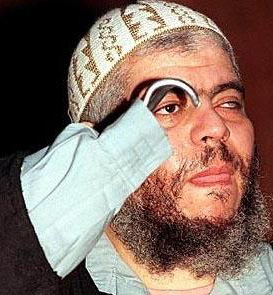
And so, like mischievous little boys who find the pirate lifestyle fascinating — raiding, killing, plundering, abducting, hiding in caves — so do some Western men find the lifestyle of the jihadist captivating. So they convert. Nor is it any small irony that the physical appearance of today's Islamist heroes is reminiscent of those wily pirates of old — from the furtive Taliban leader, "One-Eyed" Mullah Muhammad Omar, to London's radical ideologue Abu Hamza, who not only boasts one eye, but has a metal hook for a hand which he used to shake menacingly when referring to infidels. (Like Walt Disney's Captain Hook, he was affectionately referred to by his followers simply as "The Hook.")

It goes without saying, of course, that none of this is to imply that Muslims are piratical by nature. It is to say, however, that persons naturally inclined to such activities — including would-be converts — can and do find exoneration under the rubric of "sunna" and jihad legal theory: if it was okay for Muhammad and the first Muslims to wage war on, plunder, and enslave infidels — so the logic goes — surely it is okay today.

This phenomenon is further highlighted by the obvious intersection between prison incarceration and conversion to radical Islam. Indeed, most of the aforementioned proselytes had criminal records previous to their Islamic conversion, evincing a proclivity for violence and lawlessness: Reid and Abdullah had convictions for muggings; Padilla for gangster activity; and Lindsay for drug dealing. Patterson, Washington, and James began their terrorist cell while incarcerated in a very real cell for committing over a dozen armed robberies. And, most recently, the three dozen converts-turned-potential-terrorists who just fled to Yemen were all, as the ABC report puts it, "criminals."

Traditionally, one of the reasons ex-cons turn to religion is to change their evil ways. Not so these Western men-turned-Islamic-terrorists. Consciously or unconsciously, it would seem they embraced Islamism — and subsequently jihadism — merely to receive divine sanctioning for their otherwise violent and anarchic behavior, being transformed in the process from petty criminals to major criminals — terrorists and traitors.

Raymond Ibrahim is the associate director of the Middle East Forum, the author of The Al Qaeda Reader, and a visiting lecturer at the National Defense Intelligence College.

Copyright - Original materials copyright (c) by the authors.


Tuesday, February 16, 2010

A Moral Evaluation of the Gaza War - Operation Cast Lead.


by Asa Kasher

  • In Israel, a combatant is a citizen in uniform; quite often, he is a conscript or on reserve duty. His state ought to have a compelling reason for jeopardizing his life. The fact that persons involved in terrorism are depicted as non-combatants and that they reside and act in the vicinity of persons not involved in terrorism is not a reason for jeopardizing the combatant's life more than is required under combat conditions.
  • The ethical doctrine which follows from the IDF Ethics Code mandates that, whenever possible, you must warn non-combatants that they are residents of a neighborhood where it is dangerous to stay. In Gaza, the IDF employed a variety of unprecedented efforts meant to minimize injury to non-combatants, including warning leaflets, phone calls, and non-lethal warning fire.
  • There is no army in the world that will endanger its soldiers in order to avoid hitting the warned neighbors of an enemy or terrorist. Israel should favor the lives of its own soldiers over the lives of the well-warned neighbors of a terrorist when it is operating in a territory that it does not effectively control, because in such territories it does not bear the moral responsibility for properly separating between dangerous individuals and harmless ones.
  • Proportionality is not a numerical comparison, but an assessment of existing threats and the measures that must be taken in order to avert them. Proportionality is justifiability of the collateral damage on grounds of the military advantage gained.
  • Compare the Gaza operation to the U.S. Marine operation in Fallujah, Iraq, in late 2004. During the operation, about 6,000 Iraqis including 1,200-2,000 insurgents were killed. Of the city's 50,000 buildings, some 10,000 were destroyed, including 60 mosques. Thus, the U.S. left a trail of destruction in Fallujah far greater than anything Israel inflicted on Gaza. Comparing IDF activities to those of military forces of Western democracies is an essential part of any present attempt to use international law.
  • We in Israel are in a key position in the development of customary international law in this field because we are on the front lines in the fight against terrorism. The more often Western states apply principles that originated in Israel to their own non-traditional conflicts in places like Afghanistan and Iraq, then the greater the chance these principles have of becoming a valuable part of international law.


The "Just War Tradition"

On December 27, 2008, after sustaining eight years of rocket attacks, Israel launched a military operation against Hamas in Gaza. How are we to evaluate the Israeli incursion from a moral and ethical perspective?

As in any moral evaluation of a war, we must begin by distinguishing the "Why?" from the "How?" "Just war" theory distinguishes between jus ad bellum and jus in bello - between the moral justification for war and the moral justification for actions taken during a war. The decision to wage a war or to embark on a military operation is made by a government, by politicians. The implementation of that decision in the field, however, or the "How?" is determined by the military echelon. Generally speaking, a government is not to blame for the behavior of soldiers, and soldiers should not be blamed for the decisions made by the political class.

To ask "Why?" is to invoke several principles that belong to the "just war tradition." The first is the right of self-defense. From an external point of view, from the perspective of the relationships between states, a state has the right to defend itself against attack. From the internal point of view, namely from the perspective of the relationship between a state and its citizens, a government has the duty to defend its citizens. A state must protect its citizens from acts of violence because it must preserve the conditions that enable it to exist; foremost among them is the preservation of the lives of its citizens. A democratic state is therefore under an obligation to defend its citizens' lives. Thus the state has a right vis-à-vis the enemy and a duty vis-à-vis its citizens. This is the distinction between a state's right of self-defense, which relates to what is beyond its confines, and a state's obligation of self-defense, which relates to what is within its confines. Both are applicable in our case, since beginning in 2001 over ten thousand Kassam rockets and mortars were launched from Gaza into Israel, endangering the lives of the citizens under attack.

Second is the principle of last resort, which dictates that if a dispute can be solved without resort to military force and inflicting casualties, then the parties are obligated to do so. The use of military force is justified, in other words, only if all other alternatives have been exhausted. Here, too, Israel is presumably in the right, for rather than launching an offensive immediately after the first Kassam rocket struck Sderot, the country waited eight years, during which it pursued other solutions, both military and political. Israel's long abstention from any large-scale military response in the face of this aggression presumably meets the principle of last resort.

Third, the probability of victory principle dictates that a military operation may be launched only if it has a reasonable chance of successfully achieving its aims. Such operations may not be initiated merely as a symbolic gesture of bravery. If there is no chance of victory, the use of military force is mere bloodshed. Yet here we must distinguish between classical wars like World War II and the Six-Day War in which victory meant the elimination of a military threat, and asymmetric counterterrorism or counterinsurgency warfare against a non-state entity, like the type Israel faces against the terrorist militias of Hizbullah and Hamas. In the latter, victory means significantly improving the security situation in the southern part of Israel by damaging the enemy's armaments infrastructure and crippling its ability to carry out terrorist activities. Here again, last year's incursion into Gaza met the pertinent condition.


The Moral Standards of the Israel Defense Forces

In inquiring into the moral standards of a military force - which is not the same as addressing the standards of an individual - three independent questions come to the fore. One concerns the basic values on which the military force acts and the code of ethics according to which it behaves. A second level concerns the translation of such values into practice by means of doctrines, regulations, and rules of engagement. Values are abstract, doctrines are more concrete, while rules of engagement are quite concrete. Finally, there is the question that relates to the behavior of the troops on the battlefield.

As specified in a document called "The Spirit of the IDF," the values of the Israel Defense Forces, much like the values of the American and British forces, are impeccable. For example, there is the basic value of protecting the human dignity of every human being, even the most vile terrorist. How do we protect the human dignity of a terrorist? By considering whether to kill him or capture him or leave him alone.

An additional, uniquely Israeli value is that of the sanctity of human life, both of our troops, our citizens, and other human beings. It appears in an explicit form in no other military code of ethics.

The military code also enshrines a fundamental value known as "purity of arms," which actually means the purity of the usage of arms. Soldiers may use force only for accomplishing their mission, and nothing more. Anything you do with your gun which is not defending the citizens by accomplishing your specific mission is deemed immoral.

In my view, no military code of ethics is morally superior to the code of ethics of the IDF.


A View of International Law

We turn now to that part of international law that concerns warfare. This was elaborated in the seventeenth century by the Dutch legal theorist Hugo Grotius on the foundations of a very long philosophical and theological tradition - the "just war tradition." Later it took the form of the Hague Conventions and the Geneva Conventions.

Strictly speaking, international law does not apply to the situation Israel faced in Gaza. Its provisions were intended to guide a military conflict between armies with clear chains of command in which all the troops wear uniforms, bear arms openly, and are responsible to the civil government of a certain state. Terrorist militias like Hamas, however, are not guided by a state. Hamas acts from a territory which is a political entity, the Palestinian Authority, but which is not a state. Moreover, Palestinian terrorists, deliberately and constantly, blur the distinction between combatants and non-combatants, both among the Palestinian population and among the Israelis they target. The classical assumption of mutual observance of the norms of warfare never holds in the war on terrorism.

How then can international law meant for classical warfare apply to nontraditional wars? One way is by means of creative interpretations of international law. The problems with such an approach, however, are immediately apparent. Whose interpretation prevails? The interpretation of the Supreme Court of Israel? The U.S. Supreme Court? The Marine Corps' Judge Advocate Division? Somebody within the United Nations?


An Ethical Doctrine for Combating Terrorists

Israel should take a different approach, for it is interested in extending international law rather than replacing present provisions by other ones. Extending international law entails creating new principles in the spirit of the "just war tradition" by attending to fundamental principles, and not merely reinterpreting a certain clause in a certain convention. As it happens, Major General Amos Yadlin and I, as a first step in such a direction, put forward a document that offers an ethical doctrine for combating terrorists. This document was published in the Journal of Military Ethics in 2005. Here are some elements of it.

Usually, the duty to minimize casualties among combatants during combat is last on the list of priorities. We firmly reject such a conception. In Israel, a combatant is a citizen in uniform; quite often, he is a conscript or on reserve duty. His state ought to have a compelling reason for jeopardizing his life. The fact that persons involved in terrorism are depicted as non-combatants and that they reside and act in the vicinity of persons not involved in terrorism is not a reason for jeopardizing the combatant's life more than is required under combat conditions.

What we need instead of the crude and now impractical distinction familiar from the case of regular wars is a scale of involvement in terrorist activity: There are people who are directly involved, those who are indirectly involved, and those who are not involved at all. The second two categories may never be targeted. An operation may only target those who are directly involved, i.e., only if they play a significant role in creating an otherwise unavoidable danger.

So our doctrine allows targeted killing when it is necessary to stop a certain operation against the citizens of Israel and when the role played by the target is crucial to the operation. This is not a form of punishment. The only body that can impose punishment is the court. This is meant only to stop an ongoing act of terrorism. Nor is such killing a form of deterrence. Killing for the sake of deterrence is something akin to terrorism. According to our doctrine, it is impermissible to kill for deterrent purposes alone. Israel killed Hamas leaders Sheik Ahmed Yassin and Abdel Aziz Rantisi, for instance, not to achieve a deterrent effect, but because they posed a significant threat to Israeli lives. Deterrence has been an ensuing byproduct.

Our doctrine also draws a distinction between three different standards of conduct to guide a soldier in any military action: (a) a standard he should follow when facing a group comprising enemy combatants and no one else; (b) a standard he should follow when facing a group of enemy non-combatants who are not participating in the fighting and are not in proximity to enemy combatants; and (c) a standard he should follow when facing a mixed group of combatants and non-combatants.

The Gaza operation mostly took place under conditions that required the application of the third standard of conduct. In the third situation, "just war tradition" theory posits the "double effect" principle. According to this principle, when we are seeking a goal that is morally justified in and of itself, then it is also morally justified to achieve it, even if this may lead to undesirable consequences - on the condition that the undesirable consequences are unavoidable and unintentional, and that an effort was made to minimize their negative effects.


The Need to Warn Non-combatants

Our doctrine mandates that whenever possible, you must warn non-combatants that they are residents of a neighborhood where it is dangerous to stay. The responsibility for minimizing injury to non-combatants entails the responsibility to separate them from terrorists and to remove them from the area of combat. In Gaza, the IDF employed a variety of effective efforts meant to minimize collateral damage, including widely distributed warning leaflets, more than 150,000 warning phone calls to terrorists' neighbors, and non-lethal warning fire (the so-called "knock on the roof") - unprecedented efforts in every respect.

Writing in the New York Review of Books, Avishai Margalit and Michael Walzer attacked our doctrine on the grounds that such warnings are not enough. "In such cases," they wrote, "some civilians never leave, despite repeated warnings - because they are old and sick, or because they are caring for relatives who are old and sick, or because they are afraid that their homes will be looted, or because they have no place to go."

Now under such circumstances, should Israel send in troops in order to find out whether there are non-combatants in addition to the terrorists or not? Our doctrine says Israel was not required to send in troops because the mixture of terrorists and non-combatants is a mixture not under our moral responsibility in a territory over which we do not have effective control, as in Gaza. In a state of effective control, the responsibility for distinguishing between terrorists and non-combatants is placed upon Israel's shoulders. We do have effective control over Tel Aviv, Jerusalem, the Golan Heights, and many other places, so there we do jeopardize the lives of police when necessary to prevent criminal acts without harming the neighbors. That is their duty.

But there is no army in the world that will endanger its soldiers in order to avoid hitting the well-warned neighbors of an enemy or terrorist. When Israel does not have effective control over a territory, the moral responsibility for distinguishing between terrorists and non-combatants is not placed upon its shoulders. Gaza was not under our effective control. Therefore, one does not have to jeopardize the lives of the troops in such circumstances just for that sake. If you look at non-combatants in a territory where one does not have effective control and have already made a series of warnings that are known to have been effective, then the lives of the troops come first.

In sum, Israel should favor the lives of its own soldiers over the lives of the well-warned neighbors of a terrorist when it is operating in a territory that it does not effectively control, because in such territories it does not bear moral responsibility for properly separating between dangerous individuals and harmless ones, beyond warning them in an effective way. The sick can wave white flags, their relatives can do it too. The person who is afraid his home would be looted does not create by his odd behavior a reason for jeopardizing soldiers' lives. The person who does not know where to go is a myth.


Understanding Proportionality

A word about proportionality. Many critics of the Gaza operation charged that, since very few people were killed by rocket attacks on Israel's population, while many people were killed by the Israeli response, this response was disproportionate and, therefore, contrary to international law. However, the way the term "proportionality" has been employed in public discourse is usually wrong. First, the number of Israeli casualties is not a reliable measure of the threat posed by enemy rockets. A Grad rocket hit a Beersheba classroom on December 31, 2008; had the missile hit the school when classes were in session, dozens of schoolchildren would have been killed. Luck does not diminish the threat posed by an attack. Proportionality is not a numerical comparison, but an assessment of justifiability of the collateral damage made by the military advantage gained.

An example: At the beginning of the Gaza campaign, a police headquarters was hit because so-called policemen were part of the Hamas security forces and some of them were suicide bombers and others were firing rockets. They were not innocent people involved in traffic control. They were part of a Hamas security force that acted like a reserve unit, and during military warfare you are permitted to hit reserve units that are going to enter the battlefield. The portrayal of those people as if they were all innocent policemen is misleading. Even if some of them were innocent, their attack was utterly justified by the military advantage gained by attacking them. (We assume that warning these innocent individuals would have been futile.)

Were some soldiers trigger-happy in Gaza? Perhaps. But was there a policy of trigger-happiness? On the basis of two kinds of indirect evidence, we can say that there was not. First, if there had been a policy of trigger-happiness, there would have been many thousands of Palestinian casualties. Second, if there had been a policy of trigger-happiness, then the distribution of men, women, and children among the casualties would have closely resembled their distribution in the population. But that is not the case. The vast majority of casualties in Gaza were men; women and children comprised about a sixth of the casualties.


Comparing Israel's Conduct in Gaza to U.S. Conduct in Iraq

Compare the Gaza operation to Operation Phantom Fury, which the U.S. Marines launched in Fallujah, Iraq, in late 2004. Many of Fallujah's 350,000 residents fled the city before the operation, leaving an estimated 3,000 insurgents behind. During the operation, about 6,000 Iraqis including 1,200-2,000 insurgents were killed. Of the city's 50,000 buildings, some 10,000 were destroyed, including 60 mosques, each of which was used to store substantial quantities of armaments and munitions. Even according to Palestinian figures, which are unreliable, 1,400 Palestinians were killed in the Gaza operation. Thus, the United States left a trail of destruction in Fallujah that was far greater than anything Israel inflicted on Gaza. So there is no basis to claim that Israeli conduct of anti-terrorist warfare is less restrained than that of other enlightened states.

We compare Operation Phantom Fury and Operation Cast Lead not in order to use the results for casting a shadow on the former or praising the latter. We compare the operations because the way democratic states conduct their military activities is what should interest us, rather than some creative and often hostile interpretation of the conventions, as a step towards instituting customary international law.

Customary international law accrues through an historic process. If states are involved in a certain type of military activity against other states, militias, and the like, and if all of them act quite similarly to each other, then there is a chance that it will become customary international law. We in Israel are in a key position in the development of law in this field because we are on the front lines in the fight against terrorism. I am not optimistic enough to assume that the world will soon acknowledge Israel's lead in developing customary international law. My hope is that our doctrine, give or take some amendments, will in this fashion be incorporated into customary international law in order to regulate warfare and limit its calamities.


Investigations

When claims are made with respect to IDF conduct during the Gaza operation, no matter by whom, the IDF should investigate them, even if they appear to be fabricated. A commander may not ignore allegations about his troops; this is required professionally, ethically, and morally.

The IDF is a serious organization, interested in improving its activity on all levels - professional, military, legal, moral, and ethical. All military actions carried out during the Gaza operation should undergo a professional, thorough, and detailed investigation, just like any other non-routine and complicated professional operation. The IDF has an obligation to investigate itself just as any other professional organization would. This standard applies to a physician after an operation, an engineer after completing a bridge, and a commander after military activities. If some troops are suspected of breaching the law, then let the military police investigate. Indeed, there are significantly many ongoing investigations. Nothing more is required.

*     *     *

Prof. Asa Kasher is the Laura Schwarz-Kipp Professor Emeritus of Professional Ethics and Philosophy of Practice and Professor Emeritus of Philosophy at Tel Aviv University in Israel.

Copyright - Original materials copyright (c) by the authors.


The Consequnces of Obama: Terrorsim is Back.


by  Dick Morris and Eileen McGann

Rev. Jeremiah Wright said that the "chickens came home to roost" on 9-11. He was wrong. But they have now, indeed, come home to roost as we witness the results of the unilateral disarmament President Obama has practiced in the war on terror. Beset once more by terrorism on our soil and in our airspace, we find ourselves suddenly overmatched by those who the Bush Administration kept away from our shores for seven years.

This new onset of terrorism is not the product of any change in the international environment or some new "systemic" flaw in our intelligence operations. It is due to the policy of President Obama in letting down our guard and inhibiting those charged with our protection.

Under Obama, the hunters have become the hunted as America inverted her priorities. Those who have been working to keep us safe have, themselves, come under scrutiny for profiling, harsh interrogation techniques, and a failure to give terrorists constitutional rights they don't have.

The result is predictable: Timidity and caution have become the order of the day in our intelligence community. In a world where hunch, guesswork, and a willingness to leap to conclusions by imagining the worst are vital to success, a cover your butt mentality has taken over. If you come to the wrong conclusion, if you profile without adequate justification, if you accuse incorrectly, you are finished. Your career and your pension will be gone. Guess right and you are accorded anonymity. Guess wrong and you're through.

The failure of the intelligence operatives to pass along the information about the Ft. Hood shooter or the airline bomber did not flow from a blind spot or a lack of co-ordination, they stemmed from terrorism of a different sort -- the terror of making a mistake and falling on the harsh mercies of Eric Holder.

Now Nigerian terrorist Umar Farouk Abdulmutall sits, lawyered up, in a federal prison. His interrogation will proceed, if at all, under the watchful eye of his counsel. He will not finger other operatives nor warn us of other impending attacks. He will receive the full panoply of constitutional rights, none of which he is entitled to.

Barack Obama does not seem to understand that these terrorists come here to use our laws and our system, not to protect us, not even to shelter themselves, but to destroy us.

Abdulmutall should be interrogated by the military, without benefit of counsel. The evidence we obtain should not be admissible in a court of law nor used as the basis for his sentencing. But it must be used to ward off future threats and attacks.

But Obama is a true believer. His persistence in downgrading the war on terror to a criminal investigation will continue. And we will experience more and more attacks. Because pessimism is the bodyguard of liberalism, he will explain to us that the world has become more threatening and that he is doing all he can to keep us safe. But the truth will be that it will have been his policies and priorities that are leaving us exposed.

And the attacks will continue.


Dick Morris and Eileen McGann

Copyright - Original materials copyright (c) by the authors.


That "Cost-Benefit" Thing: How U.S. Intelligence Assessments Misunderstand Iran and Lots More in the Middle East.


by Barry Rubin

"We continue to judge that Iran's nuclear decision-making is guided by a cost-benefit approach, which offers the international community opportunities to influence Iran." Dennis Blair, chief of U.S. intelligence in his annual threat assessment report for 2010.

Forget about  Nazi analogies or even Stalinist ones. Let's just use some Middle East parallels, formulated fictionally as if they'd come from the Dennis Blair school of thought:

We continue to judge that the Arab world's pursuit of its conflict with Israel is guided by a cost-benefit approach, which offers the international community opportunities to bring it to an end in the near future."  Annual threat assessment report for 1950.

We continue to judge that Egypt's foreign policy-making is guided by a cost-benefit approach, which offers the United States a chane to turn it into an ally." Annual threat assessment report for 1952.

We continue to judge that Syrian and Iraqi decision-making is guided by a cost-benefit approach, which means these countries will see that friendship with the West has more to offer them than alliance with the USSR, especially given the fact that Communism is in conflict with their religion and way of life." Annual threat assessment report for 1960.

We continue to judge that Egyptian and Syrian decision-making is guided by a cost-benefit approach, which means they will not create a crisis leading to war with Israel." Annual threat assessment report for 1967.

We continue to judge that Egyptian and Syrian decision-making is guided by a cost-benefit approach, which means they will not create a crisis leading to war with Israel." Annual threat assessment report for 1973.

We continue to judge that Arab states' decision-making is guided by a cost-benefit approach, which means they will quickly join in to the Camp David process and support the Egypt-Israel peace agreement." Annual threat assessment report for 1979.

We continue to judge that Iranian decision-making is guided by a cost-benefit approach, which means they will not create a crisis leading to a long-term conflict with the United States. Annual threat assessment report for 1979.

We continue to judge that Iraqi decision-making is guided by a cost-benefit approach, which means they will not go to war with Iran, a country that has a much larger population, and suffer huge damage as a result. Annual threat assessment report for 1980.

We continue to judge that Iraqi decision-making is guided by a cost-benefit approach, which offers the international community opportunities to influence Iraq into not escalating the conflict by offering it concessions over Kuwait. Annual threat assessment for 1990.

"We continue to judge that Iraq's decision-making is guided by a cost-benefit approach, which suggests that Saddam Hussein will cooperate fully with the international order to get the sanctions removed from his country. Annual threat assessment report for 1995.

We continue to judge that Palestinian decision-making is guided by a cost-benefit approach, which offers the international community opportunities to influence the PLO into making coprehensive peace with Israel. Annual threat assessment report for 1999."

We continue to judge that the decision-making of Iraq's elite and people is guided by a cost-benefit approach, which offers the international community opportunities to turn Iraq into a stable democracy once Saddam Hussein is overthrown. Annual threat assessment report for 2003.

We continue to judge that the decision-making of Iran's regime is guided by a cost-benefit approach, which ensures that Iran will become more moderate and not take on the risks and high expenditure of resources required by a drive to get nuclear weapons. Annual threat assessment report for 2006.


Ok, enough examples. Some--actually many--of these kinds of statements were made at the time by mainstream experts including many of those in government. Today, we have lots of equivalents, not only concerning Iran's nuclear program but also including: Syria in maintaining its close alliance with Iran; radical Islamist groups remaining moderate; the Palestinians seeking the quickest deal possible to get a state.

The mistake here is not in thinking that Middle Eastern decisionmakers are rational--that is, use a cost-benefit approach--but in not understanding how they define costs and benefits. Example. Hamas attacks Israel and loses miserably. Did they make a mistake about costs and benefits? No, because they are still in power and--with considerable help from the West--have turned a military disaster into a political success by persuading the world that Israel is the bad guy. Moreover, for them the greatest benefit is to be able to continue the struggle for decades more. From a U.S. standpoint their calculation was irrational and wrong, with the cost seeming to outweigh any conceivable benefit. From their own standpoint the benefits did exceed the cost.

Regarding Iran, Western leaders simply fail to understand that Iran's sole reason for seeking nuclear weapons is not just to fire them at Israel and that if the United States prevents them from doing so that will be a great American victory. On the contrary, the Iranian regime's assessment of costs and benefits is totally different and involves lots of factors that would benefit the country even if it never shoots off any nuclear weapons. Once Iran has nuclear weapons, the rulers know they will:

--Increase domestic support through demagogic appeals to Iran's greatness and Islam's triumph.

--Intimidate Arab states and Europe into giving them lots of things they want, including reducing cooperation with the United States, running away even faster from peace with Israel, accepting Tehran's desires on oil prices, and lots more.

--Shifting the strategic power balance greatly against the United States and its allies, also by exposing them as weak and in retreat.

--Mobilize massive support among Muslims elsewhere both for Iran as leader of the Muslims and for radical Islamism as an ideology that is winning.

So let's consider what Iran's annual threat assessment report for 2010 should look like:

"We continue to judge that the U.S. decision-making is guided by a cost-benefit approach in which confrontation is feared, the process of decadence continues, and almost anything is preferable to taking leadership and working hard to block our getting nuclear weapons. This offers us tremendous opportunities to seize leadership of the Muslims and of the Middle East. Since the world will do nothing that will materially hurt us the prospects are good for our obtaining Weapons of Mass Destruction and thus influencing everyone to retreat as we advance."


Barry Rubin is director of the Global Research in International Affairs (GLORIA) Center and editor of the Middle East Review of International Affairs (MERIA) Journal.

Copyright - Original materials copyright (c) by the authors.
 

Israel Threatens Assad with Regime Change.

by Michael J. Totten

The Israeli government may be moving beyond its fear and loathing of a Syria governed by somebody other than Bashar Assad. For years, Jerusalem has been careful to avoid doing anything or even saying anything that might destabilize Damascus. But after Syria's foreign minister, Walid Moallem, threatened Israel this week with a war that would be fought "inside your cities," Israeli Foreign Minister Avigdor Lieberman snapped. "Not only will you lose the war," he said to Assad, "you and your family will no longer be in power."

There are good reasons to feel squeamish about the aftermath of regime change, whether it comes at the hands of Israelis or not. The same sectarian monster that stalks Lebanon and Iraq lives just under the floorboards in Syria. The majority of Syria's people are Sunni Arabs, but 30 percent or so are Christians, Druze, Alawites, or Kurds. Assad himself is an Alawite, as are most of the elite in the ruling Baath Party, the secret police, and the military. Their very survival depends on keeping Syria's sectarianism suppressed. The country could easily come apart without Assad's government enforcing domestic peace at the point of a gun. This is a serious problem. It's not Israel's problem, but it's a problem.

The Israelis have been worried about something else: that after Assad, Syria might be governed by the fundamentalist Muslim Brotherhood organization or something that looks a lot like it. There's no guarantee, though, that the Muslim Brothers would take over. They aren't in power anywhere else in the Arab world. Even if they do succeed Assad, they couldn't ramp up the hostility much. Assad's is already the most hostile Arab government in the world. A replacement regime, especially one dominated by Sunnis rather than by minorities who lack legitimacy and feel they have something to prove, would likely gravitate toward the regional mainstream.

Millions of Syrians sympathize with the Muslim Brotherhood. They're tired of being lorded over by secularists from a faith they consider heretical. Still, fundamentalist Sunni Arabs who try to impose some kind of theocracy will meet automatic resistance from the country's Christians, Alawites, Druze, Kurds, and secular and moderate Sunnis. Theocracy is hardly the norm in the Middle East anyway. Not a single Arab country — unless you consider Gaza a country — is governed by a religious regime like the one in Iran.

No dictatorship rules forever. The Alawite regime in Damascus will eventually be replaced, one way or another. Syria will have to reckon with its own demons sooner or later, and it will either hold together and muddle through, or it won't. Just as every unhappy family is unhappy in its own way, unstable countries fall apart in their own way. Only a fool would dismiss as irrelevant the sectarian bloodletting Iraq has suffered during the last several years, but Syria's problems are its own, and a few critical ingredients that made Iraq into a perfect storm are missing.

Assad's own foreign policy was — and, to an extent, still is — a big part of Iraq's problem. He made Syria a transit hub for radical Sunnis from all over the Arab world who volunteered to martyr themselves fighting American soldiers, Shia civilians, and the Shia-dominated government in Baghdad. That won't be a problem once Assad is out of the picture.

Freelance jihadists won't be interested in fighting the next Syrian government anyway if the Alawites are stripped of their power. Sunnis will dominate the government again, as they should because they're the majority. Sunni Arabs all over the Middle East are still unhappy that Iraq is mostly governed by Shias, but they'll be at peace with a Sunni-led Syria.

I'd love to see Assad get his just desserts after what he's done to his neighbors and his countrymen. It will be terrific if his Arab Socialist Baath Party regime is replaced with something more moderate and civilized. The odds of a smooth transition and a happy ending, though, are not great. Syria has no grassroots movement demanding democratic change right now as Iran does. The Israelis are right to be cautious.

But they're also right to threaten to pull Assad's plug if he doesn't back off. He's a lot less likely even to start the next war if he knows he'll be held accountable. The fact that he can suppress sectarian violence at home isn't worth much if he won't stop exporting it everywhere else.


Michael J. Totten

Copyright - Original materials copyright (c) by the authors.


Arabs to block Canberra's UN push.

by Greg Sheridan


KEVIN Rudd's bid for a UN Security Council seat has been dealt a severe blow after a warning from the Arab League that it is less likely to succeed because of Australia's support for Israel.

Hashem Yousseff, chief of cabinet for Arab League secretary-general Amr Moussa, told The Australian Canberra kept "bad company" at the UN, where it often opposes anti-Israel resolutions in alliance with the US, Canada and small Pacific island states.

Australia's support for Israel, he said, was "one of the elements that will be taken into consideration" by the 22-member Arab League in deciding whether to support Australia's bid for a seat on the UN Security Council for the 2013-14 term.

Mr Yousseff said the Arab nations would consider how different candidates affected their interests. "For us, the Arab-Israeli issue is an important part of the consideration."

Canberra has invested huge political, diplomatic and financial resources in its bid for one of 10 non-permanent Security Council seats.

But Mr Yousseff's comments indicate it will be difficult for Australia to out-poll the European nations, which are regularly more critical of Israel.

Australia has not held a seat on the Security Council for more than 20 years.

Mr Rudd has cast his foreign policy as consisting of three pillars - the US alliance, engagement with Asia and leadership in multilateral organisations. A Security Council seat would be the crowning achievement of the multilateral pillar.

The Security Council seat will be voted on by all 192 UN members. Although the Arab League represents only 22 of them, it often votes at the UN in alliances with the African Union and with the Non-Aligned Movement.

Determined opposition from any of these blocs makes an Australian bid unlikely to succeed. It was to avoid blackmail on policy issues such as this that the Howard government abandoned its attempt to win a seat in 1996.

Further evidence of Arab opposition to Australia's bid emerges in an extravagantly worded letter from the Syrian ambassador in Canberra, Tamman Sulaiman, to Mr Rudd.

The letter, dated November 26 last year, strongly attacks expressions of concern in the Department of Foreign Affairs and Trade's annual report about a clandestine Syrian nuclear program, and blasts the Rudd government for its silence over the Israeli nuclear program.

Mr Sulaiman accuses the Australian government of following an "Israeli concoction" in expressing concern about the Syrian nuclear program.

He makes the link between Canberra's support of Israel and Arab opposition to its Security Council bid explicit when he writes: "The main challenge that lies ahead of Australia as a candidate for Security Council membership is to deal with international problems evenhandedly and within the framework of international legality.

"The Syrian Arab Republic does not expect Australia, the peace-loving and responsible member of the United Nations, to accept double or multiple standards when it comes to the Israel state-sponsored terrorism, which is the main threat to peace and security in the world."

But the ambassador goes on to express appreciation for Australia changing its vote on two resolutions to be more critical of Israel.

Under the Rudd government, Canberra has changed its position on several resolutions from one supportive of Israel to one critical. This has earned criticism from Australia's Jewish community and from within the wider foreign policy debate.

However, Australia still supports Israel in the overwhelming majority of resolutions. In a January letter from Mr Sulaiman to Foreign Minister Stephen Smith, Damascus complains bitterly of Australia voting alone with the US, Canada, Israel itself and four Pacific island states against two anti-Israel resolutions.

On the positive side, Mr Yousseff said that he would explore a more formal dialogue mechanism between Australia and the Arab League.

This is likely to be at the ministerial level. The Rudd government last year announced a ministerial-level dialogue with the Gulf Co-operation Council, but this dialogue has resulted in no meetings so far.


Greg Sheridan

Copyright - Original materials copyright (c) by the authors.


Sunday, February 7, 2010

It's Inter-Arab Violence, Stupid!

(Reassessment of Middle East Policy)

by Yoram Ettinger

1. An assessment of the politically-correct Western policy-making, media commentaries and conventional wisdom raises the following questions:

*Is the Palestinian issue the crux of Middle East turbulence?

*Is the Arab-Israeli conflict the core cause of anti-Western Islamic terrorism?*

*Are Arab leaders preoccupied with the Palestinian issue and with the Arab-Israeli conflict?

*Is the Arab-Israeli conflict "The Middle East Conflict"?

*How valid is the contention that, in the Middle East, on words one does not pay custom, hence the awesome gap between rhetoric and reality?!

2. An analysis of Middle East politics during the last 1,400 years documents the following:

Since the 7th century, inter-Arab and inter-Muslim conflicts in the Muslim Middle East - between North Africa and the Persian Gulf - have been the role model of state-sponsored terrorism, hate-education, inherent domestic and regional violence, endemic unpredictability, instability, volatility, fragmentation, religious and political intolerance, suppression of human rights, nepotism and treachery.

3. Aijaz Zaka Syed, the opinion editor of Dubai's "Khaleej Times," asserts (Al Aharam weekly, Jan. 20, 2010) that "more Muslims than non-Muslims have been killed in macabre attacks carried out in the name of Islam." Nearly 50 people were killed and 500 injured during the December 29, 2009 terrorist attack on a Karachi religious procession. But more than the loss of lives - "that has long become a daily mayhem" - it is the devastation wreaked on the country's biggest city that will haunt Pakistan for a long time to come. "Thousands of businesses, shops and commercial establishments were destroyed in no time, incurring losses worth billions of dollars, [in addition to] the attack on the heavily attended volleyball match in the troubled Northwest Pakistan, which killed 75 villagers and left scores maimed…"

"None of those watching the match, or attending the Karachi procession had anything to do with the wars in Afghanistan, Pakistan or Iraq. They had no sympathy or affiliation whatsoever with the US and the West. Then why have they been targeted?

"How does it help the cause of these so-called defenders of Islam, when they target innocent Muslims and non Muslims? This death cult is the ultimate injustice…

4. Jordanian economist, Yusuf Mansur writes ("Creative Jordan" website, July 25, 2009) that "Arabs are ruled by a cartel of authoritarian regimes, practiced in the arts of oppression. Arab unity is as elusive as ever. Inter-Arab divisions are bitter…Hardly any of the 21 Arab states can plausibly claim to be a genuine democracy. Therefore, Arab regimes rely on repression in order to stay in power…

"The political instability of the Arab world is in turn connected to another problem: the missing glue of nationhood…Egyptian diplomat, Tahsin Bashir, called the new Arab states of Middle East 'Tribes with Flags.' In countries as different as Lebanon and Iraq, ethnic, confessional or sectarian differences have thwarted programs of nation-building. That is why Iraq fell apart into Sunni, Shia and Kurdish fragments after the removal of Saddam despite decades of patriotic indoctrination. Syria could follow suit if the minority Alawi sect of the ruling Assad family were somehow to lose control of this largely Sunni country. Sudan has seen not one, but two, civil wars between its Arab-dominated centre and the non-Arab minorities in its south and west…

"Up to a million citizens of the Arab world may have perished violently since 1990… The disturbing point for the future is that none of the underlying causes of conflict enumerated above has disappeared. On the contrary, each appears to be taking on the characteristics of a chronic condition…Political and social discontent is in danger of tipping into violence – even into revolution."

5. The aforementioned facts, along with current Middle East events, produce the following observations:

*The Arab/Muslim Middle East is the abode of anti-Western values, irrespective of the Arab-Israeli conflict, independent of the Palestinian issue and regardless of Israel's policies and existence.

*Western values such as freedom of expression, religion, press, market and the Internet constitute a lethal threat to Arab/Muslim regimes.

*The Arab/Muslim Middle East constitutes a potent threat to vital Western interests.

*Anti-Western terrorism is a natural derivative of inter-Arab/Muslim terrorism and values. Why would terrorism against the infidel be less savage than terrorism against fellow-Muslims?!

*A strong Jewish State enhances deterrence in face of inherent Middle East violence, extending the strategic hand of the West, bolstering relatively-moderate regimes and restraining rogue regimes.

*Agreements concluded in the Arab/Muslim Middle East cannot be more credible and durable than the policies of Arab/Muslim regimes. Why would Arab/Muslim regimes comply with agreements signed with the infidel, while they do not comply with most agreements signed with fellow-Muslims?!

*The inherent instability, and the violent unpredictability, of Arab/Muslim Middle East regimes and policies feed the fragility of Middle East agreements.

*Is it reasonable to assume that Arabs would accord the Jewish State a durable-peace, which they have not been able to accord one another?!

*The proposed Palestinian state – against the backdrop of the 50 year track record of Fatah, PLO and Hamas – would merge naturally into the violent nature of the Middle East. A Palestinian state would constitute fuel – and not water – to Middle East turbulence.

*Inter-Arab/Muslim reality – of no comprehensive inter-Arab peace since the 7th century - dictates steep security requirements for the Jewish State.

*Inter-Arab/Muslim reality dictates a thorough reassessment of Western policy toward the Middle East in general and the Arab-Israeli conflict and the Palestinian issue in particular.

Yoram Ettinger
Copyright - Original materials copyright (c) by the authors.

It's Inter-Arab Violence, Stupid!


(Reassessment of Middle East Policy)

by  Yoram Ettinger

1.  An assessment of the politically-correct Western policy-making, media commentaries and conventional wisdom raises the following questions:

*Is the Palestinian issue the crux of Middle East turbulence?

*Is the Arab-Israeli conflict the core cause of anti-Western Islamic terrorism?*

*Are Arab leaders preoccupied with the Palestinian issue and with the Arab-Israeli conflict?

*Is the Arab-Israeli conflict "The Middle East Conflict"?

*How valid is the contention that, in the Middle East, on words one does not pay custom, hence the awesome gap between rhetoric and reality?!

2.  An analysis of Middle East politics during the last 1,400 years documents the following:

Since the 7th century, inter-Arab and inter-Muslim conflicts in the Muslim Middle East - between North Africa and the Persian Gulf - have been the role model of state-sponsored terrorism, hate-education, inherent domestic and regional violence, endemic unpredictability, instability, volatility, fragmentation, religious and political intolerance, suppression of human rights, nepotism and treachery.

3.  Aijaz Zaka Syed, the opinion editor of Dubai's "Khaleej Times," asserts (Al Aharam weekly, Jan. 20, 2010) that "more Muslims than non-Muslims have been killed in macabre attacks carried out in the name of Islam." Nearly 50 people were killed and 500 injured during the December 29, 2009 terrorist attack on a Karachi religious procession. But more than the loss of lives - "that has long become a daily mayhem" - it is the devastation wreaked on the country's biggest city that will haunt Pakistan for a long time to come. "Thousands of businesses, shops and commercial establishments were destroyed in no time, incurring losses worth billions of dollars, [in addition to] the attack on the heavily attended volleyball match in the troubled Northwest Pakistan, which killed 75 villagers and left scores maimed…"

"None of those watching the match, or attending the Karachi procession had anything to do with the wars in Afghanistan, Pakistan or Iraq.  They had no sympathy or affiliation whatsoever with the US and the West.  Then why have they been targeted?

"How does it help the cause of these so-called defenders of Islam, when they target innocent Muslims and non Muslims?  This death cult is the ultimate injustice…

4.  Jordanian economist, Yusuf Mansur writes ("Creative Jordan" website, July 25, 2009) that "Arabs are ruled by a cartel of authoritarian regimes, practiced in the arts of oppression.  Arab unity is as elusive as ever. Inter-Arab divisions are bitter…Hardly any of the 21 Arab states can plausibly claim to be a genuine democracy. Therefore, Arab regimes rely on repression in order to stay in power…

"The political instability of the Arab world is in turn connected to another problem: the missing glue of nationhood…Egyptian diplomat, Tahsin Bashir, called the new Arab states of Middle East 'Tribes with Flags.'  In countries as different as Lebanon and Iraq, ethnic, confessional or sectarian differences have thwarted programs of nation-building. That is why Iraq fell apart into Sunni, Shia and Kurdish fragments after the removal of Saddam despite decades of patriotic indoctrination.  Syria could follow suit if the minority Alawi sect of the ruling Assad family were somehow to lose control of this largely Sunni country. Sudan has seen not one, but two, civil wars between its Arab-dominated centre and the non-Arab minorities in its south and west…

"Up to a million citizens of the Arab world may have perished violently since 1990… The disturbing point for the future is that none of the underlying causes of conflict enumerated above has disappeared.  On the contrary, each appears to be taking on the characteristics of a chronic condition…Political and social discontent is in danger of tipping into violence – even into revolution."

5.  The aforementioned facts, along with current Middle East events, produce the following observations:

*The Arab/Muslim Middle East is the abode of anti-Western values, irrespective of the Arab-Israeli conflict, independent of the Palestinian issue and regardless of Israel's policies and existence.

*Western values such as freedom of expression, religion, press, market and the Internet constitute a lethal threat to Arab/Muslim regimes.

*The Arab/Muslim Middle East constitutes a potent threat to vital Western interests.

*Anti-Western terrorism is a natural derivative of inter-Arab/Muslim terrorism and values. Why would terrorism against the infidel be less savage than terrorism against fellow-Muslims?!

*A strong Jewish State enhances deterrence in face of inherent Middle East violence, extending the strategic hand of the West, bolstering relatively-moderate regimes and restraining rogue regimes.

*Agreements concluded in the Arab/Muslim Middle East cannot be more credible and durable than the policies of Arab/Muslim regimes. Why would Arab/Muslim regimes comply with agreements signed with the infidel, while they do not comply with most agreements signed with fellow-Muslims?!

*The inherent instability, and the violent unpredictability, of Arab/Muslim Middle East regimes and policies feed the fragility of Middle East agreements. 

*Is it reasonable to assume that Arabs would accord the Jewish State a durable-peace, which they have not been able to accord one another?! 

*The proposed Palestinian state – against the backdrop of the 50 year track record of Fatah, PLO and Hamas – would merge naturally into the violent nature of the Middle East. A Palestinian state would constitute fuel – and not water – to Middle East turbulence.

*Inter-Arab/Muslim reality – of no comprehensive inter-Arab peace since the 7th century - dictates steep security requirements for the Jewish State.

*Inter-Arab/Muslim reality dictates a thorough reassessment of Western policy toward the Middle East in general and the Arab-Israeli conflict and the Palestinian issue in particular.


Yoram Ettinger

Copyright - Original materials copyright (c) by the authors.