Monday, November 14, 2016

The Gay British MP Fighting for the Anti-Gay Muslim Brotherhood - Daniel Greenfield


by Daniel Greenfield


Is the Brotherhood really a non-violent democratic movement that loves Christians and Jews?

 
Daniel Greenfield, a Shillman Journalism Fellow at the Freedom Center, is a New York writer focusing on radical Islam.

Crispin Blunt, the gay Tory parliamentarian, has emerged as one of the most vocal British defenders of the Muslim Brotherhood.  The chairman of the Foreign Affairs Select Committee is an odd figure to head up the defense of Islamists. After two decades of marriage in which he denounced “homosexuality,” Crispin dumped his wife, who had allegedly helped finance his career, and came out of the closet.

The timing was perfect. As one source put it, “Despite his recent gaffe, his position as a minister is safer now than ever before.” The unpleasant white aging politician was now an official minority.

But Blunt often appears less animated by gay rights, aside from a vocal defense of the dance club drug “poppers,” than by Islamism. The former chair of the Council for the Advancement of Arab-British Understanding was a known opponent of the Jewish State. He had even accused Israel of perpetrating “a Holocaust of equal proportions” against its Muslim attackers.

At the time, Blunt suggested that the British government was inconsistent in favoring military intervention in Kosovo, but not Israel.

Crispin Blunt’s current crusade though extends far beyond opposing Israel. Instead he has launched into a defense of “political Islam,” especially the Muslim Brotherhood, from government criticism. Even before the UK government’s inquiry into the Brotherhood had been conducted, Blunt rushed in to preemptively attack it and asserted that listing the terror group as terrorists would be a “betrayal of our values.” The mind boggles at pondering what values would be betrayed by listing the terror group whose members included Osama bin Laden and the current leader of Al Qaeda as such.

Blunt threw a tantrum over the visit of President Sisi to the UK. In the smeared pages of Al-Guardian, he fumed that Egypt must be “prevented” from suppressing the Brotherhood and putting its leaders on trial. “We must make clear that failure to find a way to allow the Islamists back into the democratic space is simply unacceptable.” He insisted that, “These forces have their... place here in our democracy and we will support them having their place in democracy elsewhere.”

One wonders how long Crispin Blunt would avoid being thrown off a building if political Islam truly wins a place in the UK. But Blunt’s latest shot across the bow in defense of a hateful Islamic ideology is here.

The report, "'Political Islam' and the Muslim Brotherhood Review" claims that Islamists are “notable” as “the historic and current victims” of political violence in the region. One might say the same thing about Nazis in Europe with equal validity.

It admits that there “there are cases where political Islamist groups have inspired individuals to commit violent acts,” but argues that, “no political movement can entirely control its individual members or supporters, particularly under extreme provocation”. It insists, with little regard for history or current events, that the Muslim Brotherhood is not violent and it presents as proof that “if the Muslim Brotherhood supported or condoned violence, then Egypt would be a far more violent place today.”

That’s the defense of a serial killer who contends that if he were truly a monster, he would have a hundred bodies buried in the backyard instead of only eight. If the Muslim Brotherhood were truly violent, wouldn’t it be engaged in violent campaigns in all of the countries in the region instead of barely a third of them?

The report perversely states that the ability of theocrats to run for office should be “one of the key criteria for defining free elections in the MENA region”. Defining free elections based on the ability of unfree political movements to use them to seize power and eliminate free elections is backward.

But the whole report is shot through with this sort of ten pence Comintern in green nonsense.

The miserable enterprise becomes obvious when the report dedicates a section to trying to separate Hamas, a Muslim Brotherhood entity, from the Muslim Brotherhood. The actual exchange with Ibrahim Mounir, the Deputy Supreme Guide of the Muslim Brotherhood, is unintentionally hilarious.

The Muslim Brotherhood is “unequivocal, unambiguous and unconditional” in rejecting violence. Furthermore “violence has no place within the ideological nor operational construct of the Muslim Brotherhood.” But the Brotherhood disavows responsibility for what its “local” branches will do in a country “in response to provocation and abuse by a regime”. Wink, wink. Nudge, nudge. Say no more.

The report laughably informs us that the Deputy Supreme Guide of the Muslim Brotherhood had rejected Hamas terrorism because it violates “the four Geneva Conventions’ and “numerous United Nations Resolutions.” If there’s anything that an organization whose motto is, “The Quran is our law; Jihad is our way; dying in the way of Allah is our highest hope” is governed by, it’s UN resolutions.

Before that, Mounir had already stated that, “The Muslim Brotherhood firmly believes that it is not acceptable to carry out any violent attacks outside Palestinian territories.” Which is to say Israel.

So much for the four Geneva Conventions which don’t hold a candle to one Koran.

Mounir piously assures us that the “Muslim Brotherhood condemn any narrative which contains anti-Semitism” and respects Christians and Jews. That would come as news to all the Coptic Christians whose churches were being burned by Muslim Brotherhood supporters.

And news to the “Spiritual Leader” of the Brotherhood, Sheikh Qaradawi ,who had declared, “Allah imposed Hitler upon the Jews to punish them. ...Allah willing, next time it will be at the hands of the believers (Muslims).” He defended killing Jewish babies. His greatest wish was to make it to Israel where, “I will shoot Allah's enemies, the Jews.” Maybe Crispin can meet up with Qaradawi and talk Holocaust.

The Muslim Brotherhood Supreme Guide Muhammed Badi had called for “raising a jihadi generation that pursues death just as the enemies pursue life.” When the Hamas leader met with Badi, he claimed that it was the "jihadi movement of the Brotherhood with a Palestinian face.”

And yet the best part of the Mounir exchange comes when the Muslim Brotherhood man is asked about corporal punishment. Mounir answers that he supports imposing the corporal punishments of Sharia. Crispin Blunt ought to be a little more interested in that one. Qaradawi had called for lashing gay men.

"'Political Islam' and the Muslim Brotherhood Review" insists that Islamists can be democratic. Badi and the Brotherhood would beg to differ. Referring to gay marriage, Badi stated that democracy stops at the Sharia line. “It is not permissible for democracy to allow what's forbidden or forbid what's allowed even if the entire nation agreed to it.” Perhaps Blunt can explain why he is defending the democratic participation of a Muslim movement that is clear about its opposition to democracy and to him.

At a meeting chaired by Crispin Blunt, Mounir replied to a question about sexual freedoms by claiming that, “We in the Muslim Brotherhood did not have a chance to make a real and thorough study of the issue.”  One would have thought that over a thousand years of Islamic jurisprudence would be enough.

This is the same event at which he claimed that “there is no such thing as animosity or hatred towards Judaism or Jews” and that Hassan al-Banna loved Christians. Hassan’s idea of love involved fighting Christians until they paid tribute.

This sort of “Who do you think you’re fooling” stuff pervades the report. Every possible excuse and defense of Islamists is tossed out on the table. We are told that it’s not their fault that Islamists are bad. They’re just the “products of societies where illiberal attitudes were prevalent.” You almost expect Crispin and Co. to break out into a rousing chorus of, “Gee, Officer Krupke.”

Why did our poor Islamist lads wind up as products of societies with “illiberal attitudes”? Because those societies are Islamic. You might as well argue that Goebbels was a victim of his own propaganda.

There is a magnificent perversity to the whole affair.

Crispin Blunt is fighting for a violent and intolerant ideology that would have to choose between having him whipped or thrown off a building. Blunt raged over a government ban on “poppers.” The political Islam that he adores would do far worse than prevent him from having his “poppers.”

And yet it is those who have the most to lose from the triumph of Islam over freedom who fight the hardest for the former over the latter. That is not only true of Blunt, but of our civilization.


Daniel Greenfield, a Shillman Journalism Fellow at the Freedom Center, is a New York writer focusing on radical Islam.

Source: http://www.frontpagemag.com/fpm/264820/gay-british-mp-fighting-anti-gay-muslim-daniel-greenfield

Follow Middle East and Terrorism on Twitter

Copyright - Original materials copyright (c) by the authors.

PA slams bill barring mosques' use of loudspeaker systems - Yair Altman, Shlomo Cesana and Israel Hayom Staff


by Yair Altman, Shlomo Cesana and Israel Hayom Staff

Legislation claims calls to prayer subject scores of Israelis to unnecessary noise • Arab MK: Bill "a populistic attempt to incite against Arab public" • PA warns bill will "drive region to the brink of disaster," threatens international action.


Yair Altman, Shlomo Cesana and Israel Hayom Staff

Source: http://www.israelhayom.com/site/newsletter_article.php?id=37973

Follow Middle East and Terrorism on Twitter

Copyright - Original materials copyright (c) by the authors.

WHO lauds IDF field hospital standards as best in the world - Lilach Shoval and Israel Hayom Staff


by Lilach Shoval and Israel Hayom Staff

IDF field hospitals provide complex inpatient and outpatient care as well as multiple types of "specialized care," earning them the World Health Organization's top designation • Meanwhile, U.S. military company, Givati Brigade hold joint exercise.


A military field hospital drill in northern Israel [Archive]
|
Photo credit: Michel Dot Com

Lilach Shoval and Israel Hayom Staff

Source: http://www.israelhayom.com/site/newsletter_article.php?id=37971

Follow Middle East and Terrorism on Twitter

Copyright - Original materials copyright (c) by the authors.

Sunday, November 13, 2016

Will Trump Defy ‘Experts’ on Israel? - Evelyn Gordon


by Evelyn Gordon

What Friedman’s proposal would do, for the first time, is put a real price on Palestinian intransigence


 Nothing about Donald Trump’s campaign leads one to believe that he pays much attention to his advisors, and his stunning electoral victory–achieved largely by ignoring “expert” advice–will doubtless reinforce this tendency. Nevertheless, I hope he’ll end up adopting the policy proposed one of his advisors on Israel four months ago. Like Trump’s campaign, it’s a policy that flies in the face of the “expert” consensus on the Palestinian-Israeli conflict. And for that very reason, it may well work better than this consensus, which has an unbroken track record of failure over the last 20 years.

In an interview with the Jerusalem Post in July, Trump advisor David Friedman began by stating an obvious but widely ignored fact: West Bank settlements are neither illegal nor the real obstacle to Israeli-Palestinian peace. “The impediment to peace is very clear in both of our minds and that is the failure of the Palestinians to renounce hatred and renounce violence,” Friedman said. “Everything else is barely important.”

Then he started dropping bombshells. First, he said, if Palestinian intransigence continues, Israeli annexation of some of the settlements “is certainly a legitimate possibility.” Second, given that the two-state solution has repeatedly “failed in the past,” there’s no reason to remain wedded to it: “I think it’s reasonable to consider any other alternatives people of good faith may propose.”

Both those proposals go straight to the heart of the reason why the two-state solution has repeatedly failed: Not only have the Palestinians never suffered any consequences for intransigence, but they have actually been rewarded for it. Every time they’ve rejected an Israeli or American peace proposal–in 2000, 2001, 2008 and 2013–they’ve been rewarded by international pressure on Israel to sweeten the deal. Every time they’ve indulged in a new outbreak of violence, they’ve been rewarded by international pressure on Israel to make concessions to “calm the situation” and “bring the Palestinians back to the table.” And as long as saying “no” keeps producing diplomatic gains, why would any sane negotiator ever say “yes”?

Moreover, the international community’s behavior has merely fed the Palestinians’ fantasy that if they keep saying “no” long enough, Israel will eventually disappear. I’ve written before about last year’s Fikra Forum poll, which found that only a quarter of Palestinian respondents expected Israel to “continue to exist as a Jewish state” in 30 to 40 years, while a plurality believed that even their short-term goal should be “reclaiming all of historic Palestine from the river to the sea.” That option beat out both the two-state and the one-state solutions. In reality, no matter how much pressure the international community puts on it, Israel remains an independent actor that’s unlikely to acquiesce in its own demise. But if you ignore that fact for a moment and look only at the actions of said international community, the Palestinians’ belief in Israel’s eventual disappearance actually isn’t so illogical.

After all, by any standard, two decades of consistently saying “no” interspersed with periodic bouts of violence have produced Palestinian gains. Two decades ago, for instance, almost nobody expected Israel to withdraw to the 1949 armistice lines. Today, that demand is accepted by the entire world. Two decades ago, nobody was talking about sanctioning settlement products. Today, that’s the default position in Europe. Two decades ago, Israel enjoyed solid bipartisan support in America. Today, that support is fraying in a non-negligible section of the Democratic Party.

Two decades ago, nobody was talking about boycotting Israel. Today, the BDS movement is gaining popularity on college campuses worldwide–and those college students will be leading their countries in another two decades. So if you look at all that, while ignoring some recent developments in the opposite direction, it’s not unreasonable for Palestinians to conclude that continuing the same tactics for another 30 or 40 years will eventually produce so much international pressure on Israel that it will either collapse or be forced to agree to suicidal concessions. And in that case, why on earth should they agree to a deal now?

What Friedman’s proposal would do, for the first time, is put a real price on Palestinian intransigence. You want to keep saying no? Then the U.S. will support settlement annexation, reducing the amount of territory left to negotiate over. You still want to keep saying no? Then the U.S. will consider withdrawing support for the two-state solution entirely, in favor of some alternative you might like less.

To be clear, that still wouldn’t produce a two-state solution anytime soon. After decades of educating their children to believe that Israelis are thieves who stole their land and have no rights to any part of it, that murdering Israelis is the highest good conceivable, and that death is preferable to compromising on, say, the “right of return” (aka flooding Israel with millions of Palestinian refugees), Palestinians simply aren’t ready for an agreement right now.

But by persuading Palestinians that time actually isn’t on their side, Friedman’s policy might finally force them to do some rethinking about the benefits of accepting half a loaf rather than holding out for the whole thing and risking being left with none. And until that long, painful process of rethinking begins, any talk of a two-state solution will assuredly be a pipe dream.

Evelyn Gordon

Source: https://www.commentarymagazine.com/foreign-policy/middle-east/israel/will-trump-defy-experts-on-israel/

Follow Middle East and Terrorism on Twitter

Copyright - Original materials copyright (c) by the authors.
Donald Trump Boosts Europe's Anti-Establishment Movement - Soeren Kern


by Soeren Kern

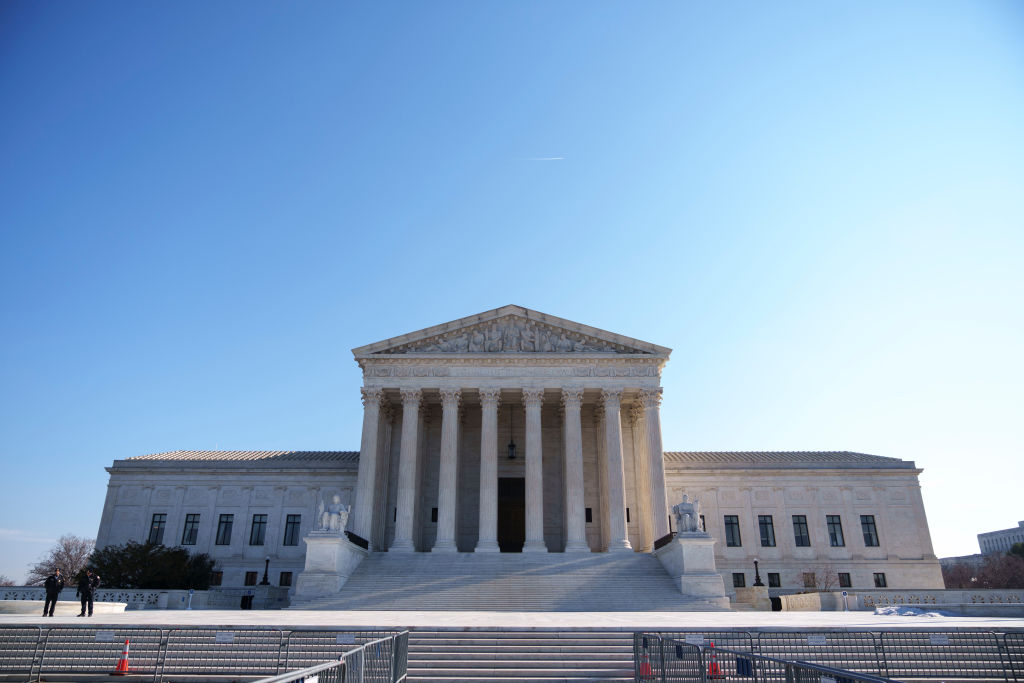
Donald Trump's electoral victory has come as a shock to Europe's political and media establishment, which fears that the political sea change underway in the United States will energize populist parties in Europe.

  • "America has just liberated itself from political correctness. The American people expressed their desire to remain a free and democratic people. Now it is time for Europe. We can and will do the same!" — Geert Wilders, Dutch MP, head of the Party for Freedom (PVV), and now on trial in the Netherlands for free speech.
  • "2016 is, by the looks of it, going to be the year of two great political revolutions. I thought Brexit was big but boy this looks like it is going to be even bigger." — Nigel Farage, MEP and leader of the UK Independence Party.
  • "The political class is reviled across much of the West, the polling industry is bankrupt and the press just hasn't woken up to what's going on in the world." — Nigel Farage.
  • "In a democracy, when the people feel ignored and despised, they will find a way to be heard. This vote is the consequence of a revolt of the middle class against a ruling elite that wants to impose what they should think." — Laurent Wauquiez, leader of the French opposition party The Republicans.
Donald Trump's electoral victory has come as a shock to Europe's political and media establishment, which fears that the political sea change underway in the United States will energize populist parties in Europe.

Anti-establishment politicians, many of whom are polling well in a number of upcoming European elections, are hoping Trump's rise will inspire European voters to turn out to vote for them in record numbers.

Commenting on Trump's victory, Dutch lawmaker Geert Wilders, wrote: "America has just liberated itself from political correctness. The American people expressed their desire to remain a free and democratic people. Now it is time for Europe. We can and will do the same!"

More than a dozen elections will be held in Europe during the next twelve months, beginning with a re-run of the Austrian presidential election scheduled for December 4. Polls show that Norbert Hofer, of the anti-immigration Austrian Freedom Party, is on track to win that race.

Also on December 4, Italians will vote in a referendum on reforming the constitution. Observers say Trump's victory will make it more difficult for Italian Prime Minister Matteo Renzi, one the few world leaders publicly to endorse Hillary Clinton, to prevail. They say Renzi's open support for Clinton will hurt Italy's relations with the United States. Renzi has said he will resign if he loses the referendum, which calls for curbing the role of the Senate. Most opinion polls show the "no" camp ahead. Renzi says the move will simplify decision-making, but opponents say it will reduce checks and balances.

General elections are scheduled in 2017 for the Czech Republic, France, Germany and the Netherlands, EU countries where anti-establishment candidates are challenging the established order.

Mainstream politicians and the media have sought to discredit populist leaders by branding them as neo-Nazi and xenophobic for their opposition to mass migration, multiculturalism and the rise of Islam in Europe. If Donald Trump can demonstrate that he is able to govern the United States and produce tangible results, especially by growing the economy and curbing illegal immigration, Europe's political establishment will have a much harder time stigmatizing dissenters.


Anti-establishment politicians in Europe, such as Party for Freedom leader Geert Wilders (left) in the Netherlands and UK Independence Party leader Nigel Farage (right), have embraced Donald Trump and hope his rise will inspire European voters to turn out to vote for them in record numbers.

What follows is a selection of official European reactions to Trump's election victory. Anti-establishment politicians have embraced Trump, while establishment politicians have mostly issued pro forma congratulatory statements that are polite but formal and distant.

Austria. The leader of the Freedom Party, Heinz-Christian Strache, congratulated Trump on Facebook. He wrote:
"Little by little, the political left and the out-of-touch and corrupt establishment is being punished by voters and driven from power. This is a good thing, because the law comes from the people. The Austrian mainstream media, which has been campaigning against Trump for weeks and prematurely declared Hillary Clinton the victor, were embarrassed by the voting public."
Belgium. The populist Vlaams Belang (Flemish Interest) party congratulated Trump and said his unexpected election victory could be repeated in Europe. Party chairman Tom Van Grieken tweeted: "U.S. election shows again how far politicians are from the people." In another tweet, he wrote: "The rise of Trump is not an isolated phenomenon. In Europe too, more and more voters want real change."

Britain. Prime Minister Theresa May said:
"I would like to congratulate Donald Trump on being elected the next President of the United States, following a hard-fought campaign. Britain and the United States have an enduring and special relationship based on the values of freedom, democracy and enterprise. We are, and will remain, strong and close partners on trade, security and defense."
The leader of the UK Independence Party, Nigel Farage, who successfully campaigned for the "Brexit" referendum for Britain to leave the European Union, said Trump's victory did not surprise him. He tweeted:
"2016 is, by the looks of it, going to be the year of two great political revolutions. I thought Brexit was big but boy this looks like it is going to be even bigger."
He also tweeted: "I hand over the mantle to @RealDonaldTrump! Many congratulations. You have fought a brave campaign."

Speaking to ITV, Farage said: "The political class is reviled across much of the West, the polling industry is bankrupt and the press just hasn't woken up to what's going on in the world."

Czech Republic. President Milos Zeman said Trump's election was a victory over "media manipulation." He said:
"I would like to cordially congratulate Donald Trump. I had, as one of few European politicians, declared public support for this candidate because I agree with his opinions on migration as well as the fight against Islamic terrorism. I appreciate Donald Trump's public demeanor. He speaks clearly, sometimes roughly, but understandably, and avoids what is sometimes called political correctness."
European Union. European Council President Donald Tusk wrote:
"Europe and the United States simply have no option but to cooperate as closely as possible. I listened with attention to President-elect Trump's call for American unity. And I, in turn, would like to call for European and transatlantic unity. I do not believe that any country today can be great in isolation. But I do believe that America and Europe can, should and will work together. It is in our common interest. We have to recognise that this will take major efforts from both sides. The EU is a strong and reliable partner and will remain so. We expect the same from America and its new President."
France. President François Hollande tweeted: "The American people have expressed themselves. They elected Donald Trump. I congratulate him. I am also thinking of Hillary Clinton."

The French Ambassador to the US, Gérard Araud, tweeted: "This is the end of an epoch. After Brexit and this vote anything is possible. The world is crumbling in front of our eyes." He later deleted the tweet.

Former Prime Minister Dominique de Villepin said: "What's happening in the US could happen in France."

Former Prime Minister Jean-Pierre Raffarin said: "The boundaries of reason disappeared with Brexit, the main lesson for France is that Le Pen can win."

Laurent Wauquiez, leader of the opposition party The Republicans, said: "In a democracy, when the people feel ignored and despised, they will find a way to be heard. This vote is the consequence of a revolt of the middle class against a ruling elite that wants to impose what they should think."

The leader of the National Front party, Marine Le Pen, tweeted: "Congratulations to the new president of the United States Donald Trump and the free American people!"

Le Pen's father, party founder Jean-Marie Le Pen, tweeted: "Today the United States, tomorrow France."

Germany. Chancellor Angela Merkel, who did not mention Trump by name, lectured the president-elect on values:
"Germany and America are connected by values of democracy, freedom and respect for the law and the dignity of man, independent of origin, skin color, religion, gender, sexual orientation or political views. I offer the next president of the United States close cooperation on the basis of these values."
Vice Chancellor Sigmar Gabriel was less gracious. He said:
"Trump is the harbinger of a new authoritarian and chauvinist international movement. He is also a warning for us. Our country and Europe must change if we want to counter the authoritarian international movement."
Foreign Minister Foreign Frank-Walter Steinmeier said:
"We hope that we are not facing greater instability in international politics. During his campaign, Trump was critical not just of Europe, but also of Germany. I believe we must prepare for American foreign policy becoming less predictable. We must prepare for a situation in which America will be tempted to make decisions on its own more often.
"I do not want to sugarcoat it: Nothing will be easier and much will be more difficult. Just as we Germans learned a lot in the past from our American friends, we should now encourage our American friends to stay true to past partnerships and to us."
Defense Minister Ursula von der Leyen said Trump's victory was "a big shock" and "not a vote for him but rather against Washington, against the establishment." She added:
"Of course we Europeans, as a NATO ally, know that if Donald Trump becomes president, he'll ask: What are you contributing to this alliance? But we're also wondering, what's your position on this alliance?"
Justice Minister Heiko Maas tweeted: "The world won't end. But it will get crazier."

The leader of the populist Alternative für Deutschland (AfD) party, Frauke Petry, predicted that Trump's victory would result in a political change in Europe too. On Facebook, she wrote:
"It was high time that in the United States of America, people who feel disaffected withdrew their vote for the political establishment. While 93% of voters in Washington, DC voted for Clinton in order to retain their own power structures, the majority of voters across the country want a political new beginning, an economic recovery for the stricken middle class and an end of division in what is still the most powerful country in the world.
"This election result is encouraging for Germany and for Europe, because Trump really has the cards for political sea-change in his hand. I congratulate Donald Trump on his election victory and on this historic chance....
"Like Americans, citizens of Germany must have the courage to put a tick in the ballot box and not remain complacent. Their opinion counts, even if political correctness would appear to have elevated the decreed consensus to the level of a new doctrine."
Beatrix von Storch, an AfD Member of the European Parliament, wrote:
"Donald Trump's victory is a clear signal that citizens of the Western world want political change. This is a surprise only to the establishment. In the USA as well as Germany, citizens wish for secure borders, less globalism, and politics that focus with common sense on issues in their own country."
Hungary. Prime Minister Viktor Orbán wrote on Facebook: "What great news. Democracy is still alive."

Italy. The founder of the anti-establishment 5-Star Movement, Beppe Grillo, hailed Trump's victory. He wrote:
"This is proof that these millions of demagogues are not the people, they are journalists, intellectuals, anchored to a world that no longer exists. There are similarities between these events in America and our movement.... We are going to govern and they will ask: 'But how did they do it?' They channelled the collective anger."
The Netherlands. Dutch lawmaker Geert Wilders said:
"America regained its national sovereignty, its identity, it reclaimed its own democracy, that's why I call it a revolution.
"Now there is a leader, despite all the negativity spread about him by the political elite and the press, that has only one concern, and that is the national interest of the voters of America who are concerned about immigration, who are concerned about the job loss as a result of globalization, who are concerned about the Islamization of their society. And he tends to say the truth and convince people that if they start moving, anything is possible, and I believe the historical event of yesterday will have an enormous effect on European politics as well.
"The lesson for Europe is, what America can do we can do as well."
In an essay published by Breitbart, Wilders wrote:
"Yesterday, the American people made it quite clear that they do not want to follow in Western Europe's footsteps. They do not want to give their country away. They want to preserve their nation, their freedoms, their prosperity. They felt the time for liberation had come.
"The American voters no longer want to be represented by politicians who do not take their concerns seriously. They felt Donald Trump was the only one who listens to them....
"America has just liberated itself from political correctness. The American people expressed their desire to remain a free and democratic people. Now it is time for Europe. We can and will do the same!"

Soeren Kern is a Senior Fellow at the New York-based Gatestone Institute. He is also Senior Fellow for European Politics at the Madrid-based Grupo de Estudios Estratégicos / Strategic Studies Group. Follow him on Facebook and on Twitter.

Source: https://www.gatestoneinstitute.org/9309/trump-europe

Follow Middle East and Terrorism on Twitter

Copyright - Original materials copyright (c) by the authors.

'People Have to Die': Unhinged Leftist Protests Greeted by Media Silence - Joseph Klein


by Joseph Klein


Awaiting the condemnations of anti-Trump protesters' culture of extremism and violence.


Leftist groups wasted no time organizing protests in cities and campuses across the country, with marchers cursing the election of Donald Trump and yelling slogans such as “Not my President.” In some cases, the protesters went beyond mere strident rhetoric. They turned into mobs, threatening and assaulting people whom they thought were Trump supporters. They threw bottles at police. They set fires and defaced property.

While President Obama and Hillary Clinton have made general calls for unity in the wake of the election, they have not personally condemned the out-of-control mob rule popping up across the country. Mainstream media has also largely downplayed the violence and threats. They have mostly reported the protests as peaceful, spontaneous expressions of dissent, even though there was nothing spontaneous about these protests. Far left groups such as Black Lives Matter and Socialist Alternative used social media to rally their faithful into the streets.

Socialist Alternative, which considers itself aligned with Black Lives Matter, wrote on its website that a “wave of demonstrations is being organized across the country to fight back against Trump.” They promised “huge nationwide protests around Trump’s inauguration on January 20th and 21st,”as well as “mass protests and civil disobedience” after Trump takes office. Socialist Alternative considers itself to be in political solidarity with the Committee for a Workers’ International, an organization that believes “the ‘October revolution’ in Russia in 1917 is still regarded by socialists as the greatest event in human history.”

Both Black Lives Matter and Socialist Alternative fundamentally reject our capitalist, democratic system. Black Lives Matter regularly attacks what they describe as systemic racism in America and “white privilege.” Socialist Alternative is avowedly anti-capitalist. Put Black Lives Matter and Social Alternative together as co-organizers of the anti-Trump protests and inciteful rhetoric leading to violence is virtually inevitable. It didn’t take long for this to happen.

An anti-Trump protester in California declared on CNN that “people have to die to make a change in this world.” Oakland California witnessed violence by angry mobs who set fires, threw bottles at police officers, torched a police car and defaced an office building with graffiti such as “Kill Trump.” Mobs in Los Angeles took over a freeway and lit fires near City Hall.

In New Orleans, a mob of protesters defaced a famous monument, shattered glass in a nearby bank and wrote graffiti such as “DIE WHITES DIE.”

In another case, several black protesters beat and robbed a white man in Chicago, whom they assumed had voted for Trump. Others surrounding and filming the assault yelled out “This is what happens when you vote Trump, dummy,” “You voted Trump? You voted Trump?? Yeah, he voted Trump,” and “Beat his ass.” One of the attackers drove away in the victim’s car, dragging the victim along while his hand remained stuck in one of the car windows.

In Portland, Oregon, a Trump supporter seeking to express his point of view had shown up at a protest against Trump that was blocking streets and highways.  However, the Left does not engage in a rational exchange of views. The Trump supporter was chased away and hit in the back of his head with a skateboard.

When they are not out in the streets, the Trump haters are tweeting assassination threats. Here is one doozie: “Trump ain't president 'til inauguration day lmao you guys still have time to assassinate BOTH Trump and Pence.”

On college campuses, administrators and faculty are encouraging their students to wallow in self-pity as they absorb the election results. For those students not out burning or defacing the American flag or getting into confrontations with the few Trump supporters who dared to voice their opinions, colleges have provided so-called “safe spaces” to which “grieving” students can retreat.

For example, the New York Post reported that “New York University distributed a memo to its students that offered various counseling and mental health hotlines for those feeling ‘scared, hopeless, or just in need of someone to talk to.’”

Professors are letting their students skip or postpone midterm tests so that they can recover from the shock of Trump’s victory. A Yale economics professor, for example, chose to make his midterm exam optional after “getting many heartfelt notes from students who are in shock over the election returns.”

A history professor at Cornell and a member of Black Lives Matter, which had organized an anti-Trump rally in the Ithaca, New York area, said that Trump’s election “was a victory for racism, xenophobia and misogyny.”

The principal organizers of the anti-Trump protests traffic in incendiary, hate-filled rhetoric that has led to violence. Those whom answer their siren call in the belief that they are engaging in some sort of peaceful "revolution" are being used.

Joseph Klein is a Harvard-trained lawyer and the author of Global Deception: The UN’s Stealth Assault on America’s Freedom and Lethal Engagement: Barack Hussein Obama, the United Nations & Radical Islam.

Source: http://www.frontpagemag.com/fpm/264806/people-have-die-unhinged-leftist-protests-greeted-joseph-klein

Follow Middle East and Terrorism on Twitter

Copyright - Original materials copyright (c) by the authors.
Trump's Arab world challenge - Prof. Eyal Zisser


by Prof. Eyal Zisser

Obama has left Trump a chaotic Middle East, where the U.S.'s role has been continuously eroded and has taken a back seat to Russia.

The unprecedented slump in the United States' position in the Middle East during President Barack Obama's eight-year term was such that the only way is up. This is perhaps the only bright spot President-elect Donald Trump can hold on to when examining the complex regional realities ahead of formulating new Middle East policies. 

The majority of Middle East leaders welcomed Trump's election. Egypt, Turkey, Saudi Arabia and even Syria, all hope to turn over a new leaf in their relations with the American administration, and it seems they would also welcome different policies, they kind that would restore Washington's active involvement in the region. 

When Obama took office in 2008, the Bush administration left him a stable Middle East, where the U.S. was a key player -- the only player, to be honest.

President George W. Bush's fight against the axis of evil stretching from Tehran to Damascus and involving Hezbollah and Hamas, may not have yielded the desired results, but it generated considerable deterrence opposite Iran and its allies, and stopped them from threatening Washington's allies in the region.

Obama has left Trump a chaotic Middle East, where the U.S.'s role has been continuously eroded and has taken a back seat to Russia. 

Russian President Vladimir Putin has made Iran a key partner in his efforts to cement Moscow's foothold in the region, and in exchange, Tehran has been given free rein in areas Putin cannot reach. The ones paying the price for this regional shift are, naturally, Washington's allies.

Upon taking office, Obama set out to win over the hearts and minds of the Arab public, and chose to do to so by turning his back on Arab rulers, as well as on Israel. Simultaneously, Obama sought to appease U.S. enemies in the Middle East, primarily Iran, in an effort to reach an understanding that would guarantee his administration smooth regional sailing. 

Once the Arab Spring erupted in full force, Obama distanced himself from the region, focusing only on promoting the nuclear deal with Iran, despite knowing it will eventually enable Iran to realize its nuclear ambitions. The only other regional issue to garner his interest was the Israeli-Palestinian conflict -- an issue that barely holds any regional significance anymore -- but even here, his involvement was little more than lip service. 

Trump has inherited a region where crises may appear to be contained locally, with little to no bearing on American interests, but in the long run, these issues could prove dangerous and have far-reaching implications.

While Trump has the option of carrying on with Obama's policies in the Middle East, the president-elect will have to deal with several dilemmas. The first question involves the ramifications of the U.S.'s weakness in the Middle East, especially opposite Russia, in respect to American interests in other areas, such as Eastern Europe or central and southeastern Asia. The second issue is the question of whether the policy of noninterference at any cost does indeed spare American soldiers' lives as well as the lives of the people of the region, or whether the opposite true, and a more aggressive policy would meet the challenges U.S. interests in the region are facing.

Trump could leave Russia and Iran to clobber Islamic State and the Syrian rebels, and effectively establish a joint Iranian-Russian hegemony in Iraq, Syria, Yemen and Lebanon. He could ignore the plight of Egypt and Saudi Arabia and push them into Russia's or Iran's arms. In one respect, however, Trump should adopt Putin's conclusions: to fight against radical Islam and undermine Iran's regional aspirations on Middle East soil, not U.S. soil.
 

Prof. Eyal Zisser

Source: http://www.israelhayom.com/site/newsletter_opinion.php?id=17633

Follow Middle East and Terrorism on Twitter

Copyright - Original materials copyright (c) by the authors.

Iran Breaches Nuclear Deal - Again. What's Next? - Majid Rafizadeh


by Majid Rafizadeh

Although the nuclear agreement heavily favors Iran and the main UN Security Council sanctions against Iran have already been lifted, Tehran continues to cheat and violate the terms of this weak nuclear pact.

  • President Obama is ignoring Iran's latest violations, and the UN and IAEA reports as well.
  • In fact, the administration, and State Department spokesman Mark Toner, are defending Iran on this issue, and appear willing to give critical concessions to Iran in the next round of talks in Baghdad this week.
  • In other words, Iranian leaders would be capable of more freely continuing their nuclear ambition without probing from the IAEA or the international community.
  • Iran has not yet allowed the IAEA "probes of various high-profile Iranian sites. The International Atomic Energy Agency chief Yukiya Amano is investigating whether Tehran has secretly worked on developing nuclear weapons.
  • Turning a blind eye to Iran's violations will only further empower and embolden Tehran to pursue its nuclear and hegemonic ambitions; ignore UN resolutions and international laws; scuttle US foreign policy objectives, and damage security interests.
One of the terms of the JCPOA accord, which never had any legal legitimacy and which Iran never signed, is that Iran should restrict the amount of specific nuclear materials it possesses during the nuclear deal. According to a report by the International Atomic Energy Agency (IAEA), however, Iran has violated the deal by holding more heavy water, used to produce nuclear weapons, than it is supposed to have.

This is not the first time Iran has violated the terms of the flimsy nuclear agreement with no consequences. In February 2016, Iran exceeded its threshold for heavy water as well. In a previous article, other violations and reports of Iran's recent cheating and breaches of the nuclear agreement are laid out.

U.S. President Barack Obama is nevertheless ignoring these latest violations, and the UN and IAEA reports as well. In fact, the administration, and State Department spokesman Mark Toner, are defending Iran on this issue, and appear willing to give critical concessions to Iran in the next round of talks in Baghdad this week.

One of the critical concessions concerns the military dimension of Iran's nuclear program, designed to develop nuclear weapons. IAEA chief Yukiya Amano is investigating whether Tehran has secretly worked on developing nuclear weapons.

The head of the UN nuclear agency flew to Iran to finally put an end to the idea that Iran has plans of developing nuclear arms. Amano pointed out that "I really think this is the right time to reach agreement." However, the IAEA and President Obama appear more than willing to close this investigation.

Closing this investigation means that there would be no monitoring of Iran's nuclear research and development, or of Iran's nuclear facilities, which have long been suspected of being used to develop nuclear weapons. In other words, Iranian leaders would be capable of more freely continuing their nuclear ambitions without probing from the IAEA or the international community.

The closure of this case will also strengthen the hold on power of the Supreme Leader, Ayatollah Ali Khamenei, the senior cadre of Iran's Islamic Revolutionary Guard Corps (IRGC), and Iran's intelligence agencies.

This is all happening while Iran has not yet allowed the IAEA "probes of various high-profile Iranian sites, including the Parchin military complex southeast of Tehran, where the agency believes Iran in 2003 ran explosive tests needed to set off a nuclear charge."
"The suspected blasts took place inside a pressure chamber. Iran has never said whether the chamber existed, but describes Parchin as a conventional military site. Iran, however, has blocked IAEA inspection requests for more than four years. A deal on Parchin could give Iran some leverage going into the Baghdad talks".
Iran is also again masterfully using hardball tactics to get more concessions. The semiofficial Fars news agency, which spreads the IRGC's agenda, said that Amano should "avoid playing for others ground."


In addition, the success of this mission in closing the investigation means that Iran's position will be significantly strengthened against the six world powers (known as P5+1: China, France, Russia, the United Kingdom, and the United States; plus Germany) in the next round of meetings, in Baghdad. Saeed Jalili, Iran's top nuclear negotiator said after arriving in Baghdad late Monday: "We had an agreement in Istanbul. That is the basis for the beginning of a new cooperation. We hope that the talks in Baghdad will be a kind of dialogue that will give shape to such cooperation."

Such an agreement means that despite Iran's significant clandestine nuclear activities and violations, the world powers would be announcing the nonsense that Iran's nuclear program is officially a civilian, not a military one, and that Iran's nuclear program is built for supplying power and medical applications, not developing nuclear weapons.

More importantly, it is unfathomable that despite significant evidence of Iran's clandestine activities over the last decade, and despite many revelations of Iran's secret nuclear activities which were not detected by the IAEA, the IAEA and world powers, in addition to giving more concessions to Tehran, appear willing to reach a fictional agreement that Iran never even desired to develop nuclear weapons.

If an agreement is reached in Baghdad, the remaining sanctions on some sectors of Iran's oil industry and Iranian high-level officials will be lifted. Such a move would allow Iran more easily to use the international banking system while there would be no restrictions on, or investigations of, Iran's high-profile officials who are (or were) engaged in nuclear or non-nuclear violations.

Israeli Prime Minister Benjamin Netanyahu warned against concessions, saying that the P5+1 should make "clear and unequivocal demands" that Iran halt all of its nuclear activities. Speaking at a conference in Jerusalem, he added:
"Iran wants to destroy Israel and it is developing nuclear weapons to fulfill that goal... Against this malicious intention, leading world powers need to display determination and not weakness. They should not make any concessions to Iran."
Although the nuclear agreement heavily favors Iran, and the main UN Security Council sanctions against Iran have already been lifted, Tehran continues to cheat and violate the terms of this weak nuclear pact. Turning a blind eye -- by President Obama and other organizations and powers -- to Iran's violations will only further empower and embolden Tehran and its Revolutionary Guards to pursue their nuclear and hegemonic ambitions; ignore UN resolutions and international laws; scuttle US foreign policy objectives, and damage security interests.
  • Follow Majid Rafizadeh on Twitter

Dr. Majid Rafizadeh, political scientists and Harvard University scholar is president of the International American Council on the Middle East. He can be reached at Dr.rafizadeh@post.harvard.edu.

Source: https://www.gatestoneinstitute.org/9312/iran-breaches-nuclear-deal

Follow Middle East and Terrorism on Twitter

Copyright - Original materials copyright (c) by the authors.

Trump Must Change US Defense Policy for Taiwan - Stephen Bryen


by Stephen Bryen

If he can prevail over the established litany, there is a chance that Taiwan can stay independent.

United States defense policy toward Taiwan must change. Now there is a rare opportunity to make that happen with the election of Donald Trump. But everyone knows he lacks experience in foreign affairs, although he is a man with great instincts. If he can prevail over the established litany, there is a chance that Taiwan can stay independent. But if he follows the "party line" from the State Department and their supporting chorus in parts of the Pentagon, Taiwan is a goner. It is only a question of time.

Taiwan is an island that lives next to a behemoth in the form of China. It is a democracy and, with its new government with a very strong domestic mandate, intent on maintaining its independence and democratic system. For China, democracy is the enemy as they have just demonstrated again in Hong Kong where they blocked two elected officials from taking office. Democracy threatens the Communist party dictatorship, and China is yearning for it. That is what happened before at Tiananmen, where democratic dissent was ruthlessly suppressed. And across China that is happening every day, and China's government knows it. For them, the big thumb in their eye is Taiwan. They would take any opportunity to knock it off, and China has been building up forces to make it hard for the United States to come to Taiwan's defense. When China's forces reach a tipping point, and when they think America might back off, they will strike.

The question is not whether but when. America should be following a defense policy that pushes the "when" back to "whether" and puts a price on the "whether" decision that would make it hard for China's leaders to act, if they were unsure of the outcome.

Unfortunately, America's support of Taiwan has played directly into China's hands and put Taiwan at considerable risk.

Consider for example that Taiwan has been allowed to have only half an air force and half a navy.

What is meant by "half"?

A modern air force must be able to defeat an enemy air force before its planes and missiles bring death and destruction to its people. That means it must have strike capability.

Taiwan's air force does not have strike capability because Washington will not sell Taiwan strike aircraft such as the F-15 or advanced F-16s. Even the F-16s Taiwan was granted by George H. W. Bush are hobbled. The more modern multi-role models of the F-16 were not provided to Taiwan, and F-16 upgrades the Obama administration reluctantly approved for Taiwan do not include strike capability, meaning they are not multi-role and can't take the fight to China.

The result is that the Taiwan's air force (officially known as the Republic of China Air Force or ROCAF) lacks beyond visual range weapons and can only function as an interceptor against Chinese forces invading the island. The ROCAF F-16s have very limited value against a Chinese main force invasion of the island because their F-16s can't interdict their bases or zap them before they cross the Taiwan Strait.

There is also half a navy made up primarily of old rejected U.S. frigates. These Carter-administration FFG tubs are thin-skinned, slow and poor sea fighters. On the other hand, China has been rapidly expanding its blue water navy and its submarine force. Taiwan has two usable submarines and two post World War II Guppy boats that are museum pieces. Its usable submarines are badly in need of an upgrade and they are no match for China's nuclear and Kilo-class submarines that threaten the Island.

What all this means is that any fight that happens takes place in and over Taiwan, a great danger when one sees that most Taiwanese live near the coast and are exposed to attack. Taiwan has almost 24 million people but given that they are concentrated in narrow spaces and surrounded otherwise by mountains, any attack on Taiwan cities and towns will be highly destabilizing.

Which is why the right defense strategy for Taiwan is to give it the ability to take the fight to the enemy and not wait to get crushed at home. Could you imagine a U.S. Air Force that waited until Russian airplanes were over New York, Washington DC, or Chicago? It will never happen, because the U.S. Air Force is designed to strike at the enemy, liquidate his bases, and destroy his fighting capability. While Taiwan is a pinprick in size compared to China, an offensive capability is the only way to set back China's invasion plans.

The usual suspects in the State Department will say that China will object if the United States gave Taiwan a real defense capability. American companies and financial institutions will complain they will lose business if China gets mad at us. China may stop buying Treasury bonds. But we have ways to counteract China. Anyway, Mr. Trump is not so happy about American companies shifting their manufacturing and technology to China, so maybe this will be part of his planned wakeup call.

China's complaints can be managed because in the end China needs our market for China's regime to stay in power. No matter how excited they may get, that is the real bottom line.

Over the last twenty-five years America's support for Taiwan has been a lot of comforting words but also a dumping off place for a lot of military junk when the U.S. administration sells some hardware to keep Congress off its back. That policy has to be jettisoned because it is not in Taiwan's interest or in the interest of the United States.

Taiwan needs the other "half" of its air force, navy, and army in order to deter China. America needs Taiwan to stay safe and free or we lose all of our credibility in Asia.

It is one thing to blindly pursue a policy, but when the policy is ultimately self-defeating and ill suited, it needs to be changed. And soon.

It is inevitable that China will invade Taiwan because it is part of its strategic plan. But if China is forced to continually revise its schedule, then China will have to put its plan on hold or even give it up. That is exactly what America's strategic goal should be.

America needs a containment policy for China's rising power, and Taiwan is the right place to start implementing it.

President-elect Trump has a real opportunity to show China that America is not sleeping anymore.

Stephen Bryen served as a senior Defense Department official in the Reagan administration, He is the author of Technology and Security: Winners and Losers (Transaction Publishers, 2015)

Source: http://www.americanthinker.com/articles/2016/11/trump_must_change_us_defense_policy_for_taiwan_.html

Follow Middle East and Terrorism on Twitter

Copyright - Original materials copyright (c) by the authors.