Sunday, November 14, 2021

Ukraine says Russia amassed 100K troops near border, Blinken raises 'real concerns' of invasion - Peter Aitken


​ by Peter Aitken

Satellite images released Nov. 8 showed an estimated 90,000 troops at the border

Images show Russian military buildup near Ukraine

Lt. General Ben Hodges on Russian military reportedly building military near Ukraine.

Ukrainian President Volodymyr Zelenskyy has claimed that Russia amassed nearly 100,000 troops near his country’s border as concerns over an invasion continue to mount.

Zelenskyy said that the action made it clear to the world "who really wants peace and who is concentrating nearly 100,000 soldiers at our border" during a video speech broadcast Wednesday on his website. 

Russia has dismissed any suggestions of an attack as inflammatory, instead complaining about increased activity by NATO in the region, Reuters reported. 

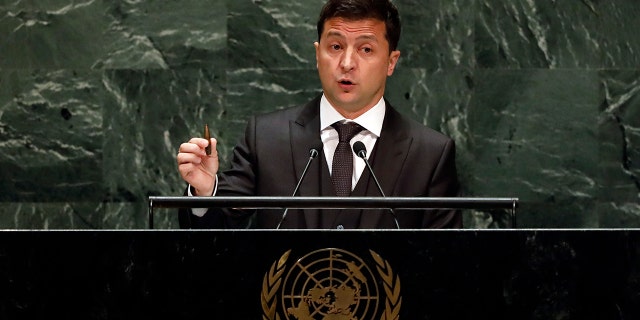
Ukraine's President Volodymyr Zelenskyy holds a bullet as he addresses the 74th session of the United Nations General Assembly, Wednesday, Sept. 25, 2019. (AP Photo/Richard Drew)

Ukraine's President Volodymyr Zelenskyy holds a bullet as he addresses the 74th session of the United Nations General Assembly, Wednesday, Sept. 25, 2019. (AP Photo/Richard Drew) (AP Photo/Richard Drew))

American officials consulted European allies on the situation, warning that Russia could attempt to invade the country in the near future. 

US AUTHORITIES SEEK EXTRADITION OF RUSSIAN FOR ALLEGED RANSOMWARE MONEY LAUNDERING OPERATION

On Thursday, Russia claimed one of its fighter jets forced a British spy plane to change course after flying near Crimea, The Independent reported.

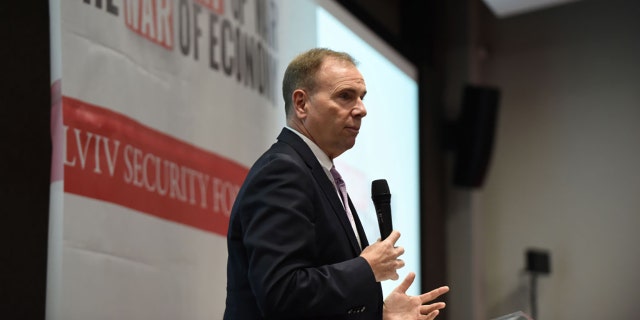
Lt Gen Ret US Army Ben Hodges delivers a speech at the Lviv Security Forum 2018, Lviv, western Ukraine, October 25, 2018. Ukrinform. (Photo credit should read MARKIIAN LYSEIKO / Barcroft Media via Getty Images)

Lt Gen Ret US Army Ben Hodges delivers a speech at the Lviv Security Forum 2018, Lviv, western Ukraine, October 25, 2018. Ukrinform. (Photo credit should read MARKIIAN LYSEIKO / Barcroft Media via Getty Images)

Satellite images released Nov. 8 showed an estimated 90,000 Russian troops gathered at the Ukrainian border, prompting House Republicans to petition President Biden to deploy troops to the region. Retired Lieutenant General Ben Hodges told Fox News correspondent Jacqui Heinrich that Russia’s recent movements are a continuation of "what started back in April." 

BIDEN SAYS BELARUS-POLAND BORDER CRISIS IS OF ‘GREAT CONCERN’ AS MIGRANT SITUATION WORSENS

"They never really went back to their barracks, even though the Minister of Defense [Sergey] Shoigu said they were," Hodges claimed, describing the new movement as "the next phase." 

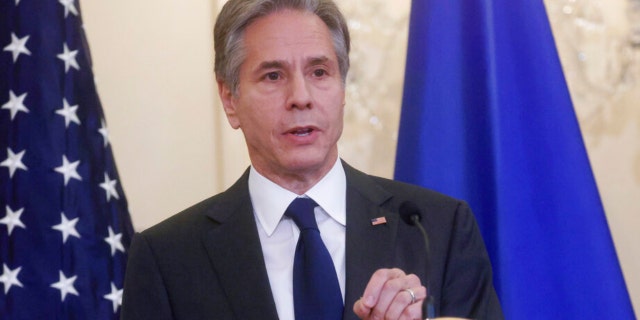
U.S. Secretary of State Antony Blinken and Ukraine's Foreign Minister Dmytro Kuleba (not pictured) hold a news conference following the U.S.-Ukraine Strategic Dialogue talks at the State Department in Washington, U.S., November 10, 2021. REUTERS/Leah Millis/Pool

U.S. Secretary of State Antony Blinken and Ukraine's Foreign Minister Dmytro Kuleba (not pictured) hold a news conference following the U.S.-Ukraine Strategic Dialogue talks at the State Department in Washington, U.S., November 10, 2021. REUTERS/Leah Millis/Pool

He cautioned that Russia’s first move would not be a tank or a gunshot, but a cyber strike or "maybe turning off the gas or something" to create disruption. 

U.S. Secretary of State Antony Blinken briefly discussed the situation at the Ukrainian border during a joint strategic dialogue last week, warning that Russia needs to avoid making "a serious mistake." 

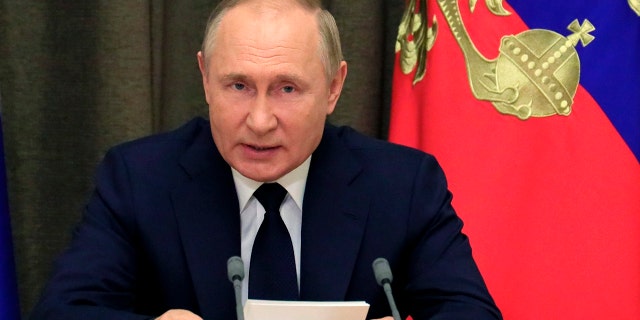
Russian President Vladimir Putin speaks during a meeting with hight level officers and heads of defense industry enterprises in the Bocharov Ruchei residence in the Black Sea resort of Sochi, Russia, Monday, Nov. 1, 2021. Russian President Vladimir Putin on Monday emphasized the need to strengthen the country's air defenses in the face of NATO's moves. 

Russian President Vladimir Putin speaks during a meeting with hight level officers and heads of defense industry enterprises in the Bocharov Ruchei residence in the Black Sea resort of Sochi, Russia, Monday, Nov. 1, 2021. Russian President Vladimir Putin on Monday emphasized the need to strengthen the country's air defenses in the face of NATO's moves.  (Evgeniy Paulin, Sputnik, Kremlin Pool Photo via AP)

EU FACES DOWN FRESH CRISIS AT ITS BORDERS, AS OFFICIALS ACCUSE BELARUS OF WEAPONIZING MIGRANT SURGE

"We're very concerned about some of the irregular movements of forces that we see on Ukraine's borders," Blinken said Friday. "I can't speak to Russia's intentions. We don't know what they are, but we do know that we've seen in the past Russia mass forces on Ukraine's borders." 

Blinken warned that Russia could claim "some kind of provocation" and then invade, following a plan that led them to establish control of Crimea in 2014. The U.S. remains in "close consultation" with its European allies as it continues to monitor the situation. 

"I can just say that based on the past, we have real concerns about what we’re seeing in the present," Blinken explained. "And it would be a serious mistake for Russia to engage in a repeat of what it did in 2014."


Peter Aitken is a New York born-and-raised reporter with a focus on national and global news.

Source: https://www.foxnews.com/world/ukraine-russia-troops-border-blinken-concerns-invasion

Follow Middle East and Terrorism on Twitter

What to Expect from the Biden-Xi Meeting - And It's Not Good - Pete Hoekstra


​ by Pete Hoekstra

Can we hope that China will be held responsible for the Covid-19 pandemic?

  • With the U.S. suffering significant inflation, and with supply chain disruptions identified as one of the causes, expect little pressure on China to address intellectual property theft, currency manipulation, unfair Chinese government support in distorting markets, or disruptive Chinese trade barriers. The bias will be to put a happy face on this relationship.

  • We certainly can hope for Biden to put up a strong position on the COVID-19 pandemic. More than 750,000 Americans are dead.... America, and the world need answers. China needs to be held accountable.

  • One can only fear where this goes if the U.S. does not confront China. It is unlikely we will see any leadership from Europe on this issue; European leaders seemed determined to forge closer economic ties with China, which will doubtless use these revenues for bulking up its military to "take over the world." It is either Biden or nobody, and nobody seems to have the upper hand.

  • An even worse potential outcome on the COVID-19 pandemic issue may be a gauzy statement along the lines that ... the U.S. and China will closely cooperate on addressing the current situation.... Even worse, we will form the core of a new global organization to prepare for, confront, and combat any potential future pandemics.

  • Heaven help us if this is the outcome.

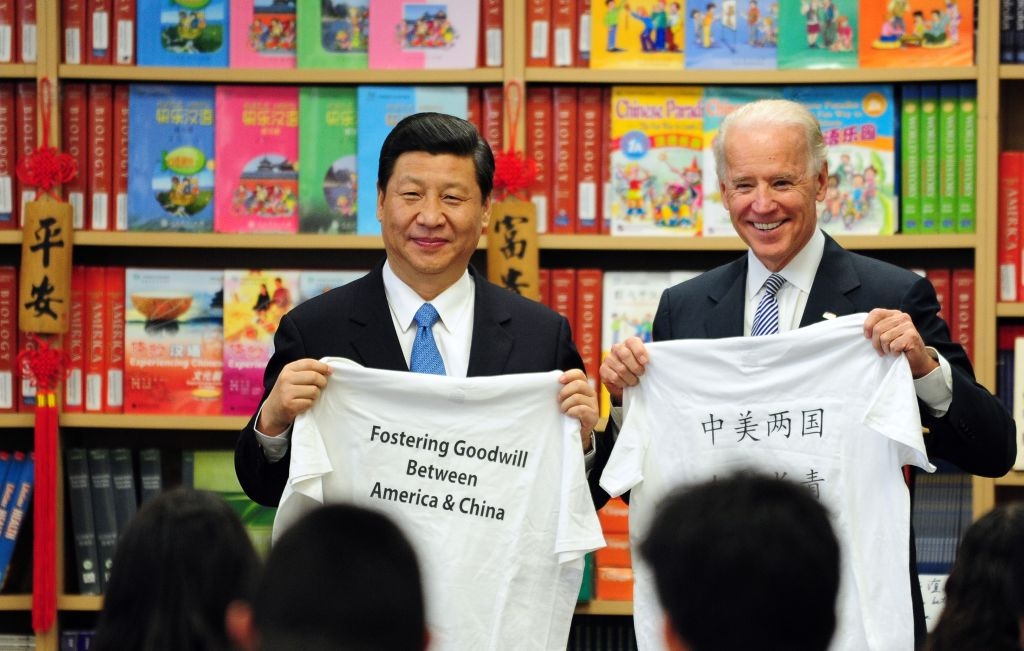
With the U.S. suffering significant inflation, and with supply chain disruptions identified as one of the causes, expect little pressure on China to address intellectual property theft, currency manipulation, unfair Chinese government support in distorting markets, or disruptive Chinese trade barriers. The bias during the upcoming meeting between U.S. President Joe Biden and Communist China's President Xi Jinping will be to put a happy face on this relationship. Pictured: Then US Vice President Joe Biden and Xi Jinping, then First Secretary of the Chinese Communist Party, in Los Angeles on February 17, 2012. (Photo by Frederic J. Brown/AFP via Getty Images)

Here is what we likely can expect from the upcoming meeting between U.S. President Joe Biden and Communist China's President Xi Jinping. Climate change, yes. Human rights, not so much. Throw in a little trade but take out all references to the Wuhan-origin of the coronavirus pandemic. This will be a summit that majors in minors. It will have significance, but only because of what it fails to do rather than what it does.

Expect the press releases coming out from the virtual summit to trumpet the ambiguous agreements that have been made on climate change. We saw the tease of this from the joint press conference just completed by Biden climate czar John Kerry and his Chinese counterpart Xie Zhenhua. It will consist of some diplomat-speak language about how serious the threat of global warming is and how the Chinese Communist Party and the U.S. have agreed to certain actions to confront greenhouse gas emissions, but there will be few specifics. This is all about the Biden Administration trying to save face after the major disappointments coming out of COP26, the global U.N. conference ignored by Russia, China, Mexico and Japan. This was a major snub to Biden, who took a significant part of his cabinet to the conference only to have it ignored by other global leaders who did not care enough to be on the same stage with him.

At the Kerry-Xie press conference, Kerry was asked about the use of slave labor in the production of solar panels. His response was that it was "not my lane." It was reminiscent of the Dutch response when asked why they did not use their leverage on Nord Stream 2, including the participation of Dutch companies in the construction and funding of the pipeline, to exert pressure on Russia to be more forthcoming on the shooting down of Malaysia Airlines Flight 17 in 2014. The Russians had blocked the assignment of any blame and accountability. Today the pipeline is nearing completion and the Dutch still have no accountability. It seems that the U.S. is taking the same position. Using slave labor is supposedly a small price to pay when you are saving the planet.

Expect some nice phrases about the lessening of trade tensions. With the U.S. suffering significant inflation, and with supply chain disruptions identified as one of the causes, expect little pressure on China to address intellectual property theft, currency manipulation, unfair Chinese government support in distorting markets, or disruptive Chinese trade barriers. The bias will be to put a happy face on this relationship.

We certainly can hope for Biden to put up a strong position on the COVID-19 pandemic. More than 750,000 Americans are dead, new waves of infection are ravaging parts of Europe, global economies have been eviscerated, and China's actions have been a part of the problem, not a part of the solution. America and the world need answers. China needs to be held accountable. One can only fear where this goes if the U.S. does not confront China. It is unlikely we will see any leadership from Europe on this issue; European leaders seemed determined to forge closer economic ties with China, which will doubtless use these revenues to bulk up its military to "take over the world." It is either Biden or nobody, and nobody seems to have the upper hand. China will have escaped any and all accountability for its actions.

An even worse potential outcome on the COVID-19 pandemic issue may be a gauzy statement along the lines that the pandemic has been severe, and the threat continues on a global basis. As an ongoing threat, the U.S. and China will closely cooperate on addressing the current situation. We will also work together to investigate the roots of the current pandemic but will respect the sovereignty of both countries in the investigation. Even worse, we will form the core of a new global organization to prepare for, confront, and combat any potential future pandemics.

Heaven help us if this is the outcome. The priority of this bilateral virtual summit is to save the sinking Biden presidency. Xi comes in with all the leverage. The best outcome for the Biden administration is that the American people will not recognize that they are simply propping up an administration that has managed to torpedo [such as here, here and here] everything it touches.


Pete Hoekstra was US Ambassador to the Netherlands during the Trump administration. He served 18 years in the U.S. House of Representatives representing the second district of Michigan and served as Chairman and Ranking member of the House Intelligence Committee. He is currently Chairman of the Center for Security Policy Board of Advisors.

Source: https://www.gatestoneinstitute.org/17942/biden-xi-meeting

Follow Middle East and Terrorism on Twitter

UNRWA - the worst thing that ever happened to Palestinians - Itamar Marcus

 ​
​ by Itamar Marcus

​​UNRWA - possibly the most human rights abusing institution funded by the international community.

Donor countries will be gathering on Tuesday in Brussels hoping to raise $800 million for the United Nations Relief and Works Agency for Palestinian Refugees (UNRWA) to run Palestinian refugee camps. But is funding UNRWA a wise investment for the donor countries? And even more important, is funding UNRWA good for the Palestinians?

There has been a lot of negative news about UNRWA. The United States and others are demanding that UNRWA fix its schoolbooks and guarantee that UNRWA schools will no longer hide terror tunnels. Certainly, these demands are valid.

However, what is not being addressed is that even if UNRWA fixed all these problems, UNRWA still remains possibly the most human rights abusing institution funded by the international community.

This year the US has already given UNRWA $318m., and prior to the Trump administration, the US was the largest donor to UNRWA. During the eight years of the Obama administration, for example, the United States gave UNRWA over $2 billion. What did the United States get in return for this investment?

According to UNRWA, the number of refugees increased during the Obama years from 4.6 million to 5.3 million – a rise of 700,000 refugees. The $2b. investment by the US did not rehabilitate even one refugee. Instead, every $2,857 corresponded to one new refugee. When adding in the many billions contributed by other countries, the total waste is enormous. In addition, the core UNRWA budget since Obama’s first year has risen from $545m. to $806m. today. UNRWA is a nursery for growing refugees and a bottomless pit for international money. The fundamental problem with UNRWA is not its terror links; the fundamental problem with UNRWA – is UNRWA itself.

Looking at UNRWA’s history shows this even more clearly. UNRWA was established in 1949 when approximately 726,000 Arabs (according to UN figures) who had been displaced during Israel’s War of Independence were put under UNRWA’s care. Incredibly the number has grown today to 5,700,000 across 58 camps. By refusing to resettle the original refugees, UNRWA intentionally turned a limited problem into permanent misery, both for those actual refugees and the 5.5 million people who were born refugees. Possibly, the worst thing that ever happened to Palestinians was the creation of UNRWA. UNRWA is the real Palestinian Nakba (catastrophe).

It didn’t have to be this way. A few months after UNRWA was created, the United Nations High Commission for Refugees (UNHCR) was opened to help all other refugees. UNHCR describes its success: “During our lifetime (since 1950) we have helped well over 50 million refugees!” The contrast is extraordinary. UNHCR has resettled millions of refugees in the same period that UNRWA didn’t resettle even one, but imposed refugee status on millions of children, some born as long as 72 years ago. Every child has the right to be born into freedom, but UNRWA has trampled those human rights over five million times. Funding UNRWA is not only a waste of limited international resources but is funding an organization that is fundamentally a human rights abuser.

In a shocking admission of the political agenda behind UNRWA, PA Social Development Minister Ahmed Majdalani recently told UNRWA Commissioner-General Philippe Lazzarini how the PA sees UNRWA in an online article from Al-Quds on October 27. “Majdalani emphasized the necessity of protecting UNRWA not as an institution that provides services to the refugees, but rather because it is a political symbol of the refugees’ right of return,” the article reads.

UNRWA is not intended to help the refugees but to preserve them as refugees serving the PA’s goals. The world saw a tragic example of the PA’s ideology during the Syrian civil war. Palestinians in refugee camps were being killed and Israel offered to allow them into PA areas on the condition that they be taken off the UN refugee lists. Shockingly, Mahmoud Abbas refused. The PA preferred that they be killed as refugees than live as free people in the PA areas. Estimates are that as many as 4,000 camp residents were killed during the fighting.

As a supreme international priority, something must be done to save the 5.7 million victims of UNRWA, and there is a solution. The UNRWA infrastructure must be closed and the administration of all their camps must be transferred to UNHCR – free of the dictates of the PA. UNHCR will be tasked with solving the problem as opposed to UNRWA whose task has been to perpetuate the problem. UNHCR will go to Lebanon, Syria, Jordan and the PA areas with the mandate to take the chains off the refugees and give them freedom.

UNHCR will use its billions of dollars to train them, create jobs and give them homes in the countries where they were born and lived their entire lives, where they must be granted full citizenship. Countries that refuse to resettle their fellow Arabs must be ostracized by the international community and denied international aid until they agree. Instead of chaining an additional 100,000 new refugees every year, hundreds of thousands, and eventually millions can be resettled every year until all the political refugees are freed.

UNRWA as the PA’s “political symbol” does not fit the world’s values or serve the interests of those suffering in the prisons of UNRWA. Disbanding UNRWA and having UNHCR resettle these chained people is a human rights imperative. If the international community allows UNRWA to continue, by 2030 there will be seven million refugees, and by 2050 probably 10 million or more. Every day another 274 children are born into UNRWA’s 58 prisons. Every year another 100,000 children are denied their freedom. It is immoral to allow UNRWA to exist even one extra day.

The writer is director of Palestinian Media Watch. His book ‘Deception,’ co-authored with Nan Jacques Zilberdik, was acclaimed by Robert Bernstein, the founder of Human Rights Watch, as “one of the most important books you handle in your lives.” He was recognized as being among the world’s “top 100 people positively influencing Jewish life or the State of Israel,” by ‘The Algemeiner.’

[https://www.jpost.com/opinion/unrwa-the-worst-thing-that-ever-happened-to-palestinians-opinion-684892]

Itamar Marcus

Source: https://palwatch.org/page/29446

Follow Middle East and Terrorism on Twitter

All He Had Was a Handgun - Clarice Feldman


​ by Clarice Feldman

The Rittenhouse trial exposes, once again, the mendacity, malevolence, and stupidity of the media and the Left as a whole.

In medieval days, before there were secular dramas, there were roving bands of semi-professional actors performing morality plays. The plays were often short and sometimes even farcical. Plots were designed to encourage moral choices or illustrate Biblical stories. The audience was a mostly illiterate populace who paid for the entertainment with small change.

Today, we have criminal trials as national entertainment. They usually take days and too often devolve into farce, as did the Kenosha trial of Kyle Rittenhouse, fumbled by the prosecutors (looking so much like Laurel and Hardy) trying the 17-year-old hero for shooting two felons to death and wounding a third man during a days’ long riot, arson and looting. The rioting predictably followed the mayor’s ordering a standdown of police and rescue teams and the governor’s failure to order in the state National Guard. It’s impossible to choose the worst of the bumbling questions Kyle was asked, but perhaps my favorite was this, respecting the shooting in the arm of a Craig Grosskreutz who held a gun to his head: “All he had was a handgun. why did you think that was a threat?” I take it the prosecutor John Binder never had a gun held to his head. Had I, I certainly would have considered it life-threatening.

I think Rittenhouse has a made out a strong self-defense case. The governor may think so, too, because he has deployed the National Guard on to Kenosha in anticipation of a verdict. 

Do you suppose Wisconsin Governor Tony Evers believes that those who think Rittenhouse should be acquitted will riot if he is not? Obviously not. Given the history of the riots, it’s a small group of BLM/Antifa/Communist thugs who in the absence of order ripped the city apart to protest the district attorney’s refusal to charge with murder a cop who shot a knife-welding Jacob Blake. (This followed on the nationwide  riots which followed the death in custody of George Floyd in Minneapolis).

The old-time morality plays rather spoke for themselves. Now, we have a Greek chorus media, which beforehand, during, and even after the trial distorted facts in a way so obvious to those who pay attention enough to watch the video-streamed trials that it’s fair to conclude that they relish lawlessness and chaos and even race wars.

Jurors have been spied upon and, in this case as well, Judge Bruce Schroeder is receiving threats to his safety and that of his children if the defendant is acquitted. He’s being accused of racism, which I suppose means having a different, fairer view of the issues because the defendant and all three of the men he shot at are White. (Perhaps these people believed some media accounts which led them to think that the men he shot at were Black. Who knows what lurks in these mostly empty heads?)

Online I’m seeing tweets from people who, having believed the media fairy tale that the “victims” (with substantial criminal records) were randomly attacked by an armed 17-year-old (actually a lifeguard with family and friends in Kenosha who scrubbed graffiti off walls, put out fires, and rendered aid to the wounded when the elected officials shirked their sworn duty to uphold the law), are angry that they had been so misled. Why has it taken so long for the lights to go on in these attics? They are routinely misled.

Did they believe the Washington Post articles on Russian Collusion with Donald Trump? This week the Post has admitted errors and amended them, very tardily acknowledging their sloppy work for which the authors, Rosalind Helderman and Tom Hamburger received Pulitzer Prizes. (MSNBC, CNN, and the Atlantic have not done so, and their lies still stand unedited. Pulitzer Prizes seem to be handed out to those who best pen leftist narratives, from Walter Duranty the New York Times’ man in Russia on.) Did they believe the media reports that January 6 was an “insurrection”? Did they not bother to note that, contrary to the media, not a single defendant was charged with that and the FBI concluded there was no evidence of that. Did they believe the Duke Lacrosse team engaged in gang rape? The team recovered damages for that slander and the prosecutor Mike Nifong was disbarred and jailed. Did they believe the Covington kids harassed an “innocent Indian advocate?” The kids recovered monetary settlements for that slander.

But the incessant media lies are what sticks in too many heads, not the eventual outcome -- the unmasking of the factual distortion. It’s no wonder that public faith in the news industry is at an all-time low. It’s a self-inflicted wound.

Glenn Greenwald is absolutely right when he tweets:

 There's an avalanche of punditry, think pieces and cable segments about the Rittenhouse case and only a tiny portion of it relates to the evidence in court about what happened.

It's all just processed through their dreary, pre-scripted narratives about race and ideology.

He’s also right when he says, “Democrats Are Profoundly Committed to Criminal Justice Reform -- For Everyone But Their Enemies.”

And for Democrats, you can add what Glenn Reynolds calls "Democratic operatives with bylines." The press narratives are designed to divide us by demonizing Republicans and Whites (and particularly White males).

In a longer but no less worthwhile analysis John Hinderacker excoriates the deceptive, manipulative  coverage in the press of the  Rittenhouse trial.

The first is just the yawning chasm between the press narrative about what happened that night in Wisconsin -- what the conventional, proper-thinking wisdom was -- and what actually seems to have happened. The smart set insisted that Kyle Rittenhouse was a MAGA-loving vigilante who went to Kenosha to kill BLM supporters. Remember that the President of the United States seemed to imply Rittenhouse was a “white supremacist” in a campaign video

The divide between the coverage and the reality -- Rittenhouse appears to have a solid self-defense case -- is stark. [snip]The second thing I keep thinking about is that the events of that night show the abolish-police vision in action. When the defund advocates talk about what replaces policing, they talk about community-led safety. They talk about neighbors and friends stopping crimes, relying on themselves. But what does abolishing the police look like in practice? What happens when the police really do stand down and let fires burn as they did last summer?

It looks a lot like Kyle Rittenhouse. It looks like a teenager seeing chaos and getting pretty convinced that stopping it falls on his shoulders. It looks like heavily armed, untrained local dads defending shops and homes because no one else will. AOC told us the police-free life looked like “a suburb.” The implication is that street violence is somehow imposed by cops. Take away the police and, like magic, no more problems. Kenosha suggests that is very much not the case.

And despite the readily available videos of the trial, much of the press keeps lying.

One of the deceased, Joseph Rosenbaum, was a clearly violent person who had threatened to kill Rittenhouse, chased him down and went to grab Rittenhouse’s rifle when shot. The other dead man, Anthony Huber, was beating Rittenhouse with a skateboard in a swinging manner when shot.

Gaige Grosskreutz, who was wounded, admitted under cross-examination that he ran after Rittenhouse and closed the gap (but denied he was “chasing” him) -- and that Rittenhouse only fired on him when Grosskreutz lowered his loaded Glock pistol to point directly at Rittenhouse from three feet away.

Most of this evidence came out of the prosecution case. When the defense called him to testify, Rittenhouse stuck to the same story witnesses told.

With trial evidence inconsistent with the news’ narrative, there could have been a major media mea culpa. Instead, headlines and framing continue that pre-trial narrative, even if inconvenient facts appear deep down in the articles. As the editors who run these stories and draft the headlines know, many if not most people don’t get far beyond the headlines and opening paragraphs.

Thus, NBC News breathlessly headlines a news report about the prosecution’s forensic pathologist testifying that Rosenbaum was in a “horizontal” position, “suggesting the victim wasn’t a threat when he was gunned down.” It’s not until the bottom of the article that NBC acknowledges that same expert testified the wound positioning was consistent with Rosenbaum diving towards Rittenhouse. Left out of the story was his testimony that gunpowder residue was consistent with Rosenbaum grabbing the muzzle of the gun when he was shot, just as Rittenhouse and witnesses said.

The headline highlight of Grosskreutz’s testimony according to a Daily Beast report was that he “tried to surrender” to Rittenhouse. Similar misleading narratives frame the case at the New York TimesWashington PostUSA Today and elsewhere. Reading only these publications, it would be reasonable to believe the original story of Rittenhouse as a shooter run amok, despite the trial testimony to the contrary.

I still regard Alexis de Tocqueville, who wrote Democracy in America, as the brightest, shrewdest observer of the American scene, even as it has changed over the years, and he has much to say about our legal system. It’s his view that criminal cases like this one “are entirely founded upon the evidence of facts which common sense can readily appreciate.” I hope the jurors exercise that “common sense,” weigh the evidence, ignore the press and the threats, and acquit a young man whom I consider an exemplary citizen in a city and state where the elected officials failed their constituents.


Clarice Feldman

Source: https://www.americanthinker.com/articles/2021/11/all_he_had_was_a_handgun.html

Follow Middle East and Terrorism on Twitter
January 6 prisoners evacuated on stretchers after guards gas them - Andrea Widburg


​ by Andrea Widburg

The guards decided that refusing to wear a mask merited severe punishment. And while I’m at it, let me talk a bit about political cowardice.

On Friday, the attorney for Kelly Meggs, one of the prisoners being held without bail for events on January 6, filed a notice informing the United States District Court for the District of Columbia of a report that guards had negligently or intentionally disbursed a toxic substance in such a way that prisoners were inundated with it, resulting in several being evacuated on stretchers. Meggs’s lawyer also mentioned the dire conditions in the jail and requested, that the court release on bail those arrested in connection with events on January 6.

Here, in its entirety, is what Meggs told his family about the gas incident in the jail, all because one of the detainees didn’t want to wear a mask (which they’re forced to wear 24/7, even when in solitary):

When a January 6 detainee in the CTF / D.C. jail refused to wear a mask, the guards responded with some kind of mace or pepper spray.

This created a disturbance and the wing was locked down at 10 AM.

“They sprayed mace or some type of gas at an inmate and kept missing so it went into an intake that fed into other cells and the lady with the key left because she didn't like the gas, so the inmates in the cells who were being fed the gas from that intake were locked in for like 15 minutes while it was going into their rooms and they couldn't see/breathe.”

“Had to take some guys out in stretchers to the med bays”

That is. it seems to have been the ventilation system acting on its own that created most of the problems, although one wonders if the initial action was the correct action.

There may have been much more of a confrontation and disturbance, but counsel has no confirmation of that.

Other reports are that three detainees were taken out on stretchers, although it is not clear if this was merely preventative.

It is not clear if this led to more than one detainee being in a conflict with guards.

Kelly Meggs was not in one of the cells that the gas was being cycled into by the ventilation system.


The attorney, clearly, is trying not to exacerbate things even more when it comes to the guards’ treatment of prisoners, but we’ve heard about what’s being done to them. This is un-American in the extreme: It’s cruel and unusual punishment and the denial of the right to a speedy trial, not to mention overcharging political prisoners.

Image: Contemporaneous painting showing Richard II meeting with Wat Tyler (and Tyler is about to be killed by London’s Mayor). Public domain.

And while I’m discussing January 6, I’d like to point out something that I wish I’d thought of in January. Let me take you back in time, back to 1381. That was the year of the Peasants’ Revolt, when a group of peasants, led by Wat Tyler, headed from Canterbury to London to demand economic and social reforms. The trigger was a newly imposed “poll tax” that was imposed equally on each citizen, from the peasants to the lords. It was obviously a much greater burden on the former than the latter.

By the time the peasants reached London, they were violent, opening prisons, robbing homes, destroying records, and killing anyone they thought was associated with the now-hated government. On June 15, 1381, at great risk to himself, King Richard II, aged 14, went to meet with the rebels. It was a fraught meeting that ended with Tyler’s death, so I’m not recommending it as a model of political negotiation. I just want to note Richard’s courage.

There are other examples of leaders facing down overwrought crowds. Four-hundred-and-two years later, in 1783, as the American Revolution was winding to an end, the officers in the Continental Army hadn’t been paid for months, so they started to plot a coup. Washington learned of the planned meeting and allowed it to take place. He then showed up to read a letter from Congress begging the offices to bre patient.

Washington looked at the letter, squinted, and then put his glasses on, something the shocked men had never seen him do. Then, Washington spoke the words that reduced many of them to tears: “Gentlemen, you will permit me to put on my spectacles, for, I have grown not only gray, but almost blind in the service of my country.” That was the end of the coup.

When the American people entered Congress, not a single politician had the courage to go out and face them. Every politician ran away and hid. Even now, Marjorie Taylor Greene is the only politician with the courage to force her way into the prison to speak with the captives. What a pathetic bunch of poltroons we have placed in a government that was created by great men and once was home to them too.


Andrea Widburg

Source: https://www.americanthinker.com/blog/2021/11/january_6_prisoners_evacuated_on_stretchers_after_guards_gas_them.html

Follow Middle East and Terrorism on Twitter
Organized attack last night on Mount of Olives residents - Arutz Sheva Staff


​ by Arutz Sheva Staff

"What seemed like celebratory fireworks turned out to be an organized attack." Resident recounts frightful events of last night.


Attack on Ma'ale HaZeitim
Roi Gifman

The Ma'ale HaZeitim (Mount of Olives) neighborhood yesterday looked like a war scene. Hannah Yagel, a resident of the neighborhood, spoke to Arutz Sheva of the difficult night that the residents went through.

The night events that included Molotov cocktails, stones and more, aimed towards the homes of the Jews, began with the firing of fireworks that turned out to be aimed not at the sky but at the direction of the houses. "Around twenty-eight, fireworks started going off. We are used to explosions and thought it was a wedding, but within a minute we realized that the fireworks were aimed at the neighborhood houses and the neighborhood gate together with Molotov cocktails."

Hannah said: "We called the children to see beautiful fireworks, but then we started to see that the fireworks are not aimed at the sky but at the houses. You see a large palm tree at the entrance to the neighborhood starting to burn, there are two more fires and smoke begins to rise. Voices were getting closer and we realized that these were not shouts of joy, the houses were under attack."

"At the same time, we heard a car belonging to the residents of the Yemenite village being attacked in the square near the neighborhood, and then we realized that we were under attack again."

Hannah spoke about her phone call to the police, a call that was probably the first, due to the police's confusion. "I called immediately when I realized these were no ordinary fireworks. The police began with the usual questions of 'where are you precisely' and other such time-wasting questions. When I realized there was a fire outside I asked the police if I should call firefighters. The police said they would. In the meantime, other residents called the police and fire department, and we waited like good civilians."

"We expected them to arrive in 2-3 minutes. It actually took the police 15-20 minutes. The palm tree burned, a fire station was only a few minutes drive away, but it took them about half an hour to get there. Neighbors used a water hose, which at first seemed hopeless, but they managed to control the fire."

Hannah continued: "At this time there was a constant firing of fireworks and Molotov cocktails, so residents decided to go down and defend themselves, and in the end this is what brings the police, because when we are attacked at best arrive after a quarter of an hour. When we began to defend ourselves the police arrived faster. Very brave residents took to the road to drive out the rioters. Even when the police forces arrived they did not do much, at least not at first. The neighborhood was besieged for over an hour and a half. Guests could not leave, Bnei Akiva students who were at the district branch could not return home until late because the police arrived and decided to block the road from both Arabs and Jews instead of securing traffic."

"We had to involve the district commander. It was the only thing that made the police open the axis and allow us to drive in and out of the neighborhood," Yagel says, noting that the police fired several stun grenades and later tear gas. "Nothing was done to drive away a crowd of Arabs. They stopped the traffic and did not allow a trip in the direction of the neighborhood or in the direction of the village further down the road."

According to her, the feeling was that this was an organized and well-coordinated attack on the houses in the neighborhood. "Sometimes it happens that a boy or a child throws a stone or shoots a firework and runs away. That was not the case yesterday. There were masked men in an organized and very long attack. It would have seemed something pre-organized when the reason was not clear. There was no excuse we heard on the news."

Does such an event cause concern even for the nights that follow? "I believe that everyone who lives Ma'ale HaZeitim and in the Jewish settlement in East Jerusalem also lives here out of a sense of mission beyond love for Jerusalem. Those who are afraid and can not deal with such events are naturally not here. There is always fear and vigilance but hopefully this was a once-off case. We are just residents of Jerusalem who bought or rented the houses nice houses. This is an established neighborhood with beautiful apartments and we hope that the police will take care to prevent such events in advance and will not leave us abandoned to our fate, if anyone thinks of repeating such an attack."


Arutz Sheva Staff

Source: https://www.israelnationalnews.com/News/News.aspx/316878

Follow Middle East and Terrorism on Twitter
‘Diversity, Equity, and Inclusion’ in education is a con - Andrea Widburg


​ by Andrea Widburg

Someone finally looked at the data—and minorities pushing for more DEI in education might want to back off the idea.

Two stories came to my attention in the past few days and they’re so closely related they deserve a single post. The first is that Yale has far more administrators than faculty members. The second is that someone finally looked at how minorities fared in schools that bought into the whole “diversity, equity, and inclusion” shtick and the news isn’t good.

I read several years ago that, at the average American university, the ratio of faculty members to students is much the same as it was when I attended college forty-odd years ago. What had increased dramatically was the administrative staff. The theory was that it was this increase, along with free money from the government in the form of almost unlimited students loans, that had seen college costs increase so much. When I attended UC Berkeley, I could work 20 hours a week (and summers, of course), and pay most of my tuition. Now, that’s impossible.

However, that story (which I cannot find), is already passé. The news out of Yale bespeaks an administration so bloated that it’s surprising the campus doesn’t topple over (as Rep. Hank Johnson, D-Ga., once thought Guam would do from over-population). Apparently, Yale now has more administrators than it has students:

The number of administrators at Yale University has increased drastically faster than its undergraduate population, with the Ivy nearing an abysmal ratio of 1:1 before the pandemic due to its more than 5,000 administrators and managers and fewer than 6,000 undergraduates, according to financial reports from the 2002-2003 and 2020-2021 school years. Now the numbers are even worse, with more than one administrator per undergraduate student.

As evidenced by the financial report from 2002-2003, Yale employed 3,500 administrators and managers while there were 5,307 undergraduate students enrolled at the university. Less than two decades later in 2019, before the pandemic affected enrollment, Yale employed more than 1,500 additional administrators while the undergraduate population had only risen by 600 students. Now undergraduate enrollment has dipped to 4,703, with more than 5,000 “managerial and professional staff.”

And you just know, at a visceral level, that a large part of that administrative growth is related to the Diversity, Equity, and Inclusion (“DEI”) movement. I was unsuccessful in finding an article about this growth (admittedly, I didn’t invest too much time in the search) but I did discover that, if you type “Diversity Equity Inclusion College” in your search engine, you’ll discover that every college, large and small, well-known or unknown, in every corner of America, now has a DEI department.

Image: Office doors by Domingo Alvarez E; Chair from FreeIconsPng (edited in befunky). Unsplash license.

Also, as we’ve seen for the last year and more, DEI, which is a variation of Critical Race Theory, has been incorporated into most primary and secondary schools across America. The assumption on the left is that the whole DEI and CRT shtick will improve academics for minorities because it will validate them while invalidating the awful Whites and Asians who are stealing all the good grades with their racist habits of ambition, punctuality, reliability, hard work, etc. (And no, that’s not a joke. It’s a publication from the Smithsonian’s National Museum of African American History & Culture.)

However, an article at Power Line Blog made me aware that, when the Heritage Foundation finally did an empirical study to see what happened to minority students in K-12 schools with a “Chief Diversity Officer,” the outcomes were bad...for minorities. According to Jay Greene and James Paul:

The analyses presented here suggest that the existence of CDOs in school districts may actually exacerbate achievement gaps. In other words, CDOs may be implementing counterproductive educational interventions.

A simple comparison of achievement gaps in districts with and without CDOs shows that gaps are larger in districts that employ CDOs. In districts without a CDO, the average black student is 1.9 grade levels behind the average white student on standardized test results. In districts with CDOs, the achievement gap is half a grade level larger, with the average black student being 2.4 grade levels behind the average white student.

Moreover, further analysis revealed that this wasn’t simply a case of CDOs being put into poorly performing districts. No matter the district, CDOs are bad news for students.

Incidentally, regarding those allegedly “White” and “Asian” virtues, I highly recommend Thomas Sowell’s Black Rednecks & White Liberals. In it, he makes the case that the irresponsible culture that characterizes so many inner-city Blacks is not authentically Black culture. Instead, it is the authentically Scots-Irish culture that gave parts of the South a bad name from America’s first colonists up until after WWII, when Southerners, embarrassed by the Civil Rights movement, deliberately abandoned it and began to economically thrive.


Andrea Widburg

Source:https://www.americanthinker.com/blog/2021/11/diversity_equity_and_inclusion_in_education_is_a_con.html

Follow Middle East and Terrorism on Twitter
France: Nationalism Makes a Comeback - Amir Taheri


​ by Amir Taheri

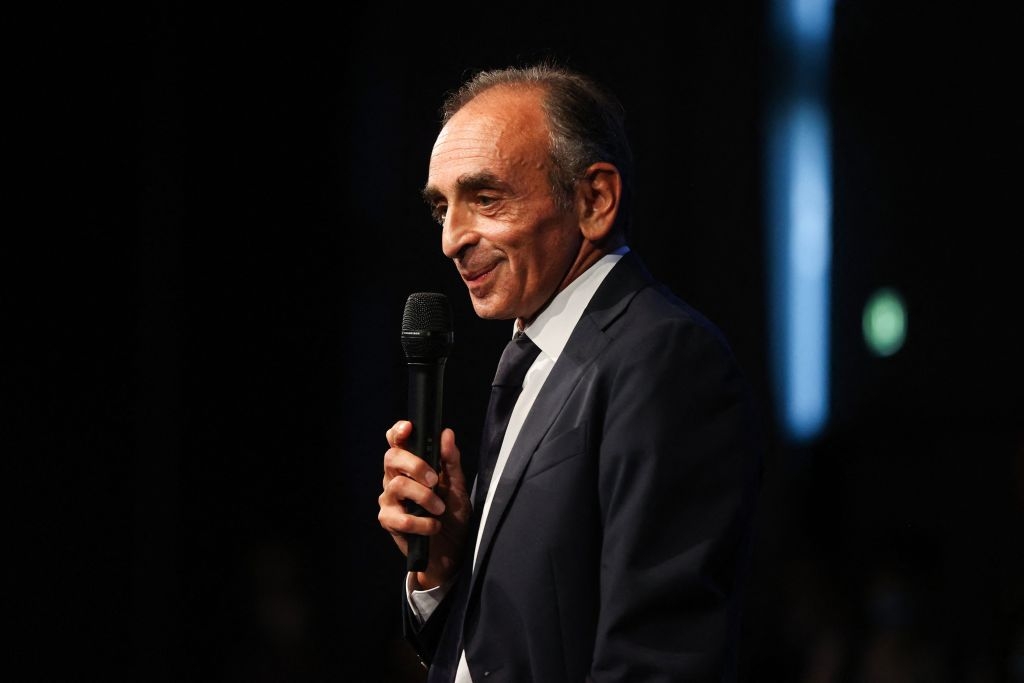
[W]hat is it that makes Zemmour attractive to so many Frenchmen?

  • Like Macron five years ago, Zemmour is seen as the outsider opposed to incompetent and corrupt insiders.

  • He seems unaware of the difference between American "secularism," in which the state sees itself as protector of all religions, and the French laïcité in which the state regards all religions as potential or actual threats.

  • The problem that France faces comes from political groups such as the Muslim Brotherhood, the Salafist groups, Khomeinist circles and home-grown militants radicalized through the Internet.

Like French President Emmanuel Macron five years ago, Éric Zemmour (pictured) is seen as the outsider opposed to incompetent and corrupt insiders. (Photo by Valery Hache/AFP via Getty Images)

Although the next French presidential election is months away, the way the media in Paris along with French chattering classes are behaving, one might think that we are on the eve of polling day.

Turn on any TV channel and open any newspaper and you are likely to run into oodles of speculation about the journey to the Élysée Palace.

One reason may be even the main one, for this premature interest is a 63-year old journalist who has cast himself as a modern version of the Prophet Jeremiah to depict gloom and forecasting doom for French democracy.

The man in question is Éric Zemmour, who has been lurking on the margins of French journalism, always in minor roles for almost three decades and, yet, is now entering as the rising star of French politics on the right or, as his enemies claim, the far right.

Two months ago, opinion polls credited him with around 3 percent of voter support. At the time of this writing, however, he is hovering above 20 percent and slated to be present in the second round of voting against incumbent President Emmanuel Macron. Such an outcome, of course, would mean total bankruptcy not only for the traditional parties of the right and left, the Republicans and the Socialists, but also for the far-right National Rally of Marine Le Pen and the far left Unbowed France of Jean-Luc Mélanchon.

But what is it that makes Zemmour attractive to so many Frenchmen?

To start with, he is seen as a new face at a time that the political elites are deeply unpopular. Like Macron five years ago, Zemmour is seen as the outsider opposed to incompetent and corrupt insiders.

Despite obvious differences, Zemmour benefits from the same novelty effect that Donald Trump did in the United States five years ago. Also like Trump, Zemmour has pared down his message to a number of simple ideas that resonate with large sections of a society struck by insecurity and doubts about the future.

Zemmour says France is on the decline, even facing death in its present form, for a number of reasons, among them continuous mass immigration especially by Muslim Arabs and Africans, and the offshoring of industrial jobs to China and other cheap-labor economies. He warns of what he calls "the Great Replacement," in which a fast-growing Muslim population will gradually replace the native French population, end the secular system of government and, as novelist Michel Houellebecq wrote a decade ago, turn France into an Islamic Republic. Zemmour's entourage insist that some 700 neighborhoods in France are already under Islamist control and turned to no-go areas for the "authentic" French.

The theme of "decline" isn't new in France or, indeed, in Western democracies as a whole. Schopenhauer warned of it over a century ago, and people like Noam Chomsky in the United States and Ayatollah Ali Khamenei in Iran have been harping on it for decades. What makes Zemmour a more convincing prophet of "declinism" is that, unlike Schopenhauer who philosophized but offered no defense against decline, and unlike Chomsky and Khamenei who are gleeful about it, he appears to be deeply hurt but determined to fight back and prevent "France's suicide". In fact, Zemmour's new book, a best-seller, is titled "France Has Not Said Its Last Word."

Zemmour also sounds convincing because he himself is an example of Frenchification, to coin a word. Born to a family of Algerian Jews, Zemmour witnessed how his grandparents and then parents submitted to the process of assimilation to become "authentic" French. His grandparents dropped their Algerian-Jewish names Liaou and Messouka for Justin and Rachel and gave "proper French names" to their children. Because a notorious gang named Zemour, with one M, had hit the headlines at the time, they also added a second M to their family name to avoid any confusion.

Zemmour's life story is built around a struggle against multiculturalism with French nationalism as its bedrock. Zemmour attended the then much coveted Paris Institute of Political Studies and, keen to join the elite, tried to enter the National School of Administration but was not admitted. His next disappointments came when he was refused a job with the Farming Syndicates Union because, born in a downmarket suburb, he lacked the rural roots that "authentic French" boast about.

An even worse disappointment came when his application to join the Cercle de l'Union interalliée, an exclusive elite club, was turned down.

In his role as the latest tribune of French nationalism, Zemmour revives the theme of "French specificity" and demands priority in giving jobs to the French rather than immigrants and other foreigners. In this he echoes the position taken by Charles Maurras, a monarchist writer and anti-Semite, and Pierre Laval, the politician who led the collaborators under German occupation, and pro-Pétain journalist Lucien Rebatet. The theme of "French priority", however, was also used by the Popular Front leaders in the 1930s and the French Communist Party under Maurice Thorez and Waldeck Rochet.

Zemmour makes much of secularism, or laïcité in French, as a guarantor of democracy in general.

He seems unaware of the difference between American "secularism," in which the state sees itself as protector of all religions, and the French laïcité in which the state regards all religions as potential or actual threats. The confusion is apparent when Zemmour says he wants to preserve the Judeo-Christian character of France while promoting laïcité as a means of countering the Islamic threat against France.

For a politician who has made combating Islam his principal goal, Zemmour appears ill informed about Islam in France, a religion without a church-like organization and hierarchy and divided into over 400 groups and sects. The formal, recognizable Islam in France is dominated by what one might call "consular Islam": mosques and lobbies created, financed and controlled by Muslim countries notably Turkey, Algeria and Morocco. Next to this "consular Islam," there is the primarily political networks masquerading as religious communities, chief among them the Muslim Brotherhood and mostly Lebanese Shiite circles controlled by Iran.

Taken together, these two forms of Islam represent no more than one or two percent of France's estimated 6.5 million nominally Muslim citizens. The problem that France faces comes from political groups such as the Muslim Brotherhood, the Salafist groups, Khomeinist circles and home-grown militants radicalized through the Internet. To pretend that these tiny but deadly groups represent a much larger reality could be self-defeating even from Zemmour's nationalistic point of view.

It is no accident that wherever Zemmour appears, militants, usually from the Muslim Brotherhood or Khomeinist outfits, often Muslim "sisters," turn up to portray him as an enemy of all Muslims.

Zemmour echoes the fears and doubts of many Frenchmen and opens the debate on some key social and cultural issues. So far, however, there is no sign that he has a clear idea of how to shape the right questions let alone provide the needed answers.

This article was originally published by Asharq al-Awsat


Amir Taheri was the executive editor-in-chief of the daily Kayhan in Iran from 1972 to 1979. He has worked at or written for innumerable publications, published eleven books, and has been a columnist for Asharq Al-Awsat since 1987.

Source: https://www.gatestoneinstitute.org/17941/france-nationalism-zemmour

Follow Middle East and Terrorism on Twitter

Duke Professor’s Distorted Lens into Israel/Palestinian Conflict - Andrew E. Harrod


​ by Andrew E. Harrod

The wokester BDS crowd has come up with a doozy.

Israel exhibits a “colonial systemology about nativeness” in the treatment of online smartphone pictures of the Israeli-Palestinian conflict, stated Duke University associate professor of anthropology Rebecca Stein during a Nov. 4 webinar.

This presentation, at George Washington University’s Institute for Middle East Studies (IMES). of her new book, Screen Shots: State Violence on Camera in Israel and Palestine, exposed her incorrigible anti-Israel bias.

That bias is evident in her Duke classroom, where last spring she announced to her class on social media in the Middle East that “she doesn’t care what prior knowledge or experience [class members] have on the topic,” as the only documents to be discussed were those she introduced.

As IMES associate director Shana Marshall moderated, Stein explained how her book examines the effects of widely disseminated smartphone cameras among clashing Israelis and Palestinians. These “proliferating cameras across the political theater of military occupation in the hands of all constituents” are “all aimed at the scene of state violence.” “A lot of this book is spent in the offices of B’Tselem, Israel’s oldest human rights organization” from 2010-2016, she added, a whitewashed description for a militantly anti-Israel organization.

B’Tselem and Stein, both supporters of the Boycott, Divestment, and Sanctions (BDS) economic warfare campaign against Israel, are ideological allies. She has previously described the 2000-2005 Second Intifada’s bloody terrorism as amounting to “mass demonstrations.” She has also praised the “Israel Studies” program at Birzeit University near Ramallah, a historic breeder of anti-Israel violence dubbed “Terrorist University” by some. In another book presentation, she claimed that Israel’s “occupation has been going on since 1967 and has been expanding and normalizing ever since,” even though Israel has withdrawn from significant Palestinian territories like the Gaza Strip.

Such perspective distorts the lens through which Stein sees images from Israeli and Palestinian cameras, which she contrasts morally in the starkest terms. In Israel “digital media technologies were being pulled into perpetrator toolboxes,” she said. Israeli military and “Jewish-Israeli publics” use cameras “to prop up the military occupation” and “exonerate perpetrators.”

While Stein condemned Israeli soldiers’ personal snapshots as “selfie-militarism,” the smartphones of Palestinians and supposed Israeli human rights workers like at B’Tselem somehow always capture the truth. These “cameras are trying to do very different things,” she said, working “to deliver justice in military courtrooms, to change Israeli and international hearts and minds with regard to the occupation, to gather a body of legal evidence.”

Stein and George Washington University associate professor of Media and Public Affairs Imani Cheers both discussed the book’s section about Hebron in the disputed West Bank territories. The latter reinforced these comments’ anti-Israel slant by stating that “I still have nightmares from my time in Hebron.” The conversation focused on Abdel Fattah al-Sharif, a Palestinian who on March 24, 2016, “was engaged in an attempted assault on an Israeli soldier” in Hebron, Stein noted.

An Israeli soldier, Elor Azaria, killed Sharif as he lay wounded on the ground in what “human rights onlookers clearly called an execution” based on video evidence, Stein said. Yet Azaria, a decorated soldier, claimed he saw Sharif’s arm move toward what he believed was a suicide bomb. These facts explain her otherwise baffling comment that, “for the vast majority of the Jewish-Israeli public, this was a celebratory moment,” a “moment of heroism.” Nonetheless, against widespread Israeli protests, the Israeli military held what she dismissed as a “performative show trial” to convict the “bad apple” Azaria.

Stein’s references to the claimed killing of twelve-year-old Muhammad Al-Dura on September 30, 2000, by Israeli soldiers further proved there is always more than meets her eye. Filmed images of Dura and his father sheltering from gunfire at a Gaza Strip intersection became a global cause célèbre, but extensive investigation in the following decades has debunked what was a Palestinian staged hoax. The Dura incident is merely one in a long list of “Pallywood” fabrications, yet she marveled how after this modern blood libel falsehood, accusations against Palestinians have “become such a persuasive charge.”

Fact-checking Palestinian victimhood narratives by subjecting them to forensic tests is part of an Israeli “repudiation script” to “call Palestinian footage false,” Stein claimed. It is simply, she said, an “attempt to take colonial argumentation, colonial processes, and update them for the digital age.” “Within a mainstream Israeli and rightwing, now mainstream, mindset,” the “Palestinians are unreliable narrators of the violence to which they themselves are subject. They are impossible witnesses,” in her terms. “All Palestinians lie” is the basic Israeli view, she asserted without acknowledging any reasons for skepticism, for “this is a very old colonial storyline, not unique to Israel/Palestine; the native cannot be believed.”

In B’Tselem’s Jerusalem offices, Stein herself saw her fantasies collide with hard facts. B’Tselem staff often discerned in Palestinian videos an “inevitable failure to persuade legal systems or Israeli publics of the realities of Israeli occupation” or “of continued human rights abuses,” she said. She also bemoaned the logistical hurdles presented by Israeli courts that have demanded access to original film footage on videotape or memory sticks when adjudicating Palestinian claims – standard court procedures worldwide.

In the Palestinian experience Stein has seen the “dream that transparency equals justice,” a “digital promise, unravel.” She has previously critiqued the “digital utopianism” during the 2010-2011 “Arab Spring,” which she uncritically described to IMES in her see-no-Islamism worldview as “landmark Arab revolts.” Thus, she wants “to rethink the story of the organically liberatory technology” of smartphone cameras and social media, language that reminded why one sympathetic reviewer noted that “Screen Shots is replete with academic jargon.”

No matter how much technology advances, anti-Israel academic activists like Stein view reality through a distorted lens. Their conclusion of Palestinians resisting Israeli colonial crimes is pre-scripted and not based on any body of evidence. Only objective scholarship seeking truth, not better visuals, can remedy the moral rot of Middle East studies, exemplified by Stein and her ilk.

Image: PXFuel, royalty-free photo


Andrew E. Harrod, a Campus Watch Fellow, freelance researcher, and writer, is a fellow with the Lawfare Project. Follow him on Twitter at: @AEHarrod

Source: https://www.americanthinker.com/articles/2021/11/duke_professors_distorted_lens_into_israelpalestinian_conflict.html

Follow Middle East and Terrorism on Twitter
Algeria Confronts Europe and the West over Gas and the Western Sahara - Amb. Dore Gold


​ by Amb. Dore Gold

Since the removal of Algeria’s late president, Abdelaziz Bouteflika, in 2019, there has been a notable radicalization of Algerian foreign and security policy, expressed in its approach to its Middle Eastern neighbors, France, and the rest of Europe.


Algeria Confronts Europe and the West over Gas and the Western Sahara
Flags of Morocco (left) and Algeria (right) (Yuriy Boyko/Shutterstock)

Institute for Contemporary Affairs

Founded jointly with the Wechsler Family Foundation

Vol. 21, No. 22

  • There has been a notable radicalization of Algerian foreign and security policy. On Oct. 31, Algeria decided to halt all gas exports to Spain and Portugal through the Maghreb-Europe pipeline that crosses Morocco. Two months earlier, Algeria cut diplomatic relations with Morocco. In essence, the Algerian government was singling out Morocco and escalating tensions in North Africa.
  • Since 2018, Algeria has given new support for the Polisario Front insurgents in the Western Sahara that threatened the Moroccan armed forces. Algeria has allowed the Islamic Republic of Iran to use its embassy in Algiers as a conduit for arms, funding, and training for the Polisario forces. Iran employed Hizbullah for this training mission because its operatives spoke Arabic. In response, Morocco cut off diplomatic relations with the Iranian government.
  • Algeria has closed its airspace to French fighter jets heading to the civil war in Mali, where jihadist forces were aligned with al-Qaeda in the Islamic Maghreb in the north and with the Islamic State in the south. Keeping allied airpower out of Algerian airspace effectively strengthened jihadist groups in the Sahel (the region south of the Sahara Desert), undermining Western interests.
  • In October 2021, the UN Security Council adopted Resolution 2602, which called for the resumption of consultations between Algeria, Morocco, and the Polisario to advance “a mutually acceptable political solution” in the Western Sahara based on compromise. Algeria utterly rejected the resolution

Since the removal of Algeria’s late president, Abdelaziz Bouteflika, in 2019, there has been a notable radicalization of Algerian foreign and security policy, expressed in its approach to its Middle Eastern neighbors, France, and the rest of Europe.

The most dramatic development in this area was Algeria’s decision on Oct. 31 to halt all gas exports to Spain and Portugal through the Maghreb-Europe pipeline that crosses Morocco (see yellow pipeline in the map). Two months earlier, Algeria cut diplomatic relations with Morocco.

Algeria pipelines map
Algeria pipelines map showing pipelines across the Mediterranean Sea and the Sahara, the Trans-Saharan, Maghreb–Europe via Morocco (in yellow), Medgaz, Galsi, Trans-Mediterranean, and Greenstream. (Wikimedia)

The Algerians took this step just as Russia reduced its natural gas exports to Europe, leading to soaring gas prices at the beginning of winter. Russia is a huge source of global natural gas, but Algeria alone is the fifth largest natural gas producer in the world. It is instructive to note that Algeria was cutting gas supplies at a time when it intended to increase its share of Europe’s gas market to over 30 percent, according to Algerian Energy Minister Mohamed Arkab. In essence, the Algerian government was not reducing the share of its gas sector in its overall energy production; it was singling out Morocco and escalating tensions in North Africa as a result.

Algerian Escalation

The present escalation in tensions between the two Maghreb rivals can be traced to 2018 and new Algerian support for insurgents in the Western Sahara that threatened the Moroccan armed forces. It was then that Morocco revealed that Algeria had been assisting the guerrilla forces of the Polisario Front in the Western Sahara region, fighting the Moroccan army and allowing the Islamic Republic of Iran to use its embassy in Algiers as a conduit for arms, funding, and training for the Polisario forces. Iran employed Hizbullah for this training mission because its operatives spoke Arabic, while its own special forces were more fluent in Farsi, which the Polisario did not understand. At the time, after Morocco warned Iran that it knew what Tehran was doing in Algeria, Rabat cut off diplomatic relations with the Iranian government.

Western Sahara
(Wikimedia)

The Algerians appeared to be reciprocating by suddenly charging that Israel and a “North African country” were assisting a Berber-speaking movement in northern Algeria, known as Kabylia, which calls for self-determination of its population – effectively breaking it off from the Algerian state.

Finally, Algeria closed its airspace to French fighter jets heading to the civil war in Mali, where both Russia and Turkey have been engaged with armed forces. In the war in Mali, jihadist forces were aligned with al-Qaeda in the Islamic Maghreb (AQIM) in the north and with the Islamic State (Daish – ISIS) in the south. Keeping allied airpower out of Algerian airspace effectively strengthened jihadist groups in the Sahel (the region south of the Sahara Desert), undermining Western interests.

Algeria’s harder line in regional matters also expressed itself in the diplomatic arena. The UN Security Council adopted Resolution 2602 in October 2021, which called for the resumption of consultations between Algeria, Morocco, and the Polisario to advance “a mutually acceptable political solution” in the Western Sahara that would be based on a compromise.

Algeria utterly rejected the resolution and was acting in complete defiance of the Security Council. It was noteworthy that the UN was not demanding that the parties adopt a particular solution by prejudging the outcome of future negotiations. But even the suggestion that there be a negotiated solution was unacceptable for Algeria’s radicalized foreign policy.

Precedents

Looking at Algerian history, this recent behavior should not come as a surprise. Algeria achieved independence in 1962. Within a year, Cuba, under Fidel Castro, deployed Cuban troops in response to a request for assistance from Algeria’s president, Mohamed Ahmad Ben Bella. In the words of a declassified CIA report from June 1965, Cuba dispatched its “most fiery advocate of national revolutionary movements,” namely Che Guevara, to Algeria and half a dozen African states. In time, the elites of both states shared a common ideological worldview at the height of the Cold War.1

As tensions grew with Morocco, the Soviet Union also backed Algeria. In the years that followed, Algeria placed itself squarely in the pro-Soviet camp. In the 1970s, the Soviets used three Algerian ports (Oran, Algiers, and Annaba) to help sustain their Mediterranean naval operations. Meanwhile, Morocco hosted American military bases, including two facilities for the bombers of the U.S. Strategic Air Command (SAC) and another airbase at Nouasseur for SAC fighter units.

A U.S. Naval Air Station operated at Port Lyautey. Along the Atlas Mountains, a U.S. Air Force Radar Warning System was set up. Naval communications installations were located at two other facilities. Thus, while Algeria was integrating itself into the military networks of the Soviet bloc, Morocco was an American ally tied to the U.S. strategic systems in North Africa.2 Now Algeria is engaging in a new military buildup as it purchases both Russian state-of-the-art aircraft and Chinese naval platforms, including frigates and corvettes, presently under construction. It should be recalled that China seeks to become a more dominant power in Africa in the years ahead.3

Conclusions

There was enormous irony in what was happening with Algeria’s struggle against Morocco. The Algerian revolution, which in 1962 grew from its ties with revolutionary Cuba, was now hosting the Iranians and effectively helping the forces of jihad within the territories of its neighbors. Its rejection of UN Security Council Resolution 2602 helped sustain the conflict over what used to be called the Western Sahara.

What did Algeria hope to gain from its economic squeeze on Europe by weaponizing its export of gas? In recent years, Algeria has been suffering one diplomatic defeat after another, and Morocco is winning in the UN Security Council. In 2017, Moroccan diplomacy succeeded in returning to the African Union after 32 years, and the African Union is supportive of Morocco’s claims in the Western Sahara. Moreover, in 2020, the United States recognized Moroccan sovereignty over the Western Sahara as part of a package deal by which Rabat backed the normalization agreements between the Arab states and Israel.

Undoubtedly, the Algerians would like to reverse these trends. One cannot rule out that Algeria seeks to muscle the European Union into an anti-Moroccan position with its gas policy. This harks back to the oil embargo of 1973, which sought to use oil as a political weapon. In addition, the Algerian leadership suffers from a legitimacy problem with its populace. Fanning the flames of limited confrontation over the Western Sahara might have been calculated to help bolster the Algerian regime internally.

I would like to thank Brig.-Gen. (ret.) Dr. Shimon Shapira and Col. Dr. Jacques Neriah for their contributions and insights to this article.

* * *

Notes

1 Special Report, Cuba’s Relations with Africa, Central Intelligence Agency, Office of Current Intelligence, June 4, 1965

2 Gordon H. McCormick, “The Soviet Presence in the Mediterranean,” The Rand Corporation, October 1987; and I. William Zartman, “The Moroccan-American Bases Negotiations,” Middle East Journal, Volume 18, No.1 (Winter 1964).

3 “Algeria Is Becoming China’s Weapon,” Gordon G. Chang, Newsweek, October 11, 2021


Amb. Dore Gold

Source: https://jcpa.org/article/algeria-confronts-europe-and-the-west-over-gas-and-the-western-sahara/

Follow Middle East and Terrorism on Twitter