Monday, May 13, 2024

UN blames ‘fog of war’ for major overcounting of Gazan child deaths - Mike Wagenheim


by Mike Wagenheim

“It’s outrageous that only seven months later, the United Nations is questioning the Hamas-supplied casualty numbers,” an HonestReporting board member told JNS.
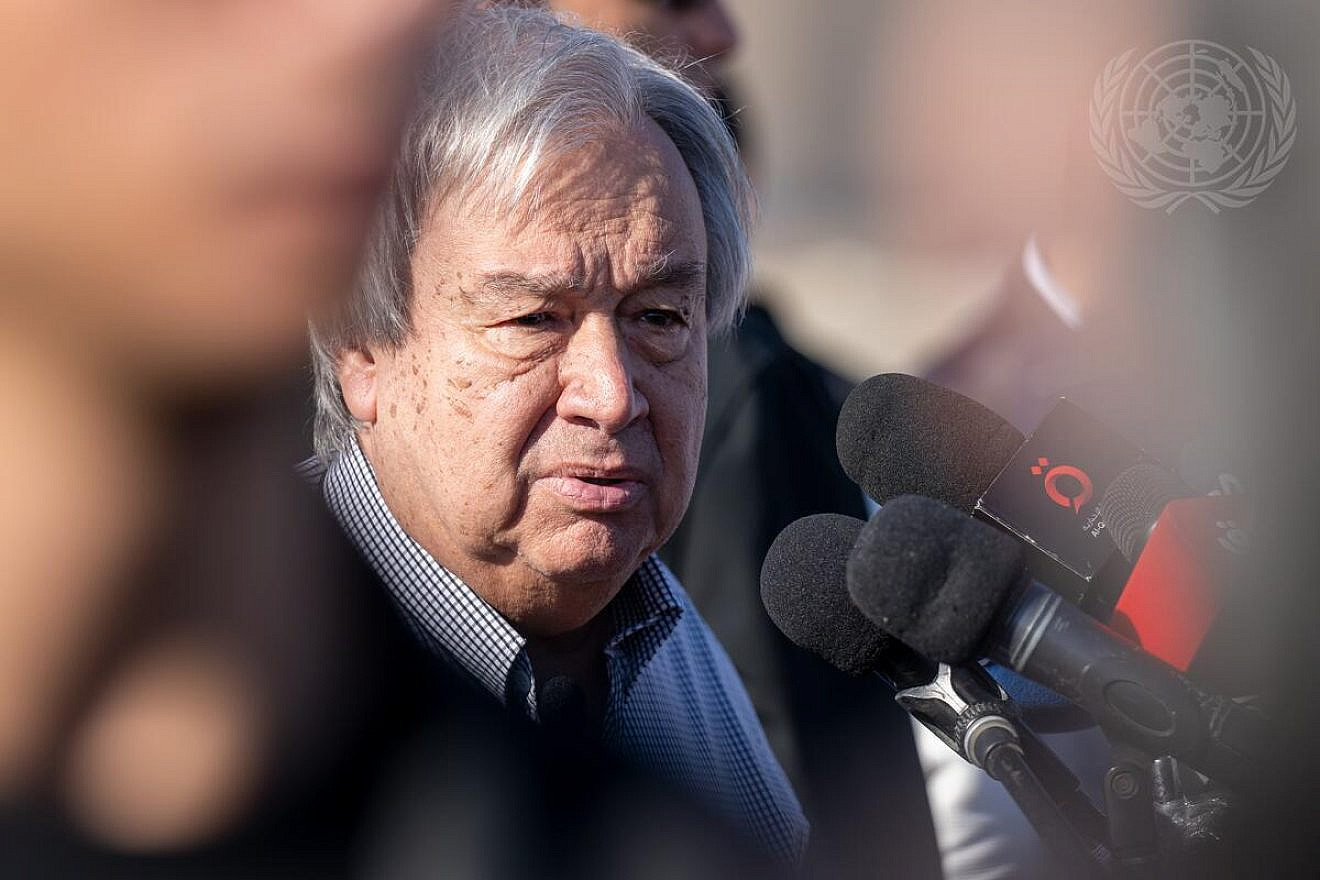
 

U.N. Secretary-General António Guterres briefs the press at the Rafah border crossing into Gaza. The Secretary-General reiterated his calls for a humanitarian ceasefire and the cessation of violence, notably in Gaza on March 23, 2024. Credit: Mark Garten/U.N. Photo.

The United Nations now claims that “the fog of war” is to blame for a major overstatement of the number of Gazan children who have been killed in the war.

In mid-March, the U.N. Children’s Fund stated that 13,450 children had been killed in Gaza, citing figures from the Hamas-run Gazan Health Ministry. Catherine Russell, the director of UNICEF, said in a television interview on March 17 that those numbers were “staggering” and “really shocking.”

“We haven’t seen that rate of death among children in almost any other conflict in the world,” Russell claimed at the time.

The statistic was cited frequently in the international press, leading to accusations that Israel had committed war crimes, including targeting babies and children intentionally.

Even Hamas has since admitted that those numbers turn out to be off by at least 40%. The United Nations revised its numbers last week, without providing an explanation.

“When it comes to Israel, it’s clear that the U.N.’s goal is not accuracy, but rather to immediately seize on any report, no matter how unsubstantiated or even manifestly false, in order to portray Israel as malevolent,” Hillel Neuer, executive director of UN Watch, told JNS. 

“The right thing for the U.N. to do now would be to admit that their casualty count in Gaza is a complete failure,” Neuer added.

Last Wednesday, the U.N. Office for the Coordination of Humanitarian Affairs (OCHA) released updated casualty figures. Some 7,797 Gazan children had died in the war as of April 30, it said—a roughly 42% drop from the mid-March numbers.

It also revised its casually figures for women by nearly a half—from more than 9,500 to fewer than 5,000.

In a little-noticed change, OCHA differentiated in its new figures between “reported” and “identified” fatalities, including the 7,797 children figure in the “identified” category. 

Using OCHA’s math, out of 10,158 reported but unidentified casualties, 5,653 (56%) would have to be children to add up to the figures published in mid-March. That would be far more than is indicated by the information the United Nations released last week, which claims that children make up 32% of the identified deaths in Gaza.

JNS asked Farhan Haq, deputy spokesman for U.N. Secretary-General António Guterres, at a press conference on Friday why the math doesn’t add up. 

“The revisions are taken … you know, of course, in the fog of war, it’s difficult to come up with numbers,” Haq told JNS. “We get numbers from different sources on the ground, and then we try to cross check them. As we cross check them, we update the numbers, and we’ll continue to do that as that progresses.”

Salo Aizenberg, an independent scholar and author and HonestReporting board member, told JNS that “It’s absolutely true that the fog of war makes it difficult to assess casualties, but this was the case from the beginning of the war.” 

“It’s outrageous that only seven months later, the U.N. is questioning the Hamas-supplied casualty numbers,” he said.

In early April, the Gaza Health Ministry said it had “incomplete data” for 11,371 of the 33,091 Palestinian fatalities it claimed to have documented at the time. The ministry later said it did not have names for more than 10,000 of the Gazans it claimed were killed in the war. 

The ministry has not revealed publicly how it compiles its published information. No independent media exists in Gaza to try to verify it.

“For reporting Gaza deaths, there is no method and no standard of proof,” Neuer told JNS. “All the U.N. does is parrot figures supplied by Hamas, which is laundered and legitimized by the U.N. as the neutral-sounding ‘Gaza Ministry of Health,’ or ‘Government Media Office, when in fact both are run by the Hamas terrorist organization.”

“Now that the U.N. has suddenly reduced some of the figures by half, they’ve essentially admitted to have been feeding the media and the world completely false numbers,” he said.

As recently as last month, the Hamas-run government media office has repeated claims that 70% of the deceased were women and children.

Haq, the U.N. spokesman, told JNS that “Numbers get adjusted many times over the course of a conflict. Once a conflict is done, we’ll have the most accurate figures.” 

But Aizenberg’s research has shown that “For many months, there have been obvious errors identified in the numbers published daily by OCHA, which are ultimately based on Hamas reporting,” the scholar told JNS. 

Aizenberg pointed to an immediate claim by Hamas of nearly 500 deaths in an Oct. 17 strike on Al-Ahli Arab Hospital in Gaza, which turned out to be a Palestinian rocket misfire and evidence suggests a drastically-lower death total. Still, Hamas hasn’t corrected its initial tally.

His analysis has also revealed that Hamas reported on certain days in the first months of the war that more women and children were killed than the total number of all fatalities.

“We’re just going with what we can absolutely confirm, which will always be the low end of what the numbers are,” Haq, the U.N. spokesman, told JNS on Friday.

Abraham Wyner, a professor of statistics and data science at the University of Pennsylvania, published a statistical analysis two months ago that showed how Hamas faked casualty numbers. 

The Washington Institute for Near East Policy also released a report in January showing major discrepancies in the fatality reports, concluding they were most likely caused by manipulation.

“While it’s better late than never that the U.N. finally admits that the casualty numbers issued by Hamas for the last 200 days are not reliable, the false data has infiltrated everywhere,” Aizenberg told JNS.

He cited U.S. President Joe Biden’s claim in his March 7 State of the Union address that “more than 30,000 Palestinians have been killed.”

The U.S. State and Defense Departments have also used that statistic officially, apparently relying on Hamas data. 

Neuer told JNS that “If U.N. officials continue to legitimize a Hamas-run system that has now proven itself to be completely false, they will be complicit with terrorist propaganda.”

The revised Hamas casualty numbers, taken together with Israel Defense Forces claims of terrorists killed—a distinction Hamas does not make—“demonstrate that the civilian/casualty rate in Gaza is likely 1:1 or lower, which would amount to the lowest ratio in the history of urban combat, starkly contradicting any notion of indiscriminate IDF attacks,” Aizenberg told JNS.

JNS asked Haq on Friday if U.N. figures can be considered reliable.

“You can consider them reliable from the fact that we’re continually checking them,” he said. “We’ll continue to do that over the course of the war. But the numbers, you know, ultimately have to be regularly checked so that we can be sure that what we’re putting out is valid.”

In Jan. 2014, the U.N. Office of the High Commissioner for Human Rights announced it had stopped updating the death toll from Syria’s civil war, as it could no longer verify the sources of information.


Mike Wagenheim

Source: https://www.jns.org/un-blames-fog-of-war-for-major-overcounting-of-gazan-child-fatalities/

Follow Middle East and Terrorism on Twitter

Nonprofit aid agencies raise money off of Israel war, often side with Palestinian narratives - Madeleine Hubbard


by Madeleine Hubbard

There has been evidence that Hamas has been stealing the civilian aid, the State Department said.


U.S. and international non-profit agencies are raising money off of the Israel-Hamas war while promoting narratives that often are supportive of Palestinians and critical of Israel. 

Though Israel has established areas for refugees in the Gaza Strip and allowed aid in through multiple ports, dozens of major non-profit organizations are urging against an invasion of Rafah, Hamas' final stronghold in the region.

Save the Children, one of the largest international nonprofit groups, asked for donations via text message, stating that a "ground assault in Southern Gaza is forcing hundreds of thousands to flee & hurting aid efforts in Gaza's 'last refuge.' FOR WEEKS, we've been warning there's no feasible evacuation plan to lawfully displace & protect civilians."

The text includes a link to a donation page, which does not mention the approximately 130 people being held hostage by Hamas but does state that Israel "must halt operations in Rafah and open all available land crossings to allow aid to enter."

Doctors without Borders also neglected to mention the hostages in several of its recent updates on Gaza. The group called for an "immediate and sustained ceasefire" on Wednesday while saying it has seen a "pattern of systematic attacks against medical facilities and civilian infrastructure" since the start of the Israel-Hamas war.

On Saturday, Doctors Without Borders USA Executive Director Avril Benoit accused Israel of conducting operations that "continue to maim and kill civilians and block the provision of lifesaving humanitarian aid." While Israel has repeatedly said it attempts to avoid civilian casualties, evidence has indicated that terrorists in the Gaza Strip have repeatedly hit aid delivery areas with rockets and diverted aid from civilians.

Hamas, Palestinians and anti-Israel demonstrators have repeated rhetoric similar to the nonprofits, but Israel and its allies have heavily disputed such claims. 

Israel and international experts have said for months that Rafah is Gaza's "last refuge for Hamas," where four battalions of the terrorist organization remain. Israel ordered 100,000 civilians to evacuate Rafah to a tent camp that Israel declared a safe zone equipped with field hospitals and other facilities, The Associated Press reported. 

While the Rafah crossing into Egypt is closed, at least two crossings remain open.

The Kerem Shalom crossing briefly closed down last week after Hamas shot rockets at the area. Kerem Shalom, in Gaza's south, and the Erez crossing in Israel's north, are both open and accepting aid trucks, the Coordination of Government Activities in the Territories, an Israeli agency, said Thursday.

Two more rockets were launched from southern Rafah toward the Kerem Shalom area on Sunday, but they were intercepted by the Iron Dome missile defense system, Israel's military said

Meanwhile, the first aid shipment was sent to the U.S.-built floating pier off the coast of Gaza on Thursday, one day after Hamas launched mortar shells at the area. 

Other charity organizations have been even more severe in their criticism of Israel. 

Save the Children's U.K. branch signed onto a letter with 31 other organizations, including Mercy Corps Europe, International Rescue Committee UK, Oxfam and others, that said government leaders have warned Israel to "not unleash a slaughter in Rafah," and now the leaders must "finally act to stop the slaughter" that the groups say will happen if Israel invades Rafah. 

That letter does mention the hostages, however, stating: "A ceasefire is the only way to stop the death and destruction, get more aid to those who desperately need it, and safely release the hostages."

Israeli Prime Minister Benjamin Netanyahu has vowed to remain unwavering in his commitment to destroy Hamas. On Thursday, one day after President Joe Biden threatened to withhold weapons from Israel if it invades Rafah, Netanyahu said: "If we need to stand alone, we will stand alone."

Oxfam America, meanwhile, says that Israel is violating U.S. and international law with U.S. arms. Oxfam is circulating a petition to urge "the Biden administration to stop arms transfers to Israel, prioritize a permanent ceasefire, secure the release of all remaining hostages, and allow unimpeded access for humanitarian aid to reach the civilians who need it right now."

Although the non-profit groups are raising money from the war, the House approved a bill last month that would give $9 billion in humanitarian assistance to the Gaza Strip, which is more than four times the annual GDP of the area.

Follow Madeleine Hubbard on X or Instagram.


Madeleine Hubbard

Source: https://justthenews.com/accountability/watchdogs/dozens-non-profits-defend-rafah-accuse-israel-slaughter

Follow Middle East and Terrorism on Twitter

How bad is the US weapons freeze for Israel? - Shimon Sherman


by Shimon Sherman

“We can go into Rafah without the Americans, the question is what happens afterward,” expert tells JNS.


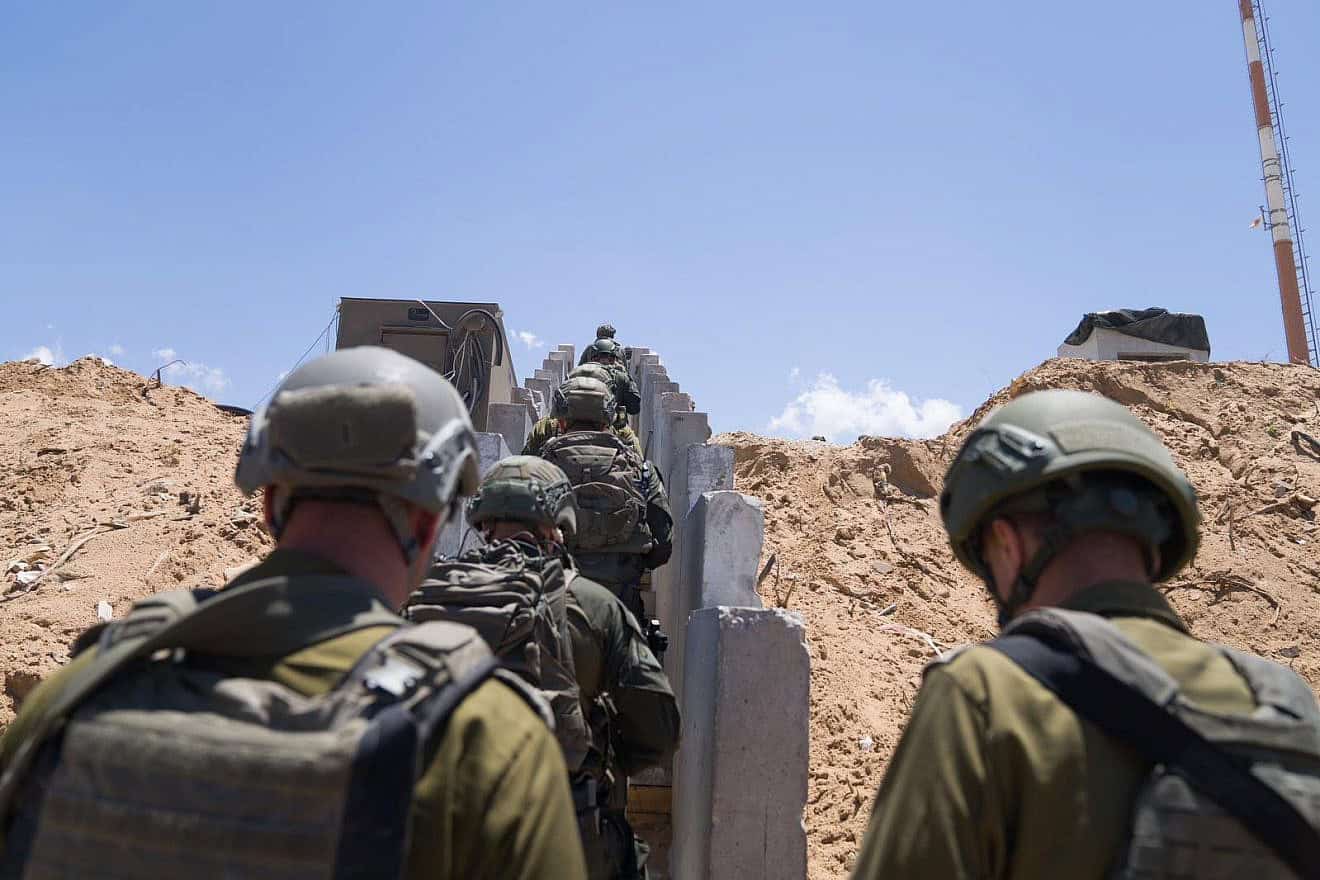
Israeli soldiers operating in eastern Rafah, the Gaza Strip, May 9, 2024. Credit: IDF.

Diplomatic shockwaves have been traveling between Washington and Jerusalem in the aftermath of a paused weapons shipment that was due to arrive in Israel last week. 

The Biden administration confirmed that it was holding up a large weapons shipment over fears it would be used in an already ongoing Israeli operation in Rafah in the Gaza Strip. Despite the critical strategic importance of the operation, the Biden administration had made clear that they strongly oppose any large-scale Israeli incursion in Rafah and would expand the weapons freeze should Israel seek to root out Hamas from its southern stronghold. 

This move had been under consideration for weeks, with some sources close to the White House claiming the announcement of the decision was timed to allow President Joe Biden to make his Holocaust Remembrance Day speech without being overshadowed by a policy decision that was likely to be perceived as harmful to the U.S.-Israel relationship.  

“As Israeli leaders seemed to approach a decision point last month on such an operation, we began to carefully review proposed transfers of particular weapons to Israel that might be used in Rafah,” a White House official said.

White House officials revealed that the planned shipment was said to contain 1,800 2,000-pound bombs and 1,700 500-pound bombs, as well as multiple other types of ordinance. U.S. defense officials said they were concerned by Israel’s broad use of 2,000-pound bombs in civilian areas. 

However, according to experts these concerns stem from a fundamental misunderstanding of the nature of combat in Gaza.

“The use of heavy ordinance is consistent with an operation targeting subterranean positions in a populated area,” said John Spencer in an interview last week.

According to Spencer, Chair of Urban Warfare Studies at the Modern War Institute at West Point, “Israel is fighting the most advanced and complex terror tunnel system ever encountered in modern combat, so their disproportionate use of 2,000-pound bombs is a response to their fighting environment.”

The paused shipment is not the only military aid that has been denied or restricted in recent months. According to Sen. James Risch, the top Republican on the Senate Foreign Relations Committee, other crucial military materiel has been frozen in congressional committees for months, including joint direct attack munitions (JDAMS), which convert dumb bombs into precision weapons, as well as tank rounds, mortars and armored tactical vehicles. Risch said some of these shipments have been waiting for approval since December, while usually, military aid to Israel goes through the approval processes in a few weeks. 

An $18 billion military transfer including dozens of Boeing F-15 aircraft has also been stuck in the House of Representatives Foreign Affairs Committee. Rep. Gregory Meeks, top Democrat on the committee, said he awaits more information about how Israel would use the F-15s.

“It’s enough of the indiscriminate bombing,” Meeks said last month. “I don’t want the kinds of weapons Israel has to be utilized to have more death. I want to make sure humanitarian aid gets in, and I don’t want people starving to death.”

Despite U.S. pressure, the government has made clear that the weapons freeze will not affect Israel’s determination to go into Rafah.

“If Israel has to stand alone, we will stand alone,” Israeli Prime Minister Benjamin Netanyahu said in a message last week. “During the War of Independence 76 years ago, we were few against many, we had no weapons, and there was an arms embargo on Israel, but with the strength of the soul, the bravery and the unity within us, we won,” he added. 

According to Channel 12, military officials are committed to an offensive in Rafah even without U.S. backing and have communicated this to Washington in recent days.

Other experts note that despite these delays, billions of dollars worth of U.S. weaponry remains in the pipeline for Israel. 

“We should remember it is not the first time we have faced this type of situation, and that in the past we have been able to overcome our differences with the Americans,” Ephraim Inbar, president of the Jerusalem Institute for Strategy, told JNS. “We should hold a balanced evaluation of what has happened with U.S. policy, and we should try our best to sell the Israeli case in America,” he added. 

“The U.S. didn’t ‘cut off’ offensive weapons, these terms make it sound worse than it already is. This was a serious signal, but it has to be read clearly,” said professor Chuck Freilich, former Israeli deputy national security adviser and currently a senior analyst at the Institute for National Security Studies (INSS).

By current estimates, Israel will likely be able to carry out its operation in Rafah regardless of the U.S. weapons freeze.

“The IDF has armaments for the missions it is planning, including missions in Rafah. We have what we need,” IDF Spokesman Rear Adm. Daniel Hagari said at a press conference last week.

According to Inbar, however, “We can go into Rafah without the Americans, the question is what happens afterward.” 

A further military implication of the shipment freeze is a reduction in Israel’s capacity to target terror infrastructure and thereby minimize collateral damage. 

According to U.S. sources, a shipment of precise munitions and precise munition kits is also being held up. The proposed arms delivery includes MK-82 bombs, up to 6,500 KMU-572 JDAMs, that add precision guidance to bombs, small-diameter tail kits for unguided bombs made by Boeing, and FMU-139 bomb fuses. 

A further shipment of critical parts for the Israeli-made Spice (“Smart, Precise Impact, Cost-Effective”) bombs, which use electro-optical or infra-red systems to hit targets with high accuracy, meaning they can operate even in scenarios where GPS guidance is unavailable, is also being held up. Although these transfers were not due to arrive in Israel for many months, the lack of a stable resupply will likely limit Israel’s ability to utilize such munitions in upcoming combat. 

Several U.S. military experts recently signed a letter to the White House in which they state that limiting Israel’s access to precision bombs will likely “increase civilian casualties in the conflict.”

Experts are further concerned that the growing daylight between the United States and Israel could have dire military implications for Israel in case of a second front in the north opening up, against the Hezbollah terror organization. “We need the Americans to also go into Lebanon so it is better if we can settle this issue,” said Inbar. 

“There is a threat of Hezbollah, or Iran escalating because of the perception of America distancing itself,” said Freilich. “The paused shipment doesn’t affect combat at this level in Gaza, but a full-scale northern war will make what is happening in Gaza now seem like child’s play, and will require a lot of munitions and ordnance,” he added.

The Israeli government has so far downplayed the significance of the growing rift between D.C. and Jerusalem.

“The U.S. has so far provided security assistance to the State of Israel and the IDF in an unprecedented manner during the war,” said IDF Spokesperson Hagari. “Even when there are disagreements between us, we resolve them behind closed doors,” he stated. “Israel has security interests, but we are also aware of the interests of the U.S., and that’s how we will continue to act.” 

Netanyahu echoed the sentiment during a “Dr. Phil Primetime” interview that aired on Thursday. “We often have our agreements but we’ve also had our disagreements. We’ve been able to overcome them. I hope we can overcome them now, but we will do what we have to do to protect our country,” he said.

Amid these developments, Israeli experts have increasingly been calling for Israel to expand its military manufacturing.

“Israel is a small country and we cannot be independent for a [while yet], but we need to work to increase our military manufacturing capabilities,” said Inbar.

The domestic response in the United States to the weapons freeze may signal a more nuanced reality. 

“I think the ideological preferences of the progressives partially drive this, but also the presidential elections. Biden is paying an electoral price in America for adopting a more critical position towards Israel,” Inbar told JNS. “I think there is room for American-Israeli discussions, at the same time I think the Biden administration might reevaluate the utility of such steps in their domestic electoral campaign. He doesn’t only have to please the Arab population in Michigan; in my view, he made an electoral mistake,” he added.

Inbar’s view is confirmed by the wide outpouring of bipartisan criticism in the aftermath of the White House’s decision. Twenty-six Democrats in the U.S. House of Representatives have signed a letter to Jake Sullivan, Biden’s National Security Advisor, requesting a briefing on why the administration suspended the delivery of large bombs to Israel. 

“We are deeply concerned about the message the Administration is sending to Hamas and other Iranian-backed terrorist proxies by withholding weapons shipments to Israel, during a critical moment in the negotiations. With democracy under assault around the world, we cannot undermine our ally Israel, especially in her greatest hour of need,” said the letter. 

Broad pressure could also be felt from the right, with House of Representatives speaker Mike Johnson calling the move “wholly unacceptable,” and former CIA director Mike Pompeo calling it “indefensible” and “a betrayal of a close ally fighting a defensive war.” 

Former President Donald Trump also made a statement in support of Israel.

Speaking at a rally in New Jersey on Saturday, Trump said, “This week, he [Biden] announced that he will withhold shipping weapons to Israel as they fight to eradicate Hamas terrorists in Gaza. It was shocking to hear him—even now, there are still American hostages being held by Hamas. Crooked Joe’s actions are one of the worst betrayals of an American ally in the history of our country. I support Israel’s right to win its war on terror.”


Shimon Sherman

Source: https://www.jns.org/how-bad-is-the-us-weapons-freeze-for-israel/

Follow Middle East and Terrorism on Twitter

Golan’s Heights - Bruce Bawer


by Bruce Bawer

Despite the European elite’s Israel-hatred, an Israeli chanteuse makes a spectacular showing at this year’s Eurovision.


[Order David Horowitz’s new book, America Betrayed, HERE.]

In a rather twisted way, it’s altogether fitting and proper that the Eurovision Song Contest should have ended up being held this year – when the big story surrounding the competition is all about Jew-hatred and support for jihadist terrorism – in Malmö, Sweden. In all of Europe, after all, no country is more infamous for its overwhelming level of Muslim immigration – and hence for its high incidence of Muslim-on-infidel rape and other jihadist transgressions – than Sweden, and in all of Sweden, no city is more infamous for the extent of its Islamization than Malmö.

It’s no surprise, then, that an Israeli Jewish reporter, Zeev Avrahami, who traveled to Sweden’s third-largest city not to cover a war but to report for Ynet News on the continent’s biggest and most vapid annual cultural event, found himself being beaten up the other day by a viciously anti-Semitic mob. Avrahami has said that when he disembarked from a train in Malmö after the brief journey from Copenhagen across the narrow strait called the Øresund, the main railroad station “resembled Jenin” on the West Bank. “Flags were unfurled, elders with determination, and children in festive attire, stickers, and drums. Locals stood with placards mounted on wooden poles, bearing the inscription on both sides: ‘Boycott Israel.’ They led the crowds to the demonstration, like seasoned tour guides. The Swedes were organized.”

When Avrahami began taking pictures of this gruesome scene with his phone, “a woman around 60, dressed in a keffiyeh-patterned dress, her head covered with a Palestinian scarf, and her mouth masked with a Palestinian mask, jumped on me and demanded I stop photographing.” He pointed out that Sweden is a democracy. She repeated her demand and was joined by friends who shared her view. A policeman assured Avrahami that he did indeed have a right to take photos, but the woman, along with a growing group of allies, began taking Avrahami’s picture and chanting “songs of hatred for Israel and ardor for Palestine.” The woman disappeared, only to return a few moments later with “seven or eight young Muslims” who “demanded to see documents and prove that I wasn’t Jewish or Israeli.” When Avrahami assured them that he was both, he was hit on the head with “a blunt object” and fell to the ground. Swedish police observed it all, but did nothing.

The reason why a song competition was being targeted by anti-Semites is that one of the participants in the contest, 20-year-old Eden Golan, was representing Israel. This year, as has become the usual practice, there was a semi-final on Tuesday of last week, a second semi-final on Thursday, and, on Saturday, the final competition featuring all the winners of the two semi-finals. Golan was scheduled to sing on Thursday. At a rehearsal on Wednesday, she was reportedly booed loudly both before and after her performance. Veteran Eurovision experts (imagine having that as a job description!) took it for granted that Golan would be voted out of the competition prontissimo.

Among these experts was Jostein Pedersen, who pointed out that when Ukraine won Eurovision in 2022, its victory was widely explained as an expression of sympathy for a country that had just been invaded by Russia. Last October, of course, Hamas invaded Israel, but many of the same people who cheer Ukraine as a plucky victim of an unjust military attack have managed to scrub October 7 from their memories and instead see Israel as committing anti-Palestinian genocide. Among them are young geniuses like 19-year-old Swedish activist Christofer Kibbon, who told the Guardian late last week that “Israel is using the ESC [Eurovision Song Contest] to ‘pink-wash’ themselves” – that idiotic term, popularized by American lesbian writer Sarah Schulman, which defines Israel’s acceptance of homosexuality as a cynical ploy to distract from its alleged cruelty to Muslims (and which makes possible such preposterous phenomena as Queers for Palestine).

Kibbon was one of tens of thousands of people who took to the streets of Malmö to protest Israel’s involvement in this year’s Eurovision. Israel has competed at Eurovision no fewer than forty-six times (no, it’s not located in Europe, of course, but the countries in its own neighborhood, as it happens, aren’t big either on song contests or on Jews), and its inclusion has been criticized before, especially by Nordic countries. But this time around the controversy is through the roof. After October 7, there were calls from all over Europe – again, especially from the Nordic countries – for Israel to be ejected from the club. Eurovision honchos, to their credit, stood firm. Nonetheless, Golan, unlike other Eurovision performers, has had to spend her week in Malmö surrounded by police guards. “When she isn’t onstage,” reported the Norwegian newspaper VG, “she’s mostly isolated in her hotel room for security reasons.” (According to the Daily Mail, in fact, Israeli security officials ordered Golan not to leave her hotel room.) 

VG’s reporter assumed, as did Pedersen and the other “experts,” that Golan and her song “Hurricane” would go down to defeat in the semi-final. But they were proved wrong – quite dramatically so. When Golan stepped onstage at Thursday’s semi-final, during which tens of thousands pro-Hamas protesters took to the streets of Malmö to decry her participation, she was reportedly booed lustily by the live audience – although to me, watching the video online the next day, the jeers seemed like nothing in comparison to the cheers. At the end of the show, of the sixteen semi-finalists, Israel was one of the ten countries that received enough votes to move on to the finals. Although the semi-finalists are announced in no particular order and the actual vote counts are kept secret, Eurovision officials in Italy accidentally released the purported results of that country’s voting, which appeared to indicate that Golan had garnered the support of no fewer than 39% of Italian viewers who took the trouble to cast a vote.

The history of Golan and “Hurricane”’s long and winding road to Malmö is a curious one. Eurovision started out, back in 1956, as a song contest. The music and lyrics were paramount; the singers were of secondary importance. This has changed drastically over the years. Golan became Israel’s representative as the result of a series of auditions over a period of months, during which she sang, on the TV show Hakokhav Haba no fewer than a dozen different tunes; after she was tapped to go to Malmö, the committee tasked with picking the song for her to sing went with a number called “October Rain,” which metaphorically referenced Hamas’s attacks on October 7. Yet both “October Rain” and another song – this one co-written by Golan – were rejected by the European Broadcasting Union as being too “political.” (An excerpt from “October Rain”’s original lyrics: “Someone stole the moon tonight / Took my light / Everything is black and white / Who’s the fool who told you / Boys don’t cry.”) It took two rewrites for “October Rain,” now entitled “Hurricane,” to be accepted by the EBU.

I think it’s fair to say that Eurovision’s core audience of silly teenage girls and campy gay men tilts left – and therefore presumably anti-Israel and pro-Hamas. So how is it that Golan did so well in the semi-final? Frøy Gudbrandsen, the political editor of VG, argued that it would be wrong to suggest that Golan’s success represented a thumbs-up for the IDF’s siege of Gaza. Perhaps, however, she maintained, it reflected a “strong sympathy with the Israeli population” that could very easily coexist with opposition to the IDF’s actions.  Gudbrandsen further noted that “it’s easy to feel sympathy for a young performer who has encountered massive rage…in a city where anti-Semitism is a big problem.” Full points to Gudbrandsen for being honest about Malmö being a hub of Jew-hatred. But Gudbrandsen also said this: the support for Golan may well indicate that ordinary Europeans’ sympathy for Israel is much higher than the noisy pro-Palestinian demonstrations would have you believe.

I would like to think that this is true, and I suspect it is. Western Europeans, especially those living in the Nordic countries, are under immense pressure from their political, media, and social elites to oppose Israel. Pro-Israeli voices face massive abuse and scorn. Could it be that many people, even in the Nordic countries, who can’t admit to a telephone pollster that they support Israel welcomed the opportunity to vote anonymously for Golan? It certainly seems worth pondering that while one in five Norwegians told VG pollsters that “they would boycott Eurovision because of Israel’s participation,” the number of Norwegians watching the second semi-final peaked during Golan’s segment and that of Norway’s entrant, Gåte (Mystery), who happened to follow her.

Naturally, Golan’s success – and especially that staggering 39% figure from Italy – alarmed many. Could Golan actually come out #1 on Saturday evening? Norwegian state television (NRK) reporter Linda Marie Vedeler wrote on Friday that fellow journalists she’d spoken to at Eurovision believed that if Israel won, Eurovision would be “destroyed.” By Saturday, the Nordic press in particular seemed to be in a state of utter hysteria, with one Anders Tangen (yet another a Eurovision “expert”) saying that “total chaos” had erupted behind the scenes, with several countries, including the UK and Ireland, threatening to withdraw from the contest. Alessandra Mele, who represented Norway in last year’s competition and who was scheduled to announce Norway’s vote in the closing segment of Saturday’s program, pulled out. In a separate controversy, Eurovision officials removed from Saturday’s lineup the Dutch entrant, Joost Klein, who was accused of assaulting a camerawoman. But the Klein story, which in any other year would have been big news, was entirely overshadowed by the horrific prospect of Israel actually winning Eurovision. NRK reported on Saturday afternoon that a “crisis meeting” about the question had taken place.

Given all this drama, Saturday’s show went off, for the most part, pretty much as usual. It opened with the performers taking the stage one by one, waving their national flags. There were cheers for all of them – including Golan. None of the participating countries had pulled out. As always, the show felt interminable. The songs, typically, were all awful, although some were more awful than others. When it was Golan’s turn to sing, she was greeted by cheers and was cheered almost entirely throughout her song. If you hadn’t known that “Hurricane” had begun as a tribute to the victims of October 7, you’d never have guessed it from the final lyrics; it came off like a thoroughly typical Eurovision song. (Other highlights: Ireland was represented by a self-identified “non-binary” singer; as a special treat, ABBA sang “Waterloo,” which this year celebrates the 50th anniversary of its Eurovision victory.)

When it came time to count the votes – half of them from national juries, the other half from viewers who registered their choices by phone, text, or online app – the audience booed ESC executive supervisor Martin Österdahl (presumably for his refusal to kick Israel off the show), and also booed the woman who, appearing by satellite from Jerusalem, announced Israel’s jury vote. The jury put Israel in 12th place out of 25 – in other words, pretty much smack in the middle. The vote by TV viewers, however, was something else again. They put Israel second only to Croatia, giving it a number of “televotes” – 323 – that dwarfed the tallies of most of the other countries, only four of which received over 200 votes and only six of which exceeded 100 votes. (Croatia’s public vote was 337, only 14 more than Israel’s.) In fact, TV viewers in 15 countries, including Germany, Britain, France, and Spain, put Israel at #1, with only nine countries’ viewers going for Croatia, seven for Ukraine, and only one apiece for seven other entrants.

Indeed, TV viewers in almost every Western European country put Israel in first, second, or third place – the sole exception being the notoriously anti-Semitic kingdom of Norway, whose voters put Golan in seventh place. (Norway’s jury actually put Golan in third place, for which it was seriously savaged in the Norwegian media.) NRK’s host rightly called Israel’s haul a “dizzying” sum – it lifted Golan, in the combined tally, up to fifth place in the contest – and it could scarcely be interpreted in any other way than as reflecting an extraordinary level of sympathy for Israel among European TV viewers. Perhaps this really shouldn’t have been a surprise: Europeans tune into Eurovision not only because they’re crazy about music (even though, in this case, it’s almost all lousy music) but also because they want to spend a few hours watching something fun and silly and free-spirited. And by this point most Europeans are very well aware that Islam simply isn’t interested in music – or, for that matter, in fun, or silliness, or freedom.


Bruce Bawer is a Shillman Fellow at the David Horowitz Freedom Center.

Source: https://www.frontpagemag.com/golans-heights/

Follow Middle East and Terrorism on Twitter

Trump tax cuts, past and possibly future, becoming important election year issue - Casey Harper


by Casey Harper

The sweeping Trump-era tax cuts in the Tax Cuts and Jobs Act of 2017 are set to expire next year, setting up the tax debate as a potentially key political issue this election year.


(The Center Square) -

The sweeping Trump-era tax cuts in the Tax Cuts and Jobs Act of 2017 are set to expire next year, setting up the tax debate as a potentially key political issue this election year.

While illegal immigration and inflation top Americans’ list of concerns, both parties are increasingly talking about the Trump-era tax cuts, which President Joe Biden has said he will allow to expire next year.

President Donald Trump, meanwhile, has promised more tax cuts if elected.

“You’re all getting the biggest tax cuts because we’re doing additional cuts and a brand new Trump economic boom like you’ve never seen before,” Trump told supporters at a South Carolina rally in February.

As The Center Square previously reported, the issue came to a head last week when the CBO released a report estimating that extending the Trump tax cuts would increase the national debt by $4 trillion over the next decade.

Expiring provisions include the significantly larger child tax credit, the death tax exemptions for farmers, and lower taxes for small businesses, among many others.

The White House has said Americans paying over $400,000 will not pay more in taxes, but independent tax analysis have contradicted that claim.

“Without congressional action, most taxpayers will see a notable tax increase relative to current policy in 2026,” the Tax Foundation said in its analysis.

Critics of the the Trump-era tax cuts pointed to the CBO costs and said the cuts disproportionately benefit the wealthy.

The CBO analysis gave some cover for Biden as the national debt nears $35 trillion.

Supporters of the tax cuts argue Americans who are already struggling with elevated inflation and gas prices will pay more.

"President Biden said that if he was reelected, he would allow the Trump tax cuts to expire," Preston Brashers, an economist at the Heritage Foundation, told The Center Square. "This wouldn’t just break his pledge not to raise taxes on Americans earning less than $400,000, it would obliterate it. If Biden lets the Trump tax cuts expire, Americans earning less than $400,000 will be saddled with a tax hike of more than $2 trillion over 10 years.

"You can quibble about the precise size of the tax hike, but it’s undeniable that an expiration of the Trump tax cuts would hit the middle class," he added.

House Ways and Means Committee Chairman Jason Smith, R-MO., and House Budget Committee Chairman Jodey Arrington, R-Texas, released a statement defending the tax cuts, which were passed into law in 2017 after Trump took office.

Conservative economists usually argue that when more money is put in the hands of private citizens, it is used to create more wealth and jobs whereas money put into the hands of the government does not lead to the same level of wealth creation and growth, often lost to bureaucracy, waste, and poor spending choices.

The lawmakers said that the economic growth produced by the tax cuts outweighed the extra cost. Over time, more economic growth significantly increases the amount of taxable income for the government as well.

“The truth is, the Trump tax cuts resulted in economic growth that was a full percentage point above CBO’s forecast, and federal revenues far outpaced the agency’s predictions,” the lawmakers said. “In fact, under Trump tax policies in 2022, tax revenues reached a record high of nearly $5 trillion, and revenues averaged $205 billion above CBO predictions for the four years following implementation of the law.”

Economic analysis from the Tax Foundation helps bolster the economic growth argument.

“Tax Foundation estimates permanence for TCJA would create about 904,000 full-time equivalent jobs, ranging from more than 136,000 jobs in California and 75,000 jobs in Texas to about 1,660 new jobs in Vermont,” the group said in its analysis.

The CBO debt stats are a tough blow for Republicans as they fight for extending those tax cuts. They pointed to other key statistics, though, left out of the criticism of the Trump-era tax cuts.

“The officially reported poverty level fell to its lowest rate in 50 years and unemployment rates for minorities and those without a college degree hit all-time lows,” the lawmakers said. “Real median household income rose by $5,000, and wages went up by nearly 5 percent. Americans earning under $100,000 saw an average tax cut of 16 percent. And while the tax burden on low-income families went down, the top one percent saw their share of federal taxes go up.”

If the cuts expire, costs for American taxpayers will increase.

“On the other hand, President Biden's promise for the expiration of the Trump tax cuts means a family of four making $75,000 today will owe Uncle Sam an extra $1,500 in taxes,” the lawmakers said. “The Child Tax Credit will be slashed in half; small businesses will see their tax rates top 40 percent; and farmers may have to weigh selling the family business to pay a rising death tax.”


Casey Harper

Source: https://justthenews.com/nation/states/center-square/trump-tax-cuts-becoming-important-election-year-issue

Follow Middle East and Terrorism on Twitter

As Michael Cohen prepares to take stand at Trump trial, he faces serious credibility questions - Steven Richards


by Steven Richards

Disbarred attorney Cohen is a key witness in D.A. Bragg’s case against the former president and perhaps the only witness that can tie Trump directly to the payments. The problem for Bragg is whether the jury will believe Cohen.


Michael Cohen is expected to deliver his long-awaited testimony Monday in Donald Trump’s so-called “hush money” case, but taking the stand will likely bring up his own credibility issues on cross-examination. Still,  Cohen is likely the most significant witness in Manhattan District Attorney Alvin Bragg’s case against Trump.

Cohen was at the center of the alleged scheme to arrange payments to both porn star Stormy Daniels and former Playboy Playmate Karen McDougal before the 2016 election in order to prevent their stories from going public. Both Daniels, whose real name is Stephanie Clifford, and McDougal alleged they had brief affairs with Trump more than a decade ago.

Daniels, who testified last week, recounted in salacious detail an alleged sexual encounter with Trump on the sidelines of a celebrity golf tournament in 2016. Legal experts have said her prurient testimony may have done little for the actual case.

Bragg’s case centers on the payment scheme, which he claims includes an illegal effort by Trump to falsify business records in order to conceal “unlawful activity,” in this case, to improperly influence the 2016 election. The alleged business records revealed reimbursements to Cohen after the lawyer paid Daniels according to a non-disclosure agreement.

Cohen will make his debut in the trial after publicly posting and commenting about Trump's behavior. Observers speculate that Trump’s lawyers will argue Cohen's testimony sets a double standard, considering Trump has been under a gag order. So far, Judge Juan Merchan has refused to similarly gag Cohen, though on Friday, the judge asked prosecutors to inform Cohen that he should not speak about the trial or Trump.

Cohen walks in to a trial that so far has appeared to cut against Bragg. Experts say Bragg’s witnesses not only haven't given him any slam dunks, but actually may be undercutting the district attorney’s case.

For example, Hope Hicks – a former communications aide for Trump – last week delivered testimony that undercut Bragg’s main charge, that Trump orchestrated the “hush money” payments in order to influence the election. Hicks told the court that her former boss was primarily motivated by sparing his wife and family from the salacious accusations made by Daniels.

Both David Pecker, the CEO of the National Enquirer who helped “capture and kill” the affair stories, and Keith Davidson the former lawyer to Stormy Daniels to whom hush money was paid also gave testimony challenging the facts contained in the indictment. Since then, the Enquirer was sold to VVIP Ventures, a joint venture between Vinco Ventures, Inc and a360 Media, for an undisclosed price.

Pecker acknowledged that his arrangement from Trump dated long before the 2016 and was a “mutual, beneficial relationship.”

Keith Davidson, a Los Angeles lawyer who represented Stormy Daniels and McDougal, also gave testimony undercutting a key claim from Bragg’s case – that Trump was paying hush money misrepresented as a legal expense. Davidson instead said it “wasn’t a payoff and it wasn’t hush money” but rather “a civil settlement agreement.”

As Cohen prepares for his testimony, the lawyer faces new questions of his credibility. Memos reviewed by Just the News and reported in early March show Cohen in 2018 repeatedly insisted to his own attorney that he had no incriminating evidence on Trump related to the hush money payments to adult film actress Stormy Daniels.

The contradictions between Cohen’s public statements and claims to his attorney were first reported by Just the News last year, but have fresh relevance as he is set to deliver testimony against his boss in a case alleging the opposite of his statements.

These memos are just a fraction of the baggage Cohen is bringing to Trump’s hush money trial in New York—including previous convictions for lying to Congress, tax evasion, and bank fraud—where he will be a key witness for the prosecution.

Another blow to Cohen's credibility is that Cohen and his lawyer were scolded last year by a federal judge for a court filing that included three fake citations generated by the Google Bard AI tool. They had filed a court brief that cited three cases that do not exist. It turned out that Cohen passed the fake cases along to Schwartz, who didn't do a fact-check before submitting them as part of a motion in the U.S. District Court for the Southern District of New York. Neither were formally sanctioned by the judge.

Trump’s legal team previously asked Judge Merchan in March to block both Cohen’s testimony because of his previous perjury conviction and allegations he lied in Trump’s civil fraud trial last year. Then, later the same week, another judge, who was reviewing Cohen's request for early release, suggested Cohen may have committed perjury once again in his testimony at that fraud trial.

When Cohen was on trial himself in August 2018, he testified the payments to Daniels were “in coordination with and at the direction of a candidate for federal office,” referring to Trump. Yet, these claims stand in contrast to the account he gave his lawyer, Robert Costello, in 2018 before his trial took place, according to the memos reviewed by Just the News.

Last week, House Oversight Committee Chairman James Comer and House Judiciary Chairman Jim Jordan referred the Cohen matter to the Department of Justice for allegedly lying to Congress in 2019 in another incident which calls the lawyer’s credibility into question.

“As indicated in the 2019 letter, Cohen, while testifying under oath before the House Oversight Committee, made willfully and intentionally false statements of material fact that were contradicted by the record established by the Justice Department in United States v. Cohen," the Chairmen wrote to Attorney General Merrick Garland. "Cohen also made statements to the Oversight Committee that were contradicted by witnesses with firsthand knowledge of the subject matter.”

The pair highlighted six times that Cohen apparently lied to the committee in his testimony, which were previously referenced in an older congressional letter. Among the statements recorded as lies were Cohen’s denial of committing fraudulent acts which he had plead guilty to in court and contradictions between his written and verbal testimony.

Despite Cohen's credibility issues, his testimony represents a last-chance opportunity for Bragg to finally tie the checks written and allegedly misrepresented in business records directly to former President Trump. Bragg has failed so far to make that connection.

Cohen had a front row seat to the payments. After his testimony, the question that will remain is if the jury will believe whatever he has to say.

 
Steven Richards

Source: https://justthenews.com/government/courts-law/michael-cohen-set-appear-trump-trial-while-faced-questions-about-his

Follow Middle East and Terrorism on Twitter

Politicians clash over haredi conscription ahead of Thursday deadline - Eliav Breuer, Yonah Jeremy Bob


by Eliav Breuer, Yonah Jeremy Bob

Negotiations have been ongoing in recent weeks between Government Secretary Yossi Fuchs and representatives of Israel's haredi parties in an attempt to reach a compromise.


Benny Gantz  (photo credit: Chaim Goldberg/Flash90)
Benny Gantz
(photo credit: Chaim Goldberg/Flash90)

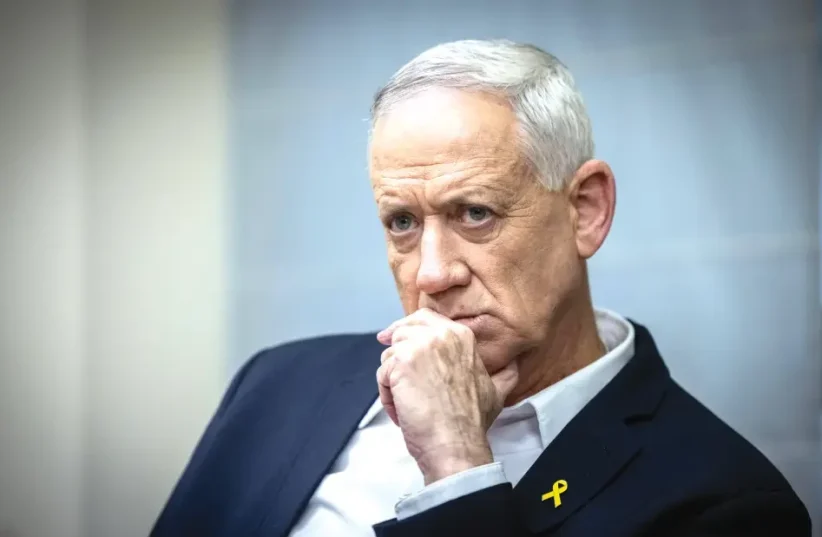
Prime Minister Benjamin Netanyahu intends to present to the cabinet a new plan for ultra-Orthodox (haredi) conscription into the IDF, just one day ahead of a May 16 deadline for the state to outline its plans to the High Court of Justice ahead of an important hearing on June 2, Minister-without-portfolio MK Benny Gantz revealed in a video statement on Saturday evening.

According to a report by KAN, the prime minister intends to hold a preliminary vote in the cabinet on Wednesday in order to include the plan in the legal filing to the High Court, so that the court refrain from forcing the government to begin drafting all haredi men of military age.

Negotiations have been ongoing in recent weeks between Government Secretary Yossi Fuchs and representatives of Israel's haredi parties in an attempt to reach a compromise, which could then be presented to the government and eventually pass as legislation in the Knesset. However, the sides have yet to announce that such a compromise has been reached.

Haredi men have enjoyed a legal exemption from IDF service since Israel's founding. However, the most recent law enabling the exemption was ruled unconstitutional in 2017, and after many delays, officially expired on July 1, 2023. The government gave itself an adjustment period to come up with a new plan, but that period ended on March 31, and the state is required by law to begin drafting some 60,000 haredi men of military age into the IDF.

Implications of passing draft exemptions 

The long-awaited conscription plan could trigger a political crisis. On one hand, Gantz in his Saturday video statement repeated his position that he would not support a bill that will continue to grant sweeping exemptions to haredi men, and Defense Minister Yoav Gallant announced in March that he would not support a plan that did not have Gantz's backing. On the other hand, the haredi parties, who are key partners in Netanyahu's coalition, have insisted that haredi men continue to receive the option to study in yeshivot full time, and also have argued that the IDF does not enable haredim who do serve to maintain their lifestyle. The departure of either Gantz's National Unity party or the two haredi parties (United Torah Judaism and Shas) would likely lead to political instability and even the government's collapse.

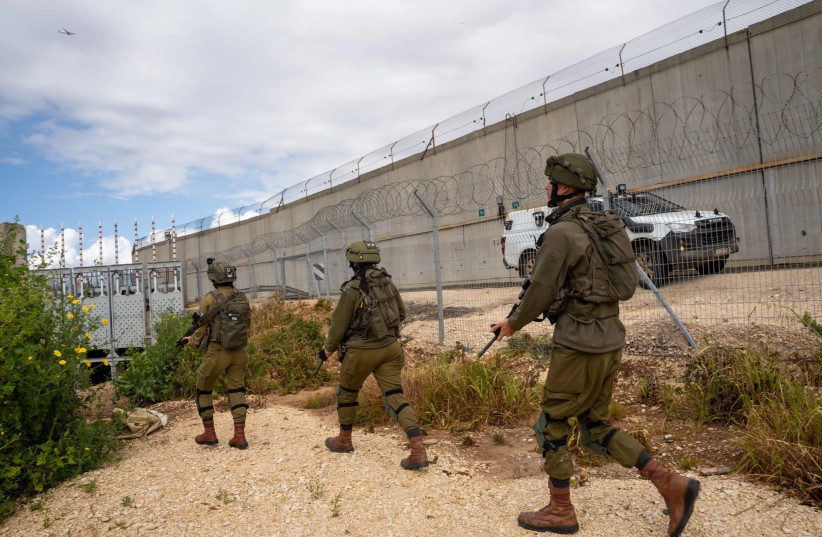
 IDF soldiers operating near Kalkilya in the West Bank, May 5, 2024. (credit: IDF SPOKESPERSON'S UNIT)Enlrage image
IDF soldiers operating near Kalkilya in the West Bank, May 5, 2024. (credit: IDF SPOKESPERSON'S UNIT)

Added to this is the ongoing legal case against the government's delay in drafting haredi men, and against financial support for military-age students in yeshivot. The High Court on March 28 issued a temporary order to halt the financial support and acknowledging that the state was required by law to draft haredim. The hearing on June 2, which will be heard in front of an expanded nine-member bench, will debate whether or not to turn the temporary order into a permanent one.

Israel Hayom reported on Saturday evening that the government's plan includes a gradual rise over ten years of a minimum amount of haredi draftees per year, with the goal being to eventually draft approximately half of eligible draftee every year (some 6,000 – 7,000 per year, out of some 13,000 students per year). These details could not be independently verified.

Plan still exempts approximately half of haredim from IDF service

Gantz claimed in Saturday's video that the prime minister was "acting in order to bring a plan that does not promote fair service in the state, harm the IDF draft and Israeli security and resilience." Gantz also criticized the timing of the prime minister's intention to present the plan just two days after Remembrance Day, and accused Netanyahu of "taking apart Israeli society during wartime for political gain."

Fuchs, who is facilitating the negotiations between the involved parties, refuted Gantz's claim. In a post on X, he accused Gantz of acting divisively and of criticizing a plan that has yet to be presented in full.

It appeared that Gantz's criticism of Netanyahu's bill addressing the crisis of Haredi exemption/integration into the IDF was less based on having thoroughly reviewed the prime minister's latest proposal, as much as the fact that Netanyahu has consistently avoided dialogue on the issue with Gantz along the lives of a major reform.

Comments by Netanyahu's cabinet secretary also indicated that the new bill could draw out any solution over a decade, a time period usually viewed as making a reform irrelevant in political terms since there will be additional elections before anything serious would change.

In contrast to Gantz, Gallant has fallen silent in recent days.

His position is that he tried in the recent past to shoot down Netanyahu's bill which was trying to repackage an ongoing exemption in practice as a real reform of integrating Haredim into the IDF, but that at this point he cannot single-handedly stop it.

Furthermore, if expectations are rising for Gantz to quit the government over the issue of Haredim serving in the IDF, Gallant has made it clear that even if he opposes Netanyahu's bill, he will not quit.

The defense minister believes that his value as the "adult in the room" in the current government in which he views Netanyahu as often being pushed around by National Security Minister Itamar Ben Gvir and Finance Minister Betzalel Smotrich, who are less experienced in world affairs, is more important than any statement he might make by resigning, given that the government would still continue.

It is also still always possible that four more Likud members could join Gallant to block passage of the bill, but there are no signs that the defense minister has succeeded in gathering such numbers.


Eliav Breuer, Yonah Jeremy Bob

Source: https://www.jpost.com/israel-news/article-800899

Follow Middle East and Terrorism on Twitter

China leader's whirlwind Europe tour exposes rifts among countries, could open new ones with US - Eric J. Lyman


by Eric J. Lyman

Xi spent two days in France and one day each in Serbia and Hungary, splitting his time between countries on opposite ends of Europe’s political spectrum.


China’s Xi Jinping wrapped up a whirlwind tour of Europe last week – a four-day, three-nation visit that is exposing rifts among European countries and could create new ones between Europe and the U.S. 

Xi, leader of the Chinese Communist Party, spent two days in France and one day each in Serbia and Hungary, splitting his time between countries on opposite ends of Europe’s political spectrum

Ukraine and Chinese investments are key issues defining the divide. 

French leader Emmanuel Macron is among Europe’s strongest supporters of Ukraine’s effort to fend off Russia's war, and direct Chinese investment in France is minimal. 

Serbia’s Aleksandar Vučić and Hungarian Prime Minister Viktor Orbán, in contrast, are pro-Russian. Both countries were in the Soviet Union’s sphere of influence, and despite being half a world away China is now the leading foreign investor in both Serbia and Hungary.

 Xi’s choice of stops on his trip also had symbolic importance. 

In France, Macron and Xi celebrated the 60th anniversary of France’s diplomatic recognition of China. France was the first Western country to take that step, a mere 15 years after the Chinese communist revolution

China has picked Hungary as its base for expanding its electric vehicle industry, the world’s largest, into Europe. 

But while Xi’s itinerary may shine a light on geopolitical differences between European nations, the Chinese leader’s stop in Serbia may have the most emblematic of China’s desire to cast shade on the U.S. 

Twenty-five years ago, in 1999, U.S. bombs struck the Chinese Embassy in Belgrade during the war in Yugoslavia. The bombing, which killed three Chinese journalists, is a seminal moment in the history of Chinese nationalism. 

In the midst of Xi’s Europe trip, a spokesman for China’s Ministry of Foreign Affairs said the country “would never forget” the day in 1999 when “U.S.-led NATO forces committed illegal and barbaric atrocities in bombing” the embassy. 

One area in which there is relevant foreign ground between France, Serbia, and Hungary is that all three countries to at least some degree see China as an essential counterweight to the United States' economic, cultural and geopolitical dominance

It was Xi’s first visit to Europe in nearly five years, and is a key move in China’s strategy to create a multi-polar world to replace the current U.S.-dominated order. 

Time will tell who got what they wanted out of the visits. But what happened in France may have the most immediate impact. 

Macron pulled out all stops for Xi’s visit.

There was the pomp and circumstance of Xi’s state visit to the Élysée Palace in Paris, including a trilateral summit that included European Commission President Ursula von der Leyen. 

Macron also took Xi to the Tourmalet Pass, high in the Pyrénées Mountains, an area where Macron spent vacations as a child. Macron’s goals included convincing Xi to walk back his “friendship without limits” with Russian leader Vladimir Putin.

But initial reactions are that Xi was “tin-eared” in his discussions with Macron, denying problems existed. 


Eric J. Lyman

Source: https://justthenews.com/government/diplomacy/xis-whirlwind-europe-tour-exposes-rifts-among-countries-could-create-new-ones

Follow Middle East and Terrorism on Twitter

Sunday, May 12, 2024

Biden and His ‘Ironclad’ Support of Israel - Clarice Feldman


by Clarice Feldman

While Israel fights for its life, the Biden adminstration plays bureaucratic games.


I always thought “ironclad” meant binding, but to President Biden it apparently means a pledge that’s good until it becomes politically inconvenient to stick to it. On at least two occasions he asserted his (and our) commitment to Israel’s defense was “ironclad”:

“On July 18, 2023, seated beside Mr. Herzog. “And as I affirmed to Prime Minister [Benjamin] Netanyahu yesterday, America’s commitment to Israel is firm. And it is ironclad.” 

He reiterated this pledge last month:

"As I told Prime Minister [Benjamin] Netanyahu, our commitment to Israel's security against these threats from Iran and its proxies is ironclad - let me say it again, ironclad," Mr. Biden said.

His comments come one day after an interview, recorded a week ago, was aired in which Mr. Biden urged Mr. Netanyahu to "just call for a ceasefire" in Gaza and in which he said he disagreed with the prime minister's war strategy.

"I think what he's doing is a mistake. I don't agree with his approach," he said in the interview with US network Univision”.

With rockets pouring into Israel from Lebanon and Gaza after the most murderous barbaric attack of October 7,  “The Biden administration told Congress it would waive sanctions on military sales to several Middle Eastern nations the day before President Biden himself publicly declared that the U.S. would not give Israel offensive aid if it invaded Rafah. (Israel had already begun to invade Rafah.)

Some of those countries have been accused of playing an active role in the proliferation of Hamas and other terror groups intent on wiping Israel off the map.

The State Department sent Congress a notification on Tuesday that it would extend existing sanctions waivers for Lebanon, Iraq, Kuwait, Yemen Libya, Qatar, and Saudi Arabia through April 30, 2025, according to a copy of the notice obtained by Fox News Digital on Friday.

This week, in accord with a National Security Memorandum issued in February, the Department of State released a report which covers Israel and six other states concerning whether these states, which receive U.S. defense aid, have provided assurances that they will abide by U.S. and International law. Respecting Israel, its report is convoluted and provides little cover for the President, who is now being charged with Articles of Impeachment for threatening to cut off aid to Israel, a move predictable because the congressional authorization for arms sales to Israel was most certainly a quid pro quo for the defense authorization for continued aid to Ukraine.

In relevant part the unclassified version of the report states, per Michael Crowley of the New York Times, as Powerline's Scott Johnson quotes and discusses:

"The Biden administration believes that Israel has most likely violated international standards in failing to protect civilians in Gaza but has not found specific instances that would justify the withholding of military aid, the State Department told Congress on Friday.” Crowley also observes that the report adds that “the results on the ground, including high levels of civilian casualties, raise substantial questions” as to whether the Israel Defense Forces are making sufficient use of those tools…

Even so, the report -- which seemed at odds with itself in places -- said the United States had no hard proof of Israeli violations. It noted the difficulty of collecting reliable information from Gaza, Hamas’s tactic of operating in civilian areas and the fact that “Israel has not shared complete information to verify” whether U.S. weapons have been used in specific incidents alleged to have involved human rights law violations.

The report addresses Israel’s compliance with international law at pages 21-25. Here is a key paragraph at pages 21-22:

Given the nature of the conflict in Gaza, with Hamas seeking to hide behind civilian populations and infrastructure and expose them to Israeli military action, as well as the lack of USG personnel on the ground in Gaza, it is difficult to assess or reach conclusive findings on individual incidents. Nevertheless, given Israel’s significant reliance on U.S.-made defense articles, it is reasonable to assess that defense articles covered under NSM-20 have been used by Israeli security forces since October 7 in instances inconsistent with its IHL obligations or with established best practices for mitigating civilian harm. Israel’s own concern about such incidents is reflected in the fact it has a number of internal investigations underway.

[snip]

The report addresses the IDF’s responsibility for civilian harm at pages 25-28. As I read it, Israel has undertaken heroic efforts to mitigate harm to civilians at great risk to its own soldiers, but that’s not quite what it says. 

[snip]

How accurate are Hamas’s accounts of “reported deaths”? Perhaps it would make sense to resort to serious statistical analysis, such as that conducted by Abraham Wyner in his Tablet column “How the Gaza Ministry of Health Fakes Casualty Numbers.” The report offers no such analysis or even any standard of comparison by which to assess “proportionality.”

Aside from any reliance on admittedly “highly questionable data,” the State Department report makes clear the alliance of Hamas and UNRWA in Gaza.

As Powerline reminds us, John Spencer, the West Point modern urban warfare expert, has already assessed the great and remarkable efforts by the Israelis to protect civilians behind whom the murderous, cowardly Hamas hides:

In their criticism, Israel’s opponents are erasing a remarkable, historic new standard Israel has set. In my long career studying and advising on urban warfare for the U.S. military, I’ve never known an army to take such measures [as the IDF has] to attend to the enemy’s civilian population, especially while simultaneously combating the enemy in the very same buildings. In fact, by my analysis, Israel has implemented more precautions to prevent civilian harm than any military in history -- above and beyond what international law requires and more than the U.S. did in its wars in Iraq and Afghanistan.

As perfidious as this report is, I conclude it gives no cover for Biden’s halting arms shipments to Israel now, at its greatest time of need. 

In the words of my favorite online poster, Alex Bensky, the report says “we want to favor Hamas and hinder Israel even more and we can’t find any actual reason to do so.”

In the meantime, the Administration is continuing building a pier to Gaza even under fire by Hamas and even though it will continue to provide an attractive, easily accessible target for it, and Israel continues to urge civilians to leave Rafah where any remaining hostages and Hamas leaders are hidden underground.

There are two cheering bits of news this week. Two notable left-wing outfits, BLM and Tides, are at odds, with BLM suing Tides for fraud in withholding $33 million in donations. It’s one of those things where we could hope they’d both lose.

At Harvard, 170 professors have sent a signed letter to interim president Alan M. Garber which states:

Dear Interim President Garber,

We have been watching with increasing alarm the continuing situation with the encampment in the Yard and agree entirely with your statement that this must end.  We agree with the following principles, which we have edited from a similar document which MIT faculty members sent to their President. 

We support you fully in recognizing the following principles: 

1. Freedom of speech on campus is subject to limitations in time, place and manner, and subject to other applicable US laws, including Titles VI and IX.

2.    The right to free speech is not a right to cancel the speech of others. The encampment’s violation of Harvard rules is not theoretical. It has prevented the use of a central campus space by many students, and now threatens to displace and marginalize activities by groups following the rules.

3. The right to protest does not imply the right to impose unlimited costs on the University. The Harvard police and other elements of the Harvard administration which are tasked with supporting our entire community have been stretched to the breaking point by the encampment. This cannot continue indefinitely.

4. Conduct rules should not be set aside in troubled times. On the contrary, it is at times like these that they must be applied rigorously and fairly, along with free speech protections and a respect for diverse viewpoints.

5. Students engaged in civil disobedience must accept the consequences of their actions. The willingness to accept the consequences of one’s actions is a critical difference between civil disobedience and mob rule.  

6. Academic freedom is not negotiable. Harvard should never negotiate away the rights of its faculty, students and staff to engage in research and engage in scholarly collaborations which advance the academic mission. Any concession on this front, including minor adaptations to Harvard’s current processes or a commitment to review them in light of the protestors’ agenda, is likely to be interpreted as politicization of Harvard’s procedures.  

7. The administration must not make concessions to protesters that would have not been granted had they followed the rules.  Concessions of this type would reward bad behavior and undermine our commitment to fundamental principles of civil discourse. Furthermore, it may encourage other groups to engage in disruptive behavior.  

8. Prompt removal of the encampment should be followed by civil dialogue with those representing the views of the protesters who remain in good standing with the university. The sooner the encampment is removed, the sooner a meaningful conversation can begin. 

On the basis of these principles, and recognizing that there can be no academic freedom in an atmosphere of lawlessness, we fully support your efforts to end the encampment swiftly and as peacefully as possible, so that the academic missions of our community, including exams and commencement, can go forward without further disturbance. 

As you might expect, the signatories are not from the gender studies programs but almost entirely from the medical school, business, and science faculties, and this is significant because it’s my understanding these are the programs which receive the most donations to the school.

 
Clarice Feldman

Source: https://www.americanthinker.com/articles/2024/05/biden_and_his_ironclad_support_of_israel.html

Follow Middle East and Terrorism on Twitter