Sunday, October 30, 2022

The IDF's shadow war on Iranian weapons smuggling in Syria - Amir Bohbot


by Amir Bohbot

The IDF is in the midst of an ongoing war against smuggling of weaponry from Iran to Syria, where they end in the hands of Lebanese terrorist organization Hezbollah.


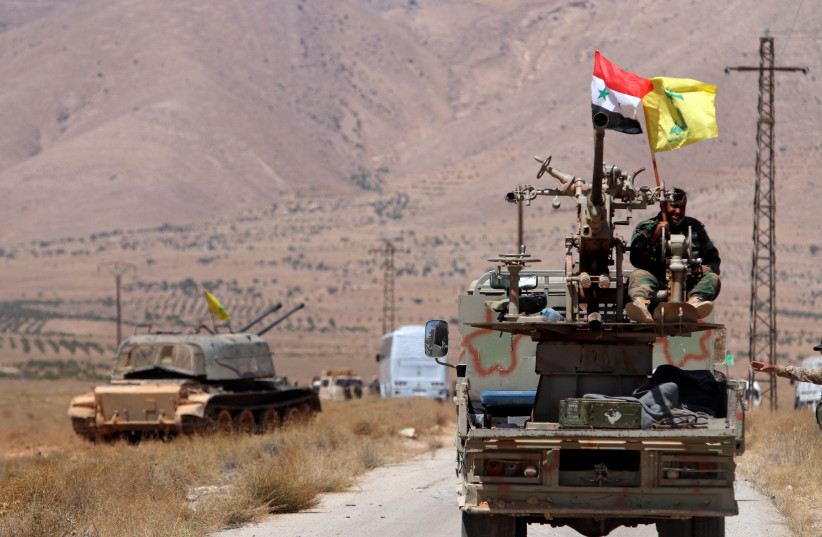
 Hezbollah and Syrian flags flutter on a military vehicle in Western Qalamoun, Syria August 28, 2017.  (photo credit: REUTERS/OMAR SANADIKI)
Hezbollah and Syrian flags flutter on a military vehicle in Western Qalamoun, Syria August 28, 2017.
(photo credit: REUTERS/OMAR SANADIKI)

A violent blast tore through a street of Masyaf, in a region of Syria known as a hub for the Assad regime-controlled Syrian defense industry, in August 2018. The attack, attributed by Syrian officials to Israel's Mossad, killed rocket scientist Dr. Aziz Asbar.

"It was a hit on the soft underbelly of the Syrian regime, which has made great efforts since then to rehabilitate that field," a senior former defense official said earlier this week.

The assassination of Asbar raised the issue of Iran, Hezbollah, North Korea and Russia's involvement in the development of weapons on Syrian soil, especially among Western intelligence agencies and moderate Sunni states in the Middle East.

The Israeli war on weapon manufacturing, smuggling in Syria

But the Israeli battle began all the way back in 2005, following intel showing the development of chemical weapons in Syria.

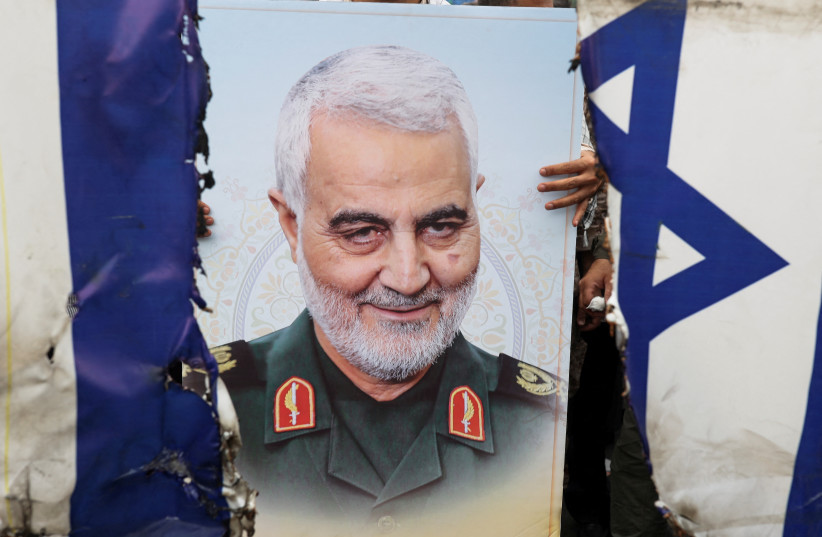
A poster of senior Iranian military commander General Qassem Soleimani is seen during a rally marking the annual Quds Day, or Jerusalem Day, on the last Friday of the holy month of Ramadan in Tehran, Iran April 29, 2022 (credit: WANA NEWS AGENCY/REUTERS)A poster of senior Iranian military commander General Qassem Soleimani is seen during a rally marking the annual Quds Day, or Jerusalem Day, on the last Friday of the holy month of Ramadan in Tehran, Iran April 29, 2022 (credit: WANA NEWS AGENCY/REUTERS)

Following Israeli intel and US sanctions on The Scientific Studies and Research Center (SSRC), which included sanctions carried out by the Trump administration on 271 individuals in the SSRC  in 2017, the center was attacked.

The message to Assad was clear but Damascus was not moved, continuing the development and smuggling of weaponry to Hezbollah and Iranian-backed militias across Syria.

A year later, Dr. Asbar was assassinated and as time went on, his influence on multiple projects, especially precision-guided missiles, became apparent. It remains to be discovered how close the rocket scientist was to Assad, Iran's slain Quds Force commander Qassem Soleimani and North Korean colleagues.

"It was clear Soleimani and Hezbollah Secretary-General Hassan Nasrallah led a plot to gain control of the research center and its production lines," the former defense official said. "In other words, a significant route for smuggling high-quality weaponry opened in Syria for Iranian miltias and Hezbollah.

"Israel cannot tolerate this," he added.

Over the past year, Tal Barry, head of research at Alma, has been working on wide-ranging research on the different production facilities in the SSRC. Those include Institute 1000, Institute 2000, Institute 3000, and Institute 4000.

According to Barry, some of Institute 4000's infrastructure, which mainly produces precision-guided missiles, was moved sometime during the Syrian Civil War to Masyaf, where Asbar headed the project until his mysterious death.

Institute 4000 also holds other, small-scale projects, Barry said, such as 'Project 99' for developing Scud missiles along with North Korea and Iran. Another branch, Project 794, is particularly interesting due to its proximity to a Russian base along the Syrian coast.

Alleged Israeli efforts to damage Institute 4000 projects

In August, Syrian air defense systems were activated following an airstrike on Institute 4000 facilities in Masyaf. Several buildings were completely destroyed, including one which reportedly contained a missiles cache that burned for two days.

Earlier this month, efforts to rebuild the damaged structures began. "Those leading the efforts are Iranian construction companies associated with the IRGC," Barry explained.

"What is the end goal? serve Iranian interests in Syria and Hezbollah's in Lebanon...Hezbollah will have autonomous capabilities in Beirut. If Tehran could, it would move it all to Lebanon but they are facing difficulties, there is no infrastructure in Lebanon.

The scope of attacks attributed to the IDF, headed by Chief of Staff Lt.-Gen. Aviv Kohavi, suggest that Iran and Hezbollah are far from meeting deadlines on projects set years prior by Soleimani, who was assassinated in 2020. His replacement has since visited Syria and Lebanon but spends most of his time in Iran and Iraq, monitoring the Quds Force's takeover of the SSRC facilities under Assad's nose.

"We think the Iranians, under the auspices of the Assad regime, operate at border crossings and airports through various means," a senior defense official told Walla. "As long as the Syrians refuse to address it, even if it is happening without their knowledge...someone needs to take care of it."


Amir Bohbot

Source: https://www.jpost.com/middle-east/article-720969

Follow Middle East and Terrorism on Twitter

Congress Must Increase its Support for Ukraine, Not Cut and Run - Con Coughlin


by Con Coughlin

The prospect of a new "axis of evil" being formed between two rogue states such as Russia and Iran is certainly a prospect that should encourage Western leaders to harden their support for Ukraine, not back away from it.

  • [R]educing American support for Kyiv -- as some American politicians are suggesting -- will not only constitute an unconscionable betrayal of the Ukrainian cause. It will encourage Putin, and allies such as Iran, to conduct further acts of territorial aggression.

  • [I]t is, perhaps, inevitable that a degree of conflict fatigue has set in among some politicians. But with Ukraine still managing to inflict significant defeats against its Russian adversary, the Ukrainians require more support, not less, if they are to succeed in their goal of achieving a conclusive victory and liberating their country from Russian occupation.

  • Kevin McCarthy, the Republican House minority leader, caused controversy earlier this month when he said that Republicans would not be prepared to write a "blank check" for Ukraine if they win control of the House at next month's midterm elections.

  • McCarthy's words provoked a fierce response....

  • Ukrainian officials also expressed "shock" at his comments as only a few weeks ago, during a visit to Washington, they had received an assurance from McCarthy that "bipartisan support of Ukraine in its war with Russia will remain a top priority even if they win in the elections", said David Arakhamia, head of Ukrainian President Volodymyr Zelenksy's party in parliament.

  • The prospect of a new "axis of evil" being formed between two rogue states such as Russia and Iran is certainly a prospect that should encourage Western leaders to harden their support for Ukraine, not back away from it.

  • Any attempt by the US and its allies to appease the Kremlin over its unprovoked aggression towards Ukraine will simply encourage Moscow and Tehran in the belief that the Western powers lack the courage and resolve to resist their attempts to spread their malign influence across the globe.

Reducing US support for Kyiv -- as some American politicians are suggesting -- will not only constitute an unconscionable betrayal of the Ukrainian cause. It will encourage Putin, and allies such as Iran, to conduct further acts of territorial aggression. Pictured: Ukrainian soldiers on an armored personnel carrier near Borivske, Kharkiv region on October 23, 2022. (Photo by Yevhen Titov/AFP via Getty Images)

Russian President Vladimir Putin might be suffering a humiliating military defeat in Ukraine, but reducing American support for Kyiv -- as some American politicians are suggesting -- will not only constitute an unconscionable betrayal of the Ukrainian cause. It will encourage Putin, and allies such as Iran, to conduct further acts of territorial aggression.

With the Ukraine conflict now in its eighth month, it is, perhaps, inevitable that a degree of conflict fatigue has set in among some politicians. But with Ukraine still managing to inflict significant defeats against its Russian adversary, the Ukrainians require more support, not less, if they are to succeed in their goal of achieving a conclusive victory and liberating their country from Russian occupation.

There are worrying concerns, though, that instead of intensifying military support for Kyiv to provide it with the firepower it requires to achieve victory over Russia, America's political classes are tiring of their support role, and are instead looking for ways to scale down their contribution.

By far the most egregious attempt by American policymakers to wash their hands of the Ukraine conflict was a letter written by a clique of left-wing Democrats calling on President Joe Biden to negotiate directly with Russia to end the conflict, an approach that amounts to an unpardonable betrayal of the Ukrainian cause.

Thirty House liberals linked to the Congressional Progressive Caucus sent a letter to the White House on October 24 urging Biden to negotiate directly with Russia to bring an end to the war in Ukraine. The letter has since been withdrawn after it drew bitter criticism from other Democrats, with House Speaker Nancy Pelosi, speaking in Croatia at a summit on the conflict, insisting that "support for Ukraine and the people" will not stop, claiming "support for Ukraine is bipartisan, it is bicameral."

That the letter, though, contained the signatures of the usual suspects on the left of the Democratic Party - Reps. Jamie Raskin (MD), Alexandria Ocasio-Cortez (NY), Cori Bush (MO), Ro Khanna (CA) and Ilhan Omar (MN) - indicates there is a significant body of opinion in Congress where support for Ukraine is waning.

Nor is it just Democrats who have voiced reservations about the Ukrainian conflict. Kevin McCarthy, the Republican House minority leader, caused controversy earlier this month when he said that Republicans would not be prepared to write a "blank check" for Ukraine if they win control of the House at next month's midterm elections.

McCarthy's words provoked a fierce response from Republican Wyoming Senator Liz Cheney, who accused him of being the leader of the "pro-Putin" wing of the GOP.

Ukrainian officials also expressed "shock" at his comments as only a few weeks ago, during a visit to Washington, they had received an assurance from McCarthy that "bipartisan support of Ukraine in its war with Russia will remain a top priority even if they win in the elections", said David Arakhamia, head of Ukrainian President Volodymyr Zelenksy's party in parliament.

This is not the first time Republican reservations over Ukraine have surfaced. In May, Republican Senators and House Representatives opposed a $40 billion security assistance package requested by Kyiv, and there are fears that Republican dissent on the issue will increase in the next Congress.

Nor is the weakening of support for the Ukraine cause confined to Washington. In Britain, the selection of Prime Minister Rishi Sunak, who has declared that fixing the UK economy is his main priority, might see him move away from former PM Boris Johnson's unequivocal support for Kyiv. And in Italy, one of the first tasks of newly elected Prime Minister Giorgia Meloni was to reprimand former Italian leader Silvio Berlusconi over his close ties with Putin.

From Ukraine's point of view, the various calls for the West to adopt a different approach on the war with Russia could not come at a worse time. After the recent successes Ukrainian forces have enjoyed on the battlefield, there are signs that Moscow is preparing to launch a new offensive. Putin has called on Russian industry to provide more weapons, and conscripts are being press-ganged into service to reinforce Russian forces at the Ukrainian front.

In addition, Russia is receiving military assistance from Iran, which is providing drones and other equipment, with US intelligence reporting that a contingent of Iran's Islamic Revolutionary Guard Corps is now operating in Russian-occupied Crimea.

The prospect of a new "axis of evil" being formed between two rogue states such as Russia and Iran is certainly a prospect that should encourage Western leaders to harden their support for Ukraine, not back away from it.

Any attempt by the US and its allies to appease the Kremlin over its unprovoked aggression towards Ukraine will simply encourage Moscow and Tehran in the belief that the Western powers lack the courage and resolve to resist their attempts to spread their malign influence across the globe.


Con Coughlin is the Telegraph's Defence and Foreign Affairs Editor and a Shillman Journalism Fellow at Gatestone Institute.

Source: https://www.gatestoneinstitute.org/19057/congress-support-ukraine

Follow Middle East and Terrorism on Twitter

What's Biden hiding on the infant formula shortage? - Monica Showalter


by Monica Showalter

Public records about the federal investigation into the baby formula shortage are somehow not being released.


The Biden administration made a mess with the infant formula shortage earlier this year, and the problem is still ongoing, remaining at crisis levels in some parts of the country.

But don't ask them how thing are going now. After launching a high-profile investigation on why it happened last May 24, the shortages are still there, and now there's a coverup.

According to the Washington Examiner:

EXCLUSIVE — President Joe Biden's Federal Trade Commission is being sued for allegedly blocking the release of records related to its investigation of the nationwide baby formula shortage.
 
The Functional Government Initiative, an ethics watchdog , sent a Freedom of Information Act request in August to the FTC for the records, noting their release is in the "public interest." But the watchdog has not received any records as of this writing and is now suing the FTC for "wrongfully withholding them," according to a Wednesday complaint obtained by the Washington Examiner.

"FGI anticipates that officials and staff at FTC discussed and participated in making and implementing decisions about the investigation into the infant formula crisis," read the watchdog's lawsuit. "The public does not have an ability to easily evaluate the decision-making surrounding FTC’s investigation."

The Functional Government Initiative smelled a rat on this probe, suspecting that the FTC was in bed with leftists in Congress, as well maybe taking orders from NGOs and Big Labor unions, and quite possibly making insulting remarks about all the moms with babies who were sending in the requested public comments to the agency as requested. There also was a legitimate question as to why it took the feds so long to investigate the baby formula shortage, given that it claimed a whistleblower complaint sent to it was "lost" in the mailroom for four months. Really? 

They made a request for the public records on this, and got stonewalled.

The formula is still in shortage, with the Washington Examiner citing data showing that it's just 87% in stock, compared to around 90% before the pandemic. The Examiner also cited a newly released household survey from the Census bureau stating that 30% of households say they still can't get the formula they need, meaning, some places may have a surplus, and others may have way less. That's how averages go, assuming the data are correct, and given that this is the Biden administration, it might not be.

Bottom line here is that the Biden administration doesn't want us to know how it's investigating the baby formula crisis, probably because it played such a big role in making it happen. Midterms are on, after all, so the records request can wait. The Bidenites along with the Obamatons, have a history of failing to release what are and should be public records, because they would show some kind of disaster.

One can only hope that the moms who were probably disparaged by these sneaky officials take that into account on election day -- and vote accordingly.

Image: John Crowley, via Wikimedia Commons // CC BY-SA 2.0


Monica Showalter

Source: https://www.americanthinker.com/blog/2022/10/whats_biden_hiding_on_the_infant_formula_shortage.html

Follow Middle East and Terrorism on Twitter

Israel Elections: Which parties are running, what are their policies? - Eliav Breuer


by Eliav Breuer

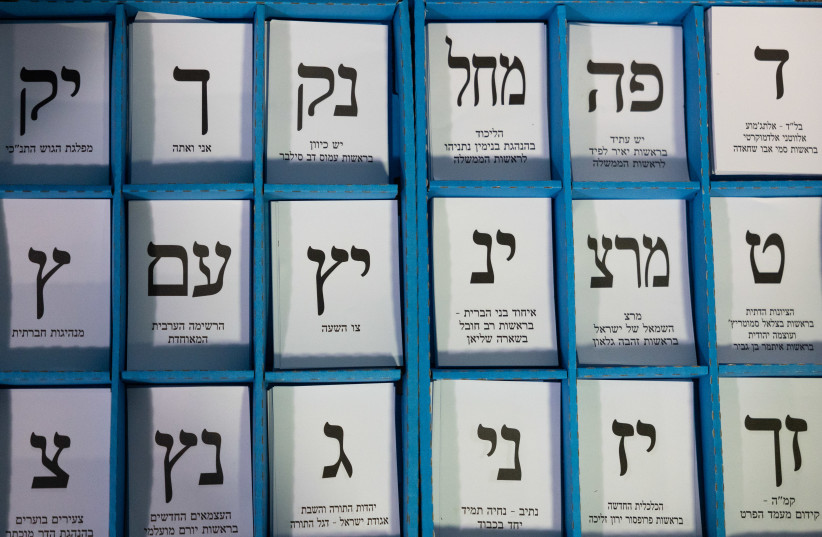
A breakdown of the parties and their policies ahead of the Israeli election, as well as voting strategies and possible outcomes.


 Workers prepare ballot boxes for the upcoming Israeli elections, at the central elections committee warehouse in Shoham, before they are shipped to polling stations, October 12, 2022.  (photo credit: YONATAN SINDEL/FLASH90)
Workers prepare ballot boxes for the upcoming Israeli elections, at the central elections committee warehouse in Shoham, before they are shipped to polling stations, October 12, 2022.
(photo credit: YONATAN SINDEL/FLASH90)

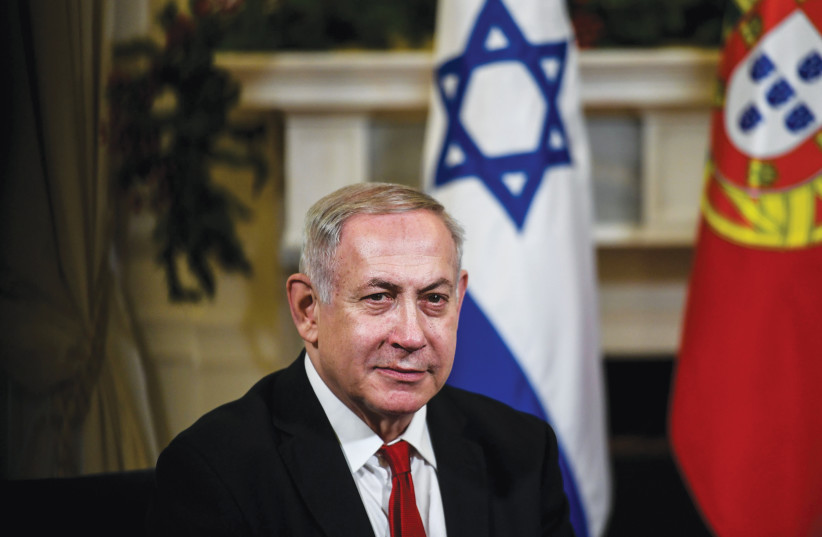
 Likud leader MK Benjamin Netanyahu (credit: Patricia De Melo Moreira/AFP via Getty Images) Likud leader MK Benjamin Netanyahu (credit: Patricia De Melo Moreira/AFP via Getty Images)

LIKUD

  • Leader: Opposition head MK Benjamin Netanyahu
  • Next up: MK Yariv Levin, MK Eli Cohen, MK Yoav Gallant
  • Political bloc: Right
  • Founded: 1973

Key policies:

  • The Likud is the only party that can form a stable government.
  • Economy: Three conditions for economic success: a stable government, personal leadership of the prime minister, a temporary and non-populist emergency plan.
  • Two basic elements of the economic plan: curbing the increase in prices and reducing taxes.

1. Curbing the rise in prices:

  • Immediate price reductions on the inflation generators – lowering the price of electricity, fuel and water, and freeze property tax rates for a year.
  • Lowering food prices by lowering taxes and duties.

 2. Tax reduction:

  • Lowering the income tax by further spacing the tax brackets and further increasing credit points, plus negative income tax reinforcement and corporate tax reduction in favor of encouraging growth and income.
  • Funding sources for the program: use of excess taxes and streamlining the public sector.
  • Housing: Issuing government bonds linked to housing prices, reducing demand; shortening the time for obtaining building permits and implementing a “retroactive enforcement” model – build first, then receive permits; land subsidies for construction for young couples and increasing the budget for supporting infrastructure before construction; a carrot and stick method with the contractors – if they own land and don’t build, they will get a stick; if they build fast, they will get a carrot.
  • Education: Free education for children ages until age three. This will reduce family expenses by tens of thousands of shekels, which will allow both parents to work and the economy to grow. 

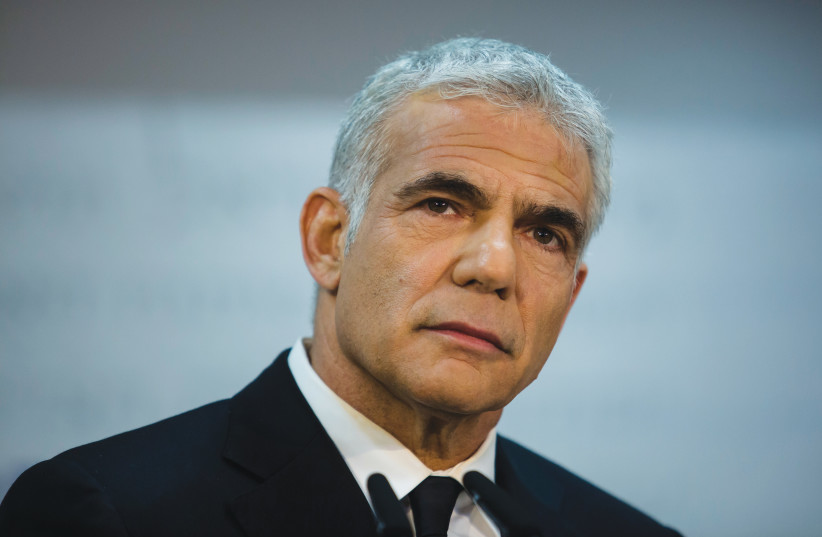
 Yesh Atid leader, Israeli Prime Minister Yair Lapid (credit: Amir Levy/Getty Images) Yesh Atid leader, Israeli Prime Minister Yair Lapid (credit: Amir Levy/Getty Images)

YESH ATID

  • Leader: Prime Minister Yair Lapid
  • Next up: Economy Minister Orna Barbivay; Labor, Social Affairs and Social Services Minister Meir Cohen; Energy Minister Karin Elharrar; Social Equality and Pensioners Minister Meirav Cohen
  • Political bloc: Center
  • Founded: 2012

Key policies:

  • Security: Maintain Israel’s technological empowerment in order to ensure security edge. Initiate a plan called “economy in exchange for security in Gaza,” which will enable humanitarian restoration of Gaza in exchange for opposing Hamas’s empowerment.”
  • Economy: Increase competitiveness in the economy as a central tool to reduce the cost of living, expand the import reform, lower tariffs and work to speed up the start of operations of the new ports in Haifa and Ashdod.
  • Jump-start the hi-tech industry and employ a million Israelis in the hi-tech industry.
  • Governance: Enact the law that prohibits a person accused of crimes from receiving the mandate to form the government, serving as president or state ombudsman.
  • Gender equality: Incentivize large workplaces to have kindergartens and daycare centers in their frameworks and allow the extension of working hours from home.
  • Establish an emergency system for women in times of crisis, improve the system of shelters for battered women and enact the Electronic Handcuffs law and the law to prevent economic violence against women.
  • Climate: Enact the climate law that will set a goal of carbon neutralization by 2050 and ensure the establishment of a climate council in the Prime Minister’s Office that will see to the implementation of the law.

 Religious Zionist leader MK Bezalel Smotrich (L) and Otzma Yehudit leader MK Itamar Ben-Gvir (credit: ARIE LIEB ABRAMS/FLASH90, YONATAN SINDEL/FLASH90) Religious Zionist leader MK Bezalel Smotrich (L) and Otzma Yehudit leader MK Itamar Ben-Gvir (credit: ARIE LIEB ABRAMS/FLASH90, YONATAN SINDEL/FLASH90)

RELIGIOUS ZIONIST PARTY

  • Leaders: MK Bezalel Smotrich, MK Itamar Ben-Gvir 
  • Next up: MK Ofir Sofer, MK Orit Struk, Yizhak Waserlauf
  • Political bloc: Right
  • Founded: 2021. Religious Zionist Party is the rebranded name of Ichud Leumi-Tkuma Party, with the addition of candidates from Otzma Yehudit and Noam.

Key policies:

  • “Restart” the judicial system, which includes canceling the crime of fraud and breach of trust; changing the makeup of the Judicial Selection Committee so that politicians have a majority; enacting a provision that enables the Knesset to legislate laws that were blocked by the High Court; enacting the French Law, which blocks any criminal proceedings against ministers.
  • Death penalty for terrorists: An end to terrorists’ celebration in prison; terrorists who kill Jews have only one punishment – death.
  • Immunity law for IDF soldiers for acts committed while serving: Changing the rules of engagement so that instead of endangering the lives of soldiers and citizens for “humane” and “moral” reasons, soldiers can shoot terrorists and will be granted immunity from prosecution.
  • Deportation Law: Those who throw stones and Molotov cocktails – with the aim of murdering Jews, members of the security forces and civilians, and those who publicly support terrorism against the State of Israel – will have their citizenship revoked and will be deported.
  • De facto sovereignty in Judea and Samaria: Dismantling the Civil Administration for Israeli citizens who reside in the West Bank, and putting the settlements under the direct jurisdiction of the government.
  • Aliyah: Canceling the provision in the Law of Return that allows grandchildren of Jews, who themselves are not Jewish according to Halacha, to make aliyah.
  • Conversion: Enacting a law that conversion must remain under the auspices of the Chief Rabbinate and must be conducted according to Orthodox tradition.
  • Enacting legislation to enable long-term imprisonment of illegal immigrants and a law to promote “voluntary immigration” to their original country or to a third party.

 Defense Minister Benny Gantz (M), Justice Minister Gideon Sa’ar (R), former IDF chief of staff Gadi Eisenkot (credit: TOMER NEUBERG/FLASH90) Defense Minister Benny Gantz (M), Justice Minister Gideon Sa’ar (R), former IDF chief of staff Gadi Eisenkot (credit: TOMER NEUBERG/FLASH90)

NATIONAL UNITY

  • Leaders: Defense Minister Benny Gantz, Justice Minister Gideon Sa’ar, former IDF chief of staff Gadi Eisenkot
  • Next up: Aliyah and Integration Minister Pnina Tamano-Shata; Education Minister Yifat Shasha-Biton; Culture and Sports Minister Chili Tropper
  • Political bloc: Center
  • Founded: 2022. A merger of Gantz’s Blue and White, and Sa’ar’s New Hope.

Key policies:

  • Establish a broad, stable government headed by Gantz that does not rely on the extremes on both sides of the political map and will take Israel out of the political bedlam.
  • Implement a strong and experienced security policy in the face of Israel’s security challenges on all fronts.
  • Make public security a central goal and implement the Eisenkot Plan to eradicate crime, strengthen personal security, and restore governance all over the country.
  • Protect the democratic regime and preserve the independence of the judicial system and the separation of powers.
  • Continue to promote the economy, maintain its stability, and ensure that all Israeli citizens enjoy its fruits. Commitment to pass the law on free education from age 0.

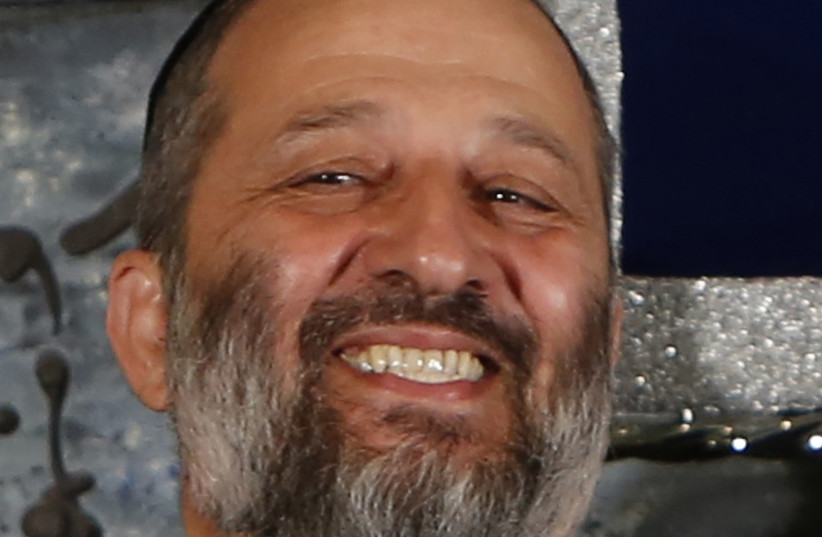
 Shas leader Arye Deri (credit: YONATAN SINDEL/FLASH90) Shas leader Arye Deri (credit: YONATAN SINDEL/FLASH90)

SHAS

  • Leader: Former MK and minister Arye Deri
  • Next up: MK Ya’acov Margi; MK Yoav Ben-Tzur; MK Michael Malkieli
  • Political bloc: Right
  • Founded: 1984

Key policies:

  • Addition of NIS 1 billion in the base of the budget every year in order to bring back Arye Deri’s food security cards to the weaker sectors of Israeli society.
  • Establish a government authority to fight poverty.
  • Cancel “Avigdor Liberman’s taxes” on plastic-ware and soft drinks
  • Maintain a Jewish Israel, maintain the Jewish tradition, and cancel the “decrees” of the previous government.
  • Forming a Jewish government led by Benjamin Netanyahu.

 UTJ leaders Yitzhak Goldknopf and Moshe Gafni (credit: YONATAN SINDEL/FLASH90) UTJ leaders Yitzhak Goldknopf and Moshe Gafni (credit: YONATAN SINDEL/FLASH90)

UNITED TORAH JUDAISM

  • Leaders: Yizhak Goldknopf, MK Moshe Gafni
  • Next up: MK Meir Porush; MK Uri Makleb; MK Yaakov Tessler
  • Political bloc: Right
  • Founded: 1992. A joint list made up of the ultra-Orthodox parties Agudat Israel and Degel HaTorah.

Key policies:

  • Housing: Establishing a National Housing Council, a body of professionals that will ensure a long-term housing strategy without dependence on the government’s makeup.
  • A significant expansion of land marketing as a response to the supply failure in the housing sector.
  • Adequate representation for the haredi public in the planning committees, releasing bureaucratic blockages and accelerating projects in stages of approval.
  • Education: Preventing collective punishment of ultra-Orthodox students: correcting the distortion of budgeting for schools that do not teach the core curriculum, which is currently 24% of the budget instead of 55% as required by law.
  • Equating the salary of haredi teaching staff to the salary of teachers in the general sector, in accordance with the agreement signed with the Teachers Union.

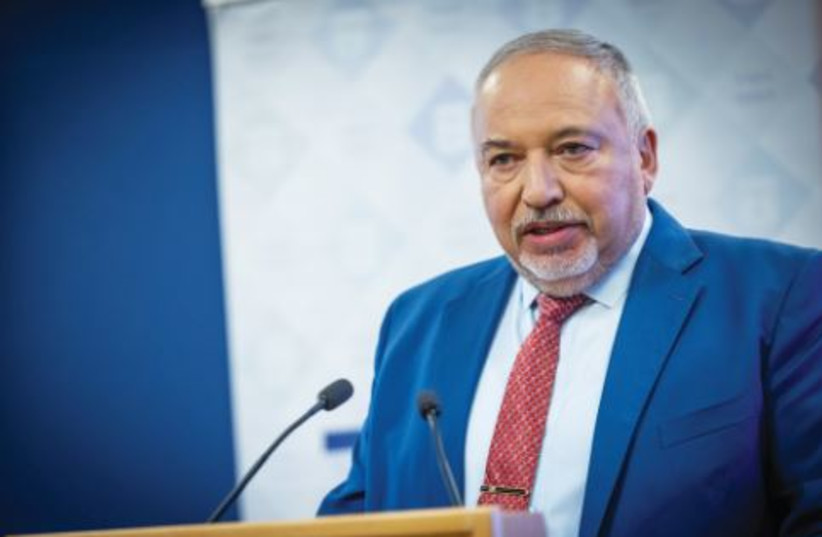
 Yisrael Beytenu leader Finance Minister Avigdor Liberman (credit: Iakovos Hatzistavrou/AFP via Getty Images) Yisrael Beytenu leader Finance Minister Avigdor Liberman (credit: Iakovos Hatzistavrou/AFP via Getty Images)

YISRAEL BEYTENU

  • Leader: Finance Minister Avigdor Liberman
  • Next up: Agriculture and Rural Development Minister Oded Forer; MK Evgeny Sova; Brig.-Gen. (res.) Sharon Nir
  • Political bloc: Center-Right
  • Founded: 1999

Key policies:

  • Governmental stability: Enacting a law that for the first two years, a Knesset may only disperse with a majority of minimum 90 MKs. Requiring two-year budgets, and legislating laws barring a prime minister from serving while under indictment or for more than two terms.
  • Personal safety: A national plan to strengthen and empower the Israel Police at a cost of NIS 3 billion, which will include an addition to the current strength of 3,000 police officers.
  • Economy: Broadening criteria to receive work grants for people who are over 26, single and make up to NIS 8,000; privatizing the Ashdod port and Haifa airport; canceling the “exclusive importer status.”
  • Haredi sector: Core studies in educational institutions as a condition for government support, with external supervision that will include annual testing; forming a special program for training teachers to teach core subjects in the haredi sector; and canceling special status of haredi schools that do not teach core studies.
  • Advancing the conscription law, lowering the exemption age for conscription and passing it in the Knesset.
  • Aliyah: Keeping the Law of Return as it is.
  • Enacting a national plan to help immigrants integrate into the Israeli workforce, and a law that requires adequate representation of new olim in the public sector.

 Labor leader Transportation Minister Merav Michaeli (credit: AVSHALOM SASSONI/FLASH90) Labor leader Transportation Minister Merav Michaeli (credit: AVSHALOM SASSONI/FLASH90)

LABOR

  • Leader: Transportation Minister Merav Michaeli
  • Next up: MK Naama Lazimi; MK Gilad Kariv; MK Efrat Rayten
  • Political bloc: Left
  • Founded: 1968

Key policies:

  • Stop hurtling toward the reality of a binational state, and defining separation from the Palestinians as a national strategic goal.
  • Strengthening the position of the State of Israel as a Jewish and democratic state while renewing negotiations with the Palestinian Authority.
  • Housing: Five-year plan to build 150,000 public housing units for long-term rental at affordable prices.
  • Regulating the private rental market: tax exemption only for long-term landlords and strengthening tenants’ rights.
  • Education: Free, quality public education from the end of maternity leave until age three.
  • Gradual cancellation of parents’ payments to the education system, to be replaced by state funding.
  • Senior citizens: Increasing the senior citizen allowance per household to 25% of the average salary and to the minimum salary for senior citizens without a pension.
  • Job market: Gradual increase of the minimum wage to NIS 7,000; extension of social security provisions to include the self-employed.
  • Immediate shortening of the work week from 42 to 40 hours per week and a multi-year process to reduce it to 36 hours per week; gradual addition of 10 paid vacation days in the coming years (from 12 to 22), in accordance with OECD averages.
  • Extending maternity leave and applying it to mothers and fathers.

 Meretz Leader Zehava Galon (credit: GILI YAARI/FLASH90) Meretz Leader Zehava Galon (credit: GILI YAARI/FLASH90)

MERETZ

  • Leader: Former MK Zehava Galon
  • Next up: MK Mossi Raz; MK Michal Rozin; MK Ali Salalha
  • Political bloc: Left
  • Founded: 1992

Key policies:

  • Governance: Legislating the Defendant’s Law within three months of the inauguration of the government.
  • Housing: An emergency national social housing plan, including state construction of hundreds of thousands of housing units; introducing affordable housing clauses in every new housing plan; eliminating the waiting list in public housing; developing models for long-term rental; and creating protection mechanisms for apartment prices and rent control.
  • Climate: Green New Deal, Blue and White – Reducing carbon emissions to zero in 2030 and a renewable energy target of 10% of all Israeli energy consumption in 2030 and 110% in 2050; a national plan for energy efficiency.
  • A comprehensive efficiency and savings policy in state institutions; the security system; and the industrial, agricultural, business and private sectors.
  • Implementation of the government’s decision to establish a solar power plant in the Negev, while taking into account sites with sensitive desert ecosystems.
  • Expanding human rights protected by Israeli law in accordance with the UN; legislation of the Basic Law: Social Rights, which will include the right to health, education, housing and a dignified existence, to unionize and to strike.
  • Correcting the discrimination against Israel’s Arab citizens and developing a comprehensive plan for affirmative action of the Arab population in all areas of life in cooperation with the Arab public.
  • Canceling the Basic Law: Israel as the Nation-State of the Jewish People; legislation of Israel’s Declaration of Independence as a Basic Law.

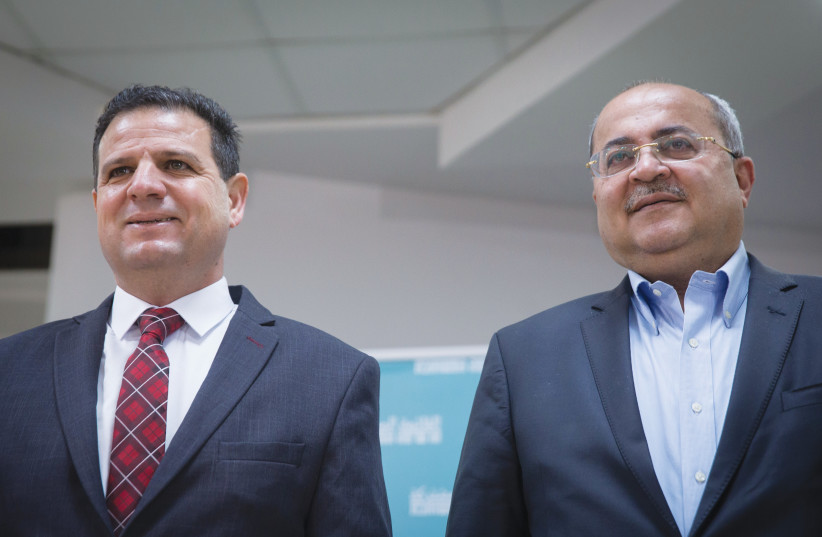
 Hadash leader MK Ayman Odeh, Ta'al leader MK Ahmad Tibi (credit: MIRIAM ALSTER/FLASH90) Hadash leader MK Ayman Odeh, Ta'al leader MK Ahmad Tibi (credit: MIRIAM ALSTER/FLASH90)

HADASH-TA’AL

  • Leaders: MK Ayman Odeh, MK Ahmad Tibi
  • Next up: MK Aida Touma-Sliman; MK Ofer Cassif; Youssef Atauna
  • Political bloc: Unaffiliated.
  • Founded: 2019. Formerly part of the Joint List

Key policies:

  • The end of the occupation, the evacuation of all settlements, and the establishment of an independent and sovereign Palestinian state within the borders of June 4, 1967, with east Jerusalem as its capital.
  • Repealing the Nation-State Law, the Kaminitz Law against illegal construction, and all “racist” laws.
  • Dealing with the phenomenon of violence and organized crime in Arab and general society by increasing enforcement and changing the discriminatory social conditions that lead to crime.
  • Raising the minimum wage to 70% of the average wage in the economy.
  • Free education from the age of three months up to the academic education system.

 Ra'am leader MK Mansour Abbas (credit: TOMER NEUBERG/FLASH90) Ra'am leader MK Mansour Abbas (credit: TOMER NEUBERG/FLASH90)

RA’AM

  • Leader: MK Mansour Abbas
  • Next up: MK Walid Taha; Walid Alhouashla; MK Iman Khatib-Yasin
  • Political bloc: Religiously conservative, politically affiliated with Center-Left
  • Founded: 1996

Key policies:

  • Full-fledged political involvement in domestic issues, particularly with respect to crime, employment opportunities, housing and infrastructure.
  • Support of the two-state solution, and the creation of a Palestinian state in the West Bank and Gaza Strip, with east Jerusalem as its capital.
  • Closing the gaps in the Arab educational system and support for both the establishment of an Arab university and the development of industrial zones near Arab communities.

 Habayit Hayehudi leader Interior Minister Ayelet Shaked (credit: JACK GUEZ/AFP VIA GETTY IMAGES) Habayit Hayehudi leader Interior Minister Ayelet Shaked (credit: JACK GUEZ/AFP VIA GETTY IMAGES)

HABAYIT HAYEHUDI

  • Leader: Interior Minister Ayelet Shaked
  • Next up: Yossi Brodny; Amitai Porat; Nitsana Darshan-Leitner
  • Political bloc: Right
  • Founded: 2008, when the National Religious Party (Mafdal), merged with Yamina

Key policies:

  • Education: Gradually expand the law of free preschool education; strengthening the study of the Bible, Judaism and Israeli heritage at all age levels.
  • Transportation: Continue improving Israel’s light rail and fast-train networks, and complete the legislation of the Metro Law; promote infrastructure for autonomous vehicles.
  • Security: An iron fist toward all provocations from Gaza and Lebanon, total opposition to the release of terrorists, maximum punishment for terrorists and their aides, revoking citizenship status of terrorists and their families.
  • Health: Promote the health infrastructure in the periphery. Reduce overcrowding in hospitals, in addition to establishing a new hospital in Kiryat Ata and Beersheba. Strengthen community medicine. Promote medical hi-tech in Israel.
  • Crime: A “zero weapon” policy, the elimination of terrorism on the roads, and the continuation of the fight against agricultural terrorism. Stabilize and strengthen the National Guard that was established this year.
  • Palestinians: Promote the agreements with the moderate Arab countries. Oppose any political move with the Palestinians. Support for the application of Israeli law to Area C, while granting citizenship or residency and self-administration, at their choice, to the tens of thousands of Arabs living in this area.
  • Religion and state: The state’s character must be determined by negotiations among all parts of society, and not determined by unilateral legislation. The Gabizon-Medan Covenant to be used as a compass for all disputed issues, including marriage and Shabbat in the public sphere. Implementation of the Kashrut Reform, and work toward an agreed conversion reform.

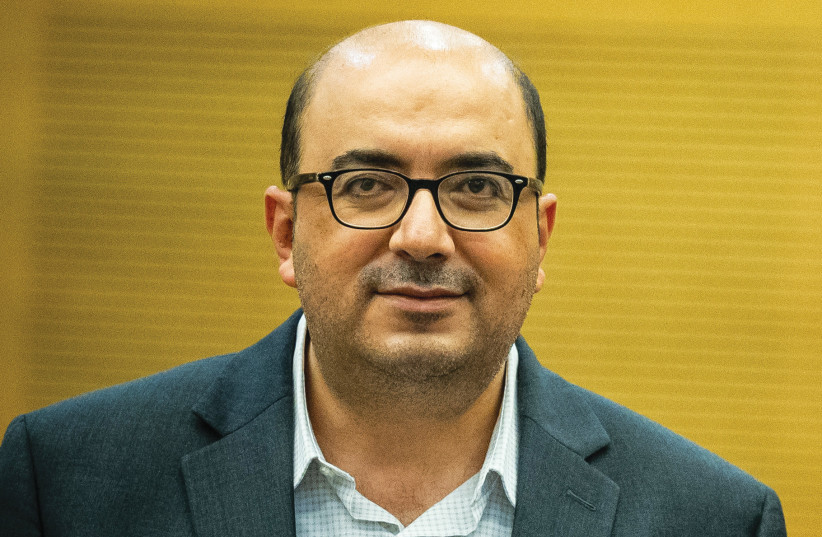
 Balad leader MK Sami Abu Shahadeh (credit: YONATAN SINDEL/FLASH90) Balad leader MK Sami Abu Shahadeh (credit: YONATAN SINDEL/FLASH90)

BALAD

  • Leader: MK Sami Abou Shahadeh
  • Next up: Former MK Mtanes Shihadeh; Doaa Houch Tatour; Walid Ka’adan
  • Political bloc: Unaffiliated
  • Founded: 1996. Formerly part of the Joint List

Key policies:

  • A “state of all its citizens” – replacing Israel’s definition as a Jewish state with a political identity built around shared citizenship within the state without regard to religion or ethnicity.
  • Full and equal citizenship for all.
  • The end of the occupation equals the beginning of peace.
  • Equal education for all.

Voting philosophies

Strategic voting

Parties need to pass the electoral threshold to make it into the Knesset. With some parties hovering not far above the threshold, voters may “strategically” choose small parties.

On the Right, this would be Habayit Hayehudi, which has yet to pass the threshold in any poll.

On the Jewish-Israeli Left, this would be Meretz or Labor, both of which are not far above the threshold in polls.

Among the Arab parties, both Hadash-Ta’al and Ra’am are not far above the threshold. Balad has yet to pass it in polls.

But beware…

Strategic voting for small parties may lead to your vote being wasted. If, for example, Habayit Hayehudi does not pass the threshold, your vote for it will not be counted.

Strategic voting for big parties

For voters who believe that what matters is the largest party, strategic voting means the opposite – voting for the biggest party despite feeling ideologically closer to one of the smaller ones. In this election, that would entail either for the Likud or for Yesh Atid, which appear to be the leading parties by far on each side.

One more caveat

Polls in Israel are notoriously known to get things wrong for a variety of reasons. The outcome may be far different than what your strategic choice was based on. The wisest decision may simply be to vote according to who best represents what is most important to you.

Who will not sit in a coalition with whom

Ruled out Netanyahu + Religious Zionist

  • Yesh Atid
  • National Unity
  • Labor
  • Meretz
  • Yisrael Beytenu
  • Ra’am
  • Hadash-Ta’al

Ruled out Hadash-Ta’al

  • Yesh Atid
  • Likud 
  • Religious Zionist Party
  • National Unity
  • Yisrael Beytenu
  • Habayit Hayehudi

Ruled out all Arab parties

  • Likud
  • Religious Zionist Party

Ruled out all haredi parties

  • Yisrael Beytenu

Possible outcomes

Right coalition led by Netanyahu

  • Likud
  • Shas
  • UTJ
  • Religious Zionist Party
  • Habayit Hayehudi

Center-Left-haredi coalition led by Gantz/Lapid

  • Yesh Atid
  • National Unity
  • Shas 
  • UTJ
  • Labor 
  • Meretz
  • Ra’am

A surprise coalition/kingmaker

A sixth election…


Eliav Breuer

Source: https://www.jpost.com/israel-elections/article-720785

Follow Middle East and Terrorism on Twitter

What's Behind the Seth Rich Coverup? - Clarice Feldman


by Clarice Feldman

Why is the FBI trying so hard to keep what has been in its possession for over four years a secret?


The Epoch Times reports on the continuing efforts by the FBI to hide the contents of Seth Rich’s computer, and while I am not sure why, the reasonable assumption is that to disclose this material would, as a number of experts have long contended, prove that Mueller’s claim that the DNC computer was hacked by Russians was of a piece with the entire nonsensical and disproven claims that Russia conspired to defeat Hillary Clinton in 2016.

Since it has been several years since focus was on the murder of Seth Rich and the publication by Julian Assange of the efforts inside the DNC to see that Hillary was the party’s presidential candidate, a summary look at the details is warranted.

Seth Rich was a DNC staffer who was mysteriously murdered on July 10, 2016, in Washington, D.C. after having been shot twice in the back. None of the valuable items in his possession seem to have been stolen. That would seem to rule out robbery. He had no known enemies and the murder occurred early in the morning (4:20 a.m.) in a safe neighborhood of the city. No one was ever arrested or prosecuted for the crime. There were no known witnesses to the murder. Nor to my knowledge were any suspects ever named. Local law enforcement nevertheless suggested his murder was part of a botched robbery. Six days after the murder, Wikileaks published over 19,000 emails and 8,000 attachments from the DNC files. In November of that year, they published over 8,000 more emails from the files. The emails showed that party officials favored Clinton over rival Bernie Sanders.

Julian Assange, the founder of Wikileaks, long embroiled in a lengthy effort to avoid extradition to the U.S. from the U.K., has refuseded steadfastly to name the source of this material but has hinted on Dutch television that it was Seth Rich. He has repeatedly said the Russian government was not the source.

Persons familiar with such things have examined the rate of data transmission, inter alia, and concluded the DNC system was not hacked by outsiders. Instead, they contend that the files were copied to a storage device like a thumb drive and transmitted to Assange’s Wikileaks.

The usual MSM and lefty internet sites dismissed these claims as “fake news” and the claimants as “conspiracy theorists.” Robert Mueller seems to have played along with them by indicting a number of Russian intelligence agents for hacking these files. If this were intended to cover up the truth it would be a convenient way to do it, for it is extremely unlikely any of these agents would appear here to contest the allegations in the indictment. (This was not the first time the Russian Collusion fairytale was fanned by a Mueller stunt like this. Mueller indicted a number of Russian firms and individuals for attempting to influence the 2016 election. Only one showed up to contest the charges, Concord Management and Consulting, and the Department of Justice dropped the charges against it.) 

After Rich’s murder, on March 15, 2018, a source provided to the FBI information and material extracted from the computer. The FBI originally claimed it never had possession of Rich’s laptop nor any information from it. Years later (in 2020) after receipt of this material, however, the agency backtracked and admitted it had thousands of files from Rich’s computer. Brian Huddleston sued under the Freedom of Information Act to obtain disclosure of those documents.

On September 29, U.S. District Judge Amos Mazzant ordered the Bureau to produce them in 14 days, dismissing the argument that that to release them would present a clear invasion of the Rich family privacy interests.  How weak was the Bureau’s defense? Judge Mazzant noted “Pointedly, the FBI cites no case law for the proposition that survivors of the deceased have a privacy interest in information related to the deceased’s favorite music or relationship history.” He said that cases relating to autopsies, death scene photographs, and other materials from a person’s final moments” were inapplicable.”

The FBI filed a new motion asking Judge Mazzant to reverse its order and argues that in the event he does not, it will need 66 years to produce that information.

Ty Clevenger, Huddleston’s lawyer disputes the FBI’s claims:

"If the court overrules the FBI’s motion, the FBI wants to produce records at a rate of 500 pages per month. At that rate, it will take almost 67 years just to produce the documents, never mind the images and other files,” Ty Clevenger, a lawyer representing Huddleston, told The Epoch Times in an email.

“After dealing with the FBI for five years, I now assume that the FBI is lying to me unless and until it proves otherwise. The FBI is desperately trying to hide records about Seth Rich, and that begs the question of why.”

For certain, the FBI stall is not only to protect Mueller. The claim that the DNC was “hacked” was bruited about by then-President Obama, the FBI, the Department of Homeland security, and the Office of the Director of National Intelligence, and it was done before it ever received a report from Crowd Strike on the DNC server images. Mueller claimed that the DNC hacks took place between May 25 and June 1, 2016. Crowd Strike’s sensors were on the DNC’s network beginning on May 1 of that year, and they report that there was no indication of any intrusion on the network after that May 1 date. This strongly suggests to me that the “conspiracy theorists” were right when they claimed the leak of the DNC network was an inside job. It may well not have been Seth Rich who did it, but, whether it was he or not, why is the FBI trying so hard to keep what has been in its possession for over four years a secret?


Clarice Feldman

Source: https://www.americanthinker.com/articles/2022/10/whats_behind_the_seth_rich_coverup.html

Follow Middle East and Terrorism on Twitter

Yair Lapid, Authoritarian and Unafraid - Caroline Glick


by Caroline Glick

Lapid, who stands at the helm of a transition government without a mandate from the people, is more contemptuous of democratic norms and institutions than any Israeli prime minister in public memory.
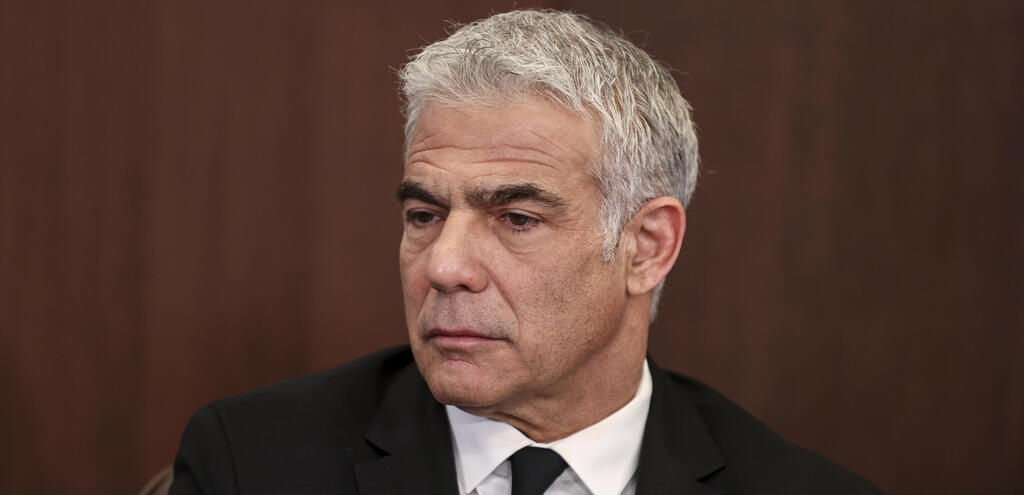


Back in 2019, Caretaker Prime Minister Yair Lapid infamously accused his opponent, then-prime minister and current opposition leader Benjamin Netanyahu, of dictatorial tendencies and contempt for democracy. Speaking at an anti-Netanyahu demonstration, Lapid said, “Listen Bibi!…We won’t let you be Erdogan. There will be no Turkish dictator here…We won’t let you destroy the country. This is our country. You’re not above the law. We won’t let you be a dictator.”

Like everyone, Netanyahu has his flaws. But throughout his long years in office, he never demonstrated any dictatorial tendencies. To the contrary, Netanyahu earned the fury of many in his political camp by repeatedly bringing leftist parties into his governing coalitions.

Absurd in their own right, Lapid’s noxious bids to demonize Netanyahu as a tyrant are downright laughable when viewed in the context of Lapid’s behavior since he took over as caretaker prime minister when the government he formed with Naftali Bennett lost a confidence vote in the Knesset four months ago and new elections were called.

Indeed, when considered in the context of Lapid’s now four-month-old premiership, his castigation of Netanyahu read like an exercise in psychological projection. Lapid, who stands at the helm of a transition government without a mandate from the people, is more contemptuous of democratic norms and institutions than any Israeli prime minister in public memory.

Maybe we should have seen it coming. Lapid’s demonization of Netanyahu is just one example of Lapid’s standard practice of vilifying and delegitimizing his political opponents and their voters. Lapid referred to Likud voters as “shits” in a television interview. He insists that Israelis who vote for parties in the right/religious bloc are motivated by “dark forces,” and a “poison machine.”

Like his late father, former Justice Minister and Israel’s long-time resident Archie Bunker Tommy Lapid, the caretaker premier invented himself in politics as a liberal, champion of free markets on the one hand and an anti-religious, and anti-Mizrachi bigot on the other hand.

All the same, the contempt for democracy that Lapid has exhibited by word and deed since seizing the reins of power in June has been shocking, and alarming. Two actions stand out.

First, on Sept. 28, Lapid and his Yesh Atid party petitioned the Central Elections Commission asking that it label Israel’s only non-leftist aligned television station Channel 14, a propaganda outlet. (Full disclosure, the author is Channel 14’s diplomatic commentator.)

Channel 14 launched on the open airwaves last December. It models itself after Fox News. Its programming schedule is comprised of all-day news programs followed by primetime news/opinion shows. “The Patriots,” Channel 14’s highest-rated flagship show, broadcasts five nights a week and bills itself as satirical.

In his petition, Lapid did not claim that Channel 14 serves as a campaign outlet for Likud. Rather, he insisted that Channel 14 is an election propaganda organ because it doesn’t provide him with supportive coverage.

Lapid’s petition was an existential threat to the struggling new channel. Channel 14 is already starved of advertising revenue. Israel’s advertising industry is effectively a cartel controlled by a handful of ad agencies owned by leftists. They have refused to permit their clients to advertise on the station despite its quickly growing ratings. Just as bad, the government, Israel’s largest advertiser, refused to broadcast ads on Channel 14 for its first three months of broadcasts. It took intervention by opposition lawmakers, and proof that Channel 14’s ratings had skyrocketed to convince the government ad office to stop discriminating against it.

Last week the CEC rejected Lapid’s petition. But had it been accepted, Channel 14 would have been barred from running any commercials at all until after the elections. And that’s not the least of it. Had the CEC accepted Lapid’s petition, Channel 14 would have lost its broadcast license altogether because running propaganda is prohibited under its licensing terms.

In other words, Lapid tried to use the CEC as a means to shut down the only broadcast outlet in Israel that doesn’t support him, or to use Lapid’s parlance, that doesn’t propagandize on his behalf.

The CEC’s rejection of Lapid’s petition is not the end of the story. Whereas Israel’s broadcast authority law stipulates that Israel’s Second Broadcast Authority, which regulates commercial broadcasts is an independent authority free of political control or influence, Walla News reported that Lapid instructed the Second Broadcast Authority to comb through Channel 14’s broadcasts to find instances where it may have breached the terms of its license. The report, which no one denied, indicates that Lapid is operating in contravention of law to pave the way for the future revocation of the opposition station’s broadcasting license.

Moreover, Lapid has gone out of his way to discriminate against Channel 14 in areas under his full control. Neither he nor any members of his party have agreed to be interviewed by Channel 14 reporters. Last week when Lapid held a press conference to defend his maritime agreement with Hezbollah-controlled Lebanon, the Prime Minister’s Bureau barred Channel 14’s reporter from covering the event by holding up the channel’s cameraman for hours at the security checkpoint.

Lapid’s apparent effort to ban a non-supportive media outlet from covering his press conference was not the only way he demonstrated his contempt for democracy at the press conference. Far from it. Lapid presented the deal to approved reporters as a “great achievement.” But the opposite appears to be the case. In the face of Hezbollah’s threat to blow up Israel’s Karish gas platform, Lapid conceded control over Israel’s territorial waters, its sovereign rights to natural resources, including natural gas located in its economic waters, and its economic right to develop natural gas deposits in its economic and sovereign waters to Hezbollah-controlled Lebanon. And in exchange, Israel received precisely nothing.

Under Israel’s constitutional law Basic Law – Referendums, to come into force all international agreements that involve the concession of sovereign territory require the approval of two-thirds of the Knesset or must pass in a public referendum. Since Lapid’s deal involves the concession of Israel’s territorial waters, under both the spirit and letter of the law, Lapid is supposed to submit the deal to the Knesset for two-thirds approval. In the event, Lapid tried to avoid even presenting the agreement to the Knesset for review. Although Attorney General Gali Miara Baharav issued an opinion that the agreement doesn’t need to be considered under the Basic Law – Referendums (for reasons that aren’t clear), she still insisted that the Knesset must approve the deal by a simple majority.

Lapid, for his part, doesn’t care what his attorney general thinks or what the law says. In response to a reporter’s question at the press conference, Lapid explained how he justifies his decision to act in clear contempt of the law and his attorney general and suffice with government approval of his radical deal with Hezbollah’s stand-in government in Beirut.

As he put it, “In light of the opposition’s unrestrained behavior, we have decided not to bring the agreement before the Knesset for a vote.”

That is, given that his political opponents oppose a gas deal that cedes Israeli territory and natural resources to its sworn enemy, under the gun, and just weeks before a national election, Lapid has decided that the Knesset is unworthy of the honor of approving his deal.

Several commentators have noted that Lapid’s statement demonstrated a contempt for his opposition. But the real problem with his statement, and the sentiment it expressed, is that it demonstrated an utter contempt for the most basic institution in Israel’s parliamentary democracy—the parliament, and for democratic norms.

Probably the worst thing about Lapid’s anti-democratic behavior is that his supportive press is letting him get away with it. While the CEC made Yesh Atid pay Channel 14’s legal costs, it didn’t require Lapid’s party to reimburse the television station for the fortune it paid to run a public campaign against Lapid’s efforts to shutter it. Channel 14 felt compelled to launch its campaign because for the most part, it received no support from its counterparts in the progressive, Lapid-supporting media. Israel Hayom, which changed its editorial line to support the Bennett-Lapid government was the only newspaper to express opposition to Lapid’s campaign against Channel 14. And it did it in a house ad, on page 20 of the paper. With the exception of two or three journalists on the right that broadcast for the other stations, Channel 14’s competitors either said nothing, or expressed support for Lapid’s effort to shut it down.

As for the deal with Hezbollah-controlled Lebanon, most of the media coverage has played down Lapid’s apparent breach of a Basic Law to ram his deal through on the eve of elections. Opposition to the deal has been painted in partisan colors, effecting the sense that the controversy over an agreement which requires Israel to make massive concessions in response to Hezbollah threats is nothing but electioneering.

It is impossible to know how the elections will pan out. There are always last-minute surprises. Netanyahu’s right-wing bloc is consistently polling between 59-62 seats, which makes it far from certain that Netanyahu will be able to form a coalition without making a deal with members of Lapid’s left-Arab bloc. But Lapid’s behavior since taking over the caretaker government makes one thing clear. If he forms the next government, the foundations of Israel’s democratic system and the basic freedoms that citizens of a free society expect, including freedom of the press and representative government, will be imperiled.

Originally published at JNS.org.


Caroline Glick

Source: https://carolineglick.com/yair-lapid-authoritarian-and-unafraid/

Follow Middle East and Terrorism on Twitter
Killing the Leviathan with a Thousand Cuts - Amir Taheri


by Amir Taheri

The democracies face challenges foreseen by Thomas Hobbes in his Leviathan: the emergence of small but powerful interest groups that use the power of state to further their narrow agendas.

  • Ideology, whether religious or secular, has always been an enemy of the state. Often, the state believes that it is using ideology in its service....

  • In the USSR, Bolshevik ideology kept Russia and its captive nations out of normal human history for more than seven decades, with tragic consequences that still affect Russia and even the rest of the world.

  • The democracies face challenges foreseen by Thomas Hobbes in his Leviathan: the emergence of small but powerful interest groups that use the power of state to further their narrow agendas.

  • You have to be careful what celebrities, from TV presenters, press pundits and talk radio hosts to promoters of alternative lifestyles to Greta Thunberg or George Clooney, have to say. Behind the scenes, you have to listen to billionaires in blue-jeans and bankers in basketball shoes.

  • As traditional political parties fade into ghosts, all of this means strengthening small but active groups at the expense of the state.

  • The nation-state has already lost part of its power to transnational or international bodies such as the United Nations, NATO, the European Union, World Trade Organization and dozens of other bureaucracies hiding behind acronyms.

  • At home what is called civil society runs its parallel show with hundreds, sometimes thousands of non-governmental groups, not to mention well-funded lobbies whose task is to kill the "Leviathan" with a thousand cuts, each getting a morsel of the cadaver.

  • On average, the democratic state controls more than half of the gross domestic product and is thus transformed into a mechanism for redistribution, a kind of cash-machine in front of which one sees a long queue of interest groups waiting to insert their debit cards into the slot.

  • A state could act rightly or wrongly, according to who judged the act, but it would always act as a state. Now, however, we have glaring examples of states going rogue and acting as vehicles for the fantasies of a leader. Judging by the Chinese Communist Party's 20th National Congress, China under Xi Jinping may become another example.

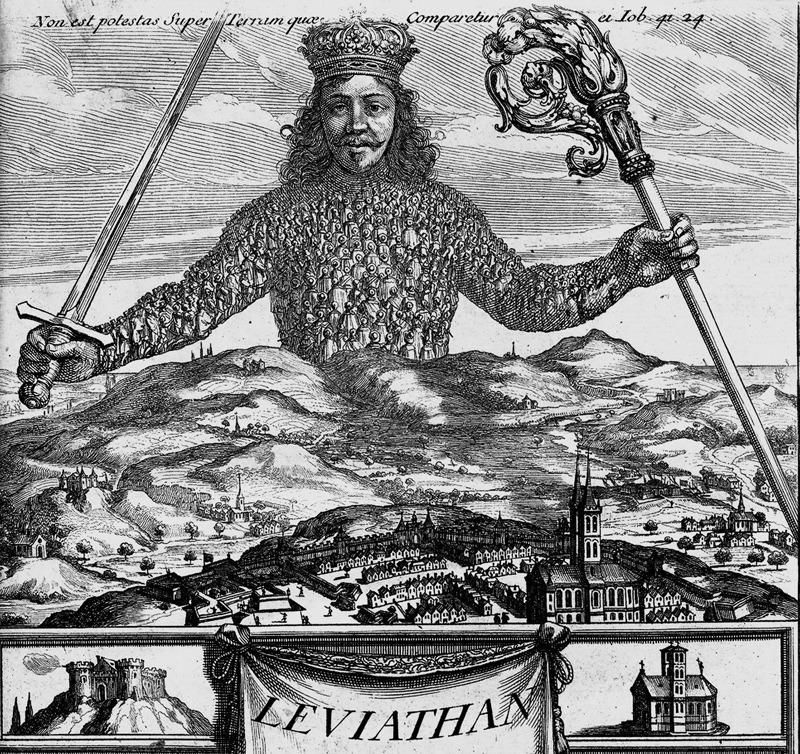
The democracies of the world face challenges foreseen by Thomas Hobbes in his Leviathan: the emergence of small but powerful interest groups that use the power of state to further their narrow agendas. Pictured: A section of the frontispiece of the book Leviathan; engraving by Abraham Bosse, from 1651. (Image source: Wikimedia Commons)

While political debate today is focused on the slow but steady disintegration of the so-called world order, the crises affecting the concept of statehood, the foundation of any world order, may not be receiving the attention it merits.

Ever since it appeared in its early and vague contours, statehood as a concept has been challenged by a range of factors -- from paganism and its ritual to organized religion, ideology, despotic adventures, private financial power, and, more recently, globalization.

Statehood had to overcome tribalism and adopt the broader concept of "the people" as foundation bloc. It then had to ward off a challenge by organized religion and develop the concept of citizenship. What emerged was a world of nation-states that could coexist, albeit not always in peace, within a world order based on international law.

Today, however, most nation-states face crises that, each in its way, has an impact on the world order as a whole. First, today we have 16 non-governed territories or failed states, the largest number for the past 150 years, morphing into the loci of instability and terror for chunks of western Asia and Africa.

Next we have nation-states, including China, Russia, North Korea and Iran, which have been turned into vehicles for a cult of personality.

All such states, and a few others like Cuba, Venezuela, Nicaragua and Eritrea where the cult of personality is less pronounced, an ideological veneer is used to burnish the image of the ruling elite.

Ideology, whether religious or secular, has always been an enemy of the state. Often, the state believes that it is using ideology in its service, as was the case when Roman Emperor Constantine declared Christianity as the state religion. Over time, however, it was the Roman Empire that became the servant of the Church, the saga terminating with the disintegration of the empire and the lilliputian Papal States in parts of Italy.

In the USSR, Bolshevik ideology kept Russia and its captive nations out of normal human history for more than seven decades, with tragic consequences that still affect Russia and even the rest of the world.

Today, the so-called democracies, too, are in crisis, at times with a farcical aspect, as is the case in the United Kingdom.

The democracies face challenges foreseen by Thomas Hobbes in his Leviathan: the emergence of small but powerful interest groups that use the power of state to further their narrow agendas.

This becomes possible when a majority of people, that is to say voters who are supposed to choose those who govern, are either uninterested in the political process or sympathize with the single-issue groups, lobbies and other coteries of activists.

In the 30 Western democracies, voter turnout in the past 20 years has hovered around 55 percent.

For decades, no American or French president or British Prime Minister has been elected with the votes of at least 50 percent of those eligible to vote.

Because of proportional representation, most Western democracies have developed various patterns of coalition, including the farcical one now in Germany.

In such a system, tokenism becomes a must with Cabinets becoming a political version of the smorgasbord.

You have to be careful what celebrities, from TV presenters, press pundits and talk radio hosts to promoters of alternative lifestyles to Greta Thunberg or George Clooney, have to say. Behind the scenes, you have to listen to billionaires in blue-jeans and bankers in basketball shoes.

As traditional political parties fade into ghosts, all of this means strengthening small but active groups at the expense of the state. But that is not all.

The nation-state has already lost part of its power to transnational or international bodies such as the United Nations, NATO, the European Union, World Trade Organization and dozens of other bureaucracies hiding behind acronyms.

At home, what is called civil society runs its parallel show with hundreds, sometimes thousands of non-governmental organizations, not to mention well-funded lobbies whose task is to kill the "Leviathan" with a thousand cuts, each getting a morsel of the cadaver.

On average, the democratic state controls more than half of the gross domestic product and is thus transformed into a mechanism for redistribution, a kind of cash-machine in front of which one sees a long queue of interest groups waiting to insert their debit cards into the slot.

As a very unscientific experiment, I followed a week of French parliamentary politics. The impression I got was of being in a bazaar where all the talk is about money. Petrol prices are high? The state sends you a cheque. You can't pay your electricity bill? Another cheque is on the way. Every problem under the sun is caused by "lack of resources", a code word for money.

There was a big dust up about whether the French should retire two years later than they do now and how to give certain categories a bigger cheque.

A debate about the war in Ukraine and the astronomical sums devoted to its continuation? Not a chance. What about the sorry state of French schools, where up to 30 percent of pupils are left without teachers for at least part of the academic year? Nope. Nor was there any debate about pressure put by religious fanatics on French schoolgirls of North African origin to wear outlandish attires fit for Halloween parties.

The concept of the state has always been under attack from both left and right. In practice, however, almost all parties of the left and right used to acknowledge the specificity of the state as an institution. A state could act rightly or wrongly, according to who judged the act, but it would always act as a state. Now, however, we have glaring examples of states going rogue and acting as vehicles for the fantasies of a leader. Judging by the Chinese Communist Party's 20th National Congress, China under Xi Jinping may become another example.

This article was originally published by Asharq al-Awsat


Amir Taheri was the executive editor-in-chief of the daily Kayhan in Iran from 1972 to 1979. He has worked at or written for innumerable publications, published eleven books, and has been a columnist for Asharq Al-Awsat since 1987.

Source: https://www.gatestoneinstitute.org/19052/killing-leviathan

Follow Middle East and Terrorism on Twitter
Republicans enter final stretch acutely aware they must deliver big after Election Day - John Solomon


by John Solomon

From veteran lawmakers to first-time candidates, commitment is to fix economy, energy crisis, border and crime while reining in runaway spending.


Buoyed by rising popularity in the polls, Republican candidates for Congress are acutely aware their easiest job right now may be winning the midterm elections and that the harder work will be delivering afterwards — with Democrat Joe Biden still in the White House — on voters' high expectations for fixing inflation, crime, insecure borders, the fentanyl crisis and crippling budget deficits.

From longtime lawmakers to first-time candidates, Republicans sounded consistent themes during a frank conversation with Just the News about what voters expect if they put the GOP in control of one or both chambers of Congress.

They said using congressional budget purse strings to force the Biden administration to ramp up restrained energy production was the key to lowering inflated prices on everything from food to transportation.

"Good energy policy is the number one thing we can do to fix inflation in this country," Rep. Austin Scott (R-Ga.) said on "On Offense: Policy for the People," a Just the News television special sponsored by Heritage Action for America airing on Real America's Voice. "And so when we talk about food inflation, just remember we put seeds in the ground with diesel — I mean that's a diesel tractor that's pulling the planters, it's a diesel tractor that's spraying the fields, it's a diesel tractor that's doing the harvest, and it's a diesel semi that is getting that harvest to ... the company that's making the cereal that we eat, or the bread that we eat, or any of the other things that we eat.

"Diesel, the cost of diesel has a tremendous impact on inflation. It doesn't have to be this way. You can do things that are good for the environment, and be energy independent at the same time."

Sen. Ron Johnson (R-Wisc.), once considered one of the Senate's must vulnerable incumbents but now holding a solid lead in Wisconsin, told the show that Americans also want to end the chaotic, undisciplined way Congress has funded the government and bloated deficits.

"One of the things I want to make sure that we can get congressional leadership in both houses to commit to is a return to regular order," Johnson said on the special report. "And by that, I mean a budget process — pass a budget to actually guide an appropriation process. 

"We can't keep doing these CRs at the end of the fiscal year, kick the can down the road to before Christmas so we end up with a multithousand-page omnibus spending bill that'll spend hundreds of billions — probably over a trillion — dollars, get a couple hours to consider it, and then vote up or down. This is not only dysfunctional, it's corrupt."

Johnson's admonition aligns closely with a new document the House Freedom Caucus put out earlier this month that also demands GOP leaders return to normal, disciplined budgeting.

First-time House candidate Cory Mills, a military veteran leading the race for a Florida congressional seat, said budget discipline can also be leveraged to force Biden to build new energy capacity, secure the southern border, stop the flow of lethal fentanyl that is killing more than 100,000 young Americans each year and empower parents to root out radical ideology in America's schools.

"We have to first start off by stopping the inflationary spending and stop the funding of these foreign wars with 80-plus billion dollars," Mills said. "We need to take that same $80-plus billion to build two new refineries and get back to energy independence, increase our production, ban foreign purchase and ownership of our farmland, secure our borders and protect our schools."

Politics isn't "left vs. right" so much as "pro-America vs. Anti-America," according to Mills.

"The policies that I've pushed, the policies that I continue to stay consistent on are not really a Republican or Democrat, they're not conservative or socialist — they're essentially an America vs. anti-America," he explained. "We care about things like parental rights over school boards and teachers unions. We care about having strong, secure borders to protect Americans and to keep us safe. We care about economic prosperity."

Tiffany Smiley, a Republican who has unexpectedly made the U.S. Senate race close in traditionally blue Washington state, said reversing Democratic demoralization, defunding and disempowerment of police was a key to reversing the rising crime wave in America that has infected cities like Seattle.

"I met with a lady just a couple of weeks ago who was walking to lunch in Seattle, violently assaulted just walking to lunch in the middle of the day," she recounted. "After she fought off her attacker, she looked around, and someone said, 'Well don't call 911, because nothing will happen.' So we have a lot of work to do.

"Number one, I think we have to stop this rhetoric — this defund the police rhetoric has been extremely harmful to Seattle and all over Washington state. So we need to back our police officers, our cops, ensure that we're recruiting and retaining good police officers, and we need to secure our border. We've got to stop the flow of fentanyl from coming across our southern border, ensure that we keep Title 42 in place until we have a plan to secure it."

Most of the ideas the candidates discussed on the special are encapsulated in the 150-point Commitment with America that House Republicans released this fall, as well as similar agenda documents released by high-profile Republicans like Sen. Rick Scott.

Jessica Anderson, executive director for Heritage Action for America, said the consistency that GOP candidates have maintained with messaging and positive policy solutions has been key to securing voter support heading into the midterms and that same discipline must be followed if the GOP is given control of Congress in January.

"There are seven big policy priorities that we have heard from voters that the grassroots cares the most about that we think create this mandate," she said. "It's tackling Big Tech. It's empowering parents to make education choices. It's securing the border and stopping illegal immigration. It's making a China-resistant American economy. It's tackling inflation, adding jobs, getting the debt and spending under control. It's securing our elections. And then, finally, it's protecting life.

"If elected officials can deliver on these seven things, we will turn this country around in a way that we could only dream of over the last 30 years," she said.

Scott, the Georgia congressman, said taxpayers are weary of seeing record deficits and debt accumulation in Washington even when tax collections are at all-time highs, making the goal of a balanced budget fashionable again like it was in the 1990s when Republicans first took control of Congress after a half century.

"If we've got $4.9 trillion in tax revenue, then we should be aspiring to get a $4.9 trillion budget," he said. "I'm not naive enough to think that we can do it in the course of 12 months. But I'll tell you, if you got record tax revenues, and you'll get out of the way, and you pass some good energy policy so that you continue to get a little bit of growth, if we have growth, marginal growth, and reasonable cuts in spending, we can get this budget balanced. I don't think it happens in 12 months, but I do think it can happen over the course of, you know, 3-5 years."


John Solomon

Source: https://justthenews.com/government/congress/republicans-enter-final-stretch-acutely-away-they-must-deliver-big-after

Follow Middle East and Terrorism on Twitter