Sunday, February 16, 2025

Israel in ‘full cooperation’ with Trump, say Netanyahu, Rubio - Joshua Marks


by Joshua Marks

"We have a shared strategy, which cannot always be detailed to the public—including when the gates of hell will open."


U.S. Secretary of State Marco Rubio and Israeli Prime Minister Benjamin Netanyahu shake hands during a joint press conference in Jerusalem on Feb. 16, 2025. Photo by  Kobi Gideon / GPO.
U.S. Secretary of State Marco Rubio and Israeli Prime Minister Benjamin Netanyahu shake hands during a joint press conference in Jerusalem on Feb. 16, 2025. Photo by Kobi Gideon / GPO.

Israeli Prime Minister Benjamin Netanyahu is working closely with President Donald Trump, according to a joint statement released on Sunday with visiting U.S. Secretary of State Marco Rubio.

“Contrary to what is being reported, President Trump and I are working in full cooperation and coordination,” the prime minister told Rubio, according to the statement.

“We have a shared strategy, which cannot always be detailed to the public—including when the gates of hell will open. And they will open if all our hostages are not returned, every last one of them,” it continued.

According to a statement from his office on Saturday, Netanyahu will convene the Security Cabinet “soon” to discuss Jerusalem’s response to Trump’s call for the Hamas terrorist group in Gaza to release all of the hostages it is holding.

Netanyahu reaffirmed Israel’s commitment to securing the release of all hostages, dismantling Hamas’s military and governing capabilities and eliminating the threat from Gaza.

For his part, the top American diplomat stressed at a press conference alongside the Israeli premier that the Jewish state has had no stronger ally in the White House than Trump.

Rubio emphasized that the hostages must be released and reiterated that Hamas cannot continue as a military or governing force in Gaza, saying that the terrorist group “must be eliminated.”


On Syria, he stressed that replacing one destabilizing force with another is not the solution. With regard to Lebanon, he stated that “we share the same goal: a strong Lebanese state capable of disarming Hezbollah.”

Rubio maintained that the ayatollahs’ regime in Tehran is the source of all the instability in the Middle East, saying that this must be addressed and stressing that Iran must never have nuclear weapons.

He praised the Jewish state, saying, “Founded after a horrifying crime against humanity, Israel stands as a beacon to the world. More nations like Israel in the Middle East would make the world safer,” adding that “Israel seeks peace but won’t be intimidated by its enemies.”

Netanyahu offered Rubio a warm welcome, saying it was “great to welcome you to Jerusalem as secretary of state,” hailing Trump again as “the greatest friend Israel has ever had at the White House,” and reflecting on his recent visit to Washington.

Netanyahu said that he had had a “very production discussion” with Rubio in a private meeting at his Jerusalem office before participating in an extended diplomatic exchange with their teams. Netanyahu emphasized that Iran was the No. 1 topic of the conversations.

U.S. Secretary of State Marco Rubio arriving at the Prime Minister’s Office in Jerusalem to meet with Israeli Prime Minister Benjamin Netanyahu on Feb. 16, 2025. Video by Ziv Sokolov/U.S. Embassy Jerusalem.

“Israel and America stand shoulder to shoulder in countering the threat of Iran. We agreed that the ayatollahs must not have nuclear weapons,” said Netanyahu. “We also agreed that Iran’s aggression in the region has to be rolled back,” adding that over the past 16 months, Israel “has dealt a mighty blow to Iran’s terror axis.

“Under the strong leadership of President Trump and with your unflinching support, I have no doubt that we can and will finish the job,” he added.

He thanked Trump for helping to secure the release of three more hostages on Saturday, after Hamas had earlier said they would not be freed on time.

U.S. Secretary of State Marco Rubio meets with Israeli Prime Minister Benjamin Netanyahu in Jerusalem on Feb. 16, 2025. Photo by David Azagury/U.S. Embassy Jerusalem.

“I also thanked him for America’s unequivocal backing for Israel’s policy in Gaza in moving forward,” said Netanyahu.

Netanyahu also said he and Rubio had discussed Trump’s “bold plan for Gaza” and how to make it a reality.

Turning to Lebanon, Netanyahu called the weekend attacks on UNIFIL forces by Hezbollah supporters in Beirut “concerning,” saying that Hezbollah must be disarmed and that “Israel will take necessary measures to enforce the ceasefire and ensure its security.”

He praised Trump for reinstating his executive order against the International Criminal Court and sanctioning its officials, saying that he discussed with Rubio countering threats from anti-American and anti-Israel international forums.

Netanyahu said that he talked with Rubio “about working together to formulate a common strategy to deal with the threat of lawfare and neutralize this threat once and for all.

“There are significant challenges and opportunities. By working together, America and Israel will overcome obstacles and capitalize on opportunities. The best is yet to come,” Netanyahu said.

Rubio touched down in Israel on Saturday night for his first visit to the Jewish state since being confirmed as America’s top diplomat.

Israeli Foreign Minister Gideon Sa’ar greeted Rubio on the tarmac at Ben-Gurion International Airport. The two counterparts toured the Yad Vashem Holocaust memorial in Jerusalem on Sunday.

Rubio and Sa’ar in their talks discussed strengthening ties with Abraham Accords countries, relocating embassies to Jerusalem, legal challenges to Israel’s self-defense, combating antisemitism, boosting U.S.-Israel economic relations, and implementing Trump’s “connectivity” vision.

They agreed to maintain open dialogue and plan Sa’ar’s visit to Washington soon.

U.S. Secretary of State Marco Rubio during a meeting with his Israeli counterpart, Foreign Minister Gideon Sa’ar, in Jerusalem on Feb. 16, 2025. Photo by Rafi Ben Hakon.

The American diplomat also met with other high-ranking officials, including President Isaac Herzog and opposition leader Yair Lapid.

“It’s an honor to be back as the secretary of state, not even four weeks into the job. I wanted this one to be one of our first visits because of the issues before us, and also because of the friendship and solidarity between our two countries,” Rubio said ahead of the meeting with Herzog.

“On behalf of the [U.S.] president, I can tell you he’s strongly and deeply committed to the goal of every single hostage returning home, every single one, and not resting, not being silent, not forgetting, till all of them our home,” according to Washington’s top diplomat.

Herzog said, “Shalom, our dear friend, Secretary of State Marco Rubio. We are honored to have you in our midst, in our country, you have no idea how much it means to us in these challenging days and times that our nation has gone through and endured since October 7, [2023].

“We are grateful to President Donald Trump for his friendship and solidarity with the people of Israel and the State of Israel, and we are grateful for his direct involvement in bringing back our hostages,” he added.

U.S. Secretary of State Marco Rubio meets with Israeli President Isaac Herzog in Jerusalem, Feb. 16, 2025. Credit: Ma’ayan Toaf/GPO.

“Secretary Rubio’s engagements with senior officials will promote U.S. interests in advancing regional cooperation, stability and peace,” State Department Spokeswoman Tammy Bruce said in a press statement ahead of the visit.

“The trip will center on freeing American and all other hostages from Hamas captivity, advancing to Phase II of the ceasefire agreement in Gaza, and countering the destabilizing activities of the Iranian regime and its proxies,” the statement continued.

Rubio’s trip follows Trump’s proposal to relocate Palestinians out of the Gaza Strip, after which the coastal area would be turned over to American control for reconstruction.

On Thursday, Rubio said in an interview that any plan allowing Hamas to rule Gaza would be unacceptable to Israel and ineffective in resolving the conflict. He added that Trump was willing to take the lead on rebuilding Gaza, as no other viable plans have been proposed.

Rubio‘s trip also comes amid Israel’s ceasefire agreement with the Hamas terrorist group and the release of hostages held in the Strip. The truce is “tenuous” because Hamas is a terrorist organization responsible for violence against civilians, Rubio told journalist Chris Cuomo by phone on NewsNation on Tuesday.

The secretary of state on Monday described Hamas as an “evil” and “monstrous” organization that must be wiped out.

“This is an evil organization. Hamas is evil. It’s pure evil. These are monsters. These are savages. That’s a group that needs to be eradicated,” he said during an interview on talk radio channel SiriusXM Patriot.

Rubio will also travel to Saudi Arabia and the United Arab Emirates over the next three days.


Joshua Marks

Source: https://www.jns.org/rubio-in-israel-to-press-for-hostages-release-phase-ii-of-gaza-truce/

Follow Middle East and Terrorism on Twitter

Swift take down of TikTok, now DeepSeek over China, privacy concerns led by likely unexpected Italy - Eric J. Lyman


by Eric J. Lyman

Italy, one of the West's oldest cultures, has long exhibited a deep-seated suspicion of unfamiliar or untested technologies.


One of the major  battles over the ways futuristic technologies related to artificial intelligence will be policed is being fought in one of the west’s oldest cultures. The outcome may have an impact on the rest of the world. 

Italy is the most techno-skeptic in Europe, as evidenced by its shut-down-first-and-ask-questions-later approach to Chinese AI app DeepSeek this month. 

The day after the app debuted, Italy’s privacy watchdog formally gave its owner, the Hangzhou-based hedge fund High-Flyer, 20 days to answer a series of questions about how information it gathered in Italy would be collected, stored, and used. But in the end, the watchdog barely waited 20 hours, completely shutting off access to DeepSeek from app stores for Italian users of smartphones and other devices .

DeepSeek earned worldwide headlines starting in January when it was revealed that as long as users stayed away from topics deemed “sensitive” in China – the app won’t do anything that would cast a light on the 1989 Tiananmen Square massacre, for example, or on controversies related to China’s alleged abuses of its Uyghur minority – it could compete blow-by-blow with more established and much, much more expensive U.S. rivals like OpenAI’s ChatGPT, Google’s Gemini, Microsoft’s Copilot, and Anthropic’s AI engine Claude.

But as with Chinese-owned social media platform TikTok, DeepSeek has sparked widespread privacy concerns that its U.S.-based rivals have sidestepped.

Italy was the first country to ban the app, but others have since followed suit, including Australia, India, Taiwan, and the U.S. Navy and the state of Texas. Other governments are reported to be mulling similar moves.

But in Italy it’s probably not an anti-China bias. The country has long exhibited a deep-seated suspicion of unfamiliar or untested technologies. In 2023, Italy temporarily blocked OpenAI over privacy concerns and then last December it fined OpenAI about $16 million and ordered it to change policies. Going further back, the country’s regulators have a decade-long history of sanctioning U.S. Internet giants like Amazon, Apple, and Google.

Commentators said those steps are no surprise in Italy, which, according to attorney and analyst Francesco Di Ciommo, a business law professor at Rome’s LUISS University, has a “maniacal attention to privacy rights.”

“In the U.S. and some other parts of the world it’s the markets that are the first priority,” Di Ciommo told Just the News. “In Europe, it’s individual rights that come first, then the market. And in Italy, that’s carried out to an even larger degree.”

But what happens in Europe doesn’t necessarily stay in Europe. According to Nizan Geslevich Packin, a law professor specializing in financial regulation and consumer protection at Baruch College in New York, developments in Italy may ripple around the globe. 

“DeepSeek’s rapid downfall in Italy suggests a growing appetite among governments to act first and ask questions later,” Geslevich Packin wrote in a white paper entitled “How Italy’s Ban Might Shape AI Oversight.”

“While consumer data protection is crucial, these swift bans can also trigger a chilling effect on AI innovation,” Geslevich Packin concluded. 

All this from decisions made in Rome, the ancient city that will celebrate the 2,778th birthday in April. 

But according to Di Ciommo in Rome, Italy’s moves will only have an impact on guiding AI development if they spark policies that will make governments consider and act on the long-term implications of the rapidly-changing AI landscape. 

“If Italy is the only country setting these limits for any length of time the country puts itself at a severe competitive disadvantage by hurting innovation compared to other countries,” he said. “At the very least, there should be some agreement on broad terms at least between the U.S., Europe, and probably China.”

Italy’s conservative prime minister, Giorgia Meloni, is doing her best to leave Italy’s imprint on the international order. 

Meloni, who U.S. President Donald Trump called “a fantastic woman” after her visit last month to his Mar-a-Lago, Florida, home, used her role as the president of the Group of Seven club of large industrialized countries last year to call the first summit on the future of AI in that forum

The goal was to start the process of developing a rulebook for AI governance, and the result showed that that will be a long, gradual process.

 
Eric J. Lyman

Source: https://justthenews.com/nation/technology/swift-take-down-tiktok-now-deepseek-over-china-privacy-concerns-led-likely

Follow Middle East and Terrorism on Twitter

Leiter: Israel will ‘very soon’ address Egyptian military buildup in Sinai - Akiva Von Koningsveld


by Akiva Von Koningsveld

Egypt has constructed military bases in Sinai "that can only be used for offensive operations," the Israeli ambassador to the United States confirmed.


Yehiel Leiter. Credit: Jerusalem Center for Public Affairs/YouTube screenshot.

Israeli Ambassador to the United States Yechiel Leiter has accused Egypt of “very serious” violations of its 45-year-old peace treaty with the Jewish state, saying the government in Jerusalem would table Cairo’s military buildup in Sinai “very soon.”

Egypt has constructed military bases in Sinai “that can only be used for offensive operations, for offensive weapons—that’s a clear violation,” Leiter said in his first meeting with American Jewish organizations on Jan. 28, a recording of which was shared online by the Conference of Presidents of Major American Jewish Organizations on Friday.

Egypt’s breach “is an issue that is going to come to the fore because it’s not tolerable,” the Israeli diplomatic envoy explained. “For a long time, it’s been shunted aside, and this continues. This is going to be an issue that we’re going to put on the table very soon and very emphatically.”

Satellite images indicating changes in Egyptian army deployment in the Sinai Peninsula have reportedly led security coordinators in Israeli border towns to paint a worrying picture of recent developments.

IDF Lt. Col. (res.) Eliyahu Dekel, who has monitored Cairo’s adherence to the peace deal since it was signed in 1979, told Israel Hayom last week that “if the latest images are verified, the concern isn’t just about forces in Sinai, the key issue is the type of tanks. The images show Abrams tanks, which are Egypt’s premier battle tanks, reserved for elite units.

“The question arises: What are these special forces doing in Sinai? In recent years, three new airfields have been built in Sinai, and massive tunnels have been dug, blatantly violating the peace treaty. The treaty allows for military camps for 47 battalions; currently, there are camps for 180 battalions, four times the permitted amount.”

In recent days, Cairo’s official rhetoric has escalated in response to U.S. President Donald Trump’s plan for relocating Palestinians from Gaza. President Abdel Fattah el-Sisi has made clear that he will not allow the move to happen, even postponing a planned visit to the White House.

In his speech to the Conference of Presidents, Leiter said Sisi “plays both sides of the equation, but he is threatened by the Muslim Brotherhood.”

If the Israeli military decisively defeats the Muslim Brotherhood branch in the Gaza Strip—Hamas—Sisi is “going to be more open to cooperate with us on the ‘day after’ Hamas,” he argued.

The Israeli envoy called it “unconscionable that Egypt wouldn’t entertain the possibility of at least temporarily housing some of the [Palestinian] refugees, particularly in light of the fact that members of Sisi’s family are running a travel agency in which they take tens of thousands of dollars from Gazans who want to get out of the area.”

On Sunday, Sisi told World Jewish Congress President Ronald Lauder that the establishment of a Palestinian state in Judea, Samaria and the Gaza Strip is “the only guarantee” for lasting peace in the Middle East.

During the meeting with the Jewish leader in Cairo, Sisi called for the reconstruction of the war-torn Strip “without displacing its residents from their land,” according to a statement published by his office.

According to the readout from the Egyptian presidency, Lauder for his part praised Cairo’s “wise efforts” to restore stability in the Middle East.


Akiva Von Koningsveld

Source: https://www.jns.org/leiter-israel-will-very-soon-address-egyptian-military-buildup-in-sinai/

Follow Middle East and Terrorism on Twitter

Hostages reunite with families as Trump leaves Israel to decide on ‘12 o’clock deadline’ - JNS Staff


by JNS Staff

Dekel-Chen, 36, was informed for the first time of his third daughter’s name, who was born while he was in captivity.


Sagui Dekel-Chen, accompanied by his wife, Avital, meets his sisters Ofir and Dotan at Sheba Medical Center at Tel Hashomer in Ramat Gan, Feb. 15, 2025. Credit: IsraeliPM_heb/X.

The three latest returnees from Hamas captivity in Gaza reunited on Saturday with their families in heartfelt scenes of elation and relief.

American-Israeli Sagui Dekel-Chen, 36, met with his wife, Avital, and his parents at the Israel Defense Forces’ Re’im camp just outside the Strip before being flown by helicopter to Sheba Medical Center at Tel Hashomer in Ramat Gan.


During the reunion, Avital informed him of their third daughter’s name. She was seven months pregnant when Dekel-Chen was kidnapped by Hamas terrorists on Oct. 7, 2023.

“Do you remember what you called her? That’s her name, Shahar-Mazal,” she said. “Perfect,” Dekel-Chen replied.

“You are heroes, you protected me,” Dekel-Chen told his spouse and mother.

Embracing his wife in the helicopter, he held a sign addressed to his three daughters that read, “Daddy is on his way.”

The Dekel-Chen family released a statement to the press, saying, “Our Sagie is home. A friend, a son, a partner, and most of all—a father. And now, he has returned. For almost 500 days, he was so far away, and now, at last, he is on Israeli soil, with us. In the coming hours, he will begin the recovery process, reunite with his daughters, Gali and Bar, and meet his youngest daughter, Shachar, for the first time—she was born while he was in captivity.

“Our hearts ache for all that he missed, but now he is here, unlike so many others,” the statement read.

“There are still many families waiting for their loved ones, many children waiting for their fathers. We will continue to fight until the last hostage is brought home. This is our duty.”

Alexandre Troufanov enters into the hands of Israeli forces, inside the Gaza Strip, Feb. 15, 2025. Credit: IDF Spokesperson’s Unit.

Alexander (“Sasha”) Troufanov, 29, who has dual Russian citizenship, was informed for the first time of the murder of his father, Vitali, on Oct. 7, 2023.

“On October 7, Sasha was brutally kidnapped from his home and shot in both legs. Seeing him today strengthens us and gives us great hope for the long recovery process ahead of him,” his family said in a statement.

Troufanov made aliyah with his family when he was three years old. He grew up in Kibbutz Nir Oz, adjacent to the Gaza Strip border, and studied electrical engineering at Ben-Gurion University of the Negev in Beersheva.

In a message shared with Amazon employees on the company’s blog after Troufanov’s release, Amazon CEO Andy Jassy explained the tech giant’s decision not to publicly comment on his employee’s abduction.

“Sasha was abducted along with his mother, grandmother and girlfriend in the October 7, 2023, attacks, during which his father was killed. His mother, grandmother and girlfriend were released in November 2023. Since we learned of Sasha and his family’s abduction, we’ve had a dedicated team working behind the scenes with experts to support efforts to secure their release and to ensure that we did the right thing for them and their safety (including painfully not commenting publicly for fear that we would negatively impact their ability to be released or how they were treated in captivity),” Jassy wrote.

Released hostage Yair Horn (right) meets with family members at Tel Aviv Sourasky Medical Center (Ichilov Hospital), Feb. 15, 2025. Credit: IsraeliPM_heb/X.

The third released hostage, Argentinian-Israeli Yair Horn, 46, first met with his mother, Ruthi, and brother Amos at the Re’im camp. On his way to Tel Aviv Sourasky Medical Center (Ichilov Hospital) by chopper, he asked the pilot to pass above Hapoel Beersheva’s stadium, a soccer team of which Horn is a dedicated fan.

His brother Eitan is still held captive by Hamas.

The Horn family stated, “We can finally breathe a little. Our Iair is home after surviving hell and terror in Gaza. Now, we just need to bring Eitan back so our family can truly breathe again.

We are grateful to the IDF soldiers and security forces who risk their lives and bodies, and we send our condolences to the bereaved families who have lost their most precious loved ones for all of us. You will forever be in our hearts.”

IDF Chief of Staff Lt. Gen. Herzi Halevi visited the military’s Hostages and Missing Persons Command Center to oversee the men’s release and stated, “Alongside the immense emotion with the return of each hostage, we in the IDF remember our obligation to bring them all back. We are investing great efforts toward this goal, while simultaneously preparing offensive plans.”

The Prime Minister’s Office said in a statement that Israel is “fully prepared for the next steps in every respect,” referring to the fragile truce with Hamas and its potential collapse.

The PMO welcomed the three men “with a warm embrace. We have prepared for their return, and together with their families, we will assist in their recovery after the long and harrowing days in captivity.”

The statement continued that Hamas again “attempted to violate the agreement and fabricate a crisis with false claims. Thanks to the concentration of our forces inside and around Gaza, and due to President [Donald] Trump’s clear and unequivocal statement, Hamas backed down, and the hostage releases continued. We are working in full coordination with the United States to secure the release of all our hostages—both the living and the fallen—as quickly as possible.”

The U.S. president congratulated the freed hostages, but made clear that their release fell short of his call to free all the captives.

“Hamas has just released three Hostages from GAZA, including an American Citizen. They seem to be in good shape! This differs from their statement last week that they would not release any Hostages,” Trump said on Saturday on his social media platform Truth Social.

“Israel will now have to decide what they will do about the 12:00 O’CLOCK, TODAY, DEADLINE imposed on the release of ALL HOSTAGES. The United States will back the decision they make!” he added, seemingly referring to U.S. Eastern Time, which is 7 p.m. in Israel.

The president’s deadline was a reference to his previous warning that the “gates of hell” could be unleashed on Gaza if Hamas did not release all the hostages.

Seventy-three hostages remain inside the Strip, including 70 kidnapped on Oct. 7.

Saturday’s exchange of hostages for terrorists was the sixth such round under Phase 1 of the ceasefire that took effect on Jan. 19 and is to end on March 1. Talks are ongoing on Phase 2 and 3, but it remains to be seen if they will be implemented or if war will resume.


JNS Staff

Source: https://www.jns.org/hostages-reunite-with-families-as-trump-leaves-israel-to-decide-on-12-oclock-deadline/

Follow Middle East and Terrorism on Twitter

Independents side with Trump on tax cuts and eliminating wasteful spending - Kristine Parks


by Kristine Parks

A Fox News Digital focus group reacted to Trump's plan to eliminate old regulations and put money back in the pockets of taxpayers


Independent voters in a Fox News Digital focus group approved of President Donald Trump's promise to cut taxes and eliminate wasteful government spending.

Voters responded to Trump discussing his plan to make the government more efficient and cut taxes for families while at the World Economic Forum in Davos on Jan. 23. 

"I have promised to eliminate ten old regulations for every new regulation which will soon put many thousands of dollars back in the pockets of American families to further unleash our economy," Trump said.

"Our majorities in the House and Senate, which we also took along with the presidency — we are going to pass the largest tax cut in American history, including massive tax cuts for workers and family and big tax cuts for domestic producers and manufacturers. And we're working with the Democrats on getting an extension of the original Trump tax cuts, as you probably know by just reading any paper," he continued.

INDEPENDENT VOTERS SHOW SIGNIFICANT DISAPPROVAL OF DEMOCRATIC ANTICS AGAINST PRESIDENT TRUMP

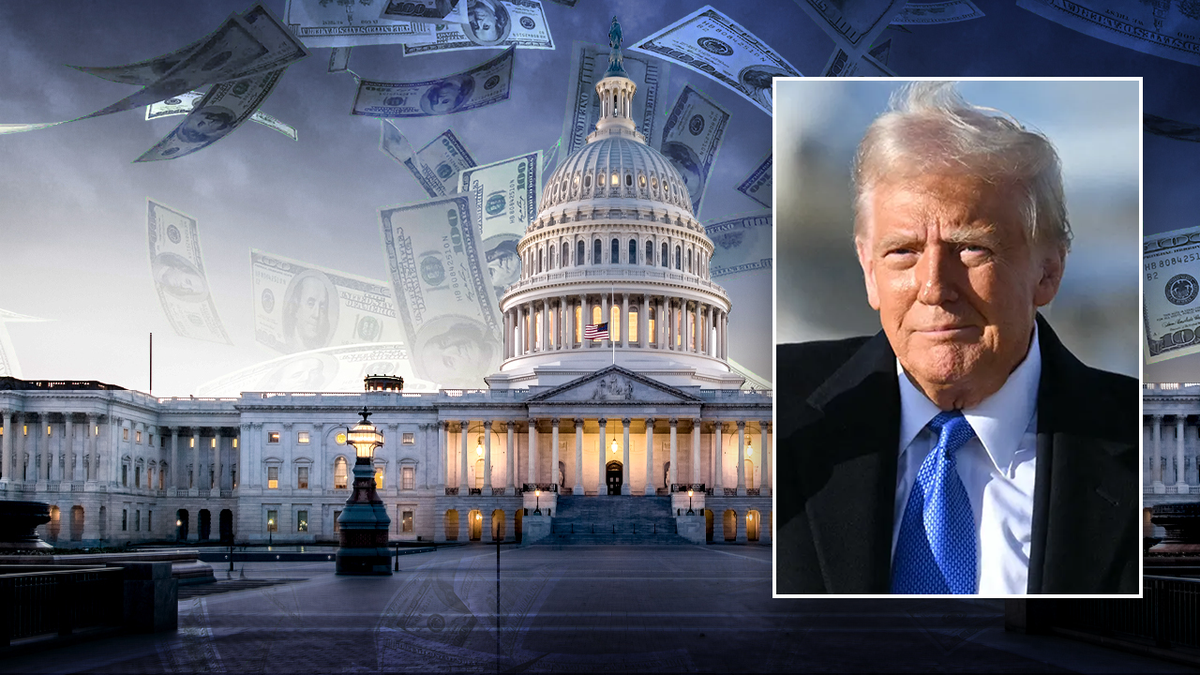
Trump and falling money image

A focus group reacted to President Trump's pledge to deliver tax cuts and eliminate wasteful government spending. (Fox News/Getty Images)

The focus group consisted of 75 Democrats, 49 independents and 32 Republicans, and their reactions were represented by blue, yellow and red lines, respectively. 

Independents and Republicans were on board with Trump's plan to save taxpayers money. Democrats slightly disapproved at the start of Trump's comments before their reaction remained steady, the Fox News Dial shows.

Lee Carter, a communications strategist and president of Maslansky + Partners, said that Trump's regulation and tax cuts were popular with the group. However, many feared these cuts wouldn't happen.

The group also reacted to Trump discussing the future of the Department of Government Efficiency (DOGE) in an exclusive interview with Fox News' Bret Baier last Sunday.

NEW POLL REVEALS WHICH TRUMP POLICIES AMERICANS LOVE AND HATE

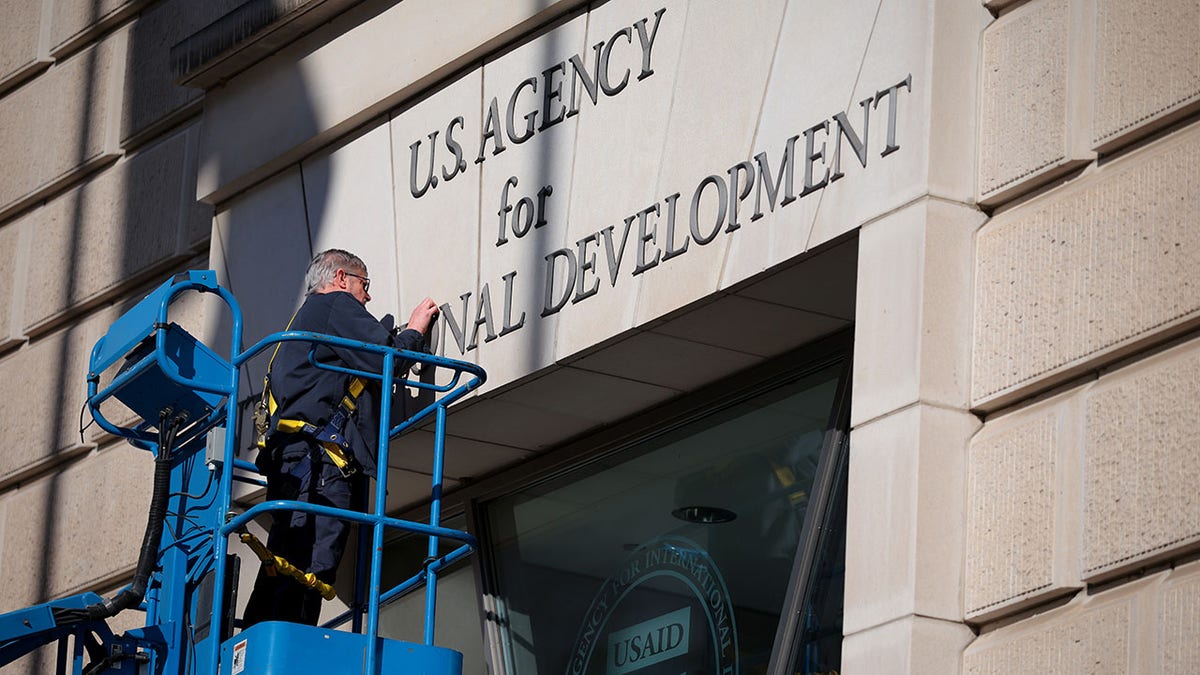
USAID building

The Trump administration argued it had to shut down funding for the thousands of USAID programs abroad to conduct a thorough review of each program and whether it should be eliminated. (Kayla Bartkowski/Getty Images)

"We have to solve the efficiency problem. We have to solve the fraud, waste, abuse, all the things that have gone into the government," Trump said. "You take a look at the USAID, the kind of fraud in there that you found significant damage. Well, we're talking about hundreds of millions of dollars of money that's going to places where it shouldn't be going, where if I read a list, you'd say, this is ridiculous and you've read the same lists and there are many that you haven't even seen. It's crazy. It's a big scam now."

"There's some good money and we can do that through any one of a number. I think I'd rather give it to Marco Rubio over at the State Department. Let him take care of the few good ones. So I don't know if it's kickbacks or what's going on, but the people — look, I ran on this, and the people want me to find it. And I've had great help with Elon Musk, who's been terrific," he continued.


Independents and Republicans were in favor of Trump's pledge to tackle the "fraud, waste and abuse" in the federal government. The Democratic line remained flat at first before trending slightly downward. 

 CLICK HERE FOR THE LATEST MEDIA AND CULTURE NEWS

"Fascinating response," Carter said of the group's reaction. "His message of eliminating fraud, waste, abuse is working."

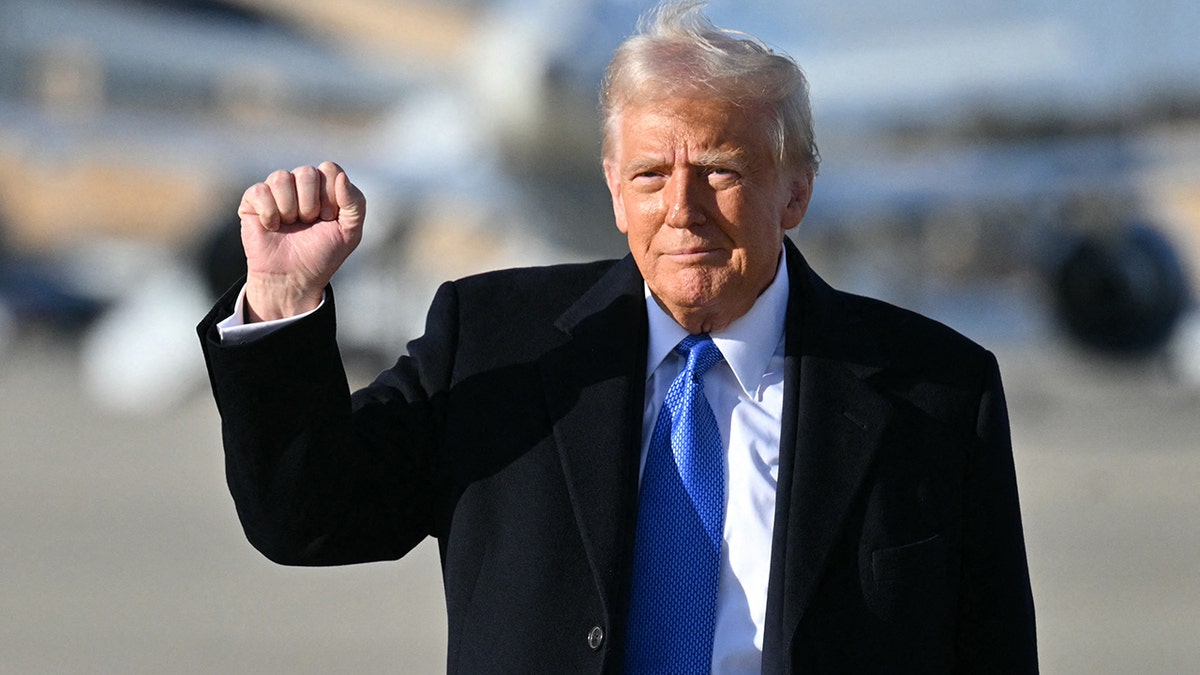
US-POLITICS-TRUMP-DEPARTURE

President Donald Trump pumps his fist as he walks to board Air Force One at Joint Base Andrews in Maryland on Feb. 7, 2025. (Roberto Schmidt/AFP via Getty Images)


Kristine Parks

Source: https://www.foxnews.com/media/independents-side-trump-tax-cuts-eliminating-wasteful-spending

Follow Middle East and Terrorism on Twitter

UAE Pledges $200 Million to Support Sudan - Robert Williams


by Robert Williams

Stopping Iran's growing foothold in Africa is not just about Israel's security — it's about protecting U.S. economic and military interests.


  • Sudan's Growing Crisis: Famine, Displacement, and Unprecedented Suffering

  • Stopping Iran's growing foothold in Africa is not just about Israel's security — it's about protecting U.S. economic and military interests.

  • The consequences of inaction will be felt at home, from higher energy prices to increased global instability. The time to act is now.

  • "The war has lasted too long, cost too many lives, and caused immense suffering. What we seek to do, alongside our partners, is call for a humanitarian pause to allow aid to reach those in need." — Reem al-Hashimy, Minister of State for International Cooperation at the UAE Ministry of Foreign Affairs, February 14, 2025.

  • Iran is establishing another Hamas-like entity in Sudan, mirroring its creation of the Iraqi Popular Mobilization Forces. This group, known as "Kizan," maintains ties to Hamas, Hezbollah, and African branches of Al Qaeda. If Iran's allies gain full control over Sudan, Iran will have effectively tightened its grip on Israel's southern flank, adding yet another hostile front to the region.

  • The Biden administration's failure to act decisively has emboldened Iran and endangered both Israel and American strategic interests.

  • President Donald Trump, as a leader committed to restoring U.S. strength, must confront the Iranian infiltration in Sudan head-on.

  • [I]t is imperative that Trump - for US interests! - publicly recognize the efforts of Al Nahyan in advancing this vision, acknowledging his leadership and unwavering dedication to peace and prosperity in the region.

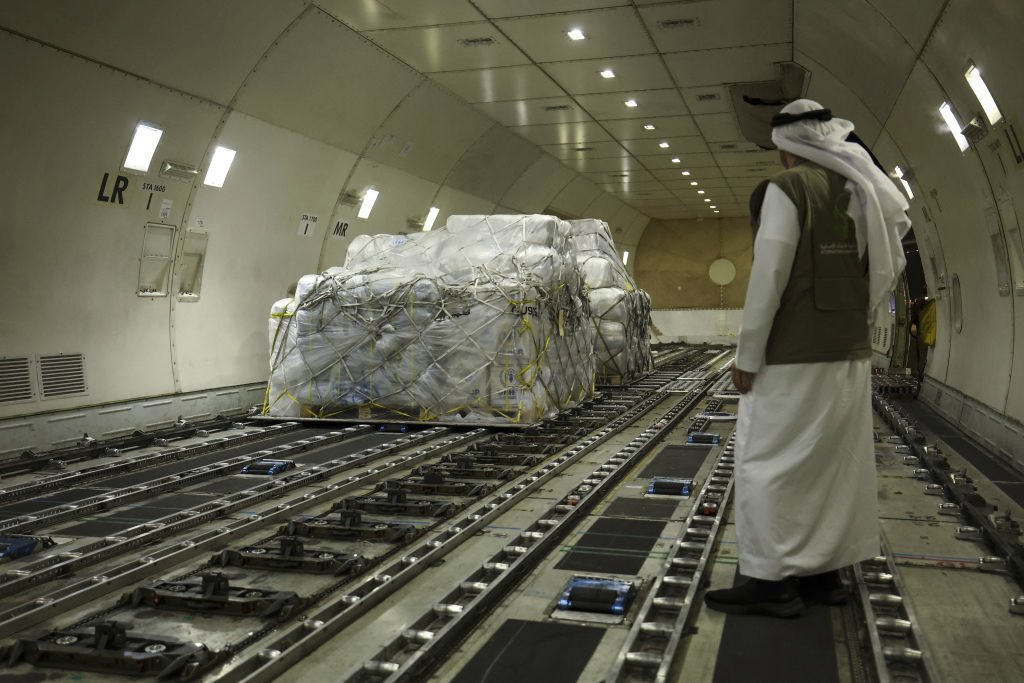
The UAE has taken a significant step in alleviating the suffering of the Sudanese people by announcing a $200 million aid package, in a high-level humanitarian conference held in Ethiopia. Pictured: Humanitarian aid supplies destined for Sudan are loaded onto a cargo plane in Dubai, UAE on May 8, 2023. (Photo by Giuseppe Cacace/AFP via Getty Images)

Amid Ongoing Humanitarian Crisis, Addis Ababa, February 14, 2025: The United Arab Emirates (UAE) has taken a significant step in alleviating the suffering of the Sudanese people by announcing a $200 million aid package, in a high-level humanitarian conference held in Addis Ababa. The conference, organized by the UAE in collaboration with the African Union, the Intergovernmental Authority on Development, and Ethiopia, is taking place on the sidelines of the 38th African Union Summit.

A Call for Action: Mobilizing Support for Sudan's Dire Humanitarian Needs

The UAE's contribution is a response to the devastating civil war in Sudan, which has torn the country apart since April 2023. The brutal conflict between the paramilitary Rapid Support Forces and Sudan's military has claimed tens of thousands of lives and displaced over 12 million people. The UAE's announcement serves as a call for global attention and a coordinated effort to provide much-needed support to the Sudanese population.

A Humanitarian Pause During Ramadan: UAE's Urgent Appeal

In addition to the financial contribution, the UAE has called for a "humanitarian pause" during Ramadan, which begins in two weeks. Reem al-Hashimy, Minister of State for International Cooperation at the UAE Ministry of Foreign Affairs, emphasized the importance of this pause in facilitating the unhindered delivery of aid to those most affected by the conflict, particularly women and children, who are enduring unimaginable hardship. "The war has lasted too long, cost too many lives, and caused immense suffering. What we seek to do, alongside our partners, is call for a humanitarian pause to allow aid to reach those in need," al-Hashimy stated at the conference in Addis Ababa.

Sudan's Growing Crisis: Famine, Displacement, and Unprecedented Suffering

According to the United Nations, Sudan is grappling with widespread famine, with five regions already affected, including three in North Darfur. By May, the famine is expected to spread to five more districts. The African Union has described the situation as "the worst humanitarian crisis in the world." The UAE's move comes as part of a broader commitment to supporting Sudan and Africa. In April 2024, the UAE had already allocated $100 million to UN agencies and humanitarian organizations to aid Sudan. The country also played a crucial role by establishing an air bridge to Sudan and neighboring Chad, delivering critical humanitarian assistance since the conflict's outset.

UAE's Ongoing Support: A Long-Term Commitment

The UAE's assistance to Sudan has been extensive. Since the conflict began, the UAE has contributed $130 million to humanitarian efforts, along with sending 9,500 tons of food and medical supplies via 148 flights and a ship carrying 1,000 tons of emergency aid. Additionally, the UAE has supported Sudanese refugees in Chad and South Sudan, providing food aid through the World Food Programme (WFP).

As one of the main humanitarian donors to Sudan and Africa, the UAE's efforts reflect its ongoing commitment to providing vital support in times of crisis. Through its leadership, the UAE hopes to inspire regional and international partners to join the cause and help mitigate the devastating impact of Sudan's ongoing humanitarian emergency.

Iran's Dangerous Expansion: The Growing Threat in Sudan and Its Global Consequences

Iran is establishing another Hamas-like entity in Sudan, mirroring its creation of the Iraqi Popular Mobilization Forces. This group, known as "Kizan," maintains ties to Hamas, Hezbollah, and African branches of Al Qaeda. If Iran's allies gain full control over Sudan, Iran will have effectively tightened its grip on Israel's southern flank, adding yet another hostile front to the region. For the United States, this presents a grave national security challenge. Israel will be forced to request more U.S. missile interceptors and military support.

American stockpiles are already strained, and prolonged U.S. involvement in regional conflicts carries significant risks. Meanwhile, Iran-backed militants threaten maritime security, increasing drone and missile attacks on U.S. and allied shipping in the Red Sea. With both Yemen and Sudan as potential launch points, Iran's influence is expanding in a way that threatens global trade. The closure or disruption of Red Sea shipping routes would render the Suez Canal nearly useless, forcing oil and gas shipments to reroute around Africa—raising costs, delaying supplies, and worsening inflation in the United States.

The Biden administration's failure to act decisively has emboldened Iran and endangered both Israel and American strategic interests.

President Donald Trump, as a leader committed to restoring U.S. strength, must confront the Iranian infiltration in Sudan head-on. Stopping Iran's growing foothold in Africa is not just about Israel's security — it's about protecting U.S. economic and military interests.

The consequences of inaction will be felt at home, from higher energy prices to increased global instability. The time to act is now.

The United Arab Emirates has firmly established itself as the United States' and Israel's most steadfast Arab ally. Under the visionary, trailblazing leadership of His Highness Mohammed Sheikh bin Zayed Al Nahyan, the UAE has demonstrated unparalleled diplomatic foresight and pragmatism in pursuit of regional stability.

In a bold and almost singular stance among Arab nations, the UAE has called for constructive engagement with Trump's vision for Middle East peace—a vision that seeks to combat terrorism, foster economic prosperity, and lay the foundation for a region built on coexistence.

Rather than dismissing the plan outright, the UAE has advocated for a nuanced approach, urging Arab leaders to focus on rejecting only the resettlement component while reaffirming its preference for an independent Palestinian state alongside Israel.

This strategic and forward-thinking position underscores the UAE's vital role in shaping a new era of stability and economic growth in the Middle East, aligning with Trump's commitment to a future free from extremism and defined by cooperation, development, and enduring security.

Given this invaluable support, it is imperative that Trump - for US interests! - publicly recognize the efforts of Al Nahyan in advancing this vision, acknowledging his leadership and unwavering dedication to peace and prosperity in the region.


Robert Williams is based in the United States.

Source: https://www.gatestoneinstitute.org/21400/uae-pledges-200-million-to-support-sudan

Follow Middle East and Terrorism on Twitter

Iran: Gravy Train to Africa - Amir Taheri


by Amir Taheri

For almost three decades, Tehran spent over $30 billion exporting revolution and ended up with nothing. In the process, hundreds of individuals, including the late Gen. Qassem Soleimani and associates like Nasrallah and Bashar al-Assad, made huge sums of money. With that gambit closed, we witness new efforts to keep the gravy train on rail, this time with destination Africa.


  • No Middle Eastern nation would unroll the red carpet for an Iranian delegation coming to foment revolution. In Europe, even those who once did seek the mullahs now shun them with disdain. No one in Asia expresses an interest in seeking revolutionary instruction from Tehran.

  • Tehran hopes to act as Man-Friday to its two giant allies China and Russia that have also chosen Africa as the future battleground against Western hegemony.

  • For almost three decades, Tehran spent over $30 billion exporting revolution and ended up with nothing. In the process, hundreds of individuals, including the late Gen. Qassem Soleimani and associates like Nasrallah and Bashar al-Assad, made huge sums of money. With that gambit closed, we witness new efforts to keep the gravy train on rail, this time with destination Africa.

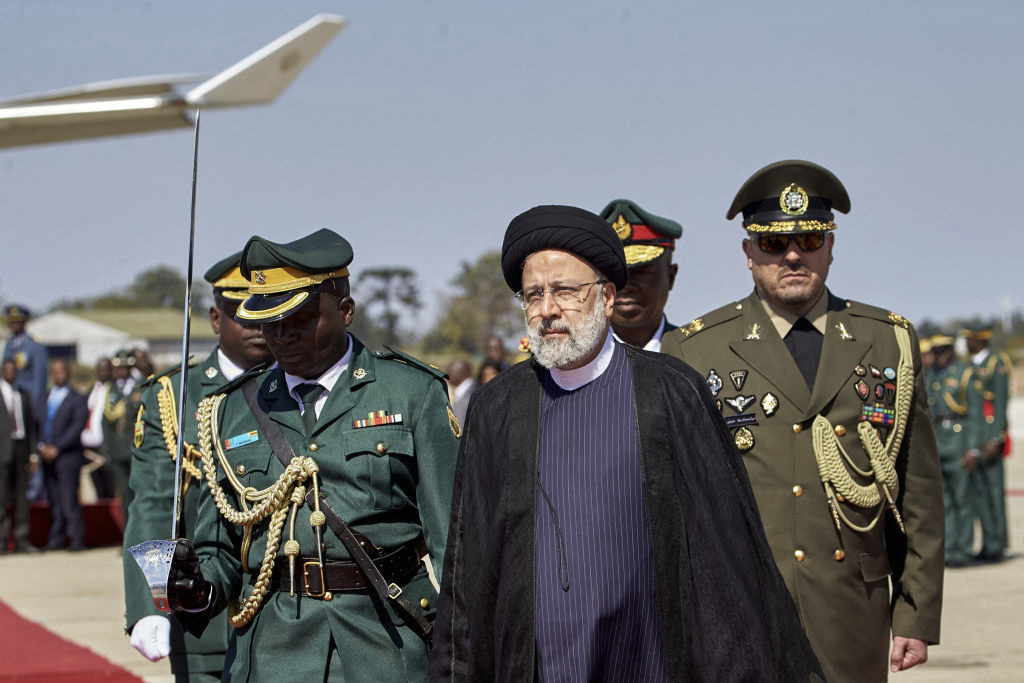
Tehran hopes to act as Man-Friday to its two giant allies China and Russia that have also chosen Africa as the future battleground against Western hegemony. Pictured: Then Iranian President Ebrahim Raisi arrives for a state visit at the Robert Gabriel Mugabe International Airport in Harare, Zimbabwe on July 13, 2023. (Photo by Jekesai Nijikizana/AFP via Getty Images)

Imagine that you have between $3 to $5 billion to spend on seeking and securing clients for your product in a variety of markets, Not bad, eh?

But what happens when events beyond your ken suddenly close those markets to you? One solution is to try and develop new products capable of making inroads in different markets. Another is to seek new markets for the old product.

This is the conundrum that the ruling mullahs in Tehran face today.

Thanks to the late Hamas leader, Yahya Sinwar, who opened the gates of hell on October 7, 2023, Tehran, a self-designated exporter of revolution, lost its markets not only in Gaza and the West Bank but also in Lebanon and Iraq. Then it was the turn of the then unknown Ahmad al-Sharaa to cakewalk his way into Damascus and force the peddlers of Khomeinist revolution to run for cover.

Next, the Khomeinist product lost its market share in Iraq and the chunk of Yemen held by Houthis.

"Supreme Guide" Ali Khamenei describes the past 12 months as "a year of victories for Islamic Resistance" led by his government. But some of his aides disagree. Brigadier-General Muhammad Baqer Qalibaf, Speaker of the Islamic Assembly (sort of parliament), says no one should deny the "setbacks" suffered across the Middle East.

His advice is that Tehran should look for new "battlefields," that is to say markets, to promote its revolutionary product.

But where to go? No Middle Eastern nation would unroll the red carpet for an Iranian delegation coming to foment revolution. In Europe, even those who once did seek the mullahs now shun them with disdain. No one in Asia expresses an interest in seeking revolutionary instruction from Tehran. Even those Latin American regimes that presented themselves as allies, albeit in exchange for wads of cash from Iran, show no enthusiasm for receiving Iranian guests at this time. Exporting revolution to Antarctica or the North Pole is also a non-starter.

That leaves Africa, designated by Iranian Foreign Minister Abbas Araqchi as the future hub of global power. But even there, the market that Tehran seeks for exporting revolution is not as wide as the continent. Egypt is excluded, if only because the mullahs cannot ignore the late Khomeini's "fatwa" forbidding diplomatic ties because of the Camp David peace accords.

Libya is out of the Iranian loop because both authorities that compete for power there regard Tehran as a pain in the neck rather than a helping hand.

Seen from Tehran, Tunisia is too far gone in Westernization to be receptive to a doctrine of hijab, hand-chopping and stoning to death in the name of opposing the "Great Satan."

In the 1990s, Tehran tried to hitchhike into the Algerian civil war by helping the Islamic Salvation Front (FIS) through its sympathizers in Germany. Then Iranian Ambassador to Germany Hussein Mussavian met a couple of FIS activists to offer them "seed money," but failed to establish reliable links with the rebel groups inside Algeria.

Tehran has always seen Morocco as a hard nut to crack. For a while Mauritania, which also calls itself an Islamic Republic, kept its door open to the Iranian mullahs but never allowed them to foment sedition or preach their version of "pure Islam."

For about a decade, Sudan under President Omar al-Bashir and his erstwhile ally Hassan al-Turabi was a welcoming land to Tehran's mullahs.

Today, however, none of the countries mentioned above offers a welcoming profile to Tehran. Some have normalized relations with Israel and seek closer ties with Western democracies. Others prefer to focus their energies on economic development rather than "anti-Imperialist" shenanigans. Others fear that Khomeinism could bring with it the seeds of religious schismatism.

In southern Africa, relations with Zimbabwe went awry when Khamenei, then president, visited Harare and quarreled with him officials there.

Nevertheless, Harare is one of the first targets of what Tehran calls its "Opening to Africa." Several political, economic and security teams have already visited to prepare the ground for a grand tour of Africa for President Masoud Pezeshkian.

Meanwhile, Araqchi has already sent teams to West Africa where several states have severed or lowered ties with Israel, expelled French and American military advisers, and replaced them with Russian elements from the newly created Russian Africa Corps.

Qalibaf has also visited Ethiopia as part of a plan to build a diplomatic profile in the hope of one day entering the presidential race in Tehran for the fourth time.

A big target is Nigeria, where Tehran claims that its surrogates led by Sheikh Ibrahim al-Zakzaki have converted over 20 million people to the creed of Twelver Shiism over the past decades, at a low cost of $1 billion.

Tehran hopes to act as Man Friday to its two giant allies, China and Russia, that have also chosen Africa as the future battleground against Western hegemony.

The trouble is that Tehran tries to enter the game at a time both Beijing and Moscow are losing ground in Africa for a variety of reasons, while several emerging African "tigers," notably Senegal and Ghana, try to adopt the Western model of capitalist democracy rather than the brands offered by Russia and China, let alone the Khomeinist republic.

For almost three decades, Tehran spent over $30 billion "exporting revolution" and ended up with nothing. In the process, hundreds of individuals, including the late General Qassem Soleimani and associates like Hassan Nasrallah and Bashar al-Assad, made huge sums of money. With that gambit closed, we witness new efforts to keep the gravy train on the rails, this time with destination Africa.

Gatestone Institute would like to thank the author for his kind permission to reprint this article in slightly different form from Asharq Al-Awsat. He graciously serves as Chairman of Gatestone Europe.

 
Amir Taheri
was the executive editor-in-chief of the daily Kayhan in Iran from 1972 to 1979. He has worked at or written for innumerable publications, published eleven books, and has been a columnist for Asharq Al-Awsat since 1987.

Source: https://www.gatestoneinstitute.org/21399/iran-gravy-train-to-africa

Follow Middle East and Terrorism on Twitter

European rise in antisemitism a result of Islamic migration, Diaspora minister says - Eliav Breuer


by Eliav Breuer

Diaspora Affairs Minister Amichai Chikli added that involving Qatar in negotiations was a mistake.


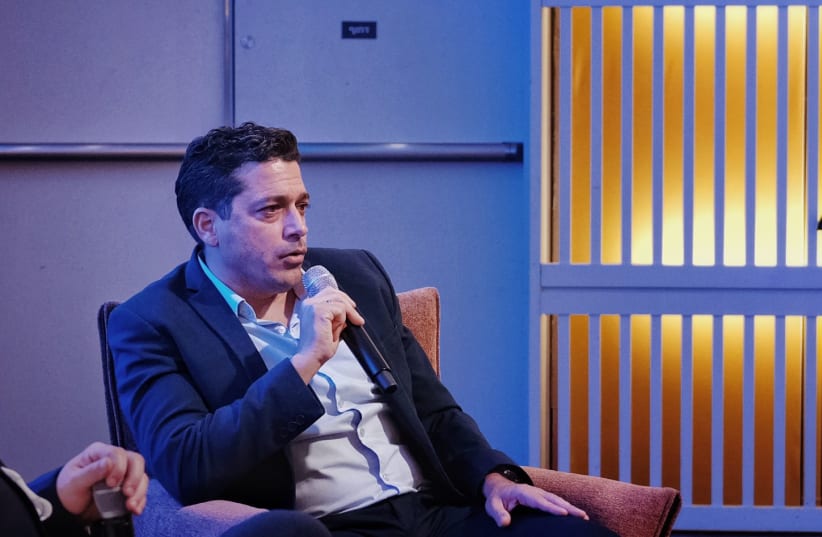
Amichai Chikli speaks at Conference of Presidents, February 16, 2025. (photo credit: CONFERENCE OF PRESIDENTS)
Amichai Chikli speaks at Conference of Presidents, February 16, 2025.
(photo credit: CONFERENCE OF PRESIDENTS)

Diaspora Affairs Minister Amichai Chikli (Likud) explained his “no” vote on the ongoing hostage deal at the start of the 50th annual Conference of Presidents of Major American Jewish Organizations in Jerusalem on Sunday.

In a one-on-one conversation with The Jerusalem Post’s editor-in-chief, Zvika Klein, in front of the crowd, Chikli said that before he entered that government meeting, he had not made up his mind, but that during the meeting, after hearing the assessments from various security officials, he decided to oppose it.

The reason for my opposition was that I understood who the prisoners were that we were releasing in exchange for our hostages. This deal includes the release of 700 terrorists - terror experts with records of dozens of attacks that killed hundreds of Israelis and wounded thousands. These are the same terrorists responsible for the Second Intifada and for other severe attacks.

For me, this deal is reminiscent of the Shalit deal. It's a problematic deal because it empties our prisons. I'll give an example: The commander of Hamas’s attack on Kibbutz Be’eri on October 7 was a terrorist released in the Shalit deal. You cannot fix a bad deal with an even worse one," Chikli said.

Chikli added, "I'm stating here and now that I will also be unable to support the second stage of the deal. For me, it will actually be even simpler. I cannot vote in favor of the next victims—whether in Gush Etzion, Megiddo, Tel Aviv, Jerusalem, Afula, or anywhere else."

 Amichai Chikli speaks at Conference of Presidents, February 16, 2025. (credit: CONFERENCE OF PRESIDENTS)Enlrage image
Amichai Chikli speaks at Conference of Presidents, February 16, 2025. (credit: CONFERENCE OF PRESIDENTS)

Chikli continued, "This deal we made projects weakness. If we had applied more military and international pressure, we could have reached a much better deal months ago. In my view, before we proceed with the second stage of the deal, we need to go back to applying effective pressure on Hamas, which would then lead to a far more reasonable agreement.

I believe we are the only country in the world that has stepped back from the battlefield to make a hostage deal. My conclusion from all of this is that we need to be much tougher with our enemies," Chikli said.

Chikli defended his record of cooperation with right-wing and far-right European parties.

Rise in antisemitism

Chikli linked the rise in antisemitism in Western European countries with their failure to combat rising Islamist violence as a result of mass immigration.

"Antisemitism is a growing problem in Europe due to Muslim immigration,” he said. “The European right wing parties have a point, because they realise the problem and are presenting a solution.

They understand the challenge of radical Islam and they are willing to take the necessary steps. So many countries have it completely wrong. Look at the UK, for example, I'm not sure that what is happening there is reversable. These countries need to get a hold of the problem."

According to Chikli, figures like Marine Le-Pen in France proved their support for Israel by participating in pro-Israel events and promising not to enable legislation that could block Kosher slaughter.

Chikli was asked whether he was concerned that the erosion of democracy in Europe, characterized among others by xenophobia and Islamophobia, would eventually lead to a threat against Jews. The minister responded that he did not believe there to be a problem of islamophobia since there was a “very good reason to worry” about the rise of Islamism in Europe.

Chikli expressed support for immigration policies in Hungary and Poland, as examples of places where Jews can walk around freely. The comment drew murmurs from the crowd, with one person claiming that Hungary had a fascist government.

Chikli also warned against the spread of the Muslim Brotherhood in Syria via its new regime, which is backed by Turkey. Erdogan and Turkey had the “exact same ideology” as Hamas, and therefore the Syrian front was one Israel should be concerned about.

Qatar also shares this ideology and does public relations for Hamas, Chikli said, adding that the Qatari Al-Jazeera network was the first to put out hostages denigrating IDF soldiers. Chikli said that involving Qatar in negotiations was a mistake.

Chikli’s comment came after the Shin Bet revealed over the weekend that it was checking alleged business ties between senior Netanyahu aides and the Qatari government.

 
Eliav Breuer

Source: https://www.jpost.com/israel-news/article-842346

Follow Middle East and Terrorism on Twitter

Welfare for colleges? NIH 'slush fund' allegedly stiffs research to fund administrative bloat - Greg Piper


by Greg Piper

Private foundations fund only a fraction of the "indirect costs" Uncle Sam does, and universities spread panic to keep the taxpayer spigot gushing. Critic says universities "launder" federal money to researchers for perks so they go along.


The sky is falling for the nation's wealthiest medical research institutions and their allies in government-subsidized media in the wake of the National Institutes of Health ratcheting back the extra money they receive for "indirect costs" as a percentage of research grants.

The Association of American Medical Colleges portrayed the cut on "facilities and administrative" cost reimbursement as an attack on research grants themselves that will harm "every American" with "slower scientific progress, longer waits for cures, fewer jobs."

"Say goodbye to the greatest engine of biomedical research ever created," intoned the New England Skeptical Society's publication Science-Based Medicine, whose managing editor, David Gorski, called the Great Barrington Declaration's authors – one nominated for NIH director – "COVID-19 deniers" for opposing lockdowns in 2020.

But some researchers see the new 15% cap on "negotiated indirect cost rate agreements" – paused Monday by a President Biden-nominated judge in 22 states that sued to block it – as welfare reform for colleges and a shot across the bow to administrators to stop pilfering from their researchers, who can get bigger grants with lower NICRAs.

"Cutting indirects might even mean more science," epidemiologist Vinay Prasad, who runs an eponymous research lab at the University of California San Francisco, wrote on his website among a slew of recent posts on NICRA in theory and in practice.

"Less money spent on the administration is more money to give out to actual scientists," the self-described liberal Democrat said. "I am shocked to see researchers crying about how much money the university gets – it means more grants can be given per cycle."

He specifically called out the president and medical dean at Johns Hopkins University, which is private, for suing NIH while earning $4 million together on the backs of taxpayers.

The 15% cap might even prod researchers to ditch shoddy research, according to Louisville cardiac electrophysiologist John Mandrola, who hosts the podcast This Week in Cardiology and like Prasad regularly contributes to the Sensible Medicine newsletter and calls himself a medical conservative who questions the "marginal benefits" from purported "medical advances."

"Like coffee and blueberry studies, we could do w[ith] fewer nonrandom retrospective comparisons," Mandrola wrote on X in reference to a new Journal of the American Medical Association Internal Medicine study that drew criticism for weak methodology. If NIH cuts led to fewer such studies, "medical science would be fine."

NIH emphasized the lower cap is still generous compared to private research funders and will "immediately" save $4 billion a year, down from the $9 billion for indirect costs – within $35 billion granted last year for all costs. 

Institutions with eye-popping endowments that charge more than 60% for indirect costs include Harvard ($53.2 billion), Yale ($41.4 billion) and Johns Hopkins ($13.1 billion), NIH said. Eight of the 22 states suing to protect their old haul received more than $100 million each, and another five more than $50 million each, in total NIH funding in fiscal 2025.

The issue drew attention a month after President Trump's reelection when then-Department of Government Efficiency co-lead Vivek Ramaswamy called the high NICRA payments "slush funds" that subsidize diversity, equity and inclusion and "related nonsense," in contrast to the 10% "overhead rake" universities typically get from private foundations.

Rutgers University microbiology lab director Richard Ebright responded that several institutions charged even higher indirect-cost percentages in a 2014 survey: the Salk Institute (90%), Scripps Research (89.5%), Cold Spring Harbor Laboratory (88.5%) and Harvard-affiliated hospitals Brigham and Women's (76.5%) and Mass General (74%). 

Only Penn State, University of Florida, University of Utah and UAB took less than 50%. 

"There is absolutely no defensible basis for non-uniform indirect cost rates" or anything over 60%, Ebright said: "The system is a colossal fraud."

"At 60%+ admin overhead, a non-profit would receive an 'F' from most charity rating orgs" and the IRS would use it to audit a conservative organization, Trump White House deputy chief of staff Taylor Budowich wrote on X.

Wired reported that some citations in the NIH announcement appear to come from a 2022 Heritage Foundation report, which analyzed 82 universities and the indirect cost rate they receive from federal grants. Minus 10 that refused to confirm their rates from private funders, 67 of 72 universities accepted private grants with no indirect coverage.

Harvard and CalTech were exceptions, requiring 15% and 20% rates, respectively, NIH said. The other three – MIT, University of Michigan and University of Alabama – "refused to accept indirect cost rates lower than their federal indirect rate."

Critics of the move include former Harvard Med Dean Jeffrey Flier, who has questioned the quality of evidence in favor of COVID interventions but said the cut would "cause chaos" and "a sane government would never do this." One analyst said it exceeded NIH's statutory authority, which allows changes only for a "class" of grants.

"Harvard charges U.S. taxpayers 69% for indirect costs on an NIH grant, but charges billionaire Bill Gates only 10%," science journalist Paul Thacker, who exposed drug industry payments to doctors for the Senate Finance Committee, wrote on X.

A host of left-leaning foundations pay 10-15% rates, UCSF's Prasad noted: the Smith Richardson Foundation, which grew out of drug companies; the Robert Wood Johnson Foundation, which helps taxpayers keep the lights on at NPR; and Carnegie, Rockefeller, Packard and Chan Zuckerberg, whose co-creator now supports Donald Trump.

"Stanford once used NIH funds to purchase a yacht and redecorate the President’s house," Make America Healthy Again leader Calley Means wrote on X.

The "close confidante" of Robert F. Kennedy Jr., who was confirmed last week as Health and Human Services secretary, cited a 1991 New York Times article on Stanford admitting to Congress it may have overcharged $200 million in indirect costs. 

Michigan Democrat Rep. John Dingell before he died in 2019 called several Stanford billings "possibly illegal."

"Schools open to line item audit?" Means wrote. STAT reported Stanford would be one of the biggest losers in higher ed, with $100 million lost to the rate change.

"I’ve paid close to 100 student-years from NIH and [National Science Foundation] funds during my time at Stanford," former Stanford Artificial Intelligence Lab professor Serafim Batzoglou wrote on X. "Between tuition and overhead, the student takes about 33% in salary and benefits, and the rest goes to Stanford," where donors pay for the buildings.

"I fully support reducing the extortionate 60% to a reasonable 15%," Batzoglou wrote. "That means about 50% of the student cost (tuition and overhead) will still go to Stanford."

"For people running computational labs, the indirects are insane," Prasad wrote Tuesday. "How can you justify 65% to sit at home on your computer?"

He said some universities "launder" payments back to researchers to use as unrestricted funds, for "business class travel to Europe, and events with alcohol … taxing a plumber so that an upper middle class scientist can lie down on their flight to Geneva."

Tagging Kennedy, NIH director-nominee Jay Bhattacharya and Food and Drug Administration commissioner-nominee Marty Makary on X, Baltimore cardiologist Joseph Marine proposed a middle ground: "reduce the burden of compliance in grant application, contracting, and reporting" and "for healthcare in general."

 
Greg Piper

Source: https://justthenews.com/government/federal-agencies/welfare-colleges-nih-slush-fund-allegedly-stiffs-research-fund

Follow Middle East and Terrorism on Twitter