Saturday, June 17, 2017

Mueller Pursues Obstruction Case Against Trump - Matthew Vadum


by Matthew Vadum


The collusion claim didn’t work, so the special prosecutor shifts gears.


Special Counsel Robert S. Mueller III is expanding his investigation into the Left’s Russian electoral collusion conspiracy theory by examining whether President Trump tried to obstruct justice in the probe, according to the hyper-partisan leak-stenographers at the Washington Post.

It is all nonsense.

Democrats and Never Trump Republicans are setting up perjury traps just as Democrats did during Watergate and countless other investigations. But Donald Trump is no Richard Nixon. There is no evidence Trump covered up a crime, or even that there was an underlying crime to be covered up. But the longer the investigation goes on, the greater the likelihood that someone will innocently contradict himself in a deposition, giving evidence that doesn’t mesh with what was originally said to an FBI investigator. And voila! Someone who wasn’t a criminal goes to prison without forming any bad intent.

The obstruction allegation stems from statements made by former FBI Director James B. Comey who claims President Trump ordered him to end an investigation into former National Security Advisor Mike Flynn’s ties to Russia. Trump denies it even though he has the authority under the Constitution to fire Comey for any reason or no reason at all. Comey himself admitted he served at the pleasure of the president.

If the news report is accurate, it means that the president is under investigation now even though he apparently wasn’t as of May 9, the day he fired Comey, who has since outed himself as a leaker of information about Trump. The notes he took during discussions with Trump are considered his work product and therefore property of the U.S. government that he has a duty to surrender to investigators. Additionally, Comey have committed a crime when he leaked the notes.

“The FBI leak of information regarding the president is outrageous, inexcusable and illegal,” said Mark Corallo, on behalf of Marc Kasowitz, Trump’s personal attorney.

Now that the likelihood of Trump or any of his associates being found to have colluded with Russia to rig the last election has dropped to approximately zero for want of evidence, this Deep State-sponsored political theater is moving on to the next best thing: obstruction of justice, a perennial crowd pleaser in the snake pit that is Washington.

And the Left now has an added incentive to push the obstruction narrative because they don't want to talk about how one of their own, unemployed Trump-hating Bernie Sanders supporter James T. Hodgkinson, late of a white cargo van parked on the streets of Alexandria, Va., came close to assassinating House Majority Whip Steve Scalise (R-La.) at a baseball practice on Wednesday morning.

President Trump, who turned 71 Wednesday, called out the Washington establishment for the all-too-convenient narrative shift.

"They made up a phony collusion with the Russians story, found zero proof, so now they go for obstruction of justice on the phony story. Nice[,]" Trump tweeted yesterday at 6:55 a.m.

An hour later he followed up with: “You are witnessing the single greatest WITCH HUNT in American political history - led by some very bad and conflicted people!  #MAGA[.]”

This move toward possible obstruction charges by Mueller “marks a major turning point in the nearly year-old FBI investigation, which until recently focused on Russian meddling during the presidential campaign and on whether there was any coordination between the Trump campaign and the Kremlin,” wrote reporters at the Post. “Investigators have also been looking for any evidence of possible financial crimes among Trump associates, officials said.”

The article acknowledges that then-FBI Director Comey had been privately reassuring Trump since January that he personally was not the subject of an investigation.

“Officials say that changed shortly after Comey’s firing,” the newspaper report adds ominously.

Director of National Intelligence Daniel Coats, National Security Agency (NSA) Director Michael S. Rogers, and recently retired NSA Deputy Director Richard Ledgett have reportedly agreed to talk to Mueller’s investigators.

As the saga continues to unfold, questions are being raised about Mueller’s apparent conflicts of interest that could disqualify him from continuing to serve as special counsel.

Former FBI Assistant Director James Kallstrom said this week to radio host Laura Ingraham that Mueller’s 15-year friendship with Comey is “a huge conflict of interest.”

Because Attorney General Jeff Sessions recused himself from the Russia investigation, Deputy Attorney General Rod Rosenstein made the decision to appoint Mueller.

“Quite frankly, I was really, really surprised and disappointed with the deputy attorney general, who first-off appointed a special counsel when there was no articulation of any crime whatsoever,” Kallstrom said. “And the statute actually calls for that, so that was ignored.”

Mueller and Comey “are close, close friends and the conflict of interest is so apparent," Kallstrom said. "I mean, did the deputy attorney general not have access to Google? I mean, you know, check these things out? It's just unbelievable. It's off the charts."

"What crime are they going to be investigating? There's not even an articulated crime. In fact, from the words of a wide variety of people on both sides of the politics, there is no crime," Kallstrom said. "The whole thing is a farce in my view. It's just crazy, and I don't know what this guy was thinking, this deputy attorney general."

Meanwhile, in a publicity stunt, Russian President Vladimir Putin offered political asylum to Comey.

“If Comey will be under the threat of political persecution, we are ready to accept him here,” Putin said, comparing Comey leaking notes on conversations with Trump to traitor Edward Snowden whom Russia granted asylum.

“This is strange,” Putin said. “How then is the director of the FBI any different from Snowden? He is not a head of the special services, but a human rights activist.”

Comey need not flee America. The establishment will protect him no matter what.


Matthew Vadum, senior vice president at the investigative think tank Capital Research Center, is an award-winning investigative reporter and author of the book, "Subversion Inc.: How Obama’s ACORN Red Shirts Are Still Terrorizing and Ripping Off American Taxpayers."

Source: http://www.frontpagemag.com/fpm/267019/mueller-pursues-obstruction-case-against-trump-matthew-vadum

Follow Middle East and Terrorism on Twitter

Copyright - Original materials copyright (c) by the authors.

The Tehran Attacks: Beginning of the End for Assad? - Robert Caskey


by Robert Caskey

As America finally stands up to its destructive actions in the region, Tehran may finally be forced to rethink its support for tyrants and terrorists.

In the week since twin terrorist attacks in Tehran left 17 people dead, Iran has arrested almost 50 people and pledged to crush domestic terrorist cells. The Islamic State has claimed responsibility for the suicide bombings and gun attacks, the first IS-led attacks inside the otherwise tightly controlled Shi’ite Iran. In the aftermath of the attacks, the Islamic Revolutionary Guard Corps (IRGC) directly pointed the finger at both Saudi Arabia and the United States. The Iranians called the U.S. response “repugnant” because President Trump drew attention to Iran’s funding of terrorism across the Middle East.

The IRGC’s name calling and finger pointing, though, can’t hide the one key takeaway of the Tehran attacks -- where it once thought itself impervious to terrorism, Iran is now paying the price for funding and supporting the Assad regime at home.

More importantly, the incident represents much more than an isolated security breach in Iran’s fight against Sunni militants in the region. If the attack helps embolden those who oppose Iran’s Syrian intervention in the halls of power in Tehran, it could be the catalyst for Assad’s grip on power finally slipping.

Iran’s role in the Syrian conflict on behalf of the Assad regime has been a source of tension among the Iranian ruling elite since at least 2011. Five years on, a power struggle has emerged between President Hassan Rouhani and his reformist allies on the one side, and hard-line reactionaries led by the IRGC and the Ayatollah Khamenei on the other.

Fuel for internal strife has been building up for years. Iran’s commitment to Assad has held firm since the war began, despite a grinding war of attrition and exponentially increasing costs of engagement. The Syrian intervention has cost the lives of more than 700 Iranian troops, and Iran’s principal local proxy, the terrorist organization Hizb’allah, has lost over 1,000 men. In addition to being bloody, the conflict is also costly: Tehran is estimated to be spending $6bn a year on its support for the regime.

The signs of strain have been showing since last year, when Iran’s Foreign Minister Mohammad Javad Zarif fired Hossein Amir-Abdollahian, the man who led Iran’s diplomatic efforts in Syria. His firing provoked angry responses from conservative websites and mass media. Called a “revolutionary diplomat” by IRGC-controlled press outlets, Amir-Abdollahian was regarded by many as the embodiment of “Islamic Revolution diplomacy”, and branches of the Basij militia accused Zarif of yielding to pressure from the U.S. and Arab countries.

Speaking out openly against the intervention, though, is still dicey. Many Iranian ideologues see it as a “war for existence”-- a battle abroad intended to keep a similar war from occurring on Iran’s own soil. Then again, that strategy has not exactly gone according to plan. As early as mid-2014, reports were spreading of ISIS militants crossing the Iraqi border into Iran, with the commander of Iran’s land forces later admitting to the group recruiting among Iranian Sunnis. In March, ISIS operatives in eastern Iraq posted a video on social media networks, with militants vowing to “invade Iran and return it to Sunni control”.

Moreover, Iran faces a much different regional context now that Barack Obama’s awkward courtship has ended and President Trump has replaced it with firm backing of a resurgent Sunni alliance. Since taking office, Trump has played a significant role in shoring up the confidence of American allies who worried Obama was selling out American interests (and theirs) by bending over backwards for the Iranians. Trump’s first trip abroad as President was to Saudi Arabia, where he gave a now-famous speech on the importance of global unity in combating terrorism. That speech unequivocally singled out Iran as a state sponsor of terrorism, sectarianism, and instability in the Middle East and recognized the central role played by Riyadh in stabilizing the region.

Indeed, the President’s assertive stance has all but turned the tables in the Middle East. Longstanding economic and political alliances, once stifled by Obama’s ambivalence, are once again gearing up to defend the Middle East against Iran’s bid for Islamist-minded hegemony. President Trump’s commitment to isolating Iran is coupled with a keenness to challenge foreign policy dogma, putting forth a doctrine of principled realism that rejects the clash of civilizations in favor of building an alliance against terror. As the President himself said: "This is not a battle between different faiths, different sects, or different civilizations. This is a battle between barbaric criminals […] and decent people of all religions who seek to protect it.”

Already, U.S. forces on the ground in Syria are changing the status quo with direct attacks on pro-Assad militia forces and shooting down an Iranian drone. But that support should not be taken for granted. Instead, the $110 billion arms deal announced during Trump’s visit underscores the central role Saudi Arabia will play in fighting terrorism in the region. And while the President clearly stated that “no sudden interventions” will take place under his watch,­ Riyadh was reassured that the bilateral alliance will never be “called into doubt“ again.

Faced with no-nonsense leadership from Washington, Iran’s dreams of ascendancy facilitated by a complicit Obama administration have been firmly dashed. As America finally stands up to its destructive actions in the region, Tehran may finally be forced to rethink its support for tyrants and terrorists. If it does, it won’t come a day too soon.

Robert Caskey

Source: http://www.americanthinker.com/articles/2017/06/tehran_attacks_beginning_of_the_end_for_assad.html

Follow Middle East and Terrorism on Twitter

Copyright - Original materials copyright (c) by the authors.

Incitement to Violence - Seth Barron


by Seth Barron


The Left has raised America’s political temperature to the boiling point.


Reprinted from city-journal.org.

Democrats may be horrified by Wednesday's attempted massacre of the GOP House baseball team by an avowed progressive, but their incendiary demands for “massive resistance” since November have been an open plea for the escalation of words into violent action. The daily repetition that President Trump is an illegitimate usurper who stole the election through collusion with foreign powers has been a hypnotic incantation in search of an Oswald: a siren call for an assassin.

We don’t have to look too hard to find extremist rhetoric from influential people whose appeals for violence are only partially veiled. In March, former attorney general Loretta Lynch made a brief video in which she called for people “who see our rights being assailed, being trampled on and even being rolled back” to follow the example of freedom fighters of the past. “They’ve marched, they’ve bled and yes, some of them died. This is hard. Every good thing is. We have done this before. We can do this again.” The Senate Democrats shared Lynch’s call for street action leading to bloody sacrifice on their Facebook page.

At the Women’s March on Washington the day after Trump’s inauguration, Angela Davis’s appeal for militancy was met with cheers. “Over the next months and years we will be called upon to intensify our demands for social justice to become more militant in our defense of vulnerable populations,” announced Davis, who in 1970 bought the shotgun used two days later to murder a judge. “Those who still defend the supremacy of white male hetero-patriarchy had better watch out,” she concluded. At the same event, pop legend Madonna spoke about her fantasies of “blowing up the White House.”

Liberals frequently complain that conservatives disseminate propaganda to their secretly racist supporters via “dog whistle” tactics, which send the desired message in coded language or gestures. The same liberals have dispensed with high-frequency whistles in favor of a simpler message: “Treason!” Following the now-debunked February 14 New York Times report that Trump’s campaign had been in direct contact with Russian agents before the election, a late-night host commented, “It’s funny because it’s treason.” Comedian Rosie O’Donnell led an anti-Trump rally outside the White House, declaring, “He is going down and so will all of his administration. The charge is treason.”

Joy Behar, host of The View, has claimed that the president’s allegiance to the Kremlin is treasonous, but she is also concerned about his work on behalf of Islamic State caliph Abu Bakr al-Baghdadi. “Do you think,” mused Behar, “that because he is the recruiter-in-chief, and by his words he’s getting more people to go on the side of ISIS, that he could be considered treasonous? I mean, that is against the Constitution, that is against America. That’s a treasonous act in my opinion.” Treason, of course, is a capital crime; the constant reiteration of the charge that Trump is a traitor has supplied the groundwork of justification for political violence.

Reputable figures in the media have normalized radical, violent discourse. Popular television writer/producer David Simon tweeted this week, “If Donald Trump fires Robert Mueller and is allowed to do so, pick up a goddamn brick. That's all that’s left to you.” Writing in The Nation, Natasha Lennard praised street violence as “kinetic beauty,” and Angelo Carusone, president of Media Matters, exhorted, “Don’t play footsie with proto-fascism. Fucking smash it.” A protestor at a rally in New York City’s Tompkins Square Park held a sign reading, “Hug a refugee (with permission); Punch a Nazi (with precision.)”

Every policy difference, no matter how trivial, has been cast as a matter of life and death. Proposed changes in federal Medicaid reimbursement practices will consign “tens of thousands of people” to early death, according to Senator Bernie Sanders, while rolling back federal guidelines on transgender bathroom signage will cause more teenagers to kill themselves, according to ThinkProgress. Abandonment of the non-enforceable and voluntary Paris Accord on Climate Change will doom the world to “catastrophe” and imminent mass extinction, according to Jill Stein.

In the last few weeks, the violent rhetoric crossed a fever line. CNN personality Kathy Griffin posed deadpan holding a severed and bloody head resembling Donald Trump; on television the next day, she tearfully denounced the many “old white men” who have supposedly bullied her. New York’s venerable Shakespeare in the Park is currently performing a modern-dress version of Julius Caesar, in which a Trump-qua-Caesar character is murdered every night in a particularly bloody and graphic staging.

Following the shooting, liberal Twitter erupted in cynical snark. Op-ed writer Malcolm Harris wondered if the shooter could plead self-defense, in the event he had a pre-existing condition. Sonia Gupta, a Louisiana former prosecutor, counseled her followers not to be too sad about the wounding of Representative Steve Scalise, because “he’s a racist piece of shit and hateful bigot.” David Frum, though not a liberal, reminded us that “the president is the country's noisiest inciter of political violence,” though the violence he has supposedly incited appears to be mostly from the other side.

Trump’s opponents in the media, academia, and politics can pretend that their calls for radical action were meant metaphorically or in a nonviolent sense. But they are the ones who opened this box of fear, panic, and rage. Let them take responsibility for the climate that now exists.

Seth Barron is associate editor of City Journal and project director of the NYC Initiative at the Manhattan Institute.

Source: http://www.frontpagemag.com/fpm/267012/incitement-violence-seth-barron

Follow Middle East and Terrorism on Twitter

Copyright - Original materials copyright (c) by the authors.
Female Genital Mutilation: Multiculturalism Gone Wild - Khadija Khan


by Khadija Khan

According to National Health Service statistics, at least one girl each hour is subjected to this excruciating procedure in the United Kingdom alone -- and this is nearly 30 years after it was outlawed there.

  • The "religious-freedom" plea unwittingly exposes the false claims made by prominent Muslims -- such as Iranian-American religion scholar/TV host Reza Aslan and Palestinian-American activist Linda Sarsour, who have insisted that female genital mutilation (FGM) is "not an Islamic practice."
  • According to National Health Service statistics, at least one girl each hour is subjected to this excruciating procedure in the United Kingdom alone -- and this is nearly 30 years after it was outlawed there.
  • FGM is no less appalling a crime than rape or slavery, yet self-described feminists in the West -- including Muslims such as Linda Sarsour and non-Muslim activists on a crusade against "Islamophobia" -- are either silent when it comes to barbaric practices or deny their connection to Islam. Does she also support slavery, another practice supported by Islam?
Attorneys for the defense of two Michigan doctors from India, and one of their wives, who were indicted by a grand jury on April 22 and charged with mutilating the genitals of two seven-year-old girls, intend to put forth a religious-freedom argument on behalf of their Muslim clients.

The defendants are members of Dawoodi Bohra, an Islamic sect based in their home country. In the federal case, the first of its kind since female genital mutilation (FGM) was banned in 1996, the defense team is claiming that the practice is a religious ritual and therefore should be protected by U.S. law.
Their plea unwittingly exposes the false claims made by prominent Muslims -- such as Iranian-American religion scholar/TV host Reza Aslan and Palestinian-American activist Linda Sarsour, who have insisted that FGM is "not an Islamic practice."

Female genital mutilation, also known as female circumcision, is the cutting or removal of the clitoris and/or the labia, as a way of eliminating a girl's sexual desire and pleasure, to guarantee that she be a virgin before marriage and remain faithful to her husband afterwards. According to the World Health Organization:
FGM has no health benefits, and it harms girls and women in many ways. It involves removing and damaging healthy and normal female genital tissue, and interferes with the natural functions of girls' and women's bodies. Generally speaking, risks increase with increasing severity of the procedure.
...
Procedures are mostly carried out on young girls sometime between infancy and adolescence, and occasionally on adult women. More than 3 million girls are estimated to be at risk for FGM annually.
More than 200 million girls and women alive today have been cut in 30 countries in Africa, the Middle East and Asia where FGM is concentrated.
The influx of immigrants and refugees from these parts of the world into Western countries has led to a dramatic and dangerous increase of FGM in Europe, Britain and the United States. According to National Health Service statistics, at least one girl each hour is subjected to this excruciating procedure in the United Kingdom alone -- and this is nearly 30 years after it was outlawed there.

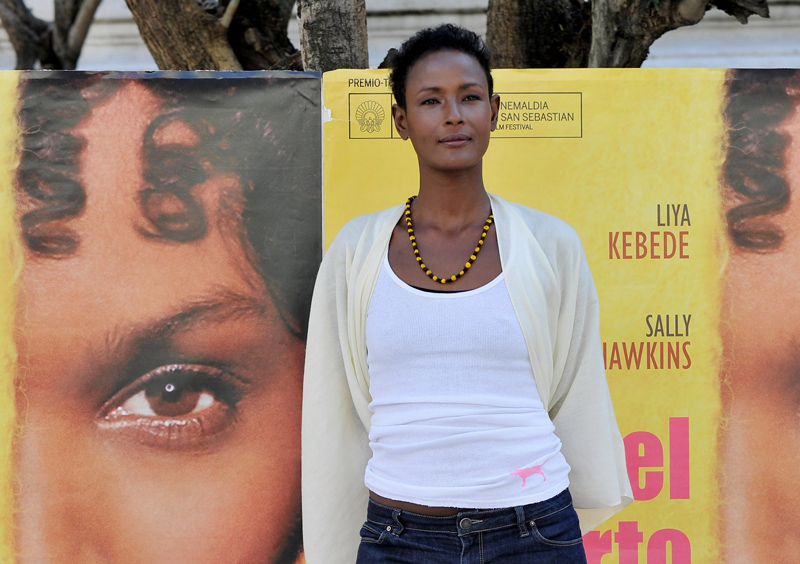
In addition, a European Commission report revealed that around 500,000 women in Europe have undergone FGM, while many others are at risk of being forced to undergo it. In Germany, for example, a clinic was opened in 2013 to provide both physical and psychological treatment to victims of the procedure; an estimated 50,000 women in the country had been affected by it, with approximately 20,000 in Berlin. Called the Desert Flower Center, the endeavor was spearheaded and funded by Somali-born supermodel/actress Waris Dirie, a prominent anti-FGM activist.


Somali-born supermodel/actress Waris Dirie, a prominent anti-FGM activist, spearheaded and funded the Desert Flower Center, a clinic in Germany that provides physical and psychological treatment to victims of female genital mutilation. (Photo by Carlos Alvarez/Getty Images)

On May 15, in the wake of the case of the FGM doctors in Michigan, the Minnesota House of Representatives and Michigan Senate approved legislation that would extend in the those states the existing federal anti-FGM laws to the parents of the girls subjected to the ritual. After all, it is the mothers and fathers who force their daughters to undergo it -- or, as in the instance of Somali-born author Ayaan Hirsi Ali, her grandmother.

In a 2013 interview with the UK's Evening Standard, Hirsi Ali -- a former Muslim who rejected her faith and became an outspoken critic of Islam and Sharia law, particularly as it affects women -- explained why it has been hard to prosecute family members involved in FGM:
"It was done to me at the age of five, and 10 years later, even 20 years later, I would not have testified against my parents," she said. "It is a psychological issue. The people who are doing this are fathers, mothers, grandmothers, aunts. No little girl is going to send them to prison. How do you live with that guilt?"
The larger issue, however -- which must be tackled alongside legislation -- involves Western multiculturalism gone wild. Take, for instance, the decision on the part of New York Times health and science editor Celia Dugger in April to stop using the term "female genital mutilation" on the grounds that it is "culturally loaded."

"There's a gulf between the Western (and some African) advocates who campaign against the practice and the people who follow the rite, and I felt the language used widened that chasm," she wrote.

FGM is no less appalling a crime than rape or slavery, yet self-described feminists in the West -- including Muslims such as Linda Sarsour and non-Muslim activists on a crusade against "Islamophobia" -- are either silent when it comes to barbaric practices or deny their connection to Islam. Does she support slavery as well, another practice supported by Islam, and still practiced today in Saudi Arabia, Libya, Mauritania and Sudan, as well as with Islamic State and Boko Haram?

This is why anti-FGM legislation, no matter how crucial, is insufficient. The time has come to be vigilant not only against practitioners and parents, but to expose and discredit anyone who tries to protect this brutality.


Khadija Khan is a Pakistani journalist and commentator, currently based in Germany.

Source: https://www.gatestoneinstitute.org/10516/female-genital-mutilation-multiculturalism

Follow Middle East and Terrorism on Twitter

Copyright - Original materials copyright (c) by the authors.
Thursday, June 15, 2017

Palestinians' Real Tragedy: Failed Leadership - Khaled Abu Toameh


by Khaled Abu Toameh

After the signing of the Oslo Accords and the establishment of the PA more than 20 years ago, Palestinians were hoping to see democracy and freedom of speech. However, the PA has proven to be not much different than most of the Arab dictatorships

  • Under the regimes of the Palestinian Authority (PA) and Hamas, Palestinians are free to criticize Israel and incite against it. But when it comes to criticizing the leaders of the PA and Hamas, the rules of the game are different. Such criticism is considered a "crime" and those responsible often find themselves behind bars or subjected to other forms of punishment.
  • This, of course, is not what the majority of Palestinians were expecting from their leaders. After the signing of the Oslo Accords and the establishment of the PA more than 20 years ago, Palestinians were hoping to see democracy and freedom of speech. However, the PA has proven to be not much different than most of the Arab dictatorships, where democracy and freedom of expression and the media are non-existent.
  • Given the current state of the Palestinians, it is hard to see how they could ever make any progress towards establishing a successful state with law and order and respect for public freedoms and democracy.

The Palestinian Authority (PA) in the West Bank and Hamas in the Gaza Strip may be at war with each other, but the two rival parties seem to be in agreement over one issue: silencing and intimidating their critics. Of course, this does not come as a surprise to those who are familiar with the undemocratic nature of the PA and Hamas.

Under the regimes of the PA and Hamas, Palestinians are free to criticize Israel and incite against it. But when it comes to criticizing the leaders of the PA and Hamas, the rules of the game are different. Such criticism is considered a "crime" and those responsible often find themselves behind bars or subjected to other forms of punishment.

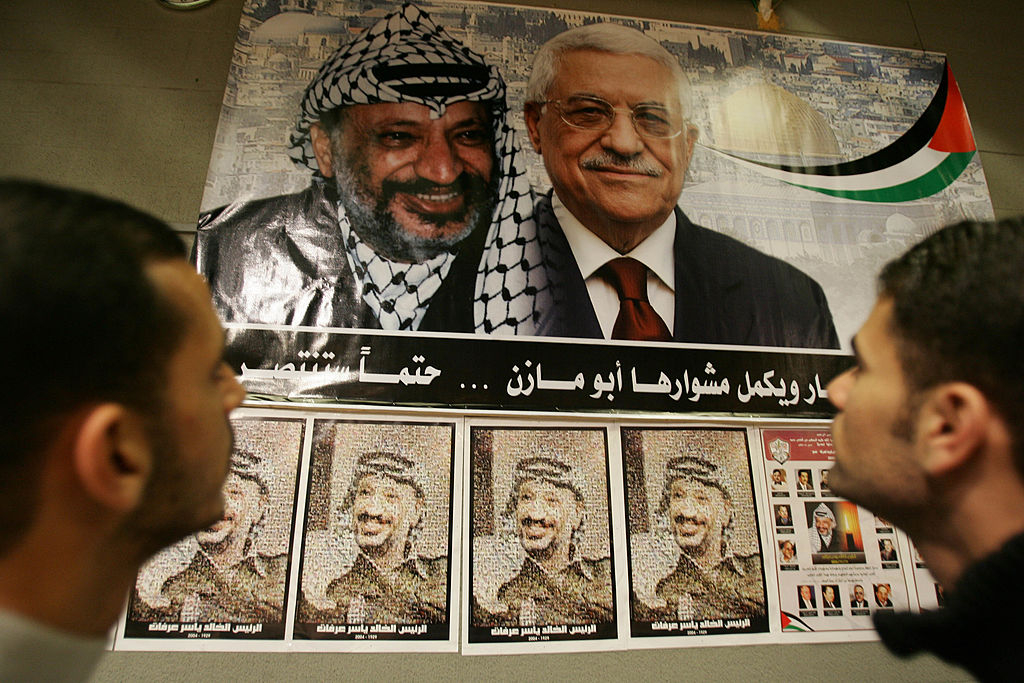
This, of course, is not what the majority of Palestinians were expecting from their leaders. After the signing of the Oslo Accords and the establishment of the PA more than 20 years ago, Palestinians were hoping to see democracy and freedom of speech. However, the PA, first under Yasser Arafat and later under Mahmoud Abbas, has proven to be not much different than most of the Arab dictatorships, where democracy and freedom of expression and the media are non-existent.


The Palestinian Authority, first under Yasser Arafat and later under Mahmoud Abbas, has proven to be not much different than most of the Arab dictatorships, where democracy and freedom of expression and the media are non-existent. (Photo by Abid Katib/Getty Images)

If Palestinians had in the past to deal with only one regime (the PA) that does not honor freedom of expression, in the last 10 years they have fallen victim to another repressive government (Hamas) that rules the Gaza Strip with an iron fist and suppresses any form of freedom of expression and targets anyone who dares to speak out.

The Palestinians in PA's West Bank-controlled territories and Hamas's Gaza Strip can only look at their neighbors in Israel and envy them for the democracy, free media and rule of law. Hardly a day passes without the Palestinians being reminded by both the PA and Hamas that they are still far from achieving their dream of enjoying democracy and freedom of expression. A free media is something that Palestinians can only continue to dream about.

The Palestinian media in the West Bank serves as a mouthpiece for the PA and its leaders. Even privately-owned television and radio stations in the West Bank have long learned that they must toe the line or face punitive measures and feel the heavy hand of the PA security forces. This is why Palestinian media outlets and journalists in the West Bank refrain from reporting about any story that may reflect negatively on Abbas or any of his cronies. In the world of the media, it is called self-censorship.

In the Gaza Strip, the situation is not any better. In fact, it is hard to talk about the existence of a media under Hamas. Hamas and its security forces maintain a tight grip on local media outlets and journalists are subjected to tight restrictions. Criticism of Hamas is almost unheard of and could land those responsible in prison.

In the absence of a free and independent media in the West Bank and Gaza Strip, some writers, journalists and political activists have resorted to social media to air their views and share their grievances with their fellow Palestinians and the outside world. But the PA and Hamas have discovered the power of Facebook and Twitter, and have taken the battle against their critics to these two platforms.

Posting critical or controversial postings on social media is considered a serious offense under the PA and Hamas. The leaders of the PA and Hamas accuse those who dare to criticize them on Facebook of "extending their tongues" and "insulting" representatives of the Palestinians.

In the past few years, dozens of Palestinian journalists, bloggers, academics and political activists have been imprisoned or summoned for interrogation by the PA and Hamas over their Facebook postings. International human rights organizations and advocates of free speech and media around the world prefer to look the other way in the face of these human rights violations by the PA and Hamas. Moreover, "pro-Palestinian" groups and individuals in the West do not seem to care about the sad state of affairs of the Palestinians under the PA and Hamas. The only "wrongdoing" and "evil" they see is on the Israeli side. By ignoring the plight of the suppressed Palestinians, these "pro-Palestinian" activists and groups are actually aiding the PA and Hamas in their efforts to silence the voices of dissent and criticism.

The absence of international criticism allows the PA and Hamas to continue their policy of silencing and intimidating Palestinians who dare to speak out against the lack of freedom of expression and democracy in the West Bank and Gaza Strip.

Recently, for example, Hamas arrested two Palestinians in the Gaza Strip who posted critical remarks on Facebook: Abdallah Abu Sharekh and Shukri Abu Oun.

Abu Sharekh, a prominent writer, was arrested shortly after he posted a comment on Facebook criticizing senior Hamas official Salah Bardaweel. "You are ruling the Gaza Strip with an iron fist and fire," Abu Sharekh wrote. "The state of oppression (in the Gaza Strip) is intolerable. You (Hamas) have taken the Gaza Strip back to the Middle Ages."

Abu Sharekh's criticism came in response to the electricity crisis in the Gaza Strip. Thousands of families in the Gaza Strip spend most of the day without electricity as a result of the power struggle between Hamas and the Palestinian Authority. Last month, the PA announced that it would stop paying Israel for the fuel supplied to the power plants in the Gaza Strip. The PA's move is designed to punish Hamas. But Abu Sharekh and other Palestinians in the Gaza Strip hold Hamas responsible for the crisis. They argue that Hamas' corruption, specifically the embezzlement of Qatari funds intended to purchase fuel for the power plants, is the main reason behind the crisis. Abu Sharekh, in his Facebook comment, pointed out that Hamas leaders have installed private generators that supply their homes with electricity even during the power outages.

In an unprecedented and bold move, Abu Sharekh's clan issued a statement condemning Hamas for arresting their son for expressing his opinion:
"We hold Hamas fully responsible for the safety and health of our son and call for an end to the persecution of him and his likes... We reject and condemn any action that constitutes an assault on the right of our sons to express their political views, notwithstanding the excuses."
Abu Oun was arrested for posting similar criticism of Hamas on Facebook. Earlier, Hamas also arrested journalists Nasr Abu Foul, Ahmed Qdeih and Hazem Madi on charges of publishing "fake news" and "spreading rumors." Their real crime: posting critical comments about Hamas on social media. Later, Hamas also arrested political activists Mohammed al-Tuli and Amer Balousheh for the same reason.

Another Palestinian journalist from the Gaza Strip who has fallen victim to Hamas's crackdown on freedom of expression is Fuad Jaradeh, a correspondent with Palestine TV. Hamas security officers arrested Jaradeh after raiding his home in the Tel al-Hawa suburb of Gaza City and confiscating his laptop and mobile phone. His family says he was arrested only because of his critical postings on Facebook against Hamas.

What is funny and sad is that the Palestinian Authority, which has been criticizing Hamas's crackdown on freedom of expression in the Gaza Strip, has long been resorting to similar measures against its critics in the West Bank.

The latest victim of the PA's suppression of public freedoms is Nassar Jaradat, a 23-year-old political activist who was arrested earlier this week for criticizing senior Palestinian official Jibril Rajoub. PA security forces arrested Jaradat after he posted a comment on Facebook in which he criticized Rajoub for acknowledging Jews' right to the Western Wall in Jerusalem. A PA court has since ordered Jaradat, an engineering student, remanded into custody for 15 days on charges of "insulting" a top Palestinian official.

Last year, the PA demonstrated that it does not hesitate to arrest even one of its own if he dares to criticize Palestinian leaders. Osama Mansour, a senior PA security official, was arrested and later fired because he criticized Mahmoud Abbas for attending the funeral of former Israeli President Shimon Peres.

Such arrests have become commonplace under the PA in the West Bank. Almost every week, Palestinians hear of another journalist or blogger or activist who has been arrested or summoned for interrogation by the PA security forces for nothing more than posting remarks critical of the government on social media.

Palestinians were hoping to achieve an independent state of their own. In the end, however, they got two separate states -- one in the West Bank and the second in the Gaza Strip -- as a result of the power struggle between the Palestinian Authority and Hamas. But the real tragedy for the Palestinians is that neither the PA nor Hamas values human rights or public freedoms. The real tragedy of the Palestinians over the past few decades has been failed leadership -- whether it is the secular PLO or the Islamist Hamas.

Given the current state of the Palestinians, it is hard to see how they could ever make any progress towards establishing a successful state with law and order and respect for public freedoms and democracy.

  • Follow Khaled Abu Toameh on Twitter
Khaled Abu Toameh, an award-winning journalist, is based in Jerusalem.

Source: https://www.gatestoneinstitute.org/10526/palestinians-failed-leadership

Follow Middle East and Terrorism on Twitter

Copyright - Original materials copyright (c) by the authors.

Terrorism in Tehran: ISIS Intensifies Its Subversive Activity in the Middle East - Lt. Col. (ret.) Michael Segall


by Lt. Col. (ret.) Michael Segall

In the external sphere, Iran will probably ramp up its activities in Syria, Iraq, Yemen, and elsewhere under the pretext of its war on Islamic State terror, even where there is no real connection to its terror, because doing so will suit the interests of the IRGC

Institute for Contemporary Affairs
Founded jointly with the Wechsler Family Foundation
Vol. 17, No. 13
  • The June 7, 2017, Islamic State attack on the Iranian parliament was the largest terror attack ISIS has perpetrated in the heart of the Iranian capital. It was aimed at civilians and prominent symbols of the regime.
  • The Iranian leadership and senior Islamic Revolutionary Guard Corps (IRGC) officials lost no time accusing Saudi Arabia for the attack, claiming that the Saudis had been encouraged by U.S. President Donald Trump’s visit and his efforts to form an anti-Iranian alliance.
  • On the domestic front, the attack will add considerably to the difficulties of President Rouhani. Elected to a second term on May 20, 2017, he dispensed campaign promises of reforms in the domain of individual and citizens’ rights. The security forces will exploit the incident to beef up security measures, particularly, though not only, against Sunni and Kurdish minorities, and will crack down harder on any show of opposition to the Islamic regime by the reformist camp.
  • In the external sphere, Iran will probably ramp up its activities in Syria, Iraq, Yemen, and elsewhere under the pretext of its war on Islamic State terror, even where there is no real connection to its terror, because doing so will suit the interests of the IRGC.
  • In any case, it appears that as the Islamic State continues to lose territory in Syria and Iraq, Iran will increasingly find itself confronting the group both within Iran and along its borders. That, in turn, is likely to further aggravate Iran’s relations with the United States and with the Gulf states, most of all Saudi Arabia.
Terrorist incident in the Iranian Parliament
Terrorist incident in the Iranian Parliament (FARS News)

A Blow to the Symbols of Islamic Rule

The Islamic State claimed responsibility for the coordinated simultaneous terror attacks on Iran’s parliament (Majlis) building and on the tomb of Iran’s first Supreme Leader, Ayatollah Khomeini. The group issued a statement in its media arm, as well as a short video from a camera carried by one of the assailants at the parliament. Indeed, it took responsibility even before the attack on the parliament building had ended. The coordinated attacks killed 13 people and wounded more than 40.

The Islamic State’s Amaq News Agency proclaimed the organization’s first major attack in Iran in several Arabic messages:

Twitter post
Security source to Amaq Agency: Fighters from the Islamic State attacked the Khomeini Shrine and the Iranian parliament building in the center of Tehran.1
This was the largest terror attack that the Islamic State has perpetrated in the heart of the Iranian capital. It was aimed at civilians and prominent symbols of the regime. Organizations affiliated with the Islamic State (jundalhaq) have carried out terror attacks against the Iranian Border Guard and the Islamic Revolutionary Guard Corps (IRGC), particularly in the mainly Sunni-populated province of Sistan and Baluchistan in southeastern Iran, but so far have not attacked civilians. Over the past year, Arab separatist elements have also carried out attacks in the Khuzestan province of western Iran, which has an Arab majority and numerous oil facilities. 

“Death to America, to Israel, and to Saudi Arabia”

The Iranian leadership and senior IRGC officials lost no time accusing Saudi Arabia of the attack, claiming the Saudis had been encouraged by U.S. President Donald Trump’s visit and his efforts to form an anti-Iranian alliance. IRGC Deputy Commander Hossein Salami issued an explicit threat by promising “to avenge the blood of the martyrs who were killed in the terror attack by striking the terrorists and those who sent them.”2 The IRGC’s deputy intelligence chief accused the United States and Saudi Arabia of “inviting” attacks by mercenaries within Iran.3 In an allusion to a statement by Saudi Crown Prince and Defense Minister Mohammed bin Salman (who said Saudi Arabia would not wait for Iran to take over Yemen and would bring the campaign to Iran), Iranian Foreign Minister Mohammad Javad Zarif tweeted:
Terror-sponsoring despots threaten to bring the fight to our homeland. Proxies attack what their masters despise most: the seat of democracy.4
In a speech that concluded the Majlis session (which continued during the terror attack), Majlis Chairman Ali Larijani called for a harsh crackdown on terror, and cries were heard in the chamber of “death to America, death to the Saudi regime”5 and “death to Israel.”6

The Islamic State Calls on the Sunnis to Revolt against the Regime

In recent months, the Islamic State’s propaganda mechanism has stepped up its efforts to recruit Iranians with messages in Persian. At the end of March 2017, the group issued a video called “Persia between yesterday and today” in which Iranian militants call on Iran’s Sunni minority to form terror cells and carry out attacks against Shiite forces. Persian-speaking Islamic State militants (not all of them necessarily Iranian) describe the persecution and the executions of Sunnis in Iran and urge them to revolt against the regime, and specifically, among other things, “to burn mosques in Tehran and Isfahan.” The video accuses Iran of hypocrisy in opposing Israel since, whereas the Sunnis in Iran are persecuted, the Jews in Iran live in freedom. It also says Iran practices hypocrisy in its relations with the United States.7 Since then, the organization has issued several more calls in the Persian-language version of its magazine Rumiyah (which means Rome in Arabic). Rumiyah, also published in Arabic, Russian, Indonesian, and French, propounds the Islamic State’s prophecies of expansion and conquest.

Video screenshot
“Persia between Yesterday and Today,” a new message from the Islamic State (Jihadology ISIS video)

Khamenei: Our Involvement in Syria and Iraq Prevents Terror

Iran’s Supreme Leader Ayatollah Khamenei drew a connection between the terror attack and Iran’s involvement in Syria and Iraq. He said that if Iran had not been actively fighting the Islamic State in those two countries, “in the heart of where the intrigues are plotted, we would have many similar incidents within the country.”8 Khamenei’s words dovetail with Iran’s national security strategy, according to which the country’s borders must be defended from afar – hence its ongoing support for Syria, Hizbullah, and the Palestinian terror organizations, which Iran views as a forward defense line against Israel. The coordinated strikes in Tehran will likely have important repercussions for Iran both domestically and externally. 

More Trouble for Rouhani

On the domestic front, the attack will add considerably to the difficulties of President Rouhani. Elected to a second term on May 20, 2017, he dispensed campaign promises of reforms in the domain of individual and citizens’ rights. The security forces will exploit the incident to beef up security measures, particularly, though not only, against Sunni and Kurdish minorities, and will crack down harder on any show of opposition to the Islamic regime by the reformist camp. Indeed, the Iranian population has not yet paid a real price in blood within Iran for the IRGC’s adventurous policy in different Middle Eastern arenas. (Although large numbers of IRGC and Basij fighters have been killed in Syria and Iraq, the Iranian population in the major cities has not been harmed.) Hence, in the aftermath of the attack in Tehran, criticism of the high price of this ongoing involvement may mount, but probably will be harshly repressed. After the incident, Khamenei already emphasized the need to fight seditionists in Syria, Iraq, or anywhere else.9

An Increase in Foreign Subversion

In the external sphere, Iran will probably ramp up its activities in Syria, Iraq, Yemen, and elsewhere under the pretext of its war on Islamic State terror, even where there is no real connection to its terror, because doing so will suit the interests of the IRGC. The Tehran attack may afford the IRGC an opportunity to boost economic and military assistance to organizations under its patronage and even to dispatch additional Iranian forces to Syria and Iraq ostensibly to conduct the “war on terror.” Furthermore, Iran may expand and intensify its activity against the Kurdish organizations operating against it near the Iraqi border and against the Sunni groups operating near its border with Pakistan. Iran would thereby risk escalating the tensions with Pakistan after some incidents along their common border in recent weeks. The rise in IRGC activity will likely make it still harder for Rouhani to promote his foreign policy goals as frictions with Saudi Arabia and the United States, which also are fighting the Islamic State, are liable to mount. 

The Islamic State’s Next Target?

Since the beginning of the year, the Islamic State appears to have changed its policy on terror attacks against Iran. For its part, Iran has been fighting the Islamic State on several fronts in Iraq and Syria, whether directly or with various Shiite militias as proxies. Iran, however, has been allowed some mitigations because it is also fighting organizations operating against Syrian President Bashar Assad’s regime, groups that the Islamic State is fighting as well. It is also possible that, as the Islamic State loses land in Syria and Iraq, its fighters will make their way eastward toward Iran and Pakistan. Iran may be facing a new and unfamiliar struggle with terror not only on its borders but within its large cities as well. Terror of the Islamic State variety will probably aim for a sympathetic response from Iran’s many ethnic minorities.

The sabotaged Bou-Ali-Sina Petrochemical Complex in Bandar-E Mahshahr, Khuzestan

The Sunni organizations (jundalhaq) fighting Iran in the southeastern tri-border area of Pakistan, Iran, and Afghanistan – groups that are inspired by the Islamic State – will probably be encouraged by the double terror attack in Tehran and try to step up their activity. The double attack may also drive separatist organizations and various ethnic elements that are active among Iran’s Arab minority, which is concentrated in Khuzestan, to escalate their attacks on the oil and gas facilities. In July 2016, the organization Suqour al-Ahvaz (Hawks of Ahvaz) took responsibility for an attack on the Bou-Ali-Sina Petrochemical Complex in Bandar-E Mahshahr.  10In any case, it appears that as the Islamic State continues to lose territory, Iran will increasingly find itself confronting the group both within Iran and along its borders. That, in turn, is likely to further aggravate Iran’s relations with the United States and with the Gulf states, most of all Saudi Arabia.

* * *

Notes


Lt. Col. (ret.) Michael Segall, an expert on strategic issues with a focus on Iran, terrorism, and the Middle East, is a senior analyst at the Jerusalem Center for Public Affairs and at Alcyon Risk Advisors.

Source: http://jcpa.org/article/terrorism-tehran-isis-intensifies-subversive-activity-middle-east/

Follow Middle East and Terrorism on Twitter

Copyright - Original materials copyright (c) by the authors.

'Unilateral disengagement from Gaza Strip was a mistake' - Mati Tuchfeld


by Mati Tuchfeld

Hat tip: Dr. Jean-Charles Bensoussan

Former GOC Central Command Yair Naveh: If the disengagement proved anything, it is that terrorism has nothing to do with settlements


Then-GOC Central Command Maj. Gen Yair Naveh during the 2005 disengagement from Gaza
|
Photo credit: Miri Tzachi


Mati Tuchfeld

Source: http://www.israelhayom.com/site/newsletter_article.php?id=43139&hp=1

Follow Middle East and Terrorism on Twitter

Copyright - Original materials copyright (c) by the authors.

The social responsibility inferno - Melanie Phillips


by Melanie Phillips

In reacting against the previous excesses of state control, politicians veered wildly into the opposite corner and lost their moral compass along the way. Corners were cut in order to stimulate economic activity and maximise profits.

grenfell-fire

The accounts of the terrible fire that engulfed Grenfell Tower in west London in the early hours of yesterday morning are unbearable. It seems that dozens of people perished, including entire families. The mind can scarcely process the images of trapped residents screaming for help or hurling themselves or their children from the 24-story block of flats in the desperate attempt to escape the burning building which went up like a tinderbox in a matter of minutes. 

The causes of this catastrophe are not yet known. Nor can we yet say who should take responsibility. 

What is obvious, however, is that something was fundamentally wrong with the way the building was constructed or the materials that were used, in breach of the most basic principle of fire-safety that a building’s construction must compartmentalise any fire to prevent it from spreading.

It is also obvious, from what these low-income residents of the block have said, that they repeatedly expressed urgent concerns about the absence of adequate fire-safety precautions but these were ignored or dismissed at every level.

We also know that building, safety and fire regulations were torn up in the 1980s by Margaret Thatcher’s government, a deterioration in standards acceded to or even exacerbated by successive New Labour and Conservative administrations.

In other words, from right to left the political establishment either explicitly or tacitly agreed to let the market rip. In reacting against the previous excesses of state control, politicians veered wildly into the opposite corner and lost their moral compass along the way. Corners were cut in order to stimulate economic activity and maximise profits. The concerns expressed by the poor were contemptuously tossed aside – because the powerless never have a voice.

And then people wonder why Jeremy Corbyn has struck such a chord. 

In my 1996 book All Must Have Prizes (now sadly out of print), I described how the politics of both right and left had colluded in the destruction of a commitment to the common good by elevating the free market in both the economic and social spheres. An edited extract from this chapter, “The no-blame no shame, no pain society”, follows below.

All Must Have Prizes

The No Blame, No Shame, No Pain Society

 
It has been a great mistake to imagine that the Labour and Conservative parties have embodied opposing political philosophies. It is more accurate to say that since 1979, despite the distracting rhetoric of adversarial combat, they have represented but two sides of the same individualistic coin. The left stood for egalitarian individualism in the social sphere, for the doctrine of equality of values and lifestyles; the right stood for libertarian individualism in the economic sphere, for the doctrine that those who could achieve wealth and success should be left alone to do so while those who lost out would have to go to the wall. Neither stood for a culture based on altruism, fuelled by a principled concern for other people. The moral relativism of the left was thus the mirror image of the debased liberalism of the right.

Some time during the 1950s, the political left lost its grasp of the language of moral discourse. As a result of the rise of the individualistic, consumer culture and the collapse of the Church, altruism began to wither away and individuals handed over the duty of responsibility to the state. In 1960, the great ethical socialist thinker R. H. Tawney wrote that the world was in retreat not merely from particular principles but from the very idea that political principles existed. Morality that transcended economic expediency and the belief that the ends didn’t justify the means seemed part of a ‘remote and worn-out creed’. Tawney’s moral stance fell utterly out of fashion. The view that character and choice affected conduct was derided. Individual responsibility was considered of little significance compared to the forces of economic circumstances. So ethical socialism was left vulnerable to Marxism which destroyed it from within and laissez-faire economics which assaulted it from without.

***

Mrs Thatcher came to power in 1979 proclaiming a return to Victorian values. There was little sign, however, that she had any understanding of what Victorian values actually were. The Victorians had achieved the quite extraordinary feat of remoralising a society in danger of fracturing under the double impact of industrialisation and the shattering collapse of religious authority. It had pulled off this achievement by rooting the individual very firmly in society and in a moral ethic which started from the notion of the common good. As Gertrude Himmelfarb has observed, the ‘self’ to the Victorians meant something rather different from its 1980s incarnation. It was rooted in the social norms and approbation of others, and entailed duties and responsibilities as well as rights. By contrast, today’s ‘self’ is narcissistic and does not have to prove itself by reference to any values or people outside itself. For the Victorians, self-help was centred in family and community; among the working classes, this came out as neighbourliness, among the middle classes as philanthropy.

Mrs Thatcher, however, took on the individualist agenda in isolation. In her hands, it became simply a reaction against the corporate state and against any kind of collective activity at all. For her, the individual stood in opposition to society. ‘There is no such thing as society. There are individual men and women, and there are families’, she once famously remarked.(endnote: 4) It was an observation which revealed her confusion between the collectivist organisation of the state and the normal relationships of a coherent culture of shared objectives and endeavour. Her political project was conceived almost entirely around a narrow, utilitarian economic model of human behaviour. 

The result was an atomised creed which lent itself perfectly to political opportunism, populism and consumerism. It was set up explicitly around the pivotal figure of the individual consumer. It thus promoted a culture of individualism that destroyed attachments and lent itself to relativism, by telling everyone they were all equally entitled to make their several demands. There would be no arbitration between them from any fixed position embodying the common good, but it would be left to market forces to determine which of these demands would be the fittest to survive. Choice was elevated to be the sacred principle of this religion of the self. 

It was also a deeply philistine doctrine. It was certainly no respecter of tradition or culture. It was, after all, a revolutionary creed that pinned the blame for Britain’s decline on its institutions. Hostile to privilege and deference and by extension to the associated ethos of noblesse oblige, it was accordingly malevolently disposed to any distinctions between individuals based on the claims of education or professional training, and saw these instead as passports to feather-bedding that needed to be scrapped. It was suspicious of all élites as a conspiracy against the laity. In this, it had much in common with the left which similarly despised British institutions, except where it could control them, as for example in local government. So both left and right formed unholy alliances to level down all such distinctions and bring the élites to heel. 

In medicine, for example, the internal market which transformed health care from a service to a series of rolling business contracts was introduced in the late 1980s with no trials and virtually no professional consultation. And despite the ferocious rhetoric employed to denounce its introduction, the fact was that the managerial left loathed the medical profession and was quietly delighted with a system that transferred the power of hospital consultants to themselves. 

Similarly, the ‘cardboard cities’ that aroused so much indignation among the Conservative government’s opponents were also testimony to this unholy alliance. It was an article of faith among so-called liberals that the disintegrating family was an unchallengeable ‘right’, as was the freedom for paranoid schizophrenics and other mentally ill people to live free of institutional restraint. The Thatcher government, from the other side of the individualist mirror, cut welfare benefits and hospital beds in the interests of reducing the reach of the state. 

The result was teenagers who were fleeing from their fractured families and mentally ill people to whom no hospital could or would offer asylum living on the streets in cardboard boxes. Thus crude populism marched hand in hand with egalitarian ideology. And as the Thatcherite economic and political hegemony became more entrenched in the national arena, so the relativists of the left correspondingly dug themselves in more deeply behind the barricades of family, schools and identity politics in the private domain. 

***

At every opportunity, the government sloughed off responsibility. It set up a vast and burgeoning quangocracy, devolving the administration of government to appointed bodies or to outposts of the civil service. The effect was that lines of command became blurred and it became difficult to hold anyone to account for anything.

Government was in fact constructed on a pyramid of lies. Facts were manipulated as a matter of routine to maintain the fiction that the business ethos which now prevailed in the public service had brought about improvements in public life. All of this contributed to an unparalleled cynicism about public life and a collapse in the authority, not merely of the government of the day but of the entire political class. 

If the style of government promoted a collapse of authority, the substance helped reinforce the culture of rampant individualism. One of the fundamental tenets of the Thatcher/Major government was that individuals should be freed from constraints; they could only flourish if the state was off their backs. Accordingly, deregulation was a key plank of their policies. There was even a Deregulation Minister. There was, however, no acknowledgment that a civilised society can only proceed if there are constraints on behaviour, that regulation is therefore a necessary part of life if a society is to try to avoid harm, and that freedom must be balanced against responsibility.

Libertarian Tories, like the libertarian left, simply couldn’t understand that licence was not synonymous with the authentic liberal values of a free society. The unfettered market cannot produce a civilised culture because it sets citizens against each other for personal gain instead of working together for the common good. It is not underpinned by virtues such as trust, integrity or altruism but is a savage, unprincipled structure in which the weak are junked as trash.

The most obvious illustration of the pernicious effects of this doctrine could be seen in the pockets of social devastation around the country where mass unemployment had laid whole communities waste. There was no public interest in the poverty this caused, nor in the depression and other illness that followed, nor in the erosion of the work ethic, nor in the destruction of one of the primary mechanisms for socialising young men, nor in the creation of that new phenomenon, the unmarriageable male whose prospects were so poor no sensible girl would have him. The damage done by mass and endemic unemployment was incalculable. Yet to the then Chancellor of the Exchequer Norman Lamont, unemployment was ‘a price well worth paying.’ The message from that was that human beings were expendable.

This Tory ideology was a debased form of liberalism. It stemmed from a reading of early liberals such as Adam Smith which had never been applied so narrowly and in such a distorted manner, and certainly not in the heyday of those Victorian values Mrs Thatcher admired so much. Adam Smith, as we saw earlier, believed that self-interest was the motor of the general interest and that the enterprise of individuals, when left free of regulation, was capable of carrying the standard of material well-being to undreamed-of heights. 

But the Tory ideologues wrenched this doctrine out of its surrounding moral context, ignoring both Smith’s observation that individuals had to apply self-restraint to control their selfish impulses and his prophetic fears about what might emerge from such an emphasis on business. ‘These are the disadvantages of a commercial spirit,’ he wrote. ‘The minds of men are contracted and rendered incapable of elevation, education is despised or at least neglected, and heroic spirit is almost utterly extinguished. To remedy these defects would be an object worthy of serious attention.’

Indeed, the defining motif of the Thatcher/Major years, the idea that economic self-interest was the principal motor of human behaviour and that crude materialism was all, was a travesty of Smith’s thinking. As long ago as 1921, R. H. Tawney had sprung to Smith’s defence against the same distortion. ‘No interpretation could be more misleading’, he wrote, than to present Smith and other early liberals as the apostles of selfish materialism. On the contrary, they had been classical exponents of the great traditions of English liberty which dated back to the Middle Ages. The fact was that these classical liberals had been rooted in traditions of moral authority upon which they explicitly depended, and which made their concept of liberty —which had been, after all, a defence against political and economic tyranny — into a noble ideal. 

***

The most corrosive effect the Tories had upon the civic order was the supreme importance they ascribed to business principles, which ceased to be a means to an end and became instead an end in themselves. This meant that values were judged solely by measurable outcomes. If outcomes could not be measured, then there could be no value. So productivity, efficiency and cost- effectiveness became the guiding principles of the age. 

Of course these attributes are important. But other values may matter just as much, if not more; yet these were written out of the script altogether. So those principles that humanise business, such as trust and loyalty, were trampled underfoot in the rush to rationalise, downsize and privatise. A condition of permanent insecurity was now built into the system as employees were sacked or uprooted. 

The rise and rise of managerialism meant a corresponding loss of attachments and the erosion of professionalism. Trust, after all, lies at the heart of the social contract with the professions. Employers used to trust professionals to do their job properly and in return they received benefits such as incremental promotion and job security. That contract was shattered in the interests of flexibility, ‘choice’ and above all the cutting of costs.

The result was the erosion of the concept of public service, that transcendental value which acts as society’s invisible glue and which embodies a civic version of the common good. 

But because it is invisible, it didn’t figure in the brutal utilitarian criteria that measured value and success.


Melanie Phillips

Source: http://www.melaniephillips.com/social-responsibility-inferno/

Follow Middle East and Terrorism on Twitter

Copyright - Original materials copyright (c) by the authors.