The "Middle East and Terrorism" Blog was created in order to supply information about the implication of Arab countries and Iran in terrorism all over the world. Most of the articles in the blog are the result of objective scientific research or articles written by senior journalists.
From the Ethics of the Fathers: "He [Rabbi Tarfon] used to say, it is not incumbent upon you to complete the task, but you are not exempt from undertaking it."
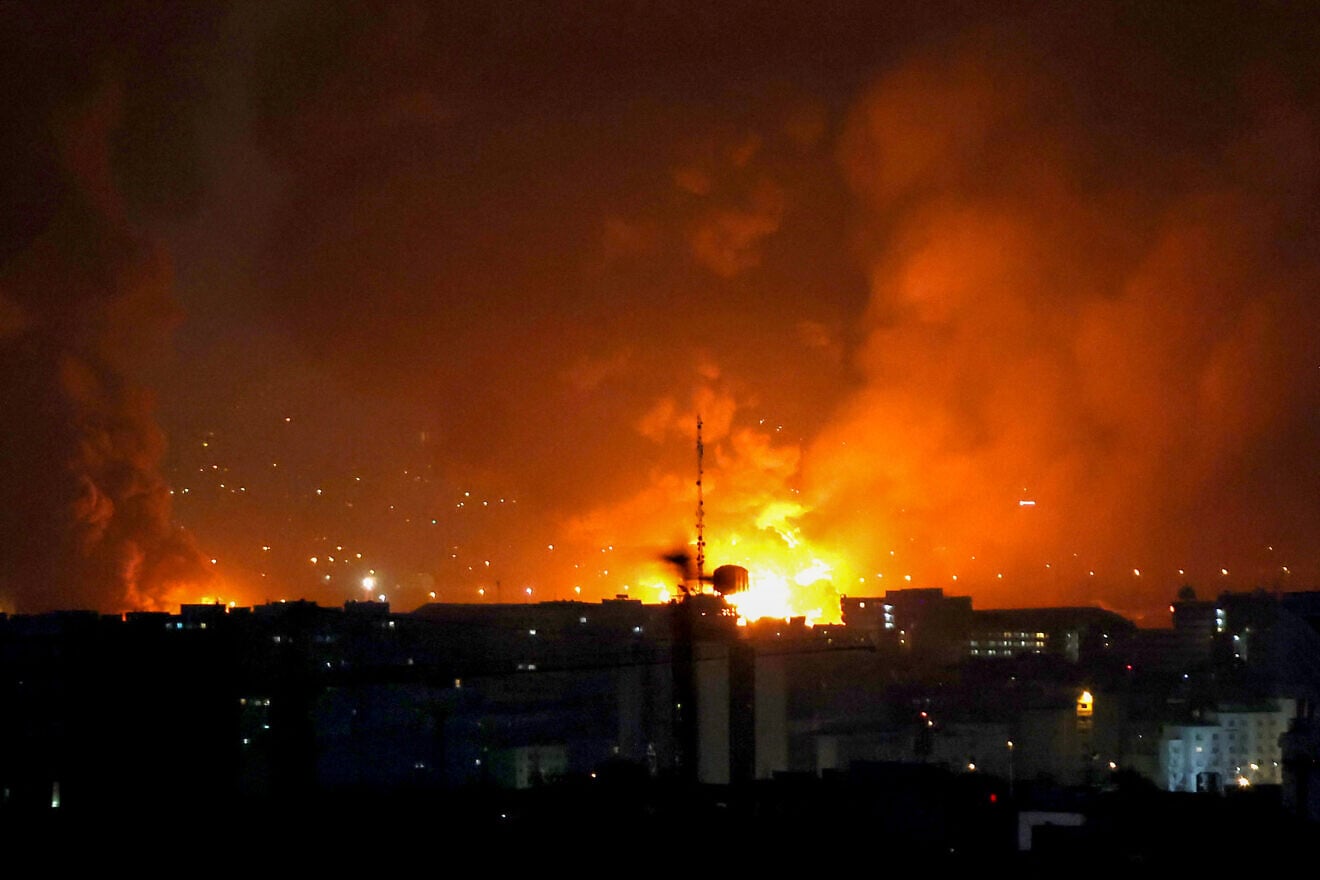
Decapitation strike kills Tehran’s supreme leader and leaves Iranians rejoicing and world leaders hopeful of a diplomatic solution toward transition of power.
President Donald Trump has quickly
reshaped the world with precision, stealthy surprise and military
might, ousting Nicolas Maduro from bed -- and power -- in a night-time
raid in Venezuela, pushing an energy-starved Cuba to the brink and
hastening regime change in Iran with a deadly strike on the reviled and
repressive Supreme Leader Ali Khameini and his top leadership.
The dizzying events of Saturday set the stage for a once unthinkable
realignment in the Middle East as U.S. and Israeli missiles decapitated
a large part of Tehran’s theocratic leadership and positioned the
Iranian people within days or a few weeks to overthrow a 47-year
tyrannical regime that has reigned terror on its own citizens and
Westerners across the globe.
The thunderous strikes prompted Iran’s most infamous resistance
group, the MEK, to think about a transition to a new government, left
jubilant Iranian ex-pats dancing in the streets in communities across
the globe and even lured a few Democrats like Sen. John Fetterman to
Trump’s side.
“This is the most consequential day in the Middle East that I can
remember,” former Deputy National Security Adviser Victoria Coates told
Fox News. “It has brought our partners and allies together in a historic
way.”
The road ahead is still far from uncertain. Iran’s first retaliation
strikes were tepid but it has many maleficent capabilities, from
missiles to terror proxies at its disposal. And at home, Republicans and
Democrats may pair together for a War Powers resolution vote aimed at
clipping the president’s wings.
But Trump set a clear compass at 2 a.m. Saturday when he announced he
had authorized “major combat operations” alongside Israel against Iran
and that his goal was to empower the Iranian people to take back their
government from the mullahs.
“I say tonight that the hour of your freedom is at hand,” he told the Iranian people.
After confirmation that the first volley had killed Khameini, who
ruled Iran with an iron grip for 37 years while terrorizing the world,
Trump declared himself satisfied that Iran may be closer to regime
change than even he imagined.
"Much easier now than it was a day ago, obviously," Trump answered
when queried by CBS News on Saturday night about the possibility of a
diplomatic solution "Because they are getting beat up badly."
Coates was in the White House situation room in 2020 when Trump
launched a strike that killed Iran’s most feared general Qasem
Soleimani.
But Saturday’s operation was much larger and consequential, and the
face of Iran’s repression has been wiped out. So too is any temptation
that the United States needs to achieve the regime change by itself or
get bogged down in nation building like it did in Iraq and Afghanistan.
It is “not America’s mission to go and create democracy in Iran.
That’s for the people of Iran if they wish to do it, or whatever other
form of government they might want,” Coates told The Daily Signal.
Her former colleague inside the National Security Council, Steve
Yates, said Trump not only understands that dynamic, he has flexed power
in ways that are changing the course of history: dictators are given a
chance in short time to seek peace. And if they fail or drag their feet,
then America’s might reins down on them.
Trump “has proven in multiple cases, in multiple destinations,
willingness to strike hard and use force to change those realities,”
Yates said on Fox News. “At the same time, gave a very comprehensive
message before this operation commenced.”
Saturday's strikes seemed to catch Iran off guard, perhaps because it
believed it had made some limited progress in negotiations with the
U.S. in Europe. But that progress wasn't fast enough for an impatient
Trump.
The U.S. and Israel upped the ante with a second round of strikes
early Sunday, part of a plan to consistently erode Iran’s military
capabilities until a moment when its people can legitimately take to the
streets without being mowed down and topple the regime.
One of the country’s most feared resistance forces, the MEK, seemed
to take the cue Saturday with a major announcement from its
Western-facing arm.
The National Council of Resistance of Iran announced it had set up a
"provisional government to transfer sovereignty" to the Iranian people
and establish a Democratic Republic along with a 10-point plan for a
post-mullah Iran.
"In these difficult circumstances, I call on all of you, especially
the courageous youth of our country, to care for civilians and the
general public, particularly children and the elderly. Protect them and
help one another. Now is the time for solidarity," said Maryam Rajavi, president-elect of the NCRI.
"Our strength lies in the unity and cohesion of our people against
the religious dictatorship and the remnants of monarchical fascism that
seek to steal the democratic revolution. At this critical moment, I call
upon our compatriots and all forces of Iran’s democratic revolution to
remain vigilant and prepared," she added.
The ten-point plan includes "freedom
of speech, freedom of political parties, freedom of assembly, freedom
of the press and the internet" as well as the "dissolution and
disbanding of the Islamic Revolutionary Guard Corps (IRGC), the
terrorist Qods Force, plainclothes groups, the unpopular Bassij, the
Ministry of Intelligence, Council of the Cultural Revolution, and all
suppressive patrols and institutions in cities, villages, schools,
universities, offices, and factories."
Trump said he was confident there are several good options for people
who could govern Iran in the future. But for now, he was staying the
course. More precision bombings.
As the Islamic Republic Cracks, the Iran Freedom Congress in London Races to Build the Framework Tehran Prayed Would Never Exist
The Middle East Forum (MEF) congratulates the organizers and participants of the Iran Freedom Congress (IFC), which has convened
in London bringing together a broad cross-section of Iranian political,
ethnic, and civil society actors. The assembly represents the most
significant structural effort to date to transform decades of fragmented
opposition into an organized, pluralistic framework capable of acting
at decisive historical moments.
The IFC’s steering committee has
adopted Minimum Common Principles, including commitments to a democratic
and secular order, human rights, territorial integrity, pluralism and
power-sharing, and the rejection of revenge and collective punishment,
and announced plans to convene a much broader Iran Freedom Congress by
the end of March 2026, with significantly expanded participation from
political, social, ethnic, gender, professional, and generational
actors.
“For forty-five years, the Iranian opposition’s great
tragedy has not been a lack of courage or legitimacy. It has been the
absence of an architecture that allows diverse forces to work together
rather than cancel each other out,” said Gregg Roman, executive director
of the Middle East Forum. “What is emerging in London is qualitatively
different from anything we have seen before: a disciplined, pluralistic
process that rejects both the dictatorship of the turban and the cult of
the MEK. This is the kind of organized responsibility the Middle East
Forum has long argued is essential for any credible post-Islamic
Republic order.”
The initiative draws on the intellectual
foundation articulated by figures including Shahryar Ahy and Abdollah
Mohtadi, leader of the Komala party, who have publicly argued that
pluralism and power-sharing, not a “single savior,” represent the only
realistic path for Iran’s future. The IFC’s two-step process, a smaller,
disciplined steering committee followed by a large, inclusive Congress,
addresses the structural deficit that these and other voices have
identified as the fundamental obstacle to an effective opposition.
The
Middle East Forum has been at the forefront of supporting Iranian
freedom through its Iran Freedom Project, directed by Mehrdad Marty
Youssefiani. The Iran Freedom Project has deployed over 470 Starlink
terminals inside Iran to help citizens communicate despite the regime’s
internet blackout, now the longest in the Islamic Republic’s history. In
January 2026, MEF released three major policy papers examining the
Iranian crisis, including a comprehensive assessment of the Iranian
opposition ecosystem and a proposed 28-member National Reconciliation
Council framework for interim governance.
“The convergence we are
witnessing is not another photo-op or exile conference. It is the first
concrete attempt to build a coalition architecture that reflects the
real Iranian mosaic,” said Youssefiani, a strategic communications
veteran who served for nearly two decades as chief counselor to Iran’s
Crown Prince Reza Pahlavi. “Republican, monarchist, left, liberal,
ethnic and religious groups, all organized under shared democratic
principles. This is precisely what the Iran Freedom Project has been
working toward: ensuring that when history moves, Iranians are present,
organized, and legitimate.”
The initiative comes at a moment of
historic urgency for Iran. Following the June 2025 war, the decimation
of the regime’s proxy networks, and the mass protests that erupted in
December 2025 over Iran’s economic collapse, the Islamic Republic faces
the most severe crisis of its forty-five-year existence. The IFC’s
decision to organize now, establishing shared principles, thematic
working groups on transition governance, security, economy, ethnic and
religious groups, women and youth, and international relations, reflects
a sober recognition that the opposition’s window to demonstrate
coherence may be limited.
The Middle East Forum notes that a
credible pluralistic opposition framework directly addresses three major
concerns shared by Western and regional governments: the risk of
prolonged chaos or state collapse in a nuclear-threshold state, regional
destabilization and refugee flows, and the empowerment of extremist
actors in a power vacuum. The IFC’s explicit commitments to territorial
integrity, transitional justice, preservation of core state
institutions, and openness to structured dialogue on nuclear and
regional issues position the initiative as a serious interlocutor for
the international community.
“The Islamic Republic is weaker than
it has been at any point since 1979,” Roman added. “Its military has
been humiliated, its proxies have been decimated, its economy has
collapsed, and its people have risen. The question is no longer whether
change is coming to Iran, but whether the Iranian political nation will
be organized when it arrives. The Iran Freedom Congress is the most
credible answer to that question we have seen.”
Forty-seven years after the mullahs seized power, the countdown ended in fire, and Trump wagered that decisive force—not talk—would finally clear the path to Iran’s liberation.
On January 25, just over a month ago, I wrote here that “The Countdown to Iran’s Liberation Has Begun.”
Yes, there were peace talks. Donald Trump’s negotiators, Steve Witkoff
and Jared Kushner, jetted off to talk to Iran’s agents. Had Iran acceded
to Trump’s key demands—above all, the abandonment of its efforts to
acquire nuclear weapons—war might have been averted. As Churchill almost put it,
it is better to jaw-jaw than to war-war. But the ticking sound that was
clicking throughout Iran this last month or so was not diplomacy. It
was, I speculated, “a death-rattle, as a murderous regime nears judgment
and a brutalized people pray that liberation, at last, is real.”
The countdown reached zero—liftoff!—yesterday, February 28, at about
8:15 a.m. Tehran time. That is when the first wave of the assault to
destroy the hideous, 47-year-old Islamicist regime commenced.
Code-named Operation Epic Fury (“Roaring Lion” in Israel), the initial
assault targeted sites across the country
in Tehran, Isfahan, Qom, Karaj, Tabriz, and elsewhere. According to
some reports, a meeting in Tehran with the Supreme Leader Khamenei and
several top aides was a primary target. Gholam-Hossein Mohseni-Ejei,
head of the judiciary in Iran, was killed in the strike. He had hundreds
of Iranian citizens executed, so good riddance. Ditto for Mohammad
Pakpour. He was, as one wag put it,
“the new head of IRGC that replaced the previous new head of IRGC who
was eliminated after he replaced the previous head of IRGC who was
eliminated.” The same fate embraced Amir Hatami, the defense minister.
It was he who directed the massacre of tens of thousands of Iranian
protestors in January. When I sat down to write this, the fate of the
86-year-old Supreme Leader Ali Hosseini Khamenei was unknown. I had to
come back to this sentence with the good news that he, too, has gone to
meet his 72 virgins. He had been oppressing Iranians and exporting
terrorism since 1989, so good riddance to him, too.
Meanwhile, Iran responded to the attacks by launching missiles at
Bahrain, the United Arab Emirates, Qatar, Kuwait, Jordan, and possibly
Saudi Arabia. So far, one civilian casualty has been confirmed in Abu
Dhabi from falling debris. Apparently, all the other missiles were
intercepted. As one commentator observed,
“Iran just converted every neutral and semi-neutral state in the Gulf
into a potential co-belligerent. Every nation whose airspace was
violated, whose civilians were killed, whose sovereignty was breached
now has legal and political justification to join whatever coalition
forms next.”
Early yesterday, both President Trump and Prime Minister Netanyahu
delivered statements to announce the military action. Trump delivered
his on Truth Social. “For 47 years,” he noted,
. . .the Iranian regime has chanted ‘Death to America’
and waged an unending campaign of bloodshed and mass murder, targeting
the United States, our troops, and the innocent people in many, many
countries.
Among the regime’s very first acts was to back a violent takeover of
the U.S. embassy in Tehran, holding dozens of American hostages for 444
days.
In 1983, Iran’s proxies carried out the marine barracks bombing in Beirut that killed 241 American military personnel.
In 2000, they knew and were probably involved with the attack on the
USS Cole. Many died. Iranian forces killed and maimed hundreds of
American service members in Iraq.
The regime’s proxies have continued to launch countless attacks
against American forces stationed in the Middle East in recent years, as
well as U.S. naval and commercial vessels and international shipping
lanes.
It’s been mass terror, and we’re not going to put up with it any
longer. From Lebanon to Yemen and Syria to Iraq, the regime has armed,
trained, and funded terrorist militias that have soaked the earth with
blood and guts.
And it was Iran’s proxy Hamas that launched the monstrous October 7th
attacks on Israel, slaughtering more than 1,000 innocent people,
including 46 Americans, while taking 12 of our citizens hostage. It was
brutal, something like the world has never seen before.
Iran is the world’s number one state sponsor of terror, and just
recently killed tens of thousands of its own citizens on the street as
they protested.
Trump went on to iterate his number one demand: that Iran never be
allowed to acquire nuclear weapons. He concluded with an appeal to the
Iranian people. The “massive and ongoing operation” that had just
started would clear the way for the Iranian people to finally assert
themselves and form their own government. “We are going to destroy their
missiles and raze their missile industry to the ground,” Trump
promised. “We are going to annihilate their Navy. We’re going to ensure
that the region’s terrorist proxies can no longer destabilize the region
or the world. . . . When we are finished, take over your government. It
will be yours to take. This will be, probably, your only chance for
generations.”
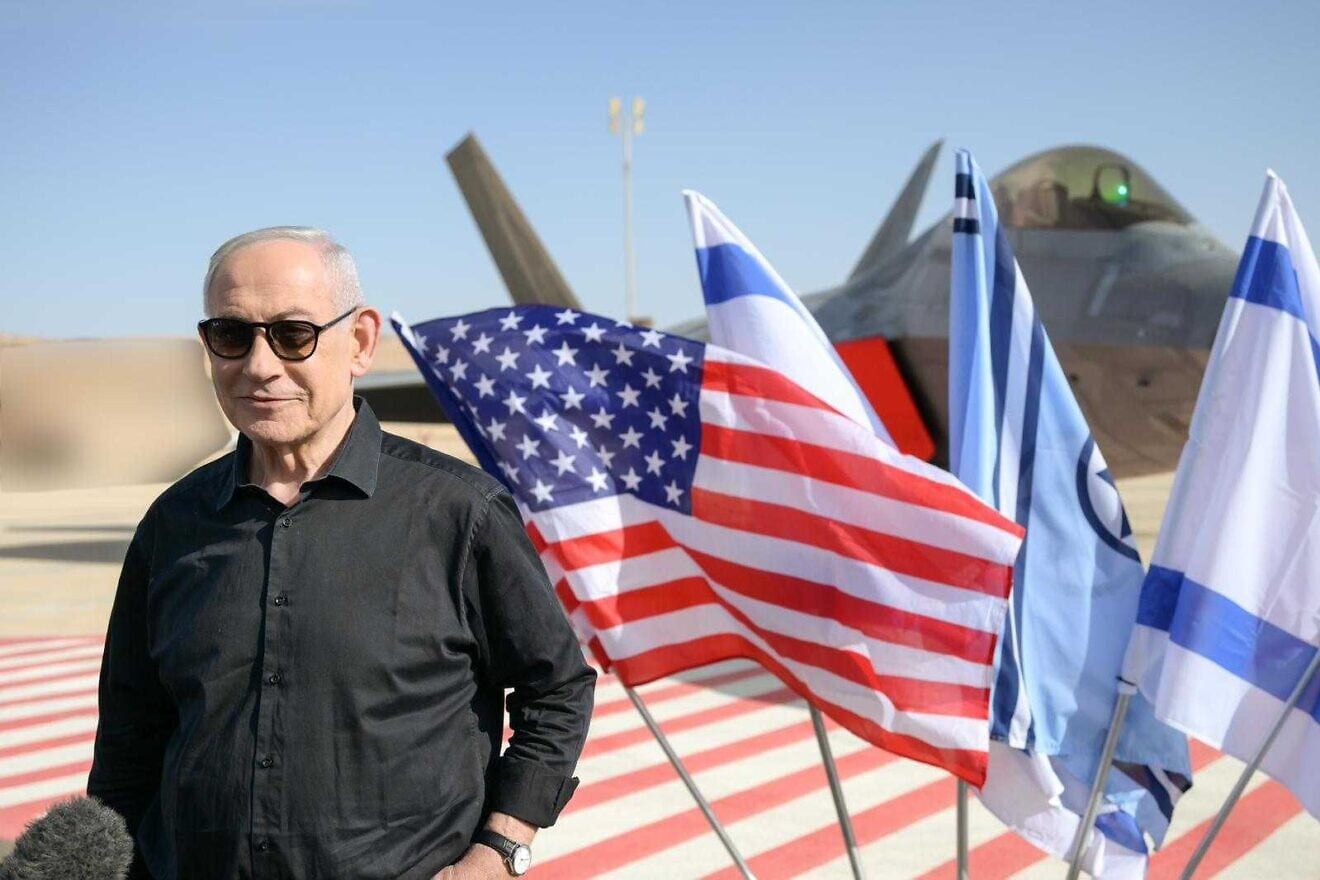
For his part, Prime Minister Netanyahu echoed
many of President Trump’s points. He also went out of his way to thank
the president for his “historic” leadership and courage. Trump has
been, he noted, “Israel’s greatest friend in the White House of all
time.”
Here at home, The New York Times instantly got its anti-Trump chorus on stage. “Trump’s case for striking Iran rests on questionable claims,” sniffed one headline, while an official editorial demanded to know “Why Have You Started This War, Mr. President?” Naturally, Kamala Harris was there with her incontinent anti-Trump bloviating, as were Alexandria Ocasio-Cortez and New York’s rich Muslim Socialist mayor, Zohran Mamdani.Right on cue, clumps of unhappy white females, real and honorary, congregated outside the White House with their “Hands Off Iran” signs and other memos of mental madness.Pathetic. But Democratic Sen. John Fetterman once again broke ranks by coming out in support of the strike. “President Trump,” he wrote, “has been willing to do what’s right and necessary to produce real peace in the region.” Good for him.
What happened yesterday is not the end of the story. The fury unleashed
by Israel and America is just in its opening phase. It is unclear how
many casualties lie ahead. But so far, Trump’s actions in this crisis
confirm something I have been saying for some time: that Trump is a great man of history. I am pleased that the red-pilled activist Bill Ackman agrees. “President Donald Trump,” he wrote on X,
“will go down in history as one of the greatest and most consequential
presidents we have ever had.” Does that sound odd? Donald Trump? The
real-estate mogul and reality TV host? It may sound odd. It doubtless
bothers the well-coiffed in Harvard Yard, CNN, and the Bulwark. But it
is the truth. The New York Times will not like it, but Trump will occupy a spot alongside George Washington, Abraham Lincoln, FDR, and Ronald Reagan as one of our greatest presidents.
The IRGC ignored the fact that Israel changed after the October 7 massacre, and now they’re paying the price. Dictatorships don’t fall from outside; they collapse from within.
A demonstrator holds a burning photo of Iran's Supreme Leader Ayatollah Ali Khamenei, in London, Britain, January 11, 2026(photo credit: REUTERS/Chris J Ratcliffe)
Former
Supreme Leader Ali Khamenei of Iran made the same mistake as Hezbollah
Secretary-General Hassan Nasrallah. He ignored the fact that Israel
changed on October 7. He didn’t believe it could happen to him. He fell
asleep at the wheel.
When
the details of his elimination become clear, jaws will drop. The
deception, the pinpoint intelligence, the quality of the execution, the
creativity. The fact that Israel had a photo of Ali Khamenei’s body is
beyond comprehension. It should spell things out for the ayatollahs who
are still there, and for their situation.
Israel
went from fighting alone on seven fronts to a situation where Iran is
fighting alone on seven fronts. In a little over two years. Not bad.
On
October 7, 2023, Israel fought for its life, surrounded by a “ring of
fire,” on the verge of the “extermination plan” that came out of Iran’s
playbook. We took the hardest blow in our history. Despite the brutal
starting conditions, we won. Am Yisrael (the people of Israel) got up
off the floor, the Israel Defense Forces (IDF) showed its capabilities,
the intelligence community showed its edge.
Now
comes the strategic reversal. Iran is the one surrounded by a “ring of
fire,” and the ayatollah regime is fighting for its last breaths.
A
still image released by US Central Command (CENTCOM), which accompanied
a press release describing the operation dubbed ''Epic Fury'', an
attack by the United States and Israel on Iran, shows a rocket launch
from a ship, in this picture obtained from social media released on
February 28, 2026. (credit: US CENTCOM via X/Handout via REUTERS)
Iran
has been caught with its pants down. Its proxies are frozen with fear
or responding weakly just to say they did something. Senior figures are
being taken out in bulk. Missiles are being fired sparingly. True, it
doesn’t end until it ends, and the ending is still ahead of us, but the
turnaround is one of the most astonishing in history. Compare it to Nazi
Germany, which went from an empire that nearly took over the world to a
heap of ruins in six years. Iran was on the way to controlling the
entire Middle East. Now it’s being pounded by the two best air forces in
the world and fighting for its life. These are historic days, no less.
Most
of the details of what happened yesterday and what will happen in the
coming days will only be published in the future. Only then will we
understand the level of precision in Israeli intelligence, the almost
inconceivable intelligence superiority inside a country thousands of
kilometers from Israel.
If
it were up to me, the name of this war, which opened on Purim, should
be “Ozen Aman” (a pun on Ozen Haman, the Purim pastry, and Aman, the IDF
Military Intelligence Directorate). Its opening blow will be studied
for decades in every military college in the world.
Khamenei is gone, but more work is needed
The
deception operations, the intense intelligence collection that proved
itself again in the Iranian capital, the precision and the coordination,
all of it is hard to process. Still, it’s early to celebrate. This
isn’t over. Hard moments are still ahead, and it’s unclear whether the
goal of the operation, toppling the Iranian regime, will be achieved. If
the ayatollahs remain in Tehran, nobody can declare victory. Keep the
joy and the optimism for later.
For
now, it’s possible to admire the capabilities, the precision, the
unprecedented coordination with the US, and the realization of an old
dream, seeing the most powerful country on earth lead the campaign
against Iran. US President Donald Trump is with us, all in, all in. It
won’t last long. His patience could run out soon, and that’s why our air
force is operating at an intensity we’ve never seen before, on a
broader scale than it operated in Operation Like a Lion.
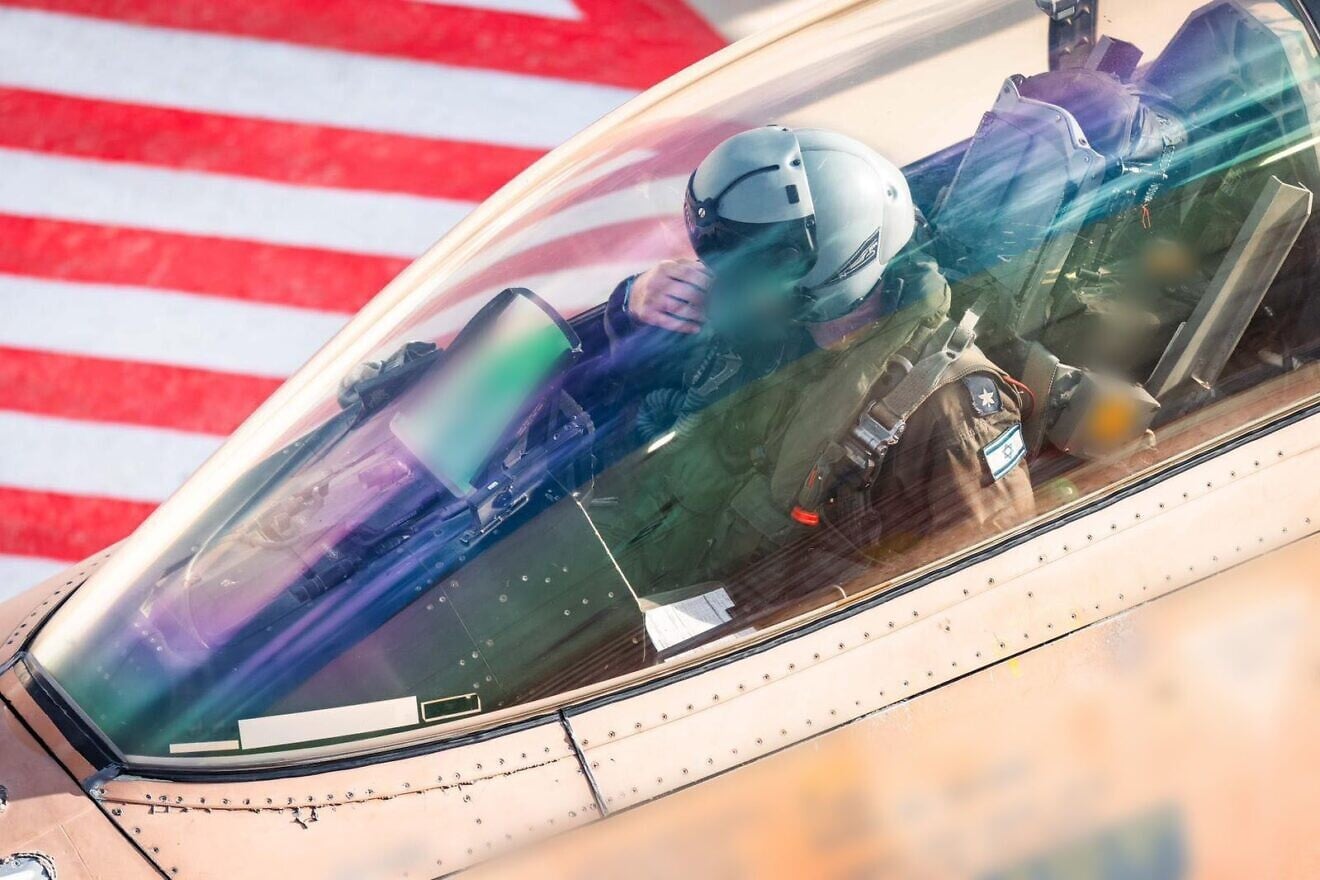
Each
pilot is flying three sorties a day, meaning roughly 20 hours out of
the first 24 are spent flying to Iran or back. The reason is simple: the
push to compress 12 days into three, the effort to hit as many Iranian
launch capabilities as possible so we don’t reach an interceptor
shortage, and the effort to get as much done as possible before Trump
gets tired and starts signaling that it’s over. Time is short, and the
work is immense.
In
two or three days, it will be the Iranians’ turn. Dictatorships don’t
fall from outside; they collapse from within, especially without “boots
on the ground.” The only regime that fell as a result of an air campaign
was Serbia in 1999. Iran is not Kosovo. Iran will require far more than
an air campaign. We should hope the Mossad (Israel’s foreign
intelligence agency), the CIA (the US Central Intelligence Agency), and
the West’s other partners in the region know what they’re doing.
Remains
of a car in the aftermath of an Israel and the US strike on a building
in Tehran, Iran, February 28, 2026 (credit: Amir Kholousi/ISNA/WANA
(West Asia News Agency) via REUTERS)
Forty
percent of Iran’s residents are minorities who despise the regime.
Eighty percent of the rest also despise it. Inside Iran’s military there
are pockets of resistance and ferment against the regime and against
the Islamic Revolutionary Guard Corps (IRGC), which treats the regular
army with contempt. Those are strong ingredients to work with. The
Mossad went to work with plenty of Iranian civilians yesterday on
Telegram. In three or four days, when the intensity of the airstrikes
starts to drop, their moment arrives. The moment for uprising and
liberation. That’s the ambition. Will it happen? Nobody knows.
Today
is expected to be even more intense for Iran than yesterday. Yesterday,
more than 2,500 munitions were dropped on Iran, by Israel and the US
together. Let’s hope it doesn’t happen on our side too.
Yesterday’s
Israeli and American attacks focused on three main objectives:
decapitating as many military and political leaders as possible, first
and foremost Khamenei and senior IRGC figures. Striking as many
missiles, launchers, launch tunnels, and launch assets as possible.
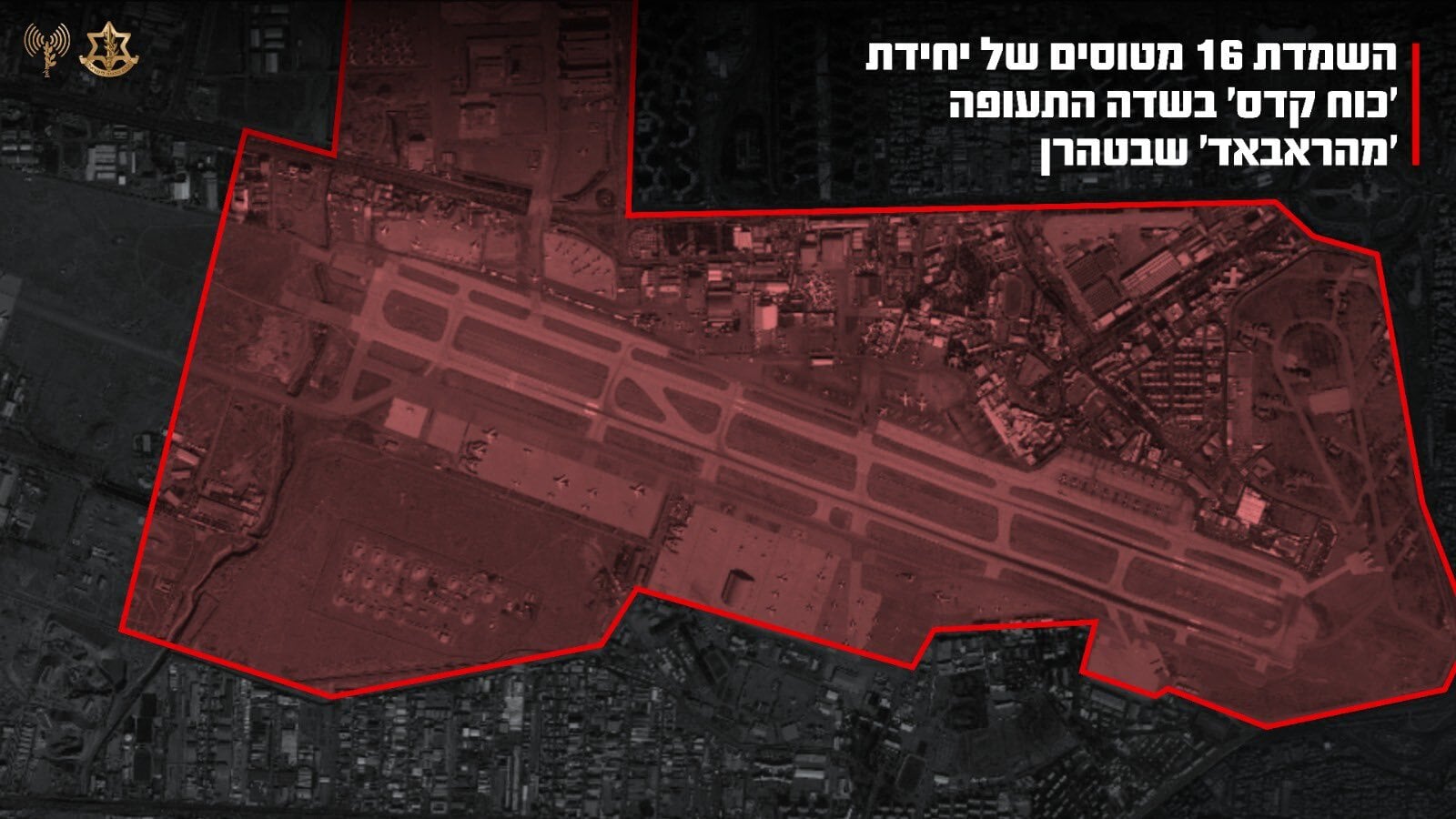
Reopening the safe corridor for Israeli and American air force aircraft
to Tehran by destroying Iranian interception and radar capabilities,
along with command-and-control systems.
You
can say those three goals were largely achieved. Launch capabilities
still exist, but they’ve been significantly reduced. Starting today,
Iran will absorb even more powerful strategic bombing: government
targets, infrastructure targets, IRGC targets, and an effort to hit
those who can suppress protests, aiming for maximum shock and awe
against the regime, its symbols, and its enforcers, with the hope that
this pushes crowds back into the streets and frees the country.
This
US-Israel operation is unprecedented. Even in the Sinai Campaign
(Operation Kadesh), when Israel coordinated with Britain and France to
“liberate” the Suez Canal from Egypt, nothing looked like this. Israel
and the US essentially fused their air, sea, and intelligence arms into a
single arm.
Our
air force has nothing to be ashamed of compared to what the Americans
brought to the table. On intelligence, the Americans couldn’t have done
what they did without us.
This
combination fulfills a dream, even during a low point in Israel’s
standing in the US. The poll published yesterday, showing American
support for Israel hitting a worrying and unprecedented low, didn’t
affect what’s happening now. We need to pray and act so it doesn’t shift
further in the future.
Despite
everything written here, there’s still no room for euphoria. The top
goal is regime replacement. If that doesn’t happen, Iran stays on the
list of existential threats to Israel. If it does happen, a new era
begins.
Israel strikes Iran's Tharallah headquarters used to suppress, murder protesters • IDF targets Islamic regime bases, ballistic missile apparatus
IDF footage of strike on Iranian regime headquarters in Tehran, March 1, 2026. (CREDIT: IDF SPOKESPERSON)
Having already dropped 1,200 bombs on Iran, the IDF, along with the US Air Force, is close to achieving air supremacy in Iranian airspace.
This
shift could mark an increased capability for Israel and the US to help
anti-regime protesters by targeting specific regime forces, including
the Tharallah headquarters, which has been used to oppress and mass
murder them for the last two months and during prior rounds of protests in recent decades.
In
June 2025, it took several days for the air force to achieve such
supremacy, which signifies that essentially Iran's anti-aircraft
defenses have been so battered that Israeli aircraft and drones can
hover over target areas for extended periods without worrying as much
about whether air defenses might target them.
Once this is achieved, the ability of the air force to target a wider range of targets constantly exponentially increases.
In
light of that trend, as of 10:15 a.m. on Sunday, the air force launched
its first major wave attacking specifically Iranian regime targets in
Tehran.
A
still image released by US Central Command (CENTCOM), which accompanied
a press release describing the operation dubbed ''Epic Fury'', an
attack by the United States and Israel on Iran, shows a rocket launch
from a ship, in this picture obtained from social media released on
February 28, 2026. (credit: US CENTCOM via X/Handout via REUTERS)
Until
now, there were select targeted strikes on Iran's slain supreme leader
Ayatollah Ali Khamenei and others, on anti-aircraft defenses, and on
missile launchers, but there was less of an ability to focus on the
Tehran regime's power on a broader basis.
Earlier
on Sunday morning, the IDF announced that it had already dropped over
1,200 bombs on Iranian targets since the start of the war.
The largest air operation in Israel's history
On Saturday night, the IDF had said that over 200 aircraft had struck 500 Iranian targets.
An IDF video showed two major initial waves of attacks.
The
first wave struck what appeared to be dozens of radars and
anti-aircraft defenses, especially in the part of Iran closer to Israel
and the Tehran area.
During
the second wave, the air force struck Iran's ballistic missile
apparatus to attempt to reduce its ability to strike the Israeli home
front.
In
the Tabriz area, the IDF struck a major site from which the Islamic
Republic has fired dozens of ballistic missiles at Israel.
The
IDF is also working to establish air supremacy, which it achieved in
June 2025, to be able to keep drones and other aircraft hovering in
areas from which Tehran might try to fire on Israel in order to blow up
the missile teams before they can fire.
The
IDF also announced that it had conducted an additional round of
strikes, targeting more of Iran's ballistic missile capabilities as well
as its aerial defense systems.
One
of the targets struck, the IDF said, was a missile launch site
containing hundreds of kilograms of explosives. The site was in the Qom
area of central Iran, and its destruction "thwarted dozens of launches
toward the territory of the State of Israel."
On Sunday morning, the US said it had struck around 900 Iranian targets.
The greatness of Western civilization was primarily founded on a composite of Judeo-Christian religious values, Greek philosophy and political theory, and Roman jurisprudence, all providing definitive moral guidance.
How fitting that the US and
Israel finally retaliated against 47 years of aggression by the regime
of the Islamic Republic of Iran during the week of the Biblical Purim
festival.
The greatness of Western civilization was primarily founded on a
composite of Judeo-Christian religious values, Greek philosophy and
political theory, and Roman jurisprudence, all providing definitive
moral guidance.
This is the noble civilization that, through its principles, has
led much of the world into prosperity, democracy, individual liberty,
equal justice under the law, freedom of expression and human rights.
Ironically, free speech is under self-imposed threat of
termination in their nations, including those located as far from Europe
as Australia.
When Rubio delivered his inclusionary speech, which received a
standing ovation, the following day, the European Parliament, and
associated personages, appeared already to have made up their minds.
They were happy with the current state of affairs, thank you, and did
not need America's cultural, political or scientific input; only its
guarantee for defense or support for ideological dreamscapes. Their
message was obvious: they would not commit to the US's idea of a common
Western cultural heritage, nor would they join the US in preventing
civilizational decline.
Those brave souls who do have the courage to speak up are ostracized, imprisoned or overruled.
Apart from ruinous civil wars to remedy the situation, the last
hope seems to reside in a few dedicated personalities, mainly in the US
-- that last bastion of free speech -- who occasionally appear to view
the status quo as in need of a bit of a shake-up. These individuals evidently believe that the values of the West are worth preserving.
Elsewhere, Western civilization endures in a few lonely places,
such as Hungary and Poland, as well as the tiny nation of Israel – a
courageous country that has spent nearly eight decades fighting – and
winning – wars of self-defense, yet continues to be unjustly vilified by
almost everyone. These are just some of the brave nations that
exemplify, however imperfectly, the reservoir of Judeo-Christian values,
the fount of the West. Might anyone else please sign up?
Europe's decision-makers, meanwhile, blissfully carry on,
condemning Israel, rebuffing the US, and voting to send their countries
into barbarism.
Only a few brave nations exemplify, however imperfectly, the
reservoir of Judeo-Christian values, the fount of the West. Might
anyone else please sign up? Pictured: A Roman statue of Atlas (circa
2nd-century CE) at the National Archaeological Museum of Naples. (Photo
by Lalupa/Wikimedia Commons)
How fitting that the US and Israel finally retaliated against 47
years of aggression by the regime of the Islamic Republic of Iran during
the week of the Biblical Purim Festival.
Then, roughly 2,300 years ago, Haman, viceroy to Persia's King Ahasuerus, threw a lot ("pur", plural "purim")
to determine the date by which he would kill all the Jews in the
empire. This plan's successor sits (or sat) in Tehran's Palestine
Square: a "doomsday clock" counting down the minutes until Israel is supposed no longer to exist: 2040, to be exact.
Iran's current regime began its bellicosity in November 1979 with Ayatollah Ruhollah Khomeini's vows of "Death to America," then kidnapping and holding hostage
53 US Embassy personnel in Tehran for 444 days, until the inauguration
of US President Ronald Reagan in 1981 appears to have frightened them
off. The hostages were immediately released.
This week, the United States under the leadership of President Donald
J. Trump and Israel under the leadership of Prime Minister Benjamin
Netanyahu, finally took decisive action against an enemy of civilization
while the rest of the West, its supposed safekeepers, instead of
supporting those countries fighting on their behalf to preserve
civilization, continue working to undermine them.
Civilization, authors James Hankins and Allen Guelzo contend,
is not only an environment, locale, or setting, but a social construct
where "people may breathe." There, they have space to thrive culturally,
to truly live, to enjoy the finer and more pleasant elements of life.
There, they might find respite from the daily grind of striving and
surviving.
In essence, civilization
creates space for people "to erect monuments of art, literature, and
thought alongside the everyday need to work, to produce, to exchange."
Such opportunity enables humans to mature as cultural, creative, and
social animals for "the human spirit cannot be captured simply by the
way we earn bread or avoid massacre; there is a natural yearning after
order, after beauty, after truth."
Oswald Spengler (1880-1936) clarified
this ideal when he wrote, "A civilization is judged not by its material
wealth, but by its spiritual and cultural achievements."
The greatness of Western civilization was primarily founded on a
composite of Judeo-Christian religious values, Greek philosophy and
political theory, and Roman jurisprudence, all providing definitive
moral guidance. This is not to overlook the deep influence of other
events such as Europe's Reformation, Renaissance and Enlightenment,
together with various revolutions such as Britain's 17th century "glorious revolution" and America's 18th century one.
This is the noble civilization that, through its principles, has led
much of the world into prosperity, democracy, individual liberty, equal
justice under the law, freedom of expression and human rights.
The geopolitical nations commonly accepted as exemplifying the
Western world include those of the Anglosphere and most nations of
Western Europe that adhere to a rules-based order. Increasingly, certain
Central European nations such as Hungary and Poland deserve to be
included in any list of the West. This concept is evolving, emphasizing
common Judeo-Christian values and a politically open society based on
liberal democratic traditions and free market economies. The list
increases as more nations, previously regarded as part of Eastern or
Central Europe, align themselves on these grounds with major Western
powers.
Consequently, in mid-February 2026, when US Secretary of State Marco
Rubio met with Western leaders at the Munich Security Conference, his
address was directed at a significant number of nations, not only the UK
and those in Western Europe -- hitherto presumed bastions of
civilization -- and emphasized the common legacy of all.
"Rubio said that after the end of the Cold War, the West
had embarked upon a 'dangerous delusion,' thereby weakening its
economic, cultural, and political foundations....
"Rubio was particularly outspoken on migration. Opposition to the
opening of Western borders to waves of mass migration is not a fringe
issue, but a transformative crisis that jeopardizes the survival of
Western culture and the future of our peoples. Under President Donald
Trump, he said, the U.S. is prepared, if necessary, to pursue renewal on
its own. Washington wants to take this path together with Europe,
however, because we belong to a shared Western civilization, bound by
history, culture, and Christian heritage."
As Vice President J.D. Vance said at the same conference in 2025, and President Trump before him (here, and here) had done before, Rubio encouraged Europe's leaders to change direction dramatically to avoid civilizational collapse.
Trifkovic added:
"In closing, Rubio called on Europe to fundamentally
change course. The West is, once again, at a historic turning point. Our
decline is not inevitable, but a political choice.
Rubio encouraged Western leaders to stimulate reform, and to strive
for revival. In other words, he asked them to together conserve and
revive those fine and noble principles that have made Western
civilization great.
While his objective was to reassure Europe and Western nations of
America's cooperation and commitment to mutual civilizational goals, he
studiously avoided focusing on the core issue plaguing the West – that
of radical Islamists attempting to overturn core tenets of the existing
culture. The probable reason was most likely "political correctness."
Responding to Rubio's speech, officials such as the UK's Prime Minister Keir Starmer and, especially, the European Union's Ursula von der Leyen, touched on the need for Europe to become independent in areas of defense and, further, to maintain its "digital sovereignty."
Similarly, German Chancellor Friedrich Merz and other Europeans, according
to Australia's ABC News, "made it clear they would stand by their
values, including their approach to free speech, climate change and free
trade."
Ironically, free speech is under self-imposed threat of termination
in their nations, including those located as far from Europe as
Australia.
Europe's leaders had already formulated their position on civilization issues prior to Rubio's address. According to Trifkovic:
"Less than 24 hours before Rubio's speech, the European Parliament (EP) voted in favor of a resolution calling for a feminist and transgender-oriented EU foreign policy.
MEPs approved a text urging the EU Council to defend the recognition of
self-perceived gender identity as an international priority... EP
called on the European Commission and the Council to pursue a 'feminist
foreign, security, and development policy' that includes a
'gender-transformative vision.' Women's rights and gender equality are
described as 'fundamental prerequisites for democracy, social justice,
and sustainable development...' A key passage demands the 'full
recognition of trans women as women.'"
No distinction was made between birth sex and subjectively claimed
identity. Thus were the XX and XY chromosomes, biological science's
determinants of binary sex distinction, summarily dismissed.
By so voting, the European Parliament discarded Western
civilization's Judeo-Christian mainstay of empirical knowledge (from the
Latin scientia, knowledge) while attempting to retain some semblance of its moral-ethical tenets upon which their legal systems were founded.
When Rubio delivered his inclusionary speech, which received a
standing ovation, the following day, the European Parliament, and
associated personages, appeared already to have made up their minds.
They were happy with the current state of affairs, thank you, and did
not need America's cultural, political or scientific input; only its
guarantee for defense or support for ideological dreamscapes. Their
message was obvious: they would not commit to the US's idea of a common
Western cultural heritage, nor would they join the US in preventing
civilizational decline.
It is difficult to construct a more short-sighted and delusional
attitude than that exhibited by Europe's decision-makers. The threats
Europe faces are real. Europe's denial is stupefying. The US is, by far,
their main supplier of armaments and their sole guarantor against
attack by Russia or other aggressive nuclear nations. Secondly, their
main export market and largest trading partner is the US; third, the US
is the world's leading military and nuclear power and has tens of
thousands of troops stationed in Europe as a deterrent. To dismiss the
entreaties of the deeply concerned Vance, Rubio, and Trump with
disrespect and disdain is almost beyond comprehension, and potentially
devastating to the millions of citizens under their watch.
Fixated ideologies, delusional thinking, pandering for votes and a
lack of courage are the intersecting reasons for such insanity. Nearly
50 years ago, Aleksandr Solzhenitsyn delivered a sharp speech, warning that Western leaders exhibited a "decline in courage:"
"A decline in courage may be the most striking feature
which an outside observer notices in the West in our days. The Western
world has lost its civil courage, both as a whole and separately, in
each country, each government, each political party, and, of course, in
the United Nations. Such a decline in courage is particularly noticeable
among the ruling groups and the intellectual elite, causing an
impression of loss of courage by the entire society. Of course, there
are many courageous individuals, but they have no determining influence
on public life.
"Political and intellectual bureaucrats show depression,
passivity, and perplexity in their actions and in their statements, and
even more so in theoretical reflections to explain how realistic,
reasonable, as well as intellectually and even morally worn it is to
base state policies on weakness and cowardice. And decline in courage is
ironically emphasized by occasional explosions of anger and
inflexibility on the part of the same bureaucrats when dealing with weak
governments and with countries not supported by anyone, or with
currents which cannot offer any resistance. But they get tongue-tied and
paralyzed when they deal with powerful governments and threatening
forces, with aggressors and international terrorists.
"Should one point out that from ancient times declining courage has been considered the beginning of the end?"
Since his speech, the state of affairs in the West has only
deteriorated. The current European leaders embody what Solzhenitsyn was
talking about. Is it "the beginning of the end" for Europe and Western
civilization as we know it? Concerningly, there seem to be few positive
developments to indicate otherwise. Those brave souls who do have the
courage to speak up are ostracized, imprisoned or overruled.
Apart from ruinous civil wars to remedy the situation, the last hope
seems to reside in a few dedicated personalities, mainly in the US --
that last bastion of free speech -- who occasionally appear to view the status quo as in need of a bit of a shake-up. These individuals evidently believe that the values of the West are worth preserving.
Elsewhere, Western civilization endures in a few lonely places, such
as Hungary and Poland, as well as the tiny nation of Israel – a
courageous country that has spent nearly eight decades fighting – and
winning – wars of self-defense, yet continues to be unjustly vilified by
almost everyone. These are just some of the brave nations that
exemplify, however imperfectly, the reservoir of Judeo-Christian values,
the fount of the West. Might anyone else please sign up?
Europe's decision-makers, meanwhile, blissfully carry on, condemning
Israel, rebuffing the US, and voting to send their countries into
barbarism.
Nils A. Haug is an author and columnist. A Lawyer by
profession, he is member of the International Bar Association, the
National Association of Scholars, the Academy of Philosophy and Letters.
Dr. Haug holds a Ph.D. in Apologetical Theology and is author of
'Politics, Law, and Disorder in the Garden of Eden – the Quest for
Identity'; and 'Enemies of the Innocent – Life, Truth, and Meaning in a
Dark Age.' His work has been published by First Things Journal, The
American Mind, Quadrant, Minding the Campus, Gatestone Institute,
National Association of Scholars, Jewish Journal, James Wilson Institute
(Anchoring Truths), Jewish News Syndicate, Tribune Juive, Document
Danmark, Zwiedzaj Polske, Schlaglicht Israel, and many others.
[A]re [you] ready for the long haul that could produce a positive outcome as it did in West Germany, Japan and South Korea after World War II and the peninsular war?
[A] war is never won by one side declaring victory but when one side admits defeat.
A short, sharp and necessarily limited attack will be followed by
Tehran accepting a ceasefire and expressing willingness to enter a new
round of negotiations, exactly like what happened last June. In that
case the attack would have been pointless because Tehran has already
used the negotiation charade that has continued for almost half a
century.
The second scenario is that the "hardline faction" is defanged
and pro-US groups seize control. That would mean returning to the good
old days of President Barack Obama when John Kerry and Mohammad Javad
Zarif strolled together along Lake Leman to ponder how to hoodwink
critics at home.
The third scenario is that the attack causes systemic collapse
and enables Reza Pahlavi's "team" to concoct a transitional government
and organize their referendum.
[A]re [you] ready for the long haul that could produce a positive
outcome as it did in West Germany, Japan and South Korea after World
War II and the peninsular war.
(Image source: iStock/Getty Images)
Then what?
This is the question that theoreticians of war from Sun Tzu to Jomini
and Liddell-Hart and passing by Clausewitz advise leaders to ask before
they order the firing of the first shot in a war.
Thus, one may suggest that US President Donald Trump should also ask
that question before, as many expect, he triggers a new round of
military attacks on Iran.
The New York Times believes that by assembling the largest strike
force since 2003 Trump has cornered himself in a position from which he
cannot wiggle out without losing face or more.
Former State Department "strategic brain" Richard Haass claims that Trump is sleep-walking into a war.
In Tehran, officials also predict some form of military action which
they expect would clear the air without threatening the existence of the
regime.
On the opposition side, Prince Reza Pahlavi, heir to the Iranian
throne and now the most vocal challenger of Islamic regime, has hinged
his strategy on the assumption that a US attack will neutralize the
regime's security forces allowing his "team" to enter Iran, set up a
transition authority and carry out a referendum about a future regime.
In his latest "message to the nation" he says that a US attack is likelier than ever.
Some former regime grandees also desire such an attack which they
hope will eliminate the "hardline" faction and allow" pro-reform" groups
to put the system on a new course.
Most regional powers also believe that a US attack, something they all oppose, may be unavoidable.
Let me say at the outset that at the time of writing this column I do
not think that war is inevitable. Nevertheless, the possibility of war
should not be dismissed off hand.
Chekhov says that if a shotgun is shown in the first scene of a play
you may be sure it will be fired in the third scene. Thus, one cannot
deploy two huge aircraft carriers, hundreds of warplanes and tens of
thousands of troops without making some use of them.
The problem is that the classic "gunboat diplomacy" that worked in
the 19th and to some extent the 20th century is no longer as effective
as it was. This is because almost everyone has understood the fact that a
war is never won by one side declaring victory but when one side admits
defeat.
President Trump's semi-official foreign secretary Steve Witkoff says
his boss is suprised that having witnessed the massive military build-up
all around Iran the ruling clerics haven't surrendered.
Whether or not to attack Iran or how to do it has become a popular topic for TV shows and dinner-table gossip across the world.
The other night, French General Francois Chauvancy advised Trump on
Paris TV to train and arm anti-regime Iranians before launching his
attack. Franco-Iranian academic Didier Idjadi advised Trump to deploy
Special Forces to mop up resistance after the initial destruction of key
targets.
But most pontiffs avoid the key question: Then what?
So, let us try to answer it depending on the scale of the attack.
A short, sharp and necessarily limited attack will be followed by
Tehran accepting a ceasefire and expressing willingness to enter a new
round of negotiations, exactly like what happened last June. In that
case the attack would have been pointless because Tehran has already
used the negotiation charade that has continued for almost half a
century.
The second scenario is that the "hardline faction" is defanged and
pro-US groups seize control. That would mean returning to the good old
days of President Barack Obama when John Kerry and Mohammad Javad Zarif
strolled together along Lake Leman to ponder how to hoodwink critics at
home.
Trump wouldn't be happy about such a back-to-the-future scenario scripted by the Obama-Joe Biden-Hillary Clinton trio.
The third scenario is that the attack causes systemic collapse and
enables Reza Pahlavi's "team" to concoct a transitional government and
organize their referendum.
In that case, it would be important to know who will be in that
transitional government, under what law a referendum would be held and
what question that referendum will ask.
We will be in the territory of "the unknown unknowns" depicted by Donald Rumsfeld.
A fourth scenario could plunge the US into a long and costly war
leading to a Samson Option in which everyone inside and around the
temple, including the blinded giant, will live, if they live, to regret
the whole thing.
Then there is the "cake-walk" scenario, a variation on what happened
in Afghanistan when Mullah Omar fled on his motorcycle and allowed the
US to decide who should rule Kabul.
Even then it would be hard to imagine a balance-sheet that shows the
US benefiting from the largest expenditure of blood and treasure it made
since the moment of madness in Indochina.
A sixth scenario, though less likely, may also be considered.
This one obeys the China-shop rule: "If you break it, you own it!"
Provided you are ready for the long haul that could produce a
positive outcome as it did in West Germany, Japan and South Korea after
World War II and the peninsular war.
In such a scenario you obey the triple "c" rule set out by the French
theoretician of war Jomini: "Conquer, cleanse, control!". And that
means readiness to stay the course forever if necessary.
Talk of war with Iran comes at a time we mark the fourth anniversary
of Vladimir Putin's invasion of Ukraine; an event that has produced two
contradictory results.
First, it has shown that this war isn't winnable because the weaker
side isn't allowed to throw in the towel by a Europe frightened of
further Russian aggressions.
Paradoxically, this unwinnable war has made war more popular across the globe.
Average world expenditure on the military is showing a 40 percent
increase. The implicit message is: Spend more preparing for war but know
that war may no longer be winnable in the sense it was throughout
history.
There is no doubt that Iran remains a problem if only in the sense of
the so-called Thucydides trap when an anti-status quo power tries to
reshape the balance of power in a region after its own scheme.
Such a situation often leads to war with the challenging intruder ending up as loser.
However, there are also exceptions when the trap is shut by regime change initiated by the people of the perturbing nation.
Gatestone Institute would like to thank the author for his kind permission to reprint this article from Asharq Al-Awsat.
Amir Taheri was the executive editor-in-chief of the daily Kayhan
in Iran from 1972 to 1979. He has worked at or written for innumerable
publications, published eleven books, and has been a columnist for Asharq Al-Awsat since 1987. He graciously serves as Chairman of Gatestone Europe.
"State Police are increasing their presence at religious, diplomatic and cultural sites statewide in coordination with federal, state and local law enforcement partners," New York State Gov. Kathy Hochul stated.
A New York City Police Department car. Credit: Photogeider/Pixabay.
The New York City Police Department said
Saturday it is increasing security at certain locations while “closely
monitoring events in Iran and the Middle East.”
“As is our protocol and out of an
abundance of caution, we will be enhancing patrols to sensitive
locations throughout the city, including diplomatic, cultural,
religious, and other relevant sites,” it said in a statement posted to
its official X account.
It said it is coordinating with federal agencies and international partners.
The New York Post reported video
posted to X showed NYPD counterterrorism officers patrolling outside the
Iranian Embassy in Midtown Manhattan on Saturday.
Reports also said that the NYPD has increased its presence at synagogues and yeshivahs.
Police urged the public to stay vigilant and to report anything suspicious by calling 1-888-NYC-SAFE or 911.
The NYPD is closely monitoring events in Iran and the Middle East and coordinating with our federal and international partners. As is our protocol and out of an abundance of caution, we will be enhancing patrols to sensitive locations throughout the city, including diplomatic,…
New York State Gov. Kathy Hochul also issued a statement, posting to X:
“Following the U.S. military operations in Iran overnight, we are taking
precautionary steps to protect New Yorkers. State Police are increasing
their presence at religious, diplomatic and cultural sites statewide in
coordination with federal, state and local law enforcement partners.”
Following the U.S. military operations in Iran overnight, @nyspolice are increasing their presence statewide at religious, cultural, and diplomatic sites with our local partners.
While there are no credible threats at this time, our top priority is keeping New Yorkers safe.
“Additionally, in advance of the Jewish
holiday of Purim, State Police remain alert and have already begun
outreach to religious organizations to offer support,” she added.
The Community Security Service (CSS),
which trains security teams at synagogues, urged its network of
volunteers to review protocols ahead of Shabbat, report suspicious
activity, and maintain contact with local law enforcement, Yeshiva World News reported.
“Jews in America cannot afford to be complacent,” said CEO CSS Richard Priem. “Situational awareness and preparedness are key.”
Michael Masters, CEO of the Secure
Community Network (SCN), a group providing safety guidance to Jewish
communities in North America, said: “We urge communities to remain
vigilant, continue the strengthened security postures institutions have
implemented since October 7th, and coordinate closely with law
enforcement.”
Collusion? Not where you were told it was: The files disclosed under Georgia's Open Records Law show the most detailed evidence yet of the collusion between the Fulton County prosecutors run by Willis and federal officials and lawmakers to force the prosecution of Donald Trump. Documents show her office was given more than $18 million to conduct lawfare against Trump.
Newly released internal memos, obtained through a lawsuit by Just the News
and America First Legal, indicate that the federal government played a
pivotal role in enabling Georgia prosecutor Fani Willis’ case against
Donald Trump.
Most notably, the Biden White House waived executive privilege
for Trump administration officials, allowing them to testify before a
Georgia state grand jury—a significant departure from historical legal
norms and providing key information for the case.
Beyond legal maneuvers, the documents show the relationship
between Willis’s office and federal officials appears to have been
remarkably cozy, Just the News reported earlier this week.
Here are the key revelations from the "Fani Files":
Waiving of Executive Privilege: The Biden White House cleared the way for Willis’s team
to interview former Trump administration officials by waiving claims of
executive privilege, which traditionally protects communications within
the executive branch.
Willis' office given $18 million in federal funding during the probe: The Biden Justice Department "invited" Willis to apply
for a $2 million "sole-source" grant in 2022 while her investigation
was accelerating. This was part of more than $18 million in federal
funding her office received during her tenure.
Direct Coordination with the J6 Committee: Internal communications reveal Willis’s office collaborated extensively
with the Democrat-led House Jan. 6 Committee, appearing to receive
"oral summaries" of witness testimony and access to committee documents
in Washington, D.C.
White House Meetings: Special Prosecutor
Nathan Wade billed Fulton County for an "interview with DC/White House"
in November 2022. Despite the billing, the county claimed Wade kept no
records of what occurred during this interaction.
Just the News, aided by the nonprofit public interest law firm America First Legal (AFL),
sued Willis for the records, under Georgia's Open Records Law. Willis, a
longtime Trump nemesis, sought to hide many of the records with claims
of legal privilege during a prolonged legal fight.
In a reaction to the lawsuit, Willis' office this week
finally dropped all privilege claims and released all the documents
without any redactions, providing to Just the News — and the public — more information than it did to congressional Republicans investigating her conduct.
Biden used any means necessary to slap Trump with criminal litigation
Lawmakers and legal exports say
the newly released memos from the Fulton County District Attorney’s
office provide the latest evidence that Joe Biden’s administration was
at the center of trying to bog down his chief Republican rival, Donald
Trump, by ensnaring him with federal and state level charges during the
2024 campaign.
“I have said for years that Biden’s White House and Justice
Department had their fingerprints all over local prosecutions of
[Donald Trump], which were designed to stop his political comeback,”
Sen. Linsdey Graham, R-S.C., posted to X on Thursday.
Rep. Barry Loudermilk, R-Ga., told Just the News
that the Fulton prosecutors’ approaches showed that “they were
desperate" for information to pin something on President Trump and
Republicans more broadly.