Saturday, April 11, 2026

Fragile ceasefire may hinge on Iran’s demand to control the Strait of Hormuz - Steven Richards


​ by Steven Richards

President Trump said Iran had agreed to open the strait during the two-week ceasefire, but Iran has instead moved to exert greater control over the crucial shipping lane, perhaps the only leverage the theocracy has.


Though President Donald Trump started a war against Iran to fully eliminate its potential to develop a nuclear weapon, destroy its navy, and degrade its ballistic missile program, the success of the current ceasefire may hinge entirely on whether Tehran backs off its demands to control the Strait of Hormuz. 

The narrow waterway is the entry point to the Arabian Gulf and is home to shipping lanes vital for the global supply of oil and natural gas. Before war broke out earlier this year, about a quarter of the global seaborne oil trade passed through the Strait of Hormuz. 

But, the conflict has all but closed off the strait to commercial traffic, spiking prices globally amid the fear of oil shortages. Damage to oil and gas infrastructure in Iran and its Gulf Arab neighbors during the war also imbue uncertainty about whether suppliers can quickly resume normal exports once the hot war has ceased. 

When the U.S. negotiating team sits down with their Iranian counterparts this weekend in Islamabad, Pakistan, to discuss terms, the future of the strait is likely to feature prominently. The success or failure of the talks may hinge on whether Iran is willing to back off one of its key demands – full control of the Strait of Hormuz and an ability to charge tolls on future oil shipments through it. 

Despite ceasefire, Iran tightens control on Strait of Hormuz

President Trump has consistently demanded that Iran cease its threats to commercial shipping in the strait and insists that, in private at least, Iran has agreed that at the end of the conflict “the Strait of Hormuz WILL BE OPEN & SAFE.” 

Yet, since Trump and Tehran announced the two-week ceasefire earlier this week contingent on the opening of the strait, Iran has moved to tighten its control of the vital waterway by charging tolls to passing ships, demanding vessels coordinate with the regime’s revolutionary guard, and reportedly continues to threaten unapproved vessels with destruction. 

Since the conflict began, Iran has bet that it can outlast the United States’ military operation by holding the global energy market hostage forever, Just the News previously reported. Regime officials have explicitly threatened high gas prices for consumers in a bid to pressure Trump to end his attacks.  

Ahead of the scheduled negotiations, Trump warned the Iranians against keeping the strait closed.

"Iran is doing a very poor job, dishonorable some would say, of allowing Oil to go through the Strait of Hormuz," Trump posted to Truth Social on Thursday. "That is not the agreement we have!" 

Sam Faddis, Senior Fellow at the non-profit Center for Security Policy and a retired CIA operations officer, told Just the News that the Iranians intend to hold not just the strait but all oil production facilities in the gulf region at risk because this is the regime’s primary source of leverage over the U.S.-Israel coalition. 

“[It's] not just keeping the straits closed. It's, you know, if we really get in, our backs are against the wall, we'll just burn the whole place down, like permanently. We'll burn it down, we'll send so many drones that Saudi won't pump a barrel of oil for five years,” Faddis said of Iran's war strategy in an interview on the Just the News, No Noise TV show.  

Expert calls Iran's position a "suicide vest" mentality

“[That], you know […] a giant suicide vest […] mentality that's that's their real leverage, and we will see whether they feel like we've hurt them enough that they're going to make a deal,” said Faddis. 

One expert told The New York Times that Iran’s ability to exert its own will over the strait during the conflict suggests that the country may have even more leverage than it did before the fighting began earlier this year. 

“It’s actually more of a leverage than the nuclear program ever was,” said Hamidreza Azizi, who studies Iranian issues at the German Institute for International and Security Affairs. “Now they are in a better position to bargain.” 

Iran has demanded that any vessel that seeks passage through the Strait of Hormuz coordinate directly with the Iranian Revolutionary Guard Corps, the powerful paramilitary organization affiliated with Iranian leadership and which is designated a terrorist organization by the United States and many of its allies. 

It has also set up a toll system for the strait to collect a fee from commercial vessels that the regime says it will use to rebuild the country following several weeks of U.S. and Israeli strikes. 

Hamid Hosseini, a spokesperson for Iran’s Oil, Gas and Petrochemical Products Exporters’ Union told the Financial Times that Iran will charge a tariff of $1 per barrel of oil on any commercial vessel seeking passage. Iran is demanding payment in either cryptocurrency or Chinese Yuan as a way to circumvent U.S. sanctions. 

Iran continues military threats against commercial shipping

Iran intends to enforce this new system with the threat of force. Despite the pause in fighting under the ceasefire, Iran reportedly continues to threaten commercial vessels with destruction if they fail to register with authorities. 

“If any vessels try to transit without permission, [they] will be destroyed,” Iranian authorities said in a radio transmission to vessels, according to the Financial Times. Since the conflict began earlier this year, Iran has used suicide drones and ballistic missiles to threaten commercial vessels in a bid to pressure the U.S. to end the conflict.   

While President Trump has repeatedly called for Iran to reopen the Strait of Hormuz, he has been less clear about whether it is a red line for the United States as it prepares to negotiate directly with regime representatives this weekend. 

"I will not allow a terrorist regime to hold the world hostage and attempt to stop the globe's oil supply," Trump said in the early days of the conflict. "And if Iran does anything to do that, they'll get hit at a much, much harder level."

On Thursday, after the ceasefire took effect, the American president suggested that Iran has already agreed privately that the strait will be reopened once the conflict is over. "It was agreed, a long time ago, and despite all of the fake rhetoric to the contrary - NO NUCLEAR WEAPONS and, the Strait of Hormuz WILL BE OPEN & SAFE,” Trump posed to Truth Social. 

The Iranian 10-point plan is a "non-starter" expert says

Iranian officials, however, are insistent that ceasefire negotiations should be centered on a list of ten demands that the regime supplied to the United States. One of those demands is that Iran retain complete control over shipping in the strait. Faddis told Just the News that these demands would likely be unacceptable for the United States. 

“I would characterize their 10 Point Plan as a surrender document, but we're the ones who are supposed to surrender to them. So yes, [it's a] non-starter,” Faddis said. What is critical to negotiations, he added, “is that [Iran] understand[s] that we are prepared to walk away and go back to beating the hell out of them.”

If the Iranian regime refuses to fully open the Strait of Hormuz to commercial traffic, the United States has several options at its disposal. The United States Navy could set up escorts using destroyers with advanced missile defense systems to escort commercial vessels, though this would be taxing to U.S. forces that are already stretched thin. 

Another option President Trump has is to order an oil embargo on Iran, intercepting sanctioned oil tankers that serve as the regime's economic lifeline, much like the U.S. seized several shadow fleet tankers departing Venezuela late last year and earlier this year ahead of the U.S. intervention there. Since the ceasefire took hold earlier this week, Iran has permitted several tankers that are likely part of the global shadow fleet to pass through the strait.  


Steven Richards

Source: https://justthenews.com/government/diplomacy/fragile-ceasefire-may-hinge-irans-demands-control-strait-hormuz

Follow Middle East and Terrorism on Twitter

China plans to deliver air defense systems to Iran in coming weeks, US intelligence reveals - CNN - Shoshanah Baker, Reuters


​ by Shoshanah Baker, Reuters

US intelligence reports that China is preparing to deliver air defense systems to Iran within weeks, using third countries to conceal the shipments, as tensions rise in the region.


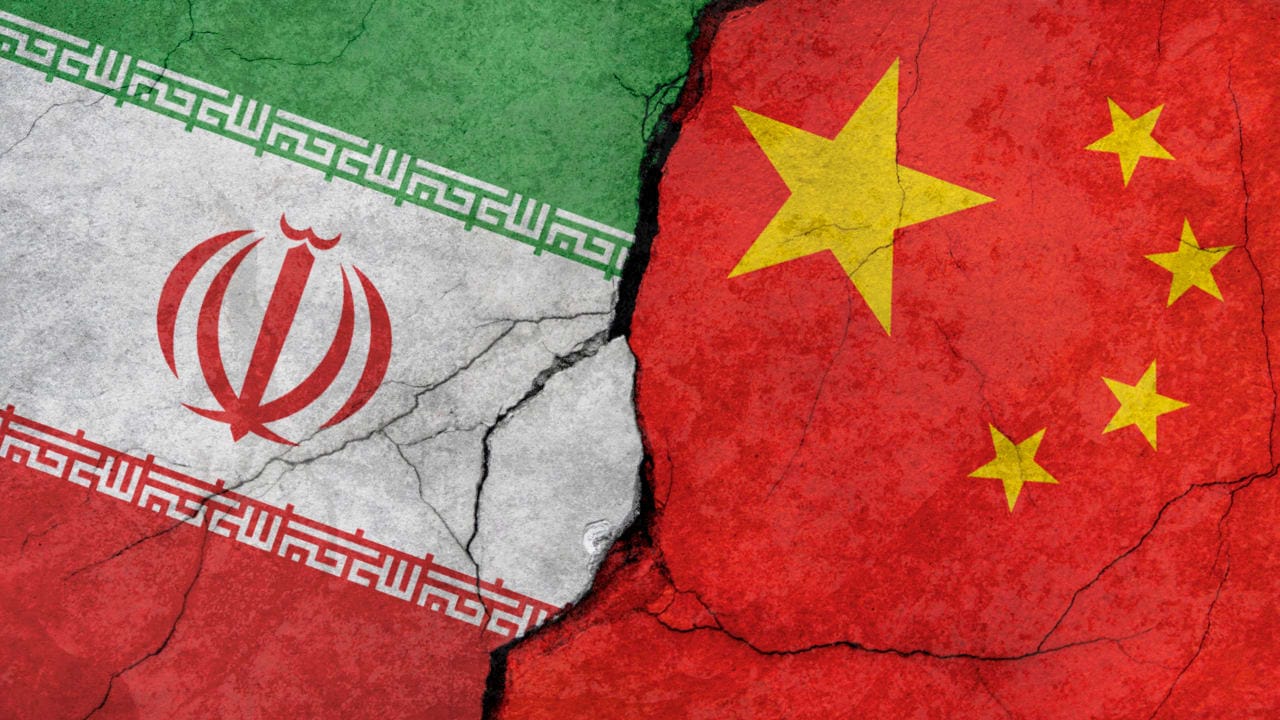
 An illustrative photo of the Iranian and Chinese flags.
An illustrative photo of the Iranian and Chinese flags.
(photo credit: SHUTTERSTOCK)

US intelligence indicates China is  preparing to deliver new air defense systems to Iran  within the next few weeks, CNN reported late on Friday, citing three  people familiar with recent intelligence assessments.

According to intelligence outlined in the CNN report, Beijing is preparing to transfer shoulder-fired anti-air missile systems known as MANPADs.

These systems pose an asymmetric threat to low-flying US military aircraft, as demonstrated during the five-week war, and they could continue to do so if the ceasefire breaks down.

Two sources informed CNN that there are signs Beijing is attempting to route shipments of the weaponry through third countries to conceal their true origin.

The report also highlighted how Iran might be using the ceasefire to replenish certain weapon systems with assistance from key foreign partners.

Tariffs as a war tactic

Earlier this week, US President Donald Trump announced that imports from countries supplying military weapons to Iran will face immediate 50% tariffs with no exemptions. This announcement came just hours after he agreed to a two-week ceasefire with Tehran.

In response to the CNN report, a spokesperson for the Chinese embassy in Washington said, “China has never provided weapons to any party to the conflict; the information in question is untrue.”

“As a responsible major country, China consistently fulfills its international obligations. We urge the US side to refrain from making baseless allegations, maliciously drawing connections, and engaging in sensationalism; we hope that relevant parties will do more to help de-escalate tensions.”

Beijing recently also announced that it played a role in brokering a fragile ceasefire agreement that halted the war between Iran and the United States earlier this week.

Additionally, President Donald Trump is scheduled to visit China early next month for discussions with Chinese President Xi Jinping. 


Shoshanah Baker, Reuters

Source: https://www.jpost.com/middle-east/iran-news/article-892622

Follow Middle East and Terrorism on Twitter

IDF: 1,400 Hezbollah terrorists killed, over 200 missile launchers destroyed - JNS Staff


​ by JNS Staff

Secretary-General Naim Qassem vows to improve his Lebanese Shi’ite group’s situation following the 2024 Jerusalem-Beirut agreement.


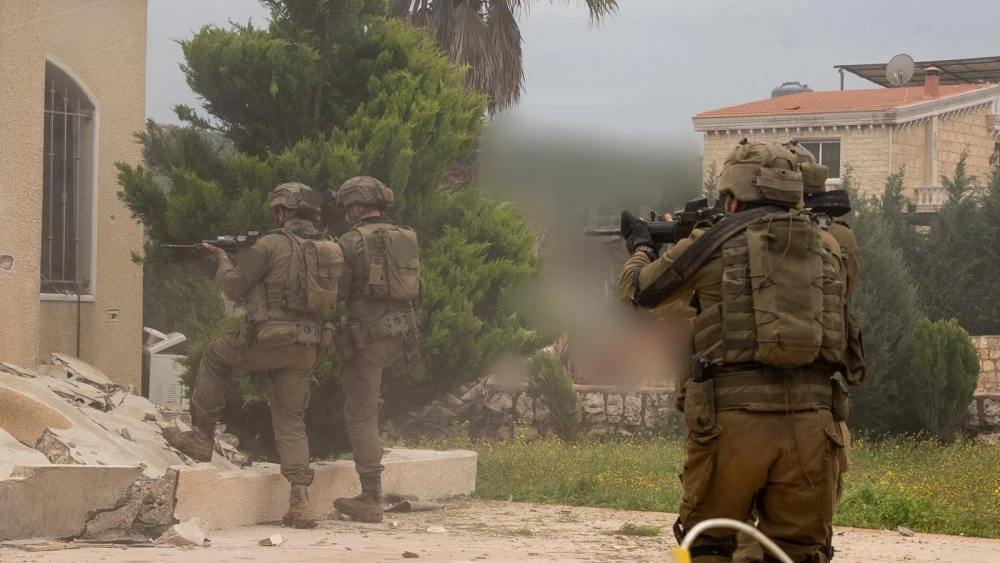
IDF soldiers operating in Southern Lebanon against the Iranian-backed proxy group Hezbollah, April 2026. Credit: IDF.

The Israel Defense Forces eliminated more than 1,400 Hezbollah terrorists and dismantled over 4,300 terrorist infrastructure sites in Lebanon since the start of “Operation Roaring Lion” on Feb. 28, as five divisions continue to operate in Southern Lebanon, the military said on Friday.

Troops of the 162nd and 36th Divisions have dismantled more than 2,700 terrorist infrastructure sites and located over 250 weapons, including long-range rockets, anti-tank missiles, RPG launchers, firearms and explosive devices, the IDF said.

In addition, soldiers of the 91st, 98th, and 146th Divisions have dismantled more than 1,500 terrorist infrastructure sites and located over 1,000 weapons, including firearms, RPGs, explosive devices and additional military equipment.

The ground forces are supported by the Israeli Air Force, guiding aircraft to hit targets as required, the army noted.

In a separate statement, the IDF said that it has also destroyed more than 200 missile launchers, including roughly 1,300 launch tubes, and struck hundreds of Hezbollah artillery operatives.

The military moreover mentioned the killing of the artillery officer in Hezbollah’s Nasser Unit, named as Ali Kamel Abar al-Hassan, adding that it had also killed 15 other commanders responsible for artillery systems “in various sectors.”

Earlier on Friday, the Iranian-backed proxy fired rockets at Israel from a school compound in the Tir Zibneh area, near Tyre in southwestern Lebanon, the IDF said.

In response, “and in accordance with international law, the IDF struck the premises in order to remove the threat to the State of Israel,” the army said.

It added that it views Hezbollah’s “cynical use” of civilian infrastructure “with severity,” and that it will continue to defend Israel “in accordance with international law.”

In another incident, troops of the 162nd Division, aka the Steel Formation, uncovered a rocket launcher “which was loaded and aimed toward the State of Israel,” after which they “immediately” struck and destroyed it, the army stated.

The troops also found a tunnel shaft, which led to the discovery of anti-tank missiles, firearms and ammunition magazines belonging to Hezbollah.

Hezbollah vows to deter Israel

Meanwhile on Friday, Hezbollah Secretary-General Naim Qassem declared that his terrorist organization “will not accept a return to the previous situation,” referring to Israel’s free-rein firing policy across Lebanon since the November 2024 Beirut-Jerusalem agreement to prevent the Shi’ite group from rebuilding its military capabilities, according to AFP.

“We call on officials to stop offering free concessions [to Israel],” he said in a written message broadcast on Hezbollah’s Al-Manar satellite television station.

Qassem condemned the IAF’s strikes in Lebanon on April 8 as “bloody criminality,” the report added.

The IDF on Friday night shed some light on these airstrikes, which Defense Minister Israel Katz said constituted the largest attack on Hezbollah since the pager operation of Sept. 17-18, 2024, when the Mossad detonated thousands of communication devices used by the terrorist group, severely wounding thousands of operatives.

In the recent large-scale attack, at least 180 Hezbollah terrorists were eliminated in three areas simultaneously, the IDF said.

These consisted of about 35 military infrastructure sites in Beirut, including an emergency command center of Hezbollah’s intelligence unit, a command center of the Radwan Force, and a command center of the missile unit; about 40 infrastructure sites in Southern Lebanon; and additional sites in the Bekaa Valley, according to the IDF.

The military said that senior figures were struck as well, and the operation constitutes “a significant and deep blow to the operational and command capabilities of the Hezbollah terror organization.”

Most of these sites were embedded in the civilian population, the army added.


JNS Staff

Source: https://www.jns.org/news/israel-news/idf-1-400-hezbollah-terrorists-killed-over-200-missile-launchers-destroyed

Follow Middle East and Terrorism on Twitter

‘Clinton Hoax, Obama Coup’ by Drew Thomas Allen: The Declassified Blueprint That Finally Exposes the Russian Memos and the Real Coup - Bill Martinez


​ by Bill Martinez

Allen’s account argues the Russia hoax was not a mistake but a calculated abuse of intelligence power—one that reshaped American politics and still demands accountability.


Drew Thomas Allen’s Clinton Hoax, Obama Coup: The Declassified Story of the Trump–Russia Delusion is the book that previous authors on the scandal could only dream of writing. Published in 2026, it arrives with the full weight of Tulsi Gabbard’s declassifications as Director of National Intelligence, the Durham report, the Horowitz IG findings, and—most crucially—the long-buried Russian intelligence memos that the FBI received as early as January 2016 but chose to sideline.

While earlier works like Gregg Jarrett’s The Russia Hoax, Andrew McCarthy’s Ball of Collusion, and Lee Smith’s The Plot Against the President laid important groundwork, they were constrained by classified material. Allen’s book removes those constraints and delivers the complete, unvarnished picture.

At its core, this is not just another recap of Crossfire Hurricane or the Steele dossier. It is the definitive account that centers the Russian memos—the intercepted intelligence reports that explicitly described Hillary Clinton’s plan to smear Donald Trump by tying him to Russia as a distraction from her email scandal and Clinton Foundation controversies. These memos, which FBI leadership, including Deputy Director Andrew McCabe, reviewed, were not fabrications or disinformation. They were raw, internal Russian intelligence communications never meant for American eyes. And they were devastatingly accurate.

Allen meticulously walks readers through the timeline. By March 2016—months before WikiLeaks released the DNC emails and well before the FBI officially opened Crossfire Hurricane on July 31—the Bureau had already received reports stating that “the Clinton staff, with help from special services, is preparing scandalous revelations of business relations between Trump and the ‘Russian mafia.’”

Another memo noted that Clinton had approved a proposal from her foreign policy advisor, Julianne Smith, to “smear Donald Trump by magnifying the scandal tied to the intrusion by the Russian special services.” The memos even referenced backchannel communications, suggesting Attorney General Loretta Lynch was keeping Clinton’s team informed about the email investigation. Rather than pursue these leads as evidence of corruption at the highest levels, the FBI buried them and pivoted to investigating Trump.

The contrast is staggering. When the memos implicated the Clinton campaign, senior officials dismissed them as “raw” and “likely not credible.” Yet the same FBI elevated Christopher Steele’s opposition-research dossier—funded by the Clinton campaign through Perkins Coie and Fusion GPS—into the foundation for FISA warrants on Carter Page.

Steele’s claims (the “pee tape,” Cohen in Prague, Page’s alleged Rosneft deal) were never corroborated and later collapsed, but they were treated as gospel while genuine intelligence about Clinton’s scheme was ignored. This selective blindness wasn’t incompetence. It was deliberate.

Allen demonstrates how the operation evolved from a defensive Clinton campaign tactic into a full Obama administration effort. After Trump’s victory, the hoax did not die—it escalated. On December 9, 2016, President Obama personally ordered the Intelligence Community Assessment (ICA).

Under CIA Director John Brennan’s direction, a hand-picked group produced a document claiming with “high confidence” that Putin interfered specifically to help Trump. This assessment became the bridge that kept the investigation alive.

When Trump fired James Comey in May 2017, Deputy Attorney General Rod Rosenstein cited the ICA when appointing Robert Mueller as special counsel. The Mueller probe, which consumed nearly two years of the Trump presidency, produced process-crime convictions but no evidence of campaign collusion with Russia.

The Russian memos make the ICA’s conclusions even more damning. While the assessment elevated one ambiguous fragment of human intelligence to assert that Putin “aspired” to help Trump, other Russian reporting circulating at the time painted a far more complex picture.

Some intercepts suggested Putin expected a Clinton victory and was preparing for it. Others noted Clinton’s health issues and internal Democratic concerns. Still others indicated Russia believed it could outmaneuver either candidate. The ICA selectively ignored this contradictory material, shaping the narrative to fit the predetermined story that Trump was compromised. Allen shows how this was not intelligence analysis—it was political engineering, ordered from the top.

The book’s strength lies in its clarity and moral force. Allen writes for the general reader, cutting through the acronyms and bureaucratic fog that made the scandal so difficult to follow in real time. He connects the Benghazi cover-up—where Obama’s White House ordered the CIA to revise talking points twelve times—to the Russia operation, showing a consistent pattern of narrative control. When reality threatened the preferred political story, the machinery of government was used to rewrite it.

What emerges is a portrait of an “Administrative Mafia”—the permanent bureaucracy that moves seamlessly between Democratic administrations, media outlets, and private influence operations. Figures like Victoria Nuland, Mike Morell, and Marc Elias (Clinton’s campaign lawyer who orchestrated the Fusion GPS contract) exemplify this network.

Elias, in particular, serves as the keystone. He was present for the critical decisions, invoked attorney-client privilege to shield answers in depositions, and remains one of the few central players who has faced no meaningful accountability.

Allen also traces the long-term damage. The hoax didn’t just target Trump—it eroded public trust in institutions. It taught a generation that elections could be undermined not by foreign powers, but by America’s own intelligence and law enforcement apparatus. The same tactics reappeared in 2020 with the “51 intelligence officials” letter dismissing Hunter Biden’s laptop as Russian disinformation, and in the lawfare campaign of 2021–2024. The precedent set in 2016 remains a live threat.

Clinton Hoax, Obama Coup is the book that future historians will cite when they want to understand how a republic’s institutions were corrupted from within. Previous works laid the foundation. This one completes the restoration, stripping away the final layers of varnish to reveal the raw underpainting. What it shows is ugly, but necessary.

If you care about truth, accountability, and the survival of self-government, this book is required reading. The Russian memos have been declassified. The cover-up has been exposed. Now it is time for the American people to see the full picture—and demand that those responsible finally face justice.


Bill Martinez is an award-winning marketing and broadcast journalist and host of the nationally syndicated radio show, Bill Martinez Live. Find out more at billmartinezlive.com.

Source: https://amgreatness.com/2026/04/10/clinton-hoax-obama-coup-by-drew-thomas-allen-the-declassified-blueprint-that-finally-exposes-the-russian-memos-and-the-real-coup/

Follow Middle East and Terrorism on Twitter

Rubio revokes green cards of foreign nationals linked to ‘Iranian regime propagandist’ - Nicholas Ballasy


​ by Nicholas Ballasy

"America can never become home for anti-American terrorists or their families - and under the Trump Administration, it never will," Rubio says


Secretary of State Marco Rubio revoked the green cards of foreign nationals linked to Iranian propagandist, according to an announcement from the State Department on Saturday.

"Masoumeh Ebtekar - also known as "Screaming Mary" - was the spokeswoman for the Islamic terrorists who stormed the U.S. Embassy in Tehran in 1979 and held 52 Americans hostage for 444 days - subjecting them to beatings, starvation, and mock executions," Rubio wrote on X.

"In 2014, the Obama Administration granted visas to her son and his family to enter the United States. In June 2016, the Obama Administration gave them lawful permanent resident status via the Diversity Immigrant Visa Program," he added. 

Rubio wrote that he "terminated their lawful permanent resident status." Seyed Eissa Hashemi, Maryam Tahmasebi, and their son are in the "custody of U.S. Immigration and Customs Enforcement pending their removal from our country," he added.

Rubio said that "her family should never have been allowed to benefit from the extraordinary privilege of living in our country."

"America can never become home for anti-American terrorists or their families - and under the Trump Administration, it never will," he said. 


Nicholas Ballasy

Source: https://justthenews.com/government/federal-agencies/rubio-revokes-green-cards-foreign-nationals-linked-iranian-regime

Follow Middle East and Terrorism on Twitter

Child Protection on Trial: The Maria Shahbaz Judgment - Nasir Saeed


​ by Nasir Saeed

At the heart of the judgment lies the concept of "consent." The Court treated Maria's statement as sufficient proof that she acted of her own free will. But this raises the question: can a 12-year-old meaningfully consent to religious conversion and marriage?


  • [T]his is not simply a controversial ruling; it is a test of whether the law can truly protect the most vulnerable, or whether it can be manipulated to legitimise their exploitation.

  • This sequence transforms what begins as an allegation of abduction into a legal narrative of voluntary marriage. The Shahbaz judgment reinforces this pattern rather than challenging it.

  • At the heart of the judgment lies the concept of "consent." The Court treated Maria's statement as sufficient proof that she acted of her own free will. But this raises the question: can a 12-year-old meaningfully consent to religious conversion and marriage?

  • In effect, the judgment creates a contradiction: the law punishes child marriage yet simultaneously allows its consequences to stand. This weakens the deterrent effect of the law...

  • A kidnapping case was turned into a custody case. So, a proceeding meant to test unlawful custody became, in effect, a proceeding that legitimised the very custody under challenge.

  • Article 227 [of Pakistan's Constitution] explicitly protects the personal laws of non-Muslim citizens. Applying religious reasoning in a way that affects a Christian minor raises serious concerns about whether this protection has been fully respected.

  • Pakistan is a signatory to key international human rights treaties, including the Convention on the Rights of the Child (CRC) and the Convention on the Elimination of All Forms of Discrimination Against Women (CEDAW). These are not symbolic commitments — they impose clear legal obligations.

  • The Court's decision appears to stand in direct tension with these obligations. By recognising a marriage involving a minor, it risks normalising a practice that international law requires states to abolish.

  • A legal system derives its legitimacy not only from its adherence to rules, but from its ability to deliver justice.

  • The Shahbaz case is more than a legal dispute. It is a test of whether the law can fulfil its most basic purpose: to protect those who cannot protect themselves.

  • If a 12-year-old girl can be removed from her family, presented before a court, and her statement treated as decisive proof of consent — without deeper scrutiny — then the legal system risks failing those it is meant to serve.

  • [T]his case is not just about one child. It is about the principle that no legal system should allow vulnerability to be mistaken for choice.

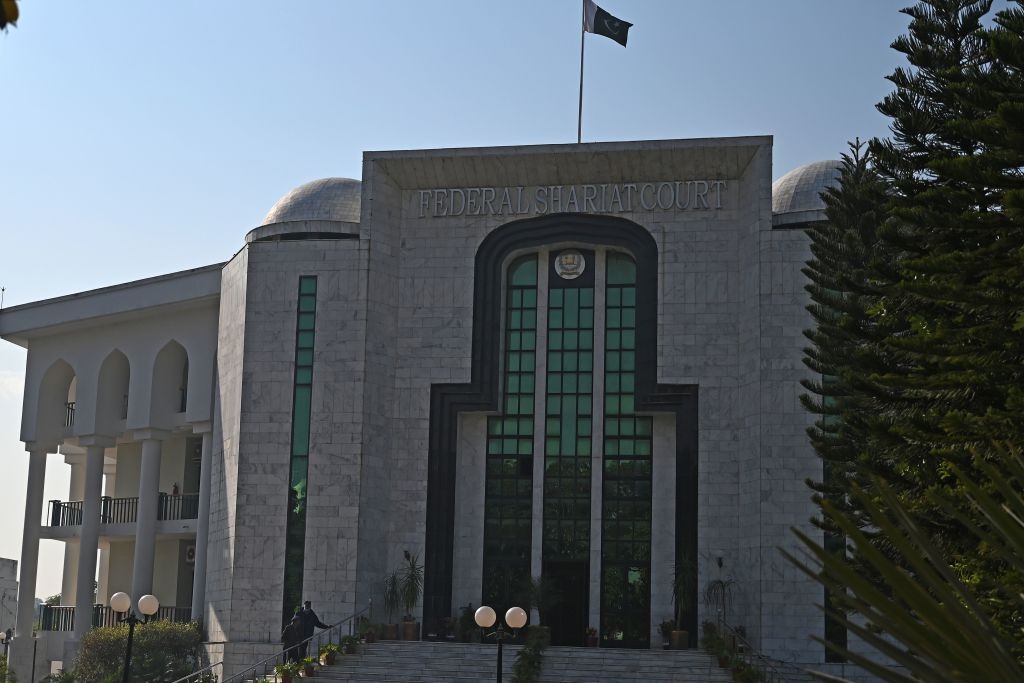
The recent judgment of Pakistan's Federal Constitutional Court in the case of 12-year-old Christian girl Maria Shahbaz has triggered protests and concern. Pictured: The seat of Pakistan's Constitutional Court, in Islamabad. (Photo by Aamir Qureshi/ AFP via Getty Images)

The recent judgment of Pakistan's Federal Constitutional Court in the case of 12-year-old Christian girl Maria Shahbaz has triggered protests, concern, and deep unease — not only within Pakistan but across the international human rights community. For many, this is not simply a controversial ruling; it is a test of whether the law can truly protect the most vulnerable, or whether it can be manipulated to legitimise their exploitation.

Maria disappeared from her home on July 29, 2025. Her family reported her abduction, and alleged that she had been kidnapped, forcibly converted to Islam, and married off to an adult man. Like many similar cases involving girls from non-Muslim minorities, events moved quickly. Within two days, Maria appeared before a magistrate, recorded a statement under Section 164 of the Criminal Procedure Code, and claimed that she was 18 years old, had converted willingly, and had married of her own free will.

That statement became the foundation upon which the entire case was built.

Her father sought her recovery through legal proceedings before the District Sessions Court and later the Lahore High Court. Both courts dismissed his petitions, relying heavily on her recorded statement. The Federal Constitutional Court has now upheld those decisions, validating the marriage and her continued custody with the man she allegedly married.

At first glance, the judgment may appear to rest on technical legal reasoning. But its implications are far-reaching — and deeply troubling.

The Shahbaz case is not an isolated incident. It reflects a broader pattern repeatedly reported in Pakistan, particularly involving girls from Christian and Hindu communities.

The pattern is disturbingly consistent: A minor disappears. A delayed or ineffective police response follows. Within days, a certificate emerges attesting that the girl converted to Islam. A marriage is claimed. A statement is recorded before a magistrate asserting consent. Courts then rely on that statement to validate the marriage and dismiss allegations of coercion.

This sequence transforms what begins as an allegation of abduction into a legal narrative of voluntary marriage. The Shahbaz judgment reinforces this pattern rather than challenging it.

When Consent Becomes a Legal Fiction

At the heart of the judgment lies the concept of "consent." The Court treated Maria's statement as sufficient proof that she acted of her own free will. But this raises the question: can a 12-year-old meaningfully consent to religious conversion and marriage?

International law — and basic principles of child protection — say no.

A child lacks the legal and psychological capacity to make such a life-altering decision, particularly in circumstances involving abduction and isolation from family. Consent, in such contexts, cannot be assumed simply because it is stated. It must be examined, tested, and understood within the broader reality of vulnerability.

By elevating a single statement above all other considerations, the Court risks turning "consent" into a legal fiction—one that obscures rather than reveals the truth.

Child Marriage Law and Its Misinterpretation

The Federal Constitutional Court held that even if Maria were a minor, the marriage would not be void under the Child Marriage Restraint Act, 1929. Instead, the law merely criminalises the act without invalidating the marriage itself.

This interpretation may reflect the technical wording of the statute, but it undermines its protective purpose. A law designed to prevent child marriage becomes ineffective if the marriage it seeks to prevent is still recognised as legally valid.

In effect, the judgment creates a contradiction: the law punishes child marriage yet simultaneously allows its consequences to stand. This weakens the deterrent effect of the law and sends a dangerous signal that legal recognition may still follow unlawful conduct.

Criminal Law and the Missing Dimension

Perhaps the most serious omission in the judgment is its limited engagement with criminal law. Under Section 365-B of the Pakistan Penal Code, kidnapping or abducting a woman to compel marriage is a criminal offence. This provision exists precisely to address situations where marriage is used as a cover for coercion.

This matters because the case did not begin as a family arrangement. It began as an allegation of abduction. Yet in Maria's case, the existence of a marriage claim — and a statement recorded shortly after her disappearance — became the mechanism through which the abduction complaint was effectively neutralised.

The police's First Information Report for the case itself invoked Section 365-B PPC, which criminalises kidnapping or abduction to compel marriage or illicit relations and is punishable with life imprisonment. However, the Court's habeas corpus analysis effectively bracketed these criminal realities behind the language of "marital custody."

Likewise, Pakistan's rape law has historically treated sexual intercourse with a girl under 16 as rape "with or without her consent" (PPC s.375, clause v), clearly establishing that consent is legally constrained by age. This statutory principle is difficult to reconcile with a judicial approach that treats a minor's asserted consent as decisive.

Even more strikingly, the lower court acknowledged that questions existed over the nikahnama (marriage certificate), including claims that it was unregistered or forged, and that such matters could not properly be determined in summary proceedings. That should have prompted judicial caution. Instead, the marriage claim was still allowed to do decisive work.

The judgment also reflects deeper procedural failures: the alleged cancellation of the case by police following the Section 164 statement, disputed documentary proof due to delayed registration, and unresolved concerns regarding the authenticity of the marriage certificate). These are precisely the conditions where Article 19 of the CRC requires active state intervention to investigate, protect, and prevent abuse — not judicial deference to contested claims.

A kidnapping case was turned into a custody case. So, a proceeding meant to test unlawful custody became, in effect, a proceeding that legitimised the very custody under challenge.

Constitutional Questions

The judgment also raises important constitutional questions, particularly under Article 227, which requires that laws be consistent with the injunctions of Islam.

Some may argue that the Court's reasoning reflects Islamic jurisprudence on marriage. However, Article 227 provides a structured constitutional framework for such matters, including the role of the Council of Islamic Ideology. If a law such as the Child Marriage Restraint Act is believed to be inconsistent with Islamic principles, the Constitution provides mechanisms for its review.

What the Court has done instead is effectively weaken the law through interpretation in an individual case, without engaging in that broader constitutional process.

Moreover, Article 227 explicitly protects the personal laws of non-Muslim citizens. Applying religious reasoning in a way that affects a Christian minor raises serious concerns about whether this protection has been fully respected.

International Obligations Ignored

Under general treaty law, a state may not invoke its internal law to justify failure to perform treaty obligations (Vienna Convention on the Law of Treaties, Article 27). This principle is critical here: Pakistan cannot defend non-compliance with its international obligations by arguing that its domestic law — such as the Child Marriage Restraint Act, 1929 — does not invalidate such marriages. International obligations remain binding regardless of domestic statutory limitations.

Pakistan is a signatory to key international human rights treaties, including the Convention on the Rights of the Child (CRC) and the Convention on the Elimination of All Forms of Discrimination Against Women (CEDAW). These are not symbolic commitments — they impose clear legal obligations.

Under the CRC:

  • Article 3 requires that the best interests of the child be a primary consideration. The judgment does not meaningfully engage with this principle.
  • Article 19 obligates the state to protect children from abuse and coercion. Allegations of abduction demanded careful scrutiny, not reliance on a single statement.
  • Article 34 requires protection from sexual exploitation, a category widely understood to include child marriage.

Under CEDAW:

  • Child marriage is recognised as a harmful practice and a form of gender-based violence.
  • States are required to take active steps to eliminate such practices — not validate them.

The Court's decision appears to stand in direct tension with these obligations. By recognising a marriage involving a minor, it risks normalising a practice that international law requires states to abolish.

Why This Judgment Matters

The Shahbaz ruling is not merely controversial; it is deeply concerning. It risks becoming a template for future impunity — one that alleged perpetrators may exploit through a familiar sequence of abduction, conversion, and coerced statements.

This is why Pakistan's Christian community, along with human rights advocates, has expressed serious concern and continues to challenge the judgment. Their response is not simply emotional; it is rooted in lived experience and repeated patterns that suggest systemic gaps in protection.

At a broader level, the case raises fundamental questions about the role of the judiciary. Should courts prioritise formal legal procedures, or should they actively safeguard vulnerable individuals — especially children — against exploitation?

The answer should not be difficult. A legal system derives its legitimacy not only from its adherence to rules, but from its ability to deliver justice.

For international readers, the Shahbaz case should not be reduced to a familiar headline about religion or culture. It is about legal method.

A court faced with a child-protection crisis chose form over substance, declaration over context, and marital status over vulnerability. It treated "consent" as a conclusion rather than a question. It interpreted a child-marriage law in the narrowest possible way. It allowed a criminal complaint of abduction to be overshadowed by a marriage claim. And it deployed constitutional-Islamic language without adequately respecting the constitutional protection of non-Muslim personal law or the Constitution's own structured mechanisms.

For Pakistan, this is a moment of reflection.

The law already contains the tools needed to address such cases: criminal provisions against abduction, statutory protections against child marriage, constitutional guarantees of dignity and equality, and international commitments to child protection.

What is needed is not new law, but better interpretation—one that places the child at the centre of the legal inquiry, rather than at its margins.

Courts must look beyond formal declarations of consent and examine the reality in which those declarations are made. They must treat allegations of coercion with seriousness, not scepticism. And they must ensure that legal processes are not used to legitimise harm.

The Shahbaz case is more than a legal dispute. It is a test of whether the law can fulfil its most basic purpose: to protect those who cannot protect themselves.

If a 12-year-old girl can be removed from her family, presented before a court, and her statement treated as decisive proof of consent — without deeper scrutiny — then the legal system risks failing those it is meant to serve.

The judgment deserves careful, sustained legal scrutiny — not only within Pakistan, but globally. Because at its core, this case is not just about one child. It is about the principle that no legal system should allow vulnerability to be mistaken for choice.


Nasir Saeed is a freelance writer and Director at the Centre for Legal Aid Assistance and Settlement (CLAAS-UK).

Source: https://www.gatestoneinstitute.org/22436/pakistan-child-protection

Follow Middle East and Terrorism on Twitter

Iran’s Mojtaba Khamenei suffers severe, disfiguring wounds, insiders report - Reuters


​ by Reuters

Sources reveal that Iran’s new supreme leader, Mojtaba Khamenei, is recovering from severe, disfiguring injuries following an airstrike that killed his father at the start of the war.


Iran’s new supreme leader, Mojtaba Khamenei, the second son of late Iran's Supreme Leader Ayatollah Ali Khamenei, attends a meeting in Tehran, Iran, March 2, 2016.
(photo credit: Rouhollah Vahdati/ISNA/WANA (West Asia News Agency) via REUTERS )

Iran's new Supreme Leader Mojtaba Khamenei is still recovering from severe facial and leg injuries suffered in the airstrike that killed his father at the beginning of the war, three people close to his inner circle told Reuters.

Khamenei's face was disfigured in the attack on the supreme leader's compound in central Tehran and he suffered a significant injury to one or both legs, all three sources said.

The 56-year-old is nonetheless recovering from his wounds and remains mentally sharp, according to the people, who requested anonymity to discuss sensitive matters. He is taking part in meetings with senior officials via audio conferencing and is engaged in decision-making on major issues including the war and negotiations with Washington, two of them said.

The question of whether Khamenei's health allows him to run state affairs comes during Iran's moment of gravest peril for decades, with high-stakes peace talks with the United States opening in the Pakistani capital Islamabad on Saturday.

The accounts of the people close to Khamenei's inner circle provide the most detailed description of the leader's condition for weeks. Reuters couldn't independently verify their descriptions.

Khamenei's whereabouts, condition and ability to rule still largely remain a mystery to the public, with no photo, video or audio recording of him published since the air attack and his subsequent appointment as his father's replacement on March 8.

Iran's United Nations mission did not respond to Reuters questions about the extent of Khamenei's injuries or the reason he has not yet appeared in any images or recordings.

Khamenei was wounded on February 28, the first day of the war launched by the US and Israel, in the attack that killed his father and predecessor Ayatollah Ali Khamenei, who had ruled since 1989. Mojtaba Khamenei's wife, brother-in-law and sister-in-law were among other members of his family killed in the strike.

There has been no official Iranian statement on the extent of Khamenei's injuries. However, a newsreader on state television described him as a "janbaz," a term used for those badly wounded in war, after he was named supreme leader.

The accounts of Khamenei's injuries tally with a statement made by US Secretary of Defense Pete Hegseth on March 13 when he said that Khamenei was "wounded and likely disfigured."

A source familiar with US intelligence assessments told Reuters that Khamenei was believed to have lost a leg.

The CIA declined to comment on Khamenei's condition. The Israeli prime minister's office didn't respond to questions.

Alex Vatanka, senior fellow at the Middle East Institute, said that, regardless of the severity of his injuries, it was unlikely the new and inexperienced leader would be able to command the overarching power wielded by his father. While he is seen to represent continuity, it could take years for him to build up the same level of automatic authority, Vatanka added.

"Mojtaba will be one voice but it will not be the decisive one," he said. "He needs to prove himself as the credible, powerful, overriding voice. The regime as a whole has to make a decision in terms of where they are going to go."

One of the people close to Khamenei's circle said images of the supreme leader could be expected to be released within one or two months and that he might even appear in public then, although all three sources stressed he would only emerge when his health and the security situation allowed.

World view?

In Iran's theocratic system of rule, ultimate power is meant to be wielded by the supreme leader, a venerable Shi'ite Muslim cleric appointed by an assembly of 88 ayatollahs. The leader oversees the elected president while directly commanding parallel institutions including the Revolutionary Guards, a powerful political and military force.

Iran's first supreme leader, Ayatollah Ruhollah Khomeini, enjoyed unquestioned authority as the charismatic leader of the revolution and the most learned cleric of his day.

His successor, Ali Khamenei, was a less revered cleric but had served as Iran's president. He spent decades cementing his authority after his appointment in 1989, partly through promoting the power of the Revolutionary Guards.

His son Mojtaba does not command absolute power in the same way, senior Iranian sources have previously told Reuters. The Revolutionary Guards, who helped steer him into the top job after his father's assassination, have emerged as the dominant voice on strategic decisions during the war. Iran's U.N. mission didn't respond to questions about the power wielded by the Guards and the new supreme leader.

As an influential figure in his father's office, Khamenei had previously spent years involved in exercising power at the top levels of the Islamic Republic, officials and insiders have said, building ties with senior Guards figures.

While he is widely seen as likely to continue his father's hardline approach due to his links to the Guards, we don't know much about his world view, said Vatanka at the Middle East Institute.

Khamenei's first communication with Iranians as supreme leader came on March 12, saying in a written statement read out by a television news presenter that the Strait of Hormuz should stay closed and warning regional countries to shut US bases.

His office has since issued a few other brief written statements from him, including on March 20 when he welcomed in the Persian new year, which he named the "year of resistance." Public statements of policy on Iran's war stance, its approach towards diplomacy, neighbors, ceasefire negotiations and domestic unrest, have been made by other senior officials.

Where is Mojtaba?

Khamenei's absence is widely discussed on Iranian social media and in messaging app groups, when the country's patchy internet allows, with conspiracy theories widespread about his condition and who is running the country.

One popular meme circulating online is a picture of an empty chair under a spotlight with the slogan "Where is Mojtaba?"

However, some government supporters, including a senior member of the Basij militia, a volunteer paramilitary group run by the Revolutionary Guards, said that it was important for Khamenei to keep a low profile, given the threat posed by waves of US and Israeli airstrikes that have already wiped out much of the country's leadership.

A lower-ranking Basij member agreed.

"Why should he appear in public? To become a target for these criminals?" Mohammad Hosseini, from the city of Qom, said in a text message.


Reuters

Source: https://www.jpost.com/middle-east/iran-news/article-892624

Follow Middle East and Terrorism on Twitter

Democratic Party shelves three resolutions targeting Israel, AIPAC - JNS


​ by JNS

The party passed a separate resolution condemning all dark money in Democratic primaries rather than singling out AIPAC.


DNC Democratic National Committee
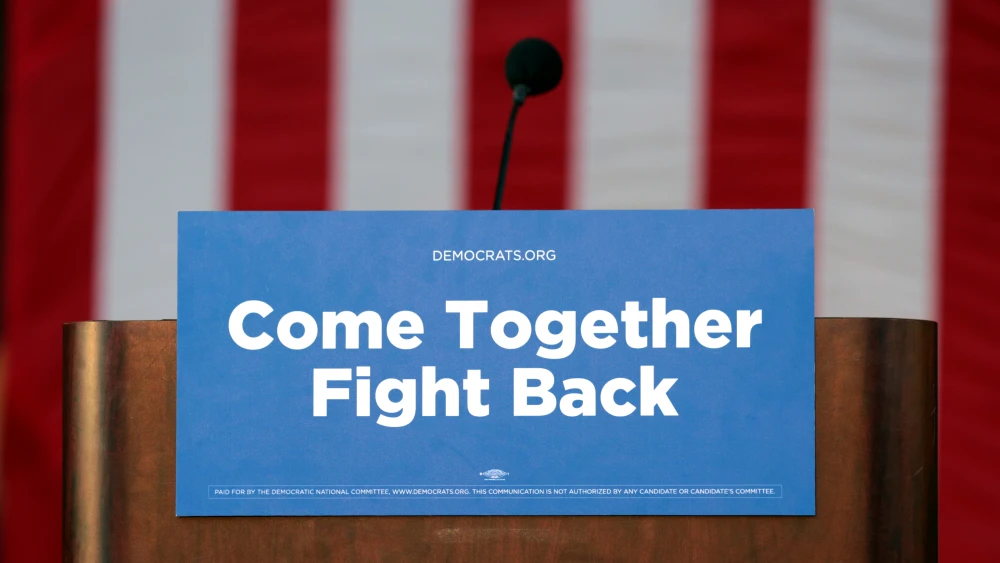
A podium at a “Come Together and Fight Back” rally hosted by the Democratic National Committee at the Mesa Amphitheater in Mesa, Ariz., April 21, 2017. Credit: Gage Skidmore via Creative Commons.

The Democratic National Committee shelved three resolutions taking aim at Israel and the American Israel Public Affairs Committee at its spring meeting in New Orleans.

Two would have placed limits on aid to Israel and the third would have singled AIPAC out while ignoring other big donors to congressional campaigns.

The two Israel resolutions were sent to the new Middle East working group for consideration.

The resolutions were discussed just days after a new Pew Research Center poll suggested that 80% of Democrats and Democratic-leaning independents had an unfavorable view of Israel and 76% said that they had little or no confidence in Prime Minister Benjamin Netanyahu doing the right thing.

Halie Soifer, chief executive officer of the Jewish Democratic Council of America, called the Israel resolutions “out of step with the policies of the Democratic Party, as codified in the 2024 Democratic Party policy platform.”

Brian Romick, president of Democratic Majority for Israel, stated that the resolutions “would be a gift to Republicans, would further fracture our party and do nothing to bring Israelis and Palestinians closer to peace.”

“The DNC and party advocates need to keep focus where it belongs, on building a united Democratic Party that can win back Congress this November,” he said.

“Democrats need to be united and focused on winning back the House and Senate, not relitigating intraparty battles that shrink our coalition and hand ammunition to our opponents,” he added.

The party passed a separate resolution condemning all dark money in Democratic primaries rather than singling out AIPAC.

“We had various resolutions that focused on different industries and groups, and instead of going one-by-one, we passed a blanket repudiation,” Ken Martin, the party chair, stated. “I have made my position on this clear from day one. We must end the influence of dark money in our politics and restore power back to the people.”

AIPAC faced criticism for spending $2.3 million against former congressman Tom Malinowski, of New Jersey, who was trying to return to Congress.

Malinowski had compiled a pro-Israel voting record during his earlier time on Capitol Hill. He has also said that the Israeli military has “killed thousands of children” and suggested that the Jewish state was responsible for famine in Gaza.

The barrage of negative AIPAC ads paved the way, critics say, for Democrats to nominate progressive activist Analilia Mejia, who has accused Israel of genocide in Gaza. 


JNS

Source: https://www.jns.org/news/u-s-news/democratic-party-shelves-three-resolutions-targeting-israel-aipac

Follow Middle East and Terrorism on Twitter

Congressman Chip Roy Introduces Bill to Designate CAIR as Terrorist Entity - Gregg Roman


​ by Gregg Roman

Legislation Backed by Decades of MEF Research Would Strip Hamas-Aligned Group of Tax-Exempt Status, Block Assets, and Force Dissolution


If passed, the legislation would effectively force CAIR to cease operations and dissolve for being one of Hamas’s most prolific advocates in the Western world.

WASHINGTON, D.C. — April 9, 2026 — Congressman Chip Roy (R-TX) has introduced a bill (click here) backed by the Middle East Forum (MEF) to designate the Hamas-aligned Council on American-Islamic Relations (CAIR) as a Specially Designated Global Terrorist entity. Roy’s legislation represents the most serious congressional effort to designate CAIR to date and follows decades of MEF research and activism aimed at exposing CAIR’s extremism and links to foreign terrorist organizations.

The bill’s findings meticulously chronicle CAIR’s history of extremism, delivering a comprehensive and legally grounded account of the nonprofit’s links to global terrorism.

“The Designating Hamas Affiliates in America Act of 2026” directs the Secretary of the Treasury to designate CAIR as a terrorist entity, blocking its assets, revoking its tax-exempt status, and banning U.S. persons from engaging in any transactions with it. If passed, the legislation would effectively force CAIR to cease operations and dissolve for being one of Hamas’s most prolific advocates in the Western world.

The bill’s findings meticulously chronicle CAIR’s history of extremism, delivering a comprehensive and legally grounded account of the nonprofit’s links to global terrorism. It documents CAIR’s establishment as a public relations front for Hamas and its status as an unindicted co-conspirator in the Holy Land Foundation trial (2007–2008), in which founding board member of CAIR’s Texas chapter, Ghassan Elashi, was sentenced to 65 years in prison for funneling over $12 million to Hamas.

Roy’s legislation also documents U.S. government actions to isolate and suspend law enforcement contact with CAIR. In 2023, the Biden administration publicly disavowed the organization after CAIR founder and executive director Nihad Awad declared that he was “happy to see” Palestinians “breaking the siege” on October 7 in Israel and referred to Gaza as a “concentration camp.”

Recent moves to designate CAIR, including a congressional bill and state-level executive orders in Texas and Florida, were legally imprecise and have faced legal challenges. They sought to designate CAIR as a Foreign Terrorist Organization, a status that applies to overseas groups involved in acts of violence. Roy’s bill, which applies civil penalties to organizations that support terrorism, aligns most closely with federal statute and legal precedent and has the best chance of surviving judicial review.

As the co-chair of the Sharia-Free America Caucus in the House of Representatives, Roy is spearheading congressional efforts to protect Western civilization from Islamist threats. The 60-member caucus has launched committee hearings and dedicated time on the House floor to name the threat of radical Islam and adopt legislative solutions.

“With the introduction of this bill, we finally have a realistic pathway to designating CAIR as a terrorist group,” said Benjamin Baird, director of MEF Action. “This legislation builds directly on years of documented evidence and shifts from symbolic gestures to enforceable action that can finally dismantle CAIR’s operations in America.”

Founded in 1994—the same year as CAIR—MEF has systematically exposed CAIR’s origins as a Hamas front, spoiling its relationship with government officials and corporate partners.

Founded in 1994—the same year as CAIR—MEF has systematically exposed CAIR’s origins as a Hamas front, spoiling its relationship with government officials and corporate partners. MEF’s investigations and grassroots activism have resulted in canceled conferences, rescinded government recognition, and revoked public appointments for the Hamas-aligned Islamist group.

“After three decades of exposing CAIR’s deep ties to Hamas and its campaign of deception, this bill marks the decisive moment we’ve been fighting for,” said Gregg Roman, executive director of the Middle East Forum. “Congress now has the tools to strip away CAIR’s legitimacy, revoke its taxpayer-funded privileges, and finally dismantle one of the most effective Islamist influence operations in America.”

MEF continues to work with the White House, Congress, and state governments to identify terror-aligned groups and recommend policy solutions to shut down their operations.


About the Middle East Forum
The Middle East Forum, a nonprofit research center, promotes American interests in the Middle East and protects Western civilization from Islamism. It does so through its publications, research, policy initiatives, and public education programs. Subscribe to the MEF mailing list here.

For more information, visit www.meforum.org


Gregg Roman

Source: https://www.meforum.org/press-releases/congressman-chip-roy-introduces-bill-to-designate-cair-as-terrorist-entity

Follow Middle East and Terrorism on Twitter

U.S.-Iran ceasefire talks underway in Pakistan - Nicholas Ballasy


​ by Nicholas Ballasy

The Iranian delegation, led by Parliament Speaker Mohammad Bagher Qalibaf, has also arrived in Islamabad.


The U.S. delegation, including Vice President JD Vance, President Donald Trump’s special envoy Steve Witkoff and his son-in-law Jared Kushner have arrived in Pakistan for peace talks with Iran. 

The direct talks are now underway.

The Iranian delegation, led by Parliament Speaker Mohammad Bagher Qalibaf, has also arrived in Islamabad.

Before departing for Pakistan, Vance cautioned Tehran against attempting to play the United States. Hours later, Qalibaf said talks would only move forward if Israel agrees to a ceasefire in Lebanon and blocked Iranian assets are released.

Vance is set to lead the U.S. side in the high-level discussions, as Iran signals what appear to be new preconditions ahead of the talks. 


Nicholas Ballasy

Source: https://justthenews.com/world/middle-east/vance-and-us-delegation-arrive-pakistan-ceasefire-talks-iran

Follow Middle East and Terrorism on Twitter

Calls grow for Swalwell to drop out of gubernatorial race after sexual assault allegations - Dave Mason


​ by Dave Mason

A former member of Swalwell's staff told the San Francisco Chronicle that the congressman sexually assaulted her.


(The Center Square) -

Calls are growing for Democrat U.S. Rep. Eric Swalwell to quit the California gubernatorial race following allegations of sex abuse.

A former member of Swalwell's staff told the San Francisco Chronicle that the congressman sexually assaulted her.

CNN reported Friday on that member and three more women who accused Swalwell of making sexual advances and sending explicit photos.

Swalwell, who is among the top three most popular Democrats running for governor according to a recent University of California, Berkeley poll, called the allegations false in a statement.

“For nearly 20 years, I have served the public — as a prosecutor and a congressman and have always protected women," Swalwell said. "I will defend myself with the facts and where necessary bring legal action. My focus in the coming days is to be with my wife and children and defend our decades of service against these lies."

According to media reports, multiple members of Swalwell's staff resigned after Friday's news of the allegations.

Tom Steyer, the billionaire who is among the leading Democratic gubernatorial candidates, commended the former staffer for coming forward in a statement on X. “Speaking out is never easy, and her account must be taken seriously."

Riverside County Sheriff Chad Bianco, one of the two leading Republicans running for governor, called on Swalwell to resign not only from the race but Congress. 


Dave Mason

Source: https://justthenews.com/nation/states/center-square/calls-grow-swalwell-drop-out-gubernatorial-race-after-sexual-assault

Follow Middle East and Terrorism on Twitter

Thursday, April 9, 2026

By All Means, Let the War Crimes Trials Begin! - Victor Davis Hanson


​ by Victor Davis Hanson

Trump’s critics cry “war crimes” while ignoring decades of U.S. precedent—revealing less a legal argument than a reflexive, and deeply selective, political outrage.


The Left and some on the Right went crazy over a recent Trump tweet.

He warned that if the Iranian regime did not cease blocking the international Strait of Hormuz, he would hit its dual military-civilian infrastructure. He promised that “a whole civilization will die tonight, never to be brought back again.”

His wording may have been sloppy, but Trump obviously meant that the murderous civilization/culture of radical Iranian theocratic Islam would cease to exist and wouldn’t come back once power plants and transportation systems crucial to the regime’s survival were cut off.

Why do we know that?

Because, unlike in most prior American wars, Trump has never targeted dual-use infrastructure—not in bombing ISIS, not in removing the Venezuelan thug Nicolás Maduro, not in the 2025 bombing of Iran’s nuclear facilities, and not in the present war—with the exception of a key bridge central to the regime’s efforts to reposition missile assets to avoid air strikes.

Ever since Trump announced that “help is on the way” to the Iranian people, the entire aim of the five-week war has been to selectively target the regime’s command and control and military assets.

The goal was to diminish its threats abroad, while weakening and humiliating the mullahcracy at home—so that soon the Iranian people might at last be able to overthrow the odious theocracy.

Trump’s critics knew all that.

But they see political advantage in tagging Trump as a Strangelovian madman, no different from the Nazi criminals in the docket at Nuremberg.

A few less unhinged people argue that his rhetoric nevertheless comes across as unpresidential.

Perhaps.

But it may be no accident that his Gen. Curtis LeMay-like bluster might have pressured the Iranians to reopen negotiations.

On Monday, the Democrat Borg was declaring Trump a savage maniac.

By Tuesday, it was blasting him as a TACO (“Trump Always Chickens Out”) for not carrying out what the day before they had dubbed a war crime.

The common denominator was an overarching, deranged hatred of the president, as his critics can never decide whether he is Adolf Hitler or Neville Chamberlain.

But since the Left has called for investigations of war crimes, by all means let them begin.

Obviously, Trump’s critics conveniently no longer buy the argument of “dual-use.” It posits that the juice powering an evil enemy is its roads, bridges, fuel, and electricity. To disable them supposedly shortens the war and the killing.

In World War II, we leveled a dozen Japanese cities because the Tokyo junta had outsourced the assembly of weapons to urban neighborhood workshops.

We joined the British in leveling Dresden by targeting German transportation.

Perhaps the Left will now remove the iconic names of Democratic Presidents Roosevelt and Truman from our buildings and monuments?

Truman should be a twofer boogeyman.

He ordered every bridge and hydroelectric plant in North Korea to be incinerated during the Korean War.

How about the Lyndon Johnson/Richard Nixon bombing of North Vietnam? Their war machine annihilated most of its civilian infrastructure in efforts to force the communists to negotiate.

The 42-day bombing campaign in the First Gulf War targeted power stations, roads, bridges, and dual-use government buildings.

Should we go back and Trotskyize its strategic architects—George H. W. Bush and Gen. Colin Powell?

Sen. Mark Kelly is one of Trump’s fiercest critics in pressing the war crimes charge. Perhaps he, too, should be post facto investigated by the International Criminal Court, given the fact that, in 1991, he was a pilot in an air force that frequently hit bridges and other dual-use targets?

How about the “noble” NATO effort in Serbia?

According to the logic of current critics, there must be lots of war criminals still to be found who were involved in that merciless 1999 bombing of Belgrade.

Bill Clinton’s gambit wrecked all the bridges on the Danube and often left more than a million civilians without power.

Will we indict Barack Obama for ordering more than 500 targeted predator assassination hits on the Pakistan-Afghanistan border without Congressional authorization, strikes that ended up killing four American citizens?

Perhaps we can reinvestigate Samantha Power, Hillary Clinton, and Susan Rice, the architects of the 2011 “unlawful” and Congressionally “unauthorized” seven-month bombing of a mostly inert Libya.

And why not reexamine Obama? He snubbed the 60–90 War Powers Act window, which required him to obtain congressional authority to continue that mindless devastation.

The Libyan wreckage included civilian ships, port facilities, TV buildings, telecommunications, and government offices—and left the country an utter mess that continues 15 years later.

The left-wing and paleo Right fury has far exceeded any legitimate critique of strategy and tactics.

It has now become not just incoherent but crazed, since it appears that many despise Trump more than they do the murderous Iranian regime.

And now they add the weight of rank hypocrisy to their serial untruths.


Victor Davis Hanson

Source: https://amgreatness.com/2026/04/09/by-all-means-let-the-war-crimes-trials-begin/

Follow Middle East and Terrorism on Twitter