The "Middle East and Terrorism" Blog was created in order to supply information about the implication of Arab countries and Iran in terrorism all over the world. Most of the articles in the blog are the result of objective scientific research or articles written by senior journalists.
From the Ethics of the Fathers: "He [Rabbi Tarfon] used to say, it is not incumbent upon you to complete the task, but you are not exempt from undertaking it."
Arab tribes in Khuzestan province who oppose the Iranian government could impact the rescue effort
A counterterrorism expert warned that a large Iranian Revolutionary Guard Corps
(IRGC) presence in the region of the F-15E fighter jet crash could
complicate search and rescue efforts for the missing U.S. crew member.
Jim Hanson, a chief strategist at the Middle East Forum who served in the U.S. Army Special Forces, joined "Fox & Friends Weekend" to explain what the mission may look like.
Khuzestan
Province, where the fighter jet crashed, is home to Arab tribes who
oppose the central Iranian government. While that could help the
stranded airman, it also means the IRGC is present to suppress
opposition.
"The
IRGC and Basij have a larger-than-normal presence there to go ahead and
tamp [local tribes] down when they do protest," Hanson said.
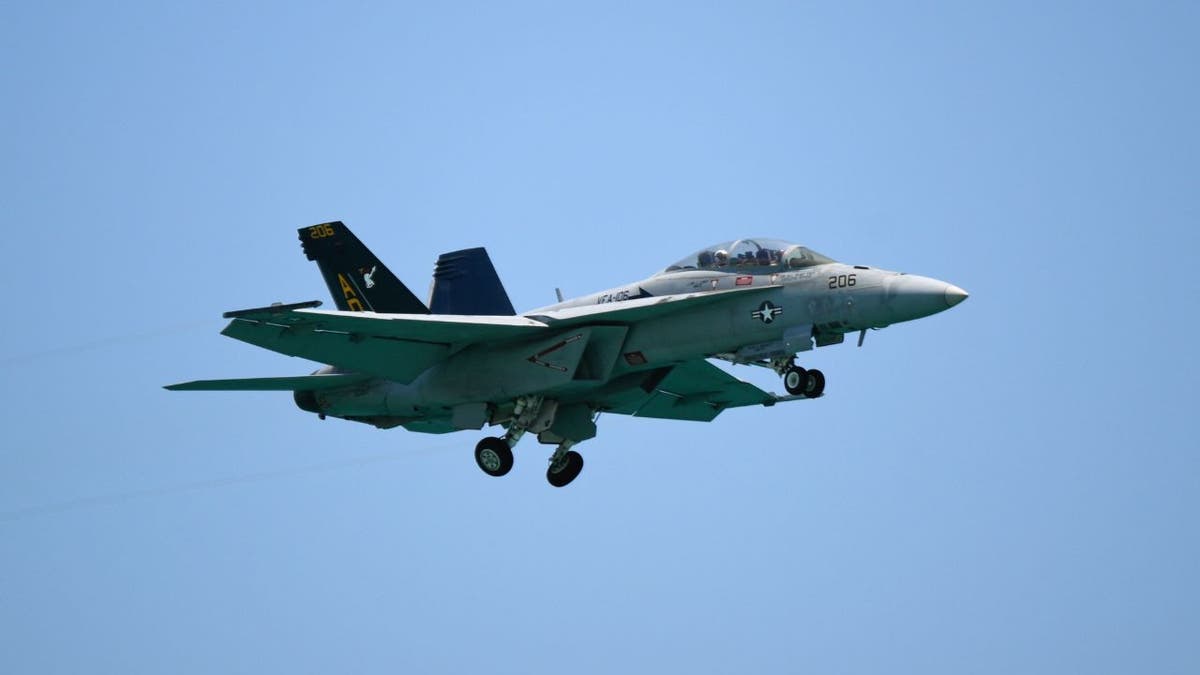
A U.S. Air Force fighter jet performs during a demonstration flight in Miami, Florida, on May 26.(Jesus Olarte/Anadolu)
"The
regime also has as many of their people in play as possible, and we
need to hope that the people who dislike the regime are helping, not
hurting," he added.
Hanson said he believes the downed airman will
likely try to get out of the flatlands and find cover in terrain that
is more difficult for the IRGC to access. He noted that while the
strategy makes it more difficult for the U.S. to locate the missing crew
member, it provides safety benefits.
"You don't want a bunch of Basij or other regime troops riding around in pickup trucks, able to easily get to him," Hanson said.
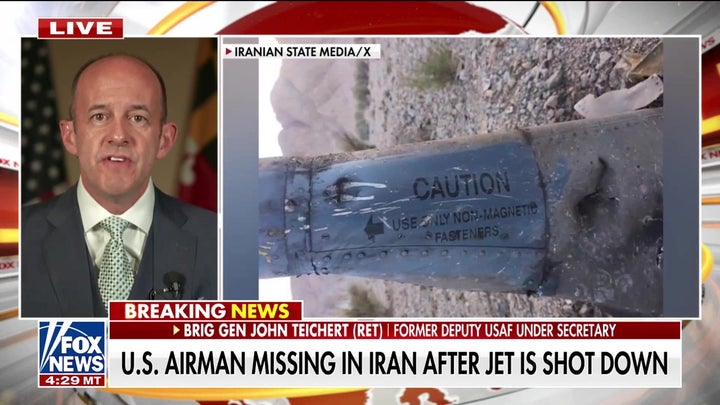
A U.S. F-15E fighter jet reportedly went down over the Khuzestan province in Iran on April 3, 2026.(Fox News)
He described the mission as a "balancing act," saying that military officials
are weighing how many additional troops to deploy to the area to find
the downed airman without those forces becoming targets themselves.
Retired Air Force Brigadier General John Teichert, a former F-15E combat pilot, said that while the environment is dangerous, the silence from the ground may be a good sign.
"While
there is a little bit of concern about the duration of time since they
got shot down, I actually think it's net favorable because they're
falling back on their training," Teichert said.
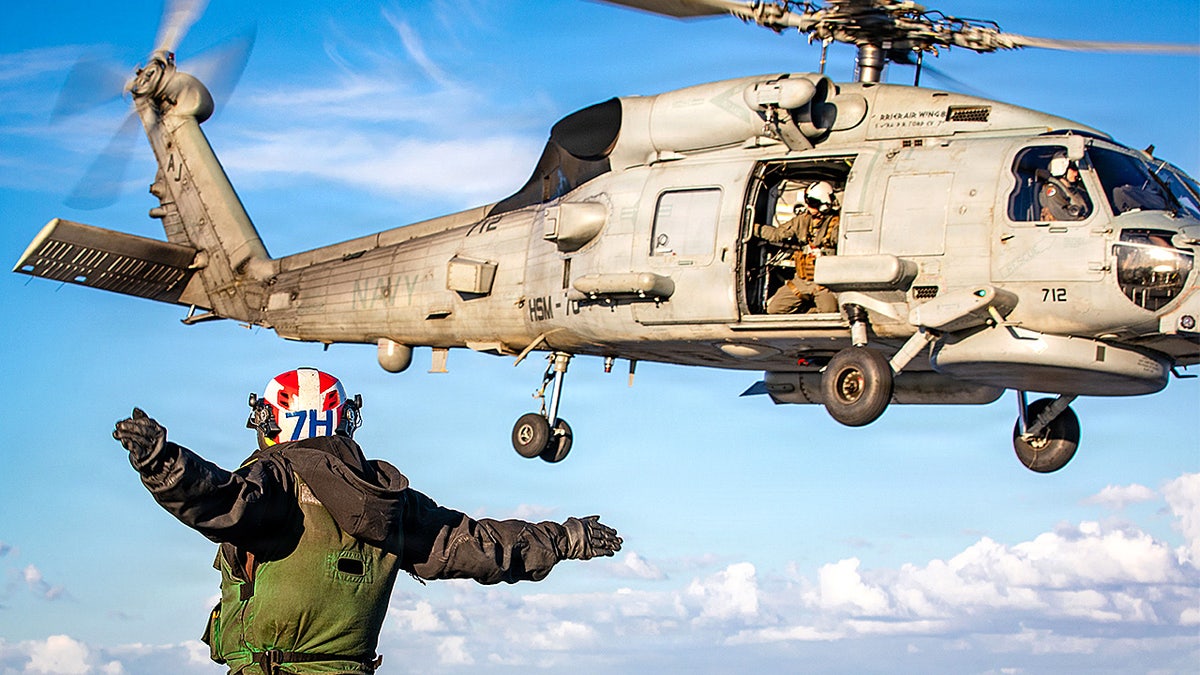
A
U.S. sailor signals the launch of an MH-60R Sea Hawk helicopter aboard
the aircraft carrier USS Gerald R. Ford while supporting Operation Epic
Fury at sea on Feb. 28, 2026.(U.S. Navy/Getty Images)
"They've
found a good place that clearly has indicated they haven't been
captured by the adversary. And now the forces are just trying to find
the right time and the right way based on the terrain and disposition of
enemy forces to rescue our downed crew member," he added.
Two airmen were involved in the F-15E crash, one of whom was rescued Friday. The IRGC and Iranian state media have claimed responsibility for downing the jet.
"Remember when I gave Iran ten days to MAKE A DEAL or OPEN UP THE HORMUZ STRAIT. Time is running out - 48 hours before all Hell will reign down on them. Glory be to GOD!" Trump wrote.
President Trump on Saturday gave Iran a 48-hour deadline to open the Strait of Hormuz.
"Remember when I gave Iran ten days to MAKE A DEAL or OPEN UP THE
HORMUZ STRAIT. Time is running out - 48 hours before all Hell will reign
down on them. Glory be to GOD!" Trump wrote.
Trump’s Iran strategy aims for swift, decisive victory—crushing nuclear ambitions and ending the war in weeks, not years, without risking American boots on the ground.
Somehow, I received an invitation to the White
House to watch President Trump’s prime-time address to the nation on
Wednesday evening, where he laid out his endgame strategy for the Iran
War. In addition to observing the strong camaraderie between Trump’s
cabinet members, I saw the president in great form, confidently
articulating the war’s goals and achievements and how he is keeping his
promise to the American people to end this conflict in a few weeks so it
does not become a quagmire or an endless war.
The president spoke about the overwhelming strength of the American
military and how the war is a decisive and historic U.S. victory. Just
one month after launching Operation Epic Fury, Trump explained how the
U.S. and Israel shattered Iran’s nuclear weapons program, crippled its
war machine, and stripped the mullahs of their ability to bully the
Middle East and the world.
President Trump spoke about how Operation Epic Fury devastated Iran’s
nuclear infrastructure, ballistic missile programs, air defenses, navy,
and command structure. Key nuclear facilities have been reduced to
rubble. The Islamic Revolutionary Guard Corps’ terror networks and proxy
armies have been decimated. So has Iran’s ability to project power
across the Middle East or threaten our allies with drones and missiles.
As Trump explained, Iran is no longer a global bully capable of
developing nuclear weapons. The regime that spent decades chanting
“Death to America” while funding Hamas, Hezbollah, and attacks on U.S.
troops has been neutered.
Trump said America’s war objectives—destroying the missile arsenal,
annihilating the navy, severing proxy support, and guaranteeing Iran
never goes nuclear—are nearly complete. Only two to three weeks of
focused, high-intensity air strikes are needed to finish the job.
President Trump emphasized how much our military accomplished in only 32
days and compared the Iran War with numerous other wars that lasted
years.
President Trump also discussed the fate of Iran’s stockpile of
near-weapons-grade enriched uranium, enough reportedly to fuel 9 to 11
nuclear weapons if further processed. Some experts have called for the
president to send U.S. Special Forces into Iran to recover this nuclear
material, which is believed to be buried under Iran’s Isfahan nuclear
facility. I expressed my strong opposition to this idea in a March 13,
2026, American Greatness article because
this nuclear material is probably destroyed, scattered, and entombed
beneath massive debris—and would not be readily usable for weapons
without extensive additional processing that Iran no longer has the
capacity to perform.
I was glad to hear Trump make clear that the U.S. is handling this
enriched uranium stockpile through continued airstrikes rather than
risky ground operations. He said, “The nuclear sites that we obliterated
with the B-2 bombers have been hit so hard that it would take months to
get near the nuclear dust.” He added that these sites will remain under
intense satellite surveillance and “if we see them make a move, even a
move for it, we’ll hit them with missiles very hard again.”
This is an excellent approach that fully addresses the remote threat
from this nuclear material without putting U.S. troops at unacceptable
and unnecessary risk.
President Trump also said that as America winds down Operation Epic
Fury, Iran’s remaining leaders have some important decisions to make. He
issued an ultimatum: either Iran agrees to a comprehensive peace deal,
reopens the Strait of Hormuz, and abandons its aggression, or the U.S.
will destroy its electricity grid and possibly its oil facilities. Trump
made it clear: if Iran’s leaders refuse to come to the table, the U.S.
will target these critical assets to ensure that the regime can no
longer fund terror or threaten global and regional security.
The president also delivered sharp criticism of Europe and NATO
allies for failing to contribute to a conflict that directly impacts
their own security and energy supplies. He accused them of “sitting on
the sidelines while America did the heavy lifting” and called out their
hypocrisy, noting that they had talked tough about containing Iran for
decades but left the real work to the United States once again. While he
stopped short of threatening a U.S. withdrawal from NATO, this lack of
support could damage the alliance for years.
Trump concluded by declaring that Operation Epic Fury ranks among the
most successful military campaigns in American history—precise,
overwhelming, and on track for a major victory in just two to three
weeks. It was classic Trump: no rigid deadlines, a firm ultimatum to the
enemy, and an America First approach to protect U.S. security interests
while keeping our troops out of an endless war.
Most importantly, President Trump stressed that the short-term
economic costs of Operation Epic Fury are worth it because dealing with
the global threat from Iran’s Islamist terrorist regime is an investment
for our children’s and grandchildren’s future. So instead of kicking
the Iran problem down the road to the next president, Trump is dealing
with it now.
That’s the kind of decisive leadership America voted for.
Fred Fleitz
Fred Fleitz previously served as National Security Council chief
of staff, a CIA analyst, and a House Intelligence Committee staff
member. He is the vice chair of the America First Policy Institute’s
Center for American Security. He is the author of “North Korea, Nuclear Brinkmanship, and the Oval Office,” to be released by Texas A&M Press on April 7, 2026.
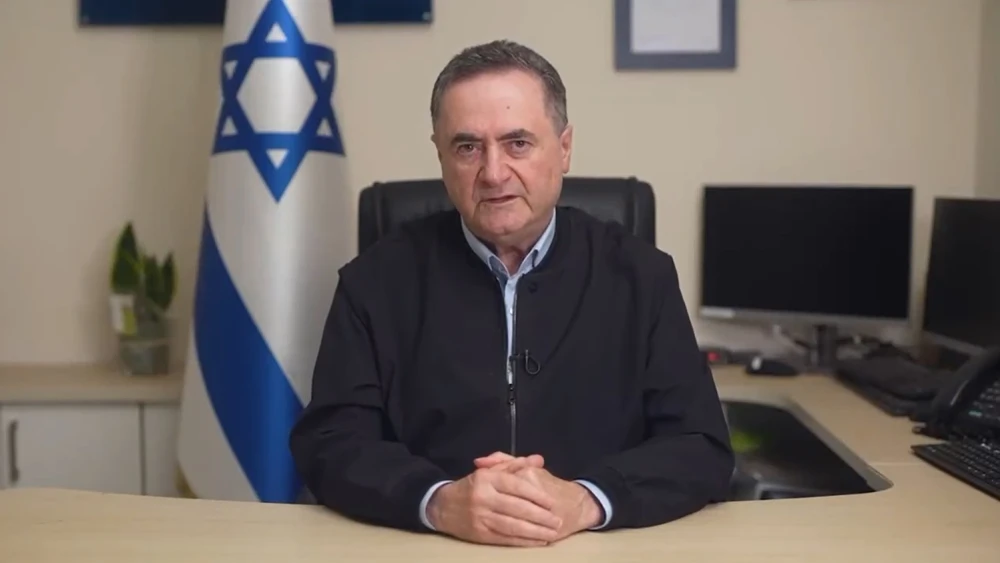
The Israeli defense minister said the IDF would control the area of Southern Lebanon up to the Litani River.
Israeli Defense Minister Israel Katz delivers a message to Hezbollah on
April 2, 2026, after the Lebanese terrorist organization launched dozens
of rockets into Israeli territory during the Passover seder meal.
Credit: Elad Malka/Israel Ministry of Defense.
(
Apr. 3, 2026
/ JNS
)
Defense Minister Israel Katz said following a high-level
meeting with top security officials on Friday that Jerusalem’s policy
regarding Hezbollah remains clear and unchanged—the terror group’s
complete disarmament by military and political means, regardless of the
Iran issue.
“We promised security for the northern communities, and that’s exactly what we’re doing,” Katz said.
The
IDF is completing a maneuver up to “the anti-tank missile line,” he
said, a move intended to put sufficient distance between the range of
those armaments and Israeli citizens living near Israel’s northern
border.
“The homes of the villages near the border in Lebanon,
which serve as Hezbollah outposts for all intents and purposes, will be
demolished in accordance with the model of Rafah and Khan Yunis in
Gaza,” Katz said. Hamas used residential homes, infrastructure and
civilian areas in those cities to launch attacks, store weapons and hide
tunnel openings.
The IDF will control the area of Southern
Lebanon up to the Litani River and the 600,000 Lebanese who evacuated
the region would not be permitted to return until the security of
Israel’s northern residents was assured, he said.
“The IDF will
continue to thwart Hezbollah leaders and operatives throughout Lebanon,
in addition to the 1,000 terrorists who have already been eliminated
since the beginning of the current campaign,” Katz added. “The IDF will
act forcefully against the high-trajectory rocket fire from Lebanon at
Israeli cities and towns, and Hezbollah will pay a heavy price.”
Joining
Katz on Friday morning for the security assessment were IDF Chief of
Staff Lt. Gen. Eyal Zamir; Director General of the Ministry of Defense
Maj. Gen. (res.) Amir Baram, head of the IDF’s Operations Directorate
Maj. Gen. Itzik Cohen and other senior defense officials.
The IRGC’s Lebanon Corps serves as a liaison between Hezbollah and the Tehran regime.
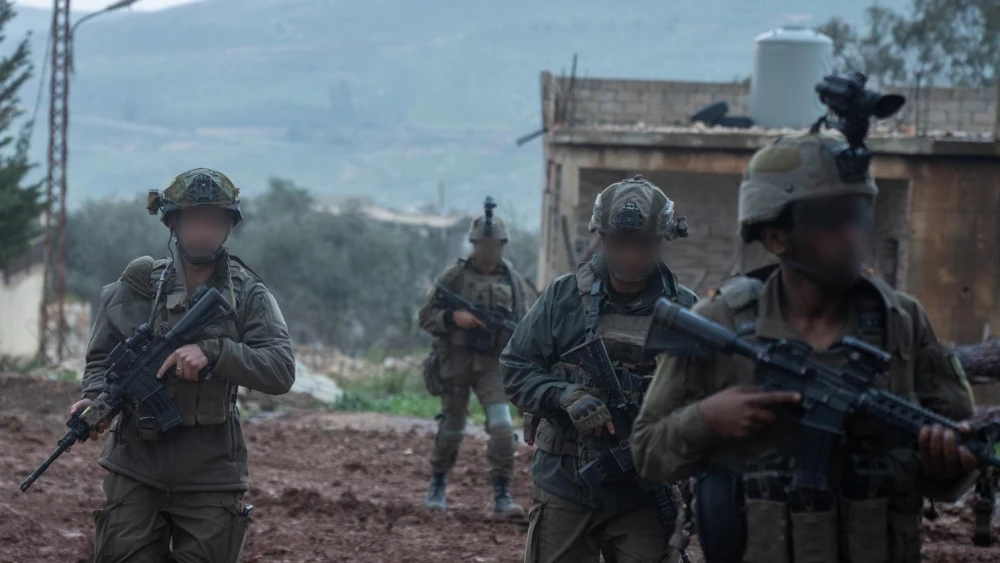
Troops from the IDF’s Golani Infantry
Brigade operate in Southern Lebanon during a targeted ground mission to
locate Hezbollah infrastructure and weapons caches near the border,
March 2026. Credit: IDF.
(
Apr. 4, 2026
/ JNS
)
The Israel Defense Forces on Friday conducted a wave of strikes targeting terror infrastructure across Lebanon, including a command center belonging to the Quds Force’s Lebanon Corps, the military said on Saturday.
The
Quds Force, a branch of the Islamic Revolutionary Guard Corps
responsible for overseeing operations outside Iran, uses the Lebanon
Corps as a liaison between Hezbollah and Tehran, supporting force
buildup and military entrenchment.
In addition, the IDF struck two
headquarters used by Palestinian Islamic Jihad, which the terror
group’s senior officials reportedly used for decision-making and
coordination with Hezbollah.
The Israeli Navy also struck a Hezbollah observation post.
צה"ל השלים גל תקיפות נוסף בביירות: הותקפו מפקדות בשימוש גיס לבנון של 'כוח קדס'
צה"ל השלים אתמול, גל תקיפות לעבר תשתיות של ארגוני הטרור ברחבי לבנון.
הותקפו מפקדות בשימוש גיס לבנון של 'כוח קדס'. גיס לבנון מהווה ציר קשר בין ארגון הטרור חיזבאללה למשטר הטרור האיראני וגוף התומך את… pic.twitter.com/thbsJUBVSm
“We will not stop until we remove the threat for the long term and
push the direct threat away from the communities. That is the
objective... and is exactly why our troops are operating now: on land,
in the air, and at sea,” IDF Spokesperson Brig. Gen. Effie Defrin said
on Friday.
“The IDF will not relinquish the objective of disarming
the Hezbollah terrorist organization. This is an ongoing objective to
which we are committed, and we are continuously working to advance it,
just as we did prior to the current operation. Deepening the strikes
now, in the current operation, brings us closer to achieving this,” he
added.
Earlier on Friday, the IDF released footage of a strike
that destroyed a Hezbollah launch site in Lebanon from which rockets had
been fired at Israel.
“The IDF will act to remove threats to the
residents of the State of Israel and will continue to operate with
determination against the Hezbollah terrorist organization,” the
statement added.
תוך דקות ספורות: צה"ל תקף משגר ממנו בוצעו השיגורים לצפון הארץ
מקודם יותר הערב, שוגרו רקטות לעבר צפון הארץ, ללא נפגעים.
זמן קצר לאחר מכן, צה"ל תקף והשמיד את המשגר בשטח לבנון ממנו בוצעו השיגורים.
צה"ל לא יאפשר פגיעה באזרחי מדינת ישראל וימשיך לפעול בעוצמה נגד ארגון הטרור חיזבאללה pic.twitter.com/3FTk4riW9N
The same day, the IDF identified a launch by Hezbollah that struck a
UNIFIL post in the Al-Aadaissah area of southeastern Lebanon, across the
border from Kibbutz Misgav Am, the military said.
As a result of the fire, three U.N. personnel were injured, two of them seriously.
“A review of the launch trajectory clearly indicates that the fire was carried out by Hezbollah,” the IDF said.
“The
Hezbollah terrorist organization continues to operate in a manner that
endangers international forces and harms U.N. personnel operating in the
area,” it added.
ארגון הטרור חיזבאללה שיגר רקטה שנפלה במוצב יוניפי”ל בדרום לבנון
צה”ל זיהה מוקדם יותר היום שיגור שבוצע על ידי ארגון הטרור חיזבאללה שנפל בתוך מוצב של כוח יוניפי”ל במרחב אל-עדייסה שבדרום לבנון. כתוצאה מהשיגור נפגעו שלושה אנשי או”ם, מהם שניים באורח קשה.
The IDF said on Friday morning that it has struck more than 3,500
targets and killed about 1,000 Hezbollah terrorists in Lebanon since the
Iranian-backed group entered the war in support of Tehran a month ago.
“The
IDF is operating with determination in Southern Lebanon through
targeted ground operations in several areas, alongside strikes from the
air, sea and land against all centers of gravity of the Hezbollah
terrorist organization,” the military said.
The IDF’s 91st, 146th,
36th and 162nd Divisions are leading a focused ground operation,
carrying out the dismantling of terror infrastructure and the
elimination of enemy operatives, while deepening damage to Hezbollah’s
capabilities and pushing it out of the area, the statement added.
At the same time, airstrikes have targeted weapons storage facilities, launch positions and command-and-control headquarters.
More than 70 sites hit in 24 hours, including launchers, UAV facilities and air defense systems.
Two Israeli Air Force F-15 “Baz” fighter jets during operational activity. Credit: Israel Defense Forces.
(
Apr. 4, 2026
/ JNS
)
The Israeli Air Force on Friday carried out a wave of
strikes on Iranian regime infrastructure in Tehran, including an Islamic
Revolutionary Guard Corps aerial defense facility where missiles
intended to target aircraft were stored, the military said.
The
IDF also struck a site responsible for safeguarding the regime’s weapons
research and development facilities. At the same time, the military
targeted a site storing ballistic missiles, along with additional arms
production plants.
צה"ל ממשיך לפגוע במערכי האש וההגנה האווירית של המשטר: הותקפו אתרי הגנה מרכזיים ברחבי טהרן
חיל האוויר בהכוונה מודיעינית של למד"ן ואמ"ן, השלים אתמול גל תקיפות לעבר תשתיות של משטר הטרור האיראני ברחבי טהרן.
Between Thursday and Friday evening, the Israeli Air Force conducted
more than 70 strikes in central and western Iran against dozens of
regime targets, including sites housing ballistic missile launchers
threatening Israel, facilities storing IRGC unmanned aerial vehicles and
air defense system installations, according to the military.
“These
completed strikes are part of the ongoing phase of increasing damage to
the Iranian terror regime’s core systems and foundations,” said the
IDF.
The Israel Defense Forces struck more than 50 ballistic missile sites across Iran during the first day of Passover, the military said on Thursday night.
Separately,
the IDF targeted and killed Makram Atimi, commander of Iran’s ballistic
missile unit in the Kermanshah region, in a precision airstrike.
Several other battalion commanders involved in missile launches against
Israel were also killed.
The IDF said the strikes aim to degrade
the Islamic Revolutionary Guard Corps’ missile and aerial defense array
and curb Iranian fire on Israel.
Between Monday and Wednesday, the
Israeli Air Force dropped some 650 munitions on about 400 targets
linked to the Iranian regime, including sites in the heart of Tehran,
the military said.
U.S. Central Command (CENTCOM) commander Adm.
Brad Cooper said on Thursday that the campaign was making “undeniable
progress” following a month of sustained strikes on the Islamic
Republic’s military assets.
“We don’t see their navy sailing. We
don’t see their aircraft flying, and their air and missile defense
systems have largely been destroyed,” he said.
by Rahul Mishra, Harshit Prajapati and Prisie L. Patnayak
In the region, to address the threat of cross-border terror finance and radicalisation on private social media platforms, countries urgently need to develop region-wide legal and cybersecurity frameworks.
Purveyors of radical content,
to reach a wider audience, have overtaken the non-confrontational
format through memes, commentary video reels and influencer content.
Extremist propaganda is being repackaged in local languages. Algorithms
on these social media platforms serve as amplifiers for radical content.
Although concealed as individual efforts, they were systematically planned and organised.
Encrypted messaging platforms such as Telegram, WhatsApp, TamTam,
Threema and Hoop are being used by extremists to communicate and plan
activities.
According to media reports, 54% of terrorism-related arrests in Malaysia involve support for Islamic State via online platforms.
Terrorist organisations such as Jamaat-e-Islami have deeply
penetrated Bangladeshi society -- aided and abetted by Pakistan's
Inter-Services Intelligence.
In Afghanistan, Islamic State-Khorasan Province (ISIS-K, or ISKP)
and Al-Qaeda resurfaced when the Taliban regime took over the country
after the United States fled. The entire region is plagued by the online
propaganda of terrorist organisations.
In the region, to address the threat of cross-border terror
finance and radicalisation on private social media platforms, countries
urgently need to develop region-wide legal and cybersecurity frameworks.
At the global level, like-minded countries need deeper
cooperation with intelligence and law enforcement agencies, and stronger
collaborative efforts that cut across government agencies,
non-governmental organisations, tech companies and civil society
organisations.
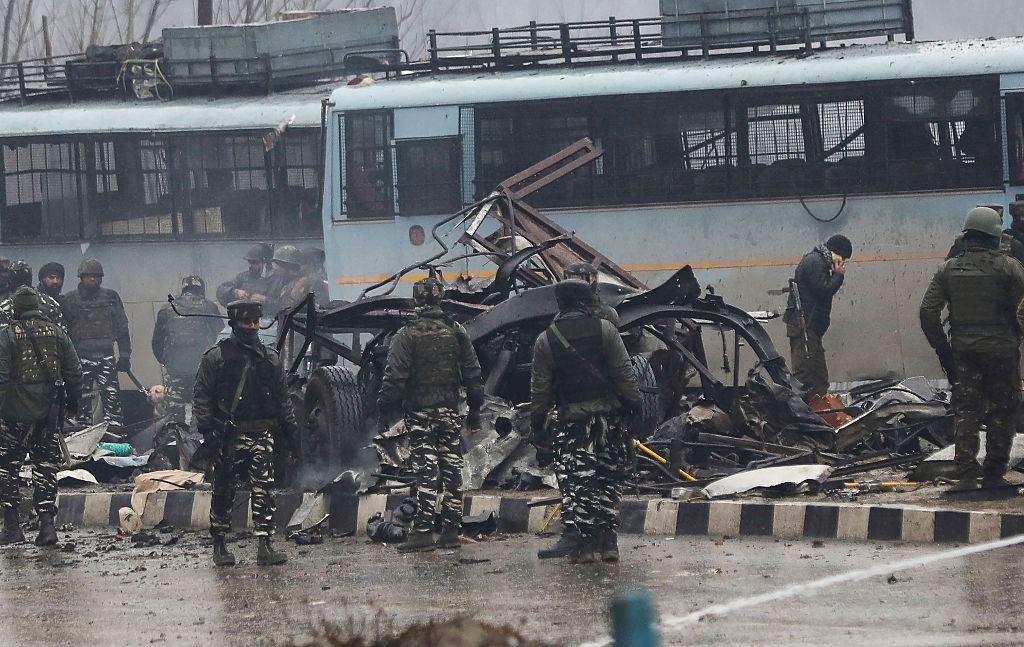
Cyber-enabled terrorism has become a critical national
security issue for countries in the Indo-Pacific region, especially in
India's Jammu and Kashmir, the wider Indian Subcontinent and Southeast
Asia, where end-to-end encrypted messaging platforms and online
recruitment have connected a substantial percentage of Muslim youths to
Islamist terror networks. Pictured: Indian security forces in Kashmir
inspect the site of a terrorist attack carried out by the Pakistani
terrorist group Jaish-e-Mohammed, in which 40 Indian troops were killed, on February 14, 2019. (Photo by AFP via Getty Images)
Cyber-enabled terrorism has become a critical
national security issue for countries in the Indo-Pacific region,
especially in India's Jammu and Kashmir, the wider Indian Subcontinent
and Southeast Asia, where end-to-end encrypted messaging platforms and
online recruitment have connected a substantial percentage of Muslim
youths to Islamist terror networks.
Purveyors of radical content, to reach a wider audience, have
overtaken the non-confrontational format through memes, commentary video
reels and influencer content. Extremist propaganda is being repackaged
in local languages. Algorithms on these social media platforms serve as
amplifiers for radical content. This has led to so-called
"self-radicalisation," in turn giving birth to "lone wolf " attackers
who carry out political violence without direct support or instruction
from an established terrorist network.
Fake news and propaganda serve as powerful tools that coax vulnerable
individuals to violence, often in the name of religion or a dystopian
agenda. Terrorist groups have traditionally relied on disseminating
extremist and violent ideologies. The influence of social media cannot
be overstated.
Social media -- low-cost, fast, globally connected -- have enabled terrorist organisations to leverage the internet for ideological propaganda, recruitment, mobilisation, and executing terror attacks.
Propagating extremist ideology through social media with the aim of mass-radicalisation has been carried out by utilising emotional and psychological manipulation to target children as young as 12.
In the Indo-Pacific, the Islamic State (ISIS), its sympathisers, and
other fringe groups are at the forefront of running such campaigns.
Global events like the Hamas-Israel war, triggered by the October 7,
2023 invasion of Israel, have become a powerful catalyst for extremist
narratives. Contrary to popular perception, the Islamic State is not
just active in the region; it is getting stronger. It has modified its
operating framework and now delegates operational autonomy to local
terrorist groups while retaining ideological authority and a degree of
oversight.
This pattern could be seen both in Australia's Bondi Beach attack on December 14, 2025 and the Red Fort attack
in New Delhi, India on November 10, 2025: social media platforms were
systematically weaponised to radicalise individuals to launch terrorist
attacks. Although concealed as individual efforts, they were
systematically planned and organised.
Rising Online Extremism
The Indian subcontinent is one region that has witnessed the dramatic
fallout of this radicalisation. By 2024, ISIS online networks had expanded
to include countries such as India and Bangladesh, enabling ISIS to
influence populations through secure communication channels. India has
been gravely affected by the expansion of the ISIS's radicalisation
efforts, especially by Pakistan-based terror organisations,
such as the Resistance Front (a proxy of Lashkar-e-Taiba) and the
People's Anti-Fascist Front (a proxy of Jaish-e-Mohammad). Islamist
radicalisation also expanded in Bangladesh under the 2024-2026 regime of
President Muhammad Yunus, who tacitly promoted radical Islamic ideology
and organisations that persecute minorities. Even though Yunus was
replaced by Tarique Rahman in the February 2026 elections, the threat of cross-border terrorism remains high.
Terrorist organisations such as Jamaat-e-Islami have deeply penetrated Bangladeshi society -- aided and abetted by Pakistan's Inter-Services Intelligence.
In Afghanistan, Islamic State-Khorasan Province (ISIS-K, or ISKP) and Al-Qaeda resurfaced
when the Taliban regime took over the country after the United States
fled. The entire region is plagued by the online propaganda of terrorist
organisations.
A similar trend of online radicalisation can also be observed in Southeast Asia. According to a report
by the Reuters Institute for the Study of Journalism, nearly a quarter
of Malaysians and 22% of Indonesians rely on social media platforms such
as TikTok for news. Terrorist groups in Southeast Asia are increasingly
utilizing this online ecosystem to propagandise and raise funds. Encrypted messaging platforms such as Telegram, WhatsApp, TamTam, Threema and Hoop are being used by extremists to communicate and plan activities.
According
to media reports, 54% of terrorism-related arrests in Malaysia involve
support for Islamic State via online platforms. ISIS-K has used
Malaysia's digital landscape to disseminate radical ideology throughout
Southeast Asia. In Indonesia alone, the National Counter-Terrorism
Agency recorded over 180,000 items of extremist content circulating online just in 2024.
Pro-ISIS media networks, such as the At-Tamkin Malay Media Foundation have apparently been using digital platforms to incite violence and recruit supporters. In February 2024, the Al-Aan Foundation created a recruitment video openly calling on Malaysians to "rise up" for oppressed Muslims. In Indonesia, around 181 terror-linked non-profit organisations are known to channel money to these groups.
Use of Online Platforms in the Red Fort Attack
According to mediareports, the terrorists involved in the Red Fort attack in India were radicalised by social media. As the perpetrators were all well-educated, the attack has been called "white-collar terrorism" -- as if that makes it acceptable.
Social media platforms also appear to have played a crucial role in executing the attack. The terrorists reportedly relied
on the Swiss messaging app Threema for secure communication. Threema is
known for its strong privacy features, including end-to-end encryption,
no metadata storage, and message deletion on both ends – presumably so
that forensic investigators will find it hard to determine the
communication chain. To share information, the terrorists also use "dead
drop mail," which involves writing drafts but not sending them, thereby
leaving minimal digital movement.
The Way Forward
The good news is that many countries in the region might finally be
waking up to the danger of uncontrolled social media platforms.
Australia recently introduced a new law to protect young adults from social media exploitation. Malaysia's Online Safety Act 2025 went into effect on January 1, 2026. Singapore's Maintenance of Racial Harmony Bill, tabled in 2025, aims to curb race-based hatred and divisions, while Indonesia's 2024 SAMAN System & Child Protection
has provisions to penalise those who do not remove terrorism-related
content after it is reported. A new chapter to the law has been recently
added to strengthen its provisions. India, for its part, blocked 9,845 URLs promoting radicalisation and terrorist agendas in 2025 alone.
It is important that governments focus not only on known extremists,
but also on patterns of online behaviour and long-duration
radicalisation trajectories. The UN-led "Media and Information Literacy" initiative, and civil society group-led campaigns such as India's Media Information Literacy Awareness and Action Program (MILAP),
meant to combat the spread of online radicalisation, extremist
ideology, and misinformation, are crucial in disrupting the pathway to
radicalisation. Governments need to cooperate with technology companies
and non-governmental organisations to remove extremist material and
address algorithm issues.
In the region, to address the threat of cross-border terror finance
and radicalisation on private social media platforms, countries urgently
need to develop region-wide legal and cybersecurity frameworks.
At the global level, like-minded countries need deeper cooperation
with intelligence and law enforcement agencies, and stronger
collaborative efforts that cut across government agencies,
non-governmental organisations, tech companies and civil society
organisations.
Dr. Rahul Mishra is an Associate Professor at the
Centre for Indo-Pacific Studies, School of International Studies,
Jawaharlal Nehru University, New Delhi, India, and a Senior Research
Fellow at the German-Southeast Asian Center of Excellence for Public
Policy and Good Governance, Thammasat University, Thailand. He can be
reached at rahul.seas@gmail.com X Handle: @rahulmishr_
Prisie L. Patnayak and Harshit Prajapati are doctoral candidates
at the Centre for Indo-Pacific Studies, School of International Studies,
Jawaharlal Nehru University, India.
Rahul Mishra, Harshit Prajapati and Prisie L. Patnayak
[For] nearly five decades, relatively little, if any, condemnation was heard coming from the UK, France and Spain about Iran's despotic and murderous activities across a wide array of geographical arenas. Then, when the US made a small request -- the use of a base to remedy this global horror -- the UK turned it down.
While basking in the
protection offered by America's military capability so they can fund
their bulging, barely-functioning welfare programs, and taking advantage
of America's powerful economy with preferential tariffs in their favor,
when asked for support, these putative allies run for cover.
While Iran's terror is aimed at large swaths of the West, it is
Israel, as the homeland of the Jewish people, that is Iran's first
target for elimination. It seems that, in the eyes of Europe's elite and
the European Union, the Holocaust... has become passé, if not a
liability. In 2001, long before the Gaza War, France's ambassador to the
UK, Daniel Bernard, already called Israel a "shitty little country" --
and "polite society defended him."
[For] nearly five decades, relatively little, if any,
condemnation was heard coming from the UK, France and Spain about Iran's
despotic and murderous activities across a wide array of geographical
arenas. Then, when the US made a small request -- the use of a base to
remedy this global horror -- the UK turned it down.
There is, in fact, no more loyal friend to Western interests than
Israel – a tiny nation fighting to preserve civilization for all of
Europe and the free world while in the crosshairs of Iran's terror
activities. Yet, when Israel comes under missile barrages from Iran and
its proxies, Macron never offers to send assistance of any kind, even if
only defensive, nor did the UK, Spain, Germany, or any other European
nation -- nor Canada. No one did, except the United States.
[T]he UK, France, and Germany -- reveal their antipathy towards
anything that might applaud or validate Israel's existence, perhaps out
of envy over Israel's incredible economic and military success.
Western Europe and Canada's elitist leaders appear unable in any
way to acknowledge that "those Jews" -- supposedly those upstart
"oppressor-colonialist racists" who have lived on their land for "only"
4,000 years when in fact it was the Europeans themselves who colonized
large parts of the planet -- might be showing them up.
Netanyahu, called by Andrew Roberts "The Churchill of the Middle
East," has endured unimaginable opposition from all quarters in a
seven-front war. His villainization began long before the war.
Trump and Netanyahu are evidently obstacles to a "brave new
world" wherein the brotherhood of man, humanitarianism, climate change,
globalism, diversity, equity, central planning, and all sorts of other
fanciful Marxian ideologies reign supreme.
It is political correctness run rampant.
The problem is not just what has overtaken Europe, but the entrenched fecklessness of its leaders.
While Israel predicably – and falsely -- gets the blame for
leading the US into war with Iran, the major European powers -- the UK,
France, and Germany -- reveal their antipathy towards anything that
might applaud or validate Israel's existence, perhaps out of envy over
Israel's incredible economic and military success. Pictured: France's
President Emmanuel Macron, German Chancellor Friedrich Merz and British
Prime Minister Keir Starmer at the Munich Security Conference on
February 13, 2026 in Munich, Germany. (Photo by Kay Nietfeld-Pool/Getty
Images)
Some of America's friends, purported Western allies, have shown their
true colors at last. Regrettably, without shame, they have proven to be
nothing but parasites.
While basking in the protection offered by America's military
capability so they can fund their bulging, barely-functioning welfare
programs, and taking advantage of America's powerful economy with
preferential tariffs in their favor, when asked for support, these
putative allies run for cover.
In naming and shaming these "fair-weather" friends – Germany, France,
Italy, Spain, Ireland, Luxembourg, Greece and the United Kingdom, among
others, the last might be a good place to start.
Somehow, somewhere along the line, leading politicians of the UK,
Prime Minister Keir Starmer specifically, seem to have overlooked a bit
of history. During World War II, Great Britain would have been destroyed
by Germany but for one crucial factor – the military and economic might
of the United States.
Without delving into details of the massive financial loans the US made to Britain and a lend-lease
arrangement for purchasing supplies, the almost unlimited quantity of
military equipment and foodstuffs sent to the island, and the thousands
of US troops who perished
to ensure that Britain did not end up becoming a German colony -- among
many other avenues of support -- it is lamentable that to the leaders
of Great Britain today, virtues such as loyalty, common purpose, shared
culture, the best interests of the West, and their "special
relationship" with the US apparently mean little. They seem totally to
have forgotten America's costly sacrifices on their behalf.
While Iran's terror is aimed at large swaths of the West, it is
Israel, as the homeland of the Jewish people, that is Iran's first
target for elimination. It seems that, in the eyes of Europe's elite and
the European Union, the Holocaust – when the murder of some six million
innocent Jewish civilians as well as countless others took place -- has
become passé, if not a liability. In 2001, long before the Gaza War, France's ambassador to the UK, Daniel Bernard, already called Israel a "shitty little country" -- and "polite society defended him."
With the US-Israel alliance currently confronting Iran -- called
by the US Department of State "the leading state sponsor of terrorism"
-- very little assistance was asked of the UK: merely to use its base on
the island of Diego Garcia for transit purposes. Starmer shockingly
refused, claiming the war was illegal under international law. Canada's Prime Minister Mark Carney, to no one's surprise, concurred, walking back
his earlier stance that favored toppling Iran's regime. Since when,
however, did Iran abide by international or any law other than Sharia?
This minor detail apparently escaped Carney.
Meanwhile, for nearly five decades, relatively little, if any,
condemnation was heard coming from the UK, France and Spain about Iran's
despotic and murderous activities across a wide array of geographical
arenas. Then, when the US made a small request -- the use of a base to remedy this global horror -- the UK turned it down.
Although Starmer later compromised,
he did so only after President Donald Trump said that the war was
already won. Sadly, Starmer revealed himself as an ungrateful coward; a
disgrace to the once-great nation of Britain, to NATO, and the Western
alliance as a whole.
France's President Emmanuel Macron, as usual, acted no better. He called for the war to end the very day it began, and later stated, "France did not choose this war, we are not taking part..." Revealingly, Macron recently
expressed grave concern over the humanitarian situation in Gaza, while
overlooking Iran's mass murder of more than 40,000 of its protesting
citizens in just two days.
On March 9, Macron personally went to Cyprus, which had suffered a
drone attack from Iran that caused only minor structural damage to a
British base, and instructed
French warships, including an aircraft carrier, with supporting ground
forces, to deploy there. When his office issued a statement that read,
"Together with our European partners, the aim will be to strengthen
security around Cyprus and in the Eastern Mediterranean," the hypocrisy
became too big to overlook.
There is, in fact, no more loyal friend to Western interests than
Israel – a tiny nation fighting to preserve civilization for all of
Europe and the free world while in the crosshairs of Iran's terror
activities. Yet, when Israel comes under missile barrages from Iran and
its proxies, Macron never offers to send assistance of any kind, even if
only defensive, nor did the UK, Spain, Germany, or any other European
nation -- nor Canada. No one did, except the United States.
The Europeans' moment of schadenfreude -- joy at other people's suffering -- arrived with force in mid-March when Trump called
upon them, as well as other nations, to send naval forces to help
reopen the Strait of Hormuz. The result of Iran's closure of the strait
has catapulted the price of crude oil above $100 per barrel. Not a
single leader had unreservedly committed to assist in opening this
crucial sea passage, including those NATO nations that rely on the US to
protect them, and Europe as a whole, in the event of an attack by
foreign actors. Failure to assist in this regard, warned Trump, would be "very bad for the future of NATO." Trump implied that he would reassess US commitments to the organization.
Nowhere in the UK, France, or Spain were there significant
demonstrations against Iran's killing of innocents; no calls for "Death
to the IRGC." According to neo-Marxian ideologies, united with radical
Islam, only "Death to Israel," "Death to America," and "Fuck (or Gas)
the Jews" are acceptable
At every opportunity, it seems, the leaders of the UK, France, Spain, Canada
and other nations would rather identify with civilization's enemies
than with their allies striving to prevent extinction of the
civilization itself. As can be expected from these socialist sell-outs
-– representative of a coalition of convenience between political Islam
and radical leftism, known as the Red-Green alliance -- enmity towards Israel takes precedence over all else.
While Israel predicably – and falsely -- gets the blame for leading the US into war with Iran, the major European powers -- the UK, France, and Germany
-- reveal their antipathy towards anything that might applaud or
validate Israel's existence, perhaps out of envy over Israel's
incredible economic and military success.
Western Europe and Canada's elitist leaders appear unable in any way
to acknowledge that "those Jews" -- supposedly those upstart
"oppressor-colonialist racists" who have lived on their land for "only"
4,000 years when in fact it was the Europeans themselves who colonized
large parts of the planet -- might be showing them up. They appear to
abhor the emerging "new world order"
in which an America, which in their eyes committed the capital crime of
not always being perfect, along with its most reliable ally, Israel, is
the central protagonist. In their view,
Trump is the primary obstacle to the idealized "civilizational
transformation they have already advanced in London, Paris, Berlin,
Madrid, and Ottawa." They focus more on Trump than on the enemies of the West.
These elites likewise abhor any acknowledgement of Israeli Prime
Minister Benjamin Netanyahu's success in defending Western interests.
They therefore use every opportunity to vilify him and denigrate his
breathtaking achievements. Netanyahu, called by Andrew Roberts "The Churchill of the Middle East," has endured unimaginable opposition from allquarters in a seven-front war. His villainization began long before the war.
When Trump lauds Netanyahu by declaring,
"if Bibi wasn't around, Israel would not exist today," there is no way
the leftist elites can admit that their "goodness," which entails
tolerating the intolerable, might be catastrophically misplaced.
The joint war leadership of Trump and Netanyahu -- not to mention a
reluctance to endanger their own careers and citizens if someone else is
already doing the dirty work for them - may be one of the reasons that
the leader of the UK, France, Spain
and others distance themselves from actions against Iran, irrespective
of how necessary they are for their own interests. Trump and Netanyahu
are evidently obstacles to a "brave new world" wherein the brotherhood
of man, humanitarianism, climate change, globalism, diversity, equity,
central planning, and all sorts of other fanciful Marxian ideologies
reign supreme.
The opportunity for Western leaders, and the European Union
as a whole, to display some form of moral clarity, some form of concern
for the desperate cultural, religious, and political zero-sum contest
against an extremist form of Islam – predominantly sponsored by Qatar
and Iran – has clearly been brushed aside. Instead, they voice their
preference for adolescent, starry-eyed alternatives such as 'regional stability, the application of a corrupt UN-approved "rules-based international order" -- according to EU-approved human rights practices -- and a negotiated compromise leading to a presumably peaceful settlement. It is political correctness run rampant.
"Iran's evil regime has been fomenting terror and
instability in the region and far beyond almost since its inception in
1979. Trampling human rights is its bread and butter....
"When an existential struggle against a death-sanctifying axis is
labeled an 'illegal war' or 'unjustified aggression,' the term
'international law' is stripped of its original meaning and moral
substance. Instead, it is transformed from a tool designed to protect
humanity from barbarism into a legal instrument in the hands of those
who seek to destroy the very possibility of democratic life."
In plain terms, Iran's treatment of its own people, coupled with its
dedication to world domination under severe Sharia law and achieved
through terror, is the shape of a future barbarism that many Western
leaders are impliedly allowing to foster.
Argentina's President Javier Milei said last month:
"Socialism found out that the basis for the free
enterprise capitalist system is anchored on Judeo-Christian values. They
found out if you attack Judaism, if you attack Israel, then you break
the basis for the capitalist system and Western civilization."
Most Western leaders, by their muted response to Iran's mass murder
of its own unarmed civilians, and their failure to support an alliance
to displace Iran's murderous regime, would seem to make them not only
parasites but also identifying not so much with the oppressed people of
Iran but, instead, their oppressors. Their attitude harbors a severe
moral collapse; the sooner they are ejected from power, the better for
all of Europe and the West.
"The terrible fact is that, with the entire global
humanitarian establishment having turned into a force to demonize and
delegitimize Israel, conscience in the West has become harnessed to
absolute evil. The label of 'human rights' activists is accordingly
given only to those who support the West's enemies."
In this shameful and cowardly way, the battle for Europe's soul is
fast being lost with virtually no resistance from its leaders. The
problem is not just what has overtaken Europe, but the entrenched
fecklessness of its leaders.
Nils A. Haug is an author and columnist. A Lawyer by
profession, he is member of the International Bar Association, the
National Association of Scholars, the Academy of Philosophy and Letters.
Dr. Haug holds a Ph.D. in Apologetical Theology and is author of
'Politics, Law, and Disorder in the Garden of Eden – the Quest for
Identity'; and 'Enemies of the Innocent – Life, Truth, and Meaning in a
Dark Age.' His work has been published by First Things Journal, The
American Mind, Quadrant, Minding the Campus, Gatestone Institute,
National Association of Scholars, Jewish Journal, James Wilson Institute
(Anchoring Truths), Jewish News Syndicate, Tribune Juive, Document
Danmark, Zwiedzaj Polske, Schlaglicht Israel, and many others.
The State Department said that Soleimani Afshar promoted Iranian regime propaganda while living in the U.S. and "celebrated attacks against American soldiers and military facilities in the Middle East, praised the new Iranian Supreme Leader, denounced America as the 'Great Satan,' and voiced her unflinching support for the Iranian Revolutionary Guard Corps, a designated terror organization."
Secretary of State Marco Rubio revoked the green cards of foreign
nationals with links to the "Iranian terror regime," the State
Department said on Saturday.
"Last night, the niece and grand niece of deceased Iranian
Revolutionary Guard Corps Major General Qasem Soleimani were arrested by
federal agents following Secretary of State Marco Rubio’s termination
of their lawful permanent resident (LPR) status," the department said in
a statement.
"Hamideh Soleimani Afshar and her daughter are now in the custody
of U.S. Immigration and Customs Enforcement. As identified by both press
reporting and her own social media commentary, Soleimani Afshar is
an outspoken supporter of the totalitarian, terrorist regime in Iran,"
the department also said.
The department said she promoted Iranian regime propaganda
while living in the United States and "celebrated attacks against
American soldiers and military facilities in the Middle
East, praised the new Iranian Supreme Leader, denounced America as the
'Great Satan,' and voiced her unflinching support for the Iranian
Revolutionary Guard Corps, a designated terror organization."
Afshar’s husband has been blocked from entering the United States as well.
"Afshar Soleimani pushed this propaganda for
Iran's terrorist regime while enjoying
a lavish lifestyle in Los Angeles, as attested to by her frequent
posting on her recently deleted Instagram account," the agency also
said.
The U.S. Department of State applauded the U.S. Department of
Homeland Security and U.S. Immigration and Customs Enforcement
for collaborting with them on the effort to revoke the visas.
AI promises perfection but reflects human fallibility—another false god in a long line of man-made idols, offering easy answers while eroding truth, faith, and reason.
Tommy, Can You See Me?
A long-held prudential judgment can be drowned by a wave of nostalgia.
Harkening back to one’s perceived golden days can cause one’s
contemporaneously formed impression of a youthful experience—usually a
negative opinion—to soften over time. This can lead to a sense of how,
perhaps, the wisdom acquired over later years may alter one’s view of
the experience, especially if it occurred during one’s youth.
It is a sensibility frequently preyed upon by commercial purveyors of
decades-old culturally iconic images and experiences. Few are immune to
the affliction and, hence, the temptation, though this is no excuse.
For my part, I reversed course on a more-than-half-century-old vow,
based upon the odd chance I may have been too immature to understand the
totality of the cinematic genius to which I was subjected. Well, that
and because my wife wanted to go to the IMAX theater and see Ken
Russell’s interpretation of The Who’s rock opera, Tommy.
The film still sucked. But that was not the only initial first impression cemented that evening.
Driving home, the question came up about how old Roger Daltrey, The
Who’s lead singer playing the role of Tommy, had been when the movie
premiered back in 1975. Having been a lifelong fan of the band and,
further, having just read Mark Blake’s Pretend You’re in a War: The Who and the Sixties,
I replied that Mr. Daltrey was born in 1944 and, therefore, was 31
years old when this celluloid monstrosity was released upon a
simultaneously expectant and unsuspecting public.
“Are you sure?” my wife hesitantly responded. It seems her AI had
determined that Mr. Daltrey was 41 years old in 1975. I reaffirmed my
initial assertion. In what was surely a healthy sign for our marriage,
my wife agreed with me rather than with the AI. Thus were solidified my
low opinions of both Mr. Russell’s movie and AI.
See Me, Feel Me, Touch Me, Heal Me
Yet, in an unhealthy sign for humanity at large, I was fully aware
there were millions of people who, when querying AI, did not have the
accumulated knowledge or, worse, the critical thinking skills to contest
and correct an erroneous answer by the allegedly all-knowing artificial
intelligence. And, for those who do have the capabilities and the
desire to question the now-ubiquitous AI, they are often met with a smug
shrug by the technology’s new gurus, who offer the casually dismissive
response that its advent and perfection are both inevitable.
The impact of these gurus’ proclamations and prognostications of AI’s
pending perfection has already had its impact upon our secularized
society, including some in ostensibly religious circles. “Yes, People
Are Already Worshipping AI as a Deity,” baldly states the headline in Breitbart, in a piece by Lucas Nolan that includes excerpts from Wynton Hall’s book Code Red: The Left, the Right, China, and the Race to Control AI.
Nolan notes how Mr. Hall cited a former Google AI engineer and
self-driving car pioneer named Anthony Levandowski. In 2017, he
registered a new church called “Way of the Future” with the IRS.
Consider Mr. Levandowski’s divine, doctrinal claims for AI, including
the following: “The realization, acceptance, and worship of a Godhead
based on Artificial Intelligence (AI) developed through computer
hardware and software.” Further, he believes “what is going to be
created will effectively be a god. If there is something a billion times
smarter than the smartest human, what else are you going to call it?”
Continuing in this vein, he predicts how “AI would generate ‘abundance
on [the] planet’ and create ‘what other religions would call Heaven on
Earth. . . . You don’t even have to die and go up to Heaven; you can
just enjoy it today—all we have to do is improve the technology.’”
Mr. Levandowski is not alone in his beliefs, which are really just
another riff on progressive promises to establish a temporal utopia. In
his bestselling book, Hall makes this claim: “Undergirding all of this
is something bigger than blasphemous bytes or attempts to deify AI.
Beneath the surface of these public clashes between traditional theology
and techno-secularism’s worship of AI lies a heuristic fault line that
has existed for centuries, one that will continue to be in conflict as
the AI revolution unfolds.”
In Lucas Nolan’s assessment, then, “What’s really at stake, Hall
argues, is the oldest argument in Western civilization: secular
humanism’s belief that mankind is innately good and perfectible through
engineering, versus the Judeo-Christian belief in fallen human nature
that requires divine redemption, not technological upgrades.”
Is this the culmination of postmodernism and progressivism’s version
of Aquinas’s imperfect journey toward the perfect: an AI god for
transhumans?
We’re Not Gonna Take You . . . Let’s Forget You Better Still
As Saint Thomas Aquinas taught, our earthly quest for perfection
remains an imperfect journey to the perfect—an eternal and loving God.
It is a fraught race, one that can frequently try and test one’s faith
or divert and pervert one’s course from the path of righteousness. As my
friend Tim Watkins has observed, “Man always chases the possible
because he deems the reality of God to be too hard to achieve when, in
fact, it is far easier than anything man could create.”
In the rise of AI, we can recognize the age-old cardinal sin at
issue: pride. “You shall be as gods,” the serpent promised. And, despite
the serpent’s words being proved a lie, and despite the similarly
proven imperfectability of fallen humanity, there have always been—and
sadly, will always be—some lost souls who, in their hubris, continue
searching for the means to be as gods in a terrestrial Eden of their own
devising. No wonder God begins the Ten Commandments (Exodus 20:1-6) with a stern reminder:
“I am the Lord thy God, which have
brought thee out of the land of Egypt, out of the house of bondage. Thou
shalt have no other gods before me. Thou shalt not make unto thee any
graven image, or any likeness of any thing that is in heaven above, or
that is in the earth beneath, or that is in the water under the earth.
Thou shalt not bow down thyself to them, nor serve them: for I the Lord
thy God am a jealous God, visiting the iniquity of the fathers upon the
children unto the third and fourth generation of them that hate me; And
shewing mercy unto thousands of them that love me, and keep my
commandments.”
Still, the search for false gods among the secular and the spiritual
persists, whether in the form of prioritizing themselves as the god to
be worshipped or as a part of an overarching aggrandizement of
“humanity,” and so on. It is in precisely this respect that their pride
stands out so clearly in their ideologies, which claim they have the
solution to perfecting humanity.
In this sense, like any ideology, AI is a tool to be used to perfect
humanity. No less than communism or fascism, the transhuman cult
believes itself to be a means of fixing what original sin undid—or, more
accurately, the “perfection” that was somehow left behind in the
primordial ooze or has taken too damn long to occur during evolution.
(The surviving fittest don’t need perfection to win the day, though that
was prior to climate change. But I digress . . .)
Imperfect humanity, once it has accepted the temptation of
transhumanity, can then be perfected through its ultimate harmonization
with the “perfect” AI. This process, of course, crafted and manufactured
solely through human ingenuity, leaves no role for God; it thus remains
entirely within the overarching heuristic rubric of “we-and-we-alone”
secularism.
Despite the hype, gurus, and glitz, the existential glitch remains:
imperfect humanity cannot perfect itself, no matter what tools it
devises, for they shall ultimately prove as imperfect as its makers. In
this manner, AI is Tommy, an imperfect character who promises “the
answer” but is never able to provide it. Heck, as my wife noted, AI
couldn’t even get Roger Daltrey’s age right, and calculators were around
well before the movie came out in 1975.
No, it should be patently clear to all peoples that AI is a false
god. Big Tech may have gone one better than the Israelites who turned on
Moses: their golden calf that talks back and caters to your whims in
the accent of your choice. But, like the theme of Tommy the movie, it remains another false messiah we cannot turn off quickly enough.
* * *
An American Greatness contributor, the Hon. Thaddeus G. McCotter
(M.C., Ret.) served Michigan’s 11th Congressional District from 2003 to
2012. He served as Chair of the Republican House Policy Committee and as
a member of the Financial Services, Joint Economic, Budget, Small
Business, and International Relations Committees. Not a lobbyist, he is
also a contributor to Chronicles, a frequent public speaker and
moderator for public policy seminars, and a cohost of “John Batchelor:
Eye on the World” on CBS radio, among making sundry media appearances.