by Yaakov Lappin
The official estimates that Tehran missile stockpile is in “high hundreds to low thousands” and says it “hasn’t abandoned its plan to destroy Israel.”
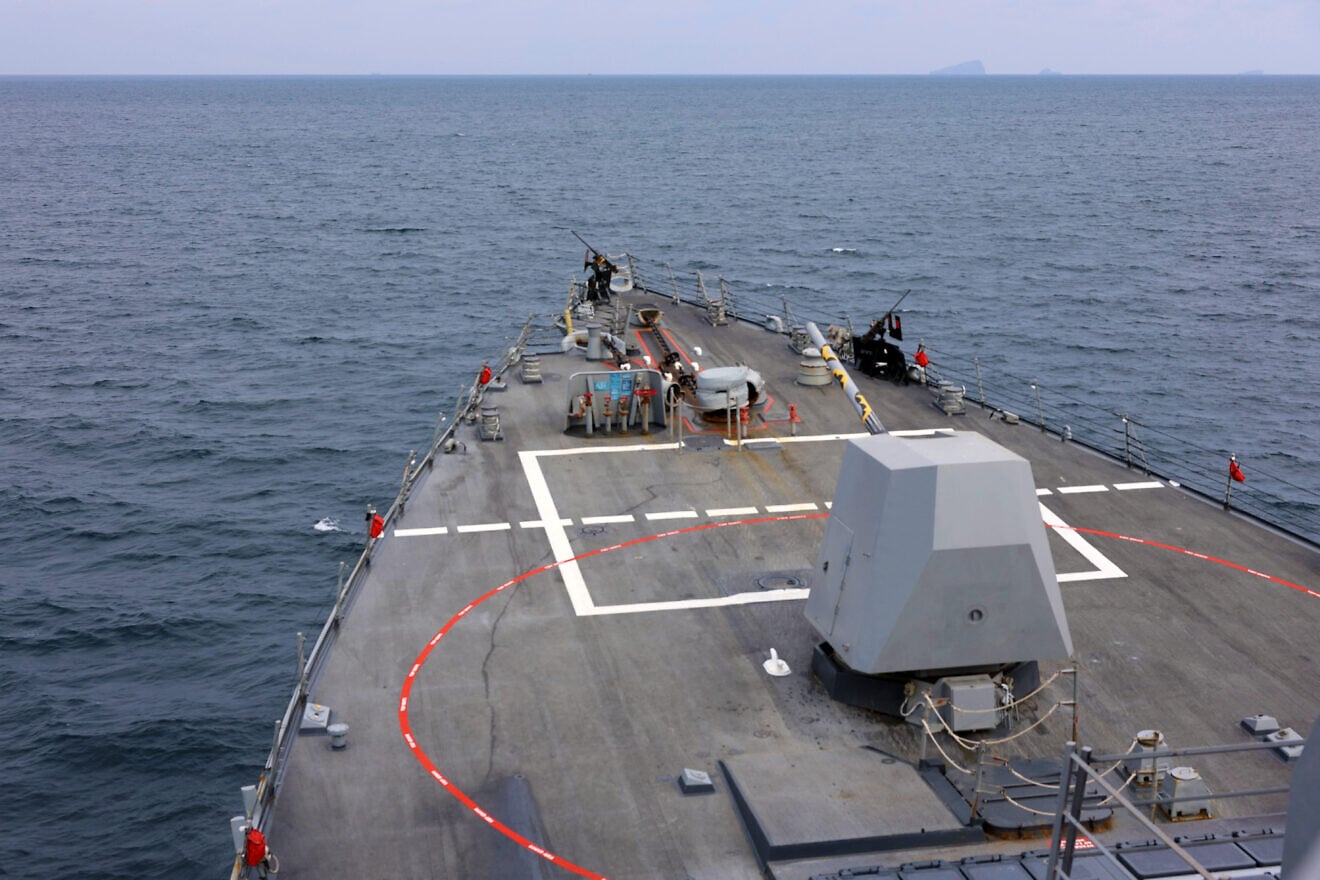
Israel and the United States launched a massive, joint preemptive military campaign against Iran on Saturday, triggering immediate missile retaliation and a state of emergency across the Jewish state.
An Israeli military official said that the assault is targeting military targets in Iran, noting that the Israeli Air Force fighter jets have been striking based on precise intelligence.
The official explained the Israeli goals in launching the campaign, dubbed “Operation Roaring Lion,” at this time. “Our objective is to thoroughly degrade the Iranian regime’s capabilities and remove existential threats to the State of Israel,” he said.
He added that the Iranian regime has not abandoned its plan to annihilate the State of Israel, a strategy that is built on the three pillars of the nuclear threat, the ballistic missile threat, and the proxy threat. After the previous successful operations that significantly degraded the Iranian ballistic missile capabilities, the Tehran regime has been making extensive efforts to rearm itself, said the official.
“In recent months, our intelligence has identified a sharp acceleration in Iran’s missile production program,” the Israeli military official said. “They are developing dozens of ballistic missiles each month, and their pace of production is getting faster and faster.”
Referring to reports that the IDF had targeted Iranian leaders, the official said, “A lot of their leadership is involved in promoting attacks against Israel and promoting the plan to destroy Israel. And people who are involved in the plan to destroy Israel can be targets.”
In addition to the ballistic missile threat, the official noted that intelligence identified the regime acting to conceal and fortify its nuclear program so that it could advance it once again. Furthermore, the proxy threat remains highly active, with Iran funding a ring of fire around Israel while the Iranian people suffer severe economic hardship.
“I can declassify now and tell you that they have spent in the last year somewhere around $700 million to $900 million on proxies, most of it going to Hezbollah,” the Israeli military official stated.
The timing of the operation was deemed crucial by Israeli decision-makers, as waiting would have allowed these interconnected threats to mature further, quantitatively and qualitatively.
“Our main lesson from Oct. 7 is to deal with existential threats in a proactive and preemptive manner,” the Israeli military official explained. “The cost of inaction is too heavy.”
Regarding the division of operational labor between the allied militaries, The New York Times reported that a plan was presented to U.S. President Donald Trump outlining distinct areas of responsibility. According to the report, Israel will focus the majority of its efforts on missile storage sites, production facilities and launchers, while U.S. forces are expected to focus on the Iranian nuclear project and additional targets related to the Revolutionary Guards forces and the government.
To prepare for all possible scenarios and retaliations from various borders and proxies, the IDF sent call-up orders to approximately 70,000 reservists, focusing mostly on aerial defense, the Home Front Command and border presence.
The official noted that the campaign involves close coordination between IDF Chief of Staff Lt. Gen. Eyal Zamir and CENTCOM commander Adm. Brad Cooper, capitalizing on the shared interests and specific advantages of each military.
“This is a coordinated operation that has been in the planning for many weeks,” the Israeli military official said. “It’s built on a corporation and mechanisms that have been built and used in the last two-and-a-half years.
“In our opening salvo, we went after targets that are relevant for freedom of operation and targets that are high-profile people who are involved in the plan to destroy Israel,” the military official explained.
Earlier on Saturday, the IDF Spokesperson’s Unit confirmed the commencement of the broad and joint campaign, referring to it as “Operation Roaring Lion,” and noted that it targeted dozens of military targets. The military emphasized that in the months leading up to the strike, meticulous, long-term joint planning was conducted between the IDF and the U.S. military, enabling full synchronization.
The IDF added that despite the severe blow sustained by the Islamic Republic during “Operation Rising Lion” in June 2025, the regime continued efforts to advance production, fortify and conceal its nuclear program, alongside rehabilitating its missile production processes.
Reinforcement of IDF brigade-level combat teams has been carried out in the Northern Command, Southern Command and Central Command. Along the Lebanese and Syrian borders, local first responder squads in communities adjacent to the security fence have been activated.
In the second line of defense for Israeli border communities, patrol and security forces have been reinforced, while command and control centers have been opened to ensure optimal protection of the home front.
Forces have also been strengthened and reinforced along the Jordanian and Egyptian borders. Several divisions are prepared for reinforcement. The IDF Operations Directorate is prepared with plans that will be implemented in response to developments across all sectors. A significant expansion of search and rescue forces has been implemented, with dozens of battalions deployed nationwide.
Following a situational assessment on Saturday morning, the Home Front Command shifted all areas of the country from “Full Activity” to “Essential Activity,” prohibiting educational activities, gatherings and nonessential workplaces. The head of the Home Front Command, Maj. Gen. Shay Klapper, urged the public to act responsibly.
“Past experiences prove that the public’s strict following of protocol has saved many lives,” he said. “The grit and responsibility of everyone is a key element in countering the threat.”
Throughout the morning on Saturday, the IDF reported barrages of missiles fired from Iran toward the territory of the State of Israel, prompting air-raid sirens across several areas of the country.
Air-defense systems and the Israeli Air Force operated to intercept the threats, while the military repeatedly instructed the public to stay in protected spaces and to refrain from publishing footage or locations of hits. The military official said that as of around midday, there were no significant hits reported in the Israeli home front.
Defense Minister Israel Katz declared a severe nationwide emergency status. “The State of Israel has launched a preemptive strike against Iran to remove threats to the State of Israel,” Katz said.
He warned the civilian population that immediate retaliation was anticipated.
To ensure maximum civilian safety and legal authority for home front restrictions, the minister activated his full emergency powers.
“Therefore, and in accordance with his authority under the Civil Defense Law, Defense Minister Israel Katz has now signed a special order according to which a special state of emergency will henceforth be imposed on the home front in the entire territory of the State of Israel,” Katz’s office said in a statement.
Concurrently, an urgent warning was published directed at the Iranian civilian population, alerting them to the impending strikes on strategic targets. The message was specifically directed to all individuals located inside or in the vicinity of Iranian military weapons production factories and military infrastructure facilities.
“You are located near weapons and military facilities that are considered dangerous,” the Israeli warning said.
“Dear citizens, for your safety and well-being, we urge you to immediately evacuate these areas and remain outside of them until further notice,” the text continued.
Israeli Navy Cmdr. (res.) Eyal Pinko, a Begin Sadat Center for Strategic Studies researcher and a lecturer in intelligence, cyber, espionage and national security at Bar-Ilan University, provided an assessment of the first five hours of the conflict.
During a briefing organized by the Jerusalem Press Club, Pinko noted that the aircraft carrier USS Gerald R. Ford and Israeli aircraft were actively carrying out standoff (long-range) strikes above Iraq toward targets in Iran.
He detailed the Iranian counterattacks, noting that Tehran had targeted American bases in Qatar and Bahrain, and had begun launching heavy munitions toward Israel.
“As we are counting for now around 40 missiles were launched from Iran towards Israel,” Pinko said.
Pinko assessed that removing the Iranian regime would require more than aerial bombardments and that it was already deploying tank battalions across Iranian cities to brutally suppress any civilian riots.
“The regime change must have some, some kind boots on the ground operation,” Pinko said. “It can be made by the local population that wants to change the regime. But without any kind of operation like that, the regime will not fall.”
He analyzed the global economic implications of striking Iranian oil assets, noting the deep complexities involving international superpowers that rely heavily on the regime’s exports.
“A third of the Chinese energy oil source is coming from Iran,” Pinko noted.
He further warned of the specific capabilities of the Iranian cruise missiles, noting they can travel around 2,000 kilometers (1,240 miles) carrying 250 kilograms (550 pounds) of explosives at very low altitudes, making them difficult to detect before impact.
“It goes around 0.8 Mach of the speed of sound,” Pinko noted.
Oded Ailam, a researcher at the Jerusalem Center for Security and Foreign Affairs (JCFA) and former head of the Counter-Terrorism Unit in the Mossad, speaking during a conference call also organized by the Jerusalem Press Club, said that the Iranians mismanaged negotiations by assuming Trump wanted to avoid military conflict and would accept intermediate concessions.
“First of all, we have to understand that the Iranians were walking on a very thin line regarding their approach to the Americans,” Ailam said.
“Two aircraft carriers that are in the area, the Lincoln and the Gerald Ford, and … the surface fleet is an enormous armada,” Ailam noted. “It’s the biggest since the 2003 war against Iraq.”
He warned that while the allied forces possessed overwhelming superiority, the Iranian regime still held strategic leverage over global shipping lanes that could be utilized in desperation.
“The weak point, of course, is the Hormuz Strait, 32 kilometers [20 miles] wide,” Ailam explained. “And once, if the Iranians decide to block it or to close it or to mine it, that of course will mean a severe blow to the economy as well as themselves.”
Ailam argued that the power of the joint American and Israeli coalition would likely force a rapid conclusion to the hostilities by destroying the infrastructure Iran needed to launch massive barrages, as well as what remains of its nuclear facilities.
“I think it’s going to be a matter of days, maybe one, two weeks at the most, and then eventually the Iranians will come around to the table with a different approach and with different concessions,” Ailam said.
Yaakov Lappin is an Israel-based military affairs correspondent and analyst. He is
the in-house analyst at the Miryam Institute; a research associate at
the Alma Research and Education Center; and a research associate at the
Begin-Sadat Center for Strategic Studies at Bar-Ilan University. He is a
frequent guest commentator on international television news networks,
including Sky News and i24 News. Lappin is the author of Virtual Caliphate: Exposing the Islamist State on the Internet. Follow him at: www.patreon.com/yaakovlappin.
Source: https://www.jns.org/israeli-military-official-iran-has-been-making-extensive-efforts-to-rearm/

No comments:
Post a Comment