by Khaled Abu Toameh
Hamas is not dismantling its military wing. It is not surrendering its weapons. It is not disbanding its security apparatus. It is not ending its command structure.
The key question is not who sits in ministerial offices in the Gaza Strip. The key question is who holds the guns.
Nothing essential has changed.
Hamas is not dismantling its military wing. It is not surrendering its weapons. It is not disbanding its security apparatus. It is not ending its command structure. Thousands of Hamas employees and loyalists will also remain embedded in the Gaza Strip's institutions.
"Hamas's apparent willingness to make room for a technocratic government is designed to prevent its own disarmament.... [A]s long as Hamas retains its weapons, any civilian government will of course operate as Hamas dictates." — Israel's Foreign Minister Gideon Sa'ar,
Sa'ar warned that Hamas seeks to replicate the Hezbollah model in the Gaza Strip: a civilian administration would be responsible for garbage collection, public services, reconstruction, and salaries, while Hamas would remain the dominant military force.
This is not peace and stability. It is simply outsourcing civilian responsibilities while preserving the machinery of jihad (holy war).
"The ceaseless headlines about Hamas 'ending its government' in Gaza and 'preparing to give up control' are yet another ruse and a nothing‑burger dressed up as a concession by the terror group, which has zero intention of relinquishing real power or disarming.... None of this resembles disarmament. Hamas's al‑Qassam Brigades are working nonstop to repair tunnel networks and rebuild munitions stockpiles... Yet the media coverage of this non‑event has already reframed Hamas as cooperative, reasonable, even constructive; a narrative shift that obscures Hamas's role as the primary obstacle to Gaza's recovery. And this is landing successfully and working well for Hamas.... Ultimately, Hamas 'dissolving its government' will be judged by simple metrics like whether Gazans can share posts on Facebook without being tortured, beaten, or dragged into hospital interrogation rooms, abuses that continued from October 7 until just last week. Until that changes, the headlines are theater, and Hamas's grip in Gaza remains intact." — Ahmed Fouad Alkhatib, Palestinian political analyst, x.com, June 6, 2026.
A technocratic government financed by foreign donors would relieve Hamas of the financial burden of governing while allowing the terrorist group to concentrate on rebuilding its military machine.
The full implementation of the Trump peace plan requires the dismantling of Hamas's military capabilities and the complete demilitarization of the Gaza Strip. Allowing Hamas to establish a Hezbollah-style state within a state would guarantee continued instability and ensure that any future Palestinian administration remained hostage to an armed terrorist organization.
The only meaningful solution is for Hamas to dissolve itself, and not merely one of its governing committees. This means dismantling both its political and military structures, surrendering all of its weapons, disbanding its security apparatus, relinquishing every instrument of coercion, and disappearing as an armed political force.
Until Hamas disappears as both a political movement and a terrorist organization, declarations about dissolving committees amount to little more than political make-believe designed to secure international legitimacy, unlock billions of dollars in aid, and buy time for the next war.
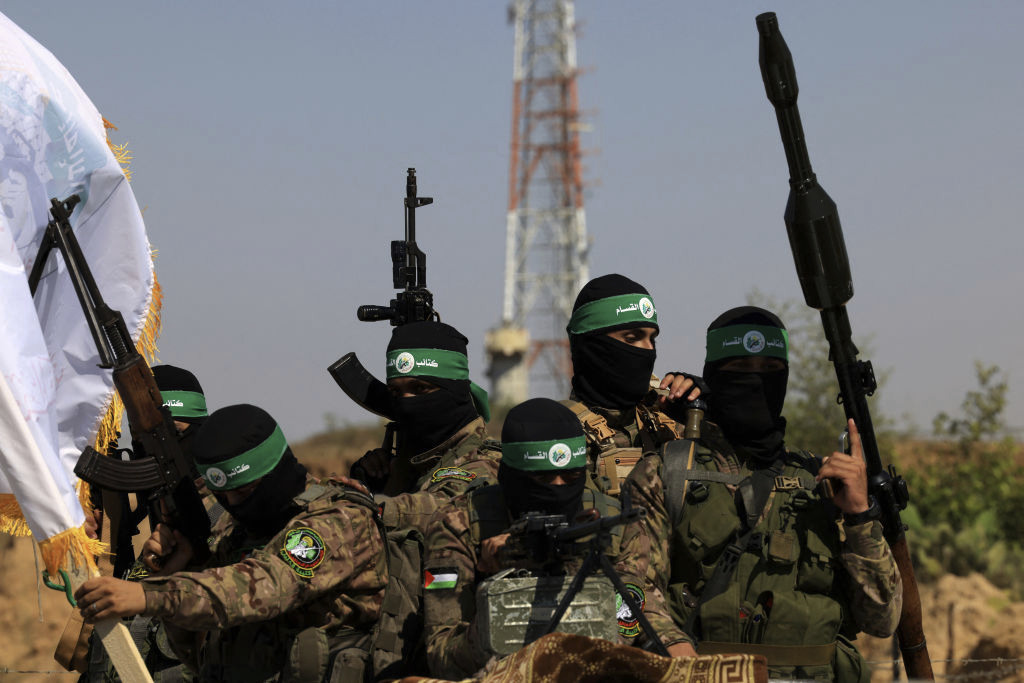
Nearly three years after the October 7, 2023 massacre and more than six months after President Donald J. Trump's 20-point peace plan called for the complete demilitarization of the Gaza Strip, Hamas has announced that it is dissolving its de facto governing body and is prepared to hand authority to a committee of Palestinian technocrats.
At first glance, the announcement appears to represent an important concession. It is not. It is merely Hamas's latest attempt to deceive the international community into believing that it is complying with the requirements of the Trump peace initiative while preserving what matters most to the terrorist organization: its military power.
The key question is not who sits in ministerial offices in the Gaza Strip. The key question is who holds the guns.
By Hamas's own admission, its ministries and thousands of employees will remain in place. Even more importantly, Hamas says it will continue overseeing security and policing in the areas still under its control.
In other words, Hamas is leaving government, not power. Nothing essential has changed.
Hamas is not dismantling its military wing. It is not surrendering its weapons. It is not disbanding its security apparatus. It is not ending its command structure. Thousands of Hamas employees and loyalists will also remain embedded in the Gaza Strip's institutions.
Without these steps, dissolving a governing committee is little more than a cosmetic gesture.
So long as Hamas retains its military forces, every future civilian administration in the Gaza Strip will operate under the shadow of Hamas's guns.
No technocratic government can function independently while an armed terrorist organization remains the strongest force on the ground.
Israel's Foreign Minister Gideon Sa'ar immediately recognized the danger. Hamas's trick is simple," he wrote. "Hamas's apparent willingness to make room for a technocratic government is designed to prevent its own disarmament."
Sa'ar warned that Hamas seeks to replicate the Hezbollah model in the Gaza Strip: a civilian administration would be responsible for garbage collection, public services, reconstruction, and salaries, while Hamas would remain the dominant military force. He noted that "as long as Hamas retains its weapons, any civilian government will of course operate as Hamas dictates."
That assessment goes to the heart of Hamas's strategy.
The terrorist group is trying to replicate Hezbollah's "state within a state" model in Lebanon. Under that model, a civilian government manages the country's daily affairs while the terrorist organization retains its independent army, intelligence apparatus, and the power to decide questions of war and peace.
The consequences for Lebanon have been catastrophic. Although successive Lebanese governments formally governed the country, Hezbollah remained the real power, using its vast arsenal and Iranian backing to dominate political life and repeatedly drag Lebanon into destructive wars with Israel.
Hamas now appears to be pursuing precisely the same formula in the Gaza Strip. It wants someone else to rebuild hospitals, schools, roads and homes, restore basic services, and pay the salaries of civil servants, while Hamas quietly rebuilds its military capabilities, recruits fighters, restores its tunnel network, manufactures rockets, and prepares for another October 7-style massacre against Israel.
This is not peace and stability. It is simply outsourcing civilian responsibilities while preserving the machinery of jihad (holy war).
It is also not the first time Hamas has employed such tactics.
In 2014, after signing another reconciliation agreement with Mahmoud Abbas's Fatah faction, Hamas similarly agreed to hand over the administration of the Gaza Strip to a Palestinian unity government composed of technocrats. The belief back then was that the arrangement would reduce Hamas's grip on Gaza. Instead, Hamas maintained complete control over its military forces and security agencies.
The unity government never exercised genuine authority. The result was predictable. Hamas remained the main ruler of the Gaza Strip while others (the Palestinian Authority and the international community) carried responsibility for administration and public services.
Twelve years later, Hamas is attempting to repeat precisely the same formula. History should serve as a warning. The international community has repeatedly accepted Hamas's promises at face value. It has repeatedly convinced itself that Hamas was becoming more pragmatic, more responsible, and more interested in governing than fighting. Many Israeli and Western policymakers and political analysts believed Hamas primarily wanted economic stability, reconstruction, and periods of calm.
Those assumptions collapsed on October 7, 2023, when Hamas carried out the deadliest massacre of Jews since the Holocaust.
The lesson should have been obvious. Hamas has repeatedly used ceasefires, reconstruction efforts, and diplomatic initiatives to strengthen its military capabilities.
The latest Hamas announcement deserves to be examined through the same lens.
If Hamas genuinely wished to relinquish power, why wait until now? Why not dissolve itself before the Gaza Strip suffered catastrophic destruction? Why not step aside years ago to spare Palestinians the enormous human and economic costs of another war?
The answer is straightforward.
Hamas is acting because it faces mounting international pressure to comply with Trump's peace plan, whose central requirement is the complete demilitarization of the Gaza Strip.
By announcing the dissolution of its governing committee, Hamas hopes to create the impression that it is fulfilling its obligations while shifting diplomatic pressure onto Israel.
The message Hamas wants the world to hear is simple: "We have done our part. Now Israel must do its part."
It is a clever public relations strategy. However, it does not satisfy the fundamental requirement of the Trump plan. The issue has never been who occupies government offices. The issue is whether Hamas continues to exist as an armed terrorist organization.
So long as Hamas remains armed, no civilian government can function independently. So long as Hamas retains thousands of loyal employees embedded throughout Gaza's institutions, any new administration risks becoming little more than a façade behind which Hamas continues ruling from the shadows.
Palestinian political analyst Ahmed Fouad Alkhatib wrote on July 6:
"The ceaseless headlines about Hamas 'ending its government' in Gaza and 'preparing to give up control' are yet another ruse and a nothing‑burger dressed up as a concession by the terror group, which has zero intention of relinquishing real power or disarming. Similar announcements like this have happened frequently in the past.
"The resignation of the head of the so‑called 'Emergency Committee,' or Hamas's post–October 7 governing façade, is simply the removal of a figurehead. His duties have already been quietly assumed by another 'temporary' Hamas administrator while everyone pretends to wait for NCAG, the incoming Technocratic Committee, to take over. Hamas has already announced that its administrative and technical staff will continue working until NCAG arrives, fully aware that the new transitional governing body will lack the capacity, personnel, or infrastructure to run Gaza. This is Hamas's plan: recycle its current/existing apparatus into the new administration expected to emerge from the Trump Administration's transitional process overseen by the Board of Peace.
"What we're seeing is the sloppy rollout of a long‑predicted strategy: Hamas shifting from direct control to indirectly reigning, Hezbollah‑style. It's cheaper, it shields the group from accountability, and it allows new civilian faces to absorb public anger while Hamas retains decisive control over every meaningful lever of power in the Gaza Strip.
"None of this resembles disarmament. Hamas's al‑Qassam Brigades are working nonstop to repair tunnel networks and rebuild munitions stockpiles using unexploded ordnance and Israeli bombs from two years of war. Yet the media coverage of this non‑event has already reframed Hamas as cooperative, reasonable, even constructive; a narrative shift that obscures Hamas's role as the primary obstacle to Gaza's recovery. And this is landing successfully and working well for Hamas; not only with outlets, voices, and platforms who are typically softer on the terror group, but even in some mainstream political discourse, where some are treating this as tantamount to the initiation of disarmament or the start of Phase II of the ceasefire.
"The timing is no coincidence: this move by Hamas comes one week after the Board of Peace met in Cyprus and agreed to pursue 'Plan B,' the approach I've long advocated: moving Gaza's civilian population across the 'Yellow Line' and draining Hamas of access to resources and human shields it relies on.
"Ultimately, Hamas 'dissolving its government' will be judged by simple metrics like whether Gazans can share posts on Facebook without being tortured, beaten, or dragged into hospital interrogation rooms, abuses that continued from October 7 until just last week. Until that changes, the headlines are theater, and Hamas's grip in Gaza remains intact."
Hamas's primary objective is survival. It understands that billions of dollars in international reconstruction aid could soon flow into the Gaza Strip.
A technocratic government financed by foreign donors would relieve Hamas of the financial burden of governing while allowing the terrorist group to concentrate on rebuilding its military machine.
The full implementation of the Trump peace plan requires the dismantling of Hamas's military capabilities and the complete demilitarization of the Gaza Strip. Allowing Hamas to establish a Hezbollah-style state within a state would guarantee continued instability and ensure that any future Palestinian administration remained hostage to an armed terrorist organization.
The only meaningful solution is for Hamas to dissolve itself, and not merely one of its governing committees. This means dismantling both its political and military structures, surrendering all of its weapons, disbanding its security apparatus, relinquishing every instrument of coercion, and disappearing as an armed political force.
Anything short of that preserves the conditions that produced the October 7 massacre.
Both Israelis and Palestinians have already paid an unbearable price for repeatedly believing Hamas's promises. They cannot afford to make the same mistake again. The international community should not be fooled by another carefully staged Hamas performance.
Until Hamas disappears as both a political movement and a terrorist organization, declarations about dissolving committees amount to little more than political make-believe designed to secure Hamas's international legitimacy, unlock billions of dollars in aid for it, and buy time for it to prepare its next war.
- Follow Khaled Abu Toameh on X (formerly Twitter)
Khaled Abu Toameh is an award-winning journalist based in Jerusalem.
Source: https://www.gatestoneinstitute.org/22683/hamas-trick-keeping-weapons

No comments:
Post a Comment