by Amir Taheri
The beauty of American democracy is that it allows the pendulum to swing and prevent a one-party system anywhere.
The worst midterm result came in 1958 under President Dwight Eisenhower, when there was no war, no inflation and no hourly tweets from the White House. The second bad result came after the Watergate scandal and President Richard Nixon's resignation in 1974.
[L]et's remember that Texas was a Democrat backyard for half a century before it switched to the Republicans. The beauty of American democracy is that it allows the pendulum to swing and prevent a one-party system anywhere.
Can Democrats stop the war on Iran? The answer is no.
Budget allocation for defense has already been approved until the end of this year, and next year's budget is due for approval in December before the Democrat-dominated Congress is sworn in.
[T]he president remains commander-in-chief, in charge of foreign and trade policy, and possessor of the right to issue executive orders that bypass Congress.
More importantly, he has the right of veto over legislation he opposes.
[S]ome of Trump's reforms cannot be undone, if only because they responded to the real needs of American society.
News of the end of Trump and the demise of Trumpism may prove premature.
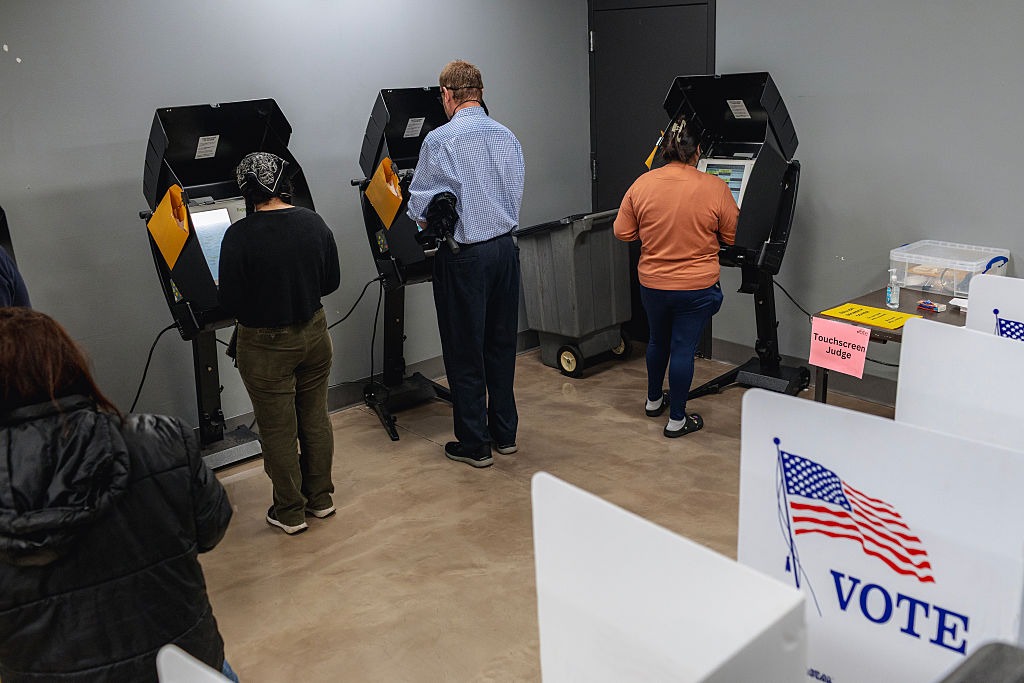
"A blue tsunami", "A political earthquake", "The end of Trump and Trumpism!" These are some of the clichés bandied around the globe as commentary on midterm elections in the United States.
One notable American conservative commentator even claims that the elections spelled "the end of America." Laura Loomer advises fellow-Americans to stockpile food and presumably to clean their guns to protect their families.
Taking his boss's wishes for reality, Vladimir Putin's house philosopher Alexander Dugin forecasts a civil war in America.
Islamic Majlis Speaker Muhammad-Baqer Qalibaf tweets about "a big no to the war against the Islamic Republic."
The French cheer the results hoping that it would help defeat wannabe Trumpists in France's own presidential election next April.
More surprisingly, Britain's new dashing Prime Minister Andy Burnham claims that the election has created "new opportunities" for others, presumably meaning himself and European leaders to do all the good they could do but Trump wouldn't let them do.
"The End of America" chorus across the globe is jubilant.
We hear echoes of novelist and one-time Governor of Canada John Buchan who cautioned about an American civil war in the 1930s or of Sinclair Lewis who in his novel It Can't Happen Here envisaged an America getting the yoke through democratic elections.
Then one remembers the halcyon days of the German-American Nazi Bund before World War II, when some elite figures and moneybags admired Mussolini and Hitler.
A closer look at the tableau however may reveal a different vision just as a painting by Breughel or Rembrandt isn't fully appreciated at first glance.
To start with the election passed smoothly and ended up with both camps accepting the results without the usual quarrels that mar many elections across the globe including on occasions in the US itself.
Next, voter turnout, though still low by standards of industrialized democracies was higher than the average of 12 previous midterm polls.
Turnout by young voters registered an encouraging increase which mainly favored Democrat candidates but could be seen as American democracy's appeal to new generations. Youth vote for Democrats rose by 19 percent and for Republicans by 7.8 percent.
Turnout was also up among double-barrel American "communities" notably Black, Hispanic Muslim, LGBTQ+ and American Indians. All of them extended their representation in the Congress.
African-Americans won governorship slots in two states for the first time. Muslims got their first senator in Michigan while the Democratic Socialists of America emerged as a tune-setting wing of the Democrat Party.
All that indicates the buoyancy of American democracy and its rare ability to forge political unity without uniformity.
Losing mid-term elections by an incumbent president isn't the exception but the rule. In the past 80 years only two incumbents, Bill Clinton and George W. Bush, managed not only to win in midterms but also to increase their share in both houses of Congress.
This time's results aren't the worst either.
The worst midterm result came in 1958 under President Dwight Eisenhower, when there was no war, no inflation and no hourly tweets from the White House. The second bad result came after the Watergate scandal and President Richard Nixon's resignation in 1974.
Much is made of the loss of a governor's post and a senate seat in Texas, where Elon Musk bet $480 million on a Republican victory as "the surest state" in the union. But let's remember that Texas was a Democrat backyard for half a century before it switched to the Republicans. The beauty of American democracy is that it allows the pendulum to swing and prevent a one-party system anywhere.
More importantly, Democrats won by recapturing states that they had lost to Trump in 2018 or 2022. The increase in their overall share of the votes came in traditional Democrat states such as California, New York and the New England ones.
While Trump's core MAGA base proved resilient in many states, the results show that classical Republican candidates did better than outright Trumpists.
In some cases, such as South Carolina, Republicans lost because Trump chose overtly unconvincing candidates. The lesson is: in American democracy no one gets a blank check, even from MAGA fanatics, not even Trump.
Speculation is rife about Trump becoming "a lame-duck."
True, a president who loses control of Congress is no longer able to implement his policies without facing the juggernaut of opposition.
Yet the president remains commander-in-chief, in charge of foreign and trade policy and possessor of the right to issue executive orders that bypass Congress.
More importantly, he has the right of veto over legislation he opposes.
The Democrats would need a two-third majority to override such vetoes, something they don't have.
Can Democrats stop the war on Iran? The answer is no.
Budget allocation for defense has already been approved until the end of this year, and next year's budget is due for approval in December before the Democrat-dominated Congress is sworn in.
A midterm loss or even a change of president doesn't necessarily mean the end of a war. The war in Vietnam continued for 13 years under three presidents from both parties, long after President John F. Kennedy, who ignited it, had departed.
In a sense, the US now enters the presidential race for 2028 with Trump still playing a decisive role in deciding who will run for Republicans, while Democrats lack any serious contender so far.
Last Tuesday Democrats put on a good show.
They won over 40 new seats in the House of Representatives and seven in the Senate, plus five governorships.
Bu they emerge as a deeply divided party with a traditional right-of-center wing with remnants of the Clinton clique, a liberal left around the Obama-Biden circle, and a small but super-active radical socialist-Islamist one partly inspired by Bernie Sanders that will try to push the party towards radicalism including on foreign policy.
Drunk on midterm victory, Democrats may tilt towards radicalism, a choice that could ensure their defeat in the 2028 presidential election. Something like that happened in 1972, when Democrats fielded George McGovern as presidential candidate with a radical "progressive" program.
Even then, some of Trump's reforms cannot be undone, if only because they responded to the real needs of American society.
News of the end of Trump and the demise of Trumpism may prove premature.
Gatestone Institute would like to thank the author for his kind permission to reprint this article in slightly different form from Asharq Al-Awsat.
Amir Taheri was the executive editor-in-chief of the daily Kayhan in Iran from 1972 to 1979. He has worked at or written for innumerable publications, published eleven books, and has been a columnist for Asharq Al-Awsat since 1987. He graciously serves as Chairman of Gatestone Europe.
Source: https://www.gatestoneinstitute.org/22969/america-the-pendulum-swings

No comments:
Post a Comment