Monday, September 5, 2016

FBI's 302 Report Proves Complicity in Clinton Email Scandal - Jonathan F. Keiler


by Jonathan F. Keiler

The FBI's investigatory reports covering Hillary Clinton's July interview (cynically released just before Labor Day) confirm suppositions of FBI critics that the interview was mostly a farce

The biggest and most damning takeaway from Hillary Clinton's July interview with the FBI, at least as it concerns the FBI itself and by extension the rectitude of our government, is, to borrow from Arthur Conan Doyle, the dog that didn't bark.  That is, there is no indication that in the course of the interview, FBI agents once asked the former secretary of state about emails to and from Clinton aides regarding Clinton Foundation business. 

Clinton's lawyers deliberately withheld these emails from the public and forced the FBI to recover them.  They clearly demonstrate Clinton's motive in setting up the server, thereby intentionally endangering the classified material that she and her cohorts knew would inevitably be sent through it.  This motive and intent is further demonstrated by Clinton's obfuscations, lies, and destruction of evidence that followed in the course of over a year. 

FBI agents never inquired about any of it during the interview.  Since they are presumably well trained and experienced investigators (including a section chief), the only reasonable conclusion that can be drawn is that they were deliberately tasked with not pursuing this obvious line of inquiry, as it would have undermined the narrative that Director James Comey intended to deliver to the nation a few days later – that Hillary should not be prosecuted due to insufficient evidence of intent. 

The FBI's investigatory reports covering Hillary Clinton's July interview (cynically released just before Labor Day) confirm suppositions of FBI critics that the interview was mostly a farce, and show Hillary mostly restating her standard defenses to complacent and compliant agents who never pushed her or her phalanx of attorneys for more.  Indeed, the documents show Hillary accompanied by a gaggle of lawyers that rival O.J.'s (David Kendall, Catherine Turner, Cheryl Mills, Heather Samuelson, and evidently an attorney who shall not be named).  Even O.J. did not have a secret lawyer.  Getting much of anything done in such an environment would have been a challenge.  But then again, the lines of inquiry were almost certainly vetted with Clinton's lawyers in advance (let's not forget the "coincidental" meeting on an Arizona tarmac between Bill and Loretta Lynch the week previous), producing a kind of legal kabuki dance designed to get Hillary in and out unscathed. 

Although the FBI reports do not contain an actual transcript, a careful reading and a bit of experience clearly demonstrate what happened in that conference room.  The FBI agents dutifully presented Hillary with various problematic classified emails and asked her for comment.  Hillary's comments generally took the form of "I don't recall" or "I trusted State Department professionals."  She claimed ignorance of classification categories and procedures, denying at one point that she even received instruction about them, although she signed a document upon taking office certifying that she had.  Not to mention she was the head of an important government agency and ultimately responsible for its security.  She blamed her accidental fall in 2012 for some of the memory loss, otherwise just using the standard excuse of the white-collar criminal of ordinary forgetfulness of detail by a busy executive.

At no time is there any indication that the agents pressed her, nor did they seek at any time an admission from her of anything other than ignorance, inadvertence, or negligent conduct.  This Hillary supplied in droves, with the connivance of both her attorneys and the agents, as apparently all concerned knew at the time that Directory Comey had already decided that Hillary's violations of statutory provisions covering negligent conduct were not actionable.   

The closest the agents came to seeking an admission of any kind was a single follow-up question on p. 9, part 2 of the Form 302.  That occurred after Hillary explained rather incredibly that "she did not pay attention to the 'level' of classified information and took all classified information seriously."  An agent asked "whether Clinton believed information should be classified if its unauthorized release would cause damage to national security[,]" and "she responded, 'yes that is the understanding.'"

Note the classic Clintonian use of the third person.  The agent evidently did not seek to clarify or attempt to have Hillary say it was her own understanding, which ordinarily any competent professional investigator would do.

Otherwise, Hillary repeated her standard excuses for setting up the server, that she did it innocently for convenience, and implying that her predecessor Colin Powell gave her the idea (though it is well established by Clinton's own accounts that she decided to set up the server before she ever spoke with Powell about the matter, leaving aside differing recollections of what was said between them and when).  She also blamed State Department professionals for sending her classified information and seeking it in return, even though the communications went through her private server.

Having received these responses, the obvious course for any honest investigator would have been to show Hillary some of the emails that concerned the Clinton Foundation, which the FBI was forced to recover after her lawyers (some of whom were present in the room) wrongly withheld them from discovery as non-work-related emails.

A simple question – "Did your association with the Clinton Foundation have any role in your decision to establish the private server?" – might have followed.  Clinton could have denied it, exposing her to criminal liability for a plainly untrue statement, or more likely her attorneys would have prevented her from answering, citing the 5th Amendment.

The truly disturbing point is that the agents never asked.  Now, it could be that Clinton's attorneys, having clearly demanded from the FBI a proffer of the questions (and in the event having received the same), never would have agreed to allow Hillary's questioning if that proffer had included questions about the Clinton Foundation.  But any first-year law student can see that questions regarding the Foundation are clearly relevant and material to the case, as they go directly to Clinton's motive in setting up the server and thus could prove the element of intent in exposing classified documents on her unsecured email system, which Comey claimed was necessary for her successful prosecution. 

If Clinton had refused the interview, it would have looked bad politically for her and forced the FBI to draw reasonable conclusions from the evidence at hand, which would have meant recommending prosecution, which Comey plainly did not want to do.  Whether this is because Comey is a political lackey or bought off, or both, we don't know.   

The fake interview thus suited both parties.  It allowed Hillary to appear forthcoming, even though she did nothing but provide the same talking points and evasions she had all along, without being confronted with effective questioning or truly compromising documents.  The FBI facilitated this not only by failing to question her aggressively, and refusing to confront her with the documents relating to the Clinton foundation, but finally by providing her with an official forum to repeat her outright denials of intent.

I presumed that the FBI did just this here, and the proof is contained on p. 10, part 2 of the Form 302 at the conclusion of the interview, where the agents, obviously having asked her a series of canned questions to elicit just such responses, list her denials of guilt as if they were fact. 


Quite simply, the FBI is complicit in the Clinton email scandal and is an active participant in the cover-up of obvious criminal wrongdoing.


Jonathan F. Keiler

Source: http://www.americanthinker.com/articles/2016/09/fbis_302_report_proves_complicity_in_clinton_email_scandal.html

Follow Middle East and Terrorism on Twitter

Copyright - Original materials copyright (c) by the authors.

What's Ankara Doing in Syria? - Jonathan Spyer


by Jonathan Spyer

The Syrian Kurdish YPG is closely associated with the PKK. A further advance by the SDF would mean the entirety of an international border falling into the hands of a hostile insurgent organization from a Turkish point of view.

Originally published under the title "Ankara's Next Move."


After its incursion into Syria, Turkey will have to decide whether to declare "Euphrates Shield" a success or to continue seeking to destroy the Kurdish-led SDF in the face of US opposition. The Turkish incursion into the north Syrian town of Jarabulus and its environs, which began on August 24, is the latest dramatic re-shuffling of the deck in a long and agonizing conflict.


But what is its deeper significance? Does it represent a decisive Turkish entry into the broader effort to destroy the self-proclaimed Islamic State? Or is it, rather, the opening shot in a broader effort by Ankara to destroy the extensive gains made by Syria's Kurds and the putative federal entity they have established in the country's northeast? And what will it mean for US relations with both the Turks and the Syrian Kurds?

As it currently appears, Turkey's intervention resembles previous foreign interventions into the Syrian war in the following way: It appears to have been more of an effort to stem an imminent unwanted outcome than an expression of a broader strategic plan.

Turkish intervention appears intended more to avert an unwanted outcome than to realize a broader strategic plan.
Much as Turkey might like to, it does not currently have either the diplomatic or military ground prepared to embark on a wholesale campaign of destruction against the Syrian Kurds. It does, however, have the power to prevent further Kurdish expansion. It appears that it has just exercised this power. What will follow will depend on whether Ankara can content itself with this limited achievement.

Observe: The Turkish incursion came following the taking by the Kurdish-led, US-backed Syrian Democratic Forces (SDF) of the strategic town of Manbij. Manbij is of significance in the fight against Islamic State because it was the last exit the jihadists controlled into Turkey. Its loss is therefore an important step in securing the isolation of ISIS territory from the outside world and hence from sources of revenue and supply.

Turkey, however, is less concerned about the pace of the war against ISIS. From Ankara's point of view, the taking of Manbij represented not a significant step in the war against ISIS, but rather a further advance by the Syrian Kurds, in the direction of uniting their cantons of Cezire, and Afrin along the Syrian-Turkish border, and thus achieving control of the entire long border between the two countries.

Turkey is determined to stop further Syrian Kurdish advances along its border.
Turkey is currently facing a renewed insurgency by the Kurdistan Workers Party (PKK) in the southeast of the country.

The Syrian Kurdish YPG is closely associated with the PKK. A further advance by the SDF would mean the entirety of an international border falling into the hands of a hostile insurgent organization from a Turkish point of view.

Turkey had hitherto been deterred from taking any such determined action against the Kurds because of the real possibility of Russian action against a Turkish incursion.

Relations between the two countries were at a nadir following the Turkish downing of a Russian Sukhoi Su-24 bomber on November 24, 2015. Rapprochement of some kind with Moscow was thus a necessary prelude to any incursion. And rapprochement came with the meeting between Presidents Erdogan and Putin on August 9.

Erdogan (left) and Putin hold a joint press conference in St. Petersburg on August 9.
The details and dimensions of any agreement reached between Moscow and Ankara remain unclear. The Russian media has been critical of the scale of the Turkish incursion into Jarabulus. But clearly the rebuilding of relations opened up enough diplomatic space for the Turks to dare to attempt the operation.

Nevertheless, any expectation that Turkish-Russian rapprochement must involve a Turkish abandonment of the Sunni Arab rebels of northern Syria appears at least for now to have been incorrect. On the contrary, the rebels formed the main ground component in the Turkish push into Jarabulus.

The US stance toward the Turkish move is perhaps most interesting of all. The Americans were apprised of an upcoming Turkish incursion. But the entry into Syria was earlier and on a larger scale than had been expected. The Americans, having supported the SDF's difficult fight for Manbij, appeared to change direction – calling for the withdrawal of Kurdish fighters to east of the Euphrates River and conditioning further US support on this action.

The US supplied close air support to the Turks in the first two days of the operation. This was withdrawn once the Turks began to capture ground and villages south of Jarabulus.

The subsequent clashes between Turkish supported rebels and the SDF constituted an indisputable case of fighting between two US client groups. The SDF is the main component in the US war against ISIS (it constitutes a "Kurdish- American juggernaut," in the words of one American analyst of Syria).

A Turkish-backed rebel stands guard in Jarabulus.
The rebels used in the Jarabulus operation, meanwhile, consisted specifically of groups vetted by the CIA and receiving American support via the Military Operations Center in southern Turkey.

Were the fighting to spread, therefore, this would represent a disastrous situation in which two US proxies would be firing US supplied ammunition at one another.

To prevent this, the US appears to have put pressure on both sides. The Kurds, first, were clearly told that they would be left to face Turkish armor and artillery without US support if they continued to push west.

But US Defense Secretary Ash Carter on Monday noted that Washington also called on Turkey to "stay focused on the fight against ISIL and not engage Syrian Defense Forces." Carter called on the Turks to keep their forces north and west of Jarabulus.

As of now, a tentative cease fire has been announced by the US between the Turks and the SDF-supported Jarabulus Military Council. It is not clear if this will hold, or indeed even if it exists. Turkish officials denied that any such truce has been agreed.

SDF fighters on the outskirts of Manbij, June 10, 2016.
Much now depends on Turkish intentions. The Kurds and their allies expended much blood and effort in taking Manbij from Islamic State. It is beyond doubt that they will fight to defend it should the Turks and their Syrian rebel allies seek to conquer it.
At the same time, if the Turkish intention is merely to prevent Kurdish efforts to push further west, toward Jarabulus and al-Bab and thence toward uniting the cantons, it is likely that for now at least a further deterioration can be avoided.

US inconsistency left many Kurds furious. But the SDF is too successful an alliance to be entirely abandoned. Turkey would undoubtedly prefer a situation in which the rebel fighters under its sponsorship were chosen by the US as a replacement in the war against ISIS.

This appears unlikely, however. The forces aligned with Turkey consist mainly of Islamist organizations, including hard-line Salafi jihadist groups ideologically close to al-Qaida.

Gen. Joseph Votel, head of US Central Command on Wednesday confirmed continued US support for the SDF.

It is now Turkey's decision whether to declare Operation Euphrates Shield a success or to continue to seek to destroy the SDF, even in the face of US opposition, and with the presence of 300 US special forces personnel deployed with the SDF.

Perhaps the Turks will conclude that the Obama administration's record in defending its allies so far suggests that its objections can be brushed aside. This would not be an entirely groundless assumption. But if Turkey acts on it, it will open a new and very costly front in its war against the Kurds. As of now, Ankara looks most likely to follow a more cautious path.


Jonathan Spyer is director of the Rubin Center for Research in International Affairs and a fellow at the Middle East Forum.

Source: http://www.meforum.org/6242/turkey-syria-intervention

Follow Middle East and Terrorism on Twitter

Copyright - Original materials copyright (c) by the authors.

Fearing BDS backlash, Syracuse U official uninvites Israeli director - News Agencies and Israel Hayom Staff


by News Agencies and Israel Hayom Staff

Filmmaker Shimon Dotan was due to appear at a Syracuse University symposium to discuss his acclaimed film "The Settlers" • Invitation rescinded over concerns that anti-Israel movement on campus would disrupt conference • Dotan: This is very troubling.


An Israeli filmmaker was recently disinvited from a conference in New York's Syracuse University over pressure from the boycott, divestment and sanctions movement on campus.

According to a report in The Atlantic, Israeli film director Shimon Dotan was due to participate in a religion and film conference at the university to discuss his film "The Settlers," which recounts the history of the settler movement in Judea and Samaria.

The highly acclaimed film was hailed by the New York Times as "one of the first close-up views of the motives and personalities in a group that rarely opens up to outsiders."

A few weeks after the invitation was sent, Professor Gail Hamner, a member of the Syracuse University Religion Department, emailed Dotan, saying he should not attend the conference. 

"I now am embarrassed to share that my SU colleagues, on hearing about my attempt to secure your presentation, have warned me that the BDS faction on campus will make matters very unpleasant for you and for me if you come," Hamner wrote in the email to Dotan.

Hamner confessed that she had not seen the film, but that its screening on campus could cause her to "lose credibility with a number of my film and Women/Gender Studies colleagues."
In an email also published by The Atlantic, Dotan called the incident "troubling."

In recent years, U.S. academic institutions have seen an increase in anti-Israel activity on campuses, with students actively promoting BDS campaigns. Student groups well known for their efforts to isolate the Jewish state have launched a number of initiatives to this end, including "Israeli Apartheid Week" and "Palestine Awareness Week."


News Agencies and Israel Hayom Staff

Source: http://www.israelhayom.com/site/newsletter_article.php?id=36197

Follow Middle East and Terrorism on Twitter

Copyright - Original materials copyright (c) by the authors.

Iran: The Return of Ahmadinejad & Co. - Majid Rafizadeh


by Majid Rafizadeh

Iran's former president, Mahmoud Ahmadinejad, appears to be launching a campaign to run in the upcoming Iranian presidential elections

  • Iran's Supreme Leader and the senior cadre of the Islamic Revolutionary Guard Corps have been vocally critical of the nuclear deal. They fear further diplomatic and political rapprochement between the US and Iran, now that they have already achieved their objectives of the lifting of the four major rounds of the UN Security Council's sanctions.
  • After the nuclear deal was implemented, polls showed that 63% of Iranians expected to see improvements in the economy and living standards within a year. But currently, in a new poll, 74% of Iranians said there had been no economic improvements in the past year.

Iran's former president, Mahmoud Ahmadinejad, saying he wants to "redefine revolutionary ideals" set up by the leader of Iran's 1979 Islamic revolution, Ayatollah Ruhollah Khomeini, appears to be launching a campaign to run in the upcoming Iranian presidential elections, in February, 2017.

Ahmadinejad was well-known for his incendiary and provocative speeches, which included denying the Holocaust. At the end of his presidential term, from 2005 to 2013, his approval rating was extremely low, and he managed to drive away most constituents across political spectrum, including the topmost hardline leaders. He also became the first Iranian president since 1979 to be summoned by the parliament (Majlis) to answer questions regarding his activities and policies.

After all of this, the common conception among politicians, scholars and policy analysts was that Ahmadinejad would never return to politics. It seemed that his retirement plan focused on founding a university and teaching, but his plan to open a university failed.


Despite his low popularity among people, however, the "principalists" (ultra-conservatives) were still on his side, due to his fierce anti-US, anti-Western and anti-Israel policies and rhetoric, as well as the fact that he remains a major figure in the coalition of several conservative groups, the Alliance of Builders of Islamic Iran.

After Ahmadinejad's presidency, Iran's Supreme Leader, Ayatollah Ali Khamenei, appointed him to the Expediency Council, Iran's highest political arbitration body, which arbitrates between the Guardian Council (the supervisory body over the parliament and elections) and the Islamic Consultative Assembly (parliament). The Expediency Council is predominantly made up of Iran's hardline clerics, and functions as an advisory institution to the Supreme Leader.

Although it seems that Ahmadinejad did not have any intention of returning after being out of the international spotlight for two years, other factors show that he never really left. Domestically, Ahmadinejad remained politically active, trying to unify and lead the hardliners. Since he left office, he has continued holding meetings with former ministers in Tehran.

In the last few months, however, Ahmadinejad's desire to launch his campaign more forcefully and determinedly has become clearer as, once again, he began attracting the international spotlight, such as when he wrote an open letter to US President Barack Obama, demanding the transfer of $2 billion to Iran.

To capitalize on the popular vote and the presidential elections of 2017, Ahmadinejad has been focusing on attracting constituents from around Iran by traveling to smaller cities and towns, giving lectures and speeches; supporters of Ahmadinejad have called for his return.

During his presidency, people enjoyed subsidies on items including petrol, natural gas and electricity, and his government distributed monthly cash handouts of about $17 to every person. These, as well as criticism of corruption, injustice, and capitalism, were appealing to the rural population and the less affluent.

Ahmadinejad has also been vehemently criticizing Hassan Rouhani, the current Iranian president, as incompetent, and questioning his economic and foreign policies, and pointing out that, "There will be bumps and satanic obstacles in our path... One should not forget that the US is our enemy."

The latest poll by the Center for International and Security Studies at the University of Maryland revealed that "Ahmadinejad now represents the single largest threat to Rouhani's re-election, and trails the once-popular incumbent by only eight points. Suddenly, the ex-president seems once again to be a real political contender."


Mahmoud Ahmadinejad (left) can indeed be a viable contender against incumbent President Hassan Rouhani (right) in Iran's 2017 presidential election, and is more likely the choice of the Supreme Leader and hardliners.

This is a ripe environment for him for several reasons.

First of all, the nuclear deal has become a popular issue among the hardliners. The Supreme Leader and senior cadre of the Islamic Revolutionary Guard Corps (IRGC) have been vocally critical of the nuclear deal. They fear further diplomatic and political rapprochement between the US and Iran, now that they have already achieved their objectives of the lifting of the four major rounds of the United Nations Security Council's sanctions.

Ayatollah Khamenei warned against any relations with the US, and he also questioned the economic benefits of the nuclear agreement: "Weren't the oppressive sanctions lifted so that the people would feel a change in their lives? Has there been a tangible effect on the people's lives in the past six months?"

Second, the popularity of the nuclear deal has been on a decline among the population as well. After the nuclear deal was implemented, polls showed that 63% of Iranians expected to see improvements in the economy and living standards within a year. But currently, in a new poll, 74%of Iranians said there had been no economic improvements in the past year.


Ahmadinejad can indeed be a viable contender against Hassan Rouhani, and is more likely the choice of the Supreme Leader and the IRGC leaders, and the candidate favored by the hardliners and principalists.
  • Follow Majid Rafizadeh on Twitter

Majid Rafizadeh, political scientists and Harvard University scholar is president of the International American Council on the Middle East. He can be reached at Dr.rafizadeh@post.harvard.edu.

Source: https://www.gatestoneinstitute.org/8864/iran-ahmadinejad

Follow Middle East and Terrorism on Twitter

Copyright - Original materials copyright (c) by the authors.

CNN host flabbergasted to learn Clinton aides destroyed devices with hammers - Rick Moran


by Rick Moran

Watch Baldwin's face as the truth dawns on her.

The fact that Hillary Clinton aides used a hammer to destroy some of the 18 mobile devices the candidate used with her private server didn't surprise people who have been following the Clintons for decades.

It did, however, shock CNN host Brooke Baldwin, who fact-checked the claim on the air.

Watch Baldwin's face as the truth dawns on her.


There are probably details from the interview that got lost because the FBI conveniently forgot to record the interview and relied on handwritten notes from agents.  But what came out was bad enough.  Hillary Clinton couldn't recall most details about her email server, what devices she used, and pleaded forgetfulness due to a concussion regarding other issues.  But she doesn't have to worry about backlash from the revelations because of the attitude in the media, exemplified by the CNN host who couldn't imagine Clinton aides destroying devices with a hammer.


Rick Moran

Source: http://www.americanthinker.com/blog/2016/09/cnn_host_flabbergasted_to_learn_that_clinton_aides_destroyed_devices_with_hammers.html

Follow Middle East and Terrorism on Twitter

Copyright - Original materials copyright (c) by the authors.

Pakistani Cleric Defends Clash Of Civilizations Theory: 'Even Now Our Intellectuals Are Not Ready To Accept The Struggle Between Muslims And The West As A War Of Culture And Civilization' - MEMRI


by MEMRI

In a recent article, leading Pakistani cleric Maulana Zahidur Rashdi noted that Islam and the West are indeed in a clash of civilizations, as argued by U.S. presidential candidate Donald Trump and former Speaker of the House Newt Gingrich.


The article, titled "The Cultural and Civilizational Struggle Between Islam and the West," was published by Roznama Islam, an Urdu-language daily published from Karachi and Lahore, which is known for advocating Islamist causes and pro-jihad arguments.

Maulana Zahidur Rashdi is a leading Islamic scholar who frequently writes in newspapers and has visited several countries to preach Islam, especially Saudi Arabia, the UAE, Bangladesh, Iran, Kenya, Iran, Uzbekistan, India, the U.K., Canada, the U.S., and others.

Following are excerpts from his article:

"[Our Intellectuals See It Not As A War Of Civilization But As] A War Of Interests ... Between The Developed And The Developing Countries, In Which Muslim Countries And Nations Are The Underdogs Due To Lack Of Progress"

"'Newt Gingrich, the former speaker of the U.S. House of Representatives, has said that those Muslims who believe in shari'a should be expelled from America. Before this, U.S. presidential candidate Donald Trump had too demanded a ban on the entry of Muslims into America. Newt Gingrich... has said in an interview: Western civilization is in a state of war. Shari'a is not compatible with the Western civilization, and we will gladly accept those Muslims who do not believe in shari'a. Newt Gingrich has also proposed monitoring mosques in America along with imprisoning individuals who visit websites of extremist organizations.

"The statement of the former speaker of the house is not the first such statement regarding this matter. Rather, statements of this nature have previously come from numerous American and European leaders. However, Newt Gingrich's statement is unique in that a few points have been said bluntly without being diplomatic:

"One, Western civilization faces a state of war at this time. Two, Islamic shari'a is not compatible with Western civilization. Three, the Muslims believing in shari'a laws are not acceptable to the West. Four, the progressive thinking the West speaks of means abandoning shari'a regulations and laws, and the West will not accept anything less than this.

"Even now our intellectuals are not ready to accept the struggle between Muslims and the West as a war of culture and civilization. They say that this is not a civilizational struggle, but rather a war of interests and a struggle between the developed and the developing countries, in which Muslim countries and nations are the underdogs due to lack of progress and have been left behind due to not cooperating with Western society in civilizational progress."

"Anything That Is Light For Islam Is Called Darkness In The West; And Anything That Is Called Light By The West Is Declared Darkness And Ignorance By Islam"

"However, Newt Gingrich has bluntly clarified that this is a civilizational war in which, on the one side, stands Western culture and civilization, which has enveloped most of the regions and cultures of the world due to scientific progress, military supremacy, economic domination and media control; whereas on the other side is the Islamic civilization, which is fighting a war for its survival and advancement with full force. The point is that this war is now becoming clear and it is written on the wall that in the future, of these two, only the civilization that is better able to solve problems faced by the human society will lead it. This is not only our claim, but a principle of nature and a necessity of the historical process.

"The former speaker's statement that there is no compatibility between Western civilization and shari'a also warrants special attention. It is of concern to those among our intellectuals who have been engaged over the past two centuries in efforts to transform Islam according to [the standards of] Western civilization, and seek out interpretations of Islamic principles and laws that show them to conform with Western civilization's principles and laws. These intellectuals cannot understand the simple fact that Islamic culture and civilization is based on the teachings of the Koran and the Sunnah [traditions of Muhammad] and wahi [revelations]...

"Allah says... 'This Book we have revealed on you for the reason that you bring out people from the darkness towards light.' In other words, according to Islam, pursuing the revealed teachings is called light and progressive. Whereas, for the West, rejecting and abandoning the shari'a directives is progressive. In other words, anything that is light for Islam is called darkness in the West; and anything that is called light by the West is declared darkness and ignorance by Islam. Therefore, it is meaningless and useless to search for the path of compatibility and understanding between the two. This is the reason that the West is not ready under any condition to tolerate Islamic shari'a to any degree and to allow enforcement of shari'a directives and laws even in the environment of Muslim countries..."

"This situation demands that instead of wasting time condemning and rationalizing the statements of Western leaders such as Newt Gingrich and Donald Trump, these statements are viewed as the reality on the ground and that a correct path is charted for leading Muslims. For a long time, I have been telling intellectual circles and educational centers of Muslims that the growing international struggle between Western civilization and Islamic civilization should be clarified at the intellectual and scholarly level... It has become essential to state in clear terms which matters are acceptable within the limits of the teachings of the Koran and the Sunnah and what flexibility exists to accept some matters.

"The West's standpoint is very clear in that it is not ready to accept the enforcement of shari'a. In response to this, it is our responsibility to point out the errors of the Western civilization based on the common collective interests of human society and revealed [Islamic] teachings, to clarify the damages caused to human society by it [the Western civilization], and to bring forth benefits and necessities of Islamic Shari'a through reason and logic..."

Source: Roznama Islam (Pakistan), August 6, 2016.

MEMRI

Source: http://www.memri.org/report/en/0/0/0/0/0/0/9421.htm

Follow Middle East and Terrorism on Twitter

Copyright - Original materials copyright (c) by the authors.
Merkel's costly immigration policy - Boaz Bismuth


by Boaz Bismuth

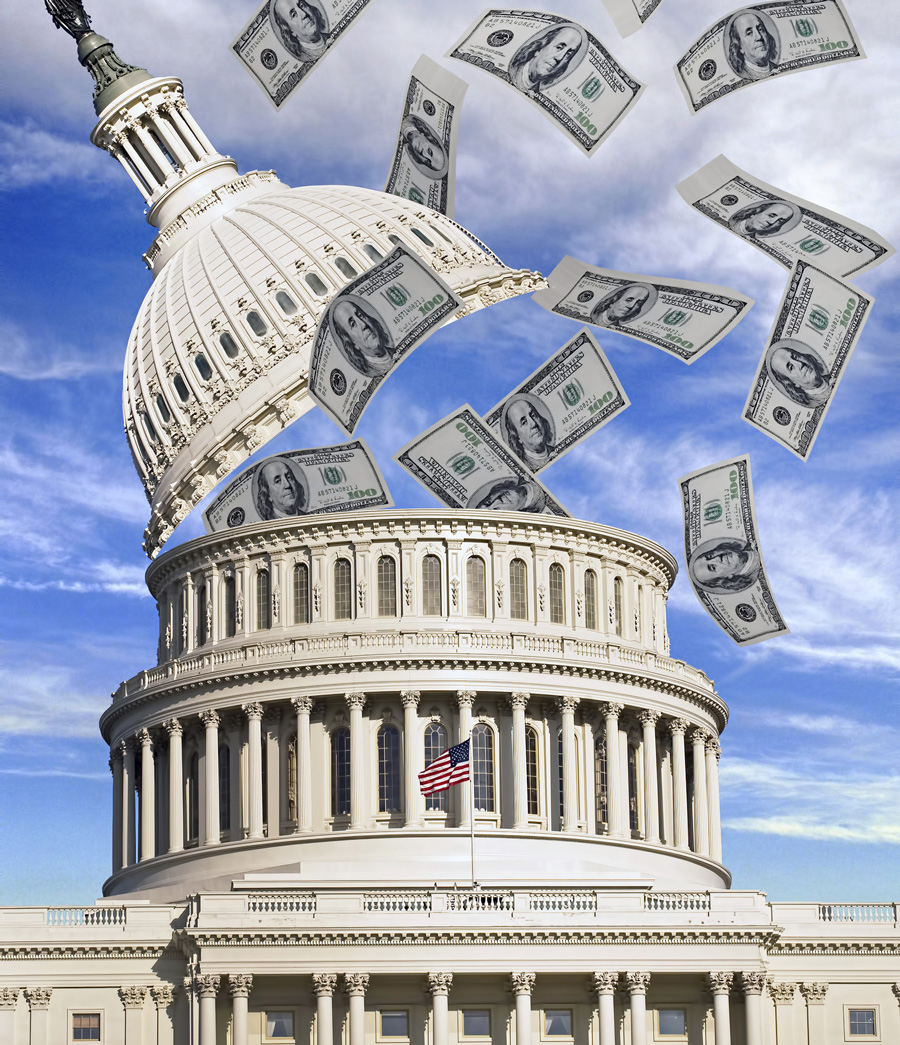
The results from Sunday's election in the state of Mecklenburg-Vorpommern were a slap in the face for the chancellor

German Chancellor Angela Merkel dreams of being elected to a fourth term next fall. The most popular leader in Europe has -- or more accurately, had -- every reason to dream. Until the immigrants started to arrive. Until the Germans grew angry, which obviously made them angry voters. Merkel welcomed the refugees from Syria as if she was Mother Theresa. But there was only one Mother Theresa. 

The results from Sunday's election in the state of Mecklenburg-Vorpommern were a slap in the face for the chancellor. This is her home state, an area that was part of the former east Germany. Merkel's Christian Democratic Union came in third place after the Social Democratic Party, which swept up 30.5% of the vote, and even worse, the new extreme-right party, Alternative for Germany, which won more than 21% of the vote and is gaining momentum after declaring war on immigrants. 

The fact that this party came in second should be a warning. Europe might not like Islamists, but it should be no less wary of the extreme Right, in Germany in particular. It's caught between a rock and a hard place. 

Europe is waking up, but on the wrong side. Europeans are frightened of the influx of immigrants, some of whom do not respect Europe's secular, or even Christian, character. Some of the immigrants belong to the Islamic State group or al-Qaida. Europe should have realized the dangers when terrorist attacks and violence were taking place. 

But in the name of morality, it opened its gates. That was a mistake. The extreme Right was lurking in the shadows. It realized what the conventional parties did not: that Europeans are scared. The results can be seen in the burkini scandal in France and an impressive showing for the extreme Right in Germany. This isn't what we'd hoped for. This isn't the way to fight terrorism. This isn't the way to fight radical Islam. This isn't the way to fight anyone who doesn't respect the laws of the state. 

A year ago, Germany was a "role model." The refugees came from Syria, Iraq, the African coast, and Afghanistan by the thousands. Under Merkel, Germany welcomed them. The slogan was "We Will Succeed." But Germans are startled at the sheer numbers: Over 1.1 million refugees arrived in the space of 18 months. Germans are worried not only about the economic ramifications but also terrorist attacks. Jihad, as well as refugees, has reached Europe's doorstep. The past few months have seen a number of incidents in Germany that did not provide residents with a sense of safety. 

Merkel is paying the price for her liberal immigration policy. A year ago, the media loved to point out the Germans' friendliness toward the waves of refugees. That was an initial response, and not universal. This time, Merkel didn't take the long view. She satisfied the media, political correctness, and morality. She just didn't understand that her policy was serving the interests of the extreme Right. 

Chancellor Merkel is deserving of accolades. Since she first entered office in November 2005, she has racked up achievements in many fields. "The telephone chancellor" earned worldwide support. She turned Germany into a place that was the envy of many, where people even dreamed of living. 

Maybe this is where the problem lies. Some people who shouldn't have come did. The results of the German election aren't really a surprise. All the analysts and predictions pointed to a sharp drop for Merkel's party. The people who voted on Sunday comprise a mere 2% of the voters in next year's general election. There is still time to fix things. But to do that, the conventional political parties in Europe, the ones that in France are termed "republican," must not leave the field to the extreme Right.


Boaz Bismuth

Source: http://www.israelhayom.com/site/newsletter_opinion.php?id=17103

Follow Middle East and Terrorism on Twitter

Copyright - Original materials copyright (c) by the authors.

Sunday, September 4, 2016

Church Attacks: Love Alone Will Not Save Us - George Igler


by George Igler

Rather than candidly facing up to the religious roots which motivate terrorist outrages, politicians and the press in Europe often pick up on outpourings of grief and express the need for "unity" as a means of dealing with such violence.

  • The fate of the Middle East's remaining Christians appears little these days in mainstream media news stories, which presently focus on terrorist outrages in Europe instead. Given the recent targeting of churches in several European nations, the omission is unfortunate.
  • The Australian academic, Dr. Mark Durie, has noted that this perspective contains a grave error: it is often used "as a pretext to censor those who ask the hard questions."
  • "Fight those who do not believe in Allah ... those who have been given the Book [Jews and Christians] until they pay the tax [jizya tribute] ... and they are in a state of subjection." – Koran, 9:29, (Shakir translation)
In the north-eastern Syrian city of Al-Qamishli, nestled on the border with Turkey, Islamic fundamentalists bombed St. Charnel Church, an ancient site of worship for the Assyrian Orthodox Christians.

On July 18, reported ARA News, gunmen detonated explosives inside the church. Activists point the finger of responsibility at ISIS. "We saw a huge fire and security forces arrived and extinguished the fire. But the church was completely destroyed, you can see only ashes here," remarked one eyewitness to the attack.

The fate of the Middle East's remaining Christians -- often open to abuse and attack at any moment -- appears little these days in mainstream media news stories, which presently focus on terrorist outrages in Europe instead. Reporting has likewise been dominated, since 2015, by coverage of the continuing Muslim migration from Africa and Asia into Europe.

Given the recent targeting of churches in several European nations, the omission is unfortunate.
On December 31, as a precursor to an orgy of mass sexual assaults committed against German women, the Christmas congregants of Cologne cathedral were left terrorized by Muslim migrants.

On February 15, French Interior Minister Bernard Cazeneuve was compelled to admit that attacks on Christian places of worship and cemeteries in France had leapt by 20% the previous year, with 810 recorded.

On March 27, news emerged that the jihadist group responsible for the Brussels airport and metro train bombings during the same month, "was planning to massacre worshippers at Easter church service across Europe, including Britain."

During April, Italian authorities made multiple arrests against a jihadist gang planning to attack both the Vatican and the Israeli embassy in Rome.

On the night of June 25, the jihadist war cry of "Allahu Akbar" ["Allah is the Greatest"] was daubed over the statue of St. Petronius -- the city's patron saint -- in Bologna, Italy.

On June 27, witnesses reported that a criminal yelling an "Allahu Akbar" desecrated St. Paul's Church in Malmö, Sweden, and smashing its windows.

And on July 26, nuns and an aged priest were taken hostage in Normandy, France. Resisting by his altar, 85-year old Father Jacques Hamel had his throat slit by a jihadist. The churchman's tomb has become a site of pilgrimage.

Heavily armed German police guard the Cathedral in Bremen in March 2015, after receiving intelligence information that jihadists planned to attack the city's Cathedral and synagogue. (Image source: Tagesschau video screenshot)

In the Middle East, in Syria, Christian communities, though living peaceably with their Muslim neighbors within recent memory, now find those very neighbors turning on them with the rise of fundamentalism.
Close at hand to where Christianity first began, Syria and its immediate neighbors hold various denominations that evolved in the centuries after the crucifixion. These include remnants of the Armenian, Melkite Greek and Syriac Catholic churches, and Armenian Apostolic, Syrian Oriental and Greek forms of Orthodoxy as well.

Ironically, these relatively unknown denominations of Eastern Christianity survived in the region, under a status of perpetual religious humiliation following their Islamic conquest. As extensively recorded by the Australian theologian Dr. Mark Durie, this status -- commonly called "dhimmitude" -- dominated the Islamic world, only waning in the last century.

During the same stretch of history, a jihad-wracked Europe later became largely subject to the strictures of Roman Catholicism, which commanded religious unity. Theologically, the continent was then rent asunder by the Protestant Reformation, beginning in 1517.

Throughout this time in the Islamic world -- and up to the present day in ISIS territory --– those Christians and Jews subjected to Islam who refused to convert to Mohammed's religion, had to pay a tax that prevented them from being slaughtered at whim by Muslims.

The jizya tax against conquered non-Muslims began being reintroduced by ISIS in June 2014.
As Durie notes, the underlying "pact of surrender came to be known as a dhimma or 'covenant of liability.'"
Based on the precedent of Khaybar[1], and also on the way Muhammad treated conquered Jewish farmers ... the institution of the dhimma was developed in Sharia law to provide for those of the conquered "People of the Book" who refused to convert to Islam.
Any community which negotiated a surrender to Islamic armies and became incorporated into the Dar al-Islam [Abode of Islam], was subject to a dhimma pact. This fixed the legal, social and economic place of non-Muslims in the Islamic state. In return, the people of the pact, known as dhimmis, were required to pay tribute (jizya) and other taxes in perpetuity to the Muslim Community (the Umma), and to adopt a position of humble and grateful servitude to it.
The rationalization for these historic events, and the violence which accompanied their eventual imposition, were enshrined by "divine" revelation, with verse 9:29 of the Koran stating (Shakir translation):
Fight those who do not believe in Allah ... those who have been given the Book [Jews and Christians] until they pay the tax [jizya tribute] ... and they are in a state of subjection.
As Carey Lodge at Christian Today reported, of the assault on the church in Al-Qamishli, "the attackers stole donation boxes from the church before detonating their explosives."

A significant proportion of Europe's present Muslim population in countries as far ranging as the UK, Germany, Belgium, France and Sweden, subsist financially on state welfare assistance.

In increasingly Islamized neighborhoods, few take the time to consider the security ramifications of just how long Europe's generous benefits systems are likely to survive -- many question their sustainability -- while European Union officials often state that mass immigration is in fact the solution to maintaining them.

What will happen when and if Europe's benefit systems do fail at some future date, given Western Europe's radically altering demography?

Rather than candidly facing up to the religious roots which motivate terrorist outrages, politicians and the press in Europe often pick up on outpourings of grief and express the need for "unity" as a means of dealing with such violence.

On November 20, following such calls for unity in the aftermath of the jihadist horrors visited on the Bataclan Theater in Paris, Durie noted, however, that this perspective contains a grave error: it is often used "as a pretext to censor those who ask the hard questions."

Accusations of bigotry are frequently leveled at European politicians such as Mogens Camre, in Denmark, Geert Wilders, in the Netherlands, and Björn Höcke, in Germany, who find the consequences of Islamic immigration alarming.

The presumption appears to be that if only such individuals and the unsettled masses they represent would show more fondness, tolerance and compassion towards Muslim immigration, all would ultimately be well in the fullness of time.

As Durie warns, however:
In this struggle it is wrong to privilege either love or truth, for we will need both. Truth without love can cause endless heartache. This is true. But love without truth can cause a naive blindness which meekly tolerates abuse and leads to suicidal submission.
This is likely to be a very long war. ... Yes, we will all need a lot of compassion. But without truth to strengthen it, love alone will not save us.
George Igler, between 2010 and 2016, aided those facing death for criticizing Islam across Europe.

[1] A key battle in early Islamic history leading to the slaughter and conquest of Jews.


George Igler, between 2010 and 2016, aided those facing death for criticizing Islam across Europe.

Source: https://www.gatestoneinstitute.org/8795/church-attacks

Follow Middle East and Terrorism on Twitter

Copyright - Original materials copyright (c) by the authors.
Trump's finest hour - Bill Weckesser


by Bill Weckesser

Win or lose, it's to Trump's credit that he's boldly going where neither Romney nor McCain had gone before.

It was, perhaps, his finest hour.  In soaring, Churchillian prose, Donald Trump addressed a black church in Detroit on Saturday.
For centuries the African American church has been the conscience of our country.  It's from the pews and pulpits and Christian teachings of black churches all across this land that the civil rights movement lifted its soul and lifted up the soul of the nation.  It's from these pews that our nation has been inspired toward a better moral character, a deeper concern for mankind, and a spirit of charity and unity that binds us all together.
The African American faith community has been one [of] God's greatest gifts to America and to its people.  There is perhaps no action our leaders can take that would do more to heal our country and support our people than to provide a greater platform to the black churches and churchgoers.  You do right everyday by your community and your families.  You raise children in the light of God.  I will always support your church and defend your right to worship.
 I am here today to listen to your message.  And I hope my presence here will help your voice to reach new audiences in our country. And many of these audiences desperately need your spirit and your thought.  Christian faith is not the past, but the present and the future.  Make it stronger.
Great Faith Ministries International sent written invitations to both Trump and Clinton.  He responded.  He was there.  As he was there in Louisiana.  His message was sincere, solemn, and sober.  He talked about driving with Bishop Wayne T. Jackson past boarded up businesses, affirming, "I want to help you build and rebuild Detroit.  And we can do that, especially with people like Bishop and Dr. Jackson."

Win or lose, it's to Trump's credit that he's boldly going where neither Romney nor McCain had gone before.  My hunch – it will pay dividends.  Notice the pushback from the mainstream-never-Trump-Democrat coalition.

There was also a visit to Dr. Ben Carson's childhood home in Detroit and another drive through that area. 

He's also heading to Flint...maybe on his journey to the White House.


Bill Weckesser

Source: http://www.americanthinker.com/blog/2016/09/trumps_finest_hour.html

Follow Middle East and Terrorism on Twitter

Copyright - Original materials copyright (c) by the authors.