Saturday, September 30, 2017

Attacking Israelis seen as way out for troubled Palestinians - AP and Israel Hayom Staff


by AP and Israel Hayom Staff

Out of some 400 terrorist attacks since September 2015, about 18% of assailants were driven by emotional and psychological issues, roughly two-thirds were ideologically motivated, and 15% were driven by unknown factors, Shin Bet security agency says.

For years, Palestinian laborer Nimr Mahmoud Ahmed Jamal would make the short daily commute from his West Bank village of Beit Surik to the nearby community of Har Adar, where he was known as a conscientious worker who earned the trust of local residents, some of whom he even befriended and invited to his wedding.

Then on Tuesday, he pulled out a gun at the back entrance to Har Adar, killed three security men and seriously wounded another before he was shot dead himself.

While Israeli and Palestinian officials traded blame for the shooting, the motive appears to be more pedestrian: Jamal was despondent over his broken marriage and apparently on a suicide mission.

Israeli and Palestinian experts say there have been dozens of similar cases throughout a two-year spate of violence in which suicidal Palestinians plagued by emotional and psychological issues carried out deadly attacks that retroactively were cloaked in nationalism.

Out of some 400 Palestinian attacks tracked by Israel since September 2015, about 18% of assailants were driven by personal issues, according to Israel's Shin Bet security agency. Roughly two-thirds of the cases were ideologically motivated, and 15% were driven by unknown factors, the agency said.

A Shin Bet official said despondent attackers have included the mentally ill, victims of domestic violence, people with economic hardships and women who had "dishonored their family" with sexual indiscretions.

Turning a personal grievance into a nationalist attack carries several advantages. While suicide is frowned upon in Palestinian society, attacks on Israelis, especially settlers or security forces, enjoy widespread support, and anyone killed in a clash with Israelis is seen as a "martyr." Their families are eligible for help from the "martyrs' fund," which provides stipends to relatives of people killed or imprisoned by Israel. The Israelis have long claimed this provides an incentive for Palestinian violence.

In the case of Jamal, a Shin Bet investigation found that the 37-year-old was a troubled man with a history of domestic violence. His wife had recently fled to Jordan to escape his abuse, leaving him behind with their four children. In a Facebook post, Jamal called himself a bad husband and asked for his wife's forgiveness.

His attack shocked the community of Har Adar, where he was a welcome visitor in many homes. The upscale settlement boasts of good relations with neighboring Palestinian villages like Beit Surik, Jamal's hometown.

"This is a single attacker, one guy who is a psycho, and we don't want to associate him with all the other Palestinian workers who have been coming here peacefully for 30 years," said Chen Filipovitz, the head of Har Adar's local council. "He had problems and he brought his problems to us."

Unlike previous rounds of fighting that were organized primarily by established militant groups, the current round has been characterized by "lone wolf" assailants. Israel accuses Palestinian leaders of inciting the violence, while Palestinians say it's the result of the frustration of living under occupation.

Critics say Israel has crippled the Palestinian economy with restrictions on trade, movement and development. With Palestinian unemployment high, tens of thousands of Palestinians work in Israel and settlements like Har Adar.

"People have no alternative to working in Israel and [in] settlements. We are under occupation and have no real economy," said Ahmed Jamal, the mayor of Beit Surik.

Still, in a book coming out this week, Palestinian lawmaker Khalida Jarrar said she conducted an informal study in Israeli prisons in which she found that of the 93 women jailed, 46 were there as a result of "social oppression."

Jarrar details the accounts of 10 who turned to violence because they were forced to marry against their will. Others described a desire to escape sexual harassment, embarrassing divorces, and abusive parents.

One 16-year-old girl told Jarrar that her father tormented her mother and made their life miserable. "I couldn't stand it, so I took a knife and went to the checkpoint," she was quoted as saying.

Jarrar, who spent over a year in prison after being convicted of incitement, denies the allegations and says Israel jailed her to silence her. In her book, the long-time advocate of women's and workers' rights also described difficult conditions for Palestinians in Israeli prisons.

Israel has enacted a policy of demolishing the houses of terrorists' families, claiming it is a deterrent. The military said Wednesday it was already preparing to raze Jamal's home, and Prime Minister Benjamin Netanyahu revoked the work permits of his relatives.

Hawkish politicians have advocated even tougher collective measures, such as banning Palestinian entrance into Israel completely, punishing the Palestinian Authority and launching a massive settlement drive.

But none of that would do much against those already in Israel with permits, or Palestinian residents of east Jerusalem, who have residency rights and freedom of movement in Israel.

in October 2015, Alaa Abu Jamal, a Jerusalem technician for Israel's phone company, rammed his company car into a crowd, killing one Israeli and wounding another without an apparent motive. A month later, Raed Masalma, an employee of a Tel Aviv restaurant, stabbed two people there.

In the Palestinian society, where psychological issues are considered taboo, many were reticent to discuss the phenomenon because they said it undermined their national cause. In Jamal's village of Beit Surik, most denied he was troubled.

The Palestinian Prisoners Affairs Ministry refused to discuss the issue for the same reason. However, a lawyer who works closely with many inmates agreed to do so anonymously so as not to violate the confidence of clients.


"Many assailants, particularly women, have carried out attacks to escape social problems," the lawyer said. "When you attack an Israeli you are a national hero."


AP and Israel Hayom Staff

Source: http://www.israelhayom.com/2017/09/29/attacking-israelis-seen-as-way-out-for-troubled-palestinians/

Follow Middle East and Terrorism on Twitter

Copyright - Original materials copyright (c) by the authors.

US envoy slams Russia for bid to shield Iran from IAEA inspections - Reuters and Israel Hayom Staff


by Reuters and Israel Hayom Staff 

"If the Iran nuclear deal is to have any meaning, the parties must have a common understanding of its terms. Without inspections, the Iran deal is an empty promise," Nikki Haley says.


U.S. Ambassador to the United Nations Nikki Haley  
Photo: Reuters  
 
U.S. Ambassador to the United Nations Nikki Haley on Thursday slammed a bid by Russia to shield Iran from inspections by the United Nations nuclear watchdog relating to a specific section of a landmark 2015 deal restricting Tehran's nuclear activities.

Iran agreed to the nuclear deal with six major powers in exchange for the lifting of sanctions. Compliance with the nuclear restrictions is being verified by the Vienna-based International Atomic Energy Agency.

Haley has infuriated Iran by saying the IAEA should widen inspections to include military sites, but diplomats say Russia has been trying to restrict the agency's role by arguing it has no authority to police a broadly worded section of the deal.

"If the Iran nuclear deal is to have any meaning, the parties must have a common understanding of its terms," Haley said in a statement. "It appears that some countries are attempting to shield Iran from even more inspections. Without inspections, the Iran deal is an empty promise."

Haley issued the statement in response to IAEA Director General Yukiya Amano telling Reuters that major powers needed to clarify the disputed section of the deal, which relates to technology that could be used to develop an atom bomb.

That section bans "activities which could contribute to the development of a nuclear explosive device." It lists examples such as using computer models that simulate a nuclear bomb or designing multipoint, explosive detonation systems.

Unlike many other parts of the deal, the provision, known as Section T, makes no mention of the IAEA or specifics of how it will be verified. Russia says that means the IAEA has no authority over it. Western powers and the agency disagree.

U.S. President Donald Trump has called the Iran nuclear deal - reached by predecessor Barack Obama – "an embarrassment to the United States."

Trump has hinted that he may not recertify the agreement when it comes up for review by a mid-October deadline, in which case the U.S. Congress would have 60 days to decide whether to reimpose sanctions waived under the accord, known officially as the Joint Comprehensive Plan of Action.


Reuters and Israel Hayom Staff

Source: http://www.israelhayom.com/2017/09/29/us-envoy-slams-russia-for-bid-to-shield-iran-from-iaea-inspections/

Follow Middle East and Terrorism on Twitter

Copyright - Original materials copyright (c) by the authors.

Iraq has slim hope of Iranian-Turkish backing against Kurds – even economic warfare - debkaFile


by debkaFile


Amid all the muscle-flexing and the beating of war drums, Iraq, Turkey and Iran are thinking twice before going to war on the Kurdish Republic of northern Iraq (KRG).
Iraq has slim hope of Iranian-Turkish backing against Kurds – even economic warfare


Amid all the muscle-flexing and the beating of war drums, Iraq, Turkey and Iraq [Iran?] are thinking twice before going to war on the Kurdish Republic of northern Iraq (KRG). For now, they are thinking in terms of economic punishment for Monday’s independence referendum.

On the military side, Baghdad has done little: On Saturday, Sept. 30, Iraqi troops were sent into Iran and Turkey for posting on their borders with Kurdistan. On Friday, an Iraqi aviation blockade was imposed on international air flights to the KRG, followed by a threat that Iraqi fighter jets would shoot down any passenger planes attempting to land at Irbil or Sulaymanieyh airports.

That threat effectively cleared Kurdish skies and airports of commercial traffic.

Local military commanders, including Kurds on the spot, reported that Iraqi forces were about to set up border crossings around the Kurdish republic parallel to the KRG border posts, pending permission from Tehran and Ankara. Iraqi customs officers would then impose heavy taxes on any vehicles entering Kurdistan.

Iraqi Prime Minister Haydar al-Abadi put these steps in train in an effort to compel KRG President Masoud Barzani to cancel the results of the referendum, which gave him a mandate to declare Kurdish independence and secede from Iraq.

His chances of achieving this are slim, according to DEBKAfile’s analysts. Barzani is not budging. And even for a full-scale economic blockade, Baghdad would depend on full military and economic cooperation from Ankara and Tehran.

If al-Abadi decided to go for the military option, he would expose Iraq to entanglement in a full-blown conflict, in which his Shiite-majority army would be forced to engage the Kurdish Sunni Peshmerga forces. And worse, it would carry a high risk of the Syrian Kurdish YPG militia joining the fray in large numbers. The Iraqi army could not hope to stand up to this combined force.

As for a full-scale economic war, then too Iraq would have to count on Iran and Turkey agreeing to seal their borders with Iraqi Kurdistan and suspending imports to and exports from the wayward republic. Turkey’s closure of the Kurdish-controlled Kirkuk oil pipeline to its Mediterranean coast would be highly effective; it would deprive the KRG of $17 billion in annual revenue.

On the other hand, Ankara would be seen reneging on the 50-year contract it signed with Irbil in 2014 (in the face of Baghdad’s objections) at high cost to Turkey’s international credibility as a trading partner, especially in the field of energy. It is hard to see President Tayyip Erdogan taking that risk.

Furthermore, Ankara’s stake in the Kurdish republic’s industry and other fields is extensive. More than 4,000 Turkish companies operate in the KRG, including many construction, cement and steel factories, accounting for an annual turnover of around $9 billion, which Ankara can’t afford to sacrifice.

Tehran’s dependence on Iraqi Kurdistan is likewise substantial: Many firms in western Iran rely heavily on the markets of Sulaymaniyeh in eastern Kurdistan for their exports, while the region buys many products from Kurdish suppliers.

For all these reasons, the front set up ad hoc by Baghdad, Ankara and Tehran to beat Barzani into relinquishing his plan for an independent Kurdistan state stands on shaky legs.

Furthermore, both the United States and Russia back the KRG and are unlikely to stand still for extreme measures against Irbil. Shortly before the referendum, The Russian energy giant Rosneft signed a contract to develop Kurdish oil and gas fields in Kirkuk to the tune of $1 billion.

It is now up to Barzani to decide how he wants to play the high card he has won by refusing to be intimidated into cancelling the independence referendum. He may get away with it, if he plays it cool and sits down with Baghdad, Tehran and Ankara for negotiations on the future. But if he goes all the way and declares Kurdish independence and separation from Iraq while tempers are still high, the KRG may be in for harsh punishment from its three enraged neighbors.


debkaFile

Source:  https://www.debka.com/iraq-slim-hope-iranian-turkish-backing-kurds-even-economic-warfare/

Follow Middle East and Terrorism on Twitter

Copyright - Original materials copyright (c) by the authors.

Palestinian Death Cult Cheers Har Adar Slaughter - Ari Lieberman


by Ari Lieberman


Palestinian terror attack underscores need for passage of Taylor Force Act.


Border Police Officer St. Sgt. Solomon Gabaria, and security guards Yussef Othman (an Israeli Arab), and Or Arish, watched the Palestinian Arab warily as he approached the security gate to Har Adar, a quaint community nestled in [the] Judean hills just north of Jerusalem. They had no reason to suspect 37-year old Nimer Mahmoud Ahmad Jamal. After all, Jamal had been working at Har Adar in the past as a cleaner and had a work permit. But something about the laborer’s gait and clothing drew their suspicions. It was a hot day yet he was wearing a jacket and he seemed jittery. When they asked him to halt for inspection, he drew a pistol and began firing with deadly precision.

Gabria, Othman and Arish – all in their early to mid-20s – were instantly hit and mortally wounded. A fourth Israeli was hit in the shoulder and hip but survived the attack. Another border policeman who witnessed the attack drew his automatic rifle and fired three bullets, killing the terrorist. Gabria had been seriously injured in a prior terror attack in Jerusalem but insisted on rejoining his unit just two months into his recovery. He along with Othman and Arish paid the ultimate price in defense of their country. Security forces immediately sealed off Beit Surik, the attacker’s village, and arrested three suspects, including two of his brothers on suspicion of assisting the assailant.

According to Israeli authorities, the weapon used in the attack had been reported stolen in 2003. The terrorist did not have a record of security related offenses and was apparently operating as a so-called, lone wolf. But the term lone wolf is a misnomer because the Palestinian Authority, the entity that governs Palestinian Arabs in Judea and Samaria, subjects its population to a steady diet of vitriolic incitement and antisemitism. No doubt that PA sanctioned incitement played a role in Jamal’s mindset. In PA vernacular, Jews are the descendants of apes and pigs and loyal non-Jewish Israelis are deemed collaborators and stooges.

Israeli authorities noted that Jamal was an abusive husband who frequently beat his wife. She fled to Jordan some weeks ago and left him with their four children. In a Facebook message posted just prior to the attack, Jamal acknowledged that he had been a bad husband and father. He followed up that post with other messages laced with Islamic undertones including the common Muslim creed, “there is no God but God [Allah].” Apparently, Jamal used his marital woes to somehow justify mass murder. Perhaps he thought he would find bliss among 72 virgins.

The U.S. embassy issued a swift and harsh condemnation of the attack. Ambassador David Freedman tweeted, “Once again, Israelis confront the cruel and evil brutality of unprovoked terrorism. We pray for the victims at Har Adar and their families.” That sentiment was echoed by Jason Greenblatt, Trump’s Special Representative for International Negotiations who tweeted, “My family & I are horrified by the attack in Har Adar. Shame on Hamas & others who praised the attack. All must stand against terror!” It is refreshing to note that after an eight year hiatus, U.S.-Israeli relations are back on track with the current administration dispensing with the usual politically correct, equivocal banalities and forcefully acknowledging who the good and bad guys are. The European Union also condemned the attack and criticized Hamas for glorifying the assailant and his actions.

Among the Palestinian Arabs, it was an entirely different story. The Hamas terrorist entity that runs the Gaza Strip praised the attack and hailed Jamal as a martyr. In the Gaza Strip, jubilant crowds, like the ones witnessed in Gaza after the 9-11 and Boston marathon bombing attacks, danced in the streets and handed out sweets to passersby in macabre celebration of the murders.

Among Palestinian Arabs residing in the West Bank, the scene was no less disturbing. Hamas’s rival Fatah, the political party of the PA’s “moderate” Mahmoud Abbas, also glorified the attack and painted a portrait of the terrorist as a hero and martyr. Fatah also promised to pay a stipend to the terrorist’s family. The Palestinian practice of “pay for slay” is routine with some Palestinian families of terrorists receiving upwards of $3,000 a month. In fact, a substantial portion of the Palestinian budget is allocated toward paying the families of convicted or killed terrorists. Most of the Palestinian budget is derived from foreign donations, including aid from the U.S. and EU, making these nations indirectly complicit in perpetuating terrorism.

The United States however, is taking the situation seriously. The Taylor Force Act – named after Taylor Force who was murdered by a Palestinian Arab who went on a stabbing spree in Jaffa – is slated to be signed into law. The bill, which has garnered strong bipartisan support and has already overcome committee hurdles, would compel the State Department to terminate funding for the PA over its macabre practice of “pay for slay.” The Trump administration has voiced support for the legislation and Trump said he would sign the bill into law.

The reflexive Palestinian reaction to rejoice in response to brutal acts of violence and terrorism is medieval and aberrant. What kind of society produces a people who almost ritually revel in blood and gore and celebrate the deaths of innocents? The more salient question is; are people who rejoice when civilians are killed worthy of statehood? The answer seems patently obvious.    


Ari Lieberman is an attorney and former prosecutor who has authored numerous articles and publications on matters concerning the Middle East and is considered an authority on geo-political and military developments affecting the region.

Source: http://www.frontpagemag.com/fpm/268010/palestinian-death-cult-cheers-har-adar-slaughter-ari-lieberman

Follow Middle East and Terrorism on Twitter

Copyright - Original materials copyright (c) by the authors.

The Quiet Islamic Conquest of Spain - Giulio Meotti


by Giulio Meotti

Some Islamists do it with bombs and car-ramming attacks. Others, more surreptitiously, do it with money and dawa, Islamic propaganda.

  • "Evicted five centuries ago by crusading Christians, the Arabs are back in Spain, using their oil dollars to buy land that was seized from their ancestors by the sword". — James M. Markham, The New York Times, 1981.
  • The Madrid daily ABC wrote that 800 mosques in Spain are out of control. The Spanish daily La Razon charged that Gulf donors, such as Qatar, were a source of Spain's Islamization. The Saudis also launched a new Spanish television channel, Córdoba TV, as did Iran.
  • They dream of, and work to, regain the "lost Caliphate" of Spain. Some Islamists do it with bombs and car-ramming attacks. Others, more surreptitiously, do it with money and dawa, Islamic propaganda. The second way may be even more effective than the first.
The ceremony in 2003 was announced with bombastic headlines: "After a wait of more than 500 years, Spanish Muslims, have finally succeeded in building a mosque of their own in the shadow of the Alhambra, once the symbol of Islamic power in Europe". A troupe from al Jazeera was sent to follow the event: a muezzin climbed to the minaret of the Great Mosque of Granada to call the faithful to prayer for the first time in five centuries.

From Osama bin Laden to the self-proclaimed Caliph, Abu Bakr Al Baghdadi, all the leaders of the global jihad -- including the terror cell that killed 17 people in Barcelona -- have mentioned Spain among the lands to be conquered by Islam. There is, however, not only jihad. There is also "the quiet conquest", as it has been dubbed by the French magazine, Valeurs Actuelles. The quiet conquest is a sinuous attempt to re-Islamize Spain through cultural centers, mega-mosques, proselytizing, conversions and financial investments. This pacific attempt to elicit submission has been underway for some time and has been backed by a flow of money from countries such as Qatar and Saudi Arabia. According to a former commander of British forces in Iraq, General Jonathan Shaw, these two countries in particular have ignited a "time bomb" by funding the global spread of radical Islam.

The New York Times first detailed in 1981 that, "evicted five centuries ago by crusading Christians, the Arabs are back in Spain, using their oil dollars to buy land that was seized from their ancestors by the sword". Spain back then did not even recognize the State of Israel, and the Spanish monarchy regularly visited Saudi Prince Fahd while he was relaxing in the south of Spain. After that, it was Kuwait's turn: "During the late 1980's, when Spain was booming, Kuwait came shopping for corporations and investments".

Since then, the Arab monarchies have targeted Spain with huge investments. Some emblematic buildings in Madrid and Barcelona, ​​not to mention the Costa del Sol, are now owned by Arab investment groups, from the Santiago Bernabeu stadium in Madrid to the W Hotel in Barcelona. In Marbella, just a few meters away from the King Fahd Mosque, there is the Alanda Hotel, which offers halal food and services to meet the demands of the Muslim clients. In 2011, the International Petroleum Investment Company, controlled by the Emirate of Abu Dhabi, purchased Cepsa, the second-largest Spanish company in the oil sector.

Last January, Spain's King Felipe VI visited Saudi Arabia and announced that Spain would boost economic, trade and investment relations with the Islamic kingdom. Before that, in 2012, Saudi Aramco awarded Spanish companies projects worth $700 million. Spain and Qatar are now discussing the formation a $1 billion joint investment fund that would help the Gulf state invest in Latin America. The Arab Emirates' media called Spain "a hotspot for investment from the Arab world". After Qatar, it was the Oman's turn to invest in the Spanish market: Oman just agreed to invest up to $120 million in a uranium mine in Spain, to be used for Omani nuclear energy plants.

Demographically, Muslims are witnessing a shocking population increase in Spain. In 1990, Muslims in the country numbered 100,000. By 2010, the number had increased to 1.5 million. In 2017, the number was nearly two million. It is a growth of 1,900% in 27 years.

Today there are 1,400 mosques in Spain. According to the Observatory of Religious Pluralism in Spain (an initiative of the Ministry of Justice), "this figure represents 21% of all places of worship for all religions present in Spain".

The most prolific funder of mosques in Spain is Saudi Arabia. In 1985, using only its own money, the Saudi kingdom opened the Islamic Cultural Center in Madrid, Europe's largest mosque, followed by the Islamic Center of Malaga, which the Saudis financed with 22 million euros (today the ​​Madrid area has 112 mosques and Islamic cultural centers). As Gatestone's Soeren Kern detailed, the Saudis have built mosques everywhere, from Marbella to Fuengirola.

Islamic rogue regimes, such as Iran, have also been able to infiltrate Spanish political parties. According to an investigation, Tehran gave money to Podemos, the leftist party which emerged as a new contender in the Spanish political arena.

The Madrid daily ABC wrote that 800 mosques in Spain are out of control. The Spanish daily La Razon charged that Gulf donors, such as Qatar, were a source of Spain's Islamization. The Saudis also launched a new Spanish television channel, Córdoba TV, as did Iran.

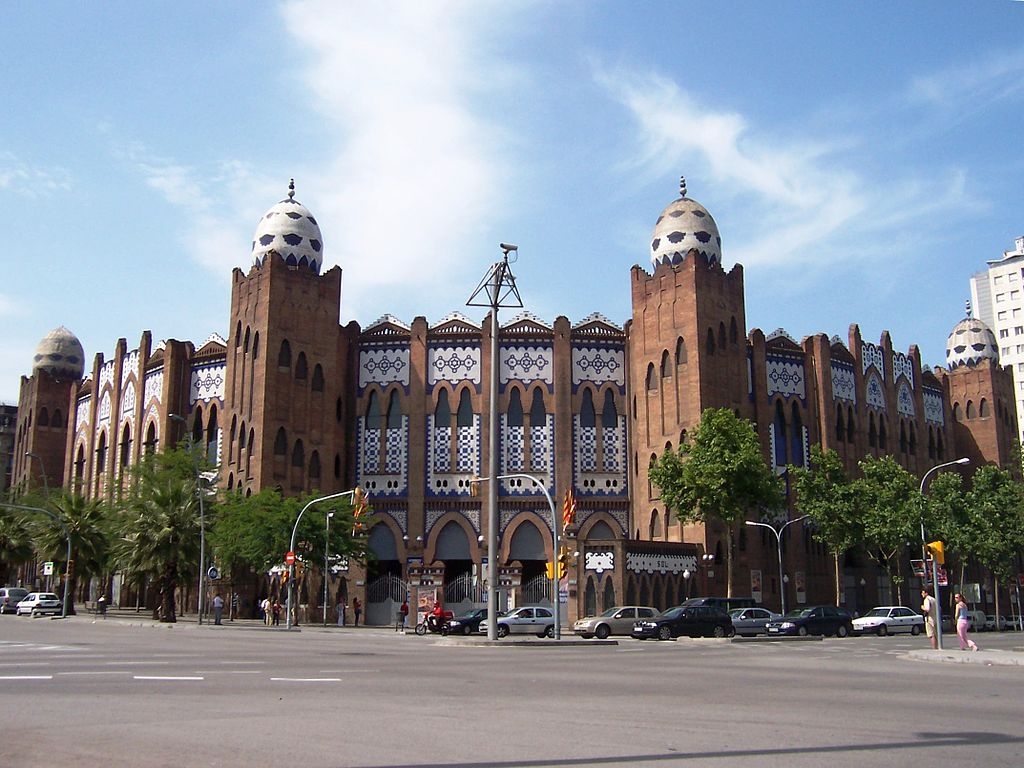
The details of this religious proliferation are detailed The Spain of Allah, a book by Ignacio Cembrero. While the number of Catholic churches in Spain has not undergone much variation for many years, Muslim mosques have been growing at a rate of 20% percent annually. Qatar's Sheikh Tamim bin Hamad al Thani has also offered to buy La Monumental Arena in Barcelona to turn it into Europe's biggest mosque. The United Arab Emirates funded the construction of the Great Mosque of Granada.


Qatar's Sheikh Tamim bin Hamad al Thani has offered to buy La Monumental Arena in Barcelona, with its nearly 20,000 seats, to turn it into Europe's biggest mosque. (Image source: Sergi Larripa/Wikimedia Commons)
They dream of, and work to, regain the "lost Caliphate" of Spain. Some Islamists do it with bombs and car-ramming attacks. Others, more surreptitiously, do it with money and dawa, Islamic propaganda. The second way may be even more effective than the first.

Giulio Meotti, Cultural Editor for Il Foglio, is an Italian journalist and author.

Source: https://www.gatestoneinstitute.org/11046/spain-islamic-conquest

Follow Middle East and Terrorism on Twitter

Copyright - Original materials copyright (c) by the authors.
University of North Carolina: Whitewashing Anti-Israel Terrorism - Sara Dogan


by Sara Dogan


UNC SJP invited the daughter of convicted terrorist Sami Al-Arian to campus.


FrontPageMag Editor's note: The David Horowitz Freedom Center is naming the “Top Ten Worst Schools that Support Terrorists.” The latest school to be named to this list is the University of North Carolina-Chapel Hill. UNC joins the University of California-Berkeley, the University of California-Irvine, the University of Chicago, DePaul University, Brandeis University, Brooklyn College, and San Francisco State University on the list. Coinciding with the naming of UNC to this list, the Freedom Center placed posters on the Chapel Hill campus exposing the links between Students for Justice in Palestine and the terrorist organization Hamas, whose stated goal is the destruction of the Jewish state.

As revealed in recent congressional testimony, Students for Justice in Palestine is a campus front for Hamas terrorists. SJP’s propaganda activities are orchestrated and funded by a Hamas front group, American Muslims for Palestine, whose chairman is Hatem Bazian and whose principals are former officers of the Holy Land Foundation and other Islamic “charities” previously convicted of funneling money to Hamas. The report and posters are part of a larger Freedom Center campaign titled Stop University Support for Terrorists. Images of the posters that appeared at UNC and other campuses may be viewed at www.stopuniversitysupportforterrorists.org.

University of North Carolina-Chapel Hill:

UNC-Chapel Hill has supported the Hamas inspired and funded BDS movement on its campus in multiple ways, promoting apps that help consumers boycott Israeli products and inviting BDS proponents such as disgraced former University of Illinois Professor Stephen Salaita to campus. During his address, Salaita accused Zionists of making phony claims of anti-Semitism to hide Israel’s purported war crimes. UNC’s SJP chapter has also invited Laila Al-Arian, daughter of infamous University of South Florida professor Sami Al-Arian, to campus. Sami Al-Arian is the number two leader of Palestinian Islamic Jihad, responsible for over 99 murders in the Middle East, who pled guilty to charges of terrorism. At a campus event, his daughter promoted the idea that her father was forced into a guilty plea. UNC SJP has celebrated “Israeli Apartheid Week” and has held numerous events to promote Hamas propaganda on campus including a “Vigil for Palestine” which claims to commemorate victims of the “Israeli Occupation” and screenings of films that vilify Israel such as “Occupation 101.”

Supporting Evidence:

In March 2016, UNC SJP hosted Laila Al-Arian, daughter of Sami Al-Arian, a former professor at the University of Southern Florida who was indicted and pled guilty in 2006 of conspiring to aid the terrorist organization, Palestinian Islamic Jihad. The event also involved a screening of the film, “USA vs Al-Arian.” The film was promoted by SJP this way: “Is Al-Arian a threat to national security or is his First Amendment right to free speech at the heart of this case? At this time of heightened anti-Muslim rhetoric and sentiment, the film USA vs. Al-Arian is a sober reminder of the vulnerability of Arab Americans and Muslims living in the US and all of our civil rights.”

In March 2016, UNC SJP re-posted a link from anti-Israel activist Noura Erakat which celebrated the GS4’s decision to divest from Israel, thereby supporting the Hamas backed and funded BDS movement:

“G4S announces plans to drop its Israeli subsidiary to extract itself from ‘reputationally damaging work’ over the next 12-24 months. Translation: they’re about to divest from Israel. They’ll also divest from juvenile detention centers in the US and UK. What a tremendous success for a 4-year campaign. Mabruk to all the fierce ones who laid these tracks! #BDS #AnotherOne #Onward”

In December 2015, UNC SJP shared a video on social media about Israel’s security fence, which reduced Jewish deaths from terrorist attacks by more than 1,000 in its first year, labeled it an “Apartheid Wall” and falsely claimed that its key purpose is not security but rather to occupy more Palestinian land.

On November 18, 2015, UNC SJP hosted a screening of the anti-Israel film “Occupation 101” which falsely claims that Israel is occupying Palestinian land. According to the Amcha Initiative, “The film contains several anti-Semitic themes, including that Israel is guilty of ‘ethnic cleansing;’ that Israel’s actions against the Palestinians are a form of colonialist aggression; and that Jews in America wield excessive power over American foreign policy.”

On October 29, 2015, UNC SJP held a “Vigil for Palestine” to commemorate the Palestinians killed as a result of the “Israeli Occupation,” making clear that SJP takes the Hamas perspective that Israel is the aggressor in the Middle East rather than the victim of constant terrorist threats from the Palestinians. The event description states: “Since October 1, 52 Palestinians have been killed and over a 1,000 have been injured as a result of the Israeli occupation. Please join us in commemorating the lives of the dozens of Palestinians who have died in this month alone. This is an opportunity for students and community members to mourn and to remember the victims of this violent military occupation. The recent spike in violence exposes the ugly reality of the occupation and the incredible harm it does to those who have to endure it.” Of course there are no Palestinian deaths as a result of “Israeli occupation.” They are casualties of a terror war that Arabs have waged against Israel since 1948.

In April 2015, the co-founder of “Muslims for Justice” at UNC wrote a letter published in the campus paper, the Daily Tar Heel, which protested the fact that David Horowitz had been invited by the College Republicans to speak on campus. The letter falsely labeled Horowitz as “a prominent member of the Islamophobia network as documented by the Center for American Progress.” The “Islamophobia network” is an invention of the Muslim Brotherhood to silence critics of Islamic terror. (SJP co-founder and Brotherhood agent Hatem Bazian is also the head of UC Berkeley’s “Islamophobia Studies Program.”) The letter did state correctly that Horowitz in his address “linked Muslim Students’ Association and Students for Justice in Palestine to terrorism” but did not address any of the multitude of evidence Horowitz provided to back up this assertion.

On March 10, 2015, UNC SJP promoted “Buycott” and BDS apps on its Facebook page. These apps make it easier for consumers to boycott Israeli products, and support the Hamas promoted and funded BDS movement against Israel.

On February 5, 2015, Steven Salaita, who was fired from the University of Illinois for his numerous bigoted statements about Jews and Israelis, gave a talk at UNC on “Academic Freedom and the Corporate University.” During his address, according to the Amcha Initiative, Salaita “demonized Israel, falsely accusing it of barbarity, brutality and depravity, and of perpetrating war crimes and mass slaughter, and he delegitimized Israel by falsely accusing it of settler colonialism.”  Salaita also promoted the Hamas-supported and funded BDS movement against Israel and “falsely accused Zionists of making ‘phony claims of antisemitism’ to mask Israel’s war crimes and shut down all criticism of Israel.” Salaita’s speech was co-sponsored by UNC SJP and several UNC departments including Asian Studies, anthropology and sociology.

In February 2015, UNC SJP held a “Short film night: Recent docs and dramas from and about Palestine” as part of the celebration of “Israeli Apartheid Week,” an anti-Israel hate fest meant to demonize the Jewish state.

On January 29, 2015, SJP at UNC-CH staged a mass walkout of about 70 students from a pro-Israel event hosted by Christians United for Israel which featured speaker Dumisani Washington. SJP’s refusal to engage and ask questions at a pro-Israel event echoes Hamas’s policy of anti-normalization under which they will not negotiate or agree to civil relations with groups supporting the state of Israel.


Sara Dogan

Source: http://www.frontpagemag.com/fpm/268006/university-north-carolina-whitewashing-anti-israel-sara-dogan

Follow Middle East and Terrorism on Twitter

Copyright - Original materials copyright (c) by the authors.

Europe: What do Islamic Parties Want? - Judith Bergman


by Judith Bergman

Islamist parties have begun to emerge in many European countries, such as the Netherlands, Austria, Belgium, and France.

  • Sweden's Jasin party is not unique. Islamist parties have begun to emerge in many European countries, such as the Netherlands, Austria, Belgium, and France.
  • In the Netherlands, Denk ran on a platform against the integration of immigrants into Dutch society (instead advocating "mutual acceptance", a euphemism for creating parallel Muslim societies); and for establishment of a "racism police" that would register "offenders" and exclude them from holding public office.
  • "I consider every death of an American, British or Dutch soldier as a victory". — Dyab Abu Jahjah, leader of a group called Movement X and possibly starting an Islamist party in Belgium. The Belgian political magazine Knack named Jahjah the country's fourth-most influential person.
  • The "I.S.L.A.M" party, founded in 2012, is working to implement Islamic law, sharia, in Belgium. The party already has branches in the Brussels districts of Anderlecht, Molenbeek and Liege. The party wants to "translate religion into practice".
  • In France, as the journalist Yves Mamou recently reported, the PEJ has already approved 68 candidates and wants to abolish the separation of church and state, make veils mandatory for schoolgirls in public schools, introduce halal food in all schools and fight "Islamophobia".
Sweden's brand new first Islamic party, Jasin, is aiming to run for the 2018 parliamentary elections. According to the website of the party, Jasin is a "multicultural, democratic, peaceful party" that is "secular" and aims to "unite everyone from the East... regardless of ethnicity, language, race, skin color or religion". Jasin apparently knows what the Swedes like to hear.

In an interview, the founder and spokesperson of the party, Mehdi Hosseini, who came from Iran to Sweden 30 years ago, revealed that the leader of the new political party, Sheikh Zoheir Eslami Gheraati, does not actually live in Sweden. He is an Iranian imam, who lives in Teheran, but Jasin wants to bring him to Sweden: "I thought he was such a peaceful person who would be able to manifest the peaceful side of Islam. I think that is needed in Sweden," said Hosseini.

The purpose of the Jasin party, however, does not appear to be either secular or multicultural. In its application to the Swedish Election Authority, the party writes -- with refreshing honesty -- that it will "firstly follow exactly what the Koran says, secondly what Shiite imams say". The Jasin party also states that it is a "non-jihadi and missionary organization, which will spread Islam's real side, which has been forgotten and has been transformed from a beautiful to a warlike religion..."

In mid-September, the Swedish Election Authority informed Jasin that it failed to deliver the needed signatures, but that it is welcome to try again. Anna Nyqvist, from the Swedish Election Authority, said that a political party with an anti-democratic or Islamic agenda is eligible to run for parliament if the party's application fulfills all formalities. Nyqvist considers it unproblematic that the leader of the party lives in Iran. "This is the essence of democracy, that all views should be allowed. And it is up to them to choose their party leader", Nyqvist said.

Sweden's Jasin Party is not unique. Islamist parties have begun to emerge in many European countries, such as the Netherlands, Austria, Belgium, and France.

In the Netherlands, two Dutch Turks, former members of the Socialist party, founded a new party, Denk, only six months before the Dutch parliamentary elections. Despite the short timeframe, they managed to get one-third of the Muslim vote and three seats in parliament. The party does not hide its affinity for Turkey: Criticism of Turkey is taboo just as is their refusal to name the Turkish mass-slaughter of the Armenians during the First World War a genocide. The party ran on a platform against the integration of immigrants into Dutch society (instead advocating "mutual acceptance", a euphemism for creating parallel Muslim societies); and for establishment of a "racism police" that would register "offenders" and exclude them from holding public office.

In Austria, Turkish Muslims also formed a new party, the New Movement for the Future (NBZ), established in January 2017. According to its founder, Adnan Dincer, the NBZ is not an Islamic party or a Turkish party, despite being composed mainly of Turkish Muslims. Several of the party's Facebook posts are written only in Turkish. Dincer has made no secret of the fact that his party strongly backs Turkish President Recep Tayyip Erdogan, whom it publicly supported at the time of the coup attempt in August 2016, and the subsequent clampdown by the Erdogan government.

In Belgium, several Islamic parties are preparing to run in the next elections. Dyab Abu Jahjah, apparently behind one of them, while not having presented a formal platform yet, has said he wants to "be part of an egalitarian radical renaissance that will conquer Brussels, Belgium, Europe and the whole world, with new politics of radical equality... defeat the forces of supremacy... of sustained privileges ... of the status-quo... in every possible arena".

Jahjah is a Lebanese immigrant, who emerged on the European scene, when he founded the now defunct Brussels-based Arab-European League in 2001. It was a pan-European political group aiming to create a Europe-wide "sharocracy" -- a supposedly sharia-based "democracy". In 2001, after the September 11 terror attacks, Jahjah said that he and many Muslims had felt a "sweet revenge feeling". In 2004, Jahjah said that he supported the killing of foreign troops in Iraq. "I consider every death of an American, British or Dutch soldier as a victory". He has also been opposed to the assimilation of Muslims, which he has described as "cultural rape".

Jahjah used to be considered a Hezbollah-supporting extremist, and, although he describes himself as a "political friend" of Jeremy Corbyn, he was banned from entering Britain. In Belgium, however, he is seen as a respectable activist, leader of a group called Movement X, and formerly with his own weekly column in the Belgian daily De Standaard. The Belgian political magazine Knack named Jahjah the country's fourth-most influential person, just behind Manchester City footballer Vincent Kompany. In January 2017, however, De Standaard fired Jahjah after he praised a terror attack in Jerusalem. "By any means necessary, #freepalestine," Jahjah had tweeted after an Muslim ISIS-affiliated terrorist plowed a truck through a crowd of young Israeli soldiers visiting Jerusalem, killing four and injuring countless others.


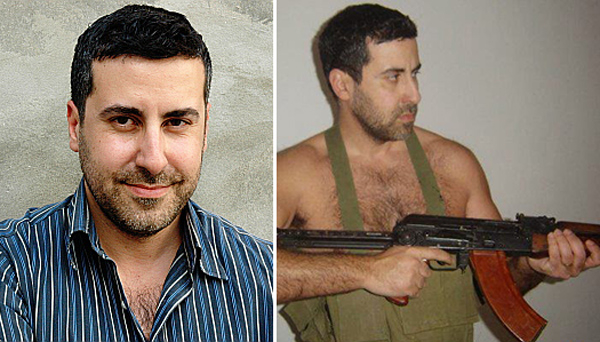
Dyab Abu Jahjah, named by the political magazine Knack as Belgium's fourth-most influential person, said after the September 11, 2001 terror attacks that he and many Muslims had felt a "sweet revenge feeling". In 2004, he said that he supported the killing of foreign troops in Iraq. (Left-pane image source: Han Soete/Wikimedia Commons)
Jahjah will likely experience fierce competition from the "I.S.L.A.M" party, founded in 2012, and working to implement Islamic law, sharia, in Belgium. The party already has branches in the Brussels districts of Anderlecht, Molenbeek and Liege. The party wants to "translate religion into practice". One member explained that, "It's no coincidence that we started in Brussels. Here there are a lot of Muslims... who are not allowed to come forward with their identity too much...They are therefore frustrated. That can lead to radicalization".

The party has put forth a mayoral candidate for the Brussels municipal elections in 2018: Michel Dardenne, who converted to Islam in 2002. In his program, Dardenne speaks mainly of how much the party respects Belgian democracy and its constitution, while simply wanting to help an undefined populace against "the elites". He may have found it easier to appeal to "progressive" non-Muslims that way. Brussels, 25% Muslim, has enormous potential for Islamic parties.

In France, several Islamic parties are also preparing to run in elections. One party is the PEJ, established in 2015 by French-Turkish Muslims and reportedly connected to Recep Tayyip Erdogan's AKP. As the journalist Yves Mamou recently reported, the PEJ has already approved 68 candidates and wants to abolish the separation of church and state, make veils mandatory for schoolgirls in public schools, introduce halal food in all schools and fight "Islamophobia".

How many Europeans are even paying attention to their agendas?

Judith Bergman is a columnist, lawyer and political analyst.

Source: https://www.gatestoneinstitute.org/11017/europe-islamic-parties

Follow Middle East and Terrorism on Twitter

Copyright - Original materials copyright (c) by the authors.
Is the Argument for Regime Change in Iran Well Founded? - Shahriar Kia


by Shahriar Kia

What makes regime change in Iran unique is the fact that it requires no foreign intervention. The people of Iran and their organized resistance have the potential to bring about change from Inside Iran.

During his first address to the UN General Assembly in September, President Donald Trump offered a perspective on the people and the regime of Iran that starkly differed from that of his predecessors. He accurately attested that “The entire world understands that the good people of Iran want to change.” He described the Iran nuclear deal as “an embarrassment,” called off the Iranian regime for its export of “violence, bloodshed, and chaos,” and underlined that “Iran’s people are what their leaders fear most.”

These remarks from the president of the United States are a positive signal after three decades of failed appeasement toward the mullahs ruling Iran. And the testament to the fact are the reactions of Iranian officials, which betray their fear and consternation.

In a meeting with the Assembly of Experts, Ali Khamenei, the Supreme Leader of the Iranian regime called Trump’s speech “foolish, extremely ugly and hideous” and “gangster and cowboy language fraught with sheer lies.”

“Mr. Trump said the wrong things in the wrong place to the wrong people,” Rouhani said to the state television.

The question that remains is whether President Trump’s remarks at the UNGA were simply a reaction to the failure of the appeasement policy, or was it the result of the natural course of events and the geopolitical dynamics governing the Middle East? Has the explosion in connectivity and social media services been effective in conveying the message of the Iranian people, who want the world to know about their desire for freedom and human rights?

Without a doubt, all of these parameters have been effective. But what are the real foundations of Washington’s new approach to the desires of the Iranian people for regime change?

Uprisings

The first factor that challenges the power of the ruling regime is the looming threat of uprisings. From an economic and social perspective, there has always been a potential for nationwide uprisings in Iran.

The first big occurrence of widespread protests was in 1981 when more than 500,000 people took to the streets of Tehran and demanded the overthrow of the theocratic regime. The protest was brutally suppressed and ruthless executions of protestors and dissidents ensued.

In the summer of 1988 alone, 30,000 political prisoners, mostly members of the opposition group People’s Mojahedin Organization of Iran (PMOI/MEK), were executed in the span of a few months and were buried in secret graves.

In 1999 and 2009, uprisings erupted again. While the regime smothered both instances with a brutal crackdown, yet the potential for another uprising remains, and the ashes wait to be stirred once again.

Presently, sporadic protests are slowly building up across the country and gaining momentum. An example is the staged protests against the Arman and Caspian foundations, two financial organizations run by the Revolutionary Guards, which have been plundering the people’s wealth at an unprecedented scale. Following the start of Rouhani’s second term as president, social dissatisfaction with the current state of affairs has increased.

Infighting

The second factor that is weakening the regime is the ongoing power struggle between the Supreme Leader and other factions within the regime. So long as the country’s constitution is based on the “guardianship of the jurist,” every key decision will be made by the Supreme Leader. The Supreme Leader is also the commander in chief, which leaves the president with no substantial power.

This religious dictatorship is founded on fundamentalist interpretations of Islam and sees its survival as bound to domestic suppression and foreign terrorism. However, the mullahs’ crimes in the past four decades have intensified the hatred of the Iranian people toward them.

Earlier this year, the UN Special Rapporteur on the Human Rights Situation revisited the mass execution of 30,000 Iranian political prisoners in 1988 in her report to the Secretary-General. Moreover, activists and international human rights organizations have called for an independent investigation into this crime against humanity, placing the Iranian regime in another political and social dead end.

A War of Attrition in the Middle East

The Iranian regime is stuck in three long regional wars, involving Yemen, Syria, and Iraq. Some analysts and politicians perceive the Iranian regime’s meddling in these three countries as a sign of power and stability. However, contrary to what Khamenei and other regime officials have insisted on time and again, if they abandon their intervention in the countries of the Middle East, they’ll be fighting their wars in the streets of Tehran. Therefore, the sole purpose of the Iranian regime’s regional forays is to avoid its collapse. The regime’s nuclear and ballistic missile project is for the same purpose.

The Coalition of Arab Countries and U.S. Against Iran’s Regional Ambitions

The coalition of Arab countries and the U.S., the imposition of further sanctions against the Iranian regime’s regional meddling, and the end of the golden era of the Obama administration have faced the regime of Tehran with further challenges. Officials in the new U.S. administration rightly insist that the real threat of Iran comes not only from its nuclear ambitions but also from its ballistic missile program, its chaos mongering in the region and its human rights abuses. The only durable solution to those collective threats is regime change in Iran.

The Existence of a Reliable Alternative to Replace the Regime in Iran

What makes the replacement of a tyrannical regime viable is the presence of a recognized alternative that has a distinct political, social and economic platform for the future, which enjoys the support of the international community. The existence of such a resistance and its international recognition is one of the main parameters that will pave the way for uprisings against the ruling dictatorship.

Iran currently has a democratic alternative, led by Mrs. Maryam Rajavi, a Muslim woman who opposes fundamentalism and bases her faith on tolerance. Mrs. Rajavi’s ten-point plan has been praised and acknowledged by many political personalities, jurists, parliamentarians, and human rights activists across the world.

Three decades of appeasement toward Tehran has not moderated the behavior of the Iranian regime -- it has made it worse. However, the foundations for change in Iran exist. What makes regime change in Iran unique is the fact that it requires no foreign intervention. The people of Iran and their organized resistance have the potential to bring about change from Inside Iran.

Shahriar Kia

Source: http://www.americanthinker.com/articles/2017/09/is_the_argument_for_regime_change_in_iran_wellfounded.html

Follow Middle East and Terrorism on Twitter

Copyright - Original materials copyright (c) by the authors.

Thursday, September 28, 2017

Israel foils ISIS-inspired attack at Jerusalem holy site - Lilach Shoval


by Lilach Shoval

Three Arab Israelis from the northern town of Umm al-Fahm are arrested on suspicion of planning a shooting attack inside the Temple Mount compound in Jerusalem


The Temple Mount in Jerusalem
Photo: AFP

Three Arab Israelis from the northern Arab town of Umm al-Fahm were arrested in early September on suspicion of planning a shooting attack inside the Temple Mount compound in Jerusalem, the Shin Bet security agency revealed Thursday.

Said Ghasoub Mahmoud Jabareen, 26, and Firas Saleh Mahmoud Muhajanah, 24, who identify as Islamic State sympathizers, were arrested on suspicion of "support for the Islamic State terrorist group's murderous ideology, which inspired their planned attack," the Shin Bet said in a statement.

A third suspect, 16, was arrested as an accomplice.

The three were arrested following a joint Shin Bet-Israel Police investigation, which concluded that Jabareen and the minor had planned to carry out a shooting attack on the Temple Mount, similar to the July 14 terrorist attack in which two policemen were murdered at the holy site.

Security forces who raided the suspects' homes seized two guns and ammunition, allegedly meant to be used in the attack. The raid on Muhajanah's home yielded a Carl Gustav submachine gun.

During their interrogation, the suspects confessed to supporting Islamic State's radical ideology, which they said inspired them to plan the attack. The three's arrests implicated several arms dealers operating in the Umm al-Fahm area. Several suspects were arrested and a number of illegal weapons were seized as well.
Shin Bet security agency
One of the guns seized as part of the investigation

"The investigation indicated that shortly after the murderous Temple Mount attack in July 2017, three residents of Umm al-Fahm began planning a similar attack at the site," a senior Shin Bet official told Israel Hayom.

"Thanks to accurate intelligence, the Shin Bet was able to arrest the members of this cell before they could carry out this serious attack," he said.

He stressed that the Shin Bet views Israeli Islamic State sympathizers and anyone who maintains contacts with the jihadi group's operatives outside Israel or who operate under the auspices of the organization on Israeli soil as a serious security threat.

Defense officials said Tuesday that dozens of planned Islamic State attacks around the world have been thwarted in the recent past thanks to intelligence gathered by Israel and shared with other countries, saving scores of lives.


Lilach Shoval

Source: http://www.israelhayom.com/2017/09/28/israel-foils-isis-inspired-attack-at-jerusalem-holy-site/

Follow Middle East and Terrorism on Twitter

Copyright - Original materials copyright (c) by the authors.