Tuesday, March 31, 2020

Turkey's Foreign Policy Blunders Deprive It of Critical Arms Systems - Burak Bekdil

​
by Burak Bekdil

Erdogan's chickens come home to roost


The Altay Turkish battle tank, Istanbul 2019, photo via Wikipedia
 
BESA Center Perspectives Paper No. 1,512, March 31, 2020

EXECUTIVE SUMMARY: Recep Tayyip Erdoğan’s flagrant deviations from western democratic norms and badly calculated, neo-Ottoman zigzagging between NATO and non-NATO state actors have left Turkey deprived of critical air defenses, fighter jets, tanks, and other systems at a time when Ankara is giving signals that it wants to play hardball with a rising number of regional and other adversaries.

The Turkish government first learned to use multibillion-dollar arms programs as leverage in its foreign policy calculus in the 1990s: we buy French (or German) to boost our EU accession process; we buy Israeli to enhance our strategic partnership; we buy US to maintain American political support, and so on. Nearly three decades later, Turkey is no longer an off-the-shelf buyer of arms, but foreign policy deliberations still play a major role in defense procurement (and vice versa). Now, however, major foreign policy miscalculations appear to have deprived the Turkish military of critical weapons systems.

It is true that President Recep Tayyip Erdoğan’s ambitious campaign to design, develop, and build indigenous arms systems has been successful in boosting the local defense industry, particularly in the production of sensationally successful drone systems, naval platforms, armored vehicles, and smart ammunition—all of which were direct acquisitions from foreign buyers in the 1990s and early 2000s.

Turkey can now boast that it has developed locally built helicopter gunships, trainer aircraft, and a landing platform dock, all containing various levels of foreign technology transfer and licensing. Locally produced systems meet 70% of the military’s requirements, compared to 35% in 2002. In the same period, the number of defense procurement programs rose from 66 to over 700, or from $5.5 billion to $70 billion in contract value. Similarly, defense and aerospace industry turnover went from less than $1 billion to over $9 billion, and exports rose from $248 million to $2.7 billion. In 2019 there were five Turkish arms manufacturers on the global list of the top 100.

These figures undeniably represent a success story—but against that impressive backdrop, Turkey’s procurement system appears to have fallen victim to major foreign policy miscalculations, particularly in the past five years. The problems all concern technologies in which Turkey’s domestic capabilities have failed to achieve the desired end product.

Air defense

Turkish military planners first recognized the country’s “immediate need for long-range air and anti-missile defense systems” in the early 1990s, which led to a military program with an “urgent/top priority” tag. In 2013 Erdoğan shocked his NATO allies when his government announced that it had selected CPMIEC, a Chinese contender, for the construction of a sophisticated air defense architecture. Under western pressure, contract negotiations with CPMIEC failed in 2015, and Ankara invited fresh bids from US (Patriot), European (SAMP/T), and Russia (S-400) suppliers. Ankara again shocked its western allies by selecting the Russian S-400 system, which it initially claimed it could integrate into the (mostly) US and NATO radar assets on Turkish soil. (Turkish officials later had to admit the S-400 could only be deployed as a standalone system.)

The $2.5 billion S-400 program would be the beginning of a broad, prosperous, and longer-term military procurement partnership between Ankara and Moscow. In 2019, despite warnings from NATO and the US, Turkey took delivery of the Russian S-400 system. Erdoğan said his government would negotiate a second batch of S-400s, and an acquisition of the more advanced S-500 system is now being discussed.

NATO member states are hoping Ankara will leave the S-400 system in hangars and never make it operational, but the Turkish government insists the system will become operational in April. If this does occur, Turkey will be using a long-range air defense system nearly three decades after it decided to procure it “urgently.”

A next-generation fighter jet

In the mid-2000s Erdoğan’s over-ambitious defense procurement bureaucracy began to toy with the idea of designing and building a “100% Turkish fighter jet” to end Turkey’s dependency on western (specifically US) suppliers. Funds were allocated and the TF-X program took off with great fanfare. The first indigenous Turkish fighter jet was to be in the air in 2023, the centenary of the Turkish Republic. As Tusaş Turkish Aerospace Industries (TAI) went deeper into the TF-X program, it became clear that a 100% Turkish aircraft in the air by 2023 was a pipe dream.

TAI signed a pre-concept design agreement with British Aerospace for the “100% Turkish” aircraft. But the planned aircraft does not have an engine; Turkey will have to depend on a foreign engine supplier. Procurement planners had to silently move the production target from 2023 to 2025-26. Analysts think even 2030 could be too optimistic. According to some analysts, the most realistic target is “never.”

While Turkey was investing in the TF-X, it was also a member of the US-led multinational consortium building the next-generation F-35 Lightning II fighter jet. But because Turkey insisted on operating a Russian air defense system on NATO territory, its membership in the F-35 (Joint Strike Fighter) program was suspended. The first two F-35s built for the Turkish Air Force remain at a site in the US.

Ankara said it would sue the consortium to get its money back and take the matter to international arbitration for resolution, but according to the multinational F-35 contract, no partner can take a consortium decision to international arbitration. That is a legally binding clause in the contract Turkey signed and cannot be overruled by Ankara.

Erdoğan responded by announcing that Turkey is willing to turn its back on the consortium and purchase the Su-35 or the more advanced Su-57 fighter aircraft from Russia, its new military partner. This is another mistake. Moscow initially said it is prepared to sell fighter jets to Turkey—but by “sell” it means “off-the-shelf,” with no technology transfer. In the F-35 program, Turkey would have been an equal partner.

Worse yet, Turkey and Russia have hugely divergent interests in Syria. Their unbridgeable differences over the future of that Arab state have brought Ankara and Moscow to a military crisis in the strategically important Syrian town of Idlib, where Syrian forces, with Russian air support, killed 34 Turkish soldiers on February 29. That incident forcefully reminded Ankara of the bitter truth that there are limits to any Turkish-Russian partnership.

Ankara does not know whether it should activate the S-400 system or, indeed, whether it can trust the Russians at all. Will the Russians sell fighters to Turkey and share technology? Or has Ankara invested too much on an emerging bloc with Russia? Was it all too good to be true? Probably.

Next-generation battle tanks

One of the most ambitious “100% Turkish” arms programs is the Altay, Turkey’s first homemade tank. After a private Turkish company built four prototypes of the Altay, the Erdoğan government awarded the serial production contract, worth billions of dollars, to one of Erdoğan’s business cronies.

On the technological level, this first Turkish tank has a serious problem: it has no engine or transmission system. These are not easy problems to solve.

Over the past couple of years, Altay executives have been rushing from one foreign supplier of engine and transmission systems to another without success. The Altay was originally designed to run on a German power pack (i.e., engine + transmission). But unfortunately for Ankara, Germany has persistently refused to issue export licenses for the critical parts that would make the Altay run on the battlefield. This is because of Turkey’s exponentially widening democratic deficit, which has ratcheted up European distrust of Ankara. Erdoğan thought he could have his cake and eat it too: simultaneously run Turkey with an iron fist, make Turkey an EU member, and have access to critical arms systems made in the democratic parts of the world.

The Altay program, like the air defense project, dates back to the mid-1990s. If some miracle happens and Altay’s serial production begins in 2020, first deliveries will still not enter the inventory before 2024. In other words, as in the case of the air defense system, Turkey will possess domestically produced tanks more than three decades after it decided it needed them.

Erdoğan’s bold deviations from western democratic norms and badly calculated, neo-Ottoman zigzagging between NATO and non-NATO state actors have left Turkey deprived of critical air defenses, fighter jets, tanks, and other systems at a time when Ankara is giving signals that it wants to play hardball with a rising number of regional and other adversaries.


Burak Bekdil is an Ankara-based columnist. He regularly writes for the Gatestone Institute and Defense News and is a fellow at the Middle East Forum. He is also a founder of the Ankara-based think tank Sigma.

Source: https://besacenter.org/perspectives-papers/turkey-nato-weapons/

Follow Middle East and Terrorism on Twitter


Monday, March 30, 2020

Coronavirus: How "Progressive" Ideology Led to Catastrophe in Spain - Soeren Kern

​
by Soeren Kern

"The Socialist-Communist government has once again put its political interests above the common good."


Translations of this item:
  • A class action lawsuit filed on March 19 accuses the Spanish government — highly ideological by any standard, as the Communist coalition partner, Podemos, was founded with seed money from the Venezuelan government — of knowingly endangering public safety by encouraging the public to participate in more than 75 feminist marches, held across Spain on March 8, to mark International Women's Day.
  • The Spanish government's main point man for the coronavirus, Fernando Simón, claimed in a nationwide press conference that there was no risk of attending the rallies on March 8. "If my son asks me if he can go, I will tell him to do whatever he wants," he said.
  • "Honestly, it seems to me a joke that the government has waited until today, clearly for political reasons, to make this announcement. The Socialist-Communist government has once again put its political interests above the common good. This gross negligence should lead to resignations. — Elentir, Contando Estrelas, March 9, 2020.

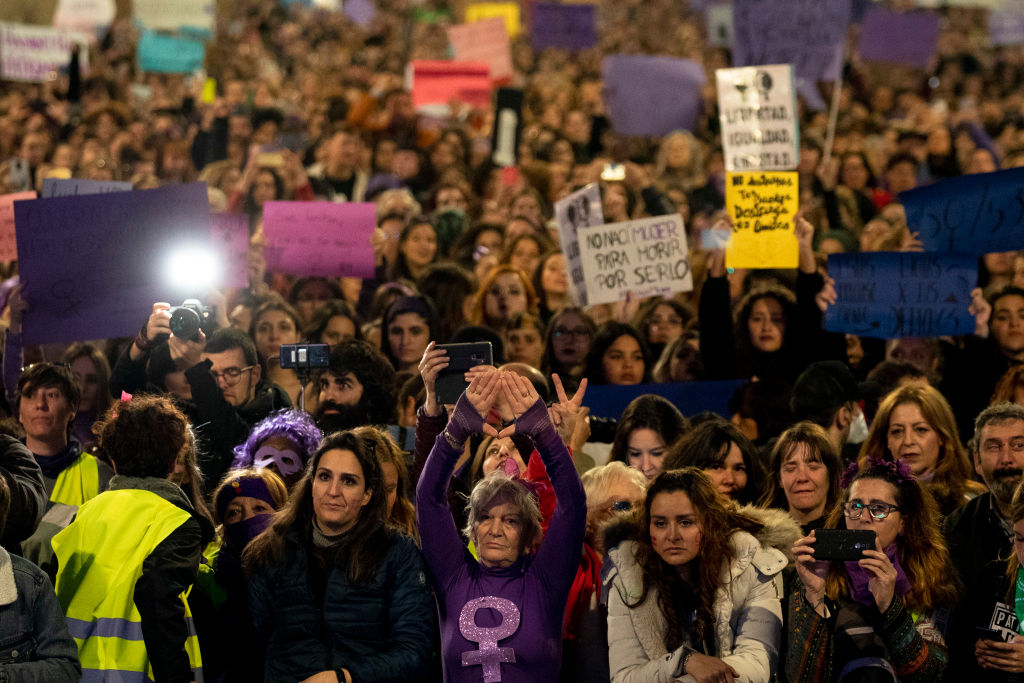
A class action lawsuit filed in Spain accuses the government of knowingly endangering public safety by encouraging the public to participate in more than 75 feminist marches on March 8, to mark International Women's Day, in the midst of the coronavirus pandemic. Pictured: A demonstration during International Women's Day on March 8, 2020 in Madrid, Spain. (Photo by Pablo Blazquez Dominguez/Getty Images)

The Spanish government, comprised of a coalition of Socialists and Communists, is facing legal action for alleged negligence in its handling of the coronavirus pandemic. The government is accused of putting its narrow ideological interests ahead of the safety and wellbeing of the public, and, in so doing, unnecessarily worsening the humanitarian crisis now gripping Spain, currently the second-worst afflicted country in Europe after Italy.
A class action lawsuit filed on March 19 accuses the Spanish government — highly ideological by any standard, as the Communist coalition partner, Podemos, was founded with seed money from the Venezuelan government — of knowingly endangering public safety by encouraging the public to participate in more than 75 feminist marches, held across Spain on March 8, to mark International Women's Day. The nationwide rallies were aimed at protesting the government's perennial bugbear: the alleged patriarchy of Western civilization.

Hundreds of thousands of people participated in those marches, and several high-profile attendees — including Spain's deputy prime minister, as well as the prime minister's wife and mother, and also the wife of the leader of Podemos — have since tested positive for Coronavirus Disease 2019 (COVID-19). It is unknown how many people were infected by the coronavirus as a result of the rallies.

The lawsuit, involving more than 5,000 plaintiffs, accuses Spanish Prime Minister Pedro Sánchez and his representatives in Spain's 17 autonomous regions of "prevarication" — a Spanish legal term that means lying and deceiving. The government was allegedly so determined to ensure that the feminist marches took place on March 8 that it deliberately downplayed warnings about the pandemic. These warnings include:
  • September 2019. The Global Preparedness Monitoring Board, an international panel of experts convened by the World Bank and the World Health Organization (WHO), warned of a "very real threat of a rapidly moving, highly lethal pandemic of a respiratory pathogen killing 50 to 80 million people and wiping out nearly 5% of the world's economy.
  • December 31. China alerted WHO to several cases of unusual pneumonia in Wuhan, a port city of 11 million people in the central Hubei province. The virus was unknown.
  • January 7. China identified the new coronavirus as the cause of a mystery disease in Wuhan.
  • January 21. WHO confirmed human-to-human transmission of the virus.
  • January 29. Spanish pharmaceutical cooperatives warned that pharmacies were running out of masks due to a surge in demand. Sales of masks surged by 3,000% in January compared to the year before.
  • January 30. WHO Director-General declared the coronavirus outbreak a public health emergency of international concern.
  • January 31. The first known case of COVID-19 in Spain was confirmed in La Gomera, Canary Islands, where a German tourist tested positive and was admitted to a local hospital.
  • February 12. Mobile World Congress, the world's largest mobile phone trade fair, which draws more than 100,000 participants from 200 countries, was cancelled due to fears of coronavirus. The financial loss to Barcelona and the city's hospitality industry was estimated to be €500 million ($560 million).
  • February 24. More than 1,000 guests and employees at the Costa Adeje Palace hotel in Tenerife, Canary Islands, were quarantined after an Italian citizen tested positive for COVID-19.
  • February 27. A 62-year-old man from Seville tested positive for COVID-19. His was the first case of local transmission of the virus in Spain. The man said that he believed he was infected during a banking conference in Malaga, where he sat next to a partner who traveled to the Canary Islands on vacation and had had contact with people from Asia. Doctors said that the diagnosis was of "great importance" because it proved that COVID-19 has been circulating in Spain without detection.
  • March 2. The European Center for Disease Control and Prevention advised European countries to cancel mass gatherings of people to prevent the transmission of coronavirus.
  • March 2. The Spanish Medical Agency sent a letter to pharmaceutical distributors to restrict the marketing of masks and to block their distribution across Spanish pharmacies. The agency's objective, on the advice of the Ministry of Health, was to ensure the supply of masks to hospitals and health centers at a time when the number of confirmed cases was beginning to multiply. The measure blocked sales to Spanish pharmacies, as well as sales abroad.
  • March 3. The regional health ministry in Valencia announced that the first coronavirus fatality in Spain died on February 13. Health authorities did not know he had the virus until 19 days after his death — an indication that Spanish authorities have been slow to understand the outbreak. Since coronavirus cases that end in death last between two and eight weeks, in addition to a 14-day incubation period, it is possible that the man was infected as early as the beginning of January.
  • March 3. Spanish authorities ordered major football and basketball matches to be held behind closed doors with no spectators allowed to prevent the spread of coronavirus.
  • March 6. The Spanish Ministry of Health advised: "The precautionary principle must prevail. The emergence of a hitherto unknown virus means that precautionary measures must be taken based on the existing scientific knowledge regarding viruses."
On March 7, despite these warnings, the Spanish government's main point man for the coronavirus, Fernando Simón, claimed in a nationwide press conference that there was no risk of attending the rallies on March 8. "If my son asks me if he can go, I will tell him to do whatever he wants," he said.

The intrepid, Spain-based journalist Matthew Bennett discovered that the Spanish government failed to report new coronavirus cases between March 6 and March 9, apparently in an effort to downplay the danger to the public of attending the rallies.

On March 9, after the number of confirmed coronavirus cases in Madrid doubled in one day, the President of the Autonomous Community of Madrid, Isabel Díaz Ayuso, ordered all schools in the capital to be closed for at least two weeks. The decision by the regional government caught the central government by surprise and effectively forced it to act.
  • March 10. Spanish Health Minister Salvador Illa, a Catalan philosophy major with no experience in medicine, said: "Today's situation may be different from yesterday's, it is changing, and this will continue to be so until we overcome this situation."
  • March 11. The Spanish government acknowledged that it knew on March 8, before the feminist rallies took place, that the coronavirus outbreak in Madrid was out of control.
  • March 12. Prime Minister Sánchez, defending himself against criticism that he allowed the marches to go ahead, said that his government was responding to the "dynamic" situation of the coronavirus by "adapting" to the "hourly" recommendations of scientific experts.
  • March 14. The central government announced a nationwide state of emergency that effectively placed 46 million people in lockdown for at least 15 days. All non-essential travel has been prohibited and people are confined to their homes except in cases of emergency or to purchase food or medicine. All schools and universities in the country are closed.
  • March 29. The lockdown, the strictest in all of Europe, was extended until April 11.
The lawsuit has been forwarded to the Spanish Supreme Court due to the prime minister's immunity.

Article 404 of the Penal Code establishes a penalty of between nine to 15 years of disqualification for public office for public officials convicted of the crime of prevarication.
Víctor Valladares, a Madrid-based lawyer who is leading the lawsuit, said:
"The result of the calls for these demonstrations and their direct approval by government delegations and by the inaction of the central government chaired by the accused, Prime Minister Pedro Sánchez, could not be more antagonistic to what the EU indicated in its report. Why was not an order issued to prevent any type of mass event?"
Meanwhile, the Association of Doctors and Medics of Madrid (AMYTS) and the Confederation of Medical Trade Unions (CESM) also filed lawsuits against the government. The complaint demands that the federal and local governments provide hospitals in Madrid with masks, protective glasses and waste containers within 24 hours.

The Spanish blogger Elentir, who operates the blog Contando Estrelas, a politically astute website that is essential to understanding contemporary Spanish politics, wrote:
"As we found out, 16 days late, the first death from coronavirus had occurred in Spain on February 13. Faced with the risk that the massive feminist mobilizations on Sunday, March 8 could be cancelled, Fernando Simón commented: 'We have no specific recommendation on the suspension of the rally on March 8.'
"On March 9, one day after the feminist marches, Health Minister Salvador Illa expressly recommend that all people with chronic diseases or multiple pathologies do not leave their homes except for emergencies.... He said this immediately after the feminist rallies held on March 8.
"Honestly, it seems to me a joke that the government has waited until today, clearly for political reasons, to make this announcement. The Socialist-Communist government has once again put its political interests above the common good. This gross negligence should lead to resignations."
Criticism of the Spanish government's handling of the coronavirus crisis has also come from members of the Socialist Party itself. On March 22, Juan Luis Cebrián, a co-founder of the newspaper El País, a notorious mouthpiece of the Socialist Party, wrote:
"The crocodile tears of so many political leaders who claim that no one could have imagined such a thing such as the coronavirus do not make any sense. There were not only those who imagined it: they foresaw it, and they seriously warned about it. There has undoubtedly been negligence on the part of the various health ministers and their bosses, and in France three doctors have already filed a complaint against the government for this reason. The consequence is that most Western nations today are overwhelmed in their abilities to fight the epidemic. They reacted late and erroneously. Lacking is: hospital beds, medical personnel, respirators and transparency in official information.
"On February 24, WHO officially declared the probability that we would be faced with a pandemic. Despite this and knowing the magnitude of the threat, which has already been fully realized in several countries, hardly any measures were taken in most of the potential scenarios for the spread of the virus. In the case of Spain, attendance at gigantic demonstrations was encouraged, the holding of massive popular festivals was promoted, urgent funding for research was delayed, the threat was minimized, and even the official still in charge today of the scientific recommendations dared to say between smiles that there was no risk to the population.
"This is not the time to open a debate on the subject, but it is legitimate to assume that in addition to political responsibilities, citizens... will have the right to demand legal redress if there is guilty negligence."
Spain is one of the European countries most affected by the virus: As of March 29, more than 80,000 people had been diagnosed with Coronavirus Disease 2019 (COVID-19) and more than 6,500 had died as a result. The actual number of people infected may be ten times higher due to the lack of testing of asymptomatic cases. As the pandemic runs its course, Spain is on track soon to overtake Italy as Europe's hardest-hit country.


Soeren Kern is a Senior Fellow at the New York-based Gatestone Institute.

Source: https://www.gatestoneinstitute.org/15821/coronavirus-spain-ideology

Follow Middle East and Terrorism on Twitter


Arab states fear corona will lead to chaos, anarchy - Daniel Siryoti

​
by Daniel Siryoti

The spread of the pandemic highlights the difference between the rich Gulf states and the poorer Arab countries where health care is already lacking, and send people out into the streets.


Arab states fear corona will lead to chaos, anarchy
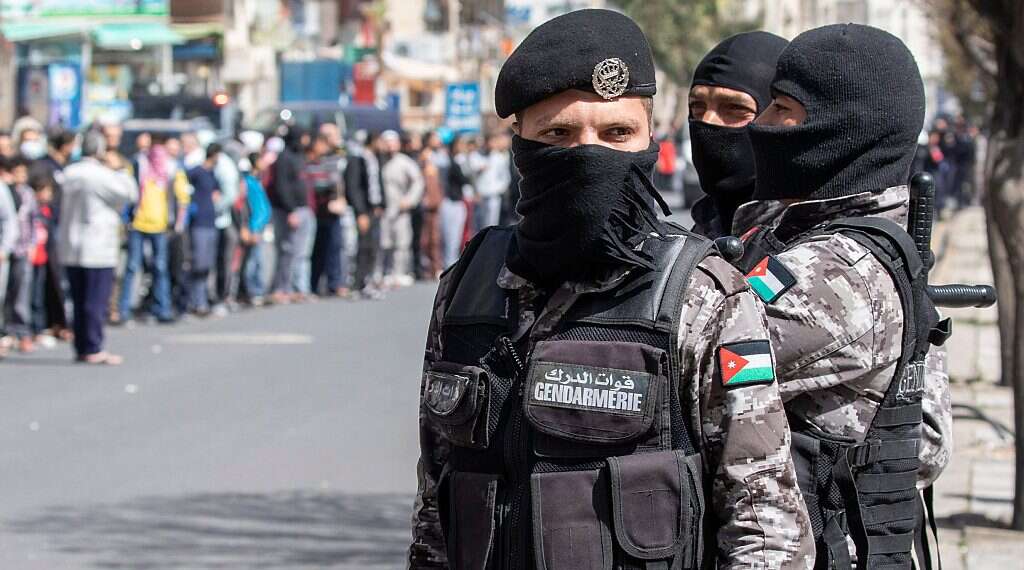
Jordanian security forces keep watch as people wait in queue for government bread delivery in Amman, Jordan | 
Photo: EPA / Andre Pain


The coronavirus epidemic is not giving Arab and Muslim countries a pass. One need only look at what is unfolding in Iran – where according to figures from the regime over 35,000 people have contracted the virus, with over 2,500 dead.

However, the conventional wisdom is that the corona death toll in Iran is actually much higher and that the government is not revealing the true state of the epidemic because it fears a popular response of chaos and anarchy that could destabilize the regime.

In effect it could be said that fear for the stability of their governments is a common thread among all Middle East regimes that shapes how they are responding to the epidemic, and at a time when most Arab states are still scarred from the events of the Arab Spring in 2011.

 It is no coincidence that director of the World Health Organization for the Eastern Mediterranean, Dr. Ahmed Al-Mandhari, has said that Arab states are supplying insufficient information about the number of coronavirus cases and the extent of its spread in their countries. 

According to Al-Mandhari, the information available indicates contradictory numbers, whereas the countries are adopting different and irresponsible methods of trying to check the spread of the epidemic within their borders.

The government's fears about how an outbreak would affect their stability prompted them to delay their responses to the epidemic. In Lebanon, for example, inbound flights from China, Iran, and Italy were suspended only on March 11, which caused the public to prickle and even point an accusing finger at Hezbollah as acting in accordance with dictates from Tehran. 

In Syria, where a civil war is still raging, only in the past few days has the regime declared a lockdown and even a total curfew in some provinces after health authorities reported the first corona case. Jordan has taken the necessary steps of shutting its borders, declaring a lockdown and curfew, and deploying soldiers at the entry and exit point to the capital, Amman, and other major cities.

The healthcare systems in Egypt, Jordan, Syria, Lebanon, the Palestinian Authority, and other Arab countries in the Middle East are shaky and suffer a serious shortage of medical supplies and equipment, such as ventilators, testing kits, and vital medicine for the treatment of corona patients. 

If the healthcare system and the economies there collapse entirely as a result of a major outbreak, the people will take to the streets en masse, demanding that the leaders be deposed. High-ranking government officials in some Arab states have already started claiming that coronavirus is an "American-Zionist imperialist conspiracy." A few thousand protesters in Egypt, Jordan, and other countries have even begun demonstrating against the "American-Zionist corona conspiracy."

The more the corona epidemic spreads throughout Arab states and the more their people sicken and die, we will see a starker difference between the wealthy Gulf State emirates – which can afford massive acquisition of ventilators, testing kits, and medicine – and the failing Arab states whose health care system has many shortcomings. Moreover, the Gulf states are pointing their finger at Iran as the entity responsible for the epidemic in Arab countries as a result of the ayatollah regime's lax handling of the outbreak and attempts to hide the true data about it.

Meanwhile, some think that the coronavirus pandemic will bring an end to the violent conflicts in the Middle East, even the Israeli-Palestinian conflict – the latter, thanks to close cooperation between Israel and the PA, as well as Jordan and Egypt, in attempts to stop the spread of the virus from one country to another, which has led to a drastic drop in security incidents on the borders. 

Daniel Siryoti

Source: https://www.israelhayom.com/2020/03/29/arab-states-fear-corona-will-lead-to-chaos-anarchy/

Follow Middle East and Terrorism on Twitter


Take it seriously, but handle it sanely - Rabbi Prof. Dov Fischer

​
by Rabbi Prof. Dov Fischer

Coronavirus represents its own different kind of threat because we do not yet know where it is going. Unlike flu, we do not yet know for sure what we are dealing with because, who eats bats?


1. Why Take It Seriously
I face a dilemma. I do not believe a thing coming from the mainstream American news media. They have lied to me so often, and particularly these past three years, that I do not watch them, do not hear them, do not bother with them.  It does seems that Israel’s newscasts, despite their own left-leaning tilts, do a better job of reporting on news in Europe, Asia, and Africa. And of course the Mideast.

Israel’s reaction to the coronavirus seems to place it three weeks ahead of America. If so, Americans also may find arrests and fines awaiting them in April if they step outdoors for non-essential purposes.

In America, the Left blames Trump  for any possible coronavirus reaction that can be criticized. In Israel, the Left blames Bibi.  But if we watch what has happened elsewhere, we see that both Israel and America are in good hands. Neither country has become an Italy or Spain, while both have wrestled with balancing prudence, common sense, and freedom.

In Israel, of course, the country now is in “seger,” lock-down of sorts. Many American governors now are doing the same in states like New York, California, Illinois, and Florida.

I am aware that common flu kills 30,000-60,000 Americans every year, and that other diseases — hepatitis B, pneumonia, malaria, HIV/AIDS, and others — likewise have proven far more deadly than coronavirus so far. Yet coronavirus represents its own different kind of threat because we do not yet know where it is going.

My law students at the two law schools where I teach are in a safer age cohort, but my congregation includes several beloved families who are over age 60 and 65 and beyond. Some live very dynamically but with chronic health conditions that place them in the higher-risk categories. Some take immunosuppressing medications to control those conditions and assure them longevity. So they end up with a trifecta of concerns.

Meanwhile, although the death rate from this disease among people under 60 is minuscule, those younger people are precisely the sweet and kind sorts who unknowingly can transmit death to those in the higher-risk categories. So, as a rabbi responsible for my congregation, I cannot regard this illness as an “overblown exaggeration.”  My people do not eat bats, snakes, and dogs, and we do not have an established tolerance to China viruses.

People under 60 and without high-risk health conditions know pretty quickly when they have the flu, but do not know for two weeks when they are carrying coronavirus. This difference is critical.  When someone has the flu, within two or three days they are sneezing, coughing, red-eyed, and a mess. You know to stay away from them, or you know you also are going to be so sick in two days.  Moreover, if you are among the sensible half of the population, you even can pursue partial precaution by getting a flu shot, even a multi-spectrum one for people more at risk. That immunization does not cancel every flu bug, but it helps a bunch and even mitigates flu’s worst symptoms for those stricken anyway.

Unlike flu, we do not yet know for sure what we are dealing with because, who eats bats? The flu season often ends in the warmer months, but Australia now is in summer because everything there is upside-down, and that also have it.  Not only do we not fully know what we are dealing with here, but we also cannot be sure whether next winter the thing will mutate into a variant.  So it is a real concern. Look dispassionately and objectively at what has befallen Italy and Spain to grasp what could be. Yes, it may all pass and join a litany of diseases like H1N1, Swine Flu, MERS, and SARS that caused concern and killed but did not disrupt the world economy. Or it could turn into something more concerning like the 1918 Spanish flu. We just do not yet know.

Even if the ultimate number of people stricken cannot be avoided, there is an enormous premium on slowing down the rate, the tempo of the spread so that not everyone gets critical at once. By reducing the speed of the spread, the public’s health system may avoid becoming over-taxed. We have a finite number of oxygen-generating equipment — ventilators, external oxygen machines —  a finite number of hospital beds, of intensive-care beds, a finite number of health care workers.  If all whom the coronavirus will strike get sick during the same time frame, hospital administrators and medical personnel will have to make life-and-death choices as to who gets the ventilator and who is selected to die.

That concern is at the core of Israel’s response, and America slowly is moving in that direction, even as it ramps up production of ventilators and masks by encouraging manufacturers to re-tool factories and grants waivers to mask-manufacturers promising them certain exemptions from litigation.

2. Dealing With It

Hoarding is so foolish and socially evil, causing artificial disruptions to an ample supply chain. Both Israel and America are lands of plenty. Shelves are bare because supermarkets, proceeding as they do every other day, do not maintain in back-storage rooms a million rolls of toilet paper, a million hand sanitizers, and a million cartons of milk. If they did, in normal times, the milk would spoil, and the toilet paper and sanitizers would crowd out the food items that normal consumers come to buy.

So the store managers, who have every motivation to stock as much as people can buy, know from years of experience exactly how much supply to have on hand based on buyers’ normal patterns. Panic hoarding disrupts the equation. At some point, those who have hoarded toilet paper are going to figure out that: (i) they have no more room at home to store any more of it; (ii) they have no room for food in their refrigerators because the cold shelves, vegetable bins, and cheese racks are jammed with toilet paper; and (iii) if they having nothing to eat, then they really are not going to need it.

For me as an Orthodox Jew, there is another dimension to dealing with all of this. All my life, I have lived a 25-hour period every week, from Friday sunset to Saturday nightfall, observing the Holy Sabbath (Shabbat) in the manner of our tradition. For twenty-five hours, we do not activate electricity or electronics, do not drive a car, do not transact business, do not write, do not use phones or computers.  Outsiders hear of an Orthodox Jewish Sabbath and ask compassionately: “You poor person, what do you do all day? Sit in the dark?”


No. When you cannot watch television or email or text and tweet your thumbs off, and cannot do clothes washes or write checks to pay bills, you instead slow down and take a breath for a day. You eat a slower, longer multi-course meal that you prepared before Shabbat, with no rush, no worries.  You talk with your spouse, your kids, and you share a two-hour meal. You sing soulful songs at the table. The kids update you on their week at school, and you them on your week at work. You discuss ideas and dreams for the future.

Afterwards, you read. One person reads a novel. Another reads a history book. Many of us read the weekly Torah portion with commentaries by Rabbi Rashi of France, Rabbis Ramban and Ibn Ezra of Spain, Rabbi Sforno of Italy, perhaps something more contemporary like Rabbi Hirsch of Germany, Rabbi Chofetz Chaim of Rusia, or Rabbi Soloveitchik of Boston and New York.  The kids play board games: “Apples to Apples,” “Settlers of Catan,” chess, Scrabble, Taboo! — or my favorite, 221B Baker Street.

When I was a little boy growing up in a Modern Orthodox home, I harbored mixed feelings about Shabbat because my non-Jewish friends and my non-observant Jewish friends would run off to the movies on Saturday afternoon;I could not go.  The years have passed. If someone today were to ask me whether I wish I could go to the movies on Shabbat, I would look at them as though they were crazy. Indeed, they would be ashamed to ask.

It is going to be challenging for many to get used to living more indoors, slowing down the pace a bit, attending class and lectures via Zoom instead of in-person, watching streamed movies at home instead of traveling the world. This will be different and at times isolating. And it may go on for a year, not just three weeks.

But some may look back a year from now and concede that it was a little bit nice to experience a nuclear family at home. In Israel, not only were shuls closed this weekend, but this Shabbat was the first time in the 71-year history of the country that all public transportation was closed down, all sports events, all theaters, restaurants, beaches, and shopping malls closed.

Yes, this will drive some people — the Avigdor Liberman crowd — nuts. But maybe some others will appreciate, if properly focused, what they have been missing. If only Israel would move to a five-day work week like much of the civilized West, freeing up half of Sunday for soccer and the beach, Shabbat really would grab so many more.

This also is a time for nations to attain humility, realizing that, in a world where an infinitesimally minuscule microbe can drive an entire planet into pandemonium, humans do not and cannot ever control everything. Despite the Climate Change paranoids, we are incapable of destroying G-d’s planet because we are not omnipotent. And we also should think about whether anyone in our orbit is so isolated and shut in that they need a phone call or help in having food delivered to their door. That omnipotent we can be.


Rabbi Prof. Dov Fischer is adjunct professor of law at two prominent Southern California law schools, Senior Rabbinic Fellow at the Coalition for Jewish Values, congregational rabbi of Young Israel of Orange County, California, and has held prominent leadership roles in several national rabbinic and other Jewish organizations. He was Chief Articles Editor of UCLA Law Review, clerked for the Hon. Danny J. Boggs in the United States Court of Appeals for the Sixth Circuit, and served for most of the past decade on the Executive Committee of the Rabbinical Council of America. His writings have appeared in The Weekly Standard, National Review, Wall Street Journal, Los Angeles Times, Jerusalem Post, American Thinker, Frontpage Magazine, and Israel National News. Other writings are collected at www.rabbidov.com .

Source: http://www.israelnationalnews.com/Articles/Article.aspx/25457

Follow Middle East and Terrorism on Twitter


China article VI: Is Wuhan Virus China's answer to Trump's trade war? - Ezequiel Doiny

​
by Ezequiel Doiny 

The Chinese victims could be seen as collateral damage, not totally undesired considering the Chinese communist party has a strict policy to prevent population growth.


On March 12, 2020 Business Insider reported "Cotton, like many other Republican lawmakers, has scrutinized China, where scientists believe the coronavirus originated. Although the exact source of the virus is still under investigation, China-based scientists believe it may have come from a wildlife market in Wuhan.

Earlier in February, Cotton did not rule out the possibility that the coronavirus may have been developed by the Chinese in a "superlaboratory," and that the damage from the virus could be "worse than Chernobyl." - or is it an insidious disaster greater than 9/11?

On February 22, 2020 the NY Post reported "At an emergency meeting in Beijing held last Friday, Chinese leader Xi Jinping spoke about the need to contain the coronavirus and set up a system to prevent similar epidemics in the future.

A national system to control biosecurity risks must be put in place “to protect the people’s health,” Xi said, because lab safety is a “national security” issue.

Xi didn’t actually admit that the coronavirus now devastating large swaths of China, had escaped from one of the country’s bioresearch labs. But the very next day, evidence emerged suggesting that this is exactly what happened, as the Chinese Ministry of Science and Technology released a new directive titled: “Instructions on strengthening biosecurity management in microbiology labs that handle advanced viruses like the novel coronavirus.”

Read that again. It sure sounds like China has a problem keeping dangerous pathogens in test tubes where they belong, doesn’t it? And just how many “microbiology labs” are there in China that handle “advanced viruses like the novel coronavirus”? And to what end?

It turns out that in all of China, there is only one. And this one is located in the Chinese city of Wuhan that just happens to be … the epicenter of the epidemic..."

On March 27, 2020 Investors Business Daily reported that in China the Wuhan virus outbreak seems to be mostly in the Hubei providence (where Wuhan is located) while in the US the virus is national in scope  "Outside of Hubei province, the source and epicenter of China's coronavirus outbreak, the rest of the country was relatively unscathed."

Although Beijing was late to sound the alarm, officials took aggressive action just in time, locking down Hubei and other regions, while extending the Lunar New Year holiday by a couple of weeks. The upshot: Only 13,000 coronavirus cases have been reported among China's other 1.3 billion people. By comparison, 11,000 Americans outside New York, the current U.S. epicenter, tested positive for Covid-19 on Thursday alone.

Scott Gottlieb, who served as FDA commissioner under Trump, tweeted on Thursday: "I'm worried about emerging situations in New Orleans, Dallas, Atlanta, Miami, Detroit, Chicago, Philadelphia, among others. In China no province outside Hubei ever had more than 1,500 cases. In U.S. 11 states already hit that total. Our epidemic is likely to be national in scope."

While China's economy has suffered the effect of the Wuhan virus, in the US it will be more devastating. On March 27, 2020 Investors Business Daily reported "Coronavirus shutdowns delivered an unprecedented economic shock to American workers last week, as a record-shattering 3.3 million Americans filed for unemployment benefits. That's 15 times the number just two weeks ago and nearly five times the record set in 1982...If shutdowns drag on through May or longer to control the coronavirus pandemic, the U.S. could be in store for its deepest recession since demobilization from World War II...

Nomura's base case is bleak. Even if the upturn starts in May, "lingering social distancing" will weigh on growth, wrote Lewis Alexander, chief U.S. economist. He sees the jobless rate rising to 9% and the economy contracting 9% over the full year, by far the worst drop since 1946. How about its better case? Still a grim 5.9% GDP decline..."

On March 16, 2020 the NY Times reported the impact in China "...According to official statistics, most factories in China have reopened, after being closed since the lunar new year holiday in January. But they are operating at two-thirds of their capacity...

Global economists had been wondering whether China would admit that its economy shrank in the first quarter, given the country’s tendency to report predictable and steady growth no matter what happens. But the government data on Monday suggests that China may break with that dubious tradition next month in reporting economic output for the first quarter of this year, allowing for a more accurate look at the troubled economy.

“Most of us are expecting a negative percentage, 2 or 3 percent below zero, or maybe lower,” said Zhu Chaoping, a global markets strategist in the Shanghai office of J.P. Morgan..."

The impact on the centrally planned Chinese economy so far seems to have been less than the US free market capitalist economy, most Chinese factories have reopened and in China mostly one province was affected vs an epidemic of national scope in the US.

Could the Chinese have released the Wuhan virus as a response to Trump's trade war knowing that an open liberal economy would take longer to recover than a centralized economic system?

The timing before US elections makes sense:  to cause mass unemployment in the US, cripple the US economy and weaken Trump's possibility to be reelected' opening the path to a Democratic president who would remove Trump's tariffs on Chinese products. The rest of the world is just collateral damage.

If so would they have infected their own people?

China has proved to have implemented inhumane birth control policies in the past to prevent population growth, while the Wuhan virus causes about 5% of those infected to be severely ill. Perhaps China would see this as an additional tool to its enforced two child policy.

The South China Morning Post reported

"The birth policy is a fundamental state policy that China must uphold in the long run," Wang Peian, vice-minister of the National Health and Family Planning Commission, said on Friday.

Rights groups have voiced strong concerns on this matter.

"Characterising this latest modification as 'abandoning' the one-child policy is misleading," said Reggie Littlejohn, president of Women's Rights Without Frontiers.

"A two-child policy will not end the human rights abuses caused by the one-child policy, including forced abortions, involuntary sterilisation or selective abortion of baby girls."

On May 5, 2019 Business Insider reported "...the US has placed tariffs on $250 billion worth of goods coming from China, while Beijing has responded with tariffs on $110 billion of American goods.

The trade war kicked off in March 2018 when the Trump administration released a report detailing the economic damage it said was caused by the theft of US intellectual property by Chinese companies. This led to two rounds of back-and-forth tariff raising.


While US negotiators have been focused on forcing China to crack down on IP theft and open its market to American companies, Trump has also placed a large amount of attention on decreasing the US-China trade deficit..."


Conspiracy theory? Trade war by pandemic? Perhaps, something to think about...

 Ezequiel Doiny is an Engineer and writer based in Maryland, USA and is author of "Obama's assault on Jerusalem's Western Wall"

Source: http://www.israelnationalnews.com/Articles/Article.aspx/25459

Follow Middle East and Terrorism on Twitter


The expiration date of Western culture - Douglas Altabef

​
by Douglas Altabef

The five steps in the rise and fall of a nation or culture and how one can slow them down and prevent the fall.


"A time to give birth and a time to die; a time to plant and a time to uproot that which is planted." (Book of Ecclesiastes, Chapter 3, verse 2).

Every individual, nation, and culture has an “expiration date."


Unlike an individual, a nation and culture can postpone their expiration dates for great lengths of time through proper conduct, because they are essentially an inter-generational relay race where the baton keeps being handed off. As long as they work efficiently to preserve their spirit and belief in the justness of their cause, there is no reason why they should collapse.

Famed 14th century historian Ibn Khaldun identified a cycle pertaining to the rise and fall of a state, which consists of five stages: conquest, social cohesion, expansion, contentment, and decline.

Over the course of history, farming societies were conquered by nomadic warrior tribes, who claimed the lands for themselves. The success of these tribes in managing and developing their newly conquered land and subjects relied on their social cohesion.

As time passed on, their descendants became less attached to the ethos on which the society was formed, weakening them from within. This decline in collective self-awareness led to their eventual disappearance, usually by conquest from a force stronger and more focused than themselves.

Long before Ibn Khaldun, Moses fully understood the dangers posed by an erosion of the ethos on which his society was built. In the Book of Deuteronomy, Moses notes: "Beware, lest you forget the Lord, Who brought you out of the land of Egypt, out of the house of bondage." Forgetting the Lord of course entailed all that He had commanded and taught Israel to do in order to maintain their national awareness and internal strength.

Today, there is widespread concern that the West has forgotten, discarded or, disparaged the Judeo- Christian values that made it the leading culture and the strongest nations in the world.

A glaring example of this is the significance of the mass Arab immigration to Europe.

How else is one to explain the phenomenon in which a liberal society that cherishes individual dignity and the freedom of expression welcomes with open arms many who declare their wish to implement Sharia law, which would be a complete negation of the values of its hosts?

The more one studies the current reality of Europe, the more difficult it is to dispute that it is currently poised in the second portion of the stages of Ibn Khaldun's five staged-cycle: contentment, decline, and conquest.

While the underlying circumstances might differ, there are strong parallels in both America and Israel, each of which is struggling with forces that would happily destroy the institutions and the values that made each nation strong, humane, and vibrant.

While such forces are cloaked in the wrappings of “progress,” “reform,” and “human rights,” they are intensely destructive to the nations that have sanctioned the very hatred that now threatens them.

Of course throughout the ages, there has also been push back, with powerful voices warning societies against their self-destructive trajectory.

Unfortunately, such figures have always been significantly disadvantaged by the allure and romance of change, especially revolutionary change. Simply stated, exhorting your citizens to stay true, to conserve and preserve their values and traditions seems much less exciting than change, even change for its own sake.

Such change is also very tempting at first because it creates feelings of social unity, unity for change, and also for condemning those who have dared to defend the traditional norms of society.

There is however, one important instance when conservative and traditional forces can rally widespread national support: when foreign invaders threaten to conquer and to overrun a nation. At such a time, it is the conservative and traditional groups, movements and voices that can wield tremendous influence as active patriotic agents of defense. These are typically not the graybeard thinkers, but the younger generations that understand the threat, and are intent on defeating it.

At such times, conservative young “doers” can be as appealing and attractive as their revolutionary contemporaries. Such agents have imbibed and reflect the wisdom of their conservative elders, but combine it with action steps that can energize a society.

Take for example Turning Point USA which has had a strong impact on US campuses, where it reflects the wisdom of conservative thinkers such as Allan Bloom, Thomas Sowell, Milton Friedman, and Jordan Peterson.

In Israel, my own organization, Im Tirtzu, has developed a strong grassroots following on Israel’s campuses, reflecting the iconic values of Herzl, Jabotinsky and Ben-Gurion, but also the wisdom of contemporary thinkers such as Rabbi Benny Lau, Daniel Pipes, Asaf Malach, Yoram Hazony, Ran Baratz, Ronen Shoval and Mordechai Kedar.

Combining time-tested wisdom with on the ground activism might be the West’s best hope for pushing its national expiration dates far away from the present..

The writer is the CEO of Im Tirtzu


Douglas Altabef is a member of the Board of Directors of Im Tirzu and the Israel Independence Fund.

Source: http://www.israelnationalnews.com/Articles/Article.aspx/25462

Follow Middle East and Terrorism on Twitter


Police, public clash as internal Chinese border re-opens -Lea Li

​
by Lea Li

Chinese police officers from two different provinces clashed with each other and members of the public on March 27, 2020 in a dispute over the reopening of a provincial border, following weeks of lockdown to prevent the spread of Covid-19.


Lea Li

Source: https://www.scmp.com/video/china/3077466/police-public-clash-border-reopens-between-coronavirus-epicentre-hubei-and

Follow Middle East and Terrorism on Twitter


Indictment: 25 year old Israeli spied for Hezbollah - Arutz Sheva Staff

​
by Arutz Sheva Staff

Young woman is charged with spying, taking military photographs, for Hezbollah terror group.


Iron Dome battery in northern Israel
Iron Dome battery in northern Israel                                                                     Basel Awiad, Flash 90

It was cleared for publication that the Central District Attorney's Office filed charges Monday morning against an Israeli accused of spying for the Hezbollah terror group.

The Central District Attorney's Office filed the charges with the Central District Court in Lod, against a female civilian and 25-year-old resident of Israel for contact with a foreign agent, handing information to an enemy with intent to harm the State of Israel's security, and providing a service to a terrorist organization.

According to the indictment, the young woman lived in Be'er Sheva during the years 2018-2019, and during that period she met Ali, a resident of southern Lebanon, through Facebook.

After the two had been in contact for a short time, Ali began requesting that she perform various espionage tasks for Hezbollah, including various photography tasks.

In this context, the defendant took approximately 12 photographs of military vehicles traveling on Route 6; photographs of the perimeter fence in the area of ​​Rosh Hanikra, the Bahai Gardens in Haifa, the lookout point at Stella Maris, the port of Haifa, and military vehicles in the Hebron area; as well as photographs of the Hatzerim Air Force Base and the Air Force Museum in Hatzerim.

All of the photos were sent to Ali via Facebook.

Later, Ali sent her a map of Be'er Sheva, and two weeks later requested that she photograph the view from her room in her apartment. He told her he had noticed that one of the photos showed a pole that reminded him of the Iron Dome system, and requested that she visit the area and check if he was right.

The young woman acquiesced, bringing a camera and binoculars with her, and photographed the Iron Dome system which had been set up at the location, as well as another military base in southern Israel. She then returned home and reported to Ali, sending him the photos.

During the course of 2019, Ali added her to a WhatsApp group called "Know Your Enemy." As part of her activities in the group, the defendant kept in contact with one of the group managers, who requested that she translate an article for him, from Hebrew to Arabic.

As part of her assignments, she traveled during 2019 to the Erez crossing, photographing a military pillbox and a number of military vehicles. However, a soldier stationed at the base told her that the area is a closed military zone. She sent the photos to Ali via Facebook.

On September 2, 2019, following a military incident on Israel's northern border which involved Hezbollah, Ali asked the defendant to photograph Haifa's Rambam Medical Center, including the emergency room entrance and the operating rooms. The young woman, who was in Be'er Sheva at the time, requested her friend take the photographs for her. When she received them, she passed them to Ali.

In December 2019, the defendant contacted Ali and gave him the details of a seminar by a journalist, on the issue of Hezbollah and Israel. Ali requested that she participate in the seminar, and ask the speaker a question which he dictated to her: "Is there a chance of war between Hezbollah and Israel?" The defendant acted in accordance with Ali's request, and recorded both the question and the answer given by the speaker, sending the recording to Ali.

Later, during the same period, Ali requested that the defendant photograph a military base which he said is located near Tel Aviv University. However, in this case the defendant did not act according to request.

In the arrest warrant, the attorney wrote: "Reasons to arrest the defendant have become clear....since she is charged with many, and varied, serious security crimes, it can be assumed that there is a reasonable basis to worry that she will endanger the public security...since according to the severity, nature, and character of her actions, which are based in identifying with a terror organization known for its unusual violence and cruelty, there is a reasonable basis for concern that she will endanger the security of the public and the security of the State."

"The great danger the defendant presents is even greater when you note that she acted in the way she did despite the fact that she knew that Ali belonged to the Hezbollah organization....there is therefore a reason to arrest the defendant...since there is a concern that the defendant will interfere in the legal proceedings...as can be seen from [the fact] that she erased all her conversations with Ali, or that she will harm the proofs in another fashion. It is obvious that we cannot rely on the defendant at all, and there is a considerable basis for concern that her release or that the failure to arrest her will lead to interference in the legal proceedings."


Arutz Sheva Staff

Source: http://www.israelnationalnews.com/News/News.aspx/278020

Follow Middle East and Terrorism on Twitter