Sunday, July 26, 2020

"Burned Alive": Persecution of Christians, June 2020 - Raymond Ibrahim

​
by Raymond Ibrahim

"These Muslim Fulani herdsmen have been attacking our communities because we are Christians. Their desire is to take over our lands, force us to become Muslims, and if we decline, they kill us...." — Ibrahim Agu Iliya, Morning Star News, June 3, 2020, Nigeria.

  • A Christian teenager was sexually assaulted by his Muslim employer in early June. The boy's father and brother were then beaten for trying to seek justice for him. — Persecution.org, June 19, 2020, Pakistan.
  • "These Muslim Fulani herdsmen have been attacking our communities because we are Christians. Their desire is to take over our lands, force us to become Muslims, and if we decline, they kill us...." — Ibrahim Agu Iliya, Morning Star News, June 3, 2020, Nigeria.
  • Police killed a man after he cited his Christian faith as reason not to falsify his testimony, as police were urging him to do....Police were trying to get Younas to recant his eyewitness testimony against a Muslim family accused of murder.... When beating him did not yield results, they tried to bribe him.... "During the attack, one of the officers shouted, 'We will teach him a lesson for insulting us!'" — Persecution.org.; June 25, 2020, Pakistan.
  • "Is it wrong to have another religion? Is Christianity wrong?" — Fitri Handayani, a woman who converted from Islam to Christianity, describing her ordeals at the hands of her family, YouTube; June 17, 2020, Indonesia.
  • "These are our houses. In ten years, none of you will be left here and then your homes will be ours anyway." — Kurdish representative in Qamishli to Christian family; World Council of Arameans (Syriacs); June 17, 2020, Syria.
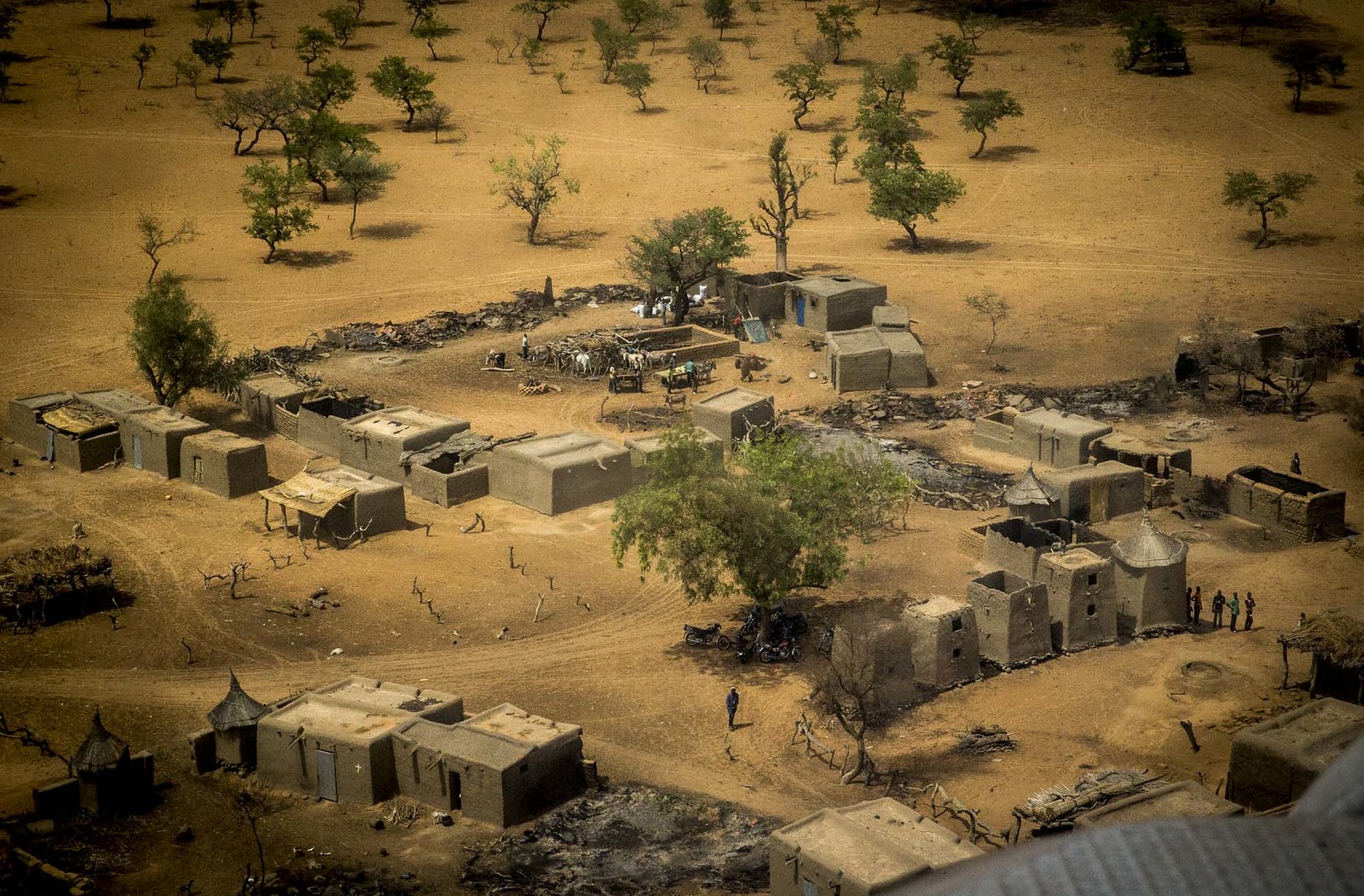

In June 2019, at least 100 Christian men, women and children were murdered by Fulani gunmen in Sobame Da, a village in the Mopti region of central Mali. Pictured: The village of Sobame Da. (Image source: United Nations/MINUSMA/Flickr)

The Slaughter of Christians

Nigeria: The jihad on Christians continued in the West Africa nation without letup. In what police described as a "brutal assault," suspected Muslims raped and slaughtered Uwaila Vera Omozuwa, a 22-year-old Christian girl studying inside Redeemed Christian Church of God in Benin City. "We are all devastated by her death," a spokesman of the church said, before explaining: "She [had] decided to do some private studies during the lockdown because the church was peaceful. She's been taking the key from the parish pastor and returning it after her studies." The slain girl's mother described what happened after she heard of the attack:
"I ran [to the church] but before I got there, they took her to a private hospital and when I saw my daughter, I cried. They raped her; the dress she was wearing that morning was white. The white had turned to red; all her body was full of blood.... My daughter was very kind and very intelligent and disciplined. We had just celebrated her admission to university."
In a separate incident, Muslim Fulani herdsmen entered a Christian-owned store and shot to death its owner and four other Christians. They did not steal anything from the store or from the victims' bodies. Despite the presence of armed security, the terrorists were able to fire their weapons for a full ten minutes, before leaving without a trace. In response, Ibrahim Agu Iliya, a Christian, assembled and led a team of unarmed civilians to apprehend them. He said,
"These Muslim Fulani herdsmen have been attacking our communities because we are Christians. Their desire is to take over our lands, force us to become Muslims, and if we decline, they kill us... The government's inability to stop these Muslim Fulani herdsmen is because the government is being controlled by Fulani political leaders headed by Muhammadu Buhari, Nigeria's president, who's also a Fulani man."
Sunday Samuel — who witnessed and survived the attack, and whose 42-year-old slain sister Asabe Samuel owned the store — agreed:
"I strongly believe that some of these security personnel who are Muslims are conniving with these armed men to attack our people. These killings of Christians here are just too much of a pressure on us, and the sad reality is that our people have made representations to the government at both the state and federal levels and nothing has been done."
In another massacre on June 3 — just after a May terror attack in the same region, where "more than 30 corpses of slain Christians still lay in nearby villages" — Muslim Fulani herdsmen shot or hacked to death with machetes nine Christians, most of them church-attending women and children; a three-year-old was seriously wounded. Seven other Christians were kidnapped at gun point.

Burkina Faso: "Christians were among those targeted and killed," a June 5 report found, after "armed jihadists launched three separate attacks ... that left at least 58 dead," including children. Dozens were also injured. A "contact reported that it was clear from the testimony of a survivor that the militants were targeting Christians and humanitarians taking food to an internally displaced people camp, where many mainly-Christian villagers had taken refuge after fleeing prior jihadi violence." Intended victims who the terrorists discovered were Muslim were spared. A survivor recalled how the driver of his truck had cried "forgive, forgive, we are also followers of the prophet Muhammad!" That call had caused one of the terrorists to turn to the others and say, "They have the same religion with us," prompting an end to the attack on the vehicle. "Jihadi attacks on Christians in the African nation have been on the rise," the report added; "Last December, at least 14 people were killed when gunmen stormed a Protestant church service... Last April, gunmen killed a Protestant pastor and five other Christians who were leaving a worship service."

Mali: During near simultaneous raids on three Christian majority villages, "suspected Islamic radicals killed at least 27 people, some of whom were burned alive," according to a June 4 report:
"Mali has been in chaos since 2012, when al Qaeda-linked jihadists seized the northern two-thirds of the country. French forces intervened the following year to drive them back, but the militants have since regrouped and expanded their operations into neighbouring countries such as Burkina Faso and Niger."
A separate report elaborated:
"Mali suffered its worst year of extremist violence in seven years in 2019. Jihadi militants carried out murderous attacks in the north and central area, laying waste to Christian villages and causing hundreds to flee with only the clothes on their backs. In one of the worst attacks, in June 2019, at least 100 men, women and children were slaughtered in Sobame Da, a mainly-Christian village in the Mopti region of central Mali."
Pakistan: On June 4, Muslim neighbors attacked a Christian family for purchasing a home in what they claimed was a "Muslim neighborhood." Despite five medical operations, the father, Nadeem Joseph — who along with his mother-in-law was shot — succumbed to his wounds and died in a hospital on June 29. Prior to the attack, the Christian family's Muslim neighbors had regularly harassed them — including by damaging their home, riding loud motorcycles in front of it, and calling them "chooras," a derogatory term meaning "unclean Christians." Before he died, Joseph had made a video from his hospital bed:
"I am feeling scared even in the hospital," he said. "I fear [for] my life and my family['s].... A month ago, I purchased a house in TV Colony. I still have to make the final payments to the seller, but Salman Khan, a Muslim in the neighborhood, has started harassing my family."
After asking him to leave the neighborhood, because it was "meant for Muslim residents only," Khan exclaimed: "How dare a Christian family live amid Muslims?... Christians and Jews are the opponents of Muslims. Therefore, you cannot stay in this house." It was then that Khan opened fire on Joseph and his family; he was shot twice in the stomach, and his mother-in-law in the shoulder.

In a separate incident, police killed a man after he cited his Christian faith as reason not to falsify his testimony, as they were urging him to do. On June 22, police broke into the home of Waqar Masih. According to the Christian:
"Arif Jutt, a policeman, along with his others illegally barged into my house. They searched for my father [Younis] and threw him down from his bed. They beat my father with their guns and continuously kicked him in stomach. My father could not survive the torture and breathed his last immediately."
Police were trying to get Younas to recant his eyewitness testimony against a Muslim family accused of murder. When beating him did not yield results, they tried to bribe him. "I am a Christian and I will never cheat and get bribed," Younis had responded. "My father's deep commitment to his faith made the policemen aggressive," Waqar continued. "During the attack, one of the officers shouted, 'We will teach him a lesson for insulting us!'"

Sudan: On June 6 in Omdurman, a number of mosque leaders called on the faithful to rid their "Muslim area" of South Sudanese Christians, prompting Muslims to rise up against and beat — and in one instance, kill — Christians. According to the report, "The mosque leaders told those at the evening prayer that the South Sudanese were infidels, criminals and brewers of alcohol, which is forbidden in Islam." In one of the attacks to follow, "three young Muslim men with rods, sticks and rifles subsequently beat two Christians." According to a source,
"The attack left one of the two Christians [an 18-year-old] in critical condition after sustaining injuries on his head. The Muslims who consider the area Muslim territory were shouting, 'They [South Sudanese Christians] must leave this place by force.'"
Later, "mobs of young Muslim men" set fire to 16 makeshift shelters of plastic sheeting that had sheltered South Sudanese Christians. The Christians fled but only after 10, including one woman, were injured in the assault. Afterwards, she said, "Muslim men have long harassed Christian women... This issue is disturbing us, and it is not acceptable — but what can we do, oh God?"

Later, on June 20, near the capital of Khartoum, "young Muslim men shouting the jihadist slogan 'Allah Akbar ['Allah is the greatest']' stabbed a [35-year-old] Christian to death in a street assault on him... Mariel Bang is survived by his wife and four children ranging in age from 1 to 4 years old." Four other Christians — three of whom were women — traveling with Bang were also beaten; one was left in critical condition. "We will burn this place," one of the assailants was heard to say.

Mozambique: "It was fierce, cruel and lasted three days," a nun said of a jihadi raid on the town of Macomia that began on May 28 and lasted for three days. She and the other Teresian Carmelite Sisters of Saint Joseph, who have served Macomia for 16 years, had temporarily fled their school and boarding house. "Even though the danger had by no means receded," they returned on June 4, said Sister Blanca Nubia CastaƱo, because they were hoping, "at the very least to be able to visit (our) employees and their families and help them and give them new courage":
"As a result of this barbarism, the town center was completely destroyed, the majority of the administrative infrastructure was damaged and the commercial and shopping center was reduced to ashes.... We still don't know the number of civilian victims or those of the security forces. On June 3, people slowly began to return to their homes, some of which had been burned, while others had been looted.... Our mission was saved because it is situated in the hills, close to a military base."
"Since the end of 2017," according to the report, "violence in the region has claimed the more than 1100 lives" and "caused the displacement of some 200,000 people."

Attacks on Apostates

Indonesia: On June 17, Cutfitri (or Zulfitri) Handayani, a woman who converted from Islam to Christianity, uploaded an impassioned video recording (with English subtitles) describing her ordeals at the hands of her family, while regularly asking, "Is it wrong to have another religion? Is Christianity wrong?" Her Muslim family and that of her ex-husband, among other abuses, took custody of her two young sons, and falsely claimed that she had been kidnapped. During her pleas, which were interrupted by uncontrollable weeping, she begged her sister to "please leave [at least] one of my children, don't take them both.... How can you, my own family, seize my own children—are you happy at my condition, suffering without my children?" She said that her sister would eventually surrender the young children to their father, who, Handayani hinted, is engaged in illegal activities. "I beg you sister, reveal the truth, don't slander [innocent] people." She revealed that she was told that for her children to be returned to her, she would first have to "return to Islam." She replied, "even if it means I be murdered, I will never return there, because my faith belongs here, in Christianity!"

Uganda: Muslims beat a Muslim convert to Christianity and his wife for refusing to recant, and torched their home. Marijan Olupot, formerly an Islamic sheikh, had secretly embraced Christianity on Christmas Day 2019. Soon after, in May, he confessed his conversion to his two wives. One joined him, the other refused. When she reported the matter to a local Muslim leader, he publicized the apostasy among the local Muslim population. Accordingly, on June 8, around 11:30 pm, Muslim villagers surrounded and the convert's home and torched it. He, his wife, and three children — 10, 12, and 14 — barely managed to escape from the rear door. "Unfortunately as we were fleeing in the night, the attackers managed to get hold of my wife and beat her with sticks, injuring her left hand and back and the right leg, but thank God my Christian neighbors rescued her, " he said:
"As we were fleeing, I heard one of the Muslims, named Hamuza, calling out that the house should be completed destroyed [at which point the house was set on fire].... We need prayers at this trying moment, as the Muslims are out to kill me. My other wife is scheming for my death."
In a separate incident, Muslims "beat a Christian convert with sticks and burned his home for refusing to renounce Christ," a June 22 report noted. According to the 27-year-old apostate from Islam, he refused to open his door after Muslims in the area came knocking at night. "They destroyed the door and made entry, but I escaped through the rear door. They followed me and got hold of me and began beating me up. Neighbors came when I screamed for help." After a neighbor took him to a hospital, while he was being treated, the same Muslims "returned to his house and set it on fire," he said.

General Abuse of Christians

Pakistan: A Christian man and his family were enslaved and abused "for their Christian faith," a human rights activist disclosed in a June 24 report. Earlier, in 2015, Bashir Masih, a Christian man, had agreed to be Ali Babar Waraich's servant for an advance sum equivalent to $2,397 USD. After five years of labor, not only did his Muslim "master" refuse to release Bashir and his family from their indentured servitude, but it was revealed that he had been abusing them. According to Dr. Riaz Aasi, who is closely acquainted with this case,
"During Waraich's custody, Bashir and his wife were beaten and abused for their Christian faith. However, Bashir [was] never hesitant to proclaim and practice his faith.... As a result of continuous years of abuse, Bashir's legs have twisted, and he can't walk without support. Bashir has never been provided with medical aid for his legs.... Christian victims of bounded [sic] labor are voiceless. They are extremely pressurized and threatened in the villages by landlords, resulting in the loss of their courage to speak against injustice. They prefer to suffer rather than raising their voices for justice. Therefore, victims in most cases keep silent to protect their families. Bashir went through the same experience."
In another incident, a Christian teenager was sexually assaulted by his Muslim employer in early June. The boy's father and brother were then beaten for trying to seek justice for him. Saim Masih, 13, began working for Muhammad Tauseef to pay off his father's loan from the Muslim (equivalent to $2,128 USD). After a year's worth of work, Saim's father argued that the debt had been paid and that his son's salary would need to be raised if Muhammad wanted the youth to continue working for him. The Muslim "got irritated and rejected the demand," a human rights activist said. He beat the father while calling him "a 'choora,' a term used to denote Pakistani Christians as untouchable." He then, to quote his older brother, Saqar, "began beating and sexually assaulting" the 13-year-old boy. When Saqar went to police to register a complaint against Muhammad, however, the "police refused the application and abused Saqar." He "was then pressurized to withdraw the application, but he refused." As a result, on June 5, the older brother went "missing for about 30 hours. When he was found, his body was covered with multiple injuries." Masked men also threatened the father and other family members to drop the complaint. "To date," concluded the June 19 report, "local police have done little to protect Saim or his family. This is likely due to the religious bias faced by Christians in Pakistan."

Finally, in a June 14 report, Hannah Chowdhry, a Pakistani human rights activist, offered more details concerning a church attack that occurred on May 9, when a Muslim mob, trying "to take advantage "of the coronavirus lockdown ... attempted to break into the church in a bid to illegally wrestle the property from its rightful owners." She continued:
"There were two mafia gang members who brought five or six other men with them with guns and pistols.... They broke down the outer wall of the church. There was a cemented cross as well that they broke down and threw on the floor and they tried to break into the church.... Although the people are terrified about what has happened, they have started up services in the church again .... This happens on a regular basis and we just have to make people aware of what is happening around the world.... It's devastating that this is still happening even during the pandemic."
Another rights activist added that authorities should — but rarely do — take action against people grabbing land; this "creates fear in local congregations and takes away their freedom to practice their faith."

Iraq: On June 2, "suspicious fires" consumed more than 240 acres of mostly Christian land in the Nineveh district. The fires severely damaged "the livelihoods of those who are attempting to rebuild their lives following displacement from the Islamic State (ISIS)." The report states:
"This is not the first instance of crop fires being set in Nineveh. Many residents are quick to blame either ISIS or the PMF (Popular Mobilization Forces), an Iranian-backed militia which controls the territory. The PMF is also a strong supporter of the Shabak, an ethnic [but Muslim] minority who also suffered persecution under ISIS but emerged from the genocide in a position of strength. There are often tensions between the Shabak and Christians, especially as the Shabak have moved into Christian areas in a sometimes forceful manner."
In addition, according to a report, Turkish airstrikes ostensibly targeting members of the Kurdish Workers' Party (PKK) "impacted [several] villages" which are "home to Christian communities":
"Hundreds of Christian families who fled Mosul and the Nineveh Plains during the 2014 ISIS attacks now live in Zakho, one of the areas targeted by Turkey's raids. Many of these Christians have been displaced once again."
Syria: According to a June 17 report, an Aramean Christian woman "became terrified" when she discovered that two Kurdish militiamen had dug a tunnel that ended up in the backyard of her house. "Aramean Christians across Northeast Syria have been complaining more than once about this military strategy that is being employed by the PYD/YPG [People's Kurdish Protection Unit's] Kurds." The brothers of the woman, "a respected deaconess in one of the local churches in Qamishli," met with local Kurdish leaders in an effort to "get them to close the hole and find another tunnel exit."
"After the request was approved, one of the Kurdish representatives in Qamishli frightened the family, telling them: 'These are our houses. In ten years, none of you will be left here and then your homes will be ours anyway.' This latest case has shocked the vulnerable Aramean woman who is afraid to stay at home alone and can't sleep peacefully. The Arameans, who in the last years have been living under the Kurdish yoke in occupied Northeast Syria, have frequently been victims of the YPG's scare tactics, intimidations, threats, oppression and (lethal) violence."
Commenting on these Kurdish tunnels that often presage the confiscation of Christian properties, a representative of the World Council of Arameans, said,
"Everyone knows about it, but nobody knows whether or not a tunnel has been dug under their own house.... YPG Kurds target the native Arameans and their ancestral lands so that the latter will be turned into war zones from which the defenseless Christians will inevitably want to flee."

About this Series
While not all, or even most, Muslims are involved, persecution of Christians by extremists is growing. The report posits that such persecution is not random but rather systematic, and takes place irrespective of language, ethnicity, or location.


Raymond Ibrahim, author of the recent book, Sword and Scimitar, Fourteen Centuries of War between Islam and the West, is a Distinguished Senior Fellow at the Gatestone Institute, a Shillman Fellow at the David Horowitz Freedom Center, and a Judith Rosen Friedman Fellow at the Middle East Forum.

Source: https://www.gatestoneinstitute.org/16274/persecution-christians-june-2020

Follow Middle East and Terrorism on Twitter


Iran's New Make-believe Diplomacy - Amir Taheri

​
by Amir Taheri

[T]he Tehran ruling elite is trying to conjure a fantasy world in which the Islamic Republic retains some relevance.

  • Now, however, it seems that, for the first time, the Khomeinist ruling elite is beginning to understand that it can neither reshape the world nor join it on its own antediluvian terms.
  • Unable to admit that reality, the Tehran ruling elite is trying to conjure a fantasy world in which the Islamic Republic retains some relevance.
  • Zarif is trying to square the circle by defining a place for an Islamic Republic that wants to be part of a world order which it hopes to destroy.
  • To please his hate-America audience, Zarif insists that the US no longer has a leadership position.
  • Zarif's expose contains no mention of "exporting revolution", the regime's perennial obsession. In other words, the Islamic Republic no longer hopes to make the region like itself. Yet it is too early to say that it may be starting to think of becoming like the rest of the region.

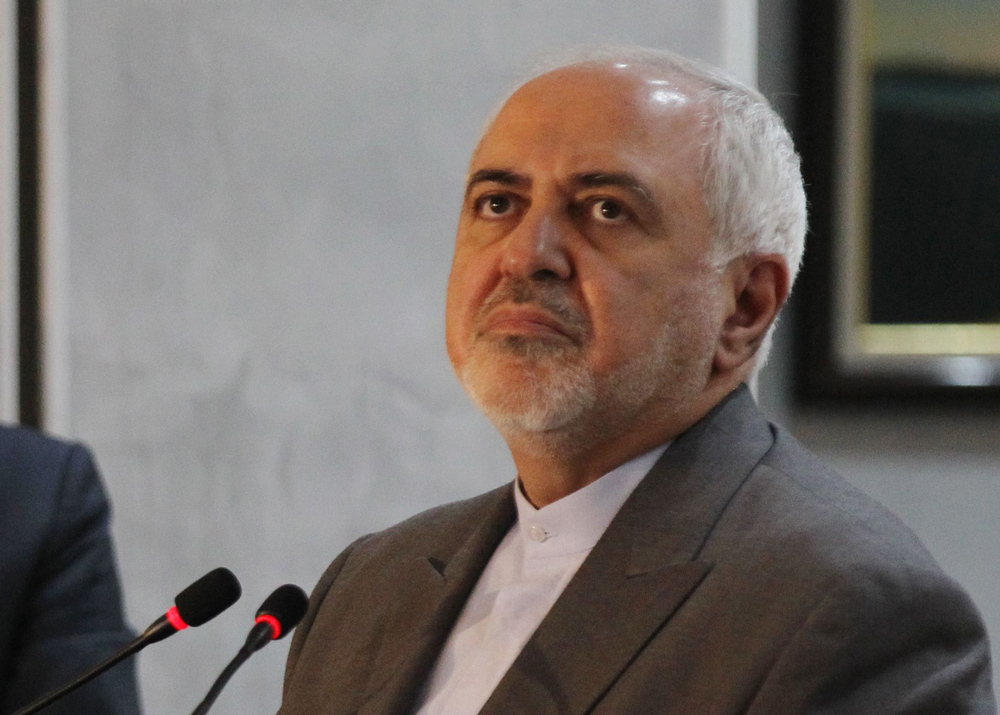
Iran's Foreign Minister Mohammed Javad Zarif is trying to square the circle by defining a place for an Islamic Republic that wants to be part of a world order which it hopes to destroy. (Photo by Ahmad al-Rubaye/AFP via Getty Images)

How does the Khomeinist leadership in Tehran see the contemporary world?

The question has intrigued Iran-watchers for decades.

One reason for being puzzled is the fog of slogans that covers the reality of Iran's behavior.

Besides that opacity, we have the reality of a bifocal foreign policy divided between a faction that dreams of reshaping the world and another that craves admission to it.

Now, however, it seems that, for the first time, the Khomeinist ruling elite is beginning to understand that it can neither reshape the world nor join it on its own antediluvian terms.

Unable to admit that reality, the Tehran ruling elite is trying to conjure a fantasy world in which the Islamic Republic retains some relevance.

One sign of that came last week when Foreign Minister Mohammed Javad Zarif addressed the newly formed Islamic Consultative Assembly (an ersatz parliament).

Zarif touted his 5,000-word presentation as a review of the international situation. He said that in the past 70 to 100 years, especially after World War II, the world has witnessed fundamental changes that redefined international relations and concepts.

He doesn't say which concepts and relations, but borrows clichƩs such as "transition period" "fluidity" and "constant becoming" from American foreign policy analysts like Joseph Nye and Richard Haas to give his presentation an academic veneer.

He admits that, despite its geopolitical and strategic importance, Iran has not secured a role in this changing world; remaining an object rather than a subject even in its own history.

However, he also asserts that the world order created by Western powers led by the United States has reached the end as short-term, case-by-case relations are replacing long term alliances. Because today nothing can be certain, it would be dangerous for the Islamic Republic to regard any relationship with certitude.

If you feel confused by all this, don't be surprised.

Zarif is trying to square the circle by defining a place for an Islamic Republic that wants to be part of a world order which it hopes to destroy.

On Russia, he recalls a letter that Khomeini sent to the then Soviet leader, Mikhail Gorbachev, inviting him to abandon Communism and convert to Khomeinism. Zarif says the present "Supreme Leader" is "pursuing the same path", although it is not clear whether or not Khamenei has urged Vladimir Putin to adopt Khomeinism.

Almost all of Zarif's presentation is inspired by reading and misreading of American foreign policy wonks. And the only foreign source he mentions is former US National Security Advisor John Bolton.

Zarif forgets that the first four years of his ministry were devoted to cooking up and dishing out the so-called "nuke deal" with the same irrelevant Americans. He never mentions the "nuke deal" which he now admits was a bill of goods sold to him by "that fellow John Kerry".

Perhaps to please the hate-America crowd he also claims that his top priority is to replace the US dollar in Iran's foreign trade which, he says must be reorganized on a barter basis.

Zarif claims that, internationally, one-night stands have replaced long term relationships. Yet he says Iran is trying to join the Eurasia bloc led by Russia. He also mentions a 25-year "strategic alliance" with China, something that looks like a hoax marketed by a weekly in London and a daily in New York.

To claim some originality, he says he is now focusing on relations with neighbors as opposed to wooing the "Great Satan". Yet of Iran's 15 neighbors, he names only six with which he claims "best relations".

Even then his claim is questionable.

For example, Iran and Turkey are on opposite sides on Syria and the Armenia-Azerbaijan conflict. Turkey has built a 130-kilometer wall to seal off part of its border with Iran and last week also banned Iranian airlines from flying to Turkish cities.

As for Pakistan, Iran's Islamic Revolutionary Guard Corps (IRGC) claims that some 80 armed groups operating against Iran are based in Pakistan, while Pakistanis claim Tehran is helping Baluchi groups sabotage the Chinese project in Gawadar.

Russia has reneged on more than a dozen promises given to Iran while using Iranian manpower as cannon fodder in Syria.

Relations with Afghanistan also remain dicey if only because Tehran flirts with the Taliban while arming Shiite militias in two provinces.

Zarif does not mention Syria, Lebanon and Yemen because these are places where the Quds (Jerusalem) Corps runs the show. To pretend that his ministry wasn't irrelevant, he says he held weekly meetings with Qassem Soleimani, presumably to be briefed on the empire the late general claimed to be building.

He makes no mention of relations with Europe, Japan and India while ignoring the huge sums of money and energy spent to project the regime's image in Africa and Latin America.

However, Zarif's claim of regionalism may also be bogus.

A surprise omission is Israel which is supposed to be destroyed in the next 22 years. Also, no mention of Palestine, which Tehran has always claimed as "number one priority."

Zarif's expose contains no mention of "exporting revolution", the regime's perennial obsession. In other words, the Islamic Republic no longer hopes to make the region like itself. Yet it is too early to say that it may be starting to think of becoming like the rest of the region.

Zarif is clearly confused. He has spent his whole adult life with an America-centered view of the world which, to keep his job, he is now obliged to abandon. And that leaves the Islamic Republic with a trompe l'oeil diplomacy; a sad spectacle for Iran, a potentially positive participant in regional and international life.
This article was originally published by Asharq al-Awsat

Amir Taheri was the executive editor-in-chief of the daily Kayhan in Iran from 1972 to 1979. He has worked at or written for innumerable publications, published eleven books, and has been a columnist for Asharq Al-Awsat since 1987. He is the Chairman of Gatestone Europe.

Source: https://www.gatestoneinstitute.org/16275/iran-make-believe-diplomacy

Follow Middle East and Terrorism on Twitter


What If the Palestinian Authority Disbands? - Brig.-Gen. (res.) Yossi Kuperwasser

​
by Brig.-Gen. (res.) Yossi Kuperwasser

[T]he collapse of the PA could lead to a Hamas takeover of the Palestinian political system in the West Bank. In addition, the disintegration of the PA could harm the source of income for its many officials and leaders.


What If the Palestinian Authority Disbands?
President Mahmoud Abbas and the Palestinian cabinet.                                      Institute for Contemporary Affairs

Founded jointly with the Wechsler Family Foundation
Vol. 20, No. 15
  • Palestinian officials have recently threatened that if Israel applies sovereignty in parts of the West Bank territories of Judea and Samaria, they will stop the Palestinian Authority from operating. This study examines the significance of this threat, regardless of the very low likelihood of this scenario.
  • The very existence of the Palestinian Authority has been the most significant achievement of the Palestinian national movement, and the collapse of the PA could lead to a Hamas takeover of the Palestinian political system in the West Bank. In addition, the disintegration of the PA could harm the source of income for its many officials and leaders.
  • Following Operation Defensive Shield in 2002, Israel faced a similar situation that had many common elements in today’s situation. It resolved the problem of territorial management through Palestinian mayors and provincial governors.
  • Even if the preferred option for Israel is to continue to maintain a functioning Palestinian Authority, the various alternatives, including one where Israel will retain its responsibility for the territory over time, are not any worse.
  • First, the direct financial burden involved is insignificant, and secondly, the Palestinian Authority will have difficulty continuing the struggle against Israel with the tools at its disposal, compared to if the PA had continued control of the area.
Palestinian officials have recently threatened that if Israel applies sovereignty in parts of the West Bank territories of Judea and Samaria, they will stop the Palestinian Authority from operating or even cause the PA to fall apart and dissolve itself. This study examines the significance of these threats’ actualization, regardless of the likelihood of this scenario, which has so far been very low. This is because the very existence of the Palestinian Authority has been the most significant achievement of the Palestinian national movement, and the collapse of the PA could lead to a Hamas takeover of the Palestinian political system in all the territories. In addition, the PA has responsibility for the Palestinian population under its control, and the disintegration of the PA could harm its source of income for its many officials and leaders, who are the primary beneficiaries of the PA’s revenue,
The Israeli move to extend sovereignty has caused great frustration among Palestinian leadership and could lead the PA to take extreme steps. This study represents a contingency study of various Palestinian options. It should be emphasized that even if the Palestinian Authority should decide to take such measures, it is more likely that if it ceases to function, but it will not totally disintegrate. In doing so, the PA can also try to renounce all its civil obligations, compelling Israel to ostensibly bear the cost of its actions, while at the same time continue to act as the political representative for the Palestinians for legal, political, economic, religious, educational, or security matters. Following Operation Defensive Shield in 2002, and after the establishment of the Palestinian Unity Government, Israel faced a similar situation that had many common elements in today’s situation. It resorted to managing its relations with the Palestinians through Palestinian mayors and provincial governors.

In general, the critical scenario to consider is that Israel, as a controlling force in the Judea and Samaria region, will assume responsibility for the territories that are currently under PA control in Areas A and B. It is assumed that this will be a transitional stage until Israel finds a Palestinian entity to assume responsibility for the area and its residents, as Israel has no intention to rule the Palestinians.

The main conclusion from the following analysis is that even if the preferred option for Israel is to continue to maintain a functioning Palestinian Authority, some of the alternatives, including one where Israel will retain its responsibility for the territory over time, are not much worse. First, the direct financial burden involved is relatively not very significant, and secondly, the Palestinian Authority will have difficulty continuing the struggle against Israel with the tools at its disposal, compared to those if the PA continued control of its territory.

The Basic Premise of this Analysis Is:

  1. In the Palestinian system, there is a continuous tension between the commitment to the national struggle, which aims to liberate all of Palestine from Zionism (first by establishing a Palestinian state in the 1967 territories, which will serve as the basis for completing the conquest), and the desire to improve the quality of life of the Palestinians. The PLO and the PA, and of course the more radical organizations such as Hamas, give clear priority to the national struggle, while also providing necessary attention to the quality of life. Hence, their readiness to uphold the status quo, which is based in their view of a modus vivendi, whereby Israel is willing to accept Palestinian efforts to promote the national struggle, while still taking care of Palestinian quality of life, in order to mitigate Palestinian violence. The Palestinians have turned Israel’s addictive commitment to preserving this modus vivendi to leverage threats against Israel and extract economic benefits from it, which are used to advance the Palestinian fight against Zionism. The success of Palestinian threats is evident in Israel’s failure to implement its own laws to freeze funds used to pay terrorists’ salaries, its failure to take action against the PA for its appeal to the International Criminal Court or for its incitement and hate indoctrination, as well as allowing Qatari money to flow into Gaza.
  2. This Israeli weakness derived from the addiction to the existence of a functioning Palestinian Authority and PA security cooperation is the background to the Palestinian threats that the PA will cease to function or even exist. The PA figures that Israel will panic and reconsider its intention to apply sovereignty. It seems that some elements of Israel’s security establishment have been intensifying this feeling for Israeli decision-makers for years.
  3. Facing the Palestinians who prioritize the Palestinian struggle even if it means harming the quality of life (who, in this context, oppose normalization with Israel, refuse to accept tax money collected for them by Israel, and reject the quality of life offered by the American peace plan, all in order to send this message) there are quite a few Palestinians who believe that the chances of success of the national struggle are so low at this point that Palestinian priorities should be changed to improving quality of life. This does not mean that they are necessarily less committed to the long-term goals of the Palestinian people, as formulated by the PLO. The vast majority are committed to it. However, they believe the price the Palestinian people pay for prioritizing the national struggle is unjustified.
    On the opposite side, many Palestinians believe that failure of the national struggle stems from the PA’s moderation and Abbas’ use of restrained methods, namely the “popular resistance” (which includes terror without the use of explosives and firearms) and political struggle. For them, the success of the struggle requires increased use of armed struggle/jihad. For those pushing for alternatives to the PA policies, the PA’s dissolution or a freeze of its activities will prove the virtue of their cause and encourage them to continue in their path.
  4. For the pragmatists who favor prioritizing quality of life at this stage, the dismantling of the PA or the cessation of its activity will signal the loss of primacy of the Palestinian struggle and of the view that the commitment to Oslo as a framework (while continuously violating the agreements) is an effective way of promoting the national aspirations of the Palestinians. In this new reality, which also reflects a new paradigm in Israeli policy, Palestinians of this view, those who came to the economic conference in Manama and expressed a desire to promote economic cooperation with Israel, may present themselves as an alternative with the support of some pragmatic Arab states. They will not be able to do so immediately, but only after some time has passed. It is doubtful that there is any point in pushing them, but under a proper strategy, with attentiveness to their belief, they can achieve public legitimacy that may eventually make them a viable alternative to the civil administration and later, perhaps, also to assume domestic security responsibilities.
  5. In addition, because Palestinian national consciousness is based to a considerable extent on clan and regional consciousness, local power factors can be considered as a component of civilian control in the various spheres (in a refined format of Dr. Mordechai Kedar’s Emirates proposal1). Under these new circumstances, one might expect to see the way to fresh thinking about solutions to the Israeli-Palestinian conflict that would be in line with Israel’s security needs and with justified Palestinian aspirations.

Alternative A – Israel controls the entire territory over time.

In this alternative, Israel takes over all the security and civilian powers of the PA. It will have to deal, at least in the first phase, with attacks and rioting that will require a significant concentration of forces, while at the same time, the IDF will have to activate a civil administration to carry out basic civil service tasks.

Contrary to the frequently heard claims, Israel’s direct financial expenditures required for providing civil services for Palestinians are not that significant. According to the last annual budget released by the Palestinian Authority, the 2018 budget, out of the total expenditure of about 16.5 billion shekels, about 9.2 billion shekels were earmarked for expenditures that Israel will not need to pay (for instance, 1.3 billion as payments to terrorists and their families; 426 million shekels for the PLO budget; 256 million shekels for the budget of the president; 3.6 billion shekels for the Interior Ministry budget, which includes the security forces budget; 106 million shekels for the Ministry of Jerusalem; 312 million shekels for the Ministry of Foreign Affairs and its embassies; 305 million shekels in debt payments; and 1.6 billion shekels for pensions, etc.). The remaining budget, about 7.3 billion shekels, can be almost entirely covered by the taxes that Israel collects for the PA from the wages of Palestinians employed in Israel and on the goods imported to the PA through Israel. (Control of the education budget raises again the question of the curriculum, namely whether Israel will supplement the curriculum dictated by the PA, or will it act to change the curriculum.)
Obviously, in addition to these direct expenditures, Israel will have significant expenditures, at least in the first few months, due to the need to deal with security risks. At this stage, it is difficult to estimate the extent of these expenditures by the IDF. The Chief Financial Officer will have to assess the extent of reinforcements required, the duration of the reinforcements, and the costs involved. This assessment should take into account the fact that in any case, the IDF is operating forces now in all areas of the Palestinian territories, and that applying sovereignty does not in itself require changes to the existing military order (beyond what is required due to concerns over increased protest and terrorism and the PA’s failure to act). The total dismantling of the PA will require Israel to take care of internal security as well, which, to some extent, increases the burden on Israel.

In any case, these sums are far less than the tens of billions of shekels, which opponents of applying sovereignty claim as the potential cost in an attempt to warn Israeli decision-makers, as Israel will not apply its sovereignty over the PA’s territories and not even over the Area C lands designated for the Palestinians under the Trump plan. Israel will not have to pay national social insurance and pensions on an Israeli scale to two and a half-million residents of these areas.

On the other hand, it is difficult to estimate the indirect economic cost of applying sovereignty to the Israeli economy, considering the probable intensification of violence and terrorism and the possible punitive measures that will be taken by some European countries and the increased activity of the boycott movement against Israel. It is also hard to estimate the additional cost of applying sovereignty due to the economic and health implications of Covid-19 both on Israel and on the Palestinians.

Alternative B – The Palestinian Authority returns to function after a certain period.

It is likely that after a short period of time during which the PA will not function, it will still continue to exist and even maintain its security mechanisms to prevent Hamas taking control of the territory. Pressure will be exerted on the PA both domestically and from abroad, from Europe and from some U.S. Democrats, and from the pragmatic Arab states, to resume its activities. Whatever the outcome of the U.S. elections, the Palestinian Authority is likely to return to its full functions. Be it because it has to reconcile the harsh reality of another four years with a Trump government trying to advance a peace plan disapproved by the Palestinians, or alternatively, out of willingness to cooperate with the Biden administration that promises Palestinians a return to their old tactics of granting them the veto power over any change in the legal status in the territories. This means that in any case, even if the PA stops its own operations but is not completely disbanded, its suspension of operations would only last for a short term.

Alternative C – Gradual transfer of control over the territory to local Palestinian leadership.

If the PA disintegrates, the resulting vacuum of power may, over time, be filled by alternative leadership, which prioritizes quality of life as a more important goal for the time-being than the national struggle against Zionism, while not completely giving up on this goal. Initially, this logic may enable collaboration with the mayors who are committed to the quality of life of the population they are entrusted with, and later this cooperation may expand and take place with clan leaders, merchants, businessmen, and labor leaders, many of whom are in favor of this concept. Cooperation with mayors can begin immediately, while the development of alternative leadership may occur only after a time, in order to gain public confidence. The Palestinian public has been exposed for years and will continue to be exposed to continuous brainwashing, which places the national struggle as a priority. Thus, there will be a need for the continuous promotion of these alternative governing options and it is reasonable to expect harsh opposition to it.

Alternative D – Different PA actors will assume powers in the succession struggle following Abbas.

The bankruptcy of Mahmoud Abbas, which will probably result in the dismantling of the PA (and perhaps even with its more limited cessation of operations, though much less likely), may accelerate the struggle for power among those who claim PA leadership when its aging leader steps down. Another possibility, especially if President Trump wins the U.S. election, should not be overlooked, whereby Abbas announces his retirement and admits his failure to advance Palestinian national goals. Either way, the “War of Succession” may bring some contenders (e.g., Maj. Gen. Majed Faraj, head of the Palestinian Preventive Security, or Jibril Rajoub), to try to seize power, possibly with Abbas’ cooperation. In this context, these contenders may try to restart the PA and be prepared to secretly coordinate their activities with Israel to improve their standing in the succession struggle.


Abbas received by Maj. Gen. Majid Faraj at the General Intelligence Headquarters in Ramallah
Abbas received by Maj. Gen. Majid Faraj at the General Intelligence Headquarters in Ramallah, February 2020.

Alternative E – Hamas will try to take over the area and fill the void.

This is, of course, a problematic alternative in many ways (such as increasing terrorist attacks and unifying Gaza with Judea and Samaria under extremist leadership). Yet, this scenario should not be ignored. Despite the joint efforts of the PA and Israel to restrict its activities, Hamas still has the political and operational infrastructure and broad public support within the territories, and in the event of the disintegration of the PA, it can certainly try to seize power, presenting the view of its armed struggle against Israel as a preferable alternative to the ex-authority’s approach. The advantage of such a move is that, following this, the Palestinian Authority may reverse its decision to disband and seek assistance from Israel in restoring the status quo.

Conclusion: Alternatives to the PA as It Is Today Do Exist

In conclusion, while continuing the prevailing situation is the preferred alternative, Israel can deal with the other alternatives. Some options present the possibility of alternative leadership that may emerge, inside or outside the PA, which may lead to a different view of Israeli-Palestinian relations and raise new opportunities. If the PA responds to Israel’s extension of sovereignty with an interruption of its operations, rather than a complete dissolution, then it seems that after a few months, the PA could return to its activities, including a renewal of the security cooperation, which serves the PA no less than it serves Israel.

In any case, Israel does not have to be hostage to the PA and make the PA’s existence and its functioning central elements of Israeli security, especially as long as the PA adheres to the Palestinian narrative that ultimately calls for the destruction of Zionism and negates any arrangement recognizing Israel as the nation-state of the Jewish people. At the same time, the Authority encourages terrorism by paying salaries to terrorists and their families and incites hatred against Israel both domestically and on the Arab and international stages. It should be clear that no Palestinian is going to accept any unilateral Israeli move regarding the legal status of any territory, even if some may be willing to assume responsibility for the daily needs of the Palestinian population and to lead the Palestinians in their attempt to promote their national interests.

* * *
Note
Brig.-Gen. (res.) Yossi Kuperwasser

Source: https://jcpa.org/article/what-if-the-palestinian-authority-disbands/

Follow Middle East and Terrorism on Twitter


Syrian Writer Nidhal Naisa: Colonialism Came To Cure Backwardness Of Arab Countries - MEMRI

​
by MEMRI

Naisa said that colonialism is a "cure" for the Arabs’ backwardness, since it teaches them how to use the toilet and brings them electricity and medicine.

Syrian writer Nidhal Naisa was interviewed on Al-Jazeera Network (Qatar) on July 14, 2020. Naisa said that the Arab Spring was merely an "Islamist enterprise" that caused nothing but destruction in the Arab countries. He said that the regimes in the Arab countries are incapable of managing their own affairs and supplying their citizens with education, health, food, and other basic needs, and he elaborated that today, the Arabs are nostalgic for the times of the colonialists, who he said came to the Middle East in order to bring advancements to the people. He went on to say that people in the region still regard human rights and equality with disdain, and that the Muslim Brotherhood-backed revolutions have advanced the opposite of these values. In addition, Naisa said that colonialism is a "cure" for the Arabs’ backwardness, since it teaches them how to use the toilet and brings them electricity and medicine. He added that for people in Arab countries, luxuries like cooking gas, electricity, and water are merely a dream. For more about Nidhal Naisa, see MEMRI TV Clips No. 1448 and No. 2482.


Nidhal Naisa: "Everybody is talking about colonialism and what is going on in this region now. What is going on is an extension of colonialism that came from the Arabian Peninsula..."
Host: "Nidhal, Nidhal, cut to the chase! Talk about the colonialism that we are experiencing now. What does the Arabian Peninsula have to do with it? Please, go ahead."


Naisa: "There is no colonialism now. All of this can be traced back to the Arab and Islamic colonialism..."

Host: "Nidhal, Nidhal, Nidhal, Nidhal, Nidhal... Either you talk about the Arab Spring or I will move on to another guest."

Naisa: "There is no such thing as 'the Arab Spring.' It is an Arab Frost, an Arab Hell, an Arab Winter, an Arab Destruction. This 'Arab Spring' was an Islamist enterprise. 

MTV8149.JPG

"It was a transition from the destructive Pan-Arab enterprise to the even more destructive Islamic enterprise. The return to the Islamic Caliphate, the transition from the Pan-Arab state to the Arab Empire..."

MTV81491.JPG

Host: "Let's stick to the issue of colonialism. Why did colonialism return?"

Naisa: "There is no colonialism. It is because these [Arab] peoples are incapable of governing themselves, and of running these states and societies. We witnessed the destruction and devastation in these countries at the hands of these regimes and these peoples that are unable to organize their lives and provide their basic needs. The education system is in ruins, and so is the health system, all the services are in ruins, everything is in ruins. We reminisce about the colonialists who came [here] and speak about them in a very nostalgic way and with a lot of respect... The Western colonialists came here to advance these backward, slumbering, subservient, and enslaved peoples that never experienced the taste of freedom, that did not have [an independent] country, and that did not know what civil [rights] are. 

MTV81493.JPG

"To this very day, nobody knows what civil [rights] are. To this very day, these peoples regard human rights, justice and equality between men and women with disdain. How are you going to advance these peoples? With revolutions or whatever? The rebels that the Muslim Brotherhood is talking about are against human rights, humanism, justice, and equality, and they support discrimination, sectarianism, slavery, reactionism, and all the types of ideological and cultural savagery that we know. What revolutions are you talking about? What Arab Spring are you talking about? Colonialism is a cure for your [backwardness]. It teaches you how to go to the toilet, and bring you light, electricity, services, and medicine. Hosni Mubarak, the President of the biggest Arab country that you mentioned - when he became ill, he went to Germany for medical treatment. He did not build a hospital in his own country. What kind of regimes are these? What kind of countries are unable to provide bread for their people?"

MTV81494.JPG
MTV81495.jpg
View The Clip


MEMRI

Source: https://www.memri.org/tv/syria-nidhal-naisa-colonialism-cure-arab-backwardness-arab-spring-islamist-enterprise-caused-only-destruction

Follow Middle East and Terrorism on Twitter


Who, Exactly, is a ‘Karen’? - Jason D. Hill

​
by Jason D. Hill

Reflections on the racist and improper use of the term.


Last Thursday, Chicago Mayor Lori Lightfoot called White House press secretary Kayleigh McEnany “Karen” after the press secretary referred to the mayor as a “derelict mayor” at a White House briefing.

Lightfoot shot back with a tweet on Twitter: “Hey, Karen, Watch your mouth.”

The term “Karen” has been used routinely and reported in the press by various individuals capturing the often -- it is true -- obnoxious behavior of certain women who happen to be white. These behaviors have been recorded on cell phone cameras, and, in many cases, they have gone viral.

As an academic philosopher who regularly teaches theories of concepts and philosophy of language, let me say something about the conceptually improper and actually racist use of this term.

“Karen” is a slang and pejorative term used to describe a rude white woman who is exploiting her privilege as a white woman.

Proper names are not concepts like, say, chairs, tables, birds, furniture, democracy, justice, brave, kind, evil and so on. Such terms possess a set of distinguishing characteristics that define them, and hearing those terms will automatically conjure in one’s mind that shared set of characteristics. Any person who is evil or brave or kind, regardless of background, will share a set of attributes (and their attendant behavioral traits) in common with any other person in the world who is evil or brave or kind. These terms are designators that denote specific characteristics tied to a referent (an individuals or individuals) which holds them. That is why we don’t confuse evil people with kind people, and thieves and liars with honest and truthful people. The concepts mark out the defining behaviors of the persons who bear such attributes.

The same goes for chairs or tables or birds. Wherever we find such entities in the world -- USA, Germany, China etc. -- the reason we do not confuse them with other objects, like, say, a ball, or in the case of birds, with wasps, is because they have certain attributes that define them as the entities that they are. When we use the concept “table” or “bird,” we don’t have to point to each and every table or bird in the world. We function like wholesalers rather than retailers in the realm of cognition, and we function with an enormous degree of cognitive and verbal economy. The concept is enough to tie together in our minds the defining characteristics that give the entities (birds, tables, chairs) their definitional meaning, and a recognizable status in our minds.

Proper names, as such, do not function that way. They identity referents in the world -- yes. This particular person named Karen, and that other particular person named Karen; but not because the person or persons named Karen or because all the Karens in the world have any common characteristics that mark them out as “Karens.” If we take the millions of tables, chairs and birds in the world, we see they all share common attributes. If we gathered all the people named “Karen” in the world, we would find no identifiable characteristics in the world that unite them under a conceptual common designator. None. The same goes for any proper name such as Michael, Kevin, David, Doris, or Michelle.

The attempt, therefore, to use a proper name as a conceptual term is not only improper: it is nefarious. Think now of all the people named Karen who are not white, privileged or rude. A proper name has been used as a conceptual designator to apply to them. This is so evil a phenomenon that whoever created the term “Karen” as a conceptual identifier of a rude and privileged white woman should be reckoned with for the conceptual mayhem it creates in the human mind.

This is how post-modernists have polluted language and, by default, polluted cognition and methods of efficient thinking. This is precisely how distorted thinking gets inserted into the public space with few, if any, willing to challenge the foundational premises on which it is predicated. This is how the intellectual bankruptcy of our age has led to colloquial usage of terms that indict people on charges based on language that is vacuous. Conceptual inanities are mouthed by everyone; they are codified into moralistic coinages that are nothing more than the neologisms of village idiots who think it is funny to take a wonderfully proper name for a woman and turn into a marker of universal insult.

I have an idea. Every woman named Karen should take it upon herself, as a test case, to take legal action against anyone who invokes the term “Karen” against anyone who is white, privileged and behaves in an obnoxious manner, on the premise that usage of the term degrades her own personal name. I do not believe there is a legal precedent for this, but what better way to test the waters than for all the women named Karen in the world to sue those people who call those women whose behaviors are obnoxious, who happen to be white and who are privileged: “Karen.”

Some may say, why make such a big deal over this issue? Beyond what I have written, I must add that the English language is eroding. Some may not be bothered by this state of affairs and, indeed, if the problem were merely the fact that more people were committing grammatical and syntactical infelicities in their writing one would have little cause for too much worry. A good editor with old-fashioned sensibilities would be a curative antidote to this dilemma. The surest sign that language is eroding is not by ostensibly pointing to the sloppy ways in which people communicate either verbally or in written form, but by way of how their thinking manifests itself in the world.

Observe the infantile style of commentary that accompanies many written articles, and the petty bickering among commentators. Reading such commentaries, one feels like a statistician in gutter trivia. People emote and tend quite often to respond from their “gut” rather from a reasoned and thoughtful point of view. Disagreements turn into petty squabbles until individuals are no longer debating contents of an article but, instead, are literally cursing each on a level that not even eighth graders would lower themselves to. Rather than pick up a dictionary to locate the meaning of words they do not comprehend, many readers demand that writers lower themselves to the level of a reader's intelligence, missing the point that the proper role of a good writer, like that of an artist, is to give one a picture of the high view -- provided that one is willing to climb up to see it.

Observe the frequent manner in which people resort to personal attacks when they are engaged in a discussion of events; or they succumb to the “Argument From Intimidation.“ This is a case in which, instead of offering up evidence and rational arguments, persons emote snarls, grunts, shouts, huffs and puffs and other emotional vibrations which are all meant to substitute for reason itself, are all meant to cower their interlocutor into submission. The extent to which people personalize what they read or hear from even friends is a sign of cognitive deterioration, an indication that feelings rather than thinking have taken the place of adjudicating and/or arbitrating disputes. This means that more and more people are resorting to an emotion-based level of not just communicating, but of using emotions as a method of appraisal and of making moral judgments. Emotions tell us what we feel; unfortunately they do not tell us the why of what we are feeling. They are not tools of cognition. My emotion of anger alone will not, in the absence of introspection and a process of thought, trace the root of my anger.


Source: https://www.frontpagemag.com/fpm/2020/07/who-exactly-karen-jason-d-hill/

Follow Middle East and Terrorism on Twitter


Saturday, July 25, 2020

Marxism in the Classroom, Riots in the Streets - Clare M. Lopez

​
by Clare M. Lopez

The production of brainwashed generations of automatons.


The explosion of lawless rioting on American streets was only a matter of time. Sixty-two years ago, former FBI agent W. Cleon Skousen wrote “The Naked Communist” to warn Americans about how communists planned to destroy our system from within, not by means of sudden revolution as envisioned by Karl Marx, but through a version of Italian communist Antonio Gramsci’s “cultural Marxism.” With a nod to the Chinese Communist Party (CCP) and its People’s Liberation Army (PLA), it has been a “long march through the institutions” that has brought us to the brink of catastrophe—and much of it began in our schools.

Chapter 13 of Skousen’s book lists 45 goals of communism in America. Number 17 reads: “Get control of the schools. Use them as transmission belts for socialism and current Communist propaganda. Soften the curriculum. Get control of the teachers’ associations. Put the party line in textbooks.” And so they did. While American parents were busy working to sustain their families and achieve a piece of the American dream, their children were at schools with teachers and textbooks that taught them to hate America, the Judeo-Christian foundations of our national identity, and the remarkable individuals who built this country on the principles of the Declaration of Independence, our Constitution, the Federalist Papers, and more.

As a result, the brainwashed generations of automatons marching in lockstep out of such schools possess neither critical thinking nor the intellectual ability to appreciate the brilliance and opportunity bequeathed to them by the great philosophers of Western Civilization. But, as Gramsci envisioned, they enter the ranks of art, film, music, literature, faith communities, government, media, and of course, academia, in droves. There will be no need for gulags or firing squads—or at least, not much. As KGB defector Yuriy Bezmenov told us, subversion is a far more destructive weapon than violence. Today, we face a situation perhaps only slightly exaggerated in this recent quote from Jeff Nyquist: “The Constitution of the United States is something alien to most of the persons who occupy the actual government formed under it”. [Emphasis in the original.]

So, how did this happen?

The plot to destroy Western Civilization was hatched in Moscow shortly after the 1917 Bolshevik revolution and implemented through the Institute of Social Research at Frankfurt University (later simply, The Frankfurt School). John Dewey, Herbert Marcuse, and others brought socialist concepts of “progressivism” to U.S. schools through the National Education Association. Out went E Pluribus Unum; the firm, fixed principles of math and science; the accurate teaching of historical fact; and all religion. In their place came the indoctrination of critical race theory, identity grievance, and the angry psychobabble of “victimhood.”

Textbooks like Howard Zinn’s “A People’s History of the United States” (1980) and “A Young People’s History of the United States” (2007) that are used across the U.S. from middle school through university, distort the true historical record and paint America as irredeemably oppressive, racist, and unjust. As I wrote in “Santa Barbara School District: Where Marxism & Black Lives Matter -- But Academics, Not So Much,” at Front Page Magazine on 19 June 2020, Zinn’s ‘solution’ was class warfare that pits identity and minority groups against one another, rejects American exceptionalism, abandons free market capitalism, and goads impressionable students to anger, despair, and hopelessness about their own country. Psychologically twisted revolutionaries steeped in Marxist hatred like Bill Ayers and the Weather Underground set off bombs, smashed windows, and assaulted police in the 1960s-1970s. But instead of going to prison, Ayers went into academia and later held the joint titles of Distinguished Professor of Education and Senior University Scholar at the University of Illinois at Chicago, where he imparted his hatred for his homeland to further generations of students. Proclaiming Justice to the Nations founder Laurie Cardoza-Moore appeared on Fox and Friends Weekend on 11 July 2020 and rightly noted that “The greatest national security threat to the United States is coming from U.S. history textbooks and the Common Core curriculum.”

Decades of such indoctrination have wreaked the havoc we see today on our streets: crazed mobs attack police, assault private citizens and business owners, vandalize property federal and private alike, tear down statues without even knowing whom they represent, set up “autonomous zones”, deface synagogues, and scream antisemitic slurs. The avatars of the current insurrection are Antifa and the Black Lives Matter (BLM) movement. Indeed, BLM even has a national organization called Black Lives Matter at School (BLMS), whose signature objective is the mandatory injection of Black History and Ethnic Studies into U.S. school curricula. A project of the Movement4BlackLives (whose horrifically antisemitic, racist 2016 Program is now archived online), BLMS offers an online Curriculum Resource Guide based on the BLM’s guiding principles and other materials that promote the three African-American Marxist women who founded BLM, “queer and transgender affirming,” “globalism,”  and “disrupting the Western-prescribed nuclear family structure.” BLMS has the endorsement of the National Education Association, the largest teachers union in the U.S.

In California, a proposed Ethnic Studies Model Curriculum (ESMC), which is among other things both antisemitic and anti-Israel, has been under consideration and revision for more than a year. But even as the revision process grinds on, a group calling itself Save CA Ethnic Studies reportedly is attempting an end-run around the system to hoodwink individual district school boards in CA to vote on a previously criticized and rejected version of the curriculum (sometimes without even being shown the original draft). More than a dozen CA school boards so far have adopted resolutions in support of that earlier proposed ethnic studies curriculum. In response, a letter signed by some 88 state and national organizations has been sent to the California Department of Education to protest the Save CA Ethnic Studies attempted deception as well as its efforts to “indoctrinate students into a highly controversial and divisive set of ideological beliefs that we feared would exacerbate ethnic divisions and foment bigotry in California schools.” Signatories include the American Truth Project, Americans for Peace and Tolerance, B'nai B'rith International, the Endowment for Middle East Truth (EMET), Facts and Logic About the Middle East (FLAME), the Legal Insurrection Foundation, Proclaiming Justice to the Nations, the Simon Wiesenthal Center, The Lawfare Project, the Zionist Organization of America, among many more.

Across the country, however, including in private secondary schools like Phillips Academy Andover, Phillips Exeter Academy, and Sidwell Friends, school systems are pronouncing support for the Marxist BLM agenda as they come under pressure to include materials on “institutionalized racism” in their curricula. In public school systems in New York City, Wake County, NC, the Santa Barbara Unified School District, and others, hard leftist school boards are kowtowing to the belligerent demands of Black Student Youth groups and others. At the Santa Barbara Unified School District Board Meeting of 9 June 2020, for example, resolutions were accepted declaring that “all Students Deserve Justice, Equity, and Freedom” and declaring February 2-5, 2021 as Black Lives Matter In School Week (one of the demands of the BLMS group). Then, two weeks later, in a Resolution dated 23 June 2020, the Santa Barbara School District passed a resolution declaring, among other things, that “racism is a public health emergency,” and resolving that “the Santa Barbara Unified School District will develop and purchase culturally relevant resources for educators and families for distribution and posting on the district website that 1) teach about, celebrate, uphold, and affirm the lives of Black people…” (It is not specified from whom or in accordance with which regular bidding process such purchase of “relevant resources” would be affected.)

This is but an overview of the Marxist agenda that has been for decades and is continuing to this day to be jammed down the throats of America’s students. Hitherto unsuspecting parents are waking up, though, especially during this time of online instruction during the coronavirus crisis. They are seeing, sometimes for the first time, what their children are being taught—and many are furious. The more questions the parents are asking, the more the school boards are resorting to deception and obfuscation, deliberately to exclude the very families with whose children they have been entrusted. It’s not their children and it’s not their money. Parents increasingly are attending school board meetings and demanding answers. They are doing what any patriotic and responsible American parents would do to ensure their children are not being indoctrinated and recruited by shadowy Marxist interests to hate them and the country they love.

With our nation under siege, as Gateway Pundit’s Jim Hoft wrote in a 7 July 2020 piece, “We cannot claim to truly appreciate the Founders and the nation they secured for us while simultaneously refusing to do what it takes to keep and maintain this nation.”
“We are the keepers of the flame of liberty” (President Ronald Reagan, 1986)


Clare M. Lopez is the Founder/President of Lopez Liberty LLC.

Source: https://www.frontpagemag.com/fpm/2020/07/marxism-classroom-riots-streets-clare-m-lopez/

Follow Middle East and Terrorism on Twitter