Sunday, November 7, 2021

'I understand Israeli skepticism over a nuclear agreement with Iran' - Eldad Beck


​ by Eldad Beck

In an exclusive interview, Austrian Chancellor Alexander Schallenberg speaks of his country's struggle against antisemitism, the renewal of the nuclear talks in Vienna, and the close strategic relations with Israel.


'I understand Israeli skepticism over a nuclear agreement with Iran'

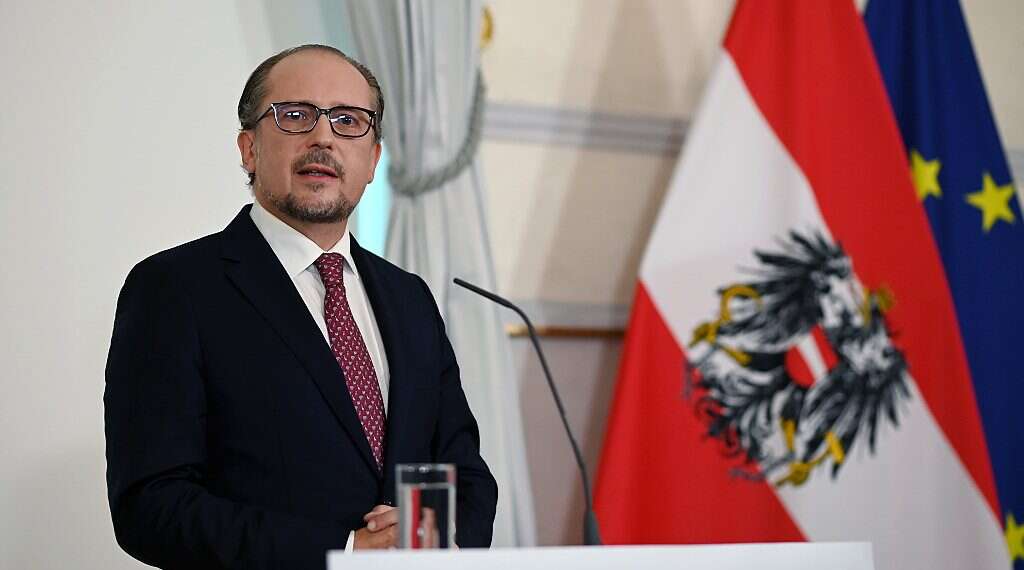
New Austrian Chancellor Alexander Schallenberg during his swearing-in ceremony, Oct. 11, 2021 | Photo: Thomas Kronsteiner/Getty Images

Alexander Schallenberg never imagine himself becoming chancellor of Austria. A lawyer by training, and from an aristocratic family, he was born in Switzerland and raised in India, Spain, and France, where his father, who was also a diplomat, served as a senior figure in the Austrian Foreign Ministry. He took the place of Sebastian Kurz as chancellor of Austria, after a criminal investigation was opened against Kurz on suspicion of using public funds to advance his political career with the Austrian media.

Schallenberg, who served as foreign minister under Kurz, is viewed as being extremely close to his predecessor. His promotion as chancellor in October prevented the break-up of the fragile coalition between the conservatives and the greens in Vienna.

The circumstances will also lead Schallenberg this week to take the place of Kurz at the dedication of one of the projects that the previous chancellor personally advanced: On the anniversary of Kristallnacht, which will be marked on Tuesday, Schallenberg will inaugurate the "Wall of Names" – a Holocaust memorial that commemorates the names of the roughly 65,000 Austrian Jews who were murdered by the Nazis during the World War II.

Schallenberg, 52, according to his associates, is supportive of the commitments that Kurz made towards the Jewish community in Austria and towards Israel. To mark the inauguration of the "Wall of Names," Schallenberg granted Israel Hayom an exclusive interview in his office in Vienna, in which he dealt with Austria's role in the Holocaust, the struggle against antisemitism, the renewal of the negotiations at the end of the month in Vienna regarding a nuclear agreement with Iran, and the close strategic relations with Israel.

Q: It's been 76 years since the end of World War II and this week, on the anniversary of the Kristallnacht pogrom, you will inaugurate the "Wall of Names" memorial. What is the significance of this memorial for you, as one of the first generations in your family who was born after the Holocaust?

"For me, this memorial has great significance. It's an important step in which Austria shows its citizens and descendants of Holocaust victims that we don't only look at them as the darkest chapter in our history, but relate to them on the human level. We are talking about people, not only numbers, about citizens who constituted a very significant part of the life in Vienna and in Austria, of our society, who were destroyed. Of course, the fact that this has only happened after decades can be criticized.

"But, in my eyes, it is important that Austria is doing this, also in relation to the decision that was recently made to grant Austrian citizenship to descendants of Holocaust victims and deportees. This is the human thing to do; through it, we are in fact thanking those who request it [Austrian citizenship] as they are showing their faith in the new Austria."

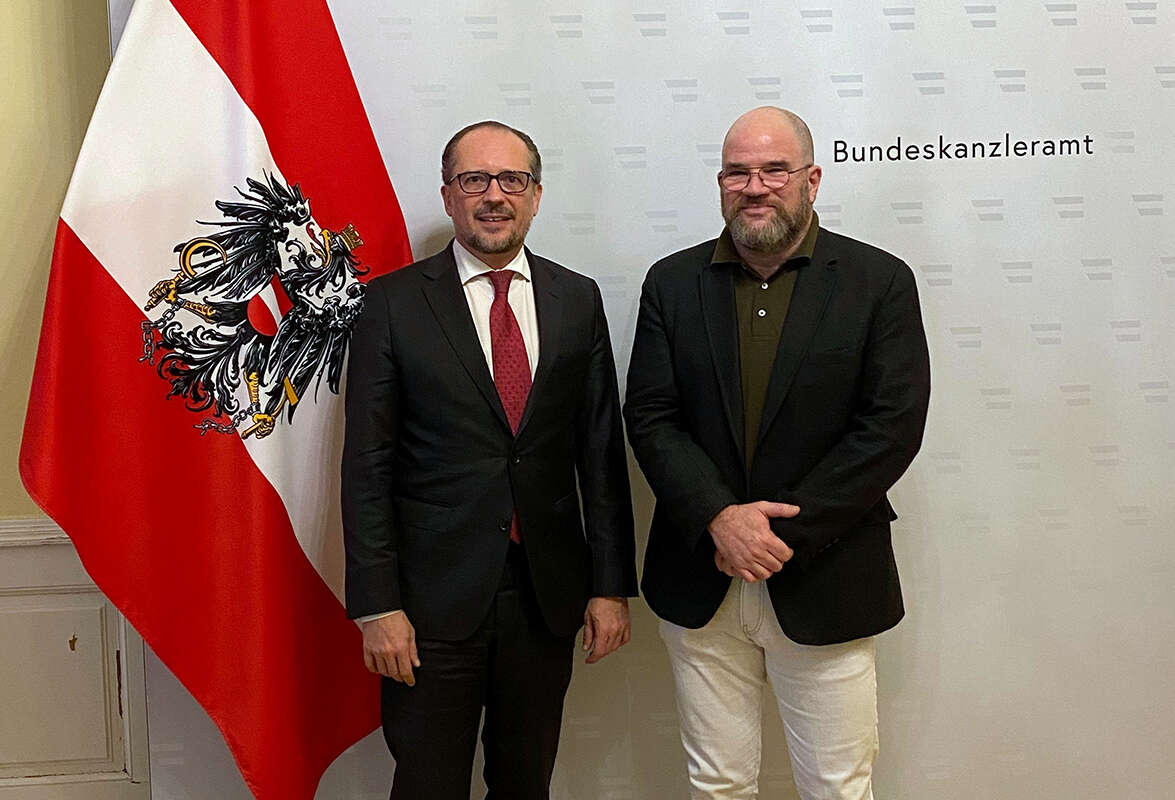
Austrian Chancellor Alexander Schallenberg with Israel Hayom reporter Eldad Beck

Q: What led Austria to choose this kind of Holocaust memorial?

"For decades, there was an argument about what kind of memorial to build. In 2018, my predecessor, Sebastian Kurz, made the decision to establish a memorial, one that would be inspired by Yad Vashem. In our memorialization culture, we need to try to address the human and emotional level.

"The victims were not just numbers, but human destinies. In my eyes, one of the most impressive halls at Yad Vashem, which moves me every visit and brings tears to my eyes, is the final hall that is covered with pictures of the victims, including children. If we want to deliver the message of 'Never Again' we have to show that the murdered were people, not a group, not a number, not something anonymous. I think that this message comes across well at the 'Wall of Names.'"

Q: For decades, Austria denied any responsibility for the Holocaust and claimed that it was the first victim of Nazi Germany. Factually, many Austrians played important roles in the extermination of the Jews of Europe. Today, does Austria accept history as it was?

"I think so. The most significant development was over the past few years: the speeches in the Knesset by former Chancellor Franz Vranitzky and former President Thomas Klastil, the distancing from the claim that we were only victims and recognition of the fact that Austrians were among the most notorious criminals, and that we take social and political responsibility for this. Former Chancellor Wolfgang Schussel made a major contribution to this with the 'Washington Declaration,' the compensation agreement paid by Austria, even if this agreement seems to some of those concerned insufficient. It's clear that we will never be able to heal the wounds with money.

"I think that the discourse in Austria today is extremely different to how it was in the 1980s. But it's forbidden to think that everything is behind us and we need to stop. Regretfully, we see that antisemitism is showing its terrible face in new ways. The struggle against antisemitism needs to be consistent. One generation can't solve this problem, so it's also a mission for the coming generations. It needs to be an ongoing effort. If we want to prevent there ever being this kind of barbarism again, every generation is obligated to work for itself on this history."

Q: You pointed out the "Washington Declaration." There are survivors and descendants of survivors who claim that, in returning only a small part of the Jewish property that was expropriated, it missed an opportunity to reconcile with its Jews. What's your opinion?

"I understand the sensitivity of this issue. It was only a gesture, and it could only have been a gesture. With this, it wasn't possible to bring the murdered back to life or to return years that were lost. But if you ask the Jewish community in Austria and the Jews who live here, they will tell you that it was an important step. It wasn't the only and final step.

"Just recently we decided to provide an additional budget for the security of the Jewish community and to finance its activities. It's important for us to see the dark chapters in our history, but also to ensure that there will be a flourishing community here that is full of life. For us, it is really enriching and I am proud and happy that more and more Jews feel comfortable in Austria, and also that many people sought Austrian citizenship as an expression of faith in the new Austria."

Q: Can you explain why Jews in Austria feel more secure than Jews in Germany or France?

"I'm not able to judge the situation in France or Germany. In any case, Austria is doing a lot in order to ensure this [security]. We explained that this is a community with special security needs. Last week we marked the anniversary of the [Nov. 2, 2020] terrorist attack that took place close to the main synagogue in Vienna [in which four people were killed and 23 injured]. He [the ISIS terrorist] did not target the synagogue. However, at first, we feared that it was an attempt to harm the synagogue. There is great sensitivity.

"Beyond that, it must not be forgotten that Jewish life in Vienna had a great influence on Austrian life. For example, when we think about the start of the 20th century – about the Jewish contribution to science, culture, literature, the arts, academic life – without the Jews the blossoming of that same period would never have happened. And recognition of this causes Jews to feel better and more secure here."

Q: Germany still holds legal proceedings against individuals who participated in the extermination of the Jews in Europe. Why are there no such cases in Austria?

"Where crimes were committed the legal system will operate with full power. I don't know potential cases for trials like that. But, regardless of the perpetrators' age, justice has to be done. I guarantee that the legal system will respond where it needs to respond if there will be enough factual evidence that will allow a prosecution to take place. The Austrian legal system is not afraid of acting on this issue."

Q: Nuclear negotiations with Iran are scheduled to resume in Vienna. Many in Israel compare the Iranian regime to the Nazi regime and the 2015 nuclear deal to the 1938 Munich Agreement. Do you see such similarities?

"In all honesty, no. We have massive problems with the Iranian leadership, for example in relation to their Holocaust denial. We explained this to them in the clearest possible way. But the negotiations are an attempt to prevent Iran from acquiring a nuclear bomb. It is proven that the absence of an agreement is worse than the existence of an imperfect agreement. Of course, the nuclear agreement isn't perfect. There are issues, like the development of a missile program, that are not included in it at all.

"But, like the proverb says: better a sparrow in the hand than a pigeon on the roof. According to experts, the last few years have shown that the timeout in implementing the agreement has shortened the time that Iran needs in order to obtain a nuclear weapon. The last thing the international community is interested in is a nuclear arms race in the Gulf. It will cause great instability for us all.

"I understand the skeptical voices in Israel with regard to the agreement. But history shows that the absence of dialogue does not lead to results and our goal needs to be to bring Iran into the framework of an agreement of inspection by the International Atomic Energy Agency so that we will see what they are doing. Without this, we have no possibility of inspecting them.

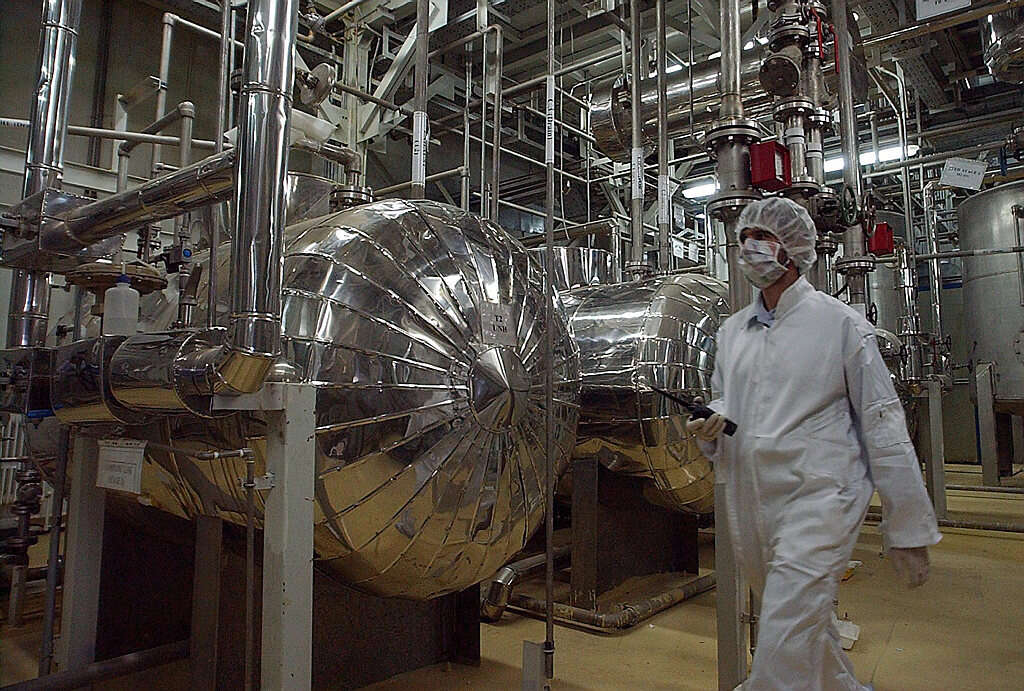
An Iranian security person walks at a part of the Uranium Conversion Facility outside Isfahan, south of Tehran (AP/Vahid Salemi/File)

Q: As former foreign minister you know the Iranian issue well. Can you trust the Iranians at all?

"Trust is probably the least available resource in the Gulf region. And this is also a big issue in the negotiations over the nuclear agreement. And therefore, trust is very much needed. Trust can't be created with silence. Iran itself expressed a desire to return to the negotiating table.

"There, on our side, there are prior rules and conditions that are extremely clear. Trust can only be achieved through a contract, inspection systems and extreme transparency on the Iranian side that will give us the security that they aren't continuing to develop a nuclear program. In the framework of the negotiations, we will need together to build the best possible transparency and without it there won't be a nuclear agreement."

Q: What will you do if you discover that, at a certain point, Israel says – "Enough, it's enough, if we don't do something, Iran will get a nuclear bomb" and therefore responds militarily?

"If we go according to this logic you have to be very supportive of the negotiations and the renewal of the agreement. We don't have an interest in Iran getting the capability to build a nuclear weapon, which will lead other states in the region working to acquire this capability for themselves. On the basis of our history, we Austrians believe that there is a need for international law and international guidelines. These are the only things that maintain themselves over time. Anything else are immediate steps that will maybe bring something for a while, but over time won't create sustainable security."

Q: Can the European Union contribute to expanding the normalization between Arab states and Israel so that additional countries will join the Abraham Accords?

"I think so. The Abraham Accords changed the rules of the game. It's one of the most interesting things that happened in the last few years. Sometimes they say in the Middle East: no further progress can be made, and the doomsday prophet foresee the worst possible scenarios.

"The Middle East is always surprising, for good and for bad. The Abraham Accords are truly ground-breaking and I think that on the basis of our line of two states we need maximum normalization. A few days ago, I hosted the King of Jordan, I was myself in the Gulf and it was very interesting to see how much potential there is in the connection between Israel and the Arab states. It's an encouraging development and, with our position in support of the two-state solution, we in the European Union need to contribute our part to advance this normalization."

Q: Over the years, Austrian-Israeli relations have been through ups and downs – there were the cases of Waldheim and Haider. But over the last few years, the relations improved significantly. In which areas would you want to see the two countries collaborate more?

"There is great potential to advance relations and we're really working intensively on our strategic partnership. Scientific exchanges, civil society, the economy. We can still learn a lot more from Israel in the areas of start-ups and high-tech. We made the decision to increasingly tighten the relations with Israel really consciously. We said that the security of Israel is an important part of our foreign policy and our official policy.

"I also see this in a geopolitical context. Democracy, freedom of religion, rejection of violence. Around 25% of all the countries in the United Nations represent this model of life, including Israel and Austria. These states belong to a family of values and therefore we have to stand together and work together."

Q: Do you see a similarity between Austria and Israel?

"Israel is hotter and has more beaches than we do. It's an interesting question, I've never thought about it. We have many shared lines of history. For better – like Herzl, for example, and for worse. There are many human bridges between the two countries, to be more precise between the people in Austria and the people in Israel, which were never destroyed. I think that this is the strongest connection between us. Of course, Israel has very demanding neighbors, while we live inside the European family. But our societies are faced with many similar situations. Especially during the corona crisis, we were in very close contact – and now with regard to the booster shot. Israel is a very special case for us, and we follow what happens there closely. Israel is always a few months ahead of us."

Q: Will you visit Israel soon?

"I very much hope so. I had a very friendly conversation with Prime Minister Bennett, and I met him in Glasgow where we spoke about dealing with corona. I think I will be able to come to Israel before this Christmas."


Eldad Beck

Source: https://www.israelhayom.com/2021/11/07/i-understand-israeli-skepticism-over-a-nuclear-agreement-with-iran/

Follow Middle East and Terrorism on Twitter

One of world's largest investment firms will need permission to hire white men - Emma Colton


​ by Emma Colton

"Diversity Uber Alles"

Leaders at one of the largest investment firms in the world, State Street Global Advisors, will need to ask permission to hire white men as it rolls out a diversity hiring initiative. 

"This is now front and central for State Street — it’s on every senior executive’s scorecard," said Jess McNicholas, the bank’s head of inclusion, diversity and corporate citizenship in London, according to the Sunday Times. 

STATE STREET TO BUY BROWN BROTHERS UNIT FOR $3.5B TO EXPAND CUSTODIAN OPERATIONS

"All of our leaders have to demonstrate at their annual appraisals what they have done to improve female representation and the number of colleagues from ethnic-minority backgrounds."

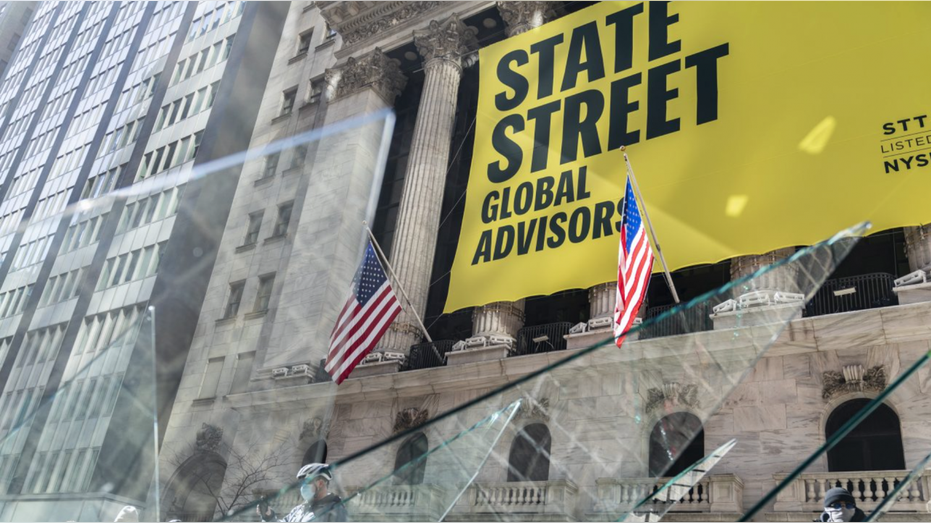
NEW YORK, UNITED STATES - 2021/03/08: State Street Global Advisors celebrates listing on NYSE and International Women's Day with Broken Glass installation around Fearless Girl sculpture across from Stock Exchange on Broad Street.

The company aims to triple the number of Black, Asian and other minority staff in senior positions by 2023, the Sunday Times reported. If executives don’t meet the target, they will face lowered bonuses.

Recruiters will now have to establish panels of four or five employees, including a woman and a person with a minority background, when hiring middle management staff. 

The firm will still hire white men, McNicholas said, but recruiters are required to show that women and minority applicants were interviewed by the panels. 

The company is pledging to "hold ourselves accountable for strengthening black and Latinx owned businesses."

The 'Fearless Girl' statue which stands in front of Wall Street's charging bull statue is seen in New York, U.S., March 15, 2017. REUTERS/Shannon Stapleton - RC1BB61B1480

WALL STREET'S FEARLESS GIRL STATUE GETS NEW PLACE OF HONOR

State Street Corporation is based out of Boston and founded in 1792. It currently has just nearly 40,000 employees over 30 offices worldwide.

A man walks his dog past the Fearless Girl statue outside the New York Stock Exchange, Tuesday, Oct. 5, 2021, in New York. Stocks are drifting mostly lower in early trading on Wall Street as investors look ahead to another big week of earnings report (Associated Press)

GET FOX BUSINESS ON THE GO BY CLICKING HERE 

State Street previously made headlines in 2017 when it commissioned the statue of a girl staring down Wall Street’s "Charging Bull" sculpture for International Women’s Day. The sculpture, known as the "Fearless Girl Statue," was later moved to the New York Stock Exchange building after complaints from the sculptor of the Charging Bull.


Emma Colton

Source: https://www.foxbusiness.com/lifestyle/state-street-global-advisors-permission-hire-white-men

Follow Middle East and Terrorism on Twitter

FBI again claims that ‘white supremacists’ pose as great a threat to the US as Islamic State jihadis - Robert Spencer


​ by Robert Spencer

Or is the whole idea of a massive “white supremacist” terror threat an attempt to silence and destroy the political opposition by first smearing it as “white supremacist”?

You just don’t see “white supremacist” terror attacks and plots around the U.S., while any regular reader of Jihad Watch knows that there are Islamic State jihad plots caught here fairly often. Why is that? Are “white supremacists” better able to cover their tracks? Or is the whole idea of a massive “white supremacist” terror threat an attempt to silence and destroy the political opposition by first smearing it as “white supremacist” and then as terrorist?

“White supremacist threat to US as great as Islamic State, FBI tells Congress,” by Alex Woodward, Independent, November 4, 2021:

Federal law enforcement has once again warned members of Congress that white supremacists and other domestic extremists pose as great a threat to the US as Islamic State militants, a familiar warning to lawmakers after repeated advisories have pointed to the rise of racist violence and conspiracy theories that have proliferated online.

Officials with the FBI and Department of Homeland Security also told…


Robert Spencer

Source: https://www.jihadwatch.org/2021/11/fbi-again-claims-that-white-supremacists-pose-as-great-a-threat-to-the-us-as-islamic-state-jihadis

Follow Middle East and Terrorism on Twitter

Biden has 'turned his back on Israel,' Mike Pence tells Republican Jewish Coalition - Paul Steinhauser


​ by Paul Steinhauser

Enemies of the U.S. and Israel "sensing weakness" because of the Biden administration, the former vice president told a gathering in Las Vegas

LAS VEGAS – Former Vice President Mike Pence on Saturday took aim at President Biden over his administration's treatment of Israel.

"Make no mistake about it, President Joe Biden has turned his back on Israel," Pence charged as he addressed the Republican Jewish Coalition's influential annual leadership meeting.

Biden has "restored funding for the Palestinian Authority, announced his intention to rejoin the Iran Nuclear Deal, and now the Biden administration is planning to open a consulate in Jerusalem for the Palestinian people," Pence told the gathering.

CHRISTIE URGES REPUBLICANS TO ‘MOVE ON’ FROM 2020 ELECTION

"This is an unlawful step and it’s time for Congress to act to deny President Biden from opening a consulate in Jerusalem," Pence added.

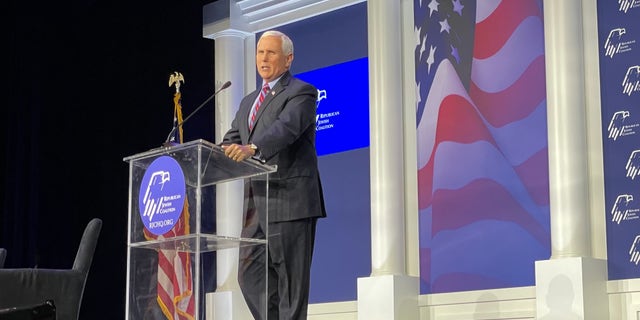
Former Vice President Mike Pence addresses the Republican Jewish Coalition's annual leadership meeting, Nov. 6, 2021, in Las Vegas.
Former Vice President Mike Pence addresses the Republican Jewish Coalition's annual leadership meeting, Nov. 6, 2021, in Las Vegas. (Fox News)

During Pence's tenure as vice president, then-President Donald Trump thrilled Israel and outraged Palestinians by closing the Jerusalem consulate and moving the diplomatic staff to the U.S Embassy in Israel's capital, which was moved from Tel Aviv to Jerusalem in 2018.

The Biden administration, in a move to improve ties with the Palestinians, has said it would reopen the consulate.

Pence used his speech to once again launch repeated attacks on Biden, arguing that under the president "America is a nation in crisis."

DESANTIS, AT MAJOR GOP GATHERING, VOWS HE'S ‘ONLY BEGUN TO FIGHT’

"Weakness arouses evil and after the president’s disastrous withdrawal from Afghanistan, our adversaries are sensing weakness," he said.

Pence was one of eight prominent Republicans speaking at the four-day RJC confab whom pundits view as potential 2024 GOP presidential contenders. 

But the former vice president didn't discuss any possible future political plans, other than to stress that "we’re going to win back this country in 2024." 

The conference attracted GOP leaders, activists, rainmakers and mega donors. And the gathering took place in Nevada, the state that holds the fourth contest in the Republican presidential nominating calendar.

Pence has already made stops this year in the first three states in the primary and caucus schedule - Iowa, New Hampshire, and South Carolina.


Paul Steinhauser  is a politics reporter based in New Hampshire.

Source: https://www.foxnews.com/politics/biden-turned-his-back-israel-mike-pence-republican-jewish-coalition

Follow Middle East and Terrorism on Twitter

European Army: Rhetoric versus Reality - Soeren Kern


​ by Soeren Kern

"The EU is not a credible substitute for what NATO represents. You will not see any appetite for the European army amongst member states." — Kristjan Mäe, head of the Estonian defense ministry's NATO and EU department.

  • The call for a supranational army, part of a push for Europe to achieve "strategic autonomy" from the United States, is being spearheaded by French President Emmanuel Macron, who, as part of his reelection campaign, apparently hopes to replace outgoing German Chancellor Angela Merkel as the de facto leader of Europe.

  • Many EU member states disagree with Macron. Eastern European countries, some of which face existential threats from Russia, know that neither the EU nor France can match the military capabilities offered by NATO and the United States. Other countries are concerned about a panoply of issues ranging from financial costs to national sovereignty.

  • "If the EU Army undermines NATO, or results in the separation of the U.S. and Europe or produces a paper army, Europe will be committing the most enfeebling and dangerous act of self-harm since the rise of fascism in the 1930s. An EU Army will amount to European de-arming." — Bob Seely, Tory MP.

  • "It will be hard to convince some member states that collective EU defense would bring the same security as NATO's U.S.-backed defense arrangement." — Richard Whitman, professor of politics and international relations at the University of Kent.

  • "Few share France's willingness to splurge on defense, or its expeditionary military culture. (Germany, especially, does not.) Nobody agrees what 'strategic autonomy' actually means." — The Economist.

  • "The EU is not a credible substitute for what NATO represents. You will not see any appetite for the European army amongst member states." — Kristjan Mäe, head of the Estonian defense ministry's NATO and EU department.

  • "Even if national capitals wanted to lunge for a common army, there are so many technical, legal, and administrative differences between their militaries that it would take decades to produce a smoothly functioning force.... Conclusion: any talk of creating a fully-fledged common army, even within the next generation, is just that: jaw-jaw and not real-real." — Brooks Tigner, analyst, Atlantic Council.
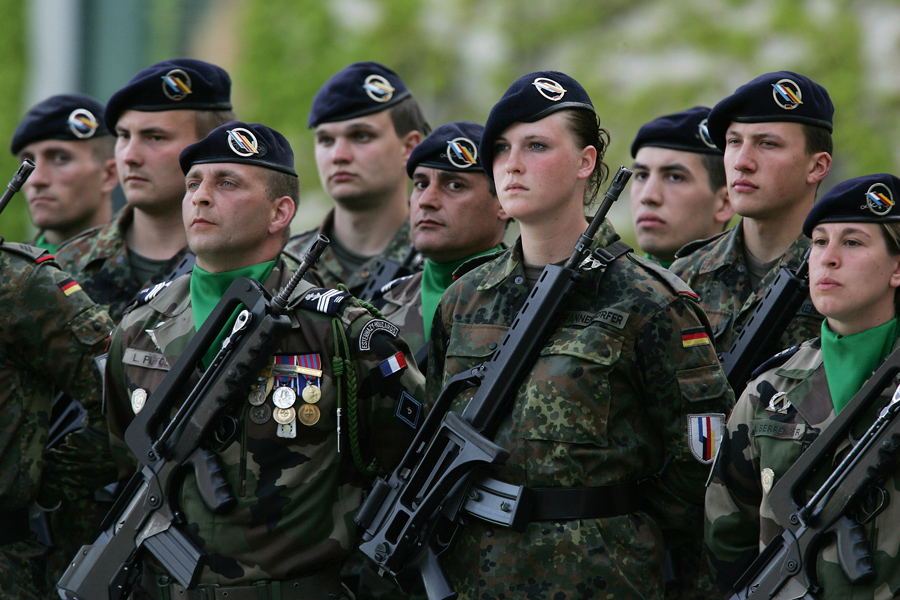
The call for a supranational army, part of a push for Europe to achieve "strategic autonomy" from the United States, is being spearheaded by French President Emmanuel Macron, who, as part of his reelection campaign, apparently hopes to replace outgoing German Chancellor Angela Merkel as the de facto leader of Europe. Pictured: Soldiers of the Franco-German brigade, a military unit founded in 1989, jointly consisting of units from the French Army and German Army. (Photo by Sean Gallup/Getty Images)

European federalists seeking to transform the 27-member European Union into a European superstate — a so-called United States of Europe — have revived a decades-old proposal to build a European army.

The call for a supranational army, part of a push for Europe to achieve "strategic autonomy" from the United States, is being spearheaded by French President Emmanuel Macron, who, as part of his reelection campaign, apparently hopes to replace outgoing German Chancellor Angela Merkel as the de facto leader of Europe.

Macron claims that Europe needs its own military because, according to him, the United States is no longer a reliable ally. He cites as examples: U.S. President Joe Biden's precipitous withdrawal of American troops from Afghanistan; the growing pressure on Europe to take sides with the United States on China; and France's exclusion from a new security alliance in the Indo-Pacific region.

Many EU member states disagree with Macron. Eastern European countries, some of which face existential threats from Russia, know that neither the EU nor France can match the military capabilities offered by NATO and the United States. Other countries are concerned about a panoply of issues ranging from financial costs to national sovereignty. Still others are opposed to creating a parallel structure to NATO that could undermine the transatlantic alliance. A common EU army appears to be a long way from becoming reality.

A logical course of action would be for EU member states (which comprise 21 of the 30 members of NATO) to honor past pledges to increase defense spending as part of their contribution to the transatlantic alliance. That, however, would fly in the face of the folie de grandeur — the delusions of grandeur — of European federalists who want to transform the EU into a major geopolitical power.

Strategic Autonomy

The term "strategic autonomy" in European discussions on defense has been in use since at least December 2013, when the European Council, the EU's governing body comprised of the leaders of the 27 EU member states, called for the EU to improve its defense industrial base.

In June 2016, the term appeared in the EU's security strategy. The document — "A Global Strategy for the European Union's Foreign and Security Policy" — was said to "nurture the ambition of strategic autonomy" for the European Union. "An appropriate level of ambition and strategic autonomy," it stated, "is important for Europe's ability to promote peace and security within and beyond its borders."

In recent years, the concept of "strategic autonomy" has taken on far broader significance: the idea now means that the EU should become a sovereign power that is militarily, economically, and technologically independent from the United States.

EU observer Dave Keating noted:

"The Brussels buzzword is now 'strategic autonomy,' an effort to wrestle the word 'sovereignty' away from nationalists and make the case that only a strong EU can make Europeans truly sovereign in relation to Russia, China, and the United States."

European federalists increasingly have called for building an autonomous EU military force:

  • March 8, 2015. In an interview with the German newspaper Welt am Sonntag, Jean-Claude Juncker, then the president of the European Commission, the EU's administrative arm, declared that the European Union needed its own army because it was not "taken entirely seriously" on the international stage. The proposal was flatly rejected by the British government, which at the time was still an EU member: "Our position is crystal clear that defense is a national — not an EU — responsibility and that there is no prospect of that position changing and no prospect of a European army."
  • September 26, 2017. President Macron, in a major speech at Sorbonne University, called for a joint EU defense force as part of his vision for the future of the bloc: "Europe needs to establish a common intervention force, a common defense budget and a common doctrine for action."
  • November 6, 2018. Macron, marking the centenary of the armistice that ended World War 1, warned that Europe cannot be protected without a "true, European army." He added: "We have to protect ourselves with respect to China, Russia and even the United States of America."
  • November 13, 2018. German Chancellor Angela Merkel echoed Macron's calls for a European army: "The times when we could rely on others are over. This means nothing less than for us Europeans to take our destiny in our own hands if we want to survive as a Union.... We have to create a European intervention unit with which Europe can act on the ground where necessary. We have taken major steps in the field of military cooperation; this is good and largely supported in this house. But I also have to say, seeing the developments of the recent years, that we have to work on a vision to establish a real European army one day."
  • September 10, 2019. During her first press conference as the new president of the European Commission, Ursula von der Leyen, who has long called for a "United States of Europe," said that she will lead a "geopolitical Commission" aimed at boosting the EU's role on the world stage. She did not offer many details other than a vaguely worded pledge that the European Union would "be the guardian of multilateralism."
  • November 7, 2019. President Macron, in an interview with the London-based magazine, The Economist, declared that NATO was "brain dead" and warned that European countries can no longer rely on the United States for defense. Europe, he said, stands on "the edge of a precipice" and needs to start thinking of itself strategically as a geopolitical power and regain "military sovereignty" or otherwise "we will no longer be in control of our destiny." Macron criticized U.S. President Donald J. Trump because he "doesn't share our idea of the European project." Chancellor Merkel said Macron "used drastic words — that is not my view of co-operation in NATO."
  • November 26, 2019. France and Germany announced the "Conference on the Future of Europe," a two-year post-Brexit soul-searching exercise aimed at reforming the EU to make it "more united and sovereign."
  • June 17, 2020. The European Council tasked the EU's foreign policy chief, Josep Borrell, with drafting a written "Strategic Compass." The document should have three main purposes: 1) to formulate the EU's first common threat analysis; 2) to strengthen the EU's security and defense role; and 3) to offer political guidance for future military planning processes. The Strategic Compass, aimed at harmonizing the perception of threats and risks within the EU, is to be presented in November 2021, debated by EU leaders in December 2021, and approved in March 2022.
  • December 3, 2020. EU foreign policy chief Josep Borrell, in blog post, "Why European Strategic Autonomy Matters," wrote: "It is difficult to claim to be a 'political union' able to act as a 'global player' and as a 'geopolitical Commission' without being 'autonomous.'" He described "strategic autonomy" as a long-term process intended to ensure that Europeans "increasingly take charge of themselves."
  • May 5, 2021. Fourteen EU countries — Austria, Belgium, Cyprus, Czech Republic, Germany, Greece, France, Ireland, Italy, Luxembourg, the Netherlands, Portugal, Slovenia and Spain — called for the creation of a so-called EU First Entry Force consisting of 5,000 troops with air, land and sea capabilities.
  • August 29, 2021. In an interview with the Italian newspaper Corriere della Sera, Borrell, the EU's foreign policy chief, said that the moment had come to establish an EU expeditionary force — a "First Entry Force" — to compensate for U.S. "disengagement" from international affairs. A senior EU diplomat, speaking to the Guardian newspaper, asked: "We have been here before — which leader is going to allow their nationals to be killed in the name of the EU? What problem is this reaction force meant to solve? Does Borrell seriously entertain the idea the EU would be able to step into the void the US left?"
  • September 15, 2021. In her annual State of the Union speech delivered to the European Parliament in Strasbourg, von der Leyen urged greater military independence from the United States. "Europe can — and clearly should — be able and willing to do more on its own," she said. She called for a "European Defense Union" but admitted the "lack of political will" to "build the foundation for collective decision-making."
  • October 2, 2021. European Council President Charles Michel, speaking at an award ceremony of the International Charlemagne Prize, declared that "2022 will be the year of European defense."
  • October 5-6, 2021. At an EU Summit in Slovenia, EU member states were so divided on the issue of strategic autonomy that the topic was not even included in the summit's final declaration. To create the illusion of consensus, Michel issued an "oral conclusion" of the summit: "To become more effective and assertive on the international stage, the European Union needs to increase its capacity to act autonomously."

A History of Failure

The debate over building a European army has been going on since the end of World War 2. In 1950, France proposed creating a common army to protect Western Europe from the Soviet Union without having to rearm Germany. A treaty creating the so-called European Defense Community was signed in 1952, but it was never ratified by the French Parliament due to concerns that France would lose its sovereignty to a multilateral decision-making body.

In the late 1990s, after the EU and its member states failed to prevent a decade of bloodletting in the Yugoslav Wars, and after the United States intervened, European leaders called for the creation of a European Rapid Reaction Force capable of acting in future crises.

In 2007, after years of debate, the EU established two so-called EU battlegroups consisting of 1,500 troops each to respond to crises, but due to intra-European disputes over financing and deployment, they have never been used.

The European Union is now calling for the battlegroups to be rebranded as a "First Entry Force" comprised of 5,000 troops. It remains unclear why EU leaders think the latter will achieve what the former could not. In any event, a force that small is nowhere near enough to give the EU "strategic autonomy" from the United States.

Over the decades, the European quest for "strategic autonomy" has resulted in dozens of summits, declarations, concept papers, reports, institutions, terms and acronyms, including: Petersberg Declaration; St. Malo Declaration; Berlin Plus Agreement; Franco-German Brigade; German-Netherlands Corps; Belgian-Dutch Naval Cooperation Accord; European Security and Defense Policy (ESDP); Common Security and Defense Policy (CSDP); Permanent Structured Cooperation (PESCO); European Capabilities Action Plan (ECAP); Headline Goals; EU Battlegroups; European Gendarmerie Force; European Rapid Operational Force (EUROFOR); European Maritime Force; Eurocorps; Combined Joint Expeditionary Force (CJEF); Entente frugale; European Defense Agency; European Security Strategy; European Intervention Initiative (EI2); EUFOR; European Command and Control (C2); European Union Military Committee (EUMC); European Union Military Staff (EUMS); Joint Support Coordination Cell (JSCC); Military Planning and Conduct Capability (MPCC); Political and Security Committee (PSC); Politico-Military Group (PMG); European Defense Fund; Coordinated Annual Review on Defense (CARD); and the EU's ongoing "Strategic Compass" process, among many others.

German Defense Minister Annegret Kramp-Karrenbauer, in a recent opinion article published by Politico, concluded that "illusions of European strategic autonomy must come to an end." She added: "Europeans will not be able to replace America's crucial role as a security provider. We have to acknowledge that, for the foreseeable future, we will remain dependent."

Lack of Capabilities

An important obstacle to building a European army is the reluctance of EU governments to invest in defense. At the 2014 Wales Summit of the North Atlantic Treaty Organization, allies agreed to spend a minimum of 2% percent of their gross domestic product (GDP) to defense spending. In 2020, only nine of NATO's 21 European members honored their pledges, according to data supplied by NATO.

Germany — the biggest economy in the EU and the fourth-biggest in the world — spent only 1.53% of GDP on defense in 2020. That represents an increase of less than 0.5% of GDP since 2015. France, the EU's second-biggest economy, spent 2.01% of GDP on defense in 2020, an increase of only 0.3% of GDP since 2015. Italy, the EU's third-biggest economy, spent 1.41% of GDP on defense in 2020, while Spain, the EU's fourth-biggest economy, spent a mere 1.02% of GDP on defense in 2020, according to NATO data. The numbers show that defense spending is not a priority in most European countries.

The German armed forces (the Bundeswehr) are in an especially sad state of disrepair. A damning report published by the German Parliament in January 2019 found that critical equipment was scarce and that readiness and recruitment were at all-time lows. "No matter where you look, there's dysfunction," said a high-ranking German officer stationed at Bundeswehr headquarters in Berlin.

A May 2018 report by the German magazine Der Spiegel revealed that only four of Germany's 128 Eurofighter jets were combat ready. Germany's obligation to NATO requires it to have at least 80 combat-ready jets for crisis situations.

At the end of 2017, not one of the German Air Force's 14 large transport planes was available for deployment due to a lack of maintenance, according to the German Parliament. In October 2017, a spokesman for the German Navy said that all six of Germany's submarines were in the dock for repairs. In February 2015, Germany's defense ministry admitted that its forces were so under-equipped that they had to use broomsticks instead of machine guns during a NATO exercise in Norway.

Much of the blame falls on German Chancellor Angela Merkel. During her 16 years in office, she has been content to free-ride on the U.S. defense umbrella. Also to blame is Ursula von der Leyen, who was German defense minister between 2014 and 2019, before she was promoted to lead the European Commission, and who now wants to build a European army. As German defense minister, von der Leyen was plagued by scandals and accused of cronyism, mismanagement and nepotism.

EU affairs analyst Matthew Karnitschnig quipped:

"With Merkel on her way out, fixing the Bundeswehr will likely be up to her successor. Until then, plans for a 'European Army' that includes Germany have about as much chance of getting off the ground as the German Air Force."

France, which has just under 300,000 active-duty personnel, has the largest military in Europe. Still, it remains a regional power, not a global one. In September 2021, the RAND Corporation, in a major study — "A Strong Ally Stretched Thin: An Overview of France's Defense Capabilities from a Burdensharing Perspective" — concluded that the French military suffers many shortcomings that render as "limited" its capacity to sustain a high-end, conventional conflict.

The French Army "faces a challenge with respect to readiness, owing to past budget cuts and austerity measures, a small number of weapon systems, and the burden of sustaining ongoing overseas operations," according to RAND. The French Air Force "suffers from limited capacity" and "severely lacks strategic airlift." The French Navy, which has only one aircraft carrier, like France's other services, "has issues with readiness, and munitions stocks reportedly are low," according to RAND. The report's takeaway is that the French military would require decades of preparation and massive budget increases to realistically form the basis for a European army.

Poland, which is opposed to a European army because it would "weaken" the armies of NATO's member states, plans to double the size of its armed forces to 250,000 soldiers and 50,000 reserves. The expansion, announced on October 26, would make the Polish military the second-largest in Europe, ahead of that of the United Kingdom. In January 2020, Poland signed a contract worth $4.6 billion to purchase 32 F-35A fighter jets from the United States.

In October 2018, Belgium signed a $4.5 billion deal to purchase 34 F-35A fighter jets from the United States. "The offer from the Americans was the best in all our seven evaluation criteria," Belgian Defense Minister Steven Vandeput wrote on Twitter.

"The decision is a setback for Britain, Germany, Italy and Spain, who are behind the Eurofighter program, and also means the rejection of an informal French offer to sell Belgium the Rafale fighter built by Dassault Aviation," according to Reuters.

This implies that in the future the Belgian and Polish militaries will be further integrated with the United States and NATO rather than with a hypothetical European army.

Macron's Motives

One of the most vocal champions of the idea of a European army is French President Emmanuel Macron. He must know that an independent EU military remains only a distant possibility, despite his describing the NATO alliance as "brain dead."

As German Chancellor Angela Merkel is set to retire, it appears that much of Macron's posturing on European "strategic autonomy" is part of a French nationalist campaign strategy aimed at presenting France as a great power that dominates the European Union. Macron seems to be trying to appeal to French voters while carving out a role for himself to replace Merkel as the new leader of Europe.

Macron, who has yet to declare his candidacy, faces reelection in April 2022. Currently he is the clear first-round front-runner at 24%, according to recent polls cited by Politico. His main rivals are two nationalists: Marine Le Pen of the right-leaning National Rally party, and Éric Zemmour, a French essayist and media personality.

Macron has been calling for a European army for several years, but his professed aspiration for "strategic autonomy" shifted into high gear after U.S. President Donald J. Trump threatened to withdraw from NATO if European member states refused to pay their fair share. Trump's warning, which appears to have been more of a bluff than a real threat, prompted many European countries to increase their defense spending, even if most are still below the agreed-upon threshold of 2% of GDP.

Macron subsequently was dealt a humiliating blow by the Biden administration. In September 2021, Australia, the United Kingdom and the United States announced a new tripartite strategic alliance aimed at countering China's growing assertiveness in the Indo-Pacific region.

Notably, the so-called AUKUS agreement does not include any member state of the European Union, which was completely left in the dark about the new alliance. AUKUS was announced on September 15, just hours before the EU unveiled its much-hyped "Strategy for Cooperation in the Indo-Pacific." The EU had been hoping that its new plan would highlight its "strategic autonomy" from the United States in the Pacific region. Instead, the EU was eclipsed by AUKUS and exposed as a paper tiger.

Adding insult to injury, Australia announced that as part of the AUKUS deal, it had cancelled a multi-billion-dollar submarine contract — once dubbed the "contract of the century" — under which France was to supply Australia with 12 diesel-powered submarines. Instead, Australia said that it would be buying nuclear submarines from the United States.

France has reacted angrily to its change of fortunes. French Foreign Minister called AUKUS a "stab in the back." The French Ambassador to Australia, Jean-Pierre Thébault, said that Australia's decision to cancel the submarine deal was akin to "treason." The French government claimed that the Australian decision caught Paris by surprise, but the subsequent leak of a text message between Macron and Australian Prime Minister Scott Morrison revealed that Macron knew well in advance that Australia was planning to cancel the contract.

The AUKUS humiliation set Macron into a rage and appears to be fueling his increasingly frenzied calls for "strategic autonomy." An advisor to Macron said:

"We could turn a blind eye and act as if nothing had happened. We think that would be a mistake for all Europeans. There really is an opportunity here."

So far, however, only Italy and Greece have come out in support of Macron's calls for an autonomous EU military force.

In September 2021, France and Greece signed a new defense and security agreement in which France pledged to provide military assistance to Greece in the event of an attack by a third country, even if such a country, Turkey, is a member of NATO. Macron said the deal, worth $3 billion to France, was a "milestone" in European defense because it strengthened the EU's "strategic autonomy."

Greek Prime Minister Mitsotakis described the Greek-French defense deal "a first step towards the strategic autonomy of Europe." But some in the EU were skeptical of the deal and are concerned it will only serve to inflame tensions between Greece and Turkey.

"It is a bit bizarre to say the pact contributes to European sovereignty," an unnamed EU diplomat told Politico. "By all accounts, this is a traditional 19th-century defense pact between two European powers."

Danish Prime Minister Mette Frederiksen, in an interview with the Danish newspaper Politiken, said that Macron was escalating his dispute with the United States way out of proportion:

"I think it is important to say, in relation to the discussions that are taking place right now in Europe, that I experience U.S. President Joe Biden as being very loyal to the transatlantic alliance.

"I think in general that one should refrain from lifting some specific challenges, which will always exist between allies, up to a level where they are not supposed to be. I really, really want to warn against this."

Meanwhile, the British newspaper, The Telegraph, on September 22 reported that Macron had offered to put France's seat on the United Nations Security Council "at the disposal of the European Union" if its governments back Macron's plans for an EU army. The French Presidency later denied the report:

"Contrary to the assertions reported this morning, no, France has not offered to leave its seat on the United Nations Security Council. It belongs to France, and it will remain so."

France assumes the EU's six-month rotating presidency on January 1, 2022. During that time, Macron is sure to continue pushing for "strategic autonomy" from the United States, including at a "Summit on European Defense" scheduled for the first half of 2022.

Select Commentary

Analysts James Jay Carafano and Stefano Graziosi, in an essay, "Europe's Strategic Autonomy Fallacy," wrote:

"Strategic autonomy might sound empowering, but it remains little more than a distraction and irritant to the transatlantic community and the real issues. European nations need more national defense capacity. Europe needs a strong, innovative, and productive defense industrial base, and Europeans need to take collective security and its role in a Europe whole, free, prosperous and at peace seriously. These problems can be better addressed by building the militaries the Europeans need than the fantasies Brussels wants."

A senior Tory MP, Bob Seely, warned:

"If the EU Army undermines NATO, or results in the separation of the U.S. and Europe or produces a paper army, Europe will be committing the most enfeebling and dangerous act of self-harm since the rise of fascism in the 1930s. An EU Army will amount to European de-arming."

EU affairs expert Dave Keating noted:

"The problem is that while leaders like Macron have tasked the Commission to make the EU more geopolitically strong, he and others still refuse to give the Commission the tools that would make it strong. For the last decade, the European Council has consistently opposed measures that would strengthen the Commission, because it would mean diluting the power of national governments....

"EU national leaders are all well aware of the need for Europe to speak with one voice if it ever wants to be taken seriously on the global stage. But their natural instinct to preserve their own power gets in the way of achieving this goal."

In an interview with France 24, the French state-owned television network, Richard Whitman, a professor of politics and international relations at the University of Kent, said:

"It will be hard to convince some member states that collective EU defense would bring the same security as NATO's U.S.-backed defense arrangement. Nobody in the EU has ever been able to come up with a decision-making arrangement that takes national divides into account while facilitating expeditious decision-making; it's either the lowest common denominator or grand rhetorical comments tied to absurd propositions. Military action is politically defensible only when taken by national leaders and parliaments — and it's difficult to see that being worked around."

Writing for the Wall Street Journal, Walter Russell Mead noted that the entire premise of European leaders that the United States was "disengaging" from international affairs was based on a "significant misunderstanding." He wrote:

"Many Europeans, including some seasoned observers of the trans-Atlantic scene, believe that if the U.S. sees the Indo-Pacific as the primary focus of its foreign policy, it must be writing off the rest of the world. These observers look at the American withdrawal from Afghanistan and imagine that this is the kind of headlong retreat they can expect from America in Europe and the Middle East.

"This is unlikely. American interests are global, and American presidents, like it or not, can't confine their attention to a single world theater."

Polish analyst Łukasz Maślanka tweeted that the French arguments for "strategic autonomy" from the United States are lacking in substance:

"French reports from the European Council summit in Slovenia assess Macron's chances of convincing Europeans to EU defense. A critical tone prevails against the reluctant Balts and Poles who still stubbornly believe in NATO despite the U.S.'s allegedly inevitable withdrawal from Europe.

"However, it is French observers who lack lucidity: the U.S. presence in Central Europe has been growing, not diminishing in recent years. It is many times greater not only than what France currently delivers, but what it could ever deliver.

"Finally, if the U.S. really did intend to turn its back on Europe, the dismay in Paris would be no less than in Warsaw. It's harmful to drive something that can finally become a self-fulfilling prophecy."

The London-based magazine, The Economist, wrote that Europeans feel "unnerved" by Macron's push for "strategic autonomy" from the United States:

"Most of them, especially those near the Russian border, are happy to rely on America's security guarantee. Few share France's willingness to splurge on defense, or its expeditionary military culture. (Germany, especially, does not.) Nobody agrees what 'strategic autonomy' actually means. Low odds, however, seldom deter Mr. Macron. After the latest snub, the unhugged French president will doubtless conclude that he has little choice but to keep trying."

John Krieger, writing for the UK-based The Spectator, noted:

"Given that Emmanuel Macron has nailed his colors to the mast on driving European integration deeper, a refusal by European member states to follow suit would be embarrassing and not a good omen for his forthcoming presidency of the EU in January."

Kristjan Mäe, head of the Estonian defense ministry's NATO and EU department said:

"The EU is not a credible substitute for what NATO represents. You will not see any appetite for the European army amongst member states."

Analyst Brooks Tigner, writing for the Atlantic Council, concluded:

"Even if national capitals wanted to lunge for a common army, there are so many technical, legal, and administrative differences between their militaries that it would take decades to produce a smoothly functioning force.

"Those differences boil down to some of the most mundane things such as soldiers' rights. Strong unions representing military personnel in rich Scandinavian countries, for instance, ensure that their soldiers enjoy levels of physical comfort, hardship pay, and access to medical care that their equivalents in poorer southern EU countries can only dream of for an exercise, much less an actual operation. Whose union rules would govern a common European army? And how would that be financed?

"The differences are even sharper at the strategic level when it comes to intelligence. As a whole, the EU countries (and those of NATO as well) do not trust one another with sensitive information: it is parceled out very parsimoniously from one capital to a few trusted others. It would never work for a truly common army. Changing that alone via twenty-five-way trust for intelligence-sharing within PESCO would take years and years. Some deem it impossible.

"Conclusion: any talk of creating a fully-fledged common army, even within the next generation, is just that: jaw-jaw and not real-real."

Soeren Kern is a Senior Fellow at the New York-based Gatestone Institute.

Source: https://www.gatestoneinstitute.org/17917/european-army
Follow Middle East and Terrorism on Twitter

New Team and New Fears in Tehran - Amir Taheri


​ by Amir Taheri

What Biden does next could prove decisive

  • Major-General Hossein Salami, chief of Iran's Islamic Revolutionary Guard Corps (IRGC) and keynote speaker in this year's ceremonies, even claims that the US has already lost its global leadership position while a trio made of China, Russia and Iran is emerging as the new arbiter of human destiny.

  • Not responding [to an attack by Israel] would be a sign of strategic weakness and could encourage a fresh wave of domestic rebellion. Responding, on the other hand, could lead to a full-scale war for which the Islamic Republic is far from prepared.

  • What Biden does next could prove decisive.

  • If he surrenders too easily, he will re-energize Tehran's old demons. If, on the other hand, he opts for empty huffing and puffing, he may miss a chance to help those who strive for regime change in Tehran.

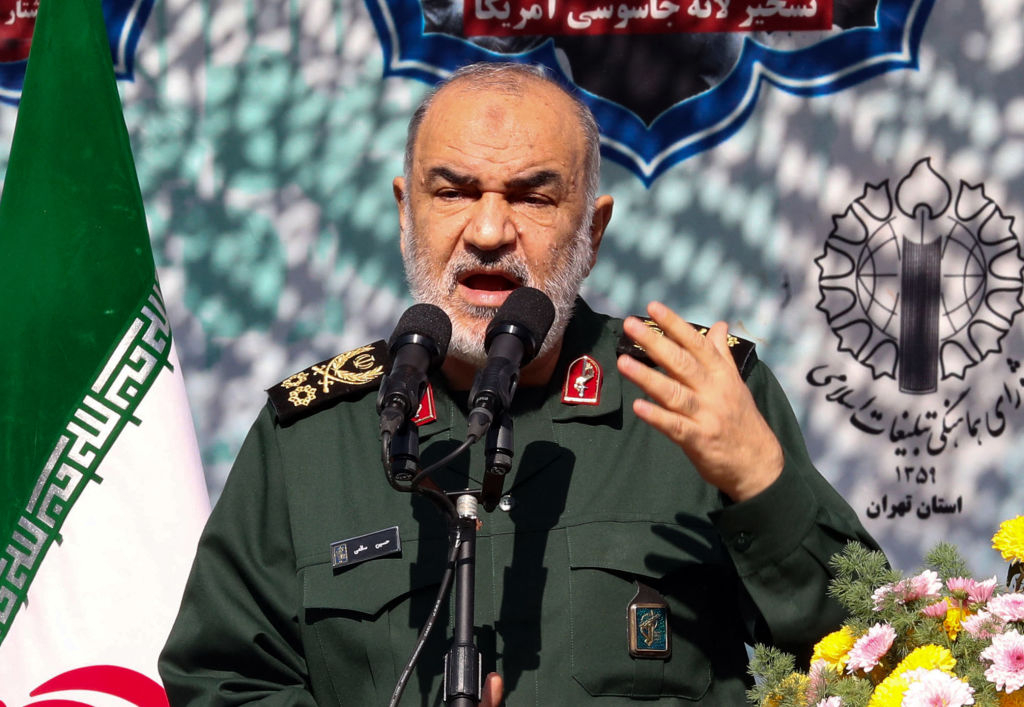
Major-General Hossein Salami, chief of Iran's Islamic Revolutionary Guard Corps (IRGC) and keynote speaker in this year's ceremonies, even claims that the US has already lost its global leadership position while a trio made of China, Russia and Iran is emerging as the new arbiter of human destiny. (Photo by AFP via Getty Images)

What do you do when you want to do something and yet you feel embarrassed about doing it?

This is the question that the "Supreme Guide" of the Islamic Republic of Iran, Ayatollah Ali Khamenei, faced this week as he wondered how to deal with one of his annual rituals celebrating the seizure of the US Embassy in Tehran and the holding of American diplomats as hostages on November 4, 1979.

During the eight-year tenure of the "New York Boys" under President Hassan Rouhani, the ritual had shed some of its harsher aspects and eventually been reduced to a symbolic gathering at the site of the former US embassy and the shooting of some footage for state-owned television.

In the past two years, many of the highlights of the annual ritual had faded into oblivion.

The annual "A World without America" symposium, attended for decades by professional anti-Americans from all over the world (including the US itself), was scripted out of the program.

The usual suspects such as Louis Farrakhan, Oliver Stone, Sean Penn and other self-loathing Americans were no longer invited to make the pilgrimage to Tehran. Nor were Iranian readers graced with another translation of Noam Chomsky's latest hate-America rants.

The conference on creating an entirely "black" state in Mississippi in southern US was also shelved.

Also gone was "The End of Israel" seminar that brought together Holocaust-deniers from across the globe and the accompanying international anti-Semitic cartoons exhibition.

Although the "New York Boys" included dozens of "students" who had raided the embassy and held the hostages, by the end of 2020, some observers expected the whole ritual to be sent to the archives.

However, with "New York Boys" kicked into the shadows, at least for now, the "new revolutionary team" under President Dr. Ayatollah Ebrahim Raisi was expected to revive the ritual in its full blood-curdling splendor.

Surprisingly, however, not only this has not happened, but the new team seems to have opted for further lowering the profile of the annual ritual.

This is partly done by trying to attach other labels to the November 4 events that were supposed to mark "the humiliation of the American Great Satan".

One new label for the events is "the anniversary of the sending into exile of Imam Khomeini" in 1964, even though that happened a calendar day later. Another label now added is "the day the Shah massacred primary and secondary school children" in 1976, although no such thing ever happened.

It is clear that the "new revolutionary team" is as anxious to tone down the regime's rabid anti-Americanism as were the "New York Boys".

The question is: why?

After all, the "new revolutionary team" built its narrative partly on the claim that the "New York Boys" had abandoned Khomeini's jihad against "The Great Satan" in exchange for empty promises by then President Barack Obama.

One explanation, offered by some apologists of the "new revolutionary team", including the daily Kayhan, is that the "Great Satan" has already been massively weakened and, as illustrated by cut-and-run in Afghanistan, is already on the run.

Major-General Hossein Salami, chief of Iran's Islamic Revolutionary Guard Corps (IRGC) and keynote speaker in this year's ceremonies, even claims that the US has already lost its global leadership position while a trio made of China, Russia and Iran is emerging as the new arbiter of human destiny.

According to Ayatollah Taeb, the IRGC's politico-religious commissar, the US is now like a dead donkey that needs not be flogged.

However, this type of braggadocio from the Khomeinist elites often hides their fears.

In this context, the first fear is that the Biden administration may not be as keen on undoing former President Donald Trump's "maximum pressure" policy that, according to an Islamic Plan Organization report in Tehran, has driven the Islamic Republic to the edge of bankruptcy.

Another fear is that President Joe Biden, even if he wanted, may not be able to undo enough of the sanctions to let the Islamic Republic bounce back. After all, removing most of the sanctions would require approval by the US Congress, something that Biden cannot take for granted. And, yet, Iranian Foreign Ministry spokesman Khatib-Zadeh says Iran will not recommit to its promises in the Obama "nuclear deal" unless the US "first removes all sanctions."

Another fear is that Biden may give Israel the green light for "limited but decisive action" against Iran's nuclear sites.

Such action would force the regime to cross a red line it has observed for four decades by responding in a meaningful way to military action against it.

In 1988, Khomeini refused to cross that line to respond to a massive attack by the US on the IRGC's positions in Iran's southern waters. For the past five years, Khamenei has refused to respond to countless Israeli attacks on Iranian positions in Syria that have claimed the lives of over 5,000 Iranian military personnel and their Afghan, Iraqi, Syrian, Pakistani and Lebanese mercenaries.

However, a direct attack on Iran's nuclear installations won't be easy to hide. Not responding would be a sign of strategic weakness and could encourage a fresh wave of domestic rebellion. Responding, on the other hand, could lead to a full-scale war for which the Islamic Republic is far from prepared.

Yet another fear is that the "Great Satan" may have recruited the Taliban in Afghanistan for the purpose of opening a new front against the Islamic Republic in the east. In 1995-1996, Khamenei backed out of a confrontation with the Taliban, despite the fact that they had brutally executed a number of Iranian diplomats and journalists, for fear of "walking into that swamp". Despite recent deadly attacks on Shiite mosques in Afghanistan, he has also refused to say a harsh word against the Taliban.

The Khomeinist regime has always been "strong" in picking low-hanging fruits as in Lebanon and Yemen or where it can play Robin to a strong Batman, as is the case in Syria under Russian leadership.

Having said all that, at the risk of being accused of optimism, the regime's decision to tone down the "embassy raid ritual" may have more mundane reasons.

For the first time none of the "students" involved in that criminal show holds a key position in the regime. Also, the soberer heads in the regime may have realized that crude anti-Americanism has brought them nothing but diplomatic isolation, economic decline and a repulsive image.

What Biden does next could prove decisive.

If he surrenders too easily, he will re-energize Tehran's old demons. If, on the other hand, he opts for empty huffing and puffing, he may miss a chance to help those who strive for regime change in Tehran.

This article was originally published by Asharq al-Awsat


Amir Taheri was the executive editor-in-chief of the daily Kayhan in Iran from 1972 to 1979. He has worked at or written for innumerable publications, published eleven books, and has been a columnist for Asharq Al-Awsat since 1987.

Source:https://www.gatestoneinstitute.org/17916/new-fears-in-tehran

Follow Middle East and Terrorism on Twitter

European Union Will Still Not Ban Hezbollah In Its Entirety - Hugh Fitzgerald


​ by Hugh Fitzgerald

Hezbollah “political” activities “violate criminal law and the organization opposes the concept of international understanding,” said German Interior Minister Horst Seehofer when the new policy was announced.

Just when you begin to think that the EU has stiffened its spine vis-à-vis the Palestinians by, for example, withholding aid funds this year because of the antisemitism in the PA’s schoolbooks, it once again disappoints. The latest example is the EU’s refusal to ban the Shiite terror group Hezbollah in its entirety. A report on the EU’s continuing pusillanimity is here: “European Union Will Not Outlaw All of Hezbollah,” i24 News, November 1, 2021:

The European Union will not ban the Lebanese Shiite terrorist group Hezbollah in its entirety.

When asked about a full ban of Hezbollah, Katharina von Schnurbein, the European Commission Coordinator on Combating Antisemitism and Fostering Jewish Life, eschewed [sic] the question and passed it onto her superiors, according to the Jerusalem Post.

Peter Stano, EU Spokesperson for Foreign Policy, told the Post, “The military wing of Hezbollah is already on the EU terror list.

“Any changes in the nature and scope of the existing listing are for EU Member States to discuss and decide by unanimity.”…

There are 27 members of the EU, and It only takes one country’s insistence on protecting Hezbollah’s “political wing” — by preventing it from being recognized as inseparable from its military wing — to keep the EU from doing what common sense, and a moral sense, both dictate.

It took a long time for the EU to designate just the “military wing” as a terrorist group that ought to be sanctioned; it was Israel itself that presented to member countries of the EU the conclusive evidence supporting such a designation. In 2020, with the EU countries having banned the “military wing” of Hezbollah, Israel then presented to the German government evidence of the role of Hezbollah’s “political wing” in supporting the terrorist activities of the “military wing” – for it is the “political wing” that raises money for terrorists’ upkeep and weapons, helps pay for the recruitment of new members to the terror group and their salaries, and underwrites the propaganda campaigns that Hezbollah conducts to justify its acts of terror against the Jewish state. And the evidence of those links between the military and political wings, brought by Israel to German attention, led Germany to outlaw the “political wing” of Hezbollah; country’s new ban, in force since April 2020, does not differentiate between the group’s military and political wings. Hezbollah “political” activities “violate criminal law and the organization opposes the concept of international understanding,” said German Interior Minister Horst Seehofer when the new policy was announced.

He continued: “The group, headed by Hassan Nasrallah, denies Israel’s right to exist and “supports the armed terrorist fight” against the Jewish state, his ministry said in a statement. “It is to be expected that Hezbollah will continue to plot terrorist acts against Israel and Israeli interests also outside the Middle East.

Germany joins several other European countries, most notably the U.K.(which came after Germany) and the Netherlands (which came before), in banning Hezbollah in its entirety. But France is a notable holdout, still clinging to the fiction of two entirely separate wings of Hezbollah when, in fact, the “military wing” could not exist without the “political wing” that provides funds and recruits.

In fact, Hezbollah itself is the best witness for its own prosecution – it has declared itself to be a single and unified organization:

Hezbollah, as an organization, considers itself to be a unified movement that cannot be divided into political and military sectors. Hezbollah spokesman Ibrahim Mousawi stated in 2013, “Hezbollah is a single, large organization. We have no wings that are separate from one another.”

Hezbollah is a part of the Lebanese government, but it operates independently and does not assume responsibility for what happens in the country….

Hezbollah may “operate independently” from the Lebanese government” but, alas, the Lebanese government is unable to operate independently from Hezbollah. Hezbollah is a state within a state. It controls the government not only  through its own members in the cabinet and in Parliament, but also through others, non-Shi’a, who have become willing collaborators of the terror group. These include the Maronite President Michel Aoun and the Sunni Prime Minister Najib Mikati, both of whom do Hezbollah’s bidding. Hezbollah is much more powerful than the Lebanese Army, that does not dare to confront the terror group, which possesses more weaponry than do 95% of the world’s conventional army. Hezbollah has brought every kind of woe to Lebanon. It dragged the unwilling country into a war with Israel in 2006 that led to the destruction of much of its infrastructure. It haphazardly stored 2,750 tons of ammonium nitrates in Hangar 12 at the Port of Beirut, leading to the gigantic blast on Aug. 4, 2020, which caused 215 dead, 6,500 wounded, and $15 billion in property damage. Hezbollah has denied any responsibility for the catastrophe, and has tried to force Tarek Bitar, the honest investigator of the blast, off the case, even going so far as to threaten him physically. Finally, it is Hezbollah goons who have suppressed peaceful demonstrations by Lebanese against the mismanagement and corruption of their own government.

Prime Minister Bennett’s attempt, on the sidelines of the Glasgow Climate Summit, to convince Australia’s Prime Minister Scott Morrison to designate all of Hezbollah as a terror organization makes sense. Though Australia currently recognizes only the Hezbollah External Security Organization as a terrorist group, and not the entire organization, this past June Australia’s Parliamentary Joint Committee on Intelligence and Security (PJCIS) recommended blacklisting all of Hezbollah. Their both being in attendance at Glasgow has offered the first time, since that parliamentary recommendation in June, for Bennett to have a chance to make his case to Morrison – widely recognized as pro-Israel — in person. Within a very short time, we should see whether Bennett’s powers of persuasion have worked.

Hezbollah’s “military wing” could not exist without its “political wing.” It would not have the hundreds of millions of dollars to pay its recruits and to buy weapons and to build a network of terror tunnels; without that “political wing” it could not pay for and distribute its anti-Israel propaganda worldwide; without its “political wing” Hezbollah would not be able to bribe officials to look the other way when the terror group conducts its lucrative drug trade from South America to Europe and the Middle East.

Why should any EU country continue to pretend that the “military” and the “political” wings of Hezbollah are distinct entities, when everything we know about them shows them joined at the hip? When we have all known for years that the “military” wing relies on the “political wing” to raise money to buy weapons, to pay seasoned fighters and new recruits, to underwrite the creation and  dissemination of anti-Israel propaganda? And if Hezbollah’s own spokesman, Ibrahim Mousawi, has insisted that “Hezbollah is a single, large organization. We have no wings that are separate from one another,” then who are we to disagree?


Hugh Fitzgerald

Source: https://www.jihadwatch.org/2021/11/european-union-will-still-not-ban-hezbollah-in-its-entirety

Follow Middle East and Terrorism on Twitter

Ra'am lawmakers wage 'civil jihad' - Nadav Shragai


​ by Nadav Shragai

Islamist party now holds the Bennett-Lapid government hostage with the aim of destroying Israel's Jewish character.

The great journey is over. Israel finally has a budget, thankfully, but last weekend, when the lights went out in the Knesset, a new and incomparably more dangerous journey began. A campaign by the Islamist Ra'am party, now equipped with billions, to transform Israel from a Jewish state into a state of all of its citizens.

Just a few months prior, speaking to Arabic-language media so that Jewish listeners could not understand, Ra'am leader Mansour Abbas spoke about his "civil jihad."

"When we talk about land, housing and demolitions, are we talking about a civil issue? This is a national issue that forms the base of our struggle for our homeland," he said in a moment of honesty.

He explained to his listeners that which the Jewish public refuses to hear: "The Islamic Movement started as part of the jihad family. But the political experience has taught us that due to the Israeli reality we cannot say today that we want to take up arms and wage jihad. We aspire and we engage in civil jihad. We maintain our presence in the country. We preserve our identity. We make the best of our existence through knowledge and action."

This is how the Muslim Brotherhood, which opposes Zionism, operates in Israel. It challenges the Jews' right to self-determination in their historical homeland and maintains close ties with anti-Zionistic entities.

When Abbas and his colleagues talk about Israel becoming a state of all its citizens, they do not just mean civil rights. They are not content with equal rights, but want national rights in the state as well. Many also share the far-fetched dream of establishing an Islamic caliphate.

They seek to destroy Israel's Jewish character and align with Israel's biggest enemies. And now they also hold the Bennett-Lapid government politically hostage.

The one who paved the way for Prime Minister Naftali Bennett and Foreign Minister Yair Lapid to justify this reckless political cooperation is former Prime Minister Benjamin Netanyahu. Omitting this piece of information would be tantamount to tainting the truth.

It should therefore be mentioned again and again: Israel is a state for every single one of its citizens but is only a national home for the Jewish people. Israel is a Jewish state in which only the Jewish people find their self-determination and no other nation.

The great Israeli historian Ben-Zion Dinur said it best: "The Arabs of the land of Israel have all rights, but over the land of Israel they have no right."

There is no inherent problem in having Arab lawmakers in the Israeli government, and not even anti-Zionist parties, but there is one in giving legitimacy to political entities that seek to destroy Israel's Jewish character and who publicly sympathize with Israel's biggest enemies.

Lawmakers who have created an alliance with Ra'am certainly do not want Israel to end up as the Arab party wishes, but they have just formed a political partnership with a party that had it existed in November 1947, would have voted undoubtedly against the establishment of the State of Israel.


Nadav Shragai

Source: https://www.israelhayom.com/opinions/raam-lawmakers-wage-civil-jihad/

Follow Middle East and Terrorism on Twitter

Tunisia: New Palestinian Authority embassy displays huge map of ‘Palestine,’ erasing Israel altogether - Christine Douglass-Williams


​ by Christine Douglass-Williams

Is this clear enough for you??

The jihad against Israel is perpetual and brazen, while the world gangs up on Israel and propagates the Big Lie about Israeli “occupation” and “apartheid” against Palestinians.


“New PA embassy in Tunisia displays huge map of ‘Palestine’ erasing Israel,” Nan Jacques Zilberdik, Palestinian Media Watch, October 31, 2021:

According to “direct orders and instructions” from PA Chairman Mahmoud Abbas, the PA has established over 100 Palestinian embassies around the world. [Official PA TV News, Oct. 23, 2021]

One such embassy is located in Tunisia. When staff and visitors arrive they are met with a huge monument with the PA’s map of “Palestine” – the version that erases all of Israel:

[Official PA daily Al-Hayat Al-Jadida, Oct. 23, 2021]

This is no surprise since the PA displays and promotes this map in all contexts possible as exposed again and again by Palestinian Media Watch. The message of the map is, of course, that Israel has no right to exist and that the goal of the PA is sovereignty over the entire area.

Ahmad Assaf, General Supervisor of the Official PA Media and General Supervisor of Fatah-run Awdah TV, alluded to this vision when he mentioned that “Palestine’s symbols” are “in every corner” of the embassy, so that visitors can “connect them immediately with what is happening in occupied Palestine” :

“The design of this embassy completely matches the nature of work of an embassy of Palestine. In this embassy we found many Palestinian symbols, in other words, one of Palestine’s symbols is in every corner….


Christine Douglass-Williams

Source: https://www.jihadwatch.org/2021/11/tunisia-new-palestinian-authority-embassy-displays-huge-map-of-palestine-erasing-israel-altogether

Follow Middle East and Terrorism on Twitter