Sunday, February 27, 2022

Putin orders Russia's nuclear arsenal placed on high alert - David Rosenberg


by David Rosenberg

Russian president condemns 'aggressive statements' by NATO, places nuclear forces on high alert.


Russia’s military has placed its nuclear forces on high alert Sunday, as the invasion of Ukraine continues.

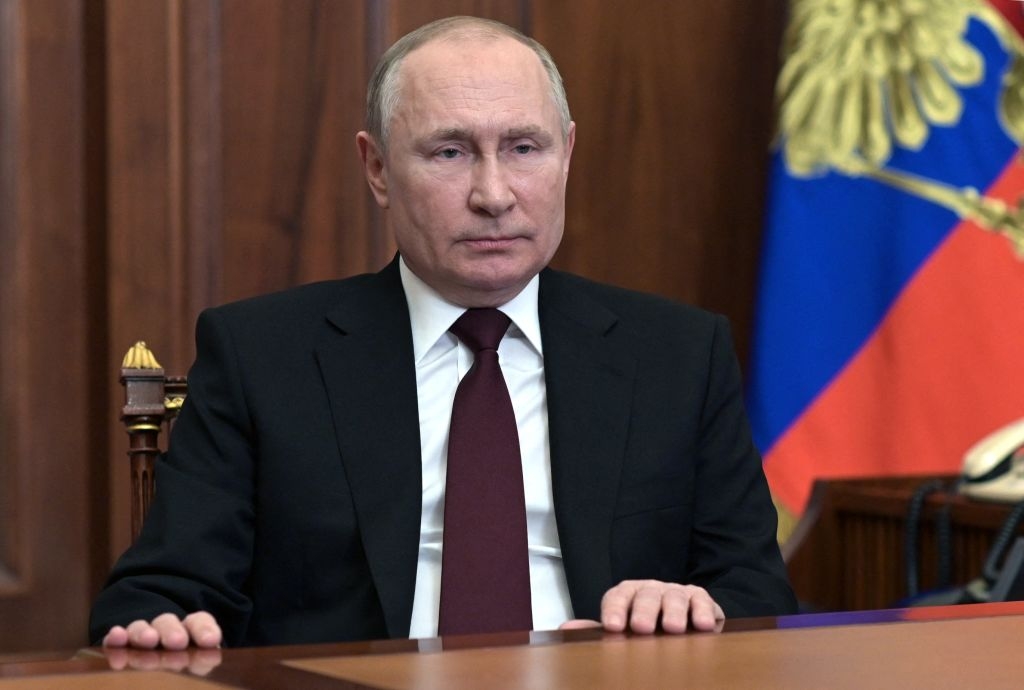
On Sunday, Russian President Vladimir Putin ordered the country’s nuclear arsenal to be placed on high alert, a response to what Putin called NATO members’ “aggressive statements” against Russia’s invasion of Ukraine.

During a meeting with top Russian brass Sunday, Putin ordered chief of the general staff and the Defense Minister to place Russia’s nuclear forces on a “special regime of combat duty”.

“Western countries aren’t only taking unfriendly actions against our country in the economic sphere, but top officials from leading NATO members made aggressive statements regarding our country,” Putin said in televised statement.

The US quickly responded to the move, calling it “totally unacceptable”.

“President Putin is continuing to escalate this war in a manner that is totally unacceptable,” said Linda Thomas-Greenfield, the US Ambassador to the United Nations. "We have to continue to condemn his actions in the strongest possible way."

Ukraine's Foreign Minister, Dmytro Kubleba, said Putin's order was intended to pressure Ukraine, but vowed his country would not give in.

"As you notice, this order by President Putin came shortly after the announcement was made about the two delegations ready to meet. And we see this announcement this order, as an attempt to raise stakes and to put additional pressure on the Ukrainian delegation."

"But we will not give into this pressure. We will approach this talks with a very simple approach."

Putin’s directive to the Russian military comes after Russian soldiers entered Kharkiv, the second largest city in Ukraine.

Heavy fighting has been reported in Kharkiv, as Russian forces are also said to be facing heavy resistance on the outskirts of Kyiv, the Ukrainian capital.

A senior US official toldABC News on Saturday that some Russian forces taking part in the invasion of Ukraine are disoriented, realizing the battles against Ukrainians are harder than they thought.

HELP THE JEWISH COMMUNITY IN UKRAINE

Save the Jews of Ukraine NOW


David Rosenberg

Source: https://www.israelnationalnews.com/news/322994

Follow Middle East and Terrorism on Twitter

Ukraine to Putin: Never Again - Clarice Feldman


by Clarice Feldman

It is heartening to see the great attachment to country and bravery of the Ukrainian military, political, and civilian forces.

Word from the battlegrounds in Ukraine is scattered and cannot always be confirmed, but some credible accounts give every indication that Putin may have blundered and faces a stronger defense than he (or the Biden administration) imagined possible. The bravery of a former comedian elected the Ukrainian President and a multimillionaire former boxing champion, now the mayor of Kyiv, who refused flight and stayed to defend their homeland at great risk of their lives, is part of the story. But to my mind, the memory of the Holodomor in which Russia’s Stalin starved to death millions of Ukrainians plays an even greater role and explains why so many ordinary citizens are taking up arms, making makeshift weapons and using every means at their disposal to turn Putin’s incursion into a fight on quicksand. It’s such a welcome surprise to see Europeans defending themselves and even getting support from their neighbors in the fight.

The situation on the ground remains fluid, but here are some of the reports on which my opinion is based.

The Spirit of the Ukrainians 

President Volodymyr Zelensky was offered a way out by the United States (which stopped him from negotiating directly with Putin), but gave the State Department the back of his hand: “The fight is here. I need ammunition, not a ride.” He stayed even though he is well aware of the Russian plan to decapitate the leadership. Certainly, he knows that’s the plan. This was the tactic Russia used in Hungary in 1956 and Czechoslovakia in 1968. Indeed, it’s been reported that Putin had dispatched troops from Chechnya with playing cards picturing the top Ukrainian leaders with orders to kill them.

Zelensky’s bravery and spirit is not unique. One Ukrainian marine sacrificed himself to blow up a bridge and slow the advance of Russian troops. One woman approached a Russian soldier and offered him sunflower seeds, saying that when he was killed the seeds would sprout to mark his resting place.

Everything is being done to mobilize the civilian population, even opening up stores of weapons and handing them out for defense.  

As Russian forces advance on Kyiv, Ukraine’s capital, people all over the country are being urged by officials -- and sometimes compelled by necessity -- to fight back in whatever ways they can.

The country’s former president is patrolling the city streets with a civilian defense force, armed with an AK-47. Civilians have been called to find their own weapons and make molotov cocktails -- a type of crude, homemade explosive named, mockingly, after a former Soviet foreign minister.

Roughly 18,000 weapons have already been distributed in the Kyiv region, according to the government. At the country’s borders, Ukrainian guards have been stopping vehicles, looking for men between the ages of 18 and 60 who can help in the fight.

Ukrainians Google ‘how to make a molotov cocktail’ after defense minister’s call to arms

In fact, almost anyone who wants to fight for Ukraine is welcome. “If you have combat experience in Europe, come to our country and defend Europe together with us,” President Volodymyr Zelensky said in a desperate video statement Friday.

Oleksandr Usyk, a former heavyweight champion, answered the plea and left his comfortable home in the UK to join the fight.

Multimillionaire and former heavyweight boxing champion Vitali Klitschko (now mayor of the capital Kyiv) and his brother Wladimir publicly have taken up arms.

Dmytro Kuleba, the country’s foreign minister, responded to a call to surrender by telling Putin to “go to hell.”

There are credible reports (which Russian propaganda is late contesting) that 13 Ukrainian guards on Snake Island in the Black Sea told the attackers to “go f--- yourself” before they were shot and the island overrun. 

The armed forces seem to share the widespread sentiment of the leaders. At this site you can see a video of a lieutenant in the armed forces making this obdurate defiance plain:

“Me, a lieutenant in the Armed Forces of Ukraine, company commander. Here are my warriors. We are not afraid, we are not panicking. We do not lay down our arms and we will not succumb to any tyrants. We will not allow any murderers to impose their will on us. We will not give you a millimeter of our own land. 

"Maybe this is our last recording. I don't know if I was a good or bad person, or what God will say. But I know that I am a good citizen and a good soldier. I am the protector of my homeland. The guarantor of her peace. Her shield and sword in time of war. 

"You who come here whoever you are, whatever you are, who invade our house -- get out of our land. We'll fight you until the last bullet. And when they're over, we'll fight you with our bare fists. We will fight you on land, in water, underground, and in the air. Neither of you will get out of here alive. You will all die. And our land will be free. 

"Glory to Ukraine. Glory heroes.” 

Working online, Ukrainians flirted and tricked Russian soldiers into exposing their locations and other valuable intelligence.

The leaders of the Ukrainian Orthodox Church of the Moscow Patriarchate denounced the invasion and urged Ukrainians to support the Kyiv government. A rare deviation from Moscow.

The Ukrainian defenders are being supported by neighboring Poland which just transported truckloads of ammunition to Ukrainian forces. Germany has switched on military aid and has now authorized the Netherlands to send Ukraine 400 rocket-propelled grenade launchers

A Spirited Defense Slows the Invasion

The Ukrainian foreign minister taunted Putin,” Today, the Kremlin counted the number of downed planes and helicopters, the number of burnt tanks and armoured personnel carriers, and saw how many Russian racists our soldiers disposed of per day.”

Ukraine’s Deputy Defense Minister said about 2,800 Russian soldiers were killed in the first 36 hours of the invasion -- “500 armoured vehicles, 10 aircraft, and seven helicopters.” (As Epoch Times notes, “If confirmed, it would mean that Russia has suffered more losses in fewer than 48 hours than the United States soldiers suffered during the 20-year long invasion of Afghanistan.” ) There were even several reports that Russian troop transports included mobile crematoria and a suggestion that this was to keep the number of casualties secret.

By Friday U.S. officials conceded that the Ukrainian defense was stronger than they had anticipated, that the Russian push into Kiev had been slowed.

On Saturday the Daily Mail, which is a constant source of the latest news, reported that Ukrainian troops obliterated an enemy convoy. As well, they downed two military transport planes reportedly carrying 300 paratroopers, a fighter jet, and a helicopter. Putin is spending 15 billion GBp a day on the invasion, and while it might be hyperbolic, the Estonian ex-defense chief says if Kiev can hold out for 10 days, Russia will run out of money and weapons.

In the face of such fierce and widespread defense, will Putin’s impetuous act prove his undoing? Maybe not, but in contrast to what appears to be a very unified Ukrainian defense, significant numbers of Russians are bravely demonstrating defiance of Putin’s invasion.

Videos and published reports online show protestors in the streets of 50 Russian cities, bravely protesting despite being threatened with treason for doing so.

It is heartening to see the great attachment to country and bravery of the Ukrainian military, political, and civilian forces. Ukraine after all has many more citizens than Putin has troops to send and keep there. In my heart I think it is more than mere nationalism and love of country, though. The memories of a Russia that caused millions of Ukrainians to painfully starve to death in the Holodomor is something that puts a lot of grit in the fight to stay free of Russia.

Updates via Nick Arama of Redstate:

Now, there are even reports that Ukraine is not only defending itself but hitting back at the Russians, in Russia, hitting an airbase in Rostov. That’s stunning, if true, and the reporter from Kyiv Independent is calling it “confirmed.”


And via Politico:

Germany on Saturday reversed a historic policy of never sending weapons to conflict zones, saying the Russian invasion of Ukraine was an epochal moment that imperiled the entire post-World War II order across Europe. (snip)

From its own stockpile, the German government will send 1,000 anti-tank weapons and 500 Stinger anti-aircraft defense systems to Ukraine. The government has also authorized the Netherlands to send Ukraine 400 rocket-propelled grenade launchers and told Estonia it ship over send nine howitzers.

“The Russian invasion of Ukraine marks a turning point,” German Chancellor Olaf Scholz said in a statement. “It threatens our entire post-war order. In this situation, it is our duty to do our utmost to support Ukraine in defending itself against Vladimir Putin’s invading army. Germany stands closely by Ukraine’s side.”


Clarice Feldman

Source: https://www.americanthinker.com/articles/2022/02/ukraine_to_putin_never_again.html

Follow Middle East and Terrorism on Twitter

Thousands of Russians arrested for protesting against Putin's war on Ukraine, human rights group says - Tyler Olson , Rich Edson


by Tyler Olson , Rich Edson

Arrests of Russian civilians come as Putin's forces encounter more resistance than expected on Ukrainian battlefield.

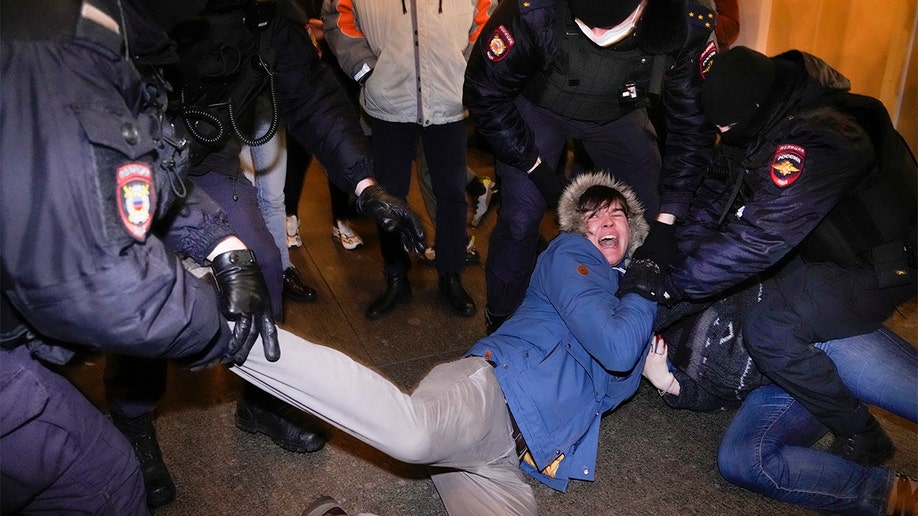
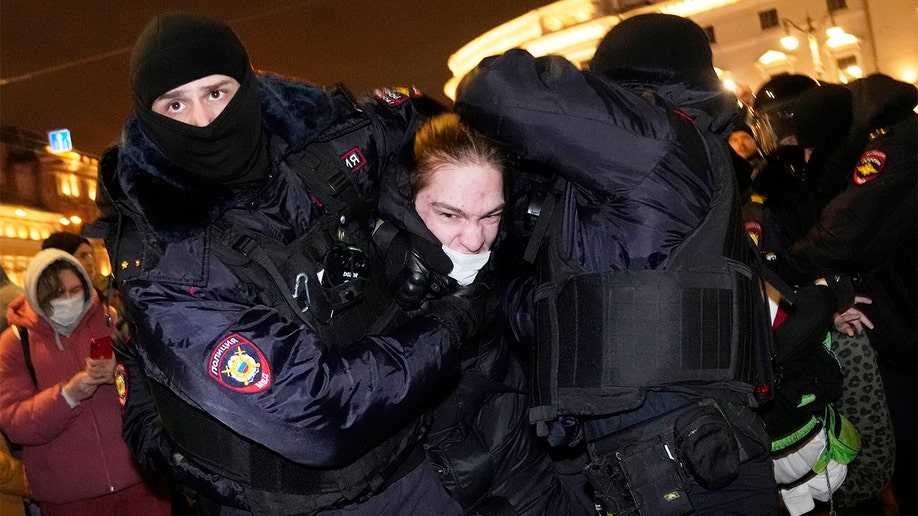
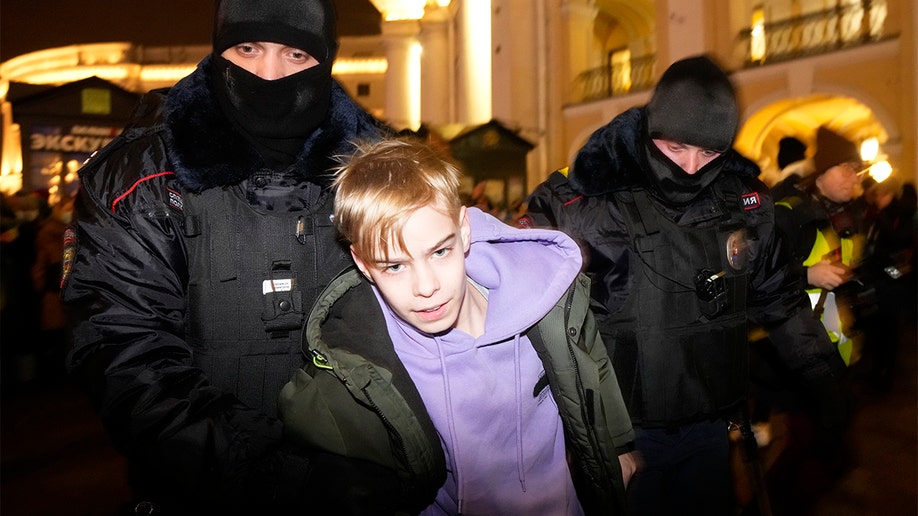
While Russia's war on Ukraine encounters more resistance than expected on the battlefield, the Russian government detained more than 3,000 domestic protesters for pushing back against it at home.

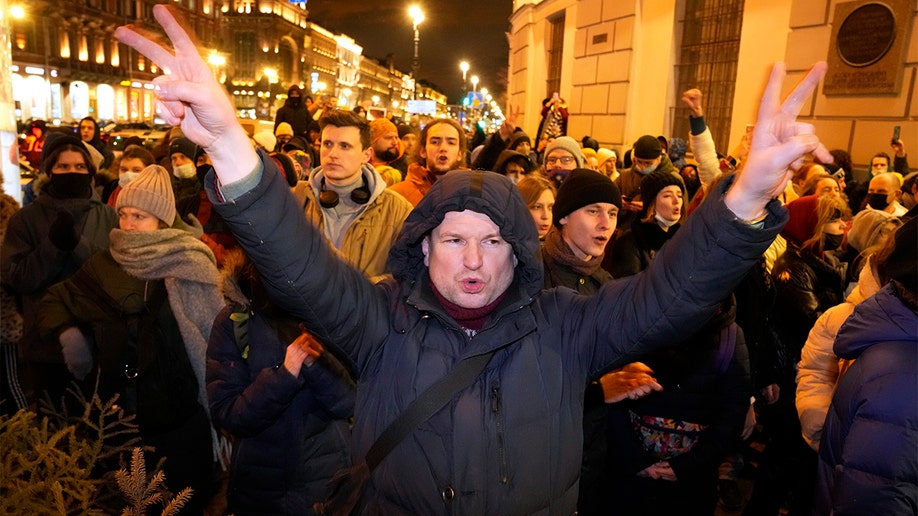
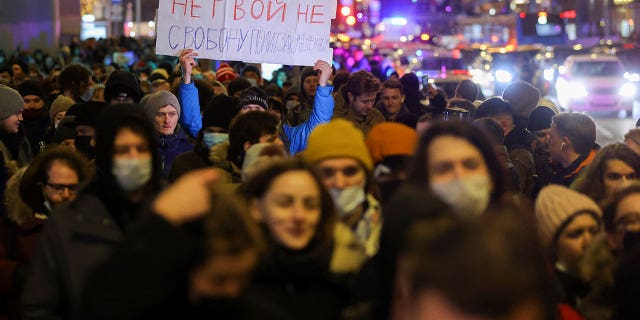
According to the human rights group OVD-Info, Russian security forces detained 3,093 people between Thursday when the anti-war protests began in its cities and early Sunday morning. Crowds in Moscow and St. Petersburg gathered in the streets last week, with some chanting "no war." 

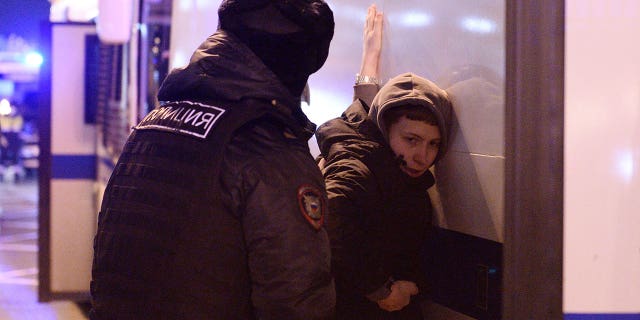
Another anti-war protest broke out in Moscow Sunday as well, and police beat the demonstrators. 

Photos taken by the Associated Press showed officers cracking down on demonstrators.  

Russians protesting Putin and Russia's invasion

 Police detain Russian protestors

Russians protest Putin

Officers detain Russian protestors

ZELENSKYY SEEKING VOLUNTEERS, CALLS FOR ‘INTERNATIONAL’ TEAM TO FIGHT RUSSIA

The arrests come as Russian leaders continue to be frustrated by slower-than-expected gains in their invasion of Ukraine, according to American officials. 

"We also continue to see indications of viable Ukrainian resistance we continue to believe based on what we've observed that this resistance is greater than what the Russians expected, and they are getting visibly frustrated," a senior U.S. defense official said Saturday evening.


"We still believe that Russia has yet to achieve air superiority. Ukrainian air defenses, including aircraft do continue to be operable and continue to engage and deny access to Russian aircraft in places over the country," the senior official added. 

The Ukrainian government is handing out rifles to citizens to fight the Russian invaders. Photos and video shared online show citizens and soldiers fighting Russian troops, and in some cases succeeding in taking out Russian vehicles. 

A person carries a banner during an anti-war protest, after Russia launched a massive military operation against Ukraine, in Moscow, Russia February 24, 2022. The banner reads "No war. Freedom for political prisoners".
A person carries a banner during an anti-war protest, after Russia launched a massive military operation against Ukraine, in Moscow, Russia February 24, 2022. The banner reads "No war. Freedom for political prisoners". (REUTERS/Evgenia Novozhenina)

UKRAINE BATTLES RUSSIAN FORCES: LIVE UPDATES

According to the United Kingdom's defense ministry, intelligence Sunday morning indicated that "Russian forces are continuing to advance into Ukraine from multiple axis but are continuing to be met with stiffed resistance from the Ukrainian Armed Forces."

The defense ministry also said "strong resistance in Chernihiv" led Russian forces to simply bypass the area "to prioritise the encirclement of Kyiv." 

Meanwhile, western governments are hitting Russia with increasingly harsh sanctions and flooding more military assistance to the Ukrainian government. The U.S. announced Saturday it would cut many Russian banks out of the international SWIFT banking system. 

A person is detained by police during an anti-war protest, after Russia launched a massive military operation against Ukraine, in Moscow, Russia February 24, 2022.
A person is detained by police during an anti-war protest, after Russia launched a massive military operation against Ukraine, in Moscow, Russia February 24, 2022. ( REUTERS/Denis Kaminev)

ZELENSKYY CALLS FOR RUSSIA TO LOSE UN SECURITY COUNCIL POWER, SAYS UKRAINE ATTACK ‘BEARS SIGNS OF GENOCIDE’

The sanctions are not as broad as they could be. Officials are trying to exempt energy transactions so as not to cause oil and gas prices to skyrocket, particularly in Europe where even NATO countries are reliant on Russian energy. 

But sanctions are hitting Russia's central bank and Russian President Vladimir Putin himself, and a senior U.S. administration official said the measures are turning Russia into "a global economic and financial pariah" despite their measured nature. 

On the military front, Secretary of State Antony Blinken said Saturday that the U.S. will give Ukraine "up to $350 million for immediate support to Ukraine’s defense." Blinken said the assistance will include "lethal defensive assistance" against both armored and airborne threats. 

And in a surprise move, German Chancellor Olaf Scholz announced Saturday that his country is providing Ukraine with 1,000 anti-tank weapons and 500 stinger missiles. 

Despite a slower-than-expected first part of their invasion, Russian forces are expected to eventually overtake the Ukrainian defenders due to the overall strength of Russia's massive military. But even then, it may be a tall task for the Russians to hold onto Ukraine amid a potential insurgency, which is likely to also be supported by the West. 

Fox News' James Levinson, Danielle Wallace and Edward Lawrence contributed to this report. 

Tyler Olson covers politics for Fox News Digital. You can contact him at tyler.olson@fox.com and follow him on Twitter at @TylerOlson1791.


Tyler Olson , Rich Edson

Source: https://www.foxnews.com/politics/putin-russian-protesters-ukraine-invasion-detain

Follow Middle East and Terrorism on Twitter
Elon Musk says Starlink is active in Ukraine amid internet disruptions - Paul Best


by Paul Best

User terminals are 'en route' to Ukraine now, Musk said


SpaceX founder Elon Musk said Saturday evening that the company's Starlink satellites are now active in Ukraine to alleviate some of the connectivity challenges the country is facing amid the Russia invasion. 

Ukrainian Vice Prime Minister Mykhailo Fedorov appealed to Musk on Saturday morning, saying that while his "rockets successfully land from space — Russian rockets attack Ukrainian civil people!"

Just 10 hours later, Musk responded that Starlink is now active in the eastern European country and more terminals are on the way. 

RUSSIA INVADES UKRAINE: LIVE UPDATES

Starlink is a network of about 2,000 satellites in low earth orbit that provide high-speed broadband internet by connecting with user terminals around the globe. 

Elon Musk said Saturday that user terminals are ‘en route’ to Ukraine.

Because it isn't limited by traditional internet infrastructure, Starlink can be deployed quickly in hard-to-reach areas and disaster situations. 

SpaceX did not immediately respond to a request for comment about when or how many user terminals would be delivered to Ukraine. 

Ukrainian soldiers take positions in downtown Kyiv, Ukraine, Friday, Feb. 25, 2022. Russia pressed its invasion of Ukraine to the outskirts of the capital Friday after unleashing airstrikes on cities and military bases and sending in troops and tanks from three sides in an attack that could rewrite the global post-Cold War security order. (AP Photo/Emilio Morenatti)


Internet service has been disrupted in several cities throughout Ukraine, including Kyiv, Mariupol, and Kharkiv, and Kherson, according to internet monitor NetBlocks. 

As Russian forces crossed the border into Ukraine and shelled cities on Thursday morning, Russian hackers also conducted cyberattacks against the Ukrainian government and critical infrastructure.


Paul Best

Source: https://www.foxbusiness.com/technology/elon-musk-says-starlink-is-active-in-ukraine-amid-internet-disruptions

Follow Middle East and Terrorism on Twitter
First Round to Putin, What Next? - Amir Taheri


by Amir Taheri

Putin was making a song and dance about something that couldn't happen under NATO's own rules.

  • Initially, aware that he [Russian President Vladimir Putin] must cast himself as victim in order to win sympathy in Western public opinion that warms up to figures like Saddam Hussein or George Floyd, he presented Russia as a victim of NATO "expansion" and his saber rattling as an act of self-defense.

  • Never mind that NATO is a defensive pact and not allowed to attack anyone unless one of its own members is first attacked. Even then, Article V under which military action is allowed is not automatically applicable and hasn't been applied since the alliance was created. In contrast, led by the now defunct Soviet Union, the rival Warsaw Pact was used for military interventions in Hungary, Poland and Czechoslovakia to crush popular uprisings against Russian domination.

  • [U]nder NATO rules, a country that has unsettled irredentist disputes with its neighbors cannot be admitted as a member. That rule applies to both Ukraine and Georgia, another country invaded by Putin, both of which are barred from NATO membership because of their territorial disputes caused by Russian aggression.

  • Thus, Putin was making a song and dance about something that couldn't happen under NATO's own rules.

  • [Putin] can no longer play wolf disguised as sheep. Even his apologists, not to say mercenaries among Western politicians and journalists, are able to defend his latest move let alone presenting him as a victim of "Imperialism".

  • Putin would be wrong to think that with the passage of time the rest of the world will endorse his "conquest", just as no one ever recognized the annexation of the Baltic republics by Stalin.

  • The spectacle of ancient Russian tanks and armored vehicles creeping into Donbass showed how antiquarian Putin's arsenal is.

(Photo by Alexey Nikolsky/Sputnik/AFP via Getty Images)

At first glance, the latest twists and turns in the Ukraine poker game might present Russian President Vladimir Putin as the winner.

After all, he is reaping what he sowed eight years ago, when he incited ethnic Russian secessionists to set up breakaway "people's republics" in parts of Ukrainian territory, in Donetsk and Lugansk. By stationing troops in the two enclaves, Putin makes official an occupation that he had indirectly exercised through Wagner mercenaries and local militias. Imposing two "cooperation treaties" on the breakaway "republics," he also shows their annexation in all but name by Russia.

Initially, aware that he must cast himself as victim in order to win sympathy in Western public opinion that warms up to figures like Saddam Hussein or George Floyd, he presented Russia as a victim of NATO "expansion" and his saber rattling as an act of self-defense.

Never mind that NATO is a defensive pact and not allowed to attack anyone unless one of its own members is first attacked. Even then, Article V, under which military action is allowed, is not automatically applicable and hasn't been applied since the alliance was created. In contrast, led by the now defunct Soviet Union, the rival Warsaw Pact was used for military interventions in Hungary, Poland and Czechoslovakia to crush popular uprisings against Russian domination.

Putin claimed that NATO plans to include Ukraine as a member and use it as an advance base against Russia. That claim shows that Putin sees a war between his Russia and NATO as a possibility if not a probability in the short run. That claim is hard to sustain if only because, under NATO rules, a country that has unsettled irredentist disputes with its neighbors cannot be admitted as a member. That rule applies to both Ukraine and Georgia, another country invaded by Putin, both of which are barred from NATO membership because of their territorial disputes caused by Russian aggression.

Thus, Putin was making a song and dance about something that couldn't happen under NATO's own rules.

In time, however, Putin may find out that he has scored hollow victory at great political, economic and even security cost.

To start with, he can no longer play wolf disguised as sheep. Revealing himself as an adversary, if not a mortal foe of the democratic world, Putin makes it easier for those in the West who have enough backbone to stand up against appeasers. Putin may find out that although Joe Biden may be weak and a pushover, the United States and the family of democratic nations are not.

Putin's call for the recognition of his two phantom republics is also likely to fail, as did his similar calls for recognition of the annexation of Crimea in 2014 and the "independence" of Georgian territories of Abkhazia and South Ossetia in 2008. Even his stooges in Tehran have not dared recognize those acts of aggression as legitimate. His latest buddy, Turkey's Recep Tayyip Erdogan, has called it "unacceptable" while Big Brother Xi Jinping in Beijing has drowned the issue under an avalanche of equivocal spit. That leaves, Belarus's "Mad Max" Alexander Lukashenko who may or may not endorse Tsar Vladimir's latest naughty crack.

Putin would be wrong to think that with the passage of time the rest of the world will endorse his "conquest", just as no one ever recognized the annexation of the Baltic republics by Stalin.

Putin is also wrong to think that forcing "Finlandization" on Ukraine could offer Russia the glacis he wants.

In fact, Finland, the original model for "Finlandization", has steadily strengthened links with Western democracies by becoming a member of the European Union and forging close ties of cooperation with NATO. It has also built a strong defense, guess against whom?

Recently Finland bought 64 ultramodern F-35 warplanes, enough to knock out half of Russia's antiquated flying machines.

Sweden, another non-NATO democracy and thus regarded as "Finlandized," has taken note of Putin's growing aggressive behavior and increased its defense expenditure and strengthened its military presence in Gotland archipelago.

Since the Russian invasion of 2008, though barred from NATO membership, Georgia, too, has been rebuilding its military defenses, almost doubling the size of its army and acquiring modern hardware from the West.

Thus, there is no reason why Ukraine, which cannot join NATO until it has settled territorial disputes with Russia, won't be able to upgrade its defenses with support from Western democracies, something that is already happening albeit on an as yet modest scale. Putin's aggressive behavior strengthens the hands of Ukrainian nationalists who seek a "European future" for their nation. In turn, that would justify more expenditure on Ukrainian defense, something that could force Putin into a mini-arms race on Russia's Western fringes.

The spectacle of ancient Russian tanks and armored vehicles creeping into Donbass showed how antiquarian Putin's arsenal is.

Keeping 150,000 troops or 10 percent of his usable military capacity in Donbass cannot be a realistic prospect at a time Putin has got Russia militarily involved in Belarus, Kazakhstan, Transcaucasia, Tajikistan, Syria, Libya, Mali and the Central African Republic.

Empire-building is also costly. Since 2014 Crimea, deprived of its principal source of revenue, foreign tourism, has cost Russia some $40 billion including the cost of a bridge to the mainland. With Donbass at point zero in terms of economic survival, Putin would have to cater for over four million new "socially assisted" people, including many old age pensioners.

Anyone following Russian politics with some interest might notice another fact that might expose Putin's victory as hollow: the absence of a large consensus on Tsar Vladimir's latest gamble. In the televised show designed to show that Putin was acting on the advice of the highest officials, Prime Minister Mikhail Michoustin and at least two other members of the National Security Council sounded less enthusiastic about the course suggested by Putin and hinted that the diplomatic course might not be blocked.

The haste with which Putin pushed "treaty" texts through the Duma, the Russian parliament, also indicted concern that genuine debate might indicate lack of full support for the Donbass adventure. Those who see Putin as a potentate might dismiss that suggestion as fanciful and they may be right. Nevertheless, the possibility that some in the Russian leadership elite may be concerned about Putin's paranoia shouldn't be ruled out.

This is a multi-round match and Putin may have won the first round. However, the final bell hasn't sounded yet.

This article was originally published by Asharq al-Awsat


Amir Taheri was the executive editor-in-chief of the daily Kayhan in Iran from 1972 to 1979. He has worked at or written for innumerable publications, published eleven books, and has been a columnist for Asharq Al-Awsat since 1987.

Source: https://www.gatestoneinstitute.org/18274/first-round-to-putin

Follow Middle East and Terrorism on Twitter
Former Pentagon chief of staff rips Biden over US intel report: 'It’s a colossal failure of leadership' - Fox News Staff


by Fox News Staff

Reports claim China shared US intel with Russia regarding the US response to Putin's aggression


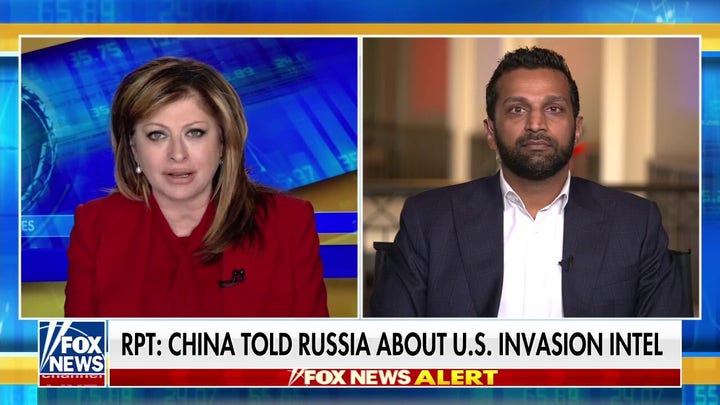
Former Pentagon chief of staff Kash Patel slammed President Biden for his "colossal failure of leadership" after reports surfaced he shared intelligence on the potential U.S. response to Russian aggression with China, who then shared the information with Russia. Patel joined "Sunday Morning Futures" to highlight the difference between how the Biden administration and the Trump administration have handled foreign policy. 

CHINA TAKES NOTICE OF BIDEN'S RESPONSE TO RUSSIA'S UKRAINE WAR, ANALYSTS SAY

KASH PATEL: It’s a colossal failure of leadership, and it shows another distinction yet between the Biden administration and the Trump administration. The fact that the commander in chief wouldn't answer that question and that no one is covering leads me to believe that he took classified intelligence and the reporting is accurate now from multiple sources and handed it over to our world's biggest enemy, U.S'., his biggest enemy, China. And then, of course, China was going to turn around and give it to Russia because Xi Jinping and Putin have paired up and teamed up against the United States of America. The fact that this commander in chief did not know that was going to happen is outrageous. But what is tantamount and disrupts American national security is that we're actually doing that. We, as a United States are actually sharing classified information that jeopardizes Ukrainian National Security Assistance, European national security interests and Americans lives. It's being shared with our enemy who is sharing it with the next biggest enemy of America. It is just something that never happened under Trump, and the fact that it's happening under Biden needs to be fully investigated.

WATCH THE ENTIRE ‘SUNDAY MORNING FUTURES’ INTERVIEW BELOW:


Fox News Staff

Source: https://www.foxnews.com/media/former-pentagon-chief-of-staff-rips-biden-over-us-intel-report-its-a-colossal-failure-of-leadership

Follow Middle East and Terrorism on Twitter
Gantz: Nuclear deal with Iran not the end of the struggle - Israel National News


by Israel National News

Defense Minister warns western powers must prepare sanctions even if nuclear deal is signed in case Iran violates the deal.


Minister Gantz
Minister Gantz                                                                                            Ariel Hermoni/IMoD

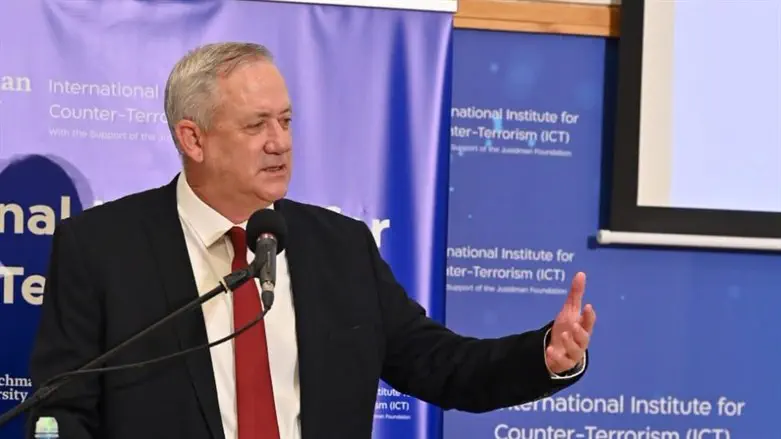
Defense Minister Benny Gantz delivered remarks at the Conference of Presidents of Major American Jewish Organizations annual Israel Leadership Mission held today at the Inbal Hotel in Jerusalem.

Minister Gantz expressed his gratitude for the important work undertaken by the umbrella organization and touched on the importance of maintaining the strong bond between Israel and the Jewish diaspora: “Thank you for supporting and loving Israel - for never despairing or retreating from the struggle to improve the Jewish state. Thank you for investing in young generations of Jews so that they may know the story of their second home in Israel and continue the legacy of our eternal bond.”

Regarding Iran, Gantz said: “I have said this before, and I will stress this again. A nuclear deal, if signed with Iran – does not mark the end of the road. It opens the door to important action that must be taken. This includes monitoring open files. It also means stopping the development of ballistic missiles capable of carrying nuclear warheads."

He added: “We must not reach this point in the road again – and that means dealing with the sunset clause. Enforcement and supervision by the I.A.E.A. are crucial but not enough. We need to have offensive capabilities and a set of sanctions ready in our back pockets in case Iran violates the agreement.”

“During the J.C.P.O.A. period, Iran increased its security budget by 50%. We must deal with Iranian aggression and support for proxies and ensure that their ‘so-called’ security budget isn’t increased and money isn’t poured into terrorism. Today I would like to reveal, just how far Iranian aggression has reached.

Pointing to an image of a Mojaher- type UAV, Minister Gantz said: “I have brought with me a single image – it really is worth a thousand words. This image shows an model of the advanced Iranian Mohajer UAV, presented by Venezuela’s President. In addition to developing Iranian UAVs in Venezuela, our assessments show that Iranian PGMs are being delivered for these UAVs and other similar models. With this image in mind, I can tell you that in my meetings with partners from around the world, including African and Latin American partners - I heard extreme concern about Iranian support for terrorism. Iran truly is a global and regional challenge and not just a threat to the State of Israel.”


Israel National News

Source: https://www.israelnationalnews.com/news/322716

Follow Middle East and Terrorism on Twitter
Russian invasion: How the west failed over decades of recent history to hold Putin back - Andrew Mark Miller


by Andrew Mark Miller

Sanctions have failed to deter Putin for decades, experts told Fox News Digital, but the US kept using them.


Russian President Vladimir Putin’s invasion of Ukraine comes after decades of United States foreign policy failing to curb his military aggressions, which experts tell Fox News emboldened Putin over the years leading up to the invasion of Ukraine.

"Putin feels pretty emboldened," Retired CIA Senior Clandestine Services Officer Dan Hoffman told Fox News Digital on Saturday. "He won wars in Chechnya, Georgia, Ukraine and Syria. That's four big ones."

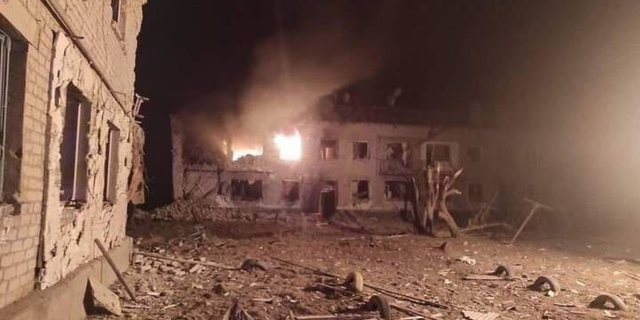
Several buildings in Starobilsk within the Luhansk Oblast region of Ukraine show significant damage because of shelling, according to images shared by the State Emergency Service of Ukraine.
Several buildings in Starobilsk within the Luhansk Oblast region of Ukraine show significant damage because of shelling, according to images shared by the State Emergency Service of Ukraine. (State Emergency Service of Ukraine)

Over the course of those four wars, the United States leveled various sanctions against Russia that failed to deter the country from future aggressions, which Hoffman explained is further proof, in addition to the recent sanctions from the Biden administration that failed to stop Putin’s invasion in Ukraine, that sanctions are ineffective against Russia.

"I’ve said that all along," Hoffman said when asked about the perception that sanctions are not enough to deter Putin. "It’s an easy thing that makes you feel good but it does nothing to influence Vladimir Putin’s calculus. He doesn't care."

"Absent concurrent diplomacy and expeditious use of our military tools, sanctions don’t do it," Hoffman added.

Putin’s aggressive actions against European neighbors as the leader of Russia traces back to the 2000s when Russia launched a devastating cyberattack against the neighboring NATO nation of Estonia and sent troops into Chechnya. 

"I have been arguing for a long time that the more Western members of NATO did not take the experiences of the newer Eastern members as seriously as they should have," former Estonian President Toomas Hendrik Ilves, who was in power during the cyberattack in 2007, recently said. "And now, 15 years later, they have to face up to the consequences of not really believing what the Eastern members were saying."

UKRAINE-RUSSIA WAR: RUSSIAN TROOPS UNDERFUNDED, EQUIPMENT SUB-PAR, ACCORDING TO REPORTS

In 2008, Russia sent troops into the former Soviet republic of Georgia along the Black Sea in a move that Russia called a "peace enforcement operation" similar to the description Putin used of his invasion into Ukraine this month which he called a "peacekeeping operation."

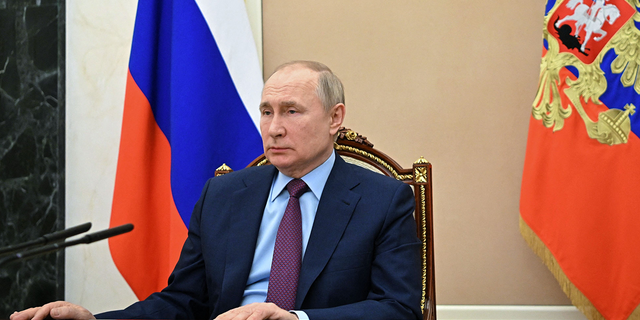
Russian President Vladimir Putin attends a meeting with Russian Defence Minister Sergei Shoigu at the Kremlin, in Moscow on February 14, 2022.
Russian President Vladimir Putin attends a meeting with Russian Defence Minister Sergei Shoigu at the Kremlin, in Moscow on February 14, 2022.  (Photo by Alexei Nikolsky/Sputnik/AFP via Getty Images)

"No one was willing to go to war for Georgia," Mark Galeotti, senior non-resident fellow at the Institute of International Relations Prague and an expert on modern Russian history, said about the conflict to History.com in 2018. "This was a time in which no one really wanted to provoke Russia. [Dmitry] Medvedev was president, and particularly American policy was to essentially hope that this could be leveraged into something more positive. So…to a large extent, Georgia was left on its own."

In 2014, during the Obama administration, Russia invaded and annexed the Crimea region of Ukraine as well as the Donbas region of the country and were slapped with mild sanctions on Putin and his associates by the United States.

BIDEN WARNS 'THERE'S NO SANCTION THAT IS IMMEDIATE' AS US, ALLIES TARGET RUSSIA OVER UKRAINE INVASION

"In hindsight, one wonders, would Crimea and the Donbass wars have happened if the West had been more robust in its response to Georgia?" Galeotti said.

Putin also flexed his military power during the Trump administration sending troops into Syria to support President Bashar al-Assad’s efforts to combat ISIS and quell a civil war that significantly increased tensions with the United States and also led to sanctions against various Russian entities.

So far in 2022, sanctions levied by the Biden administration and Russia have failed to deter Putin from continuing his military advance into the Ukranian capital of Kyiv.

"The Biden administration said we’re not going to sanction them preemptively because we won’t have anything to do if he invades," Hoffman said. "In other words, they were saying he won’t invade because he knows he’s going to get sanctioned and we’re going to assist the Ukrainians with all types of military equipment which is what we’re doing. We’re sanctioning Russia and providing military assistance to Ukraine. So clearly that didn’t deter Vladimir Putin. So that was an ignorant policy and we’re paying a price for that."

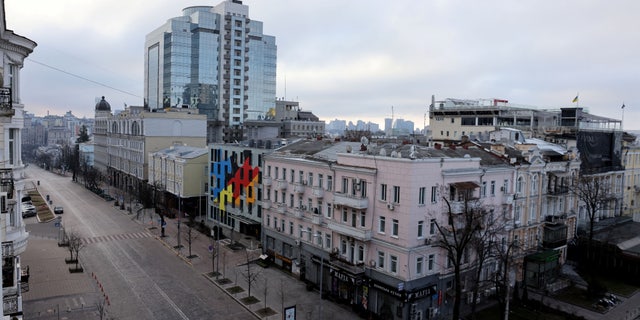
A deserted street is seen after Russia launched a massive military operation against Ukraine, in Kyiv, Ukraine February 26, 2022.
A deserted street is seen after Russia launched a massive military operation against Ukraine, in Kyiv, Ukraine February 26, 2022.  (Reuters/Umit Bektas)

Rebekah Koffler, former Defense Intelligence Agency officer and the author of  "Putin’s Playbook: Russia’s Secret Plan to Defeat America", told Fox News Digital that Putin has been successful at outsmarting the United States dating back to his first days in office roughly 20 years ago.

"It's not so much that we acquiesced, although we did a couple of times, it’s that we were fooled," Koffler said. "Putin kept fooling our leadership."

HOFFMAN AND SOAMES: STOP PUTIN NOW, AS CHURCHILL WOULD WARN, OR WEST WILL FACE THE CONSEQUENCES

Koffler explained that Putin used his training from the KGB to disarm and deceive U.S. presidents including in the 2000s where she says he "put a whole act on" with former President George W. Bush by insisting he was a man of deep Christian religious conviction.

In terms of the United States acquiescing to Russia, Koffler outlined multiple ways that the Obama administration deferred to Russian influence including the highly criticized  viral moment where Obama could be overheard telling Russian President Dmitry Medvedev he would have "more flexibility" on missile defense negotiations after his next upcoming election.

The Obama administration was also criticized for not pursuing stricter action against Syria’s chemical weapons program in an attempt to assuage Russia.

Obama also mocked former presidential candidate Mitt Romney during a debate in 2012 when Romney said that Russia was the biggest geopolitical threat that America faced at the time.

"A few months ago when you were asked what’s the biggest geopolitical threat facing America, you said Russia, not al-Qaeda," Obama said during the third presidential debate between him and Romney in October 2012. "And the 1980s are now calling to ask for their foreign policy back because the Cold War’s been over for 20 years."

"The '80s called and we didn’t answer," Romney said this week in reference to the debate exchange.

Koffler told Fox News that the United States’ "failure to understand" their opponent as it relates to Putin has led to "bloodshed in Ukraine."

"And all Biden does is keep talking about the sanctions," Koffler said.


Andrew Mark Miller is a writer at Fox News. Find him on Twitter @andymarkmiller and email tips to AndrewMark.Miller@Fox.com.

Source: https://www.foxnews.com/politics/russian-invasion-how-the-west-failed-over-decades-of-recent-history-to-hold-putin-back

Follow Middle East and Terrorism on Twitter
Migrants Desecrate More Than 2,000 Churches Just in Greece - Raymond Ibrahim


by Raymond Ibrahim

Before Christmas, in the North Rhine-Westphalia region, where more than a million Muslim migrants reside, some 50 public statues of Jesus and other Christian figures were beheaded and crucifixes broken.

  • "As a deeply religious society, these attacks on churches are shocking to the Greek people and calls to question whether these illegal immigrants seeking a new life in Europe are willing to integrate and conform to the norms and values of their new countries." — Greek City Times, May 16, 2020.

  • While the report most likely has the 1453 sack of Constantinople (today Istanbul) in mind — when countless Greek churches, including Hagia Sophia, were desecrated, destroyed, or turned into mosques — that pattern is a century older.

  • Before Christmas, in the North Rhine-Westphalia region, where more than a million Muslim migrants reside, some 50 public statues of Jesus and other Christian figures were beheaded and crucifixes broken.

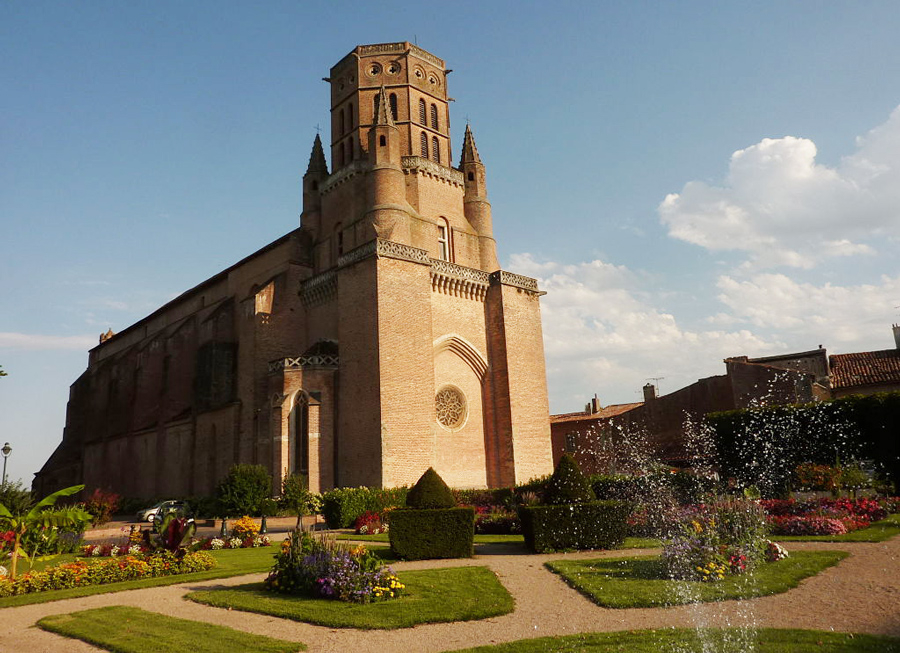
All around Western Europe, churches are under attack. This is especially true of the countries home to Europe's largest Muslim populations. In February 2019, "unknown vandals" desecrated and smashed crosses and statues at Saint-Alain Cathedral in Lavaur, France, and mangled the arms of a statue of a crucified Christ in a mocking manner. In addition, an altar cloth was burned. (Image source: Eutrope/Wikimedia Commons)

According to a new report published by Greece's Ministry of Education and Religious Affairs, there were 2,339 incidents of church desecrations in the country between 2015 and 2020, when tiny Greece, seen as Europe's eastern gateway, was flooded with migrants from the Islamic world. Greek City Times wrote regarding the report:

"There appears to be a correlation between the increase in illegal migration and the incidents of attacks on Greek Orthodox religious churches and religious spaces during the five year period which occurred during the peak of the migration crisis."

In the most recent year recorded, 2020, there were 385 incidents against Christian churches and buildings, including "vandalism, burglary, theft, sacrilege, necromancy, robbery, placement of explosive devices and other desecrations."

Over the years, a few of these desecrations made it to English-language media.

In April 2021, Muslim migrants entered into and utterly desecrated a small church. Proud of their handiwork, they videotaped portions of the incident and uploaded it on TikTok. It shows a topless migrant dancing to rap music as he walks towards and inside the church. The next clip shows the aftermath: devastation inside the church, with smashed icons and the altar overthrown.

In 2020, Muslim migrants ransacked and transformed a church into their personal toilet. This public restroom was once the St. Catherine Church in Moria, a small town on the island of Lesvos, which was flooded with migrants who arrived via Turkey. "The smell inside is unbearable," said a local. "[T]he metropolitan of Mytilene is aware of the situation in the area, nevertheless, he does not wish to deal with it for his own reasons." The May 2020 report elaborates:

"This is only the latest incident ... [I]t has become extremely common for Greek Orthodox Churches to be vandalised and attacked by illegal immigrants on Lesvos....

"As a deeply religious society, these attacks on churches are shocking to the Greek people and calls to question whether these illegal immigrants seeking a new life in Europe are willing to integrate and conform to the norms and values of their new countries.

"These continued attacks have ultimately seen the people of Lesvos, who were nominated for the Nobel Peace Prize in 2016, become increasingly frustrated by the unresolved situation that has restricted and changed their lives as they no longer feel safe on their once near crime-free island."

While there are many such examples from between 2015-2020 — in 2016, the Church of All Saints in Kallithea near Athens was set aflame by "Arabic speakers" — historically conscious Greeks see a continuum in the Islamic targeting of their churches. As one report on the desecration of Greek churches explains:

"We should remember that Greece spent 400 years under Turkish Islamic rule and that the fight for freedom was bloody. With that in mind it is even more dramatic seeing these images of fighting age migrants desecrating Greek holy places and having no respect for the country they are allegedly seeking refuge in."

While the report most likely has the 1453 sack of Constantinople (today Istanbul) in mind — when countless Greek churches, including Hagia Sophia, were desecrated, destroyed, or turned into mosques — that pattern is a century older. In 1354, when the invading Turks first achieved a foothold in Europe, in Gallipoli, which was then Greek, "Where there were churches he [Ottoman ruler Suleiman Pasha] destroyed them or converted them to mosques," writes an Ottoman chronicler.

"Where there were bells, Suleiman broke them up and cast them into fires. Thus, in place of bells there were now muezzins." Cleansed of all Christian "filth," Gallipoli became, as a later Ottoman bey boasted, "the Muslim throat that gulps down every Christian nation—that chokes and destroys the Christians."[1]

Modern Greece, of course, is ultimately experiencing what all European nations that have large Muslim migrant populations are experiencing. All around Western Europe, churches are under attack. This is especially true of the two countries home to Europe's largest Muslim populations: Germany and France.

According to a 2017 report, in the Alps and Bavaria regions of Germany alone, countless crosses on some 200 churches were attacked and broken: "Police are currently dealing with church desecrations again and again... The perpetrators are often youthful rioters with a migration background."

Following the arrival of a million Muslim migrants in Germany, a local newspaper noted in 2016 that "not a day goes by" without attacks on crosses and other Christian symbols outside of churches. Before Christmas, in the North Rhine-Westphalia region, where more than a million Muslim migrants reside, some 50 public statues of Jesus and other Christian figures were beheaded and crucifixes broken.

As for France, an average of two churches are reportedly attacked there every day. In one instance in 2019, vandals plundered and used human excrement to draw a cross on the Notre-Dame des Enfants Church in Nimes (smearing fecal matter on churches is not an uncommon Muslim tactic). Although the identities of those targeting churches is often left out of reports — as in February 2019, when "unknown vandals" desecrated and smashed crosses and statues at Saint-Alain Cathedral in Lavaur and mangled the arms of a crucified Christ in a mocking manner — on occasion they appear.

Thus, in 2014, an enraged Muslim man physically twisted a massive bronze cross with his bare hands while committing major acts of vandalism in two churches in France. He also overturned and broke two altars, destroyed Christian statues, tore down a tabernacle, smashed in a sacristy door, and broke some stained-glass windows. Similarly, in 2015, Christian crosses and gravestones in a church cemetery were damaged and desecrated by a Muslim man. After being apprehended, he was described as follows: "The man repeats Muslim prayers over and over, he drools and cannot be communicated with: his condition has been declared incompatible with preliminary detention." He was hospitalized as "mentally unbalanced."

The new report by Greece's Ministry of Education and Religious Affairs makes one thing clear: Greece has become the latest exemplar of "Islam's Rule of Numbers" — a rule which posits that the more Muslims grow in numbers, the more practices intrinsic to Islam grow with them, in this instance, the desecration of Christian churches. In Nigeria alone, for example, Muslims have torched or destroyed some 20,000 churches over the last decade.


[1] Doukas, Decline and Fall of Byzantium to the Ottomans, 1975, 144–145; Bostom, Andrew, The Legacy of Jihad, 2005, 63.


Raymond Ibrahim, author of Sword and Scimitar, Fourteen Centuries of War between Islam and the West, is a Distinguished Senior Fellow at the Gatestone Institute, a Shillman Fellow at the David Horowitz Freedom Center, and a Judith Rosen Friedman Fellow at the Middle East Forum.

Source: https://www.gatestoneinstitute.org/18270/migrants-desecrate-churches-greece

Follow Middle East and Terrorism on Twitter
Saturday, February 26, 2022

The Democrats will be buried at Kyiv - Steven Kopits


by Steven Kopits

The newly emerged Biden Doctrine is an unfolding disaster, both abroad and at home.

The U.S. continues to sit passively on the sidelines while the Russian army pounds Ukraine.  It is all too pathetic.

Nevertheless, President Biden has listed as a key priority the prevention of U.S. military deaths in armed conflicts.  In his August 16, 2021 speech at Arlington Cemetery, President Biden declared:

How many more generations of America's daughters and sons would you have me send to fight Afghans — Afghanistan's civil war when Afghan troops will not? How many more lives — American lives — is it worth? How many endless rows of headstones at Arlington National Cemetery?

With this speech, he laid out what may come to be known as the Biden Doctrine, that there would be no conflict so small that the U.S. would not run away, no act of cowardice too craven, no desertion of allies too treacherous, and no commitment to democracy or global security worth securing with military force beyond those agreed on paper.

On that day, his net approval rating (approval minus disapproval) stood at +6.2%, entirely acceptable for a U.S. president.  Three months later, on Election Day in November, it would fall to -8%, and the Democrats would take a historical shellacking at the polls.  Virtually all the damage resulted from the means by which the U.S. pulled out of Afghanistan, leaving chaos, the Taliban, and now famine in its wake.  Americans were appalled.

And here we are again, with the stakes predictably amplified.  Why has Russian president Putin chosen now to invade Ukraine?  The answer is simple: the Biden Doctrine of unilateral surrender.  What does U.S. military power matter if we lack the will to use it or cower before those who threaten us?  By pre-emptively foreswearing military intervention in Ukraine, President Biden all but sent an embossed invitation to President Putin to take Ukraine at his leisure.

The White House pinned its strategy on sanctions but clearly did not believe they would work.  Biden had taken to the podium multiple times in the last month declaring that Putin would invade.  Yet President Biden, on February 25, stated, "No one expected the sanctions to prevent anything from happening[.] ... Putin's not going to say 'Oh, my God, the sanctions are coming.'" The Biden White House has chained its credibility to a policy that, by the president's own statements, it did not believe to be credible.  Biden merely gift-wrapped Ukraine for Putin with meaningless sanctions that would deter nothing.

Were Ukraine in a part of the world far from the superpowers, certainly far from Europe or East Asia, the U.S. could afford to take a pass.  India and Pakistan regularly clash over Kashmir, but the U.S. would not ordinarily weigh in on the matter.  But Ukraine is different, for several reasons.


Image: Joe Biden.  YouTube screen grab.

Regardless of the outcome in Kashmir, neither India nor Pakistan will be wiped from the map and neither country's democracy, such as it is, is threatened by the other. In the case of Ukraine, however, both democracy and survival are at stake. We are seeing the brutal, unprovoked invasion of one country by another, one which seeks to both destroy not only the other's democracy but the very nation itself. The stakes are enormous.

Nor is the location of indifference. The US is intimately involved in European security through NATO and has been for nearly three-quarters of a century. Ukraine abuts four NATO members: Poland, Slovakia, Hungary, and Romania. What happens in Ukraine affects the security of these NATO members, not to mention possibly sending millions of refugees across their borders in the coming days.

Critically, the war is about more than Ukraine, certainly from the Russian side.  The intent is to roll back NATO and reassert Russia's Soviet-era sphere of influence over all Soviet Union states, as well as central Europe, notably the Baltics, Poland, the Czech Republic, Slovakia, Hungary, Romania, and Bulgaria, at a minimum.  This would rewrite the entirety of the European security order and resurrect the perilous conditions of the Cold War.  For Europe and, by extension, for the United States, this is an existential threat, just as it was during the Cold War.

Incredibly, for all the risks, Ukraine is not even the biggest threat.  Russia has one sixth the population of NATO and 1/25 of its GDP.  Russia is to NATO as Peru is to the United States — that is, not a peer.  Putin is the Punk in the Kremlin and can advance only as long as the U.S. sits on the sidelines.  As one seemingly knowledgeable, but admittedly unvetted, analyst assesses Russian fighting capability in the conflict:

The Russians cannot fight a modern war and their bullying capability is limited and would be ineffective against NATO's air power alone[.] ... A US-Russian war would look like Iraq '91, both by overwhelming asymmetry and by multilateral coalition backing.

The U.S. can beat Russia, perhaps handily.  Not so China.  China is a heavyweight, both economically and militarily, and it too is watching the Biden Doctrine unfold.  If Biden fails to protect Ukraine, how can he lift a finger to defend Taiwan?  Just as Afghanistan precipitated Ukraine, so Ukraine will precipitate Taiwan.

These are all strategic reasons to intervene in Ukraine, directly and with military force, right now.  Failure to act here may well trigger a world war a year from now.

For Democrats, however, the proximate danger is political.  Putin not only wants Ukraine, but also wants to humiliate the United States.  He wants to show the U.S. as a fading power, cowardly and unprincipled.  And it is working, because that is the essence of the Biden Doctrine: the avoidance of military casualties in the field at the price of national impotence and dishonor.

The American public, although rapidly having its fill of the Punk in the Kremlin, naturally has reservations about going to war with Russia.  Nevertheless, if Kyiv falls due to the impotence of sanctions — President Biden's stated expected outcome and the essence of his strategy — the Biden White House will own the failure.  It will own the humiliation of a loss, not to a great power, but to a punk who stole Ukraine on a bluff.  And everyone at home and abroad will know that America did not lose on the field, but because we were cowards and ran away.

Americans can forgive many things, but they will not forgive humiliation at the hands of the Russians.  The fall of Ukraine will be that humiliation, and it will bury the Democrats in its ashes.


Steven Kopits is the president of Princeton Policy Advisors.

Source: https://www.americanthinker.com/blog/2022/02/the_democrats_will_be_buried_at_kyiv_.html

Follow Middle East and Terrorism on Twitter