Monday, October 17, 2022

Durham’s In-Your-Face Danchenko Gambit - Jack Cashill


by Jack Cashill

Durham has proven that the FBI and the DoJ turned a willfully blind eye to the dirtiest trick in the nation’s political history.


In the larger drama we’ll call “Russiagate” Igor Danchenko gets nowhere near top billing. Even today, after his week-long trial, not one American out of ten could identify this FBI informant by name. Fewer still could tell you word one about the drama’s other walk-ons, Sergei Millian and Charles Dolan. Although the Democrats and major media are anxious to see all three of these minor players vanish into the ether, Special Counsel John Durham made future stars out of them all.

Danchenko was accused of lying to the FBI about his relationships with both Millian and Dolan. These are lies, said Durham’s co-counsel Michael Keilty in his opening statement that “the FBI should have uncovered but never did.” So saying, team Durham put Washington on notice. This trial was not really about Danchenko at all. It was about the FBI, the Department of Justice, and, finally, the Mueller investigation.

“The evidence in this trial will show that the Steele dossier would cause the FBI to engage in troubling conduct that would ultimately result in the extended surveillance of the United States Citizens,” said Keilty. That conduct, the trial revealed, included offering Christopher Steele what amounted to a million-dollar bribe to corroborate his infamous dossier, paying Danchenko to be a confidential human source (CHS) after he proved to be a serial liar, and basing a multi-year persecution of President Trump on information the FBI had every reason to believe was bunk.

The attempted bribe, revealed on Day One of the trial, should have stopped the presses. Specifically, Durham asked FBI supervisor Brian Auten what the FBI offered Steele for “corroborative information.” Said Auten, “Mr. Steele was offered anywhere up to a million dollars for any information, documentary, physical evidence, anything of that sort which could help to prove the allegations.”

This offer reeks of desperation. The FBI made it in early October 2016, two weeks before it filed its first FISA application against American businessman Carter Page. As Auten admitted, Steele did not and could not provide “anything.” Ever. Yet without any corroboration, the FBI went ahead and filed not just one but four FISA applications against Page with the unproven Steele information as its foundation -- a clear violation of FISA law.

Millian, like Carter Page, was an innocent bystander. The Russia-born Danchenko cited the Belarussian businessman as one of Donald Trump’s co-conspirators in the information he provided to Christopher Steele. A former FBI informant himself -- this fact came as news to the media -- Millian proved to be innocent of any conspiratorial involvement. Auten conceded, however, that dossier information indicting Millian was included in the October 2016 FISA application and all subsequent renewals, even after his innocence had been established.

Charles Dolan was not innocent at all. A longtime Democrat operative with Russian ties, Dolan was Danchenko’s principal sub-source. He just made stuff up and fed it to Danchenko who, in turn, fed it to Christopher Steele who fed it to the Clinton campaign, the media, and the FBI who collectively shared this unvetted nonsense with the world for several years.

At trial’s end, the judge dismissed the one count involving Dolan for semantic reasons. Predictably, perhaps intentionally, CNN missed the real story, headlining its article, “Judge drops 1 of 5 charges against Trump-Russia dossier source, in blow to special counsel Durham.” This was no blow. Dolan was not on trial. By tying the FBI investigation back to the Hillary campaign and the DNC, Durham accomplished what he needed to. A further revelation of the trial was that the FBI leadership resisted all efforts by its agents to interview Dolan or share information about him with the Mueller investigation.

America’s newsrooms are having a hard time digesting all this. The editors at the New York Times remain proud of the 2018 Pulitzer for their -- don’t laugh -- deeply sourced, relentlessly reported coverage in the public interest that dramatically furthered the nations understanding of Russian interference in the 2016 presidential election and its connections to the Trump campaign.”

Not wanting to give the Pulitzer back, the editors continue to ignore or downplay all evidence that challenges their long since discredited narrative. As late as April 2022, Charlie Savage, the Times Washington correspondent, was claiming, "Donald J. Trump and his backers say revelations about the Steele dossier show the Russia investigation was a hoax.That is not what the facts indicate.”

The word “hoax” does not do the Russia investigation justice. “Greatest political scandal ever” is closer to the mark. As Durham proved, the FBI and the DoJ turned a willfully blind eye to the dirtiest trick in the nation’s political history, and the media gave themselves awards for covering it all up. For the actual facts, I would recommend Techno Fog’s reporting at The Reactionary. This summary only skims the surface of the official skullduggery Durham revealed in just four days of trial.

In addition to exposing the conscious malfeasance of the FBI brass, Durham also established the organizational structure of the whole Russia investigation from the FBI’s Operation Crossfire Hurricane through to the Mueller Inquiry. This information should prove useful in any future investigation when the real culprits are indicted on RICO charges.

Image: US Attorney's Office, CT


Jack Cashill

Source: https://www.americanthinker.com/articles/2022/10/durhams_inyourface_danchenko_gambit.html

Follow Middle East and Terrorism on Twitter

China Can Sneak-Attack Taiwan - Gordon G. Chang


by Gordon G. Chang

First strikes, despite what former intelligence officials believe, do not have to look like the invasion of Normandy in 1944.

  • Americans may not even know that China has struck the first blow until months after it has occurred... Americans think China's war planners think like America's war planners. Unfortunately, the Chinese ones do not. First strikes, despite what former intelligence officials believe, do not have to look like the invasion of Normandy in 1944.

  • Chinese doctrine is different, something evident from Unrestricted Warfare, the 1999 book by Qiao Liang and Wang Xiangsui, then two Chinese air force colonels.

  • So what would China's first attack on Taiwan look like? Say, six months before an invasion China, violating the Biological Weapons Convention, could release a deadly pathogen on Taiwan.

  • China's National Defense University, in the 2017 edition of the authoritative Science of Military Strategy, mentioned a new kind of biological warfare of "specific ethnic genetic attacks." Pathogens can now be designed to infect specific groups and even specific individuals.

  • A regime monstrous enough to kill millions around the world [with COVID-19: the Chinese Communist Party pressured other countries to take arrivals from China without restriction while locking down Chinese territory] is surely monstrous enough to release, as the first act in a conflict, a disease on the 23.9 million people of Taiwan. It could take the Pentagon months to realize that China had started a war to annex the island republic.

  • I suspect Chinese ruler Xi Jinping would not be overly upset if Taiwan were a smoking radioactive slab as long as it were part of the People's Republic of China.

  • "The biggest problem with the 'China Hands' of the U.S. intelligence community is their inability to place themselves into the mindset of the Communist Party and its Central Military Commission, in other words, to think like the enemy. There is still too much mirror-imaging going on....." — James Fanell, Geneva Centre for Security Policy, to Gatestone, in response to the Culver report, October 2022.

  • Americans make assumptions about the Chinese style of warfare; some of those assumptions are almost certainly wrong.

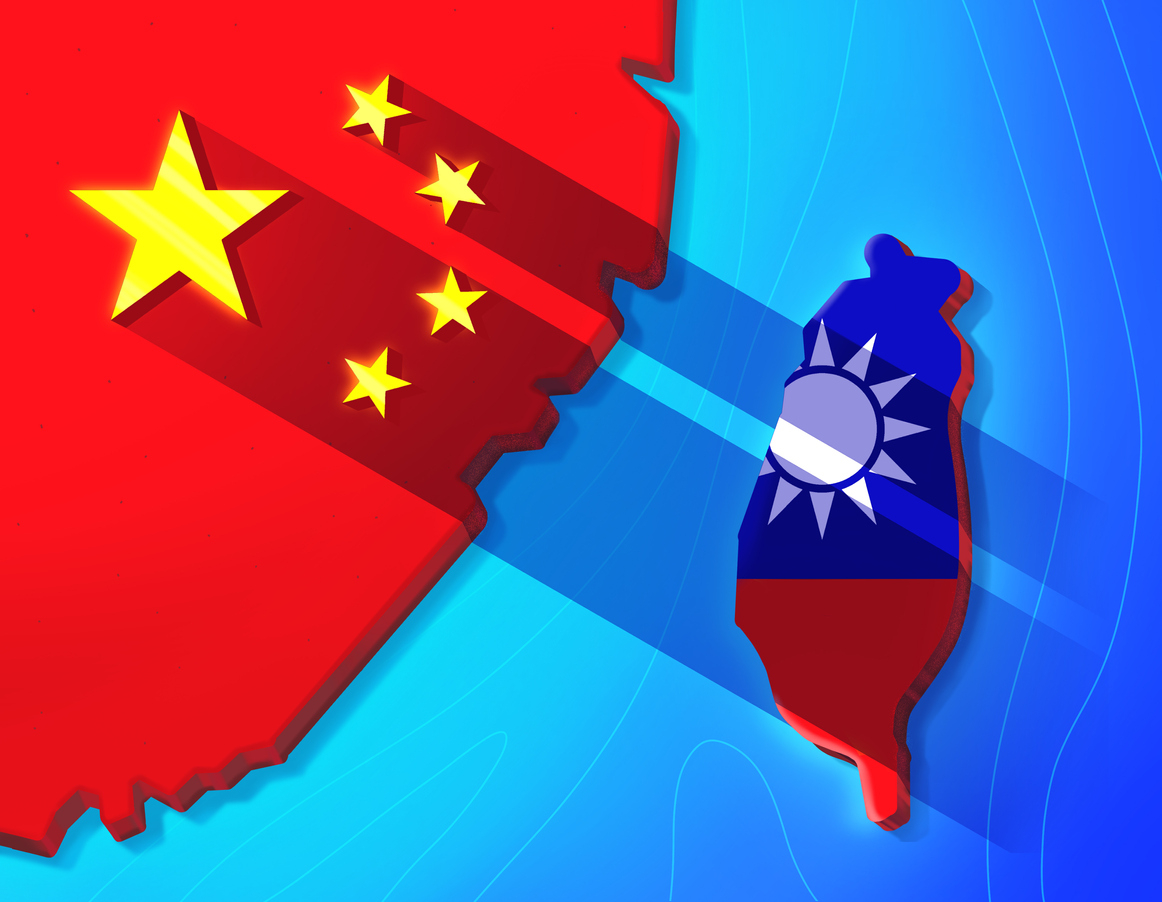
Americans may not even know that China has struck the first blow until months after it has occurred. Americans think China's war planners think like America's war planners. Unfortunately, the Chinese ones do not. First strikes, despite what former intelligence officials believe, do not have to look like the invasion of Normandy in 1944. (Image source: iStock)

The United States will have months of warning before China attacks Taiwan.

At least that is what John Culver, a retired CIA officer and now an Atlantic Council scholar, argues in a report issued this month by the influential Carnegie Endowment for International Peace.

On the contrary, Americans may not even know that China has struck the first blow until months after it has occurred. As Culver's writings show, Americans think China's war planners think like America's war planners. Unfortunately, the Chinese ones do not. First strikes, despite what former intelligence officials believe, do not have to look like the invasion of Normandy in 1944.

"Any invasion of Taiwan will not be secret for months prior to Beijing's initiation of hostilities," writes Culver in "How We Would Know When China Is Preparing to Invade Taiwan." "It would be a national, all-of-regime undertaking for a war potentially lasting years."

Therefore, foreign intelligence agencies and amateur sleuths could see China surging production of missiles and other items "at least a year before D-Day." Moreover, Beijing would take steps to sanctions-proof itself, such as selling and repatriating foreign assets. It would ration or reduce demand of "key goods" like oil and gas.

The regime would restrict "Chinese elites and high-priority workers" from leaving China, Culver points out. China's leaders would prepare the population for austerity. Beijing would launch blood drives.

Moreover, the People's Liberation Army would halt demobilizations of personnel and call up reservists. Regular training would end. The military would build field hospitals.

As Culver writes, "If China decides to fight a war of choice over Taiwan, strategic surprise would be a casualty of the sheer scale of the undertaking."

Maybe.

Culver is describing how the America military would ready itself for an invasion. Yet Chinese doctrine is different, something evident from Unrestricted Warfare, the 1999 book by Qiao Liang and Wang Xiangsui, then two Chinese air force colonels.

China, the two officers wrote, can and should recognize no limits in what it would do to win a war. Analysts think the Chinese military has adopted the key tenets of the widely read work.

So what would China's first attack on Taiwan look like? Say, six months before an invasion China, violating the Biological Weapons Convention, could release a deadly pathogen on Taiwan.

China's National Defense University, in the 2017 edition of the authoritative Science of Military Strategy, mentioned a new kind of biological warfare of "specific ethnic genetic attacks." Pathogens can now be designed to infect specific groups and even specific individuals.

"In a future war, we can expect China to use refined and targeted strains of coronavirus or other pathogens to target certain ethnic groups, certain countries, or certain age cohorts," Richard Fisher of the Virginia-based International Assessment and Strategy Center told Newsweek last year. As Fisher noted, the COVID-19 pandemic was a proof of concept that biological weapons work.

China's regime has already weaponized one pathogen, SARS-CoV-2. Although scientists do not agree that the virus was engineered, it is clear the Communist Party lied about contagiousness — it told the world that the disease was not human-to-human transmissible when it knew it was highly so — and pressured other countries to take arrivals from China without restriction while locking down Chinese territory. Taken together, these two acts show that the Communist Party wanted COVID-19 to infect those beyond China's borders. At last count, more than 6.5 million people outside China have been killed by a pathogen that should have been confined to that country.

A regime monstrous enough to kill millions around the world is surely monstrous enough to release, as the first act in a conflict, a disease on the 23.9 million people of Taiwan. It could take the Pentagon months to realize that China had started a war to annex the island republic.

Some might say that, after an epidemic in Taiwan, Beijing would still have to mobilize forces and the world could then observe the effort. This observation would be true only if the People's Liberation Army decided to wage a war with just conventional weapons.

Tactical nuclear strikes on Taiwan's military installations and cities could allow China to take a depopulated island with a small, light, quick-to-mobilize force.

I suspect Chinese ruler Xi Jinping would not be overly upset if Taiwan were a smoking radioactive slab as long as it were part of the People's Republic of China.

Why? The condition of a conquered Taiwan does not really matter to the Communist Party. It wants democratic Taiwan principally because the island republic represents a direct challenge to its core narrative that the Chinese people cannot govern themselves. Although most people in Taiwan do not self-identify as Chinese, their democracy, in the eyes of Communist Party leaders, is an existential threat to their rule.

The People's Republic of China for decades has threatened nuclear strikes against Taiwan or countries coming to its assistance. In fact, Beijing has increased the frequency of such warnings since July of last year, when it proclaimed it would incinerate Japan. After that threat, it has promised destruction to all others coming to Taiwan's aid. If Vladimir Putin uses tactical nuclear weapons in Ukraine and gets away with it — a distinct possibility — Xi Jinping might think he can also launch nukes.

None of this is to say that Beijing will definitely resort to these means to take Taiwan. It is to say, however, that Culver's optimistic we-will-see-it-coming line of thinking looks incorrect.

"The biggest problem with the 'China Hands' of the U.S. intelligence community is their inability to place themselves into the mindset of the Communist Party and its Central Military Commission, in other words, to think like the enemy," James Fanell of the Geneva Centre for Security Policy told Gatestone, in response to the Culver report. "There is still too much mirror-imaging going on and not enough willingness to think out of the box."

Fanell, a former director of Intelligence and Information Operations of the U.S. Pacific Fleet, is correct. Americans make assumptions about the Chinese style of warfare; some of those assumptions are almost certainly wrong.

 
Gordon G. Chang is the author of The Coming Collapse of China, a Gatestone Institute distinguished senior fellow, and a member of its Advisory Board.

Source: https://www.gatestoneinstitute.org/18999/china-attack-taiwan

Follow Middle East and Terrorism on Twitter

Impeach Biden for Saudi Election Quid Pro Quo - Daniel Greenfield


by Daniel Greenfield

Bribing a foreign power to rig oil prices to keep control of Congress.


“There’s going to be some consequences for what they’ve done,” Biden threatened Saudi Arabia on CNN.

The widely unpopular president wasn’t upset at the Kingdom over what it had done to America, but to his party’s prospects for retaining control of Congress.

In response, the Saudis revealed that the Biden administration had actually asked them to postpone the production cut for a month. Why a month? A month wouldn’t have changed anything meaningfully for Americans, but would have gotten the midterms out of the way.

As the Wall Street Journal noted, “The one-month delay requested by Washington would have meant a production cut made in the days before the election, too late to have much effect on consumers’ wallets ahead of the vote.”

Perfect timing. Too perfect to be a coincidence.

Adrienne Watson, Biden’s NSC assistant, denied Biden had been asking for an election boost. “It’s categorically false to connect this to U.S. elections,” the former Hillary Clinton spokeswoman insisted. “It’s about the impact of this shortsighted decision to the global economy.”

But the story became even more damning when it was revealed that the Biden administration had tried to bribe the Saudis to delay the production cut until the midterms by promising to “buy oil on the market to replenish Washington’s strategic stockpiles if the price of Brent, the main international benchmark, fell to $75 a barrel”.

Biden was bribing the Saudis with a potential fortune in taxpayer money as a hedge against a decline in the price of oil. The strategic reserves had already been badly depleted by Biden in an effort to lower oil prices. This was not done to help consumers, but to politically prop up Biden’s own prospects for a second term. Biden plans to end the strategic releases from the reserve at the end of October. This is obviously aimed at influencing the midterm elections.

With the release of 180 million barrels of oil, Biden was trying to buy the midterms in a way that was corrupt, but technically legal. With crude currently priced in the high 80s, refilling the reserve would be quite expensive and Biden officials had told the finance media they would not be refilling the reserve anytime soon. But they were telling the Saudis something very different.

Biden’s already legendary corruption has worsened dramatically when given full access to the White House, but trying to bribe a foreign power to rig oil prices to keep control of Congress is outrageous even in the litany of White House scandals.

The quid pro quo here is potentially massive.

Biden’s NSC spokesman, John Kirby, warned that his boss would “take a look to see if that relationship is where it needs to be and that it is serving our national security interests.”

It’s not the national security interests at issue here, but Biden’s own political interests.

The Biden administration has already begun pulling out of regional security sessions in revenge for the Saudi refusal to prop up energy prices to help the Democrats retain control of Congress.

The carrot and the stick here involve foreign policy and billions in spending for a quid pro quo.

The Biden administration was using oil purchases and security cooperation as leverage to secure a foreign government’s help in the midterm elections. Senate Democrats are rushing to make the quid pro quo even more explicit by threatening to pull out anti-Iran defenses.

Rep. Tom Malinowski, Rep. Sean Casten and Rep. Susan Wild, all of whom are running for reelection, introduced a bill calling for the removal of missile defense systems and troops from Saudi Arabia, to punish it for the pre-midterm production cut.

“Saudi Arabia and the UAE’s drastic cut in oil production, despite President Biden’s overtures to both countries in recent months, is a hostile act,” the press release by the candidates stated.

As Biden said, “There’s going to be some consequences”.

Rep. Malinowski is running a tight race in a time when, as the New York Times described, “gas prices were soaring”. Susan Wild is running in another “bellwether” seat. It’s unlikely to be a coincidence that House Democrats who would have benefited the most from Biden’s Saudi quid pro quo are also the ones trying to punish the Saudis, not for Americans, but for themselves.

Rep. Malinowski voted to impeach Trump because, in his words, “by pressuring a foreign country”, he “used the powers of his office not for America but for himself”, “signaled that America’s foreign policy can be bought by anyone willing to interfere in our politics on his behalf” and “endangered our national security, and violated his oath of office.” All of these things are true of Biden and of his political accomplices inside and outside the administration.

Biden was caught trying to pressure a foreign country for his own political benefit. Had he just asked the Saudis to suspend the price cut without a specific timetable, he might have gotten away with it, but by timing it for a month, enough to clear the midterms, he indicted himself.

The Saudis revealed what Biden was up to and administration flunkies like Watson have denied the motive, but not the act. The next step is for Congress to investigate the quid pro quo.

Considering how many members of the current Congress were heavily invested in preventing a production cut before the midterms, it is unrealistic to presume that a corrupt and self-interested body can credibly investigate itself. Only after the midterms have cleaned house a little bit will it be possible to turn over some rocks and discover who knew what and what the exact deal was.

Biden’s strategic oil reserve releases timed to the midterms were bad enough. There was a time when such nakedly calculated abuses of government assets and taxpayer money might have even been impeachable, but we live in times when politicians routinely engage in such plunder.

Trying to bribe a foreign government to interfere in our election is a whole other matter.

The Democrats were the ones who set the precedent with the first Trump impeachment. And that should be Biden’s first impeachment too. Whether it will be his last is up to Congress.


Daniel Greenfield, a Shillman Journalism Fellow at the David Horowitz Freedom Center, is an investigative journalist and writer focusing on the radical Left and Islamic terrorism.

Source: https://www.frontpagemag.com/impeach-biden-for-saudi-election-quid-pro-quo/

Follow Middle East and Terrorism on Twitter

Biden to Stand w/”Brave Women” of Iran by Giving Regime More Money - Daniel Greenfield


by Daniel Greenfield

Just like Obama, Biden wants to give the regime time to suppress the protests.


After September 11, Biden proposed, “Seems to me this would be a good time to send, no strings attached, a check for $200 million to Iran.” While the check never materialized, the Obama-Biden administration would send billions, not millions, to the Islamic terror state.

A member of Iran’s opposition had accused Biden’s campaigns of being “financed by Islamic charities of the Iranian regime based in California and by the Silicon Iran network.”

More recently, Iranian hackers appeared to have intervened in the 2020 election to help Biden.

Since taking office, the Biden administration has allowed the Tehran terrorists to benefit from billions of dollars in sanctions relief. A regime paper boasted that $4 billion had been freed “without much negotiation”.

Right before the election, Biden released his list of fundraising bundlers. In an exclusive story, Front Page Magazine’s investigation revealed that they included Jamal Abdi, the executive director of NIAC Action. The National Iranian American Council (NIAC), often described as the Iran Lobby, claimed its members had run phone banks and donated $385,000 to Biden.

NIAC Action had endorsed Biden and declared, “our long, national nightmare is almost over. AP has called the race for Joe Biden”.

Now that the anti-regime pro-freedom protests in Iran are heating up, Biden, like Obama before him during the Green Revolution, is paying worthless lip service to the protesters while refusing any substantive support and intends to wait for the regime to suppress the protests.

Joe Biden has said he is “stunned” by the mass protests in Iran and that the US stands with that country’s “brave women”.

The US president said at a college in Irvine, California, during an address to a group of protesters holding “Free Iran” signs: “I want you to know that we stand with the citizens, the brave women of Iran.”

“Women all over the world are being persecuted in various ways, but they should be able to wear in God’s name what they want to wear,” the president said.

“All over the world.” As if it’s all the same.

That doesn’t mean that Biden will stop trying to provide Iran with more sanctions relief and cash.

Iran will use cash assets provided by the Biden administration as part of a new nuclear accord to fund regional terror groups and enhance the capabilities of a militant network committed to assassinating U.S. officials, according to written testimony to Congress from a top U.S. military commander exclusively obtained by the Washington Free Beacon.

Gen. Stephen Townsend, who led U.S. Africa Command until August of this year, in March warned Congress that Iran is certain to use “at least some of the resources gained from sanctions relief to” increase its illicit shipment of advanced weapons to terror groups operating in Africa and the Near East region, according to written information he provided to Sen. Joni Ernst (R., Iowa) after a public hearing before Congress.

Of course, it will. That’s by design. The American Leftist, like its Jihadist allies, loves death.

Earlier, U.S. Secretary of State Antony Blinken hailed the courage of anti-government protesters in Iran as he met on October 14 in Washington with activists originally from the country.

The protesters have shown “remarkable displays of courage throughout Iran as women, young people, and many others continue to stand up for the fundamental rights that continue to be denied them by the Iranian regime,” Blinken said as he opened a meeting with activists at the State Department.

Hakakian said the group urged the United States to halt the talks.

“Our suggestion unanimously was to stop the nuclear talks until the violence stops. And I think everybody heard us loud and clear,” she told National Public Radio after the meeting.

I’m sure it was heard. And I’m sure that Biden will go on ignoring it while paying more lip service to the protesters, with no actual meaningful support, hoping that history will repeat itself and, as under Obama, the protests will die out and be suppressed.


Daniel Greenfield, a Shillman Journalism Fellow at the David Horowitz Freedom Center, is an investigative journalist and writer focusing on the radical Left and Islamic terrorism.

Source: https://www.frontpagemag.com/biden-to-stand-w-brave-women-of-iran-by-giving-regime-more-money/

Follow Middle East and Terrorism on Twitter

FBI whistleblower says bureau using excessive tactics to ensure 'process is the punishment' - John Solomon


by John Solomon

Special Agent Steven Friend says many of his colleague share his concerns: "We are supposed to be people of integrity."


An FBI agent in Florida says he chose to blow the whistle on his agency because it has not been following its own rules while investigating the Jan. 6 riot, designing cases to exaggerate the threat of domestic terrorism in America and using excessive tactics to ensure "the process is the punishment" even if a suspect is innocent.

"We took an oath, before our family and our friends and the Lord Almighty, and we are supposed to be people of integrity," suspended FBI Special Agent Steve Friend told Just the News in a wide-ranging interview. "And that's not a leisure pursuit. And if you are indeed a person of fidelity, bravery, integrity — the FBI motto — and you have to be willing to do things that aren't easy, especially when they're as simple as stepping up and pointing out when we are not meeting the standards that we have set out for ourselves."

Friend's security clearance has been suspended, leaving him sidelined on the job without pay after he filed a whistleblower complaint with Congress, the U.S. Office of Special Counsel and the Justice Department inspector general. The complaint obtained by Just the News alleges the FBI is violating the 6th and 8th Amendment rights of Jan. 6 defendants and inflating the statistics for domestic extremism in the country by sending Jan. 6 Capitol riot cases to field offices instead of keeping them in Washington.

Friend said he had received outstanding ratings his entire career until he objected to being listed as a managing agent for Jan. 6 suspects in Florida when in fact the investigation was being run by other agents in Washington D.C. He said the construct violates the FBI Domestic Investigations and Operations Guide that is the bible for all agents.

"That's when I said to myself, 'Look, we're not running these cases ourselves, and that's outside the rule, and we are setting ourselves up for a major fall,'" he recounted in an interview with the John Solomon Reports podcast set to air Monday. "So I brought that to my supervisor's attention about my concerns, about not following FBI rules. I brought my concerns about potentially abusing power to him." 

The agent said there is more than just a technical rules violation, because when cases go to trial the agent listed as leading the probe will have to testify he or she did none of the work.

"I just could foresee a pretty easily avoidable or bad situation where Steve Friend is the case agent on John Smith, who's being prosecuted for Jan. 6," he explained. "And then I'm put on the stand, because it's my case. And you know, the defense attorney says, 'Agent Friend, what did you do? You're the case agent.

"And I would say, 'I didn't do anything.' 'Well, did you make this decision?' 'No, I didn't.' 'Did your supervisor approve that?' 'No, he didn't.' And it just seemed like that was a to be a massive problem."

In the end, Friend said he declined to participate in any more Jan. 6 cases but told his supervisor he would do any other work as required.

The FBI told Just the News it cannot address specific personnel cases but has a policy and process it follows for instances like Friend's concerns.

"While we cannot comment on the specifics of personnel matters, all FBI employees understand they are held to the highest standards because their work is critical to fulfilling our mission of protecting the American people and upholding the Constitution of the United States," the FBI statement said.

"Employees who don't carry out their responsibilities are held accountable through an objective administrative process," it added. "FBI employees who report evidence of wrongdoing through a protected disclosure are protected from retaliation. Such reporting supports the FBI's mission and is fully consistent with our core values."

Friend, who served for five years on an FBI SWAT team in Omaha before transferring to Florida last year, said he also raised concerns about the use of tactical teams to arrest Jan. 6 defendants when there were less intrusive and less dangerous methods available.

"My objection was this is an individual who we'd been in contact with, who we knew already has an attorney, who had been cooperative with us," he explained. "That to me seems like a little bit of an overuse of SWAT. There's a lot of other mechanisms ... You could just straight go to the person's lawyer and say, 'Here's a summons to come to court.'

Friend recounted raising with superiors the specter of a dangerous standoff escalating to violence.

"One of our considerations is there is an unnecessary risk of danger," he said. "And I said, frankly, we've been fairly lucky that we haven't created a Ruby Ridge scenario where somebody is coming back from a hunting trip, and then all of a sudden, there's a tactical team at their door with a Bearcat. And that can be completely avoidable, especially if we have an open line of communication with this person, we've spoken to them, and they have counsel, and we could bring it to easy resolution."          

Friend said FBI management in Washington has been relentless in pursuing Jan. 6 cases, in some cases pursuing people without evidence of wrongdoing. He related an instance where he was required to visit a Florida man to inquire whether he went into the Capitol on Jan. 6. Other than an anonymous phone call, the FBI had no evidence the man did anything wrong or was even in Washington. When he visited the man, the suspect said he could not have been in Washington during the riot because he had attended his son's funeral on Jan. 6, 2021.

Friend said agents have been told the reason they are being assigned cases far from Washington D.C. is to get their "buy-in" to the notion there is a domestic extremism problem in America. He fears the bureau has created a scenario where investigating people has been designed to be part of the penalty.

"I felt like there was an aspect to it, that was the punishment is the process,” he said. "You know, even if somebody eventually is either acquitted, or say they even plead guilty to a misdemeanor, and they wind up spending, you know, a month in incarceration, the very fact that a tactical team was coming up on their lawn with a Bearcat, and at six o'clock in the morning, potentially throwing flash-bangs in their house, and terrorizing their family and alerting the neighborhood like that. That just seemed to me like a little bit of an overkill.”

The agent said when his supervisors began to move to suspend him they began to make claims like police officers were killed on Jan. 6 (none were, though a few died afterwards from suicide or health issues) and that his concerns about the Jan. 6 defendants' rights were "on the fringe."

Friend said Justice and FBI officials are now looking to expand the definition of the secure perimeter of the Capitol so they can charge more people with crimes even though they didn’t enter the building that day.

"There's a whole line now where they're going to extend the area outside of the Capitol — you know, the four walls of the Capitol, the perimeter — and say that the lawn is a restricted area, and then they're just going to come down with another wave of charges for misdemeanors for entering a restricted area," he said.

Friend said large numbers of current agents across the country share his concern.

"Whenever I've spoken to my colleagues — and granted, I don't know everybody in the FBI, but I do know a fair amount of them, as well as the retired agent population — to a man, everyone has said that they disagree with how this has gone on, which is one of the reasons that I kind of was shaking my head when my special agent in charge said that I held a fringe belief about this."

Friend said he simply believes Jan. 6 defendants should be treated like any other Americans facing criminal investigation.

"There's no question that the process is the punishment," he said. "I sat in an interview with somebody — I don't know if they're going to be charged with a crime — but the very fact that I was sitting there, and they were dealing with the stress of talking to FBI agents in a law office for an attorney who I'm sure was not free.

"If that gentleman doesn't get charged with a crime, he's still out, you know, having to pay his attorney. And he expressed to us he was going to be out of a job because his employer was upset with him being involved at all. So that's somebody whose life was completely turned upside down and that doesn't even begin to know if he's going to be sitting in an orange jumpsuit at some point."


John Solomon

Source: https://justthenews.com/accountability/whistleblowers/fbi-whistleblower-says-bureau-using-excessive-tactics-ensure-process

Follow Middle East and Terrorism on Twitter

From Durham to CIA, evidence mounts FBI was warned Russia collusion story might be disinformation - John Solomon


by John Solomon

"This has all the classic earmarks of a Russian information operation run through the Hillary Clinton campaign," retired FBI intel boss says.


In one of the more dramatic exchanges during Igor Danchenko's trial on charges he lied to the FBI during the Russia collusion probe, Special Counsel John Durham confronted a lead agent with evidence he had been warned that the Russian businessman he was using as an informant might be an intelligence asset for Moscow.

Agent Kevin Helson acknowledged that a female member of the FBI's Human Intelligence Validation Unit, with two decades of intelligence experience, had raised concerns that Danchenko may be a member of the Russian military intelligence service known as the GRU, but Helson dismissed the concern.

"This is a real problem," Durham declared, as he and Helson tangled over whether the FBI should have relied on Danchenko as a confidential human source.

Helson dismissed the intelligence analyst's complaint, insisting Danchenko had provided significant help to the FBI in Russian counterintelligence analysis between 2017 and 2020, so much so that the agent had recommended the bureau compensate the Russian analyst with as much as $500,000 in payments.

In the end, Danchenko has never been charged as a Russian spy. Rather, he is charged with five counts of lying to the FBI starting when he acted as the primary source for former British spy Christopher Steele's dossier and then as a paid informant himself for the bureau. One of the charges was dismissed Friday by the trial judge, and the remaining four counts head to a jury Monday after closing arguments.

Nonetheless, Helson's performance at the trial — at times he was treated by Durham as a hostile witness — is a reminder that there is a growing body of evidence that the FBI received numerous warnings the evidence it relied upon to pursue Donald Trump for what turned out to be nonexistent Russian collusion very likely could have been tainted by a Russian disinformation campaign by Vladimir Putin's intelligence services.

And that evidence was often kept from the FISA court that allowed the FBI to spy on the Trump campaign and former adviser Carter Page for a full year.

In addition to the revelation of validation team warning, Helson was also forced to admit he never alerted the FISA judges that the FBI had a prior investigation into Danchenko as a possible spy for Russia back in 2008-10. Instead, the FBI falsely told the court it had no derogatory information on Danchenko.

In truth, the FBI had allegations that Danchenko tried to offer money to Americans he expected to go into the Obama administration if they would provide him classified information, Durham said. The prosecutor said that probe was improperly shut down when the FBI incorrectly concluded Danchenko had left the United States. In fact, he had not.

"There was a case on him ... It was a counterintelligence case ... an espionage case," Helson testified Thursday. The agent claimed he "couldn't see" the earlier case when he first searched the FBI database upon bringing Danchenko aboard as an informant. But he said he learned about the prior spy case within 60 days of getting started.

Durham asked whether Helson ever corrected the false statement there was no derogatory information on Danchenko. "No," the agent answered.

Kevin Brock, a retired FBI intelligence chief who wrote the bureau's confidential human source rules still in existence today, said that while it was great to see the FBI had created validation teams to assess informants, Durham's examination of Helson unmasked troubling behavior.

"I think the startling thing is that you have an agent/analyst in that validation unit pressing one of the case agents on Crossfire Hurricane on this issue of validating the information, the rumors that were present in the Steele dossier documents, and insisting that more work needed to be done," Brock said. "And she kind of got the Heisman, kind of got the stiff arm by the agent. And they really didn't do the due diligence that was necessary for such a high-profile, important case like this."

Brock said the FBI possessed significant evidence calling into question the reliability of Danchenko and the Steele dossier and withheld it from the court. "It's more than derogatory information," he said. "That's something to be worried about. And the court deserve to know that information."

The red flags and warning sirens emerged immediately in the summer of 2016 that the allegations of Trump-Russia collusion might be an intelligence disinformation campaign by Moscow or tainted by politics. In July 2016, just a few days before the FBI opened its Crossfire Hurricane investigation, then-CIA Director John Brennan briefed President Barack Obama that the Russians had intercepted a Hillary Clinton campaign adviser discussing a plan to create a narrative that Trump had a Russia problem.

The FBI knew from its first interaction with Steele in July 2016 that he was being paid and working for the Clinton campaign to create his dossier.

By September 2016 — a month before the FISA warrant was secured — the CIA warned the bureau of the Russians' knowledge about Clinton's operation against Trump.

The CIA told the FBI the Russians had intercepted a call indicating Hillary Clinton personally approved an effort "to stir up a scandal against U.S. Presidential candidate Donald Trump by tying him to Putin and the Russians' hacking of the Democratic National Committee."

Similar conerns were raised inside both the FBI and CIA that Steele's source network had been infiltrated by Russian intelligence, according to declassified footnotes from the Justice Department inspector general investigation into sweeping failures of the FBI in the Russia case.

"Steele's frequent contacts with Russian oligarchs in 2015 had raised concerns in the FBI Transnational Organized Crime Intelligence Unit," one such footnote revealed.

The CIA gave a similarly stark warning, according to another footnote.

"We identified reporting the Crossfire Hurricane team received from [redacted] indicating the potential for Russian disinformation influencing Steele's election reporting," that footnote stated, specifically flagging a "subset of Steele's reporting" as "part of a Russian disinformation campaign to denigrate U.S. foreign relations." Further, according to the footnote, the CIA told FBI investigators that "an individual with reported connections to Trump and Russia" claimed Steele's dossier was compromised by Russian intelligence "infiltrating a source into the network" used by Steele to assemble his allegations against Trump.

The FBI plowed ahead, never looking at the red flags in Steele's so-called "Delta file" assessing his credibility as a source or alerting the court to the validation team's concerns or the prior espionage probe involving Danchenko. Instead, Steele was offered up to $1 million from the FBI if he could prove his dossier, which he never did, according to testimony Durham elicited at the trial last week. Danchenko was recommended to receive a half-million dollars for his work, Agent Helson testified.

The portrait compiled from Durham, the DOJ IG and the declassified CIA evidence is one of the FBI turning a blind eye to the fact that there was no evidence of collusion, just a disinformation operation, former House Intelligence Committee Chairman Devin Nunes said. And the continuation of the probe for nearly three years suggests the FBI proceeded based on politics, not evidence, he added.

"Look, I don't know how you describe this $1 million payment or potential payment to Steele as anything other than what it is," Nunes told Just the News. "It was a bounty program to get Donald Trump. That's what it was plain and simple."

As for the FBI, Nunes said, "It's just so confusing to me as to why these FBI and DOJ characters and some of the Clinton cabal have not been brought up on a conspiracy charge, because clearly they were conspiring to defraud the United States government, and to lie and mislead Congress."

Brock, the former FBI boss, said the sum total of evidence now indicates the FBI failed — either by incompetence or something worse — to detect it had been played by Russian intelligence.

"This has all the classic earmarks of a Russian information operation run through the Hillary Clinton campaign," he said.


John Solomon

Source: https://justthenews.com/accountability/russia-and-ukraine-scandals/sunfrom-durham-cia-evidence-mounts-fbi-told-steele

Follow Middle East and Terrorism on Twitter

A decade later, Obama admits he made a mistake failing to support 2009 Iranian uprisings - John Solomon


by John Solomon

Obama said it is “hard to predict” whether current protests will force regime change, but U.S. needs to stand with the demonstrators.


Former President Barack Obama is belatedly acknowledging he erred by failing to embrace the Iranian uprising in 2009 known as the “Green Movement” as a new round of protests and strikes rage in Tehran more than 13 years later.

“In retrospect, I think that was a mistake,” Obama, said Friday, referring to his administrations tepid response to the 2009 movement. “Every time we see a flash, a glimmer of hope, of people longing for freedom, I think we have to point it out.

“We have to shine a spotlight on it. We have to express some solidarity about it,” the 44th president told the Pod Save America podcast operated by some of his former advisers.

A new uprising has been underway in Iran for 30 days, ignited by the beating death of 22-year-old Mahsa Amini at the hands of the Islamic morality police.

Obama said it is “hard to predict” whether the current protests will achieve regime change, but that the West needs to stand with the demonstrators in the face of a brutal crackdown. 

He hailed “the incredible courage that is taking place in Iran and those women and girls who are on the streets knowing that they’re putting themselves in harm’s way to speak truth to power.”

Obama added it was important “to affirm what they do and I hope that it brings about more space for the kind of civic conversation that over time can take the country down a better path.”


John Solomon 

Source: https://justthenews.com/world/middle-east/decade-later-obama-admits-he-made-mistake-failing-support-2009-iranian-uprisings

Follow Middle East and Terrorism on Twitter

Bush-era diplomat rips 'unconscionable' Biden acquiescence to Chinese 'intimidation center' in NY - Charlotte Hazard


by Charlotte Hazard

Centers have "taken 230,000 Chinese citizens, and essentially by holding their family hostage back in China and then showing them on video and audio that they've got them, they're extracting them and pulling them home," explained Robert Charles.

Centers have "taken 230,000 Chinese citizens, and essentially by holding their family hostage back in China and then showing them on video and audio that they've got them, they're extracting them and pulling them home," explained Robert Charles.

A former Bush administraton assistant secretary of state says it is "unconscionable" that the Biden administration has allowed China to set up what he calls an "intimidation center" in New York to pressure Westernized Chinese nationals residing in the U.S. to return home by "holding their family hostage."

A former Bush administration assistant secretary of state says it is "unconscionable" that the Biden administration has allowed China to set up what he calls an "intimidation center" in New York pressuring Westernized Chinese nationals residing in the U.S. to return home by "holding their family hostage."

By failing to "turn those places upside down," said Robert Charles, former assistant secretary for the Bureau of International Narcotics and Law Enforcement Affairs, "you're facilitating the hostage-taking and the extortion and the extraction of these free people. You're essentially part of the process of targeting innocents."

In an interview Thursday on the John Solomon Reports podcast, Charles was asked about reports that China's MInistry of Public Security had installed a "police station" in New York City "aimed at intimidating Chinese residents or Chinese Americans to come back home to repatriate."

"Around the world" China has "begun to establish these — they call them service centers — but I think it could more aptly be called intimidation centers," said Charles. "And the sad part here is that they're essentially trying to both extract people — they've taken 230,000 Chinese citizens —and essentially by holding their family hostage back in China and then showing them on video and audio that they've got them, they're extracting them and pulling them home.

"Why? Because these are people who undoubtedly have become more integrated in a positive way and are understanding capitalism, understanding democracy, and are essentially becoming part of the integrated Western understanding of all those things we love — free markets and the freedoms that we find in our Bill of Rights. So they are trying to intimidate them and pull them home."

Asked why the administration would allow such an extension of Chinese political controls on U.S. soil, Charles said that U.S. acquiescence has made it tacitly complicit in the outrage.

"The double irony here is that not only should China not be doing that, obviously, we should not be complicit in allowing that to happen," he said. "I mean, when you allow a foreign entity — whether it's Iran or Russia or China, and in this case it's China — to hold people captive or to threaten the family of someone and then you essentially don't PNG, make them persona non grata, have the State Department oust those people, undertake at the state level with state police as well as local sheriffs even or at the federal level with the FBI, you don't go in and turn those places upside down, then what you're doing is you're facilitating the hostage-taking and the extortion and the extraction of these free people. You're essentially part of the process of targeting innocents.

"And it's really unconscionable that we should allow any of those entities to exist. And I'm under the impression that New York may not be the only place where China is quietly setting these places up. So we need to protect our own, and we need to protect those people that believe in that ideology — I talked a minute ago of freedom, the idea that the Bill of Rights really matters —and if the Biden administration isn't going to do it, who's going to do it?

"I mean, I thought we invested them with the power to do right and good, not to do wrong and get rich."

Charles said that even with the administration's belated acknowledgement in the national security strategy it recently sent to Congress that China is an adversary, the Biden team has still failed to reckon with the reality that China is in essence the new Soviet Union — a repressive, militaristic regime that America must recognize as its "knock-down, drag-out ideological adversary."

The U.S. can't afford to be passive in the face of China's growing military, economic and ideological threat, Charles argued.

China is bent on "world domination, and they're not making a secret of it anymore," he warned. "They're gonna lay in a thousand ICBMs between now and 2030, they're trying to take over essentially everything in the Far East, and it scares the heck out of the Australians and the Japanese and, of course, Taiwan. But we're sitting back on our haunches as if we're just going to wait for the next Pearl Harbor. That's not the way to manage deterrence of war, and it's not the way Congress should understand the threat before us.

"One of the things I really hope and pray is that Americans will understand the gravity of what's happening in China, how it affects us every single day — the penetration of our computers, the penetration of our business sector, the penetration of our farmlands, the penetration of our media, the whole nine yards — and understand that this kind of unrestricted warfare is not a joke."


Charlotte Hazard

Source: https://justthenews.com/world/former-bush-advisor-says-threats-china-are-not-joke-and-need-be-taken-seriously

Follow Middle East and Terrorism on Twitter

The Need for Real Leadership: The Cost of Not Supporting Ukraine - Pete Hoekstra


by Pete Hoekstra

If Putin is allowed to occupy Ukraine, Russia -- and undoubtedly all the other aggressor nations waiting in the wings -- China, Iran, Turkey, North Korea -- will be emboldened to begin a free-for-all of invading their countries of choice.

  • The difficult reality is that we may never know what would push Putin to make the decision to go nuclear.... The U.S. objective should be to deter him: make the potential cost to him so high that it would be suicidal for him even to try.

  • The clearest and most welcome statement was made by Biden himself in March: he stated, "For God's sake, this man cannot remain in power."

  • Biden is old enough to remember that "what happens in Sudetenland does not stay in Sudetenland." If Putin is allowed to occupy Ukraine, Russia -- and undoubtedly all the other aggressor nations waiting in the wings -- China, Iran, Turkey, North Korea -- will be emboldened to begin a free-for-all of invading their countries of choice. Putin could further move to take over Moldova, Poland and the Baltic states, for a start; Turkey could move on Greece and southern Cyprus, and China would most certainly move on the world's computer-chip center, Taiwan.

  • Biden.... on day one, effectively closed down America's ability to produce and export oil, thereby instantly creating an acute shortage of energy worldwide. Putin could not have dreamed of a bigger gift. Immediately, the price of oil tripled, from roughly $40 to $112. Russia was making a billion dollars a day, or $360 billion a year. Biden, with a stroke of his pen, had just financed Russia's entire war on Ukraine even before granting Putin the use of the Nord Stream 2 gas pipeline to Europe, thereby guaranteeing Russia the ability to hold Europe hostage come winter.

  • The problem with this response [wishing to isolate America to avoid restoring Ukraine's integrity] is that it is exactly the same view that, in 1938, led British Prime Minister Neville Chamberlain to wave around a piece of paper and inaccurately claim "peace for our time" with Hitler. Chamberlain evidently saw that his British voters did not want war, so he tried to give them what they wanted. That is not great leadership; that is great followership.

  • People in thriving democracies usually do not want war -- ever. They can see that they are enjoying magical, free lives -- and wish to keep them. We all would like peace handed to us on a platter. Unfortunately, that is not always the available choice, particularly looking a few moves ahead. How much less costly it would have been in blood and treasure to have stopped Hitler before he crossed the Rhine. Surrender always remains an option -- but usually not a happy one.

  • The U.S. and EU must put in place compelling plans to address the threat of slowing economies (growth); high inflation (stop government spending); rising energy prices (re-open the oil spigots), and potential shortages... at the same time as educating the public about the even worse consequences of not supporting Ukraine.

  • The idea is to make Putin afraid, not Americans.

  • Leaders of both U.S. political parties need clearly to articulate the American strategic interest in Ukraine, where a Western defeat could mean the beginning of the end of Europe, and let Putin know in no uncertain terms what the U.S. responses to any unpleasant escalation might be. The same can be done in European capitals and NATO countries, as well.

  • Leaders of both parties also need to lay out how they will address the current internal economic crises, their continuing support for Ukraine, defeating Putin and deterring further aggression by Russia, China, Turkey, North Korea and Iran. Short of delivering on these questions, they are doing no less than seriously jeopardizing the long-term national security of the U.S. and the West.

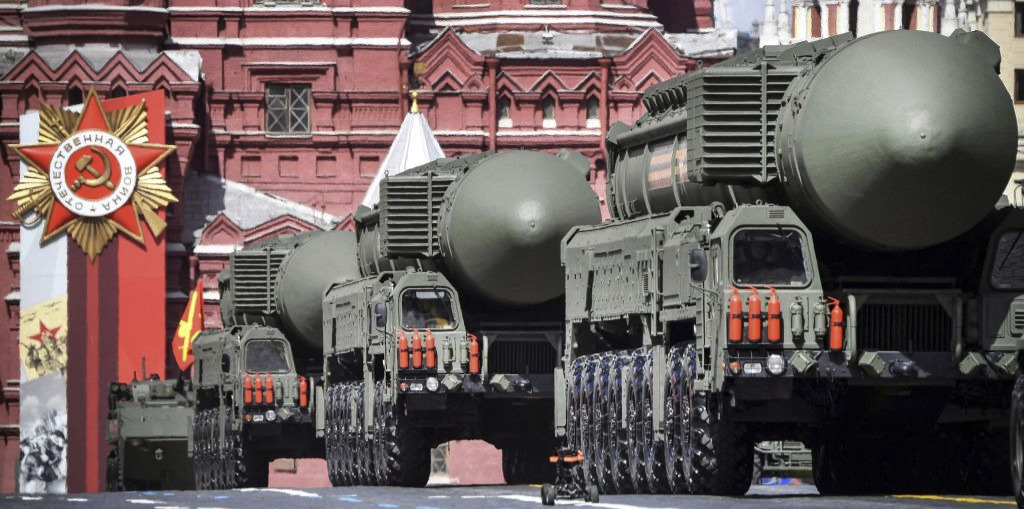
The difficult reality is that we may never know what would push Russian President Vladimir Putin to make the decision to go nuclear. The U.S. objective should be to deter him: make the potential cost to him so high that it would be suicidal for him even to try. Pictured: Russian Yars intercontinental ballistic missile launchers parade through Red Square in Moscow, on May 9, 2022. (Photo by Alexander Nemenov/AFP via Getty Images)

U.S. President Joe Biden is known for making confusing and sometimes wild pronouncements that his administration is known for frequently walking back. This might have been the case when he randomly decided to tell an audience of well-heeled Democrats at a fundraiser that Russian President Vladimir Putin is "not joking" about using nuclear, biological or chemical weapons. "We have not faced the prospect of Armageddon," he added, "since Kennedy and the Cuban Missile Crisis."

Biden has since refused to clarify his remarks or explain on what he was basing them. National Security Council spokesman John Kirby took to the Sunday shows to clarify that the president was not saying an attack was imminent and this his "comments were not based on new or fresh intelligence or new indications that Mr. Putin has made a decision to use nuclear weapons."

The difficult reality is that we may never know what would push Putin to make the decision to go nuclear. Russia is known in the Intelligence Community as what is called a hard target country: difficult for U.S. agencies to penetrate to get information. That problem has been exacerbated the ongoing Russian war against Ukraine. The U.S. objective should be to deter him: make the potential cost to him so high that it would be suicidal for him even to try.

Putin's plan was to seize Kyiv in two days, CIA Director Bill Burns told Congress. Another assessment, reportedly based on U.S. intelligence assessments, estimated that Kyiv would fall within "one to four days," Another story stated that at the start of the war, the U.S. offered Ukrainian President Volodymyr Zelensky "a ride" out of Ukraine. Americans need to recognize how limited the insights and understanding are that our leadership may have into some serious international threats.

There is always great uncertainty associated with war; the war in Ukraine is no different. Our Intelligence Community is certainly using all available sources and methods to gather crucial insights into Putin's thinking and planning, including his possible use of nuclear or chemical weapons. No one, of course, knows for sure.

What we do know is that a case must be made by the U.S. and the coalition of countries why supporting Ukraine is clearly in our strategic interest and the interest of the West. Secondly, it needs to be made unmistakably clear to Putin what the U.S. response would be if he used chemical or nuclear weapons anywhere, and especially if he tried to attack a NATO member country.

Unfortunately, the Biden administration, with its lack of clarity, has sown only a dangerous confusion that invites attacks. Even before Russia invaded Ukraine, President Biden seemed to imply there would be fewer consequences for just a "minor incursion." Putin understandably saw it as a green light; the Ukrainians were understandably alarmed by the statement, and as all too often, the White House staff were left scrambling to clarify it.

In late April, Defense Secretary Lloyd Austin with Secretary of State Antony Blinken said that the U.S. wanted to see Russia weakened -- remarks that also later had to be clarified.

The clearest and most welcome statement was made by Biden himself in March. "For God's sake," he stated, "this man cannot remain in power."

Biden's remarks sounded very like regime change -- a major reversal of U.S. policy. The White House rushed to clarify once again that Biden had not meant what he said. Biden pointedly, to his credit, said that he was "not walking back" his original statement.

Biden is old enough to remember that "what happens in Sudetenland does not stay in Sudetenland." If Putin is allowed to occupy Ukraine, Russia -- and undoubtedly all the other aggressor nations waiting in the wings -- China, Iran, Turkey, North Korea, as well as terrorist groups -- will be emboldened to begin a free-for-all of invading their countries of choice. Putin could further move to take over Moldova, Poland and the Baltic states, for a start; Turkey could move on Greece and southern Cyprus, and China would most certainly move on the world's computer-chip center, Taiwan.

It is heartening that with Biden's constantly blurting out statements and his staff's constantly rushing to clarify them, a late summer poll indicated that 53% of the American people emphatically supported U.S. assistance to Ukraine until Russian forces are fully withdrawn.

In Europe, while there is strong support for Ukraine and its accession to the EU, there are sharp divides, mostly over fears created by Biden's having, on day one, effectively closed down America's ability to produce and export oil, thereby creating an acute shortage of energy worldwide. Putin could not have dreamed of a bigger gift. Immediately, the price of oil tripled, from roughly $40 to $112; Russia was making a billion dollars a day, or $360 billion a year. Biden, with a stroke of his pen, had just financed Russia's entire war on Ukraine even before granting Putin the use of the Nord Stream 2 gas pipeline to Europe, thereby guaranteeing Russia the ability to hold Europe hostage come winter.

Meanwhile, according to another poll, 35% of people sampled across 10 countries wanted peace as soon as possible, while only 22% wanted justice, meaning holding Russia accountable and restoring Ukrainian territorial integrity.

The problem with this response is that it is exactly the same view that, in 1938, led British Prime Minister Neville Chamberlain to wave around a piece of paper and inaccurately claim "peace for our time" with Hitler. Chamberlain apparently saw that his British voters did not want war, so he tried to give them what they wanted. That is not great leadership; that is great followership. Sadly, until the end of the war 1945, European paid an exorbitant price.

People in thriving democracies usually do not want war -- ever. They can see that they are enjoying magical, free lives -- and wish to keep them. We all would like peace handed to us on a platter. Unfortunately, that is not always the available choice, particularly if you look a few moves ahead. How much less costly it would have been in blood and treasure to have stopped Hitler before he crossed the Rhine. Surrender always remains an option – but usually not a happy one.

The same, second, poll found that residents of those 10 countries were extremely concerned about the rising costs of living and energy and the potential use by Russia of nuclear weapons. The poll also noted that a gap was developing between the wishes of citizens and the actions of their governments that should cause concern. It is likely that, as inflation hit 10% in the EU, public sentiment there shifted toward peace. There is still the real possibility that parts of Europe will face severe energy shortages. Germany's energy regulator just announced the possibility of natural gas rationing this winter.

Given inflation and energy concerns, along with ongoing jitters about the possible use of nuclear weapons by Russia, there are clear threats on the horizon to maintaining public support for Ukraine's war efforts.

In the U.S., there have now been two consecutive quarters of negative growth, often used as the definition of an economy in recession. Germany's leading economic forecasters have slashed economic growth forecasts for 2022 from 2.7% to 1.4%, and predicted that Germany will enter a recession in 2023 with economic growth of negative 0.4%. As Germany is the EU's largest economy , a recession there could drag the rest of the EU into one as well.

Inflation in the U.S. is running at slightly over 8%, just below the 10% in the EU. Consumer confidence in the U.S has dipped by roughly 20% in the last year. In the UK, consumer confidence has dipped by 10% in just the last month. In Germany it has dropped to 35% since the beginning of 2022, with comparable numbers for France (18%), Spain (21%), and Italy (28%).

The U.S. and EU must put in place compelling plans to address the threat of slowing economies (growth), high inflation (stop government spending), rising energy prices (open the oil spigots) and potential shortages (the first three should fix that) at the same time as educating the public about the even worse consequences of not supporting Ukraine.

Finally, U.S. and the EU must clearly articulate to Putin what is at stake in Ukraine and how they might respond to the use of a Russian nuclear weapon. President Trump reportedly told Putin that if he invaded Ukraine, the U.S. would "hit Moscow." Despite accusations that Trump was "soft" on Russia, Trump, while "speaking softly," did not give Putin the two things he wanted most: an extension of the New START Treaty, which limits the number of American nuclear weapons, and which Biden delivered to Putin a few weeks into his term; and approval of the Nord Stream 2 gas pipeline, which Biden delivered to Putin that October. Putin did not invade anyone.

The idea is to make Putin afraid, not Americans.

Leaders of both U.S. political parties need clearly to articulate the American strategic interest in Ukraine, where a Western defeat could mean the beginning of the end of Europe, and let Putin know in no uncertain terms what the U.S. responses to any unpleasant escalation might be. The same can be done in European capitals and NATO countries, as well.

If the U.S., NATO, and the EU are going to maintain public support, their leaders would do well to speak to the people they serve, not just about diversity in the military -- which might as well have been Russian propaganda for what the U.S. has to show for it: a roughly 50% recruiting crisis. Leaders of both parties also need to lay out how they will address the current internal economic crises, their continuing support for Ukraine, defeating Putin and deterring further aggression by Russia, China, Turkey, North Korea and Iran. Short of delivering on these questions, they are doing no less than seriously jeopardizing the long-term national security of the U.S. and the West.


Pete Hoekstra was US Ambassador to the Netherlands during the Trump administration. He served 18 years in the U.S. House of Representatives representing the second district of Michigan and served as Chairman and Ranking member of the House Intelligence Committee. He is currently Chairman of the Center for Security Policy Board of Advisors and a Distinguished Senior Fellow at Gatestone Institute.

Source: https://www.gatestoneinstitute.org/18998/leadership-cost-ukraine-support

Follow Middle East and Terrorism on Twitter

Iran: Freedom-Lovers Win a Round - Amir Taheri


by Amir Taheri

What we have witnessed in these weeks, and continue to witness, is a gigantic clash between a vertical power structure and a horizontal popular movement.

  • The various parts of the repressive machine didn't know what do. In the city of Sari, for example, they arrested 786 people in one day before they realized they had nowhere to keep them.

  • Unlike supporters of the regime mostly of older generations, who gain self-esteem from bestowed but easily withdrawable privilege, the mostly young activists of horizontal society, regard themselves as being "somebody" even if only because they have the mandatory 5,000 followers on the Facebook. They want to be subjects in their own life-story, not objects in someone else's dystopian dream.

  • The Khomeinist system was exposed as a colossus with a foot of clay.

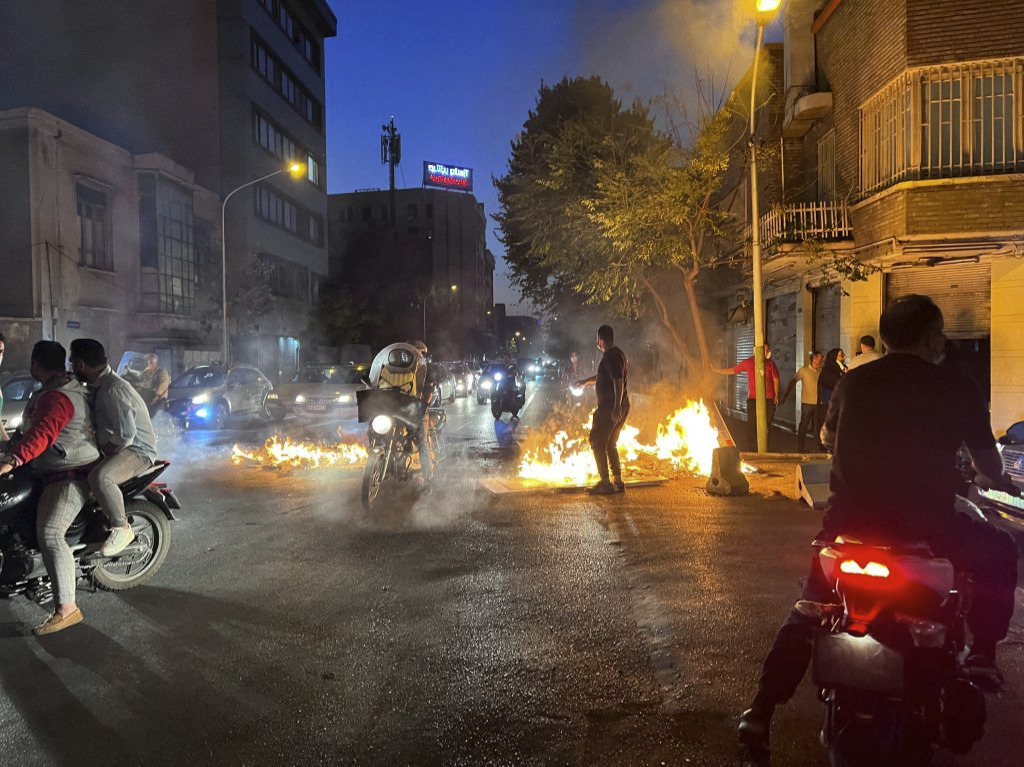
What we have witnessed in Iran in these weeks, and continue to witness, is a gigantic clash between a vertical power structure and a horizontal popular movement. Pictured: The scene of an anti-regime protest in Tehran, Iran on October 8, 2022. (Photo by AFP via Getty Images)

As the uprising in Iran enters its fourth week, speculation about its future is rife.

Participants insist that they are on the path to victory, achieving regime change. They cite a number of reasons.

To start with, this is the first time that a national uprising isn't about any particular grievance that could be rectified by the regime; what is at stake is total rejection of a system.

Next, there is the fact that the regime has been unable to regain control of the public space with the speed and efficiency it did on other occasions since 1979.

Adversaries of the uprising, regime apologists or those concerned about socio-political disintegration, believe that though the massive rejection of the regime by so many Iranians, if not the majority, is bound to cause permanent damage to it, straight regime change is not yet in the cards.

To back their analysis they, too, offer arguments.

To start with, despite losses in its support base, both in the better-off strata and the mass of the poor, the regime still manages to tempt remaining supporters with a mixture of bribes, in the form of raises in public sector salaries, private sector wages, pensions and subsidies.

The regime has also started a background music about a post-Khamenei future with the subtext that the demise of the octogenarian "Supreme Guide" would offer opportunities for long-overdue reforms.

Finally, like all scoundrels who wrap themselves in patriotic colors, the regime is manipulating the bogey of secessionism.

A closer look at what has happened in the past month, however, may offer a different vista on what is a crucial moment in Iran's checkered contemporary history.

What we have witnessed in these weeks, and continue to witness, is a gigantic clash between a vertical power structure and a horizontal popular movement.

In the vertical power structure, all individual or group positions are determined by their distance from the top of the pyramid which, in the Islamic Republic, is the "House of the Leader" (Beit-e-Rahbar), the real power-house that employs over 11,000 people under the "Supreme Guide".

It is there that all key civilian, military, academic, cultural, media, business and theological functionaries are chosen and appointed. It is also there that all major and medium decisions are made, and perks and favors are distributed.

Based on terror and greed, vertical power has the advantage of acting quickly and harmoniously in advancing its goals and crushing opponents.

However, vertical power also has its Achilles' heel. It is enough that one level of the pyramid becomes shaky for the rest of it to feel unstable.

Worse still, vertical power could find itself challenged by a horizontal society in a state of rebellion as it is happening in Iran now.

Since 1979, the Khomeinist regime, a vertical power, has faced equal oppositions with vertical leadership structures and demands, making it easier to calm or crush them.

That kind of opposition could be weakened by vilifying or even murdering its leaders.

During the past 43 years, the Islamic Republic has assassinated 117 leaders of many different groups abroad and executed countless others inside Iran.

Dealing with a vertical opposition, the regime could also offer concessions or dangle the carrot of "negotiations" as it did with Kurdish autonomists before murdering their leaders in Vienna and Berlin.

Another disadvantage of a vertical opposition is that it brings ideological political and even personal grudges, jealousies and ambitions to the fore, thus weakening the whole.

When the current uprising started, the "House of the Leader" believed that it was facing another vertical opposition that could be bullied, bribed or browbeaten into submission. It tried to sow dissension by singling out a host of known figures among exile activists or even semi-detached former officials and apologists of the regime as leaders of the uprising.

Soon, however, it became clear that the current uprising has a horizontal structure emanating from its spontaneous nature. But it was not until two weeks had passed that the brigadier-general in charge of Islamic Security, Hussein Ashtari, noted that "this thing has numerous field leaders." Even the arrest of almost 2,000 people didn't succeed in calming things.

Unable to understand what was going on, vertical power played its classical tune.

As usual, the "Supreme Guide" remained in purdah in order to reappear once the uprising would be crushed as quickly as he hoped. This time that didn't happen. Khamenei's silence for 16 days meant that vertical power couldn't use the advantages of verticality, that is to say speedy decision-making and quick action.

The various parts if the repressive machine didn't know what do. In the city of Sari, for example, they arrested 786 people in one day before they realized they had nowhere to keep them.

In Zahedan, Islamic Security used live bullets, claiming over 100 lives.

In Bushehr, the same security allowed protesters to occupy official buildings.

In Khuzestan, the governor ordered a closure of schools ostensibly because of dust-storms, but to prevent protests.

A nervous commander in Tehran sent a heavily armed unit to Bandar Abbas to quell protests in the island of Qishm. But by the time it arrived, Qishm was quiet and gunmen went shopping.

Horizontality helped the protesters in several ways.

They could quickly move from one neighborhood to another in an endless hide-and-seek with Islamic Security that was hampered by moving around and parking their armored cars and motorcycles.

In terms of rhythm and tempo, vertical power was at a disadvantage dealing with a horizontal society. It was as if the picture had become too big for its frame.

Unlike supporters of the regime mostly of older generations, who gain self-esteem from bestowed but easily withdrawable privilege, the mostly young activists of horizontal society, regard themselves as being "somebody" even if only because they have the mandatory 5,000 followers on the Facebook. They want to be subjects in their own life-story, not objects in someone else's dystopian dream.

Are we getting close to the crux of the matter?

The Khomeinist system was exposed as a colossus with a foot of clay.

History shows that horizontal movements could win tactical victories, but might not achieve strategic victory without adopting a measure of verticality, that is to say developing a central leadership structure and the broad outline of a political project.

In 1848, horizontal revolutionary movements tactically won across Western Europe but strategic victory went to old reactionary forces.

In 1917, a horizontal movement toppled the Tsarist Empire yet strategic victory didn't go to Kerensky, but to Lenin, who offered the verticality needed at the time.

More recently the "Arab Spring" toppled vertical power structures but ended up with their return in different ways.

Iranian freedom-lovers have won a decisive round victory, but much remains to be done before they secure final victory.

This article was originally published by Asharq al-Awsat


Amir Taheri was the executive editor-in-chief of the daily Kayhan in Iran from 1972 to 1979. He has worked at or written for innumerable publications, published eleven books, and has been a columnist for Asharq Al-Awsat since 1987.

Source: https://www.gatestoneinstitute.org/18996/iran-freedom-lovers

Follow Middle East and Terrorism on Twitter