by Ben Sales
Heavy defeats of Dan Bilzerian and James Fishback show voters are turned off by classical antisemitic rhetoric, yet they may ‘have the wind at their back’ as young Americans increasingly turn against Jews and Israel
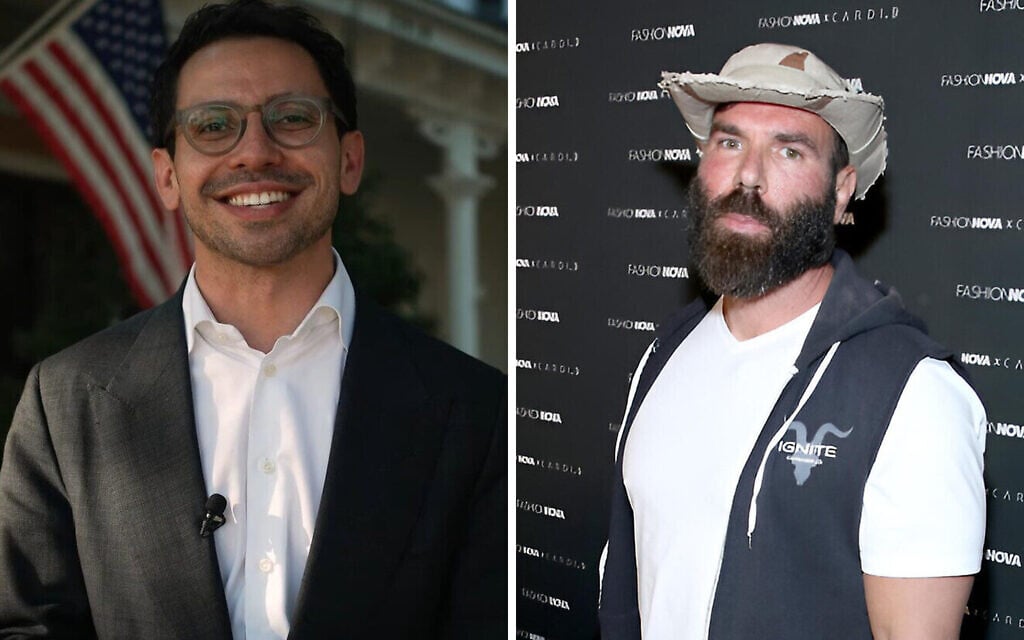 |
| James Fishback (left) and Dan Bilzerian. (YouTube, Randy Shropshire / GETTY IMAGES NORTH AMERICA / Getty Images via AFP) |
Five days before Florida’s Republican primary, congressional candidate Dan Bilzerian posted a campaign video that depicted his Jewish opponent with horns, called him “Shylock” and praised Adolf Hitler.
In the governor’s race, Republican candidate James Fishback openly courted the young, online far right, interviewed with antisemitic podcasters and has used the antisemitic term “goyslop” in addition to racist rhetoric against his Black opponent. He is a staunch opponent and vocal critic of Israel, as is Bilzerian.
Both of them lost their races on Tuesday by wide margins. Both of them also won more than 10% of the vote. Bilzerian got 19%
On the other hand, the results aren’t totally reassuring for opponents of antisemitism. After all, “Pro-Hitler candidate loses election” is hardly a novel achievement in American politics. Neo-Nazis have lost many elections in American history — but Bilzerian got almost one-fifth of the vote.
And neither of these candidates is going away. Following the election, Fishback is celebrating his performance, claiming he exceeded expectations. Bilzerian is claiming without evidence that votes were stolen from him. Both are sure to continue building their followings online, where Fishback has almost 500,000 followers on Instagram, and Bilzerian has more than 28 million. His antisemitic campaign ad was viewed more than 1.5 million times.
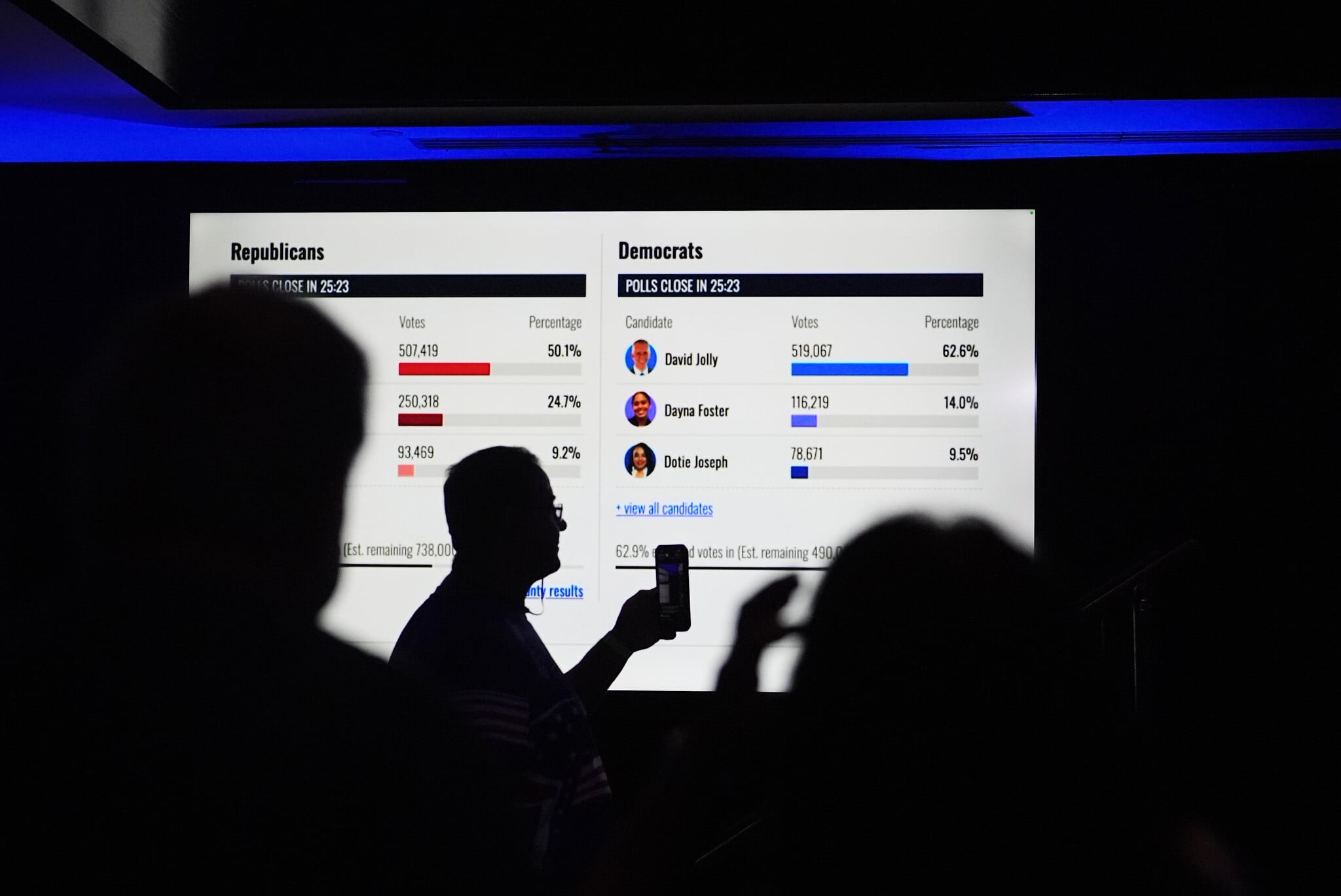
In an era when most Republicans under 50 dislike Israel, and signs abound of the growth of antisemitism among young people, Fishback and Bilzerian’s fight isn’t over.
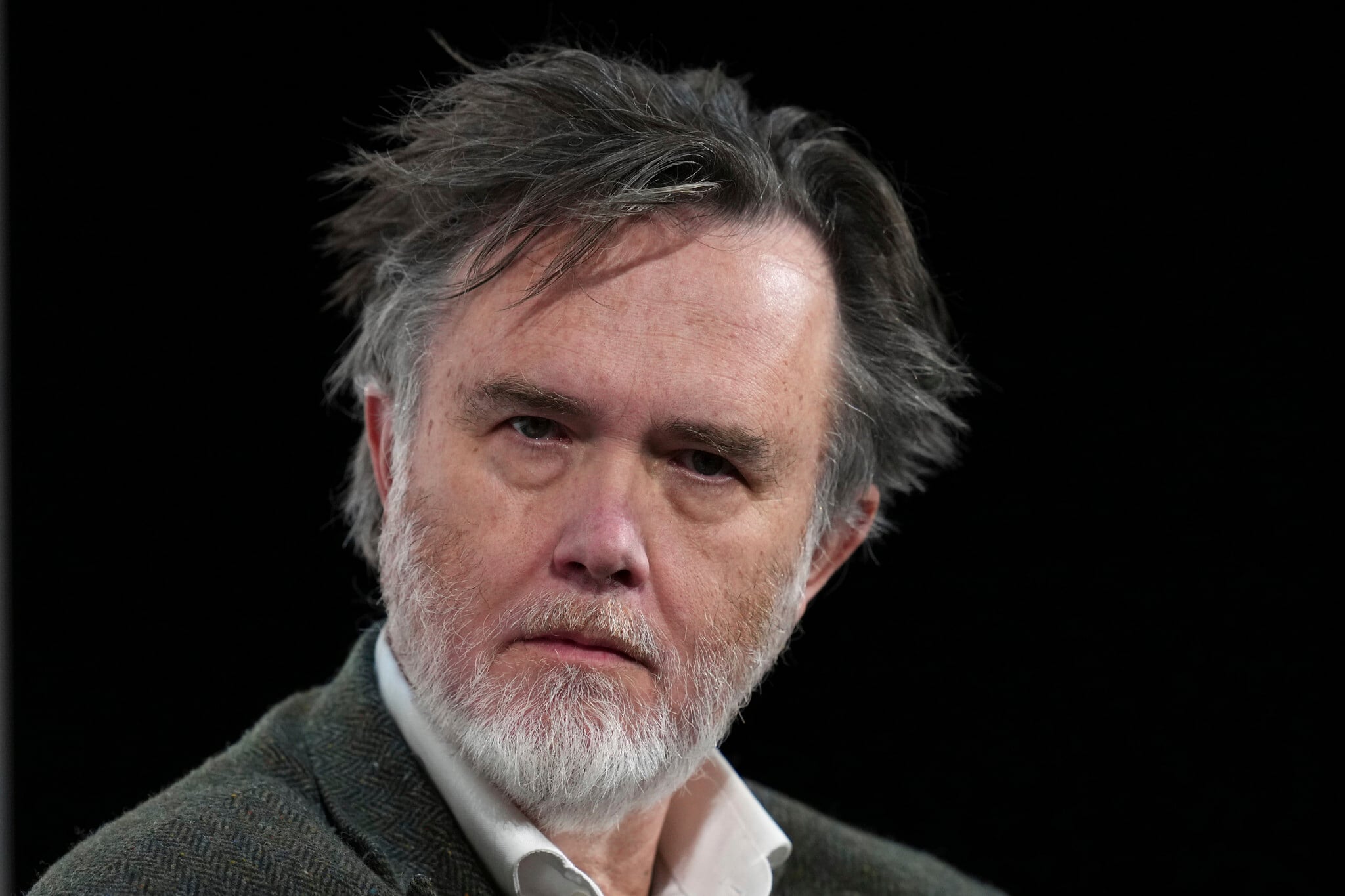
“I don’t think that we conservatives can think the threat from the Jew-haters and racists of the far right has gone away,” Rod Dreher, a conservative writer and author of the forthcoming book “Weimar America,” told The Times of Israel in an email.
“Moreover, they have the wind at their back in terms of benefiting from the shocking rise of anti-Semitism among Generation Z,” he added later. “Conservatives like me, who support Israel, aren’t going to have to worry about them in this election cycle, and maybe not in 2028 either. But the threat is coming.”
Opposing Israel, vowing to defend Jews
Most of the discourse around antisemitism and Israel in US politics has centered recently on Democratic primaries, in which a string of anti-Israel candidates have won their races for the House or Senate, advancing to the general election.
A range of Jewish voices have accused these candidates of antisemitism, charging them with having an outsized focus on the Jewish state, employing age-old antisemitic tropes when discussing pro-Israel donors, and creating a permission structure for hatred of Jews. In New York, critics of Mayor Zohran Mamdani have tied his harsh rhetoric on Israel to a documented rise in antisemitic incidents across America’s most Jewish city since he took office, with Jews targeted in 70% of all hate crimes there last month.
But in their own words, most (though not all) of these candidates have professed a love for Jewish people and a commitment to fighting antisemitism. Mamdani has increased funding to combat hate crimes, regularly condemns antisemitism and has a Jewish, pro-Israel police commissioner, Jessica Tisch.
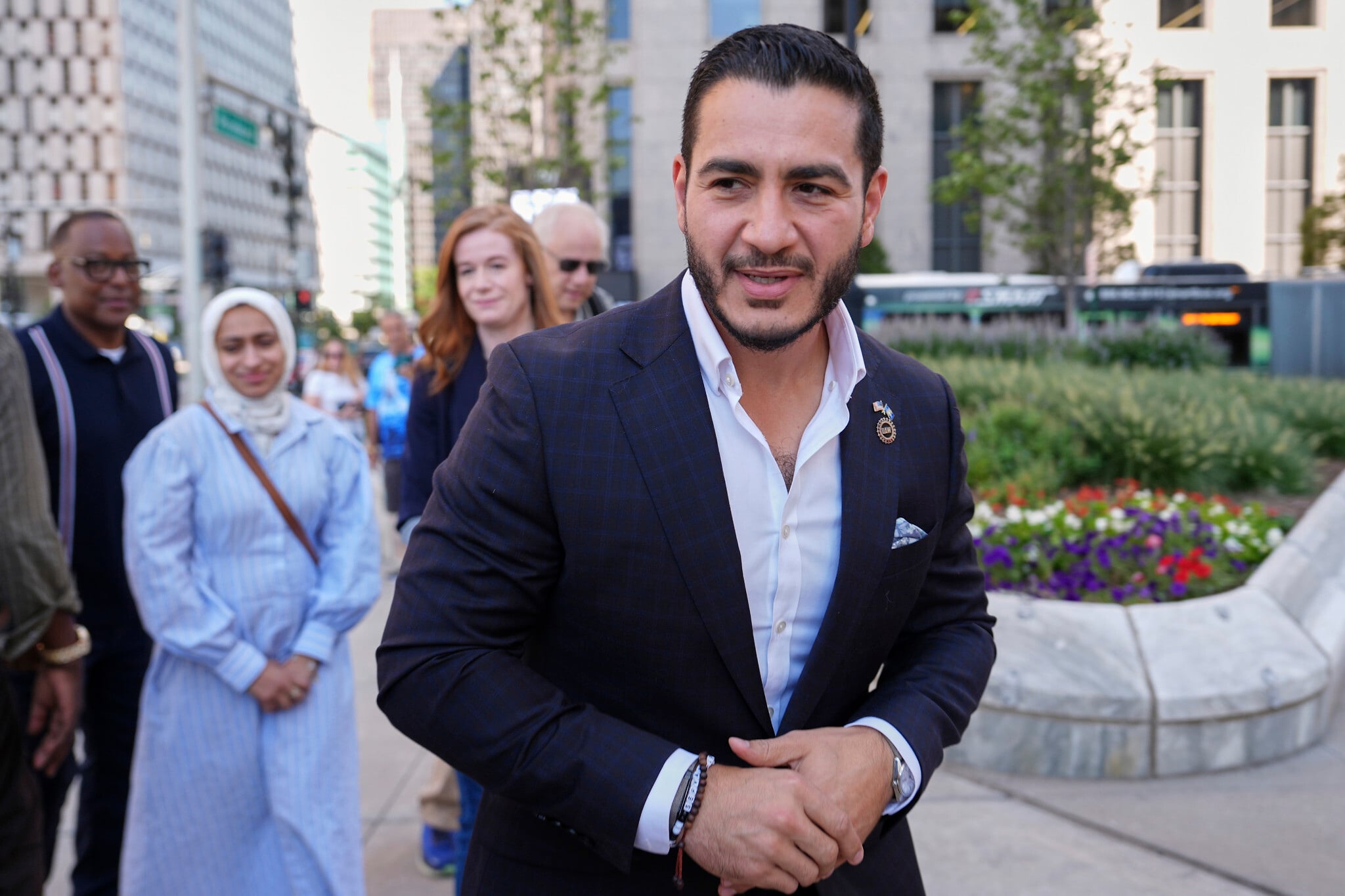
Abdul El-Sayed, the Democratic Senate nominee in Michigan, said after the primary, “My commitment to Jewish safety is the same as my commitment to the safety of my own kids. We have a responsibility to take on antisemitism in all of its forms.”
Some pro-Israel voters may see those words as a smokescreen to obscure El-Sayed’s robustly anti-Israel policies. But the way he talks is very different from Bilzerian and Fishback.
‘A made-up term’
Bilzerian was also asked, by the entertainment site TMZ, whether he was antisemitic. He responded that the word was a “made-up term,” that “Palestinians are the real Semites,” and claimed that he has Jewish friends. In the same interview, he used the N-word.
Fishback has denied being antisemitic, accusing his critics of mistaking criticism of Israel for antisemitism. He has said his use of the antisemitic term “goyslop,” which has nothing to do with Israel, and which refers to unhealthy food Jews purportedly give non-Jews, is “funny.”
He does not appear to have made any real effort to condemn antisemitism in one of the most Jewish states in the country. He was endorsed by two of the most influential antisemitic podcasters, Nick Fuentes and Tucker Carlson.
It should be noted that both sides of Bilzerian’s primary featured bigotry. His victorious opponent, Representative Randy Fine, has made a series of anti-Muslim comments, saying “We need more Islamophobia,” and posting on X, “If they force us to choose, the choice between dogs and Muslims is not a difficult one.” Those comments, like Bilzerian’s, have drawn condemnation from across the political spectrum.
Losing the battle, still fighting the war
Overall, it was mostly a good night in Florida for pro-Israel candidates of both parties — though a critic of Israel won the Democratic nomination for Senate, a race she’s unlikely to win.
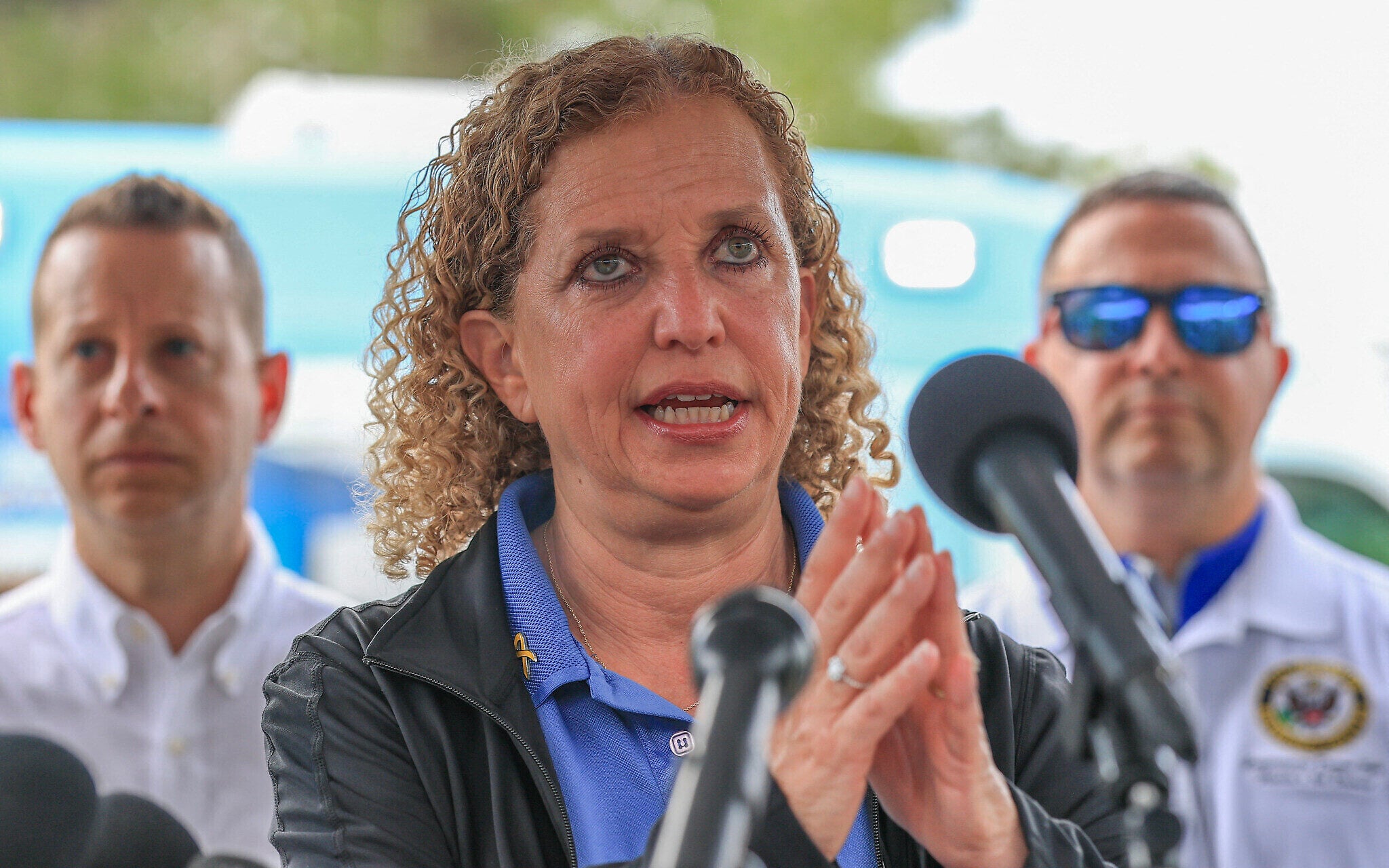
In House races, Democratic pro-Israel stalwart Representative Debbie Wasserman Schultz won her primary in a redrawn district. Another pro-Israel Jewish Democratic incumbent, Representative Jared Moskowitz, beat a far-left candidate affiliated with the anti-Israel Democratic Socialists of America who was backed by the streamer Hasan Piker, an outspoken opponent of Israel.
But ideological trends may still be going in the wrong direction. A Manhattan Institute poll last year found that a quarter of Republicans under 50 “openly express” antisemitic views. Republican candidates will have to court these votes, including Fishback’s supporters.
Dreher noted that Fishback appears to have won some precincts in Florida college towns (though the actual number of votes counted was small, as classes have yet to begin).
“There’s more than symbolism here,” Dreher wrote. “Traditionally, colleges produce coming generations of party activists and, eventually, elites. Those who follow Fishback, Nick Fuentes, and other radicals are a highly energized vanguard who have made no secret of their intention to take over larger activist groups like Turning Point USA,” the conservative group formerly led by the late Charlie Kirk.
He also wrote, “Democrats thought they could co-opt their woke activists, but it turns out the woke took over the party. I fear that we on the right are two or three cycles behind them.”
Fishback, perhaps ironically, agrees that his ideology is still on the ascent — except he thinks that’s a good thing.
“The truth is that victory is near,” he said in his concession speech. “Perhaps not for this campaign tonight, but victory for our movement has never been closer.”
Ben Sales
Source: https://www.timesofisrael.com/trounced-in-florida-gop-primary-antisemitic-candidates-believe-victory-is-still-near/?utm_source=The+Weekend+Edition&utm_campaign=weekend-edition-2026-08-23&utm_medium=email

No comments:
Post a Comment