The "Middle East and Terrorism" Blog was created in order to supply information about the implication of Arab countries and Iran in terrorism all over the world. Most of the articles in the blog are the result of objective scientific research or articles written by senior journalists.
From the Ethics of the Fathers: "He [Rabbi Tarfon] used to say, it is not incumbent upon you to complete the task, but you are not exempt from undertaking it."
"One year from now – Israel will be the first country to have partial laser protection. In two years there may be complete protection," said Yuval Steinitz.
Israel's ground-breaking laser system experiment
carried out in the south of the country by the Defense Ministry’s
Directorate of Research and Development (DDR&D, or MAFAT in Hebrew)
and Rafael Advanced Defense Systems.
(photo credit: DEFENSE MINISTRY)
Israel will have partial laser defenses by this time next year, Rafael Advanced Defense Systems chairman Yuval Steinitz told Army Radio on Sunday.
"One year from now – Israel will be the first country to have partial laser protection.
In two years there may be complete protection – against missiles,
shells, rockets, or anything else. This will protect us both in the
South and in the North," said Steinitz.
Israel's push for laser air defenses
This past February, senior Defense Ministry official Brig.-Gen. (res.) Danny Gold said Israel’s air-defense lasers,
when fully deployed, will be able to shoot down the drones Iran has
been sending Russia to use against Ukraine.Speaking at the Artificial
Intelligence conference at Tel Aviv University at the time, the MAFAT
[Directorate of Defense Research & Development] director said his
ministry was working on developing “the next generation of using
lasers.”
He
talked about multiple successful tests destroying rockets “with a very
sophisticated laser-weapons system.... We have done the same for
mortars, rockets and UAVs [unmanned aerial vehicles], like the Iranian
UAVs they are sending to Ukraine. The same concept of UAV, we can shoot
them down.”
In
February 2022, then-prime minister Naftali Bennett proclaimed that
Israel’s ability to use lasers had progressed significantly and could be
operational much sooner than people had expected.
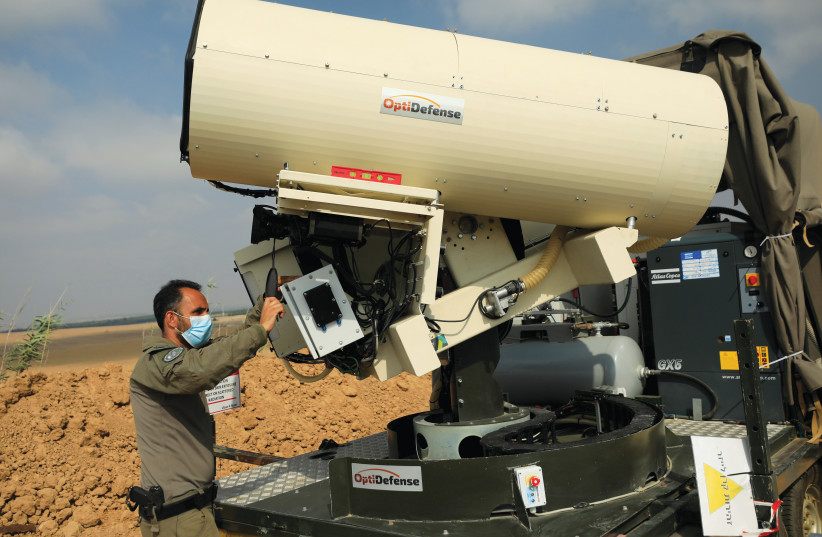
BORDER Police officer checks a unit at a laser system aimed to
intercept incendiary balloons, near the Gaza border. (credit: AMIR
COHEN/REUTERS)
This past January, outgoing IDF chief of staff Aviv Kohavi told The Jerusalem Post,
“The laser-defense system is truly great news. It will be both land-
and air-based. I do want to be cautious regarding timeframes. In another
two years, we expect to deploy systems along the Gaza Strip border to
test this tool’s effectiveness.
“It
has worked very well in field tests. If this experiment works – and we
continue to integrate and enhance the laser-defense system over two
years – we will move as fast as possible to deploy it across the entire
North. I cannot commit to a specific number of years. I don’t want to be
optimistic and I also don’t want to be pessimistic.”
Kohavi
added, “I know that there has been great progress over the last three
years, and we invested a lot of money in this. We defined the
laser-defense system as having multiple benefits that we would need to
invest a lot in. I am happy that it has progressed so much.”
The thwarting of a weapons smuggling attempt from Jordan was originally announced by the IDF in July.
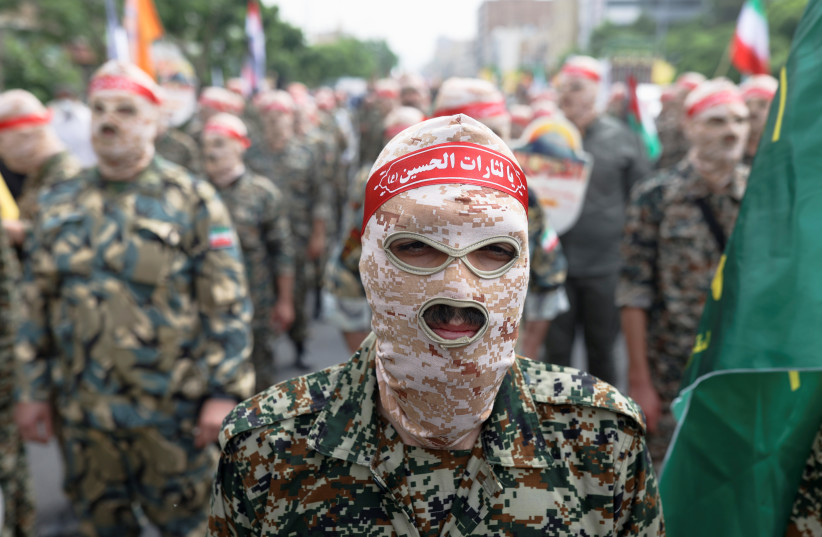
Members of a special IRGC force attend a rally marking
the annual Quds Day, or Jerusalem Day, on the last Friday of the holy
month of Ramadan in Tehran, Iran, April 29, 2022.
(photo credit: MAJID ASGARIPOUR/WANA (WEST ASIA NEWS AGENCY) VIA REUTERS)
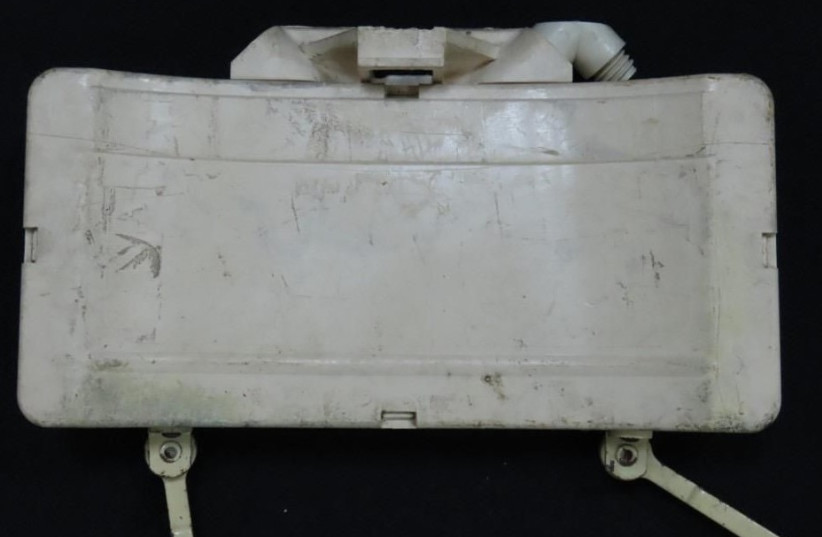
The IDF thwarted an attempt to smuggle Iranian-produced explosives from Jordan to Israel in July, the IDF cleared for publication on Sunday.
The
information was first reported by KAN news on Sunday evening, with the
IDF later confirming to additional media outlets that the censor on the
information had been lifted.
The
thwarting of a weapons smuggling attempt from Jordan was announced by
the IDF in July, but the original announcement did not specify the
nature of the weapons seized.
At
the end of July, the IDF announced that it had thwarted an "unusual"
weapons smuggling attempt in the Jordan Valley near Ashdot Yaakov. It is
estimated that the explosives were intended for terrorist organizations
in the West Bank. The investigation of the smuggling was assigned to
the Shin Bet, according to KAN.
Explosive device confiscated from authorities following the arrest of four Arab-Israelis for ties to Hezbollah (credit: MAARIV)
Israeli officials place focus on Iran's involvement in terrorism
The announcement comes as Israeli officials place a greater focus on Iran's efforts to aid terrorism and crime in the region.
On Thursday, the Shin Bet announced
that Israeli citizens from Lod and Kafr Kassem had been arrested and
indicted after receiving Iranian-made explosives and ammunition through
Hezbollah. The Israeli citizens intended to use the weapons for criminal
purposes.
Last week, Prime Minister Benjamin Netanyahu
stated that the wave of terrorist attacks in the West Bank was being
"encouraged, directed and financed by Iran and its affiliates."
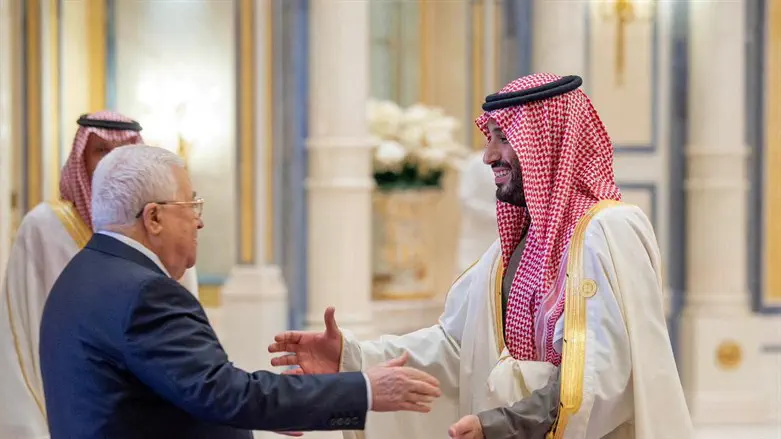
The Palestinian Authority will send a delegation to Riyadh to confirm that Israel will make concessions as part of the deal.
Saudi Crown Prince Mohammed bin Salman with PA Chairman Abbas Reuters, Handout
Amid the ongoing negotiations between Saudi Arabia and the
Americans regarding an impending normalization agreement between the
former and the state of Israel, the Palestinian Authority will send a
delegation to Riyadh to confirm that Israel will make concessions as
part of the deal, Channel 13 reported on Sunday.
According to the report, the delegation is expected to travel to Saudi Arabia in the coming weeks.
Amid
the negotiations, the delegation's visit has made it to the tables of
the most senior Israeli diplomatic and security officials who understand
that the PA will bring up the issue of normalization and sound their
demands in this regard.
As the negotiations between the sides
continue, the fear has begun to arise that an agreement would not come
without major concessions to the Palestinians, as opposed to other deals
that were made with Arab states through the Abraham Accords.
Last week, four current and former US officials told Axios
that both White House National Security Adviser Jake Sullivan and
Secretary of State Antony Blinken raised with Dermer the need for
Israeli concessions to the PA as part of any Saudi deal.
Blinken
told Dermer that the Israeli government is "misreading the situation" if
it thinks it won't have to make any such concessions, two US officials
said.
A half-ton bomb broke through the Iraqi dictator's intelligence headquarters, revealing a mass of Jewish documents in the basement.
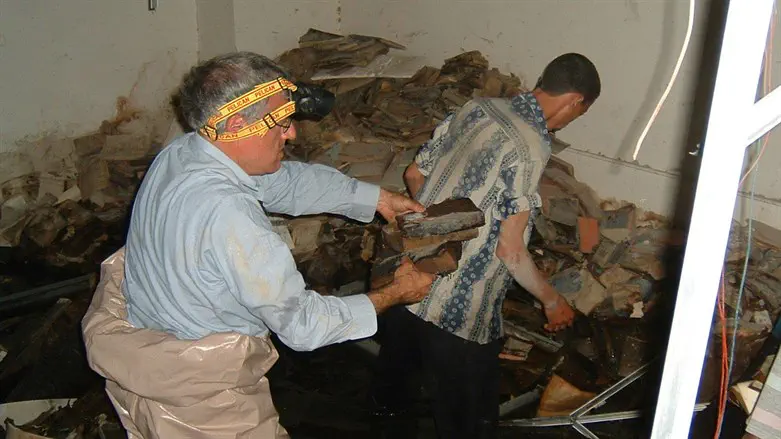
Dr. Rudd during the rescue work Babylonian Jewry Heritage Center
A special lecture will be held at the Babylon Jewish Heritage Center
this week that will reveal an archive of Iraqi Jews that was found by US
Army soldiers in the basements of Saddam Hussein's intelligence
building. The one who will tell about the findings is the one who was
among the archivists, Dr. Harold Rudd, a consultant to the US Department
of Defense who was sent together with the US task force to the
basements that were hit by an American bomb.
In an interview with Israel National News,
Dr. Rudd talks about the rescue operation and the findings that were
discovered and recovered by him: "I worked at the Pentagon for 28 years,
and for about 11-12 years, I worked on the Iraqi issue," he says. Due
to the professional context, Dr. Rudd came to Baghdad with the American
forces, and due to his long-standing friendship with the head of the
Iraqi opposition, who also entered Baghdad with the American forces, he
learned about the Jewish archive that was waiting in the depths of the
Iraqi intelligence building.
Dr. Rudd says that with the
entry of the American forces into Baghdad, Iraqi citizens who were
connected to Saddam's control apparatus arrived and asked to confess
their sins and their connections with the government as part of the
attempt to get a kind of immunity from punishment that might be
inflicted on them by the Americans and their allies. Among these people
was the man who was responsible for the Jewish wing of Iraqi
intelligence, and he also "came to pour out his soul", as Dr. Rudd puts
it.
When
the information reached the head of the Iraqi opposition, he hurried to
contact Rudd, who immediately arrived at the intelligence building that
was bombed by the Americans with a half-ton missile that reached the
basement floor where the Jewish archive was located. The missile
penetrated the building but miraculously did not explode, though it did
destroy the plumbing system, which began to flood the basement floor.
"I
worked for 6.5 weeks to get out the certificates, the holy books, and
one Torah scroll. The water reached up to my waist in the basement. It
was very difficult to get in there. At first, the Americans were not
interested in it. I have been friends with the Iraqi opposition for
years, and they brought a truck with a pump that took the water out in
two days, since then, water had to be taken out all the time, which
continued to drip through the pipes that exploded."
"Two days
later, when the water reached our ankles, we started looking. We found
books and certificates from the community, everything was flooded with
water and, therefore, also very heavy. The head of the opposition
brought many workers with his own money, and together we started to take
out the books and certificates. There was no time to think and leaf
through them. We put it in a dry area. There was some kind of miracle.
The surface where we placed the diplomas and books to dry at a
temperature of about fifty degrees was surrounded by beehives. I am very
allergic to bees, and despite six days of work, I was not stung at
all," says Rudd.
Rudd is indeed a historian, but he does not
understand the field of restoration of old documents, and for this, he
was helped by an Israeli friend who knew the head of the restoration
department at the National Library. "They said to put everything in a
cold place. I said we don't have electricity here. They told me to do
what I could. We dried it a little and then put it in aluminum crates
that the head of the Iraqi opposition found and bought. We dried as much
as possible, but we couldn't dry everything. Drying parchment and
leather becomes hard, and you can't roll the Torah scroll. I had to put
the Torah scroll on the ground to dry it, but you don't put a Torah
scroll on the floor, and rabbis from the country advised me on what is
allowed and what is forbidden. They said that this is similar to saving a
life and that I should not worry about it ".
Dr. Rudd says that
the earliest item found in the archive was from around 1540, and it is a
book printed in a Venice printing house. Most of the documents,
certificates, and books were from the 19th and 20th centuries. Dr. Rudd
tells how they got to that building by recounting a meeting he had about
five months after the event. An Iraqi woman approached him and reminded
him of a previous meeting between them at a conference in Zurich that
they attended in their youth. The woman said that in 1984 she was
present at the last synagogue that continued to function in the suburbs
of Baghdad after the Jews left the country, when two trucks stopped
nearby and soldiers got out of them and took all the certificates and
holy books that were there. Since the Jews who left the country were
allowed to take only one suitcase, they reluctantly left behind many
documents, certificates, and books looted by Saddam Hussein's men.
And
why did the Iraqi tyrant need the documents of the Jewish community and
its libraries? "The powerful leaders in the Middle East want to show
who is the sovereign against the weak, and when he takes the archive, it
tells the Jews that he is the boss. This happens a lot in the Middle
East," says Dr. Rudd.
The many items collected from those days of
rescue work in the basement of the bombed building were transferred to
the Restoration Department of the US National Archives, where they were
dried and moved on to the Jewish Archives System of the US Federal
Government near Washington. The relevant parties photographed the pages
of the books and documents in very high quality and uploaded the
information to the Internet. Today, the people of the Babylonian Jewish
Heritage Center study the photographs and extract information and
innovations from them on an almost daily basis.
About 2700 items
were transported to Washington this way. 27 were presented at the
exhibition. Dr. Rudd says: "In the 1930s, the Iraqi government refused
to allow Jews to study in schools, and a rich Jew opened a school for
Jews, and there they began to study. Among the items that were extracted
are also photos from the school and certificates from the school. A
friend who was in Iraq until the age of 16 and his family fled to the
Kurdish region and, from there, left the Iraqi region without bringing
any documents with them so that they would not know that they were
fleeing. He also studied at the same school that was founded by a rich
man. Today he lives in Israel and London. He came to the exhibition in
Washington and saw the only certificate chosen to be displayed there. He
recognized his photo and ID and cried like a little child, 'This is my
life, this is me.'"
Dr. Rudd is convinced that the continued
research of the findings from the extracted archive will yield many more
such exciting events, in addition to discoveries about the property
that Jews left behind when they left Iraq in the last century.
The
CEO of the Babylon Jewish Heritage Center, Aliza Dayan Hamma, says
ahead of Dr. Rudd's lecture: "We are very happy to host Dr. Rudd, and of
course, we thank him on behalf of the entire community for his work to
preserve the tremendous Torah work of Iraqi Jews. There are no words or
estimates for the great importance of the materials. From that archive
that went online, we were able to reprint lost books of Rabbi Yosef
Chaim, as well as obtain important data for our research institute."
All the current talk about normalization and reconstruction is a subterfuge to avoid the core geopolitical aspect of this tragedy created by conflicting visions of the future, not only of Syria but of the Middle East as a whole.
The Syrian tragedy started
with peaceful efforts by a large segment of the population to secure
more individual freedoms, a curb on corruption, and better economic
opportunities.
All the current talk about normalization and reconstruction is a
subterfuge to avoid the core geopolitical aspect of this tragedy created
by conflicting visions of the future, not only of Syria but of the
Middle East as a whole.
Iran and Russia are supposed to be allies in Syria, but it is
obvious that they are in opposite camps when it comes to the future of
the region. Russia wants the Middle East modeled on what it was in the
heyday of the Cold War, when it acted as a glacier for the Soviet Union.
Iran's ruling mullah, however, dreams of an ideological empire ruled by
the "Supreme Guide" in Tehran.
The US, at least under the Biden administration, is content with a
largely symbolic presence and, so far at least, hasn't offered a
coherent vision for the region.
In an even outer-outer circle, the United Nations is trying to
dance around the issue with gesticulations about writing a constitution
for a non-existent state and promoting peace talks between the Assad
regime and personalities and groups that no longer have credible
constituencies.
Meanwhile, the war in Syria is far from over.
Nor are its terrible consequences brought under control. In the
past five weeks, dozens of clashes between rival groups, including
forces loyal to the regime, have claimed hundreds of casualties. The
Russian Air Force has conducted 17 bombing raids on various parts of the
country, pursuing its mission of turning Syria into piles of smoking
rubble. More recently, it has started using Iranian-made drones in some
attacks. According to a United Nations report, 31,000 boys aged 12 or
above have been kidnapped from Kurdish-held prison camps, presumably to
prevent them from growing up and joining "terrorist groups".
Turkey and Iran continue to exploit Syrian resources of oil, gas and phosphate through black-market networks.
This month marks the anniversary of the chemical attack on three
localities in the Ghouta region which, in 2013, killed 1,217 civilians
and wounded many others.
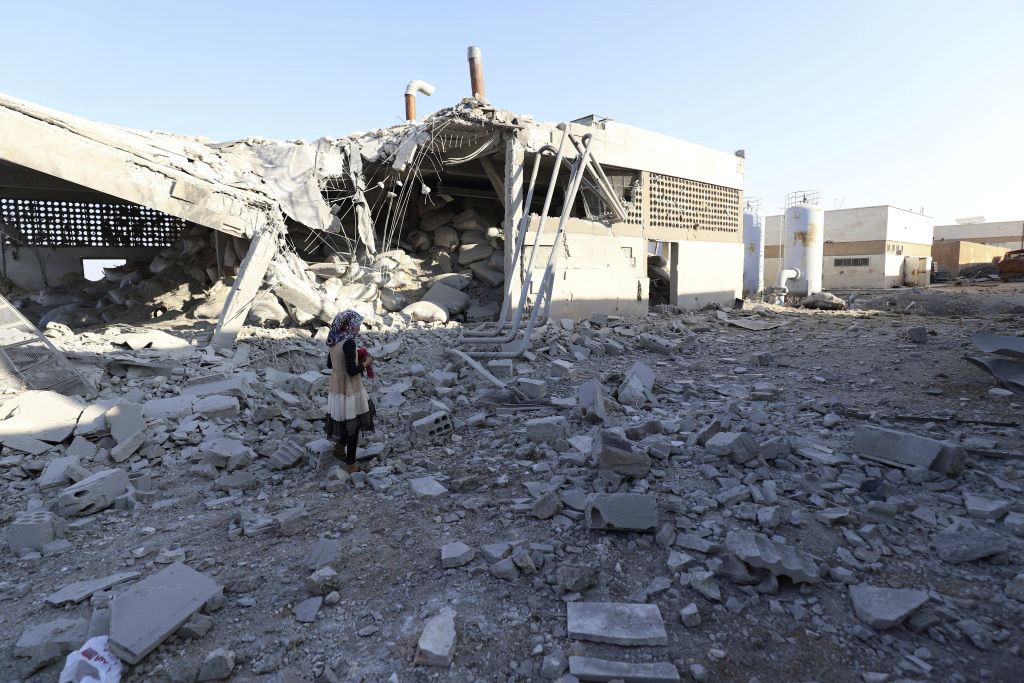
The war in Syria is far from over. Nor are its terrible
consequences brought under control. In the past five weeks, dozens of
clashes between rival groups, including forces loyal to the regime, have
claimed hundreds of casualties. Pictured: The debris of a water pumping
station in Syria's rebel-held northwest, on August 23, 2023, after
Russian air strikes hit it. (Photo by Abdulaziz Ketaz/AFP via Getty
Images)
"Are you there?" This was a question shot at me from a Syrian Twitter
acquaintance the other day, followed by a stark reminder: "Hi there!
The war in Syria isn't over!"
For years, the sender of the message had informed me and doubtless many others of what was going on in his war-struck homeland.
Over time, however, many recipients of his reports lost interest as
the narrative of "normalization" dominated the international discourse
on Syria.
As President Bashar al-Assad came out of his hideout in a corner of
Damascus and visited a number of capitals, the normalization claim began
to assume a more serious aspect. The narrative was extended when
official media in the Islamic Republic of Tehran claimed that "having
saved Syria" thanks to " the wisdom and heroism of martyr General Qassem
Soleimani", Iran was now preparing to "take the lead in rebuilding"
that war-shattered country.
In his recent meeting with Syrian Foreign Minister Faisal Mekdad,
Iranian Foreign Minister Hossein Amir-Abdollahian spoke of creating a
"task force" for Syrian reconstruction. For his part, Iranian President
Ebrahim Raisi spoke of building more than a million lodgings to house
Syrians made homeless by the war. To be sure, it wasn't clear whether
the promise concerned the chunk of Syria that Iran controls or the
country as a whole. Iran also promised to revive pilgrimage tourism to
Syria, with plans to send over a million Iranian pilgrims a year.
However, the first group of 500 pilgrims slated to start the scheme last month haven't left Tehran yet.
Reconstruction has also been the theme of recent remarks by Turkish
President Recep Tayyip Erdogan, whose forces control a chunk of Syrian
territory. Erdogan's scheme, however, seems to be limited to the area he
controls, a policy that, taken to its logical conclusion could create a
semi-autonomous canton in that corner of Syria.
Russia, another big player in the Syrian war, has also been talking
about "reconstruction," with the Wagner militia supposedly in command.
Reconstruction has also been the theme of fantasies bandied around
about rich Arab countries putting billions into raising Syria from its
graveyard, in exchange for Assad stopping the production and export of
captagon and other drugs that threaten several countries in the region
and beyond.
The US, which controls another chunk of Syria through its Kurdish
surrogates, has also made noises about reconstruction, with a team of
"experts" expected to report on "possibilities and hurdles" within the
next few months.
In France, President Emmanuel Macron's special envoy on
Lebanon-Syria, Jean-Yves Le Drian, claims that "giving Lebanon a working
government" is a key step towards launching a global effort to rebuild
Syria.
However, all this talk of normalization and reconstruction may amount
to no more than idle chatter because participants in the Syrian tragedy
ignore its geopolitical roots. The Syrian tragedy started with peaceful
efforts by a large segment of the population to secure more individual
freedoms, a curb on corruption, and better economic opportunities.
The uprising may or may not have achieved its goals, ending with a fish-tail result as in some other "Arab Spring" countries.
But, without foreign intervention, first by Iran, then by Russia
followed by Turkey, Israel, and the US, it would not have acquired the
geopolitical dimension that has led Syria into a historic impasse.
All the current talk about normalization and reconstruction is a
subterfuge to avoid the core geopolitical aspect of this tragedy created
by conflicting visions of the future, not only of Syria but of the
Middle East as a whole.
This tangled web looks even more daunting when we realize that the
vision in question cannot be summed up in two categories. Iran and
Russia are supposed to be allies in Syria, but it is obvious that they
are in opposite camps when it comes to the future of the region. Russia
wants the Middle East modeled on what it was in the heyday of the Cold
War, when it acted as a glacier for the Soviet Union. Iran's ruling
mullah, however, dreams of an ideological empire ruled by the "Supreme
Guide" in Tehran.
Turkey, the US and Israel are allies, well, more or less, but, when
it comes to the future of Syria, not to say the Middle East as a whole,
can't read from the same hymn sheet. Turkey hopes to create a glacier in
Syria to make it impossible for rebellious Kurds to form a contiguous
belt of territory along its border. Israel's chief concern is to prevent
Syria from becoming a base for infiltration into the Golan Heights and
eventual attacks on the rest of its territory. The US, at least under
the Biden administration, is content with a largely symbolic presence
and, so far at least, hasn't offered a coherent vision for the region.
In an outer circle of interest, not to say concern, most Arab nations
seem resigned to endorsing the status quo, gingerly modified by such
meaningless gestures as the readmission of Assad into the Arab League.
In an even outer-outer circle, the United Nations is trying to dance
around the issue with gesticulations about writing a constitution for a
non-existent state and promoting peace talks between the Assad regime
and personalities and groups that no longer have credible
constituencies.
Meanwhile, the war in Syria is far from over.
Nor are its terrible consequences brought under control. In the past
five weeks, dozens of clashes between rival groups, including forces
loyal to the regime, have claimed hundreds of casualties. The Russian
Air Force has conducted 17 bombing raids on various parts of the
country, pursuing its mission of turning Syria into piles of smoking
rubble. More recently, it has started using Iranian-made drones in some
attacks. According to a United Nations report, 31,000 boys aged 12 or
above have been kidnapped from Kurdish-held prison camps, presumably to
prevent them from growing up and joining "terrorist groups".
Turkey and Iran continue to exploit Syrian resources of oil, gas and phosphate through black-market networks.
This month marks the anniversary of the chemical attack on three
localities in the Ghouta region which, in 2013, killed 1,217 civilians
and wounded many others.
The world should not forget that, although it has become an orphan in news headlines, the war in Syria goes on.
Are you there?
This article originally appeared in Asharq Al-Awsat
Amir Taheri was the executive editor-in-chief of the
daily Kayhan in Iran from 1972 to 1979. He has worked at or written for
innumerable publications, published eleven books, and has been a
columnist for Asharq Al-Awsat since 1987. He is the Chairman of
Gatestone Europe.
Israeli officials established contact with Libya's unity government several months ago.
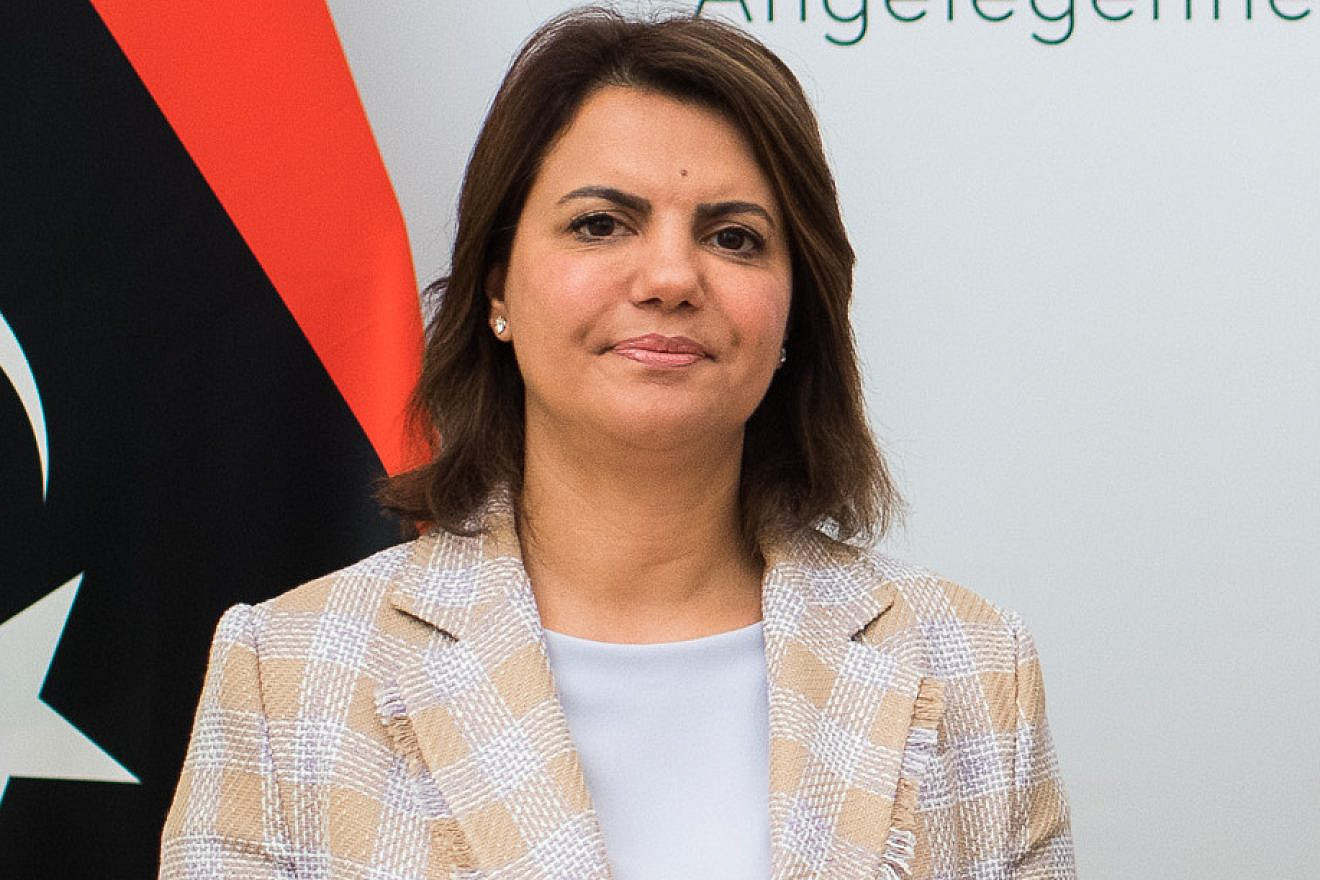
Libyan Foreign Minister Najla Mangoush, June 23, 2022. Credit: Austrian Ministry of Foreign Affairs.
Israeli Foreign Minister Eli Cohen met
with Libyan Foreign Minister Najla Mangoush in Rome last week to discuss
the possibility of normalizing ties, the Foreign Ministry in Jerusalem
revealed on Sunday.
During the first-ever meeting between
representatives of the two countries, Cohen offered humanitarian help to
the conflict-wrecked North African nation and discussed efforts to
preserve the heritage of Libyan Jewry.
Israeli officials established contact with Libya’s unity government several months ago.
“The historic meeting with the Libyan
foreign minister, Najla Mangoush, is the first step in the relationship
between Israel and Libya,” Cohen said in a statement, explaining that
“given Libya’s size and strategic location, relations are of great
importance and have huge potential for the State of Israel.
“I thank the Italian foreign minister,
Antonio Tajani, for hosting the historic meeting in Rome,” added Cohen.
“We are working with a series of countries in the Middle East, Africa
and Asia with the aim of expanding the circle of peace and the
normalization of Israel.”
Torn by a bloody civil war since a
NATO-supported rebellion removed dictator Muammar Gaddafi from power in
2011, Libya has been divided between rival governments for more than a
decade.
Mangoush represents the U.N.-backed unity
government in Tripoli, which also enjoys support from large swaths of
the international community.
The regional circle of peace is expanding.
Cleared
for publication: Israel's foreign minister met last week in Rome with
his Libyan counterpart Najla Mangoush and discussed with her the
possibility of having bilateral relations and sending Libya Israeli
humanitatian assistance. pic.twitter.com/wpnt4BqSsU
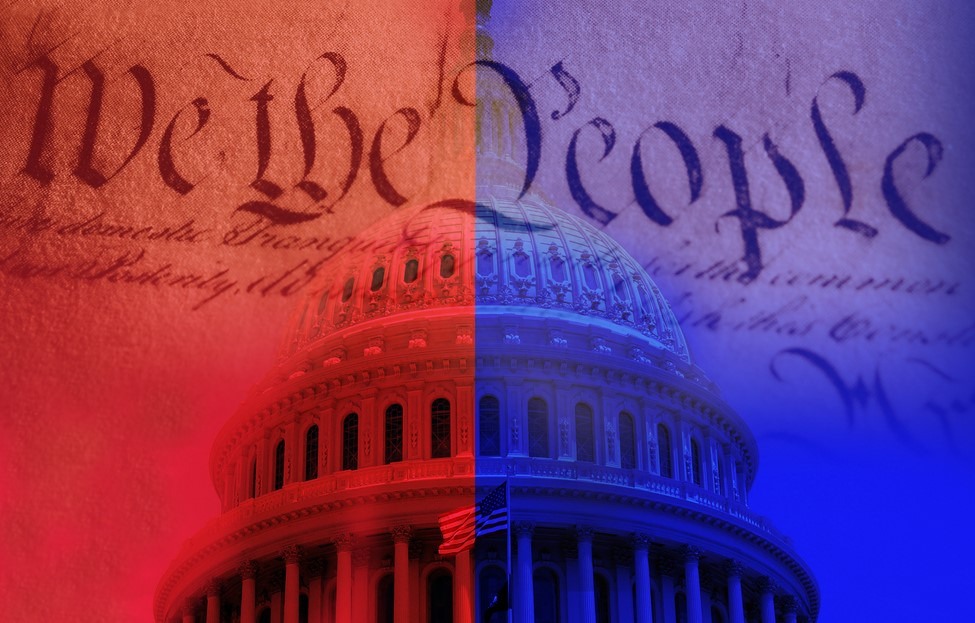
The tale of two political parties will have much to answer for as historians far in the future study its legacy.
(Image source: iStock)
Among his opening words of Charles Dickens' classic novel, A Tale of Two Cities, he captures the enormous decisions, challenges, and choices that face people, institutions, and nations:
"It was the best of times, it was the worst of times... It was the spring of hope, it was the winter of despair."
Those choices can lead either to chaos or triumph.
While much has been said about the recent Republican presidential
debate, our nation's most important focus would probably be better spent
on the policies of the representatives currently running the United
States of America. Many of these politicians and officials have created a
tale of two profoundly different parties -- in their policies, values
and their vision for the country. What once was a party that might leave
a voter disagreeing with certain issues, at least one could respect its
core principles.
No more.
What once was the party of FDR, Truman, and Kennedy appears to be in
the throes of being torn apart by those whose agenda seeks to make
government -- not the voters -- ever more rich, more centralized, and
more intrusive in our daily lives. They have increased the national
debt, which now tops out at more than $32 trillion -- more than the 2022 GDP of only $25 trillion. With interest on the debt of more than $1 trillion annually, it is capable of crushing America as no foreign nation ever could.
Long gone from the US pantheon of leaders are the great statesmen
above. They have been replaced by politicians who have been accused of
racist antisemitism (here , here and here), of being "compromised" by China ( here and here), and even of endangering "national security." The mental decline of America's current leaders (here and here) is painfully on view every day to world leaders in Communist China, Iran, Russia and North Korea,
who have made no secret of their wish replace America, which they seem
to view as the only obstacle between them and global supremacy.
Nor is the current administration even remotely attracting "the best
and brightest" of a generation that once rallied to JFK. Treasury
Secretary Janet Yellen has presided over a fiscal policy that is being slammed. Then there are, according to reports, allegations of "perceived corruption" at the FBI, the DOJ, the CIA, and IRS with a budget of $80 billion in new funding to hire 87,000 new agents -- with 4,600 guns and five million rounds of ammunition
(!) -- and a Department of Transportation that has allowed the FAA to
become so understaffed that there is now an epidemic of near-misses
being reported by airline pilots.
The tale of two political parties will have much to answer for as
historians far in the future study its legacy. They will be deeply
puzzled as to how a once wise and seasoned leadership, that included
giants such as Senator Daniel Patrick Moynihan, allowed its party to become hijacked. Now, sadly, it is a party that embraces policies that invite aggression (here, here and here), such open contempt for Americans that it refers to parents who attend school board meetings as "domestic terrorists" and Catholics who prefer a mass in Latin as "domestic extremists."
Sadly, Dickens might well observe that this tale of two parties has
left our country with no happy ending -- it really did become a "winter
of despair."
Lawrence Kadish serves on the Board of Governors of Gatestone Institute.
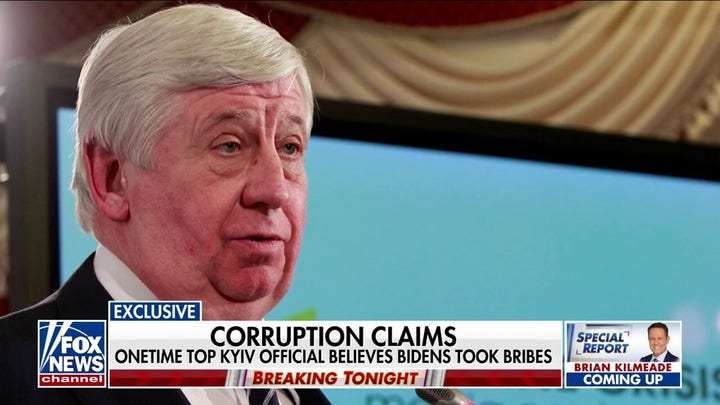
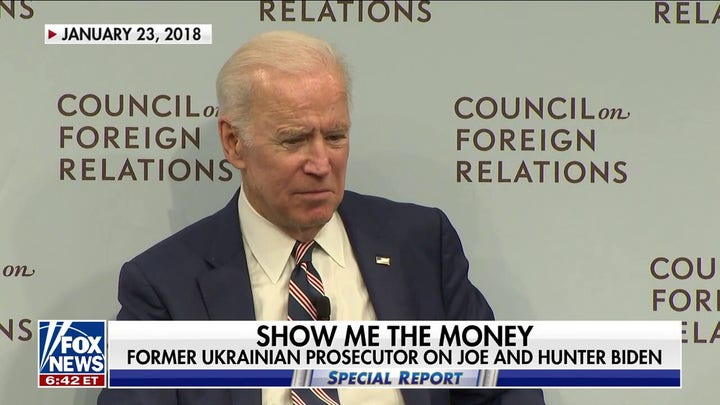
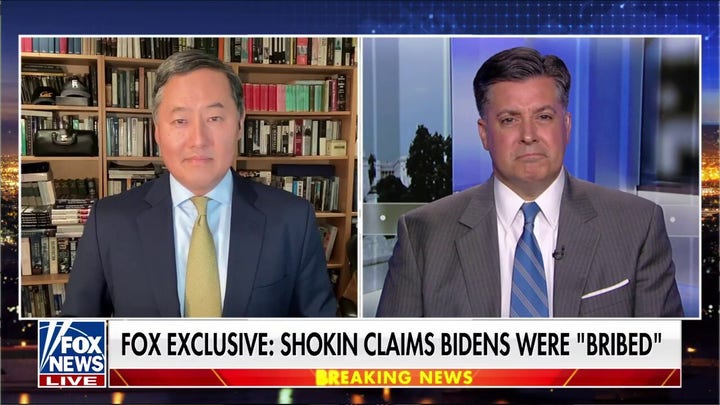
During the interview with Fox
News' Brian Kilmeade, Shokin said he was ousted in 2016 because he was
investigating Burisma, the Ukrainian natural gas company where Hunter Biden served on
the board. Shokin also claimed that Joe and Hunter Biden accepted
bribes in the case, and that the then-vice president ultimately hurt
America's reputation and created the groundwork for Russia to invade
Ukraine.
"I have said repeatedly in my previous interviews that
Poroshenko fired me at the insistence of the then Vice President Biden
because I was investigating Burisma," Shokin told Fox News in the
interview which aired Saturday evening.
"You
understood me correctly, this is how it was," he added after a
follow-up question from Kilmeade about Biden's involvement. "There were
no complaints whatsoever and no problems with how I was performing at my
job. But because pressure was repeatedly put on [then-Ukrainian
President Petro] Poroshenko, that is what ended up in him firing me."
Shokin did not provide additional evidence of his claim that the Bidens accepted bribes or elaborate on the allegation.
In
March 2016, Poroshenko ousted Shokin, who was appointed one year
earlier, after facing pressure from the U.S. government. The
international community, led by the U.S. and then-Vice President Biden
who led U.S.-Ukraine policy, believed Shokin was allowing corruption to
fester in the nation's government and his own office.
In December
2015, Biden traveled to Kyiv, Ukraine, where he demanded Poroshenko root
out corruption and fire Shokin, threatening to withhold a key U.S. aid
package. During a speech delivered with the country's leaders present,
Biden said the Office of the General Prosecutor "desperately needs
reform" and warned about the dangers posed by corruption in the
government.
Biden urged Ukrainian president to fire Shokin
A year after leaving the White House,
Biden recounted his closed-door conversations with Poroshenko during
the 2015 trip. He explained how he told Ukrainian officials the U.S.
would withhold up to $1 billion in aid money earmarked for their country
if Shokin remained in his position.
"I
said, ‘Nah, I’m not going to – we’re not going to give you the billion
dollars.’ They said, ‘You have no authority. You’re not the president.
The president said –.' I said, ‘Call him,’" Biden recounted during a
January 2018 event hosted by the Council on Foreign Relations. "I said,
‘I’m telling you, you’re not getting the $1 billion.’"
"I said,
‘You’re not getting the billion. I’m going to be leaving here,'" Biden
continued. "I looked at them and said, ‘I’m leaving in six hours. If the
prosecutor is not fired, you’re not getting the money.’ Well, son of a
bitch, he got fired. And they put in place someone who was solid at the
time."
Republican
lawmakers and Shokin himself, however, have pointed to Shokin's
investigation of Burisma and its owner Mykola Zlochevsky at the time of
his ouster. In February 2016, one month before Shokin was fired, his
office filed a legal petition to seize Zlochevsky's property, including
four homes, two pieces of property and a Rolls-Royce sports car, the
Kyiv Post reported at the time.
The investigation took place while Hunter Biden served on Burisma's board of directors. Hunter joined the firm in 2014 and departed in 2019 after his term on its board expired.
In
a statement to Fox News, the White House pointed to indications that
Shokin was fired because he had been too soft on corruption.
"For
years, these false claims have been debunked, and no matter how much
air time Fox gives them, they will remain false," White House
spokesperson Ian Sams told Fox News. "Fox is giving a platform for these
lies to a former Ukrainian prosecutor general whose office his own
deputy called ‘a hotbed of corruption,’ drawing demands for reform not
only from then-Vice President Biden but also from U.S. diplomats,
international partners, and Republican senators like Ron Johnson."
The
White House also stated Shokin's office had not been investigating
Burisma or Hunter at the time of his ouster in March 2016, and it
pointed to three reports published within weeks of each other in 2019 by
The Washington Post, Associated Press and New York Times stating Shokin's office wasn't investigating Burisma.
Shokin: Burisma merited ‘special attention’
"The
reason I oversaw the Burisma case was because I was the prosecutor
general. Burisma was an ordinary case. There wasn't anything
particularly different about it," Shokin told Fox News.
"The
reason that I was handling it was because it deserved a special
mention," Shokin continued. "It was on a list of cases to merit special
attention because Hunter Biden was involved with Burisma and of course,
his father, the vice president, Biden at the time oversaw Ukraine
affairs for the White House. This is why."
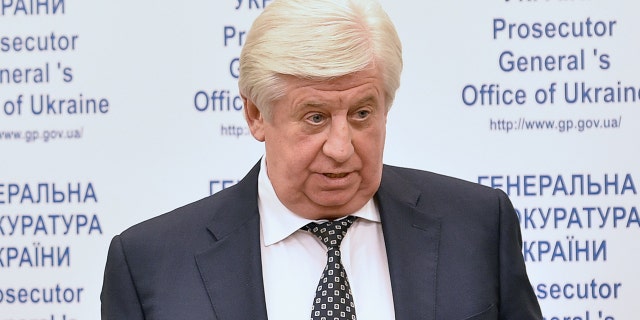
Ukrainian
Prosecutor General Viktor Shokin holds a press conference on Nov. 2,
2015, months before he was ousted over allegations of corruption.(GENYA SAVILOV/AFP via Getty Images)
He
added that he had "no doubt" Burisma was engaged in illegal activities
and stated it would take him "half a day" to explain them all. Among the
allegations, he said Burisma illegally produced, sold and utilized natural gas supplies.
"I
have no doubt that there were illegal activities engaged in by
Burisma," Shokin said. "As a matter of fact, the criminal case had been
started before me."
"It continued to expand and Zlochevsky, who
at the time held the post of minister and was the founder and CEO of
Burisma, started bringing in people who could provide protection for
him," he said. "Hunter Biden was among them and the corruption network
expanded as a result. So, yes, to answer your question, there was no
doubt in my mind that Burisma was engaged in illegal activities."
Echoing
Shokin's claim that Hunter Biden was hired solely to protect Burisma by
leveraging his father's role in the White House, Hunter's former
business partner Devon Archer, who also served on Burisma's board,
confirmed in a closed-door interview in July that company leaders turned
to Hunter for help amid pressure from Shokin's office and other
entities.
"When
Burisma’s owner was facing pressure from the Ukrainian prosecutor
investigating the company for corruption, Archer testified that Burisma
executives asked Hunter to ‘call D.C.’ after a Burisma board meeting in
Dubai," House Oversight Committee Chairman James Comer, R-Ky., said
after Archer's testimony.
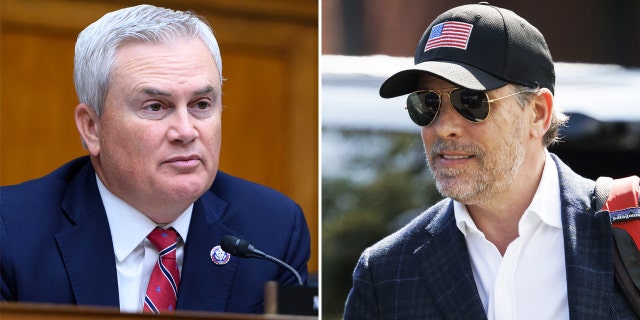
Rep. James Comer, R-Ky., said he believes Hunter Biden leveraged his father's position as vice president to help Burisma.(Mandel NGAN/AFP, Ting Shen/Bloomberg via Getty Images)
Fox
News Digital recently reported that, on Nov. 2, 2015, Burisma executive
Vadym Pozharski emailed Hunter Biden, Archer and fellow Hunter associate Eric Schwerin
about a "revised proposal, contract and initial invoice for Burisma
Holdings," from lobbying firm Blue Star Strategies. Hunter reportedly
connected Burisma with Blue Star Strategies to help the energy firm
fight corruption charges levied against Zlochevsky, the company's owner.
Pozharski emphasized in his email that the "ultimate purpose" of the agreement with Blue Star Strategies was to shut down "any cases/pursuits against Nikolay in Ukraine," referring to Zlochevsky, who also went by Nikolay.
"The
scope of work should also include organization of a visit of a number
of widely recognized and influential current and/or former US
policy-makers to Ukraine in November aiming to conduct meetings with and
bring positive signal/message and support on Nikolay's issue to the
Ukrainian top officials above with the ultimate purpose to close down
for any cases/pursuits against Nikolay in Ukraine," Pozharskyi
continued.
Biden made the infamous December 2015 trip to Ukraine a month after the Pozharski email and would host a holiday party at his residence days after he returned that included Hunter and multiple Burisma-linked associates.
Shokin accuses Bidens of taking bribes
Shokin
added in the interview Saturday that if he had been allowed to continue
his investigation, he would have uncovered a scheme involving the
Bidens and Archer. He also said he believed both Joe and Hunter Biden
took bribes in the case.
"Had
I continued to oversee the Burisma investigation, we would have found
the facts about the corrupt activities that they were engaging in,"
Shokin said. "That included both Hunter Biden and Devon Archer and
others."
"I do not want to deal in unproven facts, but my firm
personal conviction is that, yes, this was the case. They were being
bribed," the former prosecutor general added. "And the fact that Joe
Biden gave away $1 billion in U.S. money in exchange for my dismissal,
my firing isn't that alone A case of corruption?"
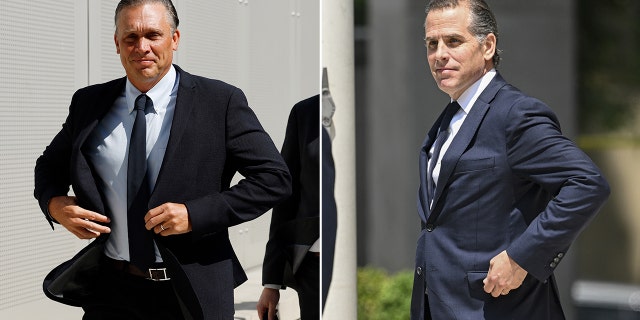
Hunter's
former business partner Devon Archer, who also served on Burisma's
board, testified in a closed-door House Oversight Committee hearing in
July that, amid pressure from Shokin's office and other entities
investigating Burisma, company leaders turned to Hunter for help. Archer
said Hunter "called D.C." to help get Shokin fired.(Fox News)
After
Shokin's ouster, The New York Times reported that Shokin had been
criticized in Ukraine for not prosecuting officials, businessmen and
lawmakers for corruption while Viktor Yanukovych was president. The U.S.
government and International Monetary Fund had believed in 2016 that
Shokin wasn't doing enough to fight corruption, which ran rampant
throughout Ukraine.
Both former Assistant Secretary of State for European and Eurasian Affairs Victoria Nuland
and former Deputy Assistant Secretary for European and Eurasian Affairs
Bridget Brink testified during a Senate hearing in 2020 that Shokin's
decision not to pursue a Burisma investigation or root out corruption
elsewhere were reasons for his firing.
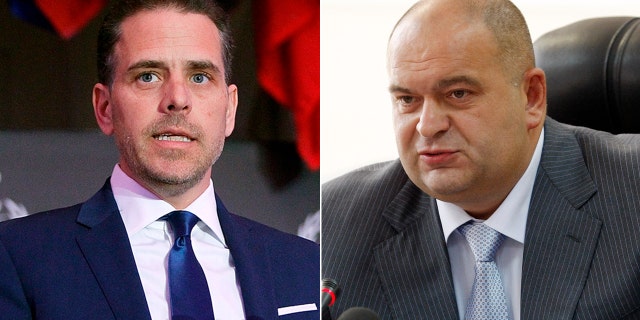
Hunter Biden, left, and Mykola Zlochevsky, right(Getty Images)
"It
was our conclusion by then that, in fact, the dismissal of Prosecutor
Shokin would be counter to Burisma’s interests, because not only was he
not pursuing the Burisma case, he was responsible for protecting those
who had helped get the case dismissed," Nuland said.
However,
Shokin pushed back when asked about the media reports and claims made
about his alleged corruption, saying there hasn't ever been an example
given. He added he doesn't have enough money to sue news outlets for
defamation.
"I would appreciate if any of these highly respectable
publications could come up with a single instance or a single example
of my personal corruption or any offense whatsoever allegedly committed
by me," Shokin told Fox News. "Since I was fired, nobody, including Joe
Biden, has cited or mentioned or provided any examples of my corruption
or any offense allegedly committed by me."
"I
would gladly [sue for defamation]," Shokin continued. "But suing
somebody costs money and I simply don't have the money to do that
because I am a retiree and my monthly pension constitutes the equivalent
of $800."
"There
is no doubt that his actions have damaged the US reputation in Ukraine.
It is public knowledge," he said. "Everybody knows that it was because
of Joe Biden's actions that Russia was able to claim Crimea without
firing a single shot, which of course eventually led to a full scale war
that is currently under way."
Shokin
did not elaborate on how Biden's actions contributed to Russia's rapid
takeover of Crimea in 2014. According to reports about the White House's
response to the invasion, Biden urged then-President Obama to send
lethal assistance to Ukraine, but was overruled. The White House noted
that Shokin took office after Russia seized Crimea.
Shokin told Fox that his book addresses the role Biden has played in Ukraine in his book.
"But,
yes, the damage has been done. Definitely," Shokin concluded. "I have
long been concerned about my personal safety and security. I've already
died technically, twice as I was poisoned with Mercury."
'He should state, as other Democrats have, that not even his son is above the law,' author Sarah Chayes wrote of President Biden
A new piece from The Atlantic slammed both Hunter
Biden for his foreign business dealings and his father President Joe
Biden for acting like Hunter did nothing wrong. The article claimed both Bidens have been sanitizing and reinforcing a corrupt scheme.
Author
Sarah Chayes published the piece Wednesday arguing that though there’s
"no evidence" then-Vice President Joe Biden did anything illegal to
serve his son’s overseas business interests, his denial of his son’s
wrongdoing essentially served to support the behavior.
Chayes stated
that one of the few ways President Biden can stop looking like someone
laundering his son’s corruption is to stop saying Hunter did "nothing
wrong" and admit that he isn’t above the law.
A piece in The Atlantic slammed President Joe Biden for covering for his sons corrupt business dealings.(Getty Images)
The author began her article with the observation that because of the appointment of a special counsel in
the U.S. Department of Justice’s Hunter Biden probe, "Democrats will be
fielding uncomfortable questions throughout the 2024 presidential
campaign."
She advised, "They would do well to think before they
speak. Asked one such question in a television interview in May,
President Biden insisted, ‘My son’s done nothing wrong.’"
"But is
that true?" Chayes asked, adding, "It now seems quite likely that Hunter
Biden has violated one or more U.S. laws. And that’s not all the wrong
he has done. There is a difference between what is technically illegal
and what is wrong."
The author continued with an explanation of
how the breadth of corruption on Hunter’s part stretches beyond what is
technically illegal and how Joe Biden’s blind eye towards it may not
have been illegal either, but served the corruption.
Chayes noted
she spent a "decade" in Afghanistan observing corruption in the
country’s government, an experience she claimed, "makes plain to me what
was wrong about the Bidens’ behavior, even if it wasn’t illegal."
She
wrote, "There is absolutely no evidence that Joe Biden, as vice
president, changed any aspect of U.S. foreign policy to benefit Burisma
or any of its principals. But Hunter Biden’s position on that board of
directors served to undermine the very U.S. anti-corruption policy his
father was promoting."
The Atlantic's Sarah Chayes urged Biden to stop claiming his son "did nothing wrong."(REUTERS/Elizabeth Frantz)
The
author quoted the head of the U.S. embassy’s anti-corruption effort in
Kyiv, Ukraine, George Kent, who once said, "Hunter’s presence on the Burisma board
undercut the anti-corruption message the VP and we were advancing in
Ukraine, b/c Ukrainians heard one message from us then saw another set
of behavior, with the family association with a known corrupt figure."
She
slammed Biden supporting his son’s behavior, adding, "Biden was
supposed to be different. Yet his unconditional public support for
everything his son has done serves to sanitize and reinforce a business
model that provides image-laundering services for foreign kleptocrats
and monetizes access to power—or the appearance of such access."
"For a president and a political party whose brand stresses integrity, that’s a self-inflicted wound," she added.
Chayes
also urged the president to stop claiming his son’s innocence and curb
his "business model." "As tenderly as a father may love his struggling
son, the president can do better than parrot the "nothing wrong" chorus.
When controversy over Hunter Biden’s work for Burisma erupted during
the 2020 presidential campaign, I expressed the hope that his father
would use his moral and potential future executive authority to curb
that business model. He still can."
She then concluded, "He should
state, as other Democrats have, that not even his son is above the law.
He should never again participate in an occasion that Hunter might use
to impress his business associates. And he should push for legislation
that would close some of the loopholes that Supreme Court decisions have
blown in U.S. anti-corruption laws."
What if we treated China in the same way it treats us?
Imagine if the United States treated China in the same way it does us?
What if American companies simply ignored Chinese copyrights and
patents, and stole Chinese ideas, inventions, and intellectual property,
as they pleased and with impunity?
What if the American government targeted Chinese industries by
dumping competing American export products at below the cost of
production—to bankrupt Chinese competitors and corner their markets?
What would the communist Chinese government do if a huge American spy
balloon lazily traversed continental China—sending back to the United
States photographic surveillance of Chinese military bases and
installations?
How would China react to American stonewalling any explanation, much
less refusing to apologize for such an American attack on Chinese
sovereignty?
Envision a U.S. high-security virology lab in the Midwest, run by the
Pentagon, allowing the escape of an engineered, gain-of-function deadly
virus.
Instead of enlisting world cooperation to stop the spread of the
virus, the American government would lie that it sprung up from a local
bat or wild possum.
Washington would then make all its relevant military scientists
disappear who were assigned to the lab, while ordering a complete media
blackout.
America would forbid Chinese scientists from contacting their
American counterparts involved in the lab, despite the deaths of more
than 1 million Chinese from the American-manufactured disease.
And what if during the first days of the pandemic Washington had
quietly prevented all foreign travel to the United States, while keeping
open one-way direct flights from America to major Chinese cities?
How would Beijing respond if American biotech company warehouses were
discovered in rural China with unsecured vials of deadly viruses and
pathogens?
Would China be angered that it was never notified by an American
company that it had left abandoned COVID and HIV viruses and malaria
parasites in its facilities—along with rotting genetically engineered
dead rats littering the floors with hundreds more lab animals abandoned
in laboratory cages?
What would Chairman Xi Jinping have done if American-made fentanyl
was shipped in massive quantities to nearby Tibet on the Chinese border?
And what if it would be deliberately repackaged there as deceptive
recreational drugs and smuggled into China, where it annually killed
100,000 Chinese youth, year after year?
What if 10,000 Americans this year illegally crossed the Indian border into China and disappeared into its interior?
What if an allied Asian nation—such as South Korea, Japan, or
Taiwan—went nuclear. And what if, in North-Korean style, it serially
blustered to send one of its nuclear missiles into the major cities of
China?
What if almost monthly China discovered an American military
operative teaching incognito at a major Chinese university or among the
ranks of the Chinese People’s Liberation Army?
Would China object if an American femme fatale agent was sleeping
with a high-ranking Chinese official of the Chinese communist politburo?
Or what if one of the chauffeurs of its top ranking Chinese officials was a nearly two-decade-long American agent?
What would be the Chinese reaction if there were 350,000 American
students attending schools all over the Chinese nation, with perhaps
3,000–4,000 of them actively engaged in national security espionage on
behalf of the United States?
These “what-ifs” could be expanded endlessly. But they reflect well
enough the great asymmetry in the bizarre Chinese-American relationship.
Obviously, China would not tolerate America treating it as it does the Americans.
Why then does the imbalance continue?
Do naïve Americans believe that the more China is indulged, the more it will respond in kind to American magnanimity?
Does the United States believe that the more China is exposed to our
supposedly radically democratic and free culture, the sooner it will
become a good democratic citizen of the global community?
Are we afraid of China, because it has four times our population, and
believes its economy and military will overtake ours in a decade?
Are we terrified that its Chinese government is completely amoral, utterly ruthless, and capable of anything?
Or are our political, cultural, and corporate elites so compromised
by their lucrative Chinese investments and joint ventures, that they
prioritize profits over their own country’s national security and
self-interest?
And did the Biden family—including President Joe Biden himself—in the
past receive millions of dollars from Chinese energy and investment
interests?
Did Hunter Biden’s quid pro quo decade of grifting result in millions
in Chinese money filling the Biden family coffers—all in exchange for
the current Biden and past Obama administrations going soft on Chinese
aggression?
No one seems able to explain the otherwise inexplicable.
But one way to get along with China, and to regain its respect is to
deal with it exactly the way it deals with the United States.
Anything less, and America will continually be treated with even more Chinese contempt—and eventually extreme violence.

 BORDER Police officer checks a unit at a laser system aimed to
intercept incendiary balloons, near the Gaza border. (credit: AMIR
COHEN/REUTERS)
BORDER Police officer checks a unit at a laser system aimed to
intercept incendiary balloons, near the Gaza border. (credit: AMIR
COHEN/REUTERS)