Monday, January 1, 2024

‘Screams Without Words’: How Hamas Weaponized Sexual Violence on Oct. 7 - Jeffrey Gettleman, Anat Schwartz and Adam Sella


by Jeffrey Gettleman, Anat Schwartz and Adam Sella

A Times investigation uncovered new details showing a pattern of rape, mutilation and extreme brutality against women in the attacks on Israel.

Jeffrey Gettleman, Anat Schwartz and Adam Sella reported from across Israel and interviewed more than 150 people.

 Editor: This article contains extremely specific details of torture, rape and murder.


A woman links arms with a man on a gray sofa in a living room with a white wall. The couple is flanked by two younger women. A wedding portrait hangs on the wall.
Gal Abdush’s parents, center, and her sisters. The photograph on the wall shows Gal and her husband, Nagi. The couple had been together since they were teenagers.

At first, she was known simply as “the woman in the black dress.”

In a grainy video, you can see her, lying on her back, dress torn, legs spread, vagina exposed. Her face is burned beyond recognition and her right hand covers her eyes.

The video was shot in the early hours of Oct. 8 by a woman searching for a missing friend at the site of the rave in southern Israel where, the day before, Hamas terrorists massacred hundreds of young Israelis.

The video went viral, with thousands of people responding, desperate to know if the woman in the black dress was their missing friend, sister or daughter.

One family knew exactly who she was — Gal Abdush, mother of two from a working-class town in central Israel, who disappeared from the rave that night with her husband.

As the terrorists closed in on her, trapped on a highway in a line of cars of people trying to flee the party, she sent one final WhatsApp message to her family: “You don’t understand.”

Based largely on the video evidence — which was verified by The New York Times — Israeli police officials said they believed that Ms. Abdush was raped, and she has become a symbol of the horrors visited upon Israeli women and girls during the Oct. 7 attacks.

Israeli officials say that everywhere Hamas terrorists struck — the rave, the military bases along the Gaza border and the kibbutzim — they brutalized women.

A two-month investigation by The Times uncovered painful new details, establishing that the attacks against women were not isolated events but part of a broader pattern of gender-based violence on Oct. 7.

Relying on video footage, photographs, GPS data from mobile phones and interviews with more than 150 people, including witnesses, medical personnel, soldiers and rape counselors, The Times identified at least seven locations where Israeli women and girls appear to have been sexually assaulted or mutilated.


By The New York Times

Four witnesses described in graphic detail seeing women raped and killed at two different places along Route 232, the same highway where Ms. Abdush’s half-naked body was found sprawled on the road at a third location.

And The Times interviewed several soldiers and volunteer medics who together described finding more than 30 bodies of women and girls in and around the rave site and in two kibbutzim in a similar state as Ms. Abdush’s — legs spread, clothes torn off, signs of abuse in their genital areas.

Cars — some destroyed by fire, others damaged — in a clearing among trees.
A camp area on Oct. 11 at the rave site in southern Israel.Credit...Sergey Ponomarev for The New York Times

Many of the accounts are difficult to bear, and the visual evidence is disturbing to see.

The Times viewed photographs of one woman’s corpse that emergency responders discovered in the rubble of a besieged kibbutz with dozens of nails driven into her thighs and groin.

The Times also viewed a video, provided by the Israeli military, showing two dead Israeli soldiers at a base near Gaza who appeared to have been shot directly in their vaginas.

Hamas has denied Israel’s accusations of sexual violence. Israeli activists have been outraged that the United Nations Secretary General, António Guterres, and the agency U.N. Women did not acknowledge the many accusations until weeks after the attacks.

Investigators with Israel’s top national police unit, Lahav 433, have been steadily gathering evidence but they have not put a number on how many women were raped, saying that most are dead — and buried — and that they will never know. No survivors have spoken publicly.

The Israeli police have acknowledged that, during the shock and confusion of Oct. 7, the deadliest day in Israeli history, they were not focused on collecting semen samples from women’s bodies, requesting autopsies or closely examining crime scenes. At that moment, the authorities said, they were intent on repelling Hamas and identifying the dead.

Messages on a mobile phone screen.
Ms. Abdush’s sister showing one of the last messages Ms. Abdush sent on Oct. 7.

A combination of chaos, enormous grief and Jewish religious duties meant that many bodies were buried as quickly as possible. Most were never examined, and in some cases, like at the rave scene, where more than 360 people were slaughtered in a few hours, the bodies were hauled away by the truckload.

That has left the Israeli authorities at a loss to fully explain to families what happened to their loved ones in their final moments. Ms. Abdush’s relatives, for instance, never received a death certificate. They are still searching for answers.

In cases of widespread sexual violence during a war, it is not unusual to have limited forensic evidence, experts said.

“Armed conflict is so chaotic,” said Adil Haque, a Rutgers law professor and war crimes expert. “People are more focused on their safety than on building a criminal case down the road.”

Very often, he said, sex crime cases will be prosecuted years later on the basis of testimony from victims and witnesses.

“The eyewitness might not even know the name of the victim,” he added. “But if they can testify as, ‘I saw a woman being raped by this armed group,’ that can be enough.”

Sapir, a 24-year-old accountant, has become one of the Israeli police’s key witnesses. She does not want to be fully identified, saying she would be hounded for the rest of her life if her last name were revealed.

She attended the rave with several friends and provided investigators with graphic testimony. She also spoke to The Times. In a two-hour interview outside a cafe in southern Israel, she recounted seeing groups of heavily armed gunmen rape and kill at least five women.

She said that at 8 a.m. on Oct. 7, she was hiding under the low branches of a bushy tamarisk tree, just off Route 232, about four miles southwest of the party. She had been shot in the back. She felt faint. She covered herself in dry grass and lay as still as she could.

Two people in high-visibility vests walk along a path toward severely damaged low buildings.
Volunteers with an emergency response team at the Kfar Aza kibbutz this month. The kibbutz was among the places attacked on Oct. 7.

About 15 meters from her hiding place, she said, she saw motorcycles, cars and trucks pulling up. She said that she saw “about 100 men,” most of them dressed in military fatigues and combat boots, a few in dark sweatsuits, getting in and out of the vehicles. She said the men congregated along the road and passed between them assault rifles, grenades, small missiles — and badly wounded women.

“It was like an assembly point,” she said.

The first victim she said she saw was a young woman with copper-color hair, blood running down her back, pants pushed down to her knees. One man pulled her by the hair and made her bend over. Another penetrated her, Sapir said, and every time she flinched, he plunged a knife into her back.

She said she then watched another woman “shredded into pieces.” While one terrorist raped her, she said, another pulled out a box cutter and sliced off her breast.

“One continues to rape her, and the other throws her breast to someone else, and they play with it, throw it, and it falls on the road,” Sapir said.

She said the men sliced her face and then the woman fell out of view. Around the same time, she said, she saw three other women raped and terrorists carrying the severed heads of three more women.

Sapir provided photographs of her hiding place and her wounds, and police officials have stood by her testimony and released a video of her, with her face blurred, recounting some of what she saw.

Yura Karol, a 22-year-old security consultant, said he was hiding in the same spot, and he can be seen in one of Sapir’s photos. He and Sapir were part of a group of friends who had met up at the party. In an interview, Mr. Karol said he barely lifted his head to look at the road but he also described seeing a woman raped and killed.

Since that day, Sapir said, she has struggled with a painful rash that spread across her torso, and she can barely sleep, waking up at night, heart pounding, covered in sweat.

“That day, I became an animal,” she said. “I was emotionally detached, sharp, just the adrenaline of survival. I looked at all this as if I was photographing them with my eyes, not forgetting any detail. I told myself: I should remember everything.”

That same morning, along Route 232 but in a different location about a mile southwest of the party area, Raz Cohen — a young Israeli who had also attended the rave and had worked recently in the Democratic Republic of Congo training Congolese soldiers — said that he was hiding in a dried-up streambed. It provided some cover from the assailants combing the area and shooting anyone they found, he said in an hour-and-a-half interview in a Tel Aviv restaurant.

A head-and-shoulders photo of a man with a beard, wearing a black T-shirt, looking up to his left.
Raz Cohen, a security consultant, survived the Oct. 7 attacks by hiding in a dried-up streambed.

Maybe 40 yards in front of him, he recalled, a white van pulled up and its doors flew open.

He said he then saw five men, wearing civilian clothes, all carrying knives and one carrying a hammer, dragging a woman across the ground. She was young, naked and screaming.

“They all gather around her,” Mr. Cohen said. “She’s standing up. They start raping her. I saw the men standing in a half circle around her. One penetrates her. She screams. I still remember her voice, screams without words.”

“Then one of them raises a knife,” he said, “and they just slaughtered her.”

Shoam Gueta, one of Mr. Cohen’s friends and a fashion designer, said the two were hiding together in the streambed. He said he saw at least four men step out of the van and attack the woman, who ended up “between their legs.” He said that they were “talking, giggling and shouting,” and that one of them stabbed her with a knife repeatedly, “literally butchering her.”

Hours later, the first wave of volunteer emergency medical technicians arrived at the rave site. In interviews, four of them said that they discovered bodies of dead women with their legs spread and underwear missing — some with their hands tied by rope and zipties — in the party area, along the road, in the parking area and in the open fields around the rave site.

Jamal Waraki, a volunteer medic with the nonprofit ZAKA emergency response team, said he could not get out of his head a young woman in a rawhide vest found between the main stage and the bar.

“Her hands were tied behind her back,” he said. “She was bent over, half naked, her underwear rolled down below her knees.”

Yinon Rivlin, a member of the rave’s production team who lost two brothers in the attacks, said that after hiding from the killers, he emerged from a ditch and made his way to the parking area, east of the party, along Route 232, looking for survivors.

Near the highway, he said, he found the body of a young woman, on her stomach, no pants or underwear, legs spread apart. He said her vagina area appeared to have been sliced open, “as if someone tore her apart.”

Similar discoveries were made in two kibbutzim, Be’eri and Kfar Aza. Eight volunteer medics and two Israeli soldiers told The Times that in at least six different houses, they had come across a total of at least 24 bodies of women and girls naked or half naked, some mutilated, others tied up, and often alone.

A paramedic in an Israeli commando unit said that he had found the bodies of two teenage girls in a room in Be’eri.

One was lying on her side, he said, boxer shorts ripped, bruises by her groin. The other was sprawled on the floor face down, he said, pajama pants pulled to her knees, bottom exposed, semen smeared on her back.

Because his job was to look for survivors, he said, he kept moving and did not document the scene. Neighbors of the two girls killed — who were sisters, 13 and 16 — said their bodies had been found alone, separated from the rest of their family.

The Israeli military allowed the paramedic to speak with reporters on the condition that he not be identified because he serves in an elite unit.

Many of the dead were brought to the Shura military base, in central Israel, for identification. Here, too, witnesses said they saw signs of sexual violence.

Shari Mendes, an architect called up as a reserve soldier to help prepare the bodies of female soldiers for burial, said she had seen four with signs of sexual violence, including some with “a lot of blood in their pelvic areas.”

A woman stands in a large metal container whose doors are open, showing wrapped bodies stacked on shelves, while a man with a gun stands looking in her direction.
Shari Mendes, an architect who was called up as a reserve soldier to help handle the bodies of female troops, in a container used to hold bodies before their removal to a morgue at the Shura military base in central Israel.

A dentist, Captain Maayan, who worked at the same identification center, said that she had seen at least 10 bodies of female soldiers from Gaza observation posts with signs of sexual violence.

Captain Maayan asked to be identified only by her rank and surname because of the sensitivity of the subject. She said she had seen several bodies with cuts in their vaginas and underwear soaked in blood and one whose fingernails had been pulled out.

The Israeli authorities have no shortage of video evidence from the Oct. 7 attacks. They have gathered hours of footage from Hamas body cameras, dashcams, security cameras and mobile phones showing Hamas terrorists killing civilians and many images of mutilated bodies.

But Moshe Fintzy, a deputy superintendent and senior spokesman of Israel’s national police, said, “We have zero autopsies, zero,” making an O with his right hand.

In the aftermath of the attack, police officials said, forensic examiners were dispatched to the Shura military base to help identify the hundreds of bodies — Israeli officials say around 1,200 people were killed that day.

The examiners worked quickly to give the agonized families of the missing a sense of closure and to determine, by a process of elimination, who was dead and who was being held hostage in Gaza.

According to Jewish tradition, funerals are held promptly. The result was that many bodies with signs of sexual abuse were put to rest without medical examinations, meaning that potential evidence now lies buried in the ground. International forensic experts said that it would be possible to recover some evidence from the corpses, but that it would be difficult.

Mr. Fintzy said Israeli security forces were still finding imagery that shows women were brutalized. Sitting at his desk at an imposing police building in Jerusalem, he swiped open his phone, tapped and produced the video of the two soldiers shot in the vagina, which he said was recorded by Hamas gunmen and recently recovered by Israeli soldiers.

A colleague sitting next to him, Mirit Ben Mayor, a police chief superintendent, said she believed that the brutality against women was a combination of two ferocious forces, “the hatred for Jews and the hatred for women.”

Some emergency medical workers now wish they had documented more of what they saw. In interviews, they said they had moved bodies, cut off zip ties and cleaned up scenes of carnage. Trying to be respectful to the dead, they inadvertently destroyed evidence.

Many volunteers working for ZAKA, the emergency response team, are religious Jews and operate under strict rules that command deep respect for the dead.

“I did not take pictures because we are not allowed to take pictures,” said Yossi Landau, a ZAKA volunteer. “In retrospect, I regret it.”

There are at least three women and one man who were sexually assaulted and survived, according to Gil Horev, a spokesman for Israel’s Ministry of Welfare and Social Affairs. “None of them has been willing to come physically for treatment,” he said. Two therapists said they were working with a woman who was gang raped at the rave and was in no condition to talk to investigators or reporters.

A man with a beard and black jacket looks off to his left.
Yossi Landau, a volunteer with the nonprofit ZAKA emergency response team, said he had not taken pictures of the bodies because it was not allowed. “In retrospect, I regret it,” he added.

The trauma from sexual assault can be so heavy that sometimes survivors do not speak about it for years, several rape counselors said.

“Many people are looking for the golden evidence, of a woman who will testify about what happened to her. But don’t look for that, don’t put this pressure on this woman,” said Orit Sulitzeanu, executive director of the Association of Rape Crisis Centers in Israel. “The corpses tell the story.”

One of the last images of Ms. Abdush alive — captured by a security camera mounted on her front door — shows her leaving home with her husband, Nagi, at 2:30 a.m. on Oct. 7 for the rave.

He was wearing jeans and a black T-shirt. She was dressed in a short black dress, a black shawl tied around her waist and combat boots. As she struts out, she takes a swig from a glass (her brother-in-law remembers it was Red Bull and vodka) and laughs.

You’ve got to live life like it’s your last moments. That was her motto, her sisters said.

At daybreak, hundreds of terrorists closed in on the party from several directions, blocking the highways leading out. The couple jumped into their Audi, dashing off a string of messages as they moved.

“We’re on the border,” Ms. Abdush wrote to her family. “We’re leaving.”

“Explosions.”

Her husband made his own calls to his family, leaving a final audio message for his brother, Nissim, at 7:44 a.m. “Take care of the kids,” he said. “I love you.”

Gunshots rang out, and the message stopped.

That night, Eden Wessely, a car mechanic, drove to the rave site with three friends and found Ms. Abdush sprawled half naked on the road next to her burned car, about nine miles north of the site. She did not see the body of Mr. Abdush.

A woman in a car, illuminated by an internal light.
Eden Wessely, a car mechanic, drove to the rave site looking for a missing friend but instead found Ms. Abdush sprawled half naked on the road next to her burned car.

She saw other burned cars and other bodies, and shot videos of several — hoping that they would help people to identify missing relatives. When she posted the video of the woman in the black dress on her Instagram story, she was deluged with messages.

“Hi, based on your description of the woman in the black dress, did she have blonde hair?” one message read.

“Eden, the woman you described with the black dress, do you remember the color of her eyes?” another said.

Some members of the Abdush family saw that video and another version of it filmed by one of Ms. Wessely’s friends. They immediately suspected that the body was Ms. Abdush, and based on the way her body was found, they feared that she might have been raped.

But they kept alive a flicker of hope that somehow, it wasn’t true.

The videos caught the eye of Israeli officials as well — very quickly after Oct. 7 they began gathering evidence of atrocities. They included footage of Ms. Abdush’s body in a presentation made to foreign governments and media organizations, using Ms. Abdush as a representation of violence committed against women that day.

A fuzzy photograph of a woman’s body lying on the ground next to a white vehicle.
A screenshot from a video showing Ms. Abdush’s body.Credit...Eden Wessely

A week after her body was found, three government social workers appeared at the gate of the family’s home in Kiryat Ekron, a small town in central Israel. They broke the news that Ms. Abdush, 34, had been found dead.

But the only document the family received was a one-page form letter from Israel’s president, Isaac Herzog, expressing his condolences and sending a hug. The body of Mr. Abdush, 35, was identified two days after his wife’s. It was badly burned and investigators determined who he was based on a DNA sample and his wedding ring.

The couple had been together since they were teenagers. To the family, it seems only yesterday that Mr. Abdush was heading off to work to fix water heaters, a bag of tools slung over his shoulder, and Ms. Abdush was cooking up mashed potatoes and schnitzel for their two sons, Eliav, 10, and Refael, 7.

The boys are now orphans. They were sleeping over at an aunt’s the night their parents were killed. Ms. Abdush’s mother and father have applied for permanent custody, and everyone is chipping in to help.

Night after night, Ms. Abdush’s mother, Eti Bracha, lies in bed with the boys until they drift off. A few weeks ago, she said she tried to quietly leave their bedroom when the younger boy stopped her.

“Grandma,” he said, “I want to ask you a question.”

“Honey,” she said, “you can ask anything.”

“Grandma, how did mom die?”

A woman with her eyes closed rests her head on the shoulder of a man wearing a skull cap, looking out of a window.
Ms. Abdush’s parents, Eti Bracha, 56, and her husband, Eli, 60.

Jeffrey Gettleman is an international correspondent and a winner of the Pulitzer Prize. He is the author of “Love, Africa,” a memoir. More about Jeffrey Gettleman

A version of this article appears in print on Dec. 31, 2023, Section A, Page 1 of the New York edition with the headline: ‘Screams Without Words’: Sexual Violence on Oct. 7. Order Reprints | Today’s Paper | Subscribe


Jeffrey Gettleman, Anat Schwartz and Adam Sella;

Source: https://www.nytimes.com/2023/12/28/world/middleeast/oct-7-attacks-hamas-israel-sexual-violence.html

Follow Middle East and Terrorism on Twitter

Taiwan president says people will determine relationship with China after Xi says it will reunify - Madeleine Hubbard


by Madeleine Hubbard

As threats from China have increased against Taiwan in recent years, Tsai also said Monday that "strength is crucial" and Taiwan must be able to defend itself.


Taiwan President Tsai Ing-wen on Monday said that the Taiwanese people will determine the country's relationship with China as she seeks a "peaceful coexistence" with the Asian country after Chinese President Xi Jinping said China "will inevitably be reunified" with the self-governing island.

Tsai expressed hope in her 2024 New Year's address that Taiwan and China will have a stable relationship. "We also hope, by way of peace, parity, democracy, and dialogue, to jointly seek a long-term, stable way forward for our peaceful coexistence," she said, according to her office, ahead of the country's Jan. 13 election.

"The most important thing ... is to comply with the principles of democracy and make decisions based on the common will of the Taiwanese people. After all, we are a democratic country," Tsai also said, as translated. "What kind of relationship we will form with China in the future must be decided through [a] democratic process."

Xi claimed last week that the "great cause and the aspiration of the people" is to reunite Taiwan with China, as Beijing believes Taiwan is a rogue province that it will eventually reunify with.

As threats from China have increased against Taiwan in recent years, Tsai also said Monday that "strength is crucial" and Taiwan must be able to defend itself.

"We must show staunch determination, protect our free and democratic way of life, and reinforce the global belief that Taiwan is not an expendable member, but rather one that plays a key role in, and is essential to, global peace and democracy," she also said.

Tsai is ineligible to run for this upcoming election, as she has served two consecutive terms since 2016.

Follow Madeleine Hubbard on X or Instagram.


Madeleine Hubbard

Source: https://justthenews.com/government/congress/taiwan-president-says-people-will-determine-relationship-china-after-xi-says-it

Follow Middle East and Terrorism on Twitter

Energy Year In Review: Fossil fuels remained dominant source of energy for the U.S. in 2023 - Kevin Killough


by Kevin Killough

Natural gas produced between 120.5 million megawatt hours in April 2023 to as much as 200.5 million megawatt hours in July. Coal was the next largest fuel source for American electricity generation during the 10-month period in 2023, producing 40 million megawatt hours of electricity in April and nearly 80 million megawatt hours in July.


Despite claims of a transition to "green" energy moving at a “breakneck speed” in 2023, fossil fuels remained the dominant fuel source of electricity in 2023 over wind and solar by a wide margin. The year saw the offshore wind industry face financial struggles, investments in renewable energy drop in value, and increased opposition on the local level to wind and solar projects.

Meanwhile, the U.S. oil and gas industry will hit record-high production levels this year.

Fossil fuels and renewables

The oil and gas industry's tally is expected to come in just over the pre-pandemic levels of 2019. Natural gas production is also hitting record highs this year.

While the industry has been a strong producer of energy in 2023, it’s faced an increasingly tougher regulatory environment, spearheaded a president who campaigned on a promise to “end fossil fuel.” Carrying forward policies begun by President Obama, President Biden and the Democrats have taken extensive actions to reduce oil and gas production.

The oil and gas industry also competed against wind and solar without the level of subsidies that renewables receive. Reuters reported that subsidies to renewable energy was as high as $15.6 billion in the last seven years. The billions in subsidies didn’t prevent the renewable energy industry from having a tough year.

Rising interest rates and supply chain issues, which all industries faced in 2023, had offshore wind companies looking to renegotiate contracts in hopes of getting a profitable rate from electricity customers. Some projects were canceled.

While the federal government pours a lot of support into the wind and solar industry, local opposition continued to increase in 2023. Energy expert Robert Bryce keeps an approximate tally of the number of renewable energy projects across the U.S. that were rejected. In 2014, there was only one project rejected, according to the Renewable Rejection Database. That figure grew to more than 600 canceled projects this year.

“It’s another big year for rejections of wind and solar all across the country — and increasingly, battery projects,” Bryce told Just The News.

This week, U.S. Court of International Trade Judge Jennifer Choe-Graves ruled that Enel must dismantle a 150-megawatt wind project it built in Osage County, Oklahoma, despite the objections of the native-American Osage Nation. The ruling came at the end of 12 years of litigation, according to Bryce, with the court deciding that Enel had illegally mined rock the tribe owned. According to NPR, Enel will spend $300 million to remove the 94-turbine wind farm.

Electricity generation by the numbers

America got most of its electricity from fossil fuel-powered generation in 2023.
Between January and October of 2023, natural gas was the primary fuel source for electricity generated in the United States, according to data from the Energy Information Administration (EIA).

October is the latest month for which the EIA has data. Natural gas produced between 120.5 million megawatt hours in April to as much as 200.5 million megawatt hours in July.
Coal was the next largest fuel source for American electricity generation during the 10-month period in 2023, producing 40 million megawatt hours of electricity in April and nearly 80 million megawatt hours in July.

Nuclear energy provided similar amounts of power in the U.S. grid as coal in the period, with a high of 70.8 million megawatt hours in January and a low of 56.7 million in April.

Wind was the next largest provider of power, with a high of 44.5 million megawatt hours in March to a low of 27.5 million megawatt hours in June. Between 2001 and 2022, total generation in the U.S. increased from 3.73 billion megawatt hours to 4.23 billion megawatt hours.

In 2021, coal was the largest fuel source, accounting for over 50% of the total generation in the U.S., with natural gas providing 17%. Nuclear energy produced 768.8 million megawatt hours in 2021, which was just under 21%. By 2022, coal-fired electricity generation provided 831.5 million megawatt hours, less than 20%, and natural gas-fired electricity generation provided nearly 40%.

Nuclear energy accounted for 18% of the total mix in 2022.

Hydroelectric has remained fairly steady over the past couple decades. It produced just under 6% of the total electricity generation in 2001, and 6% in 2022.

Wind energy began to produce significant amounts of the total electricity generation in 2007, accounting for about 0.8% that year. Fifteen years later, it was producing 10% of the total U.S. electricity generation.

Solar has grown from 0.7% of the total in 2014 to 4.8% in 2022.

While wind and solar have seen large increases in total energy produced, it’s come at a time of increased demand. To meet that demand, electricity generation increased over 13% between 2021 and 2022, which is about equal to the growth of wind and solar in that time.


Kevin Killough

Source: https://justthenews.com/politics-policy/energy/energy-year-review-fossil-fuels-remained-dominant-source-energy-us-2023

Follow Middle East and Terrorism on Twitter

Standing up for national unity and national survival - Caroline B. Glick


by Caroline B. Glick

Oct. 7 shattered the founding myth of the so-called peace process with the PLO—that there were “extremists” and "moderates" on both sides.


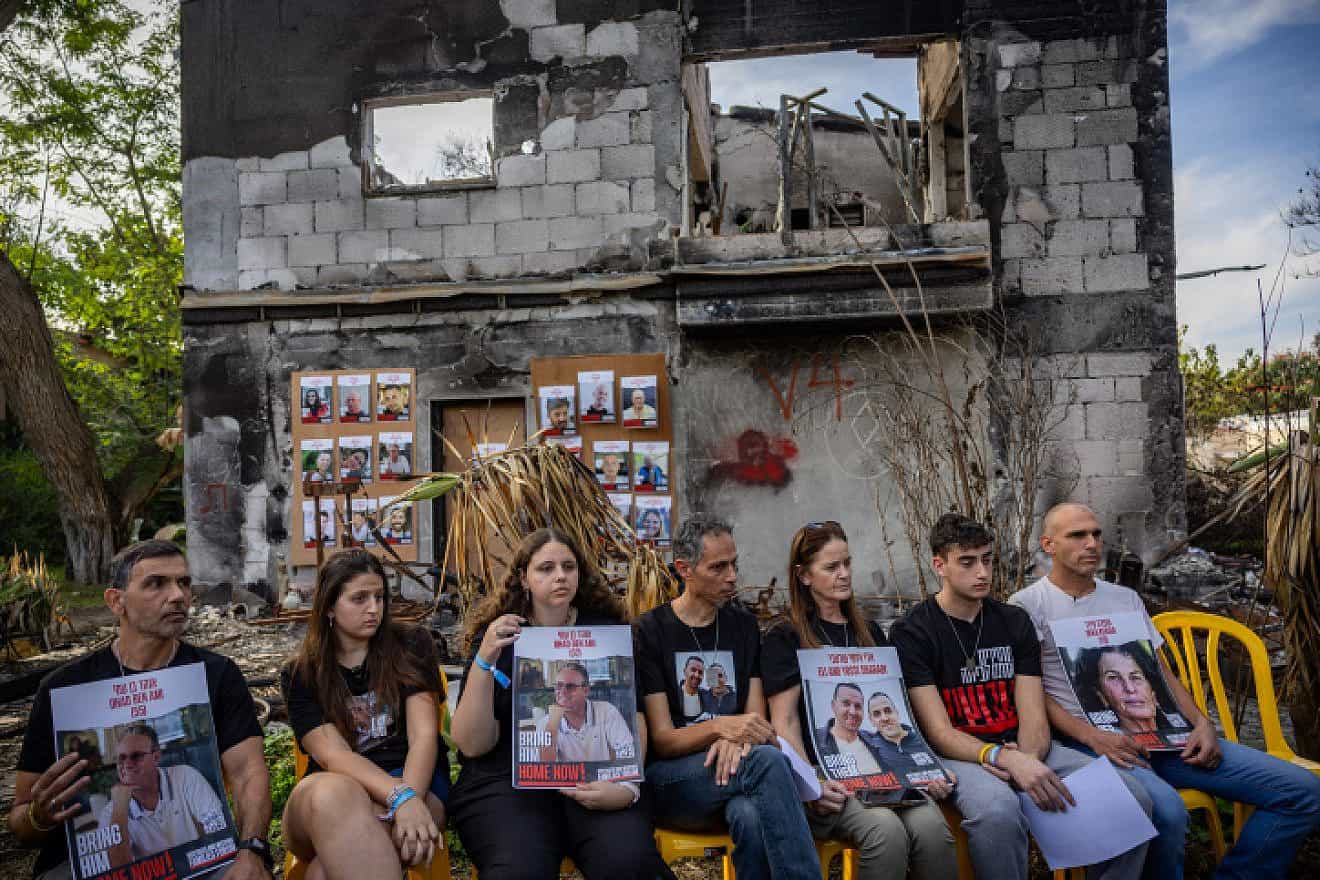
Ofir Engel, released from being held in Gaza, and families of Israelis held hostage by Hamas terrorists in the Gaza Strip attend a press conference for the foreign media in Kibbutz Be'eri, Dec. 20, 2023. Photo by Yonatan Sindel/Flash90.
Ofir Engel, released from being held in Gaza, and families of Israelis held hostage by Hamas terrorists in the Gaza Strip attend a press conference for the foreign media in Kibbutz Be'eri, Dec. 20, 2023. Photo by Yonatan Sindel/Flash90

A lot has changed in Israel since Oct. 7, but a lot has also stayed the same.

What has changed is exemplified in the actions of the Kalmanzon brothers, members of the religious community of Otniel in the South Hebron Hills, on Oct. 7.

On Oct. 7, Elhanan Kalmanzon, a reserve major in the Commando Brigade and a Mossad officer, realized almost immediately that Israel was being invaded. He organized the security team in Otniel and messaged his brother Menachem.

“I’m packing up and going south. The nation of Israel needs us. Our brothers need us.”

Menachem joined Elchanan, and with their brother-in-law Itiel Zohar Horovitz, they drove down south, ending up at the gate of Kibbutz Be’eri.

Be’eri was one of Hamas’s primary targets for slaughter. Ninety-seven members of the small farming community were butchered that day. Greeting them at the entry gate were terrified residents.

“My sister is inside.”

“My brother is inside.”

“Please save them.”

The Kalmanzon brothers and Horovitz found an abandoned armored personnel carrier, and entered the kibbutz. For 14 and a half hours they went from house to house, rescuing families through the windows of their safe rooms, filling their vehicle, driving to safety, and returning to the farming community-turned-killing-field, over and over again.

On their final trip into Be’eri, after having saved more than a quarter of the residents, Elhanan was killed as he entered another home.

A delegation of members of Be’eri came to Otniel to pay a condolence call to the Kalmanzon family during their shivah. In the course of their meeting, Menachem praised the heroism and the hardened courage of the residents of Be’eri.

“There were 70-year-old women there. We’d offer them a hand to help them down [from the window].”

Swatting his hand in the air, as if pushing a fly away, Menachem continued, “This 70-year-old woman said, ‘No thank you.’ She’s a tough woman, a woman of labor. We laughed together and, ‘If they told you to go to the cow shed and do the morning milking in half an hour, you’d be off.’”

Progressivism, post-Zionism

Be’eri and the surrounding kibbutzim were founded by hardcore Labor Zionists. They believed that the Jewish people would liberate themselves from two thousand years of exile and powerlessness, build their state and secure their freedom into the future through hard work, hard fighting and collective farming. They aspired to build a Jewish socialist state.

Over the years, as they became prosperous, their socialism dissipated. Zionism, it seemed, had finished its job. Socialism was superseded by progressivism, Zionism by post-Zionism.

Like the residents of neighboring kibbutzim, Be’eri’s members believed in coexistence with the Palestinians. They thought the biggest threat to that coexistence was people like the Kalmanzon brothers, who are religious and live in Judea or Samaria. They believed in the founding myth of the so-called peace process with the PLO—that there were “extremists” on both sides. The supposedly “moderate” PLO ruling Fatah faction had its “extremists” in Hamas. The “moderate” Israeli elite, of which the kibbutzim outside Gaza were very much a part, had its “extremist” religious Zionists, otherwise known as “settlers.” To reach peace, the “moderates” on both sides had to defeat their “extremists.”

Oct. 7 shattered that illusion. Hamas didn’t slaughter the people of Be’eri and surrounding communities on its own. It was joined by Fatah terrorists and thousands of “civilians.” These Palestinian “moderates” were full participants in the atrocities committed that day.

On the other hand, the people who arrived at the scene to save them, unbidden, were the Kalmanzon brothers from Otniel who were supposed to be their enemies. Since the ground operation began in Gaza, 45% of the soldiers killed in action have come from the religious Zionist community whose members comprise only 10% of the overall population.

Shift in the ideological landscape

The slaughter of Oct. 7 provoked a radical shift in the ideological landscape in Israel. On the left, the revision was led by the refugees from Be’eri and the other kibbutzim that were subjected to Hamas’s one-day genocide, and saved by men they had seen as their greatest foes.

More and more, the determination and pioneering spirit that the Kalmanzon brothers saw in the faces of the people of Be’eri has returned to the hearts of their communities and ideological partners. They returned to the Zionism they thought they no longer needed. The universalist progressive creeds that convinced them the monsters who invaded their homes were really just like them, have been cast aside. And just as Elchanan told Menachem “our brothers need us” and drove to Be’eri, so the people of Be’eri now realize that religious Zionists are their brothers, not their enemies.

This state of affairs was captured in a survey carried out by the Direct Polls agency and reported last week on Channel 14.

The poll showed that in the aftermath of Oct. 7, 44% of Israelis, including 30% of leftists, said their views have shifted to the right. And whereas the public was split more or less evenly on the question of the desirability of a Palestinian state on Oct. 6, after the massacre of Oct. 7, only 30% of Israelis (including Israeli Arabs) believe it is possible to reach an agreement with the Palestinians. Ninety percent of Israelis (including Israeli Arabs) do not trust the Palestinians.

On the eve of the massacre, Israeli society was riven by division and internecine hatred more bitter and dangerous than the state had previously experienced in its 75-year history. For 10 months, led by former and serving Supreme Court justices; disgruntled, politically radical retired generals and prime ministers; and the media, the left had waged an insurgency against the legitimacy of the democratically-elected Netanyahu government and its voters.

The Supreme Court

During the 10 months that preceded Oct. 7, the most polarizing issue on the national agenda was the question of the proper role of the Supreme Court in Israel’s democratic system. For the past 30 years, in a series of groundbreaking decisions, activist, progressive and post-Zionist Supreme Court justices led by retired Supreme Court President Aharon Barak enacted what Barak referred to as the “judicial revolution.”

The Netanyahu government that entered office in late December 2022 was pledged to reform the judiciary in a manner that would restore the court’s position as a co-equal branch of government. Justice Minister Yariv Levin presented the government’s exceedingly limited program of reform weeks after being sworn in. His speech provoked a ferocious response.

Aharon Barak spoke of civil war and so incited one. Barak’s successor, Supreme Court President Esther Hayut, stopped just short of declaring war on the government and its supporters. The furor they stoked quickly penetrated the IDF officer corps and intelligence services as officers in elite units signed letters pledging not to serve under the Netanyahu government.

In the interest of lessening internal division and rancor, the government set aside almost every one of its proposed reforms. It moved forward with only one bill. The bill—an amendment to Basic Law: Judiciary, which sets out the basis for the operation of Israel’s court system— placed a minor limit on the court’s arrogated power to cancel duly promulgated laws.

In the past, Barak himself admitted that the court has no power to cancel Basic Laws, since they are the source of the court’s powers. All the same, Hayut immediately accepted a petition calling for her and her colleagues to cancel the amendment. Marathon hearings were carried out in mid-September, just a month before Hayut and Justice Anat Baron were set to retire at the mandatory age for judges of 70. Under the law, Hayut and Baron are only permitted to sign onto judgments until January 16 and January 12, respectively, three months after their retirements.

Last week, someone at the court leaked one of its draft decisions to political commentator Amit Segal. Segal reported that the 15-member court is split 8-7 in favor of canceling the amendment to Basic Law: The Judiciary. The two deciding votes are Hayut’s and Baron’s. If the judgment is issued after the three months is up, the amendment will be upheld.

Ironically, in her draft ruling, Hayut argues that the parliamentary vote on the amendment, which was passed by a 64-56 majority in the 120-member Knesset—was too close to be “legitimate,” and therefore, cannot stand.

In the aftermath of Oct. 7, Prime Minister Benjamin Netanyahu welcomed his arch-rival, former Defense Minister Benny Gantz, and his party into the emergency government and the War Cabinet. Gantz spoke for the public when he explained that the partnership was not political but rather a “fellowship in fate.”

When Gantz brought his party into the Netanyahu government, the first thing they agreed to do was to postpone all discussion of legal reform until after the war. Recognizing that the dispute was serious because the issue is serious, Netanyahu and Gantz agreed it was essential to set it aside to keep the public unified.

Their determination to put unity above even the most critical issues on the national agenda, including the form of Israel’s democratic system, reflected the will of the public. The Direct Polls survey last week showed that for 62% of the public, the top goal for the day after the war is ushering in a period of national reconciliation.

Hayut’s decision to use her last weeks of residual power to issue her judgment has been likened to throwing a hand grenade into a crowded IDF barrack. The government and Knesset responded to Hayut’s hand grenade by saying they would not respond until the war is over.

Failed politicians and generals

Hayut’s allies—the same failed politicians and generals who incited the year-long riots—are using her assault to sow demoralization and reinstate their anti-government protests in the midst of the current war.

Former IDF Chief of General Staff Lt. Gen. (res.) Dan Halutz, who oversaw the 2005 expulsion of all Jews from Gaza and the destruction of their communities in the framework of Israel’s withdrawal from the Strip, and then led Israel to military defeat in the Second Lebanon War in 2006, declared last week that Israel has lost the Hamas war. He called for the left to wage a civil war and promised that victory will come when Netanyahu leaves power.

In his eulogy to his son Elhanan, Rabbi Binyamin Kalmanzon said, “Our sacred country is now experiencing one of the gravest crises in its history. The order of the day is unity! Disagreement can become a lethal bacterium, bacteria that escalate every possible disagreement. All ill will causes needless hatred.

“The enemy picked up our discord and division and convinced itself that this is the time to defeat us. For the sake of humanity, in the name of love of humanity and repairing the world, for the infants and the elderly, for the women and children, we must expunge this murderous evil.”

The mission of Israeli society today is to keep faith with the people of Be’eri and with the Kalmanzon brothers. We must marginalize the forces in our society who seek to divide us even at the cost of national destruction, set aside our differences, and work together towards victory at all costs.


Caroline B. Glick is the senior contributing editor of Jewish News Syndicate and host of the “Caroline Glick Show” on JNS. She is also the diplomatic commentator for Israel’s Channel 14, as well as a columnist for Newsweek. Glick is the senior fellow for Middle Eastern Affairs at the Center for Security Policy in Washington and a lecturer at Israel’s College of Statesmanship.

Source: https://www.jns.org/standing-up-for-national-unity-and-national-survival/

Follow Middle East and Terrorism on Twitter

Hamas rings in 2024 with rocket barrage on central Israel - JNS


by JNS

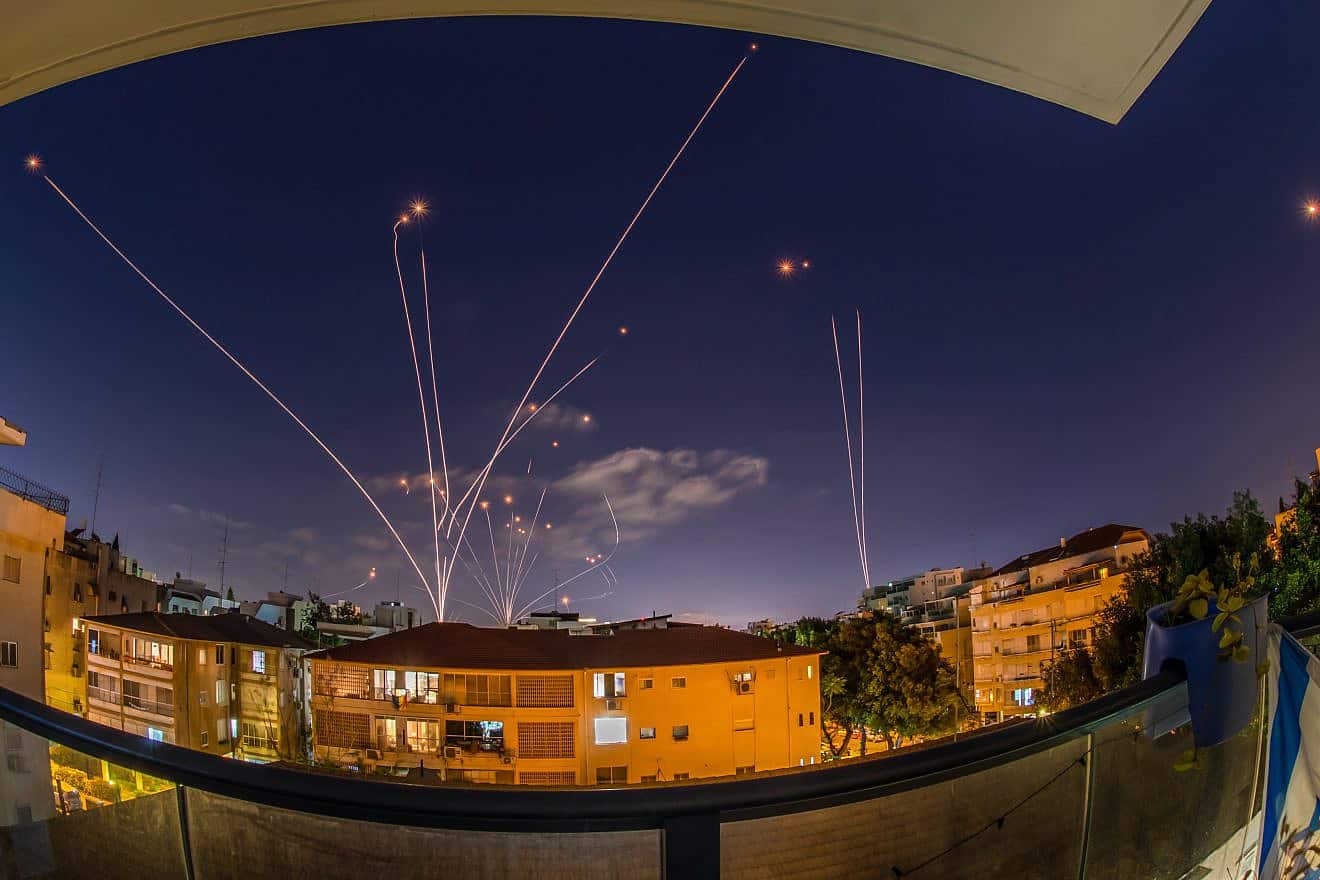
More than 20 rockets were launched at Israeli population centers just a few minutes after midnight.


Iron Dome aerial interceptions of Hamas rockets in southern Israel. Credit: Oren Ravid/Shutterstock.

The Hamas terror group welcomed in the new year by launching a wave of rockets towards southern and central Israel.

More than 20 rockets were launched at Israeli population centers just a few minutes after midnight, sending millions of people racing for shelter.

Sirens sounded in numerous locations in the center of the country, including Rehovot, Holon, Lod and Modiin, as well as Ashdod, Sderot and towns along the Gaza border.


The Iron Dome defense system intercepted most of the projectiles, with others landing in open areas.

There were no reports of injuries or damage.


The Israel Defense Forces had expressed cautious optimism earlier on Sunday in the wake of a decrease in the number of rockets launched from the Strip, as Jerusalem is reportedly preparing to allow some residents of the country’s southwestern region to return home.

The sharp drop in rocket attacks is a direct result of the IDF’s ground operation in Gaza, during which many launch sites have been destroyed, the military added.

According to IDF data, in the first week of December, after Hamas violated the hostages-for-ceasefire deal, 75 rockets were launched at Israel per day on average. Last week, that number dropped to 14.

The figure does not include mortars launched at ground troops operating inside the coastal enclave, rockets falling into the Mediterranean and failed rocket launches.

According to Israel’s Kan News public broadcaster, the IDF has initiated an “orderly process” to allow Israeli evacuees who live between four and seven kilometers (2.5-4.4 miles) from the Gaza border to voluntarily return to their homes.


JNS

Source: https://www.jns.org/hamas-rings-in-2024-with-rocket-barrage-on-central-israel/

Follow Middle East and Terrorism on Twitter

Tony Blair to look into voluntary emigration for Gazans - JNS


by JNS

The former British PM's office swiftly denied the report, saying he wouldn't even consider the voluntary evacuation of Palestinians.


Former British Prime Minister Tony Blair. Photo by Chatham House/Flickr/Creative commons license.

Former British Prime Minister Tony Blair met with senior Israeli leaders last week to discuss plans for a post-Hamas Gaza, in which he agreed to act as an envoy between Israel and moderate Arab states, Channel 12 reported on Sunday.

Blair would also look into the possibility of other countries absorbing refugees from the Gaza Strip, the Israeli news site reported. 

Blair’s office swiftly denied the rumor, saying, “Reports that Mr. Blair has anything to do with the voluntary evacuation of Gazans is simply not true, there has been no such discussion nor would he consider it.”

Voices recently raised in favor of supporting voluntary emigration for Gaza residents include Likud Knesset member and Israel’s former ambassador to the United Nations Danny Danon, who revealed on Dec. 25. that South American and African countries have expressed interest in taking in Palestinian Arab refugees from Gaza in return for monetary compensation.

Danon has floated the idea of voluntary emigration from Gaza as part of his five-point plan for the post-war period.

He noted that Canada announced last month that it would expand immigration for Gazans.

“Migration happens in every war, look at what happened in Syria,” said Danon. (More than 5 million Syrian refugees are registered with the U.N.’s refugee agency. This does not include those who went to Europe.)

Although both Egypt and Jordan have cautioned that if Israel considers directing Gazans into their territories, it would mean war, Danon has noted, “Look what happened during the Syrian civil war. Jordan made the identical statement. Now there are one-and-a-half million Syrian refugees in Jordan.”

The Arab countries “have an obligation to help the Palestinians. Let them help instead of giving inflammatory speeches,” he told Israel radio.

“Even if every country took 10,000, 20,000 Gazans—that’s significant,” he said, echoing a Nov. 13 Wall Street Journal op-ed he co-wrote with Ram Ben-Barak, member of the opposition Yesh Atid Party, titled “The West Should Welcome Gaza Refugees.”

“One idea is for countries around the world to accept limited numbers of Gazan families who have expressed a desire to relocate,” they wrote. “Even if countries took in as few as 10,000 people each, it would help alleviate the crisis.”

Danon’s plan received criticism from some quarters, less for the idea as a whole than for including America and Europe as target countries.

Tony Badran, news editor and Levant analyst for Tablet Magazine, called that aspect of Danon’s program “sheer lunacy.”

“Set aside the shortsightedness, from the Israeli vantage point, of seeding American and Western societies with more people who hate Israel and support its enemies,” Badran wrote in a letter to the Wall Street Journal. “America cannot and should not accept more people from sick societies, never mind likely terror supporters and anti-Semites. That is an act of national suicide.”

Daniel Pipes, president of the Middle East Forum, also writing in the Journal, said that while the idea of emigration by people “who wish to improve their lives” is a “positive impulse in itself,” it’s generally preferable that refugees “remain within their own cultural zone. That is where they most readily fit in, where they can stay truest to their traditions, best find economic roles, most easily can return home, and least disrupt the host society.”

GOP presidential candidate Nikki Haley told ABC News in December that Palestinians should be sent to “pro-Hamas countries,” listing Qatar, Iran and Turkey. “Where are the friends of those pro-Hamas people? Where are the friends of Gaza? They should be the ones doing what they need to do to save them,” she said.

In early December, an initiative was submitted to the U.S. Congress calling for conditioning foreign aid to Arab countries on their accepting refugees from Gaza. Countries named were Egypt, Iraq, Yemen and Turkey.  

It said helping Gazans to move from the “tyrannical oppression of Hamas” was “correct, moral and humane.”

Long-time observers of the Israel-Palestinian conflict such as Martin Sherman, founder of the Israel Institute for Strategic Studies, recently noted that such calls are no longer reserved to the “extreme right,” but are coming from “prominent left-leaning” figures like Ben-Barak.

Sherman noted that Ben-Barak, on a popular TV channel, in noting a senior Hamas official’s comment that the entire Gazan population was made up of refugees, said, “So if all of Gaza is made up of refugees, let’s disperse them around the world. There are 2.5 million people over there. [If] each country will take 20,000 people—100 countries… It’s humane, it’s obvious.”

Sherman also noted that American politicians with impeccable left-wing credentials have called for bringing in Gaza refugees, including New York Reps. Alexandria Ocasio-Cortez and Jamaal Bowman, who told The New York Post that the United States “should be prepared to welcome refugees from Palestine.”


JNS

Source: https://www.jns.org/tony-blair-to-look-into-voluntary-emigration-for-gazans-report/

Follow Middle East and Terrorism on Twitter