The "Middle East and Terrorism" Blog was created in order to supply information about the implication of Arab countries and Iran in terrorism all over the world. Most of the articles in the blog are the result of objective scientific research or articles written by senior journalists.
From the Ethics of the Fathers: "He [Rabbi Tarfon] used to say, it is not incumbent upon you to complete the task, but you are not exempt from undertaking it."
"It has been decided to delay the release of the terrorists planned for yesterday until the release of the next hostages is ensured," the PMO announced.
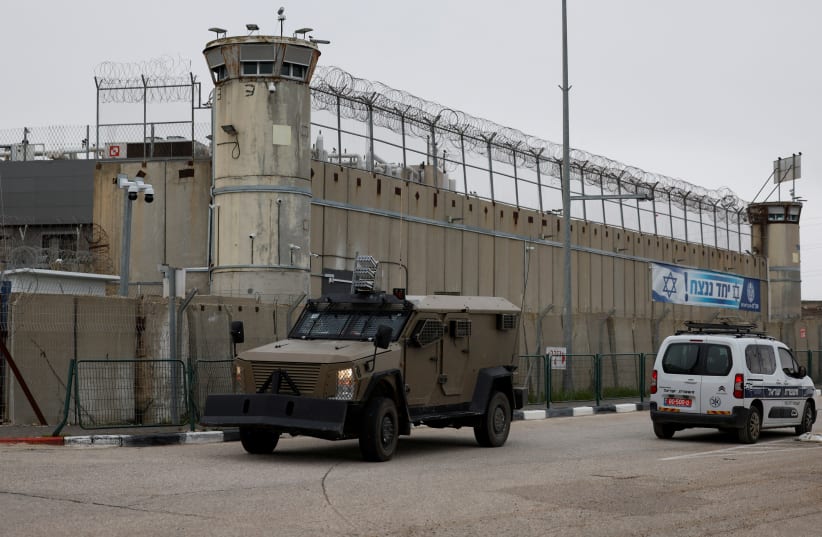
Vehicles move outside the Israeli military Ofer Prison
on the day Israel is expected to release Palestinian prisoners as part
of a hostages-prisoners swap and a ceasefire deal in Gaza between Hamas
and Israel, February 22, 2025.(photo credit: REUTERS/AMMAR AWAD)
Israel will postpone the release of Palestinian prisoners until
additional Israeli hostage releases are secured, the Prime Minister’s
Office said late Saturday.
The PMO cited Hamas’s repeated violations of the ceasefire-hostage deal as the reason for the postponement.
Hamas
on Sunday condemned Israel’s decision, saying its claim that the
hostages’ handover ceremonies are “humiliating” was false and a pretext
to evade Israel’s obligations under the agreement.
The release of prisoners is expected to take place when the next round of hostages are released.
The PMO announcement came after Prime Minister Benjamin Netanyahu convened a meeting in Jerusalem
with Defense Minister Israel Katz, Foreign Minister Gideon Sa’ar,
Finance Minister Bezalel Smotrich, Shas chair Arye Deri, and senior
Defense Ministry officials.
Israeli Prime Minister Benjamin Netanyahu attends a Conference of
Presidents of Major American Jewish Organizations in Jerusalem, on
February 16, 2025. (credit: Chaim Goldberg/Flash90)
Decision comes due to Hamas's 'repeated violations'
“Due
to Hamas’s repeated violations – including ceremonies that disgrace our
hostages’ dignity and the cynical use of hostages for propaganda
purposes – it has been decided to delay the release of the terrorists
planned for yesterday until the release of the next hostages is ensured,
without the degrading ceremonies,” the PMO said.
Israel
wants Hamas to release the bodies of the next four hostages earlier
than Thursday, when they are set to be released, and the extension of
the first phase of the hostage deal to include further releases of
hostages.
Israel says that since Hamas violated the agreement when it didn’t return Shiri Bibas’s body, the four bodies of slain hostages should have been returned earlier.
U.S. Deputy Middle East Envoy Morgan Ortagus described Gaza as a “depraved society.”
U.S. Secretary of State Marco Rubio attends a meeting with Saudi and
Russian officials at Diriyah Palace in Riyadh, Saudi Arabia, Feb. 18,
2025. Photo by Freddie Everett/U.S. State Department.
U.S. Secretary of State Marco Rubio
demanded on Saturday that Hamas and other Palestinian terror groups in
the Gaza Strip immediately free all remaining hostages, or else be
eradicated.
“Hamas’s treatment of hostages, including
its brutal murder of the Bibas family, further illustrates their
savagery and is yet another reason why we are saying these terrorists
must release all of the hostages immediately or be destroyed,” tweeted
Rubio.
The Islamist terrorist group sparked
outrage after handing over the wrong body for Shiri Bibas on Thursday.
The bodies of her two sons, Kfir and Ariel Bibas, along with that of
Oded Lifshitz, were confirmed to be theirs.
Following the outrage, on Friday night
Hamas returned a second body to the Red Cross, which in turn delivered
it to Israel for identification.
On Saturday, the National Institute of
Forensic Medicine at Abu Kabir in Tel Aviv positively identified the
remains as being those of Shiri.
“We share in the deep sorrow of the Bibas
family and embrace them warmly. We will never forget and never forgive,”
said Israeli Prime Minister Benjamin Netanyahu on Saturday night.
“So far, we have brought back 192
hostages—of them 147 alive and 45 deceased,” he said. “Hamas still holds
63 hostages. The Israeli government remains committed to acting
decisively to bring all our hostages home—the living back to their
families and the fallen to a proper burial in their homeland.”
Meanwhile, U.S. Deputy Middle East Envoy Morgan Ortagus on Friday described Gaza as a “depraved society.”
“You have … a society that has to not only be demilitarized, but has to be deradicalized,” Ortagus said in an interview with Fox News. She noted that Gazan civilians participated in the Hamas-led Oct. 7, 2023, massacre, including the taking of hostages.
“President [Donald] Trump sent a very
clear and strong signal about the deradicalization that has to happen to
this population. … If you didn’t believe President Trump a few weeks
ago, look at the image of the crowd clapping and cheering as babies go
back in their coffins into Israel without their mother,” she said.
"You will specialize in funerals—and we will specialize in victories," said Defense Minister Israel Katz.
Israeli Air Force fighter jets over Beirut, Feb. 23, 2025. Credit: Israel Defense Forces.
Israeli Air Force fighter jets flew low
over Beirut on Sunday afternoon as the funeral of slain Hezbollah
terrorist leader Hassan Nasrallah got underway, Defense Minister Israel
Katz confirmed in a statement.
“The IAF jets that are now circling in the
skies over Beirut over Hassan Nasrallah’s funeral are conveying a clear
message: Whoever threatens to destroy Israel and attacks Israel—that
will be their end,” Katz said.
“You will specialize in funerals—and we will specialize in victories,” he added.
Nasrallah’s funeral, which took place
nearly five months after he was killed in an Israeli airstrike on Sept.
27, saw tens of thousands gather at a stadium in Beirut’s
Hezbollah-controlled southern suburb of Dahiyeh.
The Israeli Air Force flyover took place
as mourners chanted, “Death to Israel, death to America, we respond to
your call, Nasrallah.”
Ahead of the funeral, the Israeli military announced it had attacked several Hezbollah sites in Lebanon, targeting rocket launchers and other arms that it said posed an imminent threat to the territory of the Jewish state.
The military stressed that Hezbollah’s
continued terrorist operations continue to violate the established
ceasefire understandings between Jerusalem and Beirut and endanger the
State of Israel and its citizens.
With great fanfare, Palestinian Authority Chairman Mahmoud Abbas declared to the world that he had stopped the PA's terror rewards program known as Pay-for-Slay and that families of terrorists would receive welfare benefits like everyone else in need.
Speaking to the Fatah Revolutionary Council last week, he contradicted that statement saying that he would not deduct even one penny from what the PA has been giving to the prisoners and Martyrs: "They must receive everything, as it was in the past."
PA Chairman Mahmoud Abbas: "We again emphasize that we are proud of the sacrifices made by the Martyrs, prisoners, and wounded... I told you once and I stand by my word: Even if we have [only] one penny left, it is for the prisoners and Martyrs. I
will not agree, and you will not agree, to reduce any obligation, any
interest, or any penny given to them. They must receive everything, as
it was in the past, and they are more precious than all of us! …Note,
the number of Martyrs and wounded in the Gaza Strip is 160,000. Who is
responsible for them? We are (i.e., the PA)... We have established a
comprehensive protection and welfare system and have amended several
laws to ensure the needs of all the groups that were harmed among the
Palestinian families who need strengthening and assistance in Palestine.
This system will work to maintain their dignity and material needs. We
ask everyone to trust us."
[Mahmoud Abbas, YouTube channel, Feb. 21, 2025]
Palestinian Media Watch
had already reported last week that the PA had not stopped the terror
rewards payments and that it was merely paying them from a different
account. Since this account also includes welfare recipients, the real
amounts paid to terrorists will be harder to determine.
A statement by
the head of the Board of Trustees of the Palestinian National Economic
Empowerment Institution (PNEEI), the mechanism that will be making the
payments, noted that the program is "identical," which seems to confirm what Abbas declared to his Fatah members, namely that the salaries will remain the same:
PNEEI Board of Trustees Director Ahmed Majdalani: "It's
not true and not accurate that the financial, ethical, and moral
obligations towards all the families who received aid are being
abandoned. On the contrary, the new law also attempts to concentrate and
institutionalize this aid in the framework of an identical and
unified program on the Palestinian lands without discrimination and in
accordance with the accepted international standards."
[Official PA TV News, Feb. 10, 2025]
It
is clear that Mahmoud Abbas is lying to someone—either to the Western
donor countries as he continues to pay high salaries as terror rewards,
or to his own PLO/Fatah leaders by saying he will not cut the funds.
Palestinian Media Watch will be following and will continue updating.
The Israeli military is intensifying counter-terror operations in northern Samaria following Thursday's failed bus bombings near Tel Aviv.
Israeli tanks amassing at the Lebanese border, Sept. 2024. Credit: IDF.
Israeli tanks have been spotted near Jenin
in northern Samaria on Sunday for the first time since “Operation
Defensive Shield” in 2002.
The Israel Defense Forces has confirmed
that an armored division is being deployed in the Jenin area as part of
expanded counter-terror operations in the area, according to Israel’s Channel 14.
טנקים של צה"ל תועדו סמוך לג'נין - לראשונה מאז מבצע חומת מגן
Furthermore, forces from the IDF’s Nahal
Infantry Brigade and the Duvdevan commando unit have initiated
operations in additional villages within the Jenin area.
Three tanks from the 53rd Armored Battalion are now active in a neighborhood within Jenin, according to Channel 14,
and security sources indicated to the outlet that the IDF is also
considering the use of fighter jets to support the ongoing operation.
The military has been conducting an offensive in Samaria, dubbed “Operation Iron Wall,”
since Jan. 21. The IDF said on Sunday that troops arrested 26
terrorists in Judea and Samaria over the weekend, adding to some 90
terrorism suspects the IDF said on Friday who were detained over the
past week.
The IDF, Israel Security Agency (Shin
Bet) and Israel Police also confiscated three firearms along with other
weapons, and interrogated suspects over Shabbat.
In northern Samaria, security forces
continued operations in Jenin, Tulkarm, and Nur Shams, expanding
activities to nearby towns on Sunday morning. Additional arrests were
made in Nablus, Qabatiya and Deir Qaddis.
26 מחבלים נעצרו במהלך השבת: כוחות הביטחון ממשיכים לפעול לסיכול טרור ביהודה ושומרון
במהלך השבת כוחות צה״ל, שב״כ וכוחות משטרה, פעלו לסיכול טרור ברחבי יהודה ושומרון. הכוחות עצרו 26 מחבלים, החרימו שלושה נשקים ואמצעי לחימה נוספים וביצעו תחקורים ושיחות אזהרה לחשודים >> pic.twitter.com/9ISegCw53x
This escalation follows a sharp rise in
terrorism in Judea and Samaria, notably last Thursday’s attempted mass
bus bombing in central Israel.
Defense Minister Israel Katz announced on
Sunday that the IDF will remain for the next year in Samaria refugee
camps that have been cleared of terrorists and civilians, with no return
allowed.
“Forty thousand Palestinians have so far
evacuated from the Jenin, Tulkarem and Nur Shams refugee camps, and they
are now empty of residents. UNRWA activity in the camps has also been
stopped,” Katz said in a written statement.
Defense
Minister Israel Katz visits IDF troops in the Tulkarem refugee camp in
northern Samaria, Feb. 21, 2025. Photo by Ariel Hermoni/Defense
Ministry.
“We are at war with Islamic terror in
Judea and Samaria. I have instructed the IDF to prepare for a prolonged
stay in the cleared camps for the coming year, and not to allow the
return of residents and for terror to return and grow,” Katz continued.
He reiterated that Israel will not revert
to previous realities and will keep up its efforts to eradicate
terrorist infrastructure and terrorist groups in the area. The IDF will
also consider establishing posts within the camps to prevent terrorists
from returning, with the operation expected to expand as necessary.
Israeli Prime Minister Benjamin Netanyahu said during a visit to the Tulkarem camp on Friday—hours after explosions
on several buses in the Tel Aviv area that are being investigated as a
coordinated terrorist attack—that Israeli troops “are doing a tremendous
job.”
Israeli Prime Minister Benjamin Netanyahu at the Tulkarm refugee camp in Samaria, Feb. 21, 2025. Photo by Ma’ayan Toaf/GPO.
“In the past year, we have greatly
increased our activity. We are entering the strongholds of terrorism,
leveling entire streets used by terrorists, and their homes, as well as
eliminating terrorists and commanders,” said Netanyahu, according to an
English translation provided by his office. “We are taking extremely
important measures against Hamas and other terrorist entities who are
attempting to harm us,” he added.
The Israeli premier called the events in
Bat Yam and Holon on Thursday night “an attempt to perpetrate a series
of terrorist attacks with mass casualties,” adding that it “is a very
severe situation.”
In response, he said, Israel is launching “additional operations against hotbeds of terrorism.”
“I know that our heroic soldiers know how to do this job well,” he added.
Netanyahu on Thursday ordered the military
to conduct a “massive” counter-terrorism operation in Judea and Samaria
and instructed the Shin Bet and Israel Police to step up “preventive
activities” against possible additional attacks across the country.
Following a situational assessment on
Thursday, the IDF said its operations in Judea and Samaria were ongoing
and announced the deployment of three additional battalions to reinforce
security in the territories.
An Israeli soldier during a counter-terrorism operation in Judea and Samaria, February 2025. Credit: IDF.
All of the explosions on Thursday occurred
in parked, empty buses across the central cities of Bat Yam and Holon,
located south of Tel Aviv. There were no injuries in the attack. Two
more devices were found by Israeli security forces.
At least one of the bombs bore a note, in Arabic and Hebrew, that stated, “Revenge from the Tulkarem refugee camp,” Channel 12 News reported.
All five explosive devices were intended to go off simultaneously in a “strategic terrorist attack,” Channel 12 cited security sources as saying.
On Friday, Katz toured the Tulkarem camp,
where he vowed to vanquish the terrorists. “We are at war with extremist
Islamic terror and we will win—here, in Gaza and everywhere,” he said.
Knesset Speaker Amir Ohana, during a tour
of northern Samaria on Sunday, called for the annexation of Judea and
Samaria, saying that Israeli communities there are the key to achieving
peace. The member of the ruling Likud Party said:
“These biblical, original, parts of our
land, which in the Bible tells the story of our people, are intended for
us, for the people of Israel, need to be in the territory of the State
of Israel, under the ownership of Israel, under full Israeli
sovereignty, and I think that today this thing is clearer than ever.”
Attempting to combat media narratives and obstructionism, Hegseth has insisted that he is merely moving money around in the Pentagon’s budget to other internal priorities and that does not constitute a cut at all. To critics, it doesn't matter.
Amid the war on terror and the many military conflicts of the past two decades, Democrats were often critics of foreign adventurism and military spending, pointing to the bloated Pentagon budget as an obvious target for cuts to balance the budget.
Now that Defense Secretary Pete Hegseth has ordered a
sweeping budget review and the implementation of those cuts, Democrats
-- determined to obstruct the Trump agenda -- are suddenly livid and
sound like Bush-era Republicans warning of national security failures
should the Defense Department lose funding.
The fiscal year 2025 National Defense Authorization Act approved $883.7 billion
in funding for discretionary defense purposes. Secretary of Defense
Pete Hegseth, however, has reportedly ordered the Pentagon to plan for
an 8% budget cut every year for five years, according to The Washington Post, which cited an internal memo and “officials familiar with the matter.”
“To achieve our mandate from President Trump, we are guided
by his priorities including securing our borders, building the Iron
Dome for America, and ending radical and wasteful government DEI
programs and preferencing,” acting Deputy Secretary of Defense Robert Salesses said Wednesday.
Hegseth: “It’s not a cut, it’s refocusing and reinvesting”
Attempting to combat media narratives, Hegseth has insisted
that he is merely moving money in the Pentagon’s budget to other
internal priorities and that such a move did not constitute a cut at
all. As the Pentagon plans to allocate funding
to other projects, it is unlikely that the shifts would directly impact
the national budget. In a public video statement, Hegseth on Thursday
urged the public to take media stories with a “grain of salt,” insisting
that the media has a “different agenda.”
Hegseth has sought to free up funds in the budget this year
to instead invest in Trump-favored projects like an American Iron Dome.
That money comes from the already-approved FY2026 budget and totals
around $50 billion, roughly 8% of that budget. He did not directly
address the reports of an 8% cut each year for five years, but merely
the reallocation of the $50 billion within the existing budget.
Hegseth confirmed that the Department of Government
Efficiency was working with the Pentagon and that he had afforded their
staff “broad access” to review the department, with a focus on
“headquarters, and fat, and redundancies, and topline stuff.”
“The media wants to call these exclusive cuts, but it’s
completely the opposite,” he said. “It’s not a cut, it’s refocusing and
reinvesting” existing funds toward Trump’s priorities and away from
Biden-era social programs. Prior to the announcement, Hegseth
highlighted the Pentagon’s inability to pass an audit and its history of
financial vagueness.
“The fact that I have to commit to an audit being done in
four years is bad enough. The Pentagon should be able to pass a budget
right now,” he told Fox News earlier this month. “When we spend dollars, we need to know where they’re going and why. That’s simple accounting.”
Democrats livid
Mainline Democrats did an about face from their decades
long opposition to military spending, and were quick to criticize the
prospect of a reduced defense budget and now warn of national security
failures as they wage war against DOGE and its sweeping cuts to the
federal headcount.
“These types of hasty, indiscriminate budget cuts would
betray our military forces and their families and make America less
safe. I’m all for cutting programs that don’t work, but this proposal is
deeply misguided. Secretary Hegseth’s rushed, arbitrary strategy would
have negative impacts on our security, economy, and industrial base,” said Sen. Jack Reed, D-R.I.
The cuts “will have a dramatic, deleterious & damaging
effect on our readiness & preparedness for the threats that are only
increasing around the world,” Sen. Dick Blumenthal, D-Conn., said on CNN.
Blumenthal is notorious for having been accused of "stolen valor":
repeatedly claiming to have served in Vietnam. That story fell apart and
in 2010 Blumenthal apologized for "misspeaking."
Retired Lt. Gen. and CNN analyst Mark Hertling fumed over the plans, calling them “exponentially worse than sequestration that crippled the military in 2011.”
That was then, this is now.
Social media erupted with comments on the irony of
Democrats spending years advocating for defense cuts, only to balk when a
Republican actually attempted to implement them. Some Democrats did attempt to force a 10% defense cut in 2020, with 93 of them backing the measure, but it did not succeed.
“A republican president moves to cut defense spending and democrats howl. Amazing,” tweeted the Bluesky Libs account.
The about-face is particularly noteworthy in light of Democrats
suggesting that DOGE look at the Pentagon instead of cutting other
public programs, just weeks previously.
“The Corporation for Public Broadcasting, which disburses
funds to PBS and NPR stations, gets $535 million a year in federal
funding,” posted CNN’s Brian Stelter
in early February. “So any official who seriously wanted to achieve
billions in cost savings would start elsewhere – like the $874 billion
spent on national defense.”
Sanders: “Every once in awhile, I do agree with Trump"
Despite the Democratic about-face, some die-hard progressives are on board with the plan to reduce the Pentagon’s budget.
“Every once in awhile, I DO agree with Trump. He's right:
when the Pentagon cannot complete an independent audit, we should cut
military spending by 8% a year over the next 5 years. These savings
should go to increasing Social Security benefits & strengthening VA
health care,” Sen. Bernie Sanders, I-Vt., said.
Young Turks host Cenk Uygur, a stalwart progressive, also
lent his limited support to the idea of Pentagon cuts and opined that
Democrats would be unwise to oppose the move. “Hegseth says Pentagon
needs to cut 8% per year for next five years. Great,” he posted.
“Then he says we're going to redirect the savings to
another Pentagon program. Not great. Redirect it to the taxpayers. Also,
looks like Democrats might be stupid enough to fight AGAINST Pentagon
cuts,” Uygur continued.
The Pentagon directed Just the News to the statement from Salesses and declined to provide comment on the reported 8% annual cuts.
All this does mean that the "Supreme Guide" isn't prepared to perform another of his "heroic flexibilities" by accepting a deal with the "Great Satan" to sit out Trump's four-year tenure, a game that led seven consecutive US presidents up the garden path, allowing the Islamic Republic of Iran to approach its golden jubilee.
The talk party suggests that
Iran should offer to freeze its nuclear program for two to three years,
at the end of which it would decide which direction it should take.
Those who market the above analysis assume that the US, and for
that matter Israel, will stand by and see how the Iranian adversary
bounces back from the edge of doom.
Khamenei, who controls law and order forces, has put them on
partial alert to nip any revolt in the bud. This is accompanied by a
massive crackdown against potential dissidents, especially in Tehran,
with reports of arbitrary arrests.
All this does mean that the "Supreme Guide" isn't prepared to
perform another of his "heroic flexibilities" by accepting a deal with
the "Great Satan" to sit out Trump's four-year tenure, a game that led
seven consecutive US presidents up the garden path, allowing the Islamic
Republic of Iran to approach its golden jubilee.
Iran's "Supreme Leader" Ali Khamenei, who controls law and
order forces, has put them on partial alert to nip any revolt in the
bud. This is accompanied by a massive crackdown against potential
dissidents, especially in Tehran, with reports of arbitrary arrests.
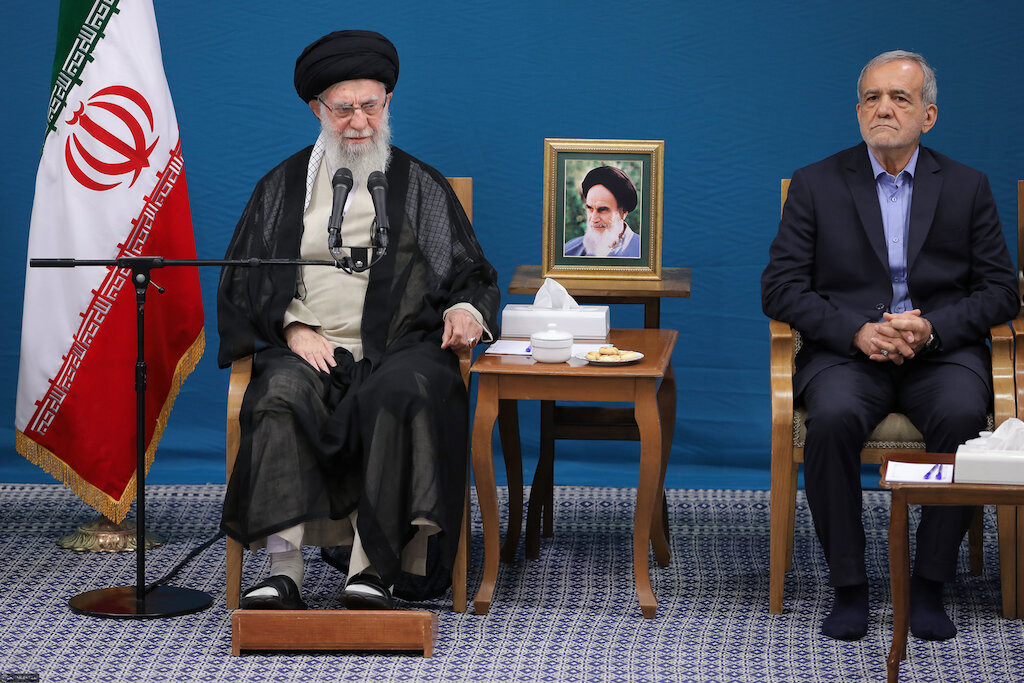
Pictured: Khamenei meets with President Masoud Pezeshkian in Tehran on
August 27, 2024. (Image source: khamenei.ir)
With the Trump administration sending conflicting signals about its
intentions on dealing with Iran, the Iranian leadership is once again
divided on how to respond.
One faction is trying to paint a grim picture in which the US will
give Israel enough support to inflict a heavy defeat on Iran to complete
the defeats already inflicted on Tehran's allies in Iraq, Syria,
Lebanon and Yemen. Such a humiliation will encourage the regime's
opponents both inside and outside the country to take to the streets and
seize power while a demoralized Islamic Revolutionary Guard Corps will
do what it did in Syria, that is to say, run for economic crisis cover
to save its skin.
The same faction argues that the current economic crisis has sapped
the will and energy of the regime's dwindling support base, making
regime change a real possibility for the first time.
So, how to negotiate such a dangerous bend of the road?
The faction's luminaries, including President Masoud Pezeshkian,
suggest opening talks aimed at preventing a war and allowing things to
cool down.
But who should one talk to?
Talking to the US is supposed to be verboten according to "Supreme Guide" Ali Khamenei who cites a fatwa
by the founder of the regime, Ruhollah Khomeini, to that effect, plus
an act of the "Islamic Majlis," the ersatz parliament that endorses the
ban.
The answer is: the European trio of France, Germany and Great
Britain, which coincidentally have bumpy relations with Washington.
The theory goes that the trio will welcome a diplomatic coup to
restore part of the prestige they have lost because of President Donald
Trump's decision to exclude them from his Ukraine peace initiative and
plans for the future of Gaza.
But what could one talk about without being forced to offer concessions that result in a massive loss of face?
The talk party suggests that Iran should offer to freeze its nuclear
program for two to three years, at the end of which it would decide
which direction it should take. Right now, Iran is spending vast
resources on a program that has no obvious civilian or military use or
justification.
In exchange, the European trio will use the mechanism provided by UN
Security Council Resolution 3221 to avoid opening the path for taking
military action against Iran. The above-mentioned resolution expires in
October, making any unintended consequence a possibility. A deal with
the Europeans could help ease pressure on Iran, inject some vitality in a
moribund economy, and help prevent a massive popular revolt.
Those who market the above analysis assume that the US, and for that
matter Israel, will stand by and see how the Iranian adversary bounces
back from the edge of doom.
That analysis is opposed by the faction still totally loyal to
Khamenei, who insists that any show of weakness could accelerate moves
towards regime change. His advice is to stand firm and prepare for war.
The first step is to build a war chest. This is done by reducing the
supply of foreign currency to the market to allow the national currency
to fall further. The currency which fetched $1 with 650,000 rials now
needs 900,000.
This is a trick used by the Allies when they invaded and occupied Iran in World War II.
Because their expenditures in Iran were in the local currency, they forced a 50 percent devaluation of the rial.
Now used by Khamenei, that trick increases the state's purchasing
power while reducing the purchasing power of Iranian families, including
the state's military and civilian personnel. To partly compensate for
that, the key personnel needed in a war are granted exceptional bonuses.
Khamenei, who controls law and order forces, has put them on partial
alert to nip any revolt in the bud. This is accompanied by a massive
crackdown against potential dissidents, especially in Tehran, with
reports of arbitrary arrests.
All this does mean that the "Supreme Guide" isn't prepared to perform
another of his "heroic flexibilities" by accepting a deal with the
"Great Satan" to sit out Trump's four-year tenure, a game that led seven
consecutive US presidents up the garden path, allowing the Islamic
Republic of Iran to approach its golden jubilee.
Today, to talk or not to talk is a question not only for rival
factions in Tehran but also for powers that, rightly or wrongly, are
convinced that there could be no regional peace and stability without
persuading or forcing what François Mitterrand called "le grand
perturbateur" ("the big troublemaker") to change or to be changed.
Gatestone Institute would like to thank the author for his kind
permission to reprint this article in slightly different form from Asharq Al-Awsat. He graciously serves as Chairman of Gatestone Europe.
Amir Taheri was the executive editor-in-chief of the daily Kayhan
in Iran from 1972 to 1979. He has worked at or written for innumerable
publications, published eleven books, and has been a columnist for Asharq Al-Awsat since 1987.
The IRGC, long the spearhead of Tehran’s expansionist ambitions and a state-within-a-state that thrives on destabilization, now finds in Algeria a new theater for its operations.
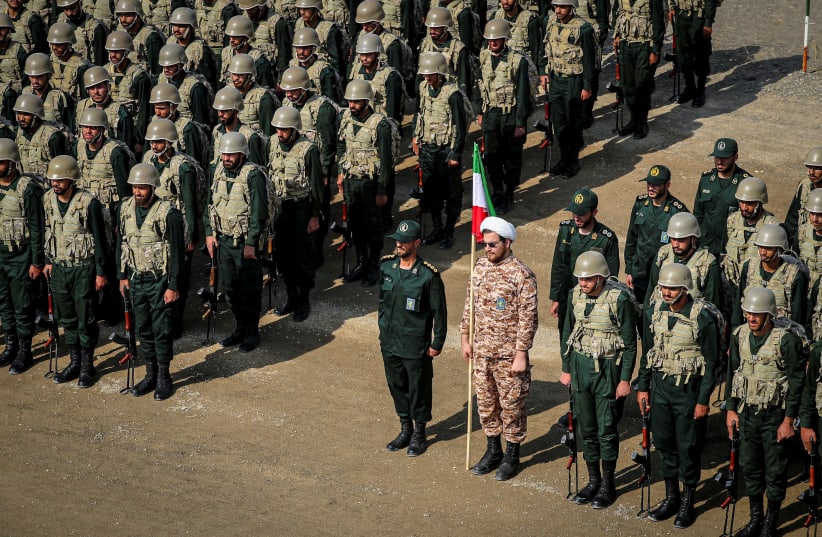
Members of the Islamic Revolutionary Guard Corps (IRGC)
attend an IRGC ground forces military drill in the Aras area, East
Azerbaijan province, Iran, October 17, 2022.(photo credit: IRGC/WANA/HANDOUT VIA REUTERS)
Algeria’s deepening entanglement with Iran’s Islamic Revolutionary Guard Corps (IRGC) ought to send tremors through Western capitals, yet the response thus far has been one of strategic myopia.
The
IRGC, long the spearhead of Tehran’s expansionist ambitions and a
state-within-a-state that thrives on destabilization, now finds in Algeria a new theater for its operations.
This
is not merely a matter of bilateral cooperation between Algiers and
Tehran; it is the harbinger of a wider struggle that risks engulfing
North Africa, destabilizing Europe’s doorstep, and shifting the
geopolitical equilibrium of the Mediterranean in ways profoundly
inimical to the interests of democracies.
For
decades, Algeria has wrapped itself in the mantle of nonalignment,
presenting itself as an unyielding champion of sovereignty and
independence, a regional power beholden to none. But beneath this
carefully maintained facade, its growing collusion with the IRGC is
emblematic of a new and dangerous departure.
Intelligence
reports, diplomatic briefings, and well-sourced analyses now converge
on a singular reality: Algeria is poised to become Iran’s forward
operating base in North Africa. Through it, Tehran seeks not only to
exert ideological influence but to operationalize its wider vision of
strategic dominance – one that threatens the security of Europe and
beyond.
A demonstrator waves an Algerian flag (credit: REUTERS/CHRISTIAN HARTMANN)
THE
FIRST theater of this creeping entrenchment is, undoubtedly, the Sahel.
A region already teetering on the edge due to jihadist insurgencies,
criminal syndicates, and feeble state control, the Sahel provides
fertile ground for Iranian proxies to embed themselves.
Algeria,
long accused of tacitly supporting destabilizing actors when it suits
its interests, now stands accused of allowing IRGC-linked networks to
carve out a presence, training militants, channeling arms, and exporting
Tehran’s doctrine of militant revolution.
How Iran is impacting the Polisario Front operations in Western Sahara
More worrying still, the IRGC’s fingerprints are increasingly visible in the Polisario Front’s operations in Western Sahara,
an alarming echo of Iran’s well-worn strategy of leveraging non-state
actors to expand its reach – whether Hezbollah in Lebanon or the Houthis
in Yemen.
Of
course, the IRGC is not alone in its maneuvering – it takes two to
tango. Algeria’s clever use of subversion tactics, disguising military
installations behind civilian infrastructure and weaponizing the
language of liberation for imperialist objectives, stretches back
decades. A declassified CIA report dated April 1967 sounded the alarm
over Algeria’s military buildup in the Tindouf Airfield, located less
than 25 km. from the disputed Western Sahara territory.
The
Tindouf area has since become a Polisario stronghold, rebranded a
“refugee camp” by Algerian authorities solely for the purposes of
receiving humanitarian aid that the militia invariably exploits to
support its grotesque human rights violations and terrorist activities.
The international community has conveniently chosen to ignore that
Islamic State operations in the Sahel region were spearheaded by former
Polisario fighters. With their shared love for jihad and chaos, Algiers
and Tehran are a match made in heaven.
Yet
this is not merely a matter of sub-state warfare or superficial
memoranda. Iran’s ambitions in Algeria extend to the economic and
strategic spheres, where control over vital trade arteries and access to
natural resources form part of a broader strategy of leverage.
Algeria,
rich in hydrocarbons, strategically perched along Mediterranean trade
routes, and with direct access to sub-Saharan Africa, offers Iran the
perfect bridgehead for exerting pressure on European markets.
If
the IRGC gains a foothold in Algeria, it will not only be a question of
exporting ideological radicalism but of seizing control over key supply
chains, using energy politics as a cudgel against Europe, and embedding
itself in the lifeblood of global commerce.
THE
WEST cannot afford to sleepwalk into this geopolitical ambush. The
danger does not end with Algeria becoming a mere client state of
Tehran’s theocratic regime. The real nightmare scenario is the systemic
weaponization of migration routes. Algeria, already a key transit hub
for migrants seeking passage into Europe, could become a vector for
radicalized operatives, funneling extremists into the heart of the
continent under the guise of humanitarian exodus.
This
is a playbook we have seen before – from the Syrian war to the
corridors of Libya – where instability has been cynically exploited to
shift the balance of power and disrupt European stability.
Algeria
itself stands accused of leveraging the “Harraga” phenomenon to wreak
havoc on already strained relations between Spain and Morocco. That
Iran, via its IRGC tentacles, would utilize this route should not be
doubted; that Europe remains largely blind to this looming threat is an
indictment of its strategic inertia.
This
is not paranoia; it is historical precedent repeating itself with
alarming precision. Iran’s strategic doctrine has always been one of
gradual encroachment, gaining footholds in regions of instability,
fortifying its positions through proxies, and then wielding asymmetric
power to exact geopolitical concessions.
Algeria,
willingly or otherwise, is walking straight into this embrace. And if
the West fails to act now – if it fails to counter this burgeoning
alliance with economic, diplomatic, and strategic pressure – it will
find itself confronting the consequences not in the distant deserts of
North Africa, but on the streets of Paris, Berlin, and London.
The
warning signs are there, flashing red, for all who care to look. Now
that the IRGC is on the move in Algeria, the West can no longer afford
to view the Western Sahara issue as a “forgotten conflict” whose
resolution is left to fate.
The
time to act is now. For if Algeria completes its transformation into an
IRGC outpost, the costs will not be borne solely by North Africans but
by Europe itself. And history will not be kind to those who saw the
storm gathering and chose to do nothing.
Catherine
Perez-Shakdam is the executive director of the Forum for Foreign
Relations and Aurele Tobelem is the director of research at the Forum
for Foreign Relations.
The French president's most recent attempt to reassert himself, by calling a summit on how EU could end Russia-Ukraine war, apparently only ended is disagreement.
With the approval of barely
one-in-five of his fellow countrymen – and soon to see the other half of
the once essential French-German alliance swing dramatically to the
right – France’s Emmanuel Macron is increasingly isolated.
Once seen as the rising star of European politics,
the French president – who on Monday will be in Washington, D.C. – was
humiliated in back-to-back elections last summer. First, in a June vote for France’s representatives in the European Parliament,
in which the nationalist party National Rally more than doubled the
votes earned by Macron’s coalition, then having his Ensemble party end
snap elections a month later with just the third-largest block in
parliament.
Though Macron was able to stay on as president, the election results obligated Macron to give a larger voice in his government to opposition figures,
a development that is making governing difficult. Late last year,
Macron said he was “ashamed” of the ministers he was forced to appoint.
“I just don’t see how he can bounce back,
there’s no clear path,” a former Macron aide told the U.K. newspaper
The Telegraph. “The ambience in the Elysée [the French equivalent to the
White House] is morose.”
But Macron hasn’t stepped back from promoting his views internationally, despite mixed reviews.
And just last week, Macron appeared to try to reassert his leadership
within the Europe by calling EU leaders to an emergency summit in Paris
on how the end the 3-year-long Russia Ukraine war. However, the
leaders
However, the Paris talks only exposed divisions between the countries
and highlighted how they have so far failed to agree on a coherent plan
for supporting Ukraine its now 3-year-long war with Russia , analysts have told the Kyiv Independent.
“We were met with depths of evil and malice that could not be conceived," Dr. Kugel said.
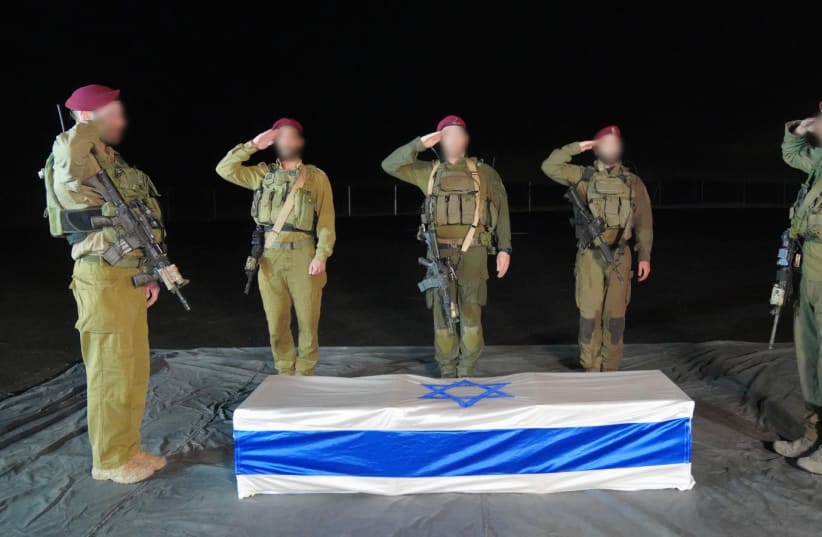
IDF soldiers recover Shiri Bibas's remains on Saturday February 22, 2025. (photo credit: IDF SPOKESMAN’S UNIT)
The forensics team that identified Shiri Bibas's body confirmed that she did not die in an Israeli airstrike as Hamas had previously claimed.
"We
were met with depths of evil and malice that could not be conceived,"
Dr. Chen Kugel, a leading forensic scientist from the National Center
for Forensic Medicine, said on Saturday. "Our examination showed no
evidence of injury from the bomb."
"This is a difficult day for us and for all citizens of Israel," he concluded.
Shiri
Bibas's body was returned to Israel from Gaza on Friday night. Hamas
transferred her remains to the Red Cross, which transferred them to the
IDF. The military brought then brought her body to the Institute of
Forensic Medicine for confirmatory testing.
The
testing team was composed of a variety of specialists, including the
DNA laboratory team and the institute's director, Dr. Kugel.
Pictures of Shiri Bibas and her children Kfir and Ariel, in Jerusalem, February 20, 2025 (credit: FLASH90/CHAIM GOLDBERG)
The institute was also responsible for identifying the remains of her children, Kfir and Ariel Bibas.
Their
bodies were identified using forensic analysis in an interdepartmental
collaboration between the National Institute of Forensic Medicine and
the Israel Police.
Initial transfer of wrong body
Initially, Hamas transferred the remains of an anonymous woman's body, the IDF announced Friday morning.
The
IDF said that forensic officials carried out several tests on the
anonymous woman's body to ensure the result's accuracy, Army Radio
reported on Friday, adding that the body was received in "a condition in
which it could be clearly verified it does not belong to Shiri Bibas."
"This
is a very serious violation by the Hamas terrorist organization, which
is required by the agreement to return four dead hostages. We demand
that Hamas return Shiri home along with all our hostages," the military added.