Monday, May 19, 2025

The FBI Washington Headquarters Won’t Be Missed - Victor Davis Hanson


​ by Victor Davis Hanson

The long-overdue shuttering of the FBI’s scandal-scarred Washington headquarters signals not just a change of address, but a necessary exile of the agency’s most politically corrupted core.


Current FBI Director Kash Patel is closing down the agency’s Washington, DC, mothership office and moving at least 1,500 employees out of the DC area to regional offices.

The decision was not just Patel’s.

During the Biden Administration, it was determined that the 50-year-old Hoover building headquarters was structurally decrepit. More germanely, no prior FBI director had ever explained why nearly a third of the FBI workforce was centered in offices in Washington, far from where most of the serious crime in America occurs.

The news is welcome for reasons well beyond the safety of agents in an apparently unsafe headquarters.

It is no exaggeration to state that most of the FBI scandals of the last decade were born in the Hoover building headquarters, suggesting that the agency had long become top-heavy, politically weaponized, and deeply embedded in and compromised by the Washington apparat.

Former FBI Director, later appointed as special counsel, Robert Mueller ran a media-driven, 20-month, 40-million-dollar legal circus chasing the unicorn of “Russian collusion.” His left-wing legal team—replete with political conflicts of interest and scrubbed cell phones—was dubbed by the obsequious, giddy left-wing media as the “army,” “untouchables,” “all-stars,” “dream team,” and “hunter-killer teams.”

When called to testify about his investigation that had found no Russian-Trump collusion, Mueller implausibly denied any knowledge of the Steele dossier or FusionGPS. Yet they were arguably the very catalysts for his own special counsel appointment.

Two of his Washington FBI investigators were fired—the amorous Peter Strzok and Lisa Page—who had co-texted a deep personal antipathy toward Trump, the object of their investigations, and a desire to see him not become president, referred to as an “insurance policy.” Note that either the FBI or Mueller’s team also mysteriously lost the requested recorded texts and calls on the duo’s phones.

Mueller’s successor, James Comey, outdid his predecessor’s congressionally sworn amnesia. Now in the news yet again for allegedly threatening the president with an “8647” tweet, Comey, while under oath to a congressional committee, stonewalled questioning by claiming he did not remember or could not answer on some 245 separate occasions.

Somehow in 2016, Comey—suddenly acting as both an investigator and a de facto federal prosecutor, despite clear conflicts of interest—managed to interfere in the 2016 campaign by finding Hillary Clinton likely guilty of, but somehow not indictable for, a number of felonies, from unlawfully transmitting classified files to destroying subpoenaed evidence.

Comey also lied to the president that he was not a subject of his own ongoing FBI-directed investigation of Trump.

Comey hired Christopher Steele as an informant and thereby helped to birth Steele’s fabrications.

Comey, through a friend, leaked to the New York Times his own private conversations with the president, recorded on his own FBI device no less.

He set up National Security Advisor Michael Flynn and bragged about how easily the naive and ambushed Flynn foolishly spoke to his FBI investigators without an attorney.

His successor, interim director Andrew McCabe, was a kindred leaker and political partisan. He was fired for lying to federal investigators on four occasions, three times while under oath.

McCabe’s successor, Christopher Wray, infamously oversaw FBI agents spying on parents at school board meetings and supposedly also monitoring “radical traditionalist” Catholics.

Wray’s FBI conducted the now equally discredited Mar-a-Lago SWAT team raid on ex-President Trump’s personal residence. The performance-art operation was supposedly designed to find rumored mountains of improperly stored classified files. Despite all the leaks and fake news about troves of secret and classified dossiers, in the end, agents carted away 13,000 documents to find a mere 102 that were deemed classified—some .007 percent of what they confiscated.

In a now-infamous photo of the document trove released by the FBI, Trump’s classified papers were haphazardly strewn across the floor with nearby covers emblazoned “Secret” in red rubrics.

Agents later admitted the photos did not reflect the actual position of the documents when they had arrived, but were scattered over the floor and photographed by the FBI, along with the covers that they had brought along to the raid as photo props.

The FBI then showed far less interest in investigating Joe Biden’s three-decade-long illegal possession of classified documents, stored in at least three unsecured locations—and only revealed when the Biden White House had appointed a special counsel to investigate Trump for what Biden himself had done for far longer, with less security and with continued impunity.

Washington FBI lawyer Kevin Clinesmith was indicted and convicted of doctoring a FISA application document in order to deceive the federal court into granting surveillance over an innocent but framed Carter Page.

FBI chief counsel James A. Baker, likewise Washington-based, allegedly was deeply involved in trying to shop the spurious Steele dossier to the media on the eve of the 2016 election.

In general, the Washington FBI sought to warp both the 2016 and 2020 elections and might arguably have affected either outcome. Besides finding Hillary Clinton likely culpable and then improperly exonerating her, later in 2020, the FBI sat tight and silent on the Hunter Biden laptop after authenticating it as genuine.

Yet almost at the same time, kindred ex-intelligence authorities—the now notorious “51 former intelligence officials” —rounded up by former CIA interim director Mike Morrell at the prompt of then Biden aide and soon-to-be Secretary of State Antony Blinken—brazenly lied to the public that the laptop was a likely creation of Russian intelligence.

This disinformation campaign, launched by the 51 “former” intelligence agents, included some who were still on the federal payroll as contractors. Their intent was to arm Joe Biden in the upcoming October 2020 presidential debate with the lie that the incriminating laptop (again confirmed in secret by the FBI as genuine) was fabricated by the Russians. And the ruse worked perfectly in deceiving the American people on the eve of the election.

Note as well that the FBI embedded agents in social media concerns like Facebook and Twitter to partner in censoring news by deeming it “misinformation” and “disinformation.” Yet, in truth, their jobs in the so-called “Twitter Files” scandal were better defined as suppressing any news considered problematic to the then-2020 Biden campaign.

Many FBI agents later rotated over to high-paying social media companies after their collaboration, among them former FBI general counsel Baker, who was then subsequently fired by the new owner of Twitter, Elon Musk.

The list of ethical, moral, and legal misadventures at the top-heavy Washington FBI office could be easily expanded.

But suffice to say, the closure of the J. Edgar Hoover building and the dispersal of the toxic Washington-centric FB hierarchy is welcome news.

Hopefully, this historic closure will also mark the end of the most sordid and decade-long chapter in the history of a once-great agency.


Victor Davis Hanson is a distinguished fellow of the Center for American Greatness and the Martin and Illie Anderson Senior Fellow at Stanford University’s Hoover Institution. He is an American military historian, columnist, a former classics professor, and scholar of ancient warfare. He has been a visiting professor at Hillsdale College since 2004, and is the 2023 Giles O'Malley Distinguished Visiting Professor at the School of Public Policy, Pepperdine University. Hanson was awarded the National Humanities Medal in 2007 by President George W. Bush, and the Bradley Prize in 2008. Hanson is also a farmer (growing almonds on a family farm in Selma, California) and a critic of social trends related to farming and agrarianism. He is the author of the just released New York Times best seller, The End of Everything: How Wars Descend into Annihilation, published by Basic Books on May 7, 2024, as well as the recent  The Second World Wars: How the First Global Conflict Was Fought and Won, The Case for Trump, and The Dying Citizen.

Source: https://amgreatness.com/2025/05/19/the-fbi-washington-headquarters-wont-be-missed/

Follow Middle East and Terrorism on Twitter

Sunday, May 18, 2025

Katz: Rising indications that Mohammed Sinwar is dead, IDF yet to confirm - Yonah Jeremy Bob


​ by Yonah Jeremy Bob

The IDF carried out a hit attempt on Mohammed Sinwar on Tuesday, but it was unclear whether or not the mission succeeded.


Mohammed Sinwar against backdrop of strike on the European Hospital which allegedly killed him, May 13, 2025 (illustration). (photo credit: Hatem Khaled/Reuters, SCREENSHOT/X)
Mohammed Sinwar against backdrop of strike on the European Hospital which allegedly killed him, May 13, 2025 (illustration).
(photo credit: Hatem Khaled/Reuters, SCREENSHOT/X)

Defense Minister Israel Katz on Sunday told the Knesset Foreign Affairs and Defense Committee that there are rising indications that Gaza Chief Mohammed Sinwar is dead.

Katz made his statement just as IDF sources on Sunday told The Jerusalem Post that it did not recognize foreign reports that Gaza Chief Mohammed Sinwar's body has been found with around a dozen of his aides, including Rafah Brigade commander Mohammed Shabanah.

It appears that the IDF will wait either for Hamas to officially announce him as dead or its own intelligence regarding his body.

Despite the restraint in officially declaring him dead, IDF sources had already told the Jerusalem Post last week that he was very likely dead, and Katz had also previously hinted the same in recent days.

On Tuesday,  the IDF dropped a large number of bombs on a tunnel hideout under a hospital in Gaza in order to target Sinwar. 

Palestinians inspect the damage at the European Hospital, which was partially damaged following an Israeli airstrike that targeted Muhammed Sinwar in Khan Younis, in the southern Gaza Strip, May 13, 2025.  (credit: Hatem Khaled/Reuters)Enlrage image
Palestinians inspect the damage at the European Hospital, which was partially damaged following an Israeli airstrike that targeted Muhammed Sinwar in Khan Younis, in the southern Gaza Strip, May 13, 2025. (credit: Hatem Khaled/Reuters)

Mohammed Sinwar has been the leader of Hamas, and in particular in control of the remaining 58 Israeli hostages (around 21 of which are believed to be alive) since mid-October 2024 when his brother, October 7 architect Yahya Sinwar was killed by military forces in Rafah.

IDF targets new Hamas leader Mohammed Sinwar

Shabanah would have been one of the two main candidates to succeed him as Hamas's military leader.

This would leave only Gaza City Brigade commander Az-adin-al-Hadad alive from the pre-war original five Hamas brigade commanders, which defense sources have told the Post would make him Hamas's next military chief.

Reports from the Gaza Strip stated that Zakaria Sinwar, the brother of Yahya and Muhammad Sinwar, was killed along with his sons following an airstrike on a tent sheltering them in the Nuseirat refugee camp in central Gaza.

This is a developing story.


Yonah Jeremy Bob

Source: https://www.jpost.com/breaking-news/article-854374

Follow Middle East and Terrorism on Twitter

Netanyahu's office: Israel considering all deals, including to end Gaza war - Amichai Stein, Jerusalem Post Staff


​ by Amichai Stein, Jerusalem Post Staff

The PMO contradicted a former senior member of the negotiating team who said an agreement could have already been reached.


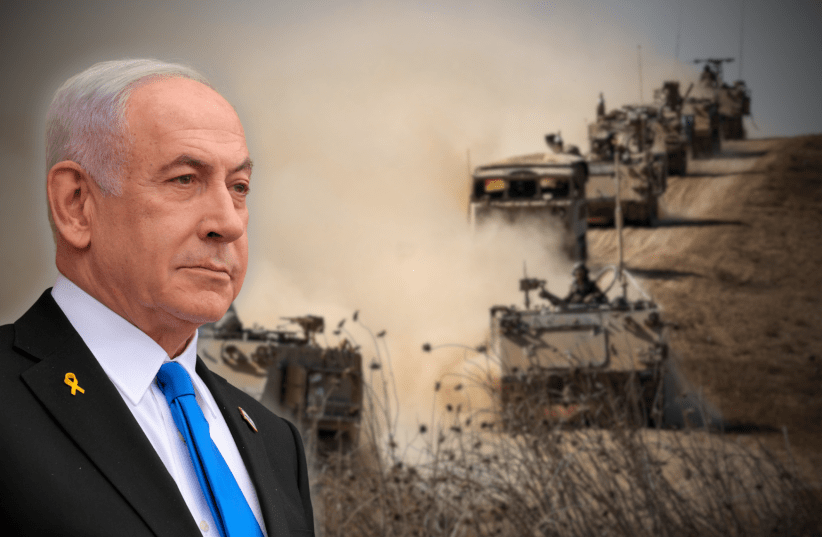
Prime Minister Benjamin Netanyahu against backdrop of IDF soldiers at war in Gaza (illustration).  (photo credit: Getty Images/Chip Somodevilla, JACK GUEZ/AFP)
Prime Minister Benjamin Netanyahu against backdrop of IDF soldiers at war in Gaza (illustration).
(photo credit: Getty Images/Chip Somodevilla, JACK GUEZ/AFP)

The negotiating team in Doha is working to exhaust every possibility for a deal, whether according to the Witkoff framework or as part of ending the war, the Prime Minister's Office said in a Sunday statement. 

The statement said that the ending of the war would come with the release of all the hostages, the exile of Hamas terrorists, and the disarmament of Gaza.

"There are intensive talks underway in Doha, but no breakthrough has been achieved. We are much more optimistic than we were last week, but it’s still unclear whether an agreement will be reached," an Israeli official told The Jerusalem Post.

The official added that Prime Minister Netanyahu has held several conversations over the past 24 hours with Trump's envoy, Steve Witkoff, as well as with the Israeli delegation in Qatar.

According to the official, the “Witkoff Proposal” is currently on the table, and it includes the release of 10 hostages. “If Hamas is willing to discuss ending the war through its surrender, we are ready.”

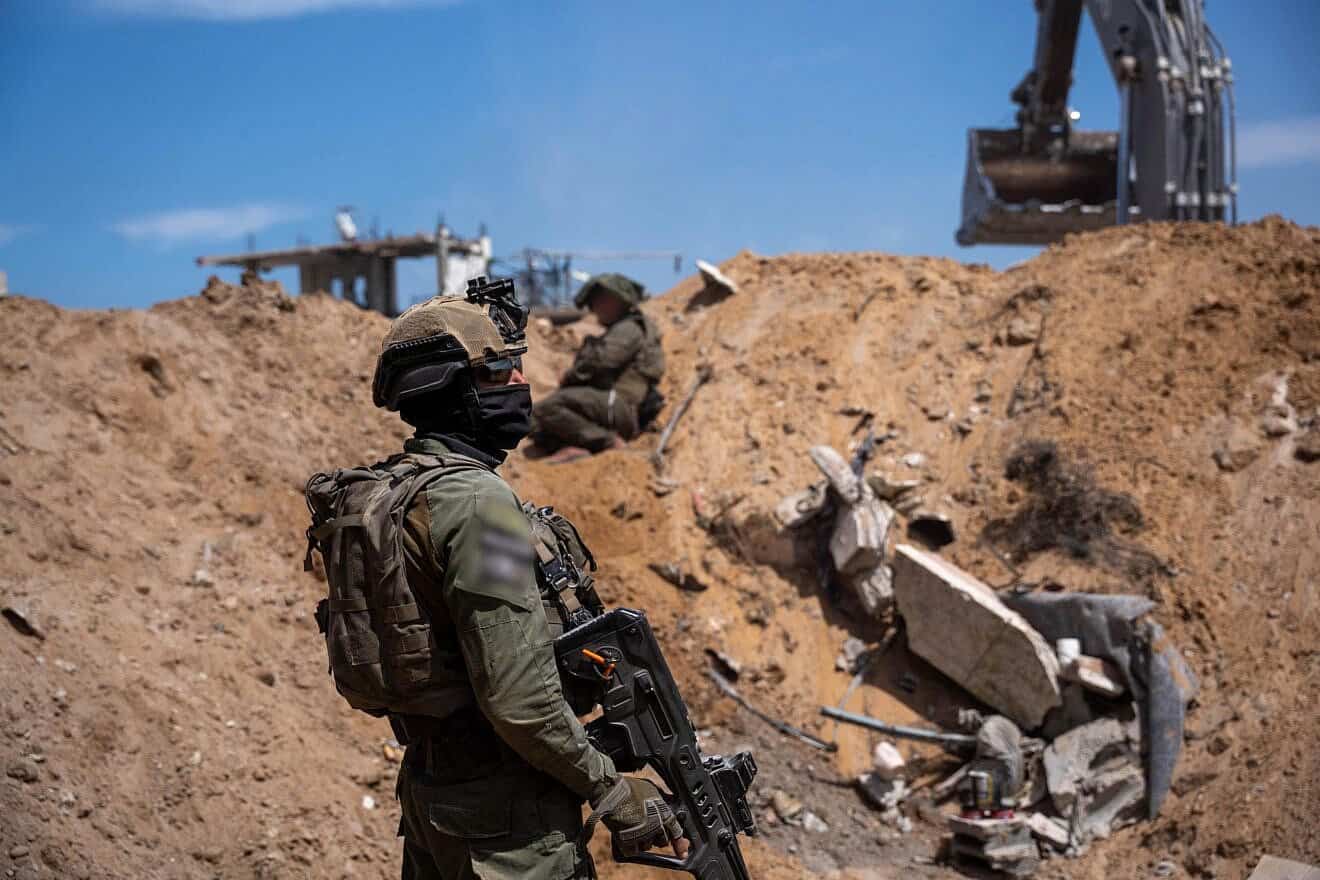
 IDF troops operate in northern Gaza, May 15, 2025. (credit: IDF SPOKESPERSON'S UNIT)Enlrage image
IDF troops operate in northern Gaza, May 15, 2025. (credit: IDF SPOKESPERSON'S UNIT)

He further stated: “The delegation will not remain there indefinitely. If there is no progress in the near future, we will move forward with the fighting.”

'Devoid of any factual basis'

The PMO's statement contradicted the statements of a former senior member of the negotiating team, Brig.-Gen. (res.) Dr. Oren Setter on KAN Reshet Bet, saying that his statement that an agreement could have been reached earlier is "devoid of any factual basis." 

The statement highlighted that senior American officials have repeatedly stated that Hamas refused for months to negotiate and was the sole obstacle to a deal. 

"Oren Setter undermined government policy with leaks and biased briefings from within the cabinet that damaged the negotiations, endangered the hostages, and echoed Hamas's false propaganda," the statement reads, adding that he did so because he supports ending the war and leaving Hamas in power.

"Had the prime minister yielded to the pressure from Setter and his allies, Hamas would have succeeded in rebuilding itself, Nasrallah and the entire Hezbollah leadership would be alive with tens of thousands of rockets, Assad would have remained in power, and Iran would not have suffered any significant damage."


Amichai Stein, Jerusalem Post Staff

Source: https://www.jpost.com/breaking-news/article-854407

Follow Middle East and Terrorism on Twitter

Israel exploring deal to end war, return all hostages, exile Hamas - JNS


​ by JNS

Talks intensify in Doha as "Gideon’s Chariots" targets terror group's strongholds in Gaza.


Israeli soldiers operate in the Gaza Strip during the IDF’s “Gideon’s Chariots” campaign, May 2025. Credit: IDF Spokesperson’s Unit.

Israel on Sunday announced that it is pursuing a broader framework for ending the war in Gaza, one that includes the release of all hostages, the expulsion of Hamas terrorists, and the disarmament of the Strip.

The Israeli negotiating team in Doha, Qatar, is actively working to exhaust every opportunity to reach an agreement, the Prime Minister’s Office said. Talks are being conducted under multiple frameworks, including one proposed by U.S. Special Envoy Steve Witkoff.

The Witkoff outline reportedly envisions a multi-stage agreement, beginning with a temporary ceasefire and the release of Israeli hostages, followed by reciprocal steps such as the release of Palestinian security prisoners and further negotiations aimed at a permanent cessation of hostilities.

On Saturday morning, Defense Minister Israel Katz stated: “With the launch of Operation Gideon’s Chariots in Gaza, led with great force by IDF command, the Hamas delegation in Doha announced a return to negotiations on a hostage deal, contrary to the intransigent stance they had taken up until that moment.”

He continued, “The heroism of IDF soldiers, the unity of the people, and the determination of the political leadership increase the chances of bringing back the hostages.”

The renewed diplomatic efforts coincide with the launch of Phase 1 of “Operation Gideon’s Chariots,” the next stage in the IDF’s campaign to destroy Hamas’s governing and military capabilities in Gaza. According to the IDF Spokesperson’s Unit, Israeli forces have carried out coordinated attacks on Hamas infrastructure in Jabalia, Gaza City’s Zeitoun neighborhood and Rafah—areas considered key to the group’s operations.

In Rafah, troops have expanded ground operations and conducted targeted strikes, including the destruction of cross-border tunnels. The campaign will continue “as long as necessary” to neutralize Hamas’s remaining strongholds, military officials have said.


JNS

Source: https://www.jns.org/israel-exploring-deal-to-end-war-return-all-hostages-exile-hamas/

Follow Middle East and Terrorism on Twitter

Abbas’ Advisor: “Israel orchestrated Oct. 7” - Nan Jacques-Zilberdik


​ by Nan Jacques-Zilberdik

Al-Habbash openly suggested that the Israeli government wanted Oct. 7 to happen and may have even collaborated with Hamas to make it possible.


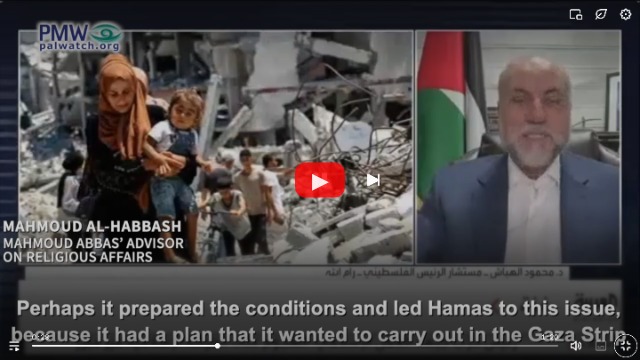
In a horrific example of Palestinian Authority hate speech, Mahmoud Al-Habbash—senior advisor to PA Chairman Mahmoud Abbas—has announced that Israel itself was behind the Oct. 7 atrocities committed by Hamas. According to Abbas' advisor, Israel "perhaps… prepared the conditions and led Hamas" to massacre, rape, burn alive, and kidnap Israelis, to use Hamas' terror as a pretext to eliminate the Palestinian cause.

Al-Habbash openly suggested that the Israeli government wanted Oct. 7 to happen and may have even collaborated with Hamas to make it possible. He claimed that Israel's supposed indifference to its hostages in Gaza proves this theory, alleging that Prime Minister Netanyahu's real goal was to use the massacre as an excuse to carry out a "pre-planned" operation to destroy Palestinian national aspirations.

This is just the latest example of the PA attempting to shift blame from the murderers and rapists to the victims. But accusing Israel of planning its own worst massacre since the Holocaust is a grotesque low:

Click to play

PA Chairman Mahmoud Abbas' Advisor on Religious Affairs and Islamic Relations Mahmoud Al-Habbash: "This [Israeli] government was not really interested in the [Israeli] hostages from the beginning. Perhaps the coming days will reveal this issue, which is now being talked about in Israel by the media outlets and Israeli commentators regarding the role of [Israeli Prime Minister] Netanyahu's government in the events of Oct. 7, [2023] (i.e., Hamas' Oct. 7 terror war on Israel). Perhaps it prepared the conditions and led Hamas to this issue, because it had a plan that it wanted to carry out in the Gaza Strip using what happened on Oct. 7 as an excuse. It is now carrying out this plan, which is based on eliminating the Palestinian cause and the Palestinian existence, and perhaps it used Hamas on this issue. Hamas may have even assisted, in one way or another, this Israeli objective."

Video title: "Al-Habbash to Al-Arabiya [TV]: Hamas should prioritize the interests of the Palestinian people over its party interests and hand over the Gaza Strip"

[PA Chairman Mahmoud Abbas' Advisor on Religious Affairs and Islamic Relations Mahmoud Al-Habbash, YouTube channel, April 21, 2025]

Palestinian Media Watch has exposed other PA officials making similar libelous statements, claiming Israel itself carried out the Oct. 7 massacre,

  • PA Oct. 7 massacre denial: Israelis "killed their civilians, committed all these crimes, and burned the bodies" 


Nan Jacques-Zilberdik

Source: https://palwatch.org/page/37154

Follow Middle East and Terrorism on Twitter

Trump in Riyadh: A Rejection of the Globalist Gospel - Roger Kimball


​ by Roger Kimball

Trump’s Riyadh speech rejected nation-building and globalist dogma, marking him as a bold champion of sovereignty over interventionism.


I want to begin this column by paying homage to the two most extraordinary passages in Donald Trump’s extraordinary speech in Riyadh, Saudi Arabia, last week.

Here’s the first:

In recent years, far too many American presidents have been afflicted with the notion that it’s our job to look into the souls of foreign leaders and use U.S. policy to dispense justice for their sins . . . I believe it is God’s job to sit in judgment—my job [is] to defend America and to promote the fundamental interests of stability, prosperity, and peace.

And here’s the second: Speaking of the “great transformation” that has come to Saudi Arabia and other Middle Eastern countries in recent decades, Trump noted that

This great transformation has not come from Western interventionists . . . giving you lectures on how to live or how to govern your own affairs. No, the gleaming marvels of Riyadh and Abu Dhabi were not created by the so-called “nation-builders,” “neo-cons,” or “liberal non-profits,” like those who spent trillions failing to develop Kabul and Baghdad, so many other cities. Instead, the birth of a modern Middle East has been brought about by the people of the region themselves . . . developing your own sovereign countries, pursuing your own unique visions, and charting your own destinies . . . In the end, the so-called “nation-builders” wrecked far more nations than they built — and the interventionists were intervening in complex societies that they did not even understand themselves.

Both points are coruscatingly true. They were clearly pleasing to Trump’s audience. Crown Prince Mohammed bin Salman was overcome with admiration for Trump’s words. He kept smiling, putting his hand on his heart in benediction, and later personally escorted Trump around the city and then to the airport to say farewell.

The globalist neo-cons of whom Trump spoke still form a powerful lobby in Washington, in those NGOs he mentioned, and in academia. Indeed, they might be said to represent the default or consensus Weltanschauung of the foreign policy establishment.

Donald Trump represents the antithesis of that establishment. It would take a very long post, or, indeed, a book, to detail all the ways that Trump is the antithesis of the Washington consensus on . . . well, on just about everything. I have long been a supporter of Donald Trump, though not always. When he first ran, in 2016, I thought the idea of a Trump presidency was a sort of joke and said so.

Two things changed my mind. First, when it became clear that his opponent would be Hillary Clinton, perhaps the most corrupt serious contender for the presidency in U.S. history (granted, she may have been outdone by Joe Biden), I decided to cast my lot in with Donald Trump faute de mieux.

But it was not long into Trump’s first term that I realized that I could zip the faute de mieux stuff. Although he did a poor job with many key appointments early on, he was himself a transformational president. He did things that other presidents only talked about. He was bold, innovative, and creative—and yes, he was wholly committed to making America great again.

It is often said that the fact that Trump was not seen to have won in 2020 was a blessing in disguise. Why? Because had he been allowed to take office in January 2021, he would have still been surrounded by swamp creatures. His great liability when he first took office was that he did not understand how Washington worked. Among other things, he did not understand how deeply embedded into the bureaucratic tissues of what James Piereson has called the “Washington Octopus” the self-serving, globalist, neo-con mentality really was.

It took his rustication in 2020 and the unhinged, unremitting tsunami of lawfare that washed over him for four years to school him in the ways of official Washington. Remember, the establishment devoted itself to destroying Donald Trump. Impeachments, indictments, subpoenas, trials, convictions, and fines all came at him in fast and furious succession. When none of that worked and he was on course to seal the GOP nomination, they tried to kill him—literally, as the events in Butler, PA, and that Trump golf course last summer reminded us. Somehow, he survived. Indeed, like some science-fiction creature, he emerged stronger from the ordeal.

He also took mental notes. He learned how the octopus moved. He got to know what made the swamp habitable. He mastered its strategies, its tactics, and its weapons.

And he devised a set of responses designed to evade and ultimately to crush its assault.

We are now about 120 days into Trump’s second term. He has amazed his friends and foes alike with the speed, depth, and energy of his efforts to transform America. He deployed Elon Musk and his team at the “Department of Government Efficiency” to expose and root out waste and fraud in the way Washington and its clients conduct their business. The results have been, and continue to be, mind-boggling.

He has challenged the institutionalized anti-white, anti-Semitic, and anti-American habits that have infiltrated and perverted the operation of our most exalted colleges and universities. He upended elements of the long-established but injurious consensus about trade policy and what was best for America. And, as he has shown again and again, most recently in his love tour in the Middle East, he has committed himself to work for peace, prosperity, and the sort of respect for national sovereignty that was supposed to be a natural coefficient of international relations in the post-Westphalian world order.

My main question at this point is when a large-scale Gestalt shift will take place among the beautiful people who presume to make up our minds for us about whom we are allowed to approve of and whom we must despise.

At the moment, Donald Trump is still on the “despise unreservedly” list. But that could change on a dime. Trump will require a certain modicum of luck—or call it the connivance of Providence—but if he enjoys that, then I predict he will end his days as one of the most celebrated presidents in American history.


Roger Kimball is editor and publisher of The New Criterion and the president and publisher of Encounter Books. He is the author and editor of many books, including The Fortunes of Permanence: Culture and Anarchy in an Age of Amnesia (St. Augustine's Press), The Rape of the Masters (Encounter), Lives of the Mind: The Use and Abuse of Intelligence from Hegel to Wodehouse (Ivan R. Dee), and Art's Prospect: The Challenge of Tradition in an Age of Celebrity (Ivan R. Dee). Most recently, he edited and contributed to Where Next? Western Civilization at the Crossroads (Encounter) and contributed to Against the Great Reset: Eighteen Theses Contra the New World Order (Bombardier).

Source: https://amgreatness.com/2025/05/18/trump-in-riyadh-a-rejection-of-the-globalist-gospel/

Follow Middle East and Terrorism on Twitter

Iran eyes peace, trade, and drone deals in growing partnerships with Central Asia - Seth J. Frantzman


​ by Seth J. Frantzman

Iran wants to see peace in the southern Caucasus so it can continue to work on a north-south economic corridor.


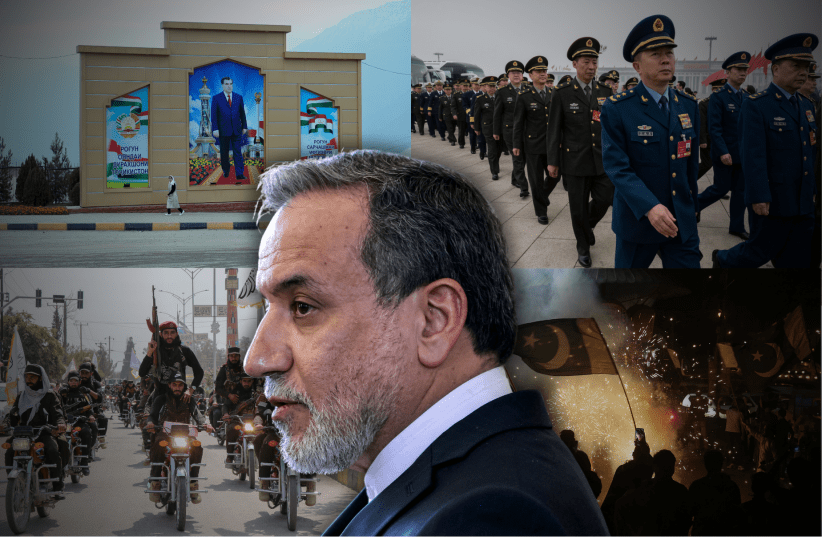
Iranian Foreign Minister Abbas Araghchi against backdrop of Tajikistan, China, Afghanistan and Pakistan. (illustration) (photo credit: Getty Images/ATTA KENARE/AFP, STRINGER, HUSNAIN AL, Kevin Frayer)
Iranian Foreign Minister Abbas Araghchi against backdrop of Tajikistan, China, Afghanistan and Pakistan. (illustration)
(photo credit: Getty Images/ATTA KENARE/AFP, STRINGER, HUSNAIN AL, Kevin Frayer)

Iran continues to increase its outreach to Central Asian countries, as part of its broader eastern strategy of knitting together ties to many of the countries between Iran and China and working with them. For instance, Iran has tried to work on Pakistan-India tensions to reduce the chances of war between the countries.

The country also recently hosted Amir Khan Muttaqi, Afghanistan's acting foreign minister, who met with Iran’s Foreign Minister Abbas Araghchi in Tehran. Iranian state media said, “Muttaqi’s Saturday trip to Iran is part of the Afghan caretaker government’s broader effort to strengthen diplomatic relations with countries worldwide.”

Afghanistan is also doing outreach to both Iran and China. Iran and Pakistan are both partners of China. Clearly, this illustrates how China is moving toward the Middle East while Iran looks east. According to IRNA, Afghanistan’s “discussions in Tehran and Beijing will focus primarily on key issues such as economic cooperation, Afghan migrants, regional projects, and political interactions. In recent months, both Iran and China have taken more active roles in addressing Afghanistan’s situation.”

At the same time, Araghchi also hosted his Tajik counterpart, Sirojiddin Muhriddin, in Tehran on May 17, 2025. “The foreign ministers of Iran and Tajikistan, pointing to the sensitivity of the current developments in the region and the existence of common challenges and concerns, have emphasized the need to continue close and continuous consultations at the bilateral level in the form of political consultation meetings, as well as in the regional and international organizations,” IRNA noted.

The Tajik foreign minister is leading a large delegation to Iran. Tajikistan already has an agreement with Iran to make Iranian drones. “Araghchi explained the Islamic Republic of Iran's positions in supporting the oppressed people of Palestine and condemned the crimes of the Zionist regime in Gaza and the West Bank,” IRNA added.

 Tajik Foreign Minister Sirojiddin Muhriddin speaks during the U.S. - Central Asia (C5+1) ministerial meeting attended by U.S. Secretary of State Antony Blinken in Astana, Kazakhstan, February 28, 2023. (credit: OLIVIER DOULIERY/POOL VIA REUTERS)Enlrage image
Tajik Foreign Minister Sirojiddin Muhriddin speaks during the U.S. - Central Asia (C5+1) ministerial meeting attended by U.S. Secretary of State Antony Blinken in Astana, Kazakhstan, February 28, 2023. (credit: OLIVIER DOULIERY/POOL VIA REUTERS)

Hosting the secretary of Armenia's Security Council 

In another development, the Iranian foreign minister also hosted the secretary of the Security Council of the Republic of Armenia. “Araghchi received Armen Grigoryan, the Secretary of the Security Council of the Republic of Armenia, with both assessing bilateral ties, and regional and international developments,” IRNA noted. “Recalling his last month’s visit to Yerevan and his meeting with high-ranking Armenian officials, Araghchi described the relations between the two countries as positive and expressed Iran’s readiness to expand friendly relations based on mutual interests,” the report said.

Iran discussed its desire for peaceful nuclear energy. “The Iranian foreign minister called for the speedy implementation of a peace agreement between Armenia and Azerbaijan, saying Iran believes it would help with regional stability and security.”

Iran wants to see peace in the southern Caucasus so it can continue to work on a north-south economic corridor. This could then be knit in with its initiatives in Central Asia.


Seth J. Frantzman

Source: https://www.jpost.com/middle-east/article-854395

Follow Middle East and Terrorism on Twitter

Opposition blocks sending out IDF reserves call-up orders for the second time in a week - Eliav Breuer


​ by Eliav Breuer

Opposition MKs also slammed the Netanyahu administration for dragging out drafting eligible Haredi men.


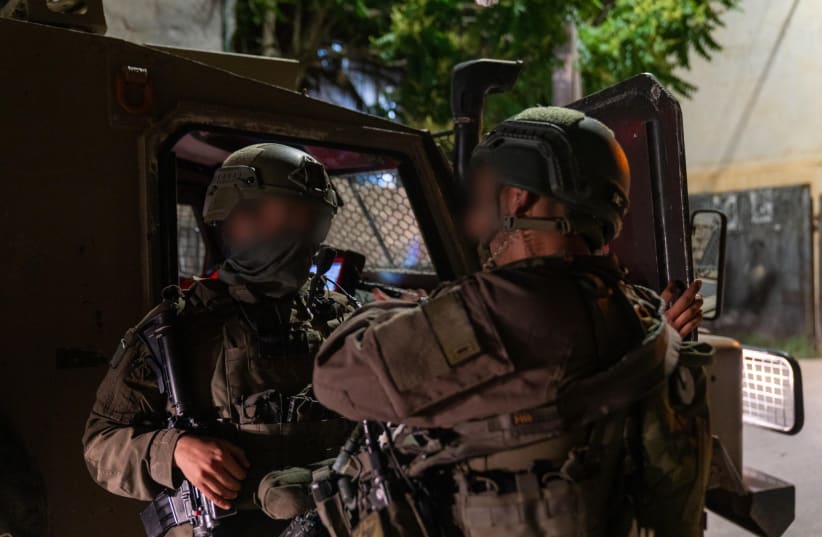
IDF counterterrorism operation in the West Bank on May 13, 2025. (photo credit: IDF SPOKESPERSON UNIT)
IDF counterterrorism operation in the West Bank on May 13, 2025.
(photo credit: IDF SPOKESPERSON UNIT)

The opposition on Sunday beat the coalition in a vote in the Knesset Foreign Affairs and Defense Committee to extend the deadline for the government to issue new emergency call ups (known as Tzav 8 orders) to IDF reservists.

The vote marked the second time in a week that the opposition outbid the coalition, indicating the coalition's difficulties in convincing its own members about the necessity of expanding reservist call ups.

The current deadline is May 22. If the measure does not pass a repeat vote by then, the government will not be authorized to issue new callup orders. Orders issued prior to that date will remain in effect, according to IDF sources.

A repeat vote will be held later this week after coalition MK Tally Gotliv (Likud) complained that after being removed from the committee meeting due to heckling, she was not notified in time to return and cast her vote. The Knesset legal team accepted her argument.

Opposition MKs last week demanded in a letter that to committee chairman MK Yuli Edelstein (Likud) that he summon Defense Minister Israel Katz to present a detailed plan of the upcoming Operation Gideon's Chariots, and explain how it will assist in achieving the war's goals, before they lend their support to extending the Tzav 8 deadline.

 IDF soldiers continue their ground operations in northern Gaza May 17, 2025 (credit: IDF SPOKESPERSON'S UNIT)Enlrage image
IDF soldiers continue their ground operations in northern Gaza May 17, 2025 (credit: IDF SPOKESPERSON'S UNIT)

Opposition MKs also criticized the government for sending out thousands of emergency call up orders to reservists while acting insufficiently to lessen their burden by drafting eligible haredi men into the IDF.

'Sending soldiers into Gaza with no horizon, no purpose'

Katz briefed the committee in a closed-door meeting on Sunday, but the measure still fell in the ensuing vote. Likud MK Amit Halevy voted along with the opposition after criticizing the operational plan over the fact that it did not include an “effective siege” and “total enforcement of preventing humanitarian aid.”

"The government has failed once again today in its attempt to issue Tzav 8 in the Foreign Affairs and Defense Committee, failed in drafting ultra-Orthodox citizens, failed in tackling the cost-of-living crisis, and failed in passing laws in the plenum,” Opposition Leader Mk Yair Lapid said in a video statement. “It is dysfunctional. This cannot continue," he said.

Democrats party chairman Yair Golan wrote on X, "The Smotrich-Netanyahu government is sending soldiers into Gaza with no horizon, no purpose, and this morning it also lost to the opposition in its disgraceful attempt to extend the emergency reserve call-up orders (Tzav 8) and to perpetuate the ultra-Orthodox draft evasion."

"It's time to internalize this — we will not let you extend reserve duty orders while you refuse to enlist the ultra-Orthodox," Golan added.

Yisrael Beytenu chairman MK Avigdor Liberman commended MK Halevy for voting against the measure.

Yonah Jeremy Bob contributed to this report.


Eliav Breuer

Source: https://www.jpost.com/israel-news/article-854413

Follow Middle East and Terrorism on Twitter

Car bombing at Palm Springs fertility clinic an ‘intentional act of terrorism,’ FBI says - John Solomon


​ by John Solomon

Attorney General Pam Bondi said that violence against the fertility clinic was “” unforgivable.”


A car bomb outside a Palm Springs, Calif., fertility clinic that killed one and injured four was an intentional act of terrorism, the FBI declared Saturday night.

Special Agent Akil David, the assistant director for the FBI office Los Angeles, said the blast shortly before 11 AM PT damaged buildings over a wide radius and was targeted.

It was an "intentional act of terrorism," David said.

Palm Springs Police Chief Andy Miles said the victim had not yet been identified.

"Terrorism came knocking on the door of Palm Springs," Miles said in a news conference. "We survived, and I can tell you that this city will rise and be more effective as a beacon of hope than before."

Attorney General Pam Bondi said federal agents were working to gather evidence.

"Let me be clear: the Trump administration understands that women and mothers are the heartbeat of America. Violence against a fertility clinic is unforgivable,"'Bondi said.

The American Reproductive Centers fertility clinic said no staff members were injured and that some of its fertility equipment was spared in the blast.

"This morning, an unexpected and tragic incident occurred outside our Palm Springs facility when a vehicle exploded in the parking lot near our building," the company wrote on Facebook. "We are heartbroken to learn that this event claimed a life and caused injuries, and our deepest condolences go out to the individuals and families affected."


John Solomon

Source: https://justthenews.com/government/security/car-bombing-palm-springs-fertility-clinic-intentional-active-terrorism-fbi-says

Follow Middle East and Terrorism on Twitter

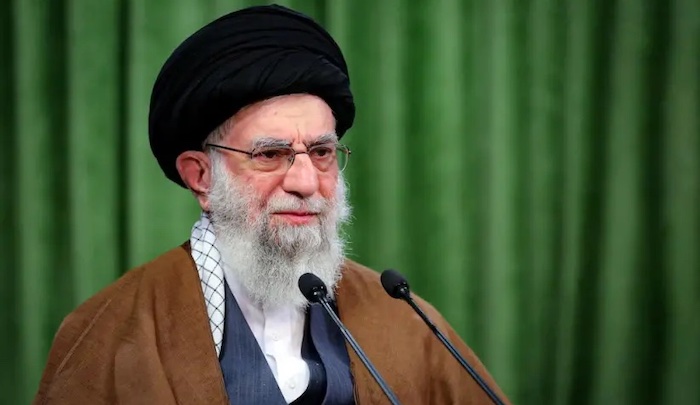
How Should the Americans Hasten the Fall of the Iranian Regime? - Hugh Fitzgerald


​ by Hugh Fitzgerald

Iranian dissidents weigh in.


[Craving even more FPM content? Sign up for FPM+ to unlock exclusive series, virtual town-halls with our authors, and more. Click here to sign up.]

How should the Americans hasten the fall of the Iranian regime? They must tighten the economic screws. They must not lift sanctions, but double down on sanctions. The Iranians, with one-third of them now living below the poverty line, are in despair. They realize how many tens of billions of dollars their despotic regime of fanatical Muslims has spent on Hamas, Hezbollah, the Houthis, and Assad’s Syria, only to see it all — tens of billions of dollars worth of weapons — go up in smoke. The Iranian exiles want the Americans to end the current negotiations, and to present Iran with an ultimatum: either Iran hands over all of its uranium enriched above a level of about 5% (approximately the level needed to run a nuclear reactor), destroys its centrifuges, and destroys its ballistic missiles, or the Americans will put more sanctions on the regime, including putting a blockade the port of Bandar Abbas through which 80% of Iran’s exports, including its oil, pass, preventing the oil sales on which Iran depends for its survival.

Were Iran to acquire nuclear weapons, Iranian dissidents believe, it would not only threaten Israel, but also the Sunni Arab states of the Gulf. Iran could threaten Israel’s existence, but also could destroy the oil production facilities of Saudi Arabia, the UAE, Kuwait, and the LNG facilities in Qatar, sending oil prices sky-high and causing untold damage to Western economies. Nor would the danger be limited to the Middle East. With nuclear weapons, Iran’s regime could threaten to hit American bases not just in the region — in the UAE, in Qatar, in Bahrain,Saudi Arabia — but targets in America itself if, for example, Washington were to refuse to reduce or cut off altogether military aid to Israel.

One Iranian dissident said that “blanket military action against Iran will not work and that ‘foreign powers cannot impose sustainable regime change; it must emerge from within. It cannot be forced through war.’”

Here I beg to differ. Why wouldn’t “blanket military action against Iran” work? Perhaps she means that such military action would lead Iranians, who had been dissidents, to now support the regime in an outpouring of nationalist fervor prompted by those foreign attacks. And instead of the regime collapsing in the face of such attacks, she fears it would be given a new lease on life.

Another dissident said: “We will do the work from within to rid the world of this barbaric, tentacled, terrorist regime.” And “all they ask is that the Western world stop saving the regime.” In other words, she believes that Iran’s regime is economically and militarily on its uppers, with most of the Iranians having lost any faith in the government’s ability to reform itself. All that the dissidents want is for the West to stop “saving the regime.” That means completely cutting off Iran’s oil sales by blockading the port of Bandar Abbas, and other exports as well. It means stopping Iran from importing Western goods, everything from MRI machines to Smartphones to helicopters. It means putting sanctions on many hundreds more of Iran’s senior officials, cutting off their ability to travel anywhere in the West, or to send their children for study in the West , which is important to so many of them.

Were Iran to manage to produce a few nuclear bombs, this would greatly enhance its prestige at home, and lessen the domestic opposition to the regime. It would also mean that the regime would now believe itself impervious to attack, either by the Great or by the Little Satan, out of their fear of Iran retaliating using nuclear weapons.

All of these Iranian dissidents feel keenly that their fate is being decided not just by foreigners — the American negotiating team led by Steve Witkoff, but by foreigners with little understanding of the Iranians’ ability, and intent, to deceive. They want hard-headed American negotiators, who will consult with them and with the Israelis at every step, and who will make clear to Iran that nothing can be achieved, no sanctions lifted, without Iran agreeing to give up all of its stockpile of uranium enriched beyond a level of 5%, and the centrifuges it has used for such uranium enrichment. And if Iran does not agree, then not only will the current sanctions remain, but many more sanctions will be put in place, driving Iran’s economy into the ground.


Hugh Fitzgerald

Source: https://www.frontpagemag.com/how-should-the-americans-hasten-the-fall-of-the-iranian-regime/

Follow Middle East and Terrorism on Twitter