The "Middle East and Terrorism" Blog was created in order to supply information about the implication of Arab countries and Iran in terrorism all over the world. Most of the articles in the blog are the result of objective scientific research or articles written by senior journalists.
From the Ethics of the Fathers: "He [Rabbi Tarfon] used to say, it is not incumbent upon you to complete the task, but you are not exempt from undertaking it."
“We told the Americans we will strike alone if Iran crosses the red line we set on ballistic missiles,” the source said, adding that Israel is not yet at that threshold.
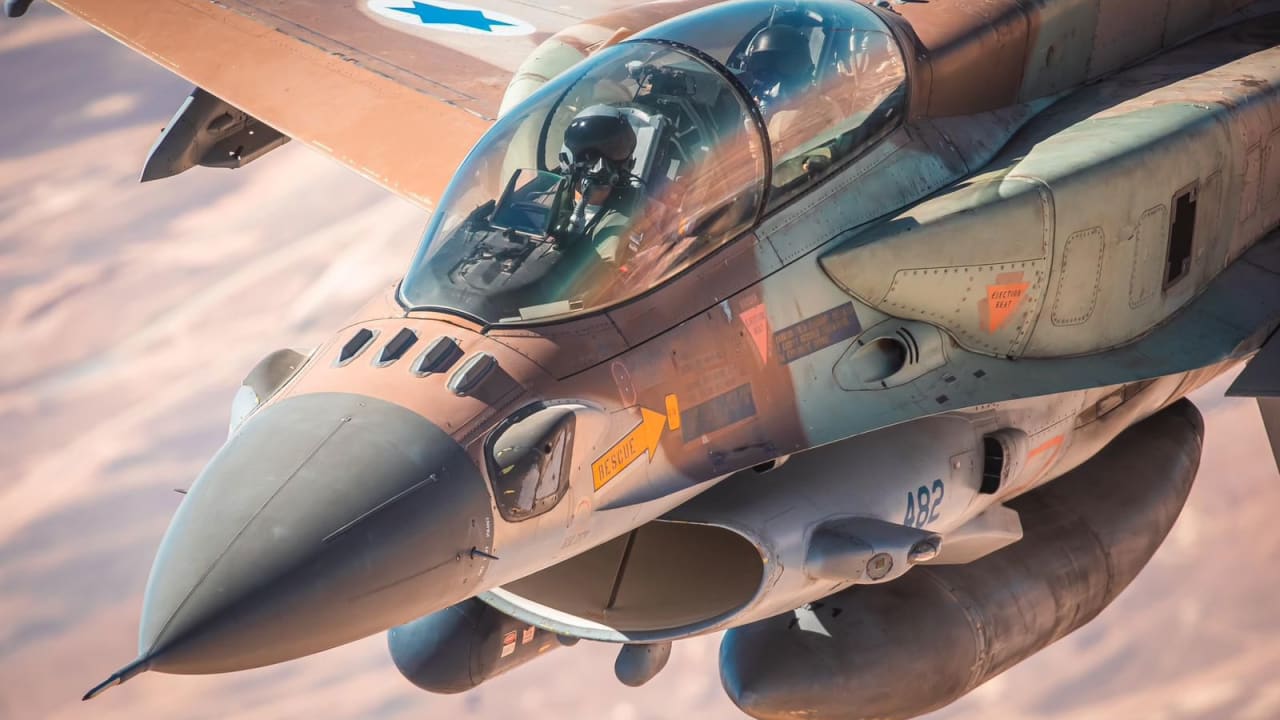
An Israeli Air Force plane utilized in the October 2024 strike against Iranian military infrastructure.(photo credit: IDF SPOKESPERSON UNIT)
Israeli defense officials recently told their US counterparts that Iran’s ballistic missile program represents an existential threat, and that Jerusalem is prepared to act unilaterally if necessary.
According
to security sources, Israeli intentions to dismantle Iran’s missile
capabilities and production infrastructure were conveyed in recent weeks
through a series of high-level exchanges. Military officials outlined
operational concepts to degrade the program, including strikes on key
manufacturing sites.
“We told the Americans we will strike alone if Iran
crosses the red line we set on ballistic missiles,” the source said,
adding that Israel is not yet at that threshold but is continuously
tracking developments inside Iran.
The
officials stressed that Israel reserves freedom of action and
emphasized that it will not allow Iran to restore strategic weapon
systems on a scale that threatens Israel’s existence.
One
defense official described the current moment as a “historic
opportunity” to deliver a significant blow to Iran’s missile
infrastructure and neutralize active threats to Israel and neighboring
states.
Fire
of Israeli attack on Shahran Oil depot is seen following the Israeli
strikes on Iran, in Tehran, Iran, June 15, 2025. (credit: MAJID
ASGARIPOUR/WANA (WEST ASIA NEWS AGENCY) VIA REUTERS)
During
recent talks, Israel also presented plans to target additional
facilities connected to the missile program, according to the official.
Israeli officials concerned that Trump will adopt limited strike model
Concerns were raised by several officials that US President Donald Trump
may adopt a limited strike model - similar to recent US operations
against the Houthis in Yemen - which, they fear, could leave Iran’s
critical capabilities intact.
“The
worry is he might choose a few targets, declare success, and leave
Israel to deal with the fallout, just like with the Houthis,” another
military official said, adding that partial measures won’t eliminate the
core threat.
Within
the IDF, Brig.-Gen. Omer Tishler, the incoming air force commander, is
expected to accompany Prime Minister Benjamin Netanyahu on his upcoming
trip to the United States.
Tishler will represent IDF Chief of Staff Lt.-Gen. Eyal Zamir,
as there is currently no defense attaché in Washington following
Defense Minister Israel Katz's decision not to approve the military’s
nominee for the post.
A report over the weekend indicated that Hezbollah may have accepted the “resignation” of one of its officials named Wafiq Safa.
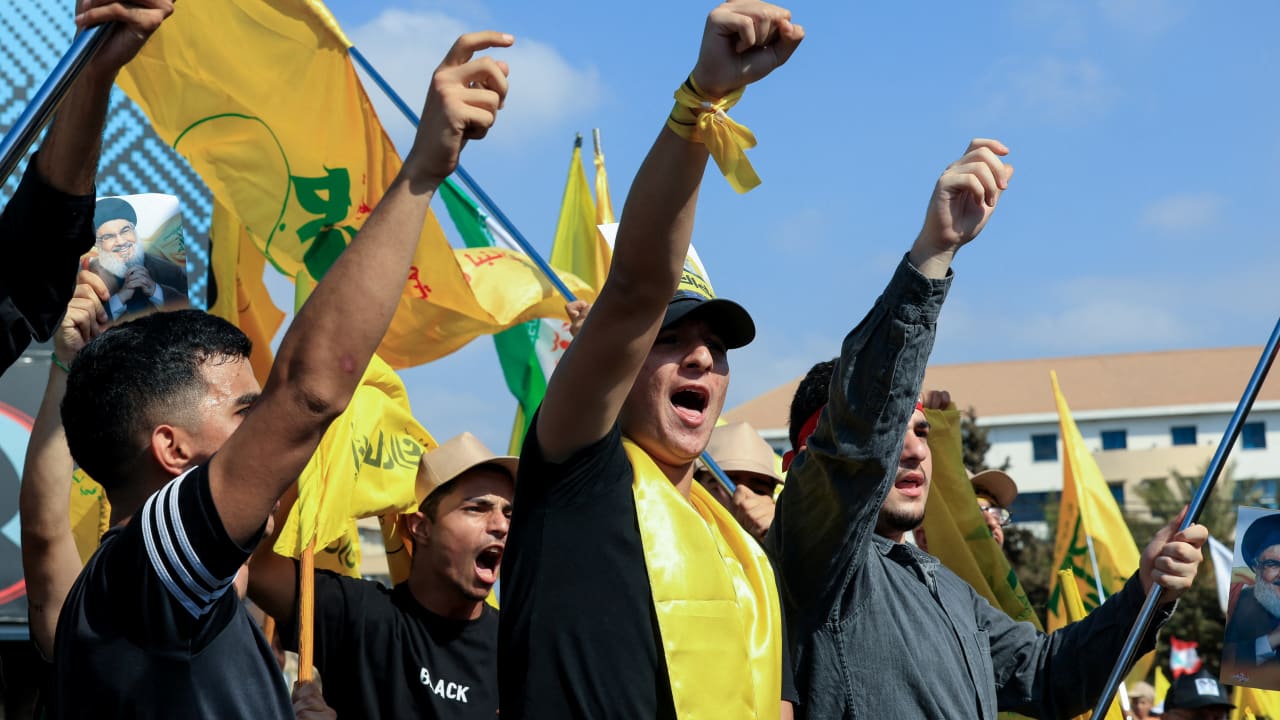
Hezbollah supporters attend a
ceremony held by Hezbollah to commemorate the first anniversary of their
late leader Hassan Nasrallah's killing by Israel, on the outskirts of
Beirut, Lebanon, September 27, 2025(photo credit: REUTERS/MOHAMED AZAKIR)
Hezbollah
is facing increasing airstrikes as Israel continues to target its
operatives in Lebanon. The group is also cut off from easy rearmament
due to the fact that Syria is now controlled by a government that
opposes Hezbollah.
As such, Hezbollah
may face a rocky road ahead. However, in its favor is the fact that the
Lebanese government still refuses to confront Hezbollah or disarm the
group.
A
report over the weekend indicated that Hezbollah may have accepted the
“resignation” of one of its officials named Wafiq Safa. Reuters noted “Lebanon's Hezbollah accepted the resignation of senior security official Wafiq Safa on Friday, the first time an official of his rank has stepped down.”
It
claimed that “Safa, who heads Hezbollah's liaison and coordination unit
responsible for working with Lebanese security agencies, survived an
Israeli assassination attempt in October 2024.” Hezbollah portrays this
as “internal restructuring.” Hezbollah’s “southern commander, Hussein
Abdullah, was appointed to replace Safa.”
The Associated Press
reported similar details, noting that the group “replaced a top
security official who was in charge of coordination with Lebanon’s
security agencies after he told the group’s leadership that he wants to
step down, two officials with the group who were not authorized to speak
publicly on the matter said Friday.” It said.
Hezbollah
supporters hold images of late Hezbollah leader Hassan Nasrallah, and
Palestinian and other flags at a ceremony held by Hezbollah to
commemorate the first anniversary of Nasrallah's killing by Israel, on
the outskirts of Beirut, Lebanon (credit: REUTERS/MOHAMED AZAKIR)
“Wafiq
Safa had headed Hezbollah’s Liaison and Coordination Unit for decades,
and it was not immediately clear what his new job within the Iran-backed group is going to be.” It also said he was replaced by “Hussein Abdullah, who is not publicly known.
Overall,
the reports portray Hezbollah as having undergone some internal
changes. Some of these affect the liaison and coordination unit. Whether
this matters is unclear. It is also unclear what ramifications it may
have. Is Hezbollah concerned that its liaison with the government is not
going as planned? Hezbollah has not been disarmed, which appears to be
its main priority at the moment.
Reconstruction in two southern Lebanese villages
The
news from Hezbollah was released as Lebanese Prime Minister Nawaf Salam
traveled to southern Lebanon to discuss reconstruction projects in two
southern villages, Yarine and Tayr Harfa. The goal is to repair the
destruction from the war.
The
government is now moving forward with these efforts. Salam sees this as
a “national cause.” Xinhua media in China noted that “he outlined a
recovery framework that includes cash assistance, free healthcare
services, and guarantees for continued education for displaced students.
The government will also focus on rebuilding public infrastructure and
state-owned property for better conditions in the villages.”
Salam’s
visit continued for two days. He began his trip in Tyre. He then went
up to villages near the border, including Yarine. This village is across
from the Israeli village of Arab al-Aramshe. “Salam received a warm
welcome in Yarin. Locals dressed him in an abaya, symbolising high
respect for a guest,” The New Arab noted. "I know the pain of
Yarin as I know the pain of Zallutiyeh, Al-Bustan, Marwahin, and
Al-Dhaira, and as I have seen the pain of your neighbour Tayr Harfa,"
the Lebanese leader said. "These towns have suffered a real catastrophe,
and some have endured years of neglect and marginalization.” He added
that "I also know that the attacks are ongoing and that many people live
with daily worry, but I know something greater: I know the southerners,
in all their diversity, and their attachment to their land. Your
resilience is the priority, and the state will stand by you so you can
remain and continue [to stay] on your land."
Salam says that Lebanon
still intends to continue with disarmament. However, like most
officials, he will not call out Hezbollah. This has been a challenge
with many Lebanese officials who are willing to talk in general terms
about “armed groups” but won’t actually disarm Hezbollah. Lebanon’s army
chief, for instance, was in Washington and Florida last week for key
meetings with US Central Command and others. However, he also appears to
refuse to confront Hezbollah.
Meanwhile,
the Norwegian Refugee Council (NRC) says that Israel has increased
attacks in Lebanon. A recent report notes that “Israel has carried out
at least 50 airstrikes in Lebanon in January 2026 alone, double the
number recorded in December, and the highest monthly figure since the
ceasefire.” The report added that “the strikes not only create an
atmosphere of fear and uncertainty for civilians but also represent a
frequent violation of the ceasefire agreed between Israel and Lebanon in
November 2024.” Maureen Philippon, NRC’s country director in Lebanon,
said “we have seen a clear and dangerous surge in the sheer number of
Israeli attacks on Lebanon in the first month of the year.”
"Give me what I want, and I won't send the boys with baseball bats to break your bones," is the message.
Trump has always been keen on securing at least part of what he wants in exchange for not doing what might hurt an adversary.
"Give me what I want, and I won't send the boys with baseball bats to break your bones," is the message.
The Muscat talks may end up as one of the dozen or so building
sites started by Trump from Gaza to Greenland, with the final shape
still uncertain. We shall have to wait and see.
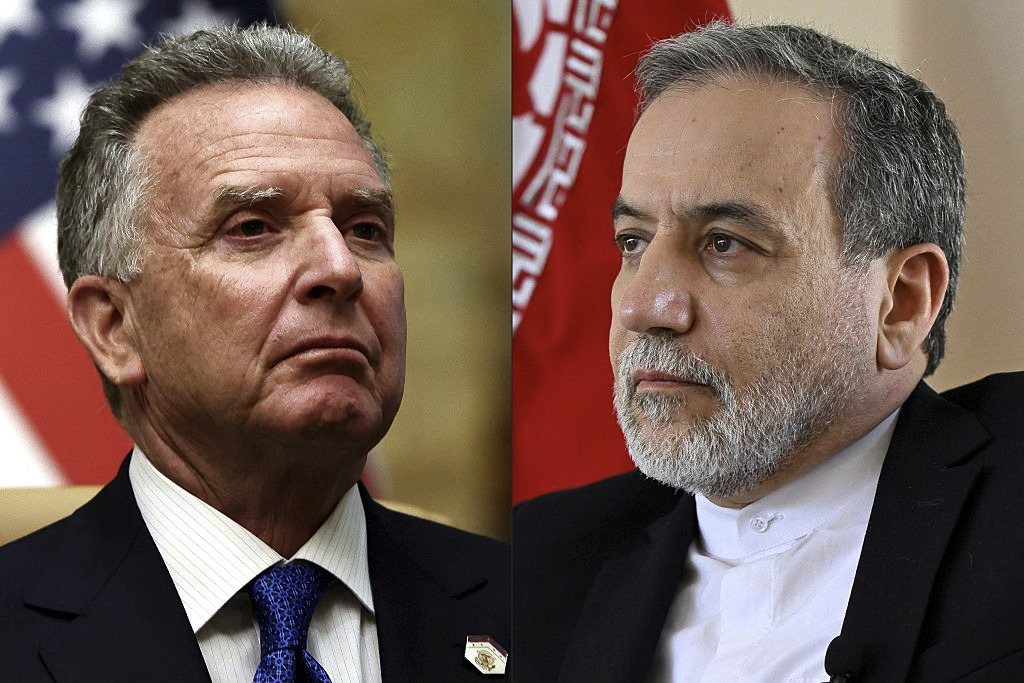
Iran and the United States resumed their interrupted talks
in Muscat on Friday, amid contradicting speculations about a possible
outcome. Pictured: A combination of photos showing US special envoy
Steve Witkoff (L) and Iranian Foreign Minister Abbas Araqchi. (Photos by
Evelyn Hockstein and Amer Hilabi/AFP via Getty Images)
Iran and the United States resumed their interrupted talks in Muscat
on Friday, amid contradicting speculations about a possible outcome.
Both Tehran and Washington pretend that the long weeks during which
the talks between Iranian Foreign Minister Abbas Araqchi and US special
envoy Steve Witkoff in Muscat and Rome were interrupted amounted to
nothing more than an intermission.
US President Donald Trump talks of an "excellent outcome," while
Iranian media express unprecedented optimism about the outcome of the
talks.
However, the intermission of which both sides mention witnessed quite
a few events that could put the talks on a different trajectory.
During that intermission, Iran witnessed unprecedented internal
turmoil with nationwide protests provoking equally unprecedented
repression. At one point, it seemed as if Trump might order a military
intervention to tip the balance in favor of protesters by ordering the
assembly of a huge armada in waters close to Iran.
Two facts seem to have changed Trump's mind about getting the US
directly involved in the Iranian imbroglio. The first was remembering a
notice seen in china shops: "If you break it, you own it!"
And that is precisely what the so-called Trump method has always tried to avoid.
In his first term, Trump negotiated the end of US involvement in
Afghanistan after decades of costly but ultimately futile
nation-building efforts.
In his current term, he has also launched a process of military
disengagement from Iraq and Syria while settling for a supporting
political role.
Trump has always been keen on securing at least part of what he wants in exchange for not doing what might hurt an adversary.
"Give me what I want, and I won't send the boys with baseball bats to break your bones," is the message.
The second fact that may make the new round of talks different is the
belated realization by the leadership in Tehran, or at least a part of
it, that the Islamic Republic of Iran cannot fight on two fronts, inside
and outside.
It is significant that the initiative for resuming the talks came
from Tehran, albeit after a series of "consultations" with Russia and
half a dozen regional nations, notably Turkey.
The US responded by demanding an enlargement of the topics to include
Iran's continued, albeit much reduced, support for its proxies, a
curtailing of the range of its missiles and "other regional issues," a
code for eventual normalization with Israel.
As might have been expected, that demand was rejected by Supreme
Guide Ayatollah Ali Khamenei, who, in a speech, threatened to provoke a
regional war.
According to our sources, he agreed to a resumption of talks on three
conditions: that the initiative should come from President Masoud
Pezeshkian, thus casting him as a scapegoat in case of failure; that the
talks retain the indirect format, at least in the beginning; and that
the nuclear project remain the sole issue on the agenda.
Much to the surprise of some commentators, Washington agreed, a sure
sign that Trump still hopes to achieve what seven US presidents failed
to do, by persuading Iran to transform itself from a vehicle for
exporting revolution into a normal nation-state.
The new round of talks takes place in a new context marked by the
exclusion of the European Union from a process that started almost 20
years ago with Britain, Germany and France getting top billing. Their
exclusion pleases Russia, which might play a more active role in
persuading Iran to be more accommodating.
Moscow may also help with solving the thorny problem of Iran's huge
stockpile of enriched uranium by agreeing to their transfer to Russia.
At this stage, Tehran seems determined to offer minimum concessions,
including the ratification of the additional protocols of the Nuclear
Non-proliferation Treaty (NPT) and a softening of the modalities of
implementation of any accord reached.
Well, you might think that we are back in Groundhog Day, having been there, seen all that, and bought the T-shirt.
No one could exclude the possibility that once again Tehran may be
playing for time in the hope that midterm elections in the US could take
the wind out of Trump's sails.
On the other side of the table, the Americans may also be playing for
time for the multiple crises, including the ayatollah's succession, the
trajectory of the internal tensions and the dire economic situation
that Iran faces, to shape a credible outcome.
Even if a nuclear accord is somehow conjured, the so-called "Iran problem" would not disappear.
I have always maintained that the nuclear issue is a diversion from
the core of the problem, which is the need for Iran to re-become a
normal member of the regional and international community pursuing the
objectives of normal nation-states.
Trump seems to be betting on the possibility of using the talks as a
means of keeping the Islamic Republic on track away from adventurism,
pending the emergence of forces that could shape a different trajectory
for Iran.
The fact that almost all regional powers plus Russia and, to some
extent, even China are now involved in goading Tehran away from
adventurism may contribute to neutralizing factions within the regime
that even now publicly denounce the talks and call for "staying the
course set by slain General Qassem Soleimani."
Those factions denounce what they claim is a new version of the
19th-century gunboat diplomacy, coming as aircraft-carrier diplomacy
practiced by Trump.
The difference is that Trump isn't interested in empire-building, if
only because, despite decades of leftist propaganda, the United States
was never shaped as an imperialist power.
For the past eight decades, that is to say since the end of World War
II, it has on occasion acted as guardian of the world order or even
hegemon, but never as a builder of empire.
The Muscat talks may end up as one of the dozen or so building sites
started by Trump from Gaza to Greenland, with the final shape still
uncertain. We shall have to wait and see.
Gatestone Institute would like to thank the author for his kind
permission to reprint this article in slightly different form from Asharq Al-Awsat. He graciously serves as Chairman of Gatestone Europe.
Amir Taheri was the executive editor-in-chief of the daily Kayhan
in Iran from 1972 to 1979. He has worked at or written for innumerable
publications, published eleven books, and has been a columnist for Asharq Al-Awsat since 1987.
Hezbollah in Lebanon; Hamas and Palestinian Islamic Jihad in Gaza; Shiite militias in Iraq and Syria, and the Houthis in Yemen are not independent actors pursuing local grievances. They are integral components of a coherent Iranian strategy, backed by Russia and China, aimed at expanding Islamist Iran's influence in the region by force.
[F]or several of these
regimes, the real danger is not Iran's collapse, but an ideological
exposure that could follow decisive American action, as well as concern
about Israel becoming more prominent in the region.
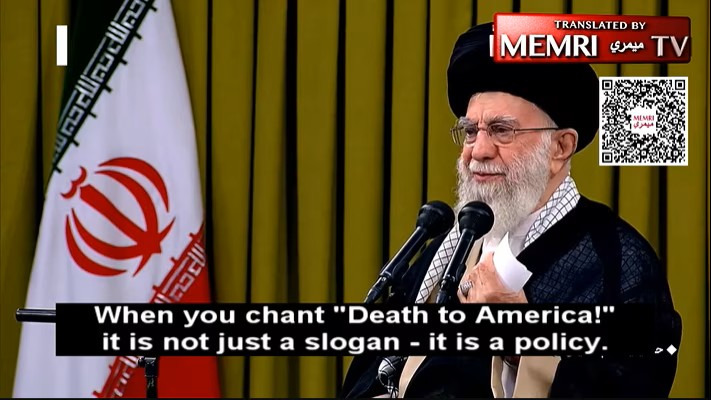
"Death to America," Ayatollah Ali Khamenei announced in 2023, "is
not just a slogan, it is a policy." For decades, Iran has also been
encircling Israel in a "ring of fire" the better to destroy it.
Hezbollah in Lebanon; Hamas and Palestinian Islamic Jihad in
Gaza; Shiite militias in Iraq and Syria, and the Houthis in Yemen are
not independent actors pursuing local grievances. They are integral
components of a coherent Iranian strategy, backed by Russia and China,
aimed at expanding Islamist Iran's influence in the region by force;
destabilizing sovereign states, and eroding the regional order from
within. This strategy is not reactive; it is doctrinal.
What many have largely avoided addressing is the extent to which
some governments, such as Qatar's and Turkey's -- which host American
military bases -- benefit from U.S. security guarantees.
While publicly Qatar and Turkey affirm their commitment to
"stability", at the same time they zealously set about destabilizing
half the planet by funding, promoting, and even training Islamist terror
networks that presumably serve their own strategic interests. To
Western audiences, they speak the language of moderation, while churning
up grievance narratives and ideological victimhood at home.
Qatar, for instance, presents itself as a neutral mediator, a
champion of dialogue, and a facilitator of regional diplomacy, while in
practice, for years, Qatar has provided safe haven, financial channels,
and political legitimacy to just about every Islamic terrorist group.
"Qatar is at the top of funding terrorism worldwide, even more
than Iran... Qatar transferred funds through various channels, primarily
via their largest foundation, Charai, which is one of the largest
funding sources for terrorist organizations in the world." — Udi Levy, a
former senior official of Israel's Mossad spy agency who dealt with
economic warfare against terrorist organizations, YNet, April 18, 2024.
Saudi Crown Prince Mohammed bin Salman once prioritized domestic
reform, economic diversification, and social transformation – while, in
recent weeks, viciously turning against Israel "even more than
al-Jazeera."
The United Arab Emirates, under the exceptional, trailblazing
leadership of its president, Sheikh Mohamed bin Zayed Al Nahyan, has
offered a striking example of unwavering loyalty to the West, to the
Abraham Accords, and he demonstrates leadership in showing that
extremist Islam need not be a requirement. For the UAE, opposing Iran
does not demand embracing Islamism, anti-Western rhetoric, or hostility
toward Israel. Through normalization with Israel, economic openness,
technological cooperation, and a degree of religious tolerance rare in
the region, the UAE has presented an awe-inspiring example of stability
rooted in cooperation rather than ideological warfare.
Bin Zayed's strategic clarity stands in perfect contrast to the
duplicity other Gulf states and illustrates that alignment with Israel
and the United States need not come at the expense of any legitimacy.
Israel has no imperial ambitions, no desire to dominate Arab
capitals, and no ideology of regional subversion. Its military actions
are defensive responses to existential threats posed by Iran, Qatar,
Turkey, Saudi Arabia, their proxies, propaganda, and terrorist
organizations.
Israel does not fight Islamic terrorism because it wants to. It fights Islamic terrorism because it has
to.... To portray Israel as the destabilizing force while downplaying
the role of the countries subscribing to extremist versions of Islam is
not analysis; it is narrative distortion and journalistic malpractice.
Trump's Middle East policy threatens not only Iran's nuclear
ambitions; it threatens an entire system built on moral relativism,
selective outrage, and strategic double-talk.
Exposure, not war, is what these countries fear – and what they should get.
Iran, since its 1979 Islamic Revolution, is not merely a
rival or destabilizing neighbor. It is the ideological and operational
core of modern Islamist warfare in the Middle East. Since 1979, Tehran
has armed, funded, trained, and coordinated proxy organizations with the
explicit aim of undermining Western influence. Pictured: Khamenei gives
a speech on November 1, 2023, televised on Iran's Channel 1. (Image
source: MEMRI)
US President Donald J. Trump's Gulf Arab allies, according to the New York Times,
oppose an American strike on Iran primarily out of fear of regional
instability and the possible damage to economies, tourism, and domestic
security.
While this explanation may sound credible on the surface, a deeper and far more uncomfortable reality
is that for several of these regimes, the real danger is not Iran's
collapse, but an ideological exposure that could follow decisive
American action, as well as concern about Israel becoming more prominent
in the region.
A serious confrontation with Iran would not only reshape the regional
balance of power; it would also force a number of Arab states to
clarify positions that for decades they have fought to keep ambiguous.
Iran, since its 1979 Islamic Revolution, is not merely a rival or
destabilizing neighbor. It is the ideological and operational core of
modern Islamist warfare
in the Middle East. Since 1979, Tehran has armed, funded, trained, and
coordinated proxy organizations with the explicit aim of undermining
Western influence. "Death to America," Ayatollah Ali Khamenei announced in 2023, "is not just a slogan, it is a policy." For decades, Iran has also been encircling Israel in a "ring of fire" the better to destroy it.
Hezbollah in Lebanon; Hamas and Palestinian Islamic Jihad in Gaza;
Shiite militias in Iraq and Syria, and the Houthis in Yemen are not
independent actors pursuing local grievances. They are integral
components of a coherent Iranian strategy, backed by Russia and China,
aimed at expanding Islamist Iran's influence in the region by force;
destabilizing sovereign states, and eroding the regional order from
within. This strategy is not reactive; it is doctrinal.
Trump's Iran policy, after years of hesitant US engagement at best, has consistently combined economic pressure and military deterrence, with limited diplomatic patience, to restore America's international credibility.
Trump's restoration of credibility has apparently unsettled not only
Iran's regime, but also some of Washington's supposed regional allies,
who have grown accustomed to maneuvering Washington when desirable.
Some, such as Qatar, have built fancied empires by never committing to
any side and instead playing every side. Just as much blame, however,
must go to those leaders in the Middle East and Europe who agreed to be played.
What many have largely avoided addressing is the extent to which some
governments, such as Qatar's and Turkey's -- which host American
military bases -- benefit from U.S. security guarantees.
While publicly Qatar and Turkey affirm their commitment to
"stability", at the same time they zealously set about destabilizing
half the planet by funding, promoting, and even training Islamist terror
networks (such as here, here, here, here and here)
that presumably serve their own strategic interests. To Western
audiences, they speak the language of moderation, while churning up
grievance narratives and ideological victimhood at home.
A decisive confrontation with Iran might shatter the carefully maintained duplicity that these countries have so tenderly nurtured for decades.
Qatar, for instance, presents itself as a neutral mediator, a
champion of dialogue, and a facilitator of regional diplomacy, while in
practice, for years, Qatar has provided
safe haven, financial channels, and political legitimacy to just about
every Islamic terrorist group. Hamas's senior leaders have been welcome
to live in Qatar as safe and comfortable billionaires while directing their terrorist operations elsewhere.
According
to Udi Levy, a former senior official of Israel's Mossad spy agency who
dealt with economic warfare against terrorist organizations:
"Qatar is at the top of funding terrorism worldwide, even
more than Iran... Qatar transferred funds through various channels,
primarily via their largest foundation, Charai, which is one of the
largest funding sources for terrorist organizations in the world."
Qatar's state-owned media empire, Al -Jazeera, consistently amplifies Islamist narratives,
demonizes Israel, and undermines moderate Arab governments, all while
projecting an image of supposed neutrality. In fact, by its own admission, it was Qatar that whipped up and catalyzed the entire disruptive "Arab Spring" that begin in 2010.
When Qatar is not acting out its central role in sustaining this
Islamist terrorist ecosystem, an absent decoy to deflect attention, such
as the Iranian regime, could redirect scrutiny toward Qatar even
further.
Turkey, looking forward rather than backward, appears to agree with
that assessment. Turkey, doubtless, shares the same point of view. It
appears to be using its proxy, Syria -- under the interim presidency of
former al-Qaeda leader Ahmed al-Sharaa -- and a place on Trump's alleged
"Board of Peace " in Gaza, eventually to pincer Israel in the middle.
Under President Recep Tayyip Erdoğan, who regularly uses jihadist and anti-Israel rhetoric, Turkey abandoned what was left of Mustafa Kemal Ataturk's secular legacy
in favor of overtly Islamist, neo-Ottoman goals. "The mosques are our
barracks, the domes our helmets, the minarets our bayonets and the
faithful our soldiers," Erdogan once recited.
Under Erdogan's rule, Turkey also hosts Hamas operatives, offers political cover to Islamist causes, and has dispatched armed flotillas, built 31 new warships, threatened Greece, and has been doing his utmost to acquire American F-35 stealth fighter jets.
While Turkey competes with Iran in certain arenas, it also benefits
from Iran's role as a regional spoiler that distracts attention from
Erdogan's own neo-Ottoman ambitions. A serious weakening of Iran would, by removing this diversionary decoy, expose Turkey's broader regional agenda in Syria and Gaza with greater visibility.
Saudi Arabia, by contrast,
has suffered direct attacks from Iranian-backed forces and has
legitimate reasons to fear aggression from Iran, which for decades
appears to have had its acquisitive eyes on the kingdom's oil fields as
well as its guardianship of Islam's two holiest sites: the pilgrimage Kaaba stone and its surrounding mosque in Mecca, and the Prophet's Mosque in Medina.
Saudi Arabia and Iran are not partners; they are fierce rivals and competitors.
Saudi Crown Prince Mohammed bin Salman once prioritized domestic
reform, economic diversification, and social transformation – while, in
recent weeks, viciously turning against Israel "even more than al-Jazeera."
The United Arab Emirates, under the exceptional, trailblazing
leadership of its president, Sheikh Mohamed bin Zayed Al Nahyan, has
offered a striking example of unwavering loyalty to the West, to the
Abraham Accords, and he demonstrates leadership in showing that
extremist Islam need not be a requirement. For the UAE, opposing Iran
does not demand embracing Islamism, anti-Western rhetoric, or hostility
toward Israel. Through normalization with Israel, economic openness,
technological cooperation, and a degree of religious tolerance rare in
the region, the UAE has presented an awe-inspiring example of stability
rooted in cooperation rather than ideological warfare.
Bin Zayed's strategic clarity
stands in perfect contrast to the duplicity other Gulf states and
illustrates that alignment with Israel and the United States need not
come at the expense of any legitimacy.
The suggestion advanced by the New York Times and other media
that Israel represents a greater threat to regional stability than a
weakened Iran is not merely inaccurate — it inverts reality. Israel has
no imperial ambitions, no desire to dominate Arab capitals, and no
ideology of regional subversion. Its military actions
are defensive responses to existential threats posed by Iran, Qatar,
Turkey, Saudi Arabia, their proxies, propaganda, and terrorist organizations.
Unlike Iran, Qatar, Turkey, Saudi Arabia and their proxies, Israel
operates within legal and moral constraints that are routinely ignored
or openly rejected by its adversaries. To portray Israel as the
destabilizing force while downplaying the role of the countries
subscribing to extremist versions of Islam is not analysis; it is
narrative distortion and journalistic malpractice.
Israel does not fight Islamic terrorism because it wants to. It fights Islamic terrorism because it has
to. It has shown time and again that it would clearly prefer to be left
in peace under its fig tree. Israel fights because, to survive against
such overwhelming belligerence, it must — usually alone, often condemned, and often while its supposed "allies" hedge their bets.
Many regional actors benefit indirectly from Israel doing the
difficult and dangerous work of confronting Iran's proxies, among other
adversaries, even as they publicly distance themselves from Israel's
actions to placate domestic opinion or ideological associates. This
hypocrisy is rarely acknowledged in Western mainstream media coverage,
yet it remains a defining feature of the region's geopolitics.
Trump's Middle East policy
threatens not only Iran's nuclear ambitions; it threatens an entire
system built on moral relativism, selective outrage, and strategic
double-talk. By demanding accountability, enforcing sanctions, and
refusing to indulge diplomatic illusions, Trump exposed the fragility of
regimes accustomed to managing perceptions rather than confronting
realities. His approach has disrupted comfortable arrangements that
allowed Iran's regime to expand while claiming plausible deniability.
The resistance to Trump's Iran strategy,
therefore, is rooted in a fear of transparency and a lurking
competition for supremacy. A Middle East no longer dominated by Iranian
subversion and chaos would force too many actors to answer uncomfortable
questions about their own financing networks, ideological alignments,
and long-standing contradictions. For regimes built on doubletalk, truth is far more dangerous than missiles.
The region does not suffer from a lack of diplomacy. It suffers from
an excess of illusion. Iran's regime is not some misunderstood actor
seeking stability; it is a theocratic dictatorship that oppresses women,
murders innocents – estimated at this point to be more than 90,000 --
and exports violence, in Khamenei's own words, as state policy.
Trump's refusal to indulge this illusion marked a historic
breakthrough — a rare moment of strategic honesty in Middle Eastern
affairs — one that clarifies who genuinely seeks stability and those who
benefit from engineering perpetual instability.
Such honesty may well have unsettled not only Iran's leaders but also
those who quietly rely on chaos to obscure their own failures and
unrelenting bellicosity.
Exposure, not war, is what these countries fear – and what they should get.
Pierre Rehov, who holds a law degree from Paris-Assas,
is a French reporter, novelist and documentary filmmaker. He is the
author of six novels, including "Beyond Red Lines", "The Third
Testament" and "Red Eden", translated from French. His latest essay on
the aftermath of the October 7 massacre " 7 octobre - La riposte "
became a bestseller in France. As a filmmaker, he has produced and
directed 17 documentaries, many photographed at high risk in Middle
Eastern war zones, and focusing on terrorism, media bias, and the
persecution of Christians. His latest documentary, "Pogrom(s)"
highlights the context of ancient Jew hatred within Muslim civilization
as the main force behind the October 7 massacre.
Another sterling week for the Trump administration, another interval of agony for his opponents.
The attention of those less politically minded is focused on the
disappearance of Savannah Guthrie’s mother, Nancy -- always fodder for
the would-be Colombos and Miss Marples -- and the Olympics. Yet this
week saw some victories for the administration along with some serious
unfinished business.
The ousted dictator Nicolás Maduro seems isolated, depressed, and
devoid of funds sufficient to hire teams of lawyers to defend him. Any
claims he might have for immunity seem destined to fail. The evidence
establishes he was born in Colombia; his claim falls because only a
native Venezuelan is entitled to hold the office of president. Without
his presence and with the active engagement of the U.S., the Venezuelan
economy appears to be rapidly coming back to life. Without the assets
looted from there and used to sustain the neighboring tyrants of Cuba,
that country is teetering rapidly to an end. It is out of fuel,
electricity, medicine, and food. American flags have been seen flying
over some of the dilapidated buildings which remain after decades of
misrule. I can’t imagine it will last much longer, and I expect there
will be many exiles from there, willing to return and rebuild the island
once the thieves are out of office.
The fall of Maduro has implications outside of this hemisphere. There
is evidence that Spanish prime minister Pedro Sanchez, whose family and
administration are demonstrably corrupt, and his predecessor Jose
Zapatero have been linked to Venezuelan corruption. Faced with increased
unpopularity among Spaniards, Sanchez plans to regularize 500,000
invaders and give them residence rights for one year. European leaders,
already faced with the impossible burden of vast numbers of Third-World
immigrants, correctly fear the impact on the Schengen agreement, which
allows people in 29 countries (the EU and four others) to travel and
move freely from one country to another.
Sanchez is not the only European leader on shaky ground. The UK’s
Starmer, France’s Macron, and Germany’s Merz all are polling badly. Keir
Starmer is in the worst shape and may be forced to resign within days.
The loony Chagos deal he promoted and his connection to Peter Mandelson
seem the tipping point. Mandelson’s close connection to Jeffrey Epstein
is revealed in the documents just released by the Department of Justice,
and Starmer has admitted in Parliament that he knew of Mandelson’s ties
to Epstein when he named him ambassador to the U.S. (The appointment
seemed designed to allow Mandelson to lobby in Washington for the Chagos
deal, a deal so bad only China would benefit from it.) Other European
political personages, Norway’s Mora Juul and Slovakia’s Miroslav Lajcak,
have careers negatively impacted by the connections revealed in the
Epstein files. Norway’s Princess Mett-Marit is in hot water as her extensive relationship with Epstein was unveiled.
The
European Union has not abandoned its efforts to shut down Twitter and
expand its undemocratic censorship of speech from inside Europe to us.
(French officers invaded X’s Paris office this week.) It can hardly be a
shock to learn that Hillary Clinton, who with her husband seems to be
still trying to evade congressional oversight into their knowledge of
Epstein’s crimes, played a significant role in this overreach:
Heritage Foundation exposes Hillary Clinton was directly behind
getting the European Union to use their Digital Services Act to pressure
Elon Musk and America back into censorship
Hillary Clinton flew overseas for a meeting to facilitate this against America
"Free speech is in a free fall in Europe -- They (The European Union)
gathered in Berlin, and it was the most anti-free speech gathering I've
ever been part of -- Hillary Clinton was there, and she really fueled
the anger.
When Twitter was purchased by Elon Musk, she called on the EU to use
the infamous Digital Services Act, which is one of the most anti-free
speech pieces of legislation in decades. And she called upon the EU to
use the DSA (Digital Services Act) to force the censorship of American
citizens, force people like Musk to censor.
Advertisement
It's an extraordinary act by someone who was once a presidential candidate” -- Law professor Jonathan Turley
The subpoenas were issued
with the concurrence of some Democrat members of the relevant House
subcommittee, a shocking development and a sign that not all party
members are willing to cover for these two any longer.
As successful as the administration has been in this hemisphere and
in exposing corruption in Europe, the lag time between the redline the
President set for Iran grows. Inside the country -- despite the
slaughter of tens of thousands of civilians and the ongoing revolution,
including the destruction of significant regime assets -- the need for
U.S. and Israel assistance remains unanswered. I keep seeing evidence of
substantial U.S. assets being moved into the area, and I understand
that we need to protect 19 of our bases in close proximity and
coordinate with Israel and other surrounding countries. Still, it seems
time to act.
Domestically, the economy is doing very well. Contrary to “expert” opinion of economists, this week the Dow soared to new heights.
In what the confounded experts are calling “statistically impossible”
and “clearly some kind of data error,” the Dow Jones Industrial Average
sailed past 50,000 points Friday, a milestone that sixteen Nobel
Prize-winning economists had confidently predicted would never happen
because President Trump’s policies would first reduce the American
economy to a smoking crater populated only by unemployed factory workers
trading bitcoin for canned goods. CNBC, June 2024 (even before the election):
Sixteen! Sixteen Nobel laureates took breaks from polishing
their prizes (which are apparently handed out like candy by Scandinavian
Epstein fanboys) to warn us Trump would “reignite inflation.” And… the
Dow just hit 50,000, with eggs and gas cheaper than ever. Too bad the
Nobel Institute doesn’t have a return policy. Maybe the Committee should
create a new category for people who excel at failing upward.
From a consumer’s point of view, gas prices are at their lowest in
five years, inflation is under 3% and the gross domestic product at 4.2%
is soaring. Trillions of pledged foreign investments are on the
horizon.
The legacy media is not doing as well. This week the Washington Post terminated another 300 employees, and who knows how long the ever-thinner Democrat broadsheet will continue operations.
In a very significant development concerning illegal immigrants, the
Fifth Circuit Court of Appeals ruled that DHS was correct: Illegal
aliens can be detained without bail, pending their removal proceedings. This should make removals faster and easier.
Now -- if you crossed illegally and ICE finds you, you’re done.
You’re not walking American streets freely again unless you prevail in
your removal proceeding (which is supremely unlikely). You won’t be able
to go to your apartment and grab your things. You are simply done. You
can either accept deportation or sit in immigration detention while your
lawyer wastes their time on futile filings, and then get deported when
you lose.
This will lead to a lot more illegal aliens simply giving up on their
frivolous court fights and accepting deportation, which will help
relieve the court backlogs. This will also lead to many more illegal
aliens self-deporting. Would you rather pack up your things, settle your
affairs, and get a free flight and $2500? Or would you rather try and
hide from ICE, knowing that the moment they find you, you will never
breathe free air in America again?
It’s a much easier choice.
In sum, I think the EU plan to muzzle free speech will fail in the
face of strong U.S. opposition, that Starmer will resign; that Sanchez
will also or be forced from office, though perhaps that will take
longer; that the mullahcracy is about to end in ways we cannot yet
entirely foresee; that the removal of millions of illegal aliens will
take place faster and in greater numbers than we might have anticipated.
The SAVE Act is due to come up this coming week. If what we find in the
seized Georgia election records and/or what we gleaned in Venezuela
reveal what I think they will, it would be political suicide to vote
against it.
“Why would you have some illicit labs set up in an Airbnb, except for, maybe, you’re trying to create some sort of, you know, patient zero scenario, that you might infect someone, that you might create another COVID-like scenario," Crawford says
House Intelligence Committee
Chairman Rep. Rick Crawford, R-Ark., is warning that illicit biolabs on
U.S. soil that the FBI says are linked to Chinese nationals could
represent a serious national security threat, and may be an effort by
Beijing to infect a "patient zero" for the next pandemic.
Speaking during an interview Friday on the Just the News Not Noise
television program, Crawford pointed to labs raided by authorities in
California in 2023 and Nevada a week ago, raising questions about the
intent, oversight failures, and the potential risks posed by foreign
actors.
One of the labs was located in a vacation rental home near Las Vegas, a major metropolitan center frequented by vacationers.
“You know, it’s a really hard problem to assess,” Crawford said. “Why would you have some illicit labs set up in an Airbnb,
except for, maybe, you’re trying to create some sort of, you know,
patient zero scenario, that you might infect someone, that you might
create another COVID-like scenario.”
Crawford said the alleged handling of dangerous pathogens appeared
careless at best, and possibly deliberate. “Why would you do it in such a
slipshod way, if it wasn’t almost deliberately to try to maybe attract
attention?” he asked. “Are they trying to send a message to us?”
The makeshift Biolab near Las Vegas was close to what Crawford
described as a “high-value” military installation. He said the proximity
to both civilians and defense assets heightens his concerns.
“I have no idea what the operational use for this illicit lab was,
except that it’s in close proximity to a population center,” Crawford
said. “It’s also in close proximity to a military installation of high
value.”
Crawford argued that the Las Vegas situation shows the broader
vulnerabilities in the U.S. counterintelligence and immigration systems,
warning that foreign actors, particularly from China, have taken
advantage of the free and open society in the U.S.
“This requires us to double down on ourCI
(counterintelligence) posture, which has not evolved and kept pace with
these threats that continue to evolve,” he said, adding that he is “not
sure we’re fully prepared for” the challenges ahead.
The Arkansas Republican rejected the notion that the issue stems
solely from border security failures under the Biden administration.
“The Chinese have been exploiting our immigration system for
decades,” Crawford said. “Those family members are not severing ties
with their CCP relatives.”
According to Crawford, that access has enabled land purchases and
other activities that may place Chinese nationals close to sensitive
U.S. assets without raising immediate red flags.
“Now as a U.S. citizen, I can go and buy property, and nobody really
looks any sideways about it,” he said. “But what they’re doing is buying
that land so that they can gain access to some sort of strategic
asset.”
Crawford also criticized American universities for what he described
as prioritizing revenue over security by admitting large numbers of
Chinese students into advanced science and technology programs.
“They’re not here to study the arts or literature,” he said. “They’re
here to gain hard-tech degrees: engineering, physics, biochemistry. And
it’s been to our detriment.”
Crawford said university leaders have acknowledged the concern but often resist action without congressional mandates.
“What does that tell you about how powerful money is, that
institutions are more consumed with their bottom line than they are with
the security of this nation?” he said.
Crawford said China’s long-term objective is clear.
“Their stated goal is to displace the United States as the preeminent
economy, the preeminent military, the preeminent political leader
globally,” he said.
While acknowledging that the full intent behind the alleged biolabs
such as the Las Vegas case remains unknown, Crawford said the status quo
is unacceptable.
"I don't know if they were trying to create, as I suggested before,
possibly a patient zero scenario where they can get out and create,
potentially, an epidemic, or, you know, heaven forbid, a pandemic that
makes it difficult for us to function. I don't know what her motives
were, but I know that we can't continue to operate like this," he said.
"Given that these companies do not publicly list their investors or where their money comes from, this sudden jump in value raises concerns that unknown individuals may be investing to gain influence with your wife," Comer wrote in a letter to Mynett.
(The Center Square) -
The House Oversight Committee is
investigating the rapid rise in value of two companies owned by Rep.
Ilhan Omar's husband, amid concerns over financial transparency and
potential influence.
House Committee on Oversight and Government Reform Chairman James
Comer, R-Ky., said Omar's husband, Timothy Mynett, has ownership stakes
in two companies, eStCru LLC and Rose Lake Capital LLC. The reported
value of those positions surged from $51,000 in 2023 to as much as $30
million in 2024.
"Given that these companies do not publicly list their investors or
where their money comes from, this sudden jump in value raises concerns
that unknown individuals may be investing to gain influence with your
wife," Comer wrote in a letter to Mynett. "Media reports further suggest
that you may have raised money from investors using misleading
information, meaning some of those funds may have been obtained
improperly."
Omar, a 43-year-old Minnesota Democrat, is a Somalia-born Muslim. She
is the first Somali American elected to Congress. She fled Somalia with
her family when she was 8 years old. She became a U.S. citizen in 2000.
The Squad member has worked to thwart President Donald Trump's
agenda, and the two have been sparring for years. Trump recently said
both Congress and the U.S. Department of Justice are investigating Omar
over the mushrooming value of the companies.
Typically, the House Ethics Committee handles allegations involving lawmakers and their family members.
Comer said that Mynett, in 2021, allegedly promised an investor a
200% return on a $300,000 investment in eStCru, plus interest, but did
not repay the funds until sued for fraud in 2023. Comer also said that
eStCru faced financial trouble in 2023. Rose Lake Capital, identified as
a venture capital firm in Omar's 2024 financial disclosure, has also
increased in value.
Omar previously said her husband's reported income from eStCru was
between $5,000 and $15,000. She said he had no income from Rose Lake
Capital.
In the letter, Comer demanded that Mynett turn over documents related
to both companies, including financial statements and travel records.
Omar's office didn't immediately respond to late afternoon requests for comment from The Center Square on Friday.
Golden State says district judge applied one-size-fits-all rule but doesn't mention it did the same to school districts when they sought leeway. Mothers share "vignettes" of gender secrecy's harm to their children, including suicide.
California claims it
balances parental rights with protections for transgender students by
hiding the latter's gender transitions from the former, absent
extraordinary circumstances.
Parents suing the Golden State to end its so-called gender
secrecy policies claim California "balances the parent’s interests like
McDonald’s balances the cow’s."
The parties recently made their cases to the Supreme Court to either vacate or uphold a 9th U.S. Circuit Court of Appeals' ruling that temporarily blocks a lower court's ban on California's policies,
Those policies, the plaintiffs say, keep parents in the dark about
their children's gender confusion and muzzle teachers who want to tell
parents about it.
The plaintiff parents and teachers then filed their reply, backed by friend-of-the-court briefs from several interest groups and red states.
The Thomas More Society, representing the plaintiffs, said
the harm from blocking the injunction is not speculative, citing one
pair of parent clients. Their daughter's school allegedly told them last
fall it would keep addressing the minor girl by her preferred name and
pronouns even after her attempted suicide, which followed a nearly a
year of the school secretly transitioning her.
Another pair of parents belatedly learned their daughter's
teachers were lying to them, and the school had socially transitioned
her "as early as fifth grade," yet the school continues to keep them in the dark about "her current gender expression at school," the court filings say.
Despite two years of litigation and full discovery,
"California produced no admissible evidence that parental involvement
harms children" while burying its policies "behind a web of regulations,
FAQs, and legal alerts" that Benitez compared to "wrestling with a bowl
of Jell-O," the public interest law firm said.
"The state assumes parents are unfit, seizes unchecked
authority over children, and forces schools into deception," special
counsel Paul Jonna said. "This isn’t an argument about abstract laws and
regulations. There are real lives at stake."
Parental involvement required when 'social environment' undermines religious beliefs
The plaintiffs' petition to Kagan
accused the San Francisco-based 9th Circuit, until recent years the
most overturned federal appeals court in America, of flouting the
Supreme Court's new parental rights precedent Mahmoud,
which blocked a suburban D.C. school district from teaching LGBTQ
"storybooks" to young children without parental notice and opt-out.
The 9th Circuit applied "an unpublished, divided, Sixth Circuit decision that badly misread both Mahmoud and Yoder," an Amish homeschooling precedent upon which Mahmoud built,
the petition says. Nothing in the new precedent affirms the appeals
court's view that parental rights are limited to "religious burdens
imposed by 'curricular requirements.'".
Yoder explicitly mentioned the "social
environment" of high school, not just the curriculum, as undermining the
religious beliefs of Amish parents, requiring Wisconsin to meet the highest level of judicial scrutiny to force Amish teens into public school, the plaintiffs noted.
The state's expert witnesses actually undermined its own
"safety rationale" for the policies under cross-examination, according
to the petition. One said gender dysphoria and "mental health risks" can
worsen when a child is addressed by "a chosen gender" in one
environment but not another, which is exactly what California orders
schools to do.
California's opposition
to the emergency application accused Benitez of applying a
one-size-fits-all rule that would harm children, but also falsely
implied schools had leeway to decide when to inform parents about gender
confusion.
Under its anti-discrimination and privacy laws and
constitutional provisions, "schools may balance parental interests with
students’ particular needs and circumstances" around gender identity
disclosure, yet Benitez seemed to "categorically" prohibit them from
respecting student privacy or their preferred names and pronouns,
Attorney General Rob Bonta said.
"The district court’s injunction would allow no exceptions,
even for extreme cases where students or teachers reasonably fear that
the student will suffer physical or mental abuse," and exceeds recent
SCOTUS precedent on narrowly tailored injunctions, the opposition says.
Benitez also misunderstood the challenged state laws, which
"allow, and even require, disclosure in certain circumstances—in
particular, where there is a risk of serious harm to the student,"
according to Bonta.
It was the AG's office, however, that repeatedly threatened school districts
if they adopted "the reasoning" of Benitez's 2023 preliminary
injunction against Escondido Union School District, where the original
plaintiff teachers taught, making unambiguous to school districts they
would face Bonta's wrath for disclosing gender identity outside of an
emergency.
Finally, the plaintiffs didn't act as if they needed relief
right away, withdrawing their request for a classwide preliminary
injunction and litigating a new request for a permanent injunction "on
an ordinary schedule that did not result in a hearing" for four months,
Bonta said. They haven't asked for "expedited briefing and argument" at
the 9th Circuit either.
The irreparable harm will fall on students and school
employees "during the few months it takes to resolve the appeal" if the
stay is lifted, with "irreversible" consequences for many students
subject to non-consensual disclosure of their gender identity, Bonta
said.
'Vignettes' of mothers victimized by gender secrecy policies
Florida, Montana and West Virginia
told the Supreme Court that the 9th Circuit turned a "blind eye to harm
done nationwide" by school policies that hide so-called social
transitions, where students present as the opposite sex and are treated
as such, from parents.
"Intervention of this kind is highly destructive and can
lead to permanent damage to the child’s mental and physical health,"
counter the 9th Circuit's claim that the plaintiffs won't be
"substantially injured" by the stay on the permanent injunction, they
said.
"Lower courts need clarity to resolve the increasing number
of parental-rights disputes in this context," the red states said,
referring to Defending Education statistics
from last spring that documented around 1,200 school districts covering
a quarter of all public school students with secret-transition
policies.
California, New York and New Jersey have pushed the
envelope the furthest, with California even shielding school officials
from liability for hiding a child's gender expression from "any other
person" and punishment for actively "shap[ing] a child’s sexual identity
away from parental supervision," the states said.
The Child and Parental Rights Campaign and Our Duty USA told SCOTUS in a joint brief
the 9th Circuit abandoned "over 100 years of precedent" by letting
schools exclude parents "based solely on speculation of potential harm
or parental disagreement with the government’s chosen approach for their
confused child."
Bonta and the Democrat-dominated Legislature have stymied
parents at every turn, with a legislative committee refusing to hold a
hearing on parental notification legislation by Our Duty, which says its
members "skew left" politically, and Bonta going after school districts
that sought to inform parents and seeking to tank a related ballot
initiative, they said.
The brief includes several "vignettes" of mothers
victimized by gender secrecy policies, some of whom became activists in
response, including Our Duty President Erin Friday. The saddest may be Abigail Martinez, who has spoken of her daughter
Yaeli's suicide after her school helped the girl escape her mother
through false abuse claims and get "sex-rejecting interventions."
Former Division of Diversity, Equity and Education Achievement -- which employed about 100 people who earned more than $7 million annually -- had been mired in financial mismanagement and attacks from Republicans before the university closed it last year.
(The Center Square) -
After concerns were raised about
spending on DEI, the University of Wisconsin-Madison shuttered a
department but kept most of the staff and their titles working on equity
issues, an investigation by The Center Square found.
The former Division of Diversity, Equity and Education Achievement --
which employed about 100 people who earned more than $7 million
annually -- had been mired in financial mismanagement and attacks from
Republicans before the university closed it last year.
An audit
found that the university had no grasp of its total diversity spending
and whether it was effective, and auditors identified problematic
employee bonuses, travel and other expenses in the division.
Its former leader, LaVar Charleston, was demoted to a professor job in a different department in January 2025. The university announced the division's closure in July.
Charleston had been paid more than $360,000 each year. The move slashed his salary by about two-thirds.
Employment data obtained by The Center Square show that -- like
Charleston -- nearly all of the division's employees were transferred
elsewhere in the university, and they retained their diversity-related
monikers.
"The closure was purely cosmetic," said Wisconsin state Rep. Amanda
Nedweski, a Republican who is vice chairperson of the House Committee on
Colleges and Universities. "Not only is the university not tracking
what is being spent, it doesn't even have a way to measure whether it's
producing the results it was set out to produce."
The division's goal had been "to create a diverse, inclusive and
excellent learning and work environment," according to the university.
At the time of its closure, 98 people were employed in the diversity
division. Seven of them lost their jobs in August, September and
October, university records show.
The other 91 employees moved to other departments. Nearly all of them
kept the same job title, including nine whose titles explicitly contain
"diversity" and "DEI," an acronym for diversity, equity and inclusion.
Several of them have annual salaries of at least $100,000.
A university spokesman said the employees' duties might have changed
regardless of their static titles, and that many of the employees had
overseen "sponsorship-linked student support programs."
"These types of programs continue to exist and are working to further
broaden or revise programming within their new units," spokesman John
Lucas said in an email.
He said the university has increased the frequency and scope of its
financial reviews and made other changes to help prevent future spending
problems.
State Rep. Jerry O'Connor, a Republican member of the House
universities committee, has been frustrated by university leaders who he
says lack transparency and recognition of lawmakers' concerns.
"The university system doesn't think they're accountable to anybody
but themselves," he said in an interview with The Center Square.
State Republican lawmakers commissioned the audit that preceded the
closure of the university's diversity division. But O'Connor said they
have little ability to make direct changes to public university
functions -- even though they hold majorities in the state House and
Senate -- because Gov. Tony Evers, a Democrat, can block them.
Evers' office did not respond to an interview request. He is not seeking reelection this year.
Limiting or ending programs in state government that give preference
to racial minorities and others has been a priority in recent years for
Republicans in state and federal office.
In 2023, Wisconsin state lawmakers withheld $32 million in university
funding until its Board of Regents agreed to curtail the expansion and
scope of diversity-focused jobs. President Donald Trump last year threatened to investigate and withhold federal funding from universities because of the diversity efforts.
Wisconsin's 13 public universities get more than $1 billion each year of state funding.
IOC spokesman Mark Adams emphasized the importance of the initiative, saying that “protecting the female category is one of the key reforms she wants to bring in.”
Key figures from the international
sporting world said that they have reached agreement on a new, unified
policy for transgender athlete eligibility that will apply across major
competitions, including the Olympic Games and world championships, the
International Olympic Committee (IOC) announced Saturday.
The move marks a shift away from the current system, in which
individual sports federations set their own rules, often leading to a
patchwork of different standards.
Under the anticipated framework, transgender competitors who have
experienced full male puberty before any medical transition would face
tighter restrictions in women’s categories, but the full details have
yet to be finalized.
The effort has been championed by IOC President Kirsty Coventry, the
first woman to lead the organization. She took the helm in June and has
prioritized a more consistent global approach.
At a press briefing during the Milano-Cortina Winter Games in Italy,
IOC spokesman Mark Adams emphasized the importance of the initiative,
saying that “protecting the female category is one of the key reforms
she wants to bring in.”