Tuesday, February 10, 2026

Relax, MBS isn’t aligning with Islamists. He also isn’t normalizing with Israel soon - Lazar Berman


by Lazar Berman

Recent moves by Saudi Arabia against the UAE and toward Qatar and Turkey, along with a rise in antisemitism in the Saudi press, have alarmed many, but these processes are not new
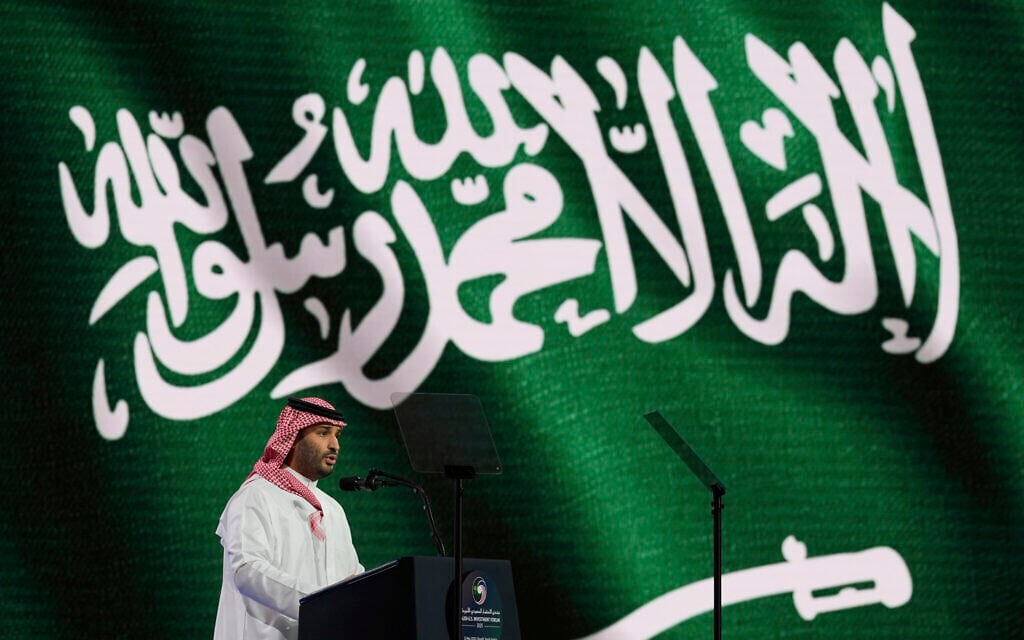
 

Saudi Crown Prince Mohammed bin Salman speaks at the Saudi-US Investment Forum at the King Abdulaziz International Conference Center in Riyadh, Saudi Arabia, May 13, 2025. (AP Photo/Alex Brandon)


After years of viewing Saudi Arabia as a keystone in the pro-American alliance in the Middle East, many observers have raised the alarm in recent months over a worrying shift in the kingdom’s posture.

Under powerful Crown Prince Mohammed Bin Salman, Saudi Arabia has been regarded as undeniably autocratic, but also a bulwark against hostile Iran-backed proxies and Muslim Brotherhood blocs.

And there was an assumption that the Saudis would normalize ties with Israel in the near future.

“We are at the cusp of an even more dramatic breakthrough,” said Prime Minister Benjamin Netanyahu at the United Nations, 16 days before Hamas invaded southern Israel on October 7, 2023, “a historic peace between Israel and Saudi Arabia.”

US President Donald Trump repeatedly expressed hope that Riyadh would join the Abraham Accords during his first term. After the October 2025 ceasefire in Gaza, Trump reportedly told MBS that he expected him to move toward normalization with Israel now that the fighting was over.

The war in Gaza has hardened MBS’s position for an Israel deal, but it was still seen as highly likely once the fighting ended.

That optimistic assessment has turned into a growing concern in recent months that not only is normalization an Israeli pipe dream, but that Riyadh is actively turning toward a regional Islamist axis led by Turkey and Qatar.
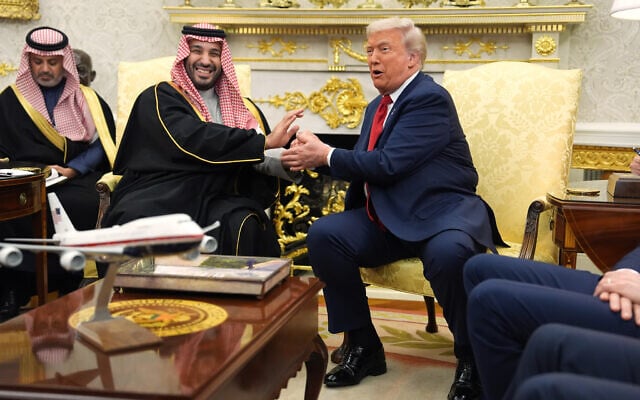
President Donald Trump meets Saudi Arabia’s Crown Prince Mohammed bin Salman in the Oval Office of the White House, November 18, 2025, in Washington. (AP Photo/Evan Vucci)

But the concern over the kingdom moving into the arms of Islamists is overblown, and fundamentally misreads both the structure of Middle East geopolitics and Saudi interests.

“That’s really far-fetched,” said Moran Zaga, Gulf scholar at MIND Israel. “It’s hard to describe what Saudi is doing as alliances, except what it does with Pakistan. It exploits opportunities; it’s signaling — mainly signaling to the United States, Israel and the UAE — that it has other partners.”

“It’s hard to describe what Saudi is doing as alliances, except what it does with Pakistan. It exploits opportunities; it’s signaling— mainly signaling to the United States, Israel, and the UAE— that it has other partners.”

“There are changes,” conceded Yoel Guzansky, senior researcher at the Institute for National Security Studies. “But they’re not ideological. Saudi Arabia hasn’t joined an alliance. There is no such alliance.”

“Saudi Arabia is hedging,” he said.

An Islamic NATO?

Analysts fretted over an emerging “Islamic NATO” as Bin Salman signed a strategic mutual defense agreement with Pakistan in September. Then in January, Bloomberg reported that Turkey was seeking to join the pact, which would have brought together Saudi Arabia’s deep coffers, Pakistan’s nuclear weapons and Turkey’s advanced military power.
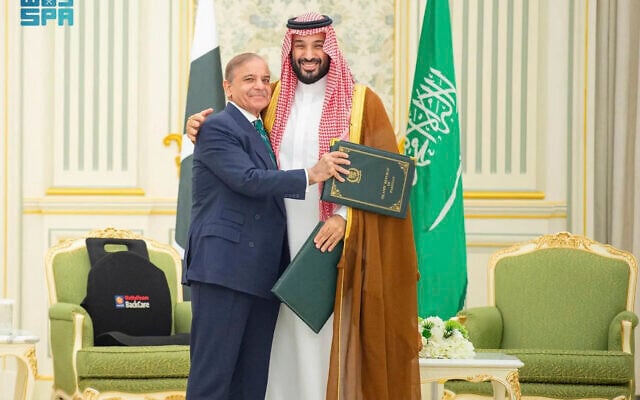
Pakistani Prime Minister Shehbaz Sharif, left, embraces Saudi Arabia’s Crown Prince Mohammed bin Salman after signing a joint defense pact in Riyadh, Saudi Arabia, September 17, 2025. (Saudi Press Agency via AP)

Those military discussions took place amid diplomatic processes that set off the same alarms.

Eight-and-a-half years after he cut diplomatic ties with the energy-rich emirate next door, MBS sat with Qatari leader Tamim bin Hamad Al Thani in December to sign a series of defense, transportation and investment deals. Bilateral trade is up over 600 percent since the restoration of ties in 2021, and the two Gulf countries have been aligning on regional issues as well, including in Syria and Gaza.

Not long ago, MBS and Turkish President Recep Tayyip Erdogan were also regional rivals in a relationship marked by distrust. In 2018, Saudi agents killed and hacked apart dissident journalist Jamal Khashoggi at their embassy in Istanbul, likely on the orders of MBS. Erdogan leveled that accusation publicly, writing in The Washington Post — the influential publication where Khashoggi’s writing was published — that “the order to kill Khashoggi came from the highest levels of the Saudi government.”
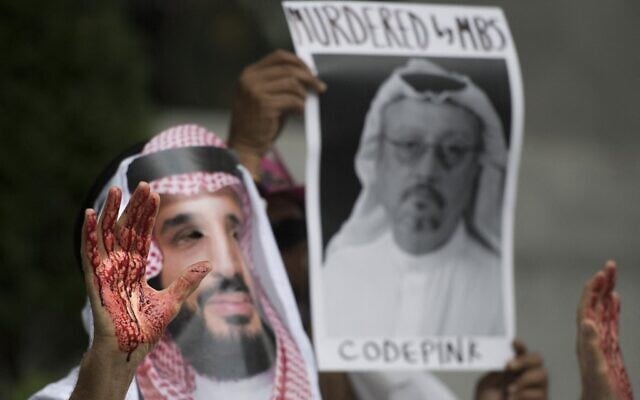
In this file photo taken on October 10, 2018, a demonstrator dressed as Saudi Arabian Crown Prince Mohammed bin Salman (C) with blood on his hands protests outside the Saudi Embassy in Washington, DC, demanding justice for missing Saudi journalist Jamal Khashoggi. (Jim Watson/AFP)

Turkey and Saudi Arabia also clashed around regional conflicts, including in Sudan, Syria and Libya.

Now, the two regional powers are pursuing a steady reconciliation process.

On Tuesday, MBS hosted Erdogan, a leading Israel critic and Hamas backer, in Riyadh. In a joint statement, the two agreed to strengthen economic and defense ties and blasted Israel over Gaza and its recognition of Somaliland.

As Saudi Arabia seemed to move toward Qatar and Turkey, its long-simmering rivalry with the United Arab Emirates — a close regional partner of Israel’s — flared up.
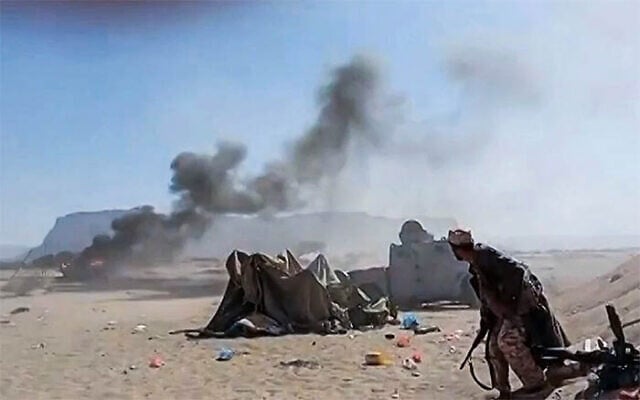
A video grab taken on January 3, 2026, from images released by Aden Independent Channel (AIC TV) on January 2, shows the moment a strike hits Southern Transitional Council (STC) forces in Seiyun, in the Hadhramaut Governorate, Yemen. (ADEN INDEPENDENT CHANNEL (AIC TV) / AFP)

In December, tensions between the two Gulf powers spilled into the open in Yemen, once a theater of cooperation, as UAE-backed separatists pushed forces aligned with the Saudi-backed internationally recognized government out of two large provinces. In response, the Saudis carried out strikes on a Yemeni port over what it claims were weapons shipments from the UAE. The next day, Abu Dhabi announced it was pulling its remaining forces out of Yemen after Saudi Arabia backed a call for Emirati forces to leave within 24 hours, and the UAE-backed militia collapsed soon after.

Saudi Arabia and the UAE also back opposing sides in the Sudanese civil war, with Abu Dhabi supporting secessionists there as well. While the UAE is widely believed to have backed Israel’s recognition of Somaliland, Somalia is in talks with Riyadh about a military pact and cancelled port agreements with the UAE.
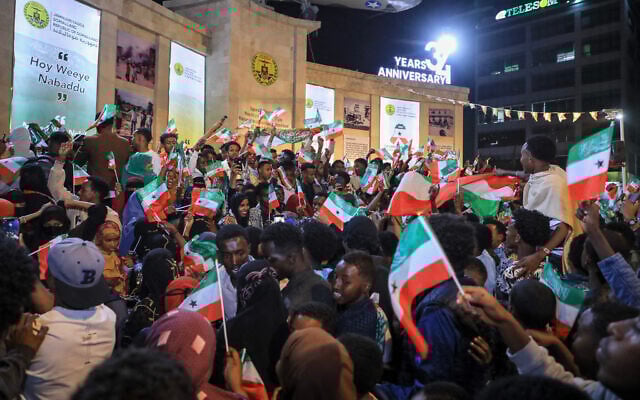
Residents wave Somaliland flags as they gather to celebrate Israel’s recognition of Somaliland in downtown Hargeisa, December 26, 2025. (Farhan Aleli/AFP)

The two Gulf rivals engaged in a media war as well, in which Israel-bashing featured prominently. Saudi state-owned Al-Ekhbariya TV accused the UAE of  “investing in chaos and supporting secessionists.” A prominent academic charged the UAE — and the “imposter from Abu Dhabi” — with throwing itself “into the arms of Zionism” and serving as “Israel’s Trojan horse in the Arab world.”

Saudi clerics launched into antisemitic sermons, as headlines in the kingdom attacked “the Zionist entity” and its ostensible Emirati enablers.

The UAE didn’t respond directly, but many believe that it pushed anti-Saudi articles and sentiments in Israeli and Jewish outlets and organizations.

The Anti-Defamation League released a statement saying that it is “alarmed by the increasing frequency and volume of prominent Saudi voices — analysts, journalists and preachers — using openly antisemitic dog whistles and aggressively pushing anti-Abraham Accords rhetoric, often while peddling conspiracy theories about ‘Zionist plots.'”
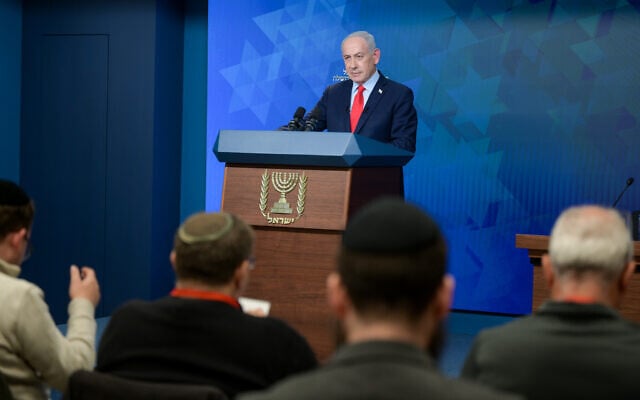
Prime Minister Benjamin Netanyahu holds a press conference in Jerusalem on January 27, 2026. (Maayan Toaf/GPO)

Israeli leaders are well aware of the trend. Netanyahu said last week that he is closely following Riyadh’s ostensible shift toward Turkey and Qatar.

“We expect from anybody who wants normalization or peace with us that they not participate in efforts steered by forces or ideologies that want the opposite of peace,” Netanyahu said at a press conference in response to a question by The Times of Israel.

Such efforts “reject the legitimacy of the State of Israel, and nurture all kinds of forces that attack the State of Israel,” said Netanyahu, going on to say that he’d be “happy to have a normalization agreement with Saudi Arabia,” provided “they want normalization and peace with a secure and strong Israel.”

Explaining Saudi behavior

The tendency to view the Middle East as a region with clear competing alliances — pro-Western, Islamist, Iran-centric — fails to capture the complex nature of Middle East politics.

“Qatar isn’t exactly in a single camp — it’s in many camps,” said Guzansky. “This whole division into camps is artificial, superficial, too dichotomous. Life is gray, it’s complex.”
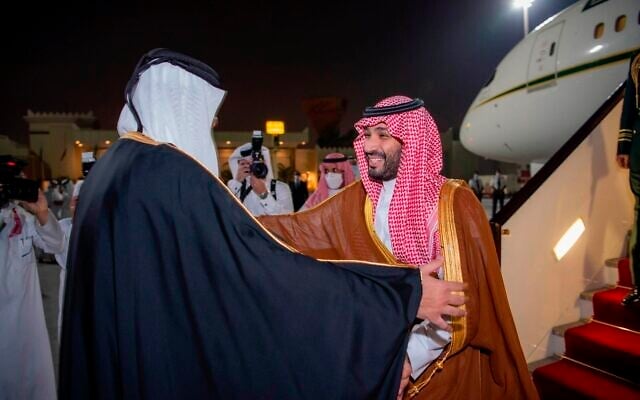
In this photo released by the Saudi Royal Palace, Saudi Crown Prince Mohammed bin Salman, right, is greeted by Qatar’s Emir Sheikh Tamim bin Hamad Al Thani upon his arrival at Doha airport in Qatar late Dec. 8, 2021 (Bandar Aljaloud/Saudi Royal Palace via AP)

Much of the alarm over a perceived recent Saudi realignment seems to stem from a lack of awareness that many of the stances in question have existed for years.

Since 2021, when Qatar was readmitted into the Gulf Cooperation Council, MBS has been improving his relationship with Doha. He has been pursuing a similar process with Turkey’s Erdogan as well.

“This is a long process that’s been happening over the last five years,” said Guzansky. “Saudi Arabia is strengthening relations with Qatar. That’s not from today.”

“Saudi Arabia is strengthening ties with states it used to have some level of confrontation and competition with,” he explained. “There’s a regional pattern.”
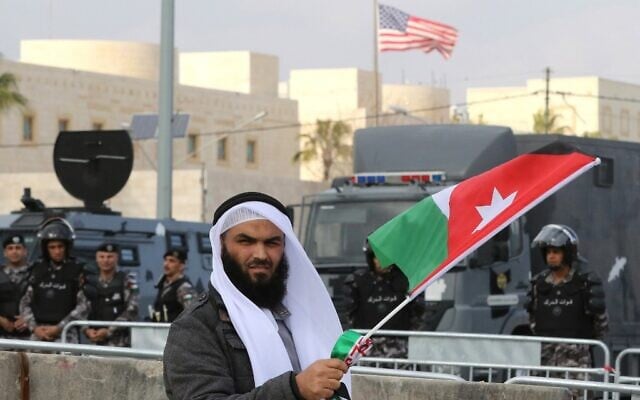
In this file photo taken on December 13, 2017, a Jordanian man takes part in a demonstration organized by the Muslim Brotherhood and other Islamic movements outside the American embassy in the capital Amman against the US president’s declaration of Jerusalem as the capital of Israel. (Khalil Mazraawi/AFP)

Moreover, Saudi Arabia isn’t about to run toward an ostensible Muslim Brotherhood axis. Riyadh outlawed the organization in 2014, listing it as a terrorist organization.

“It’s true that over the years Saudi Arabia has been more pragmatic in its ties with Muslim Brotherhood-affiliated groups in the region, for example, in Yemen,” Guzansky explained. “But that’s a pragmatic approach. It doesn’t mean they like the Muslim Brotherhood.”

And other countries have also strengthened ties with Turkey in recent years. Israel enjoyed a period of warming relations until the October 7 attacks, and the UAE enjoys far more extensive economic ties with Ankara than Saudi Arabia does.

At the same time, it’s hard to deny that the intensity of the rivalry with the UAE and the rhetoric around Israel and Jews has changed recently.

“There’s no question there’s been a shift,” said Michael Makovsky, president and CEO of the Jewish Institute for National Security of America, “though I suspect it’s more tactical and thus could shift back.”

A handout picture provided by Saudi Arabia’s NEOM on July 26, 2022, shows the design plan for the 500-meter-tall parallel structures, known collectively as The Line, in the heart of the Red Sea megacity NEOM. (NEOM / AFP)

There are a number of possible explanations for the shift in recent weeks.

MBS’s NEOM, a megaproject to build a planned city, has been a massive waste of money thus far, and low oil prices have put some strain on the Saudi economy. Turning the focus to the alleged sins of Israel and the Jews is a time-honored way for Middle Eastern autocrats to distract the public and turn domestic anger away from the government.

MBS might also have concluded that normalization with Israel is simply not realistic, with some fighting in Gaza ongoing and images of devastation so fresh.

The personal rivalry between MBS and Emirati leader Mohammed Bin Zayed could also be driving much of the Saudi behavior of late.
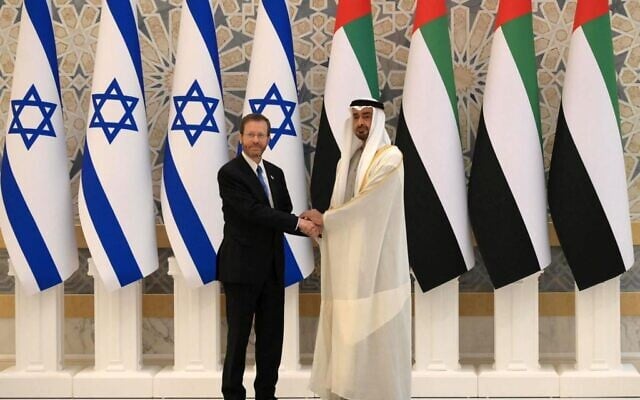
President Isaac Herzog meets with then-Crown Prince of Abu Dhabi, Sheikh Mohammed bin Zayed Al Nahyan in Abu Dhabi on January 30, 2022. (Amos Ben-Gershom/GPO)

MBZ, more than two decades older, seemed to be a mentor for the Saudi prince when he shot to power, guiding cooperation on confronting political Islam and the Iranian threat, and serving as a model for moving his economy away from a dependence on oil revenues.

But an economic rivalry, feelings of betrayal, and a Saudi belief that the larger country should be the preeminent partner have strained the personal relationship.

That is not the same as a wholesale regional realignment.

In any event, a decisive shift would come with real costs for Saudi Arabia: “MBS seems to have made his bed in liberalizing his country internally, attracting more foreign investment and changing its international image, which could be undermined by a real Saudi shift,” said Makovsky.

Positive signs from Saudi

The Saudi-UAE rivalry is real and well-established, but that doesn’t mean it can’t be tamped down in the near future.

“There is still space for reconciliation between them, and the dynamic could change given a change of tone and alignment of positions,” said Zaga. “And it could even lead both sides to climb down from the tree and return to cooperation. So there’s a very high probability, and I wouldn’t immediately bury the relationship.”
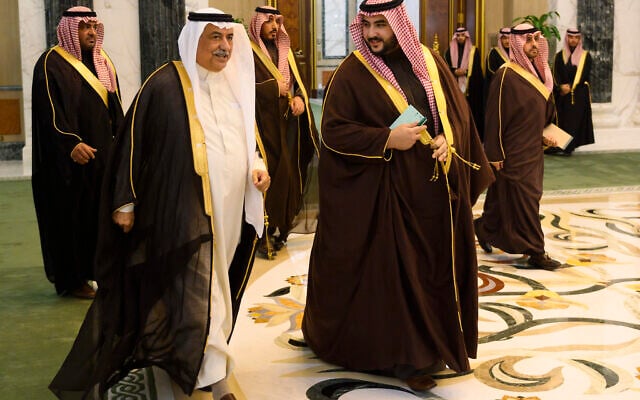
Prince Khaled bin Salman (R), the brother of the crown prince and then-Saudi Ambassador to the United States, and Ibrahim al-Assaf, the new Saudi foreign minister, are pictured at the Royal Court in Riyadh on January 14, 2019. (ANDREW CABALLERO-REYNOLDS / POOL / AFP)

The Saudis have also gone out of their way to alleviate concerns about a shift in the direction of hostility toward Israel and Jews.

Saudi Defense Minister Khaled bin Salman met with Jewish leaders and regional experts last week, a meeting that was well-received.

“It reflects well on the Saudis and their interest in maintaining close ties with the pro-Israel American community,” said Makovsky, who was in a separate meeting with the minister that day. “It’s also a good sign, and suggests this shift might be tactical and temporary.”
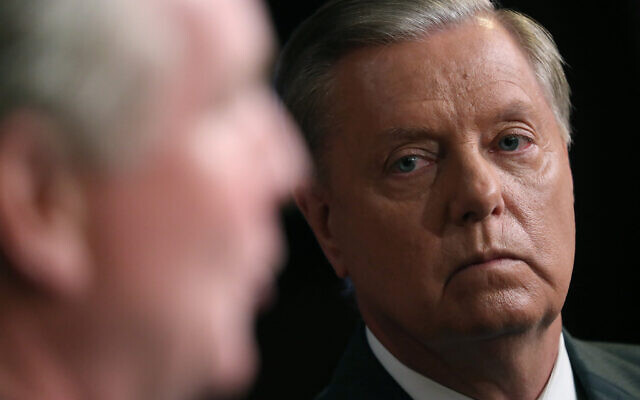
Senate Judiciary Chairman Lindsey Graham, (R-SC) (R), listens to Sen. Chris Van Hollen, (D-MD) speak during a news conference to discuss the introduction of bipartisan legislation to impose severe sanctions on Turkish officials in response to their incursion into northern Syria, on Capitol Hill, October 17, 2019, in Washington, DC. (Mark Wilson/Getty Images/AFP)

US Senator Lindsey Graham, who recently called for the Saudis to halt their “attack” on the UAE, changed his tune after meeting with KBS.

“Saudi Arabia is saying things I don’t agree with right now,” he said in a statement after the meeting.

“My engagement with Saudi Arabia over the past two days has given me a sense of confidence that the Kingdom — while it has its own interests — is on a path toward the light, not the darkness.”

Saudi Arabia may even have perceived encouragement for its recent policies from the White House.
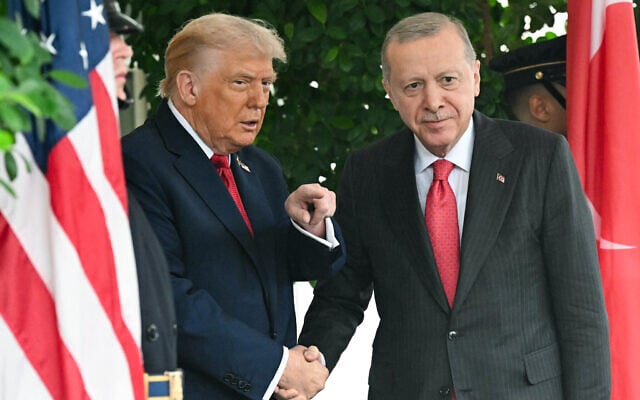
US President Donald Trump, left, greets Turkey’s President Recep Tayyip Erdogan as Erdogan arrives at the White House in Washington, DC on September 25, 2025. (SAUL LOEB / AFP)

“The more Saudi Arabia showed itself as being the friend and ally of the US, the more its strategy became harsher on Israel,” pointed out Hussain Abdul-Hussain of the Foundation for Defense of Democracies.  “They were emulating the way Qatar and Turkey deal with this.”

“Qatar and Turkey have been able to get away with bashing Israel day and night and getting under Israel’s skin and supporting Hamas and the Muslim Brotherhood and all these forces,” Abdul-Hussain continued. “While at the same time, Don [Trump] Jr. visits the Doha Forum and says, ‘We need more allies like Qatar,’ or President Trump receives Erdogan and showers him with praise.”

“The Saudis looked at this, and they thought, if this is working for the Qataris and the Turks, then why can’t it work for us?”

There are costs domestically and regionally to allying with Israel. Bashing Israel relieves pressure from puritanical Salafists in the kingdom who are furious at MBS’s liberalizing reforms, while giving countries hostile to Israel more reason to cooperate with the Saudis.

“The Trump administration has given MBS reason to believe such a shift, whether tactical or strategic, is acceptable, or at least would not invite any real costs, because of America’s chumminess with Islamist radicals in the region — Qatar, Turkey and Syria,” concurred Makovsky.
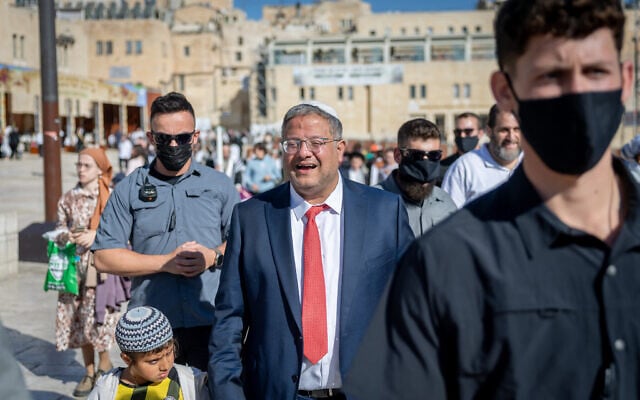
National Security Minister Itamar Ben Gvir seen at the entrance to the Temple Mount, before entering, in Jerusalem’s Old City, on October 8, 2025. (Chaim Goldberg/FLASH9)

None of this means that normalization is off the table. But it does indicate that Saudi Arabia isn’t going to rush into a deal with Israel, especially when it has far more to gain from the Jewish state’s regional rivals.

Israel’s government, with far-right members, hasn’t exactly made it easier in recent years for MBS to conclude that a peace deal would bring more benefits than costs right now.

“Saudi Arabia is wary of Israel — sees us as a somewhat less responsible actor in the region,” said Guzansky. “[National Security Minister Itamar] Ben Gvir goes up to the Temple Mount and says, ‘It’s ours.’ Smotrich says, ‘Go ride on camels.'”

“Saudi Arabia looks at this government and says, ‘This can’t happen now,'” he continued. “We need to look at what we are doing, not just blame the Saudis for ‘going with the Muslim Brotherhood’ and that kind of nonsense.” 


Lazar Berman

Source: https://www.timesofisrael.com/relax-mbs-isnt-aligning-with-islamists-he-also-isnt-normalizing-with-israel-soon/


Follow Middle East and Terrorism on Twitter

Parents, not schools, should raise our kids - Adam Shelton


by Adam Shelton

Across the country, parents are discovering that public school systems increasingly claim authority over deeply personal decisions once understood to belong to families.


 Free image, Pixabay license

Who gets to decide the upbringing of our children?

Across the country, parents are discovering that public school systems increasingly claim authority over deeply personal decisions once understood to belong to families. Schools are hiding controversial lessons from parents, not informing them about critical mental health concerns involving their kids, and retaliating against parents when they speak out.

If the Supreme Court doesn’t act soon, Americans may find themselves forced into a kind of co-parenting arrangement with local school districts -- not by choice, but as a matter of school policy.

No one may represent this growing national trend more than Amber Lavigne. She had no idea a school social worker was secretly aiding her 13-year-old in a “gender transition.” Worse still, public school officials supported a plan to keep Amber in the dark. The Goldwater Institute is now asking the Supreme Court to protect Amber’s constitutional rights and to clarify that public schools cannot deliberately exclude parents from consequential decisions about their own children.

In early December 2022, Amber was helping clean her child’s bedroom when she discovered a chest binder -- an undergarment used to flatten breasts so the wearer appears more masculine. She soon learned the binder had been provided by a social worker at Great Salt Bay Community School in Maine. According to Amber, the counselor told her child to keep it a secret. Rather than acknowledging a breach of trust, school officials defended the social worker’s deception, insisting no policy had been violated by providing a middle schooler with a chest binder while withholding that information from her parent.

This was completely inappropriate. The Supreme Court has long recognized parents’ fundamental right to guide their children’s development. That right does not end at the schoolhouse gate, and it is incompatible with policies that authorize secrecy between government officials and children on matters of identity, mental health, or values without parental knowledge or consent.

Yet that principle was ignored here.

Amber’s case is not an outlier. Similar disputes are emerging across the country, and multiple parental-rights petitions have asked the Supreme Court to weigh in.

In Massachusetts and Florida, parents challenged school protocols that allowed staff to socially transition students -- using new names and pronouns -- without parental notification or consent. Taken together, these cases point to a growing assertion of school authority in areas once reserved for families.

Advertisement

It is not just on issues of gender, either. What links these disputes is not subject matter, but government overreach. All over the United States, school districts and state officials are advancing policies that elevate institutional discretion over parental authority, often justifying secrecy as “protection” even when no evidence of abuse or danger exists.

In Indiana, for example, a mother was banned from her daughter’s middle school after speaking out about an alleged safety incident involving a bus driver. Rather than investigate the complaint, school officials issued a sweeping no-trespass order.

In Pennsylvania, a school district attempted to classify its diversity, equity, and inclusion curriculum and teacher training materials as “trade secrets,” arguing that parents had no right to review them. A court rejected that claim, affirming that public-school indoctrination cannot be hidden from parents under the guise of proprietary information.

The result of this government secrecy is not safety, but eroded trust -- among families, between parents and institutions, and around the constitutional limits that safeguard individual liberty. Schools are charged with educating children, not raising them. Parental rights do not end at the schoolhouse gate simply because administrators find them inconvenient.

The Supreme Court recently affirmed this right in a ruling centered on school curriculum. In Montgomery County, Maryland, parents challenged a policy that eliminated opt-outs from elementary classes using LGBTQ-inclusive storybooks. Last year, in Mahmoud v. Taylor, the Supreme Court ruled 6-3 that the parents were entitled to a preliminary injunction. The decision confirmed that educational goals do not override parental authority.

The Supreme Court now has an opportunity to restore clarity, and it should take it. Protecting parental rights does not require hostility toward students or indifference to their struggles. The Constitution requires something far more foundational: honesty, transparency, and respect for parents.

As the Supreme Court considers whether to take up Amber’s case, the Goldwater Institute will continue fighting to ensure that public schools cannot usurp the role of parents behind closed doors. The Constitution does not permit government officials to keep secrets from parents, and the Court shouldn’t allow schools to cut parents out.


Image: Pixabay 


Adam Shelton is a senior attorney with the Goldwater Institute.

Source: https://www.americanthinker.com/blog/2026/02/parents_not_schools_should_raise_our_kids.html

Follow Middle East and Terrorism on Twitter

US general lauds Lebanese discovery of Hezbollah tunnel - Canaan Lidor


by Canaan Lidor

CENTCOM commander Brad Cooper said the tunnel's unearthing helped enforce the Israel-Hezbollah ceasefire.


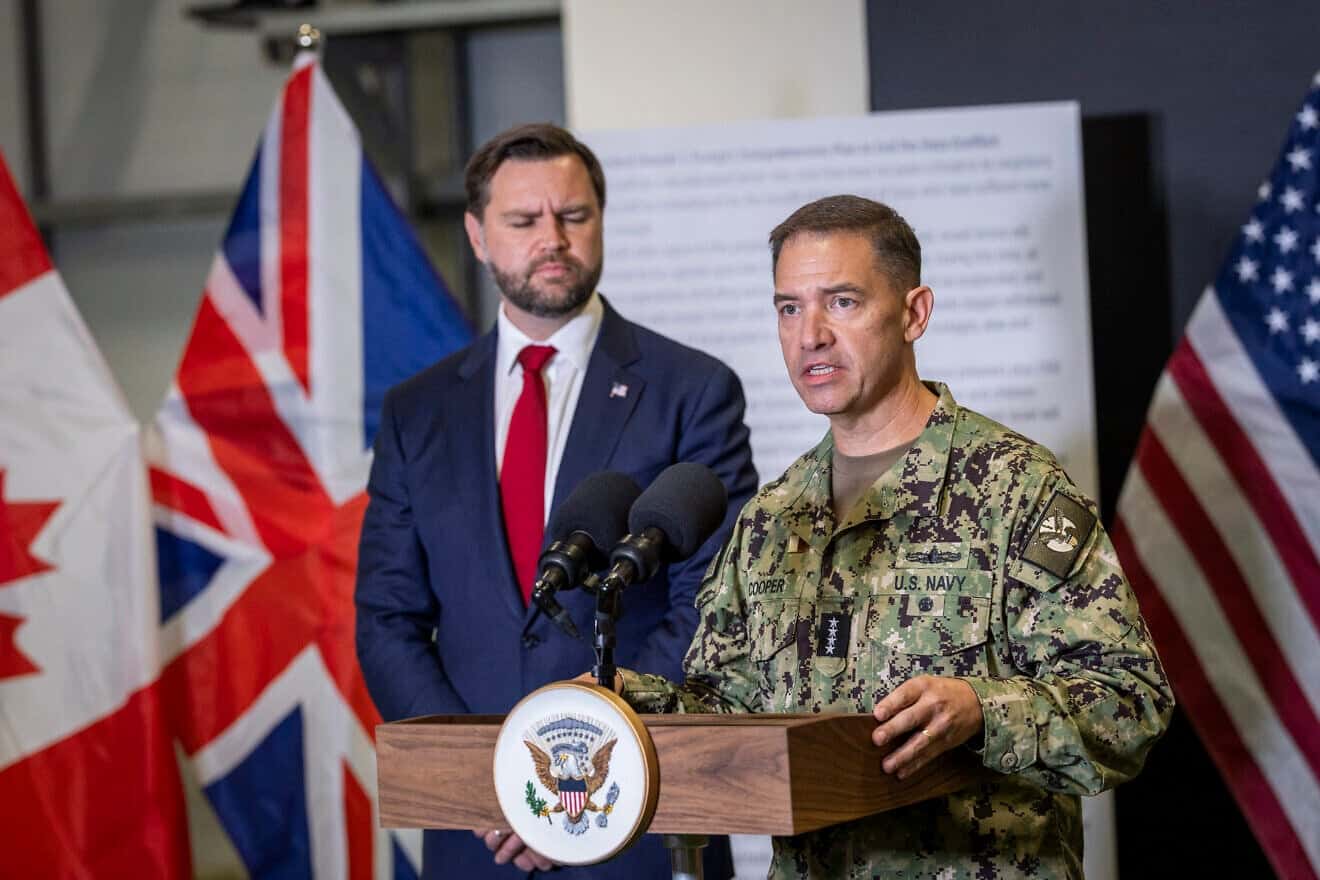
Adm. Brad Cooper, commander of the U.S. Central Command (CENTCOM), delivers a statement to the media alongside U.S. Vice President JD Vance near Kiryat Gat, in southern Israel, on Oct. 21, 2025. Photo by Chaim Goldberg/Flash90.

U.S. Navy Adm. Brad Cooper, commander of U.S. Central Command, on Monday congratulated the Lebanese army on discovering a Hezbollah tunnel.

“Congratulations to the Lebanese Armed Forces (LAF) for recently finding a massive underground Hezbollah tunnel for the second time in the past two months,” Cooper, who heads the Department of Defense’s command for forces in the Middle East and Central and South Asia, wrote on X.

“Job well done by the Lebanese Armed Forces and U.S.-led Mechanism team that is helping enforce commitments made by Israel and Lebanon,” added Cooper.

Sarit Zehavi, the president of the Alma Research and Education Center, which focuses on security challenges along Israel’s northern border, also welcomed the find, but noted that it is “one of hundreds of Hezbollah tunnels in existence in Southern Lebanon and Lebanon.”

Israel has dismantled a significant part of the tunnels near its border, Zehavi told JNS on Tuesday, but Hezbollah’s many tunnels deeper inside Lebanese territory have not been damaged, Zehavi added.

The United States has pressured the Lebanese government to enforce the terms of the ceasefire that Hezbollah and Israel accepted in November 2024, which places the responsibility of dismantling the Shi’ite terrorist group on Lebanon.

Israel has repeatedly targeted Hezbollah and other terrorists in Lebanon since the coming into effect of the ceasefire, in strikes it says are meant to enforce its terms and prevent the terrorists from rebuilding their positions, mostly south of the Litani River.  

The ceasefire went into effect on Nov. 27, 2024, following an IDF military campaign that led to the weakening of Hezbollah, an Iranian terror proxy. The deal was cemented by the Israeli and Lebanese governments and five mediating countries, including the United States.

“Dismantling tunnels nefariously used by non-state actors to store ammunition, missiles and attack drones promotes peace and stability in Lebanon and across the region,” Cooper also wrote on X on Monday.

Last month, the Israeli Prime Minister’s Office said in a statement that “efforts made” by Lebanon toward enforcing the ceasefire were “an encouraging beginning, but they are far from sufficient, as evidenced by Hezbollah’s efforts to rearm and rebuild its terror infrastructure with Iranian support.”

The earlier tunnel discovery referenced by Cooper was in December, when the Lebanese army uncovered an underground passage built by Hezbollah in the southern town of Touline, after carrying out an excavation at the request of the ceasefire oversight committee known as the Mechanism. Israel has previously struck the area, according to Lebanese media.

Hezbollah has built dozens of tunnels, some two miles or more in length, to facilitate the transfer of Iranian and other weapons into Lebanon from Syria. Other tunnels were built to either penetrate into Israeli territory or move troops stealthily close to the border. 


Canaan Lidor

Source: https://www.jns.org/us-general-lauds-lebanese-discovery-of-hezbollah-tunnel/

Follow Middle East and Terrorism on Twitter

Monday, February 9, 2026

Hamas's Secret Plan to Maintain Control of Gaza - Khaled Abu Toameh


by Khaled Abu Toameh

Hamas wants Trump's Board of Peace and the technocratic committee to focus on reconstruction, economic projects, and paying salaries to Palestinian civil servants while it continues, through a shadow government, to effectively rule the Gaza Strip, manufacture stockpile weaponry and prepare for a new attack on Israel, similar to its October 7, 2023 invasion of Israel's southern communities.


  • "[T]he document outlines an operational framework in which the technocratic government appears to function, while the actual management of systems, the flow of information, and control over the civil administration remain in Hamas's hands." – Elior Levy, Channel 11 Kan News, February 2, 2026.

  • Hamas wants Trump's Board of Peace and the technocratic committee to focus on reconstruction, economic projects, and paying salaries to Palestinian civil servants while it continues, through a shadow government, to effectively rule the Gaza Strip, manufacture stockpile weaponry and prepare for a new attack on Israel, similar to its October 7, 2023 invasion of Israel's southern communities.

  • There can be no peace, security or stability in the Gaza Strip if the same terrorists who murdered, tortured, and mutilated thousands of Israelis and foreign nationals on October 7 are given new uniforms, rearmed and allowed to serve as a paramilitary force. There also can be no peace, security, or stability in the Gaza Strip so long as Hamas is permitted to function as a shadow government in the Gaza Strip. The talk about allowing Hamas to "freeze" or "store" its weapons is misguided and falls short of the full disarmament (decommissioning weapons) required by the Trump plan.

  • With countries such as Qatar, Turkey and Pakistan sitting on Trump's Board of Peace, it is hard to see how Hamas could ever be forced to lay down its weapons and give up control of the Gaza Strip. These countries -- longtime sponsors and funders of Hamas -- will never take part in any effort to disarm Hamas or remove it from power. What we are witnessing is a clear attempt by Hamas and its Arab and Muslim sponsors to hoodwink the Trump administration and the rest of the international community.

  • Will Trump choose to fall for it and join the Legacy of Losers -- like British Prime Minister Neville Chamberlain? Chamberlain will forever be recalled waving a fraudulent piece of paper and idiotically claiming that he had achieved "peace for our time." Is that how Trump would like to be remembered throughout history?

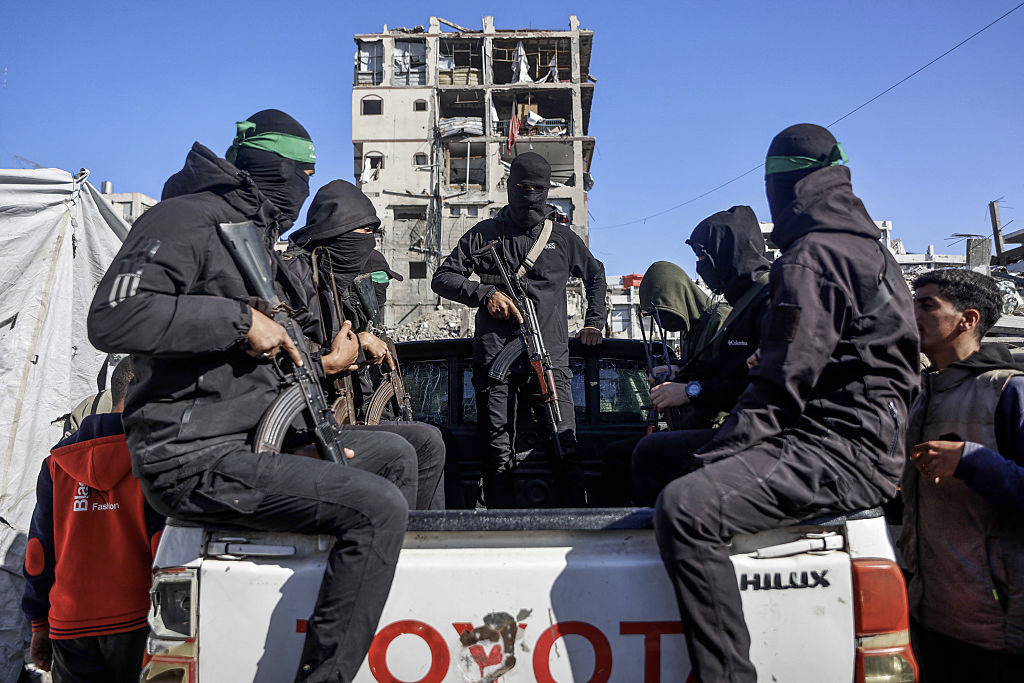
Hamas wants Trump's Board of Peace and the technocratic committee to focus on reconstruction, economic projects, and paying salaries to Palestinian civil servants while it continues, through a shadow government, to effectively rule the Gaza Strip, manufacture stockpile weaponry and prepare for a new attack on Israel, similar to its October 7, 2023 invasion of Israel's southern communities. Pictured: Hamas terrorists in Jabalia refugee camp, in the Gaza Strip, on December 1, 2025. (Photo by Omar Al-Qataa/AFP via Getty Images)

More than four months after the ceasefire in the Gaza Strip went into effect, Hamas has still not laid down its weapons despite repeated warnings by US President Donald J. Trump. Hamas, in fact, not only continues to rule large parts of the Gaza Strip that are still under its control but also seems to be working hard to rearm, regroup and reassert its control over areas of the Gaza Strip from which the Israel Defense Forces have withdrawn.

According to Israeli security sources:

"Hamas recently strengthened its control over the Gaza Strip by stealing humanitarian aid and selling it to local residents, recruiting young men in mosques, collecting taxes, and kidnapping and torturing anyone who dares to speak out against the terror group."

A secret document obtained by Israel's Channel 11 Kan News reveals how Hamas is planning to control and run the Gaza Strip under the nose of the newly established Palestinian technocratic committee:

"A confidential internal document sent by Hamas leadership to the organization's civil administration officials in the Gaza Strip, ahead of the arrival of the technocratic government, reveals how Hamas plans to continue controlling the management of the Strip even after the new government takes office."

"The document, obtained by Kan News, includes detailed instructions for Hamas's administrative officials regarding their day-to-day conduct vis-à-vis the technocratic government.

"According to the document, all officials are instructed to continue their regular work routine as if nothing has changed — thereby effectively preserving the existing mechanisms of control.

"The document further states that officials are strictly forbidden from attacking members of the technocratic government or its head on social media, in order to avoid overt friction or public confrontation.

"At the same time, officials are given a clear directive not to establish any personal contact with members of the government, nor to pass on any information or intelligence — except through the 'relevant authority,' which in practice is Hamas itself.

In this way, the document outlines an operational framework in which the technocratic government appears to function, while the actual management of systems, the flow of information, and control over the civil administration remain in Hamas's hands."

The document shows that Hamas is intent on preserving its role as a major actor in the Gaza Strip while ignoring Trump's new "Board of Peace" and the Palestinian technocratic committee. Hamas wants Trump's Board of Peace and the technocratic committee to focus on reconstruction, economic projects, and paying salaries to Palestinian civil servants while it continues, through a shadow government, to effectively rule the Gaza Strip, manufacture stockpile weaponry and prepare for a new attack on Israel, similar to its October 7, 2023 invasion of Israel's southern communities.

Commenting on the Hamas document outlining the terror group's plan to maintain control of the Gaza Strip, Palestinian political analyst Ahmed Fouad Alkhatib wrote:

"Hamas's police force in Gaza is going full throttle to demonstrate that it alone is in control of the Strip and cannot be replaced, producing slick propaganda videos and footage proving its continued presence. At least half of its officers are current terror operatives who participated in al-Qassam Brigades activities and are attempting to rebrand themselves as mere civil servants. The new technocratic committee, tasked with implementing President Trump's plan, must never allow these officers to be part of the new security architecture of the Gaza Strip. The US administration must not allow these terrorists to respawn and ensure that Hamas's grip on Gaza lives on."

He added:

"Hamas in Gaza is not going anywhere; it's 100 steps ahead of the US, Israel, the Arabs and the international community, ready to pounce on the newly established technocratic committee."

As part of its plan to maintain its security control over the Gaza Strip, Hamas is seeking to incorporate its 10,000 police officers into a new US-backed Palestinian administration, Palestinian sources told Reuters.

"In a letter to staff, seen by Reuters, Gaza's Hamas-run government urged its more than 40,000 civil servants and security personnel to cooperate with the technocratic committee but assured them it was working to incorporate them into the new government... The militant group is still believed to possess rockets, which several diplomats estimated to number in the hundreds."

If true, this means that Hamas is seeking to take advantage of Trump's 20-point plan for ending the Gaza war to rebrand and renew itself. There can be no peace, security or stability in the Gaza Strip if the same terrorists who murdered, tortured, and mutilated thousands of Israelis and foreign nationals on October 7 are given new uniforms, rearmed and allowed to serve as a paramilitary force. There also can be no peace, security, or stability in the Gaza Strip so long as Hamas is permitted to function as a shadow government in the Gaza Strip. The talk about allowing Hamas to "freeze" or "store" its weapons is misguided and falls short of the full disarmament (decommissioning weapons) required by the Trump plan.

With countries such as Qatar, Turkey and Pakistan sitting on Trump's Board of Peace, it is hard to see how Hamas could ever be forced to lay down its weapons and give up control of the Gaza Strip. These countries -- longtime sponsors and funders of Hamas -- will never take part in any effort to disarm Hamas or remove it from power. What we are witnessing is a clear attempt by Hamas and its Arab and Muslim sponsors to hoodwink the Trump administration and the rest of the international community.

Will Trump choose to fall for it and join the Legacy of Losers -- like British Prime Minister Neville Chamberlain? Chamberlain will forever be recalled waving a fraudulent piece of paper and idiotically claiming that he had achieved "peace for our time." Is that how Trump would like to be remembered throughout history?


Khaled Abu Toameh is an award-winning journalist based in Jerusalem.

Source: https://www.gatestoneinstitute.org/22263/hamas-secret-plan-to-maintain-control-of-gaza

Follow Middle East and Terrorism on Twitter

Iran expert: This is why Iran will never give up its ballistic missile program - 103FM


by 103FM

Iran is not seeking a military confrontation with the United States, but the key question is what Tehran is willing to concede to avoid one


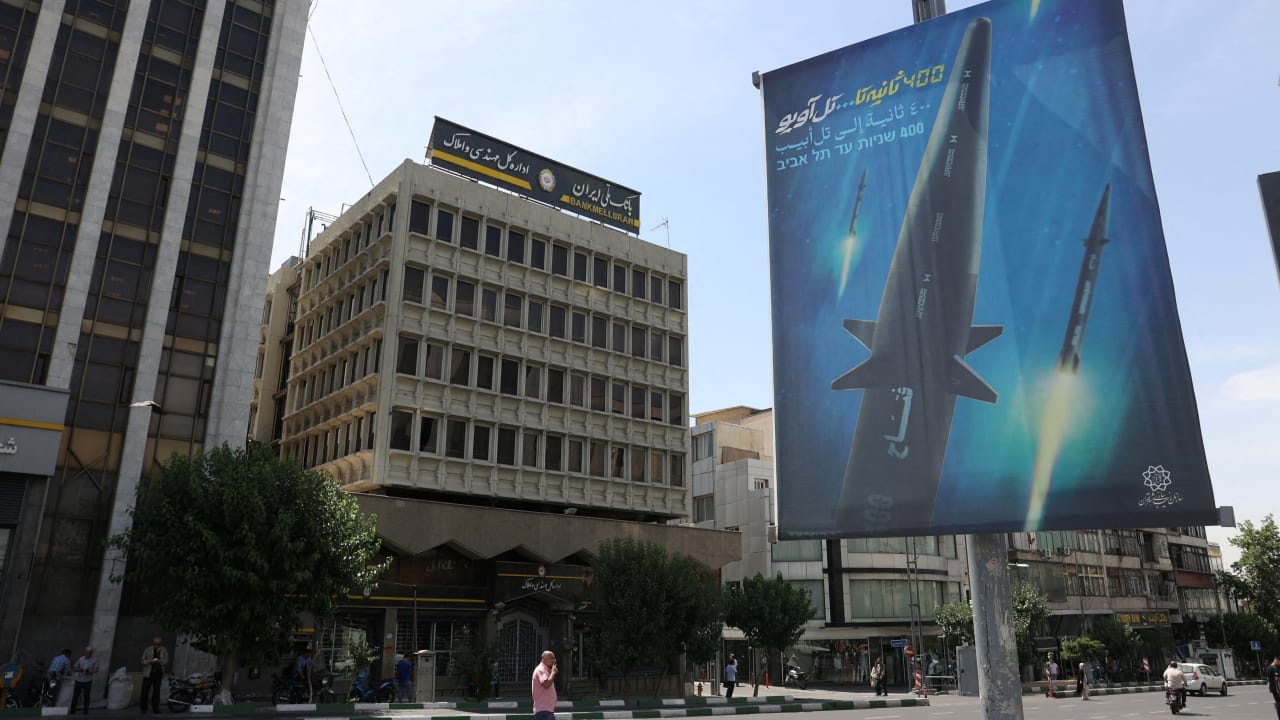
A banner with a photo of a new hypersonic ballistic missile called "Fattah" and with text reading "400 seconds to Tel Aviv" is seen on a street in Tehran, Iran June 8, 2023
(photo credit: MAJID ASGARIPOUR/WANA (WEST ASIA NEWS AGENCY) VIA REUTERS)

Iran is unlikely to relinquish its ballistic missile arsenal because the Islamic Republic views it as the last credible pillar of deterrence and a hedge against what it sees as unreliable US guarantees, Dr. Raz Zimmt, head of the Iran Program at the Institute for National Security Studies (INSS), told 103FM on Monday.

Zimmt said Iran is not seeking a military confrontation with the United States, but the key question is what Tehran is willing to concede to avoid one. He argued that Iran’s leadership has clear red lines, and missiles sit at the center of them.

From Supreme Leader Ali Khamenei’s perspective, Zimmt said, the missile program is the primary tool left to deter Iran’s enemies, and he does not trust US assurances.

If Iran were to make major concessions not only on the nuclear file but also on missiles, he said, Khamenei believes Washington could exploit Iran’s vulnerability within weeks or months.

Zimmt added that in Khamenei’s calculus, even the risk of a military strike is less significant than the risk of dismantling missile capabilities. He assessed that Iranian decision makers believe that even a significant US attack could end without toppling the regime.

“I am not convinced that Khamenei believes the Americans are truly capable of bringing down the regime,” Zimmt said.

Iran's Supreme Leader, Ayatollah Ali Khamenei looks on during a meeting at the IRGC Aerospace Force achievements exhibition in Tehran, Iran November 19, 2023. (credit: Office of the Iranian Supreme Leader/WANA
Iran's Supreme Leader, Ayatollah Ali Khamenei looks on during a meeting at the IRGC Aerospace Force achievements exhibition in Tehran, Iran November 19, 2023. (credit: Office of the Iranian Supreme Leader/WANA (West Asia News Agency) via REUTERS)

He added that Tehran is more concerned about strikes on command centers and regime symbols, and potentially on Khamenei personally, though he suggested the supreme leader may believe the regime could still survive a serious blow.

Zimmt described Iran’s missile array as a direct threat to Israel. For years, he said, Israeli strategic thinking focused primarily on Iran’s nuclear program, while missiles were often treated mainly as delivery platforms for a nuclear warhead.

Recent events, he said, again underscored how ballistic missiles can independently threaten Israel’s security and cause significant damage. He added that Israel and the United States have managed to push Iran further from nuclear capabilities, even if they have not eliminated them entirely.

As a result, Zimmt said, missiles are currently the more immediate threat in the short term. Over the longer term, he said, the nuclear issue still requires major attention, but for now Iran’s nuclear progress appears limited.

Iran’s learning curve and domestic crackdown

Zimmt said Iran demonstrated an ability to adapt quickly, drawing lessons early in the campaign and adjusting tactics. He pointed to attempts to target civilian areas and missile launches intended to increase the chance of penetrating air defenses.

Since the war, he said, Iran has continued improving its missile capabilities both in quantity and quality. While the nuclear file remains important, Zimmt said Iran is not currently enriching uranium, and there are no indications at present that Tehran intends to renew a weapons production program.

On Iranian society, Zimmt said the public remains traumatized, still coping with the aftermath of brutal protest suppression.

He said it is difficult to generalize about a country of roughly 93 million people, with some seeking a return to normal life even under the regime, and others hoping a US strike could shake its foundations.

Addressing internet disruptions, Zimmt said access has largely returned but significant blocks remain. He added that arrests are continuing, including detentions of senior reformist figures, reflecting what he described as a long-standing regime strategy of restricting civil liberties to prevent challenges to its rule. 


103FM

Source: https://www.jpost.com/middle-east/iran-news/article-886048

Follow Middle East and Terrorism on Twitter

Anti-Herzog Australian newspaper ads under fire for allegedly false, non-consensual signatures - Mathilda Heller


by Mathilda Heller

The advertisement claims to list the names of over 1000 Jews who allegedly signed an open letter saying Herzog is not welcome in Australia.


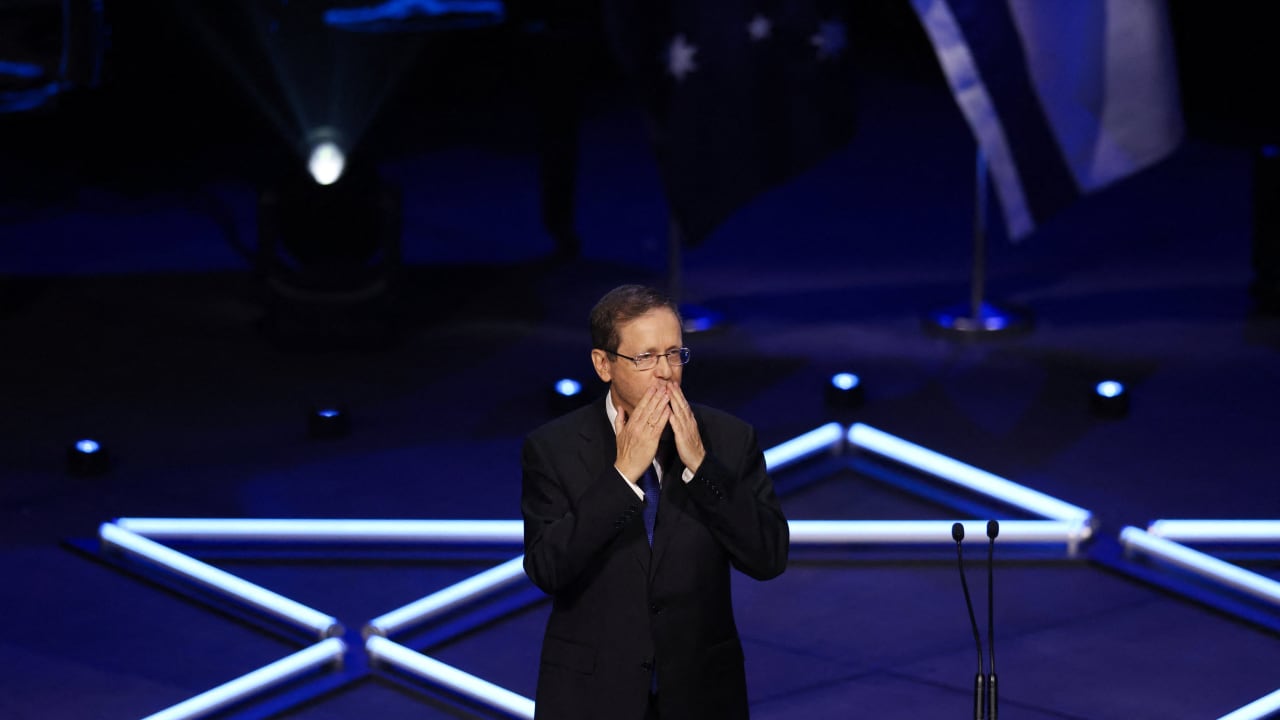
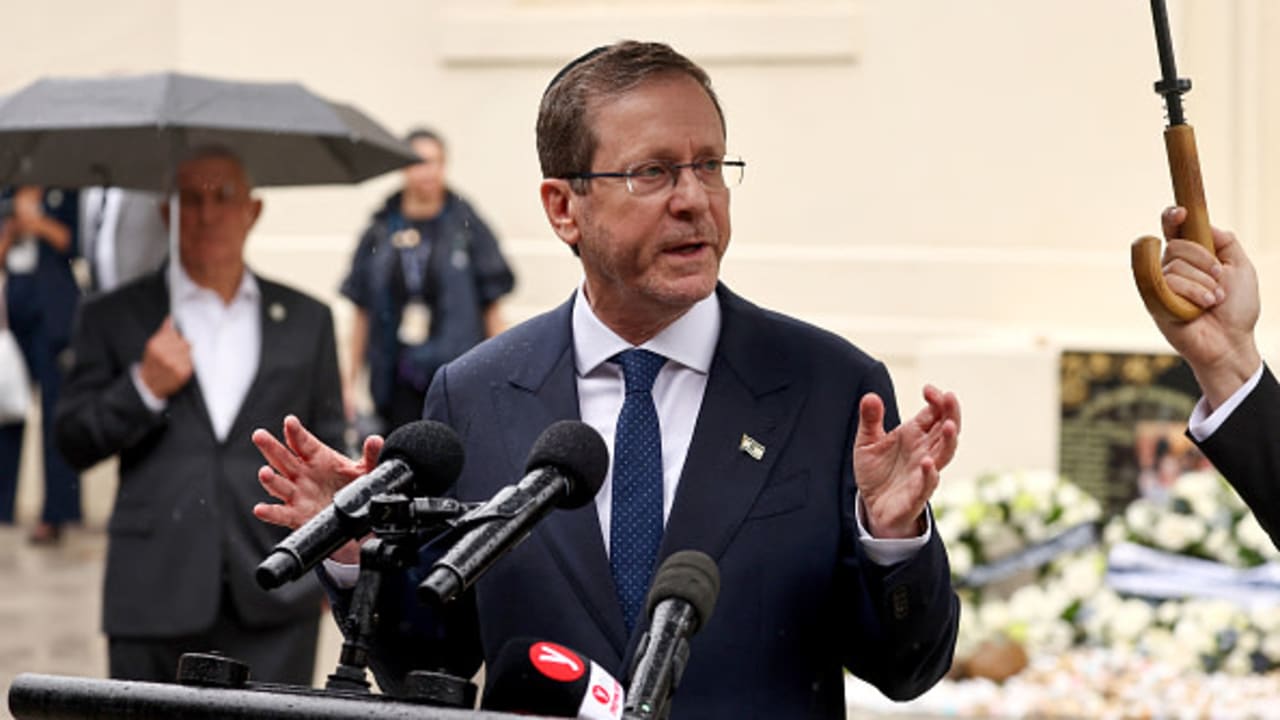
Israeli President Isaac Herzog gestures after his speech at 'An Evening of Light & Solidarity' during his state visit to Australia, in Sydney, Australia, February 9, 2026.
(photo credit: REUTERS/HOLLIE ADAMS)

The Jewish Council of Australia has sparked outrage after it paid for two full-page newspaper advertisements criticizing President Isaac Herzog’s visit to the country.

The advertisement, which appeared in Monday's Sydney Morning Herald and The Age, lists the names of over 1,000 Jews who allegedly signed an open letter saying Herzog is not welcome in Australia.

Titled “Jews say no! Over 1,000 Jews have said no to Herzog,"  the ad states that “welcoming an alleged war criminal in the aftermath of the Bondi massacre betrays Jewish communities,  multicultural Australia, and everyone who stands for Palestinian human rights and international law.”

However, at least some of the names listed on the advertisement are not real people or are people who did not sign the letter. There are also under 700 names on the list.

David Slade, managing director of Slade Pharmacies and president of United Israel Appeal Victoria, is featured on the list. He wrote on LinkedIn that his name was used without his knowledge, consent, or approval.

People listen as Israeli President Isaac Herzog (not pictured) speaks at 'An Evening of Light & Solidarity' during his state visit to Australia, in Sydney, Australia, February 9, 2026. (credit: REUTERS/HOLLIE ADAMS)

Newspaper ad opposing Herzog's visit draws anger over false names

“Let me be absolutely clear: I did not sign, endorse, or authorize my name to be included in this publication,” he said.

Slade added that the fact that his name, as well as others, was added without his permission is a “gross ethical failure” of the person(s) who submitted his name, of the organization that authored the advertisement, and of the newspapers that published it.

“If there was real support for this advertisement, one must ask why would it include the names of those who have not consented and possibly fictitious names as well?” he added.

“To remove any doubt about where I stand: I am a proud Australian, a Zionist, and I stand in full solidarity with the Australian Jewish community and with Israel, including President Herzog’s visit to Australia.

“I am writing this message from Israel. The only thing I regret about being here is that it means I am missing President Herzog’s visit to Australia.”

A man named Jason Gluck responded by saying that his name was also falsely listed. Tammie Slade – a well-known Australian Zionist – is listed, most likely without her knowledge.

It is worth also noting that one name featured on the list is actually not a name at all and is, in fact, a transliterated Hebrew slur. “Milkek Tachat” translates to a** licker. Some have argued this is also the case for Robert Doublina, which is similar to the name of a fictional character in a Marvel comic.

There are also three names of kapos on the list: Josef Heiden, Eliezer Gruenbaum, and Carmen Mory. Kapos were Jews who aided the Nazi regime, suggesting these names were submitted by people who feel that the JCA is a kapo organization (a parallel drawn by numerous users on social media).

Heiden was a kapo at the Dachau concentration camp known for his cruelty toward fellow inmates. Gruenbaum was a kapo at Auschwitz, and Mory was one at the Ravensbrück concentration camp.

Additionally, while saying the ad is ‘Jews saying no,’ it has now been made clear that the petition was open to non-Jews. Before signing the petition, there is the option to click either ‘I am a Jewish Australian’ or ‘I am a non-Jewish ally.’

Even if the advertisement’s list is true, it would still only represent a tiny proportion of the country’s Jewish community. There are around 110,000-120,000 Jews in Australia, and so the list’s purported 1,000 would still constitute less than 1%.

Several Jewish Australians told The Jerusalem Post of their frustration that two major newspapers decided to platform fringe voices and not the mainstream Jewish bodies, which are overwhelmingly pro-Israel.

A June 2023 survey by Monash University found that 90% of Australian Jews deemed it important to maintain close ties with Israel. Some 88% felt a high level of personal connectedness with Israel, and 86% agreed the existence of Israel is essential for the future of the Jewish people.

“This myth that is being put out in the media is misleading; it is trying to elevate what is a micro opinion within the Jewish community as some substantial body of opinion,” said Executive Council of Australian Jewry (ECAJ) CEO Peter Wertheim to the Australian Broadcasting Corporation on Monday.

He referred to the JCA as an “outlier.”

“There are, of course, differing opinions in the Jewish community, but on the basic matter of Israel’s right to exist and to live in peace and security, it is near unanimous,” he said.

It is also worth noting that the JCA teamed up with a Hezbollah-linked group and a Muslim Brotherhood-affiliated network to demand that the Australian government deny Herzog a visa for his visit.

It co-signed a statement with the Australian National Imams Council (ANIC) and the Belgian-based Hind Rajab Foundation calling on Attorney-General Michelle Rowland, Home Affairs Minister Tony Burke, and the Australian Federal Police to refuse “entry for Israeli President Isaac Herzog and the commencement of a criminal investigation under Australian law.”

Ibrahim Abu Muhammed, the mufti of Australia, is the head of the ANIC. He is a member of the Qatar-based International Union of Muslim Scholars (IUMS), which was founded by Yusuf al-Qaradawi, widely regarded as the Muslim Brotherhood’s spiritual leader.

The Post reached out to David Slade, Tammie Slade, the JCA, the ECAJ, and the Zionist Federation of Australia for comment but did not receive responses before press time. 


Mathilda Heller

Source: https://www.jpost.com/diaspora/antisemitism/article-886120

Follow Middle East and Terrorism on Twitter

Herzog condemns ‘Globalize the Intifada’ as anti-Israel chant rings out in Sydney - Herb Keinon


by Herb Keinon

President Herzog visits Bondi Beach to console victims of the massacre and address rising antisemitism amid protests and diplomatic tensions in Australia.


Israeli President Isaac Herzog speaks after laying a wreath for victims of the December 14, 2025 gun attack at the Bondi Pavilion, in Sydney on February 9, 2026.
(photo credit: DAVID GRAY / AFP via Getty Images)


As President Isaac Herzog drew a straight line in the capital of New South Wales on Monday night connecting the antisemitism embodied in the chant “Globalize the Intifada” and the attack on Bondi Beach, police just a few kilometers away were battling anti-Israel protesters chanting that very slogan.

“The hatred that triggered the shooting at Bondi is the very same age-old plague of antisemitism endured by our parents and grandparents,” Herzog told an estimated crowd of 4,000 people at the TikTok Entertainment Center during a remembrance ceremony for the Bondi victims and solidarity with the Australian Jewish community.

Referring to the attack that killed 15 people in December, Herzog said, “The horrors in Israel, empowered by jihadi extremism, reared their ugly head here as well… This is what it means to ‘Globalize the Intifada.’”

Meanwhile, a few kilometers away at Town Hall, a crowd that local media put at “thousands” defied a court order and marched against Herzog’s visit. The News.com.au website reported that Grace Tame, a former “Australian of the Year,” led protesters in a “Globalize the Intifada” chant.

“We have to continue to mobilize, and we have to continue to globalize,” she said. “Say it with me, from Gadigal [Aboriginal land in Sydney] to Gaza, globalize the Intifada.”

Despite clashes between police and protestors, Herzog was shielded from the demonstrations, with participants kept well away from both his downtown hotel and the motorcade route he traveled. Some 3,500 police officers were deployed to protect the Israeli president.

Herzog had arrived in Australia earlier in the day for a four-day visit at the invitation of Governor-General Sam Mostyn, Prime Minister Anthony Albanese, and the Australian Jewish community. On Monday morning, he attended a wreath-laying ceremony at the site of the Bondi Beach massacre, where he said he had come to embrace and console the bereaved families following the “horrific antisemitic terror attack.”

“We are one big family, and when one Jew is hurt, all Jews feel their pain,” Herzog said at the site.

He welcomed what he described as “positive steps already taken by the Australian government to tackle antisemitism since the Bondi attack,” but stressed that he, along with others, had warned leaders in Australia, the United Kingdom, Canada, and the United States for years about the rising tide of antisemitism in their societies, long before the massacre.

Among the speakers at Sunday night’s solidarity event was Chris Minns, the governor of New South Wales and a member of the Labor Party, whose head – Albanese – has come under harsh criticism from Prime Minister Benjamin Netanyahu and many within the Australian Jewish community for steering a pro-Palestinian stance that included recognition of a Palestinian state over the summer.

Minns, who received a warm reception, began his remarks by quoting the famous speech made by Herzog’s father – Chaim Herzog – at the United Nations, denouncing the resolution equating Zionism with racism. A nation’s level of humanity, Herzog said at the time, could invariably be judged by its behavior toward its Jews.

“The murderous ideology of antisemitism is a test of every society, and it’s one that weighs heavily on me,” Minns said.

“We have to be able to say, openly and clearly and without excuse or reservation, that we failed that national test of human decency on December 14 at Bondi. And things must change in our state and our country.”

Herzog visit triggers massive Sydney security operation

Herzog is scheduled to meet Albanese on Wednesday, in a meeting seen as part of an effort to put bilateral relations back on firmer footing after a period of strain in the bilateral ties.

Following the Bondi attack, Netanyahu said that Australia’s recognition of a Palestinian state had “poured fuel on an antisemitic fire.”

After Australia denied a visa in August to Religious Zionist Party MK Simcha Rothman, Netanyahu wrote on X/Twitter: “History will remember Albanese for what he is: a weak politician who betrayed Israel and abandoned Australia’s Jews.”

Herzog said at the large community event that, in addition to wanting to underscore to the Australian Jewish community just how important it is to Israel, he also hoped to use his visit to reinvigorate ties between the two countries.

Nevertheless, much of the local media coverage surrounding the visit has focused less on its symbolic significance and more on the controversy it has sparked – including the protests, court challenges, and accusations that authorities are using excessive measures to keep demonstrators away from the president – often overshadowing the broader context of Israeli-Australian relations.

That strain surfaced even at the ceremony itself, during one of the questions posed by an Australian reporter.

“Standing here at this solemn site where 15 people were killed indiscriminately, there are protests planned today by people mourning 70,000 killed in Gaza, including 20,000 children. Can you reflect on what message you have, if any, for those protesters?” he asked.

Herzog, no stranger to hostile anti-Israel protests during visits abroad, responded that Israel and Australia have been close allies for decades and that support for Israel has traditionally been bipartisan in Australia.

In many cases, he said, what is heard at such demonstrations comes from people who seek nothing less than “to undermine and delegitimize” Israel’s right to exist.


Herb Keinon

Source: https://www.jpost.com/diaspora/article-886035

Follow Middle East and Terrorism on Twitter

Why Lebanon's Mount Dov is key to securing Israel’s northern border - analysis - Seth J. Frantzman


by Seth J. Frantzman

The formerly Syrian-administered area, conquered by Israel in 1967, has been the site of many Hezbollah-related incidents, which have reinforced its importance for national defense.


 Activity of the 810th Brigade on Mount Dov.
Activity of the 810th Brigade on Mount Dov.
(photo credit: IDF SPOKESPERSON'S UNIT)


On February 9, the IDF said that “following intelligence indications gathered in recent weeks, IDF soldiers conducted a targeted raid on a structure in the Mount Dov area and apprehended a senior terrorist from the Jamaa Islamiya terrorist organization.” This is an important development and sheds light on the continued importance of the Mount Dov area in northern Israel.

The area, known as Har Dov in Hebrew and also called Shebaa Farms, sits on the northern border of Israel, between Metula and the Golan Heights, near Mount Hermon. Prior to the 1967 Six Day War, the area was administered by Syria but is claimed by Lebanon.

History of the site

Israel took control of Mount Dov during the conquest of the Golan Heights in 1967. The area is around 22 square kilometers. It is a sliver of mountainous land along the border, west of the Druze town Majdal Shams and north of the Israeli kibbutzim Dan and Dafna, both founded in 1939.

When Israel left Lebanon in 2000, the area entered more of a spotlight as Lebanese Hezbollah claimed it was part of Lebanon. As such, Hezbollah insisted that one reason it needed to keeps its arms was to “resist” Israel in order to get back Shebaa Farms. This created a threat where none had existed before.

Over the years, Hezbollah has sought to exploit the situation along the border to create provocations in the area of Mount Dov. This has been enabled by the fact that the border was not well demarcated.

Mount Dov is also situated just above the village of Ghajar. This is an Alawite village that is divided by the border’s so-called Blue Line. After the Second Lebanon War with Hezbollah in 2006, Israel took control of the village and it became another point of contention. The area is also technically part of Syria but claimed by Lebanon.

Before and after October 7

Prior to the recent Israel-Hamas War, two different trends developed in this area. One was that Ghajar was opened to tourism, with several restaurants serving visitors, and the pretty village appeared peaceful and inviting.

Above Ghajar in the Mount Dov area, Hezbollah created provocations prior to October 7, 2023. It sought to set up a tent in the disputed area as a step to laying claim to it. It also erected flags and signs along the border, and from Metula, one could see Hezbollah flags and signs on the other side.

Anyone hiking Nahal Ayun, for instance, could see the Hezbollah presence along the border. Hezbollah’s tents became a point of contention but Israel was afraid to dismantle them. Articles discussed the tents for months in 2023. When the war broke out on October 7 and Hezbollah began its attacks on Israel on October 8, Israel was afforded the opportunity to finally confront the tents and Hezbollah meddling near Mount Dov.

The war on Hezbollah increased in September 2024 and by November Hezbollah was defeated and there was a ceasefire with Lebanon. Another development in 2024 was that Israel created a new Brigade called the Mountain Brigade.

The goal of the new unit was to control the area along the border between Mount Dov and Mount Hermon. It operates under the 210th Division, which defends the Golan. This bolstered the 210th and reduced pressure on the 91st Division which defends Galilee from Rosh Hanikra to Metulla.

A Hezbollah terrorist walks beside coffins at a funeral for assassinated military chief Haytham Ali Tabatabai, in Beirut, Lebanon, November 24, 2025
A Hezbollah terrorist walks beside coffins at a funeral for assassinated military chief Haytham Ali Tabatabai, in Beirut, Lebanon, November 24, 2025 (credit: Scott Peterson/Getty Images)

The new brigade's success

The 810th Mountain Brigade has done important work over the past year and a half.  The IDF noted in November 2025 that “since the ceasefire understandings between Israel and Lebanon came into effect (November 27, 2024), troops of the Northern Command and the 91st Division have been operating in Lebanon to prevent the Hezbollah terrorist organization from rebuilding. In addition, troops from the 810th Brigade under the command of the 210th Division are operating in the ‘Har Dov’ area in Lebanon, alongside their activity in Syria.”

On January 9, the IDF noted that “the Alpinist (reservist) Unit completed their annual series of unique training exercises designed to prepare the unit’s troops for operational activity in the extreme weather conditions of the Mount Hermon Summit in Syria. As part of the training exercises, the unit’s troops practiced operating in complex, mountainous terrain, using the unit’s specialized equipment for activity in extreme weather and snow conditions.”
It continued: “In recent days, the unit’s troops joined the 810th Brigade for a defensive mission on the Mount Hermon Summit, in parallel with their defensive activity in the Golan Heights arena, in order to enable the safe opening of the Mount Hermon site to visitors.”

This illustrates the importance of this brigade and of the area between the Hermon and Mount Dov. On February 9, the IDF added details about the operation to stop a terrorist threat near Mount Dov: “The terrorist was apprehended and then transferred for further questioning in Israeli territory. Additionally, weapons were located in the same structure in which the terrorist was apprehended. Throughout the war, the Jamaa Islamiya terrorist organization advanced terror attacks against the State of Israel and its civilians in the North.”

The incident near Mount Dov also came after Lebanon’s Prime Minister Nawaf Salam visited southern Lebanon and claimed the country wanted to increase its control over the area.

Despite Salam’s desire to return it to state control, Israel continues to carry out strikes targeting Hezbollah. This indicates that Hezbollah has not disarmed or relented in its attempts to continue to be a threat to the Jewish state.


Seth J. Frantzman

Source: https://www.jpost.com/israel-news/defense-news/article-886107

Follow Middle East and Terrorism on Twitter