The "Middle East and Terrorism" Blog was created in order to supply information about the implication of Arab countries and Iran in terrorism all over the world. Most of the articles in the blog are the result of objective scientific research or articles written by senior journalists.
From the Ethics of the Fathers: "He [Rabbi Tarfon] used to say, it is not incumbent upon you to complete the task, but you are not exempt from undertaking it."
The justices intervened a day after the Knesset passed the legislation by a vote of 58-54.
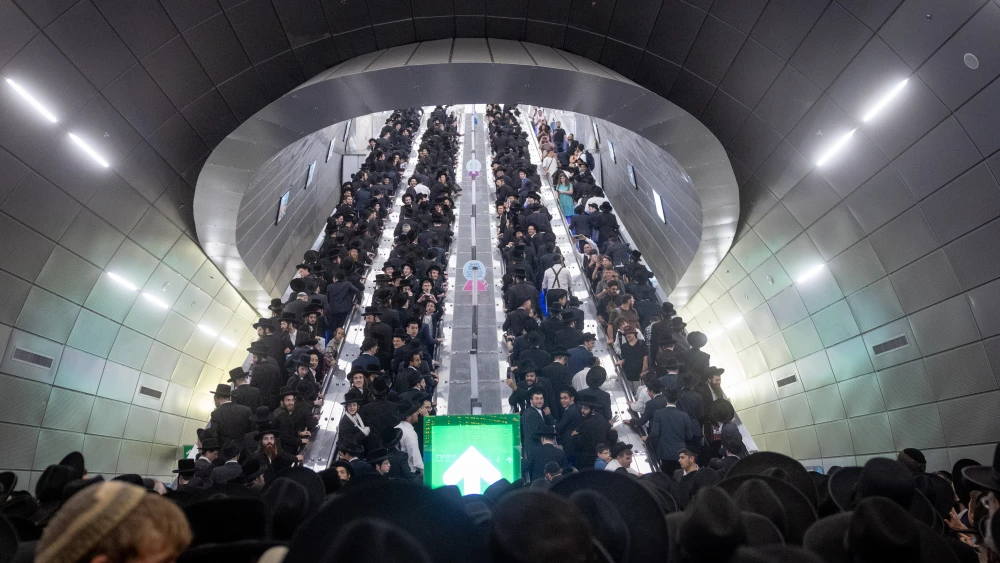
Thousands of ultra-Orthodox Jews are seen exiting the Yitzhak Navon
Railway Station in Jerusalem, on their way to attend a “million man”
protest against IDF conscription, Oct. 30, 2025. Photo by Chaim
Goldberg/Flash90.
Israel’s Supreme Court, sitting as the High Court of Justice, on
Wednesday temporarily blocked a law that froze the arrests of Haredi
yeshivah students who evade military service.
The judges argued
that the temporary order was given in light of the court’s long-standing
rulings on the issue of the conscription of yeshivah students. In June
2024, the court declared that ultra-Orthodox men must be conscripted,
effectively ending a decades-long system of exemptions.
The
decision will remain in force until a new ruling is made. Justice Ofer
Grosskopf ordered that an expanded panel of jurists be convened as soon
as possible to hear petitions related to the case.
The justices
intervened a day after the Knesset passed the legislation by a vote of
58-54. The law would have stopped the detention of Haredi yeshivah
students until Nov. 30, Kan News reported.
Knesset member
Moshe Gafni, chairman of Degel HaTorah Party, a faction of the United
Torah Judaism Party, posted to X after the vote: “The Era of Arrests is
Over: We promised and we delivered. ... This is an important step in
protecting the world of Torah and its learners, out of the recognition
of the importance of Torah study to the people of Israel and the State
of Israel.”
According to the now-frozen law, for 90 days from the
moment of its approval, no criminal proceedings or arrests would be
carried out against yeshivah students who fail to report for
military-related fitness tests or for duty.
The law defines a
yeshivah student as someone who studies Torah on a regular basis for 45
hours per week and not less than 40 hours. The only exceptions are for
holidays and breaks connected to the yeshivah world.
Ultra-Orthodox,
or Haredi, Jews have received near-blanket exemptions from military
service in what started as a release for about 400 Torah scholars at the
state’s establishment.
The community views military service as a
distraction from study and fears that those who are drafted will turn
away from religious study.
However, nearly all Israelis say that
Haredim must play a larger role in national defense, particularly in the
aftermath of Hamas’s Oct. 7, 2023, attack. Many Israelis served many
months of IDF reserve during the subsequent war.
U.S. President Donald Trump ordered a third consecutive night of strikes against the Islamic Republic.
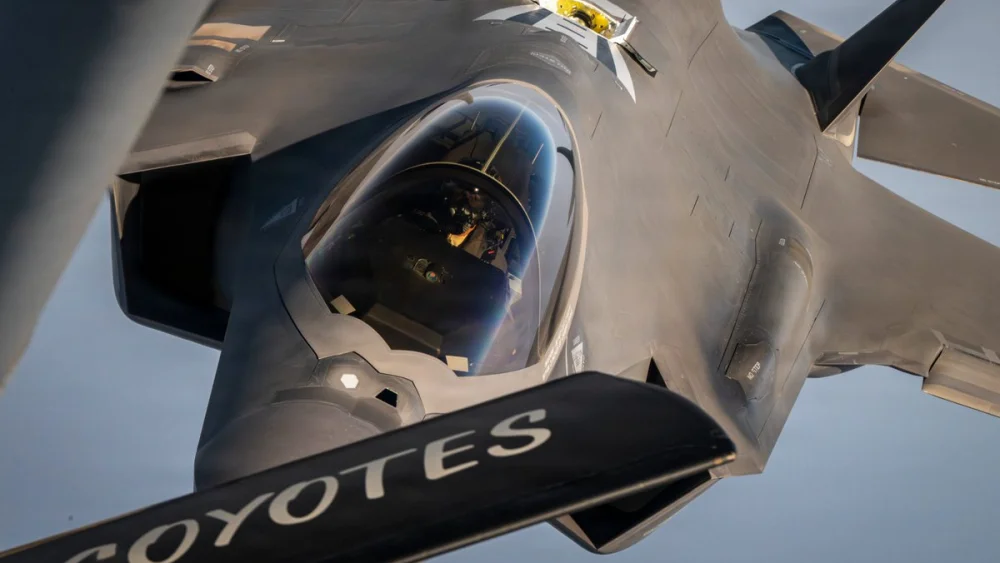
A U.S. Air Force F-35A stealth fighter jet is refueled over the Middle East, July 2026. Credit: United States Central Command.
President Donald Trump ordered more strikes against Iranian regime
sites on Monday in response to the Islamic Republic’s attacks on
civilian-manned commercial ships in the Strait of Hormuz.
U.S.
Central Command said it completed the “latest wave of strikes against
Iran” at 10:15 p.m. Eastern on Monday, five and a half hours after the
operation began at 4:45 p.m.
CENTCOM struck military targets
across Iran, including in Bushehr, Chah Bahar, Jask, Konarak, Abu Musa
and Bandar Abbas, according to the statement. The attacks targeted
coastal defense systems, missile and drone sites, and maritime
capabilities.
“More than 50,000 U.S. service members are currently
deployed across the Middle East. American forces remain vigilant,
lethal, and ready,” CENTCOM stated.
Iran’s Islamic Revolutionary
Guard Corps responded to the latest U.S. strikes by attacking Bahrain,
Jordan and three tankers transiting the Strait of Hormuz, it said.
Two of the vessels, the Mombasa and Al Bahiyah, which were linked to the United Arab Emirates, briefly caught fire, the Associated Press reported. The Emirati Defense Ministry said the attacks killed one mariner and wounded eight others.
Bahrain’s
Defence Force said its air defenses intercepted “a number of
treacherous Iranian aerial attacks,” adding that “the deliberate use of
missiles and drones to target civilians and private property constitutes
a flagrant violation of international humanitarian law.”
A Jordanian military source told the state-run Petra News Agency
that the army “successfully intercepted and shot down four missiles
that breached Jordanian airspace from Iranian territory early Tuesday.”
No injuries were reported in the attacks on Bahrain or Jordan.
Trump
told Hugh Hewitt on Monday that Pickaxe Mountain, an underground
nuclear facility in Iran, remained “a possible target for a nice, big,
fat shot right in the front door.”
“I think that you’ll, maybe
you’ll see that. I’ll tell them right now. Look, the fact is they have
no air force. They have no navy. They have no nothing. All they do is
talk, and they have fake press,” the president said. “We’re going to take out Pickaxe Mountain. Tell the Iranians to be ready.”
“There’s not a damn thing they can do about it,” he added.
Earlier on Monday, Trump told Fox News that the United States will be “taking over” the Strait of Hormuz.
In
a subsequent Truth Social post, Trump declared the strait open and
that, from “this point forward,” the United States will be known as “the
guardian of the Hormuz Strait.”
He said that America is
reimposing the Iranian blockade, “so named because it is only stopping
Iran’s ships or customers from entering or leaving. All other countries
will have fair and open use of the Strait.”
However, Washington
will charge 20% on all cargo shipped, plus “costs necessary to do the
job of providing safety and security to this very volatile section of
the World,” Trump added.
CENTCOM said the blockade on all
“maritime traffic entering and exiting Iranian ports” would go into
effect on 4 p.m. Eastern on Tuesday.
“The resumption of the U.S.
blockade against Iran follows the initial implementation from April 13
to June 18. CENTCOM forces redirected more than 140 compliant vessels,
disabled nine non-compliant ships, and allowed over 50 commercial
vessels supporting humanitarian aid to pass through the blockade during
the two-month period,” it added.
The U.S. military has carried out
four rounds of strikes against Iran in response to the Islamic
Republic’s renewed attacks on commercial vessels transiting the Strait
of Hormuz on July 7.
Trump told the Salem News Channel on Monday
that the June 17 Memorandum of Understanding with Tehran “was sort of a
test, and they weren’t there.”
“It was a test. We didn’t know.
Look, memorandums of understanding when you’re dealing with sleaze bags
don’t mean much,” he added.
The meetings aim to advance a framework agreement reached last month that includes the disarmament of Hezbollah.
Lebanese and Israeli delegations
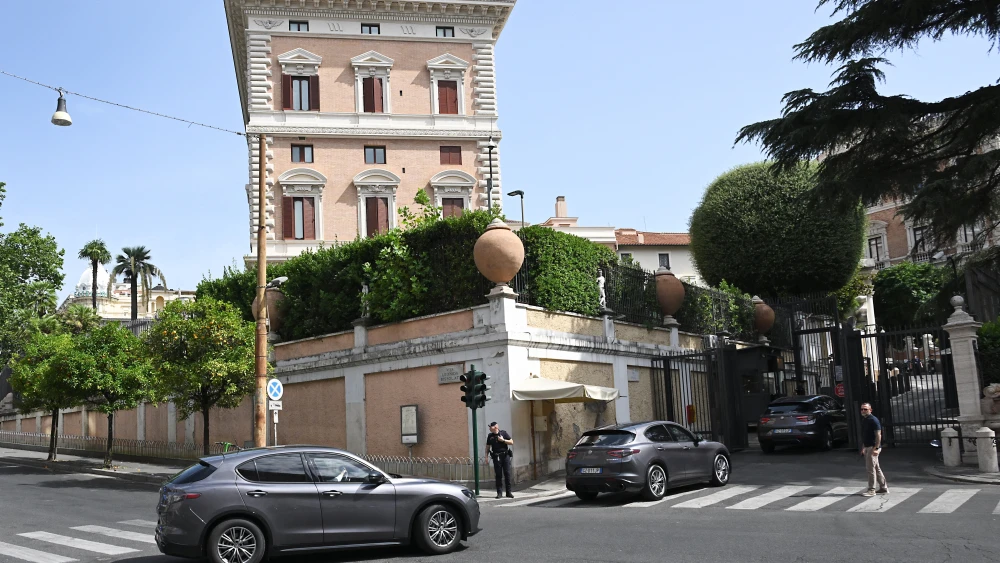
arrive for U.S.-mediated talks at the U.S. Embassy in Rome, July 14,
2026, as efforts continue to implement a June 26 framework agreement on
ending fighting with Hezbollah. Photo by Andreas Solaro/AFP via Getty
Images.
Israeli and Lebanese delegations began U.S.-mediated talks in Rome on
Tuesday aimed at advancing the implementation of a framework agreement
to end months of fighting in the border area with the Iran-backed
Hezbollah terror group.
The discussions are taking place at the
U.S. Embassy in the Italian capital through Wednesday, and follow the
deal reached in Washington on June 26 during the fifth round of
negotiations between representatives of Beirut and Jerusalem.
Arrangements
for a potential Israeli withdrawal from Southern Lebanon and the
deployment of Lebanese forces will be on the table, in accordance with
the agreement, Reuters reported, citing officials familiar with the talks.
The 14-point Israel-Lebanon Trilateral Framework Agreement also calls for the disarmament of Hezbollah,
and Jerusalem has emphasized that an Israeli withdrawal will occur only
once the threat from the Iranian terror proxy is removed.
Israeli
forces are positioned within a security zone extending about 10 km (6
miles) into Lebanon along the entire Israeli border. The June 26 agreement
identified two “pilot zones” north and south of the Litani River in
which Israeli troops would be replaced by the Lebanese Armed Forces
(LAF), while Hezbollah and other non-state armed groups would be
disarmed.
A U.S. official said last week that the U.S. military’s
Central Command (CENTCOM) was coordinating with Lebanon and Israel to
launch the pilot zones. A U.S. military delegation was in Lebanon over
the weekend to discuss the plan in detail with the Lebanese army,
sources told Reuters.
In a CBS News interview broadcast on Sunday, Israeli Ambassador to the United States Yechiel Leiter, who is leading the talks for Jerusalem, said the Rome meetings
will focus on creating conditions for the LAF to assume control in
designated areas so that Israel can begin a phased withdrawal—but only
if the Iranian terror proxy is dismantled.
“What the agreement
with Lebanon does is completely remove Iran from the paradigm,” Leiter
told “Face the Nation” moderator Margaret Brennan, adding that Jerusalem
and Beirut “are on the same page” in seeking to push Hezbollah out for
Israel’s security and Lebanon’s sovereignty.
He said Israel “can
withdraw the moment that Hezbollah is dismantled,” but that the military
will have to remain in the security zone if the terrorist group retains
its arms, “because we’re not going to go back to a situation where our
citizens are going to be threatened by an Iranian proxy firing missiles
and building tunnels so they can attack, like Hamas did on Oct. 7,”
referring to the 2023 mass murder and kidnappings in southern Israel led
by the Gaza-based terrorist organization that sparked a multi-front war
with Tehran and its regional terror proxies.
Hezbollah renewed
its rocket and drone attacks from Southern Lebanon against Israel on
March 2, following the targeted killing of Iranian Supreme Leader Ali
Khamenei on the first day of “Operation Roaring Lion” on Feb. 28.
In
response, Jerusalem launched a broad aerial campaign against Hezbollah
targets and expanded military operations in Lebanon aimed at preventing
cross-border attacks on Israeli communities.
Following the
resumption of hostilities, Lebanese President Joseph Aoun vowed to do
“the impossible” to stop cross-border hostilities between Israel and
Hezbollah and moved to outlaw the Iranian proxy.
Israeli and
Lebanese officials subsequently held five rounds of direct talks at the
U.S. State Department, resulting in the framework of understandings
reached last month, which is conditioned on Hezbollah’s removal from
Southern Lebanon.
Joshua Marks is a news editor on the Jerusalem desk at JNS.org, where he covers Jewish affairs, the Middle East and global news.
Western governments and donors will undoubtedly welcome the announcement [of presidential elections] as a sign that Abbas is finally responding to long-standing demands for reform. They should not.
Holding elections for the sake of holding elections is not
reform. Elections alone do not create democracy, end corruption, or
establish accountability.
Elections by themselves, as Natan Sharansky and Ron Dermer emphasize in A Case for Democracy, do not signify a democracy. There first need to be functioning institutions of democracy — freedom of speech, freedom of the press, separation of religion and state, freedom from religion, an independent judiciary, separation of powers, equal justice under the law, due process, and so on — and then, at the end of these processes that actually embody democracy, after
they are up and running, an election can be held that represents a
democracy. Otherwise, as can be seen in Russia, Iran and other
dictatorships, elections are not signs of reform, at all but just
choreographed burlesques.
The Palestinians desperately need transparent institutions, an
independent judiciary, a free press, functioning checks and balances,
and leaders who answer to the public rather than rule indefinitely by
presidential decree.
None of that exists under the Palestinian Authority in the West Bank or Hamas in the Gaza Strip.
The Palestinian parliament, known as the Palestinian Legislative
Council (PLC), has been effectively defunct since Hamas violently seized
control of the Gaza Strip in 2007, and Abbas formally dissolved it in
2018.
"[T]he clearest evidence of the slide to authoritarianism has
been the decision taken by the party that lost the 2006 elections,
Fatah, to dissolve the PLC in 2018. The inevitable outcome of the
suspension of the PLC meetings has been the transfer of its legislative
and oversight functions to the executive authority represented by the
president. Since 2007, President Abbas issued more laws by decree than
those ever issued by the PLC during its entire life since the first
election in 1996. Most of these laws were not urgent, as required by the
Basic Law, and many of them violated the terms of that law. In the
absence of a parliament, the president gave himself the power to rule by
decree without accountability or oversight." — Palestinian Center for
Policy and Survey Research (PCPSR), January 2021.
The latest poll conducted by the PCPSR found that 80% of Palestinians want [PA President Mahmoud Abbas] to leave office.
If Abbas and the Fatah leadership determine which candidates may
participate, the outcome will be largely predetermined before the first
ballot is cast.
Fatah remains firmly under the control of the same leadership,
the same political culture, and the same patronage networks. Some names
changed, but the system remained unchanged. Same old politics, decorated
with a few new faces, including Abbas's son, Yasser.
For ordinary Palestinians, the choice remains essentially between
Fatah and Hamas. There is no viable third force capable of competing
nationally, and both movements have spent years suppressing independent
political voices.
Public opinion surveys over the past two years have repeatedly
shown that Hamas... enjoys greater support than Mahmoud Abbas's Fatah
faction.
Under these circumstances, new elections could once again hand
victory to Hamas. Such an outcome would strengthen an Iran-backed
terrorist group that openly seeks Israel's destruction, rejects peace,
and continues to advocate armed jihad (holy war).
Democracy cannot exist when the ruling faction controls the rules, the institutions, and the political playing field.
Power is concentrated in a small inner circle. There is no
functioning parliament. There is no meaningful separation of powers.
There is little room for genuine public debate. Journalists operate
under constant pressure and fear. Political appointments often depend
more on personal loyalty than merit.
The question is not whether Palestinians should vote. The
question is whether the conditions for free and meaningful elections
exist. As long as Hamas remains an armed terrorist group with
substantial public support, and as long as Fatah continues to monopolize
Palestinian political life, elections are more likely to reproduce the
current crisis than resolve it.
Palestinians need institutional reform. They need independent
courts. They need financial transparency. They need anti-corruption
mechanisms. They need genuine freedom of expression. They need political
pluralism. They need peaceful transfers of power.
Only after these foundations are established can elections
produce meaningful change. Otherwise, elections merely provide
democratic decoration for an undemocratic system.
Western governments should therefore resist the temptation to
celebrate Abbas's latest decree as evidence of reform and democratic
progress. His decree should be viewed for what it most likely is:
another political maneuver designed to preserve international legitimacy
and secure continued Western financial support, rather than a sincere
effort to bring democracy to the Palestinian people.
The question is not whether Palestinians should vote. The
question is whether the conditions for free and meaningful elections
exist. As long as Hamas remains an armed terrorist group with
substantial public support, and as long as Fatah continues to monopolize
Palestinian political life, elections are more likely to reproduce the
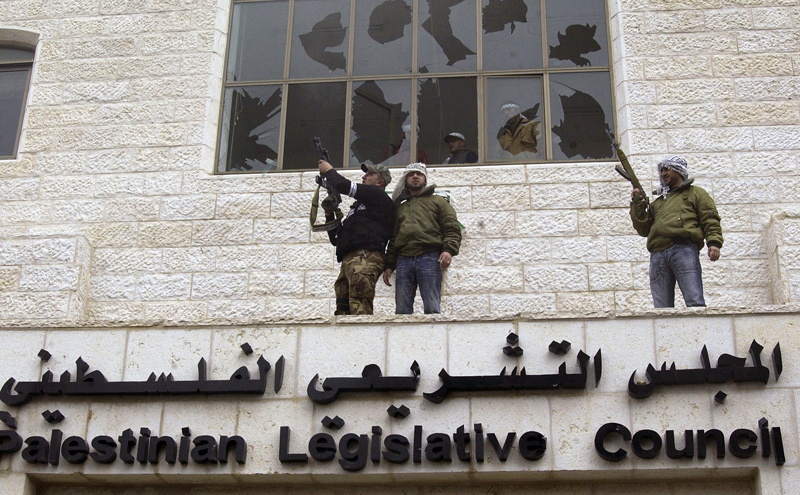
current crisis than resolve it. The Palestinian parliament, known as the
Palestinian Legislative Council (PLC), has been effectively defunct
since Hamas violently seized control of the Gaza Strip in 2007, and
Abbas formally dissolved it in 2018. Pictured: The PLC building in
Ramallah on January 28, 2006, three days after its last election. (Photo
by Zharan Hammad/Getty Images)
Palestinian Authority President Mahmoud Abbas has once again
announced legislative and presidential elections, presenting the move as
evidence of democratic renewal. According to a presidential decree
issued on July 9, legislative elections are scheduled for November 28,
2026, while presidential elections are to follow during the first
quarter of 2027. The decree calls on Palestinians in the West Bank, Gaza
Strip and Jerusalem to participate in "free and direct" elections aimed at strengthening democracy.
Western governments and donors will undoubtedly welcome the
announcement as a sign that Abbas is finally responding to long-standing
demands for reform. They should not.
Holding elections for the sake of holding elections is not reform.
Elections alone do not create democracy, end corruption, or establish
accountability.
Elections by themselves, as Natan Sharansky and Ron Dermer emphasize in The Case for Democracy, do not signify a democracy. There first need to be functioning institutions of democracy — freedom of speech, freedom of the press, separation of religion and state, freedom from religion, an independent judiciary, separation of powers, equal justice under the law, due process, and so on — and then, at the end of these processes that actually embody democracy, after
they are up and running, an election can be held that represents a
democracy. Otherwise, as seen in Russia, Venezuela, Iran and other
dictatorships, elections are not signs of reform at all, but just
choreographed burlesques.
The Palestinians desperately need transparent institutions, an independent judiciary, a free press, functioning checks and balances, and leaders who answer to the public rather than rule indefinitely by presidential decree.
None of that exists under the Palestinian Authority (PA) in the West Bank or under Hamas in the Gaza Strip.
Abbas, now 91, is serving the twenty-first year of what was supposed
to be a four-year presidential term, after being elected in January
2005. The Palestinian parliament, known as the Palestinian Legislative
Council (PLC), has been effectively defunct since Hamas violently seized
control of the Gaza Strip in 2007, and Abbas formally dissolved it in 2018.
According to the Palestinian Center for Policy and Survey Research (PCPSR):
"The suspension of the activities of the Palestinian
Legislative Council (PLC) in the West Bank in 2007, in the immediate
aftermath of the Hamas violent takeover of the Gaza Strip, has been one
of the most damaging governance measures taken by the PA since its
creation. "But the clearest evidence of the slide to authoritarianism
has been the decision taken by the party that lost the 2006 elections,
Fatah, to dissolve the PLC in 2018. The inevitable outcome of the
suspension of the PLC meetings has been the transfer of its legislative
and oversight functions to the executive authority represented by the
president. Since 2007, President Abbas issued more laws by decree than
those ever issued by the PLC during its entire life since the first
election in 1996. Most of these laws were not urgent, as required by the
Basic Law, and many of them violated the terms of that law. In the
absence of a parliament, the president gave himself the power to rule by
decree without accountability or oversight. Without a parliament able
to defend its members, the president gave himself the power to annul the
immunity of the PLC members, to suspend the payment of their salaries,
to send them to court, and to close their offices ending eventually in
his decision in December 2018 to dissolve the entire PLC utilizing for
that mission the services of a body he created for that purpose, the
constitutional court."
This is not democracy.
The latest election announcement also deserves skepticism because it
is not the first time Abbas has made such promises. In 2021, he
announced legislative and presidential elections, only to cancel them at the last minute, blaming Israel's refusal to allow voting in Jerusalem.
This explanation was always unconvincing. According
to the Palestinian Central Elections Commission back then, 150,000
eligible voters from east Jerusalem suburbs "can vote in the upcoming
elections without Israeli obstructions since they do not require Israeli
approval." Abbas used the Jerusalem issue as an excuse to call off the elections because he was afraid that his Fatah faction and loyalists would not win.
The reality is that Abbas has never been eager to test his popularity at the ballot box.
If Abbas truly enjoyed broad public support, he would have little
reason to fear elections. The reality is that for years, Palestinian
public opinion surveys have consistently shown that most Palestinians
want him to resign. The latest poll conducted by the PCPSR found that 80% of Palestinians want him to leave office.
Such findings explain why many Palestinians view Abbas's latest election announcement with deep skepticism.
Even if elections are eventually held, another fundamental question remains unanswered: who will be allowed to run?
If Abbas and the Fatah leadership decide which candidates may
participate, the outcome will be largely predetermined before the first
ballot is cast.
Recent internal Fatah elections offer little reason for optimism.
Elections for Fatah's Central Committee and Revolutionary Council
introduced several younger faces, yet they produced no meaningful
political transformation.
Fatah remains firmly under the control of the same leadership, the same
political culture, and the same patronage networks. Some names changed,
but the system remained unchanged. Same old politics, decorated with a few new faces, including Abbas's son, Yasser.
The broader Palestinian political landscape is equally bleak.
For ordinary Palestinians, the choice remains essentially between
Fatah and Hamas. There is no viable third force capable of competing
nationally, and both movements have spent years suppressing independent
political voices.
This is perhaps the greatest tragedy of Palestinian politics.
For decades, both Fatah and Hamas have systematically prevented the
emergence of alternative leadership. Independent candidates, reformists,
liberals, and pragmatic figures have found little political space to
organize or compete. Both factions have monopolized Palestinian
political life while accusing each other of authoritarianism, even as
each exercises authoritarian control over the territories it governs.
The result is a political monopoly that has suffocated Palestinian society.
Both Fatah and Hamas bear responsibility
for widespread human rights abuses, political repression, arbitrary
arrests of opponents, media intimidation, and corruption. Both have
repeatedly placed factional interests above the welfare of their own
people.
Instead of building democratic institutions, they have built systems designed to preserve their own power.
Many Westerners continue to believe that elections automatically
produce moderation and legitimacy. The Palestinian, Russian, Venezuelan
and Iranian experiences demonstrate otherwise.
The 2006 parliamentary election brought Hamas to power through the
ballot box. Instead of strengthening democracy, the outcome triggered
violent conflict between Hamas and Fatah, culminating in Hamas's bloody
takeover of the Gaza Strip a year later. Since then, Palestinians have
lived under two rival authoritarian administrations.
There is another compelling reason why rushing into Palestinian
elections would be a grave mistake. Hamas, after nearly three years of a
devastating war in the Gaza Strip and the immense suffering it has
brought upon the Palestinians, continues to enjoy significant support
among many Palestinians, especially in the West Bank.
Public opinion surveys over the past two years have repeatedly shown
that Hamas remains one of the most popular political forces in
Palestinian society and, in many cases, enjoys greater support than
Abbas's Fatah faction.
Under these circumstances, new elections could once again hand
victory to Hamas. Such a result would strengthen an Iran-backed
terrorist group that openly seeks Israel's destruction, rejects peace,
and continues to advocate armed jihad (holy war).
Repeating the same experiment while expecting different results would
be idiotic. Allowing an armed organization to compete in elections
without first requiring it to disarm and renounce violence would repeat
one of the gravest mistakes made in 2006.
Equally dangerous would be allowing Fatah to manipulate the electoral process by deciding who may or may not compete.
Democracy cannot exist when the ruling faction controls the rules, the institutions, and the political playing field.
The deeper problem is that the Palestinian Authority continues to
function less like a democratic government than a centralized political
machine dominated by Abbas and his closest loyalists.
Power is concentrated in a small inner circle. There is no
functioning parliament. There is no meaningful separation of powers.
There is little room for genuine public debate. Journalists operate
under constant pressure and fear. Political appointments often depend
more on personal loyalty than merit.
The Palestinian political system has become increasingly
personalized, with major decisions resting almost exclusively in the
hands of Abbas and a narrow leadership elite.
This is precisely why many Palestinians no longer believe elections
alone can solve their political crisis. The question is not whether
Palestinians should vote. The question is whether the conditions for
free and meaningful elections exist. As long as Hamas remains an armed
terrorist group with substantial public support, and as long as Fatah
continues to monopolize Palestinian political life, elections are more
likely to reproduce the current crisis than resolve it.
Palestinians need institutional reform. They need independent courts.
They need financial transparency. They need anti-corruption mechanisms.
They need genuine freedom of expression. They need political pluralism.
They need peaceful transfers of power.
Only after these foundations are established can elections produce
meaningful change. Otherwise, elections merely provide democratic
decoration for an undemocratic system.
It is also difficult to ignore the timing of Abbas's latest
announcement. The PA has faced growing international pressure to
demonstrate reform as Western governments continue financing it and
discussing a larger role for it in governing post-war Gaza. Announcing
elections helps project an image of modernization and democratic renewal
precisely when international donors are demanding evidence of political
change.
Yet appearances should not be confused with reality.
If Abbas genuinely believed in democracy, he could have stepped aside
years ago and allowed a new generation of Palestinian leaders to
emerge. Instead, he has remained in office for more than two decades
while repeatedly postponing elections and concentrating power in his own
hands.
Western governments should therefore resist the temptation to
celebrate Abbas's latest decree as evidence of reform and democratic
progress. His decree should be viewed for what it most likely is:
another political maneuver designed to preserve international legitimacy
and secure continued Western financial support, rather than a sincere
effort to bring democracy to the Palestinian people.
In 2024, 24% of births in the EU were to foreign-born mothers. This figure exceeds 30% in Germany, Belgium, Spain, Austria and others, and reaches 68% in Luxembourg. Within five to ten years, Luxembourg will cease to exist as a country furthering Western values.
Assimilation of immigrants has not taken place.... When one imports the Third World, one becomes the Third World.
Under the influence of green ideology and European policy
commitments such as the Green Deal and carbon taxes, Europe has
voluntarily sabotaged its energy markets.
In the coming years, we may see electoral victories in national
elections by parties that are tougher on immigration and more skeptical
of the forced energy transition. These victories are already under way
in several countries. But what will such parties actually be able to do
when faced with millions of additional retirees to finance from a
shrinking contribution base? Or debt commitments already contracted? Or
European rules that prohibit many solutions?
The answer is simple: they will be forced, like the others, to
increase the economic pressure on those who still work and save –
through income taxes, wealth taxes, inheritance taxes, miscellaneous
levies and creeping inflation.
These new "right wing" parties might also, one hopes, fast-track
simplifying paperwork, eliminating unnecessary regulations, lowering
taxes and providing incentives for economic growth.
[T]he Roman West was not conquered: it slowly mutated from within
into a mosaic of Romano-barbarian kingdoms. Classical civilization
died, replaced by something else.
Europe as we have known it — that civilization from which America
was born — at this point does not look as if it will pull through. It
is giving way to something else: a society more fragmented, poorer, more
dependent on the government, less free, and less European. Then surrounding plausible powers will not resist the temptation to come for the spoils...
Europe as we have known it — that civilization from which
America was born — at this point does not look as if it will pull
through. It is giving way to something else: a society more fragmented,
poorer, more dependent on the government, less free, and less European. (Image source iStock)
Europe as we have known it for centuries — a civilization founded on a
native majority population, a common culture, industrial prosperity,
and a certain idea of liberty and property — appears destined to
disappear.
This will happen not in some spectacular cataclysm, but through a
slow, inexorable erosion, made inevitable by structural trends now too
powerful to be reversed in the time it would take to stop it.
Even if, in the years ahead, several European countries bring to
power so-called "right-wing" coalitions that have never yet governed,
this can no longer substantially alter Europe's collective destiny. The
problem is no longer merely political; it is demographic, energetic,
economic, and institutional. These four processes interlock and
reinforce one another in a sinister yet terribly efficient mechanism.
1. The Collapse of the Native Demographic Base
In 2024, the total fertility rate of the European Union, migrants included, stood at 1.34 children per woman, far below the replacement threshold of 2.1.
In almost every country, native Europeans have even lower
fertility rates. The older population is growing rapidly, and the
number of working-age people is shrinking while the number of retirees
is exploding. This is not a mere "challenge" to be managed with a little
more immigration; the very foundation of a society is collapsing. Fewer
European children mean fewer future taxpayers, fewer innovators, fewer
soldiers, and fewer parents to raise the next generation. It is a slow,
multifactorial, implacable demographic suicide.
Take the Dutch example. Here is a country that, in the name of preserving nature, has forbidden building almost everywhere on its territory. At the same time, the Netherlands has opened the floodgates to mass immigration from the Third World. The result is that a half-derelict bungalow sells for a million euros. This cost makes home ownership — and often even decent renting — strictly impossible
for the overwhelming majority of young native Dutch people, even though
it is presumably a condition for having children. One does not have
children at 30 while still living with one's parents, or in an
overpriced studio apartment. In the Netherlands, a study by the
Netherlands Interdisciplinary Demographic Institute attributes
up to a quarter of the decline in the birth rate to this housing
crisis, itself aggravated by mass immigration and environmental
restrictions on construction.
2. Demographic Third-Worldization
At the same time, mass immigration from Africa, the Middle East and
South Asia "compensates," as the left likes to say, for the low native
birthrates — though only partially. In 2023, nearly 6 million people immigrated to the EU, 4.9 million of them from Third World countries.
In 2025, approximately 64 million people born outside the EU resided there, or about 14% of the total population.
In 2024, 24% of births
in the EU were to foreign-born mothers. This figure exceeds 30% in
Germany, Belgium, Spain, Austria and others, and reaches 68% in
Luxembourg. Within five to ten years, Luxembourg will cease to exist as a
country furthering Western values.
Assimilation of immigrants has not taken place. On the contrary, in
several countries we observe phenomena of segregation, parallel identity
claims
(mainly Islamist, although not only that) and rising cultural and
security tensions. Europe is not only failing to "renew" itself: it is
transforming, mutating, metamorphosing into something radically
different, less European, less productive in the long run, and less
coherent.
The number of rapes in Europe is exploding. Where crime statistics by national origin are available, they all show a massive overrepresentation
of certain populations from the Third World among rape perpetrators.
When one imports the Third World, one becomes the Third World.
3. An Insane Energy Policy
Under the influence of green ideology and European policy commitments such as the Green Deal and carbon taxes, Europe has voluntarily sabotaged its energy markets. The clearest example remains Germany and its Energiewende:
the closure of nuclear power plants, the diktat of solar and wind
power, the explosion in electricity prices and accelerated
deindustrialization. Energy prices will therefore remain
structurally higher in Europe than in Asia or most of the United
States. One cannot maintain and pay for two parallel
electricity-generation networks with impunity: an intermittent one to
please the ideologues, and a real one for the people to be able to have
light and heat in their homes.
Heavy industry — chemicals, steel, automobiles, glassmaking — has lost its competitiveness. Companies are relocating
or shutting down. This policy is not merely costly; it is basically
ideological and self-destructive. It weakens the productive base that
finances the entire system. The United States invents, China copies,
Europe legislates: a truism,
but so terribly accurate. Unfortunately, that truism has a price: the
relative collapse of the European economy in a growing world.
In Belgium, for example, electricity is three times more expensive than the US average, and natural gas five times more
expensive. There is not a single industrial sector that can
successfully compete in global markets while dragging such a ball and
chain. Cheap energy conditions everything. In Europe, we forgot this.
Now it may be too late.
4. Economic Collapse
Public debt is already no longer under control in several major countries, including France. The costs of government pensions for an aging population, universal healthcare and welfare benefits for migrants
are exploding and will continue to explode over the coming decades. IMF
reports underline that budgetary pressures linked to aging will
considerably burden public finances.
The pay-as-you-go pension system, which rests on the ratio between
workers and retirees, becomes mathematically untenable with the collapse
of the native demographic base and the burden of immigrants who receive
government payments and services but fail to help grow the economy. Do
the math. Governments face an impossible choice: drastically cut
pensions, or massively increase taxes and social security contributions,
thereby confiscating more private property. This is the "solution" advocated
by so-called "economists" in the style of Thomas Piketty, and it is
always and everywhere in economic history the prelude to collective
collapse. Capitalism without capital is one of those illusions of
fanciful French theory.
5. The EU, the Ultimate Lock
The European Union is not a common market; it is an unelected,
untransparent and unaccountable supranational system that locks policies
in place for all member states. The "common market" is partial, shaky and riddled
with exceptions. A Belgian entrepreneur seeking to develop his business
in France will have to go through a thousand legal and administrative
vexations that will deter him; that, indeed, is the very reason they
exist: to prevent private success. In reality, the European market is
not "common"; only the million European regulations are.
The rules on migration, asylum, energy, climate, competition and
state aid severely limit the margin for maneuver of member states. Even a
national government determined to regain control of its borders,
relaunch nuclear power, or drastically reduce social spending will run
up against the treaties, directives, the Court of Justice of the EU, and
the threat of financial sanctions.
The EU thus acts as a permanent blocking mechanism against the radical reforms that are so urgently needed.
What "Right-Wing" Victories Will — and Will Not — Change
In the coming years, we may see electoral victories in national elections by parties that are tougher on immigration and more skeptical
of the forced energy transition. These victories are already under way
in several countries. But what will such parties actually be able to do
when faced with millions of additional retirees to finance from a
shrinking contribution base? Or debt commitments already contracted? Or
European rules that prohibit many solutions?
The answer is simple: they will be forced, like the others, to
increase the economic pressure on those who still work and save –
through income taxes, wealth taxes, inheritance taxes, miscellaneous
levies and creeping inflation. Look at the trend for capital gains:
first, the stock market transaction is taxed. Then realized capital
gains. In the Netherlands,
even unrealized capital gains are taxed — that is, gains that do not
even exist and might end up as losses. In the end, all that remains is a
taxpayer who, to salvage what can still be salvaged, leaves. He then
discovers the joys of the exit tax, which will let him go, but only after first taking a big bite of his property.
These new "right wing" parties might also, one hopes, fast-track
simplifying paperwork, eliminating unnecessary regulations, lowering
taxes and providing incentives for economic growth.
Until then, all of this amounts to a form of progressive confiscation
of private property, the only adjustment variable left when one refuses
to touch the demographic, immigration and energy taboos.
The Classical Roman Precedent
Classical Roman civilization did not collapse in a spectacular cataclysm: it dissolved slowly, invisibly through exhaustion.
From the second century onward, native Romans saw their fertility
collapse — late marriages, abortions, infanticide, and celibacy among
the elites — despite the desperate natalist laws of Augustus and his
successors.
While the demographic heart emptied out, the Roman Empire threw open
its gates to outside people, first invited as allies, settlers and
soldiers, then installed by entire tribes with their own chiefs and
laws. Assimilation, partial at first, ultimately failed; the newcomers
preserved their identities, irreversibly fragmenting the cultural and
ethnic fabric of the Roman West.
At the same time, the production machine began to seize up: relative "deindustrialization",
massive deforestation, rising energy costs, villas emptying,
competitiveness lost to the peripheries. To finance pensions, the army
and grain distributions, Rome chose the classic path of empires in
decline: crushing taxes, monetary debasement, requisitions, and binding
laws that tied man to the land.
Thus, without a single great decisive battle — apart from a few
symbolic episodes such as 476 — the Roman West was not conquered: it
slowly mutated from within into a mosaic of Romano-barbarian kingdoms.
Classical civilization died, replaced by something else. The Early
Middle Ages were not the continuation of Rome, but its successor on the
ruins. Feudalism had nothing Roman about it, except for the rubble on
which it was born.
Europe as we have known it — that civilization from which America was
born — at this point does not look as if it will pull through. It is
giving way to something else: a society more fragmented, poorer, more
dependent on the government, less free, and less European. Then
surrounding plausible powers will not resist the temptation to come for
the spoils: the Maghreb, which already has a virtual army on European soil; imperialistic Islamist Turkey;
Russia, an empire for a thousand years; and finally the United States,
which will not be able to allow the nuclear weapons of France and the UK
to land into the hands of Islamist rulers. Michel Houellebecq's nightmare — an Islamist president of France — will most likely come true; it is only a matter of time.
This is less a prediction than an observation. The trends are there,
documented, and the institutional blocking mechanisms are in place. The
rest is mere political theatre.
Europe in the twenty-first century increasingly looks as if it will
be what Belgium was in the nineteenth: the battlefield of the powers
that surround it.
Drieu Godefridi is a jurist (University Saint-Louis,
University of Louvain), philosopher (University Saint-Louis, University
of Louvain) and PhD in legal theory (Paris IV-Sorbonne). He is an
entrepreneur, CEO of a European private education group and director of
PAN Medias Group. He is the author of The Green Reich(2020).
Banks' legislation would codify Trump’s 2025 executive order declaring illegal immigration across the southern border an "invasion," and change the Immigration and Nationality Act to exclude children of such "invaders."
Indiana Republican Sen. Jim Banks introduced legislation Monday that
seeks to end birthright citizenship for children of illegal immigrants
by labeling them as children of "invaders" under federal law.
The legislation was inspired by a roadmap suggested by Supreme Court Justice Brett Kavanaugh last month following a ruling
that determined President Donald Trump's executive order limiting
automatic citizenship for certain individuals born in the United States
violated the 14th Amendment.
Kavanaugh wrote a separate concurring opinion that stated that
although the president's order had conflicted with federal birthright
citizenship law, Congress could amend the statute to create new
exceptions, according to Fox News.
Banks' legislation would codify Trump’s 2025 executive order
declaring illegal migration across the southern border an "invasion,"
and change the Immigration and Nationality Act to exclude children of
such "invaders."
The senator's "Citizenship Act" legislation reads: "Any person who
enters the United States without authorization or for the purpose of
engaging in birth tourism is considered an invader."
Despite the Supreme Court's ruling, Trump has not given up hope that
his attempt to end birthright citizenship could pass and he has called for the high court to have a rehearing on the issue. Rehearings are not unprecedented but extremely rare.
"The Supreme Court’s birthright citizenship decision was an
unprecedented assault on American sovereignty, and we must do whatever
it takes to save our country," Banks told Fox News. "I’m leading the
Citizenship Act to reverse the effects of this consequential ruling and
ensure the millions of illegal aliens that invaded our country can’t
continue to exploit our immigration system."
Misty Severi is a news reporter for Just The News. You can follow her on X for more coverage.
A network of U.S.-based activist groups isn't just voicing opposition to a hypothetical war with Cuba, it's pre-building the machinery to plant protesters outside ICE offices, military bases, recruiting centers and federal buildings within 24 hours of any U.S. military action, on a coordinated national timeline.
Organizations tied to Cuba have openly built a rapid-response protest
apparatus attached to a possible U.S.-Cuba military conflict, at the
same moment the U.S. government is formally treating that coalition’s
Cuban state partner as a hostile influence operation.
The National Network on Cuba (NNOC)
has been distributing a document since at least June 2026 urging
organizers across the U.S. to prepare to protest in front of Immigration
and Customs Enforcement (ICE) offices, military bases, recruiting
centers and other federal institutions should the U.S. get involved in
military action in Cuba. The document, first reported
by ADN Cuba’s Gelet Martinez Fragela, provides a coordinated strategy
for activists to organize protests within 24 hours should the U.S.
military attack Cuba. Just The News was unable to verify the authenticity of the document.
ADN Cuba describes itself as an
independent digital media outlet and news magazine dedicated to
covering Cuba and the Cuban diaspora. Founded in 2017, the platform
focuses on human rights, LGBTQ+ issues, racial integration and
investigative journalism, often publishing content critical of the Cuban
government.
“The goal is to make it politically and materially costly for the U.S. government to wage war on Cuba”: NNOC
“To support the organization of coordinated nationwide actions within
24 hours of a U.S. military attack on Cuba (or imminent threat), while
simultaneously building long-term capacity for a massive anti-war
movement,” the document says. “The goal is to make it politically and
materially costly for the U.S. government to wage war on Cuba.”
The planning document provides a uniform national timeline for
protests: if military action occurs before 3 p.m. local time, then
protests would begin at 6 p.m., if the action occurs after 3 p.m., the
protests would begin the next day at 6 p.m.
The document also lists targeted federal institutions (including
federal buildings, courthouses, and post offices) and ICE field offices
and detention centers as places to protest, to connect “Cuba solidarity
to anti-ICE/immigrant defense work happening nationwide.” Sports arenas
are listed as an “optional target.”
The plan has already resulted in protests, albeit insignificant. On
June 7, around 150 people gathered outside Los Angeles' SoFi Stadium —
holding as many as 70,240 fans to watch the match between Morocco and
Norway. They protested against ICE, according to Mark Friedman, a union activist and teacher who reports
on “environmental, labor and education through the perspective of an
active socialist” and is a co-coordinator of the Los Angeles US Hands
off Cuba Committee.
Photos and videos
of the event posted by Friedman show roughly 10 people at the event.
The event was organized by the Boycott Home Depot coalition and
purportedly focused on countering ICE.
A tiny demonstration in a parking lot exaggerated to a national story of solidarity with Cuba
A few days later, Radio Habana Cuba (RHC), the Cuban government’s international broadcaster, picked up
Friedman’s article. RHC copied Friedman’s article nearly verbatim, but
added that LA Hands-Off Cuba Committee members were present outside the
first World Cup game on June 12, distributing flyers calling for the
removal of Cuba from the state sponsors of terrorism list and to lift
travel bans and sanctions.
By June 13, Prensa Latina, Cuba’s official state news agency, was
claiming that “expressions of solidarity with Cuba were abundant in Los
Angeles” prior to the first World Cup game.
As ADN Cuba pointed out, Cuba-friendly organizations have attached
themselves to other progressive campaigns as well, including the “No
Kings” protests, which were listed in the Seattle Cuba Friendship
Committee’s 2026 activity calendar. The Friendship Committee is part of the more than 60 groups connected to the NNOC coalition.
ICAP expresses solidarity with Iran
The coalition, in turn, according to ADN Cuba, has documented ties to
the Cuban Institute of Friendship with the Peoples (ICAP), a Cuban
state body that was sanctioned by the U.S. in June. Earlier in March,
ICAP expressed
"solidarity with Iran and condemns the United States and Israel's
attack on that country." On July 1, Secretary of State Marco Rubio announced he had terminated the legal status of three Cuban nationals, including longtime ICAP operative Carlos Antonio Lloga Dominguez.
Rubio described Dominguez as a man who “spent more than a decade
working as a foreign subversive for the Communist Cuban regime’s premier
influence and intelligence front group in the United States.” Rubio
also warned those connected to ICAP’s anti-American operations would be
deported. Fox News reported that Dominguez and his family are in federal custody after Rubio revoked their legal status. ICAP did not respond to a Just the News inquiry prior to press time.
The protest planning document published by ADN Cuba is also part of a broader No War on Cuba campaign, author Martinez Fragela told Just the News.
Records show that during the George W. Bush administration, pro-Cuba
organizations launched a similar campaign, which received a letter of thanks from ICAP.
“Under the present conditions, when the Bush Administration insists
on creating and maintaining a war environment, your organization — very
properly named NO WAR ON CUBA — becomes a strong weapon to oppose the
madness of the Empire and bring the light of PEACE to the world,” ICAP
wrote at the time. “We're greatly grateful for all your efforts in
organizing the counterdemonstration in Washington, D.C. last May. Also,
we want to thank you for your support to oppose all forms of aggression
against our people, and in favor of lifting the unjust blockade, as well
as for your campaign to free our five heroes imprisoned in U.S. jails.”
Those “heroes” were five Cuban intelligence officers
who were arrested in 1998, convicted in 2001 of espionage and acting as
unregistered foreign agents, and had their convictions upheld during
the Bush administration. In 2014, the Obama administration released
three of the five officers in exchange for America USAID contractor Alan
Gross.
The protest strategy was created with news of a potential escalation
of aggression between the U.S. and Cuba. In December 2025, the U.S.
entered Venezuela and removed its dictator, Nicolás Maduro. Following
that apprehension, Cuba’s oil supply was disrupted when President Donald
Trump signed an executive order to impose tariffs on any goods from
countries that supply oil to Cuba, the Associated Press reported in January.
The U.S. began blocking oil tankers heading to the island nation in February 2026 as part of Trump’s “maximum pressure” campaign. Since May, the administration has been sanctioning Cuba’s military regime, elites, its state-owned oil and gas company, and Cubans distributing anti-American materials.
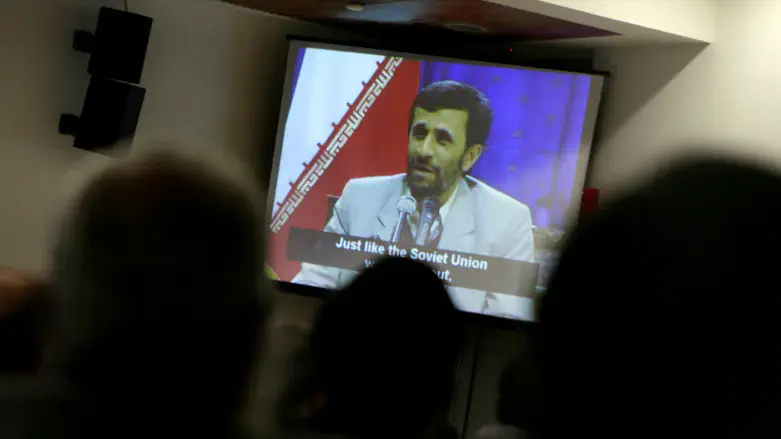
The Mossad's failure may not have been its plan to install Ahmadinejad as Iran's new leader, but its inability to anticipate Trump would halt key parts of it.
Former Iranian president Mahmoud Ahmadinejad at a press
conference after registering as a candidate for the presidential
election, at Tehran’s Interior Ministry, June 2024.(photo credit: Majid Asgaripour/WANA via Reuters)
The New York Times publication on Monday of meticulously detailed Mossad plans to recruit, pick up, and prepare former Iranian president Mahmoud Ahmadinejad
to take over the Islamic Republic from the current regime raised a new
question: Was the Ahmadinejad plan a success or a failure?
Between foreign reports, public confirmation by former head of Military Intelligence Tamir Hayman, and The Jerusalem Post's
own Western sources, it has been known now for some time that the
Mossad sought to replace Ayatollah Ali Khamenei with Mahmoud
Ahmadinejad.
The New York Times
had previous, more speculative reports on the issue which were
eventually confirmed by Hayman to the PBS network, and which created the
space for the Post to receive confirmation, though Israeli journalists often cannot publish all that they know.
From the perspective of the end of the story, with Ahmadinejad
under house arrest, the details of the plan blown out into the open,
likely by American sources seeking to block future Israeli adventurism
(as they see it) with regime change in Iran, and the Islamic
Revolutionary Guard Corps still firmly in control of the country - the
plot was an abject failure, clouding other recent successes.
But from an Israeli perspective, if the US had acted differently, everything might have gone differently.
Former
Iranian president Mahmoud Ahmadinejad at former supreme leader Ali
Khamenei's funeral, July 6, 2026. (credit: SECTION 27A COPYRIGHT ACT)
Was Mahmoud Ahmadinejad, the anti-Israel Iranian president, actually recruited by the Mossad? It remains unclear, but already in the early years of the state there was a mysterious connection with a hostile president.
Ahmadinejad a spy? Olivier Fitoussi/FLASH90
Reports that Ahmadinejad was recruited to serve the Mossad remain an
unverified journalistic rumor, and it is unclear who is behind them or
what the basis for the claims is. However, the idea of recruiting the
leader of an enemy state to assist Israeli intelligence brings to mind a
much older affair from the 1940s: the case of Husni al-Za'im, the
Syrian president who held power for only 137 days. The affair was
discussed with intelligence and heritage researcher Lt. Col. (res.)
Gideon Mitchenik.
Mitchenik also casts doubt at the outset on the
story of the Syrian president and the possibility that he was recruited
by Israeli intelligence, but nevertheless presents the little-known
account.
The
year is 1949. The War of Independence comes to an end following major
battles with Egypt during Operation Uvda in March. Armistice agreements
are signed with four Arab states, with negotiations with Syria being the
longest - lasting more than 100 days - and the most difficult. The
meetings between Syria and Israel take place at locations along the
border between the two countries.
That same year, Syria undergoes
three coups, the first of which is led by al-Za'im. “Alongside the
official negotiations over the armistice agreement, negotiations in
which both Israeli and Syrian demands are raised - including Syria’s
demand that Israel withdraw from the Galilee - direct contact is
maintained with Husni al-Za'im, who at the time also serves as foreign
minister and had previously been Syria’s chief of staff," Mitchenik
explains.
He notes that the contact had actually begun even before
the establishment of the State of Israel, and that it was conducted by
members of the Jewish Agency’s Political Department.
Moshe Sharett
was then head of the Political Department, and in that role he
developed the intelligence component through numerous emissaries,
diplomats who established ties in Arab countries. This was also how
contact was established with King Abdullah, the grandfather of King
Hussein. “A number of people met with many Arab leaders behind the
scenes. The main motivation was an attempt to reach understandings, even
if they did not amount to peace agreements."
Regarding Syria, a
process begins that David Ben-Gurion, then head of the Jewish Agency,
was aware of in detail. During this period, information reaches Israel
about a British-Iraqi plan to take control of Syrian territory.
Ben-Gurion decides to thwart the move and, through the Political
Department, sends an intermediary to inform the Syrians of the plot.
Later, the war with Syria breaks out.
Husni al-Za'im, then serving
as chief of staff, leads the military coup at the beginning of 1949.
Afterwards, he adopts an aggressive policy toward Israel, but behind the
scenes he maintains secret contacts with various Israeli figures,
including Tuvia Arazi, a member of the Political Department who would
later be sent to establish an espionage network in Syria to gather
intelligence on developments in Arab countries.
Arazi holds secret
discussions with al-Za'im, and surprisingly, al-Za'im is willing to
open a dialogue with Israel and even consider a peace agreement. He also
expresses a basic willingness to absorb 300,000 Palestinian refugees
into Syria. At the same time, however, Israel knows that al-Za'im has
ties with American officials, possibly even the CIA, although there is
no evidence to claim that he was spying for the organization.
Ben-Gurion,
who must decide how to proceed regarding Syria, is unwilling to take a
gamble on al-Za'im for several reasons, chief among them the concern
that if he is cooperating with the Americans, he cannot necessarily be
trusted.
Mitchenik notes that the person who exposed these
contacts and Ben-Gurion’s considerations was Prof. Itamar Rabinovich,
who wrote about the matter in a book after reviewing American and other
archival materials.
“This was not an espionage affair, but just as
with the dialogue with King Abdullah and later with King Hussein,
during this period there was a secret diplomatic - and perhaps even
intelligence-related - dialogue with a Syrian president."
Incoming president Princess Moss won the post as union president with 50.3% of votes.
The newly elected president of the National Education Association is
making clear her plans to continue advocating for the social justice
agenda for which the country's largest teachers union has long advocated
– particularly under predecessor Becky Pringle.
"Together, we will build the power to defend public
education, advance racial and social justice, and ensure every educator
has the respect, resources, and voice they deserve," new President
Princess Moss said in announcing her win at the union's Annual Meeting and Representative Assembly last week.
Moss, an elementary music teacher from Virginia and current NEA vice president, will assume her new post September 1.
In her victory speech to delegates, Moss also praised
"educators, unions, students, and entire communities" for having "stood
in your power" for the past 18 months, making a direct reference to
opposition to the Trump administration, which through executive orders
and other means, has pushed to "reorienting the agency toward
prioritizing meaningful learning ahead of divisive ideology in our
schools."
Moss continued in her speech: “You have faced an
administration determined to turn diversity, equity, and inclusion into a
slur ... to gut Medicaid, SNAP, and Social Security, and to defund our
schools to fund billionaires.”
Theroughly 169-year-old union, now with over three million
members, has a long history of supporting Democratic candidates and
their political agenda, most recently in the 2024 election cycle, when
the NEA and its political action committees raised roughly $27 million and spent over $43 million. The spending was highly targeted toward left-leaning advocacy groups, ballot measures and Democratic candidates, according to The 74, a nonprofit news organization covering America’s education system.
Pringle, over her six-year tenure encompassing two terms, spearheaded
left-wing advocacy including Diversity, Equity, and Inclusion (DEI) and
Critical Race Theory (CRT) initiatives, LGBTQ advocacy, and restorative
justice-based discipline in public schools.
She also mobilized her members for large-scale protests such as 'No Kings' Day and May Day, which she refers
to as "organizing for power." Pringle also advocated for policies such
as affirmative action, while opposing Supreme Court decisions such as Mahmoud v. Taylor, which ruled that parents have the constitutional right to opt their children out of LGBTQ curriculum.
In addition, she championed such Democratic politicians as
Presidents Barack Obama and Joe Biden, as well as 2024 Democratic
presidential nominee and Vice President Kamala Harris.
Moss, as NEA vice president under Pringle, appeared to be
in unison with her vision for the union. During the 2020 midterm
elections, she urged
NEA members to vote to “protect the right to vote, the rights of women
and LGBTQ+ rights,” and “carve a clear path toward the presidential
election in 2024.”
She became involved
in the Virginia Education Association – an NEA affiliate – while
studying at the University of Mary Washington. She participated in local
education associations throughout her 21 years as a teacher, serving
two terms as president of the VEA and two terms on the NEA’s executive
committee. She was elected secretary-treasurer of the NEA in 2014 and
later vice president in 2020.
Moss won the union presidency with 50.3% of votes.
“Princess is one of us, and she always has been,” said Virginia
Education Assocition President Carol Bauer upon Moss’ election. “We are
proud, we are ready, and we are going to organize right alongside her.”