Saturday, May 23, 2020

Abbas's Precious Gift to Iran: Hamas - Khaled Abu Toameh

​
by Khaled Abu Toameh

If and when Abbas does suspend security coordination with Israel, he will be sending a message to Iran and its Palestinian proxies that the time has come to turn the West Bank into a center for Jihad against Israel and the "infidels."

  • By halting the security crackdown on Hamas, Abbas would be paving the way for terrorists to kill him and his associates in the West Bank, as they had already begun to do in 2007 in the Gaza Strip, and possibly again in a coup in 2014.
  • If and when Abbas does suspend security coordination with Israel, he will be sending a message to Iran and its Palestinian proxies that the time has come to turn the West Bank into a center for Jihad against Israel and the "infidels."
  • At the same time, Abbas will be signing his own death warrant: Hamas has apparently not relinquished its desire to "hang Abbas in front of the Palestinian people." It appears to be decision time: Will Abbas ally himself with those who are protecting him or with those who would execute him as a traitor?
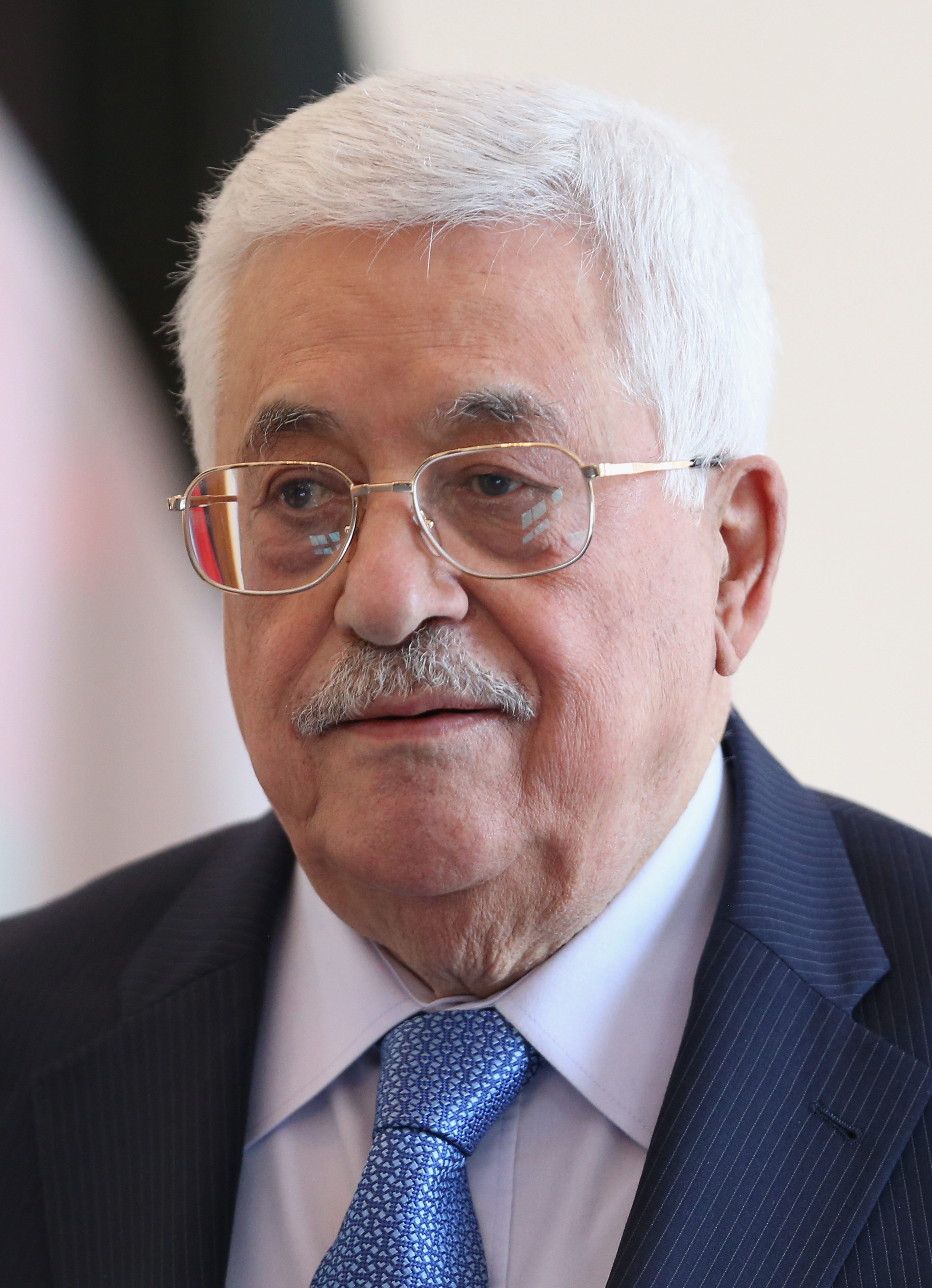
If Palestinian leader Mahmoud Abbas halted his security agreement with Israel, as he has repeatedly threatened to do, he would be signing his own death warrant. Photo of Palestinian Authority leader Mahmoud Abbas. (Photo by Sean Gallup/Getty Images)

The Iranian-backed Hamas movement has welcomed Palestinian Authority President Mahmoud Abbas's latest threat to renounce all agreements and understandings with Israel and the US, including security cooperation.

"We hope that this time Abu Mazen's (Abbas's) decision is a serious one," said Saleh Arouri, deputy head of the Hamas "political bureau." Arouri added that the return of the "armed resistance" to the West Bank was now possible "and even closer than some may think."

The Hamas official repeated his movement's rejection of any peace agreement with Israel, including the Oslo Accords, signed between the PLO and Israel in 1993. "Since day one, we have rejected the Oslo Accords," Arouri explained. "We have also strongly opposed all security agreements with the occupation, and therefore we welcome Abu Mazen's decision to halt the security coordination [with Israel]."

Iran's other Palestinian proxy, Palestinian Islamic Jihad (PIJ), also seems to be satisfied with Abbas's recurring threat to renounce all agreements with Israel, including security coordination.

"We take Abu Mazen's announcement seriously and look forward to its implementation," said PIJ Secretary-General Ziyad al-Nakhalah. "What is required of the Palestinian Authority is a big step towards unity."

Why are Hamas and PIJ so happy with the Palestinian leader?

Abbas's threat, which came in response to an Israeli plan to extend Israeli law to parts of the West Bank, is undoubtedly a precious gift not only to his Palestinian political rivals in Hamas, but also to Iran, whose leaders continue to talk about the need for "eliminating the Zionist regime."

On the same day Abbas made his announcement, Iran's Supreme Leader, Ali Khamenei, wrote on Twitter:
"Eliminating the Zionist regime doesn't mean eliminating Jews. We aren't against Jews. It means abolishing the imposed regime and Muslim, Christian and Jewish Palestinians choose their own government and expel thugs like [Israeli Prime Minister Benjamin] Netanyahu. This is 'eliminating Israel', and it will happen."
In another comment on Twitter on May 19, Khamenei said that the West Bank, where Abbas and the Palestinian Authority are based, "must be armed, just like Gaza."

The Iranian leader is actually saying that his country is seeking to turn the West Bank into a launching pad for terrorist attacks in order to achieve the goal of eliminating Israel. Bizarrely, he is promising to destroy Israel, but without killing Jews.

Khamenei evidently sees Abbas's decision to renounce all agreements and understandings with Israel and the US as a positive development that would facilitate the mission Iran and Hamas share to export anti-Israel terrorism to the West Bank. The Iranian leader wants the West Bank to become like the Gaza Strip, from where Hamas and its allies have been firing rockets at Israel for several years.

If Abbas goes through with his threat to halt security coordination with Israel, that would mean an end to his efforts to prevent Iran's Palestinian proxies, Hamas and Palestinian Islamic Jihad, from proceeding with their ambition of extending their control to the West Bank. By halting the security crackdown on Hamas, Abbas would be paving the way for terrorists to kill him and his associates in the West Bank, as they already began to do in 2007 in the Gaza Strip, and possibly again in a coup in 2014.

In recent years Abbas's security forces have arrested hundreds of Hamas and Palestinian Islamic Jihad members in the West Bank as part of an effort to prevent these groups from undermining his regime. Israel, for its part, has been helping Abbas by routinely arresting Hamas members and officials who pose a threat to his government.

It is rare for a Hamas leader to praise Abbas. Hamas and Abbas have been engaged in a power struggle since 2007, when the Islamist movement, Hamas, staged a violent coup in the Gaza Strip, hurled members of the Palestinian Authority from high buildings and overthrew the Palestinian Authority regime, along with Abbas, who, since then, has not even been able to return to his house in the Gaza Strip. Like their masters in Tehran, however, the leaders of Hamas now apparently believe that Abbas may finally have decided to join the Iranian-led "axis of evil" by cutting Palestinian ties with Israel and the US.

Therefore the leaders of Hamas are now heaping praise on Abbas and urging him to "translate his words into deeds." The message Hamas is sending to Abbas is, "Thank you for finally realizing that the armed struggle is the only way to destroy Israel. Let us join forces in the Jihad to eliminate Israel."

Hamas does not recognize Israel's right to exist; its charter states that:
"the land of Palestine has been an Islamic Waqf throughout the generations and until the Day of Resurrection, no one can renounce it or part of it, or abandon it or part of it. No Arab country and no Arab king or president have that right."
The charter also makes it clear that:
"[peace] initiatives, the so-called peaceful solutions, and the international conferences to resolve the Palestinian problem, are all contrary to the beliefs of the Islamic Resistance Movement [Hamas]. For renouncing any part of Palestine means renouncing part of the religion; the movement educates its members to adhere to its principles and to raise the banner of Allah over their homeland as they fight their Jihad. There is no solution to the Palestinian problem except by Jihad."
For several years now, Hamas has been strongly condemning Abbas because of his perceived support for the two-state solution and contacts with Israel, including security coordination between the Palestinian Authority security forces and the IDF in the West Bank. At one point, when Abbas was quoted as saying that he was not opposed to the establishment of a demilitarized Palestinian state, Hamas spokesman Sami Abu Zuhri responded by announcing that the Palestinian leader's statement did not represent the Palestinian people.

In 2014, Hamas went further by calling for removing Abbas from power and putting him on trial for "high treason." Yahya Abadseh, a senior Hamas official in the Gaza Strip, said that Abbas should be toppled and brought to trial for "betraying the Palestinian people and endangering their interests by imposing sanctions on the Gaza Strip and collaborating with foreign parties."

Three years later, another senior Hamas official, Marwan Abu Ras, called for "imposing [Islamic] sharia law against Abbas by hanging him in front of his people." Abu Ras too accused Abbas of "treason" and "collaboration" with Israel.

Additionally, paying verbal respects after a death constitutes high treason in the eyes of Hamas. A year ago, the terrorist organization accused Abbas of betraying the Palestinians by offering condolences to Israeli President Reuven Rivlin over the death of his wife in June 2019. Hamas spokesman Abdel Latif Qanou said:
"Abbas's condolences to the President of the Zionist entity over the death of his wife is a betrayal of our Palestinian people, a stab [in the backs of] the families of the [Palestinian] martyrs, and a disregard for their noble feelings."
If and when Abbas does suspend security coordination with Israel, he will be sending a message to Iran and its Palestinian proxies that the time has come to turn the West Bank into a center for Jihad against Israel and the "infidels."

At the same time, Abbas will be signing his own death warrant: Hamas has apparently not relinquished its desire to "hang Abbas in front of the Palestinian people." It appears to be decision time: Will Abbas ally himself with those who are protecting him or with those who would execute him as a traitor?
  • Follow Khaled Abu Toameh on Twitter

Khaled Abu Toameh, an award-winning journalist based in Jerusalem, is a Shillman Journalism Fellow at Gatestone Institute.

Source: https://www.gatestoneinstitute.org/16054/abbas-precious-gift-to-iran-hamas

Follow Middle East and Terrorism on Twitter


China’s Pandemic Power Couple - Lloyd Billingsley

​
by Lloyd Billingsley

Deep state doctor Fauci and corrupt WHO boss Tedros back the Communist regime's propaganda.


Last week, Dr. Anthony Fauci of the White House coronavirus task force came out against opening up the American economy and sending the kids back to school in September. That touched off pushback from Sen. Rand Paul, a medical doctor, and President Trump, who for the first time publicly disagreed with Fauci. The president and his supporters, particularly those still unemployed due to Fauci’s lockdown policies, might check out Dr. Tony’s take on World Health Organization director Tedros Adhanom Ghebreyesus. 

“Tedros is a really outstanding person,” Fauci said in late March. “I’ve known him from the time that he was the minister of Health of Ethiopia.” Trouble was, the worshipful Dr. Fauci provided no detail on Tedros’ fascinating back story.

Tedros has long been affiliated with the Marxist Tigray People’s Liberation Front (TPLF), responsible for atrocities against the Amhara ethnic group in northwest Ethiopia. Tedros earned a bachelor’s degree in biology in 1986, but never completed medical studies to become a physician. During his tenure as Ethiopia’s health minister from 2005-2012, Tedros purposely covered up cholera outbreaks in 2006, 2009, and 2011.

The next year, as Ethiopia’s minister of foreign affairs, Tedros strengthened his country’s ties to Communist China, which has loaned more than $13 billion to Ethiopia. In December 2014, Tedros and Chinese Foreign Minister Wang Yi co-authored an op-ed hailing the close bonds between the two countries.

In 2017, Tedros became the first WHO boss not qualified as a medical doctor. One of Tedros’ first actions was to name Zimbabwe’s Marxist tyrant Robert Mugabe as a goodwill ambassador for the WHO. In 2019, when the coronavirus hit, the WHO mirrored the policies of Communist China.

In late January, 2020, after a trip to Beijing, Tedros said China’s actions “actually helped prevent the spread of coronavirus to other countries,” and the WHO boss was “very impressed and encouraged by the president’s [Xi Jinping] detailed knowledge of the outbreak.” Tedros’ actions, in turn, duly impressed Dr. Tony Fauci.

“He has been all over this,” Fauci said. “I was on the phone with him a few hours ago leading a WHO call.” That was in March, and back in January, Fauci told reporters that China was being more transparent than it had been during the Severe Acute Respiratory Syndrome (SARS) outbreak of 2003. According to Fauci, “This time around from my perception they look like they’re being quite transparent.” To all but the willfully blind, they weren’t.

Fauci earned a medical degree in 1966, but without advanced degrees in molecular biology he is not a virologist in the league of Luc Montagnier or David Baltimore, among others. At the National Institute of Allergy and Infectious Diseases (NIAID), Fauci made a name for himself with the claim that AIDS would ravage the heterosexual community. That turned out to be wrong, and for background see The Myth of Heterosexual AIDS, by Michael Fumento, and Inventing the AIDS Virus by Peter Duesberg of UC Berkeley, who is a virologist and molecular biologist.

Dr. Anthony Fauci’s shaky relationship with facts continues during the current pandemic. In January Fauci said it was unclear whether the coronavirus could spread person to person and cited a very low risk to the United States. Dr. Fauci said people need not wear masks and then contended they should. No more shaking hands, but according to Dr. Fauci it’s okay to have sex with strangers you meet online. 

In press conferences, Dr. Fauci fails to focus on the number of coronavirus cases, the number of recoveries, the number of deaths, and the mortality rate. Instead of hard facts, the basis for decisions on the economy, Fauci touts various “models” that have proven to be unreliable. On top of all that, Tony Fauci praises non-doctor Tedros, hails the corrupt WHO, and claims Communist China is being transparent.

Examples of Dr. Tony publicly acknowledging his mistakes are hard to find. All told, he recalls the supposedly infallible HAL 9000 computer in 2001: A Space Odyssey. When HAL is proven to be in error, that jeopardizes the mission and leaves astronauts Frank Poole (Gary Lockwood) and Dave Bowman (Keir Dullea) with no choice but to disconnect HAL.

Dr. Tony Fauci is 79, older than the addled Joe Biden and a year younger than nervous Nancy Pelosi. Fauci has held forth at the National Institute of Allergy and Infectious Diseases (NIAID) for 36 years, making decisions that affect millions of people, without ever having to face the voters. If embattled American workers believe Dr. Tony has been in power too long it would be hard to blame them.

Meanwhile, Sen. Rand Paul, a COVID-19 survivor, is right that Dr. Fauci should not make all the decisions. President Trump has good cause to disagree with Fauci and promote the earliest possible opening of the economy and the kids’ return to school in September.


Lloyd Billingsley

Source: https://www.frontpagemag.com/fpm/2020/05/chinas-pandemic-power-couple-lloyd-billingsley/

Follow Middle East and Terrorism on Twitter


Islam, COVID-19, and the Divine Decree - Mark Durie

​
by Mark Durie

When becoming a martyr serves as an incentive to become infected.


Natural disasters can raise pressing questions for religious believers who believe in a sovereign God. One question which inevitably arises is, “What is God doing in this?” For the almost 2 billion Muslims who make up a quarter of the world’s population, this is an important question. How might Muslims respond when they seek to frame a spiritual response to the pandemic? And what spiritual resources might their faith offer them in the face of this disruption to their lives?

For Muslims, there are specific religious obligations which social distancing requirements interfere with, especially communal prayer in mosques, pilgrimage, and washing the body of the dead.

Over recent months, most Muslim organizations around the world have been supporting social distancing measures brought in by their governments to control the pandemic. In Saudi Arabia Muslims were ordered not to perform their prayers at mosques, but to perform them in their own homes. The Australian National Imams Council issued a ‘Public Statement’ on 18 March, which gave Australia Muslims similar advice.

Islam offers a system of guidance for human behavior. Ordinary Muslims are expected to follow the guidance provided by those who are more knowledgeable about Islam than they, and ultimately the guidance issued should be based upon the Quran and the Sunna (the example and teaching) of Muhammad. These sources, to which legal reasoning is applied, are the foundation for the practice of Islam. Complying with this guidance is believed to bring benefits in this life and the next.

Most Muslim scholars would say that attending Friday communal prayers is obligatory for all Muslim men. The Quran instructs Muslims to leave their places of work on Friday and hurry to prayer (Sura 62:9), and there is a tradition of Muhammad which says that recording angels sit at the gates of mosques to keep track of all who attend (so their participation will be rewarded). But how to comply with this requirement during a pandemic?

To relax an obligatory requirement of Islam requires an exception which can trump the obligation. There is a principle in Islam that prevention of harm, especially to Muslim lives, can overrule other obligations. Thus the Australian Fatwa Council’s fatwa on COVID-19 applied the principle that “Islamic Sacred Law protects the life of a Muslim,” in order to grant an exemption to Muslims from attending communal prayers. The International Fiqh Academy, a peak global body of Muslim jurists, put it this way, in a statement delivered on 20 April, that under necessity, “Almighty God has allowed people do to what is forbidden, and to omit what is obligatory”.  IFA’s comprehensive fatwa endorses such measures as closing businesses, using alcohol-based hand sanitizers, wearing masks and gloves, closing mosques, and generally adhering to the health directives issued by authorities, even if this interferes with Islamic requirements.

In relation to pandemic restrictions, of particular relevance are traditions of MuḼammad which refer to exemptions for attending mosques, and traditions which refer to contagious diseases. There is a tradition that during cold, windy wet weather, Muhammad instructed Muslims to pray in their homes. This establishes a precedent for an exemption to mosque attendance for health reasons. On the other hand, there is another tradition which could be taken as guidance to ignore contagious diseases. Muhammad is reported to have said, ‘There is no such thing as vermin (poisonous snakes, scorpions etc), contagious disease, or an evil omen.” Islamic traditions report some controversy among Muhammad’s companions concerning this statement. Some report that there was an additional balancing comment made that “the ill should not be taken to the healthy.” This second part of the tradition has been cited by Australian Imams and other Muslim leaders to support social distancing.
At stake here is a theological tension between the empirically observable principle of cause-and-effect, and a Islamic doctrine that everything happens according to the Divine Decree. Islamic teaching especially emphasizes that each soul dies at the precise time preordained by Allah. I remember an engaging discussion with Muslims in an Indonesian village early in 1980, about the fate of Marshall Tito of Yugoslavia, who was being kept alive on life support systems. The villagers had seen TV images of Tito in his hospital bed. Was it possible, they asked me, to prolong someone’s life past the time of death predetermined by Allah? It was made very clear to me that the correct Islamic answer was, ‘No it is not’. The influential Salafi sheik, Muhammad Saalih al-Munajid has observed that not even murder violates Allah’s sovereignty over the time of death: ‘the one who kills a person has not taken anything away from the lifespan of the one who was slain; rather Allah, may He be exalted, decreed that from eternity.”

The issue of divine sovereignty over epidemics also features in traditions in which Muhammad states that plague is sent by Allah, so “when you hear that it has broken out in a land, don’t go to it, and when it has broken out in the land where you are, don’t run out of it.” This might sound rather like a sensible restriction on travel for quarantine purposes, but in reality the logic is that if Allah is punishing a particular region with plague, it is senseless to try to evade his judgement, and if divine judgement is falling upon a region, it makes no sense to throw in your lot with them.

There is a telling discussion of this tradition reported in the Sahih Muslim. ‘Umar was leading Muslims on a raiding party to Syria when they received word that the plague had broken out there. Umar sought advice, and decided to turn back. Then a follower asked, “Are you going to run away from the Divine Decree?”, the implication being that it was futile to try to avoid a date with destiny set by the creator himself. Umar replied, “We are running from the Divine Decree to the Divine Decree.” He then gave the illustration that if you take camels into a valley, and there is green grass on one side and none on the other, whichever side you choose, it will be the Divine Decree. So to take steps to avoid plague must be considered as pre-ordained by Allah as dying from the plague after you get infected from entering plague territory.

No doubt with all this in mind, the Australian Fatwa Council’s ruling on COVID-19 began by asserting the sovereignty of Allah over death: “Life and death are absolutely within the decree of Allah alone, exalted be He. This is a reality, no matter what secondary causes appear to be.” The second paragraph continues, “No human shall die until it has completely exhausted its destined provision (rizq) and lifespan (ajal). Death is one of the decrees of Allah.” So if someone dies from COVID-19, it is because Allah has willed it. However, after asserting the principle of divine sovereignty over death, the fatwa defends attending to ‘secondary’ causes, such as infectious disease. Accepting the reality that Allah takes life by secondary causes is, the fatwa states, “part of our belief in the decree and destiny that Allah has established in the world.” So engaging with and acting in accordance with our understanding of ‘secondary’ causes is also the Divine Decree. Therefore, the fatwa urges, “a Muslim repels the decree of illness and transmissible diseases with the decree of protection, treatment and medicine.”

The Australian Imams were wise to urge Muslims to support the government’s policy of social distancing. Several early cases were reported from around the world where large gatherings of Muslims played a critical role in spreading COVID-19, including in Malaysia and India. In Indonesia it was reported in April that, at the instigation of Muslim leaders in the province, mosques continued to be open to thousands to attend Friday prayers together. One Acehnese congregant stated that she prefers to attend the mosque because ‘the reward is bigger [for praying in the mosque on Friday]… so no matter how afraid we are, most importantly is that we believe it is Allah’s provision’ and another suggested that “maybe by worshipping, Allah will keep the disease away from us.”  She would rather trust in God’s sovereignty than miss out on the potential spiritual benefit of attending mosque.

There are risks for Muslims in applying certain Islamic teachings concerning epidemics. One risk is to emphasize the Divine Decree at the expense of the ‘Decree’ of preventative measures. According to a tradition attributed to Muhammad, plague may be a punishment for some, but for genuine believers it could be a source of mercy, so that if a believer trusts in the Divine Decree for his life during an epidemic, and he falls sick and dies, he will receive the reward of a martyr, i.e. paradise with all the options. Here is the full text of the hadith:
“I asked Allah’s Apostle about the plague. He told me that it was a Punishment sent by Allah on whom he wished, and Allah made it a source of mercy for the believers, for if one in the time of an epidemic plague stays in his country patiently hoping for Allah’s Reward and believing that nothing will befall him except what Allah has written for him, he will get the reward of a martyr.” (Sahih al-Bukhari)
This teaching might be considered an incentive to get infected, if it means attaining to the status of a martyr!

There is also theological pressure in the Quran, at the core of Islam, to see pandemics in terms of divine punishment. The Quran speaks repeatedly of the wrath of God falling on groups of people as punishment for rejecting past messengers. Quranic punishments include earthquake, fire, flood, windstorms, thunderbolts, and airborne projectiles. This emphasis is so pervasive, especially in the earlier, ‘Meccan’ passages of the Quran, that there can easily be a tendency to consider all natural disasters as acts of divine punishment. For example, when the Tsunami devastated South East Asia, the Saudi-based cleric, Muhammad Saalih Al-Munajjid announced it to be a punishment upon unbelievers for evil practices associated with holidays, such as adultery, drinking alcohol, and dancing: “the Almighty Lord … showed them his vengeance”.

A very practical risk for Muslims if they interpret epidemics as divine punishment is that they might not take necessary precautions against infection. This is a risk for the followers of the Boko Haram leader Abubakar Shekau, who boasted that he and his followers have no need for social distancing: “We pray fives time daily … we stick together. We join hands. We eat from one bowl. We are doing very, very, very well. We have anti-virus. You have coronavirus, we have anti-virus.” Early on in the progress of the pandemic, as reports of COVID-19 devastation were coming in from China and then Iran, some Sunni Muslims clerics declared that this was God’s judgement against China for persecuting Muslims, and against Shia Muslims for being heretics. Those who assume that the epidemic is God’s judgement against other people could be tempted not to take adequate precautions themselves. Later, of course, the pandemic came for Sunnis too.

There are political risks for religious communities who do not observe health requirements. In India, Muslims were blamed by Hindu extremists for the spread of the virus. At one point, one in five confirmed cases in India was linked to a single three-day long meeting of the Tablighi Jamaat movement in New Delhi. After this event a government raid on the movement’s compound discovered the largest virus cluster in India. The authorities arrested 29 people, including 16 foreigners who attended the meeting, and as news of these events spread there were incidents of discrimination and hatred against Muslims across the country. (At the same time, the disruptions caused by COVID-19 have also provided opportunities for increased persecution of non-Muslims in some countries. For example, reports have been received from Pakistan that a NGO denied COVID-19 related food aid to poor Hindus and Christians, and a Muslim cleric boasted on Pakistan television that a destitute Christian was offered food in exchange for conversion to Islam.  These actions have been called ‘reprehensible’ by the United States Commission on International Religious Freedom.)

We have seen repeatedly that large gatherings of people in close proximity, whether for sports, religious observance, parties, or even a choir practice, can turbo-charge the spread of COVID-19. Islam mandates for large gatherings of men in mosques, and afterwards these men potentially could spread the virus to their families. It is not an easy thing for Muslim communities to suspend communal gatherings, given that they play such a central role in Islamic spirituality. This is especially true of the Hajj pilgrimage to Mecca. Despite a hadith which states that angels prevent plague from entering Mecca and Medina, there have been multiple large-scale epidemics which decimated pilgrims: 20,000 pilgrims died of cholera in 1821 and 15,000 in 1865 (one sixth of all pilgrims that year). (However it is considered especially meritorious to pass away on the Hajj.) This year the Saudis have suspended the year-round umra pilgrimages to Mecca, and the Muslim world is still waiting for a decision from Saudi Arabia concerning the Hajj, which is due to commence in late July.

Islam offers a system of guidance, and Muslim leaders are speaking up all over the world to offer this guidance, addressing the many challenges caused by the pandemic. Most scholars are using their spiritual clout to instruct Muslims to follow guidelines issued by national authorities. This guidance is intended to release Muslims from the invidious position of being conflicted between religious requirements, and the requirements of the state. At the same time, there are theological drivers in Islam which could lead Muslims either to regard the pandemic as a punishment for non-believers, and thus not a serious risk for sincere Muslims, or to downplay the risk in favor of the perceived benefits of maintaining meritorious religious practices. Some Muslim communities may consider the tenets of their faith, including the requirement for men to gather for Friday prayers, to take precedence over anything a secular government might give them. The pandemic requires Muslim leaders to balance certain aspects of Islamic teachings with sensible medical advice, and when Islamic leaders do not align the guidance they are issuing with sound medical advice, the health outcomes for Muslims can be expected to be poor.

In countries which are trying to achieve compliance with pandemic measures, it is important to recognize that for many pious Muslims, religious requirements can take precedence over human-made laws of nations, if they interfere with core requirements of Islam. In order to secure the compliance of their Muslim citizens with health advisories and social distancing rules, the state needs Muslim organizations to issue guidance mandating the compliance of the faithful. There are risks, both for Muslims and rest of the community if this does not happen.
 

Photo credit: Dekoelie at Wikimedia Commons


Dr. Mark Durie is an academic, theologian, Anglican pastor, a Shillman-Ginsburg Writing Fellow at the Middle East Forum, and Senior Research Fellow of the Arthur Jeffery Centre for the Study of Islam at Melbourne School of Theology. Visit his site at markdurie.com.

Source: https://www.frontpagemag.com/fpm/2020/05/islam-covid-19-and-divine-decree-mark-durie/

Follow Middle East and Terrorism on Twitter


Misusing the Bible against Vaccination - Alan M. Dershowitz

​
by Alan M. Dershowitz

Anti-vaxxers are free to cite science, philosophy, law— but do not miscite the Bible or God. It is irreligious and insults the intelligence of those who have actually studied the Bible by assuming, as many do, that the Bible opposes everything they oppose.

  • These are God's words, as recorded in Leviticus, Chapters 13 and 14. "The priest shall isolate" the contagious person for seven days and then an additional seven days if the contagion persists. "And he shall dwell alone; his dwelling shall be outside the camp." Nor was this quarantine voluntary. The priest could compel it.
  • Anti-vaxxers are free to cite science, philosophy, law— but do not miscite the Bible or God. It is irreligious and insults the intelligence of those who have actually studied the Bible by assuming, as many do, that the Bible opposes everything they oppose.
  • Invoking the Bible and God is intended not as a stimulus to further debate, but rather as an argument- stopper: God is against it; no further discussion, research or argument is necessary; the debate is over.
  • They simply assume that God is on the side of every political or ideological position they espouse. If that is not taking the name of God in vain, I don't know what is. And I have a source for that: The Ten Commandments.

Religion should be on the side of saving lives not risking them. (Photo by Alex Wong/Getty Images)

Most of the emails and phone calls that I have gotten since I stated that the Constitution permits safe mandatory vaccination against highly contagious and lethal diseases have been from anti-vaxxers who claim the authority of the Bible. Have they actually read the Bible? Of course, the Bible says nothing about vaccinations: they were not even imagined at the time, but the Bible speaks volumes about the need to prevent the spread of contagious diseases. Large sections of the Bible deal with diagnosing contagious diseases such as leprosy and quarantining carriers outside the city walls until they were no longer contagious. The Bible also demands that we choose life over convenience, money or other values.

We all know that the devil can cite scripture to his purposes. Supporters of slavery cited the Bible, as did anti-Semites and anti-gay bigots. And now anti-vaxxers are distorting and weaponizing the Good Book, religion and God against science. This has happened before, with evolution, the age of the earth, abortion and assisted suicide. But this time the anti-vaxxers who cite the Bible have no plausible argument as anyone can see by turning to Leviticus and other portions of both the Jewish Bible and the Christian New Testament. These are God's words, as recorded in Leviticus, Chapters 13 and 14. "The priest shall isolate" the contagious person for seven days and then an additional seven days if the contagion persists. "And he shall dwell alone; his dwelling shall be outside the camp." Nor was this quarantine voluntary. The priest could compel it. In light of the Bible's great concern for preventing the spread of contagious diseases – innumerable rules and regulations are devoted to it -- can there be any doubt that if a safe and effective vaccine had been developed, it, too, would have been mandated along with a compelled quarantine?

It should not be a crime to miscite the Bible for political or ideological purposes, but it surely is a sin to take God's name in vain. The idea that a deity who demands that we choose life would have opposed the ending of smallpox, polio, Ebola and other contagious diseases whose spread has been prevented by vaccines, defies understanding by those of us who have actually studied the Bible. I have written two books about the Bible, and taught a seminar at Harvard Law School entitled, "The Scriptural Sources of Justice" in which we studied the relationship between scripture –the Jewish and Christian Bibles as well as the Koran – and systems of justice throughout the ages. Students wrote papers and explored numerous contemporary issues. No rational person I am aware of has ever demonstrated that these sources would stand in the way of lifesaving measures, including vaccination, which has now become common throughout the world.

To be sure, no one should be compelled to take a vaccine that has not been proven safe and effective. But once a vaccine meets those demanding standards, religion should be on the side of saving lives not risking them. At the very least, the Bible and God should not be cited against these life-saving measures. Anti-vaxxers are free to cite science, philosophy, law— but do not miscite the Bible or God. It is irreligious and insults the intelligence of those who have actually studied the Bible by assuming, as many do, that the Bible opposes everything they oppose.

Invoking the Bible and God is intended not as a stimulus to further debate, but rather as an argument- stopper: God is against it; no further discussion, research or argument is necessary; the debate is over. That should never be the case, even when the Bible is clearly against something such as gay sex. It should certainly not be the case when the Bible is being miscited and misused for ideological or political purposes.

I challenge any religious leader to point to specific biblical or religious sources to support the claim that God is on the side of anti-vaxxers. They will not be able to. They simply assume that God is on the side of every political or ideological position they espouse. If that is not taking the name of God in vain, I don't know what is. And I have a source for that: The Ten Commandments.

So, let the debate continue as scientists work overtime to try to develop an effective and safe vaccine against the coronavirus, but let's not distort or end the debate by introducing phony religious arguments based on a misreading of the Bible and other scriptural sources.


Alan M. Dershowitz is the Felix Frankfurter Professor of Law Emeritus at Harvard Law School and author of the book, Guilt by Accusation: The Challenge of Proving Innocence in the Age of #MeToo, Skyhorse Publishing, November 2019. He is the Jack Roth Charitable Foundation Fellow at Gatestone Institute.

Source: https://www.gatestoneinstitute.org/16053/misusing-the-bible-against-vaccination

Follow Middle East and Terrorism on Twitter


Thursday, May 21, 2020

The Truth about Muslims' 'Jerusalem Day' and the Al Aqsa Mosque - Hesham Shehab

​
by Hesham Shehab

Myths are hard to dispel, whether in Islam or other religions.


This Friday (May 22, 2020), Arabs and Muslims celebrate International Jerusalem Day. Since it will undoubtedly include anti-Israeli demonstrations and religious-political propaganda, it is important to dispel some myths about the Al Aqsa Mosque's history.

The Umayyad Dynasty, based in Damascus, built Al Aqsa in the 8th century in order to divert Muslims from pilgrimage to Mecca. Later, in the 20th century, Jerusalem was elevated, in the Islamic communal imagination, to sanctify the Palestinian Question after the Arab defeats in the 1948 and 1967 Arab-Israeli wars. This tactic turned the Palestinian-Israel political conflict into a religious crusade that made it a sacred duty for the whole Muslim Umma to engage in.

When the Umayyad caliph Abdul Malik bin Marwan came to power in 685 A.D., his authority was challenged by the so-called anti-caliph, Abdullah bin Al Zubair, who had led a rebellion against the Umayyads and ruled Hijaz and parts of Iraq and Egypt for a decade, with Mecca as his seat of power. Some Muslims who went to Mecca for pilgrimage pledged allegiance to the anti-caliph.

Renowned for their shrewdness and pragmatism, the Umayyads had to do something innovative in order to undermine the anti-caliph's legitimacy and power. They built a magnificent mosque on the Temple Mount in Jerusalem, Al Aqsa Mosque, and invoked a verse from the Quran that talks about Muhammad's miraculous night journey from Mecca to "the farthest mosque" (in Arabic, al Masjid al Aqsa) "revealed" to Muhammad, the prophet of Islam, more than half a century before Aqsa was built.

Some scholars believe that al Masjid al Aqsa was a mosque in Jirana, northeast of Mecca in Arabia, not the Holy Land. In particular, al-Waqidi located Aqsa in Jirana. That debate about the location is beyond this short article.

In any case, mainstream Islamic scholars believe that, according to the Quran, the first direction of ritual Islamic prayers (Salat) was Jerusalem. But since those verses were supposed to have been revealed to Muhammad around fifty years before the construction of Al Aqsa, this common interpretation raises more problems than solutions and poses the question: was Muhammad a Jew praying toward the Temple Mount, or was he imitating the Jews in Medina?

The Umayyads might have had a hadith narrator at their disposal who legitimized the Umayyad's innovations with a fabricated Muhammad's prophetic statement.

It is curious that the narrator of the famous hadith that sanctified al Aqsa, Ibn Shihab Al Zuhri, served in the Umayyad court:
Do not undertake journey but to three mosques: this mosque of mine, the Mosque of al-Haram and the Mosque of Aqsa (Bait al-Maqdis [classical Arabic for Jerusalem]).
Indeed, the Umayyads were able to create an alternative for their followers who desired a shrine, as a place of pilgrimage, until the anti-caliph was defeated, beheaded, and crucified in Mecca in 692 A.D.

However, the Umayyads maintained Damascus as their seat of power (and never moved their capital to Jerusalem) until their demise in 750 A.D., when the Abbasids took over the leadership of the Islamic world and established Baghdad as their capital.

Myths are hard to dispel, whether in Islam or other religions. Al Aqsa Mosque lingered as a place of religious Islamic significance but not political importance. The coastal ports of Ottoman times and British mandated Palestine, in particular Haifa, had been more important in commerce and politics than Jerusalem. Even Israeli Arab academic Raef Zreik, an activist who works to undermine the legitimacy of the Jewish State, called Haifa "the heart" of mandated Palestine.

In 1948, the Arab League rejected the United Nations resolution that decreed the foundation of Israel and five Arab armies attacked the nascent, Jewish State. The Arabs were served a shocking, humiliating defeat. But Jordan captured East Jerusalem and annexed the West Bank. From 1948 until 1967, the Jordanian government "took actions to accentuate the spiritual Islamic status of Jerusalem," according to Ghada Hashem Talhami, a Palestinian-American academic.

Indeed, Arab leaders have resorted to Islamic religion in times of turmoil and defeat. In 1967, after the Israeli forces crushed the Arab defenses in the Six-Day War, many Arabs were disillusioned with the Pan-Arab nationalism that late Egyptian president Gamal Abdel Nasser had peddled, and resorted to Islamic religion. Later, Nasser himself, a secularist, called for a role for Islam in the lives of Egyptians, before his death in 1970.

Also, late Egyptian president Muhammad Anwar Al Sadat, who succeeded Nasser and worked toward a military build-up against Israel, called himself the Believer President. Sadat encouraged an Islamic revival by releasing the Muslim Brotherhood members who had been jailed during Nasser's rule and enlisted their help against Leftist parties. Ironically, Sadat was assassinated by a radical group that was an offshoot of the Brotherhood.

Later, deposed Iraqi president Saddam Hussein, a Baathist socialist, would use the same Islamic tactics to garner support for his failing regime. Saddam added the words "Allah Akbar" (God is Greater) on the Iraqi flag during the Gulf War, and started promoting propaganda showing him performing Salat (prayers).

The Islamic Resistance Movement, Hamas (founded in 1987), might exemplify the worst of that tactic. By using Islamic religious rhetoric, focusing on liberating Jerusalem, because it is the third holiest place in Islam, Hamas's ideology shifted the Palestinian struggle from the realm of nationalism to that of a jihad, holy war, against the Jewish State. In that context, any road map for peace, like land for peace, would be either rejected as being an abdication of the Muslims' duty towards bringing back Jerusalem to the fold of Islam or disingenuously accepted merely as a tactical ploy and a step toward a further plan for the annihilation of Israel.

The Islamic Republic of Iran, which initiated International Jerusalem Day on the last Friday of Ramadan, has been jockeying for the leadership of the Islamic World against Saudi Arabia since 1979. Since its inception, this Iranian Islamic regime has been using Islamic symbols for political gain while also wantonly supporting many Islamist terrorist groups.

Clearly, Jerusalem Day is merely a ploy in the hands of those who preach extreme violence, religious fanaticism, and spiteful anti-Semitic hatred and promote a culture of death.

No doubt, there are grievances in the Islamic world that may cause the victimhood and the defeatism mentalities that make a celebration of Jerusalem Day and blaming Israel for all the maladies of the Middle East attractive to the masses. Most Muslims languish in poverty and are suffering under autocratic governments and see no light at the end of the tunnel. Such circumstances further fatalism and belief in conspiracy theories.

There is likely no solution for how the emotional Muslim masses are exploited, through the manipulation of religious Islamic symbols, unless church and state are separated in Islam and leading Muslim institutions embrace equality, freedom of faith, and religious pluralism. Islamic societies should take responsibility for and ownership of the Arab defeats and backwardness in modern Islamic history, instead of promoting conspiracy theories, as well as hurling anti-Semitic and Western tropes, in order to justify political stagnation and impotence. Otherwise, as the Arabic proverb says, "it is pointless to treat partial paralysis."


Hesham Shehab

Source: https://www.americanthinker.com/articles/2020/05/the_truth_about_muslims_jerusalem_day_and_the_al_aqsa_mosque.html

Follow Middle East and Terrorism on Twitter


The Holy Six Day War - Tzvi Fishman

​
by Tzvi Fishman

Nasser’s promises to drive Jewish State into sea unnerved country. Syria and Jordan were mobilized to join Egypt in devastating attack.


Six Day War Paratroopers at the Wall
David Rubinger

During the annual Yom HaAzmaut celebration at Yeshivat Mercaz HaRav in Jerusalem, some three weeks before the Six Day War, the Rosh Yeshiva, HaRav Tzvi Yehuda HaKohen Kook, gave a powerful and prophetic speech to the students and gathered guests, describing his initial anguished reaction when he had heard the news, some twenty years previously, that the United Nations had voted to partition the Land of Israel in approving the creation of a truncating Jewish State. While joyous Israelis danced outside on the streets, he sat at home, stunned by the announcement that the Inheritance of Hashem and Jerusalem had been cut into pieces and divided. Raising his voice, he shouted, “THEY DIVIDED OUR LAND!” Everyone in the hall was silent. “AND WHERE IS OUR HEVRON? AND OUR SHECHEM? WHERE IS EVERY METER OF THE LAND WHICH HASHEM BEQUEATHED TO US ALONE?! HAVE WE FORGOTTEN THAT ALL OF THE LAND IS OURS?!”

One of the yeshiva’s students, that late HaRav Yehuda Hazani wrote down his teacher’s words. “Yehuda had a phenomenal memory,” his wife, Hannah, told the Jewish Press. “After he made a neat copy of his scribbled writing, he showed it to HaRav Tzvi Yehuda for final editing, and then arranged for its publication in the HaTzofet newspaper. At the time, no one in the country spoke about our returning to Judea and Samaria, nor about capturing the Temple Mount. The idea was like a science fiction. Then, three weeks later, it came true.”

At the same time, in the late spring of 1967, Rabbi Shlomo Goren, Chief Rabbi of Tzahal, was in Australia, raising money for Israel Bonds, when he read in a local newspaper that Egypt’s President Nasser had closed down the Straits of Tiran leading to Eilat. At Nasser’s request, United Nations Peace Keeping Forces abandoned the Sinai Peninsula, and vast numbers of Egyptian tanks and infantry units were stationed along the Israeli border. Certain that the belligerent actions would lead to war, Rabbi Goren decided to fly back home to Israel. “In a matter of weeks, I will pray at the Kotel and on Mount Sinai as well,” he prophesied to the large crowd at his farewell appearance in Australia.

In Israel, the population was seized with worry and despair. Nasser’s promises to drive the Jewish State into the sea had unnerved the country. The armies of Syria and Jordan were mobilized to join Egypt in a devastating attack. Israel’s top military echelon advised Prime Minister Levi Eshkol, the acting Defense Minister, to strike first before Israel’s forces received a deadly blow, but the cautious and aging politician wanted to give the Administration in Washington time to convince Nasser to withdraw his forces and allow the UN troops to return to their positions. The IDF brass disagreed, not wanting to put the fate of the country in foreign hands, by counting on America to save it from extinction.

Arriving in Israel, Rabbi Goren immediately drove to a meeting with the IDF Commander-in-Chief, Yitzhak Rabin, who tensely informed him that the surrounding Arab countries were preparing their armies for an all-out attack on the tiny Jewish State. Rabin told him that two cabinet ministers from the National Religious Party, who opposed going to war, Moshe Haim Shapira and Zerach Warhaftig, were preventing Prime Minister Levi Eshkol from unleashing IDF forces. Rabin asked Rabbi Goren to speak with them and persuade them to change their minds. “After I see for myself the morale of our troops,” the army chaplain replied in his forceful and independent manner.

The journalist, Avi Rath, who spent several years with Rabbi Goren's editing his autobiography, "With Might and Strength," told the Jewish Press that the former Chief Rabbi was first and foremost a prodigious Torah scholar. “Verses of Torah, Tanach, and Tehillim were always on his lips, and when he accompanied Israel's soldiers into battle, the spirit of the Torah which filled his being crowned him with a towering faith, untiring energy, and valor. For him, the war was not only a matter of saving Israel, it was, in the words of King David, so that, ‘the whole world will know that there is a living G-d in Israel.’"

Rabbi Goren journeyed to the southern Negev, where he met the commanders of Israel’s anxious battalions. Receiving conflicting reports, between optimistic expectations of victory and gloomy predictions that the government’s stalling for time had already soured the opportunity, he gave an order to the Army Rabbinate to be prepared to dig thousands of graves across the country, in case the forecasts of terrible losses proved true. Then, charged by the growing threat of war, he raced to Tel Aviv to meet with the reluctant religious cabinet ministers who put the blame for their opposition on Yitzhak Rabin who, they claimed, had balked when asked about Israel’s chances of success. Rushing to confront Rabin once again, Rabbi Goren discovered a broken warrior. In his autobiography, he writes that Ben Gurion, Rabin’s mentor, had shattered the young Commander in Chief’s confidence, accusing him of endangering the entire country, claiming that Israel alone could never defeat a joint attack by the powerful and massively-equipped forces of Egypt, Syria, and Jordan combined.

“Ben Gurion’s words affected Rabin deeply bringing about a nervous breakdown,” he noted. “He simply fell apart. All of the army was poised for war, and our Commander-in-Chief fell apart.”

To complicate matters, in a special radio broadcast, a tense, sleepless, and indecisive Eshkol stumbled over the words of his speech, further eroding the spirit of the nation. Dismayed by Eshkol’s procrastination, people demanded that the popular and charismatic Moshe Dayan be appointed as Minister of Defense.

As if possessed by a Divine Spirit, the IDF Chief Rabbi phoned Moti Hod, Chief Commander of the Israeli Air Force who insured him that a surprise first strike on Egypt would leave its entire air force paralyzed within two hours. Rabbi Goren hurried to meet once again with Interior Affairs Minister, Moshe Haim Shapira, and reported in his bulldozer manner that IDF commanders in the field were confident of an Israeli victory, if the order came now. The glaring-eyed Rabbi used all of his high-powered Torah persuasiveness to influence the peace-loving, religious, cabinet minister to adopt a more militant stance. Shapira assured him that he would support the appointment of Moshe Dayan as new Defense Minister during the emergency cabinet meeting, a few hours away, and that he would withdraw his opposition to sending Israel’s soldiers to war.

Wanting to be with the troops when they stormed into the Gaza Strip and Sinai, Rabbi Goren once again drove south to the Negev. Before Israeli jet fighters took to the skies, the Chief Rabbi entered the Air Force command bunker and distributed the prayer he had written, with a personal note to Moti Hod from the Book of Lamentations, exhorting him to: “Pursue them in anger and destroy them from under the heavens of the L-rd.”

Certainly, many factors influenced Levi Eshkol’s decision to go to war, and the change-of-heart of the formerly reluctant Shapira was one of them. Upon the official announcement that war had been declared, as Israel’s highly-trained Air Force soared into the skies, Rabbi Goren’s previously-prepared address to the soldiers of Tzahal was broadcast by “Kol Yisrael” over radios in every home and office throughout the country: “On this day of victory, Hashem is with you, all of the soldiers of the armies of Israel, on land, on sea, and in the air, to lead you in battle to triumph over enemies who have risen against us to destroy us. Let your hearts not be weakened for it is Hashem who fights by your side to save you….”

In a matter of hours, and throughout the next two miraculous days, the skilled pilots of Israel totally destroyed out the air forces of Egypt, Jordan, and Syria, while determined Israeli ground troops crushed Nasser’s battalions in the Gaza Strip and Sinai, fighting their way to the Suez Canal. As the smoke cleared over decimated enemy runways and battlegrounds, Israeli Prime Minister, Levi Eshkol, had to make a decision – to give Israel’s army commanders in Jerusalem a green light to capture the Old City, or to accept the ceasefire which the United Nations had hastily organized in order to save the Arab world. The clock was ticking. At four in the morning, Knesset member, Menachem Begin, had woken Levi with a phone call, urging him to keep fighting in Jerusalem before the chance was lost to return the Temple Mount and Western Wall to Israel’s eternal possession. Already worn down by weeks of pressure and a deep, father-like concern for his small, besieged country, the mounting international pressure against Israel had further weakened Levi’s resolve. His military echelon, new Defense Minister Moshe Dayan, a recovered Yitzhak Rabin, Uzi Narkiss, and Haim Bar-Lev, were waiting impatiently for his order, but he wasn’t sure that America would back such a decisive and history-impacting move, which would so dramatically challenge the age-old superiority myths of Christianity and Islam.The indefatigable Rabbi Goren hurried to Rockefeller Museum just across from the Old City wall, where Mota Gur’s paratroopers were under Jordanian fire from Augusta Victoria Monastery at the northern peak of the Mount of Olives. Though Israeli soldiers had suffered heavy casualties fighting against entrenched Jordanians forces in the north of the city, at Ammunition Hill, the faith-filled Rabbi was certain - just as the Hashem had guided the pebble which toppled the mighty Goliath, the Eternal One of Israel was fighting alongside the brave soldiers of the IDF. Gur told him that although Israeli divisions had surrounded the Old City, he had orders from the government not to enter its gates, lest the entire world rise up against Israel. The United Nations had pressured Jordon to accept a cease fire, but the proud King Hussein meanwhile ordered his troops to keeping fighting. With a look of fire in his eyes, the army’s Chief Rabbi barked at the paratrooper commander:

“This historic opportunity to liberate the Jerusalem and the Temple Mount has fallen into your hands, and you hesitate?! I will take the responsibility. Come with me and free the Old City. If they court-martial us, I will accompany you to prison. It is an honor to die to liberate Jerusalem. Now is the chance!”

Rabbi Goren’s aid, Rabbi Menachem HaKohen, who didn’t leave the IDF Chief Rabbi’s side during the war, told the Jewish Press that Gur accepted the passionate plea in good-natured fashion, joking about the situation, as if to temper the mounting pressure all around them, promising to take the drill-hammer of a Rabbi along with him when his troops entered the city.

Frustrated, the Rabbi Goren rushed to Tel Aviv to find Yaacov Herzog, the Prime Minister’s closest advisor, and demand that he convince Levi Eshkol to seize the hour.

“I was the army Chief Rabbi’s driver and aide,” Rabbi HaKohen relates. “From Jerusalem to Aza, then to Tel Aviv, back to Aza, up to Jerusalem, down to Tel Aviv, back up to liberate the Holy City, then on to Kever Rachel, Kfar Etzion and Hevron. He hardly slept the whole time. Even at night, he had a portable light in the car so he could keep studying Gemara. He learned seven pages of Gemara each day, even during the war. He also talked to me a lot to make sure I didn’t fall asleep at the wheel, just the way the Kohen HaGadol was kept awake all night before Yom Kippur by telling him intriguing narratives. We would even joke about how people would eulogize us if we were killed in the war. Although Rabbi Goren was a very serious talmid chacham, he quoted Kohelet, saying there was a time to weep and a time to laugh.”

From Tel Aviv, Rabbi Goren drove back south to Aza in time to accompany Division 11 as it set off to encounter the Egyptian forces massed along the border. As the unit roared forward, an enemy shell hit the Rabbi’s command car. All of the soldiers with him were injured. The shofar he was carrying was burnt from the fire and heat of the explosion, along with his officer’s cap. Miraculously, the small Sefer Torah he had brought with him remained unscathed. Treating the wounded as best he could, he carried bleeding soldiers to the ambulances that arrived, grabbed a helmet and pressed forward with the troops while under heavy Egyptian fire. As Israeli tanks advanced, after the first fierce round of fighting, the enemy surrendered its position and fled in panic. “I saw with my own eyes the truth of the verse, ‘Five from among you shall pursue a hundred, and a hundred from among you shall pursue ten thousand, and your enemies will fall before you by the sword.’ Rashi notes that the mathematics are not in exact proportion, and explains, ‘you cannot compare a few who perform the commandments of the Torah to many who perform them.’ We learn from this that fighting the wars of Israel is Torah in and of itself.”


בכירי צה"ל בירושלים במלחמת ששת הימים
צילום: ארכיון צה"ל במשרד הביטחון

As sunset fell over the battleground, Rabbi Goren decided to return to Jerusalem. In the middle of the night, he arrived in the Holy City, where the sounds of explosions and gunfire filled the air from all parts of the city. Immediately, he rushed to the home of his father-in-law, the saintly Rabbi David Cohen, known as the “Nazir,” asking to borrow the shofar of his shul. Rabbi Goren’s aid, Rabbi Menachem HaKohen, told the Jewish Press that he stood on a chair and pulled the shofar down from the top of a bookcase. Running to the Rockefeller Museum, they discovered that many soldiers had been killed by enemy shells and the fierce fighting throughout the city. When he woke up in his jeep after an hour of sleep, Rabbi Goren learned that Mota Gur had set off to command an early morning charge on Augusta Victoria. Supported by Israeli jets, two IDF divisions converging from different directions seized control over the strategic ridge overlooking the Jerusalem from the east. As Jordanian snipers fired from the walls of the Old City at approaching Israeli troops, Rabbi Goren jumped into his jeep and drove toward the Lion Gate, picking up a “trampist” (hitchhiker) on the way, Yosi Ronen, the sound recorder for “Galatz,” the army radio station, who managed to capture the sounds of Rabbi Goren’s shofar, and victorious shouts and singing of the history-making battle. Finally receiving orders to liberate the Old City, Mota Gur led a paratrooper brigade down the Mount of Olive hillside toward the Temple Mount. At 9:45, with the song, “Jerusalem of Gold,” playing on radios throughout the country, Israeli tanks opened fire on the Lion’s Gate, blowing up the bus that had been positioned there to seal off the fifteen-meter-high stone gateway. Under consistent sniper fire, the Israeli forces charged forward. A tank tried to move the bus aside but got stuck. As Rabbi Goren ran toward the gate, a paratrooper captain screamed at him to take cover by the wall, alongside the other soldiers, lest he get shot. Torah scroll and shofar in his hands, the exuberant Rabbi ignored the command. “I am the highest-ranking officer present,” he answered. Don’t try to stop me!” 

Blowing the shofar as loudly as he could, he led the charge into the Old City, climbing over the stalled tank in the gate and jumping down on the other side. “The Shechinah, which never left the stones of the Kotel, prepared the way before the soldiers of Israel, protecting them with her Clouds of Glory.” he later wrote. Then, as if in a dream, he reached the gate leading to Har HaBayit. With another long blast of the shofar, he called out to the troops behind him, “In the Name of Hashem, liberate Jerusalem! Rise up and conquer the Mount!”

Rabbi Yisrael Ariel, then a student at the Mercaz HaRav Yeshiva, and now head of the Temple Institute in Jerusalem, reached the Mount after it had been liberated by the paratroopers. “My orders were to enter the Dome of the Shrine and guard the rotunda containing the Foundation Stone,” he told the Jewish Press. “The fact that I was standing in the place of the Holy of Holies was like a spiritual explosion, the reverberations of which have stayed with me until today, inspiring everything I have done. When I heard that two holy elders with long white beards had arrived at the Kotel, I was certain they must be the Mashiach and Eliahu HaNavi. A short time later, after receiving permission to join the crowd at the Wall, I discovered that the two holy elders were my Rabbis, HaRav Tzvi Yehuda Kook and HaRav David Kohen, the holy ‘Nazir’. ”


מלחמת ששת הימים
צילום: לע"מ

At the start of the war, Zvi Friedman had fought with the troops who had forced Egyptian tank units to withdraw from Aza. Hurrying to Jerusalem with Rabbi Goren to strengthen the forces in the Holy City, he too found himself on the Temple Mount as the army Chief Rabbi read out a victory speech of thanksgiving to Hashem which he had ready in his uniform pocket. Freidman told the Jewish Press, “If you want to know the truth, finding myself on the Temple Mount didn’t mean anything to me. No one talked about the Temple Mount back then. Unlike today, it wasn’t a part of our vocabulary. Mota Gur called out, ‘Har HaBayit is in our hands!’ but I am sad to say, the Arabs are still in charge there. I looked at Hannan Porat, a young paratrooper and student of Rabbi Tzvi Yehuda Kook, and his eyes were shining with happiness and tears, but I didn’t feel anything special until I reached the Kotel.”

Some time later, commanders Mota Gur, Uzi Narkiss, and Defense Minister, Moshe Dayan, stood amidst the singing and dancing soldiers, as if wondering what to do with the treasure that had fallen into their hands. Rabbi Goren approached them. “Why don’t we gather all of the explosives we have and demolish all of the shrines and mosques on the Mount while we still have the chance,” he suggested to his serious and startled listeners. Realizing that he would find a more receptive ear at the Kotel, he hurried off in search of a path to the Wailing Wall, which for almost two decades had been off-limits for Jews. His bearded aide-de-camp, Rabbi Menachem HaKohen, had grown up in the Old City and knew the way. Joined by a few other soldiers, it wasn’t long before they faced a locked metal gate which they knocked down with their shoulders.

Rabbi Goren recalls in his autobiography, “As I reached the narrow plaza in front of the Kotel, I felt a great burst of light which blinded me. An Arab ran out from the adjacent tunnel and slid a chair under me before I toppled with dizziness.”

Tired, yet ecstatic paratroopers rushed to embrace the stones of the Wall. Above them, another student from the Mercaz HaRav Yeshiva, Captain Yoram Zammush, hung the Star of David flag from a metal bar at the top of the Kotel. Blowing the shofar, and clutching the Torah scroll, Rabbi Goren recited Kaddish for all of the fallen, and all of the gathered called out, “Amen!” The “trampest” from the “Galei Tzahal” radio station was on hand to record all of the euphoric prayers.

Rabbi Menachem HaKohen, who later became Chief Rabbi of the Moshavim and the Histadrut, told the Jewish Press, “Not since the Jewish People stood united at Mount Sinai had there been a moment of Jewish unity so absolute at this. Jews all over the world, from Moscow to the United States, in Tel Aviv and Jerusalem, heard our prayers and answered, ‘Amen!’”

After draping the flag over the ramparts of the Wall, Yoram Zammush requested that his Rosh Yeshiva, Rabbi Tzvi Yehuda Kook, be brought to the Kotel.

“Rabbi Goren instructed me to bring both Rabbi Kook and the ‘Nazir,’ to the Old City,” Rabbi HaKohen recalls. “The Dung Gate still hadn’t been captured, so I took Zammush’s jeep which was still up on the Temple Mount. Deciding to wait until Mincha time before hurrying to Mount Herzl to take care of burial arrangements for Tzahal’s many fallen soldiers, Rabbi Goren returned to the sacred site of the Beit HaMikdash to recite Tehillim, and take advantage of the halacha which permits Jewish soldiers to enter the grounds of the Mikdash during the conquest of the Temple Mount, which was still taking place, as sniper fire continued throughout the Old City. Praying with all of his strength, in the back of his mind was the reminder that Kever Rachel, Kfar Etzion, and Hevron still hadn’t been captured, and he wanted to have a part in their liberation as well.

Driving the army jeep through the jubilant crowds on their way to the Old City, Rabbi Menachem HaKohen parked on the Temple Mount and led the two elder Rabbis to the narrow passage in front of the Wailing Wall, now jammed with soldiers: “The saintly ‘Nazir’ embraced the stones of the Kotel and remained there frozen. HaRav Tzvi Yehuda looked overwhelmed, as if he couldn’t comprehend where we were. Shaking off his disorientation and wonder, he began to weep. He asked Rabbi Goren to recite a chapter of Tehillim, and I sounded the shofar.”

“It is impossible to forget that day,” Rabbi Tzvi Yehuda Kook recalled in a speech he later delivered on Jerusalem Day in the Mercaz HaRav Yeshiva. “Each hour that passed, expectation quickened. One of our students who had enlisted raced back to the yeshiva during a break in the fighting and announced that, with the Almighty’s help, our paratroopers would soon reach the Kotel! A little later, a bearded army officer appeared with a message from HaRav Goren. ‘The Chief Rabbi of the army invites the Rosh Yeshiva to come to the Kotel,’ he announced. ‘An armored car is waiting outside.’

“HaRav David Cohen, the Nazir, joined us on the way. He too had been invited by his son-in-law, HaRav Goren. The army car progressed slowly through the joyous crowds who were thronging the streets of the city – thousands of singing and dancing people. Many of them had tears of joy in their eyes over the liberation of Jerusalem. We prayed the first national prayer at the Kotel after a nineteen-hundred year separation, not as individuals, but as representatives of the reborn Medinat Yisrael. The prayer that was an utter cleaving to Hashem. Every eye was filled with tears. Everyone chanted the Psalm, ‘A Song of Ascent: When the L-rd brought back the exiles of Zion, we were like those who dream.’

“Before we left the liberated city, I was interviewed by radio and television reporters from Israel and from around the world. They wanted to know my opinion on what had transpired. ‘Behold,’ I said. ‘We announce to all of Israel, and to all of the world, that by a Divine command, we have returned to our home, to our Holy City. From this day forth, we shall never budge from here! We have come home!’”

Reprinted from The Jewish Press


Tzvi Fishman

Source: http://www.israelnationalnews.com/News/News.aspx/280625

Follow Middle East and Terrorism on Twitter