Saturday, May 31, 2025

On Congressional and Corporate Collusion with the PRC - Thaddeus G. McCotter


by Thaddeus G. McCotter

Tax loopholes still let Chinese companies tap U.S. credits, exposing how Congress aids a hostile regime while claiming to defend national security.


As an American citizen and a Michigan resident opposed to communist China’s subnational incursions into our country, specifically, and the People’s Republic of China (PRC), generally, I was both heartened and saddened by Steve Cortes’s May 22nd American Greatness article, “Don’t Fund Chinese Companies in the Tax Bill.”

I was heartened because a strong proponent of American workers and religious freedom once more warned against the suicidal insanity of corporate and political elites economically empowering a genocidal communist regime engaged in unrestricted warfare against our nation with the express intent of destroying the “hegemon” and, further, the rules-based international order. So, too, Mr. Cortes did his part to help pierce the corporate media’s muted coverage of how my home state of Michigan is a regrettable example of American elites’ prioritizing corporate and government revenues over America’s national security.

Mr. Cortes begins by citing the strategic threats posed by the PRC’s access to our economy and government:

“First, it compromises our industrial base because threats of espionage and sabotage follow those acquisitions and capital flows… Second, granting access to U.S. markets grants legitimacy and financial power to one of the most brutal and repressive regimes on earth, one that grows increasingly blunt in its anti-American posture. America should not be in the business of financing an enemy.”

His logic is eminently sound, as is his analysis of both the pending tax bill:

“Now, the new reconciliation bill, deemed the “Big Beautiful Bill,” just passed in the House—and it fails to fix loopholes created by the Biden administration’s Inflation Reduction Act (IRA). As this legislation moves to the Senate, it leaves the window open for Chinese companies to benefit from massive U.S. tax credits, specifically the 45x Advanced Manufacturing Production Credit, an uncapped incentive program for certain manufacturing projects.”

His solution is eminently sensible:

As a first step, the Senate must mandate no U.S. tax credits to any PRC-affiliated companies. None. Moving further, they should stop PRC companies from further infiltrating America’s industrial base and block U.S. companies from working domestically with any company listed by the Department of Defense as a Chinese Military Company or that is considered a foreign entity of concern.

Yet, implicit within Mr. Cortes’s heartening article was the heartbreaking reality that he was compelled to write it at all. For, as he baldly asks, “So, will the Senate protect America? Will the Senate stop China’s malicious efforts to dominate America’s critical technologies?” Or, as he warns, will “the American taxpayer [stay] on the hook for funding our foremost adversary?”

Hence, the heartbreak—and heartburn—that such questions should even need to be asked.

Almost a year to the day Mr. Cortes’s article was published, I had written about how Detroit and the entire state of Michigan—America’s “Arsenal of Democracy”—had been gutted and infiltrated by the PRC’s subnational incursions and predatory trade practices, including industrial espionage.

But that was during the Biden administration, shortly after the then-Democrat-controlled Congress passed the misleadingly named “Inflation Reduction Act.” Among its many harmful provisions, it enabled states like  Michigan to allow U.S. companies to partner with PRC entities, including taxpayer funding and tax exemptions for that purpose. It was no accident that two of the most aggressive states in pursuing such partnerships—Michigan and Illinois—were under full Democratic control at the time. But, make no mistake, there were also Republican governors and legislatures that were eyeing that poisonous cookie jar.

As I noted at the time, the rationale for the corporate and political elite was short-sighted venality: the corporations received profits, and the government received revenues and the ability to claim they were “creating jobs.”

Mr. Cortes’s piece reminded everyone that corporations will continue to do business with the PRC regardless of the national security consequences unless and until the politicians stop them. Now, even with President Trump’s re-election and the appointment of staunch anti-Communist Marco Rubio as Secretary of State and National Security Advisor, Congress still has not gotten the message about the PRC. They have only gotten sneakier in how they cater to corporate America’s heedless collusion with one of our nation’s most dangerous, avowed enemies.

According to Mr. Cortes’s analysis:

“While Chinese companies cannot receive tax credits on their own, they can easily bypass these restrictions by establishing joint ventures or taking advantage of projects that license Chinese technology to receive tax credits for at least two more years… Under the House-passed bill, U.S. companies that receive ‘material assistance’ from prohibited foreign entities like CATL will remain eligible to receive 45X tax credits for at least two years.”

And there you have it. The congressional politicians will claim victory in ending tax credits for the PRC, all the while leaving in place—in fact, incentivizing—their ability to partner with American companies. Claiming to eliminate a problem while actually exacerbating it was the fundamental problem with the fraudulent “Inflation Reduction Act.” How bitterly ironic that the GOP Congress is poised to do the same in purporting to fix it.

When I first came to Congress, neither party was particularly concerned about how communist China had become a strategic threat and rival model of governance to the United States. Indeed, the uni-party’s “smart set” talked of how the U.S. had the duty to usher the PRC onto the world stage. My position was and remains that it is the job of the U.S. to usher the PRC into history’s dustbin.

While the public has long recognized the danger posed by the PRC—starting with those of us, Republican and Democrat, living in “deindustrialized” communities and states—it seems the insular political class still does not care about protecting Americans from that genocidal regime but only about how to duplicitously posture for the next election. Thus, whatever the tax bill’s outcome, political chicanery will likely continue to transcend party lines. President Trump and Secretary Rubio have their work cut out for them—starting within their own party.

***

An American Greatness contributor, the Hon. Thaddeus G. McCotter (M.C., Ret.) served Michigan’s 11th Congressional District from 2003-2012. He served as Chair of the Republican House Policy Committee; and as a member of the Financial Services, Joint Economic, Budget, Small Business, and International Relations Committees. Not a lobbyist, he is also a contributor to Chronicles, frequent public speaker and moderator for public policy seminars, and a co-host of “John Batchelor: Eye on the World” on CBS radio, among sundry media appearances.


Thaddeus G. McCotter

Source: https://amgreatness.com/2025/05/31/on-congressional-and-corporate-collusion-with-the-prc/


Follow Middle East and Terrorism on Twitter

Thursday, May 29, 2025

Gov't approves establishment of 22 new West Bank settlements - Jerusalem Post Staff


​ by Jerusalem Post Staff

The decision includes plans to renew settlement activity in northern Samaria and develop new communities along the Jordan Valley border.


A map of 22 areas in the West Bank that were approved for new Israeli settlements, May 29, 2025. (photo credit: SCREENSHOT/X, SECTION 27A COPYRIGHT ACT)
A map of 22 areas in the West Bank that were approved for new Israeli settlements, May 29, 2025.
(photo credit: SCREENSHOT/X, SECTION 27A COPYRIGHT ACT)

The government has approved the establishment of 22 new settlements in the West Bank as part of a joint initiative by Defense Minister Israel Katz and Finance Minister Bezalel Smotrich, the ministries announced in a joint statement on Thursday.

The decision includes plans to renew settlement activity in northern Samaria and develop new communities along the Jordan Valley border. According to the Defense Ministry, the move follows the repeal of the Disengagement Law in specific areas, enabling renewed activity in Homesh and Sa-Nur.

The plan is intended to expand settlement infrastructure and strengthen Israel’s strategic position across the region.

The plan is intended to expand settlement infrastructure and strengthen Israel’s strategic position across the region.It includes the return of residential activity to previously evacuated areas and the creation of four new settlements along the eastern border near Jordan.

These developments are intended to reinforce Israeli control along a key territorial corridor and are aligned with broader government planning to support population growth and land use in designated zones, the Defense Ministry said.

Settlement of Elon Moreh, near Nablus, West Bank, June 11, 2020 (credit: MARC ISRAEL SELLEM/THE JERUSALEM POST)Enlrage image
Settlement of Elon Moreh, near Nablus, West Bank, June 11, 2020 (credit: MARC ISRAEL SELLEM/THE JERUSALEM POST)

Katz and Smotrich praise the development of the 22 new West Bank settlements

Katz said the decision supports Israel’s regional positioning and settlement framework: “The decision to establish 22 new settlements in the West Bank strengthens our presence in the area and affirms our commitment to ensuring security for the population centers of Israel.

“It is a step toward reinforcing our eastern axis and addressing ongoing security challenges.”

Smotrich stated that the move represents a shift in government policy toward expanded development: “With the backing of the cabinet, we are advancing a plan that focuses on construction and long-term development,” he said. “Our goal is to ensure continued presence and infrastructure growth in key areas.”

Religious Zionist Party MK Orit Strock commented on the decision in a post on X/Twitter, saying, “We made a promise, and we kept it. New settlements are being established in Judea and Samaria, closing a gap of decades in the settlement of the land and providing a Zionist response to vast spaces that have been neglected and abandoned.”

"Through our actions, we express our right to the land and our duty towards it. We continue to correct the sin of disengagement." 


Jerusalem Post Staff

Source: https://www.jpost.com/israel-news/article-855842

Follow Middle East and Terrorism on Twitter

US-Iran nuclear deal could be reached as soon as next round of talks, sources tell CNN - Jerusalem Post Staff


​ by Jerusalem Post Staff

The fifth round of talks between the US and Iran concluded last Friday in Rome, with Iranian and Omani officials issuing positive statements.


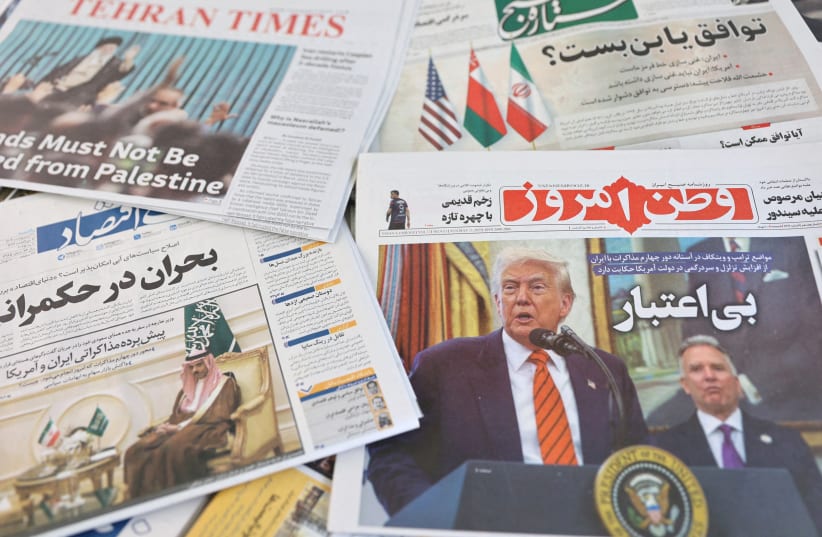
An Iranian newspaper with a cover photo of US President Donald Trump and US Middle East envoy Steve Witkoff is seen in Tehran, Iran, May 11, 2025. (photo credit: MAJID ASGARIPOUR/WANA (WEST ASIA NEWS AGENCY) VIA REUTERS)
An Iranian newspaper with a cover photo of US President Donald Trump and US Middle East envoy Steve Witkoff is seen in Tehran, Iran, May 11, 2025.
(photo credit: MAJID ASGARIPOUR/WANA (WEST ASIA NEWS AGENCY) VIA REUTERS)

An Iranian nuclear deal could be reached during the next round of talks between the United States and Iran, sources told CNN on Wednesday.

The mediators are “closing in on a broad agreement” that could be achieved next time the countries meet, likely in a Middle Eastern country, the report said.

US President Donald Trump also told Prime Minister Benjamin Netanyahu “not to disrupt talks,” it said.

Netanyahu had threatened to strike Iranian nuclear facilities, as the US expressed concern that the airstrikes would disrupt nuclear talks, preferring to exhaust diplomatic avenues, The New York Times reported Wednesday. In response to the report, the Prime Minister’s Office said it was “fake news.”

Trump told reporters in the Oval Office: “I told him [Netanyahu] it would be inappropriate to do this right now, because we’re very close to a solution now. That could change at any moment.”

 Iran's Foreign Minister Abbas Araghchi is welcomed by an unidentified Omani official upon his arrival in Muscat, Oman, May 11, 2025.  (credit: IRANIAN FOREIGN MINISTRY/WANA (WEST ASIA NEWS AGENCY)/HANDOUT VIA REUTERS)Enlrage image
Iran's Foreign Minister Abbas Araghchi is welcomed by an unidentified Omani official upon his arrival in Muscat, Oman, May 11, 2025. (credit: IRANIAN FOREIGN MINISTRY/WANA (WEST ASIA NEWS AGENCY)/HANDOUT VIA REUTERS)

The fifth round of talks between the US and Iran concluded last Friday in Rome, with Iranian and Omani officials issuing positive statements about the future of the talks. 

Previous round of US-Iran talks led to 'some but not conclusive progress'

During the negotiations, US special envoy Steve Witkoff held more than two hours of talks with the Iranian delegation and agreed to meet in the near future.

The Omani foreign minister, however, said the fifth round had wrapped up “with some, but not conclusive, progress,” and that “we hope to clarify the remaining issues in the coming days to allow us to proceed towards the common goal of reaching a sustainable and honorable agreement.”

Amichai Stein and Reuters contributed to this report.


Jerusalem Post Staff

Source: https://www.jpost.com/breaking-news/article-855840

Follow Middle East and Terrorism on Twitter

Iran isn't in a place to handle an Israeli strike due to internal struggles, expert says - Maya Cohen


​ by Maya Cohen

“Salami makes threats every other day. Nothing new. Inside Iran, he’s seen as illiterate and is mocked. He’s not someone who worries us.”


Iran's President Masoud Pezeshkian visits Iran's nuclear achievements exhibition in Tehran, Iran April 9, 2025. (photo credit: IRAN'S PRESIDENCY/WANA (WEST ASIA NEWS AGENCY)/HANDOUT VIA REUTERS)
Iran's President Masoud Pezeshkian visits Iran's nuclear achievements exhibition in Tehran, Iran April 9, 2025.
(photo credit: IRAN'S PRESIDENCY/WANA (WEST ASIA NEWS AGENCY)/HANDOUT VIA REUTERS)

The current negotiations between Iran and the US are simply a game for the Islamic Republic, an expert revealed to Maariv.

Beni Sabti, a senior researcher on Iranian affairs at the Institute for National Security Studies, argued that the recent spike in rhetoric surrounding Iran’s nuclear program is less about an imminent war and more about political maneuvering by both Iran and its adversaries.

In the wake of reports suggesting Israeli readiness to strike Iran’s nuclear facilities independently, and following a reported ultimatum from US President Donald Trump to Supreme Leader Ayatollah Ali Khamenei, Sabti offered a more grounded interpretation.

“This isn’t a new crisis – it’s a familiar Iranian chess game,” Sabti told Maariv. “What many see as dangerous threats are often bluffs, ones even the Iranian public doesn’t take seriously.”

Regarding ongoing nuclear negotiations between the US and Iran, Sabti predicted more delay tactics from Tehran:“The Iranians will likely propose so-called compromises just to push back deadlines. That’s how they operate. They hold onto cards and play them when the timing suits them.”

 What will happen to US, Iran relations? (credit: Maariv Online)Enlrage image
What will happen to US, Iran relations? (credit: Maariv Online)

According to Sabti, Iran still has room to maneuver diplomatically.

“There’s still space to compromise – on uranium enrichment levels, international inspections, even centrifuge operations – if Iran chooses to do so.”

Recent Israeli military actions, particularly in Yemen, have reignited debate over whether Jerusalem could act independently against Tehran’s nuclear ambitions. Sabti was unequivocal: “Israel has the operational capability. Militarily and physically, there is no barrier to such an action.”

However, he warned of a critical caveat. “The main issue is coordination with the US – whether America would provide intelligence or defensive support during a strike.”

Dismissing Iranian threats

Sabti is openly dismissive of Iranian threats, particularly from IRGC commander Hossein Salami, who he said is ridiculed even within Iran.

“Salami makes threats every other day. Nothing new. Inside Iran, he’s seen as illiterate and is mocked. He’s not someone who worries us.”

Sabti also highlighted the technological and strategic gap between the two countries. “Israel has modern capabilities. Iran, in contrast, is stuck in the 1970s. Their air force is practically non-functional, flying aircraft that are 60 years old. That’s not how you confront a regional power.”

Beyond the geopolitical theater, Sabti pointed to deepening unrest within Iran. “There’s no bread, no electricity. The situation is deteriorating quickly. Strikes are spreading – something we haven’t seen in years.”

A diplomatic path forward?

Despite the rising rhetoric, Sabti believed diplomacy would prevail in the coming weeks. “There are backchannel discussions between Israel and the US, conducted by long-standing intermediaries. It’s hard to imagine a scenario where there’s both a signed agreement and simultaneous plans for an Israeli strike.”

While acknowledging the risks, he remained cautiously optimistic. “I believe there will be an understanding – something that’s not black or white, but acceptable to both sides. Whether that’s a military option or a diplomatic one, it could still be a solution Israel can live with.”


Maya Cohen

Source: https://www.jpost.com/middle-east/article-855884

Follow Middle East and Terrorism on Twitter

Beyond air power? Israel’s strike options against Yemen’s Houthis - Yaakov Lappin


​ by Yaakov Lappin

Experts advocate for an enhanced naval role as the Houthi missile threat persists despite significant IAF operations.


Israeli forces attack a Houthi-controlled port in Yemen on May 5, 2025. Credit: Israel Defense Forces.

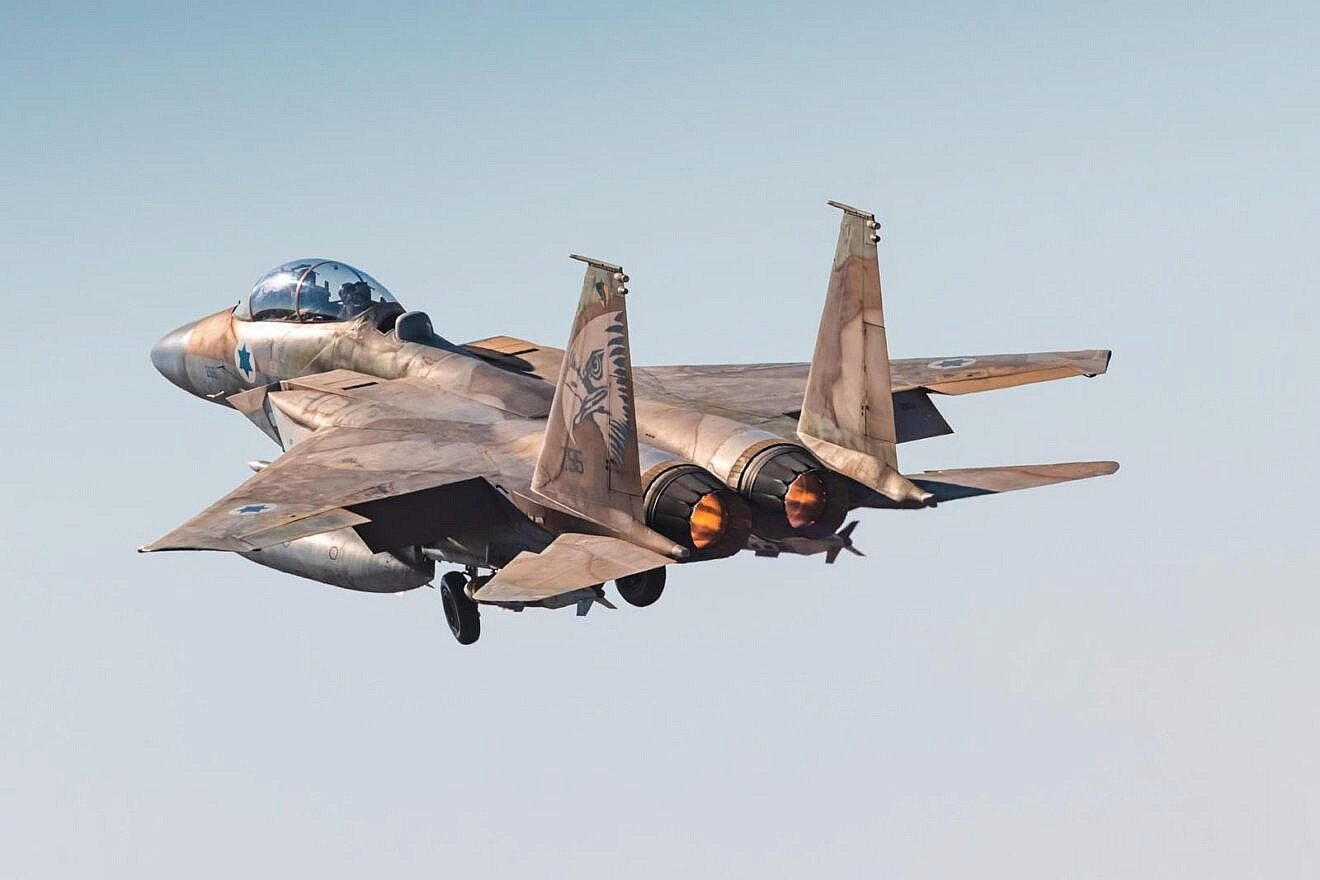
The Israeli Air Force struck the Houthi-controlled international airport in Sana’a, Yemen on Wednesday, with the Israeli military stating that the aircraft destroyed in the strike “were used by the Houthi terrorist organization for the transfer of terrorists” involved in attacks against Israel. 

“Similarly to the Hudaydah and Salif Ports that were struck last week, the main airport of Sana’a is continuously operated by the Houthi regime and is used by them for terror purposes. This is another example of the brutal use of civilian infrastructure by the Houthi terrorist organization,” the Israel Defense Forces said in a statement. 

The interception of two Houthi-launched ballistic missiles at Israel on the morning of Tuesday—the 40th and 41st such launches since mid-March—served as yet another reminder of the persistent threat emanating from Yemen and fueled ongoing debate in Israel about the limitations of its current offensive capabilities against this distant, dispersed, Iran-backed enemy. 

While the IDF has conducted repeated strikes against Houthi targets, including significant attacks on seaports and the international airport in Sana’a, Yemen’s capital, in early May, questions remain about whether Israel has reached an operational ceiling or if untapped options exist to more decisively counter the terrorist organization, which has vowed to continue firing on Israel in support of Hamas in Gaza.

A Western observer, speaking to JNS on Monday, noted that even the United States, despite its extensive capabilities, faced limitations against the Houthis.

“We don’t fully know what the Americans did. They have cruise missiles, but they don’t have ballistic missiles that give you a rapid strike. So, for critical time-sensitive targets,” the observer stated. “It was harder for them, unless by chance a drone or armed aircraft was over a target.”

He contrasted this with the Saudi and Emirati experience in fighting the Houthis in Yemen for several years, which he described as “quite good, mainly because they had intelligence,” but suggested that their efforts were halted prematurely when they were close to a decisive outcome.

Intelligence, the observer emphasized, is paramount when targeting key Houthi personnel or critical depots, though less so for fixed, dual-use Houthi infrastructure like airports or seaports, which the IDF said have been used to import Iranian weapons. 

For moving targets, such as individuals or an emerging terror cell, speed is essential, the source said. “If you want to hit a person or some organization, you need something that arrives fast. The question of whether Israel needs strike assets other than aircraft—the answer to that is unequivocally yes,” the source argued. 

One underutilized capability, according to the observer, is Israel’s Navy. “The Israeli Navy, at least overtly, has not made its presence felt there [in the Red Sea arena]. It could have closed ports, it could have interdicted munitions, perhaps in limited quantities, but it could have interdicted precise munitions in a short time. Why this wasn’t done, I don’t know. In the past, the Navy operated in these areas,” he remarked. 

The total reliance on the Israeli Air Force (IAF) for long-range strikes also presents challenges, the source said, pointing out that such missions require twin-engine aircraft, and the IAF’s refueling capabilities are strained. 

“Now, it’s clear that in the long term, we will be working against a ‘third circle’ [of threats—a reference to distant enemies], and this is a classic third circle. A mix of solutions is needed. Dropping bombs is a solution that can work against the Houthis because there is no significant air defense. In a place with significant air defense, you need standoff [long-range] weapons, like those used against Iran,” the observer explained. 

The Western observer said that these factors highlight the inherent limitations of relying solely on air power. “The Air Force attacks on the Houthis is proof that there is a limitation in operating air assets. It’s expensive, it’s complicated, it’s risky, and here [Yemen], they are not penetrating overly complex airspaces. They don’t need to bypass air defenses, and if they need to rescue [pilots], it’s relatively easier. Now imagine they need to do the same range elsewhere with air defenses… this places us at the edge of the Air Force’s capability,” he said.

Other observers noted that a sustained American campaign was not able to neutralize Houthi command, control, weapons depots, and launch capabilities.  

Dr. Uzi Rubin, a senior researcher at the Begin-Sadat Center for Strategic Studies and former founder and director of the Arrow missile defense project in Israel’s Defense Ministry, told JNS, “It should be recalled that throughout history since the invention of missiles in World War II, offensive suppression efforts have not yielded significant results, except perhaps for Israel’s major strike on Hezbollah’s [rocket] depots last autumn [2024]. It should also be recalled that the Houthis attacked the Saudis with missiles and UAVs for seven years, and the Saudis, with their large air force, did not succeed in significantly damaging their launch capabilities,” Rubin stated.

At the same time, it appears as if the Houthis have done a considerable job in hiding their losses. A May 27 report by the Yemeni “Defense Line” website, cited by Israel Hayom, stated that the Houthis were preventing funerals and burials of senior terror organization members killed in US strikes in recent months. Security sources told the site this directive aimed to conceal the organization’s losses, including the deaths of 15 second-tier commanders, mostly from their rocket and UAV units.

Ultimately, enhancing Israel’s offensive posture against the Houthis may require a diversified approach beyond long-range air strikes. The Western observer advocated for an optimal munitions mix, suggesting, “Probably in munitions, you need 80-90% cheaper and simpler [short-range options] and 10-20% long-range standoff munitions.


Yaakov Lappin

Source: https://www.jns.org/beyond-air-power-israels-strike-options-against-yemens-houthis/

Follow Middle East and Terrorism on Twitter

India and Pakistan: 'A Bad Nuclear War' - Gordon G. Chang


​ by Gordon G. Chang

Nukes are supposed to moderate national leaders and make them cautious. When it comes to India and Pakistan, however, the opposite now looks true.


  • The Trump administration, which had previously displayed a lack of interest in the conflict, then quickly intervened and brokered a ceasefire.

  • "[T]he possession of nuclear weapons may have incentivized risky confrontations that pass just below the ambiguous nuclear threshold." — Aqil Shah, Foreign Affairs, May 23, 2025.

  • Pakistan did not have to detonate one of its nuclear warheads to shake the world. Now, an emboldened Islamabad will almost certainly hit India again.

  • Nukes are supposed to moderate national leaders and make them cautious. When it comes to India and Pakistan, however, the opposite now looks true.

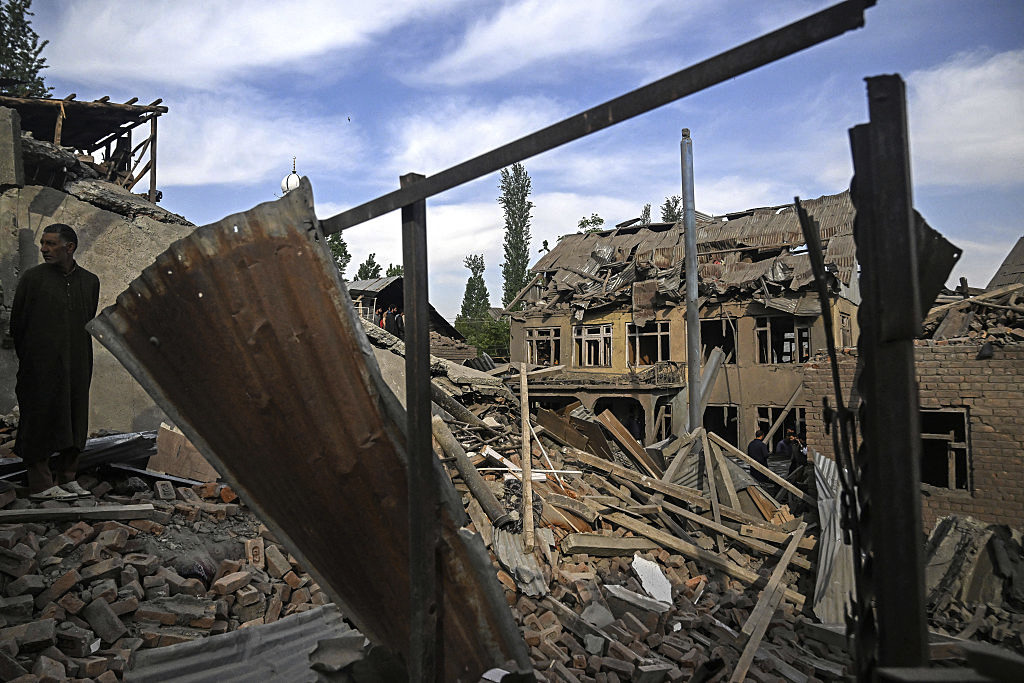
Pakistan did not have to detonate one of its nuclear warheads to shake the world. Now, an emboldened Islamabad will almost certainly hit India again. Pictured: The remains of the house of Ahsan Ul Haq Sheikh, an Islamist terrorist involved in the Pahalgam attack, after Indian soldiers blew it up on April 25 in Murran, Kashmir. (Photo by Tauseef Mustafa/AFP via Getty Images)

"We stopped a nuclear conflict, I think it could have been a bad nuclear war, millions of people could have been killed, so I'm very proud of that," President Donald Trump told reporters on May 12.

Proud he should be. Although New Delhi refuses to acknowledge Washington's role in brokering a ceasefire between India and Pakistan, the Trump administration was nonetheless instrumental in stopping fighting that could have escalated, as Newsweek wrote, "to the brink of all-out war."

On April 22, gunmen murdered 26 Hindu tourists and others at Pahalgam, in Indian-controlled Jammu and Kashmir. Pakistan also claims that territory.

New Delhi blames Islamabad for harboring militants who staged the attack. Pakistan denies involvement.

India retaliated for the murders at Pahalgam by, among other things, launching Operation Sindoor on May 7 against known terrorist sites in Pakistan. The Indian military strikes, reports Georgetown University's Aqil Shah writing in Foreign Affairs this month, "ranged far beyond Pakistani-administered Kashmir into Punjab, Pakistan's heartland, eventually hitting not just the facilities of militant groups but also military targets, including airbases."

"In recent decades," Shah also notes, "fighting has been mostly confined to the border region around the disputed territory of Kashmir."

Of particular concern, Indian strikes targeted two installations linked to Pakistan's nuclear weapons arsenal: the Nur Khan Airbase, close to the country's nuclear-command headquarters, and the Mushaf Airbase, near a nuclear storage site.

After these strikes, Pakistan's Prime Minister Shehbaz Sharif called an emergency meeting of the National Command Authority, which has the authority to approve the use of nuclear weapons. This, Shah wrote, sent a "calculated message to India—and everybody else."

"These Indian attacks on the airbases could have been ones for the history books," Blaine Holt, a retired U.S. Air Force brigadier general, told Gatestone. "This particular inferno could have gone nuclear."

The Trump administration, which had previously displayed a lack of interest in the conflict, then quickly intervened and brokered a ceasefire. The about-face showed Islamabad that nuclear threats can move the world's most powerful state to act.

Has the danger now passed?

Undoubtedly not.

Indian Prime Minister Narendra Modi recently said Operation Sindoor has not ended. For its part, Pakistan has threatened to resume hostilities as well.

There is, consequently, a dangerous dynamic in South Asia. In India, after a series of horrific attacks over this century, anger is driving policy. New Delhi charges that Pakistani terror attacks have taken more than 20,000 Indian lives in the past four decades.

In Pakistan, the possession of nuclear weapons has made a military-run regime bolder. "Nuclear deterrence can reduce the probability of a full-scale conventional war, but it can also breed instability by widening the space for lower levels of conflict, including skirmishes and terrorism," writes Shah. "In other words, the possession of nuclear weapons may have incentivized risky confrontations that pass just below the ambiguous nuclear threshold."

Pakistan, in short, saw its possession of nukes as giving it more room to assault a larger and more powerful India. Nuclear weapons are always on the minds of Pakistani officials. In late April, for instance, Defense Minister Khawaja Muhammad Asif declared, in a comment to Reuters, that his country would consider using its most destructive weapons if "there is a direct threat to our existence."

At around the same time a Pakistani foreign ministry spokesperson made a similar threat by warning India that Islamabad might respond "with full force across the complete spectrum of national power."

"China turned Pakistan into a nuclear-warhead-making and long-range-solid-fuel-ballistic-missile-making existential threat to India," Richard Fisher of the International Assessment and Strategy Center told Gatestone after the ceasefire.

"Pakistan, thanks to China, is a nuclear-armed state the Chinese now use for their own highly dangerous purposes," Peter Huessy of the National Institute for Deterrence Studies tells this site. "The U.S. doesn't have a new paradigm to deal with this tactic so must begin building Golden Dome and theater nuclear systems for protection."

Beijing armed Pakistan to keep India, which the Communist Party saw as a rival, off-balance, but in the process China has made Pakistan's militant Islamic regime a threat not only to India but also to the rest of the world.

The United States, Huessy says, has yet to develop a deterrence strategy to deal with the new reality.

The recent crisis taught the international community one thing: Pakistan did not have to detonate one of its nuclear warheads to shake the world. Now, an emboldened Islamabad will almost certainly hit India again.

"The world was lucky this time," says Holt.

Yes. Nukes are supposed to moderate national leaders and make them cautious. When it comes to India and Pakistan, however, the opposite now looks true.


Gordon G. Chang is the author of Plan Red: China's Project to Destroy America, a Gatestone Institute distinguished senior fellow, and a member of its Advisory Board.

Source: https://www.gatestoneinstitute.org/21654/india-pakistan-nuclear-war

Follow Middle East and Terrorism on Twitter

Czech parliamentarians mark Jerusalem Day in show of support for Israel - Etgar Lefkowits


​ by Etgar Lefkowits

“Ours is a history of friendship forged in struggle and deepened in shared values,” Israel's deputy foreign minister told Czech legislators at the event.


Israeli Deputy Foreign Minister Sharren Haskel addresses a group of Czech lawmakers and supporters of Israel in the Czech Parliament, May 28, 2025. Photo: Courtesy of the Israeli deputy foreign minister's office.

A group of Czech legislators marked Jerusalem Day on Wednesday with a special event in the Czech parliament in a strong show of support from one of Israel’s top European allies.

The fifth annual parliamentary event marking the reunification of Jerusalem in the 1967 Six-Day War comes amid ever-growing criticism of Israel in European capitals over the 20-month old war against Hamas in Gaza. France, Britain, Germany and Italy have demanded an immediate end to the fighting in light of the humanitarian situation in the coastal strip.

“Ours is a history of friendship forged in struggle and deepened in shared values,” Israeli Deputy Foreign Minister Sharren Haskel told the legislators in a keynote address. “The bond has only grown stronger in the darkest of times—most recently following the horrors of Oct. 7, 2023.  Since that day, the Czech Republic has stood by Israel in every critical arena throughout the war in international legal forums and on every diplomatic stage.”

Haskel highlighted the historic connection between the two small countries, dating back to Israel’s 1948 War of Independence when Czechoslovakia alone provided vital arms to the fledgling State of Israel.

“Your steadfast support is not forgotten,” Israel’s deputy foreign minister continued. “It will be remembered by generations of Israelis, just as my generations remember the solidarity of 1948.”

No embassy move

Three days after the Hamas-led massacre, the Czech Parliament unanimously adopted a resolution calling on the government to move the Embassy of the Czech Republic to Jerusalem in a bipartisan show of support. In keeping with E.U. foreign policy the government never made the move, and is not expected to act on the issue until after October parliamentary elections.

“The Government of the Czech Republic has the vision to move the embassy but there is no date to do it,” Czech Deputy Speaker of the Chamber of Deputies and Chairman of the Czech-Israel parliamentary friendship group Jan Bartosek told JNS on Wednesday.  “We know that Israel is now in a tough time so we have to speak about this step in the government,” said Bartosek, one of the organizers of the parliamentary event.

The Czech Senate is scheduled to hold a public hearing on the embassy move on Thursday; opposition to the move is being led by the chair of the foreign affairs committee.

Which E.U. country will be first?

The Czech Republic, Hungary and Argentina are among the three major countries who have expressed desire to relocate their embassy to Jerusalem, with such a move seen as likely in the next year.

“I will try to do it so that the Czech Republic is first,” said Miloslav Janulik, chairman of the Israel Allies Caucus in the Chamber of Deputies, which partnered in the parliamentary event.

“Europe is increasingly divided between those who stand with the only free democracy in the Middle East and those who are willing to capitulate to Islamic terror,” said Josh Reinstein, president of the Washington, D.C.-based Israel Allies Foundation, which operates a network of pro-Israel parliamentary caucuses across the globe. “Faith-based diplomacy is turning the tide, as those who believe in the Bible understand that their nations will be judged by how they treat Israel,” he said.


Etgar Lefkowits

Source: https://www.jns.org/czech-parliamentarians-mark-jerusalem-day-in-show-of-support-for-israel/

Follow Middle East and Terrorism on Twitter

IDF dismantles major terror tunnel in southern Gaza security zone - Yoni Kempinski


​ by Yoni Kempinski

Southern Gaza Brigade and Yahalom Unit uncover and destroy booby-trapped tunnel with multiple shafts; dozens of terrorists eliminated as IDF expands buffer zone to protect Israeli communities.


Troops of the Southern Gaza Brigade, under the command of the Gaza Division, completed a focused operation over the past month to dismantle underground terrorist infrastructure in the security zone in the southern Gaza Strip.

As part of the operation, troops from the Southern Gaza Brigade and Yahalom Unit combat engineers located and dismantled an offensive underground terror tunnel route stretching several hundred meters.

The tunnel included multiple exit shafts, some of which were booby-trapped. During the activity, the troops also identified a terrorist cell emerging from one of the shafts directly in front of them and eliminated the terrorists.

So far, the troops have eliminated dozens of terrorists in the area of operation, dismantled additional terror infrastructure. These activities have also expanded the security zone, offering additional protection to the communities of the western Negev.

The IDF stressed that its troops "continue to operate against terrorist organizations in the Gaza Strip in order to protect Israeli civilians."


Yoni Kempinski

Source: https://www.israelnationalnews.com/news/409173

Follow Middle East and Terrorism on Twitter

Baby of terror victim Tzeela Gez dies from wounds after two weeks in intensive care - Dr. Itay Gal


​ by Dr. Itay Gal

The baby had been in critical condition since birth, receiving care in the neonatal intensive care unit.


Ravid Haim and his father, Hananel. (photo credit: COURTESY)
Ravid Haim and his father, Hananel.
(photo credit: COURTESY)

Ravid Haim, the infant delivered in an emergency Caesarean section following a deadly terrorist attack near Peduel and Bruchin in western Samaria, was pronounced dead early Wednesday morning at Schneider Children’s Medical Center in Petah Tikva.

He had been in critical condition since birth, receiving intensive care in the neonatal intensive care unit. Baby Ravid Chaim was buried next to his mother Tzeela on Har HaMenuchot, Jerusalem.

Despite prolonged resuscitation efforts, hospital staff were ultimately forced to declare his death. Raviv’s mother, Tzeela Gez, 33, a resident of Bruchin and mother of three, was critically wounded in the shooting and later died of her wounds.

According to an initial investigation by security forces, the couple had been traveling to the hospital for the delivery when a terrorist opened fire from a passing vehicle using an automatic weapon. Tzeela was hit and evacuated unconscious to Beilinson Hospital in Petah Tikva, where doctors performed emergency surgery in a bid to save the baby.

 Tzeela Gez, the pregnant woman wounded in a terror attack and succumbed to her wounds, May 15, 2025. (credit: SCREENSHOT/X/VIA SECTION 27A OF THE COPYRIGHT ACT)Enlrage image
Tzeela Gez, the pregnant woman wounded in a terror attack and succumbed to her wounds, May 15, 2025. (credit: SCREENSHOT/X/VIA SECTION 27A OF THE COPYRIGHT ACT)

 Her husband, approximately 40, sustained light wounds and was released from medical care shortly after being treated.

Emergency operation to save the baby's life

Doctors at Beilinson’s trauma unit managed to deliver the baby and launched immediate efforts to stabilize him. Tzeela, however, succumbed to her injuries shortly after the procedure. The baby was then transferred to Schneider Medical Center, where medical teams continued fighting for his life until his condition deteriorated overnight.

Tzeela Gez was described by residents of Bruchin as a devoted mother and a central figure in the community. According to family acquaintances, shortly before the attack, her husband notified his workplace that he would not be coming in, explaining that they were on their way to the hospital to welcome a new child. Minutes later, the shooting occurred.

In response to the attack, security forces launched a manhunt for the assailant. IDF troops, Israel Police officers, and Shin Bet (Israel Security Agency) agents deployed additional forces, set up roadblocks, and restricted movement to and from several communities in the area. The Barkan and Ariel industrial zones were also closed to prevent the terrorist from escaping.

Following her death, the Gez family decided to donate Tzeela’s organs. Her corneas were preserved and are scheduled to be transplanted — one to a child at Schneider and the other at Beilinson — offering restored vision to two patients.

Hananel Gez, her husband, said, “Tzeela always gave light in her life, and now even in death, she continues to give.  Tzeela always tried to see the good and bring light to the world, in her life and in her death.”

Samaria Regional Council Head, Yossi Dagan, said, "This is a double murder! The world should be shocked. We demand a clear Zionist response of building and more building in memory of Ravid and Tzeela. Israeli citizens demand a military ground maneuver in the village of Bruchin, and the demolition of all illegal houses that endanger travelers on the road."

"To our astonishment, this still has not happened. We embrace the family and will stand by them in everything they need. The entire nation of Israel and the world are mourning this barbaric and horrific murder," he concluded.

Meital Ben Yosef, Chair of the Bruchin community, also expressed deep sorrow.

"The community of Bruchin mourns and grieves the passing of the infant Ravid Haim ben Tzeela (may God avenge her blood). A baby who was meant to be born into joy and great anticipation took his final breath this morning after struggling between life and death since the day he was born, exactly two weeks ago."

"A vile and despicable terrorist murdered a mother and her son together in an attempt to erase and destroy the people of Israel."

"We will not be silent and we will not stop—we will continue and double our efforts to memorialize and respond to this horrific murder. We will add building and settlement, and expand the boundaries of life and holiness. We will make it absolutely clear to all our enemies: we are here, in the land of our forefathers, and we will remain here forever!"


Dr. Itay Gal

Source: https://www.jpost.com/breaking-news/article-855880

Follow Middle East and Terrorism on Twitter

Democrats and Their DEI Albatrosses - Victor Davis Hanson


​ by Victor Davis Hanson

Democrats are trapped by the toxic DEI ideology they created—too afraid to reform, too broken to survive without it.


A few Democrat officeholders, activists, and pundits are finally coming to their senses that their brand is toxic to a majority of the American people.

The Biden administration killed what was left of it in a number of ways.

First, it serially lied to Americans about the cognitive decline and cancerous condition of President Joe Biden, both while in and after office.

Only when caught did the complicit media fess up that the Biden inner circle serially misled the American people about Biden’s inability to fulfill the duties of the presidency.

Second, left-wing politicos used Biden as a waxen effigy. His job was to pose as a “moderate” cover to push through the most radical and unpopular agenda in the last half century.

Only that way could “Old Joe Biden from Scranton” and his backroom handlers ram down the throat of the American people unpopular policies that nearly wrecked the country: hyperinflation and $7 trillion in new debt, weaponization of the government, and partisan lawfare, an open border and 12 million illegal aliens, a racialist DEI commissariat, a crackpot Green New Deal, defunding the police, biological men competing in girls’ sports, and two theater-wide wars abroad.

Third, without either a functional president or viable initiatives, the new hard-left Democrats sought to brand Donald Trump as “Hitler” and half the country who supported him as “fascists.”

For nearly nine years, the Democrats launched one failed hoax after another on the American people: “Russian collusion,” “laptop disinformation,” and the lying so-called “51 intelligence authorities.” They proved quite willing to undermine the rule of law by manipulating the court system in efforts to destroy their bogeyman, Donald Trump.

Never had the American people seen a political party engineer 93 bogus indictments of a rival candidate and ex-president. Two dozen states tried to take Trump off their presidential ballots. And the Biden Department of Justice sicced an FBI SWAT team to barge into Trump’s home.

The people finally got tired of all the potty-mouthed Democrat videos, the congressional stunts and meltdowns, the pampered rich kids rioting on elite campuses, the knee-jerk obsessions with racial slurs, the firebombing of Tesla dealerships, the romanticization of left-wing political murderers—and always the adolescent tantrums over Donald Trump.

The Democrats had mostly given up on democracy some 13 years ago. That was the last time they transparently and democratically nominated Barack Obama a second time as their presidential candidate.

Ever since, their nominations have been rigged.

In 2020, party insiders—terrified of the left-wing crazy primary field—forced out all the leading contenders.

Then they coronated the debilitated but still supposedly useful moderate Joe Biden as their COVID-era candidate. Biden then bragged that he would pick his vice president on the basis of race and gender.

What followed was the most bizarre campaign in history.

Biden stayed put in his basement and outsourced his candidacy to the partisan media.

Party activists changed long-standing voting laws in the key swing states. For the first time in American history, 70 percent of Americans did not vote in person on Election Day—the majority of them by design Democrats.

Next, in 2024, they forced the now no longer useful Biden off the ticket, nullifying his 14 million primary voters.

Then, without a vote, they rammed in inept Vice President Kamala Harris as the nominee. As a failed candidate in 2020, she had never won a single delegate.

Some in the party now concede it must roust out its radicals.

But Democrats will not.

AOC and her Squad, the unhinged Jasmine Crockets of the party, and the ossified socialist Bernie Bros would demonize any Democrat who offered a sane reboot.

A few fossils in the party may think they know how to save it. But they are terrified that the medicine would be considered far worse than the illness that prompted it.

Would Democrats consider embracing measured and legal-only immigration?

No—the crazy base would scream “xenophobe!”

A return to meritocracy and the Martin Luther King notion of race as incidental, not essential, to who we are?

Again, that would be called “racist!”

Maybe reforms to fix failed schools with vouchers, school choice, and charter schools?

Again, “racist!”

How about developing gas and oil reserves and nuclear power to lower energy costs for the struggling middle class?

That would be condemned as “destroying the planet!”

Restore police forces, end critical race and legal theory, and deter criminals with tough sentencing?

Again, “racist!”

How about ceasing the whiny fixations with “white privilege” and “white rage?” Or quit seeing a “white supremacist” under every bed?

Again, “racist!”

The left created DEI—the use of race to adjudicate every political issue.

And like any addictive, toxic drug, they now can neither survive with DEI—nor without it.


Victor Davis Hanson is a distinguished fellow of the Center for American Greatness and the Martin and Illie Anderson Senior Fellow at Stanford University’s Hoover Institution. He is an American military historian, columnist, a former classics professor, and scholar of ancient warfare. He has been a visiting professor at Hillsdale College since 2004, and is the 2023 Giles O'Malley Distinguished Visiting Professor at the School of Public Policy, Pepperdine University. Hanson was awarded the National Humanities Medal in 2007 by President George W. Bush, and the Bradley Prize in 2008. Hanson is also a farmer (growing almonds on a family farm in Selma, California) and a critic of social trends related to farming and agrarianism. He is the author of the just released New York Times best seller, The End of Everything: How Wars Descend into Annihilation, published by Basic Books on May 7, 2024, as well as the recent  The Second World Wars: How the First Global Conflict Was Fought and Won, The Case for Trump, and The Dying Citizen.

Source: https://amgreatness.com/2025/05/29/democrats-and-their-dei-albatrosses/

Follow Middle East and Terrorism on Twitter