Tuesday, August 25, 2026

Treasury’s ‘Operation Economic Outcast’ delivers warning to China, Iran’s global enablers - Steven Richards


by Steven Richards

Treasury Secretary Scott Bessent warned that nations facilitating Tehran’s financial and trade networks must now choose between partnering with the United States or facing economic isolation.


U.S. Treasury Secretary Scott Bessent on Monday laid the foundations to significantly expand the wartime economic pressure campaign against Iran to isolate the regime from the global financial system. 

The new measures will target both “entities, individuals, and vessels” globally and Iran’s “enablers”–third countries that facilitate Tehran’s financial transactions, illicit oil trade, as well as bolster its weapons industry. 

In a press conference announcing the new measures, Bessent called out the enablers, which he did not name, for purchasing Iran’s petroleum products, allowing their financial systems and banks to facilitate transfers of Iranian funds, and allowing Iran’s shadow fleet to transfer oil products in their territorial waters.

Tehran's lifelines

These activities, which Bessent described as operating in the “gray spaces” of conflict, have provided Tehran lifelines in the midst of its ongoing conflict with the United States that began nearly six months ago in late February. The new sanctions, Bessent told reporters, are designed to cut five key lifelines for Tehran: “digital assets, technology, gold, aviation, and shipping.”

These key lifelines travel through many countries that have refused to cut off business ties with Iran during the war. Bessent said that the time has come for these countries to choose between joining the United States or share in the isolation of the Iranian regime. 

Though the secretary did not name the countries enabling Iran, he clearly identified the activities that the United States views as aiding the regime. 

“Iran's enablers purchase, transport its petroleum. They facilitate the flow of its finances through exchange houses and free trade zones. They welcome Iran's flights and maintain registries on its behalf. They turn a blind eye to seaborne fuel transfers and overland transits. They condone illicit use of their banks, all the while concealing the extent of their complicity,” Bessent said. 

“[N]ations that facilitate any international interactions with the regime should quickly heed our message. Those who stand with the United States will reap the rewards of our partnership. Those who tether themselves to the Iranian regime should expect to share in the isolation of a withering regime,” he added. 

"Any entity that facilitates money laundering on behalf of Iran will be removed from the U.S. dollar system": Bessent

Bessent, President Trump and his administration have begun calling and meeting with global leaders outlining American expectations. “Every country has a defined timeline to shut down activities we have identified. If they do not take action, we will do so unilaterally through Treasury authorities,” Bessent said. “And let me be clear: any entity that facilitates money laundering on behalf of Iran will be removed from the U.S. dollar system. The clock just started ticking.”

Currently, the United States is neither sharing the names of leaders and countries that the president has approached nor in what timeframe the United States expects a response. 

“Economic D-Day is officially here. But what will measure its success for the administration is how many of Iran’s international enablers are taken down, and how quickly,” Behnam Ben Taleblu, senior director of the Iran Program at the Foundation for Defense of Democracies, told Just the News

⁠”Despite years of sanctions, Iran has benefited from a host of illicit networks allowing it to sell and transfer oil and launder those payments back through the international financial system,” he said. “These networks and their beneficiaries, who often work out of friendly jurisdictions, must be taken down. Otherwise, maximum pressure will not have meant maximum pressure.”

Bessent specifically identified Iran’s Bank Melli, the country’s leading commercial bank, and said that every branch of the financial institution across the globe “must be shuttered and dark.” Bank Melli was sanctioned by the U.S. Treasury Department several times, including in 2007 and 2018, but it still operates branches in the United Arab Emirates, Iraq, Oman, Azerbaijan, Germany and France, Miad Meliki, a former U.S. government sanctions official, posted to X. The bank also has subsidiaries in the United Kingdom, Hong Kong, Russia and Afghanistan.

Some countries, like the United Arab Emirates, have already started to take action to cut Tehran’s lifelines, Just the News previously reported.    

One of the countries likely to face pressure from the United States is China. 

Before the war, China was Iran’s top trading partner and had signed an economic accord with Tehran promising billions of dollars in investments in Iranian industries in exchange for continued access to its oil exports. China has purchased the vast majority of Iranian oil for years, even while its exports are under international sanctions. Chinese banks and front companies help Iran with oil transactions to avoid the sanctions as well as operate ships in a shadow fleet to transport the sanctioned oil, according to the U.S.-China Economic and Security Review Commission. China has also sold Iran the technology and inputs required to construct its fleet of attack drones and missiles. 

Secondary sanctions against banks and businesses in China will also be in focus

“Crucially, America’s willingness to threaten or levy secondary sanctions against banks and businesses in China will also be in focus. China remains the single biggest importer of Iranian energy products, [and] has a lot to lose if its anti-American partner in the Middle East collapses,” FDD’s Taleblu said. “The art of the deal for the administration will be how to turn the screws on China without inviting greater global economic ruin, and how to get China to sell Iran out at the right price.”

As part of Operation Economic Outcast, the Treasury announced on Monday sanctions against the Hong Kong-based Sweet Ocean Industrial Limited, China-based individuals Tian Jianbai and Zhang Limei, and Hong Kong-based Tiany Technology Limited for allegedly facilitating Iran’s nuclear program. The companies Feili Co Limited, Minvur Limited, Feisu Limited, and Guska Co Limited were also identified as having participated in this network. 

This year, the Trump administration has already targeted with sanctions Chinese “teapot” oil refineries, shadow fleet vessels operated by China-based shipping companies, and Chinese companies said to have provided Iran with satellite imagery to enable Iran’s military strikes as well as entities and individuals that have helped Iran secure materials and components for its weapons programs. Teapot refiners are small, independent plants that often seek out cheaper, sanctioned oil. 

In April, Washington warned Chinese banks that they could face sanctions for facilitating transactions for the small refineries dealing in sanctioned oil supplies. However, to date, the United States has refrained from directly targeting such Chinese financial institutions. Bessent on Monday warned that such institutions will no longer be beyond the reach of U.S. sanctions if they do not comply. 

“[If] they facilitate transactions and are part of the ecosystem that turns Iranian oil into money, into repression, they will be targeted,” Bessent said of China. “We find that the best way to engage with countries is through quiet diplomacy, and we are level setting with every country to tell them our expectations.” 

Chinese Foreign Ministry spokesman Lin Jian said on Friday that “sanctions and pressure” will not bring the conflict to an end. “China calls on all relevant parties to take responsible measures and resolve the problem through political and diplomatic means,” he said. “China opposes illegal unilateral sanctions that have no basis in international law and are not authorized by the UN Security Council.”

Earlier this year, China already directed its companies not to comply with U.S. oil sanctions. In May, China’s Commerce Ministry issued a directive prohibiting Chinese refineries accused of purchasing Tehran’s oil from complying.  


Steven Richards

Source: https://justthenews.com/government/diplomacy/treasurys-operation-economic-outcast-delivers-warning-china-irans-global

Follow Middle East and Terrorism on Twitter

Trump: All mines cleared from Hormuz, Space Force watching nuclear sites, strait - James Genn, Amichai Stein, Goldie Katz


by James Genn, Amichai Stein, Goldie Katz

A US official confirmed to The Jerusalem Post that both inbound and outbound shipping lanes in the strait have been cleared of mines by US Central Command (CENTCOM).


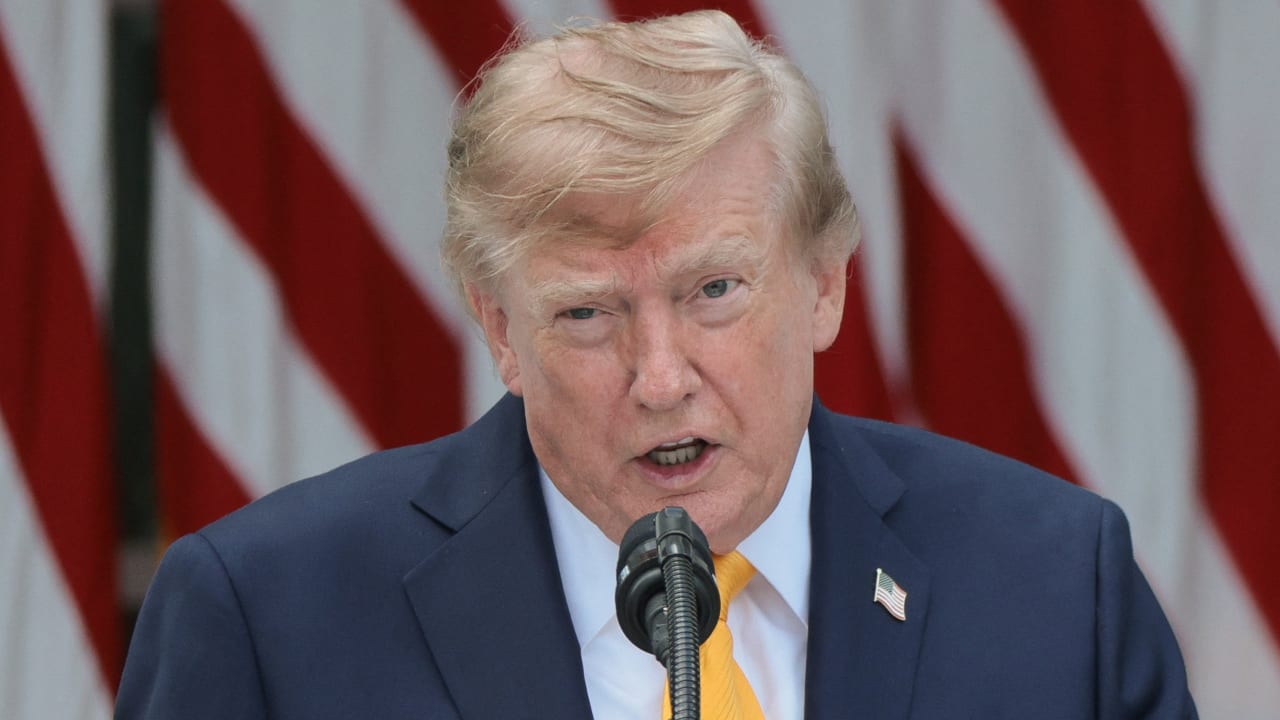
US President Donald Trump speaks as he hosts a back-to-school-themed event to highlight his administration's education policies, in the Rose Garden at the White House in Washington, August 24, 2026; illustrative.
(photo credit: REUTERS/JONATHAN ERNST)

US President Donald Trump said the US Navy told him all mines have been cleared from the Strait of Hormuz in a Tuesday Truth Social post.

"All mines have been removed and/or detonated from within the International Waters of the Strait of Hormuz," the president wrote.

A US official confirmed to The Jerusalem Post that both inbound and outbound shipping lanes in the strait have been cleared of mines by US Central Command (CENTCOM). 

The official noted that the opening of the routes will allow for an increase in maritime traffic to transit the waterway.

Trump added that "Iran has been notified that any ship or boat placing new mines will be immediately and systematically destroyed." 


"There is a Zero Tolerance policy on mine placement in full force and effect," he said.

Oman, Iran negotiating joint Hormuz navigation framework

Later Tuesday, Iran and Oman issued a joint statement announcing a proposed framework to resume safe navigation through the Strait of Hormuz.

The Omani Foreign Minister, Badr bin Hamad bin Hamoud Al-Busaidi, and the Iranian Foreign Minister, Abbas Araghchi, negotiated the framework.

According to the statement, the proposal includes joint efforts to establish a temporary navigation corridor through the waterway and a project to clear the strait of mines, despite Trump’s assertion that all mines have already been removed.

The joint statement claimed that Oman and Iran will continue negotiating the framework to reach a permanent agreement on the issue and to establish mechanisms for exchanging navigation information, managing ship traffic, and providing security services to vessels.

Trump claims Space Force watching Strait of Hormuz, Iranian nuclear sites

Trump claimed that in addition to keeping an eye on the Strait of Hormuz, the US is also closely watching Iranian nuclear sites.

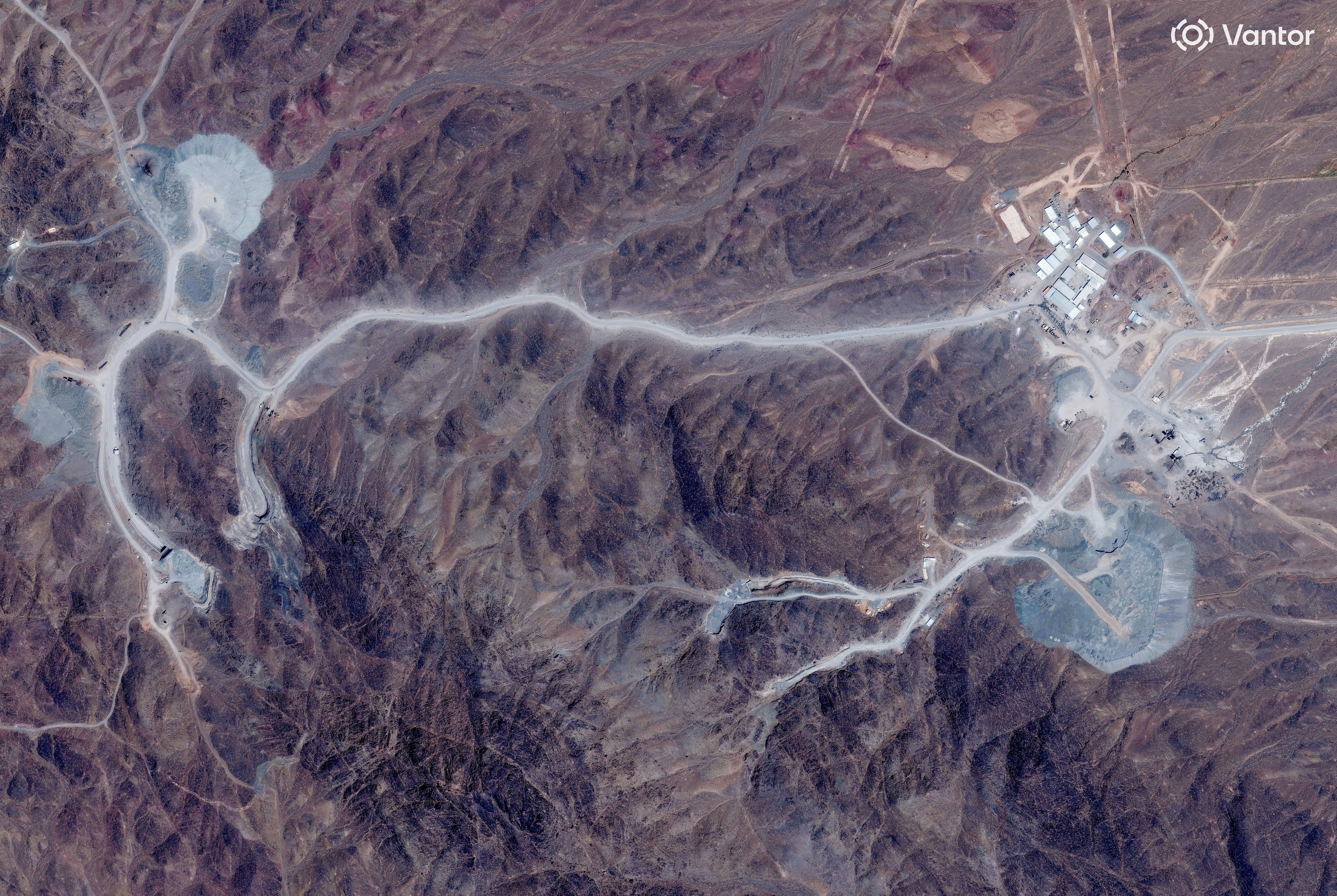
"Through Space Force, we are watching every square inch of the Strait, as we are also with Pickaxe Mountain and the three other already destroyed nuclear sites."

A satellite view shows tunnel entrances at Pickaxe Mountain, of the Natanz nuclear facility, near Natanz, Iran, June 30, 2026.
A satellite view shows tunnel entrances at Pickaxe Mountain, of the Natanz nuclear facility, near Natanz, Iran, June 30, 2026. (credit: VANTOR/HANDOUT VIA REUTERS)

Pickaxe Mountain is located 220 km. (140 miles) south of Tehran and 2 km. (1.2 miles) from the Natanz nuclear complex.

The Natanz site, where two of Iran's uranium enrichment plants were located, was bombed in June 2025, including by US Air Force B-2 stealth bombers as part of Operation Midnight Hammer, as well as by operations Roaring Lion and Epic Fury earlier in 2026.

Reuters contributed to this report.


James Genn, Amichai Stein, Goldie Katz

Source: https://www.jpost.com/middle-east/iran-news/article-906564

Follow Middle East and Terrorism on Twitter

Board of Peace demands Israel comply with Gaza ceasefire, calls for end to kite attacks - Amichai Stein


by Amichai Stein

Israeli officials warned the BoP on Sunday that Israel would escalate its activity in the Gaza Strip if the launches were not halted within 72 hours, an Israeli official told The Jerusalem Post.


Smoke and a fire ball rise during an Israeli strike, carried out after the military warned Palestinian residents to evacuate the area of al-Zawayda, in the central Gaza Strip, on August 23, 2026.
(photo credit: Eyad Baba / AFP via Getty Images)

The Board of Peace has conveyed a message to Hamas in recent days through Egyptian, Qatari, and Turkish mediators, demanding that the terrorist organization halt the launching of kites and all other activity directed at Israel, The Jerusalem Post has learned.

The message was delivered through a recently established monitoring mechanism led by the United States and BoP Director-General Nickolay Mladenov.

“There will be serious consequences for continued violations,” the message warned.

“All militant activity in the Gaza Strip must stop, including the flying of kites. We have conveyed this message directly through the established mechanism,” a BoP official told the Post.

The official stressed that Israel must also comply with the ceasefire agreement, adding that “military action cannot extend beyond responding to genuine and imminent threats.”

The high representative for Gaza under US President Donald Trump's Board of Peace, Nickolay Mladenov addresses a press briefing in Jerusalem on May 13, 2026.
The high representative for Gaza under US President Donald Trump's Board of Peace, Nickolay Mladenov addresses a press briefing in Jerusalem on May 13, 2026. (credit: AHMAD GHARABLI / AFP via Getty Images)

The BoP is seeking to calm the situation in Gaza and create the conditions necessary to implement the agreements and begin the process of disarming Hamas.

“We want to get onto a path of ending mutual violations so that we can begin collecting Hamas’s weapons,” the official said. “The sooner we reach that stage, the sooner we can move into the phase in which Hamas is disarmed.”

IDF accelerates efforts to kill October 7 terrorists

Israel has accelerated its efforts in recent weeks to kill terrorists who participated in the October 7 massacre and held hostages.

On Monday, Israel carried out several strikes across Gaza, targeting five weapons storage facilities and a Hamas launch site.

“The warehouses that were targeted contained rockets, weapons, explosive devices, grenades, and additional military equipment,” the IDF and Shin Bet (Israel Security Agency) said in a joint statement. “The targeted warehouses were established inside mosques and adjacent to humanitarian infrastructure in the Gaza Strip.”

The strikes came after several kites were launched from Gaza into Israel in recent days at the direction of Hamas, reviving memories of the incendiary and explosive kites and balloons the terrorist organization launched toward Israel in the years leading up to breaking through the border fence on October 7, 2023.

BoP warned of increased IDF attacks if kites persist

Israeli officials warned the BoP on Sunday that Israel would escalate its activity in the Strip if the launches were not halted within 72 hours, an Israeli official told the Post.

Prime Minister Benjamin Netanyahu and Defense Minister Israel Katz also warned in a joint statement that if the launches toward Israel did not stop immediately, “the IDF will act to intensify targeted operations against those responsible for the launches and will evacuate civilians from areas from which kites, drones, and balloons are launched.”


Amichai Stein

Source: https://www.jpost.com/israel-news/article-906563

Follow Middle East and Terrorism on Twitter

Hamas kites: First step in psychological warfare - Shimon Cohen

by Shimon Cohen

Dr. Schleifer, expert in psychological warfare, says the seemingly innocent kites launched from Gaza are the beginning of a planned and systematic Hamas effort to condition Israel.


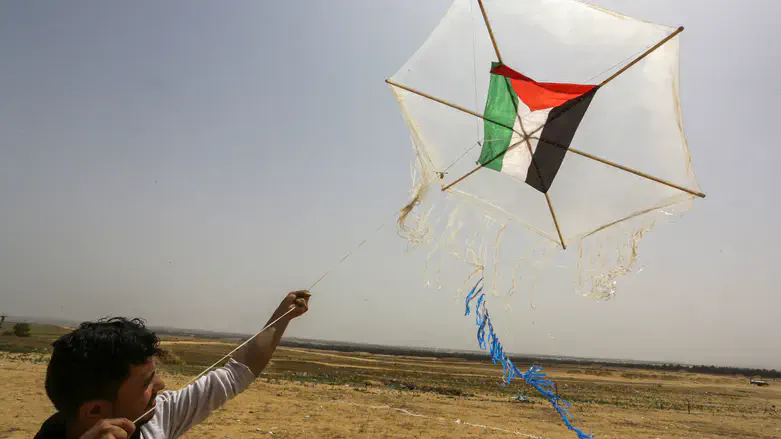
Kite in Gaza
Kite in Gaza                                                                                      Abed Rahim Khatib/Flash90

Prime Minister Benjamin Netanyahu describes the decision to treat the kites that have been launched from Gaza as a genuine physical threat. Dr. Ron Schleifer, an expert in psychological warfare, views the phenomenon as Hamas psychological warfare against Israel.

Dr. Schleifer opens by saying that the prime minister is right to take the kite threat seriously. He says there is encouragement to be drawn from this serious approach, noting that until now, the tendency among military Intelligence researchers was to regard phenomena such as the kites as marginal and not a threat to Israel-and certainly not something that justified confronting the US president.

Schleifer explains that launching kites toward Israel is part of what he calls an “offensive strategy that operates in tiny steps." He says, “Hamas cannot currently use its weapons for obvious reasons. It is at a disadvantage, so it is turning to psychological warfare, which can be more damaging than fire. It causes the other side-Israel-to doubt and deliberate over whether to act, whether a response is justified or not, while the initiative remains in its hands. This is a conditioning technique."

He adds that “in all revolutionary warfare, of which psychological warfare is a part, the enemy is conditioned so that it does not feel that anything significant is happening until it is too late. This requires sacrifice and patience, both of which Hamas has in abundance."

So how does the conditioning strategy work, step by step?

“It begins with kites flown by children, meaning we cannot hurt them. Hamas identifies our moral considerations as a point of strength for itself. The kites cross the boundary, and the children simply go to retrieve a kite that has fallen, thereby crossing the line again while Israel cannot do anything. Later, the mother will come to take the child away. The soldier, female observer and sniper will watch them and do nothing. This conditions us to accept that women can cross, and afterward it will be a sheep that escapes, then the shepherd, and so on."

The “kite route" will also become increasingly sophisticated, Schleifer says. “The next stage is that the kites will carry messages in Hebrew or English." He recalls that in 2018, Israel initially dismissed the phenomenon of incendiary balloons, “and we all remember how that ended. After the balloons will come heavier balloons, and eventually kites capable of carrying firebombs that can ignite fields. That is how the situation gradually deteriorates."

The use of children by Hamas for offensive and defensive purposes is not new to Israel. Israel has been familiar with it for years, and Europe is now becoming aware of it as well.

“In the struggle between Islam and Europe, demonstrations of weakness are viewed as a winning tool. When a migrant boat reaches the shores of Spain, they put the children forward first, so that coast guard soldiers will hesitate or look the other way. They know that Westerners do not hurt children. In our experience with the Palestinian Arabs, there is endless evidence of the use of children as human shields against snipers or gunfire in general."

Schleifer recalls an incident in which an IDF ambush in one of the neighborhoods in Gaza spotted a terrorist riding a bicycle loaded with shells, surrounded by sleepy children. “The commander of the ambush ordered his forces to withdraw and do nothing."

“The brilliant part of this is that if the ambush commander, or any other responsible commander, sees children being used, he cannot morally do anything. And if he does do something, it will remain on his conscience for the rest of his life, potentially resulting in post-traumatic stress, while for them it is a gain."

Asked how Israel can respond to this type of cynical warfare that exploits Israeli morality and the eyes of the world watching, Dr. Schleifer says, “The answer is to prohibit children from crossing the line." Asked whether that means shooting at children, he says no, and instead proposes an aggressive campaign in the Western world-one that may still be willing to stand up for children's rights-to explain how Hamas operates.

“Hamas positions photographers to see Israel’s response. Whatever we do will work against us. If we act, we are cruel, and if we do nothing, we are fools. But there is something that can be done: launch a campaign exposing the cruel use of children, approach UNICEF, the United Nations children’s organization, and every children’s rights organization in the West, attack relentlessly and give them no opportunity to evade the issue or look the other way."

Another method of dealing with the situation, which Dr. Schleifer mentions, is the use of certain crowd-dispersal measures. In his view, tear gas should not be among them, because Palestinians have already succeeded in portraying tear gas in the international media as Israel’s use of “gas," which was received very negatively. Nevertheless, he hints that there are enough other, less visible means that could be used, without elaborating.


Shimon Cohen

Source: https://www.israelnationalnews.com/news/432225

Follow Middle East and Terrorism on Twitter

Trump’s three-front offensive hits cartels, Canada and economic blackout on Iran - Amanda Head


by Amanda Head

A busy 48 hours: A sweeping economic campaign against Iran, imposing 50% tariffs on Canadian goods after trade talks failed, and ordering a U.S. military strike that destroyed a suspected cartel drug boat.


Within the span of 48 hours, President Donald Trump ramped up pressure on multiple fronts, launching a sweeping economic campaign against Iran, imposing 50% tariffs on Canadian goods after trade talks failed, and ordering a U.S. military strike that destroyed a suspected cartel drug boat in the eastern Pacific. 

"I don't think we've ever had a U.S. president with this kind of bandwidth to be able to deliver to the American people, but also make sure that our country is honored and that we are shown as a leader throughout the world that America is winning," former Ambassador to Denmark, Carla Sands, told Just The News.

220 fewer narcoterrorists 

U.S. Southern Command announced Monday that forces destroyed a low-profile vessel—appearing to be a semi-submersible “narco-sub”—in the eastern Pacific on Sunday, killing two people it described as narco-terrorists. Intelligence confirmed the boat was actively involved in trafficking along established routes, the command said, marking the first such strike in more than two months.

The action continues Operation Southern Spear, launched in September 2025, which has now conducted about 67 strikes on suspected drug boats in the Caribbean and eastern Pacific, killing more than 220 people. 

Most targets have been speedboats, with a smaller number of low-profile and semi-submersible craft. These vessels, often linked by the administration to designated terrorist organizations including Mexican cartels and groups operating from Colombia, Venezuela and Ecuador, typically carry cocaine northward from South American producers toward Central America and Mexico.

Iran is fresh out of regional friends 

Iran, according to the administration, will face its hardest economic challenge to date, in an effort to bring the theocratic regime to its knees to precipitate a swift end to the conflict as the issue has weighed negatively on Republican approval ahead of November's midterm elections. 

On Monday, Treasury Secretary Scott Bessent announced Operation Economic Outcast, describing it as an “economic D-Day” and the most comprehensive campaign yet to isolate Iran from the global economy. At Trump’s direction, the initiative seeks to sever every financial lifeline sustaining the Iranian regime until Tehran stands alone. 

"I know the American people are struggling right now, many of them because of the cost of this Iran War, but Scott Bessent came out today, and he lowered the hammer on this brutal Iranian regime and the IRGC. He's literally choking off all of their economy. There's a lot of pressure on this evil regime to be brought to heel," Sands said. 

New sectoral sanctions target five key areas Iran has used to generate revenue and evade restrictions: digital assets, technology, gold, aviation and shipping. The Treasury simultaneously sanctioned more than 60 entities, individuals and vessels worldwide linked to oil smuggling, nuclear and missile procurement, and cyber operations. Countries and companies maintaining ties with Iran face broadened secondary sanctions risk and defined timelines to cut those connections or risk exclusion from the U.S. financial system.

Since last summer's strikes on Iran in Operation Midnight Hammer, the Trump administration has intensified economic pressure through Operation Economic Fury and a naval blockade of Iranian ports. The blockade, enforced since April, has slashed Iran’s seaborne crude exports from roughly 1.8 million barrels per day before the conflict to well under 500,000 barrels and at times far lower, cutting off a primary revenue source. 

Sweeping sanctions on oil, shipping, banking and related networks—backed by coordination with allies—have compounded the strain. Iran’s currency has hit record lows, inflation has soared above 70 percent in recent months, and the International Monetary Fund projects a contraction of more than 5 percent this year. These measures have left the economy under severe dual pressure from wartime disruption and tightened external isolation.​​​​​​​​​​​​​​​​​​​​​​​​​​​​​​​​​​​​​​​​​​​​​​​​​​

Oh, Canada. Your deal just died.

Trade talks between the U.S. and Canada collapsed late Friday, triggering the imposition of 50% tariffs on roughly $20 billion in Canadian goods that took effect Saturday. The duties, imposed under the rarely used Section 338 of the 1930 Tariff Act, target products ranging from wine and dairy to hockey equipment and cement in response to what the Trump administration called Canadian discrimination against American alcohol, dairy and vehicles. 

Negotiations had intensified for weeks after the tariffs were first threatened in July, and President Trump briefly delayed the deadline earlier in the week, claiming a deal was near. Canadian Prime Minister Mark Carney suspended the talks, citing last-minute U.S. terms he described as unfair and uneconomic. U.S. Trade Representative Jamieson Greer countered that Canada introduced new demands and walked back commitments. Canada has vowed dollar-for-dollar retaliatory tariffs starting after Labor Day, escalating a trade dispute that has simmered since earlier U.S. levies on steel, aluminum, autos and lumber.​​​​​​​​​​​​​​​​​​​​​​​​​​​​​​​​​​​​​​​​​​​​​​​​​​


Amanda Head
is White House Correspondent for Just the News. You can follow her here.  

Source: https://justthenews.com/government/white-house/trumps-three-front-offensive-economic-siege-iran-tariffs-hit-canada-strike

Follow Middle East and Terrorism on Twitter

Were the Bombs of August 1945 ‘Demonic’? - Victor Davis Hanson


by Victor Davis Hanson

The atomic bomb was not created by demons, but by scientists trying to end a war before even more people died.


Did Demons Create the First Atomic Bombs?

Every August, debate renews over both the wisdom and the morality of dropping the two American atomic bombs, 81 years ago, on the Japanese cities of Hiroshima (August 6, 1945) and Nagasaki (August 9, 1945). This August has been no exception.

As ever, many critics have faulted the United States for the bombings: two gruesome blasts—aimed at dual-use military and industrial targets in both cities—that may have caused some 100,000–120,000 immediate deaths among combatants and civilians. And not all these critics are on the Left. Two years ago, podcaster Tucker Carlson blasted the Truman administration’s decision, alleging that the atomic bomb was not the result of decades of sophisticated nuclear physics research or the dividend of a two-billion-dollar Manhattan Project investment to rapidly develop an atomic weapon in a race to beat the Axis powers’ nuclear programs before they themselves developed such existential weapons.

Instead, Carlson claimed the atomic bombs were demonic, tools of innate evil, and thus apparently created through the supernatural intervention of dark powers. Unlikely—but perhaps Tucker was echoing themes from Robert Oppenheimer, the scientific director of the Manhattan Project. After the first successful test of the bomb on July 16, 1945, Oppenheimer quoted (and mistranslated) a famously chilling line from the great Hindu epic, the Bhagavad Gita: “Now I am become Death, the destroyer of worlds.

Why Did the United States Drop Two Atomic Bombs on Japan?

Indeed, from the moment the bombs were dropped, there has been an intense, 80-year debate, from which all sorts of conspiracy theories have since emerged.

No one denies that the two bombs, dropped within three days, shocked the Imperial Japanese junta into conceding surrender on August 15—a decision ratified formally and officially on September 2, 1945, ending the Pacific War. Nonetheless, almost immediately, contemporary critics objected to their use on a variety of grounds.

Many claimed the bombs were unnecessary. They argued that the previous devastation of Japan by the U.S. Army Air Forces and the U.S. Navy had made a quick surrender inevitable. Some declared that racism had prompted their use against the Japanese alone.

Of course, all these arguments were only offered with the benefit of hindsight, and they often failed to consider the dire conditions that U.S. military planners were confronted with at the time.

First, the bombs were originally envisioned to stop the Third Reich and end the costly conventional Allied bombing campaign over Germany (over 80,000 dead British and American airmen, along with some 15,000 bombers lost). But producing a deliverable bomb took far longer than anticipated and was realized only after Germany surrendered.

Second, the military, the Truman administration, and the American public were still in a state of shock over the devastating losses suffered at Okinawa, declared secure just six weeks before Hiroshima. The invading U.S. land, sea, and air forces had suffered 50,000 casualties, including 12,000 dead—in what had initially been expected to be the least costly of a half-dozen bloody American amphibious landings.

Before Okinawa, planners believed they had learned from the overconfidence that had nearly proved to be catastrophic at Iwo Jima, Peleliu, and Tarawa. Yet despite those lessons, a weakened Japanese military, and total U.S. air and naval supremacy, Okinawa became the deadliest island operation of the entire Pacific war. And because it was the last major land battle, stunned U.S. planners in summer 1945 shuddered about what might come from a planned invasion of the entire Japanese mainland. As a general rule, the closer the Americans got to the Japanese homeland, the more they died.

Okinawa had been defended by about 120,000 Japanese soldiers and Okinawan conscripts, most of whom fought to the death. The defenders had launched about 2,000 kamikaze suicide-attack aircraft—each a veritable cruise missile—sinking 26 ships and killing nearly 5,000 Navy personnel.

Given some 2.3 million Japanese troops on the home islands, fully mobilized for an American invasion and backed by 12,000 combat aircraft (including 9,000 kamikazes), as well as a militia of some 25 million combatants, American planners believed the invasion of the Japanese homeland would easily cost one million casualties—the equivalent of 20 Okinawas.

That fear of massive American casualties, combined with growing public weariness after four long years of Japanese diehard ferocity and atrocities—the Germans had surrendered three months earlier in May 1945—prompted the Pentagon to explore alternatives against an enemy that, despite being almost entirely defeated, still had no intention of surrendering unconditionally. We now forget that 1945—the last year of the war—was the deadliest to the U.S. military in the Pacific Theater of Operations.

Few now remember that, of all the belligerents in World War II, it was the Japanese military that achieved the highest kill-to-loss ratio. Japan suffered total fatalities of somewhere between 2.5 and 3 million combatants and civilians, but it caused the deaths of between 15 and 20 million Allied soldiers, Chinese, other Asians, and Pacific Islanders. By summer 1945, the Japanese military abroad was executing, killing, or starving 15,000 people a day. There was therefore an understandable desire to end the war as quickly as possible, by any means necessary, to save thousands of lives. Each day of war was literally a matter of life and death for thousands.

Other postwar critics claimed the bombs were dropped only as a gratuitous signal to shock and awe and deter Joseph Stalin’s Soviet Union from further communist aggrandizement. But between Nagasaki (August 9, 1945) and the first Soviet atomic bomb test four years later (August 29, 1949)—when America alone had a viable atomic weapon—Stalin was certainly not deterred. By 1948, he had already broken his word and turned all of the Soviet-occupied nations of Eastern Europe, as well as North Korea, communist. And by summer 1949, it was clear that the USSR had helped ensure the impending communist takeover of China.

Moreover, U.S. intelligence and investigative agencies were already surmising by August 1945 that Soviet spies were embedded within the Manhattan Project and the UK government, along with captured German physicists sent back to Russia.

In other words, the Pentagon had already accepted that dropping atomic bombs would likely not deter its then “ally,” Joseph Stalin, from acquiring his own nuclear weapons. The United States therefore expected soon to face a deadly nuclear rival—and one eager to retaliate in kind if America had used or threatened to use its nuclear monopoly to thwart Soviet agendas.

Were the Bombs Really Necessary?

Still other critics claimed that the U.S. government should have frightened Japan into surrender by detonating one atomic bomb in Tokyo Bay. But earlier ideas to drop a demonstration bomb in an uninhabited area were scrapped over fears of what would ensue if the bomb proved to be a dud, leaving only a single bomb available for combat use. Would one atomic bombing of a Japanese target prompt total surrender? After the two available bombs, at most one additional atomic bomb was likely to be delivered to the Pacific before October or November.

Atomic bombs, in fact, did not simply emerge complete and intact from the head of Zeus—or Satan. Building and delivering still-experimental bombs to the front was not easy, safe, or assured. The tricky enriched-uranium Hiroshima bomb (“Little Boy”) had never been tested. It was so dangerous to handle that it was armed only in the air to prevent an atomic blast if the Enola Gay crashed on takeoff.

The later B-29 Bockscar that bombed Nagasaki almost ran out of gas because of a failed fuel-transfer pump, a 45-minute rendezvous delay, and the fact that the initial target was obscured by clouds. Nagasaki, the alternate but similarly cloud-obscured target, was a last-minute adjustment that almost ended in failure, if not total catastrophe.

The cruiser Indianapolis, which delivered components of the 9,000-pound “Little Boy” to the B-29 base on Tinian in late July, was blown up by a Japanese submarine just four days later on its journey back to the fleet—killing nearly 75 percent of the crew. Only luck had prevented the Japanese from sinking the Indianapolis days earlier, along with the atomic-bomb components on board.

Yet even after the moonscape at Hiroshima, the Japanese high command still argued over capitulation, with some generals convinced that the bluffing Americans might not have another bomb. And, in a way, they were right. After the second bombing at Nagasaki three days later, the tiny American nuclear arsenal was temporarily exhausted.

Nor had even the second atomic bomb convinced the Japanese military to surrender. Instead, on August 15, 1945, disgruntled dead-ender officers launched an attempted military coup to prevent Emperor Hirohito from addressing the nation about Japan’s intention to surrender unconditionally.

Some of Truman’s top generals and admirals later expressed criticisms of the bombings. But often their objections arose because they felt their own forces had already doomed the Japanese. A dramatic atomic end to the war had thus overshadowed the hard prior work of their conventional forces in defeating the Japanese military.

Pacific B-29 forces commander General Curtis LeMay, hardly a dissident, objected that his B-29 fleet had already destroyed half of Japan’s urban areas and much of its industry—and could easily and rapidly force a surrender through further conventional incendiary bombing.

Indeed, LeMay had planned to supplement his then-current force of 1,000 B-29 bombers stationed on the Mariana Islands, some 1,500–1,700 miles distant from most Japanese targets, with a huge new force of additional B-29s—at war’s end, some 5,000 were on order. Veteran bomber crews from the Eighth Air Force, reassigned from postwar Europe, were to augment this massive force.

After the German surrender, the British, in Operation “Tiger Force,” also planned to send over some 150 to 200 heavy Lancaster bombers to join the Americans at their new bomber bases on newly conquered Okinawa—a mere 1,000 miles from Tokyo.

With such a huge bomber armada and flight times cut nearly in half, LeMay assumed that he could have ended the war within weeks without the atomic bombs, albeit at a far higher cost to the Japanese people and his own air crews.

LeMay’s March 9–10 firebombing of Tokyo remains the deadliest single day of warfare in human history, likely accounting for more than 100,000 Japanese deaths; moreover, it was far more lethal than either Hiroshima or Nagasaki. Indeed, the incendiary bombing campaigns killed at least twice as many Japanese as died in Hiroshima and Nagasaki combined.

Chief of Naval Operations Ernest King also joined LeMay in regretting the use of atomic bombs. On similar personal grounds, he argued that his vast fleet of submarines, destroyers, cruisers, battleships, and carriers—by 1945 larger than all the navies of the world combined—had already blockaded all of Japan’s ports. They had mined its waters, sunk most of its merchant marine, and destroyed the Japanese navy. Thus, King believed his ships could starve the Japanese into surrender.

Saving, Not Destroying, More Lives

Yet, despite these even more ruthless alternative proposals, the real reason the United States bombed Hiroshima and Nagasaki was the Truman administration’s sincere belief that the new weapon was the only way to shock the Japanese into ending the war as quickly as possible and thereby prevent—as it had announced at the time—the likely horrific invasion of Japan that otherwise would have been needed. Indeed, it is likely that the two bombs saved tens of thousands of Allied and millions of Japanese lives by averting a two-pronged, two-year invasion of the Japanese homeland.

All controversies about the atomic bomb’s initial creation aside, in the 81 years since the end of World War II and its 70 million deaths, there has not been, as feared and often predicted, a World War III. The Cold War was not hot because shared fears of mutually assured nuclear destruction deterred the first use of the massive Russian arsenal.

The current worry about nuclear proliferation is not so much an inherent terror of these horrific weapons themselves. None of the current nine nuclear nations have used any nuclear weapons since their inaugural appearance in 1945. The real fear is instead that rogue states, autocracies, and dictatorships—without voter, media, or opposition oversight—will acquire or have already obtained them and are more likely to do something stupid by launching a preemptive nuclear strike.

In other words, the world does not actually believe that the democratic United States, France, the United Kingdom, Israel, or India will start a nuclear war. It is more concerned that a nuclear-armed strongman in China, North Korea, Pakistan, or Russia—or a terrorist group that gains this unchecked power—will do the unthinkable. The problem, historically, has not always been the appearance of a new deadly weapon but rather the type of state or ruler who possesses it.

Still, despite all this, nuclear weapons are now seen as taboo and associated with national or even global annihilation. And so the world currently scorns even the mere talk of deploying them. But what is truly frightening at the moment is not so much the eight-decade-old nuclear age as what might follow from it.

In our globally connected, post-biolab-spawned-pandemic era—full of Star Wars-like lasers, AI-controlled drone swarms, nearly 17,000 active satellites overhead, and sophisticated biological and chemical agents—terrorists, rogue nations, and delusional autocratic governments may well conclude that nuclear weapons are just one deployable asset in their multifarious arsenals of mass death: sometimes vulnerable to antimissile defenses and often not unique in their lethality.

In short, we may consider nuclear weapons, along with other weapons that are just as deadly, to be Satanic, but they certainly were not first created by the devil.

Rather, on balance, good people sometimes invented bad weapons to stop far worse people from killing innocents. 


Victor Davis Hanson

Source: https://amgreatness.com/2026/08/25/were-the-bombs-of-august-1945-demonic/

Follow Middle East and Terrorism on Twitter

'They Are Against the Principles of the Country They Live In': The Islamization of Europe - Robert Williams


by Robert Williams

"This is not a Jewish problem, but a European problem." – Ralph Pais, vice-chair of the Jewish Information and Documentation Center, Antwerp, Belgium, September 11, 2025.


  • "Europe should wake up. If they remain silent it will be destroyed from within. It is almost already destroyed. If Europe does not wake up and prosecute these people... these people are not only Hamas. These people are against freedom, against democracy, against secularism, they are against the basic principles of the country they live in." – A Gazan living in Belgium, Channel 12 News, July 2026.

  • After the report was issued, Belgian federal MP Sam van Rooy... requested a city council emergency session, but could not find enough votes to get one. No meeting was held; no other party found it necessary.

  • This indifference to the security of the local Christian and Jewish communities, the city and country at large, is particularly jarring after documentation exposed that Hamas was planning an October 7-style mass attack against Jewish and Israeli targets in Europe, scheduled to coincide with the second anniversary of the October 7, 2023 atrocities.

  • Perhaps one might argue that the Belgian government, which has shown itself to be extremely anti-Israel, does not care that Hamas raises funds in the country: the victims are "only" Israelis and Jews. So far.

  • "Germany and other European countries are now increasingly being viewed as operational areas for possible attacks." —German Federal Prosecutor General Jens Rommel, Jerusalem Post, June 16, 2026

  • In 2024, Belgium received half of all Palestinian asylum applications submitted in the entire EU. In that year alone, 3,281 Palestinians were granted formal refugee status by Belgium.

  • "This is not a Jewish problem, but a European problem." – Ralph Pais, vice-chair of the Jewish Information and Documentation Center, Antwerp, Belgium, September 11, 2025.

  • Twice already, Hamas has thanked Belgium for its support. Perhaps Belgium and other countries that align with and harbor terrorist groups should be viewed as security threats to Europe?

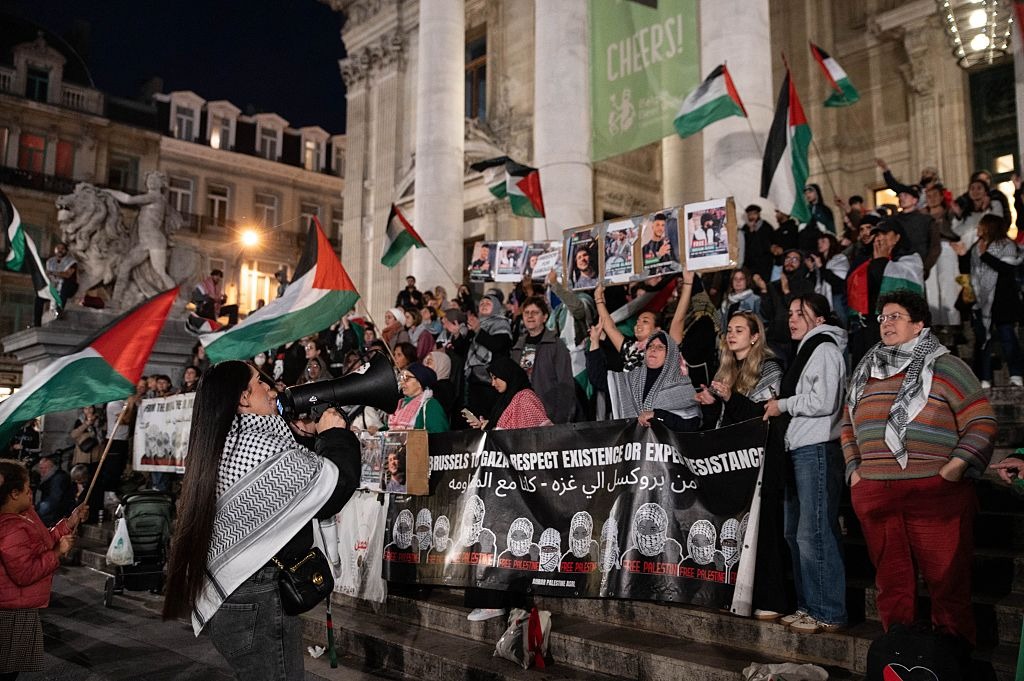
Twice already, Hamas has thanked Belgium for its support. Perhaps Belgium and other countries that align with and harbor terrorist groups should be viewed as security threats to Europe? Pictured: An anti-Israel protest in Brussels, on October 2, 2025. (Photo by Emile Windal/Belga/AFP via Getty Images)

At the heart of the European Union, Belgium exemplifies better than perhaps any other Western European country the extent to which political elites seem to almost relish the degree to which Europe is being Islamized.

In July 2026, Israel's Channel 12 News aired a report warning that Hamas terrorists, including high-ranking members of the organization's Al-Qassam Brigades, now live in Antwerp -- some of whom, according to local Gazans opposed to Hamas, are receiving Belgian citizenship.

"Little Gaza," as the neighborhood in northern Antwerp is called in the report, has a large population of Gazans from Khan Younis, a major Hamas stronghold. Hamas-linked residents there traffic in illegal narcotics, run shops and restaurants, and send the proceeds to Hamas in Gaza, according to the interviewed Gazans, who only dared speak anonymously out of fear of revenge from local Hamas supporters.

"You feel as if you are visiting Palestine", one Arab said. The local baker, who sells only Gazan specialties, agreed that walking on that street was like "walking in Khan Younis."

According to the Channel 12 report:

"In little Gaza in the heart of Antwerp you get the scent of the Strip, literally. From restaurants... to shops and supermarkets, most business owners come from Khan Younis. The names of the stores also reflect the character of the immigrants here: From 'Haifa market' on the way to 'Rafah Market', and, of course, 'Al Quds....'

"Some people here in the street support Hamas, they are also from Gaza. Others say it's a terrorist organization. But no one dares to say that out loud, because they know that this terrorist organization can get anybody through their people, who are also here...voices against Hamas are only a whisper in Gaza because of fear from the threats of the terrorist organization. But the strange thing is that they are also afraid here in Antwerp, in Belgium, in Europe..."

The journalist, an Israeli, asked a Gazan whether he personally knew anyone from Hamas living in Antwerp. The man responded:

"The man who investigated me when I was in Israel is in Antwerp...and now has a Belgian citizenship. He was even a leader in Hamas in the regiment of Din Al-Qassam... he collects money.... all these businesses they [Hamas] opened here. Donations are collected through banks. They have businesses here, they have drugs."

"They send money to Hamas and support them," said another local Gazan. He mentioned fundraisers for the children of Gaza as one way to drive donations.

"Europe should wake up. If they remain silent it will be destroyed from within. It is almost already destroyed. If Europe does not wake up and prosecute these people... these people are not only Hamas. These people are against freedom, against democracy, against secularism, they are against the basic principles of the country they live in."

Belgian politicians, however, do not appear particularly bothered by this increasing political, cultural and demographic threat. After the report was issued, Belgian federal MP Sam van Rooy, who also serves as a representative in the Antwerp City Council for the Vlaams Belang party, requested a city council emergency session, but could not find enough votes to get one.

According to Van Rooy:

"This particularly worrying report shows that Hamas members and terrorists not only live in Antwerp and operate shops and restaurants, but also sponsor Hamas in Gaza and threaten opponents of Hamas," They have no place in our city and must be tracked down, detained, and deported."

No meeting was held; no other party found it necessary.

This indifference to the security of the local Christian and Jewish communities, the city and country at large, is particularly jarring after documentation exposed that Hamas was planning an October 7-style mass attack against Jewish and Israeli targets in Europe, scheduled to coincide with the second anniversary of the October 7, 2023 atrocities.

Already in February 2024, Belgium's Minister of Justice Paul Van Tigchelt confirmed that Belgian authorities are fully cognizant of Hamas' activities in the country. He implicitly made it quite clear that no one could care less. "So far, we know that Hamas is active in Belgium through various companies. The activities (...) focus on lobbying and fundraising," he remarked at the time.

Hamas, in fact, has much more than shops and restaurants in Belgium. It has front companies operating next to the European Commission and the EU Council.

Perhaps one might argue that the Belgian government, which has shown itself to be extremely anti-Israel, does not care that Hamas raises funds in the country: the victims are "only" Israelis and Jews. So far.

Europe's status, however, has changed. German Federal Prosecutor General Jens Rommel – whose office has been arranging the arrests of nine of the Hamas suspects behind the European October 7 terrorist plot – warned in June that Europe no longer mainly serves as a place where terrorist organizations generate funds to finance their terrorism.

"Rather, Germany and other European countries are now increasingly being viewed as operational areas for possible attacks. This becomes particularly evident in the case of Hamas. To prepare attacks in Europe, their foreign operatives, sympathizers, or individuals connected to organized crime acquire and smuggle weapons. They often hold European citizenship, or residence permits within the Schengen Area, allowing them to move freely. They are highly mobile and extensively networked, and some possess significant financial resources."

In Belgium, however, such concerns seem to play no role whatsoever. In 2024, the country received half of all Palestinian asylum applications submitted in the entire EU. In that year alone, 3,281 Palestinians were granted formal refugee status by Belgium.

A Hamas terrorist from Khan Yunis, Mohannad al-Khatib, who participated in the October 7, 2023 massacre but calls himself as a freelance journalist, was able freely to enter Belgium to claim asylum there. Belgian authorities were only alerted to his terrorist background because the Antwerp-based Jewish Information and Documentation Center (JID) compiled information about him appearing in footage inside or near Israeli territory during the Hamas invasion.

Ralph Pais, vice-chair of JID, said:

"It is incomprehensible that volunteers and citizens could identify this man through open sources, while our security services apparently never noticed him. The material clearly shows that he filmed the violence, applauded it, and openly expresses support for Hamas, rocket attacks, and martyrdom.

"Anyone in Europe who wants to protect synagogues, schools, churches, metros, or events has every interest in ensuring that terrorists do not enter unnoticed. This is not a Jewish problem, but a European problem. We demand full transparency about how such individuals gained access to Europe, and immediate security checks by the competent authorities."

Although Al-Khatib's application was ultimately rejected by Belgium, he remained in the country -- where he apparently continues to live -- and is free to travel throughout the EU. Nobody cares.

Twice already, Hamas has thanked Belgium for its support. Perhaps Belgium and other countries that align with and harbor terrorist groups should be viewed as security threats to Europe?


Robert Williams is based in the United States.

Source: https://www.gatestoneinstitute.org/22787/islamization-of-europe-belgium

Follow Middle East and Terrorism on Twitter

Netanyahu vows to raise the ‘Altalena’ from the depths of the Mediterranean - JNS Staff


by JNS Staff

The Irgun vessel will serve as a “tangible symbol” of the imperative to never descend into civil war, the Israeli premier said.


Israeli Prime Minister Benjamin Netanyahu visits the Etzel Museum in Tel Aviv on Aug. 24, 2026, on the day the “Altalena” ship was found off Israel’s coast. Credit: Ma’ayan Toaf/GPO.


Israeli Prime Minister Benjamin Netanyahu pledged on Monday to raise the Altalena from the depths of the Mediterranean Sea following the announcement that the vessel, which symbolizes a painful episode in the early history of the Jewish state, was found.

“She will be a tangible symbol for our generation and for generations to come; a tangible symbol of one simple commandment: civil war—never again!” Netanyahu said in a Hebrew-language statement.

“Today, finally, after 78 years, we have located the ship after it sank into the depths,” Israel’s longest-serving prime minister said after visiting the Etzel Museum in Tel Aviv.

“Never again” was the “heartfelt cry” of the Irgun’s commander and future prime minister of Israel, Menachem Begin, Netanyahu continued.

“He stood here on the shore, not far from here [the Etzel Museum on Nahum Goldmann St.], and he spoke these words in the face of the tragic decision by [Israel’s first prime minister] David Ben-Gurion to open fire on the rescue ship Altalena,” Netanyahu said.

“The ship brought significant weaponry for our soldiers in the War of Independence. But instead of unloading this vital weaponry, members of the ‘Haganah’ on the shore opened infernal fire on the Altalena, claiming the lives of 16 Etzel fighters and three [Israel Defense Forces] soldiers,” he continued.

“Etzel” is the Hebrew abbreviation of the paramilitary organization named the Irgun, which fought against British forces in the intention of forcing them out of the Land of Israel and establishing an independent Jewish state.

The Haganah was the main Zionist paramilitary organization and later made up the bulk of the newly formed IDF.

“For me—and I am sure also for you, citizens of Israel—this is an emotional, foundational moment,” Netanyahu said following the location of the shipwreck.

“Off the coast of Tel Aviv, the Altalena went up in flames; off the coast of Tel Aviv, brothers fell by the hands of brothers. But precisely out of the infernal fire, burst forth the immortal cry of the commander of the Etzel, Menachem Begin of blessed memory, to stop the firing that was taking place, to stop the entire course of the battle, because we will not go to a civil war,” the prime minister stressed.

“This is the great lesson of the Altalena. It is as true today as it was true then. Because division is weakness, and unity is strength,” he said.

“In recent years, I asked the Minister of Education to introduce the story of the Altalena into school textbooks to instill this lesson in the children of Israel,” the Israeli premier said.

He further stated that each year he attends the ceremony commemorating the “heroes” who fell during what has been called the “Altalena Affair.”

A million shekels to discover the sunken vessel

The dramatic episode, which remains contentious to this day, took place on June 20-22, 1948, about a month after the second stage of Israel’s War of Independence broke out.

The newly created Israel Defense Forces shelled the Irgun arms ship off the Tel Aviv beach. About a year after the battle, the Altalena, which had run aground at the foot of Frischman Street, was refloated, towed 15 miles out to sea and scuttled at the order of Ben-Gurion.

Israel’s Heritage Ministry invested 1 million shekels to search for the remains, JNS reported on Aug. 25, 2025.

The ministry hired the Israel Oceanographic and Limnological Research Institute, through the Survey of Israel—a state agency responsible for mapping—to locate the remains of the ship. Israel’s national research vessel, the Bat Galim, was deployed with advanced technology to find the wreckage.


JNS Staff

Source: https://www.jns.org/news/israel-news/netanyahu-vows-to-raise-the-altalena-from-the-depths-of-the-mediterranean

Follow Middle East and Terrorism on Twitter

WNBA, pro-abortion coffee shop risk lawsuits for denying public accommodations based on wrongthink - Greg Piper


by Greg Piper

Public financing and ownership of WNBA stadiums may require teams to follow First Amendment norms when it comes to fans supporting Sophie Cunningham's stance against males in women's sports, commissioner warned.


Washington, Colorado and their gay and transgender residents spent the better part of the 2010s and the early 2020s seeking to punish creative professionals for refusing to design products that celebrate same-sex marriage and gender transition, arguing they violated public accommodations laws.

Because of their documented hostility toward gender-critical and anti-abortion customers, the WNBA and an Idaho coffee shop, respectively, are facing a taste of the ordeals endured by Masterpiece Cakeshop's Jack Phillips and Arlene's Flowers' Barronelle Stutzman.

The Alliance Defending Freedom warned the professional women's basketball league that it may be liable for discrimination against supporters of female-only sports under public accommodations laws for the arenas in which its 15 teams play, and may be bound by the First Amendment due to public ownership or financing of those venues.

It emphasized Seattle prohibits discrimination based on "political ideology" in public accommodations, making Storm home games a fertile ground for litigation if Climate Pledge Arena cracks down on gender-critical fans who express themselves. Another WNBA city, Washington, D.C., bans it for "political affiliation."

First Amendment scholar Eugene Volokh notes the California Supreme Court has broadly interpreted its public accommodation law to prohibit "arbitrary discrimination," which he said may include political bias, potentially ensnaring the Los Angeles Sparks and the Golden State Valkyries.

Idaho's Wydaho Roasters ejected Students for Life of America's local Campaign for Abortion Free Cities meeting last week, calling pro-life Americans "the same" as the Ku Klux Klan and ignoring the members' insistence that they meet at his shop regularly. 


Co-owner Jim Sheehan told Teton Valley News he asked the group not to come after they announced the meeting on Facebook, but apologized for the KKK comparison.

SFLA President Kristan Hawkins noted the strangeness of the accusation because Planned Parenthood founder Margaret Sanger "spoke to the KKK" in her advocacy for birth control. The nonprofit organization, which is the country's largest abortion provider, explicitly rebuked Sanger in a New York Times op-ed five years ago, noting her support for forced sterilization of "unfit" people.

Like most states, Idaho doesn't ban discrimination on the basis of political views, but it does on the basis of religion. Pro-life views strongly correlate with church attendance, and one analysis of survey data found that people who say religion is "very important" in their lives are the most anti-abortion.

The office of Idaho Attorney General Raul Labrador didn't answer Just the News queries on the potential application of the public accommodations law to Wydaho Roasters' practices. 

The coffee shop didn't answer when asked for the legal basis for its stated ban on customers with pro-life views, not just refusal to make products with a pro-life message.

Wydaho's treatment of customers is "far more extreme than what Phillips did in Masterpiece Cakeshop," George Washington University law professor Jonathan Turley said. The pro-life group is not asking the shop to "create a coffee concoction opposing abortion, like a Cafe Au Life specialty drink."

'He didn’t do a thing' to get ejected after WNBA player initiated conflict

The Alliance Defending Freedom's legal threat letter Friday to WNBA Commissioner Cathy Engelbert followed incidents involving fans who wore XX-XY Athletics gear at Indiana Fever road games to show support for the team's sharpshooter Sophie Cunningham and her opposition to males in women's sports. The security response has varied.

The WNBA suspended and fined Seattle Storm co-owner Celeste Keaton for verbally attacking teenage Cunningham fans, who were also holding signs thanking her, at a Fever-Storm game last month. Security didn't ask them to hide their shirts or signs but also refused to remove Keaton for harassing them, according to local journalist Brandi Kruse.

Last week, the league and Atlanta Dream apologized for ordering fans to cover up their XX-XY shirts at a Fever-Dream game, pointedly blaming league security rather than State Farm Arena security for the decision.

A new wrinkle emerged at Sunday's Fever game against the Chicago Sky, with the ejection of Enes Kanter Freedom – one of two former NBA players to declare for the next WNBA draft, owing to the league's silence on the meaning of "women" – but no clear reporting on which specific authority ordered Freedom's removal as a fan.

Sky player Natasha Cloud "began pointing and yelling" at Freedom at his courtside seat, and he "stood up and walked toward the court" as Cloud's teammates pulled her back, CBS Sports reported. Video shows Cloud first approached Freedom, who was wearing a shirt that reads "WOMAN noun. adult human female [sic]," and he took one step on the court.

After Cloud scored, "she came over and threw her hands up and was talking s— to his face," Tricia Smith, who said she didn't know Freedom until sitting next to him the whole game, told The Athletic. "So he stood up and said, like, ‘What? What do you want?’ He didn’t do a thing."

Known as an NBA player for his human rights activism and playing games while fasting for Ramadan, Freedom told OutKick that he triggered Cloud by cheering for a Cunningham basket. Cloud repeatedly cursed at him and said "she’s [Cunningham] not gonna sleep with you," Freedom said.

"An official" not identified by CBS "gestured" for Freedom to be ejected "and both team and [Wintrust] arena security escorted him away from his seat," CBS said. OutKick said "arena staff" used physical force to make Freedom leave.

Chicago Sky media contacts did not answer Just the News queries for which authority ordered Freedom's ejection, as opposed to who carried it out. 

"This concerning trend" of retaliation against gender-critical views at WNBA games could "expose the WNBA and its partners to legal liability," ADF told Commissioner Engelbert.

Because many WNBA teams play in stadiums "owned by public entities and built with public funds," these private entities' behavior may qualify as "state action," requiring them to let speakers "express their views consistent with the nature and purpose of the venue – in this case, a sporting event," the letter said.

Messages shared by Cunningham's fans "were not vulgar, profane, or disruptive," ADF said. "When using public facilities and acting in concert with public officials, private entities like the WNBA and its partners cannot censor these views without violating the First Amendment."

By denying services "because of their religious or political message about the debate surrounding fairness in women’s sports," the league and teams could trip over public accommodations laws in various cities where teams play, the letter warns.

ADF asked Engelbert to educate WNBA partners and event staff on the law and "adopt policies that lock in its commitment to allowing peaceful expression of diverse views at games," offering to "assist with drafting suggested policies that could apply across the league."

Engelbert's office didn't answer when asked for its response to the letter. 

ADF didn't answer when asked what breadth of expression it's asking the WNBA to tolerate at games, such as fans responding to players' off-court comments on Israel and Gaza, and whether Freedom was ejected for his views or his behavior.


Greg Piper

Source: https://justthenews.com/accountability/cancel-culture/wnba-pro-abortion-coffee-shop-risk-lawsuits-denying-public

Follow Middle East and Terrorism on Twitter