by Khaled Abu Toameh
The proposal rests on two assumptions, both of which are dangerously flawed. The first is that Islamist terrorists can be persuaded to abandon jihad (holy war) in exchange for money. The second is that those who surrender weapons will genuinely renounce terrorism.
Instead of insisting that Hamas dismantle its terrorist infrastructure without conditions, international mediators now appear to be discussing a plan to pay terrorists to hand over some of their weapons and enroll them in "rehabilitation" programs.
The proposal rests on two assumptions, both of which are dangerously flawed. The first is that Islamist terrorists can be persuaded to abandon jihad (holy war) in exchange for money. The second is that those who surrender weapons will genuinely renounce terrorism.
Haniyeh's response was unequivocal. "Our principle is Palestine from the [Jordan] River to the [Mediterranean] Sea," he declared, making clear that Hamas preferred its jihad against Israel over airports, economic development, and billions of dollars in international investment.
The obstacle was never Israel. The obstacle was Hamas. The terrorist group consciously chose war over prosperity. It preferred rockets to an airport and seaport, tunnels instead of factories, assault rifles instead of jobs, and jihad instead of economic development. Hamas rejected all these projects because it refused to abandon its ideological commitment to destroying Israel.
Anyone still claiming that October 7 was caused by economic hardship should listen to Haniyeh's admission. Hamas had a choice. It deliberately chose terrorism.
"Gaza had a genuine chance to become the crown jewel of the Palestinian people, a truly compelling model of prosperity and self‑rule." — Palestinian political analyst Ahmed Fouad Alkhatib.
According to Palestinian sources, Hamas has already begun distributing rifles to its operatives under the guise of "personal ownership." The purpose is evidently to ensure that weapons remain in the hands of Hamas members even if the group formally agrees to disarm.
Any Hamas member who receives thousands of dollars for surrendering one rifle can easily purchase another weapon through the group's extensive smuggling networks. In fact, Hamas may simply hand over obsolete weapons while using international aid money to acquire newer and more sophisticated firearms. The proposal therefore risks becoming an internationally financed rearmament program for Hamas and other terrorist groups in the Gaza Strip.
The notion that Islamist terrorists can be "rehabilitated" through financial incentives is equally detached from reality. Jihadists do not become peace activists because they receive a paycheck. Organizations such as Hamas, Hezbollah, al-Qaeda, and ISIS are driven by ideology and religious extremism. For them, armed jihad is a divine obligation. No rehabilitation seminar can erase decades of indoctrination.
No terrorist organization should receive financial rewards for surrendering weapons that it should never have possessed in the first place.
The message sent by such proposals is disastrous. It tells terrorists everywhere that if they accumulate enough weapons and inflict enough bloodshed, the world will eventually pay them to surrender some of their arsenal.
The only acceptable outcome remains the same one envisioned before negotiations began: Hamas must unconditionally dismantle itself as both a military and political organization. Its weapons should be confiscated, not purchased or "stored." Its ideology of jihad should never be rewarded with cash. Anything less will not bring peace and security -- it will simply finance the next war.
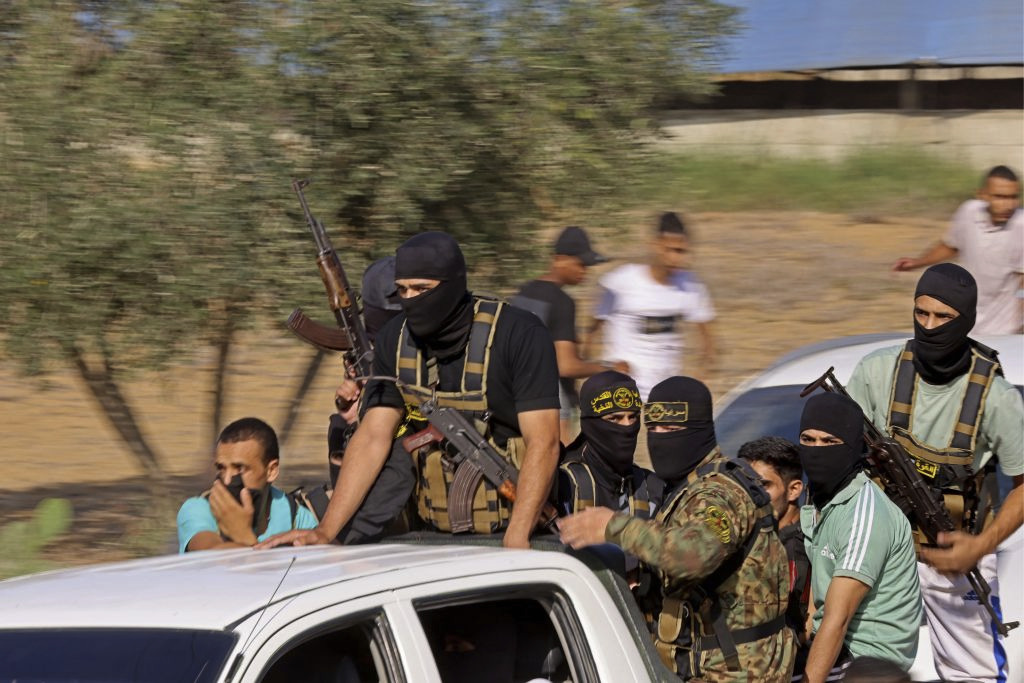
A recent report that US President Donald J. Trump's Board of Peace is considering paying Palestinian terrorists in the Gaza Strip thousands of dollars in exchange for surrendering their rifles should alarm anyone who genuinely seeks peace and security in the Middle East.
If true, the proposal represents a dangerous retreat from the original objective of Trump's September 2025 peace plan: the complete demilitarization of the Gaza Strip and the unconditional disarmament of Hamas and other terrorist groups.
Instead of insisting that Hamas dismantle its terrorist infrastructure without conditions, international mediators now appear to be discussing a plan to pay terrorists to hand over some of their weapons and enroll them in "rehabilitation" programs.
According to KAN, Israel's Public Broadcasting Corporation, the internationally funded program would offer thousands of dollars to Gaza residents, including Hamas members, for each surrendered firearm, particularly Kalashnikov assault rifles. Participants would also be required to renounce violence and undergo future monitoring.
The proposal rests on two assumptions, both of which are dangerously flawed. The first is that Islamist terrorists can be persuaded to abandon jihad (holy war) in exchange for money. The second is that those who surrender weapons will genuinely renounce terrorism.
Hamas itself has already demonstrated why both assumptions are false. The answer came directly from the group's slain leader, Ismail Haniyeh.
In 2020, Haniyeh publicly revealed that his group had rejected an offer worth $15 billion in development projects for the Gaza Strip. The package reportedly included an airport, a seaport, industrial zones, massive economic projects, and the lifting of restrictions imposed by Israel and Egypt. The only condition was that Hamas dismantle its military infrastructure, surrender its weapons, and integrate its fighters into civilian institutions.
Haniyeh proudly admitted that Hamas rejected the offer.
"We want a port in Gaza," he said, "but as a right and not in exchange for our political principles or disarmament."
He explained that Hamas had been asked to "dissolve our military factions... retire our weaponry... and dissolve the capability of Gaza for self-rule."
Haniyeh's response was unequivocal. "Our principle is Palestine from the [Jordan] River to the [Mediterranean] Sea," he declared, making clear that Hamas preferred its jihad against Israel over airports, economic development, and billions of dollars in international investment.
If Hamas rejected $15 billion before its October 7, 2023 massacre in Israel because it refused to abandon terrorism, why would anyone believe that paying individual Hamas members a few thousand dollars today would produce a different outcome? It will not.
For years, Hamas supporters have argued that violence resulted from poverty, unemployment, and the Israeli blockade of the Gaza Strip. Haniyeh himself demolished that argument. His own words showed that the Gaza Strip had opportunities for unprecedented economic development that would have turned it into the Singapore of the Middle East.
The obstacle was never Israel. The obstacle was Hamas. The terrorist group consciously chose war over prosperity. It preferred rockets to an airport and seaport, tunnels instead of factories, assault rifles instead of jobs, and jihad instead of economic development. Hamas rejected all these projects because it refused to abandon its ideological commitment to destroying Israel.
Anyone still claiming that October 7 was caused by economic hardship should listen to Haniyeh's admission. Hamas had a choice. It deliberately chose terrorism.
"Gaza's development was blocked because the terror Islamist group turned the territory into a fortress of violence, tunnels, rockets, smuggling, and radicalization," commented Palestinian political analyst Ahmed Fouad Alkhatib. "Gaza had a genuine chance to become the crown jewel of the Palestinian people, a truly compelling model of prosperity and self‑rule."
Another recent report makes the proposal to pay thousands of dollars to Palestinian terrorists in exchange for their rifles even more troubling.
According to Palestinian sources, Hamas has already begun distributing rifles to its operatives under the guise of "personal ownership." The purpose is evidently to ensure that weapons remain in the hands of Hamas members even if the group formally agrees to disarm.
As one Palestinian source bluntly stated, "Hamas will not disarm. Period."
That single sentence should end any illusion surrounding the proposed buyback program. Even if Hamas agrees to "store" some heavy weapons under the Board of Peace's latest roadmap, it would continue to possess tens of thousands of automatic rifles. Those rifles are more than enough to launch another October 7-style massacre.
The terrorists who invaded southern Israel on October 7 did not require tanks or fighter jets. They murdered approximately 1,200 Israelis and foreign nationals using Kalashnikov rifles, hand grenades, rocket-propelled grenades, and explosives. Hamas does not need heavy weapons to massacre civilians. Allowing Hamas to retain small arms means allowing it to preserve its ability to murder again.
The latest buyback proposal also ignores a fundamental reality about Islamist terrorist organizations. Money does not moderate jihadists; it strengthens them.
Any Hamas member who receives thousands of dollars for surrendering one rifle can easily purchase another weapon through the group's extensive smuggling networks. In fact, Hamas may simply hand over obsolete weapons while using international aid money to acquire newer and more sophisticated firearms. The proposal therefore risks becoming an internationally financed rearmament program for Hamas and other terrorist groups in the Gaza Strip.
The notion that Islamist terrorists can be "rehabilitated" through financial incentives is equally detached from reality. Jihadists do not become peace activists because they receive a paycheck. Organizations such as Hamas, Hezbollah, al-Qaeda, and ISIS are driven by ideology and religious extremism. For them, armed jihad is a divine obligation. No rehabilitation seminar can erase decades of indoctrination.
The Board of Peace originally demanded what should have been obvious from the outset: complete demilitarization of the Gaza Strip. Somehow, this clear objective has gradually evolved into discussions about "storing" weapons, buying them back, and paying terrorists for partial compliance. There is only one word to describe this shift: capitulation.
No terrorist organization should receive financial rewards for surrendering weapons that it should never have possessed in the first place.
The message sent by such proposals is disastrous. It tells terrorists everywhere that if they accumulate enough weapons and inflict enough bloodshed, the world will eventually pay them to surrender some of their arsenal.
The only acceptable outcome remains the same one envisioned before negotiations began: Hamas must unconditionally dismantle itself as both a military and political organization. Its weapons should be confiscated, not purchased or "stored." Its ideology of jihad should never be rewarded with cash. Anything less will not bring peace and security -- it will simply finance the next war.
- Follow Khaled Abu Toameh on X (formerly Twitter)
Khaled Abu Toameh is an award-winning journalist based in Jerusalem.
Source: https://www.gatestoneinstitute.org/22773/bribing-hamas

No comments:
Post a Comment