by Robert Williams
Diplomacy must distinguish between temporary contacts and legitimizing forces that threaten long-term security.
Six years later, despite regional wars, those relationships [of the Abraham Accords] endure. The Abraham Accords produced something more valuable than a ceremony: a measurable change in relations between states. That is the standard by which presidential advisers should be judged.
Consider Sudan. Its war between Abdel Fattah al-Burhan's regime-aligned Sudan Armed Forces (SAF) and Hemedti's Rapid Support Forces (RSF) has killed and displaced civilians on a staggering scale.
Washington sanctioned both commanders, accused the RSF of genocide and the SAF of committing war crimes, and determined that the regime's forces had used chemical weapons. [Senior Advisor to the President for Arab and African Affairs Massad] Boulos has promoted a 90-day humanitarian ceasefire; no durable ceasefire has emerged.
Does Boulos have a strategy to prevent Sudan's Red Sea coastline from becoming another arena of Iranian influence? The United States cannot afford an approach that treats every armed faction as an equally acceptable partner simply because each controls territory. Diplomacy must distinguish between temporary contacts and legitimizing forces that threaten long-term security.
The reported American proposal [in Libya] envisages a power-sharing arrangement between the Haftar and Dbeibah families, alongside the unification of state institutions and opportunities for American investment in Libya's energy sector.
Washington, however, must confront a more fundamental question: How can a genuine national unity government emerge in Libya when one of the negotiating parties operates within a political environment deeply entangled with armed militias, Muslim Brotherhood-linked networks and hardline Islamist factions?
[T]he underlying problem remains: Who would actually exercise power inside a supposedly unified Libyan government?
Would Washington be helping establish a sovereign state with a unified national army, accountable institutions and civilian authority? Or would it be legitimizing an arrangement in which entrenched political families divide state resources while armed factions and Islamist networks retain influence behind the scenes?
How... can [President Trump's] own representatives pursue deals that risk preserving the influence of armed Islamist networks while the president promises to confront them?
In Sudan, Yemen and Libya, American national security is too important for strategic ambiguity masquerading as balance.
Trump does not need an envoy whose chief asset is proximity to presidential power. He needs results consistent with his stated strategy: stronger allies, weaker terrorist networks, less Iranian influence and durable peace.
Kushner had the Abraham Accords. What will Boulos leave behind? The photograph should document a victory — not substitute for one.
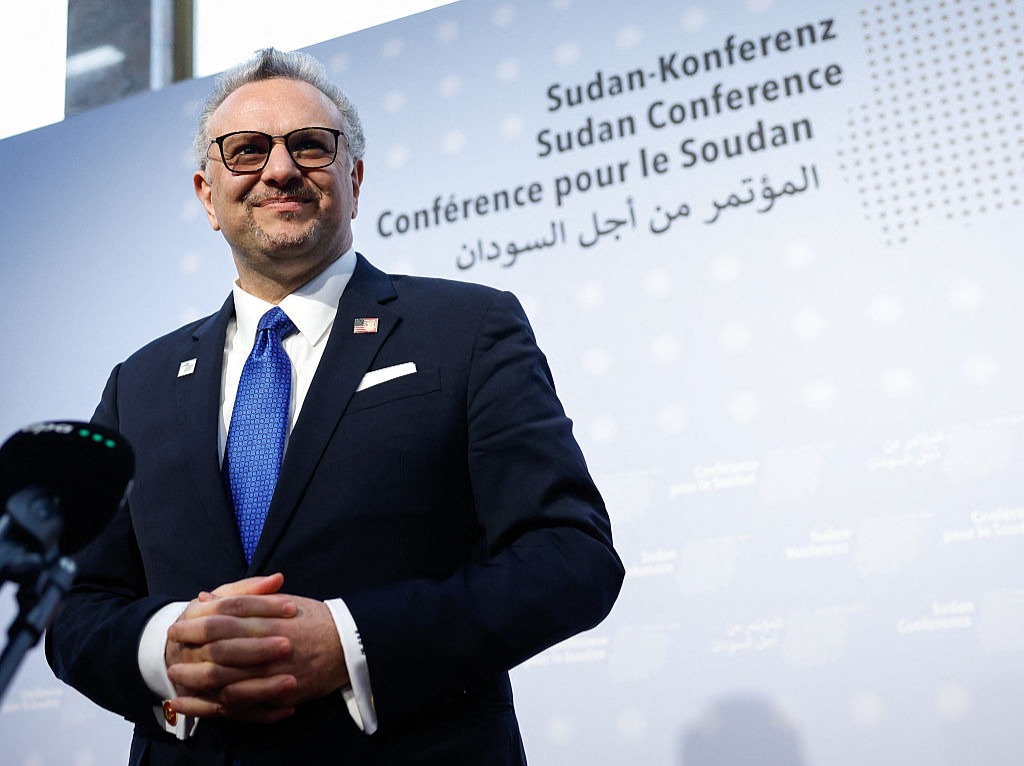
Two Trump family advisers received extraordinary access to presidential power. One helped change the Middle East. What has the other changed?
On September 15, 2020, US President Donald J. Trump hosted the signing of the Abraham Accords. The United Arab Emirates and Bahrain normalized relations with Israel; Morocco followed. Jared Kushner helped translate a strategic opening into diplomatic recognition, trade and security cooperation. Six years later, despite regional wars, those relationships endure. The Abraham Accords produced something more valuable than a ceremony: a measurable change in relations between states. That is the standard by which presidential advisers should be judged.
Kushner had a recognizable professional identity long before marrying Ivanka Trump in 2009. He was active in real estate and had acquired The New York Observer in 2006. He was not a trained diplomat, but his public record was identifiable.
What comparable record did Massad Boulos (Senior Advisor to the President for Arab and African Affairs) possess before his son married Tiffany Trump? He worked in business in Nigeria, maintained Lebanese political connections. None is evidence of experience ending civil wars. In 2024, journalistic investigations also questioned widely repeated descriptions of Boulos as a billionaire lawyer commanding a vast business empire; he and Trump's team disputed the criticism. Yet a more consequential question remains: Why was someone with no established record of resolving international conflicts entrusted with Sudan, Congo and Libya?
Consider Sudan. Its war between Abdel Fattah al-Burhan's regime-aligned Sudan Armed Forces (SAF) and Hemedti's Rapid Support Forces (RSF) has killed and displaced civilians on a staggering scale.
Washington sanctioned both commanders, accused the RSF of genocide and the SAF of committing war crimes, and determined that the regime's forces had used chemical weapons. Boulos has promoted a 90-day humanitarian ceasefire; no durable ceasefire has emerged.
The Sudan conflict also reaches far beyond the country's borders. Iranian-made drones have strengthened the SAF. In March 2026, Washington designated the SAF-allied Sudanese Muslim Brotherhood a Foreign Terrorist Organization due to its violence against civilians and the support it receives from Iran's Islamic Revolutionary Guard Corps.
Iran's support for Yemen's Houthis has already exposed how militants can threaten Red Sea shipping.
Does Boulos have a strategy to prevent Sudan's Red Sea coastline from becoming another arena of Iranian influence? The United States cannot afford an approach that treats every armed faction as an equally acceptable partner simply because each controls territory. Diplomacy must distinguish between temporary contacts and legitimizing forces that threaten long-term security.
Libya raises an equally serious question about the direction of American diplomacy. Boulos has pursued negotiations aimed at reconciling the rival authorities associated with Khalifa Haftar in eastern Libya and Abdul Hamid Dbeibah in Tripoli.
The reported American proposal envisages a power-sharing arrangement between the Haftar and Dbeibah families, alongside the unification of state institutions and opportunities for American investment in Libya's energy sector.
Washington, however, must confront a more fundamental question: How can a genuine national unity government emerge in Libya when one of the negotiating parties operates within a political environment deeply entangled with armed militias, Muslim Brotherhood-linked networks and hardline Islamist factions?
The influence of these networks in western Libya cannot simply be ignored. Dbeibah's administration has depended on shifting alliances with powerful armed groups, while political figures associated with the Muslim Brotherhood have maintained connections within Libya's fragmented power structure. Their relationships may be complicated and sometimes adversarial, but the underlying problem remains: Who would actually exercise power inside a supposedly unified Libyan government?
Would Washington be helping establish a sovereign state with a unified national army, accountable institutions and civilian authority? Or would it be legitimizing an arrangement in which entrenched political families divide state resources while armed factions and Islamist networks retain influence behind the scenes?
A government of national unity cannot succeed if it merely unites the political elites while leaving the forces that divided the country untouched.
Trump has repeatedly confronted Iran and his administration has formally designated specific Muslim Brotherhood branches accused of supporting terrorism.
How, then, can his own representatives pursue deals that risk preserving the influence of armed Islamist networks while the president promises to confront them?
In Sudan, Yemen and Libya, American national security is too important for strategic ambiguity masquerading as balance.
Trump does not need an envoy whose chief asset is proximity to presidential power. He needs results consistent with his stated strategy: stronger allies, weaker terrorist networks, less Iranian influence and durable peace.
Kushner had the Abraham Accords. What will Boulos leave behind? The photograph should document a victory — not substitute for one.
Robert Williams is based in the United States.
Source: https://www.gatestoneinstitute.org/22926/kushner-boulos

No comments:
Post a Comment